For the last decade, the wrist has been ground zero for wearable innovation. Heart rate, GPS, sleep staging, HRV, readiness scores—most athletes reading this already have years of data locked inside Apple Health, Garmin Connect, or TrainingPeaks.
But we’ve quietly hit a ceiling. The wrist is excellent for measuring strain, yet fundamentally limited when it comes to influencing recovery in a meaningful, physiological way.
What’s changing now—and what devices like Hyperice’s Normatec Elite Hips make impossible to ignore—is that recovery is shifting from something wearables merely describe to something they actively deliver. This is where the next major wearable battleground is forming.
Measurement Has Matured, Intervention Has Not
Modern smartwatches are already very good at telling you that you’re tired. Overnight HRV suppression, elevated resting heart rate, poor sleep efficiency, and rising training load trends all point to the same conclusion: your body needs recovery.
🏆 #1 Best Overall

- Calf Compression Sleeve Sizing Information: For the best fit of your sizes, please refer to our sizing chart. Measure the thickest part of your calf using a soft tape measure to determine your size. If you are between sizes, size up for a looser fit, and size down for tighter compression.
- Effective Compression for Swelling & Varicose Veins Relief: The BLITZU Calf Compression Sleeves feature graduated compression to improve blood circulation, reduce swelling, and alleviate discomfort caused by varicose veins and pregnancy-related leg swelling, making them perfect for nursing mothers and individuals with circulation issues.
- Pain Relief for Shin Splints & Muscle Fatigue: Experience quick relief from shin splints, muscle soreness, and leg cramps with these compression sleeves. Ideal for runners, athletes, and active individuals, these calf sleeves provide pain relief, enhance muscle recovery, and support performance during intense physical activity.
- Patented Kinesiology Strips for Targeted Pain Relief: Developed and patented in New York, our calf compression sleeves incorporate advanced kinesiology strips that provide superior support, stability, and pain reduction. Designed using the renowned kinesiology technique, these strips promote natural pain relief and accelerate recovery by improving muscle function and reducing fatigue.
- Breathable & Comfortable for All-Day Wear: Designed with premium breathable fabric, these footless compression socks keep your legs dry and comfortable for extended wear. Whether you're at work, traveling, or exercising, these calf compression sleeves provide all-day support without causing discomfort or overheating.
The problem is that the watch can’t do much about it. Beyond nudging you to rest or breathe, the wrist remains a passive observer of stress rather than an active participant in recovery.
Smart compression systems like the Normatec Elite Hips flip that relationship. Instead of just logging downstream signals, they apply mechanical pressure directly to tissues that actually generate fatigue—hips, glutes, quads, hamstrings—closing the loop between data and action.
The Wrist Is a Compromise Location, Not an Ideal One
Biomechanically, the wrist is one of the least representative places to understand whole-body fatigue. Endurance athletes accumulate stress in the lower body, spine, and pelvis long before it shows up as a clean biometric signal.
Hip mobility restrictions, localized swelling, and compromised venous return don’t reliably register at the wrist, even with advanced algorithms. They show up as soreness, heaviness, or loss of range—things athletes feel before their watch confirms them.
The Normatec Elite Hips exist precisely because recovery needs to happen where the load lives. Integrated air chambers wrapping the hips and upper legs apply sequential compression that targets lymphatic drainage and circulation in ways a wrist-worn device never physically could.
Recovery Wearables Are Becoming Actuators, Not Just Sensors
This is the key shift most people underestimate. The future of wearables isn’t just better sensors—it’s intelligent actuators.
Normatec’s system already operates in this space, using Bluetooth connectivity, app-controlled pressure zones, session timing, and intensity profiles to deliver a repeatable recovery stimulus. The Elite Hips go a step further by embedding battery, controls, and connectivity directly into the garment, removing the traditional external hose-and-pump setup.
That design choice matters. It signals a future where recovery devices are worn, not set up—more like putting on headphones than rolling out a clinic-grade machine.
Data Integration Is the Next Pressure Point
Right now, Normatec sessions live mostly in their own ecosystem. You choose a duration, intensity, and zone emphasis based on how you feel or what you trained.
The obvious next step is contextual intelligence. Imagine compression sessions that adapt based on yesterday’s run volume, cycling TSS, or strength session density, pulling directly from Apple Health, Garmin, or WHOOP-style readiness scores.
The Normatec Elite Hips feel like early hardware built in anticipation of that software future. They’re designed for frequent use, quick setup, and lifestyle integration—exactly what’s required if recovery is going to become a daily, data-informed behavior rather than a luxury add-on.
Why This Matters for the Wearable Ecosystem
Once recovery moves off the wrist, it forces the entire wearable category to rethink its role. Watches become orchestration hubs rather than endpoints—great at sensing, contextualizing, and triggering recovery interventions elsewhere on the body.
Products like the Normatec Elite Hips suggest a future where your watch tells you when to recover, but another wearable actually does the work. Compression, heat, vibration, or neuromuscular stimulation won’t replace wrist wearables—they’ll complete them.
And that’s why recovery isn’t just another feature war. It’s the next platform shift, and the wrist alone is no longer enough.
What the Normatec Elite Hips Actually Are: Smart Compression Moves to the Core
To understand why the Normatec Elite Hips feel different from previous recovery tools, you have to stop thinking of them as an accessory to a system and start viewing them as the system itself. This is not a pair of sleeves tethered to a plastic pump—it’s a self-contained, body-worn recovery device designed to live where athletic load actually accumulates.
The hips, glutes, and upper thighs are the mechanical center of most endurance and strength movement. By shifting smart compression to the core of the kinetic chain, Hyperice is quietly redefining what “wearable” means in recovery tech.
A Compression Garment With an Embedded Brain
At a hardware level, the Elite Hips integrate battery, control module, Bluetooth radio, and pneumatic actuation directly into the waistband structure. There are no external hoses, no separate pump unit, and no setup ritual beyond pulling them on and pressing start.
This matters because friction is the enemy of consistency. When recovery requires floor space, power outlets, and five minutes of setup, it becomes occasional rather than habitual.
The Elite Hips instead behave like a high-tech garment. The materials balance stretch and structure, applying controlled pressure without feeling clinical, while internal air channels target the glutes, hip flexors, IT band region, and upper quads with sequential compression patterns.
Zone-Based Actuation, Not Generic Squeeze
Unlike static compression shorts, the Normatec system uses dynamic, sequential inflation to move fluid and modulate pressure over time. Each zone can inflate independently, allowing pressure waves to travel upward through the hips and thighs rather than simply constricting them.
From a biomechanics perspective, this is where Normatec’s heritage shows. The hips are notoriously hard to address with foam rollers or massage guns due to joint geometry and muscle depth, but pneumatic compression can reach tissue layers that vibration struggles to influence.
The Elite Hips are not about localized soreness relief. They are designed to influence circulation, perceived tightness, and post-training readiness across the largest muscle groups in the body.
On-Body Controls Signal a Shift in Wearable Philosophy
Physical buttons built into the waistband allow users to start, pause, and adjust intensity without opening an app. That sounds minor, but it’s a telling design decision.
Most wearables still assume constant phone interaction. The Elite Hips suggest a future where recovery devices operate autonomously, with the app acting as a configuration and analytics layer rather than a required control surface.
Battery life supports this philosophy. With multiple sessions per charge, the Elite Hips are built for daily use cycles, not occasional deep recovery days, aligning more closely with how people actually train.
Software That’s Simple—For Now
Today, the Normatec app experience is intentionally restrained. You select session length, pressure level, and optional zone focus, then let the system run.
There’s no readiness scoring, no automated recommendations, and no deep performance analytics baked in yet. But the Elite Hips hardware clearly anticipates those features, with the connectivity and onboard intelligence needed to evolve through software updates.
In that sense, the product feels more like early-generation smart headphones than a finished medical device. The foundation is in place; the intelligence is expected to grow.
Comfort, Wearability, and the Reality of Living With It
Real-world wearability is where many recovery products fail, and where the Elite Hips quietly succeed. They’re designed to be used seated, reclining, or even working at a desk, rather than requiring you to lie still on the floor.
The fit is secure without being restrictive, and weight distribution around the waist avoids the top-heavy feel of external pump systems. You’re aware you’re wearing them, but not in a way that discourages longer or more frequent sessions.
That usability is not incidental. It’s the prerequisite for recovery to move from an occasional intervention to a daily behavior—something athletes do between meetings, after commutes, or while winding down at night.
Why the Hips Are the Tipping Point
By moving intelligent compression to the hips, Hyperice is targeting the most under-served region in consumer recovery tech. Calves and quads were the easy entry point; the core is where real performance limitations often originate.
More importantly, this shift reframes recovery wearables as active participants in training adaptation rather than passive accessories. The Elite Hips don’t just complement what your watch measures—they act on it, even if that loop isn’t fully closed yet.
That’s why this product feels less like a niche recovery tool and more like an early chapter in a broader category shift. Smart compression is no longer peripheral. It’s moving to the center of the body—and, increasingly, to the center of the wearable ecosystem itself.
From Timers to Intelligence: How Normatec’s Connected Features Signal Smarter Recovery
What ultimately separates the Normatec Elite Hips from older compression systems isn’t the air bladders or pressure gradients—it’s the quiet shift from a fixed routine to a connected platform. This is compression therapy that already thinks in software terms, even if its smartest behaviors are still waiting to be unlocked.
Rather than functioning as a standalone timer with buttons, the Elite Hips are designed to live inside an app-driven ecosystem. That architectural choice matters more than any single feature today, because it determines what this category can become tomorrow.
The App as the Real Control Surface
The Normatec app is where the Elite Hips reveal their future-facing intent. Session duration, pressure levels, and zone emphasis are all controlled digitally, not locked behind hardware limitations.
Rank #2

- FIND THE STRENGTH TO HEAL. The Copper Compression Arm Sleeve brace targets your elbows, biceps, triceps and forearms without limiting your range of motion. Compression helps improve blood flow, and reduce swelling. Whether you're recovering from injury, managing everyday discomfort, or pushing through a tough workout, our sleeves support your body so you can keep moving. It also acts as a warmer to key muscles and tendons to help prevent strain and fatigue.
- AVAILABLE IN 5 SIZES. Sleeves fit both the right and left arm. Choose from Small, Medium, Large, X-Large, and 2X / XX-Large. For best fit, measure around your arm about 5" above the center of the elbow. Select your size according to the measurements listed in our sizing chart. If you fall between sizes, select the next one down. Compress products provide the best support when they fit snugly. However, they should not squeeze painfully or restrict circulation. 1 sleeve per pack.
- COPPER INFUSED FIBERS. The copper infused fabric is designed to wick away sweat, keeping your arm dry and cool. The infusion also means the copper won't just wash away and will continue to function for the life of the product. The material is thin and comfortable enough to wear against the skin under clothing, all day and night. These stretchy full sleeve braces are easy to care for, just handwash with a gentle detergent and allow to air dry before using again.
- PERFORMANCE + SUPPORT. The 4-way stretch construction and interior grip zones make this a great choice for sports like basketball, softball, volleyball, football, cycling, pickleball, gaming, bowling, baseball, for runners and gardeners, cleaning, or just moving around. Recommended for symptoms associated with golfers or tennis elbow, arthritis, tendonitis, bursitis, osteoporosis, post surgery rehabilitation & physical therapy, and more!
- WHAT'S IN THE BOX: This purchase includes 1 sleeve that fits both left & right arms. This full arm support sleeve is intended to fit most people when sized correctly. Professional grade support equipment for rehab therapy and relief for all runners, football players, weightlifting, and even just typing on the computer.
This approach mirrors how smartwatches evolved from single-purpose fitness timers into configurable health platforms. Once the logic lives in software, the hardware stops being the bottleneck.
ZoneBoost is the clearest example. Users can target specific regions—hips, glutes, upper thighs—with higher pressure or extended dwell time, tailoring sessions based on how they actually feel rather than following a generic protocol.
Connected, But Not Yet Context-Aware
Right now, the Elite Hips are connected without being truly adaptive. The system doesn’t ingest training load, sleep data, or readiness metrics from your watch, nor does it change behavior based on previous sessions.
But the absence is telling. Bluetooth connectivity, user profiles, and session history already exist, which means the scaffolding for contextual recovery is in place.
From a wearable ecosystem perspective, this looks less like a limitation and more like a staging phase. Hyperice has built the pipe before turning on the data flow.
Why This Matters More Than Another Recovery Metric
Most recovery wearables today are observational. Your watch tells you how hard you trained, how well you slept, and how strained your system might be—but it stops there.
The Elite Hips point toward a different role: recovery devices that respond, not just report. Once compression intensity and sequencing can be algorithmically adjusted, recovery becomes an intervention guided by data, not just a ritual you perform afterward.
That distinction is crucial. It’s the difference between knowing you’re fatigued and actively doing something about it through a connected system that understands context.
Battery Life, Portability, and the Always-Available Model
Smart recovery only works if the device is ready when the athlete is. The Elite Hips’ internal battery and cable-free design remove the friction that kept older compression systems anchored to a single room.
Battery life is long enough to support multiple full sessions between charges, which subtly shifts usage patterns. Instead of planning recovery, athletes start fitting it into spare moments—after a ride, between calls, or before bed.
That ubiquity is what enables intelligence to matter. A system that’s rarely used doesn’t generate meaningful patterns or habits, no matter how advanced its software might be.
Reading the Signals Hyperice Is Sending
Hyperice hasn’t positioned the Elite Hips as a diagnostic tool or a medical device, and that restraint is intentional. This is consumer-grade recovery tech designed to integrate with the broader wearable landscape, not compete with it.
The design language, app dependency, and modular expandability all suggest a future where compression devices become nodes in a personal performance network. Watches measure. Recovery wearables act.
Seen through that lens, the Elite Hips aren’t just a new form factor. They’re an early signal that recovery is finally becoming programmable—and that the next evolution of wearables won’t live only on the wrist.
Compression Meets Data: Where Normatec Fits Into the Broader Wearable Ecosystem
If watches are the sensors of the modern training stack, devices like the Normatec Elite Hips are starting to look like actuators. They take the abstract signals generated by heart rate variability, training load, and sleep quality and translate them into a physical response that happens off-wrist and on-body.
This is where smart recovery begins to separate itself from passive wellness accessories. Compression becomes less about comfort and more about timing, dosage, and context within a connected ecosystem.
From Wrist-Centric Metrics to Full-Body Interventions
Smartwatches excel at detecting systemic stress, but they’re limited in how directly they can influence recovery beyond nudges and notifications. Normatec’s value sits in the opposite domain: localized, mechanical intervention that targets tissue and circulation rather than physiology at large.
The Elite Hips expand this concept by addressing an area that watches can’t meaningfully act on. Hips, glutes, and proximal muscles are central to running economy and cycling power, yet they’ve largely been ignored by recovery hardware until now.
App-Centric Control as a Design Philosophy
Normatec’s reliance on its mobile app mirrors the trajectory of most advanced wearables. Session presets, zone-specific intensity control, and historical usage data all live in software, not on-device buttons.
This app-first approach matters because it creates a bridge between recovery hardware and the broader digital fitness ecosystem. While direct integrations are still limited, the architecture is clearly built to coexist alongside platforms like Garmin Connect, Apple Health, and Whoop rather than replace them.
Why Compression Data Is Different from Training Data
The data generated by the Elite Hips isn’t about performance output. It’s about exposure: how often compression is used, at what intensities, and in which anatomical zones.
That distinction is subtle but important. Over time, this kind of data can inform recovery habits the same way training metrics inform workout structure, even if it never claims to predict readiness or injury risk.
Hardware That Behaves Like a Wearable, Not Equipment
Physically, the Elite Hips align more closely with wearables than with traditional recovery tools. The integrated battery, relatively lightweight construction, and absence of external hoses or pumps make it something you wear, not something you set up.
Comfort and adjustability matter here as much as materials and durability. The wrap-style design prioritizes real-world usability over clinical precision, which is consistent with how most consumers actually engage with recovery.
Positioning Within a Multi-Device Recovery Stack
Normatec isn’t trying to be the central brain of your fitness data, and that’s arguably its strength. It assumes the watch, bike computer, or ring already owns that role.
Instead, the Elite Hips function as a specialized endpoint, responding to what the rest of your ecosystem reveals. In a future where recovery recommendations become automated across devices, compression wearables like this are poised to be the physical layer that closes the loop.
Design, Ergonomics, and Wearability: What Body-Worn Recovery Tech Must Get Right
If compression recovery is going to move from occasional tool to habitual wearable, design stops being cosmetic and becomes foundational. The Normatec Elite Hips make that clear by treating fit, balance, and friction points as core features rather than afterthoughts.
This is where body-worn recovery tech diverges sharply from wrist-based wearables. You are no longer anchoring to bone; you are wrapping soft tissue, joints, and movement-critical areas that change shape depending on posture, fatigue, and even hydration.
Ergonomic Fit Is the Interface
With the Elite Hips, Hyperice has effectively turned ergonomics into the primary user interface. There are no displays or touchscreens competing for attention; the experience is defined almost entirely by how the garment sits on the body.
The wrap-style construction targets the hips, glutes, and upper thighs without relying on rigid shells or medical-grade immobilization. That choice trades absolute anatomical precision for adaptability, which is the correct call for non-clinical users who will wear this on couches, floors, and beds rather than treatment tables.
What stands out is how the compression zones align with movement patterns rather than static anatomy. The panels follow hip flexion and extension lines, reducing the sensation of being squeezed out of alignment when seated or reclined.
Weight Distribution and the Importance of Balance
One of the most underestimated challenges in recovery wearables is mass placement. A battery that feels light on paper can become irritating if it pulls unevenly on fabric over a 30-minute session.
The Elite Hips integrate the power unit cleanly into the waist area, minimizing pendulum effect when shifting positions. This mirrors lessons learned from chest straps and smart rings, where centralized mass improves perceived comfort more than simply reducing weight.
The result is a device that feels stable rather than strapped on. That distinction matters because recovery often happens when the body is already fatigued, making tolerance for awkward pressure points extremely low.
Material Choices That Enable Repeat Use
Recovery devices live in a harsh reality of sweat, skin oils, and frequent compression cycles. Hyperice leans into performance textiles that prioritize stretch recovery and breathability over plushness.
The fabric isn’t luxurious in the way a premium athleisure garment might be, but it resists bunching and maintains consistent pressure across sessions. That consistency is critical for compression therapy, where uneven inflation can undermine both comfort and perceived effectiveness.
Durability here is also psychological. When a wearable looks and feels robust, users are more likely to integrate it into routine rather than reserve it for “big training days.”
Rank #3
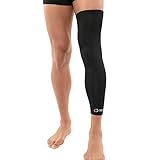
- FIND THE STRENGTH TO HEAL. The ultra-comfortable Copper Compression Leg Compression Sleeve provides consistent compression from the top of the thigh to just above the ankle. The close fit makes it easy to wear under pants, trousers, skirts, and even leggings, without adding substantial bulk. This is a full leg compression garment, and should not be folded or rolled when worn. For partial leg needs, check out our Recovery Calf Sleeve, Recovery Knee Sleeve, and PowerKnit Knee Sleeve.
- AVAILABLE IN 4 SIZES. Each purchase comes with 1 sleeve, in Small, Medium, Large, or X-Large. To find your ideal fit, stand with your feet parallel and your leg muscles relaxed. Measure around your thigh at its widest part, and choose the size that best matches your circumference. If you fall in between sizes, we recommend sizing down. Compression products need to fit snugly for best results.
- WEAR ALL DAY EVERY DAY AS NEEDED. This leg stabilizer sleeve brace has been designed to give you the support you need for all day and all night comfort. Whether it's a new injury, persistent aches and pains, or even simple surgery recovery, it's perfect to aid you in your path back to wellness. Helps with all kinds of issues, from simple muscle & joint soreness, arthritis, tendonitis, and more, from baseball, basketball, soccer, golf, gym, hiking, running, tennis, and volleyball.
- COPPER-INFUSED MATERIAL. The breathable material used in this leg stocking is designed to wick away sweat, keeping your skin dry and comfortable. The copper itself never washes away and keeps working to extend the life of the product. The high quality knit will withstand washing and will not warp, and reduce its compress capabilities over the course of time. Available in black, navy blue, and pink. Helps with circulation while playing football, pickleball, cycling, wrestling, and other sports.
- FIT, PERFORMANCE, & QUALITY. Please closely follow the sizing guide to make sure this leg sleeve will fit you comfortably. If the performance of this product is not effective, hard to use, of inferior quality or constructions, or if you are feeling pain or discomfort, please discontinue use of the product immediately. If there are any quality issues, please contact us right away. Your safety and satisfaction are our top concerns.
Adjustability Over Size Precision
Rather than chasing perfect sizing, the Elite Hips emphasize adjustability. Wide Velcro-style fastening zones allow users to fine-tune tension before compression even begins.
This approach acknowledges a key reality of recovery wearables: bodies fluctuate. Training load, inflammation, and even time of day can change how a device fits, and rigid sizing would introduce unnecessary friction.
From a future-facing perspective, this hints at where smart recovery is heading. Adaptive fit systems, potentially informed by biometric data, will likely replace static size charts altogether.
Ease of Donning Is a Make-or-Break Factor
If a recovery wearable is awkward to put on, usage drops off fast. The Elite Hips avoid complex threading or multi-step alignment, allowing users to wrap and secure the device in under a minute.
This mirrors the evolution of heart rate straps and cycling shoes, where speed of use became just as important as performance. Recovery is already a discretionary activity for many athletes, and any added friction reduces compliance.
The lesson here is clear: recovery tech must respect post-workout fatigue. Design should assume the user is tired, sore, and impatient.
Quiet Operation and Environmental Compatibility
Wearability isn’t limited to physical comfort; it includes social and environmental tolerance. The Elite Hips operate quietly enough to be used while watching TV, working on a laptop, or winding down before sleep.
This matters because recovery increasingly overlaps with daily life rather than existing as a dedicated session. Devices that demand isolation or special setup will struggle to compete with wearables that blend into normal routines.
As recovery tech matures, expect noise, heat, and visual footprint to be treated as key design metrics alongside battery life and compression range.
Why This Signals the Future of Non-Wrist Wearables
The Elite Hips demonstrate that successful recovery wearables won’t feel like downsized medical devices or oversized fitness accessories. They will feel purpose-built for the body region they serve, with ergonomics doing most of the heavy lifting.
This has broader implications for the wearable ecosystem. As sensors and actuation move beyond the wrist, design discipline becomes the differentiator, not raw technology.
Hyperice’s approach suggests a future where recovery wearables are judged less by specs and more by how naturally they disappear into an athlete’s life, quietly doing their job without demanding attention.
Battery Life, Portability, and Real-World Use: Recovery Wearables Beyond the Living Room
Once recovery wearables escape the home, battery life stops being a spec-sheet number and becomes a behavioral constraint. The Normatec Elite Hips make a strong case that smart compression can be treated more like a wearable accessory than a plugged-in appliance.
This shift matters because recovery time is increasingly fragmented. Athletes recover between meetings, on the floor of hotel rooms, or during evening wind-down routines rather than in a dedicated recovery corner.
Battery Life as a Usage Multiplier
The Elite Hips’ integrated battery is designed to support multiple full compression sessions between charges, which fundamentally changes how often the device gets used. When users don’t have to plan around outlets, recovery becomes opportunistic rather than scheduled.
This mirrors the evolution of early GPS watches, where battery life determined whether athletes trusted the device for daily training or reserved it for special sessions. In recovery wearables, adequate battery life doesn’t just extend sessions; it increases consistency over weeks.
For future smart recovery products, battery capacity will need to scale alongside compression intensity and sensor ambition. Any device that demands daily charging risks being sidelined next to already battery-hungry wrist wearables.
Portability Without the “Medical Bag” Aesthetic
The Elite Hips strike a careful balance between structural rigidity and packability. While not pocket-sized, the form factor folds down cleanly into a gym bag or carry-on without feeling like clinical equipment.
This matters for endurance athletes and frequent travelers who already manage shoes, nutrition, and multiple wearables. Recovery devices that visually or physically dominate luggage are far less likely to leave the house.
Hyperice’s design language here points toward a future where recovery wearables adopt the visual restraint of premium headphones or smart trainers rather than rehab hardware.
Charging, Connectivity, and Frictionless Setup
Charging is handled via a simple cable system, avoiding proprietary docks or awkward alignment. That seems minor until you compare it to older compression systems that effectively lived tethered to a wall.
Bluetooth connectivity with the Hyperice app adds flexibility without creating dependency. Sessions can be controlled entirely on-device, which is crucial when phones are charging, unavailable, or deliberately put away.
This hybrid control model is a quiet signal of maturity. The best wearables no longer force software interaction; they allow it when it adds value.
Using Recovery Wearables in Shared Spaces
Real-world use isn’t just about where a device can physically go, but where it feels socially acceptable to use. The Elite Hips’ quiet operation and self-contained design make it viable in shared living spaces, hotel rooms, or even low-key office environments.
This opens the door to recovery becoming ambient rather than ritualized. Compression sessions can overlap with emails, media consumption, or light mobility work without demanding full attention.
As recovery wearables evolve, social compatibility will increasingly shape adoption. Devices that announce themselves loudly or monopolize space will struggle against more discreet alternatives.
Durability, Sweat, and the Reality of Athletic Use
Recovery wearables live in a harsher environment than most consumer tech. The Elite Hips are built to tolerate sweat, repeated folding, and frequent transport without feeling fragile.
Materials and stitching feel closer to high-end training gear than medical textiles, which aligns with how athletes actually treat their equipment. This durability encourages daily use rather than careful, occasional deployment.
Future recovery devices will likely need ingress protection, washable components, and modular repairability as standard, especially as prices remain premium.
What Portability Signals About the Next Generation of Recovery Tech
By untethering compression therapy from fixed locations, the Elite Hips hint at a broader redefinition of recovery wearables. These devices are no longer stationary tools but mobile systems that follow the athlete through their day.
This mobility sets the stage for tighter integration with training data, travel schedules, and fatigue signals pulled from wrist-based wearables. Once recovery goes mobile, context-aware automation becomes possible.
Battery life and portability are not supporting features here. They are the enabling technologies that allow recovery wearables to participate fully in the modern wearable ecosystem rather than existing at its edges.
Normatec vs Watches vs Rings: Complementary Recovery Data, Not Competition
As recovery devices become more portable and socially compatible, it’s tempting to frame products like the Normatec Elite Hips as challengers to smartwatches or recovery-focused rings. In practice, they occupy a different layer of the recovery stack, one that wrist and finger wearables cannot physically reach.
The Elite Hips don’t replace recovery metrics. They act on them, translating abstract readiness scores into mechanical intervention.
Watches and Rings Measure State, Normatec Alters It
Smartwatches and rings excel at sensing physiological signals over time. Heart rate variability, resting heart rate trends, sleep staging, skin temperature deviations, and training load ratios all describe how stressed or recovered the body appears to be.
What they cannot do is directly influence tissue-level recovery. The Elite Hips step in after interpretation, using pneumatic compression to mechanically stimulate circulation and fluid movement in areas that optical sensors and accelerometers can’t meaningfully affect.
This distinction matters because recovery is not just informational. It is actionable.
Rank #4
- Calf Compression Sleeve Sizing Information: For the best fit of your sizes, please refer to our sizing chart. Measure the thickest part of your calf using a soft tape measure to determine your size. If you are between sizes, size up for a looser fit, and size down for tighter compression.
- Effective Compression for Swelling & Varicose Veins Relief: The BLITZU Calf Compression Sleeves feature graduated compression to improve blood circulation, reduce swelling, and alleviate discomfort caused by varicose veins and pregnancy-related leg swelling, making them perfect for nursing mothers and individuals with circulation issues.
- Pain Relief for Shin Splints & Muscle Fatigue: Experience quick relief from shin splints, muscle soreness, and leg cramps with these compression sleeves. Ideal for runners, athletes, and active individuals, these calf sleeves provide pain relief, enhance muscle recovery, and support performance during intense physical activity.
- Patented Kinesiology Strips for Targeted Pain Relief: Developed and patented in New York, our calf compression sleeves incorporate advanced kinesiology strips that provide superior support, stability, and pain reduction. Designed using the renowned kinesiology technique, these strips promote natural pain relief and accelerate recovery by improving muscle function and reducing fatigue.
- Breathable & Comfortable for All-Day Wear: Designed with premium breathable fabric, these footless compression socks keep your legs dry and comfortable for extended wear. Whether you're at work, traveling, or exercising, these calf compression sleeves provide all-day support without causing discomfort or overheating.
Why Compression Targets the Gaps Wrist Wearables Leave Behind
Wrist-based wearables are constrained by form factor and anatomy. Even the best sensors struggle to infer localized muscular fatigue in the hips, glutes, and upper thighs, where runners and cyclists accumulate significant mechanical stress.
The Elite Hips focus precisely on these regions, using overlapping chambers and programmable pressure gradients to address swelling and stiffness that never show up clearly in HRV or sleep metrics. This makes compression therapy a physical complement to biometric monitoring rather than a data competitor.
In other words, watches tell you that you’re fatigued. Normatec addresses where you feel it.
Different Cadence, Different Expectations
Smartwatches and rings are designed for continuous wear. Comfort, thinness, materials, and battery life are optimized for 24/7 use, with software quietly aggregating data in the background.
The Elite Hips operate on a session-based cadence. Battery life is measured in treatments rather than days, comfort is judged by pressure distribution rather than thinness, and success is felt immediately instead of visualized on a dashboard.
These different rhythms reduce overlap and friction. You don’t choose between wearing a watch or using compression; they naturally slot into different moments of the day.
The Software Bridge Is Where the Ecosystem Converges
Where things become interesting is not hardware, but software alignment. Normatec already allows intensity control, zone targeting, and session timing, but today these decisions are still user-driven.
Watches and rings provide the contextual data to automate those choices. Elevated overnight HRV suppression or poor sleep efficiency could one day trigger a gentler compression protocol, while heavy training loads might cue longer or more aggressive sessions.
The Elite Hips hint at a future where recovery devices respond dynamically to the same signals that guide training plans, without demanding manual interpretation.
Why This Isn’t a Zero-Sum Wearable Market
Unlike watches, recovery wearables don’t compete for wrist real estate, fashion compatibility, or daily wear comfort. Their value proposition is additive, not substitutive.
For athletes already invested in Garmin, Apple Watch, COROS, Oura, or Whoop ecosystems, devices like the Elite Hips increase the return on that data rather than fragmenting it. The more accurate the recovery signal, the more valuable an effective recovery tool becomes.
This reframes recovery hardware as infrastructure, not an accessory.
What the Elite Hips Reveal About Future Recovery Stacks
The Normatec Elite Hips show that the next phase of wearable recovery isn’t about consolidating everything into a single device. It’s about distributing intelligence across specialized tools that do one job extremely well.
Watches and rings will continue refining measurement, comfort, materials, and battery efficiency. Recovery wearables will evolve toward quieter operation, better portability, smarter automation, and deeper integration with those data streams.
Together, they form a closed loop: sense, interpret, act. The Elite Hips represent the “act” layer finally catching up to the sophistication of modern biometric tracking.
The Shift Toward Personalized, Adaptive Recovery Protocols
If the Elite Hips represent the “act” layer of the recovery loop, personalization is what turns that action from a blunt tool into a precision instrument. Compression therapy has traditionally been static: fixed pressures, fixed durations, and preset programs that assume yesterday’s fatigue looks like today’s. That assumption is starting to break down.
The broader wearable ecosystem has already trained athletes to expect recovery recommendations that change daily. Smart recovery hardware now has to meet that expectation, not just replicate clinic-grade compression at home.
From Preset Programs to Context-Aware Recovery
Today, the Elite Hips still operates within defined programs, but its structure clearly anticipates a future where those presets are dynamic rather than chosen. Zone-specific inflation, adjustable pressure gradients, and programmable session lengths are all ingredients for adaptive logic, even if the intelligence isn’t fully automated yet.
In practical terms, this opens the door to compression protocols that respond to how the athlete actually shows up that day. A runner coming off back-to-back VO2 max sessions doesn’t need the same pelvic and glute compression strategy as someone returning from a long-haul flight or a desk-bound workweek.
The hardware is already capable of delivering nuanced mechanical stimulus. What’s missing is the decision engine.
Why Biometric Signals Matter More Than Training Plans
Training plans describe intent, not outcome. Wearable-derived signals like HRV trends, resting heart rate drift, sleep fragmentation, and even skin temperature deviations capture the body’s response to stress in real time.
When recovery wearables begin to ingest those signals directly, compression intensity and duration become variables, not constants. Lower HRV combined with elevated resting heart rate could cue lower peak pressures and longer decompression cycles, while strong readiness scores might unlock shorter, more aggressive sessions aimed at flushing residual fatigue quickly.
The Elite Hips sit at a biomechanically important junction where these adaptations matter. The hips influence running economy, cycling power transfer, and lifting stability, making them an ideal target for data-driven recovery modulation.
Mechanical Recovery as a Software-Defined Experience
What’s emerging is a shift from hardware-defined recovery to software-defined recovery. The physical device becomes a platform, while protocols evolve through firmware and app updates rather than new product launches.
This mirrors what has already happened in smartwatches, where training load algorithms, sleep scoring, and readiness metrics have matured without radical hardware redesigns. Recovery wearables are now entering that same phase, where longevity and value are tied to software sophistication as much as materials or build quality.
The Elite Hips’ quiet operation, cordless design, and improved battery life make it realistic to use frequently, which is a prerequisite for adaptive systems to work. Personalization only matters if the device fits into daily life without friction.
The End of One-Size-Fits-All Compression
Compression therapy has always been effective, but not always specific. Athletes differ in tissue density, injury history, training age, and tolerance to pressure, yet traditional recovery devices rarely account for that variability.
Future protocols will likely blend historical usage patterns with biometric response. If an athlete consistently reports better sleep after moderate evening sessions, the system learns. If aggressive compression correlates with next-day stiffness, the algorithm adjusts.
The Elite Hips hint at this trajectory by giving users granular control today, while quietly setting the stage for automation tomorrow.
Why This Shift Changes the Value Proposition
Personalized recovery reframes devices like the Elite Hips from luxury add-ons into performance infrastructure. The more individualized the protocol, the harder it is to replace with generic stretching, foam rolling, or passive rest.
For athletes already investing in premium watches and rings, adaptive recovery amplifies the return on that data. Biometrics stop being abstract scores and start producing tangible mechanical outcomes that the body can feel within a single session.
This is where smart recovery wearables separate themselves from novelty. They don’t just track recovery; they actively participate in it, guided by the same data streams that shape modern training decisions.
What Normatec Elite Hips Reveal About the Future of Smart Recovery Wearables
Seen in that context, the Normatec Elite Hips aren’t just a refinement of compression therapy; they’re a signal that recovery hardware is starting to evolve like modern wearables rather than gym accessories. The decisions Hyperice has made around form factor, controls, and software hint at where this category is heading over the next five years.
What’s most interesting is not what the Elite Hips do today, but what they make possible once recovery devices become first-class citizens in connected training ecosystems.
Recovery Devices Are Becoming “Wearables,” Not Accessories
Traditional compression boots have always lived outside the wearable category. They were stationary, tethered, and session-based, something you scheduled rather than integrated.
The Elite Hips shift that perception. Cordless operation, onboard controls, and a battery life that comfortably spans multiple sessions make it closer to how we already think about smartwatches or rings: something you can use opportunistically, not ceremonially.
This matters because frequency drives intelligence. A recovery device that’s used three times a week will never generate enough behavioral data to adapt meaningfully, while one that’s easy to throw on after a run or before bed starts to build a usable signal.
💰 Best Value
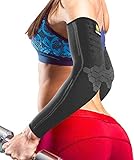
- ✅ PAIN RELIEF AND FAST RECOVERY - Recommended by trainers and doctors, Sparthos arm sleeves will provide compression and improve blood circulation, relieving symptoms of tendonitis, joint pain, swelling, tennis elbow, golf elbow, and other elbow pain. Get through your day without pain and discomfort.
- ✅ BE COMFORTABLE AND CONFIDENT AGAIN - Targeted compression and improved blood circulation are the key factors of fast recovery. Whether you are battling injury or trying to prevent one - wear Sparthos!
- ✅ YOU DESERVE THE BEST - Designed for a perfect fit that stays in place, no rolling, slipping, or constant readjusting. High-tech breathable yarn & seamless design means no irritation or discomfort. Stretch is even, so you maintain full range of motion and function. Keeps scars, tattoos and bruises well hidden. Shuts out harmful UV rays.
- ✅ VERSATILE, PRACTICAL, DURABLE - Wear anytime, anyplace. Home, work or gym. Wear it during day and night. We have created a perfect sleeve that knows no limits! Professional athlete, a bank employee, a full-time mom, or anyone in between, they all use Sparthos. And you? What are you waiting for?
- ✅ WE LOVE OUR CUSTOMERS, ORDER NOW! - Sparthos USA Based Customer Happiness Team is here to help with any questions or issues. Didn't Love these Arm Sleeves? Just contact us.
Lower-Body Focus Reflects a Broader Rethink of Recovery Anatomy
Most recovery wearables have historically prioritized distal areas like calves and feet, largely because they’re easier to wrap and pressurize. The Elite Hips deliberately targets the glutes, hip flexors, and upper thighs, areas that are biomechanically central but often neglected.
For runners and cyclists, this is where fatigue accumulates and where compensation patterns emerge. Tight hip flexors alter stride mechanics, and fatigued glutes shift load downstream to knees and calves.
By centering recovery around these regions, Hyperice is acknowledging that smart recovery will increasingly be anatomy-aware. Future devices are likely to segment protocols not just by limb, but by movement patterns, sport specificity, and injury risk profiles.
Software Is Becoming the Primary Differentiator
From a materials standpoint, the Elite Hips are well executed but not revolutionary. Durable textiles, comfortable compression zones, and quiet pumps are table stakes at this level.
The real differentiation lies in how the device is controlled and how that control could evolve. Today, users manually adjust pressure, zones, and duration through the Hyperice app or onboard buttons.
Tomorrow, those settings are obvious candidates for automation. Once paired with training load data, sleep metrics, or HRV trends from a smartwatch, the logic for adaptive protocols becomes straightforward. The Elite Hips feel architected for that future, even if the automation isn’t fully realized yet.
Interoperability Will Define the Winners
One of the clearest signals from the Elite Hips is that recovery wearables won’t exist in isolation for long. Their real value emerges when they sit downstream of other sensors.
Athletes already trust devices like Garmin, Apple Watch, COROS, and Oura to quantify strain and readiness. What’s been missing is a way to act on that data mechanically, rather than just cognitively.
Compression wearables like the Elite Hips are natural endpoints for that pipeline. As APIs open and partnerships deepen, it’s easy to imagine recovery sessions being recommended, scheduled, or even auto-initiated based on accumulated fatigue rather than user intuition.
Comfort and Compliance Are Now Engineering Priorities
Smart recovery only works if people actually use it, and Hyperice’s design choices reflect a growing awareness of compliance as a technical problem.
The Elite Hips distribute pressure in a way that avoids the “vice grip” sensation common with older systems. Noise levels are low enough for evening use, and the lack of hoses removes both physical and psychological friction.
These details may seem mundane, but they mirror the evolution of wrist wearables, where comfort, weight, and ergonomics ultimately mattered more than raw sensor count. Recovery devices are following the same arc, optimizing for long-term ownership rather than short-term novelty.
Battery Life Signals a Shift Toward Always-Available Recovery
Battery performance rarely gets attention in recovery gear, yet it’s central to how often devices are used. The Elite Hips’ improved battery life makes it realistic to leave the device charged and ready, not rationed for “hard days only.”
That shift changes user behavior. Recovery stops being reactive and becomes preventive, woven into routine rather than reserved for damage control.
As recovery wearables adopt longer-lasting batteries and smarter power management, they’ll begin to resemble other always-on health devices, quietly available whenever the body needs intervention.
From Manual Control to Trust-Based Automation
Right now, the Elite Hips still rely on user judgment. You choose the intensity, you decide the timing, and you interpret how your body feels afterward.
The future implied here is one where that decision-making gradually transfers to software. Not abruptly, but incrementally, as athletes learn to trust systems that consistently improve outcomes.
This mirrors how athletes once resisted automated training plans, then gradually accepted them as watches proved their accuracy. Recovery wearables are on the same trajectory, and the Elite Hips feel like an early but credible step along that path.
Why This Matters Beyond Compression Therapy
Perhaps the most important takeaway is that the Elite Hips aren’t just about compression. They represent a broader category of intervention-based wearables, devices that don’t just observe the body but physically influence it.
That distinction matters. Once wearables cross from measurement into action, they start to compete with coaches, therapists, and manual modalities, not just apps.
Hyperice’s Elite Hips suggest a future where recovery becomes programmable, adaptive, and integrated, a logical extension of the data-rich training environments athletes already inhabit.
Who This Future Is For: Athletes, Power Users, and the Rise of Recovery-First Tech
The trajectory implied by the Normatec Elite Hips makes one thing clear: this is not recovery tech for everyone, at least not yet. It’s aimed squarely at athletes and power users who already understand that training stress without structured recovery is a dead end.
These are users who track load, sleep, and readiness on their wrists, then look for tools that can actually close the loop. For them, recovery isn’t a passive metric to admire in an app; it’s something to actively manage.
The Endurance Athlete Use Case: When Volume Demands Intervention
Runners, cyclists, and triathletes are the most obvious beneficiaries because their training volume accumulates damage in predictable places. Hips, glutes, and lower back fatigue are common bottlenecks that watches can flag but not fix.
The Elite Hips step in at precisely that gap, acting as a targeted intervention rather than a generalized wellness tool. For endurance athletes, this signals a future where recovery hardware becomes as essential as GPS accuracy or heart rate reliability.
Strength Athletes and Hybrid Trainers: Recovery as a Performance Multiplier
Powerlifters, CrossFit athletes, and hybrid trainers stress tissues differently, but they face the same constraint: limited recovery bandwidth. Heavy lifting and high-intensity work tax the nervous system and connective tissue in ways sleep data alone can’t resolve.
Smart compression wearables appeal here because they offer a repeatable, time-efficient recovery ritual. The Elite Hips hint at a future where recovery sessions are scheduled with the same intent as training blocks, not treated as optional add-ons.
Power Users Who Already Live Inside Ecosystems
This category matters more than raw athletic ability. The Elite Hips are best suited to users already embedded in wearable ecosystems, syncing watches, training platforms, and recovery tools into a single feedback loop.
These users don’t want another standalone gadget; they want interoperability, longitudinal data, and consistent behavior change. Hyperice’s design and software direction suggest an awareness that recovery wearables must eventually speak the same language as watches, apps, and training analytics.
Why Casual Fitness Users Aren’t the Target Yet
For gym-goers training a few times a week, the Elite Hips may feel excessive, both in cost and intent. The value proposition only clicks when recovery quality directly limits performance, not when workouts are sporadic or purely recreational.
That’s not a flaw, but a marker of where the category currently sits. Like early GPS watches or first-generation sleep tracking, smart recovery wearables are starting at the high-performance edge before moving downstream.
The Rise of Recovery-First Thinking
What truly defines this future isn’t the hardware itself, but a philosophical shift. Training used to be the primary object of optimization, with recovery treated as a constraint to work around.
Devices like the Elite Hips invert that logic, positioning recovery as the foundation that enables consistent training in the first place. As this mindset spreads, recovery tools won’t feel like indulgences, but infrastructure.
From Wrist-Centric Wearables to Body-Centric Systems
Smartwatches have dominated the wearable narrative by owning the wrist, but the body is larger and more complex than a single sensor location. The Elite Hips represent a move toward distributed wearables that address specific anatomical and functional needs.
This is likely the next phase of wearable evolution: watches for monitoring, body-worn systems for intervention. Together, they form a more complete performance and health stack than either could alone.
What the Elite Hips Ultimately Signal
The Normatec Elite Hips are not the final form of smart recovery wearables, but they are a credible prototype of what’s coming. Longer battery life, more intuitive control, and the promise of automation all point toward recovery becoming habitual rather than reactive.
For athletes and power users willing to invest early, this category offers something watches alone never could: the ability to act on data, not just observe it. That shift, from insight to intervention, is what makes recovery-first tech one of the most important wearable trends to watch next.