For anyone who lived through the early wearable boom of the 2010s, the name Jawbone still carries weight. It evokes minimalist hardware, ambitious health tracking promises, and a brand that collapsed just as wearables were becoming mainstream. Seeing Jawbone resurface today naturally triggers the same question: what are they building this time, and is it another comeback attempt in hardware?
The short answer is that Jawbone is not returning as a device maker at all. Jawbone Health is positioning itself as a premium, software-first health platform designed to sit above existing wearables, medical devices, and health data sources rather than compete with them. Understanding that distinction is critical, because it shapes everything from who Jawbone Health is actually for to how much impact it could realistically have on the wider health-tech ecosystem.
This section sets the baseline. We’ll unpack what Jawbone Health is, what it deliberately avoids, and why its return matters even if you never wear another Jawbone-branded product again.
The Jawbone Name Carries Baggage — and Intentional Distance
Jawbone’s original consumer business ended in 2017 after years of financial strain, product delays, and an increasingly crowded wearable market dominated by Apple, Fitbit, and Garmin. The UP band line was influential in shaping modern fitness tracking, but it also exposed the limits of hardware-first health companies with thin margins and high R&D costs. That history is impossible to separate from the current relaunch.
🏆 #1 Best Overall
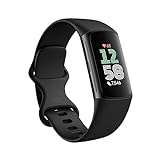
- Find your way seamlessly during runs or rides with turn-by-turn directions from Google Maps on Fitbit Charge 6[7, 8]; and when you need a snack break on the go, just tap to pay with Google Wallet[8, 9]
Jawbone Health, led by Jawbone founder Hosain Rahman, is deliberately distancing itself from that past. There is no wristband, no smartwatch, no promise of proprietary sensors with class-leading battery life or materials. Instead, the company is reframing Jawbone as a health intelligence layer, not a physical product brand.
This is less a reboot and more a reinvention. Jawbone Health is treating hardware as a solved problem, or at least someone else’s problem.
Not a Wearable, Not a Smartwatch, Not a Competitor to Apple or Oura
Jawbone Health does not manufacture sensors, trackers, or displays. It does not replace your Apple Watch, Garmin, Whoop, Oura Ring, or continuous glucose monitor. In fact, it depends on those devices to function at all.
At its core, Jawbone Health is a data aggregation and interpretation platform. It ingests health and lifestyle data from multiple sources, including consumer wearables, connected medical devices, lab results, and self-reported information. The value proposition is not measurement, but meaning.
This immediately sets it apart from traditional wearable ecosystems, which tightly couple hardware, software, and services. Apple, Fitbit, and Samsung optimize vertically for battery life, comfort, sensor accuracy, materials, and day-to-day wearability. Jawbone Health optimizes horizontally, attempting to see across devices, platforms, and data silos that rarely talk to each other in a clinically meaningful way.
A Shift From Tracking Metrics to Interpreting Health Trajectories
Most wearables excel at showing you what happened. Steps taken, heart rate trends, sleep stages, recovery scores, or stress snapshots. Even advanced platforms struggle to explain why those metrics changed or what they imply beyond generic guidance.
Jawbone Health’s stated ambition is to move from metric dashboards to longitudinal health understanding. Rather than focusing on today’s sleep score or last night’s resting heart rate, the platform emphasizes patterns over weeks, months, and years. The goal is to contextualize wearable data alongside medical history, genetics, lab values, and lifestyle factors.
This is a fundamentally different problem than designing a comfortable strap, choosing titanium versus aluminum, or squeezing another day of battery life out of a sensor package. It’s a software, data science, and clinical reasoning challenge, not an industrial design one.
Why Jawbone Health Exists Now, Not a Decade Ago
The idea Jawbone Health is pursuing would have been nearly impossible during the original UP era. APIs were immature, health data standards were fragmented, and consumer wearables produced noisier, less consistent data. Today’s environment is markedly different.
Modern smartwatches and rings deliver continuous, reasonably reliable heart rate, sleep, activity, and in some cases ECG and blood oxygen data. Platforms like Apple Health, Google Health Connect, and various device APIs make cross-platform aggregation feasible. At the same time, consumers are increasingly aware that raw data without interpretation has limited value.
Jawbone Health is emerging at a moment when people already own the hardware, trust it enough to wear daily, and are starting to ask harder questions about what all that data actually means for their long-term health.
What This Means for Wearable Owners and Health-Tech Watchers
For existing wearable users, Jawbone Health is not asking you to switch ecosystems. You keep your preferred device, whether that’s chosen for comfort, battery life, materials, or training features. Jawbone Health’s pitch is that your data becomes more valuable when it’s interpreted holistically rather than trapped inside a single brand’s app.
For the broader health-tech industry, Jawbone Health represents a bet that the next competitive frontier isn’t better sensors, but better synthesis. If successful, it challenges wearable companies to think beyond device specs and toward interoperable, clinically relevant insights.
That also raises important questions about data quality, privacy, medical oversight, and how much trust users should place in AI-driven health interpretations. Those questions are central to evaluating Jawbone Health realistically, and they shape everything that follows in this analysis.
What Exactly Is Jawbone Health? Platform Definition, Vision, and Business Model
At its core, Jawbone Health is not a wearable brand revival, and it is not a single-purpose health app. It is a software-first health intelligence platform designed to sit above existing wearables and health data sources, aggregating, normalizing, and interpreting them into higher-level health insights.
The distinction matters. Where most smartwatch and ring ecosystems focus on capturing data and presenting metrics, Jawbone Health is positioning itself as an interpretive layer, one that attempts to translate long-term, multi-source physiological data into meaningful health narratives rather than daily scores.
A Health Intelligence Layer, Not a Device Ecosystem
Jawbone Health does not manufacture hardware, and there is no indication it plans to. Instead, it is designed to integrate with devices people already wear daily, chosen for their comfort, battery life, materials, or training features rather than platform lock-in.
That means smartwatches, fitness trackers, and potentially smart rings feed data into Jawbone Health through existing health data frameworks. Heart rate trends, sleep architecture, activity patterns, and other longitudinal signals are the raw inputs, not the end product.
This is a critical philosophical break from traditional wearable platforms. Jawbone Health is not trying to be your primary dashboard for steps or workouts; it is trying to be the place where weeks, months, and years of data are synthesized into insights about health trajectories.
From Metrics to Meaning: The Stated Vision
Public-facing descriptions and early messaging suggest Jawbone Health’s long-term vision centers on contextualized, personalized health understanding. Rather than flagging isolated anomalies, the platform aims to identify patterns that emerge over time and across systems.
This could include relationships between sleep quality and cardiovascular strain, or how changes in activity, recovery, and resting heart rate evolve together. The emphasis is on trends and correlations rather than daily optimization.
Importantly, Jawbone Health appears to frame itself as supportive and informational rather than prescriptive. It is not positioned as a diagnostic tool or a replacement for medical care, at least in its current form.
How This Differs From Apple Health, Fitbit, and Others
Apple Health, Fitbit, Garmin, and similar platforms excel at data capture, device integration, and near-real-time feedback. Their strength lies in tight hardware-software integration and polished daily experiences.
Jawbone Health’s differentiation is not better sensors or richer workout analytics. Its value proposition is synthesis across brands and time horizons, attempting to answer questions that single-ecosystem apps struggle with once users switch devices or age out of fitness-first goals.
For users who prioritize long-term health monitoring over daily performance metrics, this cross-platform continuity is potentially compelling. It also reflects a shift in the wearable market from short-term engagement toward longitudinal relevance.
What Is Publicly Known Versus Still Unclear
What is clear is that Jawbone Health is software-driven, data-centric, and platform-agnostic by design. It is also evident that the company is emphasizing clinical reasoning and data science over consumer hardware aesthetics.
What remains less clear is the exact depth of its clinical validation, how much human oversight exists alongside algorithmic interpretation, and how conservative or aggressive its insight generation will be. These factors will significantly affect trust and adoption.
Equally unclear is the extent of regulatory ambition. There is no public indication that Jawbone Health is seeking medical device classification, which suggests a cautious approach to medical claims, at least initially.
The Emerging Business Model
Jawbone Health appears to be structured around a premium software model rather than advertising or hardware sales. A subscription-based approach aligns with its positioning as an ongoing health intelligence service rather than a one-time product.
There is also plausible room for enterprise or clinical partnerships over time, particularly if the platform proves useful for population-level health monitoring or preventative care initiatives. However, this remains speculative based on current information.
What is unlikely is a free, mass-market model. The value Jawbone Health is proposing depends on sustained engagement, data depth, and trust, all of which typically require a paying user base.
What Jawbone Health Is Not
Jawbone Health is not a replacement for your smartwatch app, and it is not designed to control workouts, manage device settings, or compete on training features. Users should not expect detailed VO2 max coaching, race planning, or hardware-specific optimization.
It is also not a medical diagnosis engine. While it may surface insights that prompt further investigation, responsibility for medical interpretation remains firmly outside the app.
Understanding these boundaries is essential to evaluating Jawbone Health fairly. Its ambition lies between consumer wellness and clinical care, occupying a space that is increasingly relevant but inherently complex.
Why This Platform Matters If It Works
If Jawbone Health succeeds, it validates the idea that the most valuable innovation in wearables is no longer the device on your wrist, but the intelligence layered on top of it. That would have implications across the entire health-tech ecosystem.
For users, it could mean greater continuity and meaning from data they are already generating passively. For the industry, it challenges the assumption that closed ecosystems are the best way to deliver health value.
Whether Jawbone Health can execute on this vision responsibly and credibly is the central question. Understanding what it claims to be today is the first step in answering that.
From UP Bands to AI Health Intelligence: How Jawbone Health Differs from Old Jawbone
To understand what Jawbone Health is trying to become, it helps to be clear about what it is deliberately leaving behind. While the name evokes nostalgia for UP bands and minimalist trackers, the modern platform is architected around a very different idea of where health value is created.
This is not a reboot of Jawbone the hardware company. It is a reimagining of Jawbone as a data-first health intelligence layer that sits above devices, rather than competing with them.
The Original Jawbone: Hardware-Centric, App-Supported
The original Jawbone built its reputation on industrial design and early consumer wearables. UP, UP24, and UP3 were slim, screenless fitness bands focused on steps, sleep, and basic activity trends at a time when the Apple Watch did not yet exist.
Those products lived or died by hardware execution. Battery life, comfort, materials, and reliability mattered because the band itself was the experience, with the companion app acting as a visualization layer rather than the core value.
Jawbone’s software was ahead of its time in some respects, particularly sleep tracking and behavioral nudges, but it remained tightly bound to Jawbone-owned devices. If the hardware failed, the ecosystem collapsed, which ultimately proved fatal.
Jawbone Health: Platform First, Hardware-Agnostic by Design
Jawbone Health inverts that entire model. There is no proprietary band, no custom sensor array, and no attempt to control the physical layer of data collection.
Instead, the platform is designed to ingest data from existing wearables and health sources, including smartwatches, rings, and potentially medical-grade inputs. The assumption is that users already own capable hardware with mature sensors, long battery life, and refined comfort.
Rank #2

- Inspire 3 is the tracker that helps you find your energy, do what you love and feel your best. All you have to do is wear it.Operating temperature: 0° to 40°C
- Move more: Daily Readiness Score(1), Active Zone Minutes, all-day activity tracking and 24/7 heart rate, 20+ exercise modes, automatic exercise tracking and reminders to move
- Stress less: always-on wellness tracking, daily Stress Management Score, mindfulness sessions, relax breathing sessions, irregular heart rhythm notifications(2), SpO2(3), menstrual health tracking, resting heart rate and high/low heart rate notifications
- Sleep better: automatic sleep tracking, personalized Sleep Profile(1), daily detailed Sleep Score, smart wake vibrating alarm, sleep mode
- Comfortably connected day and night: calls, texts & smartphone app notifications(4), color touchscreen with customizable clock faces, super lightweight and water resistant to 50 meters, up to 10 day battery life(5)
This shift dramatically changes Jawbone’s risk profile. It no longer needs to compete with Apple, Garmin, Oura, or Samsung on materials, ergonomics, or radio efficiency, and can focus entirely on software intelligence and longitudinal analysis.
From Metrics to Meaning: A Different Software Philosophy
The old Jawbone app emphasized daily metrics and trend lines. Steps, sleep duration, and resting heart rate were presented clearly, but interpretation largely fell to the user.
Jawbone Health positions itself as an interpretive layer rather than a dashboard. Its stated goal is to translate raw signals into higher-level insights about health patterns, deviations, and potential areas of concern over weeks or months, not just today’s performance.
This is a subtle but important distinction. Most smartwatch platforms still optimize for immediacy, surfacing rings, scores, and short-term feedback loops tied to daily behavior.
AI as the Core Differentiator, Not a Feature Add-On
In the original Jawbone era, machine learning played a limited role, largely confined to sleep detection and basic pattern recognition. Today, Jawbone Health frames AI as the foundation of the product rather than an enhancement.
The platform is designed to look across multiple data streams simultaneously, including activity, sleep, heart rate trends, recovery indicators, and potentially contextual inputs. The ambition is to identify relationships that are not obvious when metrics are viewed in isolation.
This approach aligns more closely with modern digital health platforms than with traditional fitness apps. It also raises the bar for transparency, explainability, and trust, areas where Jawbone Health will be closely scrutinized.
No Device Lock-In, No Training Plans, No Performance Obsession
Another clear break from both old Jawbone and current smartwatch ecosystems is what Jawbone Health intentionally avoids. There are no device-exclusive features, no proprietary scores tied to a specific sensor configuration, and no emphasis on athletic performance.
Users should not expect interval workouts, pace targets, or sport-specific analytics. The platform is oriented toward health continuity, not competition or optimization for race day.
For former UP users, this may feel familiar in spirit but far more expansive in scope. The focus is still on everyday health, but now viewed through a longitudinal, cross-device lens.
From Consumer Gadget Brand to Health Intelligence Service
Perhaps the most significant difference is how Jawbone Health defines its relationship with users. The old Jawbone sold objects; the new Jawbone Health sells ongoing interpretation and insight.
This reframing explains the subscription model, the emphasis on sustained engagement, and the lack of interest in mass-market pricing. The platform is positioning itself closer to a personal health analyst than a fitness tracker replacement.
Whether that value proposition resonates will depend on how actionable, accurate, and responsibly framed its insights prove to be over time.
Why the Comparison Matters for Today’s Wearable Users
For users who remember Jawbone fondly, it is important not to project expectations from the UP era onto this platform. Familiar branding aside, the success metrics are entirely different.
Jawbone Health will not be judged on step accuracy, battery longevity, or strap comfort. It will be judged on whether it can make sense of the data users already generate, without overwhelming them or overstepping into medical claims.
That distinction is critical to evaluating Jawbone Health on its own terms, and to understanding why this iteration of Jawbone exists at all in a world already saturated with excellent hardware.
Data Without Hardware: How Jawbone Health Uses Existing Wearables and Sensors
If Jawbone Health is to be judged on its own terms, this is the section where its philosophy becomes concrete. After stepping away from device-led thinking, the platform’s defining bet is that meaningful health insight no longer requires owning, or even preferring, a specific piece of hardware.
Rather than replacing a smartwatch, ring, strap, or scale, Jawbone Health positions itself as an interpretive layer that sits above them. It assumes users already generate a constant stream of physiological and behavioral data, and that the real problem is not collection but coherence.
A Platform Built for Data Ingestion, Not Device Lock‑In
Jawbone Health does not manufacture sensors, and at launch it shows no intent to. Instead, it relies on direct integrations and system-level health frameworks to ingest data from existing consumer devices.
Public materials and early access documentation indicate compatibility with mainstream ecosystems rather than niche hardware. Apple Health and Google Health Connect appear to be foundational pipes, allowing Jawbone Health to pull data from Apple Watch, Fitbit, Garmin, Oura, Whoop, Samsung wearables, connected scales, and sleep trackers without requiring individual vendor partnerships for every device.
This approach deliberately avoids the trap that doomed the original Jawbone: dependency on a single hardware roadmap. As long as a device can write standardized health data into the operating system’s health layer, Jawbone Health can theoretically work with it.
What Types of Data Jawbone Health Actually Uses
The platform focuses on continuous, low-friction metrics rather than event-driven or performance-centric data. Core inputs include resting and sleeping heart rate, heart rate variability trends, sleep duration and regularity, step counts, general activity levels, and in some cases respiratory rate and blood oxygen trends where devices support them.
Notably absent are metrics that depend on tightly controlled sensor placement or sport-specific calibration. There is no evidence that Jawbone Health attempts to reinterpret VO2 max estimates, power output, GPS routes, or training load models.
This selective intake is intentional. By constraining itself to data that is broadly comparable across devices, Jawbone Health reduces the risk of drawing false conclusions from hardware-specific quirks or proprietary algorithms.
Normalization Across Devices: The Quiet Technical Challenge
One of the least visible but most critical aspects of Jawbone Health’s approach is normalization. A resting heart rate recorded by an Apple Watch Ultra on a titanium bracelet, a Whoop strap worn tightly on the bicep, and a budget Fitbit on a loose silicone band are not equivalent measurements in practice.
Jawbone Health appears to address this by prioritizing trends over absolute values. Instead of asserting that a specific HRV number is “good” or “bad,” the platform looks at directional changes within an individual’s historical baseline, regardless of which device produced the data.
This strategy mirrors how clinicians think rather than how fitness apps score. It also explains why the platform avoids competitive leaderboards or universal scoring systems, which would collapse under cross-device variability.
Why Jawbone Health Avoids Real‑Time and On‑Device Feedback
Because Jawbone Health does not control the hardware, it does not attempt to deliver real-time alerts or haptic feedback. There are no vibration-based prompts, no watch-face complications driving behavior mid-day, and no dependence on always-on displays or battery-hungry background processes.
Insights are delivered asynchronously through the app, framed as reflections on patterns rather than commands to act. This design choice keeps battery life concerns squarely with the underlying device, not the platform, and reinforces Jawbone Health’s role as an analyst rather than a coach.
For users accustomed to smartwatch nudges and rings that close, this may feel passive. For others, it removes a layer of behavioral pressure that often turns health tracking into a source of anxiety.
Compatibility Does Not Mean Equal Insight
While Jawbone Health is device-agnostic in principle, not all wearables are treated equally in practice. Devices that collect richer passive data, particularly around sleep staging and overnight heart metrics, enable deeper longitudinal analysis.
A basic step counter feeding only daily totals will limit what the platform can infer. Conversely, a ring or watch that captures nightly HRV, sleep consistency, and resting heart rate trends over months provides far more signal.
Jawbone Health does not attempt to compensate for missing data with aggressive estimation. If a metric is unavailable, it is simply excluded, reinforcing the platform’s conservative stance on inference.
Privacy, Data Ownership, and the Trust Layer
Using existing wearables raises inevitable questions about data handling. Jawbone Health states that it does not resell personal health data and positions itself as a data processor rather than a data owner, with users retaining control via the underlying health platforms.
Because data ingestion often happens through Apple Health or Health Connect, permissioning remains granular and revocable at the OS level. This architecture reduces friction for users already comfortable with those frameworks, while also limiting Jawbone Health’s ability to overreach.
That said, the platform’s value proposition depends entirely on sustained access to historical data. Users who frequently revoke permissions, switch phones without migrating health records, or rotate devices inconsistently will blunt its effectiveness.
What Jawbone Health Is Not Trying to Replace
Jawbone Health is not a substitute for a smartwatch interface, a training platform, or a medical diagnostic tool. It does not care about display size, case materials, strap comfort, water resistance, or charging speed, because those concerns live entirely at the hardware layer.
It also does not attempt to be a unified health dashboard in the way Apple Health already is. Instead of showing everything, it chooses what to interpret, leaving raw data exploration to other apps.
This restraint is both a strength and a risk. If the interpretations are insightful, the absence of hardware becomes liberating. If they are shallow, users may question why an additional platform is needed at all.
Why This Model Matters for the Wearables Industry
Jawbone Health’s hardware-independent strategy reflects a broader shift in health tech. Sensors are becoming commoditized, but longitudinal understanding remains rare.
By betting on interpretation over instrumentation, Jawbone Health is implicitly arguing that the next phase of wearables is not about better optical sensors or exotic materials, but about making sense of years of quietly accumulated data.
Whether that argument holds will depend less on device compatibility and more on whether the platform can consistently deliver insight that feels personal, cautious, and genuinely useful.
The AI Engine: Personalized Health Insights, Risk Modeling, and Predictive Analytics
If Jawbone Health’s hardware-agnostic strategy explains how it fits into the wearables ecosystem, its AI engine explains why it exists at all. Without screens, sensors, or daily engagement rituals, the platform lives or dies on its ability to extract meaning from fragmented, longitudinal health data.
Rather than presenting itself as an AI doctor or a diagnostic oracle, Jawbone Health positions its intelligence layer as interpretive and probabilistic. The goal is not to tell users what is wrong, but to surface patterns, deviations, and emerging risks that would otherwise remain invisible in raw charts.
Rank #3

- 【BUILT-IN GPS SMART WATCH – GO FURTHER, FREER, SMARTER】No phone? No problem. This fitness watch for women, featuring the latest 2025 technology, includes an advanced professional-grade GPS chip that precisely tracks every route, distance, pace (real-time & average), and calorie burned—completely phone-free. Whether you're chasing new personal records or exploring off the beaten path, your full journey is automatically mapped and synced in the app. Train smarter. Move with purpose. Own your progress. Own your journey.
- 【BLUETOOTH 5.3 CALLS & SMART NOTIFICATIONS】Stay effortlessly connected with this smart watch for men and women, featuring dual Bluetooth modes (BT 3.0 + BLE 5.3) and a premium microphone for crystal-clear calls right from your wrist—perfect for driving, workouts, or busy days. Receive instant alerts for calls, texts, and popular social apps like WhatsApp and Facebook. Just raise your wrist to view notifications and never miss an important moment.
- 【100+ SPORT MODES & IP68 WATERPROOF & DUSTPROOF】This sport watch is a versatile activity and fitness tracker with 100+ modes including running, cycling, yoga, and more. It features quick-access buttons and automatic running/cycling detection to start workouts instantly. Accurately track heart rate, calories, distance, pace, and more. Set daily goals on your fitness tracker watch and stay motivated with achievement badges. With IP68 waterproof and dustproof rating, it resists rain and sweat for any challenge. Not suitable for showering, swimming, or sauna.
- 【24/7 HEALTH ASSISTANT & SMART REMINDERS】This health watch continuously monitors heart rate, blood oxygen, and stress levels for comprehensive wellness tracking. Sleep monitoring includes deep, light, REM sleep, and naps to give you a full picture of your rest. Stay on track with smart reminders for sedentary breaks, hydration, medication, and hand washing. Women can also monitor menstrual health. Includes guided breathing exercises to help you relax. Your ultimate health watch with event reminders for a healthier life.
- 【ULTRA HD DISPLAY, LIGHTWEIGHT & CUSTOMIZABLE DIALS】This stylish wrist watch features a 1.27-inch (32mm) 360×360 ultra HD color display with a 1.69-inch (43mm) dial, offering vivid details and responsive touch. Its minimalist design fits both business and casual looks. Switch freely among built-in designer dials or create your own DIY watch face using photos, colors, and styles to showcase your unique personality. Perfect as a cool digital watch and fashion wrist watch.
From Aggregation to Interpretation
At a technical level, Jawbone Health appears to operate as a secondary analysis layer on top of existing health data frameworks like Apple Health and Health Connect. It ingests normalized signals such as resting heart rate trends, sleep duration and variability, activity consistency, HRV proxies, and self-reported context when available.
What differentiates it from most dashboards is that it does not treat each metric independently. The system looks for co-movement and divergence across signals over time, weighting them based on individual baselines rather than population averages.
This is a subtle but important distinction. A resting heart rate of 65 bpm can be benign for one user and concerning for another, depending on historical norms, sleep debt, recent illness, and training load.
Personal Baselines Over Population Norms
Jawbone Health’s AI engine is built around the idea that personalization emerges from time, not configuration. Instead of asking users to define goals, fitness levels, or health priorities upfront, it passively constructs a model of what “normal” looks like for that individual.
This baseline-driven approach aligns more closely with medical longitudinal thinking than with consumer fitness apps. Deviations matter more than absolute scores, and trends matter more than single data points.
The tradeoff is patience. New users should not expect meaningful insight in days or even weeks. The platform’s effectiveness increases materially after months of consistent data access, reinforcing why permission stability is so critical.
Risk Modeling Without Diagnosis
One of the more ambitious aspects of Jawbone Health’s AI engine is its focus on risk modeling rather than event detection. Instead of flagging discrete incidents like missed sleep or elevated heart rate, it appears designed to estimate directional risk across domains such as burnout, overtraining, sleep degradation, or stress accumulation.
These models are inherently probabilistic and deliberately non-clinical. Jawbone Health avoids diagnostic language, framing insights as signals worth paying attention to rather than conditions requiring treatment.
This restraint is likely both a regulatory necessity and a philosophical choice. By staying in the realm of risk awareness, the platform can offer value without crossing into medical claims it cannot substantiate.
Contextual Awareness and Behavioral Inference
Where Jawbone Health becomes more interesting is in its attempt to infer context from behavior rather than explicit input. Irregular sleep timing combined with declining activity consistency and rising resting heart rate may be interpreted differently than the same physiological changes during a period of increased training volume.
The system appears designed to ask “what changed” before suggesting “what it might mean.” In some cases, that may surface as a prompt for user reflection rather than a recommendation.
This approach respects the limits of sensor data. Wearables can measure physiology, but they cannot directly measure intent, emotion, or external stressors, and Jawbone Health seems careful not to pretend otherwise.
Predictive Analytics as Early Warning, Not Forecasting
Despite the use of predictive analytics language, Jawbone Health is not attempting to forecast specific outcomes on a calendar. There are no promises of predicting illness onset dates or performance peaks.
Instead, prediction operates as trajectory analysis. The platform looks at where trends are heading if current patterns persist, offering early warnings rather than deterministic forecasts.
For users accustomed to daily readiness scores or recovery percentages, this may feel understated. But for long-term health awareness, it is arguably more honest and more sustainable.
How This Differs From Smartwatch AI Features
Most smartwatch-based AI features are constrained by the device itself. Battery life, sensor duty cycles, and on-device processing limit how much context can be considered at once.
Jawbone Health, by contrast, is decoupled from those constraints. It can analyze years of data across multiple devices, regardless of whether that data came from a lightweight fitness band, a premium smartwatch, or a sleep ring.
This allows it to focus on continuity rather than optimization. It does not care whether a watch uses sapphire glass, titanium, or a specific optical sensor generation, only whether the data is consistent and comparable over time.
Current Limitations and Open Questions
What remains unclear is how transparent Jawbone Health will be about its models. Insight without explanation risks feeling arbitrary, especially for advanced users who want to understand why a risk signal was raised.
There is also the question of adaptability. As users age, change lifestyles, or adopt new devices, the system must recalibrate without erasing meaningful historical context.
Finally, predictive health insights carry an emotional burden. Even cautious language can create anxiety if not delivered with care, and Jawbone Health’s long-term success will depend as much on tone and restraint as on technical sophistication.
What Jawbone Health Can Do Today vs. What’s Still Aspirational
Given the caution expressed in the previous section around prediction, transparency, and emotional impact, it is important to clearly separate what Jawbone Health already delivers from what remains a forward-looking ambition. The platform’s current capabilities are deliberately narrower than its long-term vision, and that restraint is one of its defining characteristics.
What Jawbone Health Can Reliably Do Today
At its core, Jawbone Health already functions as a longitudinal health intelligence layer rather than a real-time coaching tool. It ingests historical and ongoing data from supported wearables and health platforms, normalizes that information, and analyzes it for trends that only become visible across months or years.
This includes multi-dimensional pattern recognition across sleep duration and regularity, resting heart rate trends, heart rate variability baselines, activity consistency, and recovery-related markers. The value here is not any single metric, but how those metrics move together over time.
Jawbone Health can flag meaningful deviations from a user’s personal baseline. These are not alerts in the smartwatch sense, but contextual signals that something is shifting, such as sustained changes in sleep efficiency paired with elevated resting heart rate across several weeks.
The platform also already supports device-agnostic continuity. Users can migrate from one wearable ecosystem to another without losing historical relevance, something traditional smartwatch platforms struggle with due to proprietary data silos and changing sensor generations.
Importantly, Jawbone Health does not require a specific piece of hardware. There is no Jawbone-branded watch, band, or ring, and no dependency on sensor materials, case dimensions, or battery trade-offs. Comfort, durability, and wearability are delegated entirely to the user’s chosen devices.
What It Intentionally Does Not Do (Yet)
Jawbone Health does not provide real-time readiness scores, daily recovery percentages, or moment-to-moment coaching prompts. Users coming from platforms like Garmin, Whoop, or Oura may initially feel the absence of a single, simplified score.
There is also no attempt to optimize workouts, suggest training loads, or prescribe behavioral changes in the way fitness-first platforms do. Jawbone Health observes and contextualizes rather than instructs.
Medical diagnosis is explicitly outside the platform’s scope. While trends may resemble early indicators used in clinical settings, Jawbone Health does not label conditions, estimate disease probability, or replace professional evaluation.
Transparency remains partial. While users can see which metrics are changing and how those changes compare to their own history, the underlying models and weighting logic are not yet fully exposed in a way that advanced users might expect.
The Aspirational Layer: Where Jawbone Health Is Clearly Headed
The most ambitious goal for Jawbone Health is adaptive health modeling that evolves alongside the user without resetting their baseline. This means accommodating aging, lifestyle shifts, new devices, and even temporary disruptions while preserving long-term interpretability.
Another aspirational pillar is deeper explanatory insight. Rather than simply signaling that a trend is concerning, future iterations are expected to better articulate why a pattern matters and how multiple signals interact, without collapsing that complexity into a single opaque score.
There is also a clear trajectory toward richer cross-domain synthesis. Over time, Jawbone Health is expected to incorporate additional data types beyond traditional wearable metrics, such as labs, clinician notes, or validated self-reported data, provided privacy and consent frameworks mature.
Finally, the platform appears to be positioning itself as a long-term health record that is both portable and intelligent. If successful, this would place it closer to a personal health operating system than a consumer wellness app, a role that no current smartwatch ecosystem fully occupies.
Why This Distinction Matters for Wearable Users
Understanding the boundary between current functionality and aspiration helps set realistic expectations. Jawbone Health is not a replacement for the daily usability of a smartwatch, with its battery life considerations, sensor cadence, or tactile interaction.
Instead, it sits above those devices, extracting value from their data long after the novelty of a new sensor or premium case material fades. For users who upgrade hardware frequently, this continuity may prove more valuable than incremental gains in optical sensor accuracy.
The platform’s restraint also signals a different philosophy. Rather than chasing engagement through constant feedback, Jawbone Health prioritizes durability of insight, betting that long-term awareness will matter more than daily optimization as the health-tech ecosystem matures.
Privacy, Medical Positioning, and Regulation: Consumer Wellness or Clinical-Grade?
As Jawbone Health edges toward becoming a durable, cross-device health record rather than a single-app experience, questions of privacy, regulatory scope, and medical intent move from background concerns to core design constraints. A platform that promises longitudinal intelligence must earn trust not just through insight quality, but through how data is handled, governed, and framed.
Data Ownership and Control: Familiar Language, Higher Stakes
Publicly available materials and early positioning suggest Jawbone Health is adopting the now-standard consumer health posture: users retain ownership of their data, with explicit consent required for sharing or secondary use. That aligns it with platforms like Apple Health or Google Health Connect at a conceptual level, even if the analytical ambitions are broader.
What changes is the gravity of the dataset. A multi-year, cross-device health record enriched with AI-derived interpretations is more sensitive than daily step counts or sleep scores, particularly if labs or clinician inputs are later integrated.
This raises practical questions about exportability, deletion, and revocation. A credible health operating system must allow users to meaningfully leave, not just theoretically opt out, without trapping insights behind proprietary models.
HIPAA, GDPR, and the Gray Zone of Hybrid Platforms
Jawbone Health appears, at least for now, to position itself outside formal HIPAA-covered entity status, operating as a consumer wellness platform rather than a healthcare provider or insurer. This is consistent with most wearable ecosystems, which deliberately avoid regulated medical roles to maintain product agility.
However, the moment clinically sourced data enters the system, even via user-uploaded labs or shared clinician notes, compliance complexity increases sharply. In regions governed by GDPR or similar frameworks, the right to explanation, correction, and erasure becomes particularly relevant when AI-generated insights influence perceived health status.
Rank #4

- 24H Accurate Heart Rate Monitoring: Go beyond basic tracking. Our watch automatically monitors your heart rate, blood oxygen (SpO2), and sleep patterns throughout the day and night. Gain deep insights into your body's trends and make informed decisions for a healthier lifestyle.
- Practical Sports Modes & Smart Activity Tracking: From running and swimming to yoga and hiking, track a wide range of activities with precision. It automatically records your steps, distance, calories burned, and duration, helping you analyze your performance and crush your fitness goals.
- 1-Week Battery Life & All-Day Wear: Say goodbye to daily charging. With an incredible up to 7-10 days of battery life on a single charge, you can wear it day and night for uninterrupted sleep tracking and worry-free travel. Stay connected to your data without the hassle.
- Comfortable to Wear & IP68 Waterproof: The lightweight, skin-friendly band is crafted for all-day comfort, even while you sleep. With IP68 waterproof, it withstands rain, sweat, It is not suitable for swimming or showering.
- Ease of Use and Personalized Insights via Powerful App: The display is bright and easy to read, even outdoors. Unlock the full potential of your watch. Sync with our dedicated app to view detailed health reports, customize watch faces, set sedentary reminders, and manage your preferences with ease.
The tension here is structural. The more medically meaningful the insights become, the harder it is to remain purely consumer-grade without adopting elements of clinical governance.
Wellness Insights Versus Medical Claims
Jawbone Health has so far been careful to frame outputs as interpretive guidance rather than diagnosis. Language centers on trends, correlations, and context rather than conditions or treatment recommendations.
This distinction is not cosmetic. In the US and many other markets, crossing from wellness insight into medical claim territory triggers regulatory oversight, including FDA software-as-a-medical-device pathways.
For wearable users accustomed to ECG approvals or blood oxygen disclaimers on smartwatches, this restraint may feel conservative. Strategically, it allows Jawbone Health to iterate its models without being locked into slow regulatory cycles before the platform’s full shape is known.
AI Explainability and Regulatory Readiness
One subtle but important signal is Jawbone Health’s emphasis on interpretability over opaque scoring. Regulators increasingly scrutinize black-box health algorithms, particularly when outputs could influence care decisions or behavior.
By prioritizing explanations of why patterns matter and how signals interact, the platform is aligning with emerging expectations for responsible AI in health. This does not make it compliant by default, but it lowers friction if formal validation is pursued later.
For users, this also serves a trust function. Understanding the reasoning behind an insight makes it easier to contextualize limitations, rather than treating the system as an unquestionable authority.
What Jawbone Health Is Not, at Least Yet
It is important to be explicit about current boundaries. Jawbone Health is not a diagnostic tool, not a replacement for clinician judgment, and not a regulated medical record system in the traditional sense.
It does not prescribe interventions, adjust medications, or claim to detect disease. Even if future integrations approach those edges, any such shift would likely be gradual and region-specific.
For wearable owners evaluating whether this platform replaces or augments their existing ecosystem, the answer today is augmentation. It extracts deeper value from familiar hardware without assuming responsibility for clinical outcomes.
Why This Positioning Matters Long-Term
The decision to remain consumer-first while designing for medical adjacency is a balancing act. Move too slowly, and the platform risks irrelevance as healthcare systems modernize; move too quickly, and it inherits regulatory and liability burdens that can stall innovation.
Jawbone Health appears to be threading this needle deliberately. By building privacy architecture, consent models, and explainable AI early, it preserves the option to evolve toward clinical-grade relevance without committing prematurely.
For users, this means the platform’s promises should be evaluated on what it enables over time, not what it claims today. The real test will be whether it can scale trust and compliance at the same pace as insight depth, without sacrificing either.
How Jawbone Health Compares to Apple Health, Fitbit, Whoop, and Oura
With Jawbone Health positioning itself as a layer above hardware rather than a device-led ecosystem, comparisons with established platforms are inevitable. The meaningful differences are less about which metrics are collected and more about how responsibility, interpretation, and user agency are handled.
Rather than asking whether Jawbone Health is “better” than Apple Health, Fitbit, Whoop, or Oura, the more useful question is what role it is trying to play in the health-tech stack, and where that role overlaps or deliberately does not.
Jawbone Health vs Apple Health: Platform Intelligence vs System Infrastructure
Apple Health is best understood as health infrastructure. It aggregates data from the Apple Watch and third-party devices, normalizes it, stores it securely, and increasingly exposes it to clinicians through Health Records and integrations with hospital systems.
Jawbone Health, by contrast, does not attempt to be a system-level repository or a regulated conduit for medical data. It assumes data already exists elsewhere and focuses on interpretation, cross-signal reasoning, and user-facing insight rather than record-keeping.
Where Apple Health emphasizes breadth, permissions, and ecosystem stability, Jawbone Health emphasizes depth of explanation. Apple presents trends and correlations; Jawbone Health attempts to explain why those trends might be happening, while remaining explicit about uncertainty.
For Apple Watch users, this distinction matters. Jawbone Health is not a replacement for Apple Health, but a potential intelligence layer that sits on top of it, extracting more narrative meaning from data Apple already collects.
Jawbone Health vs Fitbit: Coaching Logic Without Hardware Lock-In
Fitbit’s health platform is tightly coupled to its devices. Metrics, readiness scores, sleep stages, and stress insights are optimized for Fitbit hardware, and much of the value is delivered through daily scores and lightweight coaching prompts.
Jawbone Health takes a less prescriptive approach. Instead of telling users what to do next or scoring their readiness in a simplified way, it focuses on explaining patterns across time, context, and multiple physiological signals.
Another key difference is hardware dependence. Fitbit’s value proposition weakens significantly without a Fitbit device, while Jawbone Health is designed to remain device-agnostic, provided sufficient data quality exists.
For former Fitbit users who appreciated insights but felt constrained by scoring systems or device upgrades, Jawbone Health may feel more open-ended, though also less immediately directive.
Jawbone Health vs Whoop: Interpretability Over Performance Optimization
Whoop is built around performance optimization. Its strain, recovery, and sleep metrics are designed to drive behavioral decisions for athletes and highly engaged users, often framed as actionable imperatives.
Jawbone Health deliberately avoids that tone. It does not attempt to optimize performance or push users toward specific behaviors, instead offering interpretive context and letting the user decide what changes, if any, to make.
There is also a philosophical difference around certainty. Whoop presents tightly defined scores that imply precision, even when underlying physiology is probabilistic. Jawbone Health places more emphasis on explaining confidence levels, limitations, and interacting variables.
For users who want clear go/no-go signals, Whoop remains compelling. For users more interested in understanding their physiology without being managed by it, Jawbone Health occupies a different psychological space.
Jawbone Health vs Oura: From Sleep Excellence to System-Level Insight
Oura has earned its reputation through sleep tracking quality, comfort, and long battery life, especially in a form factor that disappears during daily wear. Its readiness and sleep scores are among the most trusted in consumer wearables.
Jawbone Health does not compete on hardware design, comfort, or materials, because it does not produce a ring, band, or watch. Instead, it treats sleep as one signal among many, rather than the anchor of the experience.
Oura excels at telling users how they slept and how ready they might be. Jawbone Health aims to connect sleep data with stress patterns, activity load, routines, and longer-term trends, offering explanations rather than single-number summaries.
For Oura owners, Jawbone Health would not replace the ring’s app experience, but could add a layer of longitudinal reasoning that extends beyond nightly feedback.
Where Jawbone Health Is Genuinely Different
Across all comparisons, the most consistent differentiator is intent. Apple Health organizes data, Fitbit and Whoop operationalize it, and Oura refines specific domains like sleep.
Jawbone Health’s ambition is to contextualize data without turning it into commands or clinical claims. Its emphasis on explainable AI, consent-driven data use, and uncertainty acknowledgment is unusual in a market that often prioritizes simplicity over nuance.
This makes the platform feel less immediately gratifying, but potentially more sustainable for users who want understanding rather than motivation alone. It also explains why Jawbone Health currently works best as an augmentation layer, not a replacement ecosystem.
Who Jawbone Health Competes With Most Directly
In practical terms, Jawbone Health competes less with devices and more with dashboards. Its closest analogs are not watches or rings, but advanced analytics platforms attempting to turn passive health data into coherent narratives.
For users already embedded in Apple, Fitbit, Whoop, or Oura ecosystems, Jawbone Health’s value depends on whether deeper interpretation is worth adding another layer. For those dissatisfied with scores that feel opaque or overly confident, that trade-off may be compelling.
The comparison, then, is not about which platform collects better data. It is about which platform respects the complexity of interpreting human physiology, and how much responsibility it asks the user to retain.
Who Jawbone Health Is Actually For — and Who It Isn’t
Understanding Jawbone Health’s real audience requires separating curiosity from commitment. This is not a platform that flatters the user with instant clarity, nor one that hides complexity behind cheerful scores.
Instead, it rewards a specific mindset: users willing to sit with nuance, ambiguity, and longer time horizons in exchange for deeper understanding.
Data-Literate Wearable Users Who Want Explanations, Not Scores
Jawbone Health is best suited to users who already understand the basics of wearable metrics and feel constrained by them. If you know what HRV, resting heart rate, sleep stages, or training load mean, but are frustrated by how rarely platforms explain why those metrics change, Jawbone Health is clearly aimed at you.
The platform assumes comfort with trendlines, correlations, and uncertainty ranges rather than daily green-or-red judgments. It treats wearable data less like a report card and more like raw material for interpretation.
This makes it particularly appealing to experienced Apple Watch, Whoop, Oura, or Garmin users who have plateaued with conventional feedback loops.
People Managing Stress, Burnout, or Long-Term Health Patterns
Jawbone Health’s strongest use case is not athletic optimization but pattern recognition across life contexts. Users dealing with chronic stress, inconsistent sleep, workload fluctuations, or recovery issues are more likely to benefit than those chasing peak performance metrics.
Rather than telling users to “recover more” or “push harder,” the platform tries to surface relationships between behavior, routines, and physiological responses over weeks or months. That framing aligns well with people navigating demanding careers, caregiving responsibilities, or health maintenance rather than competitive goals.
💰 Best Value

- 【Superb Visual Experience & Effortless Operation】Diving into the latest 1.58'' ultra high resolution display technology, every interaction on the fitness watch is a visual delight with vibrant colors and crisp clarity. Its always on display clock makes the time conveniently visible. Experience convenience like never before with the intuitive full touch controls and the side button, switch between apps, and customize settings with seamless precision.
- 【Comprehensive 24/7 Health Monitoring】The fitness watches for women and men packs 24/7 heart rate, 24/7 blood pressure and blood oxygen monitors. You could check those real-time health metrics anytime, anywhere on your wrist and view the data record in the App. The heart rate monitor watch also tracks different sleep stages for light and deep sleep,and the time when you wake up, helps you to get a better understanding of your sleep quality.
- 【120+ exercise modes & All-Day Activity Tracking】There are more than 120 exercise modes available in the activity trackers and smartwatches, covering almost all daily sports activities you can imagine, gives you new ways to train and advanced metrics for more information about your workout performance. The all-day activity tracking feature monitors your steps, distance, and calories burned all the day, so you can see how much progress you've made towards your fitness goals.
- 【Messages & Incoming Calls Notification】With this smart watch fitness trackers for iPhone and android phones, you can receive notifications for incoming calls and read messages directly from your wrist without taking out your phone. Never miss a beat, stay in touch with loved ones, and stay informed of important updates wherever you are.
- 【Essential Assistant for Daily Life】The fitness watches for women and men provide you with more features including drinking water and sedentary reminder, women's menstrual period reminder, breath training, real-time weather display, remote camera shooting, music control,timer, stopwatch, finding phone, alarm clock, making it a considerate life assistant. With the GPS connectivity, you could get a map of your workout route in the app for outdoor activity by connecting to your phone GPS.
It is a tool for reflection and course correction, not daily motivation.
Former Jawbone Users Who Miss the Original Philosophy
For users who owned Jawbone UP bands or followed the company’s early emphasis on lifestyle patterns, Jawbone Health feels philosophically familiar. The focus on sleep, behavior, and context over step counts or workout intensity echoes the brand’s original positioning, albeit with far more sophisticated analytics.
That said, nostalgia alone is not enough. The modern platform assumes far greater data volume, device interoperability, and analytical literacy than Jawbone’s original consumer wearables ever required.
This is a continuation of the idea, not a revival of the old product experience.
Users Comfortable Treating Wearables as Sensors, Not Coaches
Jawbone Health works best when your smartwatch or ring is seen as a passive data collector rather than the center of the experience. Battery life, display quality, materials, or on-device interactions matter less here because the primary value emerges after data aggregation, not during daily wear.
Apple Watch users who already rely on its comfort, durability, and ecosystem for day-to-day tracking may find Jawbone Health slots in naturally as an interpretive layer. The same applies to Oura or Whoop users satisfied with hardware comfort and reliability but underwhelmed by insight depth.
If you want your wearable to tell you what to do in the moment, this platform may feel detached.
Who Jawbone Health Is Not For: Casual or First-Time Wearable Users
Jawbone Health is not a gentle on-ramp into health tracking. Users new to wearables, or those still learning what baseline metrics mean, are likely to find the platform abstract and demanding.
There are fewer guardrails, fewer celebratory nudges, and less immediate gratification than mainstream apps provide. Without prior familiarity, the emphasis on interpretation over instruction can feel like work rather than empowerment.
For first-time smartwatch buyers, native platforms like Apple Health or Fitbit remain far more approachable.
Users Seeking Motivation, Gamification, or Prescriptive Coaching
If your primary reason for wearing a device is motivation through streaks, badges, or daily goals, Jawbone Health will feel unsatisfying. It does not aggressively push behavior change, nor does it frame insights as commands.
There are no hard training plans, no recovery scores that dictate your day, and no simplified readiness numbers designed to drive compliance. The platform assumes the user retains agency and responsibility, which can feel liberating or frustrating depending on expectations.
Those who thrive on external structure may find it too hands-off.
Anyone Expecting Clinical Guidance or Medical Answers
Despite its analytical depth, Jawbone Health is not a medical product. It avoids diagnostic claims, clinical thresholds, and definitive health conclusions by design.
Users looking for actionable medical guidance, symptom analysis, or treatment recommendations will not find them here. The platform’s cautious stance on uncertainty is a strength from an ethical standpoint, but it limits its utility for users seeking clear-cut answers.
It sits firmly in the space between wellness tracking and clinical care, and it does not pretend otherwise.
Privacy-Absolutists or Those Uncomfortable with Aggregation
While Jawbone Health emphasizes consent-driven data use and transparency, it still requires aggregating data across platforms to function as intended. Users fundamentally uncomfortable with cross-platform data integration may struggle to reconcile that requirement with their privacy preferences.
The platform’s value increases with more inputs over longer periods. Without that willingness to share, its insights become thinner and less compelling.
In short, Jawbone Health rewards depth, patience, and curiosity. It is built for users who want to understand their health data as an evolving story, not a daily verdict.
Why Jawbone Health Matters for the Future of Wearables and Digital Health Platforms
Jawbone Health’s importance becomes clearer once its limitations are understood. Precisely because it refuses to behave like a traditional wearable app, it highlights where the current health-tech model is starting to strain.
Rather than competing on sensors, scores, or daily engagement loops, Jawbone Health challenges the assumption that more metrics and more nudges automatically lead to better health outcomes. That reframing alone has implications far beyond a single platform.
A Shift From Devices to Data Continuity
Most wearable ecosystems are still device-centric at their core. The hardware determines what gets measured, how often, and how insights are framed, with software largely serving the product cycle.
Jawbone Health flips that hierarchy. Devices become interchangeable data sources, while long-term continuity, historical context, and cross-platform synthesis take priority over brand loyalty or upgrade cadence.
If this approach gains traction, it weakens the gravitational pull of any single watch, ring, or band. Value shifts from owning the latest hardware to maintaining a coherent, multi-year health record that survives device changes.
Moving Beyond Scores Toward Interpretation
Readiness scores, recovery numbers, and daily summaries dominate modern wearables because they are easy to understand and easy to act on. They are also blunt instruments that flatten complex physiology into a single output.
Jawbone Health’s reluctance to compress health into a score is a deliberate philosophical stance. It treats interpretation as an ongoing process, not a daily verdict.
For experienced wearable users, this exposes a deeper truth: optimization is not linear, and health rarely conforms to clean dashboards. Platforms that can help users reason about ambiguity may ultimately prove more durable than those that promise clarity.
A Different Relationship With AI in Health
Many health platforms now position AI as a coach, a motivator, or a quasi-clinical authority. The result is often confident language layered over uncertain data.
Jawbone Health uses AI more like an analyst than an instructor. It looks for patterns, correlations, and long-range signals, while explicitly avoiding prescriptive conclusions.
This restraint matters. As AI-driven health insights become more common, platforms that respect uncertainty and user agency may earn greater long-term trust, especially among users who already understand the limits of consumer-grade data.
Reintroducing the Long View in Personal Health Tracking
Modern wearables are optimized for daily use: charge cycles, streaks, sleep scores, and morning summaries. The incentive is to keep users checking in constantly.
Jawbone Health is optimized for accumulation. Its real value emerges over months and years, as patterns stabilize and context deepens.
That long-view orientation aligns more closely with how health actually evolves. It also suggests a future where platforms are judged less by daily engagement metrics and more by how well they preserve meaning across time.
Implications for the Broader Health-Tech Ecosystem
If platforms like Jawbone Health succeed, they challenge incumbents to decouple insights from hardware and rethink how data ownership, portability, and interpretation are handled.
They also expose a gap between wellness products and clinical systems that neither side currently fills well. Jawbone Health does not attempt to bridge that gap, but it makes its existence harder to ignore.
For developers, researchers, and platform builders, this model hints at a middle layer of health intelligence that sits above devices and below medicine, focused on sense-making rather than intervention.
Why This Matters Even If Jawbone Health Never Goes Mainstream
Jawbone Health does not need mass adoption to be influential. Its ideas can propagate through partnerships, integrations, and philosophical pressure on larger platforms.
Many users will continue to prefer clear goals, polished hardware, and daily feedback loops. But as wearable audiences mature, a subset will demand tools that treat their data with more nuance and less theatrics.
Jawbone Health gives that audience a reference point. It shows what a health platform looks like when it prioritizes understanding over compliance and continuity over convenience.
The Bottom Line
Jawbone Health matters because it asks a different question than most wearables. Instead of asking how to make users act today, it asks how to help them understand themselves over time.
It is not a replacement for smartwatches, fitness trackers, or rings. It is a layer that sits alongside them, extracting meaning rather than commanding behavior.
For the future of wearables and digital health platforms, that distinction may prove more important than any new sensor or score.