The Vivosmart line has always occupied a strange but intentional gap in Garmin’s lineup. It promises Garmin-grade health metrics, Firstbeat insights, and all-day wearability in a band slim enough to disappear under a cuff, yet it has consistently stopped short of being a truly independent fitness tracker. For many users, that trade-off has been acceptable—until they start running, cycling, or walking without their phone.
That absence of built-in GPS has shaped how the Vivosmart is used, perceived, and ultimately limited. Understanding why it has never been included helps explain why the current leaks around the Vivosmart 6 feel more consequential than just another incremental update, and why this single feature could redefine the entire product category Garmin has kept it in.
Phone-Dependent Tracking Has Always Been the Bottleneck
Every Vivosmart generation to date has relied on connected GPS, meaning distance, pace, and route data are only as good as the phone in your pocket. For casual step tracking or gym sessions, that’s fine. For outdoor workouts, it introduces friction that undermines the whole appeal of a lightweight band.
Runners quickly discover that phone GPS can lag, drop signal, or aggressively smooth routes, especially on budget Android devices or in urban environments. Cyclists face similar issues, and walkers often end up with inconsistent distance totals depending on how and where they carry their phone. Garmin’s algorithms can’t fully compensate when the raw location data is compromised at the source.
🏆 #1 Best Overall

- Stylish Design, Vibrant Display: The lightweight aluminum build blends effortless style with workout durability, while the vivid 1.97" AMOLED display keeps your data easy to read, even under bright sunlight.
- All-in-One Activity Tracking: The Amazfit Bip 6 fitness tracker watch offers 140+ workout modes including HYROX Race and Strength Training, plus personalized AI coaching and 50m water resistance.
- Up to 14 Days Battery Life: The Amazfit Bip 6 smart watch powers through your training and recovery for up to two weeks at a time - no nightly charging needed.
- Accurate GPS Tracking & Navigation: Stay on course with free downloadable maps and turn-by-turn directions. Support from 5 satellite systems ensures precise tracking of every move and fast GPS connection.
- 24/7 Health Monitoring: The Amazfit Bip 6 smartwatch provides precise, real-time monitoring of heart rate, sleep, blood-oxygen and stress, empowering you with actionable insights to optimize your health and fitness.
This dependency also breaks the promise of minimalism. A slim tracker that still requires a phone to unlock core fitness data isn’t truly self-sufficient, and that limitation has been one of the most common reasons Vivosmart owners eventually migrate to the Forerunner 55, Venu Sq, or even a used older Garmin watch.
It Has Held Back Training Metrics and Post-Workout Insight
Without onboard GPS, the Vivosmart line has been locked out of Garmin’s more advanced outdoor metrics. Pace-based load, more accurate VO2 max estimation from runs, route-based effort analysis, and reliable outdoor activity summaries all hinge on having consistent, device-controlled location data.
Garmin has partially bridged the gap by leaning heavily on heart rate–based insights like Body Battery, stress tracking, and sleep scoring. Those features are excellent, but they skew the Vivosmart toward health tracking rather than performance tracking. For users who train even semi-regularly outdoors, that balance feels incomplete.
It’s also why Vivosmart workouts often feel like they end abruptly in Garmin Connect. You get time, heart rate, and calories, but little of the narrative that makes Garmin’s ecosystem compelling: how fast you went, where effort spiked, and how today’s session fits into your broader training load.
Design and Battery Constraints Have Always Been the Excuse
Garmin has never publicly said “we won’t add GPS,” but the technical constraints are obvious. The Vivosmart’s narrow band-style housing leaves little room for a GPS antenna, and adding one increases power draw, thermal output, and component cost.
Battery life has been a core selling point for the line, typically stretching to around 7 days with all-day heart rate and notifications. GPS, even in short bursts, would cut into that margin. Maintaining acceptable endurance without thickening the band or increasing weight has likely been the central engineering challenge holding Garmin back.
There’s also segmentation to consider. Garmin has historically used GPS as a clear divider between trackers and watches. Keeping the Vivosmart GPS-free protected entry-level Forerunners and Venues from internal competition, even if it frustrated users who wanted a simpler device.
Why the Absence of GPS Became More Noticeable Over Time
When the original Vivosmart launched, GPS in a slim tracker was rare. Today, competitors like Fitbit, Xiaomi, and Huawei offer built-in GPS in devices that are still relatively compact, even if their software and metrics don’t match Garmin’s depth.
As expectations shifted, the Vivosmart’s limitations stood out more sharply. Users now expect to leave their phone behind for a quick run or walk, even with a band-style device. The fact that Garmin, of all companies, didn’t offer that option has increasingly felt out of step with its performance-focused brand identity.
That’s why the current leaks around the Vivosmart 6 resonate. They don’t just suggest a spec bump; they point to Garmin finally removing the one constraint that has defined, and limited, the Vivosmart line from the beginning.
What the Leaks Actually Say: Evidence Pointing to Built-In GPS on Vivosmart 6
If the Vivosmart 6 really is getting built-in GPS, it’s not coming from a single flashy leak or an offhand rumor. Instead, the picture has formed the way Garmin leaks usually do: through small, technical clues that only make sense when viewed together.
What makes this round of leaks notable is that they don’t just hint at new features in abstract. They reference specific hardware capabilities, firmware flags, and regulatory breadcrumbs that point directly to on-device positioning, not just smarter phone-assisted tracking.
Firmware Strings and Sensor References Tell the First Story
The earliest signal comes from firmware references uncovered in pre-release Garmin software builds tied to an unannounced band-style device. Within these files are explicit mentions of GPS activity states, satellite acquisition routines, and timeout behaviors that don’t exist on current Vivosmart models.
On existing Vivosmart trackers, outdoor activities rely entirely on Connected GPS via a phone. The firmware simply doesn’t manage satellite lock, signal strength, or autonomous track recording. The leaked strings, however, reference standalone location sampling intervals and background GPS power management, which only apply when the device itself contains a GNSS chip.
This matters because Garmin doesn’t usually include unused GPS code paths in firmware for non-GPS devices. Even when features are disabled at launch, the underlying hardware support is almost always present. In this case, the software evidence strongly implies that the silicon is there.
Regulatory Filings Hint at a New Radio Profile
A second piece of evidence comes from recent regulatory filings linked to a slim wearable with dimensions and battery capacity closely aligned with the Vivosmart line. While these documents don’t explicitly say “GPS,” they reference an additional low-power RF component beyond Bluetooth and ANT+.
Historically, Garmin’s GPS-enabled devices show a distinct radio testing profile compared to trackers without GNSS. The presence of this extra radio testing layer, even without public-facing detail, is consistent with integrated GPS rather than NFC or LTE, both of which would require different certifications and antenna disclosures.
The form factor described in these filings is key. This is not a Forerunner-sized watch or a square Venu-style case. The dimensions line up with a narrow band-style device, suggesting Garmin has finally engineered a GPS antenna small enough to live comfortably inside the Vivosmart housing.
Activity Mode Changes Suggest Standalone Tracking
Another subtle but telling clue appears in leaked references to revised outdoor activity modes. Specifically, there are indications of run and walk profiles that no longer require a phone connection flag to unlock distance and pace metrics.
On current Vivosmart models, pace and distance accuracy degrade quickly without a phone because they rely on step estimation and accelerometer models. The leaked activity definitions include references to instant pace smoothing and route-based distance correction, both hallmarks of GPS-derived data rather than motion-only estimation.
For users, this would be a transformative shift. It means leaving the phone at home without sacrificing route maps, pace charts, or post-workout analysis inside Garmin Connect. That alone would move the Vivosmart from a passive health band into a legitimate training companion for short outdoor sessions.
Why This Time Feels Different From Past Rumors
Garmin tracker leaks aren’t new, and not all of them pan out. What makes this cycle more credible is the convergence of software, hardware, and regulatory evidence all pointing in the same direction.
In previous generations, rumors of GPS largely rested on wishful thinking or misinterpreted firmware meant for other devices. Here, the references are tightly scoped to a band-style product and align with how Garmin has historically rolled out GPS across its lineup, starting with basic single-band support before adding multi-band elsewhere.
There’s also timing. Competitors have normalized GPS in slim trackers, and Garmin’s own Forerunner 55 and Instinct lines already cover the entry-level GPS watch space. Adding GPS to Vivosmart 6 doesn’t undercut those products as much as it once would, especially if battery life or recording intervals are more limited.
Likely Trade-Offs: Battery Life and Recording Depth
None of the leaks suggest that the Vivosmart 6 will match a Forerunner for endurance or tracking granularity. Based on the power management references, GPS use is likely optimized for shorter activities, think 30 to 90 minutes, rather than all-day tracking.
Battery life estimates inferred from component size point to the familiar trade-off: roughly a week of smartwatch use without GPS, dropping to a few hours per session when GPS is active. That’s still competitive for the form factor, but it means users will need to be intentional about when they record outdoor activities.
There’s also no indication of advanced navigation features like breadcrumb maps on-device. Any route visualization would almost certainly live in Garmin Connect after the workout, not on the band itself, which aligns with the Vivosmart’s minimalist display and touch interface.
What This Would Mean for Buyers Right Now
If these leaks hold, the Vivosmart 6 would occupy a unique position in Garmin’s lineup. It would be the lightest, least intrusive way to get true GPS-backed outdoor metrics without stepping up to a full watch.
For buyers currently choosing between a Vivosmart 5 and an entry-level Forerunner, that changes the equation. Those who value comfort, sleep tracking, and all-day wear but still want accurate run and walk data may find it worth waiting.
The key takeaway from the leaks isn’t just that GPS might be coming. It’s that Garmin appears ready to finally let the Vivosmart stand on its own outdoors, even if that independence comes with carefully managed compromises.
Assessing Leak Credibility: Firmware Clues, Regulatory Filings, and Garmin’s Track Record
Taken together, the leaks around GPS aren’t just wishful thinking or a single loose thread. They come from three places Garmin watchers tend to trust most: firmware artifacts, regulatory paperwork, and precedent from how Garmin has quietly introduced hardware shifts in the past.
Firmware References: The Strongest Signal So Far
The most compelling evidence still lives inside Garmin’s own software. Recent firmware packages linked to a new Vivosmart hardware identifier include GPS-related power states, satellite initialization flags, and activity profiles that explicitly differentiate between connected GPS and on-device positioning.
That distinction matters. Garmin already uses phone-assisted GPS logic across its lineup, and those code paths are well established. The new strings point to autonomous satellite handling, which would be unnecessary overhead unless the hardware was actually present.
Equally telling is what’s missing. There are no signs of navigation UI elements, map layers, or route prompts, reinforcing the idea that this GPS implementation is purely for recording, not on-device guidance. That lines up cleanly with the Vivosmart’s small OLED panel and swipe-based interface.
Regulatory Filings: Subtle, but Consistent
Regulatory documents don’t spell out features, but they often reveal capabilities indirectly. Recent filings associated with a next-generation Vivosmart reference additional RF testing beyond Bluetooth LE, including antenna configurations that match low-power GNSS receivers Garmin already uses elsewhere.
The form factor constraints are important here. Slim bands leave very little room for extra antennas, and Garmin has historically avoided adding radios unless there’s a clear product reason. The appearance of expanded RF documentation suggests a new radio function rather than a minor Bluetooth revision.
Rank #2

- Stylish Design, Bright Display: The sleek stainless steel build blends classic style with workout durability, while the bright 1.32" AMOLED display keeps your data easy to read, even under bright sunlight.
- Precise Heart Rate and Sleep Tracking: Amazfit's BioTracker technology tracks your heart rate and sleep data with accuracy that previous sensors just can't match.
- Up to 10 Days of Battery Life: With long battery life that lasts up to 10 days with typical use, nightly recharges are a thing of the past.
- Free Maps with Turn Directions: Stay on-track with free downloadable maps, and get turn-by-turn guidance on-screen or via your Bluetooth headphones. Enjoy ski maps for global resorts, including guidance for cable cars, slopes, and more.
- Faster and More Accurate GPS Tracking: 5 satellite positioning systems ensure fast GPS connection and accurate positioning whenever you're out running, walking, cycling or hiking.
There’s also the timing. These filings appear late enough in the development cycle to imply finalized hardware, not early experimentation. That reduces the likelihood that GPS was tested and then cut before release.
Garmin’s Pattern: Quiet Upgrades, Conservative Marketing
Garmin has a long track record of introducing meaningful hardware upgrades without extensive pre-launch hype, especially in its fitness-focused lines. Features like Pulse Ox expansion, Body Battery refinements, and improved sleep staging all appeared first through firmware clues before being formally announced.
The Vivosmart line, in particular, has evolved cautiously. Garmin tends to wait until it can deliver acceptable battery life and signal stability before adding major sensors to its smallest devices. That makes the sudden appearance of GPS-related infrastructure more credible, not less.
It’s also notable that Garmin hasn’t rushed GPS into the band category before now. The company has clearly been content letting Forerunner and Instinct absorb outdoor tracking demand. If GPS is finally coming to Vivosmart, it suggests internal confidence that the trade-offs are manageable.
Weighing the Evidence Without Overreaching
None of this constitutes official confirmation, and Garmin has pulled features late in development before. But firmware references, regulatory signals, and strategic timing rarely all align by accident.
The leaks don’t promise a miracle device. They point to a restrained, purpose-built GPS implementation designed to expand the Vivosmart’s usefulness without turning it into a watch. For buyers trying to decide whether to wait, the credibility here is higher than usual, even if expectations still need to stay grounded.
Design and Hardware Implications: How GPS Could Change Size, Weight, and Comfort
If the GPS evidence in the leaks holds up, the most immediate and unavoidable question is what it does to the Vivosmart’s defining trait: its minimalism. Up to now, Garmin’s band-style trackers have survived by being lighter, slimmer, and less intrusive than even the smallest watches in its lineup. Adding GPS doesn’t just tweak that equation, it stresses it.
Garmin’s recent filings suggest the company believes it can thread that needle, but there are real physical constraints that come with satellite reception in a device this narrow. Understanding those constraints helps set realistic expectations for how the Vivosmart 6 might feel on the wrist compared to its predecessors.
Antenna Placement: The Hardest Problem to Solve
The biggest hardware challenge isn’t the GPS chipset itself, which has shrunk dramatically over the last few years. It’s the antenna. Reliable GPS needs physical length and clear orientation, and a soft, curved band body offers neither in abundance.
On current Vivosmart models, the internal layout is dominated by the display module, battery, and optical heart-rate sensor, leaving very little uninterrupted space. If Garmin is adding GPS, it likely means a redesigned internal frame with a dedicated antenna trace running along the length of the band module rather than the strap, similar to what we’ve seen in compact running watches.
That almost certainly requires slightly more rigid housing and more internal shielding to prevent interference from Bluetooth and NFC. In practical terms, that points to a marginally thicker central pod, even if the overall silhouette remains familiar at a glance.
Thickness and Weight: Small Numbers, Real Feel
Leaks don’t indicate a radical redesign, and Garmin would be acutely aware that pushing the Vivosmart into “mini-watch” territory defeats the point. Any size increase is likely to be measured in fractions of a millimeter, not whole numbers.
Still, on a device that currently sits around the threshold where you forget it’s there, even small changes matter. A slightly thicker housing concentrates mass at the top of the wrist, which can affect stability during sleep and all-day wear more than during workouts.
Weight gain, if it happens, is likely to come from a combination of additional RF components and possibly a slightly larger battery. Garmin typically prioritizes balance over absolute weight, so expect careful redistribution rather than a noticeable jump on a scale.
Battery Trade-offs and Their Physical Consequences
GPS is one of the most power-hungry features Garmin could add to a band. Even with modern low-power GNSS chips, sustained outdoor tracking changes the battery equation entirely.
To preserve anything resembling the current multi-day battery life, Garmin has two options: aggressive GPS duty cycling, or a larger battery. The former would limit accuracy or sampling frequency, while the latter has direct implications for thickness and rigidity.
Given Garmin’s historical reluctance to compromise tracking quality, the more likely outcome is a modest battery increase paired with strict GPS-only modes. That again nudges the hardware toward a slightly more substantial feel, especially compared to the Vivosmart 5.
Comfort, Flexibility, and Skin Contact
One underappreciated aspect of the Vivosmart’s comfort is how flexible the band module itself is, not just the strap. Increased internal components reduce that flex, particularly around the center section.
If GPS is integrated into the main body rather than offloaded into the strap, users may notice a firmer section resting against the wrist. For most, this will be inconsequential during workouts, but it could matter during sleep tracking, where pressure points become more noticeable.
Garmin’s material choices will be critical here. A softer outer polymer or improved curvature could offset added stiffness, preserving the “forget-it’s-there” appeal that keeps many users loyal to the Vivosmart line.
Durability and Water Resistance Considerations
Adding another radio also complicates sealing. GPS antennas need exposure, but water resistance demands isolation, and those goals often clash in small devices.
Garmin has deep experience maintaining 5 ATM ratings across complex hardware, so there’s little reason to expect a downgrade. However, tighter internal tolerances can reduce long-term resilience if not executed carefully, especially in a device meant for constant wear.
If the Vivosmart 6 does include GPS, its design will reflect a careful compromise between ruggedness and refinement rather than an outright leap in capability.
Why Garmin Might Accept These Compromises Now
The existence of these trade-offs raises an obvious question: why now? The answer likely lies in component efficiency finally catching up with Garmin’s standards for comfort and reliability.
If the Vivosmart 6 ends up slightly thicker or firmer, it will still undercut every GPS-equipped Garmin watch in terms of size and visual presence. For users who want independent outdoor tracking without wearing a watch, that distinction remains meaningful.
From a hardware perspective, this wouldn’t be Garmin abandoning the Vivosmart philosophy. It would be the company redefining how much functionality can fit into a band without losing what made it compelling in the first place.
Battery Life Trade-Offs: Can a Slim Tracker Realistically Support GPS?
All of those hardware compromises ultimately funnel into a single, unavoidable question: battery life. GPS is one of the most power-hungry features you can add to a wearable, and in a tracker as slim as the Vivosmart, there is very little margin for error.
Historically, Garmin has avoided this exact problem by keeping GPS out of the Vivosmart line entirely. Instead, it positioned the band as a companion device, relying on connected GPS from a phone to preserve the long multi-day battery life that defines the category.
Why GPS Is So Demanding in a Device This Small
A standalone GPS radio doesn’t just sip power when you start an activity. It draws heavily during satellite acquisition, signal maintenance, and data logging, all of which scale poorly as battery capacity shrinks.
In a full-size Forerunner or even a Venu Sq, this is mitigated by a physically larger lithium cell and more room for thermal dissipation. In a Vivosmart-sized enclosure, every milliamp-hour matters, and heat buildup can also impact efficiency during longer outdoor sessions.
This is why most slim trackers that offer GPS either deliver very short recording times or quietly throttle performance behind the scenes. Garmin is unlikely to ship a product that records sloppy tracks just to check a feature box.
What the Leaks Suggest About Garmin’s Battery Strategy
The leaks pointing to built-in GPS don’t mention headline battery numbers, which is telling. When Garmin achieves a battery breakthrough, it tends to advertise it aggressively, even in early regulatory or firmware references.
That silence suggests a more conservative approach. Expect GPS battery life to be measured in hours, not days, likely aligned with short runs, walks, and fitness sessions rather than all-day hikes or ultramarathons.
For context, a realistic target could be something like five to seven hours of continuous GPS tracking, paired with several days of non-GPS use. That would preserve the Vivosmart’s role as an always-on health tracker while making occasional phone-free workouts possible.
Smart Power Management Over Raw Endurance
Garmin’s real advantage here isn’t battery size, but software control. The company already uses aggressive duty cycling, adaptive sampling, and sensor fusion across its portfolio, and those techniques scale down surprisingly well.
We could see GPS that activates only during recorded activities, with no background location tracking whatsoever. Combined with a lower-power GNSS chipset and potentially single-band GPS rather than multi-band, this would dramatically reduce drain without undermining accuracy for typical urban and suburban workouts.
Rank #3
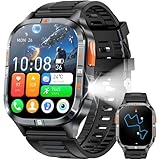
- BUILT-IN GPS & COMPASS– This military smartwatch features high-precision GPS to pinpoint your location while hiking, cycling, or traveling, keeping you safely on track without extra gear. Tap the compass icon and it locks your bearing within three seconds—engineered for pro-level outdoor adventures like camping, climbing, and trekking.
- BLUETOOTH CALLING & MESSAGES – Powered by the latest Bluetooth tech, the men’s smartwatch lets you answer or make calls right from your wrist—no need to pull out your phone. Get real-time alerts for incoming texts and app notifications so you never miss an invite. (Replying to SMS is not supported.)
- BIG SCREEN & DIY VIDEO WATCH FACE – The 2.01" military-spec display is dust-proof, scratch-resistant, and forged from high-strength glass with an aluminum alloy bezel, passing rigorous dust and abrasion tests so the screen stays crystal-clear. Upload a short family video to create a dynamic, one-of-a-kind watch face that keeps your memories alive.
- 24/7 HEALTH MONITORING – Equipped with a high-performance optical sensor, this Android smartwatch tracks heart rate and blood-oxygen levels around the clock. It also auto-detects sleep stages (deep, light, awake) for a complete picture of your health, ensuring you always know how your body is doing.
- MULTI SPORT MODES & FITNESS TRACK – Choose from running, cycling, hiking, basketball, and more to log every workout. Set goals, monitor progress, and sync data to the companion app. Bonus tools include photo gallery, weather, alarm, stopwatch, flashlight, hydration reminder, music/camera remote, find-my-phone, mini-games, and other everyday essentials.
There’s also the possibility of user-facing limits, such as capped activity durations or automatic GPS shutdown if battery levels drop too low. That kind of guardrail would frustrate power users, but it aligns with how the Vivosmart is actually used.
Charging Frequency: The Quiet Compromise
Even with careful optimization, built-in GPS would almost certainly change charging habits. Current Vivosmart users are accustomed to charging once a week, sometimes less, depending on features enabled.
With GPS in the mix, that rhythm may tighten to every four or five days for active users, and potentially every two to three days if GPS workouts are frequent. For a device worn 24/7 for sleep, stress, and body battery tracking, that is not a trivial shift.
The key question is whether users will accept slightly more frequent charging in exchange for independence from a phone. For many runners and walkers who value minimalism, that trade may feel worth it.
Why Garmin Can’t Afford to Get This Wrong
Battery life is where slim trackers live or die. A Vivosmart that needs nightly charging would undercut the entire premise of the line, no matter how impressive the feature list looks on paper.
This is also where Garmin’s internal lineup pressure matters. If GPS on the Vivosmart 6 meaningfully erodes battery life, it risks cannibalizing the role of the device without fully replacing a Forerunner or Vivoactive for serious training.
That tension likely explains why Garmin has waited this long. If GPS does arrive on the Vivosmart 6, it won’t be because the company decided battery life mattered less, but because it believes it can deliver location tracking without breaking the trust that Vivosmart users have built over multiple generations.
How Vivosmart 6 With GPS Would Stack Up Against Fitbit Charge, Xiaomi Bands, and Whoop
If Garmin does add built-in GPS to the Vivosmart 6, the more interesting question isn’t whether it works, but how it repositions the band in a crowded field of slim trackers that already approach fitness from very different philosophies.
Up to now, Garmin has effectively ceded this segment to Fitbit, Xiaomi, and Whoop. GPS would be the feature that lets the Vivosmart stop defending its omissions and start competing on intent.
Against Fitbit Charge: A Battle of Philosophy, Not Specs
The most obvious comparison is the Fitbit Charge line, particularly the Charge 6, which already offers built-in GPS, a larger AMOLED display, and Google-powered extras like maps and YouTube Music controls.
Where a Vivosmart 6 with GPS would diverge is focus. Garmin’s strength has never been flashy UI or third-party integrations, but depth of physiological metrics and training context.
Even without a big screen, a GPS-enabled Vivosmart would likely offer better workout data continuity with Garmin Connect, including VO2 max estimates, training load trends, recovery time logic, and long-term aerobic tracking that Fitbit still abstracts behind daily scores.
Fitbit’s GPS experience is competent, but its battery life collapses quickly with frequent outdoor use, often requiring charging every one to two days for runners. If Garmin can maintain even four to five days with intermittent GPS, that would be a meaningful advantage for users who train regularly but don’t want a watch-sized device.
Comfort also plays a role. The Vivosmart’s narrow silicone band and low-profile housing are easier to forget during sleep and all-day wear than the thicker Charge, which still feels watch-adjacent rather than band-like.
Against Xiaomi Bands: Precision vs Price
Xiaomi’s Mi Band and Smart Band lines have flirted with GPS in certain regions and variants, but their global models typically rely on connected GPS and aggressive pricing rather than ecosystem depth.
A Vivosmart 6 with GPS would cost significantly more, but it would also offer more reliable sensor fusion, better firmware support, and a vastly more mature training platform.
Xiaomi bands often boast impressive spec lists on paper, yet real-world GPS accuracy, firmware polish, and long-term update consistency remain uneven. Garmin’s advantage here is trust built over years of athlete-facing devices, not just step counters.
Battery life is where Xiaomi usually wins, but only when GPS is absent or rarely used. If both devices track outdoor runs independently, that gap narrows quickly, and Garmin’s power management history suggests it could stay competitive even with a smaller battery.
For buyers choosing between the two, the decision would hinge on whether they value cost and novelty or structured fitness data that integrates cleanly with years of past activity.
Against Whoop: Completely Different Answers to the Same Question
Whoop sits at the opposite end of the spectrum. It offers no screen, no GPS, and no on-device interaction, yet commands a premium through subscription-driven insights and recovery modeling.
A GPS-enabled Vivosmart 6 would not try to replicate Whoop’s coaching narrative, but it would appeal to users who want ownership rather than ongoing fees.
Garmin’s sleep tracking, HRV status, stress metrics, and body battery already overlap substantially with Whoop’s core pillars. Adding GPS would strengthen Garmin’s ability to contextualize those metrics around real outdoor training rather than inferred effort alone.
The trade-off is interpretation. Whoop excels at telling users what today means for tomorrow. Garmin excels at showing the data and letting experienced users draw their own conclusions.
For athletes who run, walk, or cycle outdoors and want location data without wearing a watch, the Vivosmart would suddenly offer something Whoop simply cannot.
Where This Would Leave the Vivosmart Line
With GPS, the Vivosmart 6 would quietly become one of the most capable true fitness bands on the market, not because it outguns competitors on features, but because it balances independence, comfort, and data quality in a way few others attempt.
It would sit above budget bands that cut corners and below full training watches that overwhelm casual users. That middle ground has been oddly underserved.
The risk, as always, is compromise. If GPS accuracy is limited, battery life drops too sharply, or Garmin artificially restricts sessions to protect its watch lineup, the appeal weakens fast.
But if the leaks reflect a carefully constrained, purpose-built GPS implementation, the Vivosmart 6 could finally stand toe-to-toe with devices it previously avoided competing against, and do so without abandoning what made the line compelling in the first place.
Where It Fits in Garmin’s Own Lineup: Vivosmart vs Venu Sq, Forerunner, and Vívoactive
If the Vivosmart 6 does gain built-in GPS, the more interesting question isn’t whether it competes with Fitbit or Whoop. It’s how Garmin prevents it from stepping on its own toes.
Garmin’s lineup is carefully tiered by size, screen, controls, and perceived seriousness. A GPS-enabled Vivosmart would challenge that hierarchy in subtle but meaningful ways, especially for buyers who already prefer minimal hardware.
Vivosmart vs Venu Sq: Screen vs Subtlety
The Venu Sq has long been Garmin’s entry-level GPS watch for people who want location tracking without diving into the Forerunner ecosystem. It offers a square color display, touch controls, music options on some variants, and full-day smartwatch usability.
What it does not offer is discretion. On smaller wrists or for users who dislike wearing a watch 24/7, the Venu Sq still feels like a watch first and a tracker second.
A Vivosmart 6 with GPS would undercut the Venu Sq on hardware presence, not features. You would give up mapping, on-screen pace guidance, and glanceable workout screens, but gain something the Venu Sq cannot offer: true all-day invisibility with independent outdoor tracking.
For users who only want GPS to log walks, casual runs, or bike rides for later analysis, the band form factor may suddenly make more sense than a low-end watch.
Vivosmart vs Forerunner: Capability Without Coaching
Forerunner models exist for one reason: structured training. Buttons, multi-band GPS, advanced pace metrics, intervals, race predictors, and highly configurable workout screens define the experience.
Even if the Vivosmart 6 gains GPS, it will not threaten that core audience. Leaks so far point to basic activity tracking rather than advanced training features, and the physical limitations of a slim band make complex interaction impractical.
Rank #4

- 【Built-in GPS & Multi-System Positioning】Stay on track with the Tiwain smartwatch’s built-in GPS. Featuring military-grade single-frequency and six-satellite support (GPS, GLONASS, Beidou, Galileo, NAVIC, QZSS), this watch offers fast and accurate location tracking wherever you go. It also includes a compass, altimeter, and barometer, giving you real-time data on your altitude, air pressure, and position.
- 【Military-Grade Durability】Engineered to withstand the toughest conditions, the Tiwain smartwatch meets military standards for extreme temperatures, low pressure, and dust resistance. Crafted from tough zinc alloy with a vacuum-plated finish, this watch is also waterproof and built to resist wear and tear. The 1.43-inch AMOLED HD touchscreen offers clear visibility in all environments, and the watch supports multiple languages for global users.
- 【170+ Sport Modes & Fitness Tracking】Track your fitness journey with 170+ sport modes, including walking, running, cycling, hiking, basketball, and more. Set exercise goals, monitor progress, and sync your data to the companion app. The smartwatch also offers smart features like music control, camera remote, weather updates, long-sitting reminders, and more.
- 【LED Flashlight for Outdoor Adventures】The Tiwain smartwatch comes equipped with a built-in LED flashlight that can illuminate up to 20 meters. Activate it with the side button for added convenience during nighttime activities or outdoor adventures.
- 【Comprehensive Health Monitoring】Monitor your health with real-time heart rate, sleep, blood pressure, and blood oxygen level tracking. The smartwatch will vibrate to alert you of any abnormal readings. You can also make and receive calls directly from the watch, and stay connected with message and app notifications (receive only, no sending capability) – perfect for when you’re driving or exercising.
Where overlap could occur is at the very bottom of the Forerunner range. Buyers who currently choose a Forerunner 55 largely to avoid carrying a phone on runs might reconsider if a Vivosmart can capture distance and routes reliably enough.
Garmin can easily manage that risk through software. Limiting GPS recording modes, omitting advanced pacing fields, or capping session types would preserve the Forerunner’s value while still letting the Vivosmart feel complete.
Vivosmart vs Vívoactive: Lifestyle Watch vs Pure Tracker
The Vívoactive line sits in an increasingly awkward middle ground. It offers a round AMOLED display, GPS, and broad sport support, but without the depth or hardware controls that define Forerunner models.
A GPS-enabled Vivosmart would not replace a Vívoactive for most users. The Vívoactive is about visibility, interaction, and versatility, especially for gym workouts, on-device animations, and frequent mid-activity checks.
What it might do is siphon off buyers who never wanted a watch in the first place. Those users often buy a Vívoactive reluctantly, accepting the size and screen because they want GPS and Garmin’s ecosystem.
For them, a slim band with location tracking could feel like the product Garmin should have offered all along.
Why Garmin Might Actually Allow This Overlap
At first glance, adding GPS to the Vivosmart looks like self-cannibalization. In practice, it may be defensive positioning.
Competitors are steadily shrinking hardware while adding sensors, and consumer tolerance for wearing large devices 24/7 is declining. Garmin risks losing minimalists entirely if GPS remains locked behind watch-sized products.
By allowing limited GPS into the Vivosmart line, Garmin keeps those users inside its ecosystem, even if they never upgrade to a Forerunner or Vívoactive later.
The leaks suggest a carefully bounded implementation rather than a free-for-all. If that holds, the Vivosmart 6 wouldn’t blur Garmin’s lineup so much as reinforce it, offering a clear choice based not on price or feature count, but on how much device you actually want on your wrist every day.
Who Should Wait for Vivosmart 6 — and Who Should Buy a Current Garmin Tracker Now
If Garmin does introduce built-in GPS to the Vivosmart 6, it will force a rare moment of choice clarity in a lineup that often nudges people upward into watch-sized devices. Whether waiting makes sense depends less on budget and more on how you actually train, wear, and live with a tracker day to day.
This is less about chasing leaks and more about avoiding buyer’s remorse.
Wait for Vivosmart 6 if You Want GPS Without a Watch on Your Wrist
If you’ve consistently avoided Garmin’s GPS devices because they feel too bulky, too visible, or too “watch-like,” the rumored Vivosmart 6 is aimed squarely at you. A slim silicone band with an integrated GPS antenna would finally let you record outdoor runs, walks, and rides without carrying a phone or wearing a 42–45 mm case all day.
For people who value comfort during sleep, all-day wear, and low-profile styling over on-screen interaction, this would be a meaningful upgrade. The Vivosmart form factor disappears under a sleeve, doesn’t knock against a laptop, and feels more like a health device than a gadget.
Leaks point toward a constrained GPS implementation, which actually works in this product’s favor. If Garmin limits recording modes and background sampling, battery life could remain closer to days rather than collapsing into the single-day territory that plagues small GPS watches.
Wait if Your Training Is Simple, Consistent, and Outdoors
Runners who just want distance, pace, and a route map after the fact are likely the biggest beneficiaries. You don’t need training load, race predictors, or on-device intervals if your workouts are steady and repeatable.
The same applies to walkers and casual cyclists who currently rely on phone GPS or accept missing distance data entirely. Built-in GPS would unlock accurate outdoor tracking while preserving Garmin’s strengths in heart rate trends, Body Battery, sleep staging, and long-term data continuity.
If your workouts rarely require mid-activity interaction, physical buttons, or constant screen checks, the Vivosmart experience makes more sense than forcing a watch to act like a band.
Buy a Vivosmart 5 Now if GPS Truly Doesn’t Matter to You
For users focused almost entirely on health tracking rather than activity mapping, the Vivosmart 5 already does its job well. Sleep tracking, stress, HRV status, and all-day heart rate are mature, stable, and unlikely to change dramatically with the next generation.
If your workouts are mostly indoors, or you’re content letting your phone handle location data, waiting offers limited upside. Garmin rarely discounts new releases aggressively, so buying now often means saving money without sacrificing core health metrics.
There’s also a comfort argument. The Vivosmart 5 is known, predictable, and proven. If you need a tracker immediately for recovery monitoring, illness tracking, or lifestyle accountability, waiting on unannounced hardware introduces unnecessary delay.
Buy a Forerunner if You Care About Training Feedback, Not Just Tracking
If your interest in GPS goes beyond a line on a map, the Vivosmart 6 is unlikely to satisfy you. Garmin’s leaks suggest restraint, not reinvention.
Forerunner models offer physical buttons, better antenna placement, stronger signal retention, and a training ecosystem built around structured workouts, pacing guidance, and performance trends. Those elements require screen space, processing overhead, and user interaction that don’t align with the Vivosmart’s minimalist design.
If you already glance at your wrist mid-run, follow workouts on-device, or care about post-run metrics beyond distance and time, buying a Forerunner now is the safer, frustration-free option.
Consider Vívoactive Only if You Actually Want a Screen
The Vívoactive remains the right choice for people who want GPS plus visual richness. Its AMOLED display, touch interaction, and broader sport profiles suit gym sessions, classes, and mixed training where animations and frequent checks matter.
What the leaks imply is that the Vívoactive should no longer be a compromise purchase. If you’ve been buying it simply because it’s the smallest Garmin with GPS, the Vivosmart 6 could finally remove that pressure.
If you enjoy seeing your stats live and interacting with your device throughout the day, the Vívoactive still earns its place. If you tolerate the screen rather than enjoy it, waiting becomes the smarter move.
Wait if Battery Life and Wearability Matter More Than Features
One of the biggest unknowns is how Garmin balances GPS with battery life in such a slim chassis. But Garmin’s history suggests conservative choices: reduced sampling rates, activity-only GPS use, and aggressive power management.
If the company pulls that off, the Vivosmart 6 could land in a rare sweet spot: multi-day battery life with occasional GPS use, all in a band that’s comfortable for sleep and continuous wear.
If that combination appeals to you more than any individual feature, waiting isn’t about chasing specs. It’s about aligning the device with how you actually live, train, and wear technology every day.
Likely Feature Set Beyond GPS: What Else Garmin May (or May Not) Upgrade
If Garmin is indeed crossing the GPS threshold with the Vivosmart 6, it naturally raises a bigger question: does this stay a narrowly targeted upgrade, or does Garmin use the opportunity to modernize other parts of the platform as well.
The leaks so far point toward the former. Everything we’re seeing suggests careful expansion rather than a full reset of what a Vivosmart is supposed to be.
Display: Incremental Refinement, Not a Visual Leap
There’s no indication that Garmin plans to dramatically change the display technology or size. Expect a similar narrow OLED panel to the Vivosmart 5, optimized for glanceable data rather than rich visuals.
Resolution could tick up slightly to accommodate cleaner text and smoother scrolling, but the physical constraints of the band format make anything approaching Vívoactive-level readability unlikely. Garmin has historically prioritized legibility in bright conditions over visual flair in this line, and that philosophy fits the leaks.
Touch interaction should remain intact, though still secondary to auto-scrolling and gesture-based navigation. This is a tracker designed to disappear on your wrist, not demand interaction.
Heart Rate, SpO2, and the Sensor Stack Reality Check
An updated Elevate optical heart rate sensor is plausible, but expectations should be tempered. Garmin tends to reserve its newest sensor generations for watches positioned as training tools, not lifestyle trackers.
💰 Best Value

- Smart Watch with GPS and Offline Map: This smart watch connects to multiple satellite systems for accurate real-time positioning, and includes a professional-grade compass, altimeter, and barometer for precise data, ensuring you maintain your sense of direction in any outdoor environment. The map version supports downloading offline maps; select a route or destination to view the route even without a signal, eliminating the risk of getting lost.
- Bluetooth Call & Message Functionality: This smart watches for men allows you to make and receive calls; receive text and social media notifications (Facebook, WhatsApp, Instagram, Twitter, etc.); and reply to text messages with voice-to-text or set up quick replies (text reply functionality is available for Android phones).
- Sports & Health Monitoring: This 5ATM waterproof fitness watch supports over 100 sports modes and tracks daily activity data, calories, distance, steps, and heart rate. You can use it to monitor your health metrics (blood oxygen, heart rate, stress, and sleep), monitor your fatigue and mood, and perform PAI analysis. You can also use this smartwatch to set water intake and sedentary reminders. Stay active and healthy with this fitness tracker watch.
- Customizable Watch Faces & AI Functionality: This smart watch features a 1.46-inch HD touchscreen and over 100 downloadable and customizable watch faces. You can even use your favorite photos as your watch face. Equipped with AI technology, it supports voice descriptions in multiple languages to generate personalized AI watch faces. The watch's AI Q&A and AI translation features provide instant answers to questions and break down language barriers, making it an ideal companion for everyday life and travel.
- Large Battery & High Compatibility & More Features: This smart watch for android phones and ios phone features a large 550ml battery for extended battery life. It's compatible with iOS 9.0 and above and Android 5.0 and above. It offers a wealth of features, including an AI voice assistant, weather display, music control, camera control, calculator, phone finder, alarm, timer, stopwatch, and more. (Package Includes: Smartwatch (with leather strap), spare silicone strap, charging cable, and user manual)
That means heart rate accuracy should be solid for steady-state efforts, sleep, and daily wear, but less reliable for intervals or rapid pace changes. Pulse Ox support will likely remain spot-check or sleep-only, both to preserve battery life and to keep hardware costs under control.
If GPS is added, heart rate broadcasting and advanced sensor pairing still feel unlikely. That would push the Vivosmart too close to entry-level Forerunners in functionality, something Garmin has consistently avoided.
Battery Life: The Tightrope Garmin Has to Walk
Battery life is the biggest variable hanging over every other rumored upgrade. A built-in GPS radio in a slim, flexible band is non-trivial, both in power draw and antenna performance.
The most realistic outcome is activity-only GPS with limited sampling, designed for distance and route capture rather than precision pace analysis. In that scenario, multi-day battery life should remain achievable as long as GPS use is occasional rather than daily.
If you’re hoping for all-day GPS or marathon-length tracking, this probably isn’t the device Garmin is building. The Vivosmart line has always favored longevity and comfort over endurance performance.
Software and Metrics: Familiar Garmin, Carefully Gated
On the software side, expect Garmin to stick closely to its existing Vivosmart framework. That means Body Battery, stress tracking, sleep stages, and basic activity profiles should carry over with minimal change.
Training Readiness, acute load, and performance condition metrics are almost certainly staying exclusive to higher-tier devices. Even with GPS onboard, Garmin has little incentive to blur the segmentation between a tracker and a training watch.
Where GPS could meaningfully enhance the experience is post-activity review. Distance accuracy, route mapping in Garmin Connect, and more reliable outdoor activity summaries would all represent real quality-of-life gains without changing how the device is used on-wrist.
Design, Materials, and Wearability: Don’t Expect Bulk
Physically, the Vivosmart 6 is expected to remain very close to its predecessor. The appeal of this line has always been its low profile, soft strap material, and ability to be worn comfortably during sleep and all-day use.
Adding GPS increases internal complexity, but leaks suggest Garmin has avoided noticeable thickness or stiffness increases. That likely means compromises elsewhere, such as smaller battery capacity offset by aggressive power management.
The strap is expected to remain integrated rather than replaceable, reinforcing the idea that this is a single-piece wearable rather than a modular watch. For some users that’s a downside, but for others it’s exactly why the Vivosmart exists.
What Probably Won’t Change
There’s little evidence pointing to onboard music, contactless payments, or expanded smart features. Those additions would fundamentally alter the positioning of the Vivosmart and introduce size, cost, and complexity trade-offs that conflict with its core purpose.
Notifications will likely remain basic, with limited interaction and no keyboard or app ecosystem. Compatibility with both Android and iOS should remain unchanged, with Garmin Connect continuing to do the heavy lifting for data analysis.
In short, even with GPS, this won’t become a tiny smartwatch. It will remain a fitness-first band that quietly records more of your activity without asking for more attention in return.
What This Means for Buyers Watching the Leaks
Taken together, the likely feature set paints a very specific picture. Garmin appears to be adding just enough capability to remove the biggest historical limitation of the Vivosmart line, without undermining its identity or cannibalizing its watch lineup.
If you’re hoping GPS will unlock advanced training insights, live pacing, or deep on-device interaction, these leaks should cool your expectations. If, instead, you want cleaner outdoor activity data in the smallest, least intrusive Garmin possible, the rumored upgrades land exactly where they need to.
That balance is what makes the GPS rumor so consequential. Not because it transforms the Vivosmart into something new, but because it could finally let it do what many users have wanted all along, without forcing them into a bigger watch.
Bottom Line: How Game-Changing GPS Would Be for Garmin’s Slimmest Fitness Tracker
Stepping back from the individual leaks and technical breadcrumbs, the significance of built-in GPS on a Vivosmart becomes much clearer. This isn’t about turning Garmin’s slimmest band into a mini Forerunner, but about removing the one compromise that has consistently pushed serious outdoor users toward bulkier hardware.
For years, the Vivosmart line has excelled at comfort, all-day wearability, and quiet health tracking, while falling short the moment you stepped outside without your phone. If the Vivosmart 6 truly gains onboard GPS, that long-standing trade-off finally disappears.
Why GPS Changes the Vivosmart’s Entire Value Proposition
Built-in GPS would immediately elevate the Vivosmart from a step-and-heart-rate band to a credible outdoor activity tracker. Distance, pace, and route data would no longer be estimates or phone-dependent, which matters far more than it sounds for runners, walkers, and hikers who care about consistency.
Garmin’s strength has always been its algorithms and long-term data trends, not flashy interfaces. Clean GPS tracks mean better VO2 max estimates, more accurate training load calculations, and fewer data gaps in Garmin Connect, even if the band itself remains minimal.
Just as importantly, it changes how the device fits into daily life. A Vivosmart with GPS lets you leave your phone behind for a quick run without strapping a watch to your wrist, preserving the low-profile, barely-there feel that defines the line.
The Trade-Offs Are Real, but Likely Carefully Managed
The biggest concern remains battery life, and the leaks strongly suggest Garmin is prioritizing efficiency over raw endurance. No one should expect multi-day GPS tracking here; this will almost certainly be designed for short to moderate outdoor sessions rather than ultramarathons.
What matters more is that everyday battery life likely remains respectable when GPS isn’t active. Garmin has a long track record of aggressive sensor management, and the fact that leaks point to minimal thickness changes suggests power draw is being tightly controlled.
There’s also the question of antenna performance in such a slim housing. GPS accuracy may not match larger watches with dedicated antenna real estate, but for most users, consistency and independence from a phone will matter more than elite-level precision.
How Credible the GPS Leaks Really Are
While Garmin hasn’t confirmed anything publicly, the nature of the leaks gives this rumor more weight than typical speculation. References to positioning hardware and firmware-level GPS activity modes align with how Garmin has quietly introduced features ahead of launch in the past.
Regulatory filings and internal software strings tend to appear only when hardware decisions are already locked in. That doesn’t guarantee final implementation, but it strongly suggests Garmin has at least engineered a GPS-capable Vivosmart prototype intended for release.
As always, features can be limited, delayed, or regionally restricted, but at this stage, the idea of GPS being tested and prepared feels plausible rather than aspirational.
What This Means if You’re Deciding Whether to Wait
If you’re currently using an older Vivosmart or a non-GPS fitness band and frequently track outdoor activities, this is a compelling reason to hold off on upgrading. GPS is the one feature you can’t add later through software, and its inclusion would meaningfully extend the device’s usefulness.
On the other hand, if you already own a Garmin watch with GPS, the Vivosmart 6 won’t replace it. It’s best viewed as an alternative for rest days, minimalist training, or users who value comfort over control.
For buyers cross-shopping competitors, a GPS-equipped Vivosmart would stand out sharply. Few slim fitness bands offer true onboard GPS without drifting into smartwatch territory, and even fewer integrate as cleanly with a mature training platform.
The Bigger Picture for Garmin’s Lineup
Perhaps the most interesting implication is how neatly this fits into Garmin’s broader ecosystem. A GPS-enabled Vivosmart doesn’t cannibalize Forerunners or Venu models; it complements them by capturing users who’ve been unwilling to wear a watch at all.
It reinforces Garmin’s strategy of letting hardware fade into the background while data quality improves. In that sense, GPS isn’t a flashy upgrade, but a foundational one that makes everything else Garmin already does work better.
If these leaks hold true, the Vivosmart 6 won’t be revolutionary in appearance or interaction. Instead, it may finally become what many users have always wanted: a genuinely capable outdoor fitness tracker that happens to be almost invisible on your wrist.
And for a product line built on subtlety and restraint, that kind of upgrade is quietly transformative.