Halo Sport arrived at a moment when most people thought they already understood what a “performance wearable” was supposed to do. Count steps, log heart rate, maybe nudge your sleep habits in the right direction. This thing didn’t care how far you ran or how well you slept; it cared about what your brain was doing before you trained, and whether it could be nudged into learning faster.
Living with Halo Sport quickly made it clear that this was never meant to compete with a Garmin, Whoop, or Apple Watch. It didn’t sit quietly in the background collecting passive data. It demanded intention, a premeditated training window, and a willingness to trust neuroscience over numbers on a dashboard. If you were looking for constant feedback or lifestyle tracking, you were already in the wrong headspace.
This section unpacks what Halo Sport actually is, how it works in practical terms, and why its design choices made it both fascinating and deeply polarizing. Understanding that context is essential before we talk about whether it genuinely delivered performance gains, or why so few products like it still exist today.
A neurostimulation device disguised as headphones
At a glance, Halo Sport looked like a pair of oversized on-ear headphones, but that visual familiarity was misleading. The earcups weren’t there for audio fidelity or noise cancellation; they housed a transcranial direct current stimulation system, or tDCS, designed to stimulate the motor cortex. Instead of tracking performance, Halo Sport attempted to change the brain state that precedes it.
🏆 #1 Best Overall

- Track and Understand Your Meditation State: The smart headband captures brain signals with built-in EEG sensors, delivering real-time analysis of your brainwaves and meditation performance. Each session lets you save, share, or export raw EEG data for deeper review
- Real-Time Visual and Auditory Feedback: Our method merges closed-eye meditation with dynamic open-eye sessions, offering immediate feedback to enhance focus and calmness. The better your meditation state, the clearer and more vivid the images and sounds become
- Rich Meditation Experience: The built-in Meditation Tracker works with your favorite meditation apps, while the Group Meditation feature lets you practice with family and friends—both monitor brainwaves in real time and deliver session reports
- No Extra Subscription Fees: All features are included. Enjoy unlimited access to guided and unguided practices, plus all reports. Just wear the headband, connect to the SereniBrain app via Bluetooth, and meditate effortlessly for up to 8 hours on a single charge
- Enjoy Seamless Meditation: Say goodbye to disconnects that interrupt your peace! Our advanced sensors and larger electrodes provide reliable signal processing, while the adjustable design enhances contact with your skin for stable connectivity
The key hardware element was the set of soft, rubberized “primers” resting against the scalp. These replaced traditional EEG electrodes and were designed to work without gels, relying on saline moisture and pressure for conductivity. Getting the fit right was less about comfort aesthetics and more about ensuring consistent contact with the skull.
This immediately set Halo Sport apart from mainstream wearables. It wasn’t something you wore all day, or even during your workout. It was something you put on deliberately for a 20-minute priming session before training, with a very specific neurological purpose.
Priming the brain, not measuring the body
Halo Sport’s underlying promise was rooted in neuroplasticity, the brain’s ability to reorganize and adapt through training. The idea was that low-level electrical stimulation to the motor cortex could temporarily increase cortical excitability, making motor learning more efficient during the following workout. In theory, this meant faster strength gains, improved skill acquisition, and better retention of movement patterns.
What’s important is what Halo Sport didn’t do. There was no heart rate sensor, no accelerometer-based training analysis, no recovery score, and no daily readiness metric. The app experience was intentionally sparse, mostly existing to control stimulation sessions, adjust intensity, and confirm electrode contact quality.
This absence of data felt unsettling at first, especially for athletes accustomed to quantifying everything. Over time, it reframed the experience: Halo Sport wasn’t about validation through metrics, but about trusting the process and observing changes in training outcomes over weeks, not sessions.
Designed around routine, not convenience
Day-to-day use highlighted just how unconventional Halo Sport was. Battery life hovered around eight training sessions per charge, translating to roughly a week for most structured athletes. Charging was via a proprietary cable, and the device was useless if you forgot to top it up before a workout block.
Comfort was functional rather than luxurious. The clamping force needed to keep the primers stable made it tolerable for short sessions but not something you’d want to wear casually. Sweat resistance was adequate for pre-training use, but it was never meant to survive a full workout, reinforcing its role as a preparatory tool.
Compatibility was limited but focused, with mobile apps supporting iOS and Android and very few software updates over its lifespan. That lack of ongoing feature expansion wasn’t neglect; it reflected a product built around a fixed scientific protocol rather than an evolving lifestyle platform.
Why it never fit the wearable mainstream
Halo Sport struggled not because it lacked ambition, but because it sat awkwardly between medical device and consumer gadget. It wasn’t regulated like clinical neurostimulation tools, yet it demanded more education and commitment than most consumer electronics. For many users, that cognitive overhead alone was a dealbreaker.
It also challenged the prevailing narrative of wearables as passive companions. Halo Sport required you to believe that performance starts in the brain, not the dashboard, and to structure your training around that belief. For athletes who bought in, it felt like accessing a hidden layer of performance preparation.
That tension explains both its cult following and its eventual disappearance from the market. Halo Sport was never trying to be typical, and living with it made that abundantly clear long before the company behind it moved on.
The Science, Minus the Hype: How Transcranial Direct Current Stimulation (tDCS) Actually Works
If Halo Sport felt demanding to live with, that was largely because the technology underneath it demanded respect. This wasn’t placebo-friendly gamification or passive data collection. It was a deliberate attempt to influence how your brain prepared itself for physical learning, and that requires understanding what tDCS can and cannot do.
tDCS isn’t stimulation in the sci‑fi sense
Transcranial Direct Current Stimulation sounds dramatic, but the mechanism is surprisingly restrained. Halo Sport delivered a very low electrical current, measured in milliamps, across targeted regions of the motor cortex through saline-soaked primers. The current was not strong enough to trigger muscle contractions or force neurons to fire.
Instead, tDCS subtly shifted neuronal excitability. Think of it as adjusting the sensitivity of the system rather than flipping any switches. Neurons became slightly more likely to fire in response to training stimuli, but only if meaningful practice followed.
Why timing mattered more than intensity
This is where Halo Sport’s rigid routine made scientific sense. The device was designed to be used before training, not during or after. Research suggests that tDCS is most effective when it precedes motor learning, priming neural circuits to adapt more efficiently once movement practice begins.
In daily use, this meant sitting still for 20 minutes with a faint tingling across the scalp, knowing the real work hadn’t even started yet. Skip the workout or rush the transition into training, and the window of potential benefit narrowed quickly. The device didn’t forgive inconsistency.
Motor cortex targeting, not motivation hacking
Halo Sport specifically targeted the motor cortex, the region responsible for voluntary muscle activation and coordination. This is a critical distinction because it explains why the device never claimed to boost focus, reaction time, or mental toughness directly. It wasn’t trying to make you want to train harder.
The goal was to enhance how efficiently your brain translated practice into improved movement patterns. Strength gains, sprint mechanics, or endurance efficiency were downstream effects of better neural adaptation, not a surge of artificial drive. If training quality was poor, the stimulation had little to work with.
Neuroplasticity is gradual, not dramatic
One of the biggest disconnects between marketing expectations and lived experience was speed. tDCS doesn’t produce instant performance jumps, and Halo Sport never delivered a single-session “wow” moment. The science behind neuroplasticity operates on repetition and accumulation.
Over weeks of consistent use, changes felt subtle. Lifts began to feel more coordinated, fatigue patterns shifted slightly, and technical drills clicked sooner than expected. None of this was obvious without logging training and reflecting honestly on progression.
What the current actually felt like
From a practical standpoint, the physical sensation mattered more than most lab papers admit. The initial ramp-up produced a mild prickling or warmth under the primers, usually fading within a minute or two. Occasionally, improper primer saturation caused hot spots that broke immersion entirely.
Comfort wasn’t luxurious, but it was predictable. Once dialed in, the sensation faded into the background, which made adherence easier over long training blocks. That consistency mattered more than comfort, because distraction undermined the calm pre-training state the protocol depended on.
Why results varied so widely between users
Not everyone responded to Halo Sport the same way, and the science explains why. Individual differences in skull thickness, cortical anatomy, hydration, sleep, and training age all influence how electrical fields interact with the brain. There is no universal dose that works identically for everyone.
Athletes with structured programs and repeatable movement patterns tended to notice benefits sooner. Recreational users with inconsistent training often reported nothing at all. tDCS amplified existing learning signals; it didn’t create them from scratch.
The placebo question, addressed honestly
Skepticism around placebo effects is valid, especially with neurotechnology. However, controlled studies on motor cortex tDCS consistently show measurable changes in motor evoked potentials and learning rates. These are physiological markers, not subjective impressions.
That said, belief still mattered. Users who treated Halo Sport as a serious training tool adhered more strictly to protocols, trained with intent, and tracked outcomes. The technology didn’t eliminate placebo; it worked alongside the realities of human psychology.
Why it stayed below medical thresholds
Halo Sport deliberately operated within conservative safety margins. The current density was lower than what’s used in many clinical research settings, and sessions were capped in duration. This reduced risk but also limited the magnitude of effect.
From a long-term use perspective, that trade-off made sense. You could integrate it into a training week without worrying about recovery interference or neurological fatigue. The gains were incremental, but they were compatible with real athletic schedules.
What tDCS never did, even on good weeks
It didn’t replace strength programming, fix poor technique, or override bad recovery habits. It didn’t make max efforts feel easier or guarantee personal records. On days when training was rushed or poorly fueled, the stimulation felt irrelevant.
That limitation is crucial to understanding Halo Sport’s legacy. It worked best as an amplifier of disciplined training, not a shortcut around it. The science supported that role clearly, even if consumer expectations often didn’t.
Why this science still matters today
Even though Halo Sport is no longer on shelves, the principles behind it continue to influence performance research. Neuropriming, motor learning optimization, and brain-first training models are now common topics in elite sport environments. Halo Sport was simply early, and early products always feel awkward.
Living with the device forced you to confront an uncomfortable idea: that performance gains are often invisible before they’re measurable. tDCS didn’t promise transformation. It asked for patience, structure, and trust in a process most athletes aren’t used to thinking about.
Unboxing a Brain Trainer: Design, Fit, Comfort, and Day-to-Day Wearability
After grappling with Halo Sport’s science-heavy promises, the first real test came much earlier than any training session. It happened the moment you opened the box and asked a simpler question: could this thing realistically become part of your routine, or would it end up as an expensive curiosity on a shelf.
What followed felt less like unboxing a gadget and more like being introduced to a piece of lab equipment that had been politely dressed for the consumer market.
First impressions: understated, not futuristic
Halo Sport never leaned into sci‑fi aesthetics. The packaging was clean and minimal, closer to premium audio gear than a medical device, which felt intentional given its dual role as headphones and neurostimulator.
Inside, you found the headset, a compact charging case, a microfiber pouch, and sparse documentation. There was no theatrical reveal, no dramatic lighting cues, just a quiet confidence that this was a tool meant to be used, not admired.
That tone carried into the hardware itself. Halo Sport looked like a slightly bulky pair of over‑ear headphones, not something that would attract attention at the gym or on a training field.
Industrial design and materials: function over flair
The frame was lightweight plastic with a matte finish that resisted fingerprints and sweat marks. The earcups were generously padded, with memory foam wrapped in a durable synthetic leather that prioritized longevity over luxury.
At the top sat the defining feature: the halo band with its spring-loaded foam electrodes. This section looked unusual up close, but from a distance it blended into the headband well enough to avoid awkward stares.
There was no premium metal, no jewelry-grade finishing, and that was appropriate. Halo Sport felt engineered, not styled, which aligned with its purpose as a performance tool rather than a lifestyle accessory.
Fit mechanics: where the science meets your skull
Fit mattered more here than with almost any other wearable I’ve used. The electrodes needed consistent contact with the scalp, which meant the headset sat more firmly on the head than typical headphones.
Halo’s solution was clever. The foam tips compressed when worn dry, then expanded slightly as they absorbed saline solution, improving conductivity without sharp pressure points.
That said, head shape mattered. Athletes with very narrow or very wide skulls sometimes struggled to get even contact across all electrodes, and small adjustments could noticeably change how the stimulation felt.
Comfort over time: tolerable, not invisible
For the recommended 20-minute priming sessions, comfort was generally fine. You were always aware of the headset, but it never crossed into pain or distraction during static warm-ups or mobility work.
Longer wear told a different story. Past 30 minutes, especially in warm environments, heat buildup around the ears became noticeable, and the firmer headband pressure started to register.
This wasn’t a device you forgot you were wearing. Instead, it felt like a deliberate pre-training ritual, something you put on with intent and removed once its job was done.
The sensation of stimulation: subtle but unmistakable
The first few sessions came with a mild tingling or itching sensation at the scalp. It was most noticeable during the ramp-up phase, then faded into the background within a couple of minutes.
Rank #2
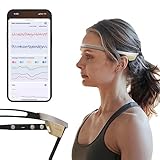
- VISUALIZE YOUR MEDITATION PERFORMANCE. Supported by the biosensing technology, see how your brain and body are working when you are doing meditation. Real-time brainwaves, heart rate, HRV, relaxation, attention and pressure level tell you whether you are getting into meditation states.
- SCIENTIFICALLY VALIDATED LESSONS of various topics in the app help you gain the basic techniques and accompany you to make progress every day (subscribers have access to all). More lessons are on the way. Veterans may enjoy the unguided mode.
- A DETAILED BIODATA REPORT displaying your performance of every minute reminding you when you get into the meditation state and during which period you are doing great. Compare your performance with the last seven times to see your improvement.
- SUPER LIGHT, COMFORTABLE & PORTABLE. 29g in weight. Easy to take it with you anywhere, whether you are at home, in the office or commuting.
- FREE TO DOWNLOAD THE APP on the App Store or Google Play. Bluetooth connection. Once fully charged, the headband lasts about 8 hours to meditate and 50 days on standby mode.
Occasionally, especially if electrode contact wasn’t ideal, the sensation skewed sharper, prompting a quick refit or additional saline. Over time, you learned exactly how to position it for a smooth session.
Crucially, the stimulation never felt dramatic. There were no jolts, no buzzes, just a quiet awareness that something was happening above the neck while the rest of your body prepared to work.
Headphones as a secondary feature
As audio gear, Halo Sport was competent but unremarkable. Sound quality leaned flat and functional, adequate for podcasts or tempo cues but lacking the depth serious music listeners expect.
Controls were basic, with physical buttons that worked reliably even with sweaty hands. Bluetooth connectivity was stable, though pairing felt slower than modern true wireless earbuds.
Most users, myself included, treated audio as optional. The headset’s value was in priming the brain, not delivering an immersive soundstage.
Battery life and charging realities
Battery life averaged three to four stimulation sessions per charge, depending on volume and ambient temperature. That translated to a few training days, not a full week.
Charging was painless, with the headset dropping into its case easily, but forgetting to charge meant skipping a session entirely. There was no quick top-up that saved you at the last minute.
This subtly reinforced discipline. Halo Sport rewarded routine and punished forgetfulness, which mirrored the demands of structured training itself.
Living with it day to day
Halo Sport never became a passive wearable like a watch or ring. You didn’t throw it on impulsively or wear it all day. You scheduled it, prepped it, and used it deliberately.
That friction was both its strength and its weakness. For motivated athletes, it framed training as a focused block with mental and physical alignment. For casual users, it was one more step in an already busy routine.
In practice, Halo Sport fit best into environments where preparation already mattered: warm-up rooms, garage gyms, training facilities, and quiet pre-session moments where focus was the goal, not convenience.
Living With It: A Typical Training Week Using Halo Sport
By the time Halo Sport became part of my routine, it stopped feeling like a gadget and started behaving more like a piece of training equipment. Not something you wear passively, but something you plan around.
A typical week with Halo Sport revolved less around the headset itself and more around when I wanted my nervous system to be most receptive. The stimulation sessions shaped the rhythm of training days, not the other way around.
Monday: Strength day and motor learning
Monday sessions were where Halo Sport felt most purposeful. Before heavy compound lifts or technique-focused work, I’d run a 20-minute stimulation session during mobility and warm-up drills.
The headset stayed planted surprisingly well during light movement, though anything involving inversion or rapid head motion was better saved for after stimulation ended. Comfort was good, with even pressure across the scalp once the foam electrodes were properly dampened.
The lift itself felt familiar, but not identical. Bar speed on submaximal sets felt more consistent, and cues like bracing and tempo seemed easier to maintain under fatigue. This wasn’t a sudden strength boost, but a subtle smoothing of execution.
Tuesday: Sprint mechanics or explosive work
For sprinting or plyometrics, timing mattered more. Stimulation ended immediately before heading to the track or turf, reinforcing the idea that Halo Sport was about priming, not multitasking.
Explosive sessions were where perceived benefits showed up fastest. Acceleration drills felt sharper, and ground contact timing felt more precise, especially in the first few reps when motor learning is most active.
That effect faded as fatigue accumulated, which aligned with what the science suggests. Halo Sport didn’t override physiology; it amplified readiness during the window when the nervous system was freshest.
Wednesday: Rest or low-intensity skill work
On lighter days, Halo Sport often stayed in its case. The device made little sense for recovery sessions, steady-state cardio, or mobility-only work.
Occasionally, I’d use stimulation before technical drills like footwork patterns or controlled agility work. In those cases, the benefit felt cognitive rather than physical, with improved focus and reduced mental drift.
This was also when battery management became noticeable. Choosing not to stimulate on low-value days helped stretch usage across the week without charging anxiety.
Thursday: Repeat strength exposure
Returning to strength later in the week highlighted one of Halo Sport’s more interesting qualities. It didn’t feel cumulative in a traditional fatigue sense, but there was a growing familiarity in how quickly the body “locked in” during warm-ups.
Setup became automatic: dampen electrodes, seat the headset, start stimulation, move through mobility. The friction that initially felt like a barrier became a ritual.
At this point, stimulation itself faded into the background. You noticed its absence more than its presence, especially on days when you skipped it and felt slightly less dialed in.
Friday: Conditioning or mixed sessions
For hybrid workouts combining strength, conditioning, and skill, Halo Sport was less impactful. The longer and more chaotic the session, the harder it was to feel a clear through-line from stimulation to performance.
That didn’t make it useless, but it narrowed its relevance. Halo Sport thrived in environments with structure, intent, and repeatable movement patterns.
This was also where comfort limitations surfaced. After stimulation ended, you wanted the headset off quickly. It wasn’t something you’d leave around your neck or head between blocks.
Weekend: Competition, testing, or skipping entirely
On competition days or performance tests, Halo Sport earned its keep. Used exactly as intended, stimulation ended shortly before the event, with no distractions during execution.
The effect wasn’t adrenaline or hype. It was a quieter sense of readiness, where movements felt easier to access and early mistakes were less common.
On fully off days, Halo Sport stayed untouched. That contrast reinforced its role as a performance tool, not a wellness device or lifestyle wearable.
What the week revealed over time
Living with Halo Sport clarified that its value was conditional. It worked best when training was intentional, technically demanding, and repeated week after week.
It didn’t replace coaching, programming, or recovery. Instead, it sat upstream of all three, influencing how efficiently the nervous system adapted to what you were already doing.
For athletes willing to plan their sessions and respect the narrow window where neuropriming matters, Halo Sport felt like a legitimate if niche advantage. For everyone else, it was an interesting experiment that demanded more commitment than most wearables ever ask for.
Does It Really Work? Performance Gains, Plateaus, and Placebo Effects Over Time
By the end of a few structured weeks, the bigger question stopped being whether Halo Sport felt interesting and became whether it was actually changing anything measurable. Living with it long enough removes the novelty factor, which is exactly when its claims either stand up or quietly fall apart.
What follows isn’t a lab study, but it is what happens when a neurostimulation tool is integrated into real training blocks, repeated cycles, missed days, and moments of honest skepticism.
The early gains: subtle, specific, and uneven
In the first two to three weeks, performance changes showed up in narrow lanes. Explosive lifts felt easier to “switch on,” sprint starts felt more decisive, and technical drills reached consistency faster than usual.
These weren’t PR-smashing jumps. They were reductions in friction, where movements that normally took several warm-up sets to feel right arrived earlier and stayed stable longer.
Importantly, these gains didn’t spread evenly across all training. Conditioning sessions, endurance work, and chaotic mixed workouts showed little to no benefit, reinforcing that Halo Sport amplifies motor learning and neural drive, not general fitness.
What actually improved, and what didn’t
Over time, the most reliable improvements clustered around rate of force development, technical consistency, and first-rep quality. Olympic lifts, plyometrics, sprint mechanics, and precision strength work benefited the most.
Absolute strength still followed normal programming timelines. Aerobic capacity didn’t care at all.
This distinction matters, because it frames Halo Sport as a multiplier for how well your nervous system expresses existing capacity, not a shortcut to building new physiological foundations.
The plateau effect: when the signal flattens
Around weeks four to six, the initial sense of “extra edge” flattened. Sessions no longer felt noticeably better just because stimulation was used.
At first, this felt disappointing. Then it became clear that this plateau mirrored normal motor learning curves, where early neural adaptations happen fast and later gains slow down.
Halo Sport didn’t stop working; it stopped being obvious. The benefit shifted from noticeable boost to maintaining technical sharpness during dense training phases or when fatigue would normally blunt coordination.
Adaptation versus dependency
One concern with any neuromodulation tool is whether performance drops without it. In practice, skipping Halo Sport sessions didn’t cause regression.
What changed was readiness, not capability. Sessions without stimulation felt more variable, with good days and sluggish days returning to the mix.
Rank #3

- Works great on its own — access core EEG-powered feedback and session tracking right out of the box; optional Premium subscription adds AI Coach, deeper brain insights, and access to 500+ meditations.
- Personal Meditation Coach — Meet MUSE 2, a smart headband that helps you understand your brain and live a more relaxed, present life. Begin improving your overall brain health and mental wellbeing by harnessing the calming power of meditation.
- Wearable Neurofeedback — To begin, put on the headband and position it so the sensors are in contact with your skin. Next, connect to Bluetooth through the MUSE app, select your meditation experience, take a deep breath, and begin to relax.
- Tune Into Your Body — After each session, you are provided with a calm score. Track your progress to improve your meditation practice overtime and develop an understanding of your internal cues to learn how to relax, build energy and optimize performance.
- Safe, Trusted and Certified — MUSE is backed by research from prestigious institutions and is used by neuroscience researchers around the world. Our SmartSense EEG sensors are award winning and our company is built on credibility and trust.
That distinction matters psychologically. Halo Sport didn’t replace internal skill, but it did reduce volatility, which is often more valuable than chasing peak performance every session.
The placebo question, honestly addressed
Yes, expectancy plays a role. Wearing a brain-training headset before lifting heavy or sprinting fast creates a ritual, and rituals affect focus.
But placebo alone doesn’t explain the pattern of results. The benefits aligned too closely with tasks known to be sensitive to cortical excitability and motor unit recruitment.
More tellingly, when sessions were poorly structured or overly complex, the effect disappeared entirely, which is not how placebo usually behaves. Placebo tends to generalize; Halo Sport did not.
Where the science and lived experience overlap
The underlying mechanism, transiently increasing motor cortex excitability through transcranial direct current stimulation, aligns with the type of gains observed. Faster learning, improved consistency, and enhanced early-session output are exactly what the literature predicts.
What the science doesn’t fully capture is how fragile those gains are. Timing matters, session quality matters, and user compliance matters more than with almost any other wearable.
This isn’t a strap-it-on-and-forget-it device. It demands intention every time, which limits who will benefit long-term.
Long-term value: edge case, not universal upgrade
After months of use, Halo Sport settled into a specific role. It became a tool for high-priority sessions, not a daily habit.
That restraint preserved its usefulness. Used sparingly and strategically, it continued to support skill retention and neural sharpness during heavy blocks or competitive phases.
Used indiscriminately, it faded into the background, neither harming nor meaningfully helping performance.
Who actually sees lasting gains
Athletes with stable programming, clear technical goals, and the patience to respect narrow use cases saw the most durable benefits. Coaches experimenting with motor learning timelines found it useful as a supplement, not a solution.
Recreational athletes chasing general fitness often felt underwhelmed. Without repetition and precision, there was nothing for the nervous system to amplify.
In that sense, Halo Sport didn’t create discipline or structure. It rewarded those who already had it.
The App, Setup, and Ecosystem: Old-School Software in a Modern Wearables World
That need for intention carries directly into the software experience. Halo Sport doesn’t just ask you to train deliberately; it asks you to tolerate a user experience that feels frozen in an earlier era of wearables.
This is not a frictionless ecosystem designed to fade into the background. The app, setup flow, and broader platform feel utilitarian at best, and occasionally at odds with how modern athletes expect technology to behave.
Initial setup: simple, but dated
Getting Halo Sport up and running is mechanically straightforward. You charge the headset, download the Halo app, pair over Bluetooth, and complete a brief calibration sequence.
The app walks you through moistening the foam electrodes, adjusting the headband tension, and confirming signal quality. There’s no advanced personalization, no adaptive onboarding, and no contextual education beyond basic instructions.
For a neurostimulation device, the lack of deeper setup guidance feels like a missed opportunity. You’re trusted to understand why timing, session pairing, and training specificity matter, even though those factors determine whether the device works at all.
The app interface: function over finesse
Visually and structurally, the Halo app feels old-school. Menus are sparse, graphics are minimal, and the interaction model hasn’t meaningfully evolved since the product’s launch era.
There’s a start button, session timer, stimulation intensity slider, and basic session history. That’s essentially it.
Compared to modern wearables that contextualize data, adapt recommendations, and integrate coaching logic, Halo’s app behaves more like a remote control than a performance platform.
No data obsession, by design
Interestingly, the app’s limitations are partly philosophical. Halo Sport doesn’t track workouts, load, reps, heart rate, or recovery metrics.
It doesn’t pretend to be a training log or analytics engine. Its sole job is to deliver a precisely timed neurostimulation session before or during training.
That narrow focus avoids the false precision seen in many consumer wearables, but it also makes the ecosystem feel incomplete unless you already use other platforms like TrainingPeaks, Whoop, Garmin, or a coach-managed program.
Compatibility and integration: largely standalone
Halo Sport operates in isolation. There’s no meaningful integration with Apple Health, Google Fit, Strava, or third-party training software.
You don’t sync sessions to a broader performance timeline, and the app doesn’t know what kind of training you’re doing beyond what you manually decide. Sprint work, lifting, skill drills, and rehab all look identical from the app’s perspective.
This reinforces Halo Sport’s role as a supplement, not a hub. It assumes you’ve already solved your programming and monitoring elsewhere.
Daily usability: intentional friction
Living with Halo Sport day-to-day means accepting a certain amount of ritual. You need to remember to charge it, prep the electrodes, and allocate 20 minutes of stimulation at the right moment.
The headset itself is reasonably comfortable once adjusted, but it’s not something you casually throw on. The fit needs to be consistent for reliable contact, and hair type, head shape, and sweat levels all affect setup quality.
In contrast to wrist-worn devices that disappear into daily life, Halo Sport remains a conscious choice every time you use it.
Stability, reliability, and aging software
In long-term use, the app is mostly stable but clearly aging. Occasional Bluetooth dropouts, delayed connections, or sessions failing to register aren’t uncommon, especially on newer phone operating systems.
Updates have historically been infrequent, and the platform lacks the feeling of active iteration. You don’t get the sense that new features, insights, or refinements are coming.
For a product positioned at the cutting edge of neurotechnology, the software feels like it stopped evolving just as the wearables world accelerated.
The ecosystem gap: no coaching layer
Perhaps the biggest absence is an intelligent coaching layer. The app doesn’t help you decide when to use Halo Sport, how often to apply it, or how to avoid diminishing returns.
Everything that makes Halo Sport effective in practice, restraint, timing, specificity, lives entirely in the user’s head or in external coaching relationships.
For disciplined athletes, that’s acceptable. For curious but less structured users, it becomes a barrier to realizing any benefit at all.
A product of its era, for a specific user
Halo Sport’s app and ecosystem reflect the mindset of early performance wearables. It delivers a single function with minimal abstraction and leaves interpretation to the user.
In today’s landscape of AI-driven insights and polished software experiences, that approach feels dated. But it also avoids overpromising or misrepresenting what the technology can do.
If you already understand motor learning, neural priming, and training design, the app is sufficient. If you’re hoping the software will guide you toward better performance, it won’t.
Where Halo Sport Fits (and Doesn’t) in Real Training Programs
By this point, it’s clear that Halo Sport doesn’t behave like a modern, all-day wearable. It only makes sense when you deliberately place it inside a training structure that already has purpose and direction.
Think of it less as equipment and more as a modifier. It doesn’t create training quality on its own, but it can meaningfully amplify the right kind of work when used with intent.
Best-case scenarios: skill-dense, repeatable training
Halo Sport fits most naturally into programs built around precise, repeatable motor patterns. Strength training, sprint mechanics, jumping, throwing, Olympic lifting, and technical field work are where its effects are easiest to justify.
In these contexts, sessions already emphasize quality of movement, neural drive, and consistency. Applying stimulation before or during warm-ups slots neatly into the existing rhythm without disrupting focus.
When you’re practicing the same patterns across weeks, even subtle changes in motor unit recruitment or learning rate compound. That’s where Halo Sport feels like it belongs.
How it actually integrates into a training week
In real use, Halo Sport isn’t something you wear every session. Most experienced users gravitate toward two to four sessions per week, typically before high-quality technical or power-focused work.
Using it too often quickly feels redundant, both mentally and neurologically. The stimulation loses its perceived edge, and sessions can start to feel artificially forced rather than sharpened.
The sweet spot is restraint. Halo Sport works best when it’s treated as a neural primer, not a daily ritual.
Rank #4

- Creative Design: This headband and hairpin set features an abstract, brain-loading design that adds a unique and creative touch to your hairstyle.
- Humorous Expression: The humorous symbol on the headband and hairpins conveys a fun and relatable message, such as "brain loading" or "still thinking," making it a great conversation starter.
- Rotatable Symbol: The rotatable symbol on the headband is designed to rotate,adding versatility and personalization to your look.
- Lightweight and Comfortable: Made from lightweight materials, this headband and hairpin set is designed for all-day comfort, ensuring you can wear it without any discomfort.
- Versatile Use: Perfect for both casual occasions, these accessories can be worn at parties, in everyday settings, or even during makeup application to keep stray hairs out of the way.
Strength and power athletes: the most natural fit
For lifters, jump athletes, and sprinters, Halo Sport aligns cleanly with existing warm-up structures. Wearing it during mobility, activation drills, or early sets requires minimal behavioral change.
Over long-term use, the most consistent effect isn’t raw strength gains, but improved session quality. Sets feel more coordinated, bar paths cleaner, and explosive intent easier to access early in training.
It doesn’t replace progressive overload or technical coaching. It simply makes it slightly easier to express what you already have on the day.
Team sports and skill sports: useful, but situational
In team environments, Halo Sport becomes harder to deploy consistently. Setup time, fit variability, and the need for individual control limit its practicality during shared sessions.
Where it can still work is in individual skill blocks. Shooting practice, throwing drills, kicking mechanics, or positional footwork sessions all benefit more than chaotic scrimmage play.
Athletes who already carve out solo technical work will find more value than those whose training is entirely team-driven.
Endurance training: where the fit starts to break down
For pure endurance athletes, Halo Sport makes far less sense. Long, steady-state sessions don’t leverage the kind of motor learning or neural priming the device targets.
There may be some niche value during technique-focused running drills, cycling cadence work, or swim mechanics. But those sessions usually represent a small fraction of overall training volume.
As a result, Halo Sport often feels like an accessory searching for a purpose in endurance-heavy programs.
Rehabilitation and movement re-patterning
One underappreciated use case is rehab and corrective work. When the goal is relearning movement patterns after injury, the neuromodulatory angle becomes more compelling.
Simple exercises performed with high intent and consistency are exactly the kind of inputs Halo Sport is designed to influence. In these scenarios, the low physical load paired with high neural focus is a strength, not a limitation.
That said, this only makes sense under professional guidance. Halo Sport doesn’t understand your injury, your compensations, or your recovery timeline.
Why beginners and unstructured trainees struggle
For users without a clear training plan, Halo Sport often disappoints. There’s nothing in the system that tells you what to train, how to progress, or when to stop.
Without structure, stimulation becomes noise. You end up wearing an expensive headset during workouts that aren’t precise enough to benefit from neural priming in the first place.
This is where the lack of coaching and adaptive software becomes a real limitation, not just an inconvenience.
Daily usability versus deliberate performance use
Halo Sport doesn’t integrate into life the way watches or bands do. There’s no passive data collection, no background insights, and no sense of continuity between sessions.
Battery life is adequate for multiple uses between charges, but irrelevant outside training days. Comfort is acceptable for short blocks, yet not something you’d forget you’re wearing.
That friction is intentional. Halo Sport only works when you consciously choose to use it, and that choice limits its audience.
Who should still consider building around it
Halo Sport makes sense for athletes who already think in terms of neural readiness, motor learning, and session quality. If you enjoy experimenting within a disciplined framework, it can add a subtle but real dimension to training.
It does not suit those looking for motivation, automation, or guidance. It assumes competence, patience, and skepticism from the user.
In that way, Halo Sport doesn’t fit into most training programs. But in the right ones, it fits very precisely.
Battery Life, Durability, and Long-Term Ownership Realities
All of that deliberate, opt-in usage raises a more practical question: what is it actually like to keep Halo Sport running over months and years, not just weeks of novelty. This is where the difference between a concept device and a livable training tool becomes impossible to ignore.
Halo Sport was never designed to fade into the background. Its power system, materials, and maintenance demands all reinforce the idea that this is equipment, not a companion.
Battery life in real training cycles
On paper, Halo Sport’s battery life is straightforward: roughly eight hours of active stimulation time, translating to four to six typical priming sessions before needing a charge. In practice, that estimate holds up well if you’re using it strictly for 20-minute blocks.
Standby time is long, often weeks, because nothing is happening unless stimulation is active. This fits the intentional-use philosophy, but it also means you can easily forget to top it up until you’re already warming up.
Charging is via micro‑USB, a reminder of the era Halo Sport was born in. A full charge takes about two hours, and there’s no fast-charge behavior or partial-session optimization.
Battery aging and the cost of infrequent use
Over long-term ownership, battery degradation is inevitable, and Halo Sport doesn’t age particularly gracefully here. After a year or two of moderate use, total sessions per charge typically drop, not catastrophically, but enough to notice.
The problem isn’t just reduced capacity. Lithium cells that sit unused for long stretches tend to degrade faster, and Halo Sport often spends more time idle than active in most training plans.
There is no user-replaceable battery and no official refurbishment path, which turns battery health into a countdown clock rather than a serviceable component.
Build quality and physical durability
Structurally, Halo Sport feels solid in the way mid-2010s premium audio gear did. The headband frame has enough flex to accommodate different skull shapes without feeling fragile or creaky.
The contact arms that press the electrodes into the scalp hold their tension well initially, but over time they can loosen slightly. This doesn’t break functionality, but it does affect consistency of contact, especially during movement-heavy warmups.
It’s durable enough for gym use, but not rugged in an outdoor or travel sense. Sweat resistance is adequate, not generous, and careful cleaning matters more than the device lets on.
The electrode issue no one warns you about
The biggest long-term wear item isn’t the battery or the frame. It’s the foam electrodes.
These porous pads rely on moisture to conduct current, and over time they harden, degrade, or lose their ability to hold hydration evenly. Performance becomes inconsistent before the pads look visibly worn.
Replacement electrodes were once easy to buy and cheap enough to treat as consumables. That assumption no longer holds, which fundamentally changes long-term ownership math.
Comfort erosion over time
In short sessions, Halo Sport remains comfortable even after years, but comfort is conditional. As electrode quality declines, users often compensate by tightening the headband, which increases pressure on the temples.
This creates a subtle feedback loop where the device feels more intrusive just as its effectiveness becomes less reliable. It’s not painful, but it becomes harder to ignore.
Unlike a watch or ring that disappears on the body, Halo Sport demands ongoing physical adjustment to remain tolerable.
Software support and ecosystem fragility
Long-term ownership is where Halo Sport’s biggest weakness becomes impossible to separate from the hardware. The device depends entirely on a companion app for control, safety limits, and session execution.
With Halo Neuro no longer operating, software updates have effectively stopped. Compatibility with newer phones and operating systems is inconsistent, especially on iOS.
If the app works on your device today, it may not tomorrow, and there is no alternative interface or offline mode to fall back on.
What ownership feels like after the honeymoon phase
Living with Halo Sport long-term feels less like owning a wearable and more like maintaining specialized lab equipment. You plan sessions, check charge levels, inspect electrodes, and hope nothing in the software stack breaks.
When everything works, it still delivers the same focused priming effect it did on day one. When something doesn’t, there is no safety net, no support channel, and no roadmap.
That reality doesn’t negate the technology’s potential, but it does narrow its relevance to users who accept impermanence as part of the experiment.
The honest ownership equation
Halo Sport asks for commitment without offering longevity guarantees. It rewards disciplined, technically literate users who are comfortable extracting value now rather than expecting years of seamless service.
For everyone else, battery aging, consumable electrodes, and software uncertainty slowly turn curiosity into friction. Not abruptly, but persistently.
This isn’t a product you grow old with. It’s one you use intensely, deliberately, and with the understanding that its window of practicality is finite.
💰 Best Value

- You will get 3 cute headbands for women. They have brain loading design, with easy rotating function, which skillfully blending technological feel with humorous style, and adding playful touch to your daily looks.
- Crafted from high quality and flexible plastic, brain loading headbands fit the shape of head without causing any tightness. Lightweight structure make them ideal for wearing for a long time. Note: Headbands need simple assembly. Please refer to the pictures for operation steps.
- These funny headbands for party decoration can be matched with daily outfits as well as enhance the look of party, like birthday party, family gathering, dancing party. Rotating brain loading headbands also are perfect hair accessories for Halloween, Christmas, Thanksgiving and so on.
- Headbands can also be impressive and distinctive gifts for friends, students, or anyone who enjoys cute hair accessories with personality. Suitable for different head circumferences and hair volumes, stable and not easy to to fall off.
- We are committed to providing superior service to our customers. If you have any questions about these brain loading headbands, please feel free to contact us.please feel free to contact us.
Who Halo Sport Was For — And Who Should Still Care About Neurotraining Wearables Today
By the time you accept Halo Sport’s fragility, its audience becomes clearer. This was never meant to be a background wearable or a lifestyle accessory that quietly stacks data in the cloud.
It was built for a specific kind of user, at a specific moment in wearable history, when performance gains mattered more than polish or permanence.
The athlete Halo Sport was actually designed for
Halo Sport made the most sense for athletes who already trained with intent. Not casual gym-goers chasing general fitness, but people who followed structured programs and cared about marginal gains.
Explosive sports benefited most in practice. Sprinting, Olympic lifting, jumping disciplines, throwing sports, and power-based field sports aligned well with Halo’s motor cortex priming model.
If your training revolved around neural drive, rate of force development, or skill acquisition under fatigue, the device felt purposeful rather than gimmicky.
Why beginners and general fitness users often bounced off
For newcomers, Halo Sport asked too much too soon. You had to understand when to use it, how to pair it with training, and why stimulation timing mattered.
Without that context, the sessions felt abstract. There was no daily score, no streaks, no lifestyle integration to anchor the habit.
When gains are subtle and delayed, motivation collapses quickly unless you already believe in the mechanism and trust the process.
The kind of mindset Halo Sport quietly demanded
Long-term Halo users tended to share a certain tolerance for friction. They accepted setup rituals, electrode prep, and the occasional failed session as part of the deal.
This wasn’t blind optimism. It was closer to how early adopters treat lab-grade tools or beta hardware, extracting value despite rough edges.
If you expected the device to adapt to your life, frustration followed. If you were willing to adapt your routine to the device, it could still earn its place.
Who should still care about Halo Sport specifically
Today, Halo Sport itself only makes sense for a narrow group. Technically confident users who can keep older phones, manage app compatibility, and accept zero official support.
Secondhand buyers who understand they’re purchasing a time-limited instrument, not a future-proof wearable, can still extract meaningful training value.
For these users, the stimulation still works. The neurophysiology hasn’t expired, even if the ecosystem has.
Why neurotraining wearables still matter beyond Halo
Halo Sport’s rise and fall doesn’t invalidate the category. It exposes how early the product was relative to the infrastructure it needed to survive.
The core idea, using non-invasive neuromodulation to bias motor learning and force output, remains scientifically plausible and actively researched.
What failed was not the brain-training concept, but the consumer execution around durability, software continuity, and long-term ownership.
What future neuroperformance devices must get right
Any successor must disappear into the routine more gracefully. Comfort, electrode longevity, and passive safety systems are no longer optional.
Software cannot be a single point of failure. Offline modes, long-term OS support, and transparent update policies will determine whether users trust the platform.
Most importantly, future devices must better translate neural gains into feedback athletes can feel, track, and contextualize over time.
Who should be paying attention now
Athletes already experimenting with altitude training, blood flow restriction, or advanced recovery modalities should keep neurotraining on their radar.
Coaches working with skill acquisition and power development will likely see this technology resurface in more robust forms.
Halo Sport may be frozen in time, but the question it asked still matters: what happens when training the brain becomes as deliberate as training the body?
Final Verdict: Lessons From Halo Sport and the Future of Brain-Based Performance Tech
Living with Halo Sport long term reframes how you think about performance wearables. It wasn’t a tracker, a coach, or a motivator in the conventional sense. It was closer to a training amplifier, one that only revealed its value if you met it halfway with consistency, intent, and patience.
That framing is the key lesson Halo Sport leaves behind. Brain-based performance tech does not replace training; it reshapes how effectively training imprints on the nervous system.
What Halo Sport got fundamentally right
Halo Sport proved that non-invasive neuromodulation can exist outside a lab and still feel meaningful in real-world training. When used consistently before explosive or skill-focused sessions, the changes felt subtle but cumulative rather than dramatic and immediate.
The sensation was not strength appearing out of nowhere, but movement patterns locking in faster. Sprint mechanics, bar speed intent, and coordination-heavy drills often felt more repeatable across sessions.
Importantly, those effects only showed up when training quality was already high. Halo Sport amplified good inputs; it did nothing to rescue poor programming or inconsistent effort.
What it got wrong as a consumer product
Day-to-day living with Halo Sport exposed how fragile early neurotech ecosystems were. Battery life was adequate but never generous, electrode maintenance required attention, and fit was unforgiving for certain head shapes.
The biggest failure, however, was software dependency. A device that relies entirely on app compatibility without offline resilience or long-term OS planning is fundamentally misaligned with how athletes expect tools to age.
As support faded, Halo Sport shifted from a wearable to a responsibility. Ownership required technical confidence and a willingness to troubleshoot rather than simply train.
Did the performance gains feel real?
Yes, but not in the way marketing often implies. There was no single session where performance jumped overnight, and no session you could clearly label as “stimulated versus not” based on feel alone.
The gains felt more like accelerated learning curves. Skills stabilized faster, power intent stayed sharper deeper into training blocks, and returning to movements after short layoffs felt slightly easier.
That ambiguity is both the strength and weakness of neurotraining. The nervous system adapts quietly, and without robust feedback tools, belief and consistency become part of the outcome.
What Halo Sport teaches us about future neuroperformance wearables
Future devices must treat longevity as a core feature, not an afterthought. Hardware that lasts years but software that lasts months erodes trust instantly.
Comfort and wearability must also improve dramatically. A device that interferes with warm-ups, head movement, or focus will always struggle outside controlled environments.
Most importantly, future platforms need better translation layers. Athletes need clear ways to connect neural priming to measurable outputs like bar velocity trends, sprint times, or skill retention metrics.
Who this technology is actually for
Neuroperformance wearables are not mass-market fitness products. They make the most sense for athletes already maximizing traditional variables like volume, recovery, nutrition, and technique.
They also favor users who enjoy experimentation and can tolerate uncertainty. The payoff is not guaranteed, and the signals are rarely obvious in the short term.
For coaches and advanced trainees, however, the ceiling is intriguing. Anything that improves how efficiently the brain encodes movement has implications far beyond raw strength.
Should anyone still seek out Halo Sport today?
Only with eyes wide open. As a secondhand, unsupported device, Halo Sport is a finite tool with real but time-limited utility.
For technically capable users who understand the risks, it can still function as a window into what neuropriming feels like in practice. As a daily wearable for most athletes, it no longer makes sense.
Its real value now is educational rather than essential.
The broader takeaway
Halo Sport didn’t fail because the science was wrong. It failed because consumer neurotechnology demands a higher standard of durability, transparency, and long-term trust than most early products delivered.
What it offered, a glimpse into training the brain with the same intentionality as the body, remains compelling. That idea hasn’t aged at all.
If anything, living with Halo Sport makes one thing clear. The future of performance wearables won’t just measure what you did; they’ll quietly shape how well your nervous system learns to do it again.