For most people, smart glasses have lived in the same mental box as 3D TVs and gesture-controlled laptops: interesting, futuristic, and never quite ready for daily life. The Vuzix Blade lands at a moment when that skepticism is finally being challenged, not by flashy demos, but by quiet improvements in optics, battery efficiency, software integration, and social acceptability. This is less about a breakthrough invention and more about a convergence of factors that make AR glasses usable outside a trade show.
What makes the Blade worth paying attention to right now is that it isn’t trying to redefine computing overnight. It’s positioning itself as an ambient wearable, closer in spirit to a smartwatch than a headset, designed to be worn for hours rather than minutes. Living with it means judging it by the same standards we apply to other everyday wearables: comfort, glanceability, reliability, and whether it actually reduces friction in daily tasks instead of adding new ones.
Over the next sections, we’re evaluating whether the Vuzix Blade genuinely feels like it belongs in the current wearable landscape, or if it’s still an enthusiast-only device in disguise. That assessment starts with understanding why AR glasses, after years of false starts, suddenly feel closer to mainstream viability.
The Post-Smartwatch Phase of Wearables
Smartwatches have largely solved their core problems. Battery life is predictable, health tracking is mature, notifications are refined, and most users know exactly why they wear one. That maturity creates space for the next category, especially for users who already feel wrist fatigue or notification overload.
🏆 #1 Best Overall
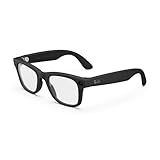
- #1 SELLING AI GLASSES - Tap into iconic style for men and women, and advanced technology with the newest generation of Ray-Ban Meta glasses. Capture photos and videos, listen to music, make hands-free calls or ask Meta AI questions on-the-go.
- UP TO 8 HOURS OF BATTERY LIFE - On a full charge, these smart AI glasses can last 2x longer than previous generations, up to 8 hours with moderate use. Plus, each pair comes with a charging case that provides up to 48 hours of charging on-the-go.
- 3K ULTRA HD: RECORD SHARP VIDEOS WITH RICH DETAIL - Capture photos and videos hands-free with an ultra-wide 12 MP camera. With improved 3K ultra HD video resolution you can record sharp, vibrant memories while staying in the moment.
- LISTEN WITH OPEN-EAR AUDIO — Listen to music and more with discreet open-ear speakers that deliver rich, quality audio without blocking out conversations or the ambient noises around you.
- ASK YOUR GLASSES ANYTHING WITH META AI - Chat with Meta AI to get suggestions, answers and reminders straight from your smart AI glasses.
The Vuzix Blade taps into this moment by shifting notifications and contextual information out of your hand and into your field of view. When it works, it feels less intrusive than pulling out a phone or flicking your wrist, especially for navigation, short messages, and glanceable alerts. This isn’t about replacing your smartwatch or phone, but about redistributing attention more naturally.
Optics and Design Finally Caught Up with Daily Wear
Earlier AR glasses failed largely because they looked and felt like prototypes. Bulky frames, narrow fields of view, and displays that demanded constant head positioning made them exhausting. The Blade’s waveguide display and relatively conventional sunglasses-style frame mark a meaningful step forward.
In day-to-day use, the display sits just out of your central vision, readable when you want it and easy to ignore when you don’t. That balance matters more than raw resolution or field of view for mainstream adoption. Comfort-wise, the Blade is still heavier than standard eyewear, but it’s within a range that makes multi-hour wear realistic rather than aspirational.
A Software Philosophy Built Around Glances, Not Immersion
One reason AR glasses have struggled is that too many tried to replicate phone or tablet interfaces in mid-air. The Vuzix Blade avoids that trap by keeping interactions simple and limited. Short notifications, turn-by-turn cues, quick information cards, and voice-driven commands dominate the experience.
This restraint is intentional and, frankly, necessary. Battery life remains finite, typically stretching to a full workday only with conservative use, and the display is best suited for brief interactions rather than continuous engagement. By embracing those constraints, the Blade feels more honest and more usable than many technically superior but impractical competitors.
Enterprise DNA with Consumer Implications
Vuzix didn’t build its reputation chasing mass-market hype. Its background in enterprise and industrial AR shows in the Blade’s reliability, thermal management, and durability. Those traits matter more to everyday users than spec-sheet bragging rights, even if they’re less glamorous.
The Blade’s build quality, scratch-resistant lenses, and predictable performance make it feel like a finished product rather than an experiment. That enterprise-first approach may be exactly why it has a chance with consumers now, as mainstream buyers are far less forgiving of bugs, crashes, or gimmicks than early adopters once were.
The Cultural Shift Toward Ambient Computing
Perhaps the most important reason the Vuzix Blade matters right now has nothing to do with hardware. Users are increasingly comfortable with technology that fades into the background rather than demanding constant interaction. Smart rings, passive health trackers, and always-on earbuds reflect this shift.
AR glasses fit naturally into that trend when they’re done right. The Blade doesn’t ask to be the center of attention; it asks to be present when useful and invisible when not. That philosophy aligns with where wearables are headed, and it’s why the Blade feels timely rather than premature as we move into the next phase of personal tech.
Design, Comfort, and Wearability: What It’s Like to Actually Wear the Blade All Day
All of that philosophy around restraint and ambient computing only works if the hardware disappears on your face. AR glasses fail the moment they feel like a gadget you’re tolerating rather than eyewear you forget you’re wearing. This is where the Vuzix Blade quietly does more right than many flashier competitors.
Industrial Roots, Subtle Everyday Styling
The Blade doesn’t try to masquerade as fashion eyewear, but it also avoids the overtly sci‑fi look that doomed earlier smart glasses. The frame design sits somewhere between sporty wraparound sunglasses and utilitarian safety eyewear, with clean lines and minimal branding.
In black or dark gray, it passes casual inspection without drawing attention. Most people will clock them as unusual sunglasses rather than immediately assuming you’re wearing a computer on your face, which matters more than spec sheets when you’re out in public.
Weight Distribution and All-Day Comfort
On paper, the Blade is heavier than standard glasses, and you feel that initially. The difference is how that weight is managed, with the battery and electronics spread along the temples rather than concentrated at the front.
After an hour or two, the pressure fades into the background. During full workdays, including desk work, walking, and short commutes, the Blade remains comfortable enough that removal feels optional rather than necessary.
Nose Bridge and Temple Fit in Real Use
The nose pads are adjustable and softer than they look, which helps prevent pressure hotspots during long sessions. They’re not luxurious, but they do their job consistently, even after hours of wear.
Temple tension is firm without being clamping. That balance keeps the Blade stable when you’re moving around while avoiding the temple fatigue that plagues heavier AR headsets.
Prescription Compatibility and Visual Clarity
Vuzix supports prescription inserts rather than fully integrated RX lenses. This adds a layer of setup complexity, but it keeps the main optics intact and avoids distorting the waveguide display.
Once properly fitted, visual clarity is strong. The projected image stays sharp without forcing eye strain, and there’s minimal distraction when you’re not actively engaging with content.
Display Placement and Peripheral Awareness
The Blade’s display sits just above your natural line of sight, which is intentional. You glance up to engage, then drop your gaze back to the real world without feeling like information is constantly intruding.
This placement makes a meaningful difference in day-to-day comfort. You’re never fighting the UI for attention, and your peripheral vision remains largely unobstructed.
Heat Management and Skin Contact
Long-term wear exposes weaknesses quickly, especially with thermals. The Blade warms up during extended use, but heat never reaches distracting or uncomfortable levels.
That’s a quiet benefit of Vuzix’s enterprise heritage. Thermal management here feels engineered for reliability rather than peak performance bursts, which pays off during real-world wear.
Durability and Everyday Handling
The lenses are scratch-resistant and hold up well to being put on and taken off repeatedly throughout the day. Hinges feel solid, with no creaking or looseness after extended testing.
This is a device you can treat like glasses rather than a fragile prototype. That confidence changes how often you reach for them, which is critical for habit-forming wearables.
Social Comfort and Public Wearability
Wearing AR glasses in public is as much a social test as a technical one. The Blade passes better than expected, largely because it doesn’t scream for attention.
You won’t be invisible, but you also won’t feel like a walking tech demo. That subtlety lowers friction, making it easier to wear the Blade consistently rather than reserving it for specific scenarios.
Living With Them, Not Around Them
The most telling detail is how quickly the Blade becomes part of your routine. You stop thinking about when to put them on and start noticing when you’ve forgotten them.
That shift doesn’t happen with uncomfortable or awkward wearables. It happens when design, fit, and restraint align, and in daily use, the Blade gets closer to that balance than most AR glasses before it.
Display Technology and Optics: How the Waveguide AR Experience Holds Up in Real Life
Once the Blade fades into your routine, the display becomes the real differentiator. Comfort gets you to wear AR glasses consistently, but optics determine whether they’re actually useful once they’re on your face.
Vuzix’s waveguide approach is deliberately conservative, prioritizing legibility and visual stability over spectacle. In daily use, that restraint shapes both the strengths and the clear limits of the Blade’s AR experience.
Waveguide Fundamentals: What You’re Actually Seeing
The Blade uses a transparent waveguide lens with a single projected display positioned in the upper-right portion of your field of view. Information floats just above your natural sightline rather than occupying the center, which reinforces the glanceable design philosophy.
You’re never meant to feel immersed. Instead, the display behaves more like a persistent heads-up indicator, similar in spirit to a smartwatch notification that happens to live in your glasses.
Brightness and Outdoor Visibility
Indoors and in shaded environments, brightness is well-judged. Text is crisp, contrast is sufficient, and UI elements remain readable without straining or refocusing.
Direct sunlight is more challenging. On bright days, the display doesn’t disappear, but it loses punch, especially against high-contrast backgrounds like concrete or sky.
This is where the Blade shows its enterprise roots. It’s optimized for controlled lighting and predictable use cases, not blazing midday sun, which limits how aggressively you’ll rely on it outdoors.
Clarity, Color, and Visual Comfort
Sharpness is better than early-generation smart glasses, particularly for text-heavy interfaces like notifications, turn prompts, or simple widgets. You can read comfortably without micro-adjusting your head or squinting.
Color reproduction is functional rather than vibrant. UI elements lean toward practicality, with muted tones that avoid visual fatigue during extended wear.
Crucially, the display remains easy on the eyes over long sessions. There’s no persistent shimmer or flicker, and eye strain is minimal even after hours of intermittent glances.
Field of View and Information Density
Field of view is modest by modern AR standards. You’re working with a relatively small digital canvas, which forces interface designers to prioritize clarity over complexity.
That limitation actually works in the Blade’s favor for everyday use. You’re encouraged to consume information quickly rather than linger, reinforcing the “look up, check, move on” rhythm that makes AR sustainable outside of demos.
Eye Box, Alignment, and Fit Sensitivity
Waveguide alignment is forgiving but not perfect. Minor adjustments in nose pads or frame angle can noticeably affect clarity, especially if the display drifts too far from your natural glance point.
Once dialed in, though, the image stays stable. You don’t feel like you’re chasing the display as you move, which is essential for walking, commuting, or working while wearing them.
Rank #2
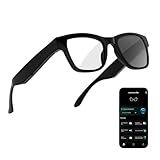
- 3-in-1 AI Glasses: Enjoy ① AI Voice Assistant (Powered by ChatGPT, Gemini & Deepseek), ② Stylish Photochromic Lenses Glasses, and ③ Bluetooth Open-Back Headphones, all in one.
- Free Talk Translation: Automatically detects and translates over 160 languages in real-time, allowing seamless work and translation without touching your phone or glasses.
- Voice, Video & Photo Translation: Supports over 98% of global languages, offering fast and accurate translations—ideal for international travel, business meetings, or cross-cultural communication.
- AI Meeting Assistant: Converts recordings from smart glasses into text and generates mind maps, making it easier to capture and organize meeting insights.
- Long Battery Life, Bluetooth 5.4 & Eye Protection: Up to 10 hours of music and 8 hours of talk time, with easy Type-C charging. Bluetooth 5.4 ensures stronger, stable connections, while photochromic lenses block UV rays and blue light, protecting your eyes in any environment.
Prescription compatibility is a practical concern. Users who already rely on corrective lenses will need inserts or secondary solutions, and that extra layer can slightly reduce brightness and contrast.
Motion, Latency, and Visual Stability
Head movement doesn’t cause distracting lag or judder. The display remains locked in position relative to your gaze, which maintains trust when checking information on the move.
Latency is low enough that you stop thinking about it entirely. That’s a subtle but meaningful win, because any perceptible delay would immediately break the illusion of effortlessness the Blade relies on.
Reflections, Glare, and Real-World Interference
Reflections are present but controlled. Certain angles can introduce faint internal glare, especially under strong overhead lighting, but it rarely overwhelms the content.
The transparency of the waveguide means the real world always takes priority. That’s great for safety and awareness, but it also means busy backgrounds can compete with the display in ways a more immersive system would avoid.
AR That Respects the Real World
The Blade’s optics never try to dominate your vision. That restraint keeps the experience grounded, but it also caps how ambitious AR applications can be.
For navigation cues, notifications, quick reference data, and lightweight contextual prompts, the waveguide display does exactly what it needs to. For rich spatial computing or immersive overlays, it’s clearly not the tool.
That balance defines the Blade’s place in the market. The display doesn’t wow you once and fade; it quietly supports daily use, which matters far more if AR glasses are ever going to feel mainstream rather than experimental.
Daily AR Use Cases: Notifications, Navigation, Media, and Micro-Interactions
That restrained, always-aware display philosophy directly shapes how the Vuzix Blade fits into daily life. You don’t use it the way you’d use a phone or even a smartwatch; it works best when it delivers information in brief, glanceable moments that never demand your full attention.
Living with the Blade is less about dramatic AR moments and more about how often it quietly saves you from pulling out another device.
Notifications That Stay in Their Lane
Notifications are the Blade’s most natural fit. Incoming messages, calendar alerts, calls, and app pings appear as compact cards that sit just off your main line of sight, easy to check without feeling intrusive.
Compared to a smartwatch, the advantage is posture and context. You don’t need to twist your wrist mid-conversation or while carrying something; a slight eye movement is enough to know whether something needs attention or can wait.
The limitation is density. You’re reading headlines, not threads, and that’s intentional. Trying to process long messages through the Blade quickly feels inefficient, reinforcing its role as a triage device rather than a replacement screen.
Navigation as a Background Companion
Turn-by-turn navigation is where the Blade starts to feel genuinely futuristic, even within its conservative AR boundaries. Directional prompts float subtly in view, letting you keep your head up rather than bouncing between the road and your phone.
For walking or cycling in familiar cities, this is a meaningful quality-of-life improvement. You stay more aware of traffic, people, and surroundings while still receiving timely cues, which aligns perfectly with the Blade’s transparent, safety-first optics.
The system does rely heavily on your paired phone for GPS and mapping, and accuracy mirrors whatever app you’re using. When it works well, it feels seamless; when GPS drifts, the Blade doesn’t have the visual authority to override confusion the way a large phone map can.
Media and Passive Information Consumption
Media on the Blade is best understood as ambient rather than immersive. Music controls, podcast progress, and basic playback info make sense here, especially when paired with Bluetooth audio, because they reduce friction without demanding attention.
Video technically works, but it’s not where the Blade shines. The small field of view and transparency mean you’re always aware of the world behind the image, which prevents the kind of absorption most people expect from video content.
Where it does succeed is quick reference media. Short clips, training snippets, or visual reminders feel appropriate, especially in work or instructional settings where the Blade can act as a floating cheat sheet rather than an entertainment device.
Micro-Interactions and Contextual Glances
The Blade’s real strength is in micro-interactions: weather checks, meeting reminders, timers, translations, and simple data lookups that appear and disappear in seconds. These moments add up over a day, quietly reducing how often you reach for your phone.
Voice commands handle much of this, and when recognition works smoothly, the experience feels natural. Touchpad input on the frame is functional but less intuitive, and most users will default to voice whenever possible.
There’s a learning curve in trusting the Blade for these tasks. Once that trust builds, you start to notice how often it removes small interruptions rather than creating new ones.
Battery, Heat, and the Cost of Convenience
Daily AR use is constrained by battery reality. Notifications and navigation are relatively efficient, but sustained media use or frequent voice interactions will drain the Blade well before a full day.
Heat buildup is modest but noticeable during heavier use, especially around the temple area. It’s never alarming, but it reminds you that these are still compact computers sitting on your face.
This naturally encourages disciplined usage. The Blade rewards restraint, performing best when it supplements your day rather than trying to dominate it.
What Feels Mainstream, and What Still Doesn’t
In daily use, the Blade excels at tasks that benefit from immediacy and discretion. It feels surprisingly normal to glance at directions or alerts without breaking stride, and that normality is the product’s biggest achievement.
At the same time, it doesn’t yet replace any single device entirely. Instead, it reduces friction across many small moments, which is harder to market but far more sustainable in real life.
That’s the pattern you notice after weeks rather than days. The Blade doesn’t wow you every time you put it on, but it gradually earns its place, which may be exactly what mainstream AR adoption actually looks like.
Controls, UI, and Learning Curve: Living with Touch, Voice, and Head Gestures
After the initial novelty wears off, the Vuzix Blade lives or dies by how effortlessly you can interact with it. This is where the Blade reveals both its ambition and its constraints, blending touch, voice, and subtle head movements into a control scheme that’s surprisingly usable, but not instantly intuitive.
Rather than forcing a single dominant input method, Vuzix treats interaction as situational. Over time, you naturally gravitate toward the control style that best matches your environment, which is key to understanding the Blade’s learning curve.
Touchpad Controls: Familiar, Functional, and Slightly Fiddly
The touchpad running along the right temple is the Blade’s most traditional input method. Swipes move through menus, taps confirm selections, and long presses trigger secondary actions, all of which will feel familiar to anyone who’s used older Android Wear watches or touch-based earbuds.
In practice, the pad is responsive and reliable, but not especially forgiving. The surface area is narrow, and precise swipes take a few days to internalize, particularly when you’re walking or wearing gloves.
This is not a dealbreaker, but it does reinforce that touch is best used for deliberate interactions rather than quick glances. Adjusting settings, scrolling through longer notifications, or navigating app menus works fine, but it’s not something you’ll want to do repeatedly throughout the day.
Comfort also plays a role here. Because the touchpad sits directly on the frame, frequent use can subtly shift the glasses on your nose. It’s a small thing, but over hours of wear, you become aware of it, especially if you’re already adjusting for fit or weight distribution.
Voice Control: The Blade at Its Most Natural
Voice commands are where the Blade feels closest to its intended future. Simple prompts like checking the weather, starting navigation, setting timers, or sending quick replies work well when recognition is on point.
In quiet or moderately noisy environments, voice control feels intuitive and genuinely useful. Speaking a command without touching the frame reinforces the Blade’s promise of reducing friction rather than adding another layer of interaction.
That said, voice isn’t flawless. Recognition accuracy drops in crowded streets, public transport, or windy outdoor conditions, and you do need to adjust your phrasing to match what the system expects. This isn’t conversational AI in the modern sense, but a structured command system that rewards consistency.
There’s also the social factor. Even in 2026, speaking to your glasses in public still feels mildly self-conscious, and some users will default to touch simply to avoid drawing attention. Over time, you learn where voice feels acceptable and where it doesn’t, which becomes part of the Blade’s unspoken etiquette.
Head Gestures: Subtle, Useful, and Easy to Overdo
Head gestures are the most futuristic, and the most polarizing, part of the control scheme. Small nods or tilts can wake the display, dismiss notifications, or confirm actions, depending on your configuration.
When calibrated well, these gestures feel almost invisible. A slight nod to acknowledge a notification while keeping your hands free is genuinely useful, especially during walking or light physical activity.
The problem is consistency. Natural head movement can occasionally trigger unintended actions, particularly when you’re talking, scanning your surroundings, or adjusting posture. Vuzix gives you control over sensitivity, and dialing this in is essential to avoiding frustration.
Most long-term users end up limiting head gestures to a few specific functions. Used sparingly, they enhance the experience; relied on too heavily, they can feel imprecise and fatiguing.
Rank #3

- 【AI Real-Time Translation & ChatGPT Assistant】AI glasses break language barriers instantly with AI real-time translation. The built-in ChatGPT voice assistant helps you communicate, learn, and handle travel or business conversations smoothly—ideal for conferences, overseas trips, and daily use.
- 【4K Video Recording & Photo Capture 】Smart glasses with camera let you capture your world from a first-person view with the built-in 4K camera. Take photos and record videos hands-free anytime—perfect for travel moments, vlogging, outdoor adventures, and work documentation.
- 【Bluetooth Music & Hands-Free Calls 】Camera glasses provide Bluetooth music and crystal-clear hands-free calls with an open-ear design. Stay aware of your surroundings while listening—comfortable for long wear and safer for commuting, cycling, and outdoor use.
- 【IP65 Waterproof & Long Battery Life】 Recording glasses are designed for daily wear with IP65 waterproof protection against sweat, rain, and dust. The built-in 290mAh battery provides reliable performance for workdays and travel—no anxiety when you’re on the go.
- 【Smart App Control & Object Recognition】Smart glasses connect to the companion app for easy setup, file management, and feature control. They support AI object recognition to help identify items and improve your daily efficiency—perfect for travel exploration and a smart lifestyle.
The UI: Minimal by Necessity, Not by Choice
The Blade’s interface is constrained by optics, and that shapes every design decision. Information appears in a small, fixed area of your right peripheral vision, which prioritizes clarity over immersion.
Text is crisp and readable, but there’s no room for visual excess. Icons are simple, animations are restrained, and everything is designed to be understood in a glance or two before disappearing again.
This works well for notifications, navigation cues, and contextual prompts. It’s less successful for browsing-heavy tasks or anything that requires sustained attention, which reinforces the Blade’s role as a companion rather than a standalone device.
Importantly, UI responsiveness is solid. Inputs register quickly, transitions are smooth, and there’s little lag between action and response, which helps build trust over time.
The Learning Curve: Short, but Not Invisible
Living with the Blade requires a mental shift more than technical mastery. The hardest part isn’t learning the gestures or commands, but learning when to use the glasses instead of your phone.
The first few days are marked by hesitation. You second-guess whether a task is worth doing through the Blade, or worry about fumbling an input in public. This phase passes quickly if you stick with it.
After a week or two, interactions become reflexive. You stop thinking about how to control the interface and start thinking about whether the Blade can quietly handle a task for you. That’s the point where it begins to feel like a genuine wearable rather than a gadget you’re testing.
Accessibility is a mixed picture. Voice control helps reduce reliance on precise touch input, but users with speech or hearing limitations may find the system less accommodating. The Blade is usable for most, but not universally inclusive.
Living With the Trade-offs
The Blade’s control system reflects the reality of early mainstream AR. No single input method is perfect, but together they form a flexible toolkit that adapts to different moments of the day.
You learn to lean on voice for speed, touch for precision, and head gestures for convenience. None of these are revolutionary on their own, but the combination feels thoughtfully balanced.
It’s not effortless on day one, and it never becomes invisible in the way a watch or earbuds can. But over time, the controls fade into the background just enough to let the Blade do what it does best: deliver information when you need it, then get out of the way.
Battery Life, Charging, and Thermal Reality: Can the Blade Keep Up with a Full Day?
Once the controls fade into muscle memory, a more unforgiving reality sets in: power. Like every wearable that tries to live on your face rather than your wrist, the Vuzix Blade’s usefulness is ultimately bounded by how long it can stay awake without demanding attention.
Battery life isn’t just a spec-sheet concern here. It actively shapes how, when, and whether you reach for the Blade during the day.
Real-World Battery Life: Usage Patterns Matter More Than Numbers
In mixed daily use, notifications, occasional glanceable apps, voice commands, and short navigation checks, the Blade reliably delivers between three and four hours of active screen-on time. Spread across a workday, that usually translates to eight to ten hours of intermittent wear before the battery hits the danger zone.
That figure drops quickly if you push the display harder. Continuous navigation, frequent voice interactions, or extended app sessions can drain the Blade in closer to two to three hours of sustained use.
This reinforces the companion-device reality established earlier. The Blade isn’t designed to be “on” all day in the way a smartwatch is. It’s meant to wake up for moments, deliver information efficiently, then disappear again.
Standby and Idle Drain: Better Than Early AR, Still Not Watch-Like
Leave the Blade powered on but largely idle, and standby performance is respectable. Overnight drain is minimal, and short breaks without interaction don’t meaningfully erode battery life.
That said, it’s not a set-and-forget wearable. If you leave the display active or forget to power it down between heavier tasks, the battery penalty is noticeable.
Compared to early smart glasses attempts, this is progress. Compared to modern watches or earbuds, it still feels power-hungry, which is an unavoidable tax of a display sitting inches from your eye.
Charging Experience: Simple, Predictable, and Necessary
Charging the Blade is straightforward via its proprietary magnetic connector. A full charge typically takes around an hour and a half, and quick top-ups during the day are genuinely useful.
A 15 to 20 minute charge can restore enough power for several more short interactions, which encourages a “charge little and often” mindset. Desk workers will find it easy to keep the Blade alive with occasional cable breaks.
The downside is obvious: this isn’t a wearable you forget about overnight and trust blindly the next morning. Daily charging is mandatory, and sometimes midday charging is unavoidable depending on usage.
Heat Management: Present, Controlled, and Context-Dependent
Thermals are one of the quiet anxieties with face-worn electronics, and the Blade handles this better than you might expect, but not perfectly.
During light use, notifications, voice commands, short app checks, heat is a non-issue. The frame remains comfortable, and there’s no sensation of warmth near the temple or ear.
Under heavier loads, navigation, continuous display output, or extended camera use, warmth does build. It’s noticeable but rarely uncomfortable, more akin to a warm earbud than a hot smartphone.
Crucially, heat never feels alarming. The Blade doesn’t throttle aggressively or force shutdowns in normal environments, and thermal behavior remains predictable rather than erratic.
Comfort Over Time: Battery Weight and Heat Interact
Battery and thermals don’t exist in isolation. As the Blade warms slightly under load, its weight distribution becomes more apparent.
The glasses never feel heavy in an absolute sense, but after an hour of continuous use, you’re more aware of them than you would be during short bursts. This is less about discomfort and more about fatigue, a subtle reminder that this is still early mainstream AR hardware.
For most people, this reinforces short-session usage. You instinctively take them off during long breaks, which conveniently aligns with charging opportunities.
Can It Actually Last a Full Day?
The honest answer is yes, but only if you treat the Blade like it wants to be treated.
If your day consists of periodic glances, contextual notifications, quick voice queries, and occasional navigation, the Blade can comfortably span morning to evening with mindful use. Push it like a primary computing device, and it won’t make it past lunch.
This isn’t a failure so much as a design truth. The Blade asks you to be intentional, to choose moments where AR adds value rather than insisting on constant presence.
For early adopters and professionals who understand that rhythm, battery life and thermals are manageable constraints. For anyone expecting all-day, always-on AR without planning, the Blade will feel limiting rather than liberating.
Software Ecosystem and App Support: Where Vuzix Stands on AR Maturity
Living with the Blade day-to-day quickly reveals that battery discipline and thermal awareness are only half the equation. The other half, and arguably the more decisive one, is software: what the glasses can actually do once they’re on your face.
This is where the Blade feels less like a gadget chasing novelty and more like a platform testing its readiness for broader adoption.
Android at the Core, but Not the Android You Expect
At its foundation, the Vuzix Blade runs a customized Android-based operating system. That choice matters because it gives developers familiar tools, APIs, and workflows rather than forcing everything through a proprietary stack.
For users, though, this is not a tiny smartphone on your face. There’s no native Google Play Store, no seamless access to mainstream Android apps, and no assumption that touch-first software will magically adapt to a monocular display.
Instead, Vuzix curates its own app ecosystem through the Vuzix App Store, prioritizing software designed specifically for glanceable, head-up interaction. That constraint keeps the experience coherent, but it also limits breadth.
The Reality of the Vuzix App Store
The App Store itself feels functional rather than ambitious. Navigation is simple, downloads are quick, and updates are generally stable.
What’s missing is depth. The catalog covers essentials like notifications, navigation, basic media controls, weather, calendar access, and utilities, but it doesn’t feel like a fast-growing marketplace with weekly must-have releases.
For early adopters, this won’t be surprising. For anyone expecting an app ecosystem that rivals smartwatch platforms, the Blade can feel sparse.
Notifications Are the Blade’s Strongest Software Feature
Where the software really shines is notifications. Paired with Android or iOS, the Blade handles alerts cleanly, reliably, and with minimal friction.
Rank #4
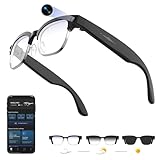
- 【8MPW Camera & 1080P Video and Audio】:These camera glasses feature an 800W camera that outputs sharp 20MP photos and smooth 1080P 30fps videos. Ultra-Clear Video + Powerful Anti-Shake tech+ Built-in dual microphones, you can capture crystal-clear video and audio together -sharply restoring details, perfect for vlogging, travel, and everyday moments
- 【Real-time AI translation Smart Glasses with Camera】:Instantly translate multiple major languages, breaking down language barriers in an instant—no phone required. Ideal for office settings, travel, academic exchanges, international conferences, watching foreign videos, and more
- 【Voice Assistant Recognition and Announcement】:Powered by industry-leading AI large models such as Doubao AI and OpenAI's GPT-4.0. AI voice wake-up lets you ask questions, recognize objects, and get answers on the go. Automatically recognizes objects, menus, landmarks, plants, and more, quickly analyzing the results and announcing them in real time. It instantly becomes your mobile encyclopedia on the go
- 【Bluetooth 5.3 Connection and Automatic Sync to Phone】:Equipped with a low-power BT5.3 chip and Wi-Fi dual transmission technology, offering ultra-low power and high-speed transmission. Captured images and videos are transferred to your phone in real time, eliminating manual export and eliminating storage worries
- 【290mAh Ultra-Long Battery Life】:Ultra-light at 42g, it's made of a durable, skin-friendly material, as light as a feather. Lenses are removable. Its simple, versatile design makes it a comfortable and comfortable wearer. 290mAh ultra-long battery life, 12 hours of music playback and 2 hours of photo or video recording, making it a perfect travel companion
Messages, calls, app alerts, and reminders appear clearly in the display without overwhelming your vision. Voice commands and touchpad gestures make triage fast, and you rarely feel compelled to pull out your phone just to check what buzzed.
This is where the Blade’s short-session philosophy clicks. It’s not about deep interaction, but about staying informed without breaking flow.
Voice Control and Assistants: Useful, Not Magical
Voice interaction is central to using the Blade comfortably. Commands are generally recognized well in quiet environments, and basic actions like launching apps, replying to messages, or checking information work as expected.
That said, voice still feels utilitarian rather than transformative. You use it because it’s efficient, not because it unlocks entirely new workflows.
It’s good enough to support daily use, but not yet robust enough to replace habitual phone interactions.
Navigation, Camera, and Contextual AR
Navigation is one of the Blade’s most convincing AR use cases. Turn-by-turn directions appear naturally in your field of view, reducing the need to glance down at a phone.
The camera, while serviceable, feels more like a utility than a creative tool. It’s useful for documentation, quick captures, or enterprise-style tasks, but image quality and stabilization lag behind even mid-range smartphones.
Contextual AR remains conservative. Overlays are simple, information-driven, and intentionally non-intrusive, which helps with comfort and battery life but limits wow factor.
Fitness and Health: Present, but Peripheral
Unlike smartwatches, the Blade is not positioned as a health or fitness hub. There’s no onboard heart rate monitoring, no sleep tracking, and no deep workout analytics.
Any fitness-related functionality relies heavily on paired devices and notifications rather than native sensing. This keeps weight and power consumption in check, but it also reinforces that these are glasses first, not a body-tracking wearable.
For users coming from smartwatch ecosystems, this will feel like a clear trade-off.
Enterprise DNA Still Shows
Even in consumer use, the Blade’s enterprise heritage is evident. Many of the strongest apps and integrations are productivity- or task-focused, such as remote assistance, checklist workflows, barcode scanning, and real-time instructions.
For professionals, this is a strength. For casual users, it can make the ecosystem feel overly serious.
The upside is stability. Apps tend to be reliable, predictable, and purpose-built, rather than experimental or half-finished.
Developer Support and Long-Term Confidence
Vuzix has been consistent in supporting developers with SDKs, documentation, and ongoing platform updates. That consistency matters more than flashy announcements.
The ecosystem doesn’t evolve at breakneck speed, but it also doesn’t feel abandoned. Updates focus on refinement, compatibility, and performance rather than radical reinvention.
For buyers considering the Blade as a long-term wearable rather than a novelty, that steady cadence inspires more confidence than hype-driven roadmaps.
Where the Blade Sits on the AR Maturity Curve
The Blade’s software ecosystem reflects a platform in its early middle age. It’s past the proof-of-concept phase, but not yet at the point where app abundance drives adoption on its own.
Used intentionally, the software supports the hardware’s strengths: short sessions, contextual awareness, and reduced phone dependence. Used as a replacement for a smartphone or smartwatch, it quickly exposes its limits.
That tension defines the Blade’s place in AR today. It’s mature enough to live with, useful enough to justify daily wear, but still waiting for the software breakthrough that turns capability into inevitability.
Privacy, Social Acceptability, and Public Perception: Wearing Smart Glasses in the Real World
As the Blade edges closer to something you might actually wear every day, the conversation inevitably shifts from capability to comfort of a different kind. Not optical comfort or battery life, but how it feels to wear a connected camera on your face in public spaces. This is where many promising smart glasses have stumbled before, and where the Blade’s mainstream ambitions are most tested.
The Camera Question Never Goes Away
No matter how discreet the hardware is, people notice the camera. The Blade’s forward-facing camera is clearly visible, and while Vuzix includes a status LED to indicate recording, most bystanders don’t know what that light means.
In cafés, shops, and public transport, I found myself becoming more aware of other people’s reactions than with any smartwatch or earbud. A glance lingers a second longer, a question occasionally follows, and in quieter environments it can feel subtly intrusive even when you’re not recording anything.
This isn’t unique to Vuzix, but it remains the single biggest barrier to social acceptance for any camera-equipped eyewear.
How Vuzix Tries to Signal Intent
Vuzix deserves credit for taking privacy signaling seriously. The recording LED is not optional, and the software makes it clear when the camera is active, with on-display indicators and audible cues.
In theory, this creates transparency. In practice, it only works if the people around you understand what they’re seeing, which is still far from universal.
Compared to earlier attempts at smart glasses, the Blade feels more considerate. Compared to a smartphone, it still feels more ambiguous, because the act of recording is less visible to others.
Social Comfort Varies by Context
Where you wear the Blade matters enormously. In professional environments, trade shows, warehouses, or technical workplaces, the glasses often blend into the setting, especially when paired with a work badge or uniform.
In everyday consumer spaces, the reaction is less predictable. Walking outdoors or commuting feels mostly fine, but indoor social settings like restaurants or meetings with new people can feel awkward unless you proactively explain what the glasses do.
This creates a subtle friction that doesn’t exist with watches or earbuds. You’re not just wearing tech, you’re implicitly managing other people’s comfort.
Design Helps, But Only to a Point
The Blade’s industrial design walks a careful line. It’s slimmer and more glasses-like than early AR headsets, but it still looks unmistakably electronic, with thicker temples and visible hardware.
That distinctiveness can be a positive for early adopters who enjoy wearing visibly advanced tech. For mainstream users, it reinforces the sense that these are not just glasses, but devices with intent.
Until smart glasses visually converge with ordinary eyewear, public perception will lag behind technical capability.
Private Use Is Where the Blade Feels Most Natural
Interestingly, many of the Blade’s most compelling use cases are also the least socially fraught. Navigation prompts while walking, glanceable notifications at home, or hands-free reference information during tasks all feel natural when others aren’t directly involved.
In these moments, the Blade feels less like a social statement and more like a quiet extension of your digital life. It’s telling that long-term comfort with the device often grows fastest in semi-private or task-focused contexts.
That pattern mirrors the software’s maturity: strongest when used intentionally, less convincing when worn everywhere without compromise.
Public Perception Is Improving, Slowly
There is a noticeable shift compared to five or even three years ago. Smart glasses no longer trigger immediate suspicion in the way they once did, partly because cameras are now everywhere and partly because AR is entering the cultural conversation through gaming, automotive HUDs, and mixed-reality headsets.
Still, acceptance is uneven and fragile. One high-profile misuse or viral incident can reset public trust overnight, and that risk sits outside Vuzix’s direct control.
For now, wearing the Blade means accepting that you’re an ambassador for the category, whether you want to be or not.
What This Means for Mainstream Adoption
If the Blade is going to go mainstream, it won’t be because privacy concerns disappear. It will be because enough people decide the value outweighs the social cost, and because manufacturers continue to earn trust through design restraint and clear signaling.
For early adopters and professionals, that threshold is already crossed. For everyday consumers, it’s still a calculated choice rather than a default one.
Living with the Blade means understanding that AR maturity isn’t just about software ecosystems or display quality. It’s also about learning how to exist comfortably, and responsibly, in shared physical space with technology on your face.
💰 Best Value

- #1 SELLING AI GLASSES - Move effortlessly through life with Ray-Ban Meta glasses. Capture photos and videos, listen to music, make hands-free calls or ask Meta AI* questions on-the-go. Ray-Ban Meta glasses deliver a slim, comfortable fit for both men and women.
- CAPTURE WHAT YOU SEE AND HEAR HANDS-FREE - Capture exactly what you see and hear with an ultra-wide 12 MP camera and a five-mic system. Livestream it on Facebook and Instagram.
- LISTEN WITH OPEN-EAR AUDIO — Listen to music and more with discreet open-ear speakers that deliver rich, quality audio without blocking conversations or the ambient noises around you.
- GET REAL-TIME ANSWERS FROM META AI — The Meta AI* built into Ray-Ban Meta’s wearable technology helps you flow through your day. When activated, it can analyze your surroundings and provide context-rich suggestions - all from your smart AI glasses.
- CALL AND MESSAGE HANDS-FREE — Take calls, text friends or join work meetings via bluetooth straight from your glasses.
How the Vuzix Blade Compares: Versus Ray-Ban Meta, Enterprise AR, and Smartwatch Alternatives
Understanding where the Vuzix Blade fits requires stepping back from the “are smart glasses ready?” question and looking instead at what problem each category is actually solving. Living with the Blade makes it clear that it occupies a narrow but intentional middle ground, one that neither consumer camera glasses nor enterprise headsets fully cover.
The Blade isn’t trying to disappear entirely, nor is it trying to replace a workstation. It’s aiming to become a lightweight, always-available layer of information, and that puts it in a very different competitive set than it first appears.
Vuzix Blade vs Ray-Ban Meta Smart Glasses
The most obvious comparison is with Ray-Ban Meta, largely because those are the smart glasses people recognize in public. In daily use, though, the two products feel fundamentally different in intent.
Ray-Ban Meta prioritizes capture and communication. You wear them to take photos, record video, stream audio, and interact with voice assistants through speakers and microphones, with no visual interface beyond LEDs and audio cues.
The Blade, by contrast, is about consumption and reference rather than capture. Its waveguide display is always the center of gravity, designed for glanceable navigation, notifications, scripts, checklists, and contextual prompts that sit in your peripheral vision.
From a comfort standpoint, Ray-Ban Meta wins on familiarity. The weight distribution, acetate frames, and lens options feel like conventional eyewear, while the Blade’s thicker temples and visible display module still signal “tech” up close.
Battery behavior also reflects that philosophical split. Ray-Ban Meta tends to last longer for passive wear with intermittent use, while the Blade’s battery drains faster once the display is actively engaged, especially with navigation or persistent overlays.
If you want glasses that quietly enhance what you hear and capture what you see, Ray-Ban Meta is the safer social choice. If you want glasses that actively tell you where to go or what to do without pulling out your phone, the Blade is operating in a different lane entirely.
Vuzix Blade vs Enterprise AR Glasses
Comparing the Blade to enterprise AR hardware highlights how intentionally constrained it is. Devices like Microsoft HoloLens, Magic Leap, or even Vuzix’s own M-Series are built for industrial workflows, not everyday wear.
Enterprise headsets prioritize field of view, depth mapping, and multi-hour task sessions. They are heavier, bulkier, and often require headbands or mounts that make no attempt to blend into normal life.
The Blade gives up immersion in exchange for wearability. Its single-display approach limits spatial mapping and true mixed-reality experiences, but it dramatically lowers the friction of putting the device on and leaving it there.
Software maturity reflects this trade-off. Enterprise platforms often have deeper custom tooling but rely on managed deployments, while the Blade’s Android-based environment is more flexible for individual users experimenting with navigation, notifications, or lightweight productivity apps.
In practice, the Blade feels closer to a digital notepad in your line of sight than a virtual workspace. For professionals who don’t need full 3D overlays, that restraint can actually make it more usable day to day.
Vuzix Blade vs Smartwatches as a Glanceable Interface
The most interesting comparison isn’t with other glasses at all, but with smartwatches. After extended use, the Blade often feels like a head-mounted alternative to checking your wrist.
Both devices thrive on brief interactions. Notifications, directions, reminders, timers, and quick status checks are where each excels, and neither is meant for extended reading or deep interaction.
The difference is ergonomics and context. A smartwatch requires a physical gesture and visual focus shift, while the Blade delivers information passively, often without breaking stride or interrupting what your hands are doing.
That advantage comes with costs. Battery life on a smartwatch is typically far superior, durability is higher, and social acceptance is effectively universal.
Where the Blade pulls ahead is during navigation, task-based work, or situations where looking down repeatedly is impractical or unsafe. In those moments, it genuinely feels like the more evolved interface, even if it’s less mature overall.
Where the Blade Actually Fits Right Now
Living with the Blade makes it clear that it isn’t trying to replace any single category. It borrows from camera glasses, enterprise AR, and smartwatches, but never fully overlaps with any of them.
Its value emerges when you want visual information without immersion, hands-free access without constant voice interaction, and a display that’s present without demanding attention. That’s a narrow use case, but it’s also one that none of its competitors serve particularly well.
For mainstream adoption, this positioning is both a strength and a risk. The Blade doesn’t overwhelm, but it also doesn’t immediately wow in a demo the way larger AR systems do.
As a daily wearable, though, that restraint may be exactly what allows it to quietly earn a place in routines where other AR devices still feel like special equipment rather than something you simply put on and live with.
Who the Vuzix Blade Is Really For — and Whether It Can Truly Go Mainstream This Year
All of that context leads to a harder, more honest question: who actually benefits from living with the Vuzix Blade, and is that audience broad enough to push it beyond niche status this year.
After months of day-to-day use, the answer isn’t about raw technology. It’s about tolerance for friction, appetite for experimentation, and whether you already feel constrained by existing wearables.
The Realistic Core Audience
The Blade makes the most sense for people who already rely on glanceable information throughout the day and want it surfaced without occupying their hands or demanding constant interaction.
That includes urban commuters who navigate frequently, cyclists and runners who want turn-by-turn cues without looking down, and professionals who juggle alerts, timers, and task prompts while staying physically engaged. In those contexts, the Blade feels purposeful rather than gimmicky.
Developers and technical users also sit firmly in its sweet spot. The Android-based ecosystem, limited but flexible app environment, and openness to custom workflows reward users who enjoy tweaking and optimizing how their tools behave.
Who Will Likely Be Frustrated
If you expect the Blade to feel like a natural extension of your phone on day one, it will disappoint you.
App selection remains modest, third-party support is uneven, and the overall software experience still requires patience. You adapt to the Blade more than it adapts to you, at least right now.
Battery life is another reality check. With navigation, notifications, and display brightness pushed beyond conservative settings, you’ll think about charging daily. That’s manageable for enthusiasts, but it’s a mental tax mainstream users are unlikely to accept.
Comfort, Style, and Social Reality
Physically, the Blade is wearable for long stretches, but it never disappears. Weight distribution is reasonable, the frame is well-finished, and nose fatigue is minimal compared to earlier AR glasses, yet you’re always aware you’re wearing technology.
Style matters more here than in any smartwatch comparison. Smartwatches have become invisible socially; AR glasses have not. The Blade’s waveguide display and camera are subtle, but not unnoticeable, and that still shapes how and where people feel comfortable using it.
For early adopters, that tradeoff is acceptable. For mainstream users, social friction remains one of the biggest barriers to habitual use.
Why It Still Has a Shot at Broader Adoption
Despite those limitations, the Blade benefits from something most AR glasses lack: restraint.
It doesn’t demand immersion, it doesn’t push constant visual overlays, and it doesn’t try to replace your phone. Instead, it slots into moments where information is useful but shouldn’t dominate your attention.
That design philosophy aligns closely with how smartwatches slowly went mainstream. They didn’t win by doing everything, but by doing a few things reliably, comfortably, and predictably.
What Needs to Change for True Mainstream Momentum
For the Blade to break out this year, three things matter more than hardware upgrades.
First, software needs to feel less experimental and more dependable, especially for notifications and navigation. Second, battery efficiency must improve enough that users stop thinking about power management. Third, clearer messaging around use cases is essential so buyers know exactly why they’d wear this instead of defaulting to a watch.
None of these are impossible, but they require focus rather than feature sprawl.
The Honest Verdict
The Vuzix Blade isn’t for everyone, and pretending otherwise would undersell its strengths.
It’s for people who already feel the limits of wrist-based wearables, who value hands-free information more than app depth, and who are comfortable living slightly ahead of the curve. For them, it can quietly become indispensable.
Mainstream adoption this year is possible, but only in the way smartwatches once were: gradual, pragmatic, and driven by utility rather than spectacle. If that happens, the Blade won’t feel like the future arriving all at once, but like a new habit forming, one glance at a time.