Meta’s long-rumored ‘Phoenix’ AR glasses were widely expected to mark a turning point for consumer-grade augmented reality, bridging the gap between experimental smart glasses and something people might actually wear all day. Instead, new reports suggest Meta has pushed Phoenix back to 2027, extending an already long wait for what’s positioned as its first truly mass-market AR eyewear.
For readers tracking Meta’s wearable roadmap, this delay isn’t just a scheduling footnote. It reshapes expectations around when lightweight AR glasses move from demos and developer kits into everyday life, and it signals how difficult the remaining technical hurdles still are, even for a company spending billions annually on Reality Labs.
What follows is a clear-eyed look at what’s actually being delayed, why Meta is reportedly taking more time, and what “polishing the experience” likely means in practical, wearable terms rather than marketing language.
What’s Actually Been Reported So Far
The 2027 timeline comes from supply chain and internal roadmap reporting that points to Phoenix missing its earlier mid-decade target. Meta hasn’t publicly confirmed the delay, but multiple industry sources describe an internal decision to slow the program rather than ship a compromised product.
🏆 #1 Best Overall

- Giant Virtual Screen – Immersive Theater Anywhere: Step into a breathtaking virtual screen up to 500 inches, transforming movies, games, and apps into larger‑than‑life experiences. Whether you’re commuting, flying, or unwinding at home, your personal cinema travels with you—bringing immersive entertainment wherever life goes.
- Premium Display Quality – Smooth, Sharp, and True-to-Life: XREAL 1S delivers ultra‑smooth viewing with a 120Hz refresh rate in 3DoF mode and a 90Hz global refresh that eliminates flicker and blur. Every unit is individually color‑tuned for precise, natural hues. The redesigned optical engine boosts clarity by 9%, delivering crisp detail from center to edge. Advanced optical alignment ensures each image point locks perfectly to your eye, keeping visuals sharp, vivid, and lifelike.
- Spatial Viewing Modes – Work, Watch, and Play on Your Terms: Shape your environment with XREAL 1S. Effortlessly switch between 0DoF follow mode, 3DoF anchor mode, Ultrawide Mode (32:9 or 21:9), Real 3D Mode, and Side-View Mode — ideal for both deep focus and entertainment. Pair with XREAL Eye to unlock 6DoF spatial anchoring, allowing for total freedom of movement while your screen stays pinned.
- Native 3DoF Spatial Screen – Plug & Play Freedom: XREAL 1S brings your AR experience to life with native 3DoF spatial viewing powered by the X1 chip. No apps, no setup — simply connect to any USB‑C DP‑enabled device and step straight into expansive spatial content. With rock‑solid stability and smooth head tracking, every session feels natural and comfortable, free from motion sickness and distractions, keeping you fully immersed.
- REAL 3D – Instant Spatial Depth for Everything You Watch: XREAL 1S debuts the world’s first on‑glasses REAL 3D spatial technology, instantly transforming all your content—from games and movies to apps and photos—into true 3D with a single switch. Experience richer depth and lifelike visuals across everything you watch or play, supported at up to 30fps with just 90–100ms latency for smooth, natural viewing.
Phoenix is widely understood to be separate from Meta’s Ray-Ban smart glasses, which focus on cameras, audio, and AI. Instead, Phoenix represents Meta’s first attempt at full optical AR in a glasses form factor, with transparent displays capable of placing digital content directly into the user’s field of view.
In other words, this isn’t about delaying a niche gadget. It’s about postponing Meta’s first serious attempt to define what everyday AR glasses should feel like, weigh like, and do reliably for hours at a time.
Why Meta Is Reportedly Hitting Pause
“Polishing the experience” is doing a lot of work here, but in the AR world it usually points to a familiar cluster of problems. Display quality remains a major challenge, especially brightness and contrast in outdoor conditions without driving power consumption through the roof.
Battery life is another likely culprit. All-day wear implies something closer to smartwatch endurance than headset-style sessions, yet AR optics, onboard compute, cameras, and sensors all compete for limited power in a frame that still needs to be comfortable on the face.
There’s also thermal management and weight distribution to consider. Even a few extra grams at the front of the frame can make glasses fatiguing over time, and excessive heat near the temples or bridge of the nose is a deal-breaker for consumer comfort.
Software and UX Are Probably the Bigger Bottleneck
Hardware challenges are only half the story. For AR glasses to justify their existence, the software experience has to feel immediate, useful, and socially acceptable, not like a constant tech demo hovering in your peripheral vision.
This includes intuitive gesture or voice control, reliable context awareness, and UI elements that don’t distract or overwhelm. Meta has spent years refining spatial interfaces in Quest headsets, but translating that thinking to glanceable, always-on glasses is a fundamentally different problem.
Privacy signaling is also part of the UX equation. Clear indicators for cameras and sensors, predictable behavior in public spaces, and trust-building design choices are essential if Meta wants these glasses worn outside enthusiast circles.
How Phoenix Fits Into Meta’s Broader Wearable Strategy
The delay suggests Meta sees Phoenix as a cornerstone product rather than a stepping stone. The company appears willing to let Ray-Ban smart glasses and Quest headsets carry its near-term wearable presence while it refines AR glasses behind the scenes.
This staggered approach mirrors how Meta has tested features like on-device AI, voice assistants, and social capture in simpler hardware before pushing them into more ambitious platforms. Phoenix likely inherits lessons from those products, especially around battery efficiency, companion app integration, and real-world usage patterns.
From a strategic standpoint, delaying Phoenix may be less risky than launching early and redefining consumer expectations downward for what AR glasses can be.
What the Delay Means for Competition
Pushing Phoenix to 2027 gives competitors more room to maneuver. Apple’s Vision Pro sits firmly in the high-end, mixed-reality category rather than lightweight glasses, but Apple’s long-term AR ambitions are no secret, and its ecosystem leverage remains a looming factor.
Google, meanwhile, has quietly returned to smart glasses through partnerships and enterprise-focused AR, potentially positioning itself to re-enter consumer eyewear once the technology matures. Smaller players and startups continue to experiment, but few have Meta’s resources to tackle optics, silicon, and software at scale.
For consumers, this delay reinforces the idea that true AR glasses are still a longer-term evolution, not the next smartwatch-style upgrade cycle. Whether that patience pays off depends on whether Meta uses the extra time to solve the problems that have held the category back for more than a decade.
What ‘Polishing the Experience’ Really Means in AR Glasses Terms
When Meta talks about polishing the experience, it is less about adding headline features and more about removing friction that only becomes obvious after months of real-world wear. AR glasses are judged not in demos, but in daily life, where comfort, clarity, battery anxiety, and social acceptance all collide.
For Phoenix, that likely means Meta is still working through several interdependent problems that can’t be solved in isolation. Each one affects whether the glasses feel like a natural extension of your day or a novelty you leave at home.
Optics That Hold Up Beyond Controlled Demos
Optical quality remains the hardest unsolved problem in lightweight AR glasses. Even small compromises in waveguide clarity, brightness uniformity, or color fringing become fatiguing when worn for hours rather than minutes.
Polishing here likely means improving edge-to-edge sharpness, minimizing rainbow artifacts, and ensuring overlays remain legible in bright outdoor light without cranking brightness to battery-draining levels. If Phoenix is meant to be worn like everyday eyewear, the display has to disappear when not needed, not constantly remind you it’s there.
Comfort, Weight Balance, and All-Day Wearability
Weight alone is not the enemy; imbalance is. Front-heavy optics, uneven temple pressure, or heat buildup around the brow can ruin otherwise impressive hardware.
Meta has learned from both Quest headsets and Ray-Ban smart glasses that long-term comfort dictates usage more than raw specs. Delaying Phoenix likely gives Meta time to refine materials, hinge mechanics, nose bridge design, and internal component layout so the glasses feel closer to premium eyewear than a tech prototype.
Battery Life That Matches Real Usage, Not Lab Estimates
Battery life in AR glasses is not just about capacity, but predictability. Users need to trust that the glasses will last through a commute, a meeting block, or an afternoon out without constant power management.
Polishing the experience likely involves aggressive efficiency gains across the display engine, sensors, and on-device AI processing. It also means smarter standby behavior, faster charging, and a companion app that makes power usage transparent rather than anxiety-inducing.
Input Methods That Don’t Feel Performative
Voice, touch, gestures, and contextual automation all sound compelling, but they fail quickly if they feel awkward in public. No one wants to wave their hands mid-sidewalk or repeat commands to an assistant that half-listens.
Meta is probably refining how Phoenix prioritizes inputs depending on environment and intent. That could mean quieter, more reliable voice capture, subtle touch controls along the frame, and software that anticipates needs instead of demanding constant interaction.
Software That Adds Value Without Demanding Attention
AR glasses live or die by restraint. Notifications, navigation cues, translations, and contextual info must appear exactly when useful and disappear just as quickly.
Polishing the software experience likely involves tuning notification logic, improving spatial stability of overlays, and tightening integration with phones and Meta’s broader ecosystem. The goal is to feel helpful without becoming visually noisy, a balance that early smart glasses consistently failed to strike.
Social Signaling, Privacy, and Public Trust
Meta is acutely aware that social acceptance remains a gating factor. Camera indicators, recording cues, and predictable behavior are not optional details; they shape whether people around you feel comfortable.
Extra development time allows Meta to refine how Phoenix communicates its capabilities nonverbally. That includes LED indicators, software limits, and design choices that reduce the sense of being watched, which is essential if these glasses are meant to move beyond early adopters.
Reliability at Consumer Scale, Not Enthusiast Tolerance
Early adopters forgive bugs, resets, and occasional failures. Mass-market consumers do not.
Polishing the experience also means stress-testing Phoenix across different face shapes, prescriptions, climates, and usage patterns. That kind of reliability work rarely shows up on spec sheets, but it determines whether a product earns daily wrist-or-face time or quietly disappears into a drawer.
In that light, Meta’s delay reads less like hesitation and more like acknowledgment of how unforgiving this category really is. AR glasses do not get second chances once consumers decide they are inconvenient, uncomfortable, or socially awkward, and Phoenix appears positioned to avoid that fate at all costs.
Hardware Realities: Optics, Displays, Sensors, and Why AR Glasses Are Still Hard
If software polish explains part of Meta’s reported Phoenix delay, the harder truth sits inside the hardware. AR glasses are constrained by physics in a way few other consumer devices are, and no amount of software refinement can fully compensate for immature optics, displays, or sensor stacks.
Rank #2

- XREAL's Self-Developed X1 Spatial Computing Chip: Delivers Native 3DoF tracking with ultra-low 3ms M2P latency, ensuring stable visuals even during rapid movements. With the optional XREAL Eye, full 6DoF spatial anchoring. It delivers high processing power, seamless compatibility with devices, and distortion-free visuals through advanced stabilization.
- The New Optic Engine-X-Prism Optics: XREAL’s advanced lens and projection system—ultra-slim, precision-engineered optics that project a large, sharp virtual screen right in front of your eyes, while still letting you see your real surroundings clearly. With a best-in-class 57° FOV, Optic Engine 4.0 recreates the feeling of watching a massive 171-inch screen from four meters away—all in lightweight, compact design. Its advanced anti-glare design minimizes reflections and light interference, enhancing clarity and immersion.
- Experience True AR with 6 DoF, Spatial Anchor Anytime: Pairing with XREAL Eye, anchor your screen anywhere in your room, so it stays perfectly fixed in place—even as you walk around, lean in, or change your position. Unlike 3DoF, which keeps the screen at a constant distance relative to your head movements, 6DoF keeps your virtual screen locked to a real spot in your space for true spatial freedom and a more natural, immersive AR experience.
- REAL 3D – Turn everything you watch into an immersive 3D experience: REAL 3D Now Available on All One Series Glasses, instantly transforming all your content—from games and movies to apps and photos—into true 3D with a single switch. Experience richer depth and lifelike visuals across everything you watch or play.
- 57°FOV, 171'' Spatial Screen – More Immersive Visual Experience: Experience a virtual screen starting at 171 inches wide, filling your view with blockbuster visuals, thanks to XREAL’s advanced optics and industry-leading 57° FOV. Powered by Sony’s 0.55' Micro-OLED display technology and a smooth 120Hz refresh rate, get swept into your games or movies with immersion that rivals traditional home theaters—without the size, setup, or space concerns.
Unlike a smartwatch, where a slightly thicker case or heavier weight is tolerable, glasses live on the face. Every gram, millimeter, and thermal hotspot directly affects comfort, social acceptability, and whether the product can realistically be worn all day.
Optics: The Unsung Bottleneck of AR Progress
The biggest challenge remains the optical system itself. AR glasses must project digital imagery that appears sharp, stable, and correctly aligned with the real world, all while fitting inside frames that cannot look like lab equipment.
Waveguides, whether diffractive or reflective, are still a compromise. They struggle with brightness outdoors, color uniformity, edge distortion, and efficiency, meaning much of the display’s light never reaches your eyes. Improving clarity often increases thickness, while slimming the optics tends to degrade image quality.
For Phoenix, extra time likely means refining waveguide manufacturing yields and tuning optical alignment. Even slight inconsistencies can cause eye strain, misaligned overlays, or visual artifacts that instantly break the illusion of augmented reality.
Displays: Brightness, Power, and Thermal Trade-Offs
Display technology is another limiting factor. MicroLED is the long-term ideal for AR thanks to its brightness and efficiency, but scalable, affordable microLED production remains years away for consumer volumes.
Most near-term AR glasses rely on micro-OLED or LCOS-based systems. These can deliver decent resolution but demand aggressive power management to avoid overheating and rapid battery drain. Pushing brightness high enough for outdoor visibility directly impacts battery life and thermal comfort at the temples.
Delaying Phoenix to 2027 suggests Meta is still balancing this triangle. A display that looks impressive in demos but lasts only a couple of hours is not a consumer product, especially for something positioned as a daily wearable rather than a novelty.
Sensors: Context Awareness Without Bulk
True AR requires constant environmental awareness. That means cameras, depth sensors, IMUs, microphones, and eye-tracking working together in real time.
Packing that sensor array into eyewear-sized hardware without making it front-heavy or visually intrusive is extremely difficult. Each additional sensor adds weight, consumes power, and increases heat, all of which compound comfort issues over long wear sessions.
Meta’s delay likely reflects ongoing work to consolidate sensors, improve on-device processing efficiency, and reduce reliance on external compute. The goal is glasses that understand your environment without feeling like surveillance equipment strapped to your face.
Battery Life: The Quiet Constraint Behind Every Design Choice
Battery limitations loom over every AR hardware decision. Unlike smartwatches, where thicker cases can hide larger cells, glasses have minimal space for energy storage.
Most current smart glasses either rely on companion devices or accept short usage windows. For Phoenix to succeed as a mainstream product, it needs predictable, all-day behavior for lightweight use cases like notifications, navigation, and glanceable information.
That likely means compromises elsewhere: dimmer displays, more aggressive sleep states, and offloading heavier processing to a paired phone. Extra development time allows Meta to tune these trade-offs so the experience feels reliable rather than fragile.
Fit, Comfort, and Real-World Wearability
Hardware challenges extend beyond raw components. Glasses must fit a wide range of face shapes, support prescription lenses, and remain comfortable across hours of wear.
Weight distribution matters as much as total mass. Pressure points at the nose or behind the ears can ruin usability faster than any software bug. Materials, hinge design, and even surface finishing influence whether glasses feel premium or fatiguing.
Meta’s reported focus on polishing suggests extensive iteration on ergonomics. This is similar to what smartwatch makers learned over multiple generations: comfort and wearability determine whether a device becomes part of a daily routine or an occasional accessory.
Why These Constraints Justify a 2027 Timeline
Taken together, these hardware realities explain why AR glasses continue to move slower than hype cycles suggest. Each subsystem is advancing, but not always in sync with the others.
Releasing Phoenix before optics, displays, sensors, and battery behavior converge into a coherent whole would risk repeating the mistakes of earlier smart glasses. Those products worked, technically, but failed as wearables people actually wanted to live with.
From this perspective, Meta’s delay is less about waiting for a breakthrough and more about aligning dozens of incremental improvements into something that finally feels effortless. That alignment is what turns AR glasses from a tech demo into a legitimate successor category alongside smartwatches, not just another experiment consumers try once and abandon.
Battery Life and Thermals: The Silent Deal-Breakers of Everyday AR Wearables
If fit and optics determine whether AR glasses can be worn at all, battery life and heat determine whether they can be worn daily. These are the constraints that quietly separate lab-ready prototypes from consumer products that survive real routines.
Unlike headsets, glasses cannot hide their power demands behind thick enclosures or active cooling. Every milliwatt and every degree of heat is felt directly on the face, ears, and temples.
Why AR Glasses Have a Harder Battery Problem Than Smartwatches
Smartwatches benefit from a simple interaction model: brief screen-on moments, predictable sensors, and well-understood power budgets. AR glasses, by contrast, juggle displays, cameras, sensors, wireless radios, and continuous environmental awareness.
Even “lightweight” AR features like navigation arrows or contextual notifications require constant tracking, spatial awareness, and display refresh. That background activity drains batteries faster than most consumers expect, especially when the device must stay always-ready rather than fully asleep.
Meta’s reported delay strongly suggests Phoenix is still fighting for something close to all-day standby with meaningful active use. Without that baseline, AR glasses risk feeling like novelty devices that demand constant charging discipline, a lesson smartwatch makers learned painfully in their first generations.
Thermals: The Problem You Can’t Spec Sheet Away
Heat is the less visible but more unforgiving limiter. Chips powerful enough to process computer vision, spatial mapping, and AI assistance generate heat that has nowhere to go in a glasses form factor.
Unlike phones, glasses sit on sensitive skin areas. A few degrees too warm at the temple or nose bridge quickly becomes uncomfortable, even if the device remains within safe operating limits.
This is where “polishing the experience” likely becomes code for extensive thermal tuning. That can mean underclocking processors, rethinking workload distribution, or shifting more computation to a paired phone or cloud services. Each option carries trade-offs in latency, reliability, and offline usefulness.
Display Brightness Versus Battery Reality
Display technology sits at the center of the power-heat equation. High brightness is essential for outdoor usability, but pushing microLED or waveguide systems hard enough to compete with sunlight is expensive in energy terms.
Dimming displays aggressively saves battery but undermines the very promise of AR glasses as glanceable, always-available companions. This balancing act is likely one of the biggest reasons Phoenix isn’t ready yet.
Meta has already experimented with this tension in its Ray-Ban smart glasses, which avoid displays entirely to preserve battery life and comfort. Phoenix represents a more ambitious leap, and that leap demands far tighter integration between display hardware, software timing, and power management.
Charging Habits Define Whether AR Becomes Routine
Consumers have shown tolerance for daily charging with smartwatches because the devices deliver constant, personal value. AR glasses will be judged by a harsher standard: if they cannot survive a workday of intermittent use, they won’t earn a permanent spot in pockets or on faces.
External battery packs, tethered designs, or bulky cases can technically solve endurance problems, but they undermine the social and aesthetic acceptability of glasses. For a product positioned as an everyday wearable rather than a tech accessory, that compromise is rarely acceptable.
Rank #3

- World’s First HDR10 AR Display – Experience over 10 billion colors and ultra-deep contrast on a massive 201-inch virtual display. Compared to standard LCD screens, HDR10 delivers brighter highlights and richer blacks, making movies, Netflix streaming, and gaming more immersive at home, in bed, or on flights.
- Vision 4000 Chip with AI SDR-to-HDR Upscaling – Co-developed with Pixelworks, this processor enhances color, sharpness, and motion clarity in real time. Enjoy smooth 120Hz visuals for PS5, Steam Deck, Switch 2, and mobile gaming without lag or motion blur.
- 3D Movie Glasses for Immersive Viewing – Watch native 3D films or convert 2D videos into 3D with AI depth enhancement. Transform any room into a private cinema experience with theater-like depth and realism—perfect for movie nights or travel entertainment.
- Audio by Bang & Olufsen – Four precision speakers deliver immersive 360° spatial sound for movies and gaming. Use whisper mode for private listening in public spaces. Optional Sound Tube accessory boosts volume up to 15dB (sold separately).
- Universal USB-C Compatibility – No WiFi or Apps Required. Connect directly to iPhone 17/16/15 (USB-C models), Android phones, MacBook, iPad, Steam Deck, and PlayStation consoles. Designed without internal power storage for a lighter frame and true plug-and-play simplicity—instant setup wherever you go.
A 2027 timeline gives Meta room to refine charging behavior so Phoenix fits naturally into existing routines. Think top-up charging during commutes, predictable drain curves, and confidence that the glasses won’t die unexpectedly during navigation or messaging.
What This Signals for the Wider AR Market
Meta’s apparent willingness to wait underscores a broader industry reality: battery chemistry and thermal efficiency are now pacing factors for consumer AR. Software innovation alone cannot overcome these limits.
Apple’s Vision Pro sidesteps the issue with an external battery, while Google’s current smart glasses efforts lean heavily on minimal displays and phone dependence. Each company is choosing different compromises, but none have fully solved the everyday wear problem yet.
For consumers, this delay is a signal to temper expectations. AR glasses are advancing steadily, but the jump from impressive demos to dependable, all-day wearables remains one of the hardest transitions in modern consumer electronics.
Software, UX, and AI: Why Meta Can’t Ship Phoenix Without a Compelling Reason to Wear It
If battery life defines whether AR glasses can stay on your face, software defines whether you want them there at all. This is where Meta’s reported delay of Phoenix starts to look less like hesitation and more like self-preservation.
Early smart glasses have repeatedly proven that novelty wears off faster than hardware. Without software that feels essential rather than impressive, even the best optics and industrial design end up as expensive desk ornaments.
AR Has a UX Problem, Not a Display Problem
The hardest challenge for Phoenix is not rendering crisp text or anchoring virtual objects in space. It is deciding when information should appear, how long it should stay, and how it exits your field of view without breaking concentration.
Unlike phones or watches, glasses sit directly in your visual stack. Poor timing, excessive notifications, or clumsy gesture controls feel intrusive in a way no vibrating wrist ever does.
Meta knows this from Quest, where UI fatigue and cognitive load have been persistent friction points even among enthusiasts. Shipping Phoenix before solving glance-based interaction, notification restraint, and context awareness would risk turning AR into a distraction machine.
Why “Good Enough” Software Isn’t Good Enough for Glasses
Smartwatches succeeded because their early software solved one simple problem extremely well: quick access to time, notifications, and health data with minimal friction. Everything else came later.
AR glasses do not have that luxury. If Phoenix launches without a clear daily-use loop, navigation, messaging, capture, translation, or contextual assistance that works flawlessly, users will struggle to justify the trade-offs.
A half-baked UX is especially dangerous here because glasses are socially visible. People tolerate software quirks on a phone they can pocket, but not on something worn on their face in meetings or on the street.
AI Is the Real Feature Meta Is Waiting On
The unspoken reason Phoenix cannot ship yet is that Meta needs AI to feel invisible, fast, and genuinely helpful. Anything less turns glasses into a clumsier second screen for your phone.
Meta’s long-term vision hinges on multimodal AI that understands what you see, hear, and say, then responds without rigid commands. That kind of ambient intelligence is still maturing, both technically and culturally.
Latency matters more on glasses than on any other device. A delayed AI response breaks the illusion of presence, and once that illusion cracks, the entire value proposition collapses.
Context Awareness Is the Difference Between Utility and Noise
For Phoenix to earn daily wear, it must know when not to speak. That means understanding location, activity, social setting, and user intent in real time.
Navigation cues should surface only when needed, not persistently hover. Messages should adapt based on urgency and environment, not mirror phone notifications verbatim.
This level of contextual filtering requires deep integration between sensors, software, and AI models. Rushing this layer would create exactly the kind of cognitive overload that early AR adopters complain about.
Why Meta Can’t Lean on the Smartphone Forever
Most first-generation smart glasses rely heavily on phones for compute, connectivity, and UI fallback. Phoenix will likely do the same to an extent, but Meta cannot let it feel dependent.
If the glasses merely duplicate phone functions with more friction, users will default back to the slab in their pocket. The experience must feel additive, not redundant.
That means tight handoff between devices, predictable behavior, and a clear understanding of what lives on the glasses versus the phone. This orchestration takes time to get right, especially at scale.
Lessons from Ray-Ban Meta Glasses Still Apply
Meta’s Ray-Ban glasses succeed precisely because they are narrow in scope. Camera, audio, basic voice control, and now light AI features, all wrapped in hardware that feels normal to wear.
Phoenix dramatically expands ambition by introducing displays, spatial UI, and persistent visual interaction. The margin for error shrinks accordingly.
The Ray-Bans taught Meta that comfort and social acceptability buy patience from users. Phoenix needs software maturity to earn that same patience once displays enter the equation.
Polishing the Experience Means Saying No to Features
A 2027 release window suggests Meta is willing to cut or delay features that do not meet a high usability bar. That restraint matters more than feature count at launch.
Consumers do not want experimental AR paradigms on their face every day. They want reliability, predictability, and clear value during commutes, errands, and workdays.
If Phoenix ships, it has to feel finished in the way mature wearables do. Not perfect, but trustworthy enough that wearing it becomes a habit rather than a conscious decision.
In that context, delaying Phoenix is less about waiting for technology to catch up and more about waiting until the software gives people a reason to wear AR glasses at all.
How Phoenix Fits Into Meta’s Broader Wearables and XR Roadmap
Seen in isolation, a two-year delay looks like hesitation. In the context of Meta’s wider wearables strategy, Phoenix reads more like a missing middle that has to be placed very carefully.
Meta is not just trying to ship another gadget. It is trying to build a ladder from passive, socially acceptable wearables to full spatial computing, without asking consumers to climb too fast.
Phoenix as the Bridge Between Ray-Ban and Quest
Right now, Meta’s hardware lineup is split between two extremes. Ray-Ban Meta glasses are lightweight, audio-first, and designed to disappear on your face, while Quest headsets are bulky, immersive, and explicitly used at home.
Phoenix is meant to sit between those poles. It introduces visual augmentation without demanding the behavioral shift of putting on a headset.
Rank #4

- 【A 1200P ULTRA SHARP DISPLAY YOU’LL NEVER FORGET — EVEN SHARPER THAN VITURE PRO】Step into a jaw-dropping 152'' virtual screen with revolutionary 1200p resolution that feels like 4K — powered by VITURE’s proprietary optical “secret sauce.” Text is razor-sharp, delivering a clarity that’s even sharper than the award-winning VITURE Pro, making this the sharpest XR display ever created.
- 【INDUSTRY FIRST — POWERED BY SONY’S LATEST MICRO-OLED DISPLAY】VITURE Luma Ultra features never-before-seen ultra displays — these advanced panels reduce power consumption by 35%, allowing us to confidently push peak brightness even higher to 1500 nits, while effectively managing heat to maintain a comfortable viewing experience. Additionally, lower power consumption means less strain on connected devices like the VITURE Pro Neckband or your smartphone, helping extend their battery life during use.
- 【FRONT RGB CAMERA AND DUAL DEPTH CAMERAS FOR SPATIAL COMPUTING — ZERO DRIFT 6DOF & HAND GESTURES SUPPORT】The triple-camera system offers significantly enhanced tracking accuracy and spatial awareness, allowing for more advanced, high-precision 6DoF tracking and spatial interaction. Luma Ultra empowers users to fully engage with spatial content and virtual objects in real-world environments with hand gesture recognition when paired with the VITURE Pro Neckband, enabling precise spatial interactions. Additionally, it offers comprehensive 6DoF support in SpaceWalker across macOS and Windows, with mobile compatibility coming soon.
- 【THE BEST JUST GOT BETTER — IMMERSIVE 52° FOV & CINEMA-QUALITY COLORS】Be immersed in a wider, more natural 52° field of view with industry-leading 1500 nits brightness, a silky-smooth 120Hz refresh rate, and Hollywood-grade color accuracy (DeltaE < 2). Everything looks stunning — whether you’re gaming outdoors or working under bright lights.
- 【PREMIUM TRANSLUCENT DESIGN WITH DYNAMIC LIGHT EFFECTS】Illuminate your victory! Sync colors and animations to match your gaming persona or productivity mode, creating a true conversation starter that reflects your style. Customize your vibe (coming soon) with the first programmable RGB lighting ever in XR glasses.
That middle ground is far harder to get right than either end. The hardware has to stay slim, balanced, and comfortable for hours, while the software has to justify a display that is always within your field of view.
Why Meta Needs Phoenix to Feel Like a Wearable, Not a Headset
Meta’s long-term XR vision depends on normalizing face-worn displays. That only happens if Phoenix behaves more like a smartwatch than a VR device.
Smartwatches succeeded because they deliver small, frequent moments of value with minimal friction. AR glasses need to do the same: glanceable information, reliable notifications, quick capture, and contextual AI that feels helpful rather than intrusive.
If Phoenix demands deliberate “sessions” of use, it risks collapsing back into headset territory. The delay suggests Meta is still refining how Phoenix earns its place in daily routines, not just demo scenarios.
Software Unification Across Meta’s Devices
Another reason Phoenix cannot ship half-baked is that it must coexist with Meta’s growing device ecosystem. Quest, Ray-Ban Meta glasses, phones, and future wearables all need to share accounts, AI models, input logic, and developer frameworks.
Meta has been steadily aligning its software stack, from Horizon OS on Quest to shared AI assistants and cross-device camera features. Phoenix likely needs deeper integration than what exists today.
That includes predictable handoff between phone and glasses, consistent voice behavior, and a UI language that scales from audio-only glasses to visual AR overlays. These are not hardware problems, but they are hard problems.
Phoenix and the Reality of Battery Life and Thermals
From a wearables perspective, battery life is still the unglamorous constraint that shapes everything. A device that adds displays, sensors, and AI inference to something worn on the face has almost no thermal or capacity margin.
Meta cannot afford Phoenix to feel like an endurance compromise. Daily wear means all-day standby, predictable drain, and no heat buildup that makes the frames uncomfortable.
Waiting until 2027 likely reflects incremental gains rather than a single breakthrough. Better silicon efficiency, smarter offloading to the phone, and more disciplined software scheduling all add up to a product that can survive real-world use.
Strategic Positioning Against Apple and Google
Phoenix also has to land in a market that will look very different by 2027. Apple is anchoring its strategy at the high end with Vision Pro, while reportedly working toward lighter, more wearable formats over time.
Google, meanwhile, is re-entering smart glasses through partnerships and Android XR, betting on services and software rather than vertically integrated hardware.
Meta’s advantage has always been iteration speed and willingness to experiment in public. Delaying Phoenix suggests it recognizes that this category punishes early mistakes more than most.
A Roadmap Built on Gradual Trust, Not Shock-and-Awe
Taken together, Phoenix looks less like a standalone product and more like a trust-building exercise. Meta needs users to believe that AR glasses can be comfortable, useful, and socially acceptable before it can push further.
That trust is earned through refinement, not spectacle. Each step, from Ray-Ban to Phoenix to whatever follows, has to feel like a natural extension rather than a leap.
If Meta gets Phoenix right, it becomes the reference point for everyday AR wearables. If it gets it wrong, it risks setting the category back years, regardless of how advanced the technology may be.
Competitive Impact: What the Delay Means Versus Apple Vision, Google, and Smart Glasses Rivals
Seen in context, pushing Phoenix to 2027 is less about surrendering ground and more about choosing the right battlefield. Meta is effectively acknowledging that the next two years will define expectations for what “wearable AR” actually means in daily life.
That timing has real consequences when Apple, Google, and a growing field of smart glasses startups are all approaching the problem from very different angles.
Apple Vision Pro: A Different Category, For Now
Apple’s Vision Pro does not directly compete with Phoenix in form factor or use case, and that distinction matters. Vision Pro is a spatial computer first, worn in controlled environments, with weight, battery tethering, and price accepted as trade-offs for capability.
By delaying Phoenix, Meta avoids forcing a premature comparison between face-worn AR glasses and a headset-class device that can brute-force performance with larger displays, active cooling, and a battery pack in your pocket. Consumers comparing Vision Pro to Phoenix today would be comparing two products at very different maturity levels.
The more interesting competitive pressure comes later. By 2027, Apple is widely expected to introduce lighter, more wearable XR hardware that bridges the gap between Vision Pro and everyday eyewear, likely with reduced displays, better power efficiency, and tighter integration with the iPhone.
Meta’s delay suggests it wants Phoenix to meet that moment, not precede it. If Apple arrives with a “Vision Air” or similar product that still compromises on all-day comfort, Meta has an opening to define what true daily AR wear feels like.
Google and Android XR: Software Scale Versus Hardware Control
Google’s re-entry into smart glasses looks increasingly software-led. Android XR, Gemini-powered assistance, and partnerships with OEMs signal a strategy built around services, not a single hero device.
This creates a different kind of competitive tension for Meta. Google can move faster by letting partners absorb hardware risk, iterating across multiple designs with varying displays, batteries, and industrial choices.
Meta, by contrast, is betting on tightly integrated hardware and software, even if that means moving slower. Delaying Phoenix implies Meta believes the quality bar for consumer AR glasses will be set by hardware fundamentals like comfort, heat, and battery predictability, not by app counts or cloud features alone.
If Google-powered glasses reach the market sooner but feel compromised in weight distribution, frame thickness, or real-world battery life, Phoenix could still land as the more refined option, even if it arrives later.
Smart Glasses Rivals: Ray-Ban Clones Versus Real AR
Between now and 2027, the market will likely flood with smart glasses that look good but do very little. Cameras, audio, AI assistants, and notification mirroring are relatively easy to ship compared to true display-based AR.
Brands chasing Meta’s Ray-Ban success can deliver acceptable battery life and comfort because they avoid the hardest problem: putting pixels in your field of view without making the frames hot, heavy, or awkward.
Phoenix sits on the opposite end of that spectrum. It is not competing with fashion-first smart glasses so much as trying to leap beyond them, which raises the stakes considerably.
Delaying the product suggests Meta is unwilling to ship a “me too” AR experience that technically works but fails the daily-wear test. In that sense, Phoenix is less threatened by near-term rivals and more threatened by setting the wrong expectations for the category.
What This Means for Consumers Watching the Space
For consumers, the delay clarifies one uncomfortable truth: truly useful AR glasses are still not a next-year purchase. The industry is converging on the idea that comfort, battery life, and social acceptability are gating factors, not optional refinements.
Meta’s decision effectively buys time for silicon efficiency to improve, for software to mature beyond demos, and for use cases to justify something worn on the face all day. That is a more honest timeline than rushing hardware that ends up living in a drawer.
💰 Best Value
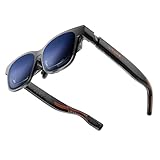
- 【A 1200P ULTRA SHARP DISPLAY YOU’LL NEVER FORGET — EVEN SHARPER THAN VITURE PRO】Step into a jaw-dropping 152” virtual screen with revolutionary 1200P resolution that feels like 4K — powered by VITURE’s proprietary optical “secret sauce.” Text is razor-sharp, delivering a clarity that’s even sharper than the award-winning VITURE Pro, making this the sharpest XR display ever created. * Important * Please remove the protective film from the front camera (located in the center of the frame) before use. ***VITURE XR Glass is compatible with virtually any USB-C device capable of video and power output.
- 【THE BEST JUST GOT BETTER — IMMERSIVE 52° FOV & CINEMA-QUALITY COLORS】Enjoy a wider, more natural 52° field of view that completely immerses you. With industry-leading 1000 nits brightness, a silky-smooth 120Hz refresh rate, and Hollywood-grade color accuracy (DeltaE < 2), everything looks stunning — whether you’re gaming outdoors or working under bright lights.
- 【ALL THE FLEXIBILITY YOU’LL EVER NEED】Available in two sizes to fit different IPD ranges, featuring a larger yet snug frame with flexible arms, a magnetic ergonomic nose pad, and tilt-adjustable temples — all designed for all-day comfort and a perfect fit for everyone.
- 【PREMIUM TRANSLUCENT DESIGN WITH FIRST-OF-ITS-KIND DYNAMIC LIGHT EFFECTS】The first of its kind — illuminate your victory. Sync colors and animations to match your gaming persona or productivity mode, creating a true conversation starter that reflects your style. Customize your vibe (coming soon) with the first programmable RGB lighting ever in XR glasses.
- 【HARMAN AUDIO EVOLVED — FULLER, RICHER, UPGRADED】Dive into a soundscape crafted by HARMAN’s audio experts. Enjoy deeper bass, crisper highs, and a fuller, more immersive audio experience — whether battling enemies or taking an important call.
In competitive terms, Phoenix moving to 2027 resets the race. It shifts the question from who ships AR glasses first to who ships the first pair people actually keep wearing after the novelty wears off.
Is Consumer AR Still a Near-Term Category or a 2027-and-Beyond Bet?
Seen through that lens, Meta’s reported Phoenix delay is less about a single product slipping and more about a broader recalibration of consumer AR timelines. The industry keeps proving that shipping early is easy; shipping something people want to wear for eight hours is not.
The Gap Between Demos and Daily Wear
Consumer AR keeps stumbling over the same fundamentals: weight, balance, heat, and battery life. You can demo spatial UI, live translation, or contextual notifications for 10 minutes, but living with them all day exposes every compromise in optics, materials, and power management.
Meta has learned this the hard way across Quest, Portal, and early smart glasses experiments. Polishing the Phoenix experience likely means shaving grams off the frame, improving nose and temple pressure distribution, and extending real-world battery life beyond a few fragmented use sessions.
Until AR glasses feel as natural as putting on a well-balanced pair of prescription frames, the category remains aspirational rather than habitual.
Why 2027 Aligns Better With Hardware Reality
A 2027 target quietly acknowledges that key enabling technologies are still mid-cycle. MicroLED displays with sufficient brightness and efficiency, waveguides that minimize distortion, and silicon optimized for always-on spatial computing are improving, but not yet converging at consumer-friendly cost and scale.
Battery technology is the other hard ceiling. Unlike a smartwatch, AR glasses cannot hide thickness in a caseback or spread weight across a strap; every milliamp-hour affects comfort and aesthetics. Waiting allows Meta to benefit from incremental gains that, combined, unlock a noticeably better experience rather than a marginal one.
This mirrors smartwatch evolution, where early models technically worked but only became mainstream once endurance, comfort, and software maturity aligned.
How This Reframes Competition With Apple and Google
Apple and Google are approaching the space from opposite ends. Apple’s Vision line prioritizes capability over wearability, while Google’s rumored glasses aim for lightness and ambient utility with fewer visual demands.
Phoenix sits between those poles, attempting true AR in a glasses form factor rather than a headset or notification accessory. That ambition makes a near-term launch far riskier, because comparisons will not be forgiving if visuals, battery life, or comfort feel compromised.
By pushing to 2027, Meta avoids a scenario where Phoenix is judged against Vision Pro-class expectations without Vision Pro-class hardware volume or against lightweight glasses that never attempt real AR at all.
What the Delay Signals About Consumer Readiness
The delay also reflects an unspoken reality: most consumers are not yet asking for AR glasses. Unlike smartwatches, which replaced something people already wore, AR glasses are creating a new daily behavior with social, ergonomic, and privacy implications.
Meta appears to be betting that readiness will come from experience quality, not marketing pressure. If the first truly comfortable, long-lasting AR glasses arrive later but feel indispensable, adoption could accelerate faster than a series of compromised early releases.
For now, consumer AR looks less like a 2025 inevitability and more like a category that earns its moment through refinement, patience, and restraint rather than speed.
What This Means for Buyers Today: Should You Wait for Phoenix or Look Elsewhere?
For buyers watching the AR glasses space closely, Meta’s reported decision to push Phoenix to 2027 reframes the question from “what’s next?” to “what’s usable right now.” The answer depends less on brand loyalty and more on how you expect AR to fit into your daily routine over the next two to three years.
Phoenix is no longer a near-term purchase decision; it is a directional signal. Understanding that distinction helps set realistic expectations and prevents disappointment driven by waiting for a product that is still being fundamentally shaped.
If You Want Everyday Utility Today
If your interest in smart glasses is about immediate, low-friction usefulness, waiting for Phoenix likely makes little sense. Products like Meta’s own Ray-Ban Meta glasses, along with similar camera-first or audio-first designs, already deliver practical value without asking you to change how you dress or move through the world.
These devices succeed because they prioritize comfort, weight distribution, and all-day wearability over immersive visuals. Battery life is measured in realistic daily use rather than lab scenarios, and software features are constrained enough to feel reliable instead of experimental.
For buyers used to smartwatches that “just work,” these glasses feel closer to a mature accessory than a prototype. They complement phones and watches rather than compete with them, which matters if you want technology that fades into the background.
If You’re Chasing True AR, Patience Is Part of the Price
If your interest is specifically in spatial visuals, persistent digital overlays, and hands-free interfaces that go beyond notifications, Phoenix remains a product to watch rather than buy around. Meta’s delay strongly suggests that anything delivering that experience in the near term will involve trade-offs most consumers are not ready to live with.
Those compromises usually show up in familiar places: heavier frames, shorter battery life, limited field of view, or software that feels more like a demo than a tool. Just as early smartwatches struggled with endurance and responsiveness, early AR glasses risk feeling impressive in bursts but tiring over a full day.
Waiting, in this case, is less about brand loyalty and more about respecting the physics of the form factor. Phoenix aims to be worn like glasses, not tolerated like a headset, and that standard takes time to meet.
How Apple and Google Change the Waiting Equation
Apple’s Vision Pro and its successors are not substitutes for Phoenix; they are adjacent experiments. They prioritize power, resolution, and developer potential, but their size, weight, and usage model keep them firmly in the category of intentional devices rather than constant companions.
Google’s rumored return to glasses, by contrast, appears to favor ambient computing over visual immersion. If that materializes, buyers may see lightweight, glanceable smart glasses arrive sooner, but without the depth Phoenix is targeting.
This split means consumers are not choosing between equivalent products on different timelines. They are choosing between categories: immersive AR later, or lighter, narrower experiences sooner.
What Smartwatch Owners Should Take Away
For smartwatch users, the Phoenix delay should feel familiar rather than discouraging. The Apple Watch, Galaxy Watch, and others only became indispensable once battery life, comfort, health tracking, and software polish converged into a cohesive experience.
AR glasses are earlier in that same curve. Today’s options are analogous to early fitness bands or notification watches: useful, limited, and evolving quickly.
Phoenix, if it delivers on Meta’s ambitions, would represent a later-generation step rather than an entry point. That makes waiting rational if you view AR glasses as a long-term platform rather than an accessory to experiment with.
A Practical Buying Framework Right Now
If you want something you will actually wear daily in 2026, buy what exists and accept its constraints. Prioritize comfort, battery life, durability, and software stability over future-facing promises.
If you want to experience the edge of AR development and are comfortable with compromises, consider headsets or developer-oriented hardware, understanding they are tools, not lifestyle products.
If you want AR glasses that feel inevitable rather than intriguing, Phoenix’s delay suggests waiting is not only justified but advisable.
The Bottom Line
Meta’s reported delay of Phoenix to 2027 is less about retreat and more about discipline. It acknowledges that AR glasses will only matter when they fit seamlessly into daily life, not when they merely prove a concept.
For buyers, that clarity is valuable. You can explore today’s smart glasses without fear of missing a near-term revolution, or you can wait knowing that true AR wearability is being treated as a destination, not a deadline.
Either way, Phoenix’s absence in the short term doesn’t slow the category so much as sharpen its trajectory.