Meta’s latest cuts weren’t a single studio closure or a token restructuring. They were a coordinated pullback from first-party, content-heavy VR development that had defined the Oculus era for nearly a decade.
For consumers, it’s confusing because Meta still sells Quest headsets, still updates Horizon OS, and still talks about the metaverse. But under the hood, the company has dismantled much of the internal VR content engine that once justified buying into its ecosystem.
This section breaks down which studios were shut down, which projects were cancelled or frozen, and what happened to the talent that built Meta’s most recognizable VR experiences—so you can clearly see what Meta is choosing to walk away from, and why.
Ready At Dawn: The Most Symbolic Closure
The most consequential shutdown was Ready At Dawn, the studio behind Lone Echo, Lone Echo II, and Echo VR. Acquired by Meta in 2020, Ready At Dawn was widely viewed as Oculus Studios’ crown jewel for premium, story-driven VR.
🏆 #1 Best Overall
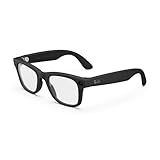
- #1 SELLING AI GLASSES - Tap into iconic style for men and women, and advanced technology with the newest generation of Ray-Ban Meta glasses. Capture photos and videos, listen to music, make hands-free calls or ask Meta AI questions on-the-go.
- UP TO 8 HOURS OF BATTERY LIFE - On a full charge, these smart AI glasses can last 2x longer than previous generations, up to 8 hours with moderate use. Plus, each pair comes with a charging case that provides up to 48 hours of charging on-the-go.
- 3K ULTRA HD: RECORD SHARP VIDEOS WITH RICH DETAIL - Capture photos and videos hands-free with an ultra-wide 12 MP camera. With improved 3K ultra HD video resolution you can record sharp, vibrant memories while staying in the moment.
- LISTEN WITH OPEN-EAR AUDIO — Listen to music and more with discreet open-ear speakers that deliver rich, quality audio without blocking out conversations or the ambient noises around you.
- ASK YOUR GLASSES ANYTHING WITH META AI - Chat with Meta AI to get suggestions, answers and reminders straight from your smart AI glasses.
Echo VR was abruptly shut down in 2023 despite an active competitive community, and by 2024 the entire studio was closed. This wasn’t a struggling team—it was one of the few developers consistently praised for pushing VR mechanics, physics-driven interaction, and high-end presentation that justified PC-class VR hardware.
Killing Ready At Dawn sent a clear message: deeply immersive, high-budget VR-first games were no longer strategic priorities, even if they defined what VR could be at its best.
Downpour Interactive and the Retreat from VR Shooters
Downpour Interactive, the studio behind Onward, also didn’t survive the shift. Onward was one of Quest’s most realistic tactical shooters, built around PC VR roots and enthusiast-grade gameplay rather than casual accessibility.
By 2024, Meta confirmed the studio was being shut down, with ongoing support for Onward winding down. This removed another pillar of “serious VR,” particularly for users who valued precision input, longer play sessions, and PC-linked performance over standalone convenience.
The closure underscored a pattern: VR experiences that demanded time, learning curves, and powerful hardware were being deprioritized in favor of lighter, more scalable platforms.
Cancelled Projects Inside Oculus Studios
Beyond full studio closures, multiple internal VR projects were quietly cancelled or shelved across Oculus Studios. These were not publicly named games, but teams working on experimental VR narratives, social environments, and next-gen interaction models.
Employees affected by these cancellations described a narrowing of scope: fewer greenlit VR concepts, shorter development horizons, and an increasing focus on software layers rather than content. In practical terms, Meta stopped betting on VR games as system sellers.
Instead of funding titles designed to make you buy a Quest headset, Meta shifted toward treating VR as one access point among many—no longer the emotional centerpiece of the ecosystem.
What Happened to the Talent
Thousands of Reality Labs employees have been laid off since 2023, with a disproportionate impact on VR-focused designers, game engineers, and 3D artists. Some were absorbed into adjacent AR, AI, or platform teams, but many left Meta entirely.
This talent drain matters more than any single cancelled game. VR development requires rare skill sets: spatial UX design, real-time rendering optimization, motion comfort tuning, and interaction design that simply doesn’t translate one-to-one into mobile or web software.
As Meta pivots toward smart glasses, much of that hard-earned VR expertise becomes less immediately relevant, reinforcing the company’s decision to stop investing heavily in it.
Studios That Survived—but Were Reoriented
Not every Oculus Studios team was shut down. Beat Games, the developer behind Beat Saber, remains operational, but its role has shifted toward maintaining a reliable evergreen title rather than pushing VR boundaries.
Similarly, fitness-focused apps like Supernatural continue under Within, but these are service-style experiences optimized for retention, subscriptions, and short daily sessions. They align neatly with Meta’s broader wearable ambitions, where comfort, frequency of use, and low friction matter more than immersion.
What survived weren’t VR showcases—they were VR utilities.
What This Tells Us About Meta’s Priorities
Taken together, these shutdowns reveal a deliberate exit from VR as a content-led platform. Meta is no longer trying to win VR by making unforgettable games or flagship experiences.
Instead, it’s reallocating capital and talent toward hardware that can be worn all day, used in short bursts, and integrated into everyday life—smart glasses with cameras, AI assistants, and lightweight displays. VR, by contrast, remains bulky, isolating, and episodic.
By shutting down its most ambitious VR studios, Meta effectively acknowledged that VR alone will not carry its consumer wearable strategy forward.
Why Meta Is Pulling Back From Big-Budget VR: Adoption Reality vs Metaverse Ambitions
The studio shutdowns weren’t just about cost control or refocusing teams. They were a delayed admission that consumer VR adoption has not matched the scale, speed, or usage patterns Meta originally planned for when it bet tens of billions on the metaverse.
After nearly a decade of iteration, VR remains a niche medium defined by bursts of enthusiasm rather than sustained daily use. That reality fundamentally clashes with Meta’s core business, which depends on habitual engagement, data-rich interactions, and devices people keep on for hours—not something pulled out once or twice a week.
VR’s Engagement Ceiling Is Lower Than Meta Needs
Quest headsets have sold in respectable numbers, but sales alone mask the deeper issue: retention. A large portion of Quest owners use their headset heavily for a few weeks, then activity drops off sharply.
VR’s physical demands are part of the problem. Headsets remain front-heavy, heat-generating, and socially isolating, even with improvements in weight distribution, pancake lenses, and passthrough. Extended sessions still cause facial pressure, eye fatigue, and motion discomfort for many users.
That makes VR fundamentally incompatible with Meta’s engagement model. Social platforms thrive on frequent, lightweight interactions; VR excels at intense, time-boxed experiences that require preparation and commitment.
The Economics of AAA VR Never Added Up
Big-budget VR games are expensive to produce and hard to amortize. Development timelines are long, teams are highly specialized, and optimization across hardware generations adds complexity that flat-screen platforms don’t face.
Yet the addressable market remains small. Even a breakout VR title rarely reaches sales numbers that would justify AAA budgets by traditional gaming standards, especially once platform subsidies dry up.
For Meta, funding these projects was less about profit and more about seeding an ecosystem. Once it became clear that content alone wasn’t driving sustained headset adoption, those investments stopped making strategic sense.
Hardware Friction vs Everyday Wearability
VR headsets still ask users to step out of the real world. You strap something to your face, block peripheral awareness, and signal to everyone around you that you are unavailable.
Smart glasses do the opposite. They aim to disappear into daily life, offering cameras, audio, notifications, and AI assistance without demanding full attention or isolation.
From a product strategy perspective, the difference is enormous. One category fights friction with better specs; the other wins by minimizing intrusion. Meta’s recent hardware decisions make it clear which approach it believes can scale to hundreds of millions of users.
The Metaverse Vision Collided With Consumer Behavior
Meta’s original metaverse pitch assumed people would spend meaningful portions of their social and professional lives in immersive virtual spaces. In practice, most users prefer screens that complement reality, not replace it.
Work meetings, messaging, navigation, and content creation all benefit more from glanceable interfaces and ambient computing than from full immersion. Even productivity-focused VR apps struggle against the simplicity of a phone, laptop, or watch.
As this gap became obvious, Meta shifted its definition of presence away from virtual worlds and toward AI-mediated reality. Smart glasses fit that reframing far better than VR ever did.
Why This Doesn’t Mean VR Is “Dead”
Meta pulling back from big-budget VR doesn’t invalidate the medium; it reclassifies it. VR is settling into a role similar to high-end sim racing rigs or enthusiast audio gear—deeply compelling for certain users, but not a mass-market default.
Fitness, training, simulation, and specific gaming genres will continue to thrive. What’s disappearing is the idea that VR needs constant blockbuster releases to justify its existence.
For Meta, that shift frees resources to focus on wearables that can evolve year over year, improve battery life, comfort, and software incrementally, and integrate tightly with AI services. VR remains part of the portfolio, but it’s no longer the center of gravity.
Rank #2
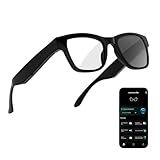
- 3-in-1 AI Glasses: Enjoy ① AI Voice Assistant (Powered by ChatGPT, Gemini & Deepseek), ② Stylish Photochromic Lenses Glasses, and ③ Bluetooth Open-Back Headphones, all in one.
- Free Talk Translation: Automatically detects and translates over 160 languages in real-time, allowing seamless work and translation without touching your phone or glasses.
- Voice, Video & Photo Translation: Supports over 98% of global languages, offering fast and accurate translations—ideal for international travel, business meetings, or cross-cultural communication.
- AI Meeting Assistant: Converts recordings from smart glasses into text and generates mind maps, making it easier to capture and organize meeting insights.
- Long Battery Life, Bluetooth 5.4 & Eye Protection: Up to 10 hours of music and 8 hours of talk time, with easy Type-C charging. Bluetooth 5.4 ensures stronger, stable connections, while photochromic lenses block UV rays and blue light, protecting your eyes in any environment.
The Smart Glasses Pivot Explained: Why Ray-Ban Meta Glasses Matter More Than Quest Right Now
Seen in this light, the studio shutdowns are less about retreat and more about reallocation. Meta is betting that the next computing platform won’t be something you strap on for a session, but something you wear all day without thinking about it.
Smart glasses are where that bet becomes tangible, and Ray-Ban Meta glasses are the clearest signal yet of how Meta intends to scale beyond the enthusiast bubble.
Ray-Ban Meta Glasses Solve the Problem VR Never Could: Daily Wearability
Quest headsets continue to improve in resolution, passthrough quality, and ergonomics, but they still demand intentional use. You decide to enter VR, you isolate yourself physically and socially, and you exit when the session is over.
Ray-Ban Meta glasses invert that relationship. At roughly the weight and balance of traditional acetate sunglasses, they are designed for all-day comfort, not sessions measured in minutes.
There is no face gasket, no head strap tension, and no thermal buildup. You put them on the same way you would any pair of Ray-Bans, and that normalcy is the product’s core advantage.
Why Fashion and Distribution Matter More Than Field of View
One of Meta’s most underrated strategic moves was partnering with EssilorLuxottica rather than building a proprietary hardware brand. Ray-Ban already solves trust, style, and retail presence in a way no VR headset ever has.
You can walk into an optical store or sunglasses retailer and try Meta’s smart glasses alongside non-connected models. That removes the intimidation factor that has long plagued XR hardware.
For mass adoption, being socially acceptable matters more than having a wider field of view or higher refresh rate. Quest competes on specs; Ray-Ban Meta competes on invisibility.
AI Turns Smart Glasses Into a Platform, Not a Gadget
Without displays, smart glasses live or die on software intelligence. This is where Meta’s investment in AI finally aligns with a product people want to wear.
Voice-first interaction, contextual awareness through cameras, and always-available audio create a computing layer that feels additive rather than demanding. Asking questions, capturing moments, translating signs, or getting directions doesn’t require disengaging from the world.
Quest relies on apps and content to justify use. Ray-Ban Meta glasses rely on usefulness, and usefulness compounds the more frequently a device is worn.
Battery Life and Thermal Reality Favor Glasses Over Headsets
Even the best standalone VR headsets struggle with battery life and heat under sustained use. High-performance processors, displays, and sensors drain power quickly and limit session length.
Smart glasses operate under very different constraints. By focusing on cameras, microphones, low-power processors, and audio, Meta can deliver meaningful functionality with smaller batteries and fewer thermal challenges.
This enables incremental year-over-year improvement rather than generational leaps. Better microphones, improved camera sensors, smarter AI models, and more efficient chips can all be added without redesigning the entire experience.
Why This Is a Better Bet for Developers and the Ecosystem
From a developer standpoint, VR demands high production values, spatial design expertise, and a relatively small addressable audience. That math has become increasingly hard to justify.
Smart glasses offer a broader, more flexible opportunity. Lightweight companion apps, AI-driven services, and integrations with existing mobile platforms require far less upfront investment and reach far more users.
For Meta, this shifts the ecosystem from blockbuster-dependent content to utility-driven software. It’s a model closer to smartphones and wearables than to consoles.
Quest Becomes a Specialist Device, Glasses Become the Gateway
None of this makes Quest irrelevant. Instead, it reframes its role.
Quest becomes the device for immersive gaming, fitness, training, and creative work, while smart glasses become the on-ramp to Meta’s broader platform. Glasses introduce users to Meta’s AI, services, and ecosystem without asking them to change how they live.
That sequencing matters. Once glasses are normalized, adding optional immersion through VR or future AR displays becomes a far easier sell.
What the Studio Shutdowns Really Signal
Shutting down major VR studios isn’t an admission of failure; it’s an acknowledgment of where scale actually comes from. Meta no longer needs VR to justify itself as a mass-market platform.
Ray-Ban Meta glasses represent a slower, steadier path toward ambient computing, one that prioritizes comfort, social acceptance, and daily value over spectacle. In the near term, that makes them far more strategically important than Quest, even if Quest remains the more technically impressive device.
VR vs Smart Glasses: Two Very Different Markets With Very Different Timelines
The studio shutdowns make more sense when you stop viewing VR and smart glasses as adjacent products and start treating them as entirely different markets. They may share some underlying technologies, but their adoption curves, usage patterns, and economic realities barely overlap.
Meta isn’t choosing one over the other because of belief or hype. It’s choosing based on which category can realistically scale this decade.
VR Is Still a High-Friction, Event-Based Product
VR remains fundamentally intentional. You put on a headset to do a specific thing: play a game, work out, attend a meeting, or create something immersive.
That intentionality limits frequency. Even with lighter headsets and better optics, VR is still a device most users engage with a few times a week, not dozens of times per day.
Comfort, thermal load, battery life, and physical isolation all impose hard ceilings. A Quest headset can be technically impressive, but it will never disappear into daily life the way a phone, watch, or pair of glasses can.
Smart Glasses Compete With Phones, Not Consoles
Smart glasses occupy a completely different psychological and commercial space. They aren’t asking users to leave the world; they’re trying to sit quietly on top of it.
Ray-Ban Meta glasses work because they behave like familiar eyewear first and technology second. Lightweight frames, all-day comfort, acceptable battery life for intermittent use, and social acceptability matter more than raw compute power.
That puts smart glasses on a smartphone-adjacent timeline. The goal isn’t immersion but augmentation: capturing moments, accessing AI, handling notifications, and reducing phone dependence without demanding attention.
Adoption Curves: Millions vs Hundreds of Millions
Even successful VR platforms tend to plateau in the tens of millions. That’s not failure; it’s a reflection of what the category can sustain given cost, space requirements, and usage intensity.
Smart glasses, by contrast, have a plausible path to hundreds of millions of users. Prescription compatibility, fashion partnerships, and gradual feature creep allow adoption to happen invisibly, one replacement cycle at a time.
For Meta, that difference is existential. Platforms with hundreds of millions of users attract developers, advertisers, and services in a way VR simply cannot yet match.
Developer Economics Favor Glasses, Not Headsets
VR development remains expensive and risky. Spatial design, high-performance assets, and long production cycles are hard to justify when the install base is capped and user engagement is unpredictable.
Rank #3

- 【AI Real-Time Translation & ChatGPT Assistant】AI glasses break language barriers instantly with AI real-time translation. The built-in ChatGPT voice assistant helps you communicate, learn, and handle travel or business conversations smoothly—ideal for conferences, overseas trips, and daily use.
- 【4K Video Recording & Photo Capture 】Smart glasses with camera let you capture your world from a first-person view with the built-in 4K camera. Take photos and record videos hands-free anytime—perfect for travel moments, vlogging, outdoor adventures, and work documentation.
- 【Bluetooth Music & Hands-Free Calls 】Camera glasses provide Bluetooth music and crystal-clear hands-free calls with an open-ear design. Stay aware of your surroundings while listening—comfortable for long wear and safer for commuting, cycling, and outdoor use.
- 【IP65 Waterproof & Long Battery Life】 Recording glasses are designed for daily wear with IP65 waterproof protection against sweat, rain, and dust. The built-in 290mAh battery provides reliable performance for workdays and travel—no anxiety when you’re on the go.
- 【Smart App Control & Object Recognition】Smart glasses connect to the companion app for easy setup, file management, and feature control. They support AI object recognition to help identify items and improve your daily efficiency—perfect for travel exploration and a smart lifestyle.
Smart glasses flip that equation. Developers can build lightweight companion experiences, AI-driven services, and phone-integrated features without reinventing interaction models or committing console-level budgets.
That’s why Meta can afford to step back from first-party VR content. The company no longer needs to subsidize blockbuster experiences to keep the ecosystem alive if glasses become the primary surface for everyday interaction.
Timelines Matter More Than Technology
VR’s long-term promise hasn’t disappeared, but its timeline is measured in breakthroughs. Meaningful leaps require new display tech, lighter optics, better batteries, and social redefinition of head-worn computing.
Smart glasses improve through iteration. Better microphones, longer standby time, tighter phone integration, improved AI models, and incremental camera upgrades can arrive annually without changing how the product fits into daily life.
Meta’s pivot reflects patience rather than retreat. VR remains a specialist tool with a slower burn, while smart glasses represent a nearer-term path to scale, relevance, and cultural normalization.
Inside Meta’s Long-Term Wearable Strategy: From Headsets to Always-On AI Glasses
Seen through this lens, the shutdown of major VR studios isn’t a sudden retreat. It’s a reallocation of attention toward the category Meta believes can live on faces all day, not just during scheduled sessions.
Meta’s long-term wearable strategy is no longer centered on immersion as an event. It’s focused on presence as a default state, where computing fades into the background and AI becomes the primary interface.
VR as a Proving Ground, Not the Endgame
For the past decade, VR has functioned as Meta’s experimental lab. Quest headsets validated inside-out tracking, hand interaction, spatial audio, and on-device AI processing at consumer scale.
But VR’s strengths are also its constraints. Headsets are bulky, thermally limited, socially isolating, and used in bursts rather than continuously.
From a product strategy perspective, VR taught Meta how people behave in spatial environments. Smart glasses are where that knowledge gets deployed into daily life.
Why Glasses Unlock a Different Kind of Scale
Glasses solve problems VR never could. They’re socially acceptable, already normalized, and compatible with prescription lenses and fashion cycles.
Meta’s Ray-Ban smart glasses may look modest on paper, but their success isn’t about specs. Sub-5-hour active use with multi-day standby, lightweight frames, physical buttons, and phone-dependent compute all point to a design optimized for comfort and wearability over raw capability.
That tradeoff matters. Devices people forget they’re wearing have infinitely more opportunities to become indispensable.
Always-On AI Is the Real Product
The hardware is only half the story. Meta’s real bet is that glasses become the most natural home for ambient AI.
Microphones that are always available, cameras that see what you see, and speakers positioned for private audio feedback create an interface that doesn’t demand screens or gestures. Asking a question, translating a sign, identifying an object, or capturing a moment becomes frictionless.
VR places AI inside a simulated world. Smart glasses place AI inside your real one.
Why First-Party VR Content Became Optional
Once glasses become Meta’s primary surface, the role of VR changes. It no longer needs to be the company’s mass-market driver.
This is why expensive, long-cycle VR studios became harder to justify. Their work doesn’t translate cleanly to glasses, and it doesn’t accelerate the adoption of Meta’s future core platform.
Instead, Meta can maintain VR as a capable, third-party-driven ecosystem while redirecting internal resources toward AI models, computer vision, audio processing, and low-power silicon—all foundational to glasses.
The Quiet Shift Toward Platform Control
Smart glasses also give Meta something VR never fully could: leverage over the smartphone duopoly.
By tethering glasses to phones today while gradually offloading intelligence to the cloud and on-device AI, Meta can insert itself into daily workflows without asking users to abandon iOS or Android outright.
Notifications, media capture, voice assistants, and contextual services all become Meta-controlled layers sitting above the phone. Over time, that layer can grow thicker, more autonomous, and harder to remove.
What This Means for Consumers Right Now
In the near term, expect smart glasses to improve in subtle but meaningful ways. Longer battery life through more efficient standby modes, better microphone arrays for noisy environments, improved camera quality for hands-free capture, and tighter integration with Meta’s AI assistant.
Don’t expect full AR displays to arrive overnight. Early versions will prioritize comfort, weight distribution, and all-day usability over visual spectacle.
For buyers, this means the best smart glasses won’t feel revolutionary at first. They’ll feel convenient, reliable, and quietly useful—traits that matter far more over years of wear than wow-factor demos.
And for VR, a Narrower but Clearer Future
VR isn’t dead in Meta’s roadmap. It’s being repositioned.
Expect VR to evolve as a premium, purpose-driven category: gaming, fitness, simulation, and creative tools where immersion justifies the hardware. It will advance slower, with fewer moonshot bets and more incremental refinement.
Meta’s strategic clarity is the real story. VR showed what was possible. Smart glasses are where Meta expects to build something unavoidable.
What This Means for VR Hardware Like Quest: Slow Retreat, Strategic Pause, or Reset?
The studio shutdowns inevitably raise a harder question for anyone invested in Meta’s VR hardware: what happens to Quest now?
From the outside, this can look like retreat. In practice, it reads more like a recalibration of what VR is supposed to be inside Meta’s broader wearable strategy.
Quest Is No Longer the Centerpiece—and That’s the Point
For years, Quest carried the weight of Meta’s metaverse ambitions, from first-party blockbuster games to social worlds meant to define a new computing era. That made VR not just a product category, but a narrative centerpiece.
By pulling back on large internal studios, Meta is quietly removing that pressure. Quest no longer has to prove VR can replace smartphones or become a universal social platform to justify its existence.
Instead, Quest can succeed by doing fewer things well: high-quality standalone VR with reliable performance, accessible pricing, and a stable software platform that third parties can build on without chasing shifting internal priorities.
Hardware Roadmaps Likely Slow, Not Stalled
This shift doesn’t mean Quest hardware development stops. It means the cadence and ambition change.
Rank #4
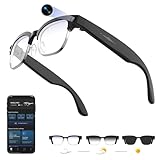
- 【8MPW Camera & 1080P Video and Audio】:These camera glasses feature an 800W camera that outputs sharp 20MP photos and smooth 1080P 30fps videos. Ultra-Clear Video + Powerful Anti-Shake tech+ Built-in dual microphones, you can capture crystal-clear video and audio together -sharply restoring details, perfect for vlogging, travel, and everyday moments
- 【Real-time AI translation Smart Glasses with Camera】:Instantly translate multiple major languages, breaking down language barriers in an instant—no phone required. Ideal for office settings, travel, academic exchanges, international conferences, watching foreign videos, and more
- 【Voice Assistant Recognition and Announcement】:Powered by industry-leading AI large models such as Doubao AI and OpenAI's GPT-4.0. AI voice wake-up lets you ask questions, recognize objects, and get answers on the go. Automatically recognizes objects, menus, landmarks, plants, and more, quickly analyzing the results and announcing them in real time. It instantly becomes your mobile encyclopedia on the go
- 【Bluetooth 5.3 Connection and Automatic Sync to Phone】:Equipped with a low-power BT5.3 chip and Wi-Fi dual transmission technology, offering ultra-low power and high-speed transmission. Captured images and videos are transferred to your phone in real time, eliminating manual export and eliminating storage worries
- 【290mAh Ultra-Long Battery Life】:Ultra-light at 42g, it's made of a durable, skin-friendly material, as light as a feather. Lenses are removable. Its simple, versatile design makes it a comfortable and comfortable wearer. 290mAh ultra-long battery life, 12 hours of music playback and 2 hours of photo or video recording, making it a perfect travel companion
Expect future Quest headsets to prioritize comfort, thermals, and battery efficiency over radical form-factor experiments. Lighter headsets, better weight distribution, improved passthrough cameras, and more consistent frame rates matter more to long-term usability than headline-grabbing specs.
Meta’s silicon and display work will continue, but with fewer “bet the company” moments. Iteration replaces spectacle, and that’s usually healthier for hardware categories that already exist in millions of homes.
First-Party Content Steps Back, Platform Stability Steps Forward
The loss of major internal VR studios is most acutely felt on the content side. Fewer first-party exclusives means Quest won’t be carried by tentpole releases in the same way consoles often are.
The tradeoff is a clearer, more predictable platform. Developers can build knowing Meta isn’t constantly pivoting design philosophies or flooding the store with internally favored projects.
For users, this could actually improve the software experience over time: better curation, fewer abandoned experiments, and a Quest library that grows through sustained support rather than hype cycles.
Quest as a Product, Not a Promise
Perhaps the most important change is psychological. Quest is being reframed as a product you buy to do specific things well, not a down payment on an inevitable virtual future.
That’s good news for buyers who care about day-to-day usability. Fitness apps, rhythm games, productivity tools, and simulation experiences benefit from stable hardware targets, predictable updates, and long-term support far more than from grand visions that keep shifting.
It also aligns better with how VR is actually used today: in sessions, for defined purposes, rather than as an always-on computing layer.
Why This Isn’t a Death Spiral for VR
It’s tempting to read studio closures as a sign VR is failing. Historically, the opposite is often true.
Categories mature when companies stop subsidizing entire ecosystems internally and start treating them as real markets. Consoles didn’t die when publishers took over content creation. Smartphones didn’t stall when first-party apps stopped being the main attraction.
Meta stepping back from being VR’s biggest cheerleader may be what finally allows Quest to stand on its own merits.
How Smart Glasses Change Quest’s Role Inside Meta
With smart glasses positioned as Meta’s future everyday wearable, Quest becomes the specialized device in the lineup. It no longer has to carry social networking, ambient computing, or AI assistant duties.
That separation clarifies product design. Quest can optimize for immersion, controller-based interaction, and room-scale tracking without worrying about all-day wear, pocketability, or constant notifications.
In that sense, Quest isn’t being replaced by glasses. It’s being freed from trying to be something it never naturally was.
What Buyers Should Read Between the Lines
If you’re considering a Quest headset, this shift cuts both ways. You shouldn’t expect explosive feature leaps every year or a flood of Meta-funded exclusives.
What you should expect is a more stable platform with longer hardware relevance, better backward compatibility, and fewer abrupt changes in direction. For a device that lives on your face and takes up physical space, that kind of predictability is a feature, not a flaw.
The real signal isn’t that Meta is abandoning VR. It’s that VR is no longer the company’s identity—and that may be exactly what Quest needs to remain viable in the long run.
Developer Fallout and Platform Risk: What Meta’s Shift Signals to XR Creators
For developers, Meta’s retrenchment lands differently than it does for buyers. Where consumers read stability and focus, creators see a platform owner narrowing its risk tolerance and changing how much first-party support they can rely on.
That recalibration doesn’t kill the Quest ecosystem, but it fundamentally changes the incentives for building on it.
The End of the Safety Net for Big-Budget VR
The closure of major internal VR studios removes a crucial signal that Meta would indefinitely underwrite premium, loss-leading content. For years, those studios acted as a demand engine, setting production benchmarks and normalizing budgets that the standalone VR market never truly supported.
Without that safety net, large-scale narrative VR and experimental social worlds become far harder to justify financially. Developers are now forced to build within what the Quest install base can realistically monetize, not what Meta’s balance sheet once allowed.
From Vision-Driven Platform to Market-Driven One
Meta’s pivot effectively moves Quest from a founder-led platform to a commercially disciplined one. That means fewer sudden shifts in product philosophy, but also less tolerance for projects that don’t show clear retention, replay value, or revenue per user.
For studios, this raises the bar on fundamentals like session design, comfort, and repeatable gameplay loops. Experiences that work well in 20–40 minute sessions, respect headset battery constraints, and minimize friction in onboarding now matter more than ambitious but brittle ideas.
Platform Risk Isn’t About Shutdowns, It’s About Direction
The bigger risk for XR creators isn’t that Quest disappears, but that Meta’s strategic center of gravity is moving elsewhere. Smart glasses are where Meta is building long-term developer tooling, AI integration, and consumer narratives around everyday use.
That creates uncertainty about where future SDK improvements, APIs, and monetization features will land first. Developers betting exclusively on immersive VR need to accept that they are no longer aligned with Meta’s primary growth story, even if the platform remains supported.
Why Smaller, Smarter VR Teams May Actually Benefit
Paradoxically, this shift could favor leaner studios and independent developers. As blockbuster VR becomes rarer, discoverability pressure eases, and well-designed mid-budget titles can sustain longer tails in the Quest Store.
Teams that optimize for comfort, intuitive controls, and hardware realities like thermal limits and controller ergonomics are better positioned now than those chasing cinematic scale. In a more mature market, craftsmanship and usability can finally outperform spectacle.
The Glasses Signal: A Parallel, Not a Replacement, Track
Meta’s smart glasses push also signals where experimental developers may want to hedge. Glasses development prioritizes glanceable UX, battery efficiency, always-on sensors, and AI-assisted interactions rather than full spatial immersion.
For XR creators, the message is clear: skills will need to bifurcate. Deep VR expertise remains valuable, but future-proof teams are already thinking about how their interaction models translate to lighter, socially acceptable wearables that people keep on all day.
What Developers Should Read Between the Lines
Meta is no longer trying to prove that VR deserves to exist. It’s treating it as a category that must justify itself on real usage, real revenue, and real user satisfaction.
For creators, that’s both a warning and an opportunity. The era of subsidized ambition is ending, but the era of predictable platforms, clearer expectations, and sustainable VR businesses may finally be beginning.
How Meta’s Bet Compares to Apple, Google, and Samsung in Wearables and XR
Meta’s retreat from blockbuster VR studios doesn’t look as abrupt when placed next to how its rivals are approaching wearables and XR. What’s happening is less a collapse of ambition and more a convergence toward lighter, more socially acceptable hardware that can scale beyond enthusiasts.
Each major platform player is betting on a different entry point into spatial computing, shaped by their existing ecosystems, margins, and tolerance for long timelines.
Apple: Premium Spatial Computing, Not Mass-Market Experimentation
Apple’s Vision Pro sets the high-water mark for technical ambition, but it also highlights how differently Apple defines success in XR. At roughly the weight of a premium VR headset and with an external battery pack limiting truly mobile use, Vision Pro is closer to a developer kit for spatial interfaces than a mainstream wearable.
💰 Best Value

- #1 SELLING AI GLASSES - Move effortlessly through life with Ray-Ban Meta glasses. Capture photos and videos, listen to music, make hands-free calls or ask Meta AI* questions on-the-go. Ray-Ban Meta glasses deliver a slim, comfortable fit for both men and women.
- CAPTURE WHAT YOU SEE AND HEAR HANDS-FREE - Capture exactly what you see and hear with an ultra-wide 12 MP camera and a five-mic system. Livestream it on Facebook and Instagram.
- LISTEN WITH OPEN-EAR AUDIO — Listen to music and more with discreet open-ear speakers that deliver rich, quality audio without blocking conversations or the ambient noises around you.
- GET REAL-TIME ANSWERS FROM META AI — The Meta AI* built into Ray-Ban Meta’s wearable technology helps you flow through your day. When activated, it can analyze your surroundings and provide context-rich suggestions - all from your smart AI glasses.
- CALL AND MESSAGE HANDS-FREE — Take calls, text friends or join work meetings via bluetooth straight from your glasses.
Where Meta once chased cinematic VR content, Apple is focusing on interaction paradigms, display fidelity, and OS-level coherence. VisionOS prioritizes eye tracking, hand input, and low-latency passthrough rather than traditional VR gaming, signaling that Apple sees XR as an extension of its computing platform, not an entertainment category that lives or dies on exclusive titles.
Crucially, Apple doesn’t need Vision Pro to sell tens of millions of units quickly. Its margin structure allows it to iterate slowly, refine comfort, thermals, and battery life, and eventually downscale into lighter glasses when the technology is ready. Meta, by contrast, has been funding adoption upfront and is now tightening spend as it waits for the same miniaturization breakthroughs.
Google: Platform Infrastructure Over Flagship Hardware
Google’s XR strategy looks quiet on the surface, but it’s arguably the most pragmatic. After the original Google Glass backlash, the company shifted focus toward enabling Android XR, ARCore, and AI-first interfaces rather than pushing consumer hardware prematurely.
Today, Google’s strength lies in software scaffolding. It wants to be the operating system and services layer powering smart glasses and mixed reality devices from partners, rather than the brand taking all the risk. Gemini-driven AI, voice interaction, and context-aware services align naturally with glasses that prioritize all-day battery life and ambient information.
Compared to Meta, Google isn’t walking away from VR so much as refusing to subsidize it. The lesson from Glass was clear: social acceptance and utility matter more than novelty. Meta’s glasses pivot mirrors this realization, but Google reached it a decade earlier and built its ecosystem accordingly.
Samsung: Hardware Scale Waiting for the Right Moment
Samsung occupies a middle ground between Apple’s vertical integration and Google’s platform-first model. It has the manufacturing scale, display expertise, and wearable credibility to enter XR aggressively, yet it has remained cautious since the Gear VR era.
Current signals suggest Samsung sees XR as an extension of its Galaxy ecosystem, not a standalone category. Smartwatches, earbuds, and foldables already teach users to accept trade-offs in battery life, comfort, and durability for new form factors. Glasses and lightweight mixed reality devices fit naturally into that progression.
Unlike Meta, Samsung doesn’t need to create an entirely new content economy. Its play is likely to focus on hardware refinement, comfort, and seamless phone integration, letting partners and developers fill in the experiences once usage patterns are proven.
Where Meta Is Actually Differentiating
Meta’s position is unique because it owns both the hardware and, until recently, much of the content risk. Shutting down major VR studios signals a shift away from trying to brute-force a market through exclusives toward building platforms that support everyday wear.
Smart glasses allow Meta to leverage its real strengths: AI, computer vision, social graph integration, and cloud services. Ray-Ban Meta glasses aren’t about resolution or field of view; they’re about comfort, camera placement, microphone quality, and battery life that survives a full day of intermittent use. Those are wearable problems, not gaming ones.
In that sense, Meta is moving closer to Google’s philosophy while still retaining Apple-like control over hardware direction. It’s a hybrid strategy born from necessity, but not without logic.
What This Means for Consumers and Developers
For consumers, the takeaway is that no major player believes bulky VR headsets are the endgame. Even Apple’s most advanced device frames itself as a stepping stone. The real competition is over who delivers useful, comfortable, socially acceptable wearables first, not who ships the most impressive demo.
For developers, Meta’s studio shutdowns are a warning about where investment is concentrating across the industry. Skills in spatial interaction, AI-driven UX, power-efficient design, and cross-device compatibility will matter more than cinematic scale. VR isn’t disappearing, but it’s no longer the center of gravity.
Seen through this lens, Meta’s pivot isn’t an outlier. It’s a delayed alignment with where Apple, Google, and Samsung already believe the future of wearables is headed.
What Consumers Should Expect Next: The Realistic Future of VR, AR, and Smart Glasses
If Meta’s studio shutdowns mark the end of one era, they also clarify what comes next. The future consumers are heading into is less about spectacular demos and more about devices that fit into daily life without demanding behavioral change.
This is where expectations need to reset. VR, AR, and smart glasses are not converging into one magical product anytime soon; they’re separating into clearer, more specialized categories with different trade-offs.
VR Becomes Smaller, Cheaper, and More Purpose-Built
For consumers still interested in VR, the near-term future looks more pragmatic than aspirational. Headsets like Quest will continue to exist, but the emphasis will be on affordability, standalone performance, and lighter hardware rather than cinematic ambition.
Expect incremental gains in display clarity, passthrough quality, and comfort rather than revolutionary leaps. Battery life will remain measured in hours, not days, and usage will stay intentional: fitness sessions, social VR, productivity experiments, and occasional gaming, not all-day wear.
Importantly, fewer first-party exclusives means VR buyers should expect a broader but less curated content ecosystem. That’s not inherently negative, but it shifts responsibility toward third-party developers and community-driven innovation.
Smart Glasses Prioritize Wearability Over Visual Immersion
Smart glasses are moving in the opposite direction from VR. Instead of chasing full visual overlays, companies are prioritizing comfort, weight, and all-day usability, treating displays as optional rather than mandatory.
For consumers, this means the next generation of smart glasses will feel more like eyewear first and technology second. Think sub-50 gram frames, balanced weight distribution, hinges that survive daily folding, and battery life designed for intermittent use across an entire day.
Cameras, microphones, and AI-driven features will matter more than field of view or resolution. Taking a quick photo, translating a sign, asking an assistant for context, or capturing short video hands-free are the real value propositions emerging.
AR Is Becoming a Software Layer, Not a Single Device
One of the biggest misconceptions consumers still hold is that AR equals glasses. In reality, AR is increasingly a software layer that spans phones, watches, glasses, and headsets depending on context.
In the short term, phones remain the primary AR device because of their processing power, battery capacity, and familiarity. Glasses act as extensions, surfacing information when it’s useful, then disappearing when it’s not.
This explains why Meta, Google, and Apple are all investing heavily in computer vision, spatial mapping, and AI models that function across devices. The hardware may change, but the AR experience follows the user, not the product.
Comfort, Battery Life, and Social Acceptance Decide Winners
From a consumer perspective, the most important factors going forward are surprisingly unglamorous. Comfort determines whether a device is worn for minutes or hours. Battery life determines whether features are trusted or ignored. Social acceptance determines whether a product ever leaves the house.
Meta’s focus on Ray-Ban-style frames is a direct acknowledgment of this reality. No amount of technical sophistication matters if a device feels awkward, looks conspicuous, or requires constant charging.
This is also where traditional wearable lessons apply. Just as smartwatch buyers learned to value strap comfort, case thickness, materials, and real-world battery life over spec sheets, smart glasses buyers will judge products by how seamlessly they integrate into daily routines.
What This Means for Buyers Right Now
For consumers considering a purchase today, the safest expectation is evolutionary progress, not transformation. VR is a niche that’s stabilizing, not exploding. Smart glasses are early but improving fast, especially in audio quality, AI features, and battery efficiency.
Buying into any ecosystem now should be framed as opting into a direction, not a finished vision. Meta is betting on glasses as a long-term interface, Apple is positioning spatial computing as an extension of existing devices, and Google is quietly rebuilding its platform foundations.
None of these paths guarantees a clear winner yet, but they do signal where investment and innovation are actually flowing.
The Bigger Picture: Less Hype, More Reality
Meta shutting down major VR studios isn’t an admission of failure; it’s an admission of constraints. The industry has learned that forcing adoption through content alone doesn’t work when the hardware isn’t ready for everyday life.
The realistic future of XR is quieter, slower, and more wearable. Devices will earn their place by being useful, comfortable, and reliable, not by promising to replace reality.
For consumers, that’s ultimately good news. It means the next wave of VR, AR, and smart glasses will be designed around how people actually live, not how companies wish they would.