Meta has been shipping “smart glasses” for years, yet until very recently it avoided using the phrase true AR in public-facing conversations. That change in language is not accidental, and it signals a meaningful shift in what the company believes is finally becoming technically, commercially, and socially viable.
For consumers who’ve tried Ray‑Ban Meta glasses or watched demos of Quest headsets and Apple Vision Pro, the gap has been obvious: lightweight glasses are socially wearable but visually limited, while immersive headsets are powerful but impractical for daily life. Meta’s sudden emphasis on “the best of both worlds” is an admission that neither category alone has cracked the mainstream AR problem.
What follows is not a product announcement so much as a positioning move. Meta is reframing expectations around what smart glasses should become, why now is different from the Google Glass era, and why it believes the next leap won’t look like a headset at all.
What Meta Actually Means by “True AR”
When Meta executives talk about true AR, they’re drawing a sharp line between camera‑based smart glasses and glasses that can convincingly place digital objects into your real world. Ray‑Ban Meta glasses can capture photos, play audio, and answer AI queries, but they don’t render spatial graphics anchored to your environment.
🏆 #1 Best Overall
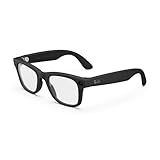
- #1 SELLING AI GLASSES - Tap into iconic style for men and women, and advanced technology with the newest generation of Ray-Ban Meta glasses. Capture photos and videos, listen to music, make hands-free calls or ask Meta AI questions on-the-go.
- UP TO 8 HOURS OF BATTERY LIFE - On a full charge, these smart AI glasses can last 2x longer than previous generations, up to 8 hours with moderate use. Plus, each pair comes with a charging case that provides up to 48 hours of charging on-the-go.
- 3K ULTRA HD: RECORD SHARP VIDEOS WITH RICH DETAIL - Capture photos and videos hands-free with an ultra-wide 12 MP camera. With improved 3K ultra HD video resolution you can record sharp, vibrant memories while staying in the moment.
- LISTEN WITH OPEN-EAR AUDIO — Listen to music and more with discreet open-ear speakers that deliver rich, quality audio without blocking out conversations or the ambient noises around you.
- ASK YOUR GLASSES ANYTHING WITH META AI - Chat with Meta AI to get suggestions, answers and reminders straight from your smart AI glasses.
True AR, as Meta defines it internally, requires see‑through displays capable of depth, occlusion, and persistent placement. That means virtual elements that stay on your desk, float at real‑world distances, and interact with lighting and motion rather than behaving like flat HUD overlays.
Crucially, this is not mixed reality passthrough like Quest 3, where cameras reconstruct the world on screens inches from your eyes. Meta is talking about optical AR, where photons from the real world and the display reach your eyes simultaneously through waveguides or similar optics.
Why “Best of Both Worlds” Is Strategic Language
The phrase “best of both worlds” is doing heavy lifting because it bridges two product categories Meta already sells. On one side are fashion‑first smart glasses with all‑day comfort, multi‑hour battery life, and zero learning curve; on the other are high‑performance headsets with spatial computing, hand tracking, and immersive software.
Meta is signaling that future AR glasses must inherit the wearability of Ray‑Ban Meta glasses while quietly absorbing core capabilities from its headset stack. That includes spatial mapping, low‑latency hand tracking, AI‑driven scene understanding, and a software platform built on Reality Labs’ existing XR frameworks.
This framing also resets consumer expectations. Instead of asking glasses to replace phones or headsets immediately, Meta is positioning them as a new tier of wearable computing that grows into those roles over time.
Why Meta Is Talking About This Now
Several technical constraints that blocked true AR a decade ago are finally loosening at the same time. Micro‑LED display development has reached brightness levels usable in daylight, waveguide efficiency is improving, and custom silicon is reducing power draw per rendered pixel.
Battery density remains a hard limit, but Meta’s recent focus on distributed compute hints at a workaround. Some processing can happen on the glasses, some on a phone, and some in the cloud, with AI models deciding what needs to be local for latency or privacy reasons.
Just as important is software readiness. Meta now has a mature spatial computing OS, hand and eye tracking pipelines, and an AI assistant designed to interpret the world continuously, not just respond to prompts.
How These Glasses Differ From What You Can Buy Today
Compared to Ray‑Ban Meta glasses, true AR glasses would add a visual layer without sacrificing everyday comfort. That means maintaining sub‑50 gram weight targets, balanced temples, and pressure points that don’t fatigue after hours of wear, while hiding displays, sensors, and thermal management inside frames that still pass as normal eyewear.
Compared to VR or MR headsets, these glasses would abandon full immersion entirely. There’s no sealed visor, no external battery pack, and no expectation that users carve out time to “enter” a virtual space.
The trade‑off is narrower field of view and simpler graphics, at least initially. Meta appears willing to accept that compromise if it means the glasses stay on your face all day instead of living in a drawer.
What Still Has to Break Through
Display optics remain the single biggest hurdle. Waveguides must get brighter, wider, and cheaper while minimizing color fringing and distortion, all without turning the lenses into thick slabs that scream prototype.
Battery life is the next bottleneck. Even modest AR visuals consume orders of magnitude more power than audio‑only smart glasses, forcing Meta to rethink duty cycles, glanceable interactions, and aggressive AI‑driven power management.
Finally, there’s the social and ergonomic test. Cameras, sensors, and always‑on AI must coexist with privacy expectations, regulatory scrutiny, and the simple reality that people won’t wear glasses that feel awkward, heavy, or attention‑grabbing.
Why This Matters Beyond Meta
If Meta succeeds, it redefines the competitive landscape for Apple, Google, and Samsung before most of them have shipped consumer AR glasses at scale. Apple’s Vision Pro shows where spatial computing can go, but Meta is betting that glasses, not headsets, will ultimately define the category.
For consumers, this shift hints at a future where smart glasses become as normal as smartwatches, offering subtle utility rather than spectacle. Navigation, notifications, translation, fitness cues, and AI assistance could move from pockets and wrists to the periphery of vision.
For the wearable market as a whole, Meta’s language change is a warning shot. True AR is no longer a research demo or a five‑year promise; it’s becoming the benchmark by which the next generation of smart glasses will be judged.
What Meta Means by ‘Best of Both Worlds’: Everyday Smart Glasses vs Full AR Headsets
Meta’s “best of both worlds” framing is a deliberate attempt to reconcile two product categories that have historically pulled in opposite directions. On one side are lightweight smart glasses designed for constant wear; on the other are powerful AR and MR headsets that deliver immersion at the cost of comfort and spontaneity.
What Meta is teasing sits squarely in the middle, borrowing just enough from each to redefine what “true AR” means in a consumer context.
Everyday Smart Glasses: Always-On, But Limited
Products like the Ray‑Ban Meta Smart Glasses represent the current baseline for socially acceptable wearables. They look like normal eyewear, weigh roughly what premium acetate sunglasses do, and can be worn for hours without fatigue.
Functionally, however, they are audio-first devices. You get open‑ear speakers, cameras, voice-controlled AI, and phone-tethered notifications, but no visual AR layer at all.
From a wearability standpoint, they succeed where previous smart glasses failed. From a computing standpoint, they stop short of what most people imagine when they hear augmented reality.
Full AR and MR Headsets: Powerful, But Contextually Awkward
At the opposite extreme sit devices like Meta Quest Pro and Apple Vision Pro. These deliver spatial computing with wide fields of view, rich color passthrough, precise hand tracking, and enough processing power to replace monitors and TVs.
The cost is everything else. Weight, heat, battery constraints, and social isolation make them session-based devices rather than something you casually throw on before leaving the house.
They are impressive computers, but not wearable in the everyday sense that glasses are meant to be.
What Meta Means by “True AR” This Time
When Meta now talks about “true AR,” it is not promising headset-class immersion in a glasses form factor. Instead, it is signaling a shift from audio-only smart glasses to glasses that can place digital information directly into your field of view, even if that field remains relatively narrow.
This means transparent displays embedded in the lenses, persistent world-locked graphics, and visual cues that respond to head position and environment. The emphasis is on augmentation, not replacement, of reality.
In Meta’s view, true AR becomes less about spectacle and more about utility you can access in motion.
The “Best of Both Worlds” Compromise
The compromise Meta is aiming for is visual AR without the bulk and ritual of a headset. These glasses would stay light enough for all-day wear while offering glanceable visuals for navigation, notifications, translation, and AI prompts.
You give up cinematic immersion, wide fields of view, and dense 3D interfaces. In return, you gain something that actually fits into daily routines, from commuting to workouts to casual social interactions.
This mirrors the evolution of smartwatches, which succeeded not by replacing phones, but by delivering the right information at the right moment.
How This Differs from Ray‑Ban Meta Glasses
The critical difference is display optics. Ray‑Ban Meta glasses rely entirely on audio and cameras, whereas the teased AR glasses would integrate waveguide-based displays directly into the lenses.
That addition fundamentally changes the interaction model. Visual feedback allows for silent, private information delivery and reduces dependence on voice commands in public spaces.
It also raises new challenges around brightness, eye box tolerance, prescription compatibility, and lens thickness, all of which Meta must solve without compromising style or comfort.
Why These Still Aren’t Headset Replacements
Despite the “true AR” label, these glasses will not replace Quest or Vision Pro-class devices. Field of view will likely be measured in tens of degrees, not the near-100-degree range of headsets.
Graphics will prioritize clarity and legibility over realism, and interactions will lean on simple gestures, voice, and contextual AI rather than complex 3D manipulation. This is intentional, not a limitation of ambition.
Meta appears to accept that the future of AR is stratified, with glasses and headsets serving different roles rather than converging into one device.
The Technical Line Meta Still Has to Walk
Delivering this balance requires breakthroughs across multiple fronts at once. Displays must be bright enough for outdoor use while consuming minimal power, and waveguides must avoid the rainbow artifacts and dimming that plagued earlier AR glasses.
Battery life has to stretch across a full day, not an hour-long demo, forcing Meta to lean heavily on low-power silicon and AI-driven prediction to decide when visuals actually need to appear. Thermal management becomes just as important as raw compute.
All of this must live inside frames that feel closer to premium eyewear than consumer electronics, with materials, hinge design, and weight distribution that disappear once you put them on.
Positioning Within the Broader Wearables Market
If Meta gets this right, these glasses sit closer to a wrist-worn companion than a face-mounted computer. They extend the smartwatch and smartphone ecosystem upward, rather than trying to replace either outright.
For consumers, the appeal is incremental usefulness rather than a radical lifestyle shift. For competitors, it raises the bar for what smart glasses are expected to do visually, not just audibly.
The “best of both worlds” promise is less about merging categories and more about choosing which trade-offs finally make sense for everyday wear.
How These Teased Glasses Differ from Ray‑Ban Meta Smart Glasses
To understand what Meta is signaling with these teased “true AR” glasses, it helps to ground the comparison in what Ray‑Ban Meta Smart Glasses already are today. Ray‑Ban Meta represents Meta’s most commercially successful wearable to date, but it is firmly an audio‑first, camera‑assisted smart accessory rather than an augmented reality device.
The new glasses Meta is hinting at are meant to cross a line Ray‑Ban Meta deliberately never approached: adding a persistent visual computing layer while still resembling everyday eyewear.
Rank #2
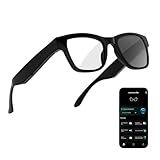
- 3-in-1 AI Glasses: Enjoy ① AI Voice Assistant (Powered by ChatGPT, Gemini & Deepseek), ② Stylish Photochromic Lenses Glasses, and ③ Bluetooth Open-Back Headphones, all in one.
- Free Talk Translation: Automatically detects and translates over 160 languages in real-time, allowing seamless work and translation without touching your phone or glasses.
- Voice, Video & Photo Translation: Supports over 98% of global languages, offering fast and accurate translations—ideal for international travel, business meetings, or cross-cultural communication.
- AI Meeting Assistant: Converts recordings from smart glasses into text and generates mind maps, making it easier to capture and organize meeting insights.
- Long Battery Life, Bluetooth 5.4 & Eye Protection: Up to 10 hours of music and 8 hours of talk time, with easy Type-C charging. Bluetooth 5.4 ensures stronger, stable connections, while photochromic lenses block UV rays and blue light, protecting your eyes in any environment.
From Audio‑First to Visual‑First Computing
Ray‑Ban Meta Smart Glasses are fundamentally ears and a camera wrapped in stylish frames. You get open‑ear speakers, microphones, hands‑free calling, music playback, photo and video capture, and now deeper Meta AI integration via voice.
What you never get is visual output. There is no display, no overlay, and no digital information entering your field of view.
The teased AR glasses flip that hierarchy. Visual augmentation becomes the core function, not a missing feature. Instead of asking Meta AI questions and hearing responses, users would see contextual information placed directly in their environment, whether that’s navigation cues, notifications, translations, or glanceable data.
This shift alone changes how often and why you’d reach for the glasses. Ray‑Ban Meta replaces earbuds and occasionally your phone camera. True AR glasses aim to reduce how often you need to look down at a screen at all.
Optics and Displays: The Defining Hardware Divide
Ray‑Ban Meta glasses contain no waveguides, micro‑LEDs, or projection systems. Their lenses are passive, just like normal sunglasses or prescription eyewear, which keeps cost, weight, and battery demands relatively low.
The teased glasses, by contrast, live or die by their optics. Meta is strongly implying see‑through displays embedded in the lenses themselves, likely using advanced waveguide technology to project digital content into the wearer’s line of sight.
This is the single biggest technical and experiential difference. Waveguides must balance brightness, contrast, and color accuracy while remaining nearly invisible when not in use. They must also work outdoors in full sunlight, something Ray‑Ban Meta never has to contend with because it doesn’t display anything at all.
In practical terms, this means the teased glasses will be heavier, more complex, and far more expensive to build than Ray‑Ban Meta, even if Meta succeeds in keeping them visually understated.
Interaction Models: Passive Commands vs Active Spatial Awareness
Ray‑Ban Meta interactions are intentionally simple. You tap the frame, speak a voice command, or let Meta AI listen for prompts. The system is reactive, not spatially aware.
True AR glasses require a different interaction philosophy. Once visuals enter the equation, the device must understand where you’re looking, what you’re looking at, and when information should appear or disappear.
Meta has hinted that gesture recognition, gaze awareness, and AI‑driven context will play a role here. That suggests onboard sensors far beyond microphones and cameras, including eye‑tracking or at least highly optimized computer vision.
The result is a product that behaves less like smart headphones and more like a low‑profile computing platform anchored to your physical surroundings.
Battery Life and Power Strategy
Ray‑Ban Meta glasses already make clear how constrained eyewear form factors are. Battery life is measured in hours, not days, with the charging case acting as a necessary extension of daily use.
Adding displays increases power demands dramatically. Meta’s “best of both worlds” messaging strongly implies that visuals will be intermittent, not constant, appearing only when useful rather than remaining always on.
This is a key philosophical break from both Ray‑Ban Meta and VR headsets. Instead of continuous audio playback or immersive visuals, these AR glasses would rely on aggressive power management, AI prediction, and low‑power silicon to stretch battery life across a realistic day of use.
If Meta fails here, these glasses risk becoming impressive demos that users hesitate to wear daily. If it succeeds, Ray‑Ban Meta may start to feel like the simpler, limited sibling.
Design Priorities: Fashion Collaboration vs Functional Minimalism
Ray‑Ban Meta Smart Glasses succeed largely because they look like Ray‑Bans first and tech products second. The collaboration gives Meta instant credibility in eyewear fit, comfort, and styling.
The teased AR glasses appear to follow a different path. Rather than leaning on a fashion brand as the headline, Meta seems focused on minimizing visual bulk, hiding components, and distributing weight so the technology disappears once worn.
That suggests new materials, redesigned hinges, and far tighter internal packaging than Ray‑Ban Meta requires. It also raises questions about prescription integration, lens thickness, and long‑term comfort, areas where Ray‑Ban’s expertise has been a major asset.
Whether Meta partners again with eyewear brands or keeps these glasses under its own design language will say a lot about whether this product is meant to scale beyond early adopters.
Positioning: Lifestyle Accessory vs Computing Platform
Ray‑Ban Meta Smart Glasses are positioned as an accessory. They complement a smartphone, smartwatch, or earbuds setup without demanding behavioral change.
The teased AR glasses aim higher. They are positioned as a lightweight computing layer that sits between phone, watch, and headset, borrowing the convenience of wearables and the utility of spatial computing.
That doesn’t make Ray‑Ban Meta obsolete. Instead, it creates a clear internal ladder within Meta’s lineup: audio‑first smart glasses at the entry level, visual AR glasses for daily productivity and context, and Quest‑class headsets for immersive experiences.
In that sense, “best of both worlds” doesn’t mean combining Ray‑Ban Meta and Quest into one device. It means clearly defining why each exists, and finally giving glasses a role that neither headphones nor headsets can realistically fill.
Not a Quest on Your Face: How ‘True AR’ Differs from VR and Mixed Reality Headsets
Following Meta’s own product ladder, the teased glasses only make sense if they are fundamentally not another Quest variant. The entire promise of “best of both worlds” collapses if users are asked to strap a mini headset to their face for everyday tasks.
What Meta is signaling instead is a return to the original, far harder vision of augmented reality: digital information layered onto the real world through transparent optics, without blocking, passthrough cameras, or immersion-first compromises.
VR Headsets: Total Immersion, Total Trade-Offs
Virtual reality headsets like Quest 3 are designed to replace reality, not enhance it. Even with color passthrough and mixed reality modes, the user experience is still mediated by cameras, screens, and heavy front-loaded optics.
That architecture brings unavoidable trade-offs. Weight, heat, battery size, and motion constraints make VR excellent for gaming, fitness, and work sessions, but deeply impractical for all-day wear or spontaneous use.
No matter how good passthrough becomes, a headset that seals your vision and requires active sessions will never behave like a wearable. Meta knows this, which is why it keeps Quest firmly in the “take it off when you’re done” category.
Mixed Reality: A Transitional Technology, Not the End Goal
Mixed reality, as Meta and Apple define it today, is still fundamentally video-based computing. The real world is captured by cameras, processed, then re-displayed inside a headset.
That enables impressive spatial interactions, but it introduces latency, distortion, and eye fatigue that glasses-style AR is meant to avoid. It also demands far more compute and power than transparent optics, which drives size, cost, and thermal challenges.
From Meta’s perspective, mixed reality is a stepping stone. It allows developers to learn spatial UI, hand tracking, and contextual computing before true AR hardware is ready.
What Meta Means by “True AR”
When Meta talks about true AR, it’s referring to optical see-through displays. Your eyes look directly at the world through lenses, with digital elements projected into your field of view.
There are no camera feeds replacing reality. If the battery dies, you still see normally, which is a critical distinction for safety, comfort, and trust.
This approach is exponentially harder than VR. Waveguides, microLED projectors, eye-box alignment, and brightness must all work within millimeter-scale tolerances while remaining transparent, lightweight, and socially acceptable.
Why Ray‑Ban Meta Glasses Don’t Qualify
Ray‑Ban Meta Smart Glasses are smart, but they are not AR. There is no visual layer, no display, and no spatial anchoring of information.
They succeed because they focus on audio, cameras, and AI assistance while keeping weight and battery demands low. That makes them wearable, but also caps their usefulness for navigation, glanceable data, or contextual overlays.
The teased AR glasses are meant to cross that boundary. They introduce visuals without tipping into headset territory, which is the defining challenge of the category.
The “Best of Both Worlds” Claim, Deconstructed
Meta’s phrase isn’t about merging Quest and Ray‑Ban Meta into a single device. It’s about borrowing the strengths of each without inheriting their weaknesses.
From VR, the glasses aim to take spatial awareness, hands-free interaction, and immersive UI concepts. From smart glasses, they take comfort, instant-on usability, and social acceptability.
The result, at least in theory, is a device you forget you’re wearing until it’s useful. That is the opposite design philosophy of headsets, which demand attention and commitment.
Why This Matters for Everyday Wearability
True AR only works if the glasses behave like glasses. Weight distribution, nose bridge pressure, lens thickness, and thermal management matter as much as field of view or resolution.
Battery life doesn’t need to match a VR headset session, but it must survive a workday with intermittent use. Software must be glance-first, not app-first, or users will default back to phones and watches.
This is where Meta’s challenge becomes existential. If these glasses feel even slightly like a headset, the entire category stalls again.
The Technical Gaps Meta Still Has to Close
Displays remain the biggest hurdle. Bright outdoor-visible AR with wide fields of view typically demands more power and bulk than current consumer glasses can hide.
Rank #3

- 【AI Real-Time Translation & ChatGPT Assistant】AI glasses break language barriers instantly with AI real-time translation. The built-in ChatGPT voice assistant helps you communicate, learn, and handle travel or business conversations smoothly—ideal for conferences, overseas trips, and daily use.
- 【4K Video Recording & Photo Capture 】Smart glasses with camera let you capture your world from a first-person view with the built-in 4K camera. Take photos and record videos hands-free anytime—perfect for travel moments, vlogging, outdoor adventures, and work documentation.
- 【Bluetooth Music & Hands-Free Calls 】Camera glasses provide Bluetooth music and crystal-clear hands-free calls with an open-ear design. Stay aware of your surroundings while listening—comfortable for long wear and safer for commuting, cycling, and outdoor use.
- 【IP65 Waterproof & Long Battery Life】 Recording glasses are designed for daily wear with IP65 waterproof protection against sweat, rain, and dust. The built-in 290mAh battery provides reliable performance for workdays and travel—no anxiety when you’re on the go.
- 【Smart App Control & Object Recognition】Smart glasses connect to the companion app for easy setup, file management, and feature control. They support AI object recognition to help identify items and improve your daily efficiency—perfect for travel exploration and a smart lifestyle.
Optics and battery density are the next bottlenecks. Every gram added to the front of the frame affects comfort, while every milliamp-hour added increases thickness and heat.
Finally, AI becomes the glue. Without intelligent filtering, true AR risks overwhelming users with visual noise. Meta’s recent AI push suggests it understands that AR is only useful if the system knows when not to interrupt.
Positioning Against Apple, Google, and the Market
Apple’s Vision Pro sits unapologetically in the mixed reality camp, prioritizing fidelity over wearability. Google’s past AR efforts collapsed under hardware and ecosystem constraints.
Meta is betting that glasses, not headsets, are the long-term interface. If it succeeds, it redefines what a wearable computer looks like, sitting alongside smartwatches rather than replacing phones overnight.
For consumers, this is less about sci‑fi overlays and more about friction removal. Navigation without pulling out a phone, messages without breaking eye contact, and context without distraction are the real battlegrounds.
True AR isn’t a smaller Quest. It’s a fundamentally different philosophy, and Meta’s tease suggests it finally believes the hardware may be catching up to the ambition.
The Core Technical Breakthroughs Still Required: Displays, Optics, and Form Factor
If Meta’s vision of “true AR” is going to escape the lab and live on faces all day, three technical fronts have to converge at once. Displays must become brighter and more efficient, optics must shrink without sacrificing clarity, and the overall form factor must feel indistinguishable from premium eyewear rather than downsized head-mounted hardware.
This is the “best of both worlds” Meta is hinting at: digital content that feels spatially anchored and persistent, without the visual isolation, bulk, or social friction of a headset. Achieving that balance is brutally difficult, and none of the required breakthroughs can land in isolation.
AR Displays: Brightness, Density, and Power Efficiency
True AR displays are fundamentally different from the small notification panels used in current smart glasses like Ray-Ban Meta. Those products rely on simple waveguide projections or monocular HUD-style overlays, designed for quick glances rather than continuous spatial graphics.
What Meta is teasing implies binocular, see-through displays capable of placing digital objects convincingly in the real world. That demands extremely high pixel density to avoid visible pixelation at close focal distances, alongside outdoor brightness levels that can compete with direct sunlight.
Today, that combination usually comes at a steep power cost. MicroLED is widely viewed as the long-term answer, offering superior brightness-per-watt compared to OLED or LCOS, but manufacturing yields, cost, and color uniformity remain unresolved at consumer scale.
Field of view is the other quiet constraint. Narrow FOVs make AR feel like peering through a letterbox, while wide FOVs dramatically increase optical complexity and energy use. Meta’s internal prototypes reportedly span a wide range here, suggesting the company is still negotiating where acceptable immersion meets realistic battery life.
Optics: Waveguides, Light Engines, and Visual Comfort
Optics are where true AR either feels magical or immediately fatiguing. The waveguides responsible for bending light into the user’s eyes must remain thin, distortion-free, and visually neutral when displays are inactive.
Current-generation waveguides often struggle with color fringing, reduced contrast, and uneven brightness across the lens. These flaws are tolerable for occasional prompts but become glaring during prolonged wear or when digital elements occupy large portions of the visual field.
Meta also has to solve vergence-accommodation conflict at a glasses scale. If virtual objects appear fixed at a single focal distance, eye strain sets in quickly, undermining the promise of all-day usability.
Advanced approaches like varifocal or multifocal optics exist in research prototypes, including Meta’s own Reality Labs demos, but integrating them into something that looks like normal eyewear remains an unsolved engineering puzzle. Every optical layer adds thickness, weight, and alignment challenges that cascade into comfort issues.
Form Factor: Weight Distribution, Materials, and Thermal Reality
Even if displays and optics mature, form factor will ultimately decide whether true AR succeeds. Glasses live on pressure points, not head straps, so front-heavy designs are dead on arrival for daily use.
Weight must be balanced across the temples, with batteries, processors, and radios distributed in a way that avoids nose bridge fatigue. This is where Meta’s experience with Ray-Ban Meta glasses matters, particularly around hinge durability, material choice, and real-world wear patterns.
Thermal management becomes more complex as compute moves closer to the face. Unlike headsets, glasses offer minimal internal volume for heat dissipation, and even slight warmth near the temples can become uncomfortable over time.
Durability and adjustability also matter more than in headsets. These glasses must survive being folded, stored, adjusted, and worn for hours, all while accommodating prescription lenses without turning into thick, heavy slabs of glass and silicon.
Why “Best of Both Worlds” Hinges on Integration, Not Specs
Meta’s tease isn’t about winning a spec sheet comparison against headsets or current smart glasses. It’s about collapsing multiple compromises into something that feels natural enough to disappear during use.
True AR, as Meta frames it, means persistent spatial computing without visual isolation, and meaningful information without constant cognitive load. That only works if displays, optics, and physical design are engineered as a single system rather than stacked components.
Until those breakthroughs align, true AR will remain either impressive but impractical, or wearable but limited. Meta’s challenge is proving that the middle ground isn’t just theoretically possible, but comfortable, durable, and socially acceptable enough to wear every day.
Battery Life, Heat, and Always‑On AI: The Hardest Wearability Problems to Solve
If optics and form factor are the visible challenges, power and thermals are the invisible ones that determine whether “true AR” survives outside a demo. Glasses don’t get to hide their compromises behind straps, rear battery packs, or thick housings, which makes every milliwatt and every degree of heat matter.
Meta’s “best of both worlds” promise implicitly assumes a device that behaves like lightweight smart glasses but delivers persistent, spatially aware computing closer to a headset. That combination collides head‑on with the realities of battery chemistry, heat dissipation, and always‑listening AI.
Battery Density vs. Wearability: The Physics Problem No Roadmap Can Skip
True AR glasses need power for displays, sensors, cameras, microphones, radios, and continuous on‑device inference. Even with aggressive offloading to a phone or cloud, the glasses themselves cannot be passive accessories in the way Ray‑Ban Meta largely is today.
Lithium‑ion energy density improves slowly, and glasses have far less room than a smartwatch case or headset shell. That forces Meta toward distributed batteries in the temples, which helps balance weight but complicates charging, longevity, and thermal isolation.
For everyday wearability, the target is not “hours of AR gaming” but an all‑day device that survives intermittent bursts of visual computing. Anything that needs mid‑afternoon charging breaks becomes a niche product, not a platform.
Heat Is the Silent Dealbreaker for Face‑Worn Computing
Heat management is where many ambitious wearable concepts quietly fail. Even modest sustained compute near the temples can create discomfort long before safety thresholds are reached.
Unlike watches, glasses lack metal cases designed to spread heat across skin‑tolerant areas like the wrist. Unlike headsets, they lack internal air volume, fans, or rear counterweights to move heat away from sensitive zones.
Meta’s likely approach involves aggressive duty cycling, localized compute bursts, and spreading heat sources across both arms rather than centralizing them. That engineering dance determines whether users forget the glasses are there or become acutely aware of them within minutes.
Always‑On AI: The Power Cost of Context Awareness
What separates true AR from notification glasses is context. The system has to understand what you’re looking at, where you are, and what matters, without requiring explicit commands every time.
That implies always‑on microphones, low‑latency sensor fusion, and frequent AI inference, even when no visuals are being rendered. Each of those processes consumes power continuously, not in short bursts like a smartwatch glance.
Meta’s advantage here is its investment in custom silicon and edge AI optimization. The hard part is deciding what must run locally for latency and privacy, and what can safely be offloaded without killing responsiveness or battery life.
Connectivity as a Battery Multiplier, Not a Free Shortcut
Tethering true AR glasses to a smartphone helps, but it doesn’t solve the core problem. Constant Bluetooth, Wi‑Fi, or UWB communication adds its own power draw and introduces reliability issues in crowded RF environments.
If visuals depend on a phone connection, dropped packets become dropped experiences. If AI inference depends on cloud round‑trips, latency undermines the illusion of intelligence.
Meta’s “best of both worlds” framing suggests a hybrid model: enough on‑device capability to feel immediate, with offloading used strategically rather than constantly. Getting that balance wrong either bloats the hardware or neuters the experience.
Charging Habits and the Reality of Daily Use
Even if Meta solves all of the above, user tolerance for charging friction remains a hard constraint. Glasses are removed and put down more often than watches, which creates opportunities for opportunistic charging, but only if the system is seamless.
Temple‑based pogo pins, magnetic docks, or case‑based charging all introduce trade‑offs in durability and convenience. Anything that feels more finicky than placing a watch on a charger risks rejection by mainstream users.
For consumers, the real test won’t be lab‑measured battery life, but whether the glasses reliably make it through a normal day of notifications, light AR, voice interactions, and passive sensing without anxiety.
In that sense, battery life, heat, and always‑on AI aren’t separate problems. They are a single, tightly coupled system that will determine whether Meta’s true AR vision becomes a daily wearable or another impressive prototype that never quite escapes its charging cable.
Meta’s Reality Labs Roadmap: Where These Glasses Likely Sit (Orion, Aria, and Beyond)
To understand what Meta means by “true AR” and the promised “best of both worlds,” you have to place these teased glasses on the long, uneven Reality Labs roadmap rather than treating them as a sudden product reveal. Meta has been running multiple smart‑glasses tracks in parallel for years, each solving a different piece of the same problem: how to make AR wearable all day without isolating the user or draining the battery by lunch.
This is not a single linear evolution from Ray‑Ban Meta to something magical overnight. It’s a convergence point where several internal programs finally overlap enough to feel consumer‑ready.
Ray‑Ban Meta: The Social, Audio‑First Baseline
Ray‑Ban Meta glasses establish what Meta already knows how to ship at scale: comfortable frames, decent battery life, hands‑free audio, cameras, and voice AI that feels frictionless in daily life. They are lifestyle wearables first, computing devices second, and that order matters for mass adoption.
Critically, they are not AR in any meaningful visual sense. There is no display, no spatial anchoring, and no persistent digital layer, which keeps power, heat, and weight within acceptable limits but caps functionality at capture, playback, and AI assistance.
Rank #4
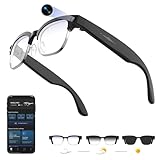
- 【8MPW Camera & 1080P Video and Audio】:These camera glasses feature an 800W camera that outputs sharp 20MP photos and smooth 1080P 30fps videos. Ultra-Clear Video + Powerful Anti-Shake tech+ Built-in dual microphones, you can capture crystal-clear video and audio together -sharply restoring details, perfect for vlogging, travel, and everyday moments
- 【Real-time AI translation Smart Glasses with Camera】:Instantly translate multiple major languages, breaking down language barriers in an instant—no phone required. Ideal for office settings, travel, academic exchanges, international conferences, watching foreign videos, and more
- 【Voice Assistant Recognition and Announcement】:Powered by industry-leading AI large models such as Doubao AI and OpenAI's GPT-4.0. AI voice wake-up lets you ask questions, recognize objects, and get answers on the go. Automatically recognizes objects, menus, landmarks, plants, and more, quickly analyzing the results and announcing them in real time. It instantly becomes your mobile encyclopedia on the go
- 【Bluetooth 5.3 Connection and Automatic Sync to Phone】:Equipped with a low-power BT5.3 chip and Wi-Fi dual transmission technology, offering ultra-low power and high-speed transmission. Captured images and videos are transferred to your phone in real time, eliminating manual export and eliminating storage worries
- 【290mAh Ultra-Long Battery Life】:Ultra-light at 42g, it's made of a durable, skin-friendly material, as light as a feather. Lenses are removable. Its simple, versatile design makes it a comfortable and comfortable wearer. 290mAh ultra-long battery life, 12 hours of music playback and 2 hours of photo or video recording, making it a perfect travel companion
The teased “true AR” glasses are not a Ray‑Ban upgrade. They sit on an entirely different branch of the roadmap, where visuals, sensing, and real‑time environment understanding become core rather than optional.
Project Aria: The Sensing and Perception Testbed
Project Aria has always been misunderstood as a prototype product, when in reality it’s a walking sensor lab. These glasses are about mapping, eye tracking, hand tracking, world understanding, and multi‑camera perception, not consumer usability or fashion.
Aria answers the hardest AR question first: how do glasses understand the world as well as the human wearing them? Depth, gaze, object permanence, and spatial context all originate here, feeding directly into Meta’s AI and computer vision stack.
What Aria does not attempt to solve is comfort, battery life, or mainstream appeal. The teased glasses clearly inherit Aria’s perception breakthroughs, but they are meant to discard its experimental bulk and research constraints.
Orion: Where True AR Quietly Became Real
Internally, Orion is the project most closely aligned with what Meta now calls “true AR.” Orion prototypes reportedly combine microLED or advanced waveguide displays, inside‑out tracking, hand input, eye tracking, and on‑device compute in a self‑contained form factor.
This is where Meta began seriously testing the idea of digital content that is persistent, spatially anchored, and visible at all times, not summoned briefly like a notification. In other words, AR that behaves more like reality than an overlay.
The teased glasses appear to be a descendant of Orion, not a direct commercial version, but a refined step that pulls Orion’s capabilities toward something wearable for hours, not minutes.
“Best of Both Worlds” Means Escaping the Headset Trap
Meta’s phrasing is deliberate. The “two worlds” it’s trying to merge are immersive XR headsets like Quest and lightweight smart glasses like Ray‑Ban Meta.
Headsets deliver rich visuals and spatial computing but fail socially, physically, and practically as daily wearables. Smart glasses succeed socially but collapse under the weight of displays, compute, and battery demands.
These new glasses aim to land in the middle: enough display capability to support real AR, enough openness to remain connected to the real world, and enough efficiency to avoid feeling like a compromised headset squeezed onto your face.
How This Differs from Quest, Vision Pro, and Existing MR
Unlike Quest or Apple Vision Pro, these glasses are not trying to replace your field of view. There is no sealed facial interface, no passthrough video dependency, and no expectation that you’ll use them primarily indoors.
The emphasis is on additive information rather than substitution. Navigation cues, contextual prompts, glanceable data, AI‑driven assistance, and spatial notifications matter more than cinematic immersion or virtual workspaces.
This distinction is crucial for battery life, thermal management, and comfort. It’s also what allows true AR glasses to be worn outside, in motion, and in social settings without friction.
The Technical Stack Still Has to Collapse Further
For these glasses to ship, multiple subsystems must shrink and converge simultaneously. Displays must be bright enough for outdoor use without destroying battery life. Optics must remain thin, distortion‑free, and tolerant of prescription lenses.
On‑device silicon must handle perception, rendering, and AI inference without offloading everything to the cloud. Thermals must stay within skin‑safe limits across hours, not bursts.
This is where Meta’s custom silicon and edge AI strategy becomes existential rather than optional. Without aggressive vertical integration, true AR stays trapped in prototypes.
Where These Glasses Likely Sit in the Consumer Timeline
These teased glasses are not a near‑term Ray‑Ban successor, nor are they a Quest replacement. They likely represent a limited‑availability or developer‑forward product that bridges research and mainstream hardware.
Think early Apple Watch Edition energy rather than iPhone launch scale. Expensive, constrained, and imperfect, but necessary to establish a platform and developer ecosystem before broader adoption.
For consumers, this means the first generation will be about capability, not value. The real payoff comes when the second and third iterations inherit the same tech at Ray‑Ban‑level comfort and pricing.
Why This Matters Beyond Meta
If Meta succeeds, it forces competitors into uncomfortable territory. Apple’s Vision Pro strategy looks increasingly heavy for everyday use, while Google and Samsung must decide whether to chase glasses or refine XR headsets further.
For the wider wearable market, true AR glasses represent the first credible threat to the smartwatch’s role as the primary glanceable computing device. When information moves from wrist to vision, the entire hierarchy of wearables shifts.
That’s why Meta’s roadmap matters. These glasses aren’t just another product category experiment. They are a long‑term bet that the next dominant wearable won’t be worn on your wrist or strapped to your face, but simply put on, like any other pair of glasses.
What ‘True AR’ Would Actually Let You Do Day‑to‑Day
To understand Meta’s “best of both worlds” claim, it helps to ground the idea of true AR in mundane, repeatable moments rather than demos. The promise isn’t holograms everywhere or living inside a virtual layer. It’s about information becoming present when you need it, then disappearing completely when you don’t.
That distinction is what separates true AR glasses from today’s camera‑equipped smart glasses and from full VR or mixed‑reality headsets. One augments your day without demanding your attention; the others still ask you to step out of it.
Persistent, Glanceable Information Without Pulling Out a Phone
In practical terms, true AR means you stop reaching for your phone for small, frequent checks. Directions appear anchored to the street ahead of you, not as turn‑by‑turn audio guesses but as subtle visual cues that respect your peripheral vision.
Messages, calendar reminders, and timers live at the edge of your view, fading in only when contextually relevant. Think smartwatch‑style glanceability, but without rotating your wrist or breaking eye contact during conversations.
Crucially, this information doesn’t block the real world. Unlike VR or pass‑through MR, you’re not looking at a camera feed of reality. You’re looking through clear optics, with digital elements layered precisely where they make sense.
Hands‑Free AI Assistance That Understands What You’re Looking At
Where Meta’s strategy gets more ambitious is combining AR visuals with on‑device AI perception. True AR glasses can see what you see and respond in real time without requiring you to frame shots or issue rigid commands.
That might mean glancing at a product shelf and asking for price comparisons, or looking at a restaurant menu and seeing dietary notes appear next to items. Translation, object recognition, and contextual reminders become situational rather than app‑driven.
This is fundamentally different from Ray‑Ban Meta glasses today, which rely on voice, audio responses, and cloud‑based processing. True AR implies visual answers delivered instantly, with enough local intelligence to avoid latency, overheating, or constant connectivity dependence.
Navigation That Respects Spatial Awareness
Navigation is often cited in AR demos, but true AR changes how it feels in daily use. Instead of floating arrows or full overlays, directions can be spatially locked to intersections, doors, or landmarks, reducing cognitive load rather than adding to it.
For walking and cycling, this could finally outperform phone maps and smartwatch taps. For driving or commuting, it becomes a safety feature rather than a distraction, provided brightness, contrast, and timing are handled with restraint.
This is where optical quality and display brightness become non‑negotiable. Outdoor legibility, minimal distortion, and accurate depth alignment matter more than resolution numbers on a spec sheet.
Micro‑Interactions That Replace, Not Replicate, Apps
True AR isn’t about running full apps in mid‑air. It’s about micro‑interactions that collapse entire app journeys into seconds.
Checking whether you left your lights on, confirming a delivery window, capturing a quick visual note, or acknowledging a task reminder can all happen without context switching. The goal is fewer interactions overall, not more features competing for attention.
This is also where battery life expectations shift. Instead of bursts of heavy use like a headset, true AR must survive a full day of intermittent interaction, similar to a smartwatch but with far stricter thermal and weight constraints.
Comfort and Wearability That Survive an Entire Day
None of this matters if the glasses don’t wear like glasses. True AR requires sub‑noticeable weight distribution, balanced temples, and materials that don’t fatigue the nose or ears after hours of use.
Prescription compatibility is table stakes, not a luxury. Optics must accommodate corrective lenses without ballooning thickness or compromising field of view, something even high‑end AR prototypes still struggle with.
This is where Meta’s “best of both worlds” framing becomes clear. The glasses must disappear like Ray‑Ban Meta frames do socially, while delivering functionality closer to a scaled‑down XR system.
Why This Would Quietly Undermine the Smartwatch
If true AR works as intended, it doesn’t replace your phone overnight. It starts by absorbing the smartwatch’s core job: fast, glanceable, contextual information.
Notifications migrate upward. Navigation shifts from wrist taps to spatial cues. Voice assistants gain visual confirmation. Over time, the watch becomes more health‑centric, while glasses become the primary interface for ambient computing.
That’s the real day‑to‑day impact Meta is chasing. Not spectacle, but substitution. When information moves naturally into your field of view and stops demanding rituals, you don’t notice the change all at once. You just notice you reach for other devices less often.
How Meta’s Vision Compares to Apple, Google, and Samsung’s Smart Glasses Plans
Once you view Meta’s “best of both worlds” claim through the lens of substitution rather than spectacle, the competitive landscape sharpens quickly. Every major platform company agrees that the phone can’t remain the center of ambient computing forever, but they disagree sharply on where the transition starts.
Meta is betting that true AR glasses can quietly absorb smartwatch and phone interactions without forcing users into a headset mindset. Apple, Google, and Samsung are approaching the same problem from very different angles, shaped as much by ecosystem control as by technical readiness.
Meta: Socially Acceptable First, Technically Ambitious Second
Meta’s public positioning is unusually explicit: these are not Ray‑Ban Meta successors, and they are not scaled‑down headsets. The teased device aims to blend all‑day wearability with persistent visual augmentation, something no shipping consumer product currently delivers.
💰 Best Value

- #1 SELLING AI GLASSES - Move effortlessly through life with Ray-Ban Meta glasses. Capture photos and videos, listen to music, make hands-free calls or ask Meta AI* questions on-the-go. Ray-Ban Meta glasses deliver a slim, comfortable fit for both men and women.
- CAPTURE WHAT YOU SEE AND HEAR HANDS-FREE - Capture exactly what you see and hear with an ultra-wide 12 MP camera and a five-mic system. Livestream it on Facebook and Instagram.
- LISTEN WITH OPEN-EAR AUDIO — Listen to music and more with discreet open-ear speakers that deliver rich, quality audio without blocking conversations or the ambient noises around you.
- GET REAL-TIME ANSWERS FROM META AI — The Meta AI* built into Ray-Ban Meta’s wearable technology helps you flow through your day. When activated, it can analyze your surroundings and provide context-rich suggestions - all from your smart AI glasses.
- CALL AND MESSAGE HANDS-FREE — Take calls, text friends or join work meetings via bluetooth straight from your glasses.
Unlike today’s Ray‑Ban Meta glasses, which rely on audio, cameras, and AI without visual overlays, true AR requires transparent displays capable of rendering text, UI elements, and spatial cues directly in your field of view. That means waveguides, micro‑LED or laser‑scanned displays, eye‑tracked rendering, and on‑device AI working together under tight thermal and battery limits.
Meta’s advantage is that it has been building toward this for nearly a decade through Reality Labs. Project Orion and earlier internal prototypes were never meant to ship, but they allowed Meta to iterate on optics, hand tracking, neural input experiments, and spatial operating systems long before competitors acknowledged AR glasses as a serious category.
Crucially, Meta appears willing to ship something imperfect if it crosses the threshold of daily usefulness. That pragmatism mirrors the early smartwatch era, where comfort, battery life, and habit‑forming utility mattered more than spec dominance.
Apple: Vision Pro First, Glasses Later
Apple’s strategy is almost the inverse. Vision Pro establishes the interaction model, the spatial OS, and the developer ecosystem in a controlled, high‑end headset before attempting to shrink it into glasses.
This makes technical sense. Apple can refine eye‑tracked UI, low‑latency passthrough, and spatial app paradigms without the brutal constraints of eyewear‑grade weight and battery capacity. Vision Pro is heavy, expensive, and explicitly not all‑day wearable, but it defines Apple’s version of spatial computing with precision.
The risk is timing. If Meta manages to ship true AR glasses that are socially wearable before Apple can miniaturize Vision Pro’s core technologies, Apple may be forced into a defensive posture. A future Apple Glass could be more refined, but refinement matters less if user habits have already shifted upward from the wrist and pocket to the face.
Apple’s likely endgame remains glasses, but its current roadmap suggests a longer gestation period. For consumers, that means best‑in‑class execution when it arrives, but no guarantee it arrives first.
Google: Software Gravity Without Hardware Commitment
Google’s history with smart glasses casts a long shadow. Google Glass failed not because the idea was wrong, but because the hardware arrived before displays, batteries, and social norms were ready.
Today, Google is positioning Android XR as a platform layer rather than a flagship product. Its partnerships with Samsung and others suggest Google wants to own the operating system for spatial devices without bearing the full risk of hardware development.
If Meta’s glasses succeed, Google is well positioned to follow quickly with software parity. What it lacks is a clear reference device that defines what Google thinks smart glasses should feel like on a face for twelve hours.
That absence matters. In wearables, industrial design and comfort are not secondary concerns; they are the product. Meta, for all its missteps, has learned this through the surprisingly strong adoption of Ray‑Ban Meta frames.
Samsung: Component Power Looking for a Category
Samsung’s smart glasses ambitions remain the least defined publicly, but its capabilities are formidable. Samsung controls displays, batteries, memory, and chip manufacturing, all of which are critical bottlenecks for true AR.
So far, Samsung appears focused on XR headsets in partnership with Google, aiming to challenge Meta’s Quest line rather than leapfrog into glasses. That suggests a cautious approach, likely waiting for optics and power efficiency to cross a clear manufacturability threshold.
If Meta proves there is consumer demand for true AR glasses, Samsung can scale faster than almost anyone. What it lacks is a clear software identity for ambient computing beyond being an excellent hardware supplier.
What “True AR” Actually Separates in This Field
The dividing line isn’t branding or ecosystem size, it’s where computation lives and how often the device demands attention. Existing smart glasses are reactive and audio‑centric. Headsets are immersive but episodic.
True AR, as Meta frames it, lives in between. Visual information is persistent but minimal. Interactions are micro‑bursts. The device stays on your face not because it’s exciting, but because taking it off feels unnecessary.
That’s a far harder problem than building a powerful headset or a clever accessory. It requires breakthroughs in display brightness without heat, batteries that survive idle drain, optics that accommodate prescriptions gracefully, and AI that anticipates rather than interrupts.
Why Meta’s Bet Pressures Everyone Else
If Meta gets even 70 percent of this right, it forces competitors to respond sooner than they would like. Apple would have to accelerate miniaturization. Google would need a reference design. Samsung would need to clarify its role beyond components.
For consumers, this competition matters. It increases the chance that true AR glasses arrive as something you can actually live with, not just admire in demos. Comfort, battery longevity, and social acceptability will matter more than resolution or field of view at first.
Meta’s vision isn’t guaranteed to win, but it’s the most clearly articulated attempt to make AR boring in the best possible way. And in wearables, boring is usually the thing that sticks.
What This Could Mean for Consumers — And When You Might Actually Buy Them
All of that context ultimately collapses into a more practical question: what changes for you if Meta actually delivers on this vision. The answer isn’t a single killer feature, but a slow re‑shaping of how digital information fits into everyday life.
If true AR works the way Meta is describing it, these glasses won’t replace your phone or your headset. They sit alongside them, quietly reducing how often you need to reach for either.
A New Category, Not a Better Accessory
For consumers, the most important shift is that true AR glasses wouldn’t behave like today’s smart glasses at all. Ray‑Ban Meta glasses are reactive: you ask a question, capture a photo, or listen to audio, then the experience ends.
True AR is ambient. Navigation hints linger at the edge of your vision. Messages appear only when they matter. Contextual information shows up without you explicitly requesting it, then fades away just as quickly.
That difference sounds subtle, but it fundamentally changes wearability. A device that constantly demands input feels like a gadget. One that quietly assists starts to feel like infrastructure.
Everyday Wearability Will Matter More Than Specs
Assuming Meta’s prototypes translate into shipping hardware, consumers should expect compromises that look very different from VR headsets. Field of view will be narrow by headset standards. Visuals will prioritize clarity and brightness over cinematic immersion.
What matters more is comfort over eight to ten hours. Weight distribution, nose bridge pressure, thermal management, and how well the frames accommodate prescription lenses will determine whether these live in a case or on your face.
Materials and finish will also matter in a way they don’t for headsets. Acetate versus lightweight metals, hinge durability, sweat resistance, and subtle design choices all influence social acceptability. These will be closer to watch‑level decisions than smartphone spec comparisons.
Battery Life Will Define the Real User Experience
For consumers, battery life isn’t about peak usage, it’s about idle survival. True AR glasses need to last all day while doing very little most of the time.
If Meta can deliver eight or more hours of mixed use with meaningful standby longevity, that’s a psychological threshold. Anything less turns the product into something you plan around, which kills spontaneity.
Expect external compute pucks or pocket devices in early versions. That may sound inelegant, but it’s a practical tradeoff that allows lighter frames and better thermal control, similar to how early smartwatches leaned heavily on phones before becoming more independent.
Software and AI Will Decide Whether This Feels Magical or Annoying
From a consumer perspective, the risk isn’t that Meta’s AI is underpowered, it’s that it’s overzealous. True AR only works if the system knows when not to speak, not to show, and not to intervene.
This is where Meta’s emphasis on micro‑interactions matters. Notifications must be filtered ruthlessly. Visual elements need to respect attention and eye fatigue. Voice, gesture, and subtle physical inputs have to feel natural, not performative.
If Meta gets this wrong, the glasses become distracting. If it gets it right, they become invisible in the best way, something you miss only when they’re gone.
Who These Glasses Are Actually For at Launch
Early buyers shouldn’t expect a mass‑market product on day one. The first real true AR glasses will likely appeal to professionals, commuters, and tech‑forward users who already wear glasses daily and understand tradeoffs.
Think of people who value navigation, messaging triage, real‑time translation, light productivity cues, and hands‑free context more than entertainment. This isn’t about gaming or media consumption, at least not initially.
For smartwatch owners, this will feel familiar. Just as watches didn’t replace phones but changed how often you engage with them, AR glasses could reshape how often you look down at a screen.
Pricing, Expectations, and the Adoption Curve
Realistically, first‑generation true AR glasses will not be cheap. Advanced waveguides, micro‑displays, custom silicon, and low‑volume manufacturing all push prices upward.
Expect early pricing closer to premium smartphones or high‑end smartwatches than Ray‑Ban Meta glasses. Over time, scale and competition should bring costs down, but early adopters will pay to help define the category.
The key is value, not price. If the glasses meaningfully reduce friction in daily life, users will tolerate imperfections in resolution, field of view, or battery far more than they would in a headset.
So When Could You Actually Buy Them?
Based on Meta’s current trajectory, a developer‑focused or limited consumer release within the next couple of years is plausible. A refined, broadly appealing product that normal consumers should buy likely sits closer to the latter half of the decade.
That may sound slow, but it’s fast by AR standards. Optics, power efficiency, and AI models all have to mature together, and rushing any one of them risks creating a product that looks impressive but feels exhausting to live with.
The encouraging part is that Meta now seems focused on livability rather than spectacle. That shift increases the odds that when true AR glasses finally arrive, they won’t feel like a demo you try once, but a wearable you quietly build a routine around.
If Meta succeeds, the biggest change for consumers won’t be what these glasses can do. It will be how little you notice them doing it.