Meta has been talking about wearables for years, but until now those efforts were scattered across Reality Labs, Facebook hardware, and long-term research teams that rarely moved in lockstep. For anyone who has watched smartwatches mature from curiosities into daily tools, that fragmentation is a familiar warning sign. Wearables only succeed when hardware, software, and platform incentives are tightly aligned over multiple product generations.
Creating a dedicated Wearables division is Meta acknowledging that AR glasses are no longer an experiment, but a product category that needs the same operational discipline as smartphones or smartwatches. This shift matters because it changes how decisions get made, what gets prioritized, and how quickly Meta can iterate toward something people might actually want to wear all day.
What follows is why this internal reorganization is more than corporate reshuffling, how it materially improves Meta’s chances with AR glasses, and what it signals to consumers, developers, and competitors watching closely.
It fixes Meta’s biggest historical weakness: ownership
Until now, Meta’s wearable efforts suffered from unclear ownership. Smart glasses like Ray-Ban Meta lived half in consumer hardware, half in social features, while AR research lived in labs building prototypes that never had to ship. That’s the opposite of how successful wearables evolve, where compromises around weight, battery life, thermal limits, and comfort define everything.
🏆 #1 Best Overall
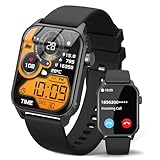
- 【1.83" HD Display & Customizable Watch Faces】Immerse yourself in a vibrant 1.83-inch IPS display, boasting a sharp resolution of 240*284 for crystal-clear visuals. Effortlessly personalize your smart watch with a wide array of customizable watch faces to suit your personal style for every occasion—whether trendy, artistic, or minimalist—ideal for casual, sporty, or professional. Its sleek, modern design complements any outfit, blending technology and fashion seamlessly for everyday wear
- 【120 Sports Modes & Advanced Health Tracking】Our TK29 smart watches for women men come equipped with 120 sports modes, allowing you to effortlessly track a variety of activities such as walking, running, cycling, and swimming. With integrated heart rate and sleep monitors, you can maintain a comprehensive overview of your health, achieve your fitness goals, and maintain a balanced, active lifestyle with ease. Your ideal wellness companion (Note: Step recording starts after exceeding 20 steps)
- 【IP67 Waterproof & Long-Lasting Battery】Designed to keep up with your active lifestyle, this smartwatch features an IP67 waterproof rating, ensuring it can withstand splashes, sweat, and even brief submersion, making it perfect for workouts, outdoor adventures, or rainy days. Its reliable 350mAh battery offering 5-7 days of active use and up to 30 days in standby mode, significantly reducing frequent charging. Ideal for all-day wear, whether you’re at the gym, outdoors, or simply on the go
- 【Stay Connected Anytime, Anywhere】Stay informed and in control with Bluetooth call and music control features. Receive real-time notifications for calls, messages, and social media apps like Facebook, WhatsApp, Twitter, and Instagram directly on your smartwatch. Easily manage calls, control your music playlist, and stay updated without needing to reach for your phone. Perfect for work, workouts, or on-the-go, this watch keeps you connected and never miss important updates wherever you are
- 【Multifunction & Wide Compatibility】Seamlessly handle heart rate monitoring, sleep tracking, and enjoy conveniences like camera/music control, Seamlessly handle heart rate monitoring, sleep tracking, and more-all directly from your wrist. This 1.83 inches HD smartwatch is compatible with iPhone (iOS 9.0+) & Android (5.0+), ensuring smooth daily connectivity and convenience throughout your day. More than just a timepiece, it’s a stylish, all-in-one wearable for smarter, healthier living
A dedicated Wearables division creates a single executive chain responsible for real-world usability. That means someone is finally accountable when battery life stalls at four hours, when microphones drain power during always-on listening, or when a frame is a few grams too heavy to wear for a full workday.
For AR glasses, this is critical. Unlike headsets, glasses have no tolerance for “good enough.” They must disappear on the face, survive sweat and daily handling, work with prescription lenses, and last from morning to evening without anxiety.
It signals a pivot from research novelty to product cadence
One of the most important implications is cadence. Smartwatches only became good when companies committed to annual or biannual refinement cycles, learning from real users rather than lab demos. Meta’s Wearables division suggests AR glasses are entering that same phase.
Instead of moonshot demos every few years, we should expect incremental gains: lighter frames, more efficient displays, better battery density, improved hinge durability, and microphones tuned for noisy environments. None of these are exciting individually, but together they’re what turns a prototype into a product category.
This also changes how Meta allocates silicon, power budgets, and software features. Decisions get grounded in shipping constraints rather than theoretical capability, which is exactly how Apple Watch and Pixel Watch matured into credible daily wearables.
Software finally gets treated as a wearable experience, not a headset one
A subtle but crucial shift is software scope. AR glasses are not VR headsets shrunk down; they’re closer to smartwatches for the face. That means glanceable information, ultra-low latency interactions, and aggressive power management.
A Wearables division can optimize software around short, frequent interactions instead of immersive sessions. Think notifications that matter, navigation cues that don’t overload the display, contextual AI prompts, and voice interactions that feel natural without constant activation.
This also improves compatibility. Glasses have to coexist with iOS and Android phones, sync notifications reliably, and avoid becoming ecosystem orphans. Treating glasses as first-class wearables forces Meta to design software that respects existing smartphone habits rather than trying to replace them outright.
It creates a clearer platform story for developers
Developers have been hesitant to build for AR glasses because the platform story kept changing. Is it about spatial computing? Social capture? AI assistants? Lightweight HUDs? A dedicated division can finally define the answer.
For developers, this means more predictable APIs, clearer hardware assumptions, and a realistic install base roadmap. Just as watchOS and Wear OS matured once developers knew screen sizes, input methods, and battery limits wouldn’t radically shift every year, AR glasses need stability before serious apps emerge.
That stability also encourages experimentation beyond gimmicks. Navigation, live translation, accessibility tools, fitness overlays, and fieldwork utilities all depend on consistent hardware and long-term support.
It reframes Meta’s competition with Apple and Google
Structurally, this move puts Meta closer to Apple than Google. Apple treats wearables as a core product line with tight vertical integration and long-term patience. Google, historically, has oscillated between platforms and partners, especially in wearables.
By elevating Wearables to its own division, Meta is signaling that AR glasses are not a side bet but a strategic pillar. That matters competitively because Apple is widely expected to enter consumer AR glasses after Vision Pro, and Meta cannot afford to be organizationally reactive.
For consumers, this increases the odds that Meta’s glasses don’t vanish after two generations. For rivals, it’s a warning that Meta is preparing for a multi-year grind rather than a flashy launch-and-forget cycle.
It improves Meta’s odds at solving the comfort problem
Comfort is the silent killer of wearables. Weight distribution, hinge tension, nose pad materials, heat dissipation, and frame thickness matter more than specs sheets. These are the same factors watchmakers obsess over with case dimensions, lug length, and bracelet taper.
A Wearables division can iterate on these details with discipline. Expect more attention to materials, better balance between battery placement and optics, and frames that feel closer to premium eyewear than tech gadgets.
If Meta can make glasses that disappear on the face the way a well-sized watch disappears on the wrist, AR glasses stop feeling futuristic and start feeling inevitable.
Most importantly, it gives Meta a credible path to mainstream adoption
None of this guarantees success. AR glasses remain one of the hardest consumer tech problems, constrained by physics, fashion, and social acceptance. But organization matters, especially in wearables where progress is slow and cumulative.
By creating a dedicated Wearables division, Meta is aligning incentives around durability, daily usability, and long-term iteration. That doesn’t just improve the product; it changes how seriously the category should be taken.
For the first time, Meta’s AR glasses feel less like a tech demo searching for a purpose and more like a wearable platform being patiently engineered to earn a place in everyday life.
From Side Project to Core Hardware Bet: What Changed Inside Meta
To understand why Meta’s AR glasses suddenly look more viable, you have to look past the product and into the company’s internal wiring. The creation of a standalone Wearables division isn’t a branding tweak; it’s a structural admission that glasses are no longer an experiment living between Reality Labs demos and smartphone-adjacent accessories.
For years, Meta’s smart glasses efforts existed in a liminal space. They were strategically interesting, but organizationally subordinate to VR headsets and long-term metaverse bets that demanded massive capital and executive attention.
Wearables are no longer downstream of VR
Previously, AR glasses were effectively downstream of Meta’s VR roadmap. Teams building Ray-Ban Stories or early AR prototypes were often constrained by priorities set for Quest headsets, silicon platforms, and spatial computing research.
That hierarchy matters because VR and glasses fail for very different reasons. VR lives or dies on immersion and compute power, while glasses live or die on comfort, battery life, thermal control, and whether you forget you’re wearing them after ten minutes.
By carving out Wearables as its own division, Meta is acknowledging that glasses need their own success metrics. Iteration cycles, cost targets, materials sourcing, and even industrial design leadership can now be optimized for daily wear rather than occasional use.
Hardware discipline replaces moonshot thinking
Meta’s early AR ambitions were famously ambitious, sometimes to the point of being self-sabotaging. Full displays, rich holograms, advanced hand tracking, and always-on sensors were bundled into concepts that ignored basic wearability constraints.
A Wearables division forces a different mindset: ship something good enough, refine it relentlessly, and let usage data shape the roadmap. This is closer to how smartwatches matured, moving from clunky first-gen devices to genuinely livable tools through incremental gains in size, weight, battery efficiency, and software restraint.
Think thinner frames before wider fields of view, better hinge durability before brighter waveguides, and reliable all-day battery life before ambitious always-on visuals. These are unglamorous priorities, but they’re the ones that turn prototypes into products.
Clearer ownership accelerates iteration
One of the quiet killers of wearable projects is diffused accountability. When hardware, software, and platform decisions are spread across divisions, compromises pile up and timelines stretch.
A dedicated Wearables org consolidates decision-making around the realities of physical products. Frame materials, weight distribution, nose bridge comfort, and thermal dissipation stop being secondary considerations and start driving engineering trade-offs.
This mirrors how serious watch brands operate. Case thickness isn’t decided in isolation from movement choice, just as battery placement in glasses can’t be divorced from balance and comfort. Meta now has an internal structure capable of making those trade-offs coherently.
Software finally has a stable hardware target
From a developer and platform perspective, this shift is just as important. One reason glasses ecosystems stall is uncertainty about what hardware will actually ship, at what scale, and for how long.
A Wearables division signals continuity. APIs, companion apps, voice interactions, and contextual computing features can be built with confidence that the underlying hardware won’t be abandoned after a single generation.
For consumers, that translates into fewer half-baked features and more refinement over time. For developers, it means glasses are no longer a novelty endpoint but a platform worth supporting alongside phones and watches.
Meta is positioning ahead of Apple and Google, not reacting
This organizational move also reframes Meta’s competitive posture. Apple is expected to follow Vision Pro with lighter, consumer-focused AR glasses, and Google has been quietly rebuilding its own XR stack with partners.
If Meta waited until Apple’s glasses were public, it would be forced into a reactive stance. Instead, elevating Wearables now allows Meta to harden its supply chains, refine its industrial design language, and lock in developer relationships before the category explodes.
In wearables, timing isn’t about who launches first. It’s about who survives long enough to iterate into relevance. Meta is signaling that it plans to be there for multiple generations, not just the first wave.
Why this matters more than any single product launch
Individual AR glasses models will still live or die by their real-world usability. Battery life, comfort over long wear, audio quality, durability, and how seamlessly they integrate with phones will matter more than demos or keynote promises.
What’s changed is the likelihood that Meta sticks with the problem long enough to solve it. A Wearables division aligns leadership incentives around patience, refinement, and learning from failure, which is exactly what this category demands.
That doesn’t make Meta’s success inevitable. But it does make its AR glasses ambitions credible in a way they haven’t been before, especially for consumers and developers deciding where to place their trust over the next five years.
The Glasses Themselves: Display Tech, Sensors, Battery Life, and Wearability Realities
All of the organizational clarity in the world doesn’t matter if the glasses themselves remain uncomfortable, underpowered, or socially awkward. This is where Meta’s Wearables division has to translate strategy into physical reality, solving problems that have quietly stalled consumer AR for a decade.
The encouraging sign is that Meta’s recent glasses efforts already show a sharper understanding of wearability constraints than earlier smart glasses waves. The remaining gaps are no longer mysterious, but they are still brutally difficult to close.
Display technology: constrained optics, not screen ambition
The biggest misconception around AR glasses is that display quality scales like phones or VR headsets. In glasses, the optical engine is the bottleneck, not pixel density, because everything must fit inside frames that weigh roughly what people tolerate on their face all day.
Meta’s current trajectory leans toward microLED and waveguide-based displays that prioritize brightness and efficiency over wide fields of view. That means notification-scale overlays, navigation cues, and glanceable context, not cinematic AR layers floating across your vision.
Rank #2
![Apple Watch Series 11 [GPS 46mm] Smartwatch with Jet Black Aluminum Case with Black Sport Band - M/L. Sleep Score, Fitness Tracker, Health Monitoring, Always-On Display, Water Resistant](https://m.media-amazon.com/images/I/312K597M2uL._SL160_.jpg)
- HYPERTENSION NOTIFICATIONS — Apple Watch Series 11 can spot signs of chronic high blood pressure and notify you of possible hypertension.*
- KNOW YOUR SLEEP SCORE — Sleep score provides an easy way to help track and understand the quality of your sleep, so you can make it more restorative.
- EVEN MORE HEALTH INSIGHTS — Take an ECG anytime.* Get notifications for a high and low heart rate, an irregular rhythm,* and possible sleep apnea.* View overnight health metrics with the Vitals app* and take readings of your blood oxygen.*
- STUNNING DESIGN — Thin and lightweight, Series 11 is comfortable to wear around the clock — while exercising and even when you’re sleeping, so it can help track your key metrics.
- A POWERFUL FITNESS PARTNER — With advanced metrics for all your workouts, plus features like Pacer, Heart Rate Zones, training load, Workout Buddy powered by Apple Intelligence from your nearby iPhone,* and more. Series 11 also comes with three months of Apple Fitness+ free.*
This conservative display philosophy is a strength, not a compromise. It aligns with how smartwatches succeeded by mastering glanceable information first, rather than chasing full replacement ambitions too early.
Sensors: more like a smartwatch than a headset
Modern AR glasses are quietly becoming sensor hubs, closer in spirit to advanced wearables than immersive XR devices. Cameras for spatial awareness, IMUs for head tracking, microphones for voice input, and ambient light sensors are now baseline expectations.
Meta’s advantage is its experience fusing sensor data across devices. The glasses don’t need to do everything themselves if they can lean on a phone for compute and a watch for biometric context.
This distributed model mirrors how Apple Watch offloads tasks to the iPhone, and it’s far more realistic for all-day eyewear than stuffing flagship-level silicon into frames.
Battery life: the non-negotiable constraint
Battery life is the hard ceiling that determines whether AR glasses remain niche or become habitual. Anything under a full workday of mixed use pushes glasses into “occasionally worn gadget” territory.
Meta’s current designs prioritize low-power displays, aggressive standby modes, and companion-device offloading to stretch usable hours. This is why features like continuous video capture or persistent AR overlays remain intentionally limited.
The goal isn’t to win spec sheets, but to ensure glasses don’t demand lifestyle changes, charging anxiety, or bulky external battery packs.
Weight, balance, and comfort: the real adoption filter
Wearability is less about absolute weight and more about balance, pressure distribution, and long-term comfort. Even a few grams too far forward can cause nose fatigue, headaches, or subtle irritation that kills daily use.
Meta’s partnership-driven approach to frames, materials, and industrial design reflects a lesson learned from watches: comfort beats capability if you want people to keep wearing something. Slim temples, lightweight hinges, and materials that don’t trap heat matter as much as processors or cameras.
This is also where fashion credibility quietly becomes functional. Glasses people already want to wear face fewer psychological and physical barriers to adoption.
Audio as the silent differentiator
Audio is emerging as one of the most successful elements of current smart glasses. Directional speakers enable calls, notifications, and voice assistants without sealing the ear or isolating the wearer.
Meta has invested heavily in spatial audio tuning that works in open-air environments. This makes the glasses useful even when visual AR elements are minimal or inactive.
In practice, this turns the glasses into a hybrid of earbuds, notification surface, and voice interface, which increases their daily utility even before full AR arrives.
Durability, optics, and real-world abuse
Unlike phones or watches, glasses are exposed constantly. Sweat, skin oils, rain, dust, and repeated on-off handling create failure modes that lab testing often misses.
Meta’s recent iterations show improved coatings, reinforced hinges, and better ingress protection, though they still trail purpose-built sports wearables. For mainstream adoption, glasses must survive years of casual abuse without feeling fragile or precious.
This is another reason Meta’s patience matters. Refinement here only comes from shipping, learning, and iterating across multiple generations.
Why this hardware moment feels different
What separates Meta’s current glasses efforts from earlier attempts isn’t breakthrough tech, but coherence. The displays are modest by design, the sensors are pragmatic, the battery expectations are realistic, and the wearability trade-offs are acknowledged rather than ignored.
This is the same maturity curve smartwatches went through before they escaped novelty status. Meta’s Wearables division gives these hardware decisions continuity, allowing incremental gains to compound instead of resetting every product cycle.
If AR glasses are going to succeed, they won’t do it by dazzling once. They’ll do it by being comfortable, reliable, and quietly useful enough that people forget they’re wearing them.
Software Is the Moat: Meta OS, AI Assistants, and the App Ecosystem Problem
If the hardware finally feels grounded, the real bet Meta is making sits above the lenses. Glasses that are comfortable, durable, and quietly useful only become indispensable when the software layer turns them into a habit rather than a gadget.
This is where the new Wearables division matters most. It gives Meta the organizational mandate to treat operating systems, AI, and developer tooling as first-class wearable products, not experimental side projects tied to VR headsets or phone companions.
Meta OS and the importance of a native wearable platform
Until recently, Meta’s glasses lived in an awkward software in-between state. They leaned heavily on phone tethering, borrowed mobile UI metaphors, and lacked a clear sense of what ran locally versus what depended on the cloud.
Meta OS changes that framing. Instead of glasses being accessories to a smartphone, they become their own computing nodes with a lightweight, purpose-built operating layer optimized for low power, voice-first interaction, and glanceable visuals.
This mirrors the transition smartwatches went through when watchOS and Wear OS stopped pretending to be shrunken phones. Once the OS is designed around quick interactions, background intelligence, and battery constraints, the hardware suddenly feels more capable without changing a single component.
For consumers, this means faster responses, fewer connection hiccups, and features that don’t collapse the moment your phone is in another room. For Meta, it creates a stable software target that can persist across multiple generations of glasses instead of resetting with each new model.
AI assistants as the primary interface, not a feature
On glasses, AI is not an add-on. It is the interface.
Touch input is limited, displays are constrained, and visual attention is precious. Voice, contextual awareness, and proactive suggestions become the main way users interact with the device, whether they realize it or not.
Meta’s advantage here is less about raw model performance and more about deployment. The company has been integrating AI assistants into messaging, social feeds, cameras, and now wearables, giving it real-world training data about how people ask questions, issue commands, and abandon features that feel slow or awkward.
In practice, this turns the glasses into a conversational layer over daily life. Asking for directions, summarizing a message, identifying something you’re looking at, or triggering a quick action becomes frictionless enough to compete with pulling out a phone.
Apple is pursuing a similar endpoint with Siri and on-device intelligence, but Meta’s willingness to lean heavily on cloud-based AI gives it flexibility at the cost of privacy perception. Google, meanwhile, has the AI depth but lacks a credible consumer smart glasses platform to deploy it at scale.
The app ecosystem problem no one has solved yet
Every wearable platform eventually runs into the same wall: apps designed for phones don’t translate cleanly to bodies. Glasses intensify this problem because persistent visuals and constant notifications can become exhausting instead of helpful.
Meta seems to understand that traditional app grids are the wrong answer. Instead of chasing a glasses app store filled with tiny versions of mobile software, the strategy appears to favor services, skills, and contextual extensions.
Think fewer standalone apps and more integrations. Navigation that surfaces only when you’re moving, messaging that reads and summarizes instead of demanding replies, fitness cues that borrow smartwatch-style glanceability without visual clutter.
This is closer to how watch complications and background services evolved than how smartphone apps proliferated. Developers are asked to rethink interaction models, which is a hard sell unless the platform is stable and growing.
Here again, the Wearables division matters. Developers are far more likely to invest when APIs, design guidelines, and hardware roadmaps don’t change direction every 12 months.
Why Meta’s social graph is a quiet advantage
One overlooked asset is Meta’s existing social infrastructure. Glasses don’t need a killer game or a productivity suite to feel useful; they need communication to feel natural.
Calls, voice messages, live translation, shared media capture, and presence indicators all benefit from Meta already owning WhatsApp, Messenger, and Instagram. These are services people use daily, which lowers the friction of wearing something new on your face.
This is something Apple leverages with iMessage and FaceTime, but Meta’s platforms are more globally dominant and less hardware-dependent. Glasses that work equally well on Android and iOS give Meta reach Apple simply doesn’t prioritize.
For users, this translates into glasses that fit existing social habits instead of asking them to adopt new ones. For developers, it offers built-in distribution through services people already open dozens of times a day.
The long game: consistency beats spectacle
None of this guarantees success. Meta still has to convince developers to build, users to trust its AI, and regulators to stay out of the way.
What has changed is the structure supporting the effort. A dedicated Wearables division means Meta OS, AI assistants, and glasses hardware are now evolving together, rather than competing for attention with VR, social apps, or advertising priorities.
That coherence is what allowed smartwatches to mature from novelties into everyday tools. If AR glasses follow the same path, software—not displays or sensors—will be the reason they finally stick.
Ray-Ban Meta as the Proof Point: What Today’s Smart Glasses Tell Us About Tomorrow’s AR
If Meta’s Wearables division is the structural change, Ray-Ban Meta is the evidence that the strategy is already working in the real world. Not as a futuristic AR device, but as something arguably more important: smart glasses that people actually buy, wear, and keep wearing.
That distinction matters. Before we talk about waveguides, microLEDs, or full spatial interfaces, the industry has to solve the far more basic problem of face acceptance, daily comfort, and habitual use.
Rank #3

- Bluetooth Call and Message Alerts: Smart watch is equipped with HD speaker, after connecting to your smartphone via bluetooth, you can answer or make calls, view call history and store contacts through directly use the smartwatch. The smartwatches also provides notifications of social media messages (WhatsApp, Twitter, Facebook, Instagram usw.) So that you will never miss any important information.
- Smart watch for men women is equipped with a 320*380 extra-large hd full touch color screen, delivering exceptional picture quality and highly responsive touch sensitivity, which can bring you a unique visual and better interactive experience, lock screen and wake up easily by raising your wrist. Though “Gloryfit” app, you can download more than 102 free personalised watch faces and set it as your desktop for fitness tracker.
- 24/7 Heart Rate Monitor and Sleep Tracker Monitor: The fitness tracker watch for men has a built-in high-performance sensor that can record our heart rate changes in real time. Monitor your heart rate 26 hours a day and keep an eye on your health. Synchronize to the mobile phone app"Gloryfit", you can understand your sleep status(deep /light /wakeful sleep) by fitness tracker watch develop a better sleep habit and a healthier lifestyle.
- IP68 waterproof and 110+ Sports Modes: The fitness tracker provides up to 112+ sports modes, covering running, cycling, walking, basketball, yoga, football and so on. Activity trackers bracelets meet the waterproof requirements for most sports enthusiasts' daily activities, such as washing hands or exercising in the rain, meeting daily needs (note: Do not recommended for use in hot water or seawater.)
- Multifunction and Compatibility: This step counter watch also has many useful functions, such as weather forecast, music control, sedentary reminder, stopwatch, alarm clock, timer, track female cycle, screen light time, find phone etc. The smart watch with 2 hrs of charging, 5-7 days of normal use and about 30 days of standby time. This smart watches for women/man compatible with ios 9.0 and android 6.2 and above devices.
Why Ray-Ban Meta succeeds where earlier smart glasses failed
Ray-Ban Meta works because it starts as eyewear, not a gadget. At roughly 50 grams depending on frame style, weight is close enough to standard acetate Ray-Bans that it disappears after a few minutes, especially compared to the face fatigue induced by early Google Glass or current mixed-reality headsets.
Materials and finishing matter here in the same way case thickness and lug geometry matter on a watch. The hinges are reinforced, the temples hide cameras and speakers without feeling bulky, and the frames don’t scream “tech product.” That’s not an accident; it’s a recognition that wearables live or die on comfort and aesthetics long before features.
Crucially, battery life aligns with real use. You’re looking at roughly four hours of active use, plus a case that delivers multiple recharges, which mirrors how people already treat wireless earbuds. It’s not all-day AR, but it’s enough for intermittent capture, calls, and AI interactions without anxiety.
Cameras and audio as the real killer features
What Ray-Ban Meta proves is that cameras and audio are the first durable smart glasses primitives, not displays. The dual cameras aren’t about cinematic video; they’re about frictionless capture from a first-person perspective that feels more natural than pulling out a phone.
Audio, delivered through open-ear speakers, is equally important. Calls, voice notes, navigation prompts, and AI responses feel private enough without isolating you from your environment. This is the same balance smartwatches struck when they prioritized glanceable information over full smartphone parity.
The absence of a display isn’t a weakness here; it’s a strategic simplification. By avoiding the hardest technical problem in AR, Meta has been able to ship something stable, affordable, and socially acceptable while still training users to interact with an always-on wearable.
Meta AI turns glasses from accessory into interface
The real inflection point for Ray-Ban Meta came with deeper Meta AI integration. Voice-first interaction finally makes sense on glasses because your hands and eyes are already occupied.
Asking what you’re looking at, translating text in real time, or capturing context-aware reminders feels meaningfully different on your face than it does on a phone or watch. This is where glasses start behaving less like a peripheral and more like an ambient interface.
Importantly, the AI experience is improving without requiring new hardware. That reinforces the value of Meta controlling the full stack through its Wearables division: the same glasses feel more capable six months later, which builds consumer trust in the platform.
What Ray-Ban Meta teaches us about the path to real AR
For enthusiasts waiting for true augmented reality overlays, Ray-Ban Meta might feel like a detour. In practice, it’s closer to the Apple Watch Series 0 moment: limited, imperfect, but foundational.
It establishes daily behaviors. You get comfortable talking to your glasses, trusting them to capture moments, and relying on them for lightweight assistance. Those habits matter because they don’t need to be re-learned when displays eventually arrive.
From a developer perspective, this phase is critical. APIs for audio, camera access, AI queries, and contextual triggers can mature now, so when visual layers are added, they sit on top of an already stable interaction model rather than starting from scratch.
Why this matters more than flashy prototypes
Plenty of companies have shown impressive AR demos. Few have shipped a product that normal people wear to the grocery store.
Ray-Ban Meta demonstrates that Meta understands the difference between technical possibility and consumer readiness. It’s a lesson learned the hard way from VR, where hardware often arrived before clear everyday value.
The Wearables division amplifies this by ensuring that glasses aren’t experimental side projects. Hardware iterations, software updates, and AI capabilities now move on a predictable cadence, which is exactly what turned early smartwatches into reliable tools rather than curiosities.
Implications for Apple, Google, and the wider market
Apple’s likely approach will be more polished and more vertically integrated, but also more restrictive and almost certainly more expensive. Ray-Ban Meta’s success puts pressure on Apple to justify why glasses should be a premium, tightly controlled extension of the iPhone rather than a cross-platform social device.
Google, meanwhile, risks repeating its Glass mistake if it focuses too heavily on developer vision without solving consumer trust and aesthetics. Meta has shown that partnering with an established eyewear brand isn’t optional; it’s table stakes.
For consumers, this means smart glasses are no longer speculative. They already work as communication tools, content capture devices, and AI companions. AR visuals are the missing layer, not the missing product.
Ray-Ban Meta doesn’t tell us exactly what tomorrow’s AR glasses will look like. It tells us something more valuable: how they’ll fit into people’s lives long before they project a single pixel into the world.
How This Repositions Meta Against Apple Vision Pro, Google, and Samsung
Seen in context, Meta’s Wearables division doesn’t just streamline internal org charts. It reshapes how Meta competes across three very different rivals, each with their own assumptions about what spatial computing and smart wearables should be.
The key shift is that Meta is no longer trying to win the “best headset” argument. It’s trying to win the “most worn” one.
Against Apple Vision Pro: Different bets on what comes first
Apple Vision Pro represents the most ambitious version of spatial computing to date, but it also exposes Apple’s core assumption: that AR and XR begin as premium, immersive computing platforms and eventually trickle down.
Meta is now making the opposite bet. With Ray-Ban Meta and its Wearables division, the priority is daily wearability first, visual augmentation later.
Vision Pro is effectively a Mac and iPad replacement that happens to sit on your face. It weighs over 600 grams, requires an external battery pack, and is designed for stationary or semi-stationary use. That makes sense for Apple’s strengths in productivity, high-end displays, and custom silicon, but it places Vision Pro closer to a workstation than a watch or pair of glasses.
Meta’s glasses, by contrast, behave more like an accessory than a computer. Sub-100 gram weight, all-day comfort, familiar acetate frames, and no visible “tech” cues mean they fit into routines the way a smartwatch does, not the way a VR headset does. Battery life is measured in real-world use cases like calls, photos, and AI queries, not demo scenarios.
The Wearables division matters here because it aligns Meta structurally around this lighter, more incremental path. Instead of AR visuals defining the product, interaction models, AI assistance, audio capture, and camera utility are allowed to mature independently.
For consumers, this creates a clearer choice. Apple is building a premium spatial computer that extends macOS and iOS into 3D space. Meta is building a wearable companion that extends your phone, your social graph, and your environment into subtle, glanceable moments.
Neither strategy is wrong, but they aim at very different adoption curves. Meta’s approach is far more likely to normalize glasses as something you wear every day long before they display anything.
Against Google: Execution over vision this time
Google arguably understands AR glasses better than anyone, at least on paper. From Glass to ARCore to Android XR, the company has repeatedly outlined compelling technical frameworks for ambient computing.
What Google has struggled with is shipping consumer hardware that people actually want to wear.
Meta’s Wearables division directly attacks that weakness. Rather than leading with developer platforms or speculative use cases, Meta is building from consumer behavior outward. Ray-Ban Meta didn’t launch with a manifesto. It launched with sunglasses people already liked, then quietly added features that felt additive rather than intrusive.
That’s a lesson Google never fully absorbed with Glass. The technology worked, but the social contract didn’t. The design telegraphed “beta tester,” and the software assumed users would adapt their behavior to the device.
Meta, perhaps surprisingly, has shown more restraint. Camera indicators are obvious. Recording is socially legible. Voice commands are optional rather than mandatory. The glasses still function as normal eyewear even when the battery is dead.
Structurally, the Wearables division gives Meta something Google often lacks: a single accountable group responsible for the full stack, from industrial design to firmware to user trust. That coherence matters when devices live on your face and capture the world around you.
If Google re-enters consumer AR glasses through Android partners, it will likely enable others rather than lead itself. Meta is positioning itself to own both the reference hardware and the dominant consumer use cases.
Against Samsung: Headsets versus accessories
Samsung occupies an interesting middle ground. Its upcoming XR efforts, developed alongside Google, are expected to land closer to Vision Pro than Ray-Ban Meta, at least initially.
Samsung’s historical strength is hardware iteration at scale. Displays, materials, manufacturing efficiency, and rapid generational updates are areas where it excels. That makes it a formidable competitor in headsets and hybrid XR devices.
But glasses are a different problem.
Smart glasses demand fashion credibility, long-term comfort, and social acceptability in a way headsets do not. Frame geometry, hinge durability, weight distribution, and lens options matter as much as processors and sensors. These are not areas where Samsung has deep consumer trust yet.
Meta’s partnership model, reinforced by the Wearables division, acknowledges that reality. Working with EssilorLuxottica gives Meta access to decades of eyewear ergonomics, prescription integration, and retail channels. That’s a structural advantage Samsung doesn’t currently have in the glasses category.
Where Samsung may win is in raw capability. Higher-resolution displays, richer mixed reality, and deeper Android integration could appeal to power users. Meta’s advantage is that it isn’t trying to convert power users first. It’s trying to convert everyone else.
The strategic pivot: from platform chasing to habit building
What truly repositions Meta is not any single competitor comparison, but the underlying strategy shift.
Historically, Meta chased platforms. VR was meant to be the next computing paradigm. The metaverse was framed as an inevitability. Adoption was assumed to follow capability.
The Wearables division suggests Meta has learned that wearables succeed by building habits, not platforms.
Rank #4
![Apple Watch Series 11 [GPS 42mm] Smartwatch with Rose Gold Aluminum Case with Light Blush Sport Band - S/M. Sleep Score, Fitness Tracker, Health Monitoring, Always-On Display, Water Resistant](https://m.media-amazon.com/images/I/31J+F-pXaWL._SL160_.jpg)
- HYPERTENSION NOTIFICATIONS — Apple Watch Series 11 can spot signs of chronic high blood pressure and notify you of possible hypertension.*
- KNOW YOUR SLEEP SCORE — Sleep score provides an easy way to help track and understand the quality of your sleep, so you can make it more restorative.
- EVEN MORE HEALTH INSIGHTS — Take an ECG anytime.* Get notifications for a high and low heart rate, an irregular rhythm,* and possible sleep apnea.* View overnight health metrics with the Vitals app* and take readings of your blood oxygen.*
- STUNNING DESIGN — Thin and lightweight, Series 11 is comfortable to wear around the clock — while exercising and even when you’re sleeping, so it can help track your key metrics.
- A POWERFUL FITNESS PARTNER — With advanced metrics for all your workouts, plus features like Pacer, Heart Rate Zones, training load, Workout Buddy powered by Apple Intelligence from your nearby iPhone,* and more. Series 11 also comes with three months of Apple Fitness+ free.*
Ray-Ban Meta already fits into habits people understand: taking photos, answering calls, listening to audio, asking quick questions. These are smartwatch-adjacent behaviors, not science fiction ones. They work whether you’re walking the dog, commuting, or standing in line for coffee.
Once those habits exist, adding a visual layer becomes a natural extension rather than a behavioral leap. A heads-up notification. A turn-by-turn arrow. A translated street sign. Each is incremental, not transformative on its own.
Apple and Samsung tend to launch fully realized visions and then refine them. Meta is now doing the opposite: shipping incomplete but wearable products and letting usage shape what comes next.
What this means for consumers and developers right now
For consumers, this repositioning lowers the risk of buying into Meta’s ecosystem. You’re not buying a promise of AR. You’re buying glasses that already do useful things and may get better over time.
Comfort, battery life, and durability are no longer footnotes. They are the product. Ray-Ban Meta frames are light enough for multi-hour wear, survive daily handling, and don’t demand lifestyle changes. That alone puts them closer to smartwatch territory than experimental tech.
For developers, the message is equally important. Meta is signaling that AR glasses won’t be a sudden, disruptive platform shift. They’ll be an evolution of existing mobile and wearable paradigms, with audio, AI, and contextual awareness as the foundation.
That’s a far more realistic environment to build for, and one that aligns with how mainstream adoption actually happens.
In competitive terms, Meta is no longer racing Apple to the most advanced headset or Google to the most elegant API. It’s racing to become the company whose glasses people forget they’re wearing.
Developers, Finally With a Target: Why a Wearables Org Changes AR App Incentives
If habits are the foundation, developers are the force multiplier. And until now, Meta’s AR story has been a difficult one to build for precisely because the target kept moving.
A dedicated Wearables division changes that calculus. It signals that Meta’s glasses are no longer a side quest of Reality Labs experimentation, but a product category with continuity, metrics, and long-term support.
From moonshots to measurable users
For most developers, the problem with AR glasses hasn’t been imagination. It’s been incentives.
Headsets like Quest reward immersive, time-intensive experiences. Glasses demand the opposite: glanceable utility, low cognitive load, and software that disappears as quickly as it appears. Those are different design muscles, and Meta previously blurred them under one organizational roof.
By separating wearables from VR, Meta is effectively telling developers which behaviors matter. Daily active users. Session frequency measured in seconds, not minutes. Apps that coexist with walking, talking, and real-world motion rather than replacing them.
That clarity alone makes AR glasses a more rational platform to invest in.
A narrower surface area, but a more reliable one
Smartwatch developers already understand this trade-off. The Apple Watch never offered the creative freedom of iOS, but it compensated with predictability: fixed screen size, known interaction patterns, and a user base that checks their wrist dozens of times a day.
Meta’s glasses are moving toward that same contract. Cameras, microphones, speakers, sensors, and eventually displays, all used in short bursts. No need to invent a new genre of app when existing mobile paradigms like notifications, navigation cues, translation, capture, and AI queries already fit.
A Wearables org enforces those constraints internally, which matters externally. Developers don’t need maximal capability. They need stable assumptions about hardware, battery life, thermal limits, and input methods.
Why incremental AR suddenly looks viable
The most important shift isn’t technical, it’s economic. Glasses apps no longer have to justify themselves as “killer AR experiences.”
They can be incremental improvements to existing services. A fitness platform that adds audio coaching and subtle visual pacing cues. A messaging app that prioritizes voice replies and glanceable sender context. A navigation tool that replaces phone-checking with a single floating arrow.
None of these require full displays or futuristic interfaces. They require confidence that the hardware will exist, improve gradually, and remain wearable enough that users keep it on all day.
That confidence comes from organizational commitment, not developer evangelism.
Tooling follows structure
When wearables sit inside a broader XR org, developer tools tend to skew toward what looks impressive in demos. Hand tracking, spatial anchors, complex rendering pipelines.
A Wearables division prioritizes different things. Power-efficient APIs. Fast wake-and-sleep cycles. Audio-first frameworks. Context awareness that respects privacy and battery constraints. Clear guidance on what happens when connectivity drops or lighting conditions fail.
These aren’t glamorous features, but they’re exactly what developers need to ship software people rely on daily. It’s the same shift Apple made when watchOS matured from iOS-on-a-wrist into its own opinionated platform.
Competitive implications for Apple and Google
This is where Meta’s move gets strategically interesting. Apple excels at courting developers once a product category is fully defined. Vision Pro is technically extraordinary, but it remains a destination device, not a companion one.
Google, meanwhile, has the services and AI depth for glasses, but lacks a consumer hardware anchor developers can trust will survive multiple product cycles.
Meta is carving out a middle path. Glasses that are already worn in public, already socially acceptable, and already generating usage data. That gives developers something neither Apple nor Google currently offers: a real, if imperfect, audience behaving like wearable users today.
Why this matters even before displays arrive
Perhaps the most overlooked benefit of a Wearables org is that it decouples developer momentum from display readiness.
Developers can build for audio, camera, and AI interactions now, knowing those experiences will only get richer when visuals arrive. The app logic, habit formation, and user expectations can be established before AR becomes visually compelling.
That reverses the traditional AR problem. Instead of waiting for breakthrough hardware and hoping software catches up, Meta is letting software define what the hardware should become.
For developers who have been waiting for a target that feels less like science fiction and more like a product roadmap, that’s the difference between curiosity and commitment.
The Consumer Equation: Comfort, Social Acceptability, Price, and Everyday Use Cases
If developer momentum is the supply side of Meta’s AR strategy, consumer tolerance is the hard constraint. Wearables succeed or fail not on demos, but on whether people actually keep them on from morning to night. A dedicated Wearables division matters because it forces Meta to optimize for the same unglamorous realities that made smartwatches viable: comfort, norms, cost, and repeatable daily value.
Comfort is the first gate, not a spec-sheet footnote
Glasses are worn on the face, not the wrist, which makes comfort exponentially less forgiving. Weight distribution, hinge tension, nose-pad materials, and thermal management matter more here than pixel density ever will. Meta’s Ray-Ban collaboration worked not because the tech was advanced, but because the frames felt like normal acetate glasses with familiar proportions and pressure points.
This is where a wearables-first org changes priorities. You design around hours-long wear, sweat, head movement, and prescription compatibility, not occasional sessions. The smartwatch analogy is direct: early Android Wear failed as much on bulk and battery anxiety as on software, and Meta appears determined not to repeat that mistake on the face.
Social acceptability is the hidden killer feature
The most underrated achievement of Meta’s current glasses is that people already wear them in public without becoming a spectacle. That sounds trivial, but it’s something Google Glass, Snap Spectacles, and even Vision Pro never solved. If a device triggers social friction, usage collapses regardless of capability.
Meta’s choice to anchor glasses in known fashion brands and familiar silhouettes isn’t just marketing. It’s ecosystem strategy. Developers build for devices that are used naturally in public spaces, and consumers keep devices that don’t require justification every time they leave the house.
Price discipline defines the addressable audience
AR glasses don’t have the margin forgiveness of phones or the luxury buffer of watches. Once pricing crosses into four figures, the product shifts from wearable to gadget, from daily companion to occasional indulgence. Meta’s sub-$400 positioning for current smart glasses is closer to Apple Watch SE logic than Vision Pro logic, and that’s intentional.
A dedicated Wearables division reinforces this discipline. It aligns hardware, software, and services around volume adoption rather than halo experimentation. For consumers, that means glasses priced to be worn hard, replaced, and iterated on, not babied like a fragile first-gen artifact.
Everyday use cases must justify face space
Unlike watches, glasses compete with human senses directly. Any feature has to earn its place by reducing friction, not adding novelty. Today’s winning use cases are narrow but real: hands-free audio, quick capture, navigation cues, translation, and AI assistance that works without pulling out a phone.
What matters is frequency, not flash. Meta’s wearables team can now optimize for fast wake interactions, glanceable feedback through audio or minimal visuals, and battery life measured in days of standby, not hours of immersion. These are the same design pressures that turned smartwatches from notification mirrors into health, fitness, and communication tools people rely on.
Why this equation finally balances for Meta
Taken together, comfort, acceptability, price, and daily utility form a system, not a checklist. Meta’s previous AR efforts often optimized one variable at the expense of the others. A Wearables division exists to keep those trade-offs in constant tension, with consumer behavior as the referee.
For the first time, Meta’s glasses roadmap looks less like a research project and more like a product category being patiently shaped. That doesn’t guarantee success, but it does mean the consumer equation is finally being solved intentionally, not accidentally.
The Smartwatch Parallel: What Meta Can Learn From Apple Watch and Wear OS History
The moment Meta framed AR glasses as wearables rather than moonshot computing platforms, it stepped into familiar territory. Smartwatch history offers a clear playbook for how new body-worn tech moves from curiosity to habit, and it’s full of hard-earned lessons about what actually matters once the novelty fades.
Apple Watch and Wear OS didn’t succeed because they were technically impressive at launch. They succeeded because their owners found reasons to put them on every morning, tolerate their compromises, and gradually trust them with more of daily life.
💰 Best Value
![Apple Watch Series 11 [GPS 42mm] Smartwatch with Jet Black Aluminum Case with Black Sport Band - S/M. Sleep Score, Fitness Tracker, Health Monitoring, Always-On Display, Water Resistant](https://m.media-amazon.com/images/I/31ybzrJZckL._SL160_.jpg)
- HYPERTENSION NOTIFICATIONS — Apple Watch Series 11 can spot signs of chronic high blood pressure and notify you of possible hypertension.*
- KNOW YOUR SLEEP SCORE — Sleep score provides an easy way to help track and understand the quality of your sleep, so you can make it more restorative.
- EVEN MORE HEALTH INSIGHTS — Take an ECG anytime.* Get notifications for a high and low heart rate, an irregular rhythm,* and possible sleep apnea.* View overnight health metrics with the Vitals app* and take readings of your blood oxygen.*
- STUNNING DESIGN — Thin and lightweight, Series 11 is comfortable to wear around the clock — while exercising and even when you’re sleeping, so it can help track your key metrics.
- A POWERFUL FITNESS PARTNER — With advanced metrics for all your workouts, plus features like Pacer, Heart Rate Zones, training load, Workout Buddy powered by Apple Intelligence from your nearby iPhone,* and more. Series 11 also comes with three months of Apple Fitness+ free.*
Apple Watch: Iteration, restraint, and owning the stack
The first Apple Watch was not a great product by modern standards. It was thick, slow, dependent on the iPhone, and unsure whether it wanted to be a fashion object, a notification mirror, or a health device.
What mattered was Apple’s willingness to iterate relentlessly while controlling the entire stack. Display brightness improved, processors shrank, battery life stabilized to a predictable one-day rhythm, and health sensors quietly became the watch’s emotional anchor.
Crucially, Apple resisted the urge to overload early generations with futuristic features. No camera, no AR overlays, no experimental input methods. The company focused on comfort, case thickness, strap ergonomics, haptic clarity, and software consistency until wearing it felt natural rather than performative.
For Meta, the lesson is discipline. AR glasses do not need to demonstrate the future in version one. They need to disappear on the face, survive daily abuse, and work the same way every time you put them on.
Wear OS: Fragmentation nearly killed the category
Wear OS shows the opposite side of the smartwatch equation. For years, it struggled under fragmented hardware, inconsistent performance, and unclear priorities between Google and its partners.
Battery life varied wildly depending on chipset choice. Software updates lagged or never arrived. Fitness tracking, the one universally sticky use case, felt secondary to feature experimentation.
Consumers noticed. Even beautifully made watches with solid materials, comfortable cases, and premium finishing failed to earn daily trust because the experience underneath was unreliable.
Meta’s creation of a Wearables division directly addresses this risk. AR glasses cannot afford a Wear OS-style era where hardware partners, software teams, and platform strategy drift out of sync. Glasses sit on the face, not the wrist; tolerance for friction is dramatically lower.
Health taught smartwatches what they were for
Smartwatches didn’t become indispensable because of notifications. They stuck because health and fitness tracking turned passive wear into personal value.
Heart rate trends, sleep insights, activity rings, and later ECG and temperature tracking gave users reasons to forgive charging routines and software quirks. Over time, watches shifted from gadgets to quiet accountability partners.
AR glasses won’t replicate health tracking directly, but the principle carries over. Meta needs a similarly grounding use case that deepens with time rather than showing off once. AI assistance, memory capture, contextual reminders, and navigation cues all benefit from longitudinal data and behavioral learning.
The Wearables division makes it more likely these features evolve coherently instead of arriving as disconnected demos.
Battery life is not a spec, it’s a promise
Smartwatch adoption only stabilized once users understood what battery life they were signing up for. Apple Watch’s consistent one-day cycle became predictable, while fitness-focused watches earned trust by lasting a week or more.
Early AR glasses failed this test. Short active runtimes and unclear standby behavior made them feel fragile and interruptive.
Meta’s current glasses already lean toward smartwatch-style expectations: long standby, quick interactions, and predictable charging habits. Organizational focus matters here because battery life is not solved by a single component; it’s the result of silicon choices, software restraint, thermal management, and use-case prioritization.
This is where wearables thinking replaces research thinking.
Developers follow stability, not spectacle
Watch apps only flourished once platforms stabilized input methods, screen shapes, and performance expectations. Developers didn’t need revolutionary APIs; they needed confidence that their apps would behave consistently across generations.
AR glasses will face the same adoption curve. If interaction models, sensor access, and UI paradigms shift every year, serious software investment stalls.
A dedicated Wearables division signals that Meta understands this. Platform maturity attracts developers not because it’s exciting, but because it’s boring in the right ways.
Fashion, comfort, and social acceptability decide scale
Smartwatches succeeded once they stopped looking like prototypes. Case sizes diversified, materials improved, straps became interchangeable, and weight distribution mattered as much as processor speed.
Glasses magnify these concerns. Fit, lens thickness, hinge durability, nose comfort, and heat management all determine whether a product is worn or abandoned.
Meta’s partnership-driven approach to frames echoes the smartwatch industry’s gradual embrace of style as a functional requirement, not an afterthought. The Wearables division exists to ensure these human factors are not overridden by technical ambition.
Price discipline enables iteration
Apple Watch scaled because pricing allowed replacement and upgrading without anxiety. Even premium models sat within a mental range that encouraged use, wear, and eventual trade-in.
Meta’s sub-$400 positioning mirrors this logic. It invites daily wear and normalizes iteration rather than demanding reverence.
Smartwatch history shows that mass adoption comes from products people live with, not products they protect. Meta appears to have learned that lesson, and structurally committing to wearables is how that learning turns into execution.
Is This the Inflection Point? A Realistic Path to Mainstream AR Glasses Adoption
Taken together, the signals now point to something different from Meta’s earlier AR cycles. Not a sudden breakthrough moment, but the beginning of a structurally credible path where AR glasses can evolve the way smartwatches did: incrementally, visibly, and with growing consumer trust.
The creation of a dedicated Wearables division matters because it changes what success looks like internally. AR glasses are no longer judged as moonshot research projects or metaverse peripherals, but as products that must ship, improve, and earn repeat use on human faces, every day.
From “Can We Build It?” to “Will People Wear It?”
Most AR efforts have historically failed at the same place: the gap between technical feasibility and lived usability. You can ship impressive optics, spatial mapping, and AI features, but if the device is heavy, awkward, socially loud, or unreliable, it never escapes novelty status.
Wearables thinking reframes the problem. Battery life becomes about surviving a full day of intermittent use, not peak demo performance. Thermals are judged by temple warmth after an hour outdoors, not sustained benchmarks. Comfort is about nose pressure, hinge flex, and weight balance, not industrial design renders.
Meta’s Wearables division exists to make those trade-offs deliberately. This is the same mental shift that turned early, chunky smartwatches into thin, all-day devices people forget they’re wearing.
The Smartwatch Playbook, Applied to Glasses
Smartwatches didn’t win because they replaced phones. They won because they solved narrow, repeatable tasks better: notifications at a glance, health tracking, quick interactions without friction.
AR glasses have a similar opportunity. Navigation overlays while walking, discreet notifications, contextual AI prompts, lightweight capture, and hands-free queries are all low-intensity use cases that fit glasses ergonomics. They do not require full spatial computing or immersive UI, just reliability and restraint.
A wearables-led Meta is more likely to protect those use cases from feature creep. That restraint is what allows products to stabilize and habits to form.
Why This Changes the Developer Equation
Developers don’t need AR glasses to be revolutionary; they need them to be predictable. Stable sensors, consistent display behavior, known input methods, and a clear roadmap matter more than raw capability.
A dedicated division can enforce that stability across hardware generations. It can say no to breaking changes, protect backward compatibility, and maintain performance envelopes that developers can trust.
This is where Meta’s move becomes competitive. Apple and Google both understand platform discipline, but Meta’s advantage is iteration speed at accessible price points. If developers can build once and see their apps used by real people at scale, the ecosystem can finally compound.
Competitive Pressure Is About Timing, Not Specs
Apple’s eventual AR glasses will likely be technically superior. Google’s platform integration could be cleaner. But neither company benefits if the category stays frozen waiting for perfection.
Meta’s Wearables division gives it permission to ship “good enough” glasses repeatedly, learning in public. That’s how Apple Watch beat early Android Wear devices despite weaker specs at launch. Consistent iteration matters more than early dominance.
If Meta establishes social norms around wearing smart glasses before rivals enter, it shapes consumer expectations the way AirPods shaped wireless audio. Timing, not theoretical superiority, decides categories.
What This Means for Consumers Right Now
For buyers, this doesn’t mean AR glasses are suddenly must-have. It means they’re becoming safe to invest in without fear of abandonment.
A wearables-focused Meta is incentivized to support products longer, refine comfort year over year, and keep pricing within reach. Sub-$400 positioning, lightweight frames, and incremental feature upgrades signal commitment, not experimentation.
The value proposition shifts from “try the future” to “live with it.” That’s the difference between a gadget and a wearable.
A Credible, Not Inevitable, Path Forward
None of this guarantees mainstream success. Social acceptance, privacy optics, and real-world usefulness still decide the outcome. But structurally, Meta has removed the biggest internal blocker to progress: treating AR glasses as technology demos instead of personal devices.
Smartwatch history suggests that adoption doesn’t arrive with one perfect product. It arrives when companies commit to learning cycles, human-centered design, and boring consistency.
Meta’s new Wearables division doesn’t mean AR glasses have arrived. It means, for the first time, they have a believable way to get there.