For years, MicroLED has been the display technology that always sounded inevitable, but never imminent. If you follow smartwatches closely, you’ve heard the promises before: OLED-like contrast, LCD-level brightness, vastly better efficiency, and none of the burn-in or aging issues that quietly haunt every AMOLED panel on your wrist. The question was never whether MicroLED was better, but whether it could ever be made small, reliable, and affordable enough to matter in a watch you’d actually buy.
That stalemate has finally broken. MicroLED smartwatches are no longer lab demos or whispered supply-chain leaks; they’re shipping, limited, and expensive for now, but real. More importantly, the reasons they matter are very specific to how people actually use smartwatches every day, not just spec-sheet bragging rights.
This section explains why MicroLED suddenly makes sense for wearables, why it took more than a decade to get here, and why its arrival is less about flashy visuals and more about solving long-standing smartwatch compromises that OLED never fully escaped.
MicroLED solves smartwatch problems OLED never could
At a glance, MicroLED looks familiar because it shares one key trait with OLED: each pixel emits its own light. That’s where the similarity ends. MicroLED uses inorganic LEDs that are dramatically more stable, more efficient at high brightness, and far more resistant to degradation over time.
🏆 #1 Best Overall
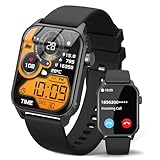
- 【1.83" HD Display & Customizable Watch Faces】Immerse yourself in a vibrant 1.83-inch IPS display, boasting a sharp resolution of 240*284 for crystal-clear visuals. Effortlessly personalize your smart watch with a wide array of customizable watch faces to suit your personal style for every occasion—whether trendy, artistic, or minimalist—ideal for casual, sporty, or professional. Its sleek, modern design complements any outfit, blending technology and fashion seamlessly for everyday wear
- 【120 Sports Modes & Advanced Health Tracking】Our TK29 smart watches for women men come equipped with 120 sports modes, allowing you to effortlessly track a variety of activities such as walking, running, cycling, and swimming. With integrated heart rate and sleep monitors, you can maintain a comprehensive overview of your health, achieve your fitness goals, and maintain a balanced, active lifestyle with ease. Your ideal wellness companion (Note: Step recording starts after exceeding 20 steps)
- 【IP67 Waterproof & Long-Lasting Battery】Designed to keep up with your active lifestyle, this smartwatch features an IP67 waterproof rating, ensuring it can withstand splashes, sweat, and even brief submersion, making it perfect for workouts, outdoor adventures, or rainy days. Its reliable 350mAh battery offering 5-7 days of active use and up to 30 days in standby mode, significantly reducing frequent charging. Ideal for all-day wear, whether you’re at the gym, outdoors, or simply on the go
- 【Stay Connected Anytime, Anywhere】Stay informed and in control with Bluetooth call and music control features. Receive real-time notifications for calls, messages, and social media apps like Facebook, WhatsApp, Twitter, and Instagram directly on your smartwatch. Easily manage calls, control your music playlist, and stay updated without needing to reach for your phone. Perfect for work, workouts, or on-the-go, this watch keeps you connected and never miss important updates wherever you are
- 【Multifunction & Wide Compatibility】Seamlessly handle heart rate monitoring, sleep tracking, and enjoy conveniences like camera/music control, Seamlessly handle heart rate monitoring, sleep tracking, and more-all directly from your wrist. This 1.83 inches HD smartwatch is compatible with iPhone (iOS 9.0+) & Android (5.0+), ensuring smooth daily connectivity and convenience throughout your day. More than just a timepiece, it’s a stylish, all-in-one wearable for smarter, healthier living
In smartwatch terms, that translates into three things users actually feel. First, sustained brightness. MicroLED panels can stay extremely bright outdoors without aggressive dimming, which means maps, workout metrics, and notifications remain readable in direct sunlight without hammering battery life. Second, longevity. Always-on displays no longer come with the unspoken trade-off of uneven aging or ghosting after a couple of years. Third, efficiency at scale. When paired with always-on watch faces and health tracking running 24/7, MicroLED’s power curve simply fits wearable usage better.
OLED has been good enough, but it was never ideal. MicroLED is the first display tech designed to be always on, always visible, and always efficient without compromise.
Why it took so long to reach your wrist
The hard part of MicroLED was never making it look good. The challenge was manufacturing millions of microscopic LEDs, placing them with near-perfect accuracy, and doing it cheaply enough to survive consumer electronics margins. A smartphone display is already difficult. A smartwatch display, with higher pixel density in a much smaller surface area, pushed those challenges to the extreme.
Yield issues were the biggest roadblock. One dead pixel in a phone is annoying; one dead pixel in a 1.5-inch watch face is unacceptable. Early MicroLED panels had failure rates that made mass production financially impossible. Even brands with deep pockets spent years refining transfer processes, repair techniques, and backplane integration before yields crossed a viable threshold.
There’s also the ecosystem problem. Smartwatch displays aren’t standalone components. They’re tightly integrated with curved glass, touch layers, ultra-thin enclosures, and aggressive water-resistance requirements. MicroLED had to mature not just as a display, but as part of a complete wearable stack that includes durability, thermal management, and long-term reliability on a moving wrist.
Why now is the tipping point
Two things changed at once. Manufacturing yields finally reached a point where MicroLED could be produced in small batches without catastrophic losses, and smartwatch prices crept high enough that early adoption made economic sense. Flagship watches now routinely cross price points that once belonged to mechanical timepieces, creating room for genuinely new hardware rather than iterative upgrades.
At the same time, software has shifted toward always-on experiences. Continuous health tracking, glanceable widgets, live workout metrics, and persistent navigation all reward a display that doesn’t need to constantly wake, boost brightness, or manage burn-in risk. MicroLED fits the direction wearables are already heading, rather than forcing software to work around hardware limitations.
This is why MicroLED is appearing in watches before phones at scale. The use case is clearer, the benefits are more immediate, and the trade-offs finally favor the wrist.
Early MicroLED watches aren’t about mass adoption yet
It’s important to be clear-eyed about what “arrival” means. First-generation MicroLED smartwatches are not mainstream value plays. They’re expensive, limited in availability, and often attached to halo products meant to signal technological leadership rather than dominate sales charts.
But that doesn’t make them irrelevant. Early OLED watches were also niche, battery-hungry, and imperfect. What mattered was proving that the technology worked in daily wear, survived sweat and sunlight, and delivered real advantages over LCD. MicroLED is now at that same inflection point.
If OLED replaced LCD because it made watches thinner, more attractive, and more power-efficient, MicroLED’s job is different. It exists to make always-on truly effortless, outdoor visibility unquestioned, and long-term ownership less of a gamble. That’s why its timing, not just its specs, finally makes sense.
MicroLED vs OLED/AMOLED on Your Wrist: The Real, Day-to-Day Differences
The promise of MicroLED only matters if it shows up in moments you actually notice: checking the time mid-run, glancing at a map in harsh sun, or wearing the same watch daily for years without visual degradation. On paper, OLED and AMOLED already look excellent. On the wrist, the differences are more subtle, but they’re also more persistent.
Brightness that changes how you use the watch outdoors
OLED smartwatches have trained users to accept brightness boosts as a temporary state. You raise your wrist, the display ramps up, and battery drain spikes to compensate for sunlight.
MicroLED approaches brightness differently. Because each pixel is an inorganic LED capable of much higher sustained luminance, the display doesn’t need aggressive boost cycles to remain readable outdoors.
In daily use, that means fewer moments of squinting during workouts, better legibility for maps and metrics in direct sun, and less reliance on motion-triggered brightness tricks. The screen simply looks “on” all the time, not occasionally impressive.
Always-on display without the energy anxiety
Always-on display is where OLED watches quietly compromise. To avoid burn-in and excessive power draw, they dim aggressively, reduce refresh rates, and simplify watch faces when idle.
MicroLED removes most of those constraints. There’s no organic material to degrade, and efficiency remains high even at low brightness levels.
For the wearer, the result is an always-on display that behaves like a mechanical dial: consistent, glanceable, and unconcerned with how long it’s been lit. That consistency makes complications, second hands, live health indicators, and workout metrics feel genuinely persistent rather than conditionally available.
Battery life gains that show up over weeks, not hours
OLED watches already deliver respectable battery life, but they do so by carefully managing when and how pixels light up. Bright faces, white-heavy designs, and navigation screens all carry a hidden energy cost.
MicroLED’s efficiency advantage is incremental per interaction, but cumulative across days. The biggest gains appear in use cases heavy on always-on data: navigation, fitness tracking, notifications, and real-time health metrics.
You’re unlikely to see a single dramatic jump from one-day to ten-day endurance purely because of MicroLED. What you will notice is more stable battery performance regardless of how visually active your watch face or apps are.
Longevity and the end of burn-in math
Burn-in isn’t a constant fear for modern OLED watches, but it’s a background consideration. Static elements are dimmed, shifted, or redesigned to reduce risk over years of wear.
MicroLED eliminates that entire category of concern. Inorganic LEDs don’t suffer differential aging in the same way, so static complications, navigation arrows, or fitness rings can stay exactly where they are indefinitely.
For buyers who keep a watch for multiple upgrade cycles, this matters. The display you see in year one is far closer to the display you’ll see in year four, without the slow visual drift OLED owners sometimes accept as normal.
Color, contrast, and the “OLED look” question
OLED’s deep blacks and saturated colors have defined the modern smartwatch aesthetic. MicroLED matches those strengths rather than replacing them with a different visual identity.
In practice, MicroLED tends to look slightly more neutral at high brightness levels, with less color shift outdoors. Blacks remain true because pixels still turn off completely, preserving contrast ratios that LCD can’t touch.
The difference isn’t about wow factor. It’s about consistency across lighting conditions, which is more valuable in a device you glance at hundreds of times per day.
Thinner stacks, tougher materials, and design freedom
MicroLED panels can be thinner than comparable OLED stacks, especially when paired with sapphire or laminated protective layers common in premium watches.
That opens subtle but meaningful design options. Cases can be slimmer, bezels tighter, or space reallocated to battery capacity without increasing thickness.
For wearability, this matters more than specs suggest. A millimeter saved at the wrist improves comfort, balance, and how naturally the watch disappears under a cuff or during sleep tracking.
Durability on a moving, sweaty, sun-exposed wrist
Smartwatch displays live a harder life than phone screens. They’re constantly exposed to UV light, temperature swings, sweat, and micro-impacts.
OLED’s organic compounds slowly degrade under those conditions, even when well-managed. MicroLED’s inorganic structure is inherently more resistant to heat, UV exposure, and long-term stress.
That resilience aligns better with sports watches, outdoor navigation, and health-first wearables that are expected to function reliably for years without cosmetic decline.
Software behavior feels less constrained
Because OLED requires defensive design, software teams build around its limitations. Watch faces avoid static elements, UI brightness fluctuates, and some data is hidden until interaction.
MicroLED relaxes those rules. Designers can keep elements visible, maintain consistent brightness, and rely less on motion-based triggers to protect the display.
The end result isn’t a radically different interface, but a calmer one. The watch behaves more like an instrument than a device constantly negotiating power and longevity trade-offs.
Who actually notices the difference day to day
If you primarily use your watch indoors, raise-to-wake every time, and upgrade frequently, OLED already serves you well.
If you rely on outdoor visibility, always-on data, long workouts, navigation, or keep your watch for years, MicroLED’s advantages compound quietly but consistently.
Rank #2
![Apple Watch Series 11 [GPS 46mm] Smartwatch with Jet Black Aluminum Case with Black Sport Band - M/L. Sleep Score, Fitness Tracker, Health Monitoring, Always-On Display, Water Resistant](https://m.media-amazon.com/images/I/312K597M2uL._SL160_.jpg)
- HYPERTENSION NOTIFICATIONS — Apple Watch Series 11 can spot signs of chronic high blood pressure and notify you of possible hypertension.*
- KNOW YOUR SLEEP SCORE — Sleep score provides an easy way to help track and understand the quality of your sleep, so you can make it more restorative.
- EVEN MORE HEALTH INSIGHTS — Take an ECG anytime.* Get notifications for a high and low heart rate, an irregular rhythm,* and possible sleep apnea.* View overnight health metrics with the Vitals app* and take readings of your blood oxygen.*
- STUNNING DESIGN — Thin and lightweight, Series 11 is comfortable to wear around the clock — while exercising and even when you’re sleeping, so it can help track your key metrics.
- A POWERFUL FITNESS PARTNER — With advanced metrics for all your workouts, plus features like Pacer, Heart Rate Zones, training load, Workout Buddy powered by Apple Intelligence from your nearby iPhone,* and more. Series 11 also comes with three months of Apple Fitness+ free.*
This isn’t about chasing the newest panel technology. It’s about aligning the display with how modern smartwatches are actually worn: always active, always visible, and expected to age gracefully alongside the rest of the hardware.
Battery Life Explained: How MicroLED Changes Always-On Displays and Multi-Day Use
All of the durability and software freedom discussed earlier ultimately funnel into one question that matters most at the wrist: how long the watch lasts between charges.
MicroLED doesn’t magically double battery life overnight, but it changes the rules of how power is consumed, especially when the display is meant to stay on all day, every day.
Why always-on displays are the real battery test
Always-on display mode is where OLED-based smartwatches quietly bleed power. Even dimmed, each lit pixel is still an organic light source slowly consuming energy and aging in the process.
To manage this, most watches aggressively limit refresh rates, dim brightness to the edge of legibility, and simplify faces to near-monochrome. The watch stays “on,” but barely.
MicroLED flips that equation. Inorganic pixels can run at much lower power for the same perceived brightness, making a genuinely readable always-on display far less costly to maintain.
Brightness without the usual power penalty
Outdoor visibility has always been a battery trap. Pushing OLED brightness high enough for full sun dramatically increases power draw, which is why many watches spike consumption during outdoor workouts or navigation.
MicroLED panels reach higher sustained brightness levels more efficiently, meaning sunlight readability no longer forces a temporary battery hit. A long hike with maps visible doesn’t punish the battery the way it does today.
This matters for real-world use. Navigation, glanceable pace data, heart rate zones, or tide charts can stay visible without forcing users to choose between clarity and endurance.
Lower idle drain adds up over days, not hours
MicroLED’s biggest battery win isn’t during active use. It’s during the other 22 hours of the day when the watch is mostly idle, checking the time, showing complications, and waiting.
OLED panels still consume meaningful power just existing in that state. MicroLED’s idle efficiency reduces that baseline drain, which compounds across days.
In practical terms, this is how a watch moves from “two-day with compromises” to “three or four days without thinking about it,” assuming similar battery capacity and software.
Always-on that behaves like a watch, not a screensaver
Because OLED always-on modes are fragile, software treats them carefully. Seconds hands disappear, data updates slow down, and faces dim unevenly to protect the panel.
MicroLED allows always-on modes that behave more like traditional watch dials. Seconds can remain visible, complications can update predictably, and brightness stays consistent rather than pulsing up and down.
This doesn’t just feel nicer. It reduces the number of wake events triggered by wrist raises or taps, which further improves battery efficiency over a full day.
Multi-day battery without thicker cases
Battery life gains usually come with a cost: thicker cases, wider midsections, and watches that sit higher on the wrist. That trade-off affects comfort, especially during sleep tracking or long workouts.
Because MicroLED panels are thinner and require less thermal overhead, manufacturers can reallocate internal volume to the battery without increasing case height. In some designs, they can even slim the profile while maintaining endurance.
For wearability, this is significant. A lighter, thinner watch that lasts longer is more noticeable than raw capacity numbers on a spec sheet.
What this realistically means for buyers
If your current OLED smartwatch lasts a day and a half with always-on enabled, MicroLED doesn’t promise a week overnight. Expect incremental gains that feel meaningful over time, not marketing-driven miracles.
The real shift is confidence. You stop managing brightness, turning off always-on modes, or micromanaging faces just to survive the day.
For users who rely on constant visibility, outdoor use, or sleep tracking without nightly charging, MicroLED turns battery life from a daily concern into background noise.
Brightness, Outdoor Visibility, and HDR: What You’ll Actually See Differently
Once battery anxiety fades into the background, brightness becomes the next thing you stop thinking about—and that’s the point. MicroLED’s real visual advantage isn’t a single headline number, but how consistently usable the display feels across lighting conditions you actually encounter.
Sunlight readability without maxing everything out
OLED smartwatches already get bright, but they often rely on short bursts of peak brightness to punch through sunlight. That works for a glance, then quickly settles back down to manage heat, power draw, and panel wear.
MicroLED doesn’t need those compromises. Because each pixel can sustain higher luminance without stressing the material, the display can stay bright longer without dimming cycles or thermal throttling.
In practical terms, that means outdoor workouts, navigation prompts, and quick message checks remain legible in direct sun without forcing the watch into a power-hungry “torch mode.” You don’t notice the technology; you notice that you’re no longer hunting for shade or twisting your wrist to find the right angle.
Better visibility through sunglasses and at odd angles
Polarized sunglasses are a quiet nemesis of many OLED-based watches. Depending on the panel orientation and anti-reflective stack, colors can wash out or visibility can drop sharply at certain angles.
MicroLED panels tend to maintain higher perceived brightness and color stability across viewing angles. Combined with simpler optical stacks and less aggressive power limiting, the screen stays readable even when your wrist is bent on handlebars, trekking poles, or gym equipment.
For cyclists, runners, and hikers, this is more impactful than raw resolution gains. The watch becomes readable when your posture is less than ideal, which is most of the time outside.
HDR on a watch: subtle, but not pointless
HDR on smartwatches won’t resemble your OLED TV, and it doesn’t need to. The screens are too small, and the content too utilitarian, for cinematic contrast to matter.
Where MicroLED helps is dynamic range without crushing usability. Bright elements like progress rings, route highlights, or heart rate zones can pop without dimming surrounding data, while darker areas remain clean instead of murky.
This makes dense watch faces easier to parse at a glance. Complications don’t compete with each other, and information hierarchy feels clearer, especially under harsh lighting.
Color accuracy that holds up over time
OLED displays can look fantastic when new, but sustained brightness and long-term color stability are harder to maintain. Over years of always-on use, subtle shifts can occur, particularly in blue subpixels.
MicroLED’s inorganic emitters are far more resistant to color drift. The watch you buy looks more like the watch you still have two or three years later, even if you rely heavily on always-on modes.
For buyers who keep watches longer than a single upgrade cycle, this matters. The display ages gracefully, rather than slowly forcing you to accept lower brightness or uneven tones as “normal.”
What you’ll notice day to day
You won’t wake up thinking your watch suddenly looks like a billboard. What changes is the absence of friction: fewer missed glances, fewer brightness adjustments, and fewer moments where the screen feels like it’s fighting its environment.
MicroLED doesn’t redefine what a smartwatch can show, but it quietly improves how often and how reliably you can see it. And in a device designed for hundreds of micro-interactions a day, that consistency adds up faster than spec sheets suggest.
Durability, Burn-In, and Longevity: Why MicroLED Could Outlast Your Watch
All of those visibility gains matter more when they last. Where MicroLED really starts to separate itself from OLED isn’t on day one, but after a year or two of always-on use, outdoor workouts, and thousands of wrist raises.
Smartwatches aren’t treated gently. They live on wrists during sweat-heavy workouts, get knocked against door frames, and spend hours displaying static UI elements that slowly wear a panel down.
Rank #3

- Bluetooth Call and Message Alerts: Smart watch is equipped with HD speaker, after connecting to your smartphone via bluetooth, you can answer or make calls, view call history and store contacts through directly use the smartwatch. The smartwatches also provides notifications of social media messages (WhatsApp, Twitter, Facebook, Instagram usw.) So that you will never miss any important information.
- Smart watch for men women is equipped with a 320*380 extra-large hd full touch color screen, delivering exceptional picture quality and highly responsive touch sensitivity, which can bring you a unique visual and better interactive experience, lock screen and wake up easily by raising your wrist. Though “Gloryfit” app, you can download more than 102 free personalised watch faces and set it as your desktop for fitness tracker.
- 24/7 Heart Rate Monitor and Sleep Tracker Monitor: The fitness tracker watch for men has a built-in high-performance sensor that can record our heart rate changes in real time. Monitor your heart rate 26 hours a day and keep an eye on your health. Synchronize to the mobile phone app"Gloryfit", you can understand your sleep status(deep /light /wakeful sleep) by fitness tracker watch develop a better sleep habit and a healthier lifestyle.
- IP68 waterproof and 110+ Sports Modes: The fitness tracker provides up to 112+ sports modes, covering running, cycling, walking, basketball, yoga, football and so on. Activity trackers bracelets meet the waterproof requirements for most sports enthusiasts' daily activities, such as washing hands or exercising in the rain, meeting daily needs (note: Do not recommended for use in hot water or seawater.)
- Multifunction and Compatibility: This step counter watch also has many useful functions, such as weather forecast, music control, sedentary reminder, stopwatch, alarm clock, timer, track female cycle, screen light time, find phone etc. The smart watch with 2 hrs of charging, 5-7 days of normal use and about 30 days of standby time. This smart watches for women/man compatible with ios 9.0 and android 6.2 and above devices.
Why burn-in is still OLED’s quiet problem
Modern AMOLED watches are much better than early generations, but burn-in hasn’t disappeared. Always-on display modes still show fixed elements like time markers, complications, and notification icons for hours at a time.
Over months and years, individual subpixels—especially blue—age unevenly. The result isn’t always obvious burn-in silhouettes, but subtle ghosting, color tinting, or areas that no longer reach the same brightness as the rest of the panel.
If you’ve owned an OLED watch for two or three years, you’ve likely adjusted without realizing it. You avoid brighter faces, disable always-on modes, or accept that certain colors don’t pop the way they once did.
MicroLED’s inorganic advantage
MicroLED uses inorganic light-emitting materials rather than organic compounds. That single difference changes the entire aging curve of the display.
Inorganic LEDs are dramatically more resistant to luminance decay. They don’t suffer the same chemical breakdown that causes OLED subpixels to dim at different rates.
In real-world terms, that means static UI elements are no longer the enemy. A fixed bezel ring, persistent heart rate readout, or navigation arrow doesn’t slowly etch itself into the screen over time.
Always-on display without long-term anxiety
Always-on display is one of the most meaningful quality-of-life features in a smartwatch. It makes the device feel like a watch rather than a tiny phone strapped to your wrist.
With OLED, always-on is often a compromise. Manufacturers reduce refresh rates, lower brightness, simplify faces, and rely on aggressive pixel shifting to slow aging.
MicroLED reduces the need for those trade-offs. The panel can stay bright enough to be readable outdoors, with richer colors and more complex faces, without shortening its usable lifespan.
Longevity measured in years, not upgrade cycles
Most smartwatches are replaced every two to three years, not because the hardware fails, but because the experience degrades. Battery life shrinks, screens dim, and displays lose their original punch.
MicroLED doesn’t fix batteries, but it removes the display as a limiting factor. A watch that still looks crisp and evenly bright after years of use feels newer, even if the internals haven’t changed.
For buyers who hold onto devices longer, this shifts the value equation. You’re not just paying for better visuals today, but for a display that doesn’t quietly deteriorate behind the scenes.
Better resistance to heat, sunlight, and abuse
OLED panels are sensitive to heat and prolonged UV exposure. Leave a watch baking on a dashboard or spend long days training in direct sun, and you accelerate wear.
MicroLED tolerates higher temperatures and sustained brightness more comfortably. That matters for runners, cyclists, hikers, and outdoor workers who push their devices beyond desk-friendly conditions.
It also pairs well with rugged materials. Sapphire glass, titanium cases, and MIL-STD durability ratings make more sense when the display underneath isn’t the weakest link.
Impact on fitness tracking and navigation
Fitness and navigation apps are display stress tests. Static route maps, fixed data fields, and long sessions with the screen active are exactly the scenarios that expose OLED aging.
MicroLED handles these patterns with less penalty. Long GPS rides, multi-hour hikes, or marathon training sessions don’t slowly tax the panel in the same way.
For athletes who rely on consistent readability mid-activity, this translates to confidence. The screen you trust on your first ultramarathon looks the same on your fiftieth.
Fewer software tricks, fewer compromises
OLED longevity often depends on software mitigation. Pixel shifting, dimming schedules, and UI simplification are all designed to protect the panel.
MicroLED allows designers to relax those constraints. Watch faces can be more expressive, complications can stay visible, and brightness doesn’t need to be constantly negotiated by the OS.
That freedom shows up in daily usability. You interact less with settings and more with the information you actually bought the watch for.
What this means for resale and long-term value
Smartwatches aren’t heirlooms, but resale value still matters. A visibly uneven or dim display immediately dates a device, regardless of its other features.
MicroLED’s slower aging curve helps preserve cosmetic condition. A two-year-old watch that still looks vibrant feels more relevant on the secondhand market.
For premium-priced watches, this matters. When materials, finishing, and case design are built to last, it helps if the screen doesn’t betray the watch’s age.
The quiet benefit you don’t spec-sheet shop for
Durability isn’t exciting in the way brightness numbers or resolution counts are. You won’t see it in a store demo or a week-one review.
You notice it later, when nothing goes wrong. The screen stays even, readable, and familiar long after OLED users start adjusting expectations.
MicroLED’s biggest promise isn’t flashier visuals, but consistency. In a device worn daily, exposed constantly, and relied on in motion, that kind of reliability becomes the feature you value most without ever thinking about it.
Design and Wearability Impacts: Thinner Cases, New Shapes, and Sapphire Synergy
If MicroLED’s durability promise changes how long a watch looks new, its physical implications change how it feels on your wrist from day one. Freed from some of OLED’s structural and thermal constraints, designers suddenly have more room to rethink case proportions, edge treatments, and materials in ways that were previously off-limits.
This is where MicroLED stops being an abstract display upgrade and starts influencing comfort, aesthetics, and long-term wearability.
Thinner stacks, not just thinner screens
On paper, MicroLED panels can be thinner than AMOLED, but the bigger win comes from the total display stack. There’s less need for polarizers, burn-in mitigation layers, and complex heat-spreading solutions that OLED relies on at high brightness.
In practice, that reclaimed space can be redistributed. Some brands will chase outright thinness, while others will keep case thickness similar but add battery capacity, stronger haptics, or more robust sensor arrays without increasing bulk.
For the wearer, even a one-millimeter reduction matters. A thinner mid-case lowers the center of gravity, making larger watches feel more stable during runs, sleep tracking, and all-day wear under cuffs.
Flatter fronts and more aggressive edge geometry
OLED’s sensitivity to edge brightness and pixel uniformity has nudged many smartwatches toward gently curved glass and conservative bezels. MicroLED’s uniform light emission allows designers to push closer to the edges without visible falloff.
That opens the door to flatter crystal profiles, sharper transitions between glass and case, and more confident use of squared-off or angular designs. Think less “bubble” display, more architectural precision.
This also benefits touch accuracy. Flatter panels reduce accidental edge inputs and make swipe gestures more predictable, especially when interacting mid-activity or with gloves.
Sapphire crystal becomes the default, not the upgrade
MicroLED pairs unusually well with sapphire. Its higher brightness output compensates for sapphire’s lower light transmission compared to hardened glass, without forcing aggressive power draw.
As a result, sapphire stops being a luxury upsell and starts making sense as a baseline choice. The display can still hit outdoor-visible brightness levels while gaining meaningful scratch resistance for daily wear.
For users, this directly impacts long-term appearance. Desk scuffs, sand, gym equipment, and jacket zippers are far less likely to leave permanent marks, preserving both clarity and resale value.
Rank #4
![Apple Watch Series 11 [GPS 42mm] Smartwatch with Rose Gold Aluminum Case with Light Blush Sport Band - S/M. Sleep Score, Fitness Tracker, Health Monitoring, Always-On Display, Water Resistant](https://m.media-amazon.com/images/I/31J+F-pXaWL._SL160_.jpg)
- HYPERTENSION NOTIFICATIONS — Apple Watch Series 11 can spot signs of chronic high blood pressure and notify you of possible hypertension.*
- KNOW YOUR SLEEP SCORE — Sleep score provides an easy way to help track and understand the quality of your sleep, so you can make it more restorative.
- EVEN MORE HEALTH INSIGHTS — Take an ECG anytime.* Get notifications for a high and low heart rate, an irregular rhythm,* and possible sleep apnea.* View overnight health metrics with the Vitals app* and take readings of your blood oxygen.*
- STUNNING DESIGN — Thin and lightweight, Series 11 is comfortable to wear around the clock — while exercising and even when you’re sleeping, so it can help track your key metrics.
- A POWERFUL FITNESS PARTNER — With advanced metrics for all your workouts, plus features like Pacer, Heart Rate Zones, training load, Workout Buddy powered by Apple Intelligence from your nearby iPhone,* and more. Series 11 also comes with three months of Apple Fitness+ free.*
More freedom in case materials and finishing
Lower heat output and improved efficiency reduce thermal stress on surrounding materials. That gives manufacturers more confidence to experiment with ceramic, titanium alloys, brushed steel, or multi-material cases without worrying about uneven aging or adhesive fatigue near the display.
Finishing quality benefits as well. Tighter tolerances between case and crystal become achievable, leading to cleaner transitions, slimmer bezels, and fewer visual compromises to hide display limitations.
This matters to buyers who care about watches as objects, not just screens. A smartwatch that feels closer to traditional watchmaking standards is easier to justify at premium prices.
Comfort gains you notice over time, not in a showroom
MicroLED’s design advantages don’t scream for attention on a spec sheet. They show up after weeks of wear, when the watch feels less top-heavy, sits flatter during sleep, and disappears more easily during long days.
Strap integration improves too. Thinner cases allow lugs and strap interfaces to be positioned more naturally, reducing pressure points and improving airflow against the skin.
These are subtle changes, but for a device worn nearly 24 hours a day, subtlety compounds. The best-designed MicroLED watches won’t feel radically different at first glance, but they’ll quietly be the ones you forget to take off.
Who’s Leading the Charge: Apple, Samsung, Garmin, and the First True MicroLED Models
All of the design freedoms and comfort gains outlined above only matter if someone is willing to ship them at scale. Right now, MicroLED in smartwatches is less about finished retail products and more about who is closest to turning lab-grade advantages into something you can actually wear every day.
What’s important for buyers is not who talks about MicroLED the loudest, but who has the supply chain, software maturity, and industrial design discipline to make it worthwhile on the wrist.
Apple: The long game, played quietly
Apple is widely considered the gravitational center of MicroLED development for wearables, even though you can’t buy an Apple Watch with a MicroLED display yet. Years of reported investment in custom display engineering, including internal MicroLED test lines, point to Apple treating this as a platform shift rather than a yearly upgrade.
The likely target isn’t the mainstream Apple Watch SE or Series line. MicroLED’s early cost and yield realities make a premium product like Apple Watch Ultra the more plausible first landing spot, where buyers already expect titanium cases, sapphire crystals, and class-leading brightness.
From a user perspective, Apple’s strength isn’t raw display specs but system-level integration. A MicroLED Apple Watch would almost certainly translate efficiency gains directly into longer always-on display time, brighter outdoor visibility for maps and workouts, and less thermal buildup during GPS-heavy activities.
If Apple gets MicroLED right, it won’t feel like a flashy new screen. It will feel like an Apple Watch that lasts longer, runs cooler, and ages better after three years of daily wear.
Samsung: Display leadership looking for a product moment
Samsung arguably understands MicroLED displays better than anyone, thanks to its dominance in OLED manufacturing and ongoing MicroLED TV development. The challenge has never been technical capability, but product timing and prioritization.
For Galaxy Watches, Samsung’s current AMOLED panels are already excellent in brightness, color, and efficiency. That raises the bar for MicroLED to justify a switch, especially when battery life is constrained by thin cases and small cells.
Where Samsung could move first is in durability-focused or outdoor-oriented Galaxy Watch variants, where MicroLED’s resistance to burn-in and improved lifespan matter more than saturated colors. Integration with Wear OS and Samsung Health would need to emphasize long-term consistency rather than visual pop.
For buyers, Samsung’s MicroLED ambitions are credible, but patience is required. Expect refinement over spectacle, and likely a cautious rollout rather than a dramatic generational leap.
Garmin: Practical benefits over visual drama
Garmin may be the most interesting dark horse in the MicroLED race. Its user base values battery life, sunlight readability, and long-term reliability far more than cinematic color reproduction.
MicroLED aligns naturally with Garmin’s outdoor-first philosophy. Higher sustained brightness without heavy power draw directly benefits maps, training metrics, and navigation in harsh lighting. Reduced burn-in risk is especially appealing for watches that display static data fields for hours at a time.
A MicroLED-equipped Fenix or Epix-class watch could realistically extend always-on readability while preserving multi-day battery life, especially when paired with solar charging and Garmin’s efficient firmware. Case materials like titanium and sapphire already fit neatly with MicroLED’s durability advantages.
If Garmin ships a true MicroLED watch early, it likely won’t chase mass-market appeal. It will target athletes and explorers who notice incremental gains over weeks of real-world use.
The reality of “first true MicroLED” smartwatches
Despite the excitement, it’s important to be clear: as of now, there are no widely available, mass-market smartwatches using true MicroLED displays. What exists are prototypes, small-batch development panels, and heavily controlled pilot runs intended to validate manufacturing, not to flood store shelves.
This is not a failure. It’s a reflection of how difficult MicroLED is to produce at smartwatch scale, where pixel sizes are microscopic and yields matter enormously. The brands leading today are the ones willing to wait until the experience is meaningfully better, not just technically different.
For consumers, that means the first MicroLED watches will almost certainly be expensive, limited in availability, and positioned as halo products. The real impact comes one or two generations later, when costs fall and the advantages quietly become standard.
What leadership actually means for buyers
Leadership in MicroLED isn’t about being first on a spec sheet. It’s about who can turn brightness, efficiency, and durability into better sleep tracking, fewer charging interruptions, and a watch that still looks good after years of wear.
Apple, Samsung, and Garmin are leading not because they’ve shipped MicroLED watches yet, but because they’re the only ones positioned to make MicroLED feel inevitable rather than experimental.
For informed buyers, that distinction matters. The smartest move isn’t chasing the first MicroLED smartwatch at any cost, but understanding which ecosystem is most likely to make MicroLED quietly improve your daily experience when it finally arrives.
The Manufacturing Reality: Cost, Yield Problems, and Why Adoption Will Be Slow
The reason MicroLED still feels inevitable rather than imminent comes down to manufacturing, not marketing ambition. Every advantage MicroLED promises on your wrist is paired with a production challenge that scales badly at smartwatch size.
For brands, this is the uncomfortable middle phase where the technology works, but only under conditions that make it unsuitable for mass-market pricing or volumes. For buyers, it explains why MicroLED will debut quietly and expensively before it ever feels mainstream.
Why smartwatch-scale MicroLED is harder than phone or TV MicroLED
On paper, smaller displays should be easier to make. In reality, smartwatch MicroLED panels are among the hardest because pixel sizes are extremely small, often well under 50 microns, and must be placed with near-perfect accuracy.
Each pixel is a standalone inorganic LED that has to be transferred from a source wafer onto the display backplane. If even a tiny percentage fail, you end up with dead pixels on a display that’s constantly inches from your eyes.
On a 55-inch TV, manufacturers can compensate with redundancy and repair techniques. On a 1.3-inch round watch display, there is nowhere to hide mistakes, especially around curved edges and circular cutouts.
Yield is the real bottleneck, not brightness or efficiency
In display manufacturing, yield refers to how many panels come out usable versus how many are scrapped. With OLED smartwatch displays, yields are now high enough that defects are rare and costs are predictable.
MicroLED yields, by contrast, are still low, especially at high pixel densities suitable for smooth watch faces, fine text, and dense complications. A panel that looks perfect electrically might still fail cosmetic standards once mounted under sapphire.
Low yield doesn’t just raise costs. It slows iteration, limits supply, and forces brands to reserve MicroLED for products where margins can absorb failure rates.
Why early MicroLED watches will be expensive by necessity
The first MicroLED smartwatches will not be priced based on consumer demand. They’ll be priced based on how many usable displays can be produced per batch.
That pushes MicroLED watches toward titanium cases, sapphire crystals, and premium positioning, not because the display demands luxury, but because the economics do. It’s easier to justify a four-figure sports watch than a midrange fitness tracker with an experimental panel.
This also affects replacement and repair economics. A cracked MicroLED display will be far more expensive to replace than today’s OLED panels, at least in the first few generations.
Why Apple, Samsung, and Garmin are moving slowly on purpose
All three major players understand the risks of shipping too early. A MicroLED watch with uneven brightness, color inconsistency, or pixel failures would damage trust far more than sticking with refined OLED for another cycle.
💰 Best Value
![Apple Watch Series 11 [GPS 42mm] Smartwatch with Jet Black Aluminum Case with Black Sport Band - S/M. Sleep Score, Fitness Tracker, Health Monitoring, Always-On Display, Water Resistant](https://m.media-amazon.com/images/I/31ybzrJZckL._SL160_.jpg)
- HYPERTENSION NOTIFICATIONS — Apple Watch Series 11 can spot signs of chronic high blood pressure and notify you of possible hypertension.*
- KNOW YOUR SLEEP SCORE — Sleep score provides an easy way to help track and understand the quality of your sleep, so you can make it more restorative.
- EVEN MORE HEALTH INSIGHTS — Take an ECG anytime.* Get notifications for a high and low heart rate, an irregular rhythm,* and possible sleep apnea.* View overnight health metrics with the Vitals app* and take readings of your blood oxygen.*
- STUNNING DESIGN — Thin and lightweight, Series 11 is comfortable to wear around the clock — while exercising and even when you’re sleeping, so it can help track your key metrics.
- A POWERFUL FITNESS PARTNER — With advanced metrics for all your workouts, plus features like Pacer, Heart Rate Zones, training load, Workout Buddy powered by Apple Intelligence from your nearby iPhone,* and more. Series 11 also comes with three months of Apple Fitness+ free.*
Apple’s delay is particularly telling. As a company that controls its silicon, software, and industrial design, it has the most to gain from MicroLED long-term, yet it has been cautious about moving beyond internal test runs.
Garmin’s likely strategy is even more conservative: limited-volume, purpose-built devices where battery life, sunlight readability, and longevity justify the trade-offs, even if production is constrained.
Why this isn’t another 3D TV or curved-screen moment
It’s tempting to assume MicroLED could stall the way other hyped display technologies did. The difference is that MicroLED doesn’t ask users to change how they use a watch.
It simply removes compromises: burn-in anxiety, aggressive brightness limits, and gradual panel aging. Those benefits matter more the longer you own the watch, not just in the first week.
Manufacturing challenges delay adoption, but they don’t undermine the value proposition. Once yields improve, MicroLED naturally displaces OLED rather than competing with it.
What slow adoption means for real-world buyers right now
For the next few years, MicroLED will behave like a halo feature, not a checklist spec. You won’t miss it in daily use if you’re buying an OLED-based smartwatch today with good battery optimization and a high-quality panel.
Early adopters who do jump in will likely accept trade-offs in availability, price, and repairability in exchange for incremental gains that compound over months of use. Everyone else will benefit later, when MicroLED becomes invisible in the best way possible.
This slow, deliberate rollout is frustrating if you’re watching spec sheets closely. But it’s exactly how foundational technologies quietly become the new normal on your wrist.
Should You Buy, Wait, or Ignore It? Buyer Scenarios for 2026 and Beyond
If MicroLED’s rollout feels slow and deliberate, that’s because it is. That pace matters when deciding whether this is a technology you chase immediately, plan around, or comfortably ignore for another upgrade cycle.
The right choice depends less on enthusiasm for new displays and more on how you actually use your watch day to day, how long you keep it, and what compromises you’re already tired of living with.
The early adopter who upgrades often
If you replace your smartwatch every one to two years and enjoy living on the bleeding edge, the first MicroLED models will be tempting but not essential. You’ll see tangible benefits in outdoor brightness, cleaner always-on faces, and slightly longer battery life under sustained brightness, but the experience won’t feel radically different in week one.
Early MicroLED watches are likely to come with higher prices, limited size options, and fewer third-party repair paths. For buyers in this category, the decision is less about necessity and more about whether incremental gains justify being part of the first wave.
The long-term owner who keeps a watch for 3–5 years
This is where MicroLED quietly makes the strongest case. If you expect to wear the same watch daily for years, panel aging, burn-in risk, and brightness degradation matter more than launch-day wow factor.
MicroLED’s resistance to image retention and slower luminance decay directly benefits owners who rely on always-on displays, fixed complications, or outdoor workouts. For this buyer, waiting one or two generations for production maturity could deliver a watch that looks nearly new far longer than OLED equivalents.
Outdoor athletes and endurance-focused users
If your priority is sunlight readability, battery longevity, and durability rather than color punch, MicroLED aligns naturally with how you already use a watch. Higher sustained brightness without thermal throttling and lower power draw at outdoor luminance levels translate into real gains on long hikes, rides, or multi-day events.
That said, Garmin and similar brands are likely to deploy MicroLED selectively at first, in higher-end or niche models. If your current OLED-based sports watch already lasts weeks and remains readable enough, the upgrade will feel evolutionary rather than urgent.
Fashion-forward smartwatch buyers
For users who care about case thickness, materials, finishing, and how a watch sits under a cuff, MicroLED’s benefits are more subtle. Thinner display stacks and improved efficiency may eventually allow slimmer cases or smaller batteries, but those gains won’t define first-generation products.
If aesthetics and comfort outweigh technical longevity for you, today’s premium OLED watches already deliver excellent color accuracy, curved glass options, and refined industrial design. MicroLED becomes relevant here only once it enables visibly slimmer or lighter watches at scale.
Value-driven buyers shopping midrange or discounted models
MicroLED will not immediately trickle down into affordable smartwatches. For at least the next few years, it will remain concentrated in flagship-tier devices where pricing can absorb low yields and higher manufacturing costs.
If you prioritize value, software stability, and proven reliability, buying a discounted OLED-based watch will remain the smarter move. You’ll give up little in daily usability while avoiding first-generation pricing premiums.
iPhone users waiting on Apple
Apple’s caution should influence your own. When Apple eventually ships a MicroLED Apple Watch, it will likely be positioned as a long-term platform shift rather than a spec bump, with software, power management, and industrial design tightly tuned around the display.
Until then, Apple’s OLED watches remain among the most refined on the market in terms of brightness consistency, color calibration, and system-level efficiency. For most users in the Apple ecosystem, waiting makes more sense than chasing early implementations elsewhere.
Buy now, wait, or ignore it entirely?
Buy now only if you value long-term panel durability and outdoor performance enough to accept higher prices and early limitations. Wait if you keep watches for several years and want MicroLED’s advantages without first-generation compromises.
Ignore it if your current OLED watch already meets your needs and you upgrade frequently anyway. MicroLED isn’t a feature you’ll miss overnight, but it’s one you’ll appreciate quietly, month after month, once it becomes the default rather than the exception.
The Bigger Picture: What MicroLED Signals for the Future of Smartwatches
Stepping back from the buy-now versus wait debate, MicroLED matters less as a single spec upgrade and more as a directional shift for the entire category. Its real impact won’t be judged by first-generation models, but by what becomes possible once the technology matures and scales across product lines.
This is about changing the constraints designers and engineers have been working around for the past decade.
From display-driven compromises to design-first watches
OLED has quietly dictated smartwatch design for years, influencing thickness, battery size, thermal limits, and even long-term reliability. MicroLED removes several of those constraints at once by being brighter at lower power, more tolerant of heat, and far less prone to degradation over time.
As yields improve, this opens the door to slimmer cases, flatter or more aggressively curved crystals, and lighter builds without sacrificing screen readability. In practical terms, that means watches that feel less like miniature phones on your wrist and more like purpose-built timepieces again.
Battery life stops being a zero-sum game
Today, brighter screens and richer always-on modes usually come at the expense of endurance. MicroLED shifts that balance, allowing higher sustained brightness outdoors while drawing less power during typical use.
Longer battery life won’t just mean fewer charges. It enables more persistent health tracking, more frequent sensor sampling, and always-on watch faces that remain genuinely legible rather than dim compromises.
Durability becomes a selling point, not an afterthought
Burn-in anxiety, uneven aging, and color shift are known OLED trade-offs, especially for users who keep the same watch for several years. MicroLED’s inorganic structure largely sidesteps these issues, making the display closer in longevity to the case, glass, and physical components around it.
For buyers who see a smartwatch as a long-term daily tool rather than a disposable gadget, this matters more than raw specs. It aligns better with premium materials like titanium, sapphire, and ceramic that are already designed to outlast yearly upgrade cycles.
New possibilities for sensors, faces, and software design
As MicroLED panels become thinner and more efficient, they make it easier to integrate under-display components without compromising brightness or clarity. That could eventually support cleaner casebacks, additional biometric sensors, or more flexible face layouts that stay readable in all lighting conditions.
Software teams benefit too. When power and brightness budgets loosen, watchOS and Wear OS designers can prioritize clarity, contrast, and glanceability instead of constantly dimming, hiding, or throttling interface elements.
A slow rollout that mirrors past display transitions
Despite the long-term promise, MicroLED’s adoption curve will be measured rather than explosive. Early models will remain expensive, limited in size options, and concentrated in halo products from brands willing to absorb manufacturing risk.
This mirrors the early days of OLED itself. What starts as a flagship differentiator eventually becomes the baseline once costs fall, yields stabilize, and supply chains mature.
What this ultimately means for buyers
MicroLED doesn’t invalidate today’s best OLED smartwatches, nor does it demand immediate action. Its arrival signals that the next generation of wearables will be less constrained by their displays and more focused on comfort, longevity, and real-world usability.
If you upgrade frequently, you can safely ignore it for now. If you keep watches longer, value outdoor readability, and care about durability as much as polish, MicroLED is worth watching closely—not because it dazzles on day one, but because it quietly makes everything else better once it becomes the norm.