The Misfit Swarovski Shine arrived at a moment when fitness trackers were still unapologetically plastic and proudly nerdy. This was different from the first glance, designed for people who wanted the benefits of activity tracking without looking like they were wearing a gadget. If you are here, you are likely weighing aesthetics against functionality, or revisiting a beautifully strange corner of wearable history that still feels relevant in a way most early trackers do not.
This section sets the stage by explaining what the Swarovski Shine actually was, how it worked in everyday life, and why it continues to catch eyes years after being discontinued. It also frames its place in today’s landscape, where fashion-first wearables remain rare despite far more advanced technology.
What the Misfit Swarovski Shine Actually Was
At its core, the Swarovski Shine was a minimalist hybrid fitness tracker disguised as jewelry. There was no screen, no notifications, and no always-on connectivity, just a small circular module housing Misfit’s motion sensors and Bluetooth hardware, wrapped in a Swarovski crystal bezel.
It tracked steps, estimated calories burned, and monitored sleep using accelerometer-based movement detection. Syncing happened through the Misfit app on iOS and Android, either manually or automatically when the device came into range, keeping the experience deliberately low-interruption.
🏆 #1 Best Overall
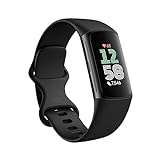
- Find your way seamlessly during runs or rides with turn-by-turn directions from Google Maps on Fitbit Charge 6[7, 8]; and when you need a snack break on the go, just tap to pay with Google Wallet[8, 9]
This was not a smartwatch and never pretended to be one. The Shine existed to quietly collect activity data in the background while looking like a piece of fashion jewelry first and a fitness device second.
Design, Materials, and Swarovski’s Role
The defining feature was the crystal itself, a precision-cut Swarovski element set into a polished metal frame. Depending on the variant, finishes included silver-tone, rose gold-tone, and darker gunmetal hues, each designed to reflect light like a bracelet charm rather than a wearable computer.
At roughly the size of a coin and just a few millimeters thick, the Shine was exceptionally discreet. It could be worn as a bracelet, necklace, or clip, and the Swarovski version leaned heavily into jewelry styling rather than wrist-based sportiness.
In daily wear, it felt light and unobtrusive, with no sharp edges and no warmth from electronics. The absence of a screen meant it never visually aged in the way early OLED trackers did, which is a major reason it still looks elegant today.
Core Tracking and App Experience
Tracking was intentionally simple. Steps and sleep were the primary metrics, with activity intensity inferred rather than directly measured, and there was no GPS, heart rate sensor, or workout-specific modes.
The Misfit app, back when fully supported, emphasized clean visualizations and long-term trends over real-time stats. You checked your progress after the fact, not during a run or workout, reinforcing the Shine’s passive, lifestyle-first philosophy.
Even by the standards of its time, this was a tracker for people who valued consistency and motivation over precision. Compared to modern wearables, the data is basic, but for casual activity awareness, it still holds conceptual appeal.
Battery Life and Everyday Usability
One of the Shine’s strongest practical advantages was its coin-cell battery, rated for up to six months of use. There was no charging cradle, no nightly routine, and no anxiety about forgetting a cable while traveling.
It was also water-resistant enough for daily wear, including showers and hand washing, reinforcing its role as something you put on and forget. Comfort was excellent, especially when worn as a bracelet or necklace, where weight distribution felt more like jewelry than tech.
This kind of frictionless usability is something even today’s advanced smartwatches struggle to replicate, despite their vastly superior capabilities.
Why It Still Turns Heads Today
The Swarovski Shine stands out because it represents a path not taken by most wearable brands. Instead of adding more features, it stripped everything back and invested in materials, finish, and versatility, resulting in something that does not immediately read as obsolete.
Its discontinued status adds to its appeal for collectors and fashion-tech enthusiasts, especially those interested in early collaborations between tech companies and luxury materials specialists. On the secondary market, it is often viewed less as a tracker and more as a design object with a story.
For modern buyers, it makes sense only if expectations are clear. This is not a replacement for an Apple Watch, Fitbit Charge, or Garmin, but for someone who wants a discreet activity companion or a gift that prioritizes beauty over specs, it still occupies a unique and surprisingly compelling niche.
Design First, Tech Second: Swarovski Crystal Build, Finish, and Wearability
If the Shine still feels relevant today, it is because Misfit treated the physical object as the product, not the data it produced. Everything about the Swarovski edition reinforces the idea that this was meant to be worn as jewelry first and understood as a tracker second, a philosophy that becomes clearer the longer you live with it.
Swarovski Crystal as Structure, Not Decoration
The crystal housing is not an accent layered onto plastic, but the primary structural shell of the device. Cut and polished by Swarovski, it gives the Shine a weight and optical depth that immediately separates it from the soft-touch polymers typical of fitness trackers from the same era.
Light interacts with the faceted surface in a way that feels closer to fine jewelry than consumer electronics. Subtle colorways and finishes were chosen to complement skin tones and metals rather than shout for attention, allowing the tracker to blend seamlessly into everyday outfits.
Form Factor, Dimensions, and Presence on the Wrist
At roughly the size of a large coin and notably slim, the Shine avoids the wrist-dominating footprint of most wearables. There is no screen, no crown, and no visible branding once it is mounted, which keeps the visual language clean and intentional.
On the wrist, it reads more like a minimalist charm or medallion than a device. This low-profile presence is precisely why it worked so well for users who wanted activity tracking without the social signaling that comes with wearing obvious tech.
Modularity: Bracelet, Pendant, or Clip
Misfit’s modular mounting system was one of the Shine’s most underrated strengths. The Swarovski edition could be worn as a bracelet, slipped into a necklace pendant, or attached via alternative accessories, allowing it to move fluidly between fashion contexts.
This flexibility mattered because accuracy was never the primary goal. Worn as a pendant, step counts were less precise, but comfort and style improved dramatically, reinforcing the Shine’s role as a lifestyle accessory rather than a performance tool.
Comfort and Long-Term Wearability
The combination of smooth crystal edges and light overall weight makes the Shine exceptionally comfortable for all-day wear. There are no pressure points, no skin irritation from charging contacts, and no bulky sensor array pressing into the wrist.
This comfort encourages consistency, which aligns perfectly with the Shine’s passive tracking approach. You forget you are wearing it, which in turn makes it easier to build habits over weeks and months without friction.
Durability and Daily Exposure
Despite its jewelry-like appearance, the Shine was built to handle real life. The sealed construction and water resistance meant it could survive hand washing, rain, and the occasional accidental knock without demanding special care.
The crystal surface is more resistant to scratching than painted metal or plastic, helping it maintain its visual appeal over time. That said, it is still a fashion object, not a rugged sports watch, and it benefits from being treated with the same awareness you would give a favorite bracelet.
Design Trade-Offs and Intentional Limitations
The absence of a display is both the Shine’s defining feature and its most obvious compromise. Progress is communicated through subtle LED indicators and the companion app, reinforcing delayed feedback rather than real-time engagement.
For users accustomed to glancing at their wrist for stats, this will feel limiting. For those who see wearables as intrusive or aesthetically disruptive, it is exactly what makes the Shine appealing.
How It Compares to Modern Fashion Wearables
Compared to today’s hybrid watches and screenless trackers, the Swarovski Shine still stands out for its restraint. Many modern alternatives add small displays or touch controls, nudging them closer to smartwatch territory and away from pure jewelry.
The Shine remains a benchmark for what happens when design is allowed to lead without compromise. Its discontinued status only sharpens that identity, positioning it less as outdated tech and more as a reference point in the evolution of fashion-led wearables.
Form Factor Breakdown: How the Shine Wears as a Clip, Pendant, or Bracelet
That philosophy of restraint extends directly into how the Misfit Swarovski Shine is worn. Instead of forcing the user into a single wrist-bound identity, Misfit designed the Shine as a modular object, one that shifts roles depending on how you want it to integrate into your outfit rather than how a tracker expects to be worn.
This flexibility is central to its appeal as a fashion-led wearable. The tracking experience remains consistent regardless of placement, but the visual language changes dramatically depending on whether it is clipped, worn as jewelry, or styled like a traditional bracelet.
As a Clip: Discreet, Weightless, and Practically Invisible
Worn as a clip, the Shine becomes almost anonymous. Attached to a waistband, pocket edge, or even a bra strap, it disappears under clothing while continuing to log steps and activity without complaint.
The circular crystal face sits flush inside the clip housing, minimizing bulk and avoiding snags. At roughly the size of a large coin and weighing very little, it never tugs at fabric or shifts noticeably during the day.
From a usability standpoint, the clip is the most utilitarian option. It prioritizes accuracy and forget-it comfort over aesthetics, making it ideal for users who love the Shine’s passive tracking but do not want visible tech as part of their look.
As a Pendant: Jewelry First, Tracker Second
The pendant configuration is where the Swarovski collaboration feels most intentional. Hung from a fine chain, the crystal face catches light like a minimalist locket rather than a piece of consumer electronics.
The Shine’s sealed design works particularly well here, with no buttons, ports, or screen to break the illusion. It reads as a decorative object even at close range, which makes it suitable for formal settings where wrist wearables often feel out of place.
Rank #2

- Inspire 3 is the tracker that helps you find your energy, do what you love and feel your best. All you have to do is wear it.Operating temperature: 0° to 40°C
- Move more: Daily Readiness Score(1), Active Zone Minutes, all-day activity tracking and 24/7 heart rate, 20+ exercise modes, automatic exercise tracking and reminders to move
- Stress less: always-on wellness tracking, daily Stress Management Score, mindfulness sessions, relax breathing sessions, irregular heart rhythm notifications(2), SpO2(3), menstrual health tracking, resting heart rate and high/low heart rate notifications
- Sleep better: automatic sleep tracking, personalized Sleep Profile(1), daily detailed Sleep Score, smart wake vibrating alarm, sleep mode
- Comfortably connected day and night: calls, texts & smartphone app notifications(4), color touchscreen with customizable clock faces, super lightweight and water resistant to 50 meters, up to 10 day battery life(5)
There is a subtle trade-off in movement-based tracking when worn as a pendant, especially during lower-body-focused activity. For lifestyle tracking and daily step counts, however, it remains surprisingly consistent, aligning with the Shine’s broader emphasis on trends over precision metrics.
As a Bracelet: Closest to a Traditional Wearable
Worn on the wrist, the Shine comes closest to familiar fitness tracker territory, but without adopting the visual language of a smartwatch. The bracelet options frame the crystal disc like a piece of modern jewelry, more cuff than gadget.
Comfort remains a strong point. The smooth, domed surface avoids pressure points, and the absence of a protruding sensor means it sits flat against the skin, even during long days or sleep tracking.
This configuration also offers the most intuitive interaction with the LED progress indicators. A subtle tap or glance at the face provides quick feedback without inviting constant checking, reinforcing the Shine’s low-engagement philosophy.
Interchangeability and Styling Versatility
What elevates the Shine beyond novelty is how easily these forms can be swapped. Changing from bracelet to clip or pendant does not require tools or technical steps, making it realistic to adapt the device to different outfits or occasions.
This modularity was ahead of its time and remains rare even among modern fashion wearables. Most trackers lock users into a single aesthetic, while the Shine treats form factor as part of personal expression rather than a fixed design decision.
For style-conscious users and gift buyers in particular, this versatility adds long-term value. The Shine does not ask you to dress around it; it adapts to you, reinforcing its identity as a wearable that respects fashion first and technology second.
Core Tracking Capabilities: Steps, Sleep, and the Limits of Simplicity
Once you move past the Shine’s modular styling and jewelry-first appeal, the technology underneath reveals its deliberately narrow focus. This is a tracker designed to fade into daily life, capturing baseline activity without demanding attention or interpretation. That philosophy shapes both what it does well and where it clearly stops short.
Step Tracking: Consistency Over Granularity
At its core, the Misfit Swarovski Shine is a step counter driven by a simple accelerometer, with no GPS, no heart-rate sensor, and no activity-specific modes. It tracks all movement as steps, translating daily motion into progress against a manually set goal rather than categorized workouts.
In real-world wear, step counts are generally consistent for walking-heavy days, especially when worn as a bracelet or clip. The algorithm prioritizes trend accuracy over precise stride measurement, meaning totals may run slightly generous or conservative depending on gait, but remain reliable enough for lifestyle awareness.
There is no concept of pace, distance mapping, or intensity zones. Compared to modern trackers from Fitbit or Garmin, this feels rudimentary, but it also avoids the false sense of precision that can come from overinterpreting minimal sensor data.
Sleep Tracking: Automatic, Passive, and Barebones
Sleep tracking is handled automatically once enabled in the Misfit app, with no need to manually start or stop sessions. The Shine detects periods of inactivity and logs total sleep duration, broken into light sleep and awake moments based on movement patterns.
What it does not offer is just as important. There is no sleep stage breakdown beyond basic categories, no REM analysis, no sleep score, and no health insights tied to recovery or readiness. For users accustomed to modern sleep dashboards, this will feel extremely limited.
That said, the Shine’s comfort and flat profile make it easy to wear overnight. The absence of a glowing screen or vibrating alerts means it behaves more like a traditional piece of jewelry than a device competing for attention while you sleep.
Progress Feedback: LEDs Instead of Screens
All on-device feedback comes via a ring of tiny LED lights embedded beneath the crystal face. Tapping the Shine cycles through progress indicators, showing how close you are to your daily goal in simple increments.
This system is elegant but abstract. You do not see numbers, timestamps, or trends on the device itself, only a visual cue that reinforces the Shine’s role as a gentle reminder rather than a data hub.
The LEDs are discreet enough for formal environments, though they can be difficult to read in bright sunlight. It is a design that favors subtlety over immediacy, very much in line with the Shine’s overall ethos.
The App Experience: Functional, Dated, and Dependent
The Misfit app is essential for interpreting anything the Shine records. Steps, sleep logs, and historical trends live entirely in the software, with syncing required to make sense of the LEDs’ abstract feedback.
By current standards, the app feels dated, both visually and functionally. Data presentation is clean but shallow, with limited customization, minimal insights, and no integration with modern wellness platforms beyond basic exports.
This is also where the Shine’s legacy status becomes impossible to ignore. As a discontinued product, long-term app support is not guaranteed, and compatibility with future phone operating systems remains an open question for buyers considering it today.
What the Shine Deliberately Does Not Track
There is no heart rate monitoring, no calorie burn estimation based on biometrics, no GPS, and no support for notifications or smart features. It does not attempt to replace a smartwatch, nor does it pretend to be a health device.
For some users, particularly beginners or those wary of data overload, this restraint is a benefit. The Shine avoids nudging, buzzing, or prompting behavioral change, instead acting as a passive mirror of daily movement.
For anyone seeking actionable fitness insights or structured training support, however, these omissions are deal-breakers. The Shine’s simplicity is not a limitation of engineering so much as a conscious design decision.
Battery Life and Maintenance: A Hidden Strength
Power comes from a replaceable coin cell battery rather than a rechargeable system. Depending on usage, battery life can stretch to several months, eliminating daily or weekly charging routines.
This choice reinforces the Shine’s low-maintenance appeal. There is no charging cradle to lose, no cable to pack, and no downtime that forces you to remove it from rotation.
In a landscape dominated by nightly charging rituals, this old-school approach quietly enhances the Shine’s everyday usability, especially for those who value consistency over connectivity.
No Screen, No Notifications: Understanding the Shine’s Minimalist Interface
Coming off the Shine’s long battery life and app-dependent data model, its interface philosophy comes into sharp focus. Everything you interact with on the device itself is intentionally reduced to light, gesture, and inference rather than explicit information.
This is not minimalism as a cost-saving exercise, but as a design stance. The Shine treats feedback as something you glance at, not something that interrupts you.
LEDs as Language, Not Information
Instead of a screen, the Shine uses a ring of tiny white LEDs hidden beneath the Swarovski crystal face. When activated, these lights illuminate in sequence to represent progress toward your daily step goal.
The visual is elegant and abstract. There are no numbers, percentages, or labels, just a sense of how full your day has been.
Because the crystal slightly diffuses the LEDs, especially on the Swarovski edition, the effect feels softer and more jewelry-like than on the standard aluminum Shine. It looks intentional rather than technical, which aligns with its role as an accessory first and a tracker second.
Gestures Over Buttons
Interacting with the Shine relies on taps and flips rather than buttons or touchscreens. A firm double-tap wakes the LEDs, while certain orientation changes allow you to switch modes, such as checking progress versus time.
There is a learning curve here, particularly for first-time wearable users. The gestures are simple but not always perfectly consistent, and it can take a few days to develop muscle memory.
Once learned, though, the interaction fades into the background. You check it briefly, then move on, which is precisely the point.
Telling Time, the Shine Way
The Shine can display the time using the same LED ring, with different light positions indicating hours and minutes. It works, but only in the loosest sense of the word.
Rank #3

- 【BUILT-IN GPS SMART WATCH – GO FURTHER, FREER, SMARTER】No phone? No problem. This fitness watch for women, featuring the latest 2025 technology, includes an advanced professional-grade GPS chip that precisely tracks every route, distance, pace (real-time & average), and calorie burned—completely phone-free. Whether you're chasing new personal records or exploring off the beaten path, your full journey is automatically mapped and synced in the app. Train smarter. Move with purpose. Own your progress. Own your journey.
- 【BLUETOOTH 5.3 CALLS & SMART NOTIFICATIONS】Stay effortlessly connected with this smart watch for men and women, featuring dual Bluetooth modes (BT 3.0 + BLE 5.3) and a premium microphone for crystal-clear calls right from your wrist—perfect for driving, workouts, or busy days. Receive instant alerts for calls, texts, and popular social apps like WhatsApp and Facebook. Just raise your wrist to view notifications and never miss an important moment.
- 【100+ SPORT MODES & IP68 WATERPROOF & DUSTPROOF】This sport watch is a versatile activity and fitness tracker with 100+ modes including running, cycling, yoga, and more. It features quick-access buttons and automatic running/cycling detection to start workouts instantly. Accurately track heart rate, calories, distance, pace, and more. Set daily goals on your fitness tracker watch and stay motivated with achievement badges. With IP68 waterproof and dustproof rating, it resists rain and sweat for any challenge. Not suitable for showering, swimming, or sauna.
- 【24/7 HEALTH ASSISTANT & SMART REMINDERS】This health watch continuously monitors heart rate, blood oxygen, and stress levels for comprehensive wellness tracking. Sleep monitoring includes deep, light, REM sleep, and naps to give you a full picture of your rest. Stay on track with smart reminders for sedentary breaks, hydration, medication, and hand washing. Women can also monitor menstrual health. Includes guided breathing exercises to help you relax. Your ultimate health watch with event reminders for a healthier life.
- 【ULTRA HD DISPLAY, LIGHTWEIGHT & CUSTOMIZABLE DIALS】This stylish wrist watch features a 1.27-inch (32mm) 360×360 ultra HD color display with a 1.69-inch (43mm) dial, offering vivid details and responsive touch. Its minimalist design fits both business and casual looks. Switch freely among built-in designer dials or create your own DIY watch face using photos, colors, and styles to showcase your unique personality. Perfect as a cool digital watch and fashion wrist watch.
This is not a replacement for a traditional watch. Reading the time requires a pause, some interpretation, and often a second glance.
For users wearing the Shine alongside a mechanical watch or as a necklace or bracelet, this limitation is irrelevant. For anyone expecting quick, precise timekeeping, it reinforces that the Shine is not trying to compete in that category.
Silence as a Feature
There are no notifications of any kind. No calls, no messages, no vibration alerts, and no subtle nudges throughout the day.
In practice, this makes the Shine feel less like a device and more like an object you happen to wear. It never demands attention, never breaks focus, and never intrudes into social or professional settings.
For style-conscious wearers or gift buyers shopping for someone who dislikes constant buzzing, this restraint is one of the Shine’s strongest qualities.
What You Gain, What You Give Up
The absence of a screen means exceptional discretion and excellent comfort. At roughly the size of a coin and with smooth edges, the Shine disappears on the wrist, in a bracelet, or on a necklace without snagging or adding visual clutter.
The trade-off is immediacy. You cannot glance down and understand your day at a glance in the way you can with even the simplest modern fitness band.
This interface asks you to accept ambiguity in exchange for elegance. Whether that feels refreshing or frustrating depends entirely on what you want your wearable to be.
The Misfit App Experience: Setup, Data Insights, and Long-Term Usability
If the hardware experience is about restraint, the Misfit app is where the Shine quietly explains itself. This is the space where the ambiguity of the LED ring resolves into something measurable, contextual, and, for the right user, reassuringly simple.
The app is also where the Shine’s age and discontinued status are most clearly felt, for better and for worse.
Setup: Old-School Simple, With a Caveat
Initial setup is refreshingly straightforward by modern standards. Pairing is handled over Bluetooth, with the Shine identified by a short tap sequence that feels more like setting a mechanical complication than onboarding a gadget.
On supported versions of iOS and Android, the process typically takes under five minutes. You select wear location, input basic profile data, and assign the Shine to a wristband, clip, or necklace configuration to help calibrate step detection.
The caveat is platform support. Misfit’s app has not meaningfully evolved since Fossil absorbed the brand, and while it still functions on many current phones, compatibility is not guaranteed indefinitely. For gift buyers or collectors, this is a critical consideration before purchase.
Interface Design: Calm, Minimal, and Dated
Visually, the Misfit app mirrors the Shine’s philosophy. Clean typography, muted colors, and an absence of gamified noise make it feel more like a lifestyle dashboard than a fitness command center.
Daily activity is presented as a simple progress ring against your goal, with steps, calories, and distance broken out below. There are no graphs screaming for attention, no badges popping up mid-scroll, and no social feeds vying for relevance.
The downside is depth. Compared to modern fitness platforms, the interface feels static, and power users will quickly reach the limits of what the app is willing to show or explain.
Data Insights: Broad Strokes, Not Fine Lines
The Shine tracks steps, estimated calories burned, distance, and sleep duration. That data is presented clearly, but interpretation is largely left to the user.
Sleep tracking, in particular, is basic. You’ll see total sleep time and a rough breakdown of light and deep phases, but without the nuance, trend analysis, or recovery metrics offered by contemporary trackers.
For users who simply want confirmation that they moved today and slept last night, this level of insight is sufficient. For anyone trying to optimize training, recovery, or long-term health patterns, it will feel underpowered.
Accuracy and Real-World Reliability
In day-to-day wear, step counting is generally consistent for casual movement and walking. The Shine performs best when worn on the wrist or as a clip, where repetitive motion is easier to interpret.
Because there is no GPS, heart rate sensor, or workout-specific tracking, accuracy is less about precision and more about consistency. You are not reviewing split times or pace charts; you are observing habits.
This aligns with the Shine’s role as a behavioral nudge rather than a performance tool.
Battery Life and Maintenance: A Vanishing Concern
One of the app’s most underrated benefits is how rarely you need to think about it. The Shine uses a coin cell battery rated for up to six months, sometimes longer in real-world use.
Battery status is clearly displayed in the app, and replacement is simple, with no proprietary charging cables or docks to lose. This alone makes the Shine feel almost anachronistically convenient compared to daily-charged smartwatches.
For long-term ownership, especially as a secondary wearable or occasional accessory, this low-maintenance approach remains genuinely appealing.
Long-Term Usability in a Post-Misfit World
The biggest question mark hanging over the Misfit app is longevity. With Misfit as a brand effectively sunset and Fossil shifting focus away from dedicated fitness platforms, ongoing updates are unlikely.
That does not mean the app stops working overnight, but it does mean buyers should approach with realistic expectations. This is a finished product, not an evolving ecosystem.
For collectors, fashion wearable enthusiasts, or users intentionally opting out of the smartwatch arms race, that finality may actually be part of the appeal. For anyone expecting long-term software support or expanding features, it is a hard limitation to accept.
Who the App Still Works For Today
The Misfit app remains best suited to beginners, minimalists, and style-first wearers who value quiet accountability over constant feedback. It supports the Shine’s identity as an accessory first and a tracker second.
If your goal is to wear something beautiful that gently records your day without changing how you live it, the app does exactly what it needs to do. If you want your wearable to coach, analyze, and evolve alongside you, this experience will feel firmly anchored in the past.
Battery Life and Maintenance: Coin Cell Convenience vs Modern Charging
If the app experience frames the Shine as a finished, self-contained product, its power strategy reinforces that feeling in everyday wear. The Misfit Swarovski Shine does not ask to be part of your charging routine, and that alone changes how it fits into daily life compared to modern wearables.
Instead of a rechargeable lithium cell, the Shine relies on a standard coin cell battery, a choice that feels increasingly rare but entirely intentional for a device built around discretion and longevity.
Six Months That Actually Feels Like Six Months
In real-world use, the Shine consistently delivers close to its advertised six-month battery life, sometimes stretching longer if notifications and syncing are kept conservative. Because there is no screen to light up and no continuous heart-rate sensor drawing power, consumption remains predictable.
You are not watching percentages drop by the hour or deciding whether a bracelet is “worth” wearing today because it needs charging tonight. The Shine simply works in the background, which suits its role as a passive habit tracker rather than an active fitness companion.
Replacing a Battery, Not Managing a Device
Battery replacement is refreshingly low-tech. Using the included tool or a small coin, the back twists open to reveal the coin cell, which can be sourced almost anywhere.
Rank #4

- 24H Accurate Heart Rate Monitoring: Go beyond basic tracking. Our watch automatically monitors your heart rate, blood oxygen (SpO2), and sleep patterns throughout the day and night. Gain deep insights into your body's trends and make informed decisions for a healthier lifestyle.
- Practical Sports Modes & Smart Activity Tracking: From running and swimming to yoga and hiking, track a wide range of activities with precision. It automatically records your steps, distance, calories burned, and duration, helping you analyze your performance and crush your fitness goals.
- 1-Week Battery Life & All-Day Wear: Say goodbye to daily charging. With an incredible up to 7-10 days of battery life on a single charge, you can wear it day and night for uninterrupted sleep tracking and worry-free travel. Stay connected to your data without the hassle.
- Comfortable to Wear & IP68 Waterproof: The lightweight, skin-friendly band is crafted for all-day comfort, even while you sleep. With IP68 waterproof, it withstands rain, sweat, It is not suitable for swimming or showering.
- Ease of Use and Personalized Insights via Powerful App: The display is bright and easy to read, even outdoors. Unlock the full potential of your watch. Sync with our dedicated app to view detailed health reports, customize watch faces, set sedentary reminders, and manage your preferences with ease.
There are no proprietary cables, magnetic pucks, or discontinued charging docks to worry about, an important consideration for a legacy product. For gift buyers or occasional wearers, this also removes the friction of explaining how and when to charge yet another device.
Maintenance Through a Watch-Like Lens
Viewed through a traditional watch perspective, the Shine behaves more like a quartz accessory than a piece of consumer electronics. Battery swaps are infrequent, predictable, and entirely user-controlled.
This model aligns neatly with the Shine’s jewelry-grade finishing and Swarovski crystal face, where uninterrupted wear matters more than technological spectacle. It can sit in a jewelry box for weeks, be worn to an event, and still function without advance preparation.
The Trade-Offs of Coin Cell Simplicity
The convenience does come with constraints. Coin cell power limits sensor ambition, which is part of why the Shine avoids continuous biometric tracking and high-frequency syncing.
Compared to modern fitness trackers that trade daily charging for richer health data, the Shine’s approach reflects a different philosophy. It prioritizes continuity and elegance over analytical depth, a decision that will either feel liberating or limiting depending on expectations.
Longevity in a Discontinued Ecosystem
For a discontinued device, battery independence is more than a comfort; it is a form of future-proofing. As long as the app continues to function at a basic level, the hardware itself is not dependent on proprietary accessories that may become impossible to replace.
This makes the Swarovski Shine surprisingly resilient as a long-term accessory, even in a post-Misfit world. While software support may eventually plateau, the physical act of keeping it running remains refreshingly uncomplicated, reinforcing its identity as a fashion object that happens to track your movement, not the other way around.
Everyday Use in the Real World: Comfort, Durability, and Lifestyle Fit
Living with the Swarovski Shine day to day reinforces the philosophy established by its battery and maintenance approach. This is a wearable designed to disappear into routine, behaving less like a gadget that demands attention and more like an accessory that simply comes along for the ride.
That distinction shapes everything from comfort to durability, and ultimately determines whether the Shine fits seamlessly into your lifestyle or feels frustratingly limited.
On-Wrist Comfort and Physical Presence
At just over 27mm in diameter and notably slim, the Shine wears closer to a jewelry charm than a fitness tracker. Its low mass means it never tugs at the wrist, even when paired with finer bracelets or worn higher up the arm where bulk becomes noticeable.
In bracelet form, comfort depends heavily on fit. When sized correctly, it distributes weight evenly and avoids pressure points, though those sensitive to rigid metal jewelry may still prefer the leather or suede strap variants for all-day wear.
Because there is no display to glance at and no haptic alerts demanding interaction, the Shine excels at passive comfort. You forget it is there, which for its intended audience is not a flaw but a defining success.
Materials, Finishing, and Wear Over Time
The Swarovski crystal face is the visual centerpiece, and in daily use it holds up better than expected. Light scratches are rare thanks to the crystal’s hardness, and the faceted surface tends to diffuse minor scuffs rather than spotlight them.
The metal housing and bracelet links show typical jewelry wear over months of use, especially in polished finishes. Hairline scratches accumulate, but they read as patina rather than damage, similar to a well-worn fashion watch.
This is not a rugged device by any stretch, yet it does not feel fragile. Treated as jewelry rather than sports equipment, it ages gracefully and predictably.
Water Resistance and Environmental Limits
With basic water resistance suitable for handwashing and light rain, the Shine handles everyday exposure without anxiety. It is safe during routine life moments, from washing hands to getting caught in an unexpected drizzle.
It is not designed for swimming, showering, or high-sweat workouts. Prolonged moisture exposure risks both the seals and the bracelet finishes, especially on leather strap versions.
This reinforces the Shine’s role as an activity-aware accessory rather than a workout companion. It tracks movement that happens in life, not life that revolves around exercise.
Daily Tracking Without Behavioral Pressure
In real-world use, the Shine’s activity tracking fades into the background. Steps accumulate quietly, progress lights are checked only when you think to tap the face, and there is no constant feedback loop nudging you to move more.
For some users, this will feel underwhelming. For others, particularly wearable beginners or those fatigued by aggressive fitness metrics, it feels refreshingly humane.
The Shine encourages gentle awareness rather than behavior modification. It acknowledges movement without judging it.
Social and Style Versatility
One of the Shine’s greatest everyday strengths is its social invisibility as technology. It passes effortlessly in professional settings, formal events, and social occasions where visible screens or plastic housings feel out of place.
It pairs naturally with traditional watches, often worn on the opposite wrist or layered with bracelets, without competing for visual attention. In this sense, it complements a watch collection rather than replacing it.
For gift buyers, this versatility is crucial. The Shine does not ask the wearer to change how they dress, only to add one more considered piece.
Living With Legacy Software Day to Day
The app experience, while no longer evolving, remains serviceable for basic syncing and historical step data. Daily use involves infrequent interaction, which minimizes friction caused by dated interface design or limited feature sets.
Because syncing is not constant or critical, occasional delays or missed syncs rarely feel disruptive. The Shine does not position itself as a real-time health dashboard, so it avoids the frustrations that plague legacy smartwatches.
This low-dependence relationship with software makes everyday ownership calmer than expected for a discontinued device.
Who the Shine Fits Into Everyday Life
The Misfit Swarovski Shine fits best into lifestyles that prioritize aesthetics, subtlety, and low cognitive load. It suits people who enjoy wearing jewelry daily, value consistency over optimization, and prefer technology that stays quiet.
It is less suitable for those who expect their wearable to coach, alert, or quantify health in detail. In daily life, it offers presence without pressure, tracking without theatrics, and style without explanation.
As an everyday object, it succeeds precisely because it refuses to behave like most modern wearables.
Discontinued Status Explained: Compatibility Risks, Collector Appeal, and Who It’s For Today
Understanding the Misfit Swarovski Shine today requires shifting perspective. This is no longer a living product ecosystem but a finished object, one whose value is shaped as much by what it no longer does as by what it still does exceptionally well.
What Discontinued Actually Means in Daily Use
Misfit as a brand was absorbed into Fossil Group’s wearable portfolio years ago, and the Shine line has long since ceased production. There are no firmware updates, no new features on the roadmap, and no customer support beyond what remains archived online.
In practical terms, the Shine continues to function as long as the Misfit app remains compatible with your phone’s operating system. Today, basic syncing still works on many modern iOS and Android devices, but this is a grace period rather than a guarantee.
Because the Shine relies on Bluetooth Low Energy and a simple data model, it is less fragile than early smartwatches that depended on cloud services or constant background syncing. Still, any major OS update could eventually end compatibility without warning.
App Longevity, Data Risk, and How to Use It Safely
The Misfit app stores historical activity data locally and in Misfit’s servers, but long-term access should not be assumed. If preserving step history matters to you, periodic exports or screenshots are prudent rather than paranoid.
💰 Best Value

- 【Superb Visual Experience & Effortless Operation】Diving into the latest 1.58'' ultra high resolution display technology, every interaction on the fitness watch is a visual delight with vibrant colors and crisp clarity. Its always on display clock makes the time conveniently visible. Experience convenience like never before with the intuitive full touch controls and the side button, switch between apps, and customize settings with seamless precision.
- 【Comprehensive 24/7 Health Monitoring】The fitness watches for women and men packs 24/7 heart rate, 24/7 blood pressure and blood oxygen monitors. You could check those real-time health metrics anytime, anywhere on your wrist and view the data record in the App. The heart rate monitor watch also tracks different sleep stages for light and deep sleep,and the time when you wake up, helps you to get a better understanding of your sleep quality.
- 【120+ exercise modes & All-Day Activity Tracking】There are more than 120 exercise modes available in the activity trackers and smartwatches, covering almost all daily sports activities you can imagine, gives you new ways to train and advanced metrics for more information about your workout performance. The all-day activity tracking feature monitors your steps, distance, and calories burned all the day, so you can see how much progress you've made towards your fitness goals.
- 【Messages & Incoming Calls Notification】With this smart watch fitness trackers for iPhone and android phones, you can receive notifications for incoming calls and read messages directly from your wrist without taking out your phone. Never miss a beat, stay in touch with loved ones, and stay informed of important updates wherever you are.
- 【Essential Assistant for Daily Life】The fitness watches for women and men provide you with more features including drinking water and sedentary reminder, women's menstrual period reminder, breath training, real-time weather display, remote camera shooting, music control,timer, stopwatch, finding phone, alarm clock, making it a considerate life assistant. With the GPS connectivity, you could get a map of your workout route in the app for outdoor activity by connecting to your phone GPS.
That said, the Shine’s value is not rooted in analytics depth. It tracks steps, distance, calories, and basic sleep patterns, and it does so in a way that feels intentionally non-archival, more like a gentle daily log than a health record.
Used this way, the risk profile becomes more acceptable. You are not building a decade-long biometric archive; you are wearing a beautiful object that happens to count movement.
Battery, Hardware Longevity, and Physical Wear
One advantage of the Shine’s simplicity is hardware durability. Powered by a standard coin cell battery, typically lasting four to six months, it avoids the slow battery degradation that renders many older smartwatches unusable.
Replacement batteries remain widely available, and swapping one does not require specialized tools. This makes the Shine unusually sustainable for a discontinued wearable.
Physical wear is more nuanced. The aluminum body and faceted Swarovski crystal resist scratches better than plastic trackers, but original straps, especially the leather options, may show age or require replacement through third-party sellers.
Collector Appeal and Fashion-Tech Significance
The Misfit Swarovski Shine occupies a specific moment in wearable history, when fashion houses and tech startups briefly aligned around the idea that wearables could be jewelry first. As such, it has begun to develop mild collector appeal.
Unworn or boxed examples, especially in discontinued finishes, are increasingly scarce. For collectors of fashion-tech collaborations, it represents a purer design philosophy than later hybrid watches that compromised elegance for screens.
It is not collectible in the investment sense of mechanical watches, but it holds cultural value as an artifact of restrained, design-led wearable thinking.
Who the Shine Still Makes Sense For Today
The Shine remains a compelling choice for style-first wearers who want step awareness without lifestyle disruption. It suits those who already wear watches or jewelry daily and want tracking to blend into that ritual rather than replace it.
It is also a thoughtful gift for wearable beginners, particularly those who find screens distracting or intrusive. The Shine introduces activity tracking without demanding engagement, configuration, or constant attention.
Conversely, it is not a sensible purchase for anyone expecting smartwatch features, modern health metrics, or guaranteed long-term software support. Its appeal lies in acceptance of limits, not in stretching them.
Considering Modern Alternatives Without Losing the Point
If the risks of discontinued software feel uncomfortable, modern fashion-led hybrids like the Bellabeat Ivy, Withings Move, or even select Fossil hybrid watches offer active support with varying degrees of visual compromise. None, however, replicate the Shine’s near-total disappearance as technology.
Choosing the Shine today is less about specifications and more about philosophy. It is for those who value elegance over evolution, presence over performance, and a wearable that knows when not to speak.
In that sense, its discontinued status is not just a limitation but part of its identity.
Modern Alternatives to the Swarovski Shine: Fashion-Forward Trackers That Replace It
Accepting the Shine’s limitations naturally raises the question of what now fills its role. The market has moved on, but the original idea behind the Swarovski Shine has not disappeared entirely; it has simply fragmented into a handful of niche products that balance design, discretion, and basic tracking in different ways.
None of these options fully recreate the Shine’s jewelry-first invisibility. What they offer instead is a spectrum of compromises, trading a little elegance for software support, or adding subtle screens while still prioritizing aesthetics over raw functionality.
Bellabeat Ivy and Leaf: Jewelry as Wellness Object
Bellabeat remains the closest philosophical successor to the Swarovski Shine. The Ivy and Leaf trackers are designed to be worn as necklaces, bracelets, or clips, with polished metal finishes and organic forms that read as accessories first.
Tracking focuses on steps, sleep, and reproductive health rather than athletic performance, and the app experience leans toward mindfulness and cycle awareness. Battery life stretches to six months on a replaceable coin cell, preserving the Shine’s “set and forget” appeal.
The compromise is bulk and brand identity. Bellabeat pieces are visually present rather than disappearing, and the styling is unmistakably wellness-oriented rather than neutral luxury.
Withings Move and ScanWatch Light: Watch Form, Quiet Intelligence
For those willing to accept a traditional watch silhouette, Withings offers an elegant hybrid alternative. The Move and ScanWatch Light use analog hands over a slim case, hiding step tracking and sleep monitoring behind a familiar dial.
Comfort is excellent thanks to lightweight cases and soft silicone or textile straps, and battery life ranges from six months to a year depending on the model. Health metrics are more advanced than the Shine, including heart rate and, on some models, basic SpO2 tracking.
What you lose is jewelry-level subtlety. These are clearly watches, not adornments, and while beautifully restrained, they no longer vanish into an outfit the way the Shine could.
Fitbit Luxe: Modern Software in a Fashion Frame
The Fitbit Luxe is often recommended as a fashion tracker, and for good reason. Its slim AMOLED display is housed in a polished stainless steel case that works well with metal bracelets or leather straps, especially in gold-tone finishes.
Health tracking is significantly more comprehensive, covering heart rate, sleep stages, stress, and guided activity insights. Battery life sits around five days, a clear step down from coin-cell hybrids but still manageable for most users.
The trade-off is constant visibility. Even dimmed, the screen introduces a digital presence that fundamentally changes the wearing experience compared to the Shine’s silent, screenless approach.
Garmin Lily: Decorative, But Decidedly Digital
Garmin’s Lily is styled explicitly for smaller wrists, with patterned lenses and soft color palettes that reference jewelry more than sports watches. The case is compact, the strap integration is clean, and comfort during all-day wear is excellent.
Underneath, however, it is a full-featured smartwatch-lite with GPS-connected tracking, heart rate monitoring, and smartphone notifications. Battery life averages five days, and the user experience is unapologetically modern.
For former Shine wearers, the Lily works only if you are ready to embrace visibility. It is pretty, but it no longer pretends to be anything other than technology.
Oura Ring: Disappearance Through Form Factor
The Oura Ring approaches discretion from an entirely different angle. Worn as a ring, it avoids wrists altogether, offering one of the few modern wearables that can genuinely disappear into daily life.
Sleep and recovery tracking are class-leading, battery life reaches up to a week, and the materials and finishing feel premium. Compatibility with both iOS and Android is strong, and updates are ongoing.
The limitation is purpose. Oura is not a casual step companion or lifestyle tracker in the Shine’s sense; it is health analytics-focused, with a subscription model and little emphasis on ornamental expression.
Choosing a Replacement Without Losing the Philosophy
The key lesson from the Swarovski Shine is not about specifications but restraint. It succeeded because it understood when to stop adding features and let design carry the experience.
Modern alternatives can outperform it in every measurable way, but few replicate its emotional clarity. Whether you choose Bellabeat’s wellness jewelry, Withings’ analog hybrids, or a discreet ring-based tracker depends on how much technology you are willing to see and manage.
In that context, the Shine remains instructive even in absence. It reminds us that wearables do not always need to announce themselves, and that sometimes the most satisfying technology is the kind that knows how to stay quiet.