It started with a few confused forum posts and Reddit threads, then spread to screenshots and browser caches as readers checked for themselves. Mobvoi’s once-busy TicWatch product pages began disappearing from its own online store, with no warning, no clearance banners, and no replacement models stepping in to fill the gaps. For a brand that built its reputation on offering some of the most hardware-ambitious Wear OS watches on the market, the silence was immediately unsettling.
This wasn’t a single out-of-stock notice or a regional hiccup. Entire listings for key models quietly vanished, including watches that until recently were being positioned as current-generation products rather than end-of-life leftovers. For existing TicWatch owners and Android users considering their next upgrade, the disappearance raised an uncomfortable question: is Mobvoi winding down its smartwatch business altogether?
What follows is not speculation for its own sake, but a close look at what actually disappeared, where it vanished from, and why this pattern matters far more than a typical inventory shuffle. The implications touch everything Wear OS buyers care about most: software updates, warranty support, repairability, and whether a watch bought today will feel abandoned tomorrow.
Vanishing Acts Across Mobvoi’s Own Storefront
The most alarming detail is where these disappearances occurred. TicWatch models didn’t just go out of stock on Amazon or third-party retailers; they were removed directly from Mobvoi’s official storefront, the one place expected to reflect a brand’s long-term intentions. When a company believes in a product line’s future, it rarely erases it without explanation.
🏆 #1 Best Overall

- 【Bluetooth Call and Voice Assistant】: Smart watch built-in microphone and HD speaker, you can make and receive calls directly from this smart watches for men. You can also use the built-in voice assistant to ask questions, control music playback and more
- 【Smart Notification and Quick Reply】: When you receive a message, call, or notification, this digital smart watch will remind you by vibration or ringing, so you will not miss important calls and messages from your lover/friend. Make your life simpler and smarter. The quick reply function for Android phones allows you to send preset short replies to received messages.
- 【24 Hour Health Monitoring】: This smart watch is compatible for most iphone and Android phones, and the digital chip inside is scientifically developed using the latest technology. The chip uses advanced sensors to monitor heart rate, blood oxygen and female cycle, and can also perform timely sleep quality tracking at night. All recorded data can be synced to your phone for analysis, providing valuable insights into your health and promoting lifestyle adjustments. (non-medical standard)
- 【IP68 Waterproof】: Sports watch is IP68 waterproof, and can be used normally even when washing hands, washing face or sweating. (Note: Not suitable for long-term immersion in water)
- 【100+ Sports Modes】: The sports watch is equipped with more than a hundred sports modes, including walking, running, cycling, hiking, yoga, football, strength training, etc, helping you achieve a healthier lifestyle.Receive real-time stats directly on your wrist and record your stats in the "Halofit" app
Several previously flagship models, including premium-tier TicWatch Pro variants known for their dual-display technology and long battery endurance, simply stopped appearing in navigation menus and search results. No “sold out” markers, no archived product pages, and no redirect toward successor devices replaced them. The store went quiet where it once showed momentum.
For consumers, this matters more than it may seem. Official listings are where firmware timelines, accessory compatibility, replacement bands, and warranty terms are anchored. When those pages vanish, so does confidence in ongoing support, even if the hardware itself is still physically available elsewhere.
The Absence of Transition Signals
Equally concerning is what didn’t appear alongside the removals. There were no teasers for upcoming TicWatch models, no “new generation coming soon” language, and no public-facing roadmap to suggest a deliberate refresh cycle. In the smartwatch industry, even struggling brands usually leave breadcrumbs.
By contrast, Mobvoi’s storefront behavior resembled a retreat rather than a reset. Devices that once anchored its Wear OS lineup, praised for robust stainless steel cases, large AMOLED panels layered with ultra-low-power LCDs, and multi-day battery life, were not replaced by slimmer updates or new silicon platforms. The lineup simply thinned, then evaporated.
This lack of transitional messaging is what separates routine inventory cleanup from a potential strategic withdrawal. For Wear OS watchers, it echoes past exits where brands quietly stepped away before issuing any formal announcement.
Why Storefront Silence Sends a Bigger Signal Than a Press Release
Press releases can be delayed, massaged, or never published at all. Storefront changes, however, reflect operational reality. Removing active products reduces customer support burden, future update expectations, and regulatory obligations tied to selling connected devices. It is often the first visible move when a company no longer wants to promise longevity.
For current TicWatch owners, this storefront silence reshapes expectations around Wear OS updates, security patches, and feature parity with newer Android releases. Historically, Mobvoi already struggled with update cadence, particularly during major Wear OS transitions. The disappearance of official listings makes it harder to argue that long-term software investment is still a priority.
Prospective buyers should read this not as panic, but as a warning to adjust risk tolerance. Buying into a smartwatch ecosystem is not just about hardware specs like case size, display sharpness, or battery capacity; it’s about whether the company behind it plans to stay present for the life of the device.
The Broader Wear OS Context
Mobvoi’s retreat, if that is what this proves to be, arrives at a fragile moment for Wear OS diversity. The platform has increasingly consolidated around a few committed players with tight Google integration, predictable update paths, and visible product roadmaps. When a once-prominent hardware innovator fades without explanation, it narrows consumer choice and reinforces skepticism toward smaller brands.
For readers tracking Wear OS brand health, this is the first concrete sign that Mobvoi’s smartwatch ambitions may no longer align with the market’s direction. Whether this leads to an official exit or a prolonged limbo remains unclear, but the disappearance itself is already shaping buyer behavior.
And for many TicWatch owners refreshing a browser tab and hoping the listings reappear, the real alarm isn’t that the watches are gone. It’s that Mobvoi hasn’t told anyone why.
What Exactly Has Gone Missing — And Where TicWatch Is Still (Barely) Available
The unease around Mobvoi stops being abstract once you look at what has actually disappeared. This isn’t a single out-of-stock SKU or a temporary regional pause; it’s a near-total withdrawal of the TicWatch smartwatch portfolio from Mobvoi’s own retail presence.
What remains is fragmented, inconsistent, and telling in its omissions.
Vanished from Mobvoi’s Own Storefronts
Across Mobvoi’s official online stores in the US, UK, and much of Europe, the TicWatch lineup has effectively collapsed. Flagship models that once anchored the brand’s Wear OS credibility are no longer listed as purchasable products.
This includes the TicWatch Pro 5, still Mobvoi’s most capable Wear OS watch on paper with Snapdragon W5+ Gen 1, a 1.43-inch OLED paired with the dual-layer LCD, and battery life that could stretch beyond three days in mixed use. It is not marked as sold out or discontinued; it is simply absent.
Older but still widely owned models such as the TicWatch Pro 3 Ultra GPS and Pro 3 GPS have also vanished. These were large, rugged 47mm watches with stainless steel cases, MIL-STD durability claims, and strong endurance, often chosen by outdoor users willing to trade slimness for battery life.
Even the E-series, historically Mobvoi’s entry-level offering with simpler materials, lighter cases, and lower pricing, no longer appears in a meaningful way. The store presence that once showed a full ladder from budget to flagship is gone.
Regional Discrepancies That Raise More Questions
In a few regions, traces of TicWatch availability still exist, but they lack consistency. Some Asian storefronts intermittently show older inventory, often without clear shipping timelines or update guarantees.
These listings tend to surface without marketing support, launch banners, or ecosystem messaging. There are no references to ongoing Wear OS development, no software roadmap, and no reassurance about compatibility with future Android versions.
This kind of regional drift is common when a company is winding down hardware sales rather than actively managing a global product line.
Third-Party Retailers and the Illusion of Availability
Outside Mobvoi’s own stores, TicWatch devices can still be found through third-party sellers. Amazon marketplaces, regional electronics retailers, and discount-focused platforms continue to list units, often at reduced prices.
These listings almost always rely on existing inventory rather than fresh production. Warranty terms are vague, fulfillment is inconsistent, and software support expectations are rarely addressed.
In practical terms, buying a TicWatch this way resembles purchasing end-of-life hardware. The watch may function well today, offering solid performance, comfortable wear thanks to lightweight cases and soft silicone straps, and battery life that still beats many competitors, but its future is effectively frozen.
What’s Missing Is as Important as What’s Left
Equally notable is what has not replaced the missing lineup. There are no placeholder product pages, no “coming soon” language, and no teased successors to the Pro series.
Mobvoi has not introduced a TicWatch Pro 6, a refreshed fitness-focused model, or even a minor revision with updated sensors or materials. In a category where annual or biannual refreshes are the norm, silence is a signal.
For a Wear OS brand, absence of visible hardware planning usually correlates with stalled software investment. Health tracking refinements, new Google integrations, and long-term security patches depend on an active product roadmap.
A Brand Still Online, But No Longer Selling a Story
Mobvoi as a company hasn’t vanished. Its website remains live, its AI and voice-related business segments continue to operate, and customer support pages still exist.
What’s missing is the narrative that once justified buying into TicWatch as a platform. There is no longer a clear answer to which watch you should buy, why it fits into a future Wear OS ecosystem, or how long Mobvoi expects to support it.
For consumers evaluating risk, this half-presence matters. A smartwatch isn’t just a slab of metal and glass on your wrist; it’s a dependency on software updates, cloud services, and ongoing compatibility. Right now, TicWatch hardware exists in pockets of availability, but the ecosystem that once gave it confidence has largely slipped out of view.
Mobvoi’s Long Wear OS Struggle: From Early Pioneer to Update Laggard
The quiet disappearance of TicWatch hardware doesn’t happen in isolation. It caps a long, uneven relationship between Mobvoi and Google’s smartwatch platform that gradually eroded consumer trust, even as the company continued to ship capable hardware.
To understand why today’s silence feels ominous, it’s worth revisiting how strong Mobvoi’s position once was in the Wear OS ecosystem.
An Early Wear OS Success Story Built on Hardware Ingenuity
Mobvoi was one of the earliest brands to fully commit to Android Wear, later Wear OS, at a time when most smartwatch makers were still hedging their bets. Early TicWatch models distinguished themselves not through fashion or premium materials, but through practical engineering choices aimed at real-world usability.
Rank #2

- 【1.83" HD Display & Customizable Watch Faces】Immerse yourself in a vibrant 1.83" IPS display, boasting a sharp resolution of 240*284 for crystal-clear visuals. Effortlessly personalize your smart watch with a wide array of customizable watch faces to suit your personal style for every occasion—whether trendy, artistic, or minimalist—ideal for casual, sporty, or professional. Its sleek, modern design complements any outfit, blending technology and fashion seamlessly for everyday wear
- 【120 Sports Modes & Advanced Health Tracking】Our TG08 smart watches for women men come equipped with 120 sports modes, allowing you to effortlessly track a variety of activities such as walking, running, cycling, and swimming. With integrated heart rate and sleep monitors, you can maintain a comprehensive overview of your health, achieve your fitness goals, and maintain a balanced, active lifestyle with ease. TG08L is your ideal companion for a healthier and more informed lifestyle
- 【Stay Connected Anytime, Anywhere】Stay informed and in control with Bluetooth call and music control features. Receive real-time notifications for calls, messages, and social media apps like Facebook, WhatsApp, Twitter, and Instagram directly on your smartwatch. Easily manage calls, control your music playlist, and stay updated without needing to reach for your phone. Perfect for work, workouts, or on-the-go, this watch keeps you connected and never miss important updates wherever you are
- 【IP67 Waterproof & Long-Lasting Battery】Designed to keep up with your active lifestyle, this smartwatch features an IP67 waterproof rating, ensuring it can withstand splashes, sweat, and even brief submersion, making it perfect for workouts, outdoor adventures, or rainy days. Its reliable 350mAh battery offering 5-7 days of active use and up to 30 days in standby mode, significantly reducing frequent charging. Ideal for all-day wear, whether you’re at the gym, outdoors, or simply on the go
- 【Multifunction & Wide Compatibility】Seamlessly handle heart rate monitoring, sleep tracking, and enjoy conveniences like camera/music control, Seamlessly handle heart rate monitoring, sleep tracking, and more-all directly from your wrist. This 1.83" HD smartwatch is compatible with iPhone (iOS 9.0+) & Android (5.0+), ensuring smooth daily connectivity and convenience throughout your day. More than just a timepiece, it’s a stylish, all-in-one wearable for smarter, healthier living
The TicWatch Pro line in particular stood out for its dual-display system, layering a low-power FSTN LCD over an AMOLED panel. This allowed basic timekeeping, step counts, and heart rate data to remain visible for days, sometimes weeks, while still offering a full smartwatch experience when needed.
Battery life routinely exceeded competitors from Fossil, Skagen, and even Samsung’s early Wear OS experiments. Lightweight cases, comfortable silicone straps, and solid water resistance made TicWatches easy to live with, especially for users who valued function over polish.
Hardware Momentum, Software Friction
As Wear OS evolved, Mobvoi’s hardware continued to track the platform closely. The move to Qualcomm’s Snapdragon Wear 4100 and 4100+ chips brought meaningful performance gains, smoother animations, and better efficiency compared to older 3100-based watches.
On paper, models like the TicWatch Pro 3 and Pro 3 Ultra looked like ideal long-term buys. They offered fast performance, multi-day battery life, GPS, SpO2, heart rate tracking, barometric altimeters, and MIL-STD-inspired durability in later variants.
The problem wasn’t capability. It was follow-through.
The Wear OS 3 Update That Broke Confidence
The defining moment for Mobvoi’s reputation came with Google’s transition to Wear OS 3. While Samsung, Google, and later Fossil Group brands communicated clear timelines and eligibility lists, Mobvoi’s messaging was slow, inconsistent, and often revised.
The TicWatch Pro 3 series was eventually confirmed to receive Wear OS 3, but only after months of uncertainty. When the update finally arrived, it landed well behind competitors and with notable trade-offs, including the removal of Google Assistant at launch and uneven feature parity.
For users, the experience felt less like a platform upgrade and more like a reluctant obligation being fulfilled. By that point, the market had already moved on to Wear OS 4 discussions, leaving Mobvoi perpetually one version behind.
A Pattern of Delays, Not a One-Off Mistake
This wasn’t an isolated stumble. Security patches often arrived late or not at all, Mobvoi’s own fitness apps saw minimal evolution, and integration with newer Google Health Services lagged behind rivals.
Even when updates did land, communication was sparse. Release notes were thin, rollout schedules unclear, and regional availability inconsistent, reinforcing the sense that Wear OS support was reactive rather than strategic.
Over time, Mobvoi’s strengths became oddly inverted. The company could still design watches with excellent battery endurance and comfortable daily wear, but the software experience felt increasingly frozen in time.
How the Market Shifted Around Mobvoi
As Google tightened its Wear OS partnerships, the ecosystem became less forgiving of slow movers. Samsung gained platform influence, Pixel Watch defined Google’s reference experience, and even traditionally hardware-first brands like Fossil leaned harder into coordinated update cycles.
In that environment, Mobvoi’s semi-independent approach became a liability. Without deep platform integration or a fast update pipeline, its watches began to feel like side branches rather than first-class Wear OS citizens.
For consumers tracking brand health, this matters as much as hardware specs. A smartwatch’s value is inseparable from how well it ages through software.
Why This History Makes Today’s Disappearances More Concerning
Seen through this lens, the vanishing TicWatch lineup looks less like a sudden collapse and more like the final stage of a long deceleration. A brand that struggled to keep pace with Wear OS development is now showing signs of stepping away from hardware altogether.
For existing owners, this history sets realistic expectations. Core functionality will continue to work, battery life will remain a strength, and comfort won’t suddenly degrade, but meaningful platform evolution is unlikely.
For prospective buyers, the lesson is sharper. Mobvoi’s past as a Wear OS pioneer doesn’t offset its recent role as an update laggard, and in a software-defined category, yesterday’s innovation doesn’t guarantee tomorrow’s support.
Why Store Vanishings Matter in Wear OS: Reading the Brand Viability Signals
Taken together, Mobvoi’s long software slowdown makes the current retail disappearances harder to dismiss as coincidence. In Wear OS, products don’t simply vanish from official stores without operational intent behind it.
For a platform where hardware lifespan is defined less by silicon and more by software cadence, store presence is one of the clearest external signals of whether a brand still considers a product line alive.
Official Stores Are Commitments, Not Just Sales Channels
In the Wear OS ecosystem, maintaining products on an official store implies more than inventory availability. It signals ongoing obligations: firmware maintenance, compatibility testing with new Android versions, backend service costs, and customer support staffing.
When a brand quietly pulls an entire lineup rather than marking devices as end-of-life or clearance, it often reflects a desire to reduce those obligations. The cost of keeping a Wear OS watch “active” doesn’t end at manufacturing; it continues every month through software validation and ecosystem upkeep.
This is especially relevant for Mobvoi, whose watches rely heavily on Google services for health data syncing, assistant features, and Play Store access. Removing devices from sale reduces future support expectations at the source.
Why This Matters More in Wear OS Than in Traditional Watches
In mechanical or quartz watchmaking, a discontinued model can remain perfectly viable for decades. Movements are self-contained, servicing is modular, and ownership isn’t dependent on cloud services or platform APIs.
Wear OS watches operate differently. Battery life, sensor accuracy, notification reliability, and even basic app compatibility depend on Google’s evolving software stack. A watch that stops receiving platform-level updates doesn’t just stagnate; it gradually degrades in daily usability.
That’s why store vanishings matter so much. They indicate when a brand may no longer be testing its watches against newer Wear OS releases, updated Health Services, or revised power management frameworks.
What Store Disappearances Usually Signal Behind the Scenes
In industry terms, pulling products from sale often aligns with one of three scenarios. The first is a planned generational reset, where old models are cleared ahead of imminent replacements.
The second is a strategic pause, where a company reassesses whether it can remain competitive under new platform economics. The third is a quiet exit from hardware, where the focus shifts to software, services, or licensing instead.
Mobvoi’s case aligns uncomfortably with the latter two. There are no credible signs of new TicWatch hardware in regulatory filings, no teaser activity, and no communication framing this as a transition to next-generation models.
The Wear OS Signal Consumers Learn to Read
Seasoned Wear OS buyers have learned to watch store behavior as closely as spec sheets. Brands that believe in their future roadmap tend to over-communicate availability, updates, and compatibility timelines.
Samsung, Google, and even Fossil during its peak Wear OS years used store listings as reassurance. Product pages doubled as update promises, compatibility statements, and signals of long-term intent.
Silence combined with disappearance sends the opposite message. It tells informed buyers that the brand is no longer seeking new long-term users, only managing the tail end of an installed base.
What This Means for Existing TicWatch Owners
For current TicWatch users, the practical impact will be gradual rather than sudden. Core watch functions, dual-display battery endurance, comfortable cases, and solid everyday wearability won’t vanish overnight.
Rank #3
![Apple Watch Series 11 [GPS 42mm] Smartwatch with Rose Gold Aluminum Case with Light Blush Sport Band - S/M. Sleep Score, Fitness Tracker, Health Monitoring, Always-On Display, Water Resistant](https://m.media-amazon.com/images/I/31J+F-pXaWL._SL160_.jpg)
- HYPERTENSION NOTIFICATIONS — Apple Watch Series 11 can spot signs of chronic high blood pressure and notify you of possible hypertension.*
- KNOW YOUR SLEEP SCORE — Sleep score provides an easy way to help track and understand the quality of your sleep, so you can make it more restorative.
- EVEN MORE HEALTH INSIGHTS — Take an ECG anytime.* Get notifications for a high and low heart rate, an irregular rhythm,* and possible sleep apnea.* View overnight health metrics with the Vitals app* and take readings of your blood oxygen.*
- STUNNING DESIGN — Thin and lightweight, Series 11 is comfortable to wear around the clock — while exercising and even when you’re sleeping, so it can help track your key metrics.
- A POWERFUL FITNESS PARTNER — With advanced metrics for all your workouts, plus features like Pacer, Heart Rate Zones, training load, Workout Buddy powered by Apple Intelligence from your nearby iPhone,* and more. Series 11 also comes with three months of Apple Fitness+ free.*
Health tracking, step counting, heart rate monitoring, and notifications should continue functioning as long as Google services remain compatible. However, expectations around meaningful Wear OS version upgrades, new health features, or deep platform improvements should be tempered.
Security patches and backend compatibility updates may still arrive sporadically, but they are unlikely to follow a predictable or long-term schedule.
What Prospective Buyers Should Take From This
For anyone considering a discounted TicWatch, the value proposition has fundamentally changed. You are buying mature hardware with good ergonomics and battery life, not a platform that will meaningfully evolve.
That can be acceptable at the right price, especially for users who prioritize endurance and basic smartwatch functions over new features. But it should be a conscious decision, not one based on outdated expectations of Wear OS support.
In today’s Wear OS market, longevity is increasingly defined by ecosystem alignment. Store vanishings are one of the clearest signs of whether a brand still intends to play that long game.
The Update Reality Check: What Current TicWatch Owners Should Expect Now
With store listings disappearing and Mobvoi’s public communication slowing to a trickle, expectations around updates need to be reset to match what the market signals are now showing. This isn’t about panic, but about understanding how Wear OS support typically winds down when a brand’s retail presence fades.
Major Wear OS Upgrades Are Effectively Off the Table
For most TicWatch models currently in circulation, especially the Pro 3 and Pro 5 families, the odds of receiving another major Wear OS version jump are extremely slim. Historically, Wear OS upgrades require deep collaboration between the OEM, Google, and chipset partners, along with ongoing certification and QA costs.
When a brand stops actively selling hardware, that investment almost always stops as well. Owners should assume their watch will remain on its current Wear OS version indefinitely, with no pathway to future platform-level features or UI refinements introduced by Google.
Security Patches Will Be Infrequent and Reactive
Security updates are typically the last layer of support to disappear, but they also become irregular. Rather than scheduled quarterly or biannual patches, updates—if they arrive at all—are more likely to be reactive responses to major Google-side changes or critical vulnerabilities.
This means your TicWatch will not suddenly become unsafe to wear, but it may gradually fall behind the broader Android ecosystem’s security cadence. Over time, this can affect app compatibility and Google account trust checks, especially as Android phone OS versions continue to advance.
Google Services Will Carry the Experience—for Now
In the short to medium term, Google services are doing most of the heavy lifting for existing TicWatch owners. Notifications, Google Assistant behavior, Play Store app updates, Maps, Wallet, and basic cloud sync will continue working as long as Google maintains backward compatibility.
The risk isn’t an abrupt shutdown, but a slow erosion. Features that depend on newer Wear OS APIs, updated background permissions, or refreshed health frameworks may simply bypass older builds, leaving TicWatch users functionally frozen in time.
Health and Fitness Tracking Will Remain Stable, Not Expansive
Mobvoi’s own health stack, including heart rate tracking, SpO2 measurements, sleep tracking, and step counting, should continue operating as designed. The sensors, comfort-focused case designs, and dual-display endurance that made TicWatch appealing in daily wear remain intact.
What won’t arrive are new health metrics, improved algorithms, or deeper integrations with third-party fitness platforms. Competing Wear OS brands are now refining recovery insights, cardio load, and AI-driven coaching, areas where TicWatch owners should expect no forward movement.
Battery Life and Performance Will Age Without Optimization
One of TicWatch’s strongest assets has always been battery endurance, particularly on dual-display models that can stretch multiple days in essential mode. That advantage doesn’t disappear, but software stagnation means battery optimization will not improve over time.
As background services evolve and apps update independently, owners may notice slightly slower performance, longer sync times, or marginally reduced endurance over the years. This is a natural outcome of hardware aging without ongoing firmware tuning.
Warranty Coverage Exists, Long-Term Support Does Not
If your TicWatch is still under warranty, Mobvoi is expected to honor it, assuming regional consumer protection laws apply. Hardware failures, battery defects, or manufacturing issues should still be addressed through existing channels.
What owners should not expect is extended lifecycle support, trade-in programs, or upgrade paths. Once warranty coverage ends, the watch should be viewed as a fixed-function device rather than a living platform.
How to Think About Your TicWatch Going Forward
Practically speaking, current TicWatch owners are best served by treating their watch like a finished product that delivers stable, known performance. It remains comfortable on the wrist, durable enough for daily use, and reliable for notifications, timekeeping, and baseline health tracking.
The key adjustment is psychological rather than technical. This is no longer a device to wait on for future improvements, but one to use confidently until your needs evolve or app compatibility eventually forces a transition.
Hardware Still Holds Up — But Software Is the Problem (Battery, Displays, Sensors vs Wear OS Support)
Viewed purely as physical objects, TicWatch devices have not suddenly become obsolete. In fact, this is what makes their quiet disappearance from official sales channels so unsettling: the hardware itself remains competitive enough to still feel modern on the wrist.
Where the platform falters is not build quality or component choice, but the software layer that turns capable hardware into a long-term smartwatch experience. In the Wear OS ecosystem, that distinction matters more than ever.
Battery Life Remains a Strength, Even as the Platform Stagnates
Mobvoi’s dual-display approach was genuinely differentiated, combining a low-power FSTN panel with a full AMOLED screen. In real-world wear, that design still delivers multi-day endurance in essential mode, something many Wear OS rivals struggle to match even now.
The problem is not that battery life suddenly worsens, but that it stops evolving. Without ongoing firmware optimization, background process tuning, or updated power management frameworks, endurance slowly erodes as apps update around the watch rather than for it.
Owners may notice this as gradual friction rather than failure: slightly longer charging times, more aggressive app sleeping, or a growing need to rely on essential mode to preserve the battery profile that once felt effortless.
Displays, Materials, and Comfort Still Feel Well-Judged
From a physical wearability standpoint, TicWatch models generally got the fundamentals right. Cases were sensibly sized for daily use, finishing was practical rather than flashy, and strap compatibility followed standard lug widths that made long-term ownership easier.
AMOLED panels remain sharp, bright enough for outdoor visibility, and responsive to touch. There is no sense that the screen hardware itself is behind the curve, especially for users who prioritize glanceability over bleeding-edge display tech.
Comfort, weight distribution, and durability remain strengths, which is why many owners report no immediate urge to replace their watch. The device still feels like a finished product, just not a growing one.
Sensors Are Competent, but Algorithms Are Frozen in Time
Heart rate sensors, SpO2 tracking, sleep detection, and basic activity metrics continue to function as they always have. Step counts remain accurate enough, GPS performance is serviceable for casual workouts, and day-to-day health snapshots still populate dashboards reliably.
What’s missing is evolution. Competing Wear OS brands are refining sensor fusion, improving motion filtering, and updating health algorithms to deliver better recovery metrics, trend analysis, and context-aware insights.
Without updates, TicWatch sensors are locked to the interpretation models they shipped with. The data still exists, but the intelligence layered on top of it never improves, which is increasingly noticeable as the wider ecosystem moves forward.
Wear OS Support Is the True Bottleneck
The largest functional gap is not hardware-related at all, but tied to Wear OS versioning and Google’s shifting platform priorities. As Wear OS advances, deeper system integrations, newer APIs, and enhanced health services become inaccessible to watches that are no longer updated.
Rank #4

- Bluetooth Call and Message Alerts: Smart watch is equipped with HD speaker, after connecting to your smartphone via bluetooth, you can answer or make calls, view call history and store contacts through directly use the smartwatch. The smartwatches also provides notifications of social media messages (WhatsApp, Twitter, Facebook, Instagram usw.) So that you will never miss any important information.
- Smart watch for men women is equipped with a 320*380 extra-large hd full touch color screen, delivering exceptional picture quality and highly responsive touch sensitivity, which can bring you a unique visual and better interactive experience, lock screen and wake up easily by raising your wrist. Though “Gloryfit” app, you can download more than 102 free personalised watch faces and set it as your desktop for fitness tracker.
- 24/7 Heart Rate Monitor and Sleep Tracker Monitor: The fitness tracker watch for men has a built-in high-performance sensor that can record our heart rate changes in real time. Monitor your heart rate 26 hours a day and keep an eye on your health. Synchronize to the mobile phone app"Gloryfit", you can understand your sleep status(deep /light /wakeful sleep) by fitness tracker watch develop a better sleep habit and a healthier lifestyle.
- IP68 waterproof and 110+ Sports Modes: The fitness tracker provides up to 112+ sports modes, covering running, cycling, walking, basketball, yoga, football and so on. Activity trackers bracelets meet the waterproof requirements for most sports enthusiasts' daily activities, such as washing hands or exercising in the rain, meeting daily needs (note: Do not recommended for use in hot water or seawater.)
- Multifunction and Compatibility: This step counter watch also has many useful functions, such as weather forecast, music control, sedentary reminder, stopwatch, alarm clock, timer, track female cycle, screen light time, find phone etc. The smart watch with 2 hrs of charging, 5-7 days of normal use and about 30 days of standby time. This smart watches for women/man compatible with ios 9.0 and android 6.2 and above devices.
This affects everything from app compatibility to performance consistency. Over time, certain third-party apps may update with assumptions about newer Wear OS features, leaving older builds behind or running less smoothly.
In practical terms, the watch still tells time, delivers notifications, and tracks basics. What it does not do is participate in the future of the Wear OS ecosystem, which is where long-term value is now defined.
Why This Hardware-Software Imbalance Matters to Buyers
For existing owners, this creates a strange but manageable reality. The watch on your wrist is still physically capable, comfortable, and dependable for core tasks, but its ceiling is now fixed.
For prospective buyers encountering discounted stock or secondhand listings, the equation changes. You are not buying into an evolving platform, but inheriting a snapshot of Wear OS as it existed at the end of Mobvoi’s active involvement.
That distinction is critical when evaluating value. Strong hardware can carry a smartwatch for years, but without software momentum, even well-built devices quietly age out of relevance in an ecosystem defined by updates rather than materials.
Is Mobvoi Exiting Smartwatches Entirely or Just Wear OS? AI, Software, and Strategic Drift
Once hardware stagnation and Wear OS version lock-in are acknowledged, the bigger question naturally follows. Is this a temporary pause, or has Mobvoi quietly stepped away from the smartwatch market altogether?
The disappearance of TicWatch models from Mobvoi’s own storefront, combined with prolonged silence around Wear OS roadmaps, suggests something more structural than a delayed product cycle. To understand where the brand may be heading, it helps to look at where Mobvoi has been investing its attention instead.
Mobvoi’s Shift Away From Consumer Hardware Visibility
Over the past two years, Mobvoi’s public-facing output has steadily drifted away from consumer wearables. Product announcements, blog updates, and marketing efforts have increasingly centered on AI software, enterprise tools, and voice technology rather than wrist-worn devices.
This is not unusual for a company with strong roots in voice AI. Mobvoi built its early reputation on speech recognition, natural language processing, and assistant-layer services long before TicWatch existed.
What is unusual is the absence of any parallel smartwatch narrative. There are no teaser statements, no platform reaffirmations, and no messaging aimed at reassuring Wear OS customers that the category still matters internally.
AI Focus Without Wearable Integration Is a Red Flag
Mobvoi’s recent AI initiatives emphasize large language models, productivity tools, and cross-platform software experiences. These products are positioned to run on phones, desktops, and cloud environments, not on constrained wearable hardware.
Smartwatches thrive when AI innovation is deeply integrated into health insights, contextual alerts, and adaptive system behavior. That requires sustained investment in sensor algorithms, power optimization, and OS-level collaboration with Google.
The problem is not that Mobvoi is pursuing AI. The problem is that none of this AI momentum appears to be flowing back into TicWatch software, health analytics, or Wear OS feature development.
Wear OS Is No Longer a Side Project
Modern Wear OS is increasingly shaped by a tight feedback loop between Google, Samsung, and Fitbit-derived health infrastructure. New APIs, health services, and system-level optimizations assume ongoing OEM participation.
Brands that remain viable in this ecosystem ship frequent firmware updates, rework health dashboards, and tune performance to evolving system requirements. This is not optional maintenance; it is the cost of staying relevant.
Mobvoi’s absence from this cycle makes it difficult to interpret its silence as anything other than disengagement. Even a minimal recommitment would require public coordination with Google, and that has not materialized.
Why Devices Vanishing From the Storefront Matters
When a company stops selling its own hardware directly, it sends a strong signal to both consumers and partners. Inventory clearing is one thing, but a near-total disappearance without replacement products suggests a wind-down rather than a reset.
Official storefronts are where software commitments are reinforced. They carry compatibility statements, update expectations, and long-term positioning. Their absence leaves existing owners without a reference point for future support.
Third-party retailers may continue selling remaining stock, but that is not the same as active product stewardship. From a brand viability perspective, storefront silence is often the loudest indicator.
Is Mobvoi Exiting Smartwatches Entirely?
There is no explicit statement confirming a full exit from smartwatches. However, all observable signals point toward at least a functional withdrawal from Wear OS hardware development.
Could Mobvoi return with a different platform, lighter OS, or AI-first wearable concept in the future? It is possible, but there is no evidence that such a product is currently in motion.
What is clear is that TicWatch, as a Wear OS line competing with Pixel Watch, Galaxy Watch, and OnePlus Watch, no longer appears to be part of Mobvoi’s active strategy.
What This Means for Current and Prospective TicWatch Owners
For existing owners, expectations should be grounded. Security patches may arrive sporadically, but meaningful Wear OS upgrades, health feature expansions, or algorithmic improvements are increasingly unlikely.
The hardware will remain usable for notifications, workouts, and daily wear. TicWatch designs are generally comfortable, well-sized, and durable enough for long-term physical use, with respectable battery life thanks to dual-display systems.
For buyers considering discounted or secondhand units, the decision hinges on acceptance of a frozen software experience. You are buying a capable snapshot of past Wear OS, not a watch that grows with the ecosystem.
The Broader Signal for Wear OS Brand Health
Mobvoi’s apparent retreat reinforces a wider truth about the Android smartwatch market. Wear OS is no longer forgiving to brands that cannot sustain long-term software investment.
Strong materials, good ergonomics, and competitive pricing are no longer enough. Platform alignment, update cadence, and health data evolution now define credibility.
In that context, Mobvoi’s silence is not just about one brand. It is a case study in how quickly a Wear OS player can fade once software momentum stalls, regardless of how solid the hardware once was.
What TicWatch Owners Should Do Next: Keep, Sell, or Replace?
With Mobvoi’s storefronts going quiet and the TicWatch roadmap effectively frozen, ownership decisions shift from optimism to pragmatism. The right move now depends less on brand loyalty and more on how your watch fits into your daily life today, not what it might become tomorrow.
When It Makes Sense to Keep Your TicWatch
If your TicWatch is already doing everything you need, there is no urgent technical reason to abandon it. Notifications, basic health tracking, GPS workouts, payments, and media controls will continue to function as long as Google’s core services remain supported on your installed Wear OS version.
Mobvoi hardware has aged better than many competitors from the same era. Cases are generally solid stainless steel or reinforced nylon, water resistance is adequate for everyday wear, and the dual-display system still delivers excellent real-world battery life compared to always-on AMOLED rivals.
Keeping also makes sense if you value simplicity over evolution. A TicWatch Pro or E-series model running stable, familiar software can remain a dependable daily companion, especially if you are not chasing the newest health metrics or AI-driven coaching features.
💰 Best Value
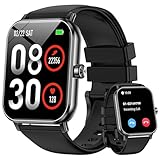
- 1.85'' Display & 300+ Watch Faces: Smart watch for men women adopts 1.85 HD screen that provides excellent visual experience. There are 300+ watch faces built-in, which can be changed by long-pressing the screen or selected/cutomized through the “Da Fit” app
- Bluetooth Calls & Smart Reminders: Fitness tracker makes calls directly from your wrist with clear audio. Receive real-time notifications for SMS and apps, ensuring you never miss important messages while driving or exercising hands-free (No reply)
- 24/7 Health Monitoring: Smart watches for men equipped with a high-performance optical sensor that can record your activities throughout the day, monitor your heart rate, sleep status and other data, and help you develop a healthier lifestyle
- 130+ Sport Modes : Built-in 3-axis gravity sensor enables this fitness watch to accurately track daily steps, distance and calories for safer and more effective workouts. These data can be viewed on the watch or mobile phone APP (note: step counting starts after 20 steps)
- 5 ATM Waterproof: Multifunctional fitness tracker watch features 5 ATM waterproof performance, wearable for swimming, handwashing and rainy days. No worry about sweat or rain damage during outdoor workouts with multiple sports modes (note: high water temperatures can affect service life)
When Selling or Trading Out Is the Rational Move
If resale value matters to you, earlier action is better. Once official support is perceived as fully abandoned, secondary market prices typically fall sharply, particularly for Wear OS devices tied closely to Google service compatibility.
Selling also makes sense if you rely on long-term security updates or health data integrity. As Google evolves Health Connect, Fitbit integration, and sensor calibration standards, older Wear OS builds risk becoming increasingly isolated, even if they technically still run.
From a comfort and wearability perspective, TicWatches remain competitive, but resale buyers are now pricing them as static hardware. If you can still recoup value while the watch is fully functional and cosmetically clean, that may be the least painful exit.
When Replacement Is the Smartest Option
Replacement becomes the logical choice if software trust is central to your purchase decision. If you expect multi-year OS upgrades, evolving sleep and heart health algorithms, or tight ecosystem integration, TicWatch is no longer aligned with those priorities.
Daily usability is another factor. As apps slowly optimize for newer Wear OS versions, performance gaps can widen, affecting responsiveness, battery efficiency, and third-party app reliability over time.
Replacing is also justified if you depend on advanced health tracking. Features like skin temperature trends, ECG refinement, fall detection improvements, and AI-assisted training insights are now driven by continuous software investment, not just sensor hardware.
What to Replace a TicWatch With, Based on Priorities
For the most future-proof Wear OS experience, Pixel Watch and Samsung Galaxy Watch models currently define the platform’s direction. They benefit from direct OS stewardship, predictable update cadences, and deep integration with Google and Samsung health ecosystems.
If battery life was your primary reason for choosing TicWatch, OnePlus Watch and select Amazfit models offer multi-day endurance, though often with trade-offs in app depth or Google service integration. These are better suited to users who prioritize endurance and fitness over smartwatch extensibility.
Comfort and materials should not be overlooked. TicWatch cases tend to wear larger but flatter, distributing weight well on the wrist, so replacing with similarly sized alternatives can preserve all-day comfort, especially for sleep tracking.
A Realistic Mindset Going Forward
The most important shift for TicWatch owners is psychological rather than technical. This is no longer a living platform investment but a finished product you either continue to use or consciously move on from.
Treat your TicWatch like a well-made mechanical watch with a discontinued movement. It can still perform its function reliably, but it will never gain new complications, refinements, or factory-backed evolution again.
Best Wear OS and Android-Compatible Alternatives If TicWatch Is Truly Dead
If TicWatch has effectively reached the end of its lifecycle, the replacement decision should be made with clearer eyes than when many people bought into Mobvoi’s promise. The Wear OS landscape is narrower now, but it is also more predictable, with fewer brands and stronger platform ownership.
The key is to replace like-for-like only where it makes sense, and upgrade where the platform has genuinely moved forward. Below are the strongest Android-compatible options depending on what originally drew you to TicWatch in the first place.
Pixel Watch: The Safest Long-Term Wear OS Bet
For users who bought TicWatch believing in Wear OS as a living platform, Pixel Watch is the most direct philosophical replacement. It is the reference device for Wear OS, meaning features, APIs, and system updates land here first and stay supported the longest.
Pixel Watch 2 refined nearly every early complaint: better battery efficiency, smoother performance, and more reliable health tracking powered by Fitbit’s algorithms. Real-world battery life lands around a full day with always-on display, stretching closer to 36 hours with light tuning, which is a meaningful improvement over earlier Wear OS expectations.
Comfort is a standout. The compact case, curved crystal, and balanced weight make it one of the easiest smartwatches to wear continuously, including for sleep tracking. The downside is durability perception and price, but for long-term software confidence, nothing in Wear OS comes closer.
Samsung Galaxy Watch: The Most Mature Android Smartwatch Ecosystem
If your TicWatch appeal was polish, features, and a watch that felt finished rather than experimental, Samsung’s Galaxy Watch line is the strongest alternative. These watches dominate Wear OS sales for a reason: performance, battery management, and health features are consistently reliable.
Galaxy Watch models offer more traditional case designs, rotating bezels on select versions, and better scratch resistance thanks to sapphire crystals. Battery life typically exceeds Pixel Watch in daily use, especially on larger case sizes, making them easier to live with for notifications, workouts, and sleep.
The main trade-off is ecosystem lock-in. Samsung Health is excellent, but certain features work best or only with Samsung phones. Still, for most Android users, this is the most complete smartwatch experience available today.
OnePlus Watch: For TicWatch Battery Loyalists
A significant portion of TicWatch’s appeal was endurance. Dual-display models routinely outlasted competitors, even as software support lagged behind. If battery life remains non-negotiable, OnePlus Watch deserves serious consideration.
The OnePlus Watch does not run full Wear OS, which limits app availability and Google service integration. In return, it delivers multi-day battery life, smooth performance, and a clean, distraction-free interface that feels purpose-built rather than overextended.
Build quality is solid, with stainless steel cases, comfortable straps, and restrained sizing that suits daily wear. This is a pragmatic choice for users who want reliability and endurance more than platform ambition.
Amazfit and Huawei: Fitness-First, Not Smartwatch Replacements
Some TicWatch owners may be tempted by Amazfit or Huawei due to battery life and pricing. These brands excel at fitness tracking efficiency, lightweight hardware, and multi-week endurance on certain models.
However, these are not true smartwatch replacements in the Wear OS sense. App ecosystems are limited, Google services are absent, and third-party integrations are constrained. They are best viewed as advanced fitness watches with smart features, not full platform devices.
For users who primarily track workouts, sleep, and daily activity, these can be sensible exits from Wear OS altogether. Just do not expect the extensibility or app-driven experience that initially defined TicWatch’s appeal.
Why There Is No Perfect TicWatch Successor
TicWatch occupied a peculiar niche. It offered ambitious hardware, aggressive pricing, and battery-focused innovation, but relied on a software roadmap that never stabilized. That combination simply does not exist anymore in Wear OS.
Today’s alternatives force clearer trade-offs. Pixel Watch offers software certainty at the cost of battery life. Samsung offers ecosystem maturity with mild lock-in. OnePlus offers endurance by stepping away from full Wear OS entirely.
The upside is that these trade-offs are now honest and visible. Unlike Mobvoi’s fading presence, these brands signal commitment through updates, marketing, and retail availability.
Making the Replacement Decision With Realistic Expectations
If you are replacing a TicWatch, prioritize software support first, battery second, and hardware design third. Smartwatches are now defined more by update cadence and health algorithm evolution than by raw sensor lists.
Avoid buying on specs alone or promises of future updates. The disappearance of TicWatch devices from official stores is a reminder that platform visibility matters as much as hardware quality.
In practical terms, this is a good moment to exit uncertainty. Whether you choose Pixel Watch, Galaxy Watch, or a battery-first alternative, you are buying into a platform that is actively alive, and that alone makes it a stronger long-term decision than waiting for a revival that may never come.