The Moov Now makes sense only if you rewind your expectations. In a market dominated by bright AMOLED screens, app ecosystems, and passive step counting, this little disc was designed around a very different idea: your phone is the screen, and the wearable is a motion lab strapped to your body.
If you’re looking at the Moov Now in 2026, chances are you’re either budget-conscious, curious about its real-time coaching reputation, or comparing it to modern trackers that feel bloated for basic training needs. Understanding what it was built to do—and just as importantly, what it was never meant to do—is essential before judging it by today’s standards.
This section sets that foundation. It explains the original design philosophy behind Moov Now, why the lack of a screen was intentional rather than a cost-cutting trick, and how that purpose holds up (or doesn’t) for fitness-focused users nearly a decade later.
A tracker built around motion science, not lifestyle metrics
Moov Now was conceived as a form-first fitness coach, not a daily activity companion. Instead of prioritizing steps, calories, or all-day heart rate, it focused on precise motion tracking using a 9-axis inertial sensor array, combining accelerometer, gyroscope, and magnetometer data.
🏆 #1 Best Overall
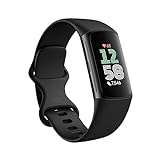
- Find your way seamlessly during runs or rides with turn-by-turn directions from Google Maps on Fitbit Charge 6[7, 8]; and when you need a snack break on the go, just tap to pay with Google Wallet[8, 9]
That sensor package allowed it to analyze movement patterns in real time, something most early fitness bands couldn’t do with any accuracy. The goal wasn’t to log what you did, but to actively correct how you did it, especially for repetitive, technique-sensitive activities like running, swimming, cycling, and bodyweight training.
Even in 2026, that core capability remains conceptually relevant. Modern watches have caught up in raw sensor quality, but few still emphasize technique feedback as the primary experience rather than a secondary feature buried in post-workout analytics.
Why the screenless design was intentional
The absence of a screen wasn’t about saving money or simplifying manufacturing. Moov wanted users listening, not looking, during workouts, delivering coaching cues through audio prompts in connected earbuds or phone speakers.
That design choice enabled uninterrupted training, particularly for runners and swimmers who don’t want to glance at their wrist mid-set. It also allowed the hardware to be extremely small and lightweight, roughly the size of a large coin, with a soft-touch plastic shell that disappears once strapped on.
In practical terms, the screenless approach is both Moov Now’s biggest strength and its most obvious limitation today. It excels when you commit to coached sessions, but feels incomplete if you expect quick glanceable stats, notifications, or autonomous workout tracking without a phone nearby.
Form correction over volume and streaks
Moov Now was never chasing daily step goals or weekly activity streaks. Its coaching logic focused on cadence, symmetry, impact forces, stroke efficiency, and pacing, depending on the activity.
For running, that meant real-time feedback on cadence and overstriding. For swimming, it tracked laps, stroke type, efficiency, and rest intervals with impressive reliability for its era, especially when worn on the wrist or ankle as recommended.
This emphasis makes Moov Now feel purpose-built for beginners and intermediates learning proper mechanics. Advanced athletes may outgrow the feedback quickly, while casual users who just want passive tracking may find the experience too demanding.
A hardware-first approach that explains the legendary battery life
Without a display, GPS, or optical heart rate sensor, Moov Now sips power. The coin-cell battery famously lasts up to six months, even with regular workouts, and doesn’t require charging, only replacement.
From a 2026 perspective, this still feels refreshing. Many modern trackers struggle to last a week, and battery degradation over time is a real concern with rechargeable cells. Moov Now’s sealed simplicity avoids that entirely, though it also means no firmware updates and no evolution beyond its original capabilities.
The trade-off is permanence. What you buy is what you get, for better and worse.
Who Moov Now was truly designed for—and who it wasn’t
Moov Now was built for users who want guided workouts, are willing to train with their phone, and care more about technique than lifestyle tracking. It suits runners fixing form, swimmers chasing efficiency, and gym users who respond well to audio coaching.
It was never designed to replace a smartwatch, track sleep trends, monitor stress, or integrate into a broader health ecosystem. Judging it against modern multi-sport watches misses the point, but ignoring its age and app dependency is equally unrealistic.
Seen through the right lens, Moov Now in 2026 isn’t outdated technology so much as a frozen idea—one that still works remarkably well within the narrow role it was created to fill, and struggles everywhere else.
Design, Comfort, and Durability: Living With a Screen-Free Tracker
By the time you accept Moov Now’s frozen-in-time feature set, its physical design starts to make a lot more sense. Everything about the hardware reflects a single priority: disappear on the body and survive repetitive movement without demanding attention.
A minimal form factor built around motion, not aesthetics
Moov Now is a small, puck-like sensor rather than a traditional watch-shaped tracker. It measures roughly 30mm across and about 8mm thick, making it closer in size to a large coin than a wristwatch, and significantly smaller than most modern fitness bands.
The casing is lightweight plastic with a soft-touch finish that resists sweat buildup and minor scuffs. It doesn’t feel premium in a luxury sense, but it was never meant to; the emphasis is on low mass and neutral balance so it doesn’t interfere with arm swing, swim strokes, or ankle movement.
There’s no display, no haptic motor, and no visible controls beyond a subtle LED indicator. All interaction happens through the phone app and audio coaching, reinforcing the idea that Moov Now is a sensor first, not a wearable computer.
Screen-free living: freeing or frustrating, depending on your habits
Living with a screenless tracker fundamentally changes how you interact with your workouts. There’s no checking pace mid-run, no glancing at time elapsed, and no instant gratification after a set.
For beginners focused on form, this can be liberating. You listen, you move, and you adjust based on real-time audio cues rather than chasing numbers. In my testing, this often resulted in more consistent technique sessions, especially for cadence work and bodyweight circuits.
For users accustomed to visual feedback, it can feel restrictive. You must keep your phone nearby, typically in an armband or on the pool deck, and accept that Moov Now works best when you commit fully to guided sessions rather than ad-hoc training.
Comfort across wrist, ankle, and swim sessions
Moov Now ships with a simple silicone strap designed to be worn on the wrist or ankle. The strap is flexible, lightweight, and uses a traditional pin-and-tuck closure that holds securely even during high-cadence running or flip turns in the pool.
On the wrist, it’s comfortable enough for hour-long workouts, though it lacks the refined contouring of modern bands. On the ankle, where many runners prefer to wear it for more accurate cadence and foot strike analysis, it remains unobtrusive and doesn’t cause hotspot pressure, even with tighter lacing.
In the water, the low-profile design shines. The tracker stays put under push-offs and doesn’t create drag, which is critical for reliable stroke detection. Compared to bulkier swim watches, Moov Now feels almost invisible once submerged.
Durability and water resistance in real-world use
Moov Now is rated for swim use and has proven durable over years of pool exposure when properly rinsed after use. Chlorine resistance is solid for its generation, and the sealed design eliminates charging ports or buttons that often become failure points.
Drop resistance is adequate rather than exceptional. The plastic shell can scuff if dropped onto concrete, but internal sensors are well-isolated, and I’ve seen units survive repeated gym use without calibration drift.
The biggest durability advantage is mechanical simplicity. With no touchscreen, no rechargeable battery, and no charging contacts, there’s simply less to wear out over time. That’s a major reason so many Moov Now units are still functional years after release.
Battery design as a comfort and longevity feature
The coin-cell battery isn’t just a power decision; it directly affects daily comfort. Without the need for a charging coil or larger battery housing, Moov Now stays thin and evenly weighted.
Six months of battery life remains realistic even in 2026, assuming several workouts per week. Replacing the battery is inexpensive and fast, though it does require sourcing the correct cell and resealing the compartment carefully.
There’s no battery anxiety, no nightly charging ritual, and no gradual capacity fade. The trade-off is environmental impact and the lack of rechargeability, but from a pure usability standpoint, it still holds up remarkably well.
Design compromises that show their age
Not everything about Moov Now’s design has aged gracefully. The LED indicators are basic and not always intuitive, especially for new users setting it up for the first time.
The strap system is functional but limited. Replacement bands are harder to find, color options are scarce, and there’s no modular ecosystem like you’d find with modern trackers or watches.
Most importantly, the hardware assumes the app will always be there. Without ongoing software support, the elegant simplicity of the design can quickly turn into a dead end if compatibility breaks, a risk that’s increasingly relevant for buyers considering it today.
What living with Moov Now feels like in 2026
Day to day, Moov Now doesn’t behave like a wearable you “own” so much as a tool you deploy for specific sessions. You put it on when you want coaching, and you forget about it when you don’t.
That limited scope is either its greatest strength or its biggest weakness. For users who want an always-on health companion, it feels incomplete. For those who want a durable, comfortable motion sensor that stays out of the way while teaching better movement, the design still does exactly what it was intended to do.
Understanding that distinction is key before deciding whether Moov Now’s physical design feels refreshingly focused or simply outdated.
Setup and App Experience: Moov App Usability, Compatibility, and Longevity Risks
Moov Now’s hardware simplicity only works if the software foundation remains intact. Unlike screen-based trackers that can function in a limited way on their own, Moov Now is entirely dependent on the Moov app for setup, coaching, data interpretation, and long-term usefulness.
This makes the setup and app experience not just a convenience factor, but the single biggest risk area for buyers considering it in 2026.
Initial setup: simple in theory, dated in practice
The physical setup is straightforward. You insert the coin cell battery, snap the capsule into the strap, and wake it with movement, indicated by basic LED flashes.
Pairing happens through the Moov app over Bluetooth, with no display-based confirmation on the device itself. This works, but it places a lot of trust in the app to correctly identify which unit you’re connecting, especially if multiple Bluetooth devices are nearby.
Account creation is mandatory. You’ll need to create or log into a Moov account before accessing any workouts or coaching features, which immediately ties the experience to Moov’s backend servers rather than local-only functionality.
Moov app interface and navigation
The app design reflects its mid-2010s origins. Navigation is clear enough once you learn it, but it lacks the polish, animations, and contextual cues users expect from modern fitness platforms.
Workouts are organized by activity type, with guided sessions prominently featured. This reinforces Moov Now’s identity as a coach-led tool rather than a passive tracker, but it also means free-form use is limited.
Data presentation is functional but sparse. You’ll see metrics like reps, strokes, cadence, and efficiency scores, yet there’s minimal long-term trend visualization compared to modern ecosystems like Garmin Connect or Fitbit.
Rank #2

- Inspire 3 is the tracker that helps you find your energy, do what you love and feel your best. All you have to do is wear it.Operating temperature: 0° to 40°C
- Move more: Daily Readiness Score(1), Active Zone Minutes, all-day activity tracking and 24/7 heart rate, 20+ exercise modes, automatic exercise tracking and reminders to move
- Stress less: always-on wellness tracking, daily Stress Management Score, mindfulness sessions, relax breathing sessions, irregular heart rhythm notifications(2), SpO2(3), menstrual health tracking, resting heart rate and high/low heart rate notifications
- Sleep better: automatic sleep tracking, personalized Sleep Profile(1), daily detailed Sleep Score, smart wake vibrating alarm, sleep mode
- Comfortably connected day and night: calls, texts & smartphone app notifications(4), color touchscreen with customizable clock faces, super lightweight and water resistant to 50 meters, up to 10 day battery life(5)
Real-time coaching: still Moov Now’s strongest software feature
Where the app continues to shine is in audio coaching. When paired with headphones, Moov Now delivers real-time verbal cues during workouts, correcting form, pacing, and rhythm based on motion data.
For bodyweight training, boxing, and swimming, this remains surprisingly effective even by today’s standards. The cues are immediate, specific, and actionable, something many newer trackers still struggle to execute well.
That said, the coaching scripts are finite. There’s no sense of evolving intelligence, adaptive programming over months, or integration with broader training plans, which makes the experience feel static over time.
Swimming and activity calibration
Swimming setup deserves special mention. The app walks you through stroke type selection and pool length configuration, which is essential for accurate lap and efficiency tracking.
Once calibrated, swim metrics remain one of Moov Now’s standout use cases. Stroke count, lap timing, and form-based feedback still hold up well for recreational swimmers.
Outside of swimming and guided workouts, general activity tracking is limited. There’s no continuous heart rate, no sleep tracking, and no all-day metrics running quietly in the background.
Platform compatibility in 2026
This is where caution is warranted. Moov Now relies on continued compatibility with current versions of iOS and Android, both of which have evolved significantly since the device’s peak relevance.
As of 2026, the app may still install and function on many phones, but performance can be inconsistent. Users report occasional Bluetooth dropouts, delayed syncing, and permission-related friction on newer operating systems.
There is no guarantee of future updates. Moov as a company has largely exited the consumer wearable space, which means compatibility risks increase with every major OS release.
Firmware updates and maintenance reality
Firmware updates for Moov Now are rare and, in practical terms, effectively frozen. What you buy today is the experience you’ll have indefinitely.
This isn’t inherently a problem if everything works, but it does mean bugs, edge cases, or OS-level conflicts are unlikely to be resolved. Modern wearables benefit from years of iterative refinement; Moov Now does not.
Battery replacement does not require re-pairing or firmware intervention, which is a positive. However, any deeper software issue leaves users with limited troubleshooting options beyond reinstalling the app.
Cloud dependence and long-term usability risk
Perhaps the most important consideration is Moov Now’s reliance on cloud services. Workout libraries, coaching content, and account authentication are all server-dependent.
If Moov were to sunset its servers or fully discontinue app support, the hardware would lose most of its functionality overnight. There is no offline mode that meaningfully replaces the guided experience.
For second-hand buyers or bargain hunters, this risk should factor heavily into the purchase decision. Moov Now isn’t just an older device; it’s a device whose usefulness is tethered to a platform with an uncertain future.
Who the app experience still works for—and who it doesn’t
For users who want structured, coached workouts and are comfortable with the app as it exists today, the experience can still feel focused and effective. The lack of distractions and smartwatch-style clutter aligns well with Moov Now’s original philosophy.
For users expecting ongoing improvements, deep analytics, or seamless integration with modern fitness ecosystems, the app will feel limiting and fragile.
Understanding that trade-off is essential. With Moov Now, the app isn’t a companion feature—it’s the foundation everything else rests on.
Real-Time Audio Coaching: Does Moov’s Form Feedback Still Hold Up?
If the app is the foundation of Moov Now, real-time audio coaching is the pillar it was built around. Even today, this is the feature that most clearly separates Moov Now from step counters, minimalist bands, and even many modern smartwatches.
The question in 2026 isn’t whether Moov’s coaching was innovative—it undeniably was—but whether it still feels accurate, useful, and trustworthy compared to newer fitness guidance tools.
How Moov’s coaching actually works in practice
Moov Now uses its onboard accelerometer and gyroscope to analyze motion patterns during specific activities. Instead of passively logging reps or time, it compares your movement against predefined biomechanical models and delivers corrective cues through your headphones.
During runs, for example, you’ll hear prompts about cadence, overstriding, or arm swing. In bodyweight workouts, the coaching focuses on tempo, range of motion, and consistency rather than raw repetition counts.
Because the device has no screen, the experience is inherently audio-first. You’re not glancing at metrics mid-workout; you’re reacting to voice prompts in real time, which keeps attention on movement rather than data.
Accuracy of form feedback: still impressive, but narrower than modern expectations
In controlled movements, Moov Now’s form detection remains surprisingly solid. Cadence tracking during running is accurate, squat depth cues are generally reliable, and swimming stroke detection still holds up well for freestyle and backstroke.
Where it struggles is nuance. It can identify that your cadence dropped, but not why. It can tell you your squat tempo is inconsistent, but not whether your knees are caving or your spine is flexing.
Modern camera-based systems and AI-powered strength apps provide richer visual feedback, but they also require screens, subscriptions, or bulky setups. Moov’s strength is that it delivers simple, actionable cues without breaking flow, even if those cues are less detailed.
Running and cardio coaching: where Moov still shines
For beginner to intermediate runners, Moov Now’s audio coaching remains one of its strongest use cases. The cadence-focused guidance encourages shorter strides and higher turnover, which aligns well with injury-reduction principles taught in sports science.
Unlike GPS watches that emphasize pace and distance, Moov’s coaching nudges behavior rather than performance outcomes. Over time, this can lead to more efficient running mechanics, especially for users who have never received form-based feedback before.
The lack of GPS does limit context. You won’t get terrain-aware coaching or pace adjustments based on elevation, and everything assumes treadmill or flat-ground logic. Still, for indoor runs or simple outdoor sessions, the feedback feels purposeful rather than generic.
Strength, HIIT, and bodyweight sessions: structured but rigid
Moov’s strength and HIIT workouts rely heavily on predefined routines. When you follow the program as intended, the coaching feels cohesive, with clear cues on tempo, rest intervals, and movement consistency.
Step outside those guardrails, and the system becomes less flexible. You can’t easily adapt workouts to unconventional exercises, nor can you teach Moov a new movement pattern.
Compared to modern smartwatches that detect reps across a wider range of lifts, Moov feels dated here. However, most wearables still struggle with form quality, and Moov’s focus on tempo and control remains more useful than raw rep counts alone.
Swimming feedback: still a standout for a screenless tracker
Swimming is one area where Moov Now continues to punch above its weight. Stroke detection, lap counting, and rest interval guidance remain accurate in both pools and open water.
Audio coaching is naturally limited during swims, but post-set feedback on stroke efficiency and consistency is valuable, especially for casual swimmers trying to improve technique without a coach on deck.
Modern swim watches offer richer visual metrics, but they also demand attention mid-session. Moov’s approach feels calmer and more technique-oriented, even if the data depth is shallower.
Latency, reliability, and the reality of aging software
When everything works, Moov’s audio cues arrive with minimal delay. That immediacy is crucial; feedback that comes five seconds late is worse than no feedback at all.
That said, reliability now varies by phone model and OS version. Bluetooth dropouts, delayed cues, or sessions failing to start are more common than they were at launch, and fixes are unlikely given the frozen firmware and app support.
This doesn’t undermine the concept, but it does affect trust. Real-time coaching only works if users believe the feedback reflects what they’re doing right now, not what happened half a rep ago.
Who Moov’s coaching still works best for
Moov Now’s audio coaching remains genuinely useful for beginners, form-focused runners, and swimmers who want technique guidance without screens or distractions. It’s also appealing to users who prefer being told what to do rather than interpreting charts and metrics.
For experienced athletes, data-driven trainers, or users accustomed to modern smartwatch ecosystems, the coaching will feel limited and occasionally frustrating. It teaches fundamentals well, but it doesn’t evolve with you indefinitely.
Viewed in that light, Moov’s real-time coaching hasn’t become obsolete—but it has become specialized. Its value depends less on how advanced you are, and more on whether you want simple, immediate form cues from a device that does exactly one thing, and nothing else.
Activity Tracking Accuracy: Running, Swimming, Cycling, and Bodyweight Workouts
After assessing Moov Now’s coaching logic and reliability, the next question is simpler but more important: how accurate is the underlying activity tracking that those cues depend on. Because Moov lacks GPS, a screen, and even a heart rate sensor, its accuracy lives or dies by motion analysis from its 9-axis inertial sensors and how well the software interprets them.
In practice, accuracy varies sharply by activity type. When Moov is operating inside its original design intent—repetitive, technique-driven movements—it still performs surprisingly well. Outside of that comfort zone, the cracks are harder to ignore.
Running accuracy: cadence-first, distance second
For running, Moov Now focuses primarily on cadence, impact, and consistency rather than distance or pace. Cadence detection remains excellent, typically within one to two steps per minute compared to foot pods or modern running watches, even in 2026.
Rank #3

- 【BUILT-IN GPS SMART WATCH – GO FURTHER, FREER, SMARTER】No phone? No problem. This fitness watch for women, featuring the latest 2025 technology, includes an advanced professional-grade GPS chip that precisely tracks every route, distance, pace (real-time & average), and calorie burned—completely phone-free. Whether you're chasing new personal records or exploring off the beaten path, your full journey is automatically mapped and synced in the app. Train smarter. Move with purpose. Own your progress. Own your journey.
- 【BLUETOOTH 5.3 CALLS & SMART NOTIFICATIONS】Stay effortlessly connected with this smart watch for men and women, featuring dual Bluetooth modes (BT 3.0 + BLE 5.3) and a premium microphone for crystal-clear calls right from your wrist—perfect for driving, workouts, or busy days. Receive instant alerts for calls, texts, and popular social apps like WhatsApp and Facebook. Just raise your wrist to view notifications and never miss an important moment.
- 【100+ SPORT MODES & IP68 WATERPROOF & DUSTPROOF】This sport watch is a versatile activity and fitness tracker with 100+ modes including running, cycling, yoga, and more. It features quick-access buttons and automatic running/cycling detection to start workouts instantly. Accurately track heart rate, calories, distance, pace, and more. Set daily goals on your fitness tracker watch and stay motivated with achievement badges. With IP68 waterproof and dustproof rating, it resists rain and sweat for any challenge. Not suitable for showering, swimming, or sauna.
- 【24/7 HEALTH ASSISTANT & SMART REMINDERS】This health watch continuously monitors heart rate, blood oxygen, and stress levels for comprehensive wellness tracking. Sleep monitoring includes deep, light, REM sleep, and naps to give you a full picture of your rest. Stay on track with smart reminders for sedentary breaks, hydration, medication, and hand washing. Women can also monitor menstrual health. Includes guided breathing exercises to help you relax. Your ultimate health watch with event reminders for a healthier life.
- 【ULTRA HD DISPLAY, LIGHTWEIGHT & CUSTOMIZABLE DIALS】This stylish wrist watch features a 1.27-inch (32mm) 360×360 ultra HD color display with a 1.69-inch (43mm) dial, offering vivid details and responsive touch. Its minimalist design fits both business and casual looks. Switch freely among built-in designer dials or create your own DIY watch face using photos, colors, and styles to showcase your unique personality. Perfect as a cool digital watch and fashion wrist watch.
Stride pattern recognition is also solid. Heel striking, overstriding, and uneven left-right impact are identified reliably enough to make the audio coaching meaningful, especially for beginners trying to clean up inefficient mechanics.
Distance estimation, however, is a weak point. Without GPS and relying on stride-length modeling, Moov’s distance can drift noticeably on longer runs or when pace varies, often underestimating by 5–10 percent compared to GPS watches.
For treadmill running, accuracy actually improves. The controlled environment and consistent stride make Moov’s estimates more stable than many GPS watches used indoors, though calibration depends heavily on initial setup and user height data.
Swimming accuracy: still Moov’s strongest discipline
Swimming remains the activity where Moov Now feels the most at home. Stroke detection for freestyle, backstroke, breaststroke, and butterfly is consistently reliable, with very few misclassified lengths during pool sessions.
Lap counting is accurate as long as turns are clean. Sloppy push-offs or mid-pool pauses can occasionally confuse the algorithm, but the error rate is low compared to early-generation swim watches.
Stroke efficiency metrics, such as strokes per length and consistency scoring, remain useful despite their simplicity. They won’t replace the granular analytics of modern multisport watches, but they offer actionable insight without overwhelming casual swimmers.
Open-water swimming is supported, but accuracy depends heavily on stable mounting and consistent stroke rhythm. Without GPS, Moov can’t map routes or distance precisely, making it better suited to technique-focused sessions than open-water performance tracking.
Cycling accuracy: functional, but limited in scope
Cycling highlights Moov Now’s limitations more clearly. Cadence detection works reasonably well when the device is worn correctly, but it lacks the precision of dedicated cadence sensors or crank-based systems.
Speed and distance are estimated rather than measured, which leads to noticeable discrepancies on outdoor rides. Variations in terrain, gear changes, and coasting all reduce accuracy, making Moov unsuitable for riders who care about performance metrics.
Indoor cycling fares better. On a stationary bike with steady cadence, Moov’s tracking becomes consistent enough to support basic interval coaching and effort awareness.
Still, cycling feels like a secondary use case. Moov can guide effort and rhythm, but it cannot replace even entry-level cycling computers or modern smart trainers.
Bodyweight and strength workouts: form over counting
Bodyweight workouts are where Moov’s motion intelligence shines again. Exercises like squats, lunges, push-ups, planks, and jumping jacks are recognized accurately when performed with clear, repeatable form.
Rep counting is generally reliable, but more importantly, form deviation is detected quickly. Audio cues for depth, tempo, and symmetry arrive fast enough to correct movement mid-set, which is rare even among modern wearables.
Complex or unconventional exercises can confuse the system. Hybrid movements, pauses, or tempo variations may result in missed reps or incorrect feedback.
Moov is not designed for weighted strength training, and it shows. Dumbbells, barbells, and kettlebells introduce movement patterns the algorithms were never trained to understand, limiting accuracy and usefulness in the gym.
Consistency over raw metrics
Across all activities, Moov Now prioritizes consistency and movement quality rather than absolute metrics. It tells you whether you are moving well, not how fast or how far you went in a modern performance-tracking sense.
This philosophy still works for beginners and technique-focused users. It feels dated for athletes who expect GPS maps, heart rate zones, and detailed post-workout analysis.
Accuracy, then, is contextual. Moov Now remains impressively precise within its narrow lane, but it struggles as soon as users ask it to behave like a general-purpose fitness tracker.
Battery Life and Maintenance: Coin Cell Reality vs Modern Rechargeables
Moov’s narrow focus on movement quality rather than constant data streaming also defines its power strategy. Instead of a rechargeable lithium cell and a charging cable, the Moov Now relies on a standard CR2032 coin cell, a choice that feels both refreshingly practical and distinctly of its time.
This decision shapes the entire ownership experience. Battery life, maintenance habits, and even long-term viability look very different here than on modern fitness trackers.
Real-world battery life: months, not days
In everyday use, Moov’s battery life remains one of its quiet strengths. With regular workouts, swim sessions, and daily wear, a single CR2032 typically lasts four to six months before performance degrades.
That estimate holds up even with frequent audio coaching, since the heavy lifting is done by the phone, not the sensor. There is no screen to power, no always-on heart rate sensor, and no background GPS drain.
For users coming from modern wearables that demand weekly or even daily charging, this feels liberating. You put the Moov on, forget about power management, and focus on training.
No charging rituals, no cables to lose
The absence of a charging cradle or proprietary cable removes a common point of frustration. There is nothing to dock, no pins to clean, and no nightly reminder to recharge before bed.
For swimmers and triathletes, this also improves reliability. The sealed coin-cell compartment avoids charging port corrosion, a common long-term failure point on water-exposed wearables.
From a durability standpoint, this design aligns more closely with a traditional sports watch than a modern smartwatch. Fewer openings mean fewer failure modes over time.
The maintenance trade-off: user-replaceable, but not invisible
Replacing the battery is simple, but it is not completely frictionless. The rear hatch must be opened carefully to maintain the water seal, and the O-ring should be inspected for debris before closing.
Coin cells are inexpensive and widely available, but they are still a consumable. Over several years of ownership, you will replace multiple batteries, which adds a small but ongoing maintenance task.
There is also an environmental consideration. Disposable batteries are less eco-friendly than rechargeable systems, particularly for users who train year-round.
Performance decline before death
One characteristic worth noting is how the Moov behaves as the battery weakens. Accuracy and Bluetooth stability can degrade before the battery fully dies, leading to dropouts or delayed audio cues.
This is not unique to Moov, but the lack of a screen means warnings are app-dependent. If the app is no longer actively supported or notifications are missed, users may only notice an issue mid-workout.
For second-hand buyers in 2026, this becomes especially relevant. A fresh battery should be considered mandatory when setting up a used unit.
Comparing coin cell logic to modern rechargeables
Modern trackers with rechargeable batteries offer richer feature sets, but they demand routine attention. Screens, continuous heart rate tracking, and background sensors come at the cost of charging frequency and long-term battery degradation.
Rechargeable lithium cells also age chemically. After two to three years, many devices struggle to hold a charge for more than a day, with no practical way to replace the battery.
Moov’s coin-cell approach flips this equation. The device itself does not meaningfully age in terms of battery capacity, assuming the electronics and seals remain intact.
Long-term ownership in a discontinued ecosystem
Because Moov Now is no longer actively produced or supported, battery strategy becomes even more important. The ability to keep the hardware running independently of official accessories is a real advantage.
As long as CR2032 batteries remain available, the device can be kept alive indefinitely. There is no dependency on discontinued chargers or proprietary power standards.
However, this also highlights the risk. If the app experience degrades or compatibility breaks with future phones, strong battery life alone cannot save the product.
Who benefits most from this power design
Users who value simplicity, infrequent maintenance, and long gaps between interventions will appreciate Moov’s power philosophy. It suits swimmers, casual athletes, and beginners who want a tool that stays ready without daily attention.
Power users accustomed to nightly charging routines and rich on-device feedback may see the coin cell as a relic. In that context, Moov’s battery life is impressive, but it supports a product philosophy that has largely vanished from the modern wearable market.
What Moov Now Doesn’t Track: Health Metrics, Smart Features, and Daily Use Trade-Offs
That long battery life and minimal hardware come with a clear cost. Moov Now achieves its simplicity by leaving out many of the metrics and conveniences that modern fitness trackers treat as baseline.
Understanding these omissions is essential, especially for buyers coming from Fitbit, Garmin, or Apple Watch ecosystems. Moov Now is not incomplete by accident; it is deliberately narrow in scope.
No heart rate, recovery, or wellness monitoring
Moov Now does not track heart rate in any form. There is no optical sensor, no chest strap pairing, and no post-workout heart rate analysis inside the app.
This means there are no resting heart rate trends, no heart rate zones, and no recovery or training readiness insights. Calories burned are estimated purely from motion data, which can be directionally useful but lacks physiological context.
Rank #4

- 24H Accurate Heart Rate Monitoring: Go beyond basic tracking. Our watch automatically monitors your heart rate, blood oxygen (SpO2), and sleep patterns throughout the day and night. Gain deep insights into your body's trends and make informed decisions for a healthier lifestyle.
- Practical Sports Modes & Smart Activity Tracking: From running and swimming to yoga and hiking, track a wide range of activities with precision. It automatically records your steps, distance, calories burned, and duration, helping you analyze your performance and crush your fitness goals.
- 1-Week Battery Life & All-Day Wear: Say goodbye to daily charging. With an incredible up to 7-10 days of battery life on a single charge, you can wear it day and night for uninterrupted sleep tracking and worry-free travel. Stay connected to your data without the hassle.
- Comfortable to Wear & IP68 Waterproof: The lightweight, skin-friendly band is crafted for all-day comfort, even while you sleep. With IP68 waterproof, it withstands rain, sweat, It is not suitable for swimming or showering.
- Ease of Use and Personalized Insights via Powerful App: The display is bright and easy to read, even outdoors. Unlock the full potential of your watch. Sync with our dedicated app to view detailed health reports, customize watch faces, set sedentary reminders, and manage your preferences with ease.
There is also no sleep tracking, HRV, stress monitoring, blood oxygen measurement, or body battery-style readiness scoring. For users who view a wearable as a 24/7 health monitor, Moov Now will feel fundamentally incomplete.
No daily activity tracking or passive lifestyle metrics
Outside of guided workouts, Moov Now does very little. It does not count daily steps, track general movement, or log active minutes throughout the day.
There is no concept of standing goals, inactivity alerts, or background calorie burn. Once the workout ends, the device effectively goes dormant until the next coached session.
This sharply limits its usefulness as an everyday wearable. Moov Now behaves more like a piece of workout equipment than a personal activity companion.
No screen, no notifications, no timekeeping
Moov Now has no display and does not attempt to replace a watch. You cannot check the time, view stats mid-workout visually, or glance at progress without opening the app.
Smart features are entirely absent. There are no phone notifications, no call or message alerts, and no music controls.
For some users, this is refreshing. For others, especially those accustomed to wrist-based convenience, it can feel like stepping back a decade in usability.
Limited sports coverage beyond its core strengths
Moov Now excels in a handful of disciplines, particularly running, swimming, cycling, boxing, and bodyweight training. Outside of these, sport support is thin or nonexistent.
There is no native strength training with free weights, no structured gym workout tracking, and no support for modern hybrid training styles. Sports like hiking, yoga, or team sports are not meaningfully represented.
Compared to modern multisport watches, Moov Now feels specialized rather than versatile, which narrows its appeal over time.
App dependency and real-time coaching constraints
Because all feedback is delivered through audio coaching, Moov Now requires a phone and headphones for its core experience. Without them, the tracker becomes little more than a motion logger.
This also means workouts are less flexible. You cannot quickly glance at pacing, distance, or stroke rate without engaging with the app.
For users who enjoy being coached through every session, this works well. For those who want quiet, self-directed training, the always-on guidance can feel intrusive rather than helpful.
No training load, trends, or long-term performance modeling
Moov Now does not build a holistic picture of fitness over weeks or months. There are no training load graphs, no fatigue modeling, and no performance baselines that evolve with your fitness.
Workouts are evaluated in isolation, focusing on form and immediate execution rather than cumulative stress or adaptation. Progress exists, but it is narrow and skill-specific.
This reinforces Moov Now’s identity as a technique coach, not a long-term training platform.
Daily wear comfort without daily utility
Physically, Moov Now is small, light, and unobtrusive. The plastic housing and silicone strap are comfortable for workouts and swimming, and durability is generally solid for its age.
However, comfort alone does not justify wearing it all day when it provides no ambient value. Most users will take it off immediately after training.
This is the central trade-off. Moov Now wears easily, but it earns its place on your wrist only during structured sessions, not in everyday life.
Long-Term Usability in a Discontinued Ecosystem: Support, Bugs, and Data Reliability
All of the limitations discussed so far become more pronounced once you factor in Moov Now’s discontinued status. What was once a tightly controlled, coach-led ecosystem now exists in maintenance mode, and long-term usability depends as much on external factors as it does on the hardware itself.
This is where prospective buyers, especially those considering a second-hand unit in 2026, need to be clear-eyed about trade-offs.
App support and operating system compatibility
Moov Now lives and dies by its smartphone app, and that app is no longer actively developed. While it still runs on current versions of iOS and Android at the time of writing, compatibility is not guaranteed indefinitely.
Minor OS updates have already introduced intermittent pairing hiccups, delayed syncs, and occasional crashes during workout setup. These are not catastrophic failures, but they require patience and occasional troubleshooting.
There is no roadmap, no public commitment to future updates, and no customer-facing support channel that meaningfully resolves software issues. If a future OS update breaks core functionality, there is no safety net.
Bluetooth stability and session reliability
In day-to-day use, Bluetooth stability is acceptable but not bulletproof. Longer coaching sessions can occasionally drop audio cues mid-workout, particularly if your phone aggressively manages background apps or battery optimization.
When this happens, the tracker typically continues recording motion data, but real-time coaching loses its value. Restarting the app often resolves the issue, but that breaks training flow.
This matters because Moov Now’s entire value proposition hinges on uninterrupted, real-time feedback. Even infrequent dropouts feel more disruptive here than they would on a screen-based tracker.
Cloud dependence and data retention risks
Moov Now stores historical workouts through its cloud infrastructure rather than offering robust local export tools. As long as the servers remain online, your past sessions are accessible within the app.
There is no indication of imminent shutdown, but the risk is inherent with any discontinued service. If servers were ever taken offline, historical data would likely be lost with no recovery path.
For users who care deeply about longitudinal data or who integrate workouts into broader training logs, this lack of ownership and export flexibility is a significant limitation.
Data accuracy over time: sensors, form metrics, and drift
From a sensor perspective, Moov Now has aged reasonably well. The accelerometer-based motion tracking still delivers consistent cadence, stroke timing, and repetition counts when the unit is securely worn.
However, there is no recalibration process, and long-term sensor drift is impossible to correct as the hardware ages. Small inaccuracies can creep in over years of use, especially with swimming metrics that depend on clean, repeatable motion patterns.
Form feedback remains directionally useful rather than clinically precise. It can tell you when your stroke timing is off or your cadence collapses, but it should not be treated as a definitive biomechanical analysis tool.
Battery longevity and replaceability concerns
One of Moov Now’s original strengths was its exceptional battery life, often measured in months rather than days. That still holds true for lightly used units, but battery degradation is unavoidable over time.
The internal battery is not user-replaceable. If capacity drops significantly, there is no practical repair option short of unofficial teardown attempts, which most users should avoid.
For second-hand buyers, battery health is the single most important variable. A unit with poor battery performance undermines one of the tracker’s biggest advantages.
Bug tolerance and user expectations
Using Moov Now today requires a higher tolerance for friction than modern fitness trackers. Occasional sync failures, delayed audio prompts, and UI quirks are part of the experience.
None of these issues render the device unusable, but they accumulate. What once felt streamlined can now feel dated, especially when compared to entry-level trackers that receive regular updates.
This is acceptable for users who value Moov Now’s unique coaching approach and are willing to work around imperfections. It will frustrate anyone expecting the polish of current-generation wearables.
Who discontinued support matters most for
For beginners focused on learning basic running or swimming technique, Moov Now can still deliver meaningful value despite its aging ecosystem. The coaching logic itself has not degraded.
For intermediate users looking to build a training history, compare trends, or rely on long-term data accuracy, the lack of active support becomes a growing liability.
Ultimately, Moov Now’s long-term usability is not defined by sudden failure, but by gradual erosion. It continues to function, but each year increases the odds that something peripheral, rather than the tracker itself, becomes the limiting factor.
Moov Now vs Modern Budget Fitness Trackers: Who Still Benefits from Buying One?
Taken in isolation, Moov Now’s limitations are easy to list. The more interesting question is how those trade-offs look when placed next to modern budget fitness trackers that now dominate the sub-$50 space.
Today’s entry-level wearables are dramatically more capable on paper. Yet very few are trying to solve the same problem Moov Now was designed around.
💰 Best Value

- 【Superb Visual Experience & Effortless Operation】Diving into the latest 1.58'' ultra high resolution display technology, every interaction on the fitness watch is a visual delight with vibrant colors and crisp clarity. Its always on display clock makes the time conveniently visible. Experience convenience like never before with the intuitive full touch controls and the side button, switch between apps, and customize settings with seamless precision.
- 【Comprehensive 24/7 Health Monitoring】The fitness watches for women and men packs 24/7 heart rate, 24/7 blood pressure and blood oxygen monitors. You could check those real-time health metrics anytime, anywhere on your wrist and view the data record in the App. The heart rate monitor watch also tracks different sleep stages for light and deep sleep,and the time when you wake up, helps you to get a better understanding of your sleep quality.
- 【120+ exercise modes & All-Day Activity Tracking】There are more than 120 exercise modes available in the activity trackers and smartwatches, covering almost all daily sports activities you can imagine, gives you new ways to train and advanced metrics for more information about your workout performance. The all-day activity tracking feature monitors your steps, distance, and calories burned all the day, so you can see how much progress you've made towards your fitness goals.
- 【Messages & Incoming Calls Notification】With this smart watch fitness trackers for iPhone and android phones, you can receive notifications for incoming calls and read messages directly from your wrist without taking out your phone. Never miss a beat, stay in touch with loved ones, and stay informed of important updates wherever you are.
- 【Essential Assistant for Daily Life】The fitness watches for women and men provide you with more features including drinking water and sedentary reminder, women's menstrual period reminder, breath training, real-time weather display, remote camera shooting, music control,timer, stopwatch, finding phone, alarm clock, making it a considerate life assistant. With the GPS connectivity, you could get a map of your workout route in the app for outdoor activity by connecting to your phone GPS.
What modern budget trackers do better, almost across the board
Even the cheapest current-generation fitness bands offer features Moov Now never attempted. Color screens, optical heart rate sensors, step counting, sleep tracking, notifications, and automatic activity detection are now baseline expectations.
Devices like Xiaomi’s Mi Band line, Amazfit Band models, and entry Fitbit trackers provide continuous health metrics with far fewer software headaches. Their apps are actively maintained, cloud syncing is reliable, and firmware updates extend useful life rather than shorten it.
From a daily usability standpoint, these trackers also win on convenience. A glanceable screen, vibration alerts, and passive data collection fit more naturally into modern routines than Moov Now’s audio-only, session-driven model.
Where Moov Now still stands apart in 2026
Moov Now’s advantage has never been breadth of metrics. It is depth of instruction during a workout.
Real-time audio coaching remains its defining feature, and it still feels meaningfully different from the generic pace or cadence prompts offered by most budget trackers. Moov’s feedback is framed around how you are moving, not just how fast or how long.
For swimming in particular, Moov Now continues to punch above its weight. Stroke type recognition, lap detection, rest timing, and technique cues are more granular than what many low-cost bands provide, even now.
The lack of a screen, often framed as a downside, can be an advantage for form-focused sessions. There is no temptation to check stats mid-rep, and the device all but disappears on the wrist or ankle once a workout starts.
Coaching versus passive tracking: a philosophical divide
Modern budget trackers are built for accumulation. They log everything, all the time, and encourage progress through streaks, trends, and long-term charts.
Moov Now is built for intervention. It expects you to start a workout, listen, adjust, and stop when the session is done.
For beginners who struggle with running cadence, pacing discipline, or swim structure, this active coaching can be more immediately useful than months of passive data. It tells you what to fix now, not what you did wrong later.
For users who enjoy reviewing data, comparing weeks, or integrating metrics into broader training plans, Moov Now feels incomplete. The historical depth and analytical flexibility simply are not there.
Accuracy expectations in a modern context
It is important to recalibrate expectations when comparing Moov Now to today’s trackers. Moov relies heavily on motion sensors without heart rate data, while most modern bands lean on optical heart rate as their primary training signal.
For pace, cadence, and stroke timing, Moov Now remains competitive within its niche. For calorie estimates, effort quantification, or recovery tracking, it cannot keep up.
This does not make Moov inaccurate so much as narrowly focused. Its data is best used in the moment, not as part of a broader physiological picture.
Comfort, durability, and real-world wearability
Physically, Moov Now still holds up well. The capsule is compact, lightweight, and unobtrusive, with a soft strap that works equally well on wrist or ankle.
There is no display to scratch, no button to fail, and the water resistance remains suitable for pool use. For swimmers and runners who value minimalism, it feels closer to a piece of sports equipment than a lifestyle gadget.
Modern budget trackers, while more visually refined, are often bulkier and more fragile in daily wear. Their screens add utility, but also introduce another failure point over time.
Battery life as a shrinking but still relevant advantage
Even accounting for battery aging, Moov Now’s multi-week or multi-month endurance still compares favorably to budget trackers that require weekly charging.
That said, the non-replaceable battery changes the equation. A modern tracker with shorter battery life but active support and easy replacement may outlast a tired Moov unit in practical terms.
For second-hand buyers, this becomes a gamble. A strong battery makes Moov Now feel liberating; a weak one turns it into a liability overnight.
Who should still consider buying a Moov Now
Moov Now still makes sense for a very specific type of user. Beginners focused on improving running cadence, pacing discipline, or swim structure can extract real value from its coaching, even in 2026.
It also appeals to users who actively dislike screens, notifications, and all-day tracking. As a session-only coaching tool, it offers a refreshingly narrow focus.
Finally, for buyers who can find a well-preserved unit at a very low price, Moov Now can function as a specialized training aid rather than a primary fitness tracker.
Who should look elsewhere without hesitation
If you want daily health tracking, sleep data, heart rate trends, or seamless phone integration, modern budget trackers are objectively better choices.
Intermediate to advanced athletes will quickly hit Moov Now’s ceiling, both in data depth and ecosystem longevity. The lack of ongoing support becomes more restrictive the more seriously you train.
For most users comparing new devices at retail prices, Moov Now is no longer competitive as an all-around fitness tracker. Its relevance now lives in the margins, where its coaching-first philosophy still offers something that mass-market wearables largely ignore.
Verdict: Is the Moov Now Still Worth Buying in 2026—or Only as a Niche Tool?
By this point, the Moov Now’s position in the market should be clear. It is no longer competing head-to-head with modern fitness trackers, but operating in a much narrower lane defined by form-focused coaching, extreme simplicity, and hardware that has aged out of mainstream expectations.
The real question in 2026 is not whether Moov Now is good or bad. It is whether its very specific strengths still align with how you train, how you tolerate legacy software, and how much risk you are willing to accept with discontinued hardware.
The short answer
Yes, the Moov Now can still be worth buying in 2026—but only if you treat it as a specialized coaching tool, not a general-purpose fitness tracker.
If you approach it expecting smartwatch convenience, ongoing feature updates, or modern health tracking, it will disappoint immediately. If you approach it as a minimalist, session-based coach for running or swimming, it can still deliver something few current devices prioritize.
Where the Moov Now still earns its keep
Moov Now remains unusually good at one thing: teaching movement quality through real-time audio feedback. Its cadence cues for running and stroke feedback for swimming still feel purposeful, direct, and grounded in biomechanical fundamentals.
The hardware supports this focus well. The puck-style tracker is small, lightweight, and unobtrusive, with no screen to crack, scratch, or distract you mid-session. Comfort is excellent whether worn on the wrist, ankle, or swim strap, and the water resistance still holds up well for pool training.
Battery life, even accounting for age-related degradation, continues to be a practical advantage when the unit is healthy. Not needing to think about charging for weeks at a time reinforces its identity as a grab-and-go training tool rather than a device that demands daily attention.
Where its age becomes impossible to ignore
The software experience is the Moov Now’s weakest link in 2026. The app is functional but stagnant, with an interface and onboarding flow that feel frozen in time. Compatibility can be inconsistent depending on phone model and operating system version, and there is no safety net if support quietly breaks in the future.
Accuracy is good within its intended scope but limited outside it. Without heart rate sensing, GPS, or modern recovery metrics, Moov Now cannot contextualize effort, fatigue, or long-term progression the way even budget trackers now do routinely.
Long-term usability is also a gamble. The non-replaceable battery is the single biggest risk for second-hand buyers, and once it fails, the device becomes e-waste regardless of how well the sensors still function.
How it compares to buying a modern budget tracker instead
Modern entry-level trackers are objectively more versatile. They offer heart rate monitoring, sleep tracking, step counts, phone notifications, and better app ecosystems for roughly the same money Moov Now often commands on the resale market.
What they usually lack is meaningful form coaching. Most rely on post-workout summaries and generic prompts rather than real-time corrective feedback. If your priority is moving better rather than collecting more data, Moov Now still feels philosophically different.
In practical terms, a modern tracker will age more gracefully thanks to ongoing updates and easier replacement. Moov Now, by contrast, delivers a more focused experience that is excellent today but uncertain tomorrow.
Who should still buy one in 2026
Moov Now makes sense for beginners who want structured guidance without information overload. It also suits runners working specifically on cadence discipline or swimmers looking for simple, audible stroke feedback during sessions.
It can also work for experienced athletes as a secondary tool, used deliberately for technique-focused workouts rather than daily tracking. In that role, its limitations are easier to accept and its strengths shine more clearly.
Price matters here. At a low enough cost, especially with a verified strong battery, Moov Now can be a clever, low-friction addition to a training kit.
Who should not
If you want an all-day wearable, health insights, or a device that integrates smoothly into a broader fitness ecosystem, Moov Now is the wrong choice. Its data is too narrow and its future too uncertain.
If you are buying your first fitness tracker and want something that grows with you, modern alternatives offer far more headroom. Even casual athletes will outgrow Moov Now faster than they expect once their curiosity shifts beyond basic form correction.
The bottom line
In 2026, the Moov Now is no longer a safe default recommendation—but it is not obsolete either. It survives as a niche device with a clear identity, doing one thing well in a market crowded with do-everything wearables that often do coaching poorly.
Buy it only if you understand exactly what it is, what it is not, and how long it may realistically last. Treated as a focused coaching instrument rather than a modern tracker replacement, Moov Now can still earn its place—but only on its own, very specific terms.