When you hear that a smart ring has “FDA approval,” it’s easy to assume the entire device has suddenly become a medical instrument on par with hospital equipment. That isn’t how the FDA works, and EvieMED’s clearance is both more specific and more interesting than the headline suggests. What actually happened here is a carefully scoped regulatory milestone that puts EvieMED in a very different category from most consumer smart rings on the market today.
At a high level, the FDA did not approve EvieMED as a general wellness gadget, nor did it approve every health feature inside the ring. Instead, the FDA cleared EvieMED for specific medical measurements and intended uses, based on evidence that those measurements meet defined clinical accuracy standards. Understanding exactly what was cleared, how it was reviewed, and what it enables next is where the real value lies for buyers and clinicians alike.
FDA “approval” vs. FDA “clearance,” translated
EvieMED went through the FDA’s 510(k) clearance pathway, not the more exhaustive Premarket Approval process used for high-risk medical devices like pacemakers. In plain English, this means Movano demonstrated that EvieMED is substantially equivalent in safety and effectiveness to legally marketed medical devices already on the market. The FDA reviewed the data and agreed that, for its intended medical functions, EvieMED performs as claimed.
This distinction matters because clearance is not a rubber stamp. Movano had to submit validation data showing that EvieMED’s measurements align with clinical reference standards under controlled testing conditions. The FDA’s decision signals that the cleared functions can now be used in medical contexts, not just for personal curiosity or lifestyle insights.
🏆 #1 Best Overall
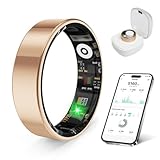
- 【Check the Size Before Purchase】 Before buying the prxxhri Smart Ring, we strongly suggest that you refer to the size chart and carefully measure the circumference of your finger. This will ensure you get the most comfortable wearing experience and easily avoid any unnecessary returns or exchanges.
- 【Real-time Accurate Sleep & Fitness Monitoring】 prxxhri smart ring tracks your sleep quality and daily activities in real time. With advanced sensors, it provides precise data about your sleep cycle, helping you optimize rest and recovery. Whether you are tracking steps, calories or exercise performance, this smart ring can provide you with the most accurate insights to support your fitness goals and enhance your overall health.It is a good choice for family and friends.
- Health Monitoring】The prxxhri ring features advanced 4.0 sensors that automatically measure your heart rate, and blood pressure every 30 min when worn. It provides continuous health tracking and comprehensive wellness management all day.
- 【3-5 Day Battery Life】 With a 3-5 day battery life, the prxxhri smart ring ensures continuous health monitoring without frequent charging. When used with the smart charging case, the usage time can even exceed 20 days. Whether you are tracking sleep patterns or fitness activities, you can count on long-lasting performance without constant interruptions.
- 【80-meter Waterproof, Suitable for Various Scenarios】 The prxxhri Smart Ring has excellent waterproof performance, with a waterproof depth of up to 80 meters. Whether it's for daily wear, an intense workout session or a pleasant swimming time, it can handle it with ease. What's more, even if you have sensitive skin, you can still enjoy an extremely comfortable wearing experience when wearing this ring.
What exactly the FDA cleared EvieMED to do
The clearance applies to EvieMED’s ability to measure and display blood oxygen saturation (SpO₂) and resting heart rate for medical purposes. These are not “trend-only” or “informational” metrics anymore within the cleared use case. The FDA has reviewed evidence that these measurements meet accuracy thresholds comparable to predicate pulse oximeters and heart rate monitors used in healthcare settings.
Importantly, this does not mean EvieMED diagnoses conditions or replaces a clinician. It means the data itself is considered reliable enough to support clinical decision-making when used appropriately. That’s a meaningful step up from consumer rings that explicitly label the same metrics as wellness-only to avoid regulatory scrutiny.
What was not cleared, and why that’s just as important
EvieMED still includes features that remain outside FDA clearance, such as sleep staging, activity tracking, readiness-style scores, and cycle-related insights. Those features are treated as general wellness functions and are not regulated as medical claims. The FDA clearance is deliberately narrow, focusing only on measurements Movano chose to validate at a medical standard.
This separation is intentional and strategic. By keeping non-medical features in the wellness category, Movano avoids overregulation while still delivering a full-featured smart ring experience. For users, it means understanding which data points carry medical weight and which should be interpreted as supportive lifestyle information.
How this changes EvieMED’s role compared to consumer smart rings
Most smart rings on the market, even very capable ones, live entirely in the consumer wellness space. They collect similar raw signals but explicitly avoid claiming medical accuracy, largely because FDA validation is expensive, time-consuming, and restrictive. EvieMED now straddles both worlds.
From a hardware standpoint, EvieMED still prioritizes comfort, continuous wear, and ring-first ergonomics rather than bulky clinical design. From a regulatory standpoint, it can now be positioned for use cases like remote patient monitoring, clinical research, and care programs where data integrity matters. That dual identity is what makes this clearance noteworthy beyond a press release.
What the FDA review implies about EvieMED’s hardware and software
To pass FDA scrutiny, Movano had to validate not just sensors but the full measurement system. That includes optical sensor performance, signal processing algorithms, calibration methods, and how data is displayed to users. The clearance indirectly confirms that EvieMED’s sensor placement, materials, and fit consistency are sufficient to produce clinically reliable readings across a defined population.
Software also plays a critical role. Algorithms that filter motion artifacts, handle skin tone variability, and manage temperature or perfusion changes all fall under FDA review. Clearance suggests those systems behaved predictably and safely under test conditions, not just in ideal marketing demos.
Why this matters for buyers, clinicians, and insurers
For consumers, FDA clearance adds a layer of trust that goes beyond brand reputation or influencer reviews. If you’re buying EvieMED specifically to monitor blood oxygen or heart rate due to a health concern, this clearance provides reassurance that the data meets a recognized medical benchmark. That’s especially relevant for users managing respiratory conditions, cardiovascular risk, or recovery monitoring.
For clinicians and health programs, EvieMED becomes a viable tool rather than an informal accessory. Cleared measurements can be integrated into care workflows, remote monitoring pilots, and research studies with far fewer regulatory barriers. Over time, this also opens the door to reimbursement discussions, something consumer-only wearables rarely qualify for.
The broader signal this sends about smart rings as medical devices
EvieMED’s clearance reflects a broader shift in how regulators view form factors like rings. Historically, medical-grade wearables were bulky, wrist-based, or chest-mounted. The FDA’s acceptance of a ring-based device for clinically relevant measurements signals growing confidence in miniaturized sensors and continuous passive monitoring.
This doesn’t mean every smart ring will or should pursue FDA clearance. It does suggest that the category is maturing, and that some manufacturers are willing to trade rapid feature expansion for regulatory credibility. EvieMED’s clearance is less about one product winning a badge and more about smart rings taking their first real steps into regulated healthcare.
Which FDA Pathway EvieMED Used — 510(k) vs Consumer Wellness Claims
Understanding how EvieMED navigated the FDA matters because not all “FDA-related” language means the same thing. In wearables, the difference between formal clearance and consumer wellness positioning determines how data can be used, trusted, and integrated into care. EvieMED did not rely on the lighter-touch wellness route that most smart rings choose.
EvieMED went through the FDA’s 510(k) medical device pathway
EvieMED was reviewed and cleared through the FDA’s 510(k) premarket notification process, the same regulatory pathway used by many clinical pulse oximeters and heart rate monitors already deployed in healthcare settings. This pathway requires Movano to demonstrate that EvieMED is substantially equivalent to a legally marketed medical device, known as a predicate, in terms of safety and performance.
That equivalence isn’t theoretical. It’s supported by bench testing, human validation studies, and documented performance across defined conditions and user populations. For a smart ring, that’s a significant bar because finger-based sensing must contend with motion, circulation changes, and temperature sensitivity far more than wrist-based devices.
What the FDA actually evaluated under 510(k)
Under the 510(k) review, the FDA evaluated EvieMED as a medical device for specific physiological measurements, not as a general lifestyle tracker. That includes blood oxygen saturation (SpO₂) and pulse rate, assessed against clinical reference standards rather than internal baselines or trend-only comparisons.
The agency also reviewed the ring’s hardware design, optical sensor performance, signal processing algorithms, and software controls. This means the clearance applies to the complete system: the ring’s materials and fit, its sensor placement on the finger, and the way data is processed and displayed to users.
Why EvieMED did not qualify as “consumer wellness only”
Most smart rings on the market deliberately stay within the FDA’s consumer wellness policy. That policy allows products to estimate heart rate, sleep, or activity as long as they avoid diagnosing, treating, or making claims tied to disease or clinical decision-making.
EvieMED stepped outside that boundary by seeking validated physiological measurements intended for medical relevance. Once a company pursues claims tied to clinical accuracy, the consumer wellness exemption no longer applies. At that point, FDA clearance isn’t optional; it’s required.
How this differs from non-cleared smart rings
Consumer smart rings may display SpO₂ or heart rate, but those numbers are typically framed as wellness insights, trends, or general awareness tools. They are not cleared to be relied upon for health decisions, and manufacturers explicitly disclaim medical use in their terms and labeling.
With EvieMED, the cleared measurements are intended to meet defined accuracy thresholds. That distinction matters for users who want to share data with clinicians, participate in remote monitoring programs, or use readings to inform real health conversations rather than just personal curiosity.
What claims Movano can and cannot make after clearance
FDA clearance does not mean EvieMED diagnoses conditions or replaces medical equipment in all contexts. It means Movano can market specific measurements as medically validated within the scope of the clearance, using language that consumer-only wearables are legally prohibited from using.
At the same time, Movano is restricted to the claims reviewed by the FDA. Any expansion into new health metrics, populations, or clinical use cases would require additional regulatory submissions, not just software updates or marketing copy changes.
Why this regulatory choice shapes the product itself
Choosing the 510(k) pathway influences how EvieMED is designed, tested, and updated. Battery life, comfort, sensor stability, and even ring sizing consistency matter more when accuracy must hold up under regulatory scrutiny, not just during ideal overnight wear.
This is why EvieMED feels less like a feature-maximizing gadget and more like a purpose-built medical wearable. The regulatory pathway Movano selected didn’t just validate the product; it constrained and shaped it in ways that separate EvieMED from consumer-first smart rings chasing rapid iteration over clinical credibility.
Medically Validated Metrics: What EvieMED Is Now Cleared to Measure and Report
That regulatory framing leads directly to the most practical question for buyers and clinicians alike: what, exactly, is EvieMED now allowed to measure and report as a medical device? The answer is narrower than a typical consumer smart ring feature list, but far more consequential.
Rather than attempting to clear a broad dashboard of wellness metrics, Movano focused on a small set of physiological measurements where clinical accuracy, repeatability, and real-world usability could be demonstrated to the FDA.
Blood Oxygen Saturation (SpO₂)
EvieMED is FDA-cleared to measure peripheral capillary oxygen saturation, commonly referred to as SpO₂. This clearance means the ring’s optical sensors, signal processing algorithms, and reporting logic were validated against predicate medical devices under defined testing conditions.
For users, this changes how SpO₂ data can be used. Instead of being framed as a general wellness trend or overnight curiosity, EvieMED’s SpO₂ readings are cleared to be relied upon as a physiological measurement within the scope of the FDA authorization.
This is particularly relevant for people monitoring respiratory health, recovery after illness, or oxygen variability during sleep. While EvieMED does not diagnose conditions like sleep apnea or pulmonary disease, its oxygen saturation data is held to accuracy standards that make it suitable for informed health discussions with clinicians.
Pulse Rate (Heart Rate)
The second core metric covered by the clearance is pulse rate. Unlike consumer rings that emphasize continuous heart rate trends for fitness or stress scoring, EvieMED’s pulse rate measurement is validated as a medical-grade vital sign.
From a regulatory standpoint, this requires consistency across finger sizes, skin tones, motion conditions, and wear positions. It also explains why Movano prioritized ring fit, internal sensor alignment, and controlled measurement intervals over aggressive 24/7 sampling.
In practice, this makes EvieMED’s heart rate data less about gamified insights and more about dependable physiological reference points, particularly when paired with SpO₂ during rest and sleep.
Rank #2

- ACCURATE SIZING ESSENTIAL - Oura Ring 4 uses unique sizing different from standard jewelry rings; use the Oura Ring 4 Sizing Kit to find your perfect fit before purchasing
- OURA MEMBERSHIP - First month of membership is included with purchase, for new members only. Subscription is 5.99/mo afterwards. Or opt for the annual prepaid option for 69.99. Membership is tied to your account via the Oura App, not your physical ring
- ACCURACY - SMART SENSING - Oura tracks over 50 health metrics, including sleep, activity, stress, heart health, and women’s health metrics. Oura Ring 4 is powered by Smart Sensing, which adapts to you — delivering accurate, continuous data, day and night
- LONG LASTING BATTERY - With up to 8 days of battery life, no screens and no vibrations, Oura Ring 4 allows you to focus on the present. From a workout to a night out — you’re free to forget it’s on. Until you start getting compliments
- HSA/FSA ELIGIBLE - We can accept HSA or FSA funds for the following: Oura Ring, additional chargers, and shipping
What Is Deliberately Not FDA-Cleared
Just as important as what EvieMED can report medically is what it cannot. Metrics such as sleep stages, stress scores, readiness indices, calorie burn, or cycle predictions remain outside the scope of FDA clearance.
If those insights are present in the Evie app, they are positioned as wellness features, not regulated medical outputs. Movano must maintain a clear separation in labeling, user experience, and claims language between cleared medical measurements and non-cleared consumer insights.
This distinction protects users from overinterpreting data while also preserving regulatory integrity. It is a sharp contrast to consumer-first smart rings that blur medical and wellness language in ways that would not survive FDA review.
How Clearance Affects Accuracy, Not Volume of Data
One of the most noticeable differences in daily use is that EvieMED prioritizes accuracy windows over constant data streams. Measurements are taken under conditions that support reliable signal quality, rather than maximizing frequency for chart density.
This design choice has downstream effects on battery life, thermal management, and comfort. By avoiding always-on sensing modes that degrade signal integrity, EvieMED can maintain stable performance in a slim, lightweight ring form that remains comfortable for overnight and extended wear.
For users accustomed to consumer wearables that promise nonstop metrics, this can feel restrained. From a medical device perspective, it is precisely the point.
Why These Metrics Matter More Than a Longer Feature List
By clearing SpO₂ and pulse rate, Movano positioned EvieMED as a legitimate entry point into regulated remote health monitoring, not just personal tracking. These are foundational vital signs that clinicians already understand, trust, and use in decision-making.
For buyers, especially women seeking health wearables that go beyond fitness aesthetics, this makes EvieMED less about novelty and more about credibility. The value is not in how many charts the app displays, but in knowing which numbers can actually be relied upon.
This focused clearance also sets a precedent for the smart ring category. It demonstrates that small, comfortable wearables can meet medical-device standards when companies design for regulation first, not retroactively.
What EvieMED Can (and Still Can’t) Claim Compared to Consumer Smart Rings
With FDA clearance in place, EvieMED enters a very different claims environment than consumer-only smart rings. The distinction is not about having more sensors or more charts, but about what Movano is legally and scientifically allowed to say those measurements mean.
Understanding this gap is essential for buyers comparing EvieMED to rings like Oura, RingConn, or Ultrahuman, which often present broader insights but operate under far looser regulatory rules.
What EvieMED Is Now Explicitly Allowed to Say
Because EvieMED has FDA clearance for pulse rate and blood oxygen saturation, Movano can market these measurements as medically validated physiological parameters. This means the ring can state that it measures SpO₂ and heart rate within defined accuracy limits, under specified use conditions, supported by clinical validation data.
Consumer smart rings may measure the same raw signals, but they cannot legally claim medical accuracy or diagnostic relevance. They must frame results as estimates, trends, or wellness indicators, even when the underlying hardware is similar.
For users, this changes the trust model. EvieMED’s cleared metrics are designed to align with how clinicians interpret vital signs, not just how consumers view dashboards.
What EvieMED Still Cannot Claim Despite FDA Clearance
FDA clearance does not turn EvieMED into a diagnostic or predictive device. Movano cannot claim that the ring detects disease, diagnoses conditions, predicts medical events, or replaces clinical evaluation.
This means no claims around sleep apnea detection, cardiovascular disease prediction, fertility diagnosis, or early illness alerts tied directly to clinical outcomes. Even correlations that appear intuitive must remain outside marketing and in-app messaging unless they go through separate regulatory review.
By contrast, consumer rings often imply these connections through lifestyle language, nudges, or colored readiness scores. EvieMED must be far more restrained, even when users might wish for broader interpretations.
How This Differs From Consumer Smart Ring Messaging
Most consumer smart rings operate under the wellness exemption, which allows them to present health-adjacent insights as long as they avoid explicit medical claims. This is why terms like recovery, resilience, readiness, stress balance, or body signals are common.
These concepts can be useful for self-awareness, but they are intentionally vague. They are not required to map cleanly to clinical definitions, nor are they held to the same validation standards as cleared medical metrics.
EvieMED, on the other hand, trades interpretive freedom for regulatory precision. The language is narrower, but the meaning is firmer.
Why EvieMED’s Feature List Looks Shorter on Purpose
From a spec-sheet perspective, EvieMED may appear conservative. You will not see aggressive claims around continuous sensing, AI-driven health scores, or multi-day predictive insights.
That restraint is deliberate. FDA-cleared devices must define exactly when, how, and under what conditions measurements are valid, which often means fewer but more controlled data points.
This approach also affects real-world wearability. By avoiding constant high-power sensing, EvieMED can maintain stable battery life, lower skin temperature, and a lightweight, slim ring profile that remains comfortable for overnight wear, an important consideration for long-term adherence.
The Practical Impact for Buyers Comparing Rings
If your priority is broad lifestyle feedback, trend visualization, and daily motivational insights, consumer smart rings may feel more engaging. They are designed to interpret data creatively, even when accuracy varies.
If your priority is confidence that specific numbers mean what they say, EvieMED stands apart. Its cleared metrics can be used in regulated health contexts, shared with clinicians, or incorporated into structured remote monitoring programs without reinterpretation.
For many women-focused buyers, this distinction matters. EvieMED is less about optimizing performance and more about establishing a reliable physiological baseline that does not overpromise.
Why This Claims Boundary Matters for the Future of Smart Rings
EvieMED demonstrates that smart rings do not need to mimic smartwatch-style feature overload to be valuable. Regulatory-grade credibility can coexist with comfort, discretion, and daily usability.
By clearly separating what is medically cleared from what remains informational, Movano sets a template that other ring makers may eventually follow. As the category matures, the difference between what a device can measure and what it can responsibly claim will only become more visible.
For now, EvieMED sits in a rare middle ground: less flashy than consumer rings, but far more defensible when accuracy actually matters.
How EvieMED Differs from Oura, RingConn, and Other Non‑Regulated Smart Rings
Seen through this regulatory lens, EvieMED is not competing on the same terms as Oura, RingConn, Ultrahuman, or similar consumer-first smart rings. The differences are not cosmetic or marketing-driven; they are structural, legal, and behavioral, shaping everything from sensor validation to daily user experience.
Regulated Medical Device vs Wellness Accessory
The most fundamental difference is classification. EvieMED is an FDA‑cleared medical device, while Oura, RingConn, and most smart rings on the market are classified as general wellness products.
This distinction governs what each company is allowed to claim. EvieMED can explicitly state that certain measurements meet defined medical accuracy thresholds under specified conditions, whereas consumer rings must frame similar outputs as estimates, trends, or insights intended only for general wellness use.
That boundary is not semantic. It determines whether data can be relied on in clinical discussions, remote patient monitoring programs, or regulated care pathways without additional validation.
Rank #3

- ACCURATE SIZING ESSENTIAL - Oura Ring 4 uses unique sizing different from standard jewelry rings; use the Oura Ring 4 Sizing Kit to find your perfect fit before purchasing
- OURA MEMBERSHIP - First month of membership is included with purchase, for new members only. Subscription is 5.99/mo afterwards. Or opt for the annual prepaid option for 69.99. Membership is tied to your account via the Oura App, not your physical ring
- ACCURACY - SMART SENSING - Oura tracks over 50 health metrics, including sleep, activity, stress, heart health, and women’s health metrics. Oura Ring 4 is powered by Smart Sensing, which adapts to you — delivering accurate, continuous data, day and night
- LONG LASTING BATTERY - With up to 8 days of battery life, no screens and no vibrations, Oura Ring 4 allows you to focus on the present. From a workout to a night out — you’re free to forget it’s on. Until you start getting compliments
- HSA/FSA ELIGIBLE - We can accept HSA or FSA funds for the following: Oura Ring, additional chargers, and shipping
Claims Are Locked to Validated Use Cases
Consumer smart rings often advertise broad, continuous sensing across dozens of metrics, from stress and recovery to readiness and metabolic health. These platforms lean heavily on algorithmic interpretation and composite scores, even when underlying signals are noisy or context-dependent.
EvieMED takes the opposite approach. Its FDA clearance means each cleared metric is tied to a specific sensing method, wear condition, and performance envelope that Movano has formally tested and documented.
As a result, EvieMED may appear more limited on paper. In practice, its numbers are defensible in ways consumer rings cannot legally or scientifically guarantee.
Accuracy First, Even When It Reduces Feature Breadth
Oura and RingConn emphasize continuous, always-on sensing, prioritizing trend density and user engagement. This approach supports rich dashboards, daily scores, and long-term visualizations, but it also increases variability due to motion, temperature shifts, and inconsistent wear.
EvieMED intentionally avoids that trap. Its sensing cadence is designed around stability rather than saturation, capturing data when signal quality meets validated thresholds instead of filling gaps with extrapolation.
For buyers accustomed to dense charts and frequent nudges, this can feel restrained. For clinicians and medically oriented users, it is precisely the point.
Software Experience Reflects Regulatory Reality
Consumer smart ring apps are optimized for motivation. They translate raw data into colorful scores, suggestions, and lifestyle coaching that adapts dynamically, even when scientific certainty is limited.
EvieMED’s software is more conservative by design. Metrics are presented with clear boundaries, minimal reinterpretation, and fewer speculative correlations, because post‑clearance software changes must preserve the integrity of FDA‑reviewed claims.
This results in a calmer, less gamified experience. The trade‑off is trust: users know that what they see aligns with what the device is legally cleared to deliver.
Interoperability with Clinical and Regulated Systems
Another quiet but important difference is downstream usability. Data from consumer rings typically lives within proprietary ecosystems, suitable for personal tracking but rarely structured for medical workflows.
EvieMED is built with regulated environments in mind. Its cleared metrics can be shared with healthcare providers, integrated into remote monitoring programs, or used in research contexts without being dismissed as anecdotal or wellness-only data.
This does not mean EvieMED replaces medical-grade wearables used in hospitals. It does mean it occupies a space consumer rings cannot credibly enter.
Hardware Choices Shaped by Medical Constraints
From a physical standpoint, EvieMED’s slim profile, controlled sensor layout, and thermal management priorities reflect its regulatory mission. Lower skin temperature, consistent contact pressure, and predictable wear conditions matter more here than squeezing in additional sensors.
Consumer rings often experiment more aggressively with materials, finishes, and feature density. EvieMED favors repeatability and comfort over visual experimentation, particularly for overnight wear where validated data capture occurs.
For long-term adherence, especially among women-focused users, this balance can matter more than aesthetic novelty.
What This Means for Buyers Choosing Between Rings
Choosing EvieMED over Oura or RingConn is not about picking the “better” ring in a general sense. It is about deciding whether medical credibility or lifestyle breadth is more important for your use case.
If you want motivational feedback, adaptive scoring, and a sense of constant engagement, consumer smart rings remain compelling. If you want confidence that specific metrics mean the same thing today, tomorrow, and in a clinical conversation, EvieMED operates on a different plane.
Understanding that difference prevents disappointment on both sides and clarifies why FDA approval is not an incremental upgrade, but a categorical shift in what a smart ring is allowed to be.
Why This Matters for Women’s Health and Clinical-Grade Female-Centric Wearables
The distinction between consumer credibility and clinical legitimacy becomes most consequential when applied to women’s health. Historically, female physiology has been underrepresented in medical datasets, and wearables have often amplified that gap by prioritizing general wellness features over validated, sex-specific accuracy.
EvieMED’s FDA approval reframes that dynamic. It signals that a ring designed around women’s bodies, wear patterns, and long-term adherence can meet regulatory standards without forcing users into hospital-grade form factors.
Addressing a Longstanding Data Gap in Women’s Health
Women’s cardiovascular, respiratory, and metabolic signals often present differently than men’s, yet many wearables rely on algorithms trained on mixed or male-skewed populations. That creates subtle inaccuracies that are acceptable for lifestyle insights but problematic in medical contexts.
By pursuing FDA clearance, Movano had to demonstrate that EvieMED’s validated metrics perform consistently across its intended population. For women, that means physiological data that clinicians can interpret without mentally discounting the device as “consumer-grade.”
This matters not only for individual users, but also for research studies and population health programs that have struggled to collect reliable, longitudinal female-specific data outside clinical settings.
Why Ring-Based Medical Wearables Are Especially Relevant for Women
Rings offer advantages that are often underestimated in clinical design. They are worn continuously, interfere less with daily routines, and are more likely to remain on the body overnight, when many validated metrics are captured.
For women, comfort, fit range, and long-term wearability are not cosmetic concerns but compliance drivers. EvieMED’s lightweight construction, controlled thickness, and attention to thermal comfort directly support consistent skin contact, which is critical for regulated measurements.
Unlike bulkier wrist devices, a medically cleared ring lowers the friction of participation in remote monitoring programs, especially for users balancing work, caregiving, and health management simultaneously.
Clinical Credibility Without Medical Aesthetics
Traditional medical wearables often signal their seriousness through size, rigidity, or overtly clinical design. EvieMED takes the opposite approach, embedding regulatory rigor into a form factor that aligns with personal jewelry rather than hospital equipment.
This matters for women who want medical-grade insight without advertising patient status. A ring that blends into daily wear encourages adherence and reduces the psychological barrier that often accompanies clinical devices.
In practice, that combination of discretion and validation can determine whether a device is worn for weeks versus months, which directly impacts data quality and clinical usefulness.
Implications for Care Pathways and Remote Monitoring
FDA-cleared wearable data can be incorporated into care plans, triage decisions, and longitudinal monitoring in ways consumer data cannot. For women managing chronic conditions, pregnancy-adjacent monitoring, or post-treatment recovery, that distinction changes how wearable data is valued.
EvieMED’s approval allows its validated metrics to move beyond self-tracking and into conversations with providers, care teams, and digital health platforms. The data is no longer just informative; it becomes actionable within regulated workflows.
This is especially relevant as healthcare systems increasingly rely on remote monitoring to reduce in-person visits while maintaining clinical oversight.
Raising the Bar for Female-Centric Wearable Design
EvieMED’s FDA approval sets a precedent that female-focused wearables do not have to choose between aesthetic appeal and medical legitimacy. It challenges the industry assumption that women’s health devices belong exclusively in the wellness category.
Rank #4
- ACCURATE SIZING ESSENTIAL - Oura Ring 4 uses unique sizing different from standard jewelry rings; use the Oura Ring 4 Sizing Kit to find your perfect fit before purchasing
- OURA MEMBERSHIP - First month of membership is included with purchase, for new members only. Subscription is 5.99/mo afterwards. Or opt for the annual prepaid option for 69.99. Membership is tied to your account via the Oura App, not your physical ring
- ACCURACY - SMART SENSING - Oura tracks over 50 health metrics, including sleep, activity, stress, heart health, and women’s health metrics. Oura Ring 4 is powered by Smart Sensing, which adapts to you — delivering accurate, continuous data, day and night
- LONG LASTING BATTERY - With up to 8 days of battery life, no screens and no vibrations, Oura Ring 4 allows you to focus on the present. From a workout to a night out — you’re free to forget it’s on. Until you start getting compliments
- HSA/FSA ELIGIBLE - We can accept HSA or FSA funds for the following: Oura Ring, additional chargers, and shipping
For buyers, this creates a new decision framework. The question is no longer whether a women-centered ring can look good and feel comfortable, but whether it can also stand up to clinical scrutiny.
For the broader wearable market, it signals a shift toward devices designed for women that are not just inclusive by branding, but credible by regulation.
Implications for Buyers: Who Should Choose EvieMED After FDA Clearance
For buyers, the FDA clearance fundamentally reframes what EvieMED is and who it is for. This is no longer a smart ring competing purely on lifestyle insights or app polish; it occupies a regulated middle ground between consumer wearables and prescribed medical devices.
The practical question becomes whether you want data that can stay personal, or data that can travel into clinical conversations without losing credibility.
Women Who Need Clinically Credible Data, Not Just Wellness Trends
EvieMED is best suited for women who want health metrics that extend beyond pattern spotting and into medically validated territory. FDA clearance means specific physiological measurements have been evaluated for accuracy, repeatability, and risk management under real-world conditions.
For buyers managing conditions where oxygen saturation, cardiovascular trends, or longitudinal biometrics matter, this distinction changes how much trust you can place in daily readings.
Buyers Engaged With Healthcare Providers or Remote Monitoring
If you already share health data with a clinician, EvieMED’s clearance meaningfully reduces friction. FDA-cleared wearable data is far more likely to be acknowledged, documented, or integrated into care pathways than consumer-only metrics.
This matters for women navigating chronic conditions, recovery periods, or ongoing monitoring where trends over weeks and months influence clinical decisions rather than curiosity.
Those Who Want Medical-Grade Insight Without a Medical Look
EvieMED’s ring form factor remains central to its appeal. Compared to wrist-based medical wearables, a ring offers consistent skin contact, minimal interference with clothing, and far less visual signaling of “patient status.”
Comfort, weight, and unobtrusive wearability are not cosmetic details here; they directly affect adherence, which in turn affects data quality and long-term usefulness.
Buyers Willing to Trade Feature Breadth for Regulatory Rigor
EvieMED is not designed to replace a feature-saturated smartwatch. You are unlikely to get expansive fitness modes, third-party app ecosystems, or aggressive performance coaching.
Instead, the value proposition is narrower and deeper: fewer metrics, but ones that have crossed a regulatory threshold and are supported by validation, quality systems, and post-market oversight.
Privacy-Conscious Users Who Prefer Regulated Data Handling
FDA-cleared devices operate under stricter expectations around data integrity, risk disclosure, and claims management. While this does not eliminate privacy concerns, it does impose clearer boundaries on how health data is generated, described, and maintained.
For buyers wary of opaque algorithms or shifting feature definitions, this regulatory framework adds a layer of predictability that consumer wearables often lack.
Not Ideal for Buyers Focused on Fitness Gamification or Performance Training
EvieMED is less compelling for users primarily motivated by step challenges, VO2 max estimates, or competitive fitness metrics. Its orientation is health status and trend monitoring rather than performance optimization.
Athletes and quantified-self enthusiasts may find the experience restrained, especially if they value frequent feature updates over clinical stability.
A Strong Fit for Early Adopters of Regulated Smart Rings
For buyers interested in where wearables are heading rather than where they have been, EvieMED represents a transitional product category. It signals how smart rings may increasingly function as regulated medical tools rather than passive lifestyle accessories.
Choosing EvieMED is as much a statement about future expectations for wearable credibility as it is a purchasing decision based on current features.
Implications for Clinicians, Researchers, and Remote Patient Monitoring
The regulatory framing that makes EvieMED appealing to certain buyers also changes how it can be used beyond personal wellness. FDA clearance shifts the ring from being an informal signal generator to a device whose outputs can be contextualized within clinical and research workflows.
For professionals, that distinction is less about aesthetics or convenience and more about whether the data can be trusted, repeated, and defended when used to inform decisions.
What FDA Clearance Changes for Clinical Use
FDA clearance means EvieMED’s cleared metrics, including indications such as blood oxygen saturation and respiratory rate, have defined performance characteristics, documented limitations, and known risk profiles. Clinicians can reference those specifications rather than relying on marketing claims or unpublished accuracy statements.
This does not make EvieMED a diagnostic replacement for hospital-grade equipment, but it does make it suitable for trend monitoring, screening support, and contextual data between visits. That distinction is critical in outpatient care, where consistency over time often matters more than single-point precision.
The ring form factor also matters clinically. A lightweight, low-profile device worn on the finger is more likely to be tolerated overnight and across daily activities than wrist-based alternatives, improving adherence and reducing data gaps.
Implications for Remote Patient Monitoring Programs
Remote patient monitoring programs depend on devices that can operate reliably outside controlled environments. FDA-cleared wearables are easier to integrate into RPM protocols because their failure modes, accuracy ranges, and labeling constraints are already defined.
EvieMED’s battery life and passive data collection model reduce user burden, which is a persistent challenge in RPM adherence. Fewer interactions, fewer charging interruptions, and no need for manual data entry directly translate to cleaner longitudinal datasets.
From a reimbursement and compliance perspective, cleared devices also simplify documentation. While coverage decisions vary by payer, FDA clearance removes a major barrier when RPM programs are audited or expanded.
Research-Grade Data Without Research-Only Hardware
For researchers, EvieMED occupies a middle ground between consumer wearables and bespoke clinical sensors. The data is generated under a regulated quality system, but the hardware is designed for real-world wear rather than laboratory constraints.
This opens opportunities for decentralized studies, especially in populations historically underrepresented in clinical research. A ring that fits comfortably, avoids wrist-based stigma, and works across sleep and daily life can improve recruitment and retention.
The consistency of firmware, algorithms, and claims also matters. Researchers can design protocols knowing that core metrics are less likely to change unexpectedly due to consumer-driven feature updates.
Limitations Clinicians and Researchers Still Need to Respect
FDA clearance does not eliminate the need for clinical judgment or protocol-specific validation. EvieMED’s cleared metrics should be used within their labeled indications, environmental assumptions, and population constraints.
It is also not a continuous monitoring solution in the ICU sense. Sampling cadence, motion sensitivity, and peripheral circulation factors still apply, particularly in patients with vascular conditions or during high-movement periods.
Understanding these boundaries is essential to using the device appropriately rather than overextending its role.
A Signal of Where Regulated Wearables Are Headed
Perhaps the most important implication is directional. EvieMED demonstrates that ring-based wearables can meet regulatory expectations without sacrificing comfort, wearability, or consumer appeal.
💰 Best Value

- 【Check the Size Before Purchase】 Before buying the prxxhri Smart Ring, we strongly suggest that you refer to the size chart and carefully measure the circumference of your finger. This will ensure you get the most comfortable wearing experience and easily avoid any unnecessary returns or exchanges.
- 【Real-time Accurate Sleep & Fitness Monitoring】 prxxhri smart ring tracks your sleep quality and daily activities in real time. With advanced sensors, it provides precise data about your sleep cycle, helping you optimize rest and recovery. Whether you are tracking steps, calories or exercise performance, this smart ring can provide you with the most accurate insights to support your fitness goals and enhance your overall health.It is a good choice for family and friends.
- Health Monitoring】The prxxhri ring features advanced 4.0 sensors that automatically measure your heart rate, and blood pressure every 30 min when worn. It provides continuous health tracking and comprehensive wellness management all day.
- 【3-5 Day Battery Life】 With a 3-5 day battery life, the prxxhri smart ring ensures continuous health monitoring without frequent charging. When used with the smart charging case, the usage time can even exceed 20 days. Whether you are tracking sleep patterns or fitness activities, you can count on long-lasting performance without constant interruptions.
- 【80-meter Waterproof, Suitable for Various Scenarios】 The prxxhri Smart Ring has excellent waterproof performance, with a waterproof depth of up to 80 meters. Whether it's for daily wear, an intense workout session or a pleasant swimming time, it can handle it with ease. What's more, even if you have sensitive skin, you can still enjoy an extremely comfortable wearing experience when wearing this ring.
For clinicians and researchers watching the space, this suggests a future where discreet, everyday devices play a larger role in longitudinal health monitoring. The ring is no longer just a lifestyle tracker; in regulated form, it becomes a quiet but credible data source embedded in daily life.
Hardware, Wearability, and Real‑World Use: Does It Feel Like a Medical Device?
After discussing what EvieMED can and cannot do in regulated contexts, the next practical question is unavoidable: how does a ring carrying FDA-cleared claims actually feel on your hand, day after day? Movano’s core bet is that regulatory rigor does not have to translate into clinical-looking hardware.
Industrial Design: Medical-Grade Inside, Consumer-Looking Outside
Physically, EvieMED does not announce itself as a medical device. The ring keeps the same low-profile silhouette as the consumer Evie, avoiding exposed electrodes, visual sensor cutouts, or bulky housings that typically signal clinical hardware.
The exterior finish prioritizes smooth edges and a uniform surface, which matters for continuous wear across sleep, work, and exercise. This is intentional, as FDA-cleared accuracy depends as much on consistent wear as on sensor quality.
Materials, Comfort, and Long-Term Skin Contact
EvieMED is designed for extended skin contact, including overnight and multi-day wear, which imposes higher standards than casual fitness trackers. Internal materials and coatings are selected to reduce irritation, pressure points, and moisture trapping, especially important for users with smaller hands or fluctuating finger size.
From a real-world comfort standpoint, the ring behaves more like jewelry than instrumentation. There are no tactile cues that remind you you’re wearing something “medical,” which lowers friction and improves adherence.
Sensor Placement and Why the Ring Form Factor Matters
The ring format is not just aesthetic. Finger-based sensing offers relatively stable blood flow and reduced motion artifacts compared to wrist wearables, which is one reason regulators are increasingly open to rings for certain physiological measurements.
EvieMED’s internal sensor stack is fixed and locked under its regulated configuration. That consistency is part of what enables FDA clearance, but it also means the device behaves predictably across different activities rather than dynamically changing sensor behavior for consumer features.
Battery Life and Charging in Daily Use
Battery performance is tuned for continuous monitoring rather than bursty, feature-heavy use. In practice, this translates to multi-day battery life that fits into normal routines without requiring daily charging, a key requirement for both clinical reliability and user compliance.
Charging is simple and non-intrusive, using a small dock rather than proprietary cables or exposed contacts. Importantly, charging downtime is short enough that it does not meaningfully disrupt longitudinal data collection.
Water Resistance, Durability, and Everyday Risk
EvieMED is built to survive real life, including handwashing, showers, and incidental water exposure. This matters more than it sounds, because devices that need to be removed frequently introduce data gaps that undermine both medical and research use.
Durability also extends to cosmetic wear. Scratches and surface wear do not affect sensor performance, which helps preserve data integrity over months rather than weeks.
Software Experience: Calm, Restrained, and Intentional
The EvieMED software experience is notably restrained compared to consumer-first wearables. Data presentation emphasizes clarity and consistency over gamification, trends over daily scores, and stability over frequent feature churn.
This restraint is part of what keeps the device aligned with its FDA-cleared claims. Users are less likely to misinterpret metrics or assume diagnostic meaning beyond what the clearance supports.
Does It Feel Clinical in Daily Life?
In practice, EvieMED does not feel like a medical device while you’re wearing it. There are no alarms, no intrusive notifications, and no visible signals that you’re participating in regulated monitoring.
That subtlety is not accidental. For both consumers and clinicians, the success of EvieMED hinges on the ring disappearing into daily life while quietly doing its job, delivering regulated-grade data without demanding clinical behavior from the wearer.
Why This Matters for Adoption
Wearability is not a cosmetic concern in regulated health devices; it is a compliance issue. A device that is uncomfortable, conspicuous, or behaviorally disruptive will fail regardless of its regulatory status.
EvieMED’s hardware design suggests Movano understands this reality. The ring meets medical expectations without forcing users to feel like patients, which is exactly what makes its FDA clearance meaningful in the real world.
What EvieMED’s Approval Signals for the Future of FDA‑Cleared Smart Rings
EvieMED’s FDA clearance does more than validate a single product. It marks a shift in how the FDA, manufacturers, and clinicians are beginning to view smart rings as legitimate platforms for regulated, longitudinal health monitoring rather than experimental accessories.
Just as importantly, it clarifies what it takes to cross that regulatory line. The path Movano took highlights design discipline, claims restraint, and clinical validation as the price of admission to medical-grade wearables.
Smart Rings Are No Longer Regulatory Outsiders
Until recently, the FDA-cleared wearable landscape was dominated by wrist-based devices and patch sensors. Rings were often viewed as too small, too consumer-oriented, or too variable in fit to support regulated claims.
EvieMED directly challenges that assumption. Its clearance demonstrates that a ring form factor can meet FDA expectations for signal quality, consistency, and real-world usability when the hardware, algorithms, and use cases are tightly controlled.
Clearer Separation Between Wellness and Medical Wearables
EvieMED reinforces a critical distinction that has often been blurred in the market. Consumer smart rings can estimate trends and provide lifestyle insights, but FDA-cleared devices must prove accuracy within defined parameters and limit how their data is framed.
This separation benefits buyers. Consumers can now more easily distinguish between rings designed for motivation and awareness versus those intended for regulated monitoring, clinical research, or medically informed decision-making.
Designing for FDA Clearance Changes Product Priorities
Movano’s approach underscores how regulatory intent reshapes product decisions. Battery life stability, sensor redundancy, consistent wear positioning, and conservative software updates take precedence over rapid feature expansion.
That philosophy is likely to influence future smart rings aiming for clearance. Expect fewer flashy metrics, more emphasis on validated core signals, and slower but more deliberate software evolution.
Implications for Clinicians and Researchers
For clinicians, EvieMED represents a step toward passive, low-burden data collection outside traditional clinical environments. A ring that patients can tolerate daily, without behavior changes, improves adherence and data continuity.
For researchers, FDA-cleared smart rings offer a scalable alternative to bulkier medical devices. Long-term physiological datasets become easier to collect without sacrificing regulatory credibility.
A Signal to Competitors and the Broader Market
EvieMED’s approval sends a clear message to other smart ring makers. Regulatory clearance is achievable, but only with significant investment in validation, quality systems, and disciplined product scope.
This is likely to slow down copycat attempts while accelerating serious medical-focused development. The result may be a smaller but more credible class of FDA-cleared rings alongside a broader consumer-only segment.
What This Means for Buyers Right Now
For health-conscious consumers, EvieMED offers something rare: a wearable that occupies a middle ground between lifestyle tech and clinical instrumentation. It does not replace medical care, but it provides regulated-grade data collection without clinical friction.
For women-focused buyers in particular, the approval signals that female-centric health wearables can meet the same regulatory standards long dominated by more generic devices.
The Long-Term Trajectory of Regulated Smart Rings
EvieMED’s clearance is unlikely to be the final word, but it sets a precedent. Future FDA-cleared rings may expand into additional validated metrics, multi-parameter monitoring, or integration into formal care pathways.
What matters most is that the FDA has now effectively acknowledged the smart ring as a viable medical device category. EvieMED didn’t just clear a regulatory hurdle; it helped define what the next generation of regulated, wearable health technology can look like when comfort, credibility, and clinical intent are aligned.