If you already wear a smartwatch that counts steps, sleep stages, and heart rate, the Muse S Athena is asking you to imagine fitness from a different angle. Instead of training your body, it positions itself as something that trains your attention, using sensors that sit on your head rather than your wrist. That framing is deliberate, and it explains both the appeal and the skepticism surrounding devices that claim to make your brain measurably “fitter.”
Muse S Athena is not a general-purpose smartwatch and it does not try to be one. It is a fabric-covered EEG headband designed to be worn during meditation sessions, focus exercises, and sleep, paired with a smartphone app that translates brain signals into real-time feedback. The promise is not instant mental clarity, but structured practice guided by data you cannot normally see.
At its core, this section will unpack what Muse S Athena actually is, how it senses brain activity, and why the company believes that makes it a legitimate fitness tracker for cognitive performance. Understanding that foundation is essential before judging whether improved focus is a realistic outcome or a marketing stretch.
From step counts to brain states
Traditional fitness trackers infer effort and recovery by watching the body move and respond. Muse S Athena flips that logic by focusing on neural activity associated with attention, calm, and mental engagement, treating these states as trainable signals rather than abstract feelings.
🏆 #1 Best Overall

- Track and Understand Your Meditation State: The smart headband captures brain signals with built-in EEG sensors, delivering real-time analysis of your brainwaves and meditation performance. Each session lets you save, share, or export raw EEG data for deeper review
- Real-Time Visual and Auditory Feedback: Our method merges closed-eye meditation with dynamic open-eye sessions, offering immediate feedback to enhance focus and calmness. The better your meditation state, the clearer and more vivid the images and sounds become
- Rich Meditation Experience: The built-in Meditation Tracker works with your favorite meditation apps, while the Group Meditation feature lets you practice with family and friends—both monitor brainwaves in real time and deliver session reports
- No Extra Subscription Fees: All features are included. Enjoy unlimited access to guided and unguided practices, plus all reports. Just wear the headband, connect to the SereniBrain app via Bluetooth, and meditate effortlessly for up to 8 hours on a single charge
- Enjoy Seamless Meditation: Say goodbye to disconnects that interrupt your peace! Our advanced sensors and larger electrodes provide reliable signal processing, while the adjustable design enhances contact with your skin for stable connectivity
The device sits across the forehead and behind the ears, where it can pick up electrical activity generated by groups of neurons firing together. This is the same basic EEG principle used in clinical and research settings, scaled down into a consumer-friendly form factor that can be worn at home.
Calling this a fitness tracker for the brain is less about replacing physical metrics and more about reframing mental habits as something you can practice, repeat, and gradually improve. The comparison works conceptually, even if the data is very different from steps or calories.
What the Muse S Athena actually measures
Muse S Athena relies primarily on EEG sensors to detect patterns in brainwave activity, particularly those associated with focus, mind-wandering, and relaxation. These signals are noisy and highly individual, which is why the system focuses on relative changes within your own sessions rather than absolute scores.
Alongside EEG, the headband includes optical heart rate sensing, motion sensors, and accelerometers. These help the software distinguish between mental distraction and physical movement, and they also enable sleep tracking when worn overnight.
The result is not a direct readout of thoughts or productivity, but a stream of probabilistic signals that the app interprets into categories like “calm,” “active,” or “recovering.” It is closer to guided biofeedback than to diagnostic brain scanning.
The Athena focus on training, not just tracking
Athena refers to Muse’s more advanced training layer, which emphasizes focus, cognitive endurance, and performance-oriented sessions. Instead of passive dashboards, the experience revolves around audio-guided exercises that respond to your brain activity in real time.
When your attention drifts, the soundscape subtly changes, nudging you back toward the intended mental state. Over repeated sessions, the goal is to help you recognize what focused attention feels like and return to it more efficiently.
This is where the fitness analogy becomes strongest. Like strength training, progress depends on consistency, realistic expectations, and a willingness to engage with the process rather than chasing instant results.
How it differs from standard wearables
Unlike wrist-based trackers, Muse S Athena is not designed for all-day wear. Comfort is optimized for sessions and sleep, using a soft fabric band and lightweight sensor housing, but it is not something most users will forget they are wearing during daily tasks.
Battery life reflects this use case, typically lasting through multiple sessions or a full night of sleep rather than days of continuous tracking. Charging is frequent but predictable, and the companion app on iOS and Android is central to the experience.
The value proposition is also narrower. You are not buying an all-in-one health dashboard, but a specialized tool aimed at people who want structured mental training and are curious about neurofeedback as a practice.
Who this approach makes sense for
Muse S Athena is best suited for users who already meditate, struggle with sustained focus, or enjoy data-informed self-improvement. It rewards patience and curiosity more than casual use, and it assumes you are willing to spend time actively training rather than passively checking stats.
It is less compelling for those looking for clinical-grade insights or guaranteed cognitive gains. EEG-based consumer wearables can highlight trends and support habit-building, but they cannot diagnose conditions or objectively measure intelligence or productivity.
Understanding these boundaries is crucial. The Muse S Athena is a tool for awareness and practice, not a shortcut to sharper focus, and its usefulness depends heavily on how realistically you approach the idea of “fitness” for the brain.
How Brain-Sensing Wearables Actually Work: EEG, Neurofeedback, and the Science Behind Focus
If Muse S Athena is best understood as a training tool rather than a tracker, the next step is understanding what it is actually sensing and how that information is translated into something meaningful for everyday users. Brain-sensing wearables sit at the intersection of neuroscience, signal processing, and behavioral training, and each layer has important limitations as well as genuine potential.
EEG in consumer wearables: what’s being measured
At the core of Muse S Athena is EEG, or electroencephalography, a method that measures tiny electrical signals produced by groups of neurons firing in the brain. These signals are detected through electrodes that rest against the scalp, typically at the forehead and behind the ears in consumer headbands.
Unlike clinical EEG systems, which use gel-based electrodes and dozens of sensors, consumer devices rely on a small number of dry electrodes. This makes them far more comfortable and practical for home use, but it also means the signal is noisier and less spatially precise.
What Muse captures is not thoughts, emotions, or ideas, but patterns of electrical activity across frequency bands. These bands, often labeled alpha, beta, theta, and delta, are loosely associated with mental states like relaxation, alertness, and drowsiness, though the relationships are probabilistic rather than deterministic.
From raw brainwaves to “focus” metrics
Raw EEG data is not something most users ever see. Instead, Muse processes the signal through proprietary algorithms that filter out noise from muscle movement, eye blinks, jaw tension, and environmental interference.
The system then looks for patterns that correlate with sustained attention or mental wandering, based on models trained across many users. When Muse refers to “focus,” it is not identifying a single brainwave or a universal signature, but estimating a likelihood that your brain activity resembles patterns associated with attentive states.
This is an important distinction. Focus scores are interpretive and relative, meaning they are most useful when compared against your own baseline over time rather than as absolute measurements or comparisons with other users.
Neurofeedback as a training mechanism
Where Muse S Athena differentiates itself from passive monitoring is neurofeedback. During a session, the device responds to changes in your brain activity with real-time audio cues, such as shifting soundscapes that become calmer when your brain activity aligns with the targeted state.
This creates a feedback loop. Your brain receives immediate information about what it is doing, even if you are not consciously aware of the changes you are making to your attention or breathing.
Over repeated sessions, users may learn to recognize internal cues associated with better focus and re-enter those states more quickly. The improvement, when it happens, comes from learning and reinforcement rather than the device directly changing brain activity.
The science behind focus training, and its limits
Neurofeedback has been studied for decades, particularly in research settings related to attention and stress regulation. Results are mixed, with some studies showing modest benefits and others highlighting strong placebo effects and individual variability.
For consumer devices like Muse S Athena, expectations need to be grounded. The hardware is not precise enough to isolate specific neural circuits, and the software cannot determine why your focus improves or declines on a given day.
What it can do is support consistency. By making attention observable and interactive, it encourages deliberate practice, much like a heart rate display encourages zone-based cardio training even if it cannot capture every nuance of cardiovascular health.
Why brain wearables feel different from fitness trackers
Traditional fitness trackers measure external outputs like movement, heart rate, and sleep stages, all of which have relatively direct physical correlates. Brain-sensing wearables deal with internal states that are inherently variable and influenced by context, mood, fatigue, and expectations.
This makes day-to-day readings feel less stable and sometimes less intuitive. A “worse” focus session does not necessarily mean cognitive decline, just as a higher heart rate does not always indicate poorer fitness.
Muse S Athena is designed around this reality. Sessions are short, guided, and intentional, and the device prioritizes comfort and sensor stability over all-day wear, reflecting the idea that mental training is an activity, not a background process.
What this means for real-world usability
In practical terms, brain-sensing wearables work best when treated as instruments for reflection rather than performance scores. The app experience, session design, and audio feedback are as important as the sensors themselves in shaping outcomes.
Battery life, charging habits, and device comfort all reinforce this use pattern. You are meant to put the headband on, engage fully, and then take it off, rather than relying on passive data collection throughout the day.
Understanding how EEG and neurofeedback actually function makes it easier to judge Muse S Athena on its own terms. It is not a mind-reading device or a shortcut to productivity, but a structured way to practice attention using imperfect yet increasingly accessible neuroscience tools.
Muse S Athena Hardware Deep Dive: Headband Design, Sensors, Comfort, and Wearability
If brain wearables are best treated as intentional instruments rather than passive trackers, their hardware priorities look very different from those of a smartwatch. Muse S Athena reflects that philosophy clearly, with a design that emphasizes sensor stability, comfort during stillness, and repeatable placement over visual flair or all-day durability.
This is not a device meant to disappear on your wrist. It is meant to be put on deliberately, worn with awareness, and removed once the session ends.
Headband design: function-first, not fashion
Muse S Athena uses a soft, fabric-based headband rather than a rigid plastic frame or over-ear design. The goal is even pressure distribution across the forehead and behind the ears, where EEG signal quality is most reliable for consumer-grade sensors.
The band wraps fully around the head, with embedded sensor modules positioned at the frontal and temporal regions. This closed-loop design helps maintain consistent contact during meditation, breathwork, or sleep, where even small shifts can introduce signal noise.
Aesthetic minimalism is intentional here. Athena looks closer to a sleep mask strap or athletic headband than a piece of consumer electronics, which makes it easier to wear in private, low-stimulation environments where focus training typically happens.
Sensor array: what Athena actually measures
At the core of Muse S Athena is an EEG sensor array designed to capture surface-level brain electrical activity. Muse uses a small number of dry electrodes positioned to read frontal and temporal brain regions associated with attention, relaxation, and sensory processing.
These sensors do not read thoughts or emotions directly. They detect patterns in electrical oscillations, such as changes in alpha, beta, and theta wave activity, which are then interpreted by software models trained on large datasets.
In addition to EEG, Muse S-class hardware includes motion sensors to detect movement artifacts and stillness, which helps the system distinguish between mental fluctuations and physical disruptions. Many units in this line also incorporate optical heart-rate sensing for guided breathing, recovery, and sleep-related features, although EEG remains the primary signal for focus training.
Dry electrodes and signal trade-offs
Muse S Athena relies on dry electrodes rather than gel-based contacts used in clinical EEG systems. This dramatically improves usability, setup time, and cleanliness, but it also introduces constraints on signal fidelity.
Rank #2

- Publications International Ltd. (Author)
- English (Publication Language)
- 256 Pages - 08/29/2021 (Publication Date) - Publications International, Ltd. (Publisher)
Dry electrodes are more sensitive to placement, skin contact, and hair interference. Muse compensates through guided fit checks in the app and by focusing sessions on relative change rather than absolute brainwave values.
This is why Muse feedback is framed as moment-to-moment guidance rather than diagnostic output. The hardware is optimized to be good enough, consistently, rather than perfect in laboratory terms.
Comfort during stillness and sleep
Comfort is where Athena quietly does much of its work. The fabric band is breathable and lightly elastic, avoiding pressure hotspots that would distract during meditation or make sleep tracking impractical.
Unlike rigid headsets, the Muse S Athena can be worn lying down, including side sleeping for many users, though comfort varies by head shape and pillow firmness. The rear module is slightly thicker to house electronics, which some users may notice during sleep, but it is contoured to minimize direct pressure.
For waking sessions, the headband’s low clamping force encourages relaxation rather than alertness, aligning with its role as a mental training tool rather than a performance monitor.
Fit, adjustability, and repeatable placement
Proper placement is critical for EEG-based devices, and Muse leans heavily on repeatability rather than precision fitting. The adjustable strap allows the band to sit snugly without overtightening, and the sensor layout encourages users to position it the same way each time.
The companion app typically guides first-time users through fit checks, confirming signal quality before sessions begin. This reduces frustration and reinforces the idea that wearing the device is part of the practice.
Unlike earbuds or glasses-style neurotech, Muse’s wraparound design makes it clear when the fit is off, which is an advantage for beginners learning how brain-sensing wearables behave.
Battery life and charging habits
Battery life on Muse S Athena is tuned for sessions rather than continuous wear. Expect multiple guided sessions or overnight sleep tracking on a single charge, rather than weeks of passive monitoring.
Charging is usually done via a small proprietary or USB-based connector, and the device is light enough that users are encouraged to recharge frequently without it feeling like a chore. This reinforces the ritual aspect of use: charge, wear, train, repeat.
The hardware does not attempt to compete with smartwatch endurance because it does not share the same usage model.
Durability and daily handling
Muse S Athena is built for indoor use and calm environments. The fabric band can handle sweat from light movement or breathwork, but it is not designed for high-impact workouts, outdoor exposure, or rough handling.
Electronics are well-sealed for typical wellness use, yet this remains a precision sensing device rather than a rugged fitness tracker. Treating it as such improves both longevity and data quality.
This careful balance between softness and structure underscores what Athena is trying to be: a mental training instrument that fits into daily routines without pretending to be indestructible.
How wearability supports the training philosophy
Every hardware decision in Muse S Athena reflects the idea that focus training is an activity, not a background metric. Comfort, sensor placement, and battery behavior all nudge users toward intentional sessions rather than constant monitoring.
In that sense, the headband’s limitations are part of its design language. By asking you to put it on and take it off, Athena reinforces the boundary between training time and the rest of your day.
This makes the hardware feel less like a tracker watching you and more like a tool you actively choose to use, which may be one of its most underrated design strengths.
What Data the Muse S Athena Measures (and What It Absolutely Does Not)
Because Muse S Athena asks you to wear it intentionally, the data it collects is equally intentional. This is not a background health monitor quietly harvesting signals all day, but a focused sensing tool designed to capture specific physiological patterns during defined moments.
Understanding exactly what those signals are—and how far they can realistically go—is critical to evaluating Athena’s promise of improved focus.
EEG brainwave activity, not “thoughts”
At the core of Muse S Athena is EEG, or electroencephalography. Small sensors embedded in the headband detect tiny electrical signals generated by groups of neurons firing in the brain’s outer layers.
These signals are typically grouped into frequency bands such as delta, theta, alpha, beta, and gamma. Athena does not read thoughts, interpret ideas, or know what you are thinking about; it only measures changes in these broad frequency patterns.
In practical terms, the system is looking for correlations between certain brainwave profiles and states like calm, mental effort, or distraction, not mental content.
Relative changes over time, not absolute brain performance
One of the most important limitations to understand is that Muse S Athena works on relative change, not absolute scoring. Your brainwave data is compared against your own baseline, not against other users or a universal “focus standard.”
This means Athena can show trends such as improved consistency during meditation sessions or reduced variability during concentration exercises. It cannot tell you that your brain is objectively “better” or more capable than someone else’s.
That approach is scientifically sensible, but it also means progress can feel subtle and cumulative rather than dramatic.
Motion and posture data to filter signal noise
In addition to EEG sensors, Muse S Athena includes motion sensors such as accelerometers and gyroscopes. These are not used for fitness tracking in the conventional sense.
Instead, movement data helps the system distinguish between genuine brainwave changes and electrical noise caused by head movement, jaw tension, or shifting posture. If you fidget, clench your teeth, or adjust the band, Athena can flag or discard corrupted data segments.
This is one reason sessions work best in calm, seated, or lying positions rather than active environments.
Heart rate and breathing patterns, in context
Depending on the mode used, Muse S Athena can also estimate heart rate and respiration, particularly during sleep and guided relaxation sessions. These signals provide additional context for understanding nervous system activity.
The key distinction is that heart and breathing data are supportive signals, not the main event. They help explain how your body responds during mental training rather than serving as standalone cardiovascular metrics.
You should not expect the depth or medical-grade accuracy of a dedicated heart rate monitor or sleep lab equipment.
Sleep stages as inferred patterns, not clinical diagnostics
When used overnight, Athena can estimate sleep stages by combining EEG trends, movement, and physiological signals. This can offer insight into sleep continuity and restfulness over time.
However, these sleep metrics are inferred rather than directly measured in the way clinical polysomnography works. Athena is not diagnosing sleep disorders or replacing professional evaluation.
Its value lies in spotting personal patterns, such as whether certain routines correlate with calmer nights or more stable sleep cycles.
What Muse S Athena does not measure—very clearly
Equally important is what Athena does not do. It does not measure intelligence, attention span, emotional health, or productivity in any direct or validated way.
It does not detect stress hormones, neurotransmitter levels, or mental health conditions. It does not know if you are anxious, motivated, creative, or burned out.
Any insights about focus or calm are interpretations built on pattern recognition and training feedback, not definitive diagnoses or psychological assessments.
Why this distinction matters for focus training
Muse S Athena’s data is best understood as feedback, not judgment. It gives you a mirror for how your brain responds during specific exercises, allowing you to experiment and adapt.
For users coming from traditional fitness trackers, this can feel unfamiliar. There are no daily rings to close or step goals to chase, only signals that become meaningful through repeated, mindful use.
When approached with realistic expectations, Athena’s measurements can support better focus habits. When misunderstood, they risk being mistaken for promises the hardware and science simply cannot make.
Inside the Muse App Experience: Neurofeedback Sessions, Focus Training, and Sleep Tracking
If the hardware sets the boundary of what Muse S Athena can sense, the app is where those signals are translated into something usable. This is also where the earlier distinction between feedback and diagnosis becomes tangible, because nearly every feature is built around training awareness rather than scoring performance.
The Muse app is available on iOS and Android, and pairing is straightforward, similar to onboarding a smartwatch or heart rate strap. Once connected, the app becomes less like a dashboard of numbers and more like a guided environment designed to shape attention over time.
Rank #3
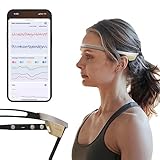
- VISUALIZE YOUR MEDITATION PERFORMANCE. Supported by the biosensing technology, see how your brain and body are working when you are doing meditation. Real-time brainwaves, heart rate, HRV, relaxation, attention and pressure level tell you whether you are getting into meditation states.
- SCIENTIFICALLY VALIDATED LESSONS of various topics in the app help you gain the basic techniques and accompany you to make progress every day (subscribers have access to all). More lessons are on the way. Veterans may enjoy the unguided mode.
- A DETAILED BIODATA REPORT displaying your performance of every minute reminding you when you get into the meditation state and during which period you are doing great. Compare your performance with the last seven times to see your improvement.
- SUPER LIGHT, COMFORTABLE & PORTABLE. 29g in weight. Easy to take it with you anywhere, whether you are at home, in the office or commuting.
- FREE TO DOWNLOAD THE APP on the App Store or Google Play. Bluetooth connection. Once fully charged, the headband lasts about 8 hours to meditate and 50 days on standby mode.
Neurofeedback sessions: turning brain signals into sensory cues
At the core of the Muse experience are neurofeedback sessions, which use real-time EEG data to respond to changes in your mental state. Instead of showing raw brainwave graphs during a session, the app translates those signals into soundscapes.
When the system detects patterns associated with calmer, more stable brain activity, the audio environment becomes quieter or more harmonious. When your focus drifts or mental activity becomes more erratic, environmental sounds intensify, such as wind picking up or waves growing louder.
This indirect approach is intentional. Rather than instructing you how to “focus,” Muse encourages self-correction through feedback, allowing users to discover what mental strategies naturally settle their attention.
Session lengths are customizable, typically ranging from a few minutes to longer training blocks. This flexibility makes it easier to integrate sessions into daily routines without the commitment of a formal meditation practice.
Focus training versus meditation: a subtle but important difference
Although many sessions resemble guided meditation, Muse frames its training more as attentional conditioning than mindfulness instruction. The app does not ask you to clear your mind or follow specific breathing techniques unless you choose guided content.
Instead, it emphasizes consistency and awareness. Over repeated sessions, users can observe how posture, time of day, or environmental distractions affect their ability to maintain a calmer signal.
For users accustomed to fitness trackers that reward output, this can feel counterintuitive. Progress is reflected in trends over time, such as longer periods of stable feedback, rather than instant gratification or achievement badges.
This is also where expectations matter. Improved focus here means becoming better at noticing and regulating attention during structured sessions, not gaining an always-on productivity boost throughout the day.
Post-session insights: interpreting trends without overreach
After each session, the app presents a summary showing periods of calm, neutral, or active brain states. These categories are simplified representations derived from EEG patterns, not labels of mental quality or effort.
Over time, the app aggregates this data into trends that show how your sessions evolve across days and weeks. This longitudinal view is where the Muse approach makes the most sense, highlighting consistency rather than isolated performance.
Importantly, the app avoids assigning emotional or cognitive judgments to these trends. It does not claim you are more focused, smarter, or less stressed, only that your brain activity during training is becoming more stable within the system’s definitions.
Sleep tracking: neuro-sensing meets nighttime wearability
When used overnight, Muse S Athena shifts from training tool to passive monitor. The app automatically detects sleep sessions and uses a combination of EEG signals, motion data, and physiological cues to infer sleep stages.
The resulting breakdown includes time spent in light, deep, and REM-like stages, along with sleep continuity and awakenings. These metrics are best read as patterns rather than precise measurements, echoing the earlier caveats about inferred data.
Comfort plays a significant role here. Unlike wrist-based trackers, Athena must be worn around the head, and tolerance varies widely between users. Those who adapt often gain unique insight into nighttime brain activity, while others may find the form factor intrusive.
Sleep insights focused on habit-building, not diagnosis
The app’s sleep section emphasizes correlations over conclusions. It may highlight trends such as more stable sleep following consistent bedtime routines or calmer evenings.
There is no attempt to flag sleep disorders or offer medical interpretations. This aligns with Muse’s broader philosophy of supporting self-experimentation rather than replacing clinical tools.
For users already wearing a smartwatch to bed, Athena’s value lies not in redundancy but in perspective. It offers a different lens on restfulness, one centered on neural patterns rather than heart rate variability or movement alone.
Daily usability and subscription realities
Most of the Muse app’s advanced features are gated behind a subscription, including expanded session libraries and deeper trend analysis. Without it, the experience feels significantly limited, particularly for long-term training.
Battery life and comfort indirectly shape the app experience as well. Short daily sessions fit easily into most schedules, while overnight tracking demands more intentional use and charging discipline.
Ultimately, the app rewards patience. It is not designed for constant checking or passive optimization, but for users willing to engage thoughtfully with a new category of data.
How the app reframes expectations around focus
Taken as a whole, the Muse app reinforces the idea that focus is a skill, not a stat. It does not promise transformation through metrics alone, but through repeated exposure to feedback and self-awareness.
For tech-savvy wellness enthusiasts, this can feel refreshing. For those expecting clear performance scores or instant productivity gains, it may feel abstract or slow.
This tension defines the Muse experience. The app does not try to replace fitness trackers or productivity tools, but to complement them by addressing a part of mental training they simply do not touch.
The Promise of Improved Focus: What the Science Supports vs. What’s Still Aspirational
By this point, the Muse app has already nudged expectations in a more grounded direction. It frames focus as a trainable process shaped by habits and feedback, not a switch you flip or a score you max out. That framing matters when we examine what Muse S Athena can realistically improve, and where its claims still lean on future-facing optimism.
What Muse S Athena actually measures
At its core, Athena is an EEG-based wearable, using dry electrodes embedded in a fabric headband to detect electrical activity from the brain’s surface. Specifically, it tracks broad frequency bands like alpha, beta, theta, and delta, which researchers associate with different mental states such as relaxed awareness, active concentration, or drowsiness.
This is fundamentally different from what a smartwatch does. Instead of inferring mental state indirectly through heart rate variability, motion, or sleep stages, Muse attempts to sense neural patterns themselves, albeit at a consumer-grade resolution.
That distinction is important, because EEG does not read thoughts or intentions. It captures noisy, context-dependent signals that can suggest shifts in mental state, but only when interpreted carefully and over time.
Where the science is on neurofeedback and focus
The strongest scientific footing behind Muse’s focus claims comes from neurofeedback research. Decades of studies suggest that real-time feedback on brain activity can help users learn to self-regulate attention, particularly in structured training environments.
In practical terms, this means that when users repeatedly practice sustaining attention while receiving immediate feedback, they can become better at recognizing and returning to a focused state. This learning process is gradual and skill-based, aligning closely with how the Muse app structures its sessions.
However, most robust studies involve supervised protocols, clinical-grade equipment, and narrowly defined outcomes. Translating those findings into everyday productivity gains, using a lightweight consumer headband at home, is where evidence becomes thinner.
What improved focus likely looks like in real life
For most users, improved focus will not show up as sudden boosts in output or longer workdays. It is more likely to appear as subtle shifts, such as noticing distractions sooner, feeling less reactive during mentally demanding tasks, or finding it easier to settle into deep work after practice.
Muse’s audio feedback, which responds to changes in EEG patterns during meditation, reinforces this kind of awareness. The goal is not to hold a perfect mental state, but to practice returning to it repeatedly.
This is why results tend to be experiential rather than metric-driven. Users who expect clear before-and-after scores may struggle to quantify progress, even if they feel subjectively different over time.
The limits of EEG outside the lab
Consumer EEG has real constraints. Signals are susceptible to movement, jaw tension, poor electrode contact, and environmental noise, all of which can blur the data during everyday use.
Athena’s fabric headband prioritizes comfort and wearability, especially for longer sessions or sleep tracking, but that design inherently trades off some signal fidelity compared to rigid clinical caps. Muse mitigates this with signal quality checks and guided setup, yet variability remains part of the experience.
This does not invalidate the data, but it does mean trends matter far more than individual sessions. One distracted meditation or erratic reading says little on its own.
Focus training vs. focus transfer
One of the biggest unanswered questions in neurofitness is transfer. Training attention during meditation does not automatically mean better focus during emails, coding, or studying.
Muse implicitly acknowledges this by positioning its sessions as practice, not performance. The assumption is that improved awareness carries over into daily life, but the strength of that carryover varies widely between individuals.
Users who intentionally apply what they learn, such as recognizing mental drift and resetting attention during work, are more likely to see benefits. Passive users waiting for focus to improve on its own may be disappointed.
Expectation, placebo, and motivation effects
Any device promising mental improvement must contend with expectancy effects. Believing that a tool helps focus can itself influence behavior, effort, and consistency.
Rather than being a flaw, this is part of how training tools work. Motivation, ritual, and feedback loops all contribute to habit formation, and Muse leans into this by making sessions feel purposeful and calming.
The risk lies in over-attribution. Improved focus may stem from regular meditation, reduced stress, or structured breaks, with EEG feedback acting as a guide rather than a cause.
Rank #4

- 40Hz Gamma Waves for Memory - Emits precisely tuned 40Hz gamma frequency tones. Research suggests this frequency can help enhance memory, focus, and mental clarity by promoting healthy brainwave synchronization.
- Brain Stimulation Device - Regular exposure to 40Hz gamma wavelengths may help reduce beta-amyloid levels, improve brain wave synchronization, and promote neural plasticity. These are key factors in brain function and resilience.
- How to Use - Simply connect the included headphones to our memory gamma sound machine, press play, and listen to the 40Hz audio for up to 1 hour daily. Use during meditation, relaxation, or quiet time. No apps, screens, or setup required.
- Who is Using 40Hz Gamma Wave Sound Therapy - Designed for those supporting loved ones with age-related cognitive decline, or individuals seeking non-invasive brain support for optimal daily function. Includes our compact, rechargeable audio player and lightweight headphones. No apps or Wi-Fi needed, just press play and listen.
- Trusted & Science‑Driven Brand – Gamma Light Therapy was founded by wellness-focused innovators who personally experienced the benefits of red light therapy. With over a decade of research and development, the brand is committed to creating easy-to-use, science-backed solutions that create real results. Shop the full range of light therapy products.
What remains aspirational in brain-tracking wearables
Claims about personalized cognitive optimization, precise focus scoring, or adaptive brain-based productivity coaching remain more vision than reality. Current consumer EEG lacks the resolution and contextual awareness to deliver that reliably.
Muse S Athena does not claim to diagnose attention disorders or replace therapeutic interventions, and that restraint is appropriate. Still, some marketing language around “training your brain” can sound more powerful than what the technology alone can deliver today.
The long-term promise lies in better sensors, improved algorithms, and richer integration with daily workflows. For now, Athena represents an early but thoughtful step, offering a credible training framework rather than a shortcut to peak focus.
How Muse S Athena Compares to Traditional Fitness Trackers and Smartwatches
Seen through the lens of the previous discussion, Muse S Athena makes more sense when treated not as a competitor to Apple Watch, Garmin, or Fitbit, but as a fundamentally different category of wearable. Where traditional trackers quantify the body’s output, steps taken, heartbeats per minute, calories burned, Athena attempts to observe the state that precedes action: attention, relaxation, and mental engagement.
This difference shapes everything from hardware design to daily usability, and it also explains why expectations need recalibration when coming from mainstream wearables.
What Muse Measures Versus What Fitness Trackers Measure
Most fitness trackers and smartwatches rely on optical heart rate sensors, accelerometers, gyroscopes, GPS, and sometimes skin temperature or SpO₂. These sensors infer physical effort, recovery, and stress by observing physiological responses to activity.
Muse S Athena, by contrast, is built around EEG sensors placed across the forehead and behind the ears, using dry electrodes embedded in a fabric headband. Rather than measuring what your body is doing, it measures patterns of electrical activity associated with mental states like calm, active thinking, or mind wandering.
This distinction matters because EEG data is not inherently intuitive. A rising heart rate during a run is easy to interpret; shifting brainwave patterns during a focus session are abstract, probabilistic, and highly individual. Athena translates those patterns into simplified feedback, but the underlying signal is less concrete than steps or beats per minute.
Form Factor, Comfort, and Real-World Wearability
Smartwatches are designed for continuous, passive wear. Once on the wrist, they fade into the background, tracking throughout the day and night with minimal user involvement.
Muse S Athena is unapologetically intentional. It is worn as a soft headband, primarily during guided sessions, meditation, or sleep. You do not wear it while commuting, typing, or exercising, and it is not meant to replace a watch as an always-on companion.
Comfort is good for its purpose, with lightweight materials and flexible fabric that distributes pressure evenly across the forehead. Still, it remains a device you consciously put on to train, rather than something that quietly observes you all day. That difference alone will determine whether it fits naturally into someone’s routine.
Software Experience: Training Sessions Versus Dashboards
Traditional fitness platforms focus on dashboards, trends, and historical data. Daily rings, weekly mileage, recovery scores, and readiness metrics encourage consistency through accumulation and comparison.
Muse’s app is structured around sessions rather than summaries. The emphasis is on guided experiences, real-time audio feedback, and post-session reflections, not long-term performance charts. Progress is framed in terms of consistency, perceived calm, and time spent in certain mental states.
For users accustomed to quantitative self-tracking, this can feel surprisingly qualitative. Athena does record trends, but they are secondary to the moment-to-moment experience of learning to notice and adjust mental states as they happen.
Battery Life and Charging Expectations
A modern smartwatch typically lasts one to two days, sometimes longer for fitness-focused models, because it must power a screen, sensors, and constant connectivity.
Muse S Athena benefits from a narrower use case. Because it is activated only during sessions or sleep tracking, battery life stretches across multiple days or even weeks depending on usage frequency. Charging is infrequent, but also less predictable, since usage is driven by habits rather than daily wear.
This suits Athena’s role as a training tool rather than a digital hub. You are unlikely to think about its battery daily, but you do need to remember to charge it before longer sleep or focus programs.
Compatibility and Ecosystem Integration
Smartwatches sit at the center of broader ecosystems, syncing with smartphones, third-party fitness apps, workplace notifications, and sometimes even smart home devices. They are designed to integrate seamlessly into digital life.
Muse S Athena is far more self-contained. It pairs with a smartphone app and focuses inward, minimizing notifications and external integrations. There is limited crossover with mainstream health platforms, which reinforces its role as a complementary device rather than a replacement.
For users already wearing a smartwatch, Athena layers on top rather than competing for wrist time. For users hoping to consolidate devices, it will feel narrow and specialized.
Value Proposition: Training the Mind Versus Tracking the Body
Fitness trackers promise accountability. They reward movement, punish inactivity, and encourage behavioral change through visible metrics.
Muse S Athena promises awareness. Its value lies in teaching users to recognize mental states and intervene deliberately, a slower and less externally validated process. Progress is subtle, subjective, and often invisible outside the sessions themselves.
This makes Athena a poor choice for users seeking immediate, measurable gains in productivity or performance. It is better suited to those curious about meditation, focus training, or stress regulation, especially individuals who already understand that mental skills improve through practice rather than passive monitoring.
Who Will Find Athena More Compelling Than a Smartwatch
Athena resonates most with users who feel underserved by traditional wellness metrics. If step counts and heart rate trends no longer feel insightful, brain-state feedback can offer a fresh perspective.
It also appeals to people who already meditate but want structure, feedback, and motivation to stay consistent. In that context, Athena functions less like a gadget and more like a coach that nudges attention back on track.
Those expecting the immediacy and convenience of a smartwatch, or hoping for a direct productivity boost without effort, may find the experience underwhelming. Athena does not automate focus; it asks you to participate in building it.
Real-World Usability: Battery Life, Setup Friction, Daily Habits, and Long-Term Engagement
Understanding Athena’s appeal in theory is one thing. Living with a brain-sensing wearable day after day is where its promises are either reinforced or quietly abandoned.
Battery Life and Charging Reality
Muse S Athena is designed for sessions, not all-day wear, and its battery life reflects that philosophy. In typical use, you can expect around 8 to 10 hours of active session time, which translates to several days if you’re meditating or training focus for 20 to 40 minutes at a time.
Charging is done via a proprietary magnetic cable, and a full top-up takes roughly two hours. It’s not the kind of device you throw on a charger every night like a smartwatch, but it does require a bit of planning if you’re inconsistent about plugging it in after sessions.
In practice, battery anxiety is low as long as Athena remains a ritual-based device. It becomes more noticeable only if you attempt frequent sessions or forget that it isn’t passively charging on your wrist throughout the day.
Setup Friction and First-Time Experience
Initial setup is straightforward by neurotech standards but still more involved than pairing a fitness band. The Muse app walks you through fit, sensor contact, and calibration, which is essential for EEG accuracy but adds a few extra minutes before your first session truly begins.
Proper positioning matters. The headband must sit just above the ears and eyebrows with good skin contact, and users with thick hair may need to adjust more carefully than expected. When contact is poor, the system tells you, but it also interrupts flow until corrected.
This setup friction is manageable, though it subtly reinforces Athena’s role as a deliberate tool rather than a casual accessory. You don’t slip it on absentmindedly; you prepare for it.
Comfort, Fit, and Wearability Over Time
Physically, Athena is lighter and more flexible than earlier Muse generations, with a fabric-covered headband and low-profile sensor modules. During 10–20 minute sessions, it’s easy to forget it’s there, especially when seated or lying down.
Longer sessions can reveal pressure points, particularly around the forehead sensors or behind the ears. This won’t bother everyone, but it’s a reminder that this is not a sleep mask or lifestyle wearable meant to disappear for hours on end.
Unlike watches, there’s no aesthetic integration with daily outfits or social settings. Athena is something you wear privately, usually at home, which naturally limits how often it enters your routine.
Building Daily Habits Around a Brain Tracker
Athena works best when tied to a specific time and context. Morning focus training, post-work decompression, or pre-bed wind-down sessions tend to stick more reliably than vague intentions to “use it when stressed.”
The app supports habit formation with streaks, session history, and gentle reminders, but it avoids aggressive nudging. This restraint aligns with the product’s philosophy but also means motivation must come from the user rather than the system.
Compared to fitness trackers that reward constant motion, Athena rewards consistency in stillness. For some users, that’s refreshing. For others, it feels harder to justify on busy days when stillness is the first thing to be sacrificed.
Software Experience and Ongoing Engagement
The Muse app is clean, stable, and largely distraction-free. Sessions are guided by audio landscapes and real-time feedback rather than dense charts, with deeper analytics available if you want to review trends later.
What’s notably absent is deep integration with broader health platforms. You won’t see Athena data alongside sleep scores or workout loads, which keeps the experience focused but may limit perceived value for data-driven users.
Long-term engagement depends heavily on whether users internalize the feedback. Over weeks, many report relying less on the soundscapes and more on the learned sensation of focus or calm. When that transition happens, Athena succeeds. When it doesn’t, usage often plateaus and declines.
💰 Best Value

- ✒Ensured Child Safety: Ensuring your child's safety, our brain training cards are crafted with thickened, durable cardboard and a high-density writing film for a rounded, detailed design. With double-sided lamination, they offer a high reuse rate—both environmentally friendly and economical.
- ✒Cognitive Growth Toy: The Brain Training Card provides 40 challenging levels that effectively improve children's problem-solving skills and right-brain creativity. Through scientific training, it subjects them to fun and varied board game workouts, while promoting hand-brain coordination.
- ✒Boosts Developmental Skills: Get involved in fun, challenging games that foster life skills and bolster the bond between you and your child, as you both navigate through various levels of difficulty together.
- ✒Must-Choice Gift: Our brain training cards are designed to get involved your child's mind and foster intellectual development. Give the gift of both education and entertainment special occasions; I assure you that your child will love this interesting and engaging toy.
- ✒Brain Boosting Fun: These Left and Right Brain Development Toys offer children a smart way to play, stimulating creativity and hand-brain coordination. Progressing from introductory to advanced stages, the 40 different game levels gradually improve whole brain thinking abilities, exercise attention and fine motor skills.
Sticking Power Compared to Traditional Wearables
Smartwatches stay relevant by being useful even when you’re not actively engaging with them. Athena earns its place only when you choose to engage, which raises the bar for long-term retention.
For users who enjoy structured mental training, this intentionality becomes a strength. Athena feels like equipment, not a toy, and that seriousness can foster commitment.
For everyone else, especially those accustomed to passive tracking and automated insights, Athena’s demands may quietly outweigh its rewards. Its usability isn’t about convenience; it’s about whether you’re willing to meet the device halfway.
Who the Muse S Athena Is Best For—and Who Should Probably Skip It
By this point, it should be clear that Athena’s value isn’t universal. Its usefulness hinges less on technical capability and more on how you approach focus, self-improvement, and wearable technology in general.
Rather than asking whether Athena “works,” the better question is whether its specific kind of work fits into your life. That distinction separates genuinely satisfied owners from those who abandon it after a few weeks.
Best For: Structured Self-Improvers Who Want Measurable Mental Training
Athena is at its strongest for users who already believe focus is a trainable skill rather than a fixed trait. If you’ve experimented with meditation apps, breathing exercises, or productivity systems and wanted more objective feedback, Athena provides a rare bridge between intention and measurement.
The EEG sensors don’t read thoughts, but they do track electrical activity patterns associated with relaxed alertness and mental wandering. For people who enjoy seeing their internal state reflected back in real time, that feedback loop can be motivating in a way timers and streaks never quite achieve.
This group is also more likely to tolerate Athena’s deliberate, session-based design. Wearing a soft fabric headband for 10 to 20 minutes, several times a week, feels purposeful rather than inconvenient when it’s framed as training rather than tracking.
Well-Suited For: Knowledge Workers, Creatives, and Students
Athena makes the most sense for people whose performance bottleneck is mental rather than physical. Writers, developers, designers, students, and researchers often struggle less with effort and more with sustaining attention, and that’s exactly the gap Athena tries to address.
Used before deep work sessions or during wind-down routines, Athena can help reinforce the sensation of entering a focused or calm state. Over time, many users report that the value shifts from the session itself to the learned awareness of when their mind is drifting.
It’s not a productivity booster in the same way a task manager is, but as a pre-work ritual or mental reset, it integrates surprisingly well into cognitively demanding routines.
Appealing To: Wellness Enthusiasts Curious About Neurotechnology
For users already invested in sleep tracking, recovery scores, or mindfulness practices, Athena offers a novel layer of insight without requiring medical-level expertise. The app’s emphasis on audio guidance and qualitative feedback keeps the experience approachable even when the underlying tech is complex.
The headband itself is lightweight, breathable, and far less intrusive than it looks, especially when used seated or lying down. Battery life is sufficient for several sessions between charges, reinforcing its role as occasional equipment rather than an always-on wearable.
If your interest lies in understanding how your mental state responds to stress, stillness, and intentional practice, Athena scratches a curiosity that traditional wearables don’t even attempt to address.
Probably Not For: Passive Trackers and Data Maximalists
Athena is a poor fit for users who expect insights to accumulate automatically in the background. There’s no passive brain tracking, no all-day metrics, and no effortless gains simply from wearing the device.
Likewise, those who want raw data exports, cross-platform integrations, or correlations with sleep stages and workout load may find the ecosystem frustratingly closed. Athena prioritizes experiential feedback over quantitative dashboards, which will feel limiting to spreadsheet-driven users.
If your ideal wearable fades into the background and quietly builds a comprehensive health profile, Athena’s intentional demands will likely feel like friction rather than value.
Not Ideal For: Skeptics Expecting Dramatic or Immediate Results
Athena doesn’t deliver instant clarity, cognitive enhancement, or measurable IQ gains. Improvements in focus tend to be subtle, gradual, and heavily dependent on consistent use and realistic expectations.
Users hoping for a technological shortcut around distraction or mental fatigue may disengage quickly when the experience feels more like practice than transformation. Athena supports skill-building; it doesn’t replace it.
That distinction is critical, because disappointment often stems not from what Athena does, but from what some assume a “brain tracker” should do.
Worth Skipping If You Want a Do-It-All Wearable
Finally, Athena isn’t a smartwatch alternative or a supplement to your fitness tracker in the traditional sense. It doesn’t track steps, workouts, heart rate trends, or sleep stages in a way that replaces wrist-based wearables.
Its value is narrow but focused, and that focus is intentional. If you want a single device to cover physical health, mental wellness, and daily utility, Athena will feel redundant at best and incomplete at worst.
But for users willing to treat mental training as its own category—separate from fitness and productivity tools—Athena occupies a space few wearables even attempt to fill.
The Bottom Line: Is Brain Tracking Ready for Mainstream Wellness, or Still a Niche Tool?
Seen in the context of its limitations, Muse S Athena becomes easier to place. It isn’t trying to replace the smartwatch, nor is it chasing the same kind of passive health quantification that dominates wrist-based wearables.
Instead, Athena asks a more fundamental question: can brain sensing, even in a simplified consumer form, meaningfully support better focus when paired with deliberate practice?
What Athena Gets Right About Brain Tracking Today
Athena succeeds where many neurotech concepts fail by staying grounded in what consumer-grade EEG can realistically do. It measures electrical activity patterns associated with attention and relaxation, then feeds that information back in real time to guide meditation and focus exercises.
This biofeedback loop is the core value. Rather than promising diagnostic insight or cognitive enhancement, Athena acts as a mirror for your mental state during structured sessions, reinforcing awareness and consistency.
For users who already believe focus is a trainable skill, this approach feels honest and appropriately scoped. The device doesn’t claim to read thoughts or optimize your brain in the background; it helps you notice when your mind wanders and return it to task.
Why This Still Isn’t a Mainstream Wellness Wearable
The challenge is that Athena’s strengths are also what keep it niche. Brain tracking at this level requires intention, stillness, and repetition, none of which align neatly with the “set it and forget it” expectations shaped by fitness trackers and smartwatches.
There’s no all-day wear scenario, no continuous mental readiness score, and no frictionless habit formation. You must sit down, wear the headband correctly, launch the app, and commit time to the session for Athena to deliver value.
For many consumers, that level of effort feels more like a practice tool than a wellness product, even if the outcomes are meaningful over time.
The Reality of EEG Data in Consumer Wearables
It’s also important to understand what Athena is not measuring. This isn’t clinical-grade EEG, and it doesn’t provide diagnostic insight into conditions like ADHD, anxiety disorders, or cognitive decline.
The data is abstracted by design, translated into simple feedback rather than raw waveforms or exportable metrics. That makes the experience accessible, but it also limits transparency for users who want to analyze trends or correlate brain activity with sleep, workouts, or stress.
Athena prioritizes guided experience over data ownership, which will feel either refreshingly focused or frustratingly opaque depending on your mindset.
Who Athena Is Actually For
Athena makes the most sense for users who already engage in mindfulness, meditation, or deep work routines and want structured feedback to sharpen those habits. Knowledge workers, students, creatives, and anyone practicing attention as a skill will find it more compelling than casual wellness users.
It’s also well-suited for people who enjoy ritualized tools, devices that signal a clear start and end to an activity rather than blending into the background of daily life. The soft fabric headband, lightweight construction, and session-based battery life reinforce that intentionality.
If you’re comfortable treating mental fitness as something you train deliberately, not something a device optimizes for you, Athena fits naturally into that philosophy.
So, Is Brain Tracking Ready for the Mass Market?
Not yet, at least not in the way step counting or sleep tracking became ubiquitous. The technology works within its boundaries, but the behavioral shift it requires remains a hurdle for widespread adoption.
Brain-tracking wearables like Athena are closer to musical instruments than pedometers. They reward practice, punish neglect, and don’t offer shortcuts around effort.
That doesn’t make them impractical. It just means their value is unevenly distributed.
Final Take
Muse S Athena doesn’t prove that brain tracking is the next universal wellness metric. What it does prove is that, for the right user, consumer neurotech can support better focus without drifting into hype or pseudoscience.
Athena is a tool, not a transformation. Used consistently and with realistic expectations, it can sharpen awareness and reinforce attention in ways traditional wearables simply don’t attempt.
For mainstream wellness, brain tracking still feels like tomorrow’s category. For focused users willing to meet the technology halfway, Athena shows that tomorrow is already quietly functional.