Virtual reality isn’t exotic anymore. By 2026, you can walk into a big-box store or click Buy Now and have a standalone VR headset on your face tomorrow for less than the price of a midrange smartwatch. That raises an obvious question: why on earth would you build one yourself?
The short answer is curiosity, control, and cost awareness. A DIY VR headset isn’t about beating Meta Quest, Pico, or whatever the latest budget darling is on spec sheets. It’s about understanding how VR actually works, experimenting with immersion on your own terms, and learning where the money really goes in commercial headsets before you ever open your wallet.
This guide is written for people who like to tinker but still value their time. You’ll learn what a homemade headset can realistically do in 2026, what it absolutely cannot do, and how it compares to entry-level Oculus-style headsets in day-to-day use so you can decide if this is a fun weekend project or a rabbit hole best avoided.
DIY VR in 2026: Not a Cheaper Oculus, but a Different Experience
A DIY VR headset is fundamentally a viewer, not a platform. Most builds rely on a smartphone display or a small standalone screen, paired with lenses and basic head tracking. There’s no onboard processor running complex VR environments, no inside-out camera tracking, and no polished app store experience.
🏆 #1 Best Overall

- NEARLY 30% LEAP IN RESOLUTION — Experience every thrill in breathtaking detail with sharp graphics and stunning 4K Infinite Display.
- NO WIRES, MORE FUN — Break free from cords. Play, exercise and explore immersive worlds— untethered and without limits.
- 2X GRAPHICAL PROCESSING POWER — Enjoy lightning-fast load times and next-gen graphics for smooth gaming powered by the Snapdragon XR2 Gen 2 processor.
- EXPERIENCE VIRTUAL REALITY — Blend virtual objects with your physical space and experience two worlds at once.
- 2+ HOURS OF BATTERY LIFE — Charge less, play longer and stay in the action with an improved battery that keeps up.
That doesn’t mean it’s useless. For 360-degree video, basic VR demos, educational content, virtual tours, and simple head-tracked experiences, a DIY headset can still feel genuinely immersive. The experience is closer to early Google Cardboard or Gear VR than a modern Quest, but with far more room for customization.
What you gain is transparency. You see how lens focal length affects comfort, how screen resolution translates into perceived sharpness, and why interpupillary distance matters more than marketing makes it sound. That knowledge sticks with you long after the novelty wears off.
How It Stacks Up Against Oculus and Budget Standalone Headsets
Modern budget headsets win decisively on convenience. You get precise six-degree-of-freedom tracking, motion controllers, spatial audio, solid battery life, and a refined software layer that just works. Setup takes minutes, and comfort is engineered rather than improvised.
A DIY headset trades that polish for simplicity and flexibility. There’s usually no controller tracking beyond head movement unless you add external sensors or gamepads. Battery life depends entirely on your phone or power bank, and weight distribution is something you’ll fine-tune with foam, straps, and trial and error.
Where DIY can surprise you is optics and comfort. With decent lenses and careful spacing, visual clarity for static content can rival cheap commercial headsets. The downside is motion-heavy experiences, where latency and lack of positional tracking quickly remind you why commercial VR costs more.
Cost Reality: Saving Money vs Spending Smarter
On paper, DIY VR looks dramatically cheaper. Cardboard or plastic housing, a pair of lenses, some foam, and a phone you already own can put you well under $50. Even more robust builds rarely cross $100 unless you start experimenting with custom screens.
The hidden cost is time. You’ll spend hours adjusting lens distance, fighting light leaks, and tweaking software settings. For some people, that’s the entire point. For others, it’s friction they didn’t sign up for.
The real value is learning before buying. After building your own headset, you’ll understand exactly why standalone VR costs what it does, which features actually matter to you, and whether upgrading to a commercial headset makes sense at all.
Who DIY VR Is Actually For in 2026
DIY VR makes sense if you’re curious, patient, and okay with trade-offs. It’s ideal for students, educators, parents experimenting with VR for kids, or anyone who enjoys hands-on projects and wants a low-risk way to explore immersive tech.
It’s not ideal if you want fitness tracking, social VR, room-scale gaming, or long, comfortable sessions. Budget headsets dominate those areas, and no amount of duct tape or clever lens choices will change that.
What DIY VR does offer is a grounded entry point. Before you strap on a polished, algorithm-driven wearable, you get to build the fundamentals yourself. And once you understand those fundamentals, every VR headset you try afterward makes a lot more sense.
VR Basics Explained Simply: How Lenses, Screens, Sensors, and Software Create Virtual Reality
Once you’ve wrapped your head around the trade-offs of DIY VR, the next step is understanding what actually makes virtual reality feel real in the first place. Every headset, from a cardboard phone shell to a flagship standalone model, relies on the same four building blocks working together. If one is weak, the illusion cracks.
This is where DIY VR becomes educational. You’re not just assembling parts, you’re learning how each component contributes to immersion, comfort, and usability.
Lenses: Tricking Your Eyes Into Depth
VR starts with lenses because your eyes can’t naturally focus on a screen pressed a few centimeters from your face. The lenses bend light so your eyes think they’re looking at something far away, usually around one to two meters. This reduces eye strain and makes the image feel spatial instead of flat.
Each eye sees a slightly different image, just like in real life. Your brain fuses those two images into depth, creating the core 3D effect of VR. This is why lens alignment matters so much in DIY builds.
Lens quality affects sharpness, distortion, and comfort. Cheap plastic lenses can work, but they often blur at the edges or create a “swimmy” feeling when you move your head. Fresnel lenses, common in commercial headsets, are lighter and sharper but harder to source cheaply.
Lens spacing is critical. The distance between lenses should roughly match your interpupillary distance, or IPD. Most adults fall between 60–68 mm, and getting close is more important than being perfect.
The Screen: Resolution, Refresh Rate, and Why Phones Are a Compromise
The screen is the world you’re stepping into, and in DIY VR that’s almost always your smartphone. The phone displays a split image, one half for each eye, rendered by VR software. The lenses then magnify each half to fill your field of view.
Resolution matters more in VR than on a normal phone. Because the screen is magnified, individual pixels become visible, creating the screen-door effect. Higher-resolution phones reduce this, but they don’t eliminate it entirely.
Refresh rate is just as important. A 60 Hz screen updates 60 times per second, which is borderline for VR comfort. Phones with 90 Hz or 120 Hz displays feel noticeably smoother, especially when turning your head.
Brightness and color consistency also affect immersion. OLED screens tend to perform better because blacks are deeper and contrast is higher. LCD screens can look washed out once magnified, especially in dark scenes.
Sensors: Knowing Where Your Head Is
Sensors are what make VR respond to your movement. At minimum, a DIY headset relies on your phone’s gyroscope and accelerometer. These track rotation, meaning when you turn or tilt your head, the view updates accordingly.
This is called rotational tracking, or 3DoF. You can look left, right, up, and down, but you can’t lean forward or step sideways in a meaningful way. That limitation is one of the biggest differences between DIY VR and modern standalone headsets.
Commercial VR adds cameras and advanced sensor fusion to track position in space, known as 6DoF. DIY builds don’t have access to that hardware, so movement-heavy experiences can feel disconnected or uncomfortable.
Sensor quality varies by phone. Older or budget devices often have slower or noisier sensors, which increases latency. That delay between head movement and screen update is a major contributor to motion sickness.
Software: The Glue That Makes It All Work
Software is where lenses, screen, and sensors come together. VR apps split the image correctly, apply distortion correction for your lenses, and translate sensor data into camera movement.
For DIY VR, this usually means simple VR viewers, media players, or lightweight games. Platforms like Google Cardboard-compatible apps still exist, but they’re limited compared to full VR ecosystems.
Distortion correction is especially important. Lenses warp the image, and software has to pre-warp it in the opposite direction so it looks normal once magnified. If the correction doesn’t match your lenses, the image can feel stretched or uncomfortable.
Input is another limitation. Without tracked controllers, interaction is usually handled by head gaze, a single button, or a basic Bluetooth controller. This works for exploration and video, but not for complex games or productivity tasks.
Latency: Why Timing Matters More Than Raw Power
Latency is the time between moving your head and seeing the image update. In VR, even small delays are noticeable. Your brain expects instant feedback, and when it doesn’t get it, discomfort sets in fast.
DIY VR stacks latency from multiple sources. Phone sensors, processing speed, display refresh rate, and software optimization all add delay. Even a powerful phone can struggle if the app isn’t well optimized.
Commercial headsets spend a huge amount of engineering effort reducing latency. Dedicated processors, custom displays, and tightly integrated software make a real difference here. DIY builds can’t match that, but understanding the cause helps you manage expectations.
Comfort and Fit: The Often-Ignored VR Component
Comfort isn’t a single part, but it affects how all the parts work together. Poor weight distribution strains your neck and makes sessions shorter. Light leaks reduce immersion and force your eyes to constantly adjust.
Foam thickness affects eye relief, which changes how lenses behave. Too close and the image distorts. Too far and your field of view shrinks. This is why DIY VR often involves repeated small adjustments.
Commercial headsets invest heavily in ergonomics, materials, and strap design. DIY relies on trial and error, but the upside is customization. You can tune the fit specifically for your face and usage.
Why All of This Matters Before You Build
Understanding these basics changes how you approach a DIY headset. You stop chasing specs blindly and start focusing on balance. Clear lenses, decent refresh rate, acceptable latency, and reasonable comfort matter more than any single impressive number.
It also reframes the value of commercial VR. Once you’ve wrestled with lens alignment, sensor drift, and software quirks yourself, the polish of a standalone headset feels earned rather than overpriced.
This foundation is what turns a cardboard experiment into a functional learning tool. From here, building becomes less about copying a template and more about making informed choices that fit your expectations and your budget.
Choosing Your Platform: Smartphone VR vs PC-Tethered DIY Headsets (and What You Can’t Fake)
With the fundamentals in mind, the next decision shapes everything that follows. Your choice of platform determines how complex the build becomes, how convincing the experience feels, and where frustration is most likely to creep in. In DIY VR, there are really only two viable paths: smartphone-based VR or a PC-tethered headset built from modular parts.
Neither option is inherently right or wrong. They simply trade cost, complexity, and immersion in very different ways.
Smartphone VR: The Simplest Entry Point
Smartphone VR is where most DIY experiments begin, and for good reason. The phone already contains a high-resolution display, motion sensors, battery, speakers, and computing power. Your headset becomes a passive shell: lenses, enclosure, and straps.
This approach keeps costs extremely low and dramatically simplifies wiring and setup. A basic build can be made from cardboard, foam board, or a 3D-printed frame, paired with inexpensive Fresnel or acrylic lenses.
The experience, however, is fundamentally limited by the phone. Most smartphones only provide rotational tracking, meaning you can look around but not lean or move naturally in space. This is often called 3DOF, and no amount of clever mounting can turn it into true positional tracking.
What Smartphone VR Does Well (and Where It Breaks)
For passive experiences, smartphone VR can be surprisingly effective. 360-degree video, virtual tours, and simple environments feel immersive when latency is kept in check. The screen resolution of modern phones can even exceed early commercial headsets.
Where it breaks down is interaction. Touch-based input or a basic Bluetooth controller feels disconnected from what your eyes see. Hand presence, object manipulation, and room-scale movement are essentially off the table.
Thermals and battery life also become limiting factors. Phones throttle performance when they heat up, which increases latency and reduces frame rate right when consistency matters most.
PC-Tethered DIY VR: More Immersion, More Responsibility
A PC-tethered DIY headset shifts the workload to a gaming-capable computer. Instead of relying on a phone, you use a dedicated display panel, external sensors, and a wired video signal. This opens the door to higher refresh rates, lower latency, and real positional tracking.
The upside is obvious the moment you move your head and the world stays locked in place. Even basic 6DOF tracking dramatically improves comfort and realism. This is the threshold where VR stops feeling like a novelty and starts feeling spatial.
The downside is complexity. Displays need drivers, tracking needs calibration, and software support becomes a real concern. Cable management, weight distribution, and power delivery all become part of the build.
Tracking: The One Thing You Can’t Fake
Tracking is the single biggest divider between DIY tiers. Rotational tracking can be handled by phone sensors or basic IMUs, but positional tracking requires external references. Cameras, infrared markers, or lighthouse-style emitters are not optional.
Software tricks can smooth motion or predict movement, but they cannot invent real-world position data. When tracking drifts or snaps back, your brain notices instantly. This is where many ambitious DIY builds stall.
Rank #2
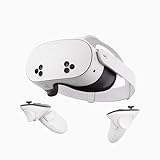
- NO WIRES, MORE FUN — Break free from cords. Game, play, exercise and explore immersive worlds — untethered and without limits.
- 2X GRAPHICAL PROCESSING POWER — Enjoy lightning-fast load times and next-gen graphics for smooth gaming powered by the SnapdragonTM XR2 Gen 2 processor.
- EXPERIENCE VIRTUAL REALITY — Take gaming to a new level and blend virtual objects with your physical space to experience two worlds at once.
- 2+ HOURS OF BATTERY LIFE — Charge less, play longer and stay in the action with an improved battery that keeps up.
- 33% MORE MEMORY — Elevate your play with 8GB of RAM. Upgraded memory delivers a next-level experience fueled by sharper graphics and more responsive performance.
Commercial headsets justify much of their cost here. Years of refinement go into making tracking feel invisible. DIY solutions can work, but they demand patience and a willingness to accept occasional instability.
Displays, Optics, and Why Specs Aren’t the Whole Story
It’s tempting to chase raw resolution, especially with PC-driven panels. But pixel count alone doesn’t guarantee clarity. Subpixel layout, persistence, refresh rate, and lens quality all affect how sharp the image feels.
Cheap lenses introduce distortion, chromatic aberration, and edge blur. You can compensate in software, but only within limits. Commercial optics are expensive for a reason, and DIY alternatives always involve trade-offs.
Field of view is another common trap. Wider lenses can increase immersion, but only if the display can support it without stretching or softness. A narrower, cleaner image often feels better than a wide, distorted one.
Controllers and Interaction: Where DIY Hits Reality
Looking around is easy. Interacting with the virtual world is not. Proper VR controllers require low-latency tracking, ergonomic design, and precise input mapping.
DIY controller solutions range from repurposed gamepads to experimental motion controllers. They can be fun and educational, but rarely feel natural. Hand presence is one of the hardest elements to replicate convincingly.
This is another area where expectations matter. If your goal is exploration and viewing, limitations are manageable. If you want physics-heavy games or fine manipulation, DIY quickly shows its limits.
Deciding What’s Worth Building Yourself
Smartphone VR is ideal for learning how lenses, displays, and ergonomics interact. It rewards experimentation and teaches you what matters most without much financial risk. Think of it as a hands-on textbook rather than a replacement for a commercial headset.
PC-tethered DIY VR is for those who want to push further and don’t mind troubleshooting. The experience can be genuinely impressive, but the time investment is significant. You are trading money for effort and patience.
Understanding what you can’t fake helps you choose honestly. DIY VR isn’t about beating commercial headsets; it’s about understanding them by building something that works on your own terms.
What You’ll Need: Materials, Tools, and Cost Breakdown for a Thrift-Grade VR Build
By now, the trade-offs should be clear. You’re not chasing perfect optics or room-scale tracking; you’re assembling a functional viewing rig that teaches you how VR actually works. That framing makes the shopping list refreshingly simple, and importantly, flexible.
This build assumes a smartphone-driven headset, because it delivers the most learning per dollar and keeps the number of failure points low. You can upgrade individual components later without rebuilding everything from scratch.
The Display: Your Smartphone as the VR Panel
Your phone is the single most important component, and the one you probably already own. Ideally, it should have a 1080p display or higher, decent brightness, and a reliable gyroscope for head tracking.
OLED panels are a bonus thanks to deeper blacks and faster pixel response, but LCD phones work fine for experimentation. Screen size matters more than people expect; phones between 5.5 and 6.5 inches tend to balance field of view and comfort best.
If you’re buying used specifically for this project, older flagship Android phones often offer the best value. Expect to spend $40 to $80 on the second-hand market for something perfectly usable.
Lenses: The Optical Heart of the Build
Lenses determine whether your headset feels immersive or immediately uncomfortable. The most common choice for DIY builds is a pair of 37mm to 45mm biconvex lenses, often sold as replacement lenses for Google Cardboard-style viewers.
Lower magnification lenses produce a narrower but cleaner image, which is easier on the eyes during longer sessions. Higher magnification increases field of view but exaggerates edge distortion and blur, especially with phone screens not designed for VR.
A decent pair typically costs $5 to $15. Avoid toy-grade magnifiers or reading glasses, as their optical quality and focal length are inconsistent.
Housing: From Cardboard to Thrift-Store Engineering
The enclosure’s job is alignment, light blocking, and comfort. Cardboard remains popular because it’s easy to cut and adjust, but foam board, EVA craft foam, or even modified plastic storage boxes work just as well.
What matters is rigidity around the lens mounts and precise spacing between lenses and screen. Sloppy alignment causes eye strain faster than low resolution ever will.
If you’re scavenging materials, this part can cost almost nothing. Buying new foam board, glue, and padding usually lands in the $5 to $10 range.
Straps and Padding: Comfort Is Not Optional
A headset that technically works but hurts to wear will collect dust quickly. Elastic straps from old ski goggles, safety gear, or even backpack sternum straps make excellent head mounts.
Face padding can come from foam weather stripping, old mouse pads, or replacement VR facial interfaces cut to size. Breathability matters more than softness, especially if your phone runs warm.
Expect $5 to $15 here unless you’re repurposing materials you already have.
Audio: Optional, but Worth Considering
VR is dramatically more convincing with spatial audio, but you don’t need anything fancy. Wired earbuds reduce latency and eliminate Bluetooth sync issues.
Over-ear headphones add immersion but increase weight and pressure. For a thrift-grade build, lightweight in-ear monitors are the most practical choice.
If you don’t already own something suitable, budget $5 to $20 depending on quality.
Basic Tools You’ll Actually Use
This is not a precision machining project. Most builds require only a utility knife or scissors, a ruler, a marker, and strong adhesive such as hot glue or contact cement.
A hot glue gun speeds up iteration and makes adjustments easier when something doesn’t align perfectly the first time. If you plan to experiment with lens spacing, removable adhesive or Velcro strips are surprisingly useful.
If you already do basic DIY projects, you likely own everything needed. Otherwise, $10 to $20 covers the essentials.
Software: Free Apps Do the Heavy Lifting
On the software side, free VR viewers, cardboard-compatible apps, and PC streaming tools handle distortion correction and head tracking. Android has the widest selection, but iOS options exist as well.
If you plan to stream PC VR content, apps like iVRy or similar solutions may require a small one-time purchase. This is optional and only relevant if you want to go beyond mobile VR experiences.
Software costs range from $0 to $10, depending on how far you push the setup.
Estimated Total Cost: What “Thrift-Grade” Really Means
If you already own a compatible phone, a functional DIY headset can realistically cost $15 to $30. That includes lenses, basic materials, and padding.
Starting from scratch with a used phone and buying everything else still keeps most builds under $100. That price buys hands-on understanding of optics, ergonomics, and VR limitations that no spec sheet ever will.
The key takeaway isn’t the number; it’s the flexibility. Every component can be swapped, upgraded, or rebuilt as you learn what actually matters to your eyes, your face, and your expectations.
Step-by-Step Build Guide: Assembling the DIY VR Headset Housing and Optics
With the tools, lenses, and expectations set, this is where the project becomes tangible. You’re essentially building three things at once: a light-tight housing, a precisely spaced optical system, and something comfortable enough to wear on your face for more than five minutes.
Take your time here. Small adjustments in this stage have a bigger impact on image clarity and comfort than any app or software tweak later.
Step 1: Choose and Prepare the Housing Material
The housing’s job is simple but critical: hold the phone and lenses in a fixed position while blocking outside light. Cardboard, foam board, or thin EVA foam all work, with cardboard being the most accessible and forgiving for first-time builds.
If you’re using cardboard, choose something rigid but not corrugated shipping box thickness. Cereal-box-grade cardboard or craft board is easier to cut cleanly and holds glue more predictably.
Start by cutting a rectangular shell slightly wider than your phone and about 80 to 100 mm deep. This depth allows room to experiment with lens-to-screen distance, which directly affects focus and eye strain.
Step 2: Mark and Cut the Lens Openings
Lens placement is the most important measurement in the entire build. The center-to-center distance between lenses should roughly match your interpupillary distance, which for most adults falls between 60 and 66 mm.
If you don’t know your IPD, measure it using a mirror and ruler or a phone app. Erring a millimeter or two wide is generally more comfortable than too narrow.
Trace the lens diameter onto the front panel of the housing, then cut slightly smaller than the lens size. A snug friction fit reduces light leaks and makes fine alignment easier before gluing anything permanently.
Step 3: Set Initial Lens-to-Screen Distance
For common 25 to 37 mm focal length lenses, a starting distance of 40 to 50 mm from lens to phone screen is a safe baseline. This isn’t a fixed rule, but it gets most people into the correct focus range.
Temporarily tape or lightly glue a spacer inside the housing to hold the lenses at this distance. This temporary setup lets you test focus before committing to a final structure.
Place your phone in the housing, open a VR app or split-screen test image, and check clarity. If text looks sharp in the center but blurry at the edges, you’re in the right ballpark.
Step 4: Fine-Tune Focus and Alignment
This is the slow, iterative part, and it’s where patience pays off. Move the lenses closer or farther from the screen in 2 to 3 mm increments, testing each time.
If you feel eye strain quickly, the lenses are likely too close. If the image never fully sharpens, they’re probably too far away.
Also check vertical alignment. Your eyes should naturally sit level with the optical center of the lenses without you having to tilt your head. Shimming with thin cardboard strips works surprisingly well here.
Step 5: Secure the Lenses Permanently
Once focus feels comfortable and repeatable, fix the lenses in place. Hot glue is ideal because it fills gaps and sets quickly, but avoid letting glue creep onto the lens surface.
Rank #3
- NO WIRES, MORE FUN — Break free from cords. Game, play, exercise and explore immersive worlds — untethered and without limits.
- 2X GRAPHICAL PROCESSING POWER — Enjoy lightning-fast load times and next-gen graphics for smooth gaming powered by the SnapdragonTM XR2 Gen 2 processor.
- EXPERIENCE VIRTUAL REALITY — Take gaming to a new level and blend virtual objects with your physical space to experience two worlds at once.
- 2+ HOURS OF BATTERY LIFE — Charge less, play longer and stay in the action with an improved battery that keeps up.
- 33% MORE MEMORY — Elevate your play with 8GB of RAM. Upgraded memory delivers a next-level experience fueled by sharper graphics and more responsive performance.
Apply glue in small sections, letting each one cool before moving on. This reduces the risk of lenses drifting out of alignment as the adhesive sets.
After securing, do one more test fit. Small shifts can happen during gluing, and it’s better to catch them now than after building the rest of the housing.
Step 6: Build the Phone Retention System
Your phone needs to stay firmly in place without pressing against the lenses or overheating. A simple rear flap with foam padding works for most builds.
Cut a rear panel that slides or folds open, then add soft foam or felt where the phone rests. This prevents scratches and absorbs minor movement during head motion.
Make sure buttons and charging ports remain accessible. You’ll likely need to adjust volume or plug in headphones after the phone is mounted.
Step 7: Seal Light Leaks and Internal Reflections
Light leaks kill immersion faster than low resolution. Once the structure is assembled, turn off room lights and check for stray light entering the housing.
Seal gaps with black tape, additional cardboard strips, or fabric. Inside surfaces benefit from matte black paint or black paper to reduce internal reflections and glare.
This step dramatically improves perceived contrast, especially in darker VR scenes, and costs almost nothing to do properly.
Step 8: Add Face Padding and Comfort Layers
Comfort determines whether this headset is a fun experiment or something you actually use. Foam weather stripping, old mouse pads, or cut-up yoga mats all work as face padding.
Focus padding around the forehead and cheekbones, not the nose. Leave a small nose gap for airflow to reduce lens fogging during longer sessions.
Test fit frequently. The headset should feel evenly balanced, not front-heavy, and should rest without needing constant hand support.
Step 9: Attach a Basic Head Strap (Optional but Recommended)
While handheld use works for quick demos, a strap transforms usability. Elastic bands, old ski goggle straps, or even Velcro straps can be adapted easily.
Anchor the strap at three points if possible: left, right, and top. This distributes weight more evenly and reduces pressure on the bridge of your nose.
Adjust tension so the headset stays in place when you turn your head, but never so tight that it causes discomfort after ten minutes.
Step 10: Final Fit Check and Real-World Testing
With everything assembled, spend 10 to 15 minutes in a simple VR environment. Avoid fast motion or roller-coaster demos at first.
Pay attention to heat buildup, pressure points, and whether the image remains clear without constant adjustment. These are the practical differences between a clever build and a usable one.
Minor tweaks at this stage are normal. DIY VR isn’t about perfection; it’s about learning how optics, ergonomics, and expectations intersect in the real world.
Getting the Visuals Right: Lens Types, Focal Distance, IPD Adjustment, and Reducing Eye Strain
Once the headset fits your face comfortably, the next limiting factor is optics. This is where DIY VR either clicks into place or falls apart, because your eyes are far less forgiving than cardboard and tape.
Commercial headsets hide a lot of complexity behind custom lenses and precision alignment. In a DIY build, understanding a few optical basics gets you surprisingly close without spending much money.
Choosing the Right Lenses for DIY VR
Most DIY VR headsets rely on simple magnifying lenses to make a nearby phone screen appear larger and farther away. The most common options are biconvex lenses, Fresnel lenses, or repurposed optics from old devices.
Biconvex lenses are the gold standard for simple builds. They’re inexpensive, optically clean, and widely sold as “VR lenses” with focal lengths around 40 to 50 mm.
Fresnel lenses are thinner and lighter, but they introduce visible rings that can reduce clarity and increase glare. They’re usable for experiments, but they’re more fatiguing for longer sessions.
Avoid reading magnifiers or very strong handheld magnifying glasses. These usually have uneven curvature and cause distortion that no amount of adjustment can fix.
Understanding Focal Distance and Why It Matters
Focal distance determines how far your eyes think the screen is. In VR, the goal is to trick your eyes into relaxing as if they’re looking at something a couple of meters away, not a phone pressed against your face.
Most DIY VR lenses work best when the phone screen sits roughly one focal length away from the lens. For a 45 mm lens, that means the screen should be about 45 mm behind it.
If the screen is too close, you’ll struggle to focus and feel eye strain almost immediately. Too far away, and the image becomes small and loses immersion.
The easiest way to dial this in is with temporary spacers. Stack cardboard shims or foam strips behind the phone tray and test until text looks sharp without squinting.
Lens-to-Eye Distance: The Often-Ignored Variable
Lens placement isn’t just about the screen; it’s also about your eyes. The distance between your eyes and the lenses affects field of view, clarity, and comfort.
Too close, and you’ll see edge distortion and feel pressure around your eye sockets. Too far, and the image shrinks, killing immersion.
A good starting point is placing the lenses 10 to 15 mm away from your eyes once padding is compressed. This mimics the geometry of entry-level commercial headsets surprisingly well.
IPD Adjustment: Matching the Headset to Your Eyes
IPD, or interpupillary distance, is the space between your pupils. Most adults fall between 58 and 72 mm, and mismatched IPD is one of the biggest causes of discomfort in DIY VR.
If your headset uses fixed lenses, measure your IPD with a ruler and mirror or a phone app. Then mount the lenses so their centers match that distance as closely as possible.
For adjustable builds, cut horizontal slots instead of round holes and mount lenses on small sliding plates. Even a few millimeters of adjustment makes a noticeable difference in clarity.
When IPD is correct, both eyes see a sharp image simultaneously without forcing your gaze inward or outward. If you feel cross-eyed or unfocused, something is off.
Aligning the Phone Screen Correctly
The phone must be centered vertically and horizontally relative to the lenses. Even slight misalignment causes one eye to see a different part of the image, leading to strain.
Start by aligning the center of the phone screen with the midpoint between the lenses. Many VR apps include alignment grids that make this much easier.
If your phone has an unusually tall or wide aspect ratio, expect some wasted screen area. That’s normal in DIY builds and not worth over-optimizing.
Reducing Distortion and Edge Blur
Simple lenses naturally distort at the edges. Commercial headsets correct this in software, but DIY VR relies on minimizing the effect physically.
Keep lenses clean and free from scratches. Even small scuffs become distracting when magnified and close to your eyes.
Slightly reducing field of view can improve clarity. Mask the outer edges of the lenses with black tape or paper to hide the worst distortion zones.
Managing Eye Strain During Use
Eye strain isn’t just about optics; it’s about how long and how intensely you use the headset. DIY VR demands more restraint than a polished commercial device.
Limit early sessions to 10 or 15 minutes. Your eyes and brain need time to adapt to the fixed-focus nature of VR.
Lower your phone’s brightness. Excessively bright screens increase fatigue, especially in dark environments.
Avoid fast motion and artificial locomotion at first. Static environments, 360-degree photos, or slow-moving experiences are far more comfortable in a DIY headset.
Ventilation, Fogging, and Visual Comfort
Lens fogging kills clarity and increases strain as your eyes constantly refocus. The small nose gap you left earlier plays a bigger role here than it seems.
If fogging persists, add tiny vent holes on the bottom or sides of the housing. Light leaks are less harmful than condensation on lenses.
Some builders add a thin strip of anti-fog coating or even diluted dish soap, wiped clean, to the lenses. It’s a small hack with a real comfort payoff.
Knowing the Limits of DIY Optics
Even perfectly adjusted, a DIY VR headset won’t match the clarity, edge sharpness, or comfort of modern standalone headsets. That’s not failure; it’s physics and budget.
What you gain instead is a hands-on understanding of how VR works and what actually matters in daily use. Lens quality, alignment, and comfort quickly stand out as worth paying for in commercial designs.
Getting the visuals right is where a cardboard experiment becomes a convincing virtual window. Take your time here, because every millimeter and small adjustment directly affects how usable your DIY headset feels.
Tracking, Controls, and Interaction: Head Movement, Controllers, and DIY Workarounds
Once the visuals are dialed in, the next question becomes how your headset knows where you’re looking and how you interact with anything inside VR. This is where DIY builds feel most different from modern commercial headsets, and where expectations need a careful reset.
Rank #4

- 256GB Storage Capacity
- Top VR Experience: Oculus Quest 2 features a blazing-fast processor, top hand-tracking system, and 1832 x 1920 Pixels Per Eye high-resolution display, offering an incredibly immersive and smooth VR gaming experience.
- Anti-Slip Controller Grip Covers: grip covers are made of nice silicone material that effectively prevents sweat, dust, and scratches. Anti-slip bumps enhance the handgrip and feel.
- Adjustable Knuckle Straps: knuckle straps make it possible to relax your hands without dropping the controllers. High-quality PU material offers extra durability and velcro design makes it easy to adjust the strap length to different needs.
Good optics make VR look convincing. Tracking and controls are what make it feel alive.
How Head Tracking Works in a Phone-Based DIY VR
Your smartphone is doing all the heavy lifting for head movement. Inside it are gyroscopes and accelerometers that track rotation in real time.
This gives you three degrees of freedom, often shortened to 3DoF. You can look left and right, up and down, and tilt your head, but you cannot physically move forward, backward, or sideways in space.
In practical terms, you can look around a virtual room, but you can’t lean closer to an object or step around it. That limitation defines almost every interaction choice you’ll make with a DIY headset.
Understanding 3DoF vs 6DoF (and Why It Matters)
Modern standalone headsets use six degrees of freedom, or 6DoF, combining rotation with real-world position tracking. Cameras and sensors map your room and your body’s movement through it.
A DIY phone-based headset simply can’t do this reliably without external hardware. Some apps attempt camera-based positional tracking, but results are inconsistent and highly sensitive to lighting and phone model.
This isn’t a dealbreaker, but it does shape which apps feel comfortable. Seated experiences, cockpit-style games, 360-degree video, and slow exploration work best.
Reducing Drift and Improving Head Tracking Stability
Sensor drift is the most common complaint in DIY VR. Over time, the virtual world slowly rotates even when your head stays still.
Most VR apps include a recenter or reset view option. Get used to triggering it frequently, especially at the start of each session.
Keeping your phone cool helps more than most people expect. Heat affects sensor accuracy and battery life, so avoid long sessions and remove bulky cases if airflow allows.
Basic Interaction: Gaze-Based Controls
The simplest interaction method is gaze-based selection. You look at an object and hold your view steady to activate it.
This works surprisingly well for menus, video playback, and simple apps. It requires no extra hardware and keeps the build cheap and portable.
The downside is speed and precision. Anything requiring fast reactions or complex input quickly becomes frustrating.
Adding a Bluetooth Controller or Gamepad
A Bluetooth gamepad is the single biggest usability upgrade you can add. Even an old console controller instantly makes navigation smoother and more intuitive.
Most Android and iOS VR apps support standard controller layouts. Buttons handle selection, movement, and recentering without taking your phone out of the headset.
Comfort matters here. Choose a controller with good ergonomics and lightweight construction, since your hands will stay active even during seated use.
DIY Physical Triggers and Minimalist Controllers
If you want to stay fully DIY, a simple magnetic or spring-loaded trigger mounted to the headset can act as a single-button input. Some cardboard VR designs use this to tap the phone screen.
It’s crude but effective for gaze-based menus and basic interactions. The tactile feedback adds a sense of control missing from pure head-only input.
Expect limited compatibility. Many modern apps no longer support screen-tap triggers, so this works best with older or explicitly cardboard-style software.
Using an Old Phone as a Dedicated Controller
An old smartphone can serve as a handheld controller via Wi‑Fi or Bluetooth. Several VR apps allow touch or motion input from a second device.
This setup gives you more flexibility than a single trigger, including swipes, virtual joysticks, and buttons. It also keeps costs low if you already have spare hardware.
Battery life becomes the tradeoff. Two active phones drain quickly, and heat management matters for both comfort and tracking accuracy.
Why Hand Tracking Isn’t Practical for DIY Builds
Hand tracking relies on multiple cameras, depth sensing, and heavy processing. Even when apps attempt it using a phone’s front camera, results are laggy and unreliable.
Lighting conditions have to be perfect, and arm fatigue sets in quickly. For most DIY users, this ends up more frustrating than immersive.
This is one area where commercial headsets clearly earn their price. For DIY VR, physical buttons remain the more satisfying option.
Software Choices Shape the Entire Experience
Not all VR apps are created equal for DIY headsets. Look for software designed around 3DoF tracking and seated use.
360-degree video players, virtual cinemas, space exploration apps, and slow-paced educational experiences feel natural and comfortable. Fast action games and artificial walking tend to amplify motion discomfort.
Pay attention to how often an app lets you recenter your view. Frequent resets are a normal part of DIY VR, not a sign of poor setup.
Seated Play, Swivel Chairs, and Physical Workarounds
A simple swivel chair is an underrated upgrade. Instead of forcing virtual movement, you rotate your body naturally to explore environments.
This reduces motion sickness and makes head tracking feel more accurate. It also keeps you safely grounded in the real world.
Clear your surroundings and stay seated. DIY headsets lack boundary systems, so physical awareness is entirely your responsibility.
Safety, Comfort, and Real-World Usability
Cables, controllers, and furniture become hazards once your vision is blocked. Keep sessions short and your environment uncluttered.
Controller weight, button placement, and grip texture matter more than specs. Comfort directly affects how long you can stay immersed.
DIY VR isn’t about perfect interaction. It’s about learning which features truly matter, and which ones you’re happy to live without when cost and curiosity drive the build.
Software Setup and Content: Best Apps, Games, and Experiences for DIY VR Headsets
Once the physical build is comfortable and tracking feels predictable, software becomes the deciding factor in whether DIY VR feels magical or immediately disappointing. The right apps can mask hardware limitations, while the wrong ones will exaggerate every flaw.
This is where expectations matter. You are not trying to replicate a Meta Quest or PS VR; you are curating experiences that respect 3DoF tracking, phone-based sensors, and seated use.
Choosing the Right Platform: Android vs iOS vs PC Streaming
Most DIY VR headsets are built around smartphones, and Android remains the most flexible option. Google Cardboard support is fading, but many developers still quietly support split-screen stereoscopic modes.
iOS works, but Apple’s tighter ecosystem limits experimental apps. You will find fewer true VR titles, though 360-degree video players and virtual theater apps still run well.
PC streaming is the most powerful option if you already own a capable computer. Apps like Trinus VR and VRidge stream a PC desktop or SteamVR content to your phone, but performance depends heavily on Wi‑Fi quality and GPU headroom.
Essential Setup Apps for Calibration and Comfort
Before loading any content, install a basic VR launcher or calibration app. These let you adjust lens distortion, interpupillary distance, and screen alignment so the image doesn’t feel crossed or blurry.
Cardboard-style calibration apps are simple but effective. Spend time here, because poor alignment causes eye strain faster than low resolution ever will.
Also look for apps with quick recenter buttons. DIY VR drifts, and being able to reset your view without removing the headset dramatically improves usability.
Best 360-Degree Video and Virtual Cinema Apps
360-degree video is the safest starting point for DIY VR. There’s no artificial movement, tracking demands are low, and immersion remains surprisingly strong.
YouTube still hosts a massive library of 360 and 180 VR content, from documentaries to travel footage. The native YouTube app supports cardboard-style viewing with acceptable performance on midrange phones.
Dedicated virtual cinema apps like VaR’s VR Player, Skybox, or VR Cinema Hall offer more control. Sitting in a simulated theater watching standard video is one of the most convincing experiences DIY VR can deliver.
Educational, Exploration, and Relaxation Experiences
Slow-paced exploration apps shine on DIY headsets. Space exploration experiences, museum walkthroughs, and historical reconstructions feel natural when you can simply look around.
Apps that place you inside a static environment, like the surface of Mars or inside the ISS, minimize motion sickness. These experiences emphasize presence rather than interaction.
Meditation and relaxation apps also work well. Guided breathing sessions, floating environments, and ambient soundscapes benefit from immersion without demanding precise input.
Light Games That Actually Work in DIY VR
Gaming is where restraint pays off. Avoid fast movement, artificial walking, or twitch-based mechanics.
Simple gaze-based games, puzzle titles, and on-rails shooters designed for Cardboard are ideal. Many older VR titles remain playable and were designed specifically for limited tracking.
Racing games can work if the camera stays locked to the vehicle and you steer with a controller. As soon as the game separates head movement from motion, discomfort increases quickly.
💰 Best Value

- VR HEADSET COMPATIBILITY: Works seamlessly with 4.7-6.5 inches smartphones such as for iPhone 16/16 Pro/15/15 Pro/14/13 Pro/13/13 Mini/12 Pro/12/12 Mini/11 Pro/11/8 Plus/8/7 Plus/7/ MAX/XR/X; for Samsung Galaxy S25/S24/S23/S22/S21/S21 Ultra/S20/S10/S10e/S10 Plus/S9/S9 Plus/Note 10 Plus/Note 10/ 9/8/A20e/A50 etc
- INTEGRATED AUDIO VR SET: Features built-in foldable Bluetooth headphones for complete audio immersion while enjoying VR content
- VERSATILE USE VIRTUAL REALITY HEADSET: Perfect for watching 3D movies and playing virtual reality games with comfortable viewing experience for both adults and kids
- VIRTUAL REALITY VISUAL EXPERIENCE: Delivers immersive 3D viewing with adjustable focal settings to accommodate different visual requirements
- ADJUSTABLE DESIGN VR HEADSET: Ergonomically designed headset with adjustable straps for secure and comfortable fit during extended VR sessions. Ideal gift option for everyone
Controller Support and Input Mapping
Most DIY VR apps assume a single-button Cardboard input or a basic Bluetooth controller. A cheap gamepad dramatically expands what you can play.
Look for apps that allow button remapping. Mapping recenter, confirm, and back functions to physical buttons makes the experience smoother.
Avoid apps that rely heavily on precise analog stick movement. Latency and drift make fine control frustrating, especially over longer sessions.
PC VR Streaming: What to Expect Realistically
Streaming PC VR content sounds tempting, but it’s the most fragile part of a DIY setup. Latency, compression artifacts, and sensor mismatch are common issues.
Seated simulators like flight sims or driving games are the best candidates. Avoid room-scale titles entirely, as 6DoF assumptions break immersion instantly.
If your PC struggles, lower resolution and frame rate aggressively. Smooth motion at lower fidelity feels far better than sharp visuals with stutter.
Free and Low-Cost Content Worth Trying
One of the strengths of DIY VR is experimentation without financial risk. Many worthwhile apps are free, abandoned, or priced cheaply due to aging platforms.
Search app stores using terms like “Cardboard,” “360 VR,” or “VR cinema.” Older apps often perform better on DIY hardware because they were built with limitations in mind.
Public-domain VR videos, educational institutions, and indie developers still release content that works beautifully on simple headsets.
What to Skip, Even If It Looks Tempting
Avoid apps advertising full hand tracking, room-scale movement, or fitness tracking. These are designed for hardware you simply don’t have.
Fast-paced shooters, artificial locomotion, and competitive multiplayer games will highlight latency and tracking limits. Even if they run, they rarely feel good.
When in doubt, choose experiences that reward looking, not moving. DIY VR is strongest when it invites curiosity rather than demanding precision.
Setting Expectations: When Software Makes DIY VR Worth It
The best DIY VR moments come from carefully chosen software rather than raw specs. A well-calibrated headset running a calm, thoughtfully designed app can feel far more immersive than expected.
If you find yourself repeatedly returning to certain apps, that’s a sign the setup works for you. If everything feels uncomfortable, it’s usually a software mismatch, not a failed build.
This experimentation is the real value of DIY VR. It teaches you which experiences matter most before deciding whether a commercial headset is worth the upgrade.
Comfort, Safety, and Wearability: Weight Balance, Ventilation, and Session Limits
Once you’ve found software that plays nicely with your DIY setup, comfort becomes the limiting factor. A headset that technically works but feels miserable on your face will end sessions early, no matter how impressive the visuals are. This is where thoughtful physical design matters more than pixels or frame rates.
Weight Balance: Reducing Face Pressure and Neck Strain
Most DIY VR headsets are front-heavy because the phone, lenses, and housing all sit in front of your eyes. If all that weight hangs from a single elastic strap, pressure builds quickly on your nose, cheeks, and forehead.
Aim to distribute weight across the top and back of your head. A simple over-the-head strap or a second elastic band running from the front to the back dramatically reduces face load and keeps the optics aligned during movement.
If your headset allows it, counterweighting helps more than you’d expect. A small battery pack or pouch of coins taped to the rear strap can rebalance the system and reduce neck fatigue during seated use.
Straps, Padding, and Skin Contact Materials
Elastic straps from cheap phone headsets often lose tension or dig into skin over time. Replacing them with wider elastic, Velcro straps, or even repurposed camera straps improves stability and comfort immediately.
For padding, avoid bare foam or cardboard touching your face. Closed-cell foam, soft EVA sheets, or washable fabric covers reduce pressure points and absorb less sweat.
If you wear glasses, test clearance early and often. DIY headsets rarely accommodate frames gracefully, so consider old, slim-profile glasses or inexpensive prescription inserts if VR becomes a frequent hobby.
Ventilation and Heat Management
Heat buildup is one of the fastest ways to make DIY VR unpleasant. Smartphones generate heat under sustained load, and enclosed housings trap both warmth and moisture near your eyes.
Ventilation holes near the top or sides of the enclosure help hot air escape without letting light leak directly onto the lenses. Even small cutouts can reduce fogging and keep lenses clearer during longer sessions.
If fogging persists, anti-fog wipes or a tiny airflow gap near the nose bridge can help. Avoid sealing the headset completely, as comfort matters more than perfect light isolation in DIY builds.
Motion Comfort and Physical Safety
DIY VR lacks the tracking precision and safety systems of commercial headsets, so you need to compensate with behavior. Always use it seated, ideally in a chair without wheels, and keep your feet planted.
Clear the immediate area around you, even if you don’t plan to move. Sudden head turns or instinctive reactions can still lead to bumped desks, monitors, or coffee mugs.
If you feel dizziness, eye strain, or nausea, stop immediately. These signals usually mean frame rate instability, optical misalignment, or content that’s too demanding for your setup.
Session Limits and Eye Health
Short sessions are not a weakness of DIY VR, they’re part of using it responsibly. Ten to twenty minutes at a time is a realistic sweet spot for most people, especially when using smartphone displays and simple lenses.
Take breaks between sessions to let your eyes refocus at real-world distances. This reduces fatigue and helps you spot alignment issues before they turn into discomfort.
If you find yourself wanting longer sessions, that’s useful data. It often means you’ve outgrown the physical limits of DIY hardware and may benefit from a lightweight standalone headset designed for extended wear.
Is DIY VR Worth It? Who Should Build One—and When You’re Better Off Buying a Standalone Headset
By this point, you’ve seen how comfort limits, heat, and session length shape the DIY VR experience. That context matters, because whether a homemade headset is “worth it” depends less on raw cost and more on what you want to learn, feel, and do inside VR.
DIY VR isn’t a shortcut to modern VR. It’s a hands-on way to understand how VR works, what compromises matter most, and whether immersive media clicks for you at all.
Who DIY VR Is Actually For
DIY VR makes the most sense for curious tinkerers who enjoy building as much as using. If cutting foam, aligning lenses, and iterating on fit sounds satisfying rather than frustrating, you’re the right audience.
It’s also ideal for first-time VR explorers who want a low-risk entry point. Using a spare smartphone and a few inexpensive parts lets you test VR comfort, motion tolerance, and interest without committing to a dedicated device.
Educators, parents, and makerspaces benefit too. A DIY headset is a powerful teaching tool for optics, displays, sensors, and human perception in a way no spec sheet ever could.
What DIY VR Does Well
A well-built DIY headset can deliver convincing depth, scale, and immersion for simple experiences. 360-degree video, virtual tours, basic games, and educational simulations work surprisingly well when optics are aligned and expectations are realistic.
DIY builds are lightweight compared to many older commercial headsets. With no battery or processors on your face beyond the phone itself, comfort can actually be quite good for short sessions.
You also gain full control over fit and materials. Padding thickness, strap placement, and ventilation can be tuned to your face in ways mass-produced headsets rarely allow.
The Hard Limits You Can’t Hack Around
Tracking is the biggest wall. Phone-based VR relies primarily on rotational tracking, so leaning, crouching, or reaching breaks immersion immediately.
Display quality is another constraint. Even high-resolution smartphones aren’t designed for lenses inches from your eyes, which leads to visible pixels, edge blur, and reduced clarity compared to modern VR panels.
Software support is shrinking. Many mobile VR apps are no longer actively developed, and platform updates can quietly break compatibility over time.
The Real Cost Equation
On paper, DIY VR is cheap. In practice, the value depends on what you already own.
If you’re repurposing an old phone and buying lenses and materials for minimal cost, DIY is a clear win. If you’re purchasing a new phone just for VR, the math stops making sense quickly.
Time is part of the cost too. Building, adjusting, and troubleshooting can take hours, which is rewarding for some people and exhausting for others.
When a Standalone Headset Is the Smarter Buy
If you want room-scale movement, hand tracking, or long play sessions, a standalone headset is simply better. Inside-out tracking, purpose-built optics, and optimized software remove most of the friction DIY users constantly manage.
Standalone headsets also excel at comfort over time. Balanced weight distribution, active cooling, adjustable IPD, and ergonomic facial interfaces matter more the longer you stay in VR.
If VR is something you plan to use weekly rather than occasionally, the jump in usability and content access justifies the added expense.
A Practical Middle Ground
For many people, DIY VR works best as a stepping stone. Build one, use it for a few weeks, and pay attention to what you wish were better.
If your notes focus on clarity, tracking, and session length, you’ve identified exactly what commercial headsets improve. If instead you enjoy the novelty but don’t crave more, you’ve saved money by not overbuying.
That self-awareness is the real payoff. DIY VR doesn’t just show you virtual worlds, it shows you whether VR belongs in your daily life at all.
In the end, a homemade VR headset isn’t about beating commercial hardware. It’s about learning through doing, experimenting without pressure, and making an informed choice before spending more. If that journey sounds appealing, DIY VR is absolutely worth it.