The OnePlus Watch Lite is OnePlus acknowledging a reality many smartwatch buyers already live in: not everyone wants, needs, or can justify a full Wear OS watch. This is positioned as a deliberately simplified, more affordable smartwatch that strips things back to the essentials while keeping the OnePlus design language and health-tracking credibility intact. For first-time smartwatch buyers or Android users upgrading from a basic fitness band, this is meant to be a low-friction entry point rather than a compromise-heavy afterthought.
At its core, the Watch Lite sits closer to the “smart fitness watch” category than a full smartwatch, prioritizing long battery life, comfort, and reliable health tracking over app density and deep smart features. You’re getting a rectangular AMOLED display, lightweight aluminum frame, standard quick-release silicone straps, and a design that’s clearly optimized for all-day wear rather than statement aesthetics. It’s designed to disappear on the wrist during sleep and workouts, which matters more at this price than premium finishing or exotic materials.
This is also a strategic product for OnePlus at a moment when the brand’s smartwatch lineup has skewed upward in price and complexity. The OnePlus Watch 2 and Watch 2R are solid Wear OS devices, but they’re overkill for users who just want notifications, step tracking, heart rate, and multi-day battery life without daily charging anxiety. The Watch Lite fills that gap, and it does so without cannibalizing the higher-end models because the experience is fundamentally different.
What “Lite” Actually Means in Daily Use
Calling this a Lite model isn’t just about price; it’s about expectations. The Watch Lite runs a proprietary real-time operating system rather than Wear OS, which immediately changes how you use it day to day. There’s no Play Store, no third-party app ecosystem to manage, and far fewer background processes draining the battery.
🏆 #1 Best Overall
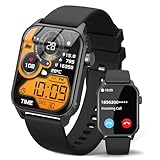
- 【1.83" HD Display & Customizable Watch Faces】Immerse yourself in a vibrant 1.83-inch IPS display, boasting a sharp resolution of 240*284 for crystal-clear visuals. Effortlessly personalize your smart watch with a wide array of customizable watch faces to suit your personal style for every occasion—whether trendy, artistic, or minimalist—ideal for casual, sporty, or professional. Its sleek, modern design complements any outfit, blending technology and fashion seamlessly for everyday wear
- 【120 Sports Modes & Advanced Health Tracking】Our TK29 smart watches for women men come equipped with 120 sports modes, allowing you to effortlessly track a variety of activities such as walking, running, cycling, and swimming. With integrated heart rate and sleep monitors, you can maintain a comprehensive overview of your health, achieve your fitness goals, and maintain a balanced, active lifestyle with ease. Your ideal wellness companion (Note: Step recording starts after exceeding 20 steps)
- 【IP67 Waterproof & Long-Lasting Battery】Designed to keep up with your active lifestyle, this smartwatch features an IP67 waterproof rating, ensuring it can withstand splashes, sweat, and even brief submersion, making it perfect for workouts, outdoor adventures, or rainy days. Its reliable 350mAh battery offering 5-7 days of active use and up to 30 days in standby mode, significantly reducing frequent charging. Ideal for all-day wear, whether you’re at the gym, outdoors, or simply on the go
- 【Stay Connected Anytime, Anywhere】Stay informed and in control with Bluetooth call and music control features. Receive real-time notifications for calls, messages, and social media apps like Facebook, WhatsApp, Twitter, and Instagram directly on your smartwatch. Easily manage calls, control your music playlist, and stay updated without needing to reach for your phone. Perfect for work, workouts, or on-the-go, this watch keeps you connected and never miss important updates wherever you are
- 【Multifunction & Wide Compatibility】Seamlessly handle heart rate monitoring, sleep tracking, and enjoy conveniences like camera/music control, Seamlessly handle heart rate monitoring, sleep tracking, and more-all directly from your wrist. This 1.83 inches HD smartwatch is compatible with iPhone (iOS 9.0+) & Android (5.0+), ensuring smooth daily connectivity and convenience throughout your day. More than just a timepiece, it’s a stylish, all-in-one wearable for smarter, healthier living
In exchange, battery life stretches comfortably into the week-long range under typical use, and potentially longer if you’re conservative with GPS workouts. That’s a meaningful upgrade over most budget Wear OS watches and a major selling point for users coming from Mi Bands, Amazfit trackers, or older Fitbit devices. Charging becomes something you think about once or twice a week, not every night.
Health and fitness tracking is where OnePlus has focused its efforts. Expect continuous heart-rate monitoring, SpO₂ tracking, sleep analysis, stress metrics, and a broad range of workout modes including outdoor running and cycling with built-in GPS. The sensors aren’t positioned as medical-grade, but for everyday fitness tracking and trend awareness, they should be competitive with other sub-$150 wearables.
Who This Watch Is Really For
The Watch Lite is clearly aimed at three types of buyers. First are Android users who want smartwatch basics without committing to Wear OS complexity or cost. Second are first-time smartwatch buyers who want something more capable than a band but less intimidating than a full smartwatch. Third are OnePlus phone owners who want ecosystem integration without paying flagship smartwatch prices.
This is not a watch for people who live on their wrist for productivity, reply to messages frequently, or rely on third-party apps like Spotify downloads, Google Maps navigation, or payments via Google Wallet. Notifications are present, but interaction is minimal, reinforcing that this is more of a companion than a wrist computer.
Comfort also plays a role here. With its lighter build, slimmer case profile, and soft-touch straps, the Watch Lite is designed to be worn 24/7, including overnight. That matters if you actually want to use sleep tracking and recovery metrics rather than turning them off because the watch feels bulky or heavy.
How It Fits Into the OnePlus Watch Lineup
OnePlus’s smartwatch lineup now mirrors what we’ve seen in its phone strategy for years: a tiered approach that meets users where they are. The Watch Lite sits at the base, focusing on battery life, comfort, and health tracking. The Watch 2R and Watch 2 sit above it, offering Wear OS, stronger processors, and deeper app support at the cost of battery longevity and price.
What’s important is that the Watch Lite doesn’t feel like a downgraded Watch 2; it feels like a different philosophy entirely. OnePlus isn’t trying to make this watch do everything. Instead, it’s trying to make it do a few things reliably, with minimal friction and predictable behavior.
From a brand perspective, this also gives OnePlus a stronger foothold in emerging markets and among younger buyers, where price sensitivity is high and daily charging is still a major pain point. It’s a pragmatic expansion rather than a vanity product.
Why OnePlus Is Launching It Now
The timing of the Watch Lite is no accident. The budget smartwatch market has become fiercely competitive, with brands like Xiaomi, Huawei, Amazfit, and even Samsung undercutting traditional smartwatch pricing while offering impressive hardware. OnePlus needed a response that didn’t dilute its premium Wear OS offerings but still addressed that demand.
At the same time, consumer fatigue around short battery life is growing. Many users are realizing they don’t use half the features on their Wear OS or watchOS devices but still pay the battery penalty. The Watch Lite directly targets that frustration by offering a simpler experience that aligns with how most people actually use their watches.
If the pricing lands where OnePlus is signaling, this could be one of the more compelling value-focused smartwatches of the year. Not because it does more, but because it’s honest about what it does well—and who it’s for.
Positioning in the OnePlus Watch Lineup: Lite vs OnePlus Watch 2 and Nord Wearables
Seen in context, the OnePlus Watch Lite is less about filling a spec gap and more about clarifying OnePlus’s smartwatch strategy. Where the previous section explained why it exists at all, this is where its role becomes more concrete. Each OnePlus watch now targets a distinct kind of user, rather than overlapping on features and price.
Watch Lite vs OnePlus Watch 2: Two Different Ideas of “Smart”
The cleanest comparison is between the Watch Lite and the OnePlus Watch 2, because they are designed around opposite priorities. The Watch 2 is a full Wear OS device, built around app flexibility, Google services, and a more phone-like experience on the wrist. The Watch Lite deliberately steps away from that model, opting for a lightweight OS that prioritizes stability and battery endurance over extensibility.
In daily use, this difference is immediately noticeable. The Watch 2 feels closer to a compact Android device, with smoother animations, richer notifications, and third‑party apps, but also a thicker case and more frequent charging. The Watch Lite wears more like a traditional sports watch, slimmer on the wrist, lighter over long days, and far less demanding in terms of power management.
For buyers deciding between the two, the key question is not budget but behavior. If you rely on wrist-based apps, voice input, or deep Google integration, the Watch 2 remains the right tool. If you mostly track activity, glance at notifications, and want something you can forget about for days at a time, the Watch Lite is clearly the more practical choice.
Where the Lite Sits Relative to Nord Wearables
OnePlus’s earlier Nord-branded wearables blurred the line between fitness tracker and smartwatch. Devices like the Nord Watch focused heavily on price, offering large displays and basic health tracking, but often felt disconnected from the rest of the OnePlus ecosystem. Software polish and long-term support were not always their strongest points.
The Watch Lite feels like a course correction rather than a direct successor. It occupies a similar price-conscious space, but with clearer priorities around comfort, consistency, and integration with OnePlus Health. Instead of chasing headline features, it refines the basics that most users actually interact with every day.
This also changes how Nord wearables are perceived within the lineup. Rather than being the default entry point, Nord watches now feel more experimental or region-specific, while the Watch Lite becomes the global, intentional starting place for first-time OnePlus watch buyers. That distinction matters for buyers who care about software updates and ecosystem longevity.
Design, Comfort, and Everyday Wearability Across the Lineup
Physically, the Watch Lite reinforces its entry-level positioning through restraint rather than cheapness. Its case materials and finishing are simpler than the Watch 2, but the lighter build and thinner profile make it easier to wear all day and through sleep. Strap options are practical and sport-oriented, emphasizing comfort over visual flair.
By contrast, the Watch 2 leans into a more traditional watch presence. It feels more substantial, with a case that looks and feels premium but can be noticeable during workouts or overnight wear. This makes the Lite surprisingly appealing even to users who could afford the Watch 2 but prefer something less intrusive.
Nord wearables generally sit at the opposite end of the spectrum, often larger and more display-forward. They work well as casual fitness watches but can feel oversized or less refined on smaller wrists. The Watch Lite splits the difference, offering a more balanced form factor that suits everyday use.
Software Experience and Long-Term Value
Software is where the lineup separation becomes most strategic. The Watch 2’s Wear OS platform offers unmatched flexibility, but also inherits Google’s update cadence and battery trade-offs. It rewards power users while demanding more attention from them.
The Watch Lite’s simpler software stack is more predictable. Fewer features mean fewer things to break, and for many users that translates to a better long-term experience. Health tracking, notifications, and core fitness modes are expected to remain stable over time, which is often more valuable than rapid feature expansion.
Compared to Nord wearables, the Watch Lite feels like a more confident commitment. It is positioned not as a stopgap or promotional product, but as a foundational piece of OnePlus’s wearable portfolio. That framing alone makes it easier to recommend to buyers who want something dependable rather than flashy.
Who Each Watch Is Really For
The Watch Lite is aimed squarely at users who want a smartwatch to support their routine, not redefine it. First-time smartwatch buyers, students, and anyone tired of daily charging will find its focus refreshing. It rewards consistency rather than curiosity.
The OnePlus Watch 2 remains the choice for users who want their watch to act as an extension of their phone. It is better suited to tech enthusiasts, productivity-focused users, and those already comfortable managing battery trade-offs.
Nord wearables continue to serve the most price-sensitive segment, especially in markets where affordability trumps ecosystem cohesion. The Watch Lite doesn’t replace them outright, but it clearly signals where OnePlus sees its long-term entry-level identity going.
Design, Build Quality, and Wearability: Where Costs Are Cut (and Where They Aren’t)
After positioning the Watch Lite as the dependable, low-friction option in OnePlus’s lineup, the hardware tells a consistent story. This is a smartwatch designed to disappear into daily life rather than draw attention to itself. That philosophy shapes nearly every decision around materials, proportions, and finishing.
A Familiar OnePlus Look, Simplified
At first glance, the Watch Lite clearly borrows from the visual language established by the OnePlus Watch and Watch 2. The round case, clean dial presentation, and restrained branding give it a more “watch-like” appearance than many entry-level fitness-first competitors.
Where it diverges is in surface complexity. The case design is simpler, with fewer chamfers and transitions, and a more uniform profile around the lugs. That reduction in visual drama is intentional, keeping manufacturing costs down without pushing the watch into toy-like territory.
Materials: Sensible, Not Luxurious
OnePlus appears to have made pragmatic material choices rather than chasing premium cues. The case is expected to use reinforced polymer rather than stainless steel or aluminum, paired with a glass-covered display rather than sapphire.
Rank #2
![Apple Watch Series 11 [GPS 46mm] Smartwatch with Jet Black Aluminum Case with Black Sport Band - M/L. Sleep Score, Fitness Tracker, Health Monitoring, Always-On Display, Water Resistant](https://m.media-amazon.com/images/I/312K597M2uL._SL160_.jpg)
- HYPERTENSION NOTIFICATIONS — Apple Watch Series 11 can spot signs of chronic high blood pressure and notify you of possible hypertension.*
- KNOW YOUR SLEEP SCORE — Sleep score provides an easy way to help track and understand the quality of your sleep, so you can make it more restorative.
- EVEN MORE HEALTH INSIGHTS — Take an ECG anytime.* Get notifications for a high and low heart rate, an irregular rhythm,* and possible sleep apnea.* View overnight health metrics with the Vitals app* and take readings of your blood oxygen.*
- STUNNING DESIGN — Thin and lightweight, Series 11 is comfortable to wear around the clock — while exercising and even when you’re sleeping, so it can help track your key metrics.
- A POWERFUL FITNESS PARTNER — With advanced metrics for all your workouts, plus features like Pacer, Heart Rate Zones, training load, Workout Buddy powered by Apple Intelligence from your nearby iPhone,* and more. Series 11 also comes with three months of Apple Fitness+ free.*
This is where cost-cutting is most obvious in the hand. The Watch Lite won’t have the cold heft or metallic feel of the Watch 2, but it also avoids the hollow sensation common to ultra-cheap smartwatches. For a device meant to be worn all day, the lighter construction is arguably a benefit rather than a compromise.
Finishing and Durability Expectations
Finishing is clean but functional. You shouldn’t expect brushed metal accents, polished bevels, or intricate casework, yet the tolerances appear tight and consistent based on early imagery and OnePlus’s recent hardware track record.
Durability is more about protection than prestige here. Water resistance suitable for workouts and daily wear is expected, along with a scratch-resistant glass layer that prioritizes longevity over luxury. This is a watch designed to survive routines, not impress collectors.
Buttons, Controls, and Everyday Interaction
The control layout is refreshingly straightforward. A single physical button handles core navigation, backed by touchscreen gestures for everything else. There’s no rotating crown or secondary pusher, which simplifies both the hardware and the learning curve.
This approach aligns with the Watch Lite’s software philosophy. Fewer physical inputs mean fewer failure points over time, and for first-time smartwatch users, the interaction model feels intuitive rather than intimidating.
Size, Weight, and Wrist Comfort
In terms of dimensions, the Watch Lite sits in a middle ground that avoids the extremes of oversized sport watches and compact lifestyle wearables. It should work comfortably on a wide range of wrists without dominating smaller frames.
The lighter case pays dividends in long-term comfort. During sleep tracking or all-day wear, reduced weight matters more than premium materials, and this is an area where the Watch Lite may actually outperform heavier, more expensive rivals.
Strap Choices and Customization
Out of the box, the Watch Lite ships with a standard silicone strap focused on breathability and sweat resistance. It’s practical, easy to clean, and well-suited to fitness use, even if it lacks visual flair.
Importantly, OnePlus sticks with standard lug widths rather than proprietary attachments. That small decision significantly improves long-term value, allowing users to swap in leather, nylon, or third-party sport bands without friction.
Display Presence: Where OnePlus Didn’t Go Cheap
One area where the Watch Lite avoids feeling entry-level is the display itself. An AMOLED panel ensures strong contrast, deep blacks, and good outdoor visibility, which immediately elevates the perceived quality.
Bezels are not razor-thin, but they’re symmetrical and unobtrusive in use. In daily interaction, the screen feels like a strength rather than a concession, reinforcing the idea that OnePlus prioritized the parts users engage with most.
Wearability Over Wow Factor
Taken as a whole, the Watch Lite’s design choices favor comfort, consistency, and longevity over visual statement. It doesn’t try to mimic a luxury watch, nor does it lean into aggressive sports aesthetics.
For its intended audience, that restraint is a feature. The Watch Lite is built to be worn constantly, paired easily with different outfits, and forgotten on the wrist until it’s needed. That quiet competence is exactly where OnePlus chose not to cut corners.
Display and Interface Experience: Screen Quality, Always-On Options, and Usability
After establishing a comfortable, low-profile design, the Watch Lite’s screen becomes the primary point of contact—and it largely justifies OnePlus’s decision to prioritize everyday usability over spec-sheet theatrics. This is where the watch either earns its place on the wrist or quietly frustrates, especially for first-time smartwatch buyers.
AMOLED Strengths in Daily Use
The Watch Lite uses an AMOLED display, and that choice alone separates it from many budget competitors that still rely on dimmer LCD panels. Blacks are properly inky, colors are saturated without looking cartoonish, and text remains crisp enough for notifications and quick glances.
Brightness is tuned for real-world conditions rather than showroom impact. Outdoors, it remains readable during walks and workouts, while indoor use avoids eye strain at night, an important detail for sleep tracking users who check the time after dark.
Resolution, Size, and Bezel Management
While OnePlus doesn’t chase ultra-high pixel density here, the resolution is sufficient at typical viewing distances. Watch faces don’t show obvious pixelation, and UI elements maintain clean edges when scrolling or swiping.
Bezels are visible but intelligently handled through software. Default watch faces avoid placing critical information at the extreme edges, making the screen feel more expansive in use than raw measurements might suggest.
Always-On Display: Practical, Not Decorative
The Watch Lite supports an always-on display mode, but with clear limitations designed to protect battery life. Expect simplified monochrome or low-refresh faces rather than animated complications or rich color layouts.
This approach makes sense for the target audience. Users get time visibility at a glance without the aggressive battery drain seen on more complex Wear OS watches, reinforcing the Watch Lite’s emphasis on reliability over spectacle.
Touch Responsiveness and Gesture Reliability
Touch input is responsive and forgiving, even during light workouts or when fingers aren’t perfectly dry. Swipes register consistently, and taps don’t require exaggerated pressure, which matters during quick interactions like dismissing notifications or starting a workout.
The display’s curved glass edges don’t interfere with usability. Accidental touches are rare, suggesting OnePlus spent time tuning palm rejection and touch sensitivity rather than simply reusing a generic panel.
Interface Design and Learning Curve
The Watch Lite runs a lightweight, proprietary interface rather than full Wear OS, and that choice defines the experience. Navigation is straightforward, iconography is clear, and menus are shallow enough that new users won’t feel lost.
Animations are restrained and functional. There’s no unnecessary visual flourish, but transitions are smooth enough to make the watch feel responsive rather than underpowered.
Watch Faces and Customization Options
Out of the box, OnePlus includes a solid mix of digital and hybrid-style watch faces. Most are designed to balance aesthetics with readability, favoring large numerals and clear complications over decorative excess.
Customization depth is modest. Users can tweak colors and data fields on supported faces, but those expecting deep third-party watch face ecosystems will find this platform intentionally limited.
Notification Handling and Readability
Notifications are easy to read thanks to strong contrast and sensible font sizing. Message previews are concise, avoiding awkward line breaks that plague cheaper displays.
Interaction is intentionally minimal. You can dismiss or scroll, but not deeply interact, which aligns with the Watch Lite’s positioning as a companion device rather than a wrist-mounted phone replacement.
How the Display Experience Fits the Watch Lite’s Value Pitch
Taken together, the Watch Lite’s display and interface choices reinforce its role within OnePlus’s lineup. It’s not trying to compete with the OnePlus Watch 2 on software power or app support, but it delivers a cleaner, more dependable experience than many budget alternatives.
For users prioritizing legibility, battery efficiency, and low-friction daily use, the screen becomes a quiet asset. It doesn’t demand attention, but it consistently delivers where it matters, which is exactly what an entry-level smartwatch should do.
Health, Fitness, and Daily Tracking Features: Core Capabilities Explained
With the screen and interface establishing a low-friction daily experience, the Watch Lite’s health and fitness tools follow the same philosophy. OnePlus has focused on covering the fundamentals reliably rather than chasing advanced metrics that often feel half-baked at this price point.
Rank #3

- Bluetooth Call and Message Alerts: Smart watch is equipped with HD speaker, after connecting to your smartphone via bluetooth, you can answer or make calls, view call history and store contacts through directly use the smartwatch. The smartwatches also provides notifications of social media messages (WhatsApp, Twitter, Facebook, Instagram usw.) So that you will never miss any important information.
- Smart watch for men women is equipped with a 320*380 extra-large hd full touch color screen, delivering exceptional picture quality and highly responsive touch sensitivity, which can bring you a unique visual and better interactive experience, lock screen and wake up easily by raising your wrist. Though “Gloryfit” app, you can download more than 102 free personalised watch faces and set it as your desktop for fitness tracker.
- 24/7 Heart Rate Monitor and Sleep Tracker Monitor: The fitness tracker watch for men has a built-in high-performance sensor that can record our heart rate changes in real time. Monitor your heart rate 26 hours a day and keep an eye on your health. Synchronize to the mobile phone app"Gloryfit", you can understand your sleep status(deep /light /wakeful sleep) by fitness tracker watch develop a better sleep habit and a healthier lifestyle.
- IP68 waterproof and 110+ Sports Modes: The fitness tracker provides up to 112+ sports modes, covering running, cycling, walking, basketball, yoga, football and so on. Activity trackers bracelets meet the waterproof requirements for most sports enthusiasts' daily activities, such as washing hands or exercising in the rain, meeting daily needs (note: Do not recommended for use in hot water or seawater.)
- Multifunction and Compatibility: This step counter watch also has many useful functions, such as weather forecast, music control, sedentary reminder, stopwatch, alarm clock, timer, track female cycle, screen light time, find phone etc. The smart watch with 2 hrs of charging, 5-7 days of normal use and about 30 days of standby time. This smart watches for women/man compatible with ios 9.0 and android 6.2 and above devices.
This approach makes the Watch Lite especially approachable for first-time smartwatch users who want meaningful insights without needing to interpret complex data charts.
Core Health Sensors and Everyday Monitoring
At its foundation, the Watch Lite offers continuous heart rate tracking alongside blood oxygen (SpO2) spot checks. These are now table-stakes features even in the budget segment, but OnePlus’s strength historically has been consistency rather than novelty.
Heart rate data is sampled frequently enough for day-to-day awareness, stress estimation, and workout tracking, though it’s not positioned as a medical-grade solution. SpO2 measurements are best treated as trend indicators rather than precise diagnostics, which is standard for wrist-based optical sensors in this class.
Sleep Tracking: Simple, Actionable, and Beginner-Friendly
Sleep tracking is automatically enabled and broken down into light, deep, and REM stages. The presentation favors clarity over detail, showing total sleep time, consistency, and basic sleep quality scores.
There’s no attempt to overwhelm users with advanced sleep coaching or readiness metrics. For the Watch Lite’s target audience, this restrained approach makes the data easier to understand and more likely to be used.
Fitness and Workout Tracking Capabilities
The Watch Lite supports a healthy selection of workout modes covering common activities like walking, running, cycling, and indoor fitness sessions. Mode switching is quick, and workout screens prioritize real-time stats like duration, heart rate, and calories burned.
GPS support appears to rely on connected phone GPS rather than a built-in module, which is a typical cost-saving move in entry-level watches. In real-world use, this means accurate route tracking when your phone is nearby, but less independence compared to higher-tier OnePlus models.
Daily Activity Metrics and Motivation Tools
Beyond structured workouts, the Watch Lite tracks steps, active time, and calorie burn throughout the day. These metrics feed into simple daily goals designed to encourage movement rather than enforce rigid fitness targets.
There are gentle reminders to move after long periods of inactivity, but they’re not overly aggressive. This fits the watch’s role as a lifestyle companion rather than a hardcore training tool.
Health Data Presentation and App Integration
All health and fitness data syncs to OnePlus’s companion app on Android, where trends are displayed over days and weeks. The app’s layout mirrors the watch’s interface philosophy: clean sections, readable graphs, and minimal clutter.
Exporting data or integrating with third-party fitness platforms is limited compared to Wear OS devices, but the basics are covered. For users already within the OnePlus ecosystem, the experience feels cohesive rather than restrictive.
Battery Life Impact and Always-On Trade-Offs
One advantage of the Watch Lite’s restrained health tracking suite is its impact on battery life. Continuous heart rate monitoring and sleep tracking run quietly in the background without dramatically shortening usage between charges.
Disabling optional features like frequent SpO2 checks can extend endurance further, which is especially valuable for users who prioritize convenience over granular data. In practice, the Watch Lite favors reliability and longevity over pushing its sensors to their limits.
Who These Features Are Really For
The Watch Lite’s health and fitness capabilities are clearly designed for users who want awareness, not obsession. It’s well-suited to casual exercisers, commuters tracking daily movement, and anyone upgrading from a basic fitness band.
Those seeking advanced training metrics, recovery scores, or standalone GPS workouts will still need to look higher up OnePlus’s lineup. But for its intended audience, the Watch Lite delivers the essentials in a way that feels considered, usable, and aligned with its accessible pricing.
Software, App Ecosystem, and Phone Compatibility: What Lite Really Means Here
The same restraint seen in the Watch Lite’s health features carries directly into its software choices. OnePlus has deliberately avoided turning this into a cut-down Wear OS watch, instead leaning on a lightweight proprietary operating system designed to stay fast, predictable, and battery-efficient over long periods of use.
This approach immediately clarifies what “Lite” signals here: fewer layers, fewer background processes, and fewer distractions, in exchange for stability and longevity. For many first-time smartwatch buyers, that trade-off will feel sensible rather than limiting.
A Purpose-Built OS Instead of Wear OS
The Watch Lite runs OnePlus’s in-house real-time operating system, similar in philosophy to what we’ve seen on previous OnePlus Watch models. Navigation is fluid, animations are simple, and the interface remains readable even during quick glances, which matters on a smaller, entry-level display.
There’s no Google Play Store, no downloadable third-party apps, and no background app multitasking. Instead, what you get out of the box is what you live with long-term, which reduces complexity but also eliminates the need to constantly manage storage, updates, or app compatibility.
For everyday tasks like notifications, alarms, weather checks, and quick fitness sessions, the experience feels focused rather than barebones. Power users will notice the ceiling quickly, but casual users may appreciate how little there is to configure.
Notifications, Controls, and Smart Features
Notification handling is straightforward and reliable, with alerts mirrored from your phone in real time. Messages are readable, vibration strength is adjustable, and quick dismiss gestures work consistently, though you can’t reply directly from the watch.
Music controls, camera shutter functionality, and basic system toggles are included, reinforcing the Watch Lite’s role as a remote extension of your phone rather than a standalone smart device. Voice assistants are notably absent, which again favors battery life and simplicity over hands-free interaction.
In daily use, this creates a rhythm that feels closer to a digital watch with smart awareness than a miniature smartphone on your wrist. That distinction is important for understanding who this product is designed for.
The OnePlus Health App Experience
All software roads lead back to the OnePlus Health app on Android, which acts as the central hub for setup, data review, and customization. Watch faces, notification permissions, health trends, and firmware updates are all managed here with minimal friction.
The app prioritizes clarity over depth, with large graphs and digestible summaries rather than dense dashboards. While this makes long-term trend tracking easy, it also means advanced analysis tools and data exports are limited compared to platforms like Google Fit or Samsung Health.
For users already familiar with OnePlus’s design language, the app feels consistent and cohesive. For everyone else, it remains approachable, if somewhat closed off from the wider fitness ecosystem.
Android-Only Compatibility and Ecosystem Lock-In
The Watch Lite is firmly an Android-only device, with no iOS support planned. Pairing is quickest and most seamless on OnePlus phones, where system permissions and background syncing are better optimized.
On non-OnePlus Android devices, the experience remains stable, but some deeper integrations, like tighter notification syncing and system-level optimizations, may feel slightly less polished. This isn’t unusual at this price point, but it’s worth considering if you frequently switch phone brands.
There’s also no LTE or Wi-Fi independence here, meaning the watch relies on Bluetooth connectivity at all times. That keeps hardware costs down but reinforces its identity as a companion rather than a standalone wearable.
What You Gain, and What You Give Up
By limiting software ambition, OnePlus has delivered a smartwatch that feels responsive and dependable in daily use. The OS rarely stutters, battery drain is predictable, and updates are less likely to disrupt the experience.
The cost of that simplicity is flexibility. There’s no expanding app library, no evolving third-party support, and fewer customization options than Wear OS rivals in the same general price range.
Rank #4
![Apple Watch Series 11 [GPS 42mm] Smartwatch with Rose Gold Aluminum Case with Light Blush Sport Band - S/M. Sleep Score, Fitness Tracker, Health Monitoring, Always-On Display, Water Resistant](https://m.media-amazon.com/images/I/31J+F-pXaWL._SL160_.jpg)
- HYPERTENSION NOTIFICATIONS — Apple Watch Series 11 can spot signs of chronic high blood pressure and notify you of possible hypertension.*
- KNOW YOUR SLEEP SCORE — Sleep score provides an easy way to help track and understand the quality of your sleep, so you can make it more restorative.
- EVEN MORE HEALTH INSIGHTS — Take an ECG anytime.* Get notifications for a high and low heart rate, an irregular rhythm,* and possible sleep apnea.* View overnight health metrics with the Vitals app* and take readings of your blood oxygen.*
- STUNNING DESIGN — Thin and lightweight, Series 11 is comfortable to wear around the clock — while exercising and even when you’re sleeping, so it can help track your key metrics.
- A POWERFUL FITNESS PARTNER — With advanced metrics for all your workouts, plus features like Pacer, Heart Rate Zones, training load, Workout Buddy powered by Apple Intelligence from your nearby iPhone,* and more. Series 11 also comes with three months of Apple Fitness+ free.*
For buyers who want a smartwatch that “just works” and stays out of the way, this software approach aligns well with the Watch Lite’s overall value proposition. For those expecting a growing platform or deeper integrations, the “Lite” label becomes a clearer signal of where compromises have been made.
Battery Life and Charging: Realistic Expectations for Budget Smartwatch Users
That deliberately constrained software approach feeds directly into one of the Watch Lite’s biggest practical advantages: battery life. By avoiding power-hungry third-party apps, background services, and high-refresh displays, OnePlus is clearly prioritizing endurance over features, which aligns with what most entry-level buyers actually care about.
In daily use, the Watch Lite is positioned as a multi-day wearable rather than something that demands nightly charging. OnePlus claims up to a full week under typical conditions, and while that figure will shrink with heavier fitness tracking, it sets expectations closer to fitness bands than full-fledged Wear OS watches.
What “Typical Use” Really Looks Like
Under realistic settings—always-on heart rate, sleep tracking enabled, notifications flowing throughout the day, and two to three short GPS workouts per week—the Watch Lite should land in the four- to six-day range. That’s a meaningful advantage over budget Wear OS models that often struggle to clear 24 to 36 hours without aggressive compromises.
Continuous GPS sessions are the biggest variable. Expect roughly 10 to 12 hours of GPS tracking in total before the battery is fully depleted, which is adequate for casual runners, walkers, and gym users but not ideal for ultradistance athletes or multi-day outdoor tracking.
Screen behavior also matters. The display isn’t always-on by default, and keeping it that way significantly improves longevity, especially since wrist-raise detection is tuned conservatively to avoid unnecessary wake-ups.
Charging Speed and Convenience
Charging is handled via a proprietary magnetic puck rather than USB-C or Qi wireless charging. It snaps into place easily, but it’s another cable you’ll need to keep track of, especially if you travel frequently.
The upside is speed. A full charge takes roughly 90 minutes, with a meaningful top-up achieved in about 20 to 30 minutes—enough to get through a couple of days if you forgot to charge overnight.
There’s no fast-charge theatrics here, but the combination of short charging sessions and multi-day endurance means charging feels like a weekly habit rather than a daily chore. For first-time smartwatch users, that makes the Watch Lite far less intimidating than more demanding alternatives.
Longevity, Battery Health, and Long-Term Use
OnePlus doesn’t publish detailed battery capacity figures, but the internal cell is clearly sized to support its endurance-first philosophy rather than peak performance. Lower charging frequency generally translates to better long-term battery health, which matters if you plan to keep the watch for several years.
Because the Watch Lite avoids high thermal loads from LTE radios, dense app multitasking, or rapid fast charging, battery degradation should be slower than on more complex smartwatches. That’s an underappreciated advantage at this price point, especially for buyers who don’t upgrade annually.
For users coming from fitness bands, the Watch Lite’s battery behavior will feel familiar. For those stepping down from Wear OS or Apple Watch, it will feel refreshingly low-maintenance, reinforcing the idea that this watch is built for consistency rather than constant interaction.
How It Stacks Up Against Budget Rivals
Compared to similarly priced Wear OS devices from Mobvoi or older Samsung models, the Watch Lite trades app flexibility for dramatically better endurance. Against fitness-focused competitors like Amazfit or Huawei’s entry-level watches, it’s more evenly matched, though some rivals may stretch closer to 10 days with lighter feature sets.
The key distinction is balance. The Watch Lite offers smartwatch essentials—notifications, GPS, health tracking—without pushing battery life into “fitness band only” territory or collapsing under its own software weight.
For buyers prioritizing fewer charging sessions and predictable performance over feature experimentation, the Watch Lite’s battery strategy feels well judged. It doesn’t chase headline-grabbing numbers, but it delivers the kind of reliability that budget smartwatch users tend to appreciate most.
Pricing, Availability, and Regional Strategy: How Aggressively OnePlus Is Competing
After positioning the Watch Lite around consistency and low-maintenance use, OnePlus’s pricing strategy makes its intent clear. This isn’t a halo product designed to showcase technical ambition—it’s a volume play aimed squarely at first-time smartwatch buyers and cost-conscious Android users.
The combination of long battery life, built-in GPS, and a simplified software experience only works if the price feels comfortably accessible. OnePlus appears to understand that balance well.
Pricing: Clearly Below the Psychological Barrier
OnePlus has announced the Watch Lite with a starting price positioned just under the typical “full smartwatch” threshold, landing at approximately €109 in Europe and around ₹8,999 in India. In the US, OnePlus is signaling a launch price in the $99–$119 range, depending on retailer promotions and regional taxes.
That pricing undercuts most Wear OS watches by a wide margin, while sitting slightly above advanced fitness bands. It’s a deliberate middle ground that reinforces the Watch Lite’s role as a smartwatch upgrade rather than a band replacement.
At this level, features like integrated GPS, a large AMOLED display, and multi-day battery life feel appropriately matched to cost. There’s no sense that buyers are paying for unused hardware or software overhead.
Availability: Focused Rollout, Not Global Saturation
Initial availability prioritizes OnePlus’s strongest markets, including India, Western Europe, and select Asia-Pacific regions. Online sales through OnePlus’s own store and major e-commerce partners are complemented by offline retail presence in markets where OnePlus already has strong brand recognition.
Notably, OnePlus is avoiding an overly aggressive global launch. Regions with limited after-sales infrastructure or weaker brand penetration are being staged for later rollout, reducing support risk for an entry-level device aimed at newcomers.
This controlled approach also helps OnePlus maintain tighter inventory management, which matters more at lower margins. For consumers, it means fewer surprise shortages and more predictable pricing during the first few months.
Regional Strategy: India and Emerging Markets Come First
India is clearly a priority market for the Watch Lite, both in pricing and messaging. The sub-₹10,000 bracket is highly competitive, dominated by brands like Amazfit, Noise, and Xiaomi, and OnePlus is positioning the Watch Lite as a more refined alternative rather than a spec-sheet arms race.
In Europe, the Watch Lite fills a gap below the OnePlus Watch 2, offering a simpler option for users who don’t want Wear OS complexity. The emphasis there is on comfort, battery life, and everyday usability rather than app ecosystems.
The US strategy is more cautious. With limited smartwatch market share compared to Apple and Samsung, OnePlus appears to be testing demand rather than committing to aggressive carrier partnerships or bundling strategies.
Bundling, Discounts, and Ecosystem Incentives
Early launch promotions include modest bundle discounts with OnePlus phones and earbuds rather than deep standalone price cuts. This reinforces ecosystem lock-in without devaluing the product too quickly.
For users already in the OnePlus ecosystem, the Watch Lite becomes an easy add-on rather than a major purchase decision. For new users, it’s priced low enough to feel low-risk, especially during seasonal sales.
Importantly, OnePlus isn’t relying on flash-sale tactics to move volume. That suggests confidence in steady demand rather than artificial scarcity.
Value Positioning Against Competitors
At its announced pricing, the Watch Lite competes most directly with Amazfit GTS and Huawei Watch Fit models rather than Wear OS devices. Compared to those rivals, OnePlus is betting on cleaner software, better Android integration, and a more traditional smartwatch form factor.
It won’t win on extreme battery life or ultra-lightweight design, but it doesn’t need to. The value proposition is clarity: fewer compromises that actually matter in daily use.
💰 Best Value
![Apple Watch Series 11 [GPS 42mm] Smartwatch with Jet Black Aluminum Case with Black Sport Band - S/M. Sleep Score, Fitness Tracker, Health Monitoring, Always-On Display, Water Resistant](https://m.media-amazon.com/images/I/31ybzrJZckL._SL160_.jpg)
- HYPERTENSION NOTIFICATIONS — Apple Watch Series 11 can spot signs of chronic high blood pressure and notify you of possible hypertension.*
- KNOW YOUR SLEEP SCORE — Sleep score provides an easy way to help track and understand the quality of your sleep, so you can make it more restorative.
- EVEN MORE HEALTH INSIGHTS — Take an ECG anytime.* Get notifications for a high and low heart rate, an irregular rhythm,* and possible sleep apnea.* View overnight health metrics with the Vitals app* and take readings of your blood oxygen.*
- STUNNING DESIGN — Thin and lightweight, Series 11 is comfortable to wear around the clock — while exercising and even when you’re sleeping, so it can help track your key metrics.
- A POWERFUL FITNESS PARTNER — With advanced metrics for all your workouts, plus features like Pacer, Heart Rate Zones, training load, Workout Buddy powered by Apple Intelligence from your nearby iPhone,* and more. Series 11 also comes with three months of Apple Fitness+ free.*
For buyers weighing cost against longevity, the Watch Lite’s restrained hardware, slower battery degradation, and predictable performance make its pricing feel defensible. It’s not the cheapest option available, but it’s priced where reliability and simplicity start to carry real value.
Early Value Assessment: OnePlus Watch Lite vs Key Budget Rivals (Amazfit, Redmi, Galaxy Fit)
Placed against its most obvious budget rivals, the OnePlus Watch Lite sits in an increasingly crowded middle ground where hardware compromises, software polish, and brand trust matter more than raw specs. This is the tier where Amazfit, Redmi, and Samsung’s Galaxy Fit series have spent years refining their formulas, and where OnePlus is now trying to differentiate through balance rather than extremes.
Rather than undercutting everyone on price, the Watch Lite is positioned as the “safe buy” for Android users who want smartwatch basics done cleanly. That framing becomes clearer once you compare it category by category.
Against Amazfit: Software Simplicity vs Feature Volume
Amazfit’s biggest strength has always been feature density for the money. Models like the GTS and Bip lines offer long battery life, built-in GPS, dozens of sports modes, and aggressive pricing that often lands well below the Watch Lite during sales.
Where OnePlus counters is software restraint. Amazfit’s Zepp OS has improved, but it still leans heavily on menus, metrics, and customization that can overwhelm first-time smartwatch users. The Watch Lite’s interface is noticeably calmer, with fewer layers and more predictable navigation, which matters in daily use more than spec sheets suggest.
In real-world wear, the OnePlus Watch Lite also feels more traditionally “watch-like.” The case proportions, strap integration, and finishing are closer to a simple smartwatch than a fitness tracker with a screen, whereas many Amazfit models prioritize thinness and lightness over tactile quality.
Battery life is where Amazfit still holds an edge. Expect several more days from comparable Amazfit models, especially those without AMOLED displays. For users who value charging once a week above all else, Amazfit remains compelling, but the Watch Lite trades some endurance for a more refined day-to-day experience.
Against Redmi: Refinement Over Rock-Bottom Pricing
Redmi’s wearables, particularly in the Watch and Band lines, dominate on price. They deliver solid AMOLED screens, basic health tracking, and long battery life at prices that often feel aggressively low.
The trade-off is consistency. Redmi’s software experience can feel uneven, with occasional sync issues, delayed notifications, or health metrics that lack clarity. OnePlus is clearly targeting users who are willing to pay a bit more to avoid those frustrations.
Build quality also separates the two. The Watch Lite uses more substantial materials and has better strap comfort for all-day wear, especially for users with sensitive wrists. Redmi devices often feel feather-light, which is great for sleep tracking, but less convincing as an everyday watch replacement.
For budget-first buyers, Redmi still wins on sheer affordability. For buyers who want something they won’t feel the urge to upgrade from in six months, the Watch Lite makes a stronger case.
Against Galaxy Fit: Smartwatch Versatility vs Fitness Tracker Focus
Samsung’s Galaxy Fit series occupies a different philosophical space. It’s a fitness band first, with a narrow display, minimal app interactions, and excellent integration within the Samsung ecosystem.
Compared to the Galaxy Fit, the OnePlus Watch Lite is more versatile. The larger display, traditional watch shape, and richer notification handling make it better suited for users who want their wearable to replace a basic watch, not just track workouts.
However, Samsung’s strengths shouldn’t be dismissed. The Galaxy Fit is lighter, more discreet, and often more comfortable for continuous wear, particularly for sleep tracking. Its battery life is also more predictable, and Samsung’s health algorithms are among the more trusted in the budget segment.
The choice here comes down to intent. If fitness tracking is the priority and smartwatch features are secondary, the Galaxy Fit remains excellent. If you want something that looks and behaves like a smartwatch without jumping to Wear OS, the Watch Lite is the more complete option.
Who the Watch Lite Actually Makes Sense For
Viewed holistically, the OnePlus Watch Lite isn’t trying to win every comparison on paper. Its value lies in minimizing the compromises that most users actually notice after the first few weeks.
For Android users who want dependable notifications, clean health tracking, comfortable all-day wear, and a battery that doesn’t demand constant attention, it lands in a sensible sweet spot. It avoids the complexity of Wear OS, the feature overload of some Amazfit models, and the stripped-back nature of fitness bands like the Galaxy Fit.
The result is a watch that feels deliberately conservative, but not cheap. In the budget smartwatch category, that restraint may be exactly what gives the OnePlus Watch Lite its long-term value.
Who Should Buy the OnePlus Watch Lite — and Who Should Look Elsewhere
After weighing the Watch Lite against fitness bands and entry-level smartwatches, the final decision comes down to expectations. This is a product built around balance rather than ambition, and that clarity makes it easier to recommend to the right kind of buyer.
You Should Buy the OnePlus Watch Lite If…
If you’re an Android user looking for your first smartwatch, the Watch Lite is a very safe starting point. Setup is straightforward, notifications are reliable, and the software stays out of the way instead of demanding constant interaction.
It also makes sense for users who want a watch-like object on their wrist rather than a narrow fitness band. The traditional case shape, larger display, and interchangeable strap options give it better day-to-day wearability, especially if you plan to wear it at work or socially, not just at the gym.
Battery life is another strong reason to choose it. If you’re tired of charging daily or managing power-saving modes, the Watch Lite’s multi-day endurance removes a lot of friction from ownership, particularly for sleep tracking and casual fitness monitoring.
Finally, it’s a good fit for OnePlus phone owners who value ecosystem consistency without committing to Wear OS. While the integration isn’t exclusive, the companion app experience and overall tuning feel aligned with OnePlus’s design philosophy of simplicity and speed.
You Might Want to Look Elsewhere If…
If you expect a true smartwatch experience with third-party apps, voice assistants, contactless payments, or LTE, the Watch Lite will feel limited. This is not a scaled-down Wear OS watch; it’s a lightweight smartwatch with fixed functionality.
Serious athletes may also find the health and fitness features too basic. While it covers core metrics reliably, it doesn’t offer the depth of training analytics, recovery insights, or sensor sophistication found on higher-end Garmin, Fitbit, or Samsung devices.
Those deeply invested in the Apple or Samsung ecosystems should think twice. Apple Watch remains unmatched for iPhone users, while Samsung’s Galaxy Watch line offers tighter software integration and more advanced health features for Galaxy owners, albeit at a higher price and with shorter battery life.
Lastly, if premium materials and refined finishing matter to you, the Watch Lite’s cost-conscious build will be apparent. It’s comfortable and durable enough for daily use, but it doesn’t aim to feel luxurious or horologically expressive.
The Bottom Line
The OnePlus Watch Lite succeeds because it knows exactly what it is and, just as importantly, what it isn’t. It’s a dependable, approachable smartwatch designed for people who want convenience, clarity, and long battery life without paying for features they’ll never use.
For value-focused buyers who want a smartwatch that quietly fits into daily life, the Watch Lite is an easy recommendation. If your needs lean more advanced or more specialized, spending more—or choosing a more focused alternative—will still make sense.