If you’ve been watching the AI hardware space with equal parts curiosity and skepticism, the name “Sweetpea” should immediately raise an eyebrow. According to recently surfaced internal references and reporting, Sweetpea is OpenAI’s codename for a behind-the-ear AI wearable, not a watch, not glasses, and not another pair of true wireless earbuds with a chatbot bolted on. It points to a new category: an always-available, voice-first AI companion designed to live on the body without demanding attention.
What matters here isn’t just that OpenAI is experimenting with hardware, but where Sweetpea sits on the body and how it’s meant to be used. A behind-the-ear form factor signals intent: persistent presence, hands-free interaction, and minimal visual distraction. This section unpacks what the leak actually reveals, what it strongly implies, and why this approach could be far more disruptive to wearables than another smartwatch or screen-based device.
What the Sweetpea leak actually tells us
The Sweetpea name surfaced through internal OpenAI documentation and hiring-related materials, pointing to a device designed to rest behind the ear, similar in placement to hearing aids or ear-mounted translators rather than consumer earbuds. That positioning alone suggests priorities around comfort, long-term wear, and unobtrusive design, likely lightweight, curved to the ear’s contour, and built for all-day use without the constant in-ear pressure that fatigues many users.
Crucially, Sweetpea is described as an AI device first, not an audio product that happens to have AI features. That distinction matters. Instead of optimizing for music playback, ANC performance, or spatial audio, the design brief appears centered on microphones, contextual awareness, and low-latency voice interaction, with audio output acting as a functional response channel rather than the headline feature.
🏆 #1 Best Overall
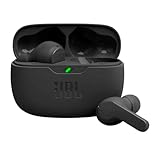
- JBL Deep Bass Sound: Get the most from your mixes with high-quality audio from secure, reliable earbuds with 8mm drivers featuring JBL Deep Bass Sound
- Comfortable fit: The ergonomic, stick-closed design of the JBL Vibe Beam fits so comfortably you may forget you're wearing them. The closed design excludes external sounds, enhancing the bass performance
- Up to 32 (8h + 24h) hours of battery life and speed charging: With 8 hours of battery life in the earbuds and 24 in the case, the JBL Vibe Beam provide all-day audio. When you need more power, you can speed charge an extra two hours in just 10 minutes.
- Hands-free calls with VoiceAware: When you're making hands-free stereo calls on the go, VoiceAware lets you balance how much of your own voice you hear while talking with others
- Water and dust resistant: From the beach to the bike trail, the IP54-certified earbuds and IPX2 charging case are water and dust resistant for all-day experiences
There’s also no indication of a display, which immediately separates Sweetpea from smartwatches, smart glasses, and even AI pins. This implies a software experience built around conversational interaction, proactive suggestions, and background intelligence rather than notifications, tiles, or glanceable UI.
Why behind-the-ear is a strategic choice
Behind-the-ear wearables occupy an interesting middle ground between hearables and medical devices. They’re socially normalized enough to avoid the stigma that early smart glasses faced, but distinct from earbuds, which users expect to remove frequently. For an AI that’s meant to be ambient, context-aware, and always listening for intent, that distinction is critical.
From a comfort and usability standpoint, this form factor allows for a larger battery than true wireless earbuds without pushing weight into the ear canal. That opens the door to longer battery life, potentially measured in a full day or more rather than hours, which is essential for an AI assistant that’s meant to fade into daily life rather than require constant charging rituals.
It also enables better microphone placement and beamforming. A stable position behind the ear gives more consistent orientation relative to the mouth, improving voice capture in noisy environments, something current earbuds still struggle with during calls or assistant interactions.
How Sweetpea differs from smartwatches and earbuds
Smartwatches are interaction-heavy devices. They demand wrist checks, visual attention, and frequent micro-interactions, which works well for fitness tracking, notifications, and timekeeping, but less so for deep, conversational AI. Sweetpea flips that model entirely, removing the screen and relying on natural language as the primary interface.
Compared to earbuds, the difference is philosophical as much as technical. Earbuds are episodic devices, worn for workouts, commutes, or calls, then put away. Sweetpea appears designed for persistence, staying on during conversations, errands, and idle moments, acting more like a layer of intelligence than a media accessory.
This also hints at different trade-offs. Expect less emphasis on premium audio tuning and more focus on speech clarity, low-power AI processing, and seamless handoff to a phone or cloud-based models. Compatibility will almost certainly be cross-platform, because an AI-first device tied to a single ecosystem would undercut its usefulness.
Why this leak matters for the future of AI wearables
Sweetpea suggests OpenAI is thinking beyond screens as the default interface for AI. In a market crowded with incremental smartwatch updates and earbuds competing on codecs and noise cancellation, an AI-native wearable reframes the conversation around presence, context, and usefulness rather than specs.
It also raises the bar for competitors. If OpenAI can deliver a device that feels genuinely helpful without being intrusive, it challenges Apple, Google, and Meta to rethink how assistants live on the body. Not as apps you summon, but as companions that understand when to speak, when to listen, and when to stay silent.
Most importantly, Sweetpea hints at a future where AI hardware isn’t about replacing your phone or watch, but complementing them with a new interaction layer. One that prioritizes comfort, discretion, and real-world wearability over screens, swipes, and constant alerts, setting the stage for a very different kind of personal device.
Behind-the-Ear, Not on the Wrist: Understanding the Form Factor Choice
If Sweetpea is about making AI feel ambient rather than attention-hungry, then the behind-the-ear placement starts to make far more sense than another slab on the wrist. This is a deliberate rejection of the smartwatch playbook, and it reveals how OpenAI appears to be prioritizing interaction models over familiar hardware categories.
Rather than asking users to glance, tap, or scroll, a behind-the-ear device lives closer to how humans already communicate. Speech in, speech out, minimal visual interruption, and constant readiness without demanding eye contact.
Why the Wrist Is a Compromise for Conversational AI
Smartwatches excel at timekeeping, notifications, and fitness because those tasks benefit from quick visual confirmation. Even the best smartwatch assistants still require wrist raises, wake words, or on-screen follow-ups, turning AI into a secondary feature layered onto a timepiece.
For an AI-first device, that friction becomes a liability. Conversational systems work best when they are hands-free, eyes-free, and able to respond in real time without signaling for attention through vibrations or glowing displays.
Battery life also works against the wrist for this use case. A watch juggling a bright display, sensors, radios, and an AI assistant is forced into constant power trade-offs, often resulting in shorter endurance or throttled performance.
Behind-the-Ear: A Sweet Spot Between Presence and Discretion
The ear is already a socially accepted location for computing, thanks to decades of Bluetooth headsets and more recently true wireless earbuds. A behind-the-ear design borrows that familiarity while avoiding the isolating nature of in-ear audio.
Unlike earbuds, which seal the ear canal and prioritize audio playback, a behind-the-ear AI wearable can focus on open-ear acoustics or directional sound. This allows Sweetpea to speak without cutting the wearer off from their environment, a critical factor for all-day use.
From a comfort perspective, behind-the-ear designs distribute weight across the ear rather than relying on a single pressure point. This opens the door to longer wear times, larger batteries, and more robust microphones without the fatigue issues that plague in-ear devices.
Hardware Freedom Without a Screen
Removing the screen doesn’t just simplify interaction, it dramatically changes internal design priorities. Space that would normally be consumed by a display, touch layer, and protective glass can instead be allocated to microphones, processing silicon, and battery capacity.
This also allows for more aggressive thermal management. AI inference, even when offloaded to the cloud, still generates heat locally, and the ear area offers better airflow than the wrist trapped under a sleeve or strap.
Materials matter here as well. Expect lightweight polymers, soft-touch coatings, and possibly titanium or aluminum for structural rigidity, finished to disappear rather than impress. This is closer to medical-grade wearables than luxury watchmaking, with comfort and neutrality taking precedence over visual flair.
Always-On Context Without Always-On Attention
A behind-the-ear AI device can maintain situational awareness in ways wrist-based devices struggle to match. Microphone arrays positioned near the head are better suited for capturing conversational cues, ambient context, and directional audio without constant user prompting.
This positioning also enables subtler feedback. Instead of haptics demanding a wrist check, Sweetpea could rely on quiet audio cues, bone-conduction-style prompts, or even silence when interruption isn’t appropriate.
The result is an AI presence that feels less like a gadget and more like an extension of cognition. It’s there when needed, but it doesn’t constantly remind you that it exists.
Not a Hearable, Not a Watch, and That’s the Point
Sweetpea’s form factor places it in an uncomfortable middle ground for existing categories, and that’s intentional. It isn’t trying to replace earbuds for music or watches for fitness tracking, both of which are mature and highly competitive markets.
Instead, OpenAI appears to be carving out a new lane where AI capability dictates hardware decisions, not the other way around. Behind-the-ear is simply the most practical place for an assistant designed to listen more than it speaks and to act without being seen.
This choice also lowers the stakes of adoption. You don’t have to give up your mechanical watch, smartwatch, or favorite earbuds to use Sweetpea. It’s additive, not substitutive, which may ultimately be its most strategic design decision.
How Sweetpea Fits into Today’s Wearables Landscape (Smartwatches, Earbuds, and AI Pins)
Seen in context, Sweetpea isn’t arriving in a vacuum. It’s emerging into a wearables market that is already saturated with screens, sensors, and notifications, yet still struggling to integrate AI in a way that feels natural rather than intrusive.
Where smartwatches, earbuds, and recent AI pins each solve parts of the problem, Sweetpea appears to be an attempt to reframe the entire category around continuous intelligence instead of episodic interaction.
Smartwatches: Powerful, But Screen-Bound
Modern smartwatches are computationally capable and sensor-rich, with mature ecosystems for fitness, health, payments, and notifications. Apple Watch, Pixel Watch, and Galaxy Watch all benefit from deep OS integration, polished hardware, and increasingly refined silicon.
Their limitation is philosophical as much as physical. Smartwatches still demand attention through a screen, rely on wrist gestures that interrupt behavior, and position AI as a feature layered on top of an app-driven interface rather than as the core experience.
Sweetpea doesn’t compete on metrics like heart rate accuracy, GPS performance, or app breadth. Instead, it sidesteps the screen entirely, betting that the next phase of personal computing won’t be glanceable, but ambient.
For users who already wear a mechanical watch or a high-end smartwatch, Sweetpea’s value proposition is coexistence. It fills the gap watches haven’t solved: contextual understanding without visual interruption.
Earbuds and Hearables: Close, But Purpose-Built Elsewhere
Wireless earbuds are the closest existing analog to Sweetpea in terms of placement and audio interaction. Products like AirPods Pro and Pixel Buds already deliver voice assistants, spatial audio, and basic contextual awareness.
But earbuds are fundamentally optimized for media consumption. Their battery life, comfort profiles, and acoustic designs assume intermittent wear, not all-day presence. Even transparency modes and conversational awareness are secondary to sound quality.
Sweetpea’s behind-the-ear form avoids the fatigue and social signaling of earbuds. There’s no expectation of constant audio playback, no sealed ear canal, and no assumption that the user is disengaged from their surroundings.
This distinction matters in daily life. Wearing earbuds in a meeting, on a commute, or during casual conversation still carries social friction. A near-invisible ear-mounted device designed for listening first and speaking sparingly changes that dynamic.
AI Pins and Pendants: Conceptually Ambitious, Practically Fragile
AI-first wearables like Humane’s Ai Pin and various camera-centric pendants introduced the idea of an assistant untethered from a phone screen. They aimed to reimagine interaction through voice, gestures, and environmental sensing.
Their struggles highlight the risks Sweetpea is trying to avoid. Chest-mounted devices face awkward ergonomics, inconsistent microphone pickup, thermal challenges, and limited battery life. Cameras introduce privacy anxiety before delivering enough value to justify it.
Rank #2

- 【Sports Comfort & IPX7 Waterproof】Designed for extended workouts, the BX17 earbuds feature flexible ear hooks and three sizes of silicone tips for a secure, personalized fit. The IPX7 waterproof rating ensures protection against sweat, rain, and accidental submersion (up to 1 meter for 30 minutes), making them ideal for intense training, running, or outdoor adventures
- 【Immersive Sound & Noise Cancellation】Equipped with 14.3mm dynamic drivers and advanced acoustic tuning, these earbuds deliver powerful bass, crisp highs, and balanced mids. The ergonomic design enhances passive noise isolation, while the built-in microphone ensures clear voice pickup during calls—even in noisy environments
- 【Type-C Fast Charging & Tactile Controls】Recharge the case in 1.5 hours via USB-C and get back to your routine quickly. Intuitive physical buttons let you adjust volume, skip tracks, answer calls, and activate voice assistants without touching your phone—perfect for sweaty or gloved hands
- 【80-Hour Playtime & Real-Time LED Display】Enjoy up to 15 hours of playtime per charge (80 hours total with the portable charging case). The dual LED screens on the case display precise battery levels at a glance, so you’ll never run out of power mid-workout
- 【Auto-Pairing & Universal Compatibility】Hall switch technology enables instant pairing: simply open the case to auto-connect to your last-used device. Compatible with iOS, Android, tablets, and laptops (Bluetooth 5.3), these earbuds ensure stable connectivity up to 33 feet
Sweetpea’s behind-the-ear placement solves several of these issues quietly. Audio capture is more reliable, heat is easier to dissipate, and the device can disappear under hair or glasses without announcing itself.
Crucially, it also avoids making a spectacle of AI. Where pins ask users to learn new behaviors and defend their presence socially, Sweetpea seems designed to blend into habits people already have.
A Complementary Layer, Not a Replacement Device
What distinguishes Sweetpea most clearly is that it doesn’t ask to replace anything. It doesn’t try to be your watch, your headphones, or your phone.
Instead, it positions itself as a thin cognitive layer that sits alongside existing devices. Your phone remains the screen, your watch remains the sensor hub, your earbuds remain for audio immersion.
Sweetpea’s role is to connect context across them, quietly. It can listen when your phone is in your pocket, understand what’s happening without being summoned, and act without demanding a tap, swipe, or glance.
That additive approach lowers adoption friction and reduces the risk of disappointment. If Sweetpea fails at a task, it doesn’t break your workout, your commute, or your notifications. It simply fades into the background, which is arguably the most honest design goal for AI hardware today.
What This Signals for the Next Phase of Wearables
Sweetpea’s positioning suggests a broader shift in wearables away from visible functionality and toward invisible utility. The most important devices may soon be the ones that do the least, at least outwardly.
If OpenAI succeeds here, it won’t be because Sweetpea replaces your smartwatch or outperforms your earbuds. It will be because it makes those devices feel smarter without ever drawing attention to itself.
That’s a subtle ambition, and a risky one. But in a market crowded with screens competing for attention, Sweetpea’s quiet, behind-the-ear approach may be exactly what finally allows AI to feel like a companion rather than another device asking to be managed.
AI-First Hardware: What an OpenAI Wearable Is Likely Optimised to Do
Seen through this lens, Sweetpea’s form factor isn’t just about discretion. It’s about prioritising the kinds of inputs and outputs that modern AI models actually benefit from, and stripping away everything that gets in the way.
An OpenAI-built wearable would almost certainly be optimised less like a mini-computer and more like a persistent perceptual system. The goal wouldn’t be to show you information, but to continuously gather, interpret, and act on it with minimal friction.
Always-On Context, Not On-Demand Commands
The most obvious optimisation is for passive, always-on context gathering rather than explicit voice commands. Behind-the-ear placement allows for consistent audio capture without the user having to raise their voice or consciously “activate” the device.
That matters because large language models perform best when they understand situations over time, not just single prompts. Snippets of conversation, ambient cues, and cadence all help build a rolling picture of what the user is doing, thinking about, or about to need.
This is fundamentally different from how smart assistants in phones or watches operate today. Instead of waiting for a trigger phrase, Sweetpea would be designed to notice relevance on its own.
Low-Latency Interpretation Over Raw Power
An AI-first wearable doesn’t need desktop-class compute on board. What it needs is fast, predictable latency between sensing something and responding appropriately.
That suggests a hybrid architecture where lightweight on-device models handle wake-word detection, speech segmentation, and basic intent filtering. More complex reasoning would be handed off to a paired phone or the cloud when necessary.
The hardware priority here is responsiveness, not benchmarks. A half-second delay kills the illusion of intelligence, especially for conversational or situational assistance.
Microphone Quality Over Multisensor Ambition
Unlike smartwatches, which are sensor maximalists, Sweetpea would likely focus on doing a few things extremely well. Audio would be the primary signal, with microphone array quality, noise rejection, and spatial awareness taking precedence over heart rate or motion tracking.
Behind-the-ear positioning naturally supports this. It’s closer to the mouth than a watch, more stable than a lapel pin, and less isolating than earbuds.
The result is cleaner input for AI models and fewer compromises around comfort or wear time. You don’t need lab-grade biometrics if your job is understanding conversations and context.
Battery Life Tuned for Days, Not Hours
AI wearables fail quickly if they behave like wireless earbuds, constantly demanding charging attention. Sweetpea’s design hints at multi-day battery life as a core requirement, not a nice-to-have.
That means aggressive power management, selective sensing, and likely a lack of any display whatsoever. Energy is spent only when something meaningful is happening, not on maintaining a visual interface.
For users already juggling a phone, watch, and earbuds, a device that quietly lasts several days would feel refreshingly low-maintenance.
Privacy as a Hardware Constraint, Not a Policy
If Sweetpea is always listening, trust becomes a hardware problem as much as a software one. Expect physical indicators, local processing boundaries, and possibly even hardware-level audio buffering that discards irrelevant data before it ever leaves the device.
This is where OpenAI’s involvement becomes particularly interesting. A company built on large-scale data processing now has to prove it understands personal boundaries at an intimate, wearable level.
Designing privacy into the silicon and firmware is the only way such a device avoids immediate backlash.
Designed to Work With What You Already Own
Sweetpea’s optimisation likely extends to interoperability rather than ecosystem lock-in. It doesn’t need its own LTE radio, massive storage, or independent app universe.
Instead, it would lean heavily on smartphones for connectivity and smartwatches for physiological data, pulling in signals when useful and staying out of the way when not.
That makes it less impressive on a spec sheet, but far more practical in real-world wear. The intelligence lives in the software and the model, not in flashy hardware features.
Output That Respects Attention
Just as important as what Sweetpea takes in is how it responds. Expect subtle, low-bandwidth feedback rather than constant audio chatter or notifications.
That could mean short spoken cues, haptic nudges via a paired watch, or silent handoffs to your phone when visual attention is actually required. The device’s success depends on knowing when not to speak.
In that sense, Sweetpea would be optimised for restraint. The best AI assistance often feels like nothing happened at all, until you realise something went more smoothly than expected.
Audio, Context, and Presence: Why the Ear Is the New Interface
What makes Sweetpea compelling is not that it sits near the ear, but that it treats hearing as a primary input rather than a delivery mechanism. After decades of screens-first thinking, this represents a shift toward ambient computing that listens before it speaks.
The ear is uniquely positioned for this role because it occupies the boundary between personal space and the outside world. It captures tone, direction, cadence, and interruption in ways no wrist-mounted or pocketed device ever could.
From Playback Device to Perceptual Sensor
Most hearables today still treat audio as output-first. Even advanced true wireless earbuds prioritise drivers, codecs, and noise cancellation before considering what their microphones can understand beyond voice commands.
A behind-the-ear device like Sweetpea flips that hierarchy. Microphone arrays, beamforming, and on-device inference become the core hardware features, while audio playback can remain minimal, or even optional.
This also explains the likely avoidance of an in-ear design. By sitting behind the ear, Sweetpea can listen continuously without occluding the ear canal, reducing fatigue and avoiding the social friction that comes with always wearing earbuds.
Always-On Without Always-Interrupting
Contextual awareness only works if the device is present without being demanding. The ear enables this because it allows Sweetpea to monitor conversation flow, environmental cues, and user speech patterns without forcing constant interaction.
Unlike a smartwatch that relies on glances or taps, or earbuds that expect deliberate voice activation, a behind-the-ear form factor can remain passive until confidence thresholds are met. The AI can wait until it is reasonably sure assistance is useful.
Rank #3

- Powerful Bass: soundcore P20i true wireless earbuds have oversized 10mm drivers that deliver powerful sound with boosted bass so you can lose yourself in your favorite songs.
- Personalized Listening Experience: Use the soundcore app to customize the controls and choose from 22 EQ presets. With "Find My Earbuds", a lost earbud can emit noise to help you locate it.
- Long Playtime, Fast Charging: Get 10 hours of battery life on a single charge with a case that extends it to 30 hours. If P20i true wireless earbuds are low on power, a quick 10-minute charge will give you 2 hours of playtime.
- Portable On-the-Go Design: soundcore P20i true wireless earbuds and the charging case are compact and lightweight with a lanyard attached. It's small enough to slip in your pocket, or clip on your bag or keys–so you never worry about space.
- AI-Enhanced Clear Calls: 2 built-in mics and an AI algorithm work together to pick up your voice so that you never have to shout over the phone.
This approach also reduces false positives, one of the biggest failures of voice-first interfaces. The closer the microphones are to natural hearing, the easier it becomes to distinguish intention from background noise.
Why This Is Not Just Another Pair of Earbuds
It is tempting to compare Sweetpea to products like AirPods or Pixel Buds, but that misses the point. Those devices are optimised for media consumption and calls, with assistant features layered on top.
Sweetpea appears to be designed around presence rather than entertainment. That means fewer speakers, smaller batteries focused on standby longevity, and materials chosen for all-day comfort rather than acoustic sealing.
A lightweight behind-the-ear chassis, possibly under 10 grams per side, could use skin-contact sensors and subtle contours to stay stable without ear hooks or tips. Comfort here is not a luxury feature; it is foundational to continuous use.
Battery Life as a Behavioral Enabler
Multi-day battery life matters more for an ambient AI device than raw performance. If Sweetpea needs nightly charging like earbuds, its contextual understanding resets too often to be meaningful.
By avoiding high-power audio playback and displays, a behind-the-ear device can stretch a relatively small battery across several days. This aligns with the earlier emphasis on restraint and low-maintenance ownership.
In practice, this places Sweetpea closer to fitness bands and passive health trackers than to traditional hearables. You wear it because it fades into routine, not because it demands attention.
Presence Without Visual Dominance
The absence of a screen is not a limitation here; it is a design statement. Visual interfaces pull attention forward, while audio and subtle cues allow assistance to remain peripheral.
Sweetpea’s value lies in its ability to exist alongside a phone and watch without competing with them. The ear becomes a soft interface layer, mediating between the world, the user, and the devices they already carry.
If OpenAI executes this well, Sweetpea would not replace existing wearables. It would quietly connect them, using sound and context as the glue that makes AI feel less like a tool and more like a presence.
Battery Life, Comfort, and All-Day Wear: The Practical Challenges of BTE AI Devices
Once Sweetpea is framed as an ambient, presence-based device rather than a miniature headset, the conversation inevitably shifts from what it can do to how long and how comfortably it can exist on the body. Behind-the-ear hardware lives or dies by tolerance. If it irritates, heats up, or needs constant charging, the entire premise collapses.
This is where BTE AI wearables face a tougher set of trade-offs than either smartwatches or true wireless earbuds. They must deliver always-on intelligence without the luxury of large batteries, visible interfaces, or frequent user interaction.
Battery Life Is the Product, Not a Spec
For a device like Sweetpea, battery life is less about headline hours and more about behavioral continuity. An AI that learns context, routines, and subtle preferences loses credibility if it disappears every night or mid-afternoon.
Behind-the-ear form factors offer slightly more internal volume than in-ear buds, but not by much. Even with efficient silicon and aggressive power gating, OpenAI would likely be working with batteries measured in the low hundreds of milliamp-hours per side.
That puts enormous pressure on duty cycling. Microphones, sensors, radios, and on-device inference cannot all run at full tilt simultaneously. Expect a hierarchy of awareness, where Sweetpea spends most of its time in ultra-low-power listening states, escalating only when specific triggers are detected.
Charging Cadence Shapes Daily Adoption
The difference between charging every day and charging every three or four days is not incremental; it fundamentally changes how a device fits into life. Daily charging pushes Sweetpea into the same mental bucket as earbuds, which are easy to forget, misplace, or leave dead.
Multi-day endurance would allow Sweetpea to behave more like a fitness band or health tracker, something you recharge when convenient rather than on a strict schedule. That aligns with the idea of ambient AI as infrastructure rather than a gadget.
Wireless charging cases, pogo-pin docks, or magnetic clips are all plausible, but each adds friction. A clip-on charger might suit a BTE device better than a bulky case, reinforcing that this is something you wear, not something you stash.
Thermal Management on Bare Skin
Comfort is not just about weight; it is about heat. A behind-the-ear device sits against thin skin with limited airflow, and even small temperature increases are noticeable over hours.
This is especially challenging for AI-driven hardware. On-device processing reduces latency and preserves privacy, but it generates heat in short bursts. Sustained warmth behind the ear would quickly undermine all-day wear claims.
Material choices matter here. Lightweight polymers with low thermal conductivity, soft-touch coatings, and internal heat spreaders could make the difference between a device you forget and one you constantly adjust. Metal may signal premium quality, but it is rarely the right answer for continuous skin contact in this location.
Weight Distribution and Long-Term Comfort
A sub-10-gram target per side sounds reasonable on paper, but where that mass sits matters more than the number itself. Top-heavy designs create leverage that leads to fatigue, especially during walking or head movement.
Without ear hooks or in-ear anchors, Sweetpea would rely on contouring that follows the helix and mastoid area. This is closer to how eyeglass arms distribute pressure than how earbuds seal the canal.
The challenge is accommodating different ear shapes without resorting to multiple sizes or adjustable parts. If OpenAI opts for a one-size-fits-most approach, expect extensive ergonomic modeling and possibly a slightly flexible chassis that adapts under light pressure.
Durability for Continuous, Casual Wear
All-day wear implies exposure to sweat, skin oils, temperature swings, and incidental contact with hair, glasses, and clothing. A BTE AI device cannot feel fragile or precious.
Ingress protection will matter, even if Sweetpea is not positioned as a fitness product. Light rain, workouts, and summer heat should not be edge cases. An IP rating comparable to modern earbuds would be a baseline expectation, not a bonus.
Finish durability is equally important. Matte coatings that degrade or become sticky over time would quickly erode trust, especially for a product that is meant to disappear into daily life rather than be admired.
The Hidden Cost of Being Always There
What makes Sweetpea compelling is also what makes it hard. Being always present means always negotiating the physical realities of the human body.
Battery life, heat, pressure points, and charging rituals are not secondary considerations; they define whether the product’s AI ambitions ever get a chance to matter. If OpenAI gets this balance right, Sweetpea could set a new baseline for what wearable AI feels like. If it gets it wrong, no amount of intelligence will compensate for a device people cannot tolerate wearing.
Privacy, Always-On Listening, and Trust: The Elephant Behind the Ear
Once you move from something you occasionally check to something you continuously wear, the relationship between user and device fundamentally changes. Sweetpea’s comfort, durability, and battery compromises only matter if people are willing to let it stay on their body all day.
A behind-the-ear AI device sits closer to intimate perception than a smartwatch ever does. It hears what you hear, potentially sees contextual cues you never consciously surface, and acts on that information in real time.
Always-On Does Not Mean Always Recording — But That Distinction Must Be Obvious
The biggest misconception around AI wearables is the idea that “always-on” equals “always recording.” Technically, those are very different states.
Modern low-power audio chips can perform wake-word detection, intent classification, and environmental analysis entirely on-device. In theory, Sweetpea could remain in a dormant, non-recording state until a trigger condition is met, whether that’s a keyword, a gesture, or a specific contextual cue.
The problem is not what the hardware can do, but what the user believes it is doing. If that distinction is not immediately understandable and verifiable, skepticism will dominate adoption.
Behind-the-Ear Placement Raises Social and Ethical Stakes
Unlike earbuds, which have an established social contract, a BTE AI device does not clearly signal its capabilities to others. People know what earbuds are for, even if they do not know when the microphones are active.
A discreet, glasses-adjacent form factor blurs those expectations. If Sweetpea looks passive but behaves intelligently, it risks triggering the same discomfort that early smart glasses faced, even without a camera.
For widespread acceptance, OpenAI would need to consider not just user privacy, but bystander trust. Visual indicators, subtle status lighting, or even audible cues may feel inelegant, but they may be necessary.
On-Device Intelligence Is No Longer Optional
From a technical and reputational standpoint, Sweetpea cannot rely heavily on cloud processing for raw audio. Latency, battery drain, and privacy concerns all point toward aggressive on-device inference.
That means local speech recognition, intent parsing, and contextual filtering before anything leaves the device. Cloud interaction should feel like an escalation, not the default state.
Rank #4

- Powerful Deep Bass Sound: Kurdene true wireless earbuds have oversized 8mm drivers ,Get the most from your mixes with high quality audio from secure that deliver powerful sound with boosted bass so you can lose yourself in your favorite songs
- Ultra Light Weight ,Comfortable fit: The Ear Buds Making it as light as a feather and discreet in the ear. Ergonomic design provides a comfortable and secure fit that doesn’t protrude from your ears especially for sports, workout, gym
- Superior Clear Call Quality: The Clear Call noise cancelling earbuds enhanced by mics and an AI algorithm allow you to enjoy clear communication. lets you balance how much of your own voice you hear while talking with others
- Bluetooth 5.3 for Fast Pairing: The wireless earbuds utilize the latest Bluetooth 5.3 technology for faster transmission speeds, simply open the lid of the charging case, and both earphones will automatically connect. They are widely compatible with iOS and Android
- Friendly Service: We provide clear warranty terms for our products to ensure that customers enjoy the necessary protection after their purchase. Additionally, we offer 24hs customer service to address any questions or concerns, ensuring a smooth shopping experience for you
Apple, Google, and Qualcomm have already pushed the industry in this direction with edge AI accelerators. If OpenAI enters hardware without matching or exceeding that baseline, it would undermine its own credibility.
Trust Is Built Through Controls, Not Promises
Privacy policies and marketing language are insufficient for a device that lives on your head. Trust comes from controls users can see, touch, and understand.
Physical mute switches, hardware-level microphone disconnects, and clear software dashboards showing recent activity would go further than any statement about data handling. These are not edge features; they are table stakes.
Importantly, those controls must be accessible without a companion phone. A wearable that requires another device to confirm its privacy state has already failed part of its mission.
The Data Question Is Bigger Than Audio
While microphones dominate the conversation, contextual data may be even more sensitive. Location patterns, conversational metadata, routine inference, and behavioral modeling are where AI wearables derive long-term value.
Sweetpea’s promise likely lies in building a persistent understanding of the user over time. That same persistence is what raises alarms if ownership, retention, and deletion policies are unclear.
If OpenAI positions Sweetpea as a personal, user-aligned system rather than an account-bound data collector, it would mark a meaningful departure from existing consumer tech norms.
Why This Matters More Than Comfort or Battery Life
A device can be recharged. A design can be revised. Trust, once lost, is far harder to rebuild.
Sweetpea’s success hinges on whether OpenAI can convince users that an AI-first wearable can be both deeply helpful and fundamentally respectful. The hardware form factor amplifies that challenge rather than softening it.
In many ways, privacy is not a feature of Sweetpea at all. It is the foundation that determines whether the device is allowed to exist behind the ear in the first place.
Sweetpea vs Existing Experiments: Lessons from Humane AI Pin, Rabbit R1, and Smart Earbuds
If trust is the prerequisite for an AI wearable, precedent is the cautionary tale. The last two years have produced multiple attempts to free AI from the phone, and each has exposed where ambition outpaced execution.
Sweetpea does not arrive in a vacuum. It arrives into a market already bruised by first-generation failures, skeptical of “AI-first” promises, and increasingly intolerant of hardware that cannot justify its presence on the body.
Humane AI Pin: When Vision Outruns Wearability
Humane’s AI Pin proved that industrial design and narrative are not substitutes for day-to-day usability. The clip-on form factor looked elegant in renders but failed the moment it met gravity, fabric thickness, and real-world movement.
Battery life was the most immediate flaw. Needing multiple hot-swappable battery packs to survive a single day undermined the entire premise of ambient computing.
More damaging, however, was interaction friction. Voice-only control combined with slow response times and limited on-device intelligence made the Pin feel less like an assistant and more like a polite but unreliable intermediary.
For Sweetpea, the lesson is clear: body placement matters as much as AI capability. A behind-the-ear design benefits from decades of ergonomic refinement in hearing aids and sports audio, offering better weight distribution, stability, and all-day comfort without clips or magnets.
Rabbit R1: The Limits of Cloud-Dependent Intelligence
Rabbit’s R1 highlighted a different weakness. The handheld form avoided wearability challenges entirely, but in doing so, it exposed how fragile cloud-first AI becomes when latency, connectivity, or backend limitations intrude.
The R1’s “Large Action Model” concept was compelling in theory. In practice, it struggled with consistency, required frequent clarifications, and often defaulted back to behaving like a simplified voice assistant.
This is where Sweetpea’s rumored emphasis on contextual persistence becomes critical. A behind-the-ear wearable is not something you take out only when needed; it is always present, always sensing, and always accumulating context.
That presence demands stronger edge processing than Rabbit ever needed. If Sweetpea relies too heavily on the cloud, it risks repeating the same delays and trust gaps, amplified by the intimacy of its placement.
Smart Earbuds: A Mature Baseline Sweetpea Must Exceed
Unlike the AI Pin or R1, smart earbuds are not experiments. They are a mature, fiercely competitive category with refined acoustics, battery management, comfort, and reliability.
Products like AirPods Pro, Pixel Buds, and Galaxy Buds already deliver pass-through audio, instant voice activation, spatial awareness, and seamless phone integration. They also manage five to eight hours of active use in shells weighing just a few grams per side.
For Sweetpea, this sets a high bar. A behind-the-ear AI device that cannot match earbud-level comfort, thermal management, and battery endurance will feel regressive, no matter how advanced the AI layer claims to be.
Where Sweetpea could differentiate is intentionality. Earbuds are multi-purpose audio devices with AI features layered on top. Sweetpea, by contrast, appears designed as an AI system first, with audio as the interface rather than the product.
Why Form Factor Is the Real Differentiator
The behind-the-ear placement subtly reshapes the interaction model. Unlike earbuds, it does not occlude the ear canal, avoiding fatigue and social isolation over long wear periods.
Unlike clip-on devices, it moves naturally with the head, maintaining consistent microphone orientation and reducing motion artifacts. This matters for both audio quality and contextual sensing.
It also allows for larger internal volume than true wireless earbuds, opening room for better batteries, dedicated AI accelerators, and thermal dissipation without increasing visible bulk.
If Sweetpea is real, this choice suggests OpenAI has studied where prior devices failed physically, not just computationally.
Lessons Sweetpea Cannot Afford to Ignore
From Humane, Sweetpea must learn that aesthetics cannot compensate for poor endurance or awkward interaction. From Rabbit, it must learn that intelligence delayed is intelligence diminished.
From smart earbuds, it must accept that baseline expectations are already extremely high. Instant response, all-day comfort, reliable connectivity, and predictable behavior are not premium features; they are entry requirements.
What makes Sweetpea interesting is not that it promises better AI. It is that it appears to acknowledge, at least implicitly, that AI-first hardware only works when the hardware itself disappears into daily life.
Whether OpenAI can execute on that understanding remains the open question.
What This Means for Smartwatches and Hearables in the Next Five Years
If Sweetpea represents a credible direction rather than a one-off experiment, it signals a structural shift in how personal computing is distributed across the body. Instead of the smartwatch or earbud acting as a single do-everything node, intelligence becomes ambient, persistent, and spatially optimized.
The next five years of wearables are less about replacing existing categories and more about rebalancing their roles.
Smartwatches Become Sensors First, Interfaces Second
Smartwatches have spent a decade evolving into miniature smartphones, complete with app stores, touch-first interfaces, and increasingly complex software stacks. That model is approaching its ergonomic ceiling, constrained by wrist size, battery volume, and interaction friction.
An AI-first companion like Sweetpea shifts the watch’s value proposition back toward what it does best: passive sensing. Heart rate, HRV, sleep staging, skin temperature, motion, and eventually blood pressure or glucose proxies are all better captured at the wrist than anywhere else.
In this future, the watch becomes the physiological data engine, quietly feeding context to an always-on AI layer that lives elsewhere on the body. Displays shrink in importance, haptics become subtler, and battery life becomes a competitive differentiator again rather than an afterthought.
Expect thinner cases, lighter materials, and fewer on-device apps, with watches optimized for comfort over 24-hour wear rather than visual impact or UI novelty.
Hearables Split Into Audio Devices and Cognitive Devices
True wireless earbuds have already converged on a mature formula: stemmed or compact shells, 6 to 10 hours of playback, ANC, transparency, and multipoint connectivity. Incremental improvements continue, but meaningful differentiation is becoming harder.
💰 Best Value

- 【Revolutionary Smart Touchscreen Case】 Our wireless earbuds feature a revolutionary charging case with a responsive touchscreen, integrating 10+ smart functions. Effortlessly skip tracks, adjust volume, locate misplaced earbuds, or control your phone's camera remotely—all from the case itself. It’s your ultimate, portable control hub designed for a smarter, more convenient lifestyle.
- 【Smart ANC Noise Control & Transparency】 Seamlessly adapt to your environment. With Hybrid Active Noise Cancellation (ANC), these Bluetooth earbuds block up to 40dB of ambient noise for immersive listening. Switch to Transparency Mode with a tap to let in important surroundings, keeping you aware and safe. These wireless ear buds intelligently blend you into your world.
- 【40-Hour Power & Fast Charging】 Conquer battery anxiety. These earbuds offer up to 8 hours of playtime, extending to a massive 40 hours with the compact charging case. A 10-minute quick charge delivers 2 hours of music. The battery percentage on the case keeps you perfectly informed of your power status, ensuring your music and your wireless ear buds always ready for the day.
- 【40-Hour Power & Fast Charging】 Conquer battery anxiety. These earbuds offer up to 8 hours of playtime, extending to a massive 40 hours with the compact charging case. A 10-minute quick charge delivers 2 hours of music. The battery percentage on the case keeps you perfectly informed of your power status, ensuring your music and your wireless ear buds always ready for the day.
- 【All-Day Comfort & Stable Connection】 Built for all-day wear and seamless connectivity. The ultra-lightweight earbuds provide a secure, comfortable fit that lasts for hours. With an IPX7 waterproof rating, they withstand intense workouts. Bluetooth 5.3 ensures a rock-solid wireless connection with ultra-low latency (55 ms), making these bluetooth headphones perfect for lag-free gaming and calls.
Sweetpea suggests a fork in the category. One path remains traditional audio-first earbuds, tuned for music, calls, codecs, and soundstage. The other path becomes cognition-first wearables, where microphones, context awareness, and AI inference matter more than driver size or bass response.
Behind-the-ear placement is critical here. It prioritizes long-term comfort, consistent mic positioning, and thermal headroom over acoustic isolation. Audio becomes an interface layer rather than the product itself.
Over time, expect consumers to own both. Earbuds for intentional listening, workouts, and travel. AI hearables for continuous assistance, memory augmentation, translation, and context-aware prompts throughout the day.
The Rise of Distributed Battery and Compute Strategies
One reason AI-first wearables have struggled is energy density. Running microphones, sensors, radios, and inference models continuously is brutal on small batteries.
Sweetpea’s form factor hints at a distributed approach. Instead of asking a watch, earbud, or pendant to do everything, compute and sensing can be shared across devices, each optimized for its physical constraints.
A smartwatch handles biometrics. A behind-the-ear device handles audio and real-time interaction. A phone or cloud layer handles heavier model updates and long-term memory.
This modular strategy could quietly extend battery life across the ecosystem, reduce thermal spikes, and allow each device to feel lighter and more comfortable in isolation.
Software Experience Becomes the Primary Differentiator
Hardware alone will not save this category. The next five years hinge on whether AI wearables can deliver software experiences that feel trustworthy, predictable, and genuinely helpful.
That means near-zero latency, graceful failure modes, and transparency around what is being listened to, stored, or inferred. It also means compatibility across platforms, not lock-in to a single phone OS or ecosystem.
If Sweetpea succeeds, it will raise expectations for conversational continuity. Users will expect their AI to remember context across time, devices, and environments without manual prompts or rigid commands.
This puts pressure on smartwatch platforms and earbud manufacturers to rethink their own assistants, which today often feel bolted on rather than native.
Comfort and Wearability Become Non-Negotiable
The biggest lesson Sweetpea reinforces is that AI does not earn forgiveness for physical discomfort. Weight distribution, skin contact materials, heat dissipation, and stability during movement will matter more than raw capability.
Behind-the-ear designs, if executed well, could normalize multi-hour or all-day AI wear without the occlusion fatigue of earbuds or the social awkwardness of visible pins and clips.
Expect more experimentation with medical-grade polymers, flexible housings, modular hooks, and even custom-fit elements. The finish and feel of these devices will matter as much as their specs.
In five years, the most successful AI wearables will not be the ones that look futuristic. They will be the ones users forget they are wearing at all.
A Subtle but Profound Shift in Personal Computing
Sweetpea does not point to the death of the smartwatch or the earbud. It points to their evolution into supporting roles within a broader, AI-centric personal computing layer.
The wrist remains the body’s data anchor. The ear becomes the conversational gateway. Intelligence lives between them, not locked to a single screen.
If OpenAI executes well, Sweetpea could mark the moment when AI-first hardware stops trying to replace existing devices and instead learns how to live alongside them. That, more than any individual feature, is what could finally make ambient AI feel inevitable rather than intrusive.
Is Sweetpea a Companion, a Replacement, or a New Category Altogether?
Viewed in isolation, Sweetpea is easy to misclassify. It has audio like an earbud, proximity to the body like a wearable, and intelligence that overlaps with what people already use phones and smartwatches for.
But the leak makes one thing increasingly clear: Sweetpea is not trying to replace existing devices. It is trying to sit between them, quietly filling gaps they were never designed to handle.
Not a Smartwatch Replacement
Smartwatches remain unmatched as sensors. They track heart rate, sleep stages, motion, workouts, and increasingly temperature and recovery metrics, all anchored by a stable position on the wrist.
A behind-the-ear device cannot replicate that level of biometric continuity. It lacks constant skin contact, a large battery footprint, and the display real estate that still matters for glanceable information and interaction.
Sweetpea, instead, appears to assume the smartwatch already exists. The wrist remains the data collector; Sweetpea becomes the interpreter, capable of contextualizing what the watch senses without forcing the user to look down or tap through menus.
More Than an Earbud, Less Than a Hearable
At first glance, Sweetpea overlaps most closely with earbuds. It lives near the ear, likely handles audio input and output, and could theoretically deliver prompts, answers, or notifications in real time.
The difference is intent. Earbuds are session-based devices. You put them in, you listen, you take them out. They optimize for sound quality, noise cancellation, and battery life within a defined use window.
Sweetpea’s behind-the-ear placement suggests persistence. It is designed to be worn for hours, possibly all day, without sealing the ear canal or signaling “I’m listening to something.” That changes the social contract. It becomes ambient rather than immersive.
A Companion Device by Design
The strongest framing for Sweetpea is as a companion device. Not a hub, not a controller, but a continuous presence that augments other hardware rather than competing with it.
Companion devices historically struggle because they feel redundant. Sweetpea’s potential advantage is that it handles tasks no existing device does well: passive listening, context retention, and conversational continuity across environments.
In practical terms, that could mean reminding you why you opened an app, summarizing a meeting you only half-heard, or nudging you with relevant information without being explicitly summoned.
A New Category Defined by Context, Not Screens
If Sweetpea succeeds, it will not be because of a novel form factor alone. It will be because it represents a shift away from screen-first computing toward context-first computing.
This is a category defined less by hardware specs and more by behavior. No constant tapping. No app grid. No “open assistant” moment. The device works because it understands when to speak, when to stay silent, and when to remember.
That is fundamentally different from smartwatches, earbuds, or phones, all of which still rely on explicit user intent to activate intelligence.
The Risk of the In-Between
There is also real risk in occupying this middle ground. Companion devices can feel invisible when they work and pointless when they do not.
Battery life will be critical. A device that dies before the day ends cannot be ambient. Comfort and stability must be flawless, because any need to adjust or remove it breaks the illusion of effortlessness.
Most importantly, the AI must earn trust quickly. If Sweetpea misreads context, interrupts poorly, or forgets what matters, users will default back to their phones and watches without hesitation.
What Sweetpea Ultimately Represents
Sweetpea is best understood not as a replacement, but as connective tissue. It links sensors, screens, and services into a more fluid personal computing experience.
If OpenAI delivers on that promise, Sweetpea could define a new category: AI-native wearables that exist to think alongside you, not compete for your attention.
That would make it less visible than a smartwatch, less intrusive than an earbud, and potentially more transformative than either.