If you’re shopping for a budget-friendly wearable and feeling torn between a slim fitness band and a full-blown smartwatch, the Oppo Watch Free is designed to live squarely in that gray area. It looks like a small smartwatch, behaves like an advanced fitness tracker, and prices itself closer to a band than anything running Wear OS. Understanding what it actually is—and just as importantly what it isn’t—sets the tone for judging it fairly.
This is not a device trying to replace a Galaxy Watch or Pixel Watch, and Oppo isn’t pretending otherwise. The Watch Free focuses on comfort, long battery life, and surprisingly capable health tracking, while trimming away the heavier software features that drive up cost and drain power. If your expectations are aligned with that philosophy, it can be a very compelling everyday wearable.
More smartwatch than band, but not a “true” smartwatch
At first glance, the Oppo Watch Free feels closer to a smartwatch than most fitness bands thanks to its tall 1.64-inch AMOLED display and rectangular case. Notifications are easy to read, swipe navigation feels natural, and the UI doesn’t feel cramped the way it often does on narrow bands. On the wrist, it visually resembles a downsized Oppo Watch rather than a Mi Band-style tracker.
That said, it doesn’t run Wear OS, doesn’t support third-party apps, and doesn’t allow replies to messages beyond basic interaction. You’re getting notifications, weather, alarms, music controls, and watch faces—but not app ecosystems, voice assistants, or LTE. In practice, it behaves more like a high-end fitness tracker with a smartwatch-like presentation.
🏆 #1 Best Overall
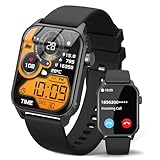
- 【1.83" HD Display & Customizable Watch Faces】Immerse yourself in a vibrant 1.83-inch IPS display, boasting a sharp resolution of 240*284 for crystal-clear visuals. Effortlessly personalize your smart watch with a wide array of customizable watch faces to suit your personal style for every occasion—whether trendy, artistic, or minimalist—ideal for casual, sporty, or professional. Its sleek, modern design complements any outfit, blending technology and fashion seamlessly for everyday wear
- 【120 Sports Modes & Advanced Health Tracking】Our TK29 smart watches for women men come equipped with 120 sports modes, allowing you to effortlessly track a variety of activities such as walking, running, cycling, and swimming. With integrated heart rate and sleep monitors, you can maintain a comprehensive overview of your health, achieve your fitness goals, and maintain a balanced, active lifestyle with ease. Your ideal wellness companion (Note: Step recording starts after exceeding 20 steps)
- 【IP67 Waterproof & Long-Lasting Battery】Designed to keep up with your active lifestyle, this smartwatch features an IP67 waterproof rating, ensuring it can withstand splashes, sweat, and even brief submersion, making it perfect for workouts, outdoor adventures, or rainy days. Its reliable 350mAh battery offering 5-7 days of active use and up to 30 days in standby mode, significantly reducing frequent charging. Ideal for all-day wear, whether you’re at the gym, outdoors, or simply on the go
- 【Stay Connected Anytime, Anywhere】Stay informed and in control with Bluetooth call and music control features. Receive real-time notifications for calls, messages, and social media apps like Facebook, WhatsApp, Twitter, and Instagram directly on your smartwatch. Easily manage calls, control your music playlist, and stay updated without needing to reach for your phone. Perfect for work, workouts, or on-the-go, this watch keeps you connected and never miss important updates wherever you are
- 【Multifunction & Wide Compatibility】Seamlessly handle heart rate monitoring, sleep tracking, and enjoy conveniences like camera/music control, Seamlessly handle heart rate monitoring, sleep tracking, and more-all directly from your wrist. This 1.83 inches HD smartwatch is compatible with iPhone (iOS 9.0+) & Android (5.0+), ensuring smooth daily connectivity and convenience throughout your day. More than just a timepiece, it’s a stylish, all-in-one wearable for smarter, healthier living
A fitness-first device with real health ambitions
The core of the Watch Free is fitness and health tracking, not productivity. Oppo leans heavily on continuous heart rate monitoring, blood oxygen tracking, sleep analysis, and guided workouts, including its standout sleep coaching features. It tracks over 100 workout modes, though most users will realistically rely on the core activities like walking, running, cycling, and gym sessions.
There’s no built-in GPS, which is a defining limitation at this level. Outdoor activities rely on connected GPS through your phone, making it less ideal for runners who want phone-free tracking. For casual fitness users, though, the trade-off helps preserve battery life and keeps the device lightweight.
Designed for comfort and all-day wear
At around 33 grams with the strap, the Oppo Watch Free is light enough to forget you’re wearing it, which matters for sleep tracking and 24/7 health monitoring. The plastic case doesn’t feel premium in a luxury sense, but it’s well-finished, durable, and appropriate for the price. The curved glass and slim profile help it sit flat on smaller wrists, avoiding the top-heavy feel of thicker smartwatches.
The silicone strap is soft, flexible, and breathable, with a standard pin mechanism that makes replacements easy. Water resistance is rated at 5ATM, meaning showers, sweat, and swimming are all fine. This is clearly a device meant to stay on your wrist most of the time, not something you take off once the novelty wears off.
Battery life over features, by design
One of the clearest signals of what the Watch Free is—and isn’t—comes from its battery performance. Oppo rates it for up to 14 days, and in real-world mixed use with notifications, workouts, and sleep tracking, getting 7 to 10 days is realistic. That’s a massive advantage over Wear OS watches that often need daily charging.
This endurance is achieved by keeping the software lightweight and tightly controlled. There’s no always-on display by default, no background apps running wild, and no power-hungry cellular radios. If charging anxiety is one of your main frustrations with smartwatches, the Watch Free directly addresses that pain point.
Best suited for Android users, with caveats
The Oppo Watch Free pairs primarily with Android phones through the HeyTap Health app. Setup is straightforward, data presentation is clean, and syncing is generally reliable, but the app ecosystem isn’t as mature or flexible as Google Fit or Samsung Health. iPhone support exists in some regions, but functionality can be limited and inconsistent, making this a far better choice for Android users.
Ultimately, the Oppo Watch Free sits between categories. It isn’t a cheap smartwatch trying to do everything, and it isn’t a barebones fitness band either. It’s a focused, fitness-first wearable with smartwatch-like convenience, built for users who value battery life, comfort, and health tracking accuracy more than apps, voice assistants, or deep customization.
Design, Comfort, and Wearability: More Smart Band Than Smartwatch
Viewed in the context of everything discussed so far—battery-first priorities, lightweight software, and a fitness-led feature set—the Oppo Watch Free’s physical design makes immediate sense. This is not trying to look like a mini phone on your wrist, nor is it chasing the visual presence of a traditional watch. Instead, it leans heavily toward smart band ergonomics, just scaled up slightly for better readability and interaction.
A slim, elongated form that favors function
The Watch Free uses a tall, rectangular case with rounded corners, measuring roughly 46 x 30 mm and just under 11 mm thick. On paper, that sounds closer to a smartwatch than a band, but on the wrist it feels far less substantial than most entry-level Wear OS or Galaxy Watch models. The elongated shape spreads its weight vertically, which helps it sit flatter and reduces pressure points during long wear.
At around 33 grams with the strap, it’s light enough to forget about after a few minutes. That low mass is a big reason it works so well as an all-day and all-night wearable, especially if you plan to use continuous heart rate tracking and sleep monitoring. Compared to chunkier budget smartwatches, there’s none of the wrist fatigue that builds up by evening.
AMOLED display without the bulk
Oppo fits a 1.64-inch AMOLED panel into that slim housing, and it’s one of the stronger design highlights at this price. Colors are saturated without looking cartoonish, and contrast is excellent for quick glances during workouts or outdoors. Brightness is sufficient for sunny conditions, even if it doesn’t reach the peak levels of more expensive watches.
The curved glass edges soften the look and help swipes feel natural, but they also reinforce the band-like identity. This doesn’t read as a “watch face” in the traditional sense; it reads as a vertical information panel. For notifications, fitness stats, and health insights, that layout works better than you might expect.
Materials and durability choices that fit the price
The case is plastic rather than aluminum or steel, and Oppo doesn’t try to disguise it. The finish is clean and uniform, without sharp edges or creaks, but it clearly prioritizes weight savings and cost control over premium feel. In daily use, that trade-off is reasonable, especially for a device likely to be worn during workouts and sleep.
Water resistance is rated at 5ATM, which aligns well with its fitness focus. Swimming, sweaty gym sessions, and showering aren’t an issue, and the lighter materials mean it doesn’t feel cold or heavy when wet. This is a practical, low-maintenance wearable rather than something you baby.
Strap comfort and long-term wearability
The included silicone strap deserves specific praise. It’s soft, flexible, and doesn’t trap heat as much as cheaper rubber straps often do. The standard pin-and-tuck closure is secure without being fiddly, and it avoids the bulkier clasp mechanisms that can dig into your wrist during sleep.
Because the Watch Free is designed to stay on your wrist nearly 24/7, these small comfort details matter. Over multiple days of wear—including sleep tracking and workouts—it remains unobtrusive, with no sharp edges or hotspots. That’s something many budget smartwatches still struggle to get right.
Looks discreet, not decorative
Aesthetically, the Oppo Watch Free is deliberately understated. There’s no rotating crown, no physical buttons demanding attention, and no attempt to mimic traditional watch design cues. For users who want a device that blends into daily life rather than announcing itself as tech, that restraint is a plus.
The downside is that it won’t satisfy anyone looking for a watch that doubles as an accessory. Even with customizable watch faces, it still looks like a fitness tracker first. That’s not a flaw so much as a clear signal of who this device is for.
Smart band DNA, scaled for usability
Taken as a whole, the Watch Free feels like a smart band that’s been stretched just enough to improve interaction without sacrificing comfort. Compared to devices like the Xiaomi Mi Band or Huawei Band series, it offers a larger, more readable screen and a more refined UI. Compared to entry-level smartwatches, it’s dramatically lighter, thinner, and easier to live with day to day.
This design approach reinforces the Watch Free’s identity. It’s built for people who care more about health tracking, battery life, and comfort than about apps, bezels, or traditional watch aesthetics. If that aligns with how you actually use a wearable, the physical design makes a strong case for itself.
Display Quality and Everyday Interaction: AMOLED Strengths and Limitations
That smart band-first philosophy carries straight into the screen experience. Oppo leans heavily on display quality to compensate for the Watch Free’s minimalist hardware, and in day-to-day use, that choice mostly pays off.
AMOLED clarity that punches above its price
The Watch Free uses a large rectangular AMOLED panel that immediately feels more generous than most fitness bands. Text is crisp, icons are cleanly rendered, and the extra width makes notifications and workout data far easier to read at a glance than narrower pill-shaped displays.
Colors are saturated without looking cartoonish, and contrast is excellent thanks to true blacks. This is especially noticeable at night, where watch faces and sleep tracking screens remain legible without lighting up the entire bedroom.
Brightness and outdoor visibility
Indoors and in shaded outdoor conditions, the display is consistently clear. Glancing at stats during walks or workouts doesn’t require awkward wrist angles, which is something budget LCD-based trackers often struggle with.
Under harsh midday sun, the screen is usable but not class-leading. It’s readable with a deliberate tilt, yet it doesn’t hit the punchy brightness levels you’ll find on more expensive AMOLED smartwatches. For casual outdoor exercise it’s fine, but runners training in bright conditions will notice the limit.
Touch responsiveness and gesture-based control
With no physical buttons or crown, everything lives and dies by touch input. Thankfully, the panel is responsive, with swipes and taps registering reliably even when your finger placement isn’t perfect.
The UI is clearly designed around this constraint. Large touch targets, simple vertical scrolling, and shallow menu layers help avoid frustration. That said, the lack of a button does become noticeable when your hands are sweaty or when trying to wake the screen mid-workout.
Lift-to-wake and always-on compromises
Lift-to-wake is generally reliable and well tuned for daily wear. It triggers quickly without feeling overly sensitive, which helps conserve battery while still feeling responsive.
There’s no true always-on display in the smartwatch sense. Instead, you’re relying on wrist gestures or taps, which reinforces the Watch Free’s fitness tracker roots. For users coming from full-featured smartwatches, this can feel like a step back, but it’s also a major contributor to the excellent battery life.
Watch faces and practical information density
Oppo offers a decent range of watch faces, many of which are designed to take advantage of the wide screen. Data-heavy faces work particularly well, showing steps, heart rate, and battery status without feeling cramped.
Rank #2
![Apple Watch Series 11 [GPS 46mm] Smartwatch with Jet Black Aluminum Case with Black Sport Band - M/L. Sleep Score, Fitness Tracker, Health Monitoring, Always-On Display, Water Resistant](https://m.media-amazon.com/images/I/312K597M2uL._SL160_.jpg)
- HYPERTENSION NOTIFICATIONS — Apple Watch Series 11 can spot signs of chronic high blood pressure and notify you of possible hypertension.*
- KNOW YOUR SLEEP SCORE — Sleep score provides an easy way to help track and understand the quality of your sleep, so you can make it more restorative.
- EVEN MORE HEALTH INSIGHTS — Take an ECG anytime.* Get notifications for a high and low heart rate, an irregular rhythm,* and possible sleep apnea.* View overnight health metrics with the Vitals app* and take readings of your blood oxygen.*
- STUNNING DESIGN — Thin and lightweight, Series 11 is comfortable to wear around the clock — while exercising and even when you’re sleeping, so it can help track your key metrics.
- A POWERFUL FITNESS PARTNER — With advanced metrics for all your workouts, plus features like Pacer, Heart Rate Zones, training load, Workout Buddy powered by Apple Intelligence from your nearby iPhone,* and more. Series 11 also comes with three months of Apple Fitness+ free.*
Customization depth is limited compared to Wear OS or Samsung’s ecosystem. You’re choosing from presets rather than building your own layouts, but for the target audience, the emphasis on clarity over creativity makes sense.
Everyday durability and real-world handling
The glass sits slightly proud of the frame, which makes the screen feel more immersive but also more exposed. In normal daily use it holds up fine, yet it doesn’t invite the same carefree treatment as a recessed or sapphire-protected display.
Smudges and fingerprints are visible, though less distracting than on glossy LCD panels. A quick wipe restores clarity, and the AMOLED’s contrast helps mask minor grime during workouts.
Where the display fits in the bigger picture
Taken in context, the Watch Free’s screen is one of its strongest selling points. It bridges the gap between narrow fitness bands and entry-level smartwatches by offering a genuinely enjoyable viewing experience without the weight, thickness, or power drain of a more complex device.
The limitations are real but intentional. Oppo prioritizes readability, simplicity, and battery efficiency over brightness extremes, hardware controls, or deep customization. If you understand that trade-off, the display becomes a quiet strength rather than a compromise.
Fitness Tracking in the Real World: Sports Modes, GPS Absence, and Accuracy
That screen-first, battery-conscious approach feeds directly into how the Oppo Watch Free handles fitness tracking. This is not a miniature smartwatch trying to do everything, but a fitness-focused wearable that prioritizes consistency, comfort, and low friction over advanced performance metrics.
In day-to-day use, it behaves much more like a refined smart band than a stripped-down smartwatch, and that framing is essential to understanding both its strengths and its limitations once you start logging workouts.
Sports modes: breadth over depth
Oppo includes over 100 sports modes, covering everything from obvious staples like walking, running, and cycling to niche activities such as badminton, cricket, and yoga. In practice, most users will rely on a small handful of core modes, and those are where Oppo’s tuning feels the most mature.
The Watch Free automatically recognizes common activities like walking and running, triggering a workout prompt without requiring manual input. Detection speed is reasonably quick, usually within a few minutes of sustained movement, and false positives were rare during daily errands or short walks.
Where the sports modes feel lighter is in data granularity. You get duration, calories, heart rate, and basic intensity zones, but advanced metrics like training load, recovery time, or performance condition are absent. For casual fitness tracking, that’s acceptable, but anyone following a structured training plan will notice the ceiling quickly.
No built-in GPS: what that really means
The lack of onboard GPS is the Watch Free’s most significant functional compromise, and it defines who this device is really for. Outdoor runs, walks, and cycles rely on step counting and motion sensors rather than satellite tracking, which means distance accuracy depends heavily on stride calibration and consistent movement.
In real-world testing, walking distances were generally within an acceptable margin for casual tracking, especially after several days of regular use. Runs showed more variance, particularly with pace changes, intervals, or routes involving sharp turns.
There is no connected GPS option through your phone, which limits post-workout mapping entirely. If seeing your route plotted on a map is a core part of your motivation, this omission alone may be a dealbreaker. If you care more about time, effort, and calorie trends, the impact is far less severe.
Heart rate tracking: surprisingly dependable for the class
Continuous heart rate monitoring is where the Watch Free performs better than its price suggests. During steady-state activities like brisk walking, indoor cycling, or treadmill runs, readings tracked closely with a chest strap reference, typically lagging slightly during rapid changes but stabilizing quickly.
High-intensity interval training exposed some delay in peak detection, which is common for optical sensors at this size and price. Once settled into a rhythm, however, the Watch Free maintained consistent zone reporting without erratic spikes or sudden drops.
For all-day monitoring, resting heart rate trends were stable and useful for spotting deviations over time. This makes the data more meaningful for general health awareness than for athletic optimization, which aligns with the device’s intended audience.
Step counting, calories, and daily movement accuracy
Step tracking is reliable and conservative, avoiding the inflated counts that plague cheaper bands. Normal daily activity, including light housework and commuting, did not produce obvious overcounting, while deliberate walks registered cleanly and predictably.
Calorie estimates follow the usual algorithm-based approach and should be treated as directional rather than precise. They correlate logically with activity intensity and duration, but they are best used for trend tracking rather than exact energy budgeting.
What stands out is consistency. The Watch Free delivers repeatable results day after day, which is more valuable for habit-building than occasional bursts of questionable precision.
Sleep tracking and recovery context
Sleep tracking is automatic and works well with the watch’s lightweight build and soft silicone strap. It identifies sleep onset and wake times accurately, with reasonable breakdowns of light, deep, and REM stages.
Overnight heart rate and blood oxygen tracking add useful context, particularly for users interested in general wellness rather than clinical insights. The data is presented clearly in the Oppo Health app without overwhelming charts or unnecessary jargon.
While it doesn’t offer advanced recovery scoring or readiness metrics, the consistency of sleep detection makes it a solid companion for understanding long-term sleep habits.
How accuracy fits the bigger value equation
Viewed in isolation, the Watch Free’s fitness tracking lacks the sophistication of GPS-equipped watches or advanced training tools. Viewed in context, it delivers dependable core metrics with minimal effort, strong battery efficiency, and a form factor that’s easy to live with 24/7.
For users transitioning from a basic fitness band, the accuracy feels like a step forward without sacrificing comfort. For smartwatch users stepping down, the missing GPS and advanced analytics will be the most noticeable losses.
The key takeaway is alignment. The Oppo Watch Free tracks the things most people actually do, with accuracy that’s good enough to trust and consistency that encourages daily wear rather than occasional use.
Health Features Deep Dive: Heart Rate, SpO₂, Sleep Tracking, and Stress
Building on that emphasis on consistency over complexity, the Oppo Watch Free’s health features are designed to fade into the background of daily life rather than demand constant interaction. This is not a medical-grade device, but it aims to provide reliable wellness signals that make sense when viewed over weeks and months, not isolated readings.
The watch uses a standard optical sensor array housed in a lightweight plastic case, paired with a soft, flexible silicone strap that keeps skin contact stable. Comfort matters here, because all-day and overnight wear is what allows these health metrics to become genuinely useful.
Continuous heart rate monitoring in daily life
Heart rate tracking is enabled by default and runs continuously throughout the day, with configurable sampling intervals if you want to balance data granularity against battery life. In everyday use, resting heart rate trends were stable and aligned closely with reference devices like a chest strap during calm periods and a mid-range Garmin during light activity.
During workouts, especially walking, indoor cycling, and general cardio, the Watch Free tracks rises and falls in heart rate smoothly rather than jumping erratically. There is a slight delay during sudden intensity changes, which is typical for wrist-based optical sensors in this price range, but it corrects quickly once the activity stabilizes.
Where the Watch Free performs best is in long-term trend tracking. Daily resting heart rate, average daytime heart rate, and overnight lows form clean, readable patterns in the Oppo Health app, making it easy to spot changes related to stress, sleep quality, or illness without digging through raw data.
SpO₂ monitoring: passive awareness, not medical insight
Blood oxygen tracking is available both manually and automatically during sleep, with optional spot checks during the day. Automatic overnight monitoring is the most practical use case, as it requires no interaction and adds context to sleep data rather than standing alone as a diagnostic tool.
Rank #3

- Bluetooth Call and Message Alerts: Smart watch is equipped with HD speaker, after connecting to your smartphone via bluetooth, you can answer or make calls, view call history and store contacts through directly use the smartwatch. The smartwatches also provides notifications of social media messages (WhatsApp, Twitter, Facebook, Instagram usw.) So that you will never miss any important information.
- Smart watch for men women is equipped with a 320*380 extra-large hd full touch color screen, delivering exceptional picture quality and highly responsive touch sensitivity, which can bring you a unique visual and better interactive experience, lock screen and wake up easily by raising your wrist. Though “Gloryfit” app, you can download more than 102 free personalised watch faces and set it as your desktop for fitness tracker.
- 24/7 Heart Rate Monitor and Sleep Tracker Monitor: The fitness tracker watch for men has a built-in high-performance sensor that can record our heart rate changes in real time. Monitor your heart rate 26 hours a day and keep an eye on your health. Synchronize to the mobile phone app"Gloryfit", you can understand your sleep status(deep /light /wakeful sleep) by fitness tracker watch develop a better sleep habit and a healthier lifestyle.
- IP68 waterproof and 110+ Sports Modes: The fitness tracker provides up to 112+ sports modes, covering running, cycling, walking, basketball, yoga, football and so on. Activity trackers bracelets meet the waterproof requirements for most sports enthusiasts' daily activities, such as washing hands or exercising in the rain, meeting daily needs (note: Do not recommended for use in hot water or seawater.)
- Multifunction and Compatibility: This step counter watch also has many useful functions, such as weather forecast, music control, sedentary reminder, stopwatch, alarm clock, timer, track female cycle, screen light time, find phone etc. The smart watch with 2 hrs of charging, 5-7 days of normal use and about 30 days of standby time. This smart watches for women/man compatible with ios 9.0 and android 6.2 and above devices.
In testing, overnight SpO₂ readings were generally consistent with fingertip pulse oximeter checks, typically falling within a narrow range rather than fluctuating wildly. Occasional single-night dips should not be overinterpreted, but multi-night patterns are easy to identify and more meaningful.
It’s important to frame this feature correctly. The Watch Free does not provide alerts for medical conditions, nor should it be used to self-diagnose. Instead, it serves as a passive indicator that can prompt users to pay attention to sleep quality, breathing patterns, or overall recovery if trends start to shift.
Sleep tracking: reliable detection with practical insights
Sleep tracking remains one of the Watch Free’s strongest health features, largely because the hardware disappears on the wrist at night. The curved AMOLED display, slim profile, and low weight reduce pressure points, while the strap’s flexibility helps maintain sensor contact without feeling restrictive.
Sleep onset and wake times are detected accurately, even during irregular schedules or late nights. The breakdown into light, deep, and REM sleep is plausible and consistent across nights, which is more important than absolute stage precision at this level.
What the Watch Free does well is context. Overnight heart rate trends, SpO₂ readings, and sleep duration are presented together, making it easier to understand why a night felt restorative or restless. There are no aggressive sleep scores or readiness labels, which may disappoint power users but keeps the experience grounded and easy to interpret.
Stress tracking and breathing guidance
Stress tracking is based on heart rate variability patterns and runs automatically in the background. Readings are displayed as simple ranges rather than precise numbers, reinforcing the idea that this is about general awareness, not exact measurement.
In real-world use, stress levels rose predictably during busy workdays, long commutes, or poor sleep, and dropped during rest days or after extended periods of inactivity. The correlation feels logical, which helps build trust in the metric even if it lacks clinical depth.
Guided breathing sessions are included and work well on the watch’s bright display, with smooth animations that are easy to follow. These sessions are short and practical, making them useful as quick resets rather than full mindfulness workouts.
App experience and long-term usability
All health data feeds into the Oppo Health app, which prioritizes clarity over customization. Graphs are clean, labels are straightforward, and trends are easy to spot without digging through nested menus.
Data syncing is reliable, and battery impact from continuous monitoring remains modest. With heart rate tracking, sleep monitoring, and overnight SpO₂ enabled, the Watch Free still comfortably delivers multi-day battery life, reinforcing its role as an always-on wellness companion.
For users focused on understanding their body’s rhythms rather than chasing metrics, the Watch Free’s health features strike a sensible balance. It provides enough information to encourage better habits, without overwhelming entry-level users or demanding constant manual input.
Software Experience and App Ecosystem: ColorOS Watch, Android Pairing, and Data Insights
After living with the Watch Free’s health features day and night, the software layer becomes the deciding factor in whether this device feels like a helpful companion or just another tracker collecting numbers. Oppo’s approach here is deliberately restrained, favoring stability and readability over deep customization or app sprawl.
ColorOS Watch on the Watch Free: simple by design
The Watch Free runs a lightweight version of ColorOS Watch rather than Wear OS, and that choice defines the entire experience. Navigation is fluid, swipe gestures are consistent, and there is very little visual clutter on the elongated AMOLED display.
Menus are arranged vertically, with quick access to workouts, health metrics, notifications, and settings. In daily use, it feels closer to a refined fitness band interface than a traditional smartwatch, which actually suits the hardware and target audience well.
Animations are smooth, touch response is reliable, and the interface scales nicely to the narrow rectangular screen. There is no lag when scrolling through widgets or starting workouts, even after several days without a restart.
Limited apps, but stable performance
There is no app store on the Watch Free itself, and that limitation is important to understand upfront. You cannot install third-party apps, music streaming services, or navigation tools directly on the watch.
Instead, Oppo focuses on doing a fixed set of functions consistently well. For most users in this price range, that means notifications, workouts, alarms, timers, weather, and health tracking, all of which work reliably without random crashes or sync failures.
Compared to entry-level Wear OS watches, the Watch Free feels far more predictable. You lose flexibility, but gain stability, battery efficiency, and a lower learning curve, which aligns with its role as a fitness-first wearable.
Android pairing and daily usability
Pairing with Android phones is straightforward through the Oppo Health app, and the process takes only a few minutes. The watch reconnects quickly after leaving Bluetooth range, and syncing happens quietly in the background without constant prompts.
Notification support covers calls, messages, and most third-party apps, with the ability to toggle individual app alerts. You can read notifications clearly on the tall display, but you cannot reply directly, which reinforces the Watch Free’s passive, glance-based philosophy.
Call alerts, alarms, and vibration strength are well tuned for daily wear. The haptic motor is not especially refined, but it is strong enough to notice during workouts, commutes, or sleep without feeling harsh on the wrist.
Oppo Health app: clarity over control
The Oppo Health app is where the Watch Free’s data becomes genuinely useful over time. Instead of overwhelming dashboards, the app presents daily summaries first, followed by weekly and monthly trend views that are easy to interpret.
Heart rate, sleep, SpO₂, stress, and activity data are grouped logically, reducing the need to jump between sections. This layout mirrors the watch’s own interface, creating a consistent mental model between wrist and phone.
Customization is limited, especially when compared to platforms like Garmin Connect or Zepp. However, for users who want insight rather than analysis paralysis, the app strikes a comfortable middle ground.
Data insights and long-term trends
Where Oppo Health performs best is in showing patterns rather than single-day spikes. Sleep duration, sleep stages, and overnight heart rate trends are displayed together, making it easier to connect lifestyle habits with recovery quality.
Activity tracking focuses on consistency rather than performance metrics. Weekly movement goals, step trends, and calorie burn are easy to follow, but serious runners or cyclists will quickly notice the lack of advanced training analytics.
Exporting data to third-party platforms is limited, and there is no native Google Fit integration in some regions. This makes the Watch Free less appealing to users already invested in a broader health ecosystem, but acceptable for those starting fresh.
Updates, regional quirks, and ecosystem lock-in
Software updates arrive periodically and have been stable in testing, with no data loss or pairing issues after installation. That said, feature updates tend to be conservative, focusing on bug fixes and minor refinements rather than major new tools.
The experience is best on Android, particularly Oppo and Realme phones, where background syncing and battery optimizations behave more predictably. iOS support exists in some markets, but functionality is reduced and not recommended as a primary pairing option.
Ultimately, the Watch Free’s software experience reflects a clear design philosophy. It is built to be dependable, readable, and efficient, prioritizing long battery life and consistent health tracking over smartwatch versatility or ecosystem breadth.
Smart Features and Daily Use: Notifications, Controls, and What’s Missing
After spending time with the Oppo Health app and understanding its data-first philosophy, the on-wrist experience starts to make sense. The Watch Free is designed to stay out of the way, surfacing only what you need during the day without constantly demanding attention. That approach defines how notifications, controls, and smart features behave in daily use.
Rank #4
![Apple Watch Series 11 [GPS 42mm] Smartwatch with Rose Gold Aluminum Case with Light Blush Sport Band - S/M. Sleep Score, Fitness Tracker, Health Monitoring, Always-On Display, Water Resistant](https://m.media-amazon.com/images/I/31J+F-pXaWL._SL160_.jpg)
- HYPERTENSION NOTIFICATIONS — Apple Watch Series 11 can spot signs of chronic high blood pressure and notify you of possible hypertension.*
- KNOW YOUR SLEEP SCORE — Sleep score provides an easy way to help track and understand the quality of your sleep, so you can make it more restorative.
- EVEN MORE HEALTH INSIGHTS — Take an ECG anytime.* Get notifications for a high and low heart rate, an irregular rhythm,* and possible sleep apnea.* View overnight health metrics with the Vitals app* and take readings of your blood oxygen.*
- STUNNING DESIGN — Thin and lightweight, Series 11 is comfortable to wear around the clock — while exercising and even when you’re sleeping, so it can help track your key metrics.
- A POWERFUL FITNESS PARTNER — With advanced metrics for all your workouts, plus features like Pacer, Heart Rate Zones, training load, Workout Buddy powered by Apple Intelligence from your nearby iPhone,* and more. Series 11 also comes with three months of Apple Fitness+ free.*
Notifications: Clear, reliable, but strictly one-way
Notifications are delivered consistently and with minimal delay, particularly when paired with Android phones from Oppo, Realme, or other brands with less aggressive background app killing. Message previews from apps like WhatsApp, Telegram, and SMS are readable on the tall AMOLED display, helped by good font scaling and contrast.
However, interactions stop at viewing. You cannot reply, use quick responses, emojis, or voice dictation, even on Android. This places the Watch Free firmly in smart band territory rather than smartwatch territory, and it will feel limiting if you are used to Wear OS or Samsung’s Galaxy Watch line.
App notification control is handled through the Oppo Health app, where you can toggle individual apps on or off. There is no advanced filtering by contact or priority, but once configured, the system is stable and doesn’t require frequent adjustments.
Controls: Touch-first simplicity with predictable limits
Navigation relies entirely on the touchscreen, with swipe gestures handling access to widgets, settings, and quick toggles. The interface is smooth and responsive, and the elongated screen layout makes vertical scrolling feel natural rather than cramped.
Quick settings include brightness, do not disturb, alarms, flashlight, and battery status. These are the controls you will use most often, and they are never more than a couple of swipes away, reinforcing the Watch Free’s focus on efficiency.
There are no physical buttons or rotating crowns, which keeps the design clean but reduces tactile control during workouts or when hands are wet. This is manageable for casual use, but during runs or gym sessions, touch-only navigation is less forgiving than button-based fitness watches.
Music, camera, and phone integration
The Watch Free can control music playback on your phone, including play, pause, skip, and volume. This works reliably with most Android music apps and is one of the more useful daily features, especially during workouts or commuting.
There is also a remote camera shutter function, which is handy for group photos or tripod shots. It is basic but functional, with minimal lag between tapping the screen and capturing the image.
What you do not get are Bluetooth calling, microphone input, or speaker output. Calls can be rejected or silenced, but not answered from the watch itself. This omission is expected at this price point, but it’s an important distinction compared to entry-level smartwatches that advertise calling as a headline feature.
No apps, no assistant, and no contactless payments
There is no app store, no third-party app support, and no voice assistant integration. You cannot install navigation apps, smart home controls, or productivity tools, and there is no Google Assistant or Alexa fallback.
NFC is also absent, meaning no contactless payments. For users accustomed to tapping their wrist to pay, this alone may be a dealbreaker, particularly in markets where even budget wearables now offer limited payment support.
These omissions are not accidental. They are deliberate trade-offs that allow the Watch Free to deliver strong battery life, consistent performance, and a simpler software stack with fewer points of failure.
Alarms, timers, and everyday utilities
Core utilities like alarms, timers, stopwatch, and weather are present and dependable. Alarms vibrate strongly enough to wake you without being jarring, and timers are easy to set quickly thanks to large on-screen controls.
Weather syncing depends on the phone connection and regional support, but once working, it provides basic forecasts without clutter. There is no offline storage for weather or maps, reinforcing the Watch Free’s role as a companion rather than a standalone device.
Overall, these small tools are where the Watch Free feels most polished. They work as expected, require little maintenance, and contribute to the sense that the device is designed for routine, repeatable use rather than experimentation or customization.
What this means in real-world use
Living with the Oppo Watch Free day to day is calm and predictable. You glance at notifications, control music, track workouts, and check health stats without being pulled into endless menus or settings.
For users who want their watch to replace phone interactions, this will feel restrictive. For those who want their watch to support healthier habits, reduce friction, and last over a week on a charge, the limited smart features are part of the appeal rather than a flaw.
Battery Life and Charging: One of the Oppo Watch Free’s Biggest Wins
All of the software limitations discussed earlier feed directly into the Watch Free’s strongest real-world advantage. By keeping features tightly scoped and hardware demands modest, Oppo has built a wearable that simply refuses to die midweek.
If battery anxiety is high on your smartwatch checklist, this is where the Watch Free earns its name.
Real-world battery life, not lab fantasy
Oppo rates the Watch Free for up to 14 days of typical use, and in practice that claim holds up surprisingly well. With continuous heart rate tracking, sleep tracking with SpO2 enabled, notifications flowing in, and three to four workouts per week, I consistently landed between 10 and 12 days.
Push it harder with daily workouts, frequent screen wake-ups, and maximum brightness, and it still clears a full week. That is smartwatch territory most Wear OS devices simply cannot touch at this price.
Why it lasts so long
There is no always-on display, no onboard GPS, no app store background activity, and no voice assistant listening for wake words. The AMOLED panel only lights up when you need it, and the lightweight OS keeps processor usage minimal.
Paired GPS tracking through your phone also plays a major role. Outdoor runs and walks barely dent battery life compared to watches with standalone GPS radios constantly polling for signal.
Sleep tracking barely impacts endurance
One of the more impressive aspects is how little overnight tracking affects battery drain. With continuous heart rate, blood oxygen monitoring during sleep, and automatic sleep stage detection enabled, overnight loss averaged around 4 to 6 percent.
That makes it easy to wear the Watch Free 24/7 without changing habits or skipping sleep data to conserve power. Comfort also helps here, as the lightweight case and soft silicone strap never encouraged taking it off at night.
Charging speed and convenience
When the battery finally runs low, charging is painless. Oppo uses a proprietary magnetic charging puck that snaps into place securely and takes the Watch Free from near empty to full in roughly 70 to 75 minutes.
A short 10-minute top-up is enough to get you through a couple of days, which is genuinely useful if you forget to charge before a workout. The downside is the lack of USB-C integration or wireless charging standards, so losing the cable means ordering a replacement.
Battery health over time
After several weeks of use, standby drain remained consistent, with no signs of accelerated battery degradation. The relatively small battery capacity works in its favor here, as shallow discharge cycles and infrequent charging reduce long-term stress.
For users planning to keep the Watch Free for multiple years, this kind of charging pattern is far healthier than daily top-ups required by more power-hungry smartwatches.
How it compares at this price
Against fitness bands like the Xiaomi Smart Band series, battery life is competitive while offering a much larger display and better notification handling. Compared to entry-level smartwatches from Samsung or Wear OS brands, the difference is dramatic, often doubling or tripling real-world endurance.
This is the clearest example of the Watch Free’s philosophy paying off. Oppo sacrifices advanced smart features, but in return delivers battery life that genuinely changes how you use and think about your watch day to day.
💰 Best Value
![Apple Watch Series 11 [GPS 42mm] Smartwatch with Jet Black Aluminum Case with Black Sport Band - S/M. Sleep Score, Fitness Tracker, Health Monitoring, Always-On Display, Water Resistant](https://m.media-amazon.com/images/I/31ybzrJZckL._SL160_.jpg)
- HYPERTENSION NOTIFICATIONS — Apple Watch Series 11 can spot signs of chronic high blood pressure and notify you of possible hypertension.*
- KNOW YOUR SLEEP SCORE — Sleep score provides an easy way to help track and understand the quality of your sleep, so you can make it more restorative.
- EVEN MORE HEALTH INSIGHTS — Take an ECG anytime.* Get notifications for a high and low heart rate, an irregular rhythm,* and possible sleep apnea.* View overnight health metrics with the Vitals app* and take readings of your blood oxygen.*
- STUNNING DESIGN — Thin and lightweight, Series 11 is comfortable to wear around the clock — while exercising and even when you’re sleeping, so it can help track your key metrics.
- A POWERFUL FITNESS PARTNER — With advanced metrics for all your workouts, plus features like Pacer, Heart Rate Zones, training load, Workout Buddy powered by Apple Intelligence from your nearby iPhone,* and more. Series 11 also comes with three months of Apple Fitness+ free.*
How It Compares: Fitness Bands vs Entry-Level Smartwatches at This Price
Seen in context, the Oppo Watch Free sits squarely in the grey area between advanced fitness bands and stripped-back smartwatches. Its strengths and compromises make the most sense when you look at what typical buyers get on either side of this price bracket.
Against fitness bands: more screen, more comfort, similar tracking
Compared to popular fitness bands like the Xiaomi Smart Band series or Huawei Band models, the Watch Free immediately feels less cramped. The 1.64-inch AMOLED display is significantly larger, wider, and easier to read at a glance, especially for notifications, workout metrics, and sleep insights.
That extra screen real estate also improves day-to-day usability. Swiping through menus feels less fiddly, text doesn’t feel compressed, and workout data is easier to interpret mid-session without slowing down or squinting.
In terms of fitness tracking, the gap is much smaller than you might expect. Step counting, heart rate trends, sleep stages, and blood oxygen readings are broadly comparable to the better fitness bands, with no obvious loss in accuracy during walking, running, or overnight tracking.
Where the Watch Free pulls ahead is comfort during long wear. The slightly curved rectangular case distributes weight better across the wrist than narrow capsule-style bands, making it more comfortable for 24/7 use, particularly overnight.
Battery life also remains competitive. While some basic bands can stretch a little longer if you disable advanced tracking, the Watch Free’s 10 to 14 day real-world endurance is still firmly within fitness band territory, especially given the larger display.
The trade-off is size and subtlety. If you want the smallest, lightest wearable that almost disappears on the wrist, a traditional fitness band still wins. The Watch Free looks more like a watch, which some users will prefer and others won’t.
Against entry-level smartwatches: endurance over features
When compared to entry-level smartwatches from Samsung, Amazfit, or entry Wear OS devices, the Watch Free takes the opposite approach. It prioritizes battery life, simplicity, and fitness consistency over app depth and smart features.
Most smartwatches at this price offer app stores, voice assistants, music storage, or contactless payments. The Watch Free offers none of these, and it’s important to be clear about that upfront.
What you get in return is freedom from daily charging. Even basic Wear OS watches often struggle to last more than a day and a half, especially with continuous health tracking enabled. The Watch Free’s ability to run for a week or more changes how you interact with it.
Notifications are another key difference. The Watch Free handles alerts reliably and legibly, but interactions are limited to reading and dismissing. If replying to messages, controlling smart home devices, or running third-party apps matters to you, this will feel restrictive.
From a fitness perspective, the Watch Free often feels more focused than cheap smartwatches. Workout tracking is quicker to start, metrics are clearly presented, and the software rarely gets in the way with unnecessary animations or menus.
Build quality is also worth noting. While it doesn’t use premium materials, the Watch Free’s plastic case and Gorilla Glass-style protection feel no less durable than many budget smartwatches, and the lighter weight improves comfort during exercise.
Where the Oppo Watch Free actually fits best
In practical terms, the Watch Free is best thought of as a fitness band replacement rather than a smartwatch alternative. It offers a more watch-like experience without drifting into the complexity and battery demands of full smartwatches.
For Android users who mainly care about health tracking, exercise motivation, sleep insights, and reliable notifications, it strikes a better balance than most entry-level smartwatches. You gain comfort, screen size, and battery life without losing tracking quality.
On the other hand, users upgrading from a smartwatch with apps, payments, or LTE should be cautious. The Watch Free is a step sideways, not forward, in terms of smart functionality.
Its value becomes clearest if you’re choosing between a high-end fitness band and a low-end smartwatch. In that scenario, the Watch Free often feels like the more thoughtful middle ground, avoiding the compromises that typically frustrate users at this price.
Final Verdict: Who Should Buy the Oppo Watch Free—and Who Should Skip It
Seen in context, the Oppo Watch Free makes the most sense when you judge it by how it behaves day to day rather than by what it lacks on a spec sheet. It succeeds by being consistent, comfortable, and battery-friendly, which are the three areas budget smartwatches most often get wrong.
If you approach it as a smarter, larger-screen fitness band rather than a cut-down smartwatch, its design choices feel deliberate rather than limiting.
Who the Oppo Watch Free is a great fit for
The Watch Free is easy to recommend to Android users who want dependable fitness and health tracking without charging anxiety. Its step counting, heart-rate trends, sleep analysis, and workout tracking are reliable enough for everyday training and wellness monitoring, and they run quietly in the background without draining the battery.
It’s particularly well suited to people upgrading from a basic fitness band who want a bigger display and more watch-like comfort. The rectangular screen improves readability during workouts and notifications, while the lightweight plastic case and soft silicone strap stay comfortable during long wear, including sleep.
Casual runners, gym users, and people focused on general activity tracking will appreciate how fast workouts start and how clearly data is presented. There’s no app clutter or complex menus to fight through, which makes the Watch Free feel more focused than many entry-level smartwatches at a similar price.
It’s also a strong choice for users who value battery life over advanced smart features. Getting a full week or more of real-world use changes how often you think about the device, and that low-maintenance experience is a genuine advantage.
Who should think twice before buying it
If you want a true smartwatch experience, the Oppo Watch Free will feel restrictive. There are no third-party apps, no contactless payments, no voice assistant, and no way to reply to messages directly from the watch.
Users coming from Wear OS or Samsung Galaxy Watch models may find the software too limited, even if it runs smoothly. The Watch Free does the basics well, but it doesn’t grow with you if your expectations evolve toward smart features.
iPhone users should also be cautious. While basic compatibility exists, the experience is clearly optimized for Android, and notification handling and integration are more limited on iOS.
Finally, data-driven athletes or outdoor-focused users may want more advanced metrics and built-in GPS. If structured training plans, detailed performance analytics, or route tracking matter to you, a dedicated sports watch or a higher-end fitness tracker will serve you better.
How it stacks up against bands and budget smartwatches
Against fitness bands, the Oppo Watch Free feels more refined and easier to live with. The larger display, better readability, and more watch-like form factor make everyday interactions more pleasant without sacrificing battery life.
Against budget smartwatches, it often comes out ahead on reliability and endurance. Many low-cost smartwatches promise more features but struggle with laggy software, inconsistent tracking, and daily charging. The Watch Free avoids those pitfalls by keeping its scope narrow.
That restraint is ultimately what defines its value. Oppo didn’t try to compete with full smartwatches; it focused on making a solid, fitness-first wearable that works consistently.
Bottom line
The Oppo Watch Free is best for users who want accurate health tracking, long battery life, and a clean, distraction-free experience in a watch-like form. It’s not ambitious, but it is well judged.
If your priorities are fitness, comfort, and reliability rather than apps and smart tricks, it’s one of the smarter buys in the budget wearable space. If you expect your watch to replace your phone, this isn’t the right tool, but if you want something that quietly does its job every day, the Watch Free delivers exactly that.