For anyone who has tried to piece together cycle tracking, readiness scores, and symptom notes across multiple apps, the Oura–Mira partnership lands with a very specific promise: fewer blind spots between hormones and physiology. It speaks directly to users who already trust wearable data but know that temperature trends and HRV alone can’t fully explain why energy, sleep, or mood shifts across a cycle.
This partnership is not a new device launch, nor is it Oura suddenly becoming a hormone-testing company. Instead, it is a data-level integration that connects Mira’s at-home hormone measurements with Oura Ring’s continuous biometric tracking to create a more contextual picture of female physiology over time.
Understanding what this collaboration actually enables, and where its limits still are, matters if you are deciding whether pairing a smart ring with hormone testing meaningfully improves decision-making, or simply adds another layer of complexity.
What the partnership actually delivers
At its core, the Oura–Mira partnership allows users to view Mira hormone data alongside Oura Ring insights, rather than in isolation. Mira’s system measures specific urinary hormones, typically luteinizing hormone (LH), estrogen metabolites (E3G), and progesterone metabolites (PdG), using disposable wands analyzed by a dedicated reader.
🏆 #1 Best Overall
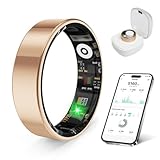
- 【Check the Size Before Purchase】 Before buying the prxxhri Smart Ring, we strongly suggest that you refer to the size chart and carefully measure the circumference of your finger. This will ensure you get the most comfortable wearing experience and easily avoid any unnecessary returns or exchanges.
- 【Real-time Accurate Sleep & Fitness Monitoring】 prxxhri smart ring tracks your sleep quality and daily activities in real time. With advanced sensors, it provides precise data about your sleep cycle, helping you optimize rest and recovery. Whether you are tracking steps, calories or exercise performance, this smart ring can provide you with the most accurate insights to support your fitness goals and enhance your overall health.It is a good choice for family and friends.
- Health Monitoring】The prxxhri ring features advanced 4.0 sensors that automatically measure your heart rate, and blood pressure every 30 min when worn. It provides continuous health tracking and comprehensive wellness management all day.
- 【3-5 Day Battery Life】 With a 3-5 day battery life, the prxxhri smart ring ensures continuous health monitoring without frequent charging. When used with the smart charging case, the usage time can even exceed 20 days. Whether you are tracking sleep patterns or fitness activities, you can count on long-lasting performance without constant interruptions.
- 【80-meter Waterproof, Suitable for Various Scenarios】 The prxxhri Smart Ring has excellent waterproof performance, with a waterproof depth of up to 80 meters. Whether it's for daily wear, an intense workout session or a pleasant swimming time, it can handle it with ease. What's more, even if you have sensitive skin, you can still enjoy an extremely comfortable wearing experience when wearing this ring.
Oura, by contrast, contributes continuous passive data: overnight skin temperature trends, resting heart rate, heart rate variability, respiratory rate, and sleep staging, all captured by a lightweight titanium ring worn 24/7 with a battery life of roughly 4–7 days depending on usage.
The integration does not fuse raw data into a single algorithmic score. Instead, it aligns timelines, letting users correlate hormone surges or drops with changes in sleep quality, recovery, readiness, or perceived stress. For example, a PdG rise after ovulation can be viewed alongside shifts in resting heart rate and temperature, helping confirm luteal phase onset with more confidence than either system alone.
What this partnership is not
This is not a diagnostic platform, fertility treatment, or medical-grade endocrine monitoring solution. Neither Oura nor Mira is positioning the integration as a substitute for blood labs, clinician oversight, or fertility clinic protocols.
It also does not mean Oura is directly measuring hormones, nor that Mira is becoming a wearable. Hormone testing remains discrete and user-initiated, requiring regular wand use, while the ring continues to focus on passive, trend-based physiological monitoring rather than point-in-time biochemical data.
Importantly, the partnership does not magically eliminate uncertainty. Hormones fluctuate hour to hour, urinary metabolites lag behind blood levels, and wearable signals are influenced by training load, illness, alcohol, and sleep debt. The integration adds context, not certainty.
Why hormone data and ring biometrics actually complement each other
Smart rings excel at capturing subtle changes in autonomic nervous system activity and thermoregulation. Oura’s temperature trend feature, for instance, can hint at ovulation retrospectively, but it struggles with precision when cycles are irregular, postpartum, or influenced by hormonal contraception.
Mira fills that gap by anchoring physiological patterns to concrete hormonal events. Seeing an LH surge clarifies why sleep latency might spike, or why HRV dips even when training load is unchanged. Conversely, Oura’s continuous data helps explain why a hormonally “normal” cycle still feels physiologically disruptive in certain months.
Together, they create a feedback loop: hormones explain the why, wearables reveal the how it shows up in daily life. This pairing is particularly valuable for users who already understand cycle basics and want to fine-tune training, recovery, or work intensity around real biological signals rather than calendar estimates.
Who benefits most from this integration
The biggest gains are for users with complex or non-textbook cycles: those trying to conceive, coming off hormonal birth control, navigating perimenopause, or managing conditions like PCOS where ovulation timing and hormonal balance are less predictable.
It also suits biohackers and data-literate users who are comfortable interpreting multi-layered dashboards. This is not a plug-and-play solution for someone seeking a single green or red light each morning, but rather a system for pattern recognition over months.
For casual wellness users, the value depends on motivation. Mira requires ongoing consumable costs and manual testing, while Oura demands consistent wear and subscription-based software. The partnership rewards commitment, not passive curiosity.
What it signals for the future of femtech and wearables
Strategically, this collaboration reflects a broader shift away from all-in-one hardware toward interoperable health ecosystems. Rather than cramming hormone sensors into a ring, Oura is acknowledging that biochemical data and wearable data serve different purposes and timelines.
For femtech, it signals growing legitimacy for hormone tracking as a core health input rather than a niche fertility feature. For wearables, it suggests the next competitive edge won’t come from adding more sensors alone, but from making existing data more interpretable when paired with external physiological context.
The real test will be whether users feel more confident making decisions about training, rest, work, or conception with this combined view. If the integration consistently answers questions that standalone devices leave unresolved, it represents a meaningful step forward rather than just another data sync.
Why Hormone Data Has Been the Missing Layer in Smart Ring Health Tracking
Smart rings like Oura have become exceptionally good at capturing how the body responds to stressors, recovery, and daily load. Metrics like resting heart rate, heart rate variability, skin temperature deviation, and sleep staging offer a continuous, low-friction view of physiological output. What they largely lack is visibility into the internal drivers that explain why those outputs change from week to week in hormonally cycling bodies.
For many users, especially women, this has created a persistent interpretation gap. The ring can show that recovery dipped, sleep quality worsened, or readiness scores fell, but it cannot explain whether that shift is due to lifestyle strain, illness, or a predictable hormonal phase. Without hormone context, pattern recognition often stops at correlation rather than causation.
Biometrics show effects, hormones explain causes
Smart ring sensors are fundamentally downstream measurements. Elevated resting heart rate, suppressed HRV, and warmer nighttime skin temperature can all signal stress or inflammation, but they are also normal features of the luteal phase after ovulation. The same biometric pattern can mean overtraining in one week and healthy progesterone rise in another.
Hormone data provides upstream context. Estrogen and progesterone directly influence thermoregulation, autonomic nervous system balance, respiratory rate, and sleep architecture. When users can anchor biometric changes to actual hormone fluctuations rather than assumed cycle days, the data becomes explanatory instead of ambiguous.
This distinction matters in real-world decision-making. Training intensity, fasting tolerance, cognitive load, and even perceived motivation can shift based on hormonal state, yet smart rings alone treat these changes as noise or readiness penalties rather than expected physiology.
Calendar-based cycle tracking has always been a weak proxy
Most wearable platforms that claim menstrual or cycle awareness still rely heavily on calendar estimation. They assume ovulation occurs around day 14 and that cycles follow a consistent rhythm, an assumption that breaks down quickly outside of textbook examples.
Stress, travel, illness, postpartum recovery, perimenopause, and conditions like PCOS all disrupt predictability. In these cases, a ring may detect temperature elevation or HRV suppression but cannot reliably determine whether ovulation actually occurred or when the luteal phase began.
Hormone testing replaces assumption with confirmation. By detecting real hormonal shifts rather than inferred ones, it allows biometric trends to be mapped to actual biological events, not averaged population models. This is the missing precision layer that smart rings have never been able to provide on their own.
Why continuous wearables can’t solve hormone tracking alone
There is a reason no mainstream smart ring includes direct hormone sensing. Measuring hormones like LH, estrogen, or progesterone requires biochemical sampling that current optical or electrical sensors cannot perform through the skin. Even with advances in materials and sensor miniaturization, real-time hormone detection remains technically and energetically impractical for a small ring with multi-day battery life.
Smart rings excel at passive, continuous data collection. Hormone tracking excels at discrete, high-specificity measurements. The two data types operate on different timelines and serve different purposes, which makes integration more realistic than consolidation.
Rather than waiting for a hypothetical all-in-one device, partnerships like Oura and Mira acknowledge this division of labor. The ring captures how the body responds across every hour of the day, while hormone tests clarify what phase the body is actually operating in during those hours.
The interpretation gap users have been filling manually
Experienced users have already been attempting this integration on their own. Many cross-reference Oura temperature trends with ovulation test strips, fertility apps, or symptom journaling to explain readiness fluctuations. This manual synthesis requires effort, hormonal literacy, and tolerance for uncertainty.
Without direct hormone confirmation, users often overcorrect. They may reduce training unnecessarily, misattribute fatigue to poor sleep hygiene, or ignore signs that a low readiness score is hormonally normal and temporary.
By formalizing the connection between hormone data and ring metrics, the partnership reduces cognitive load. It shifts users away from guessing and toward understanding why their metrics behave the way they do during different hormonal states.
From generic readiness to phase-aware guidance
Most readiness or recovery scores are optimized around a hormonally neutral baseline that assumes male physiology or non-cycling bodies. When cycling users fall outside that baseline, the system flags strain even when the body is functioning as designed.
Hormone-aware context allows the same biometric signal to be interpreted differently depending on phase. A rise in temperature post-ovulation can be seen as confirmation of progesterone dominance rather than a red flag. Lower HRV during the luteal phase becomes an expected adaptation, not a failure to recover.
This doesn’t make the data less rigorous; it makes it more honest. It acknowledges that optimal performance and recovery are not static targets across a cycle, and that personalization requires biochemical context, not just better algorithms.
Why this matters beyond fertility use cases
Hormone tracking is often framed narrowly around conception, but its relevance is much broader. Hormonal shifts influence injury risk, glucose tolerance, thermoregulation during workouts, sleep fragmentation, and perceived exertion, all areas that smart rings already monitor indirectly.
For users not trying to conceive, hormone data still clarifies why certain weeks feel cognitively sharp while others feel foggy, or why identical workouts yield different recovery scores. This reframes hormone tracking from a reproductive tool into a general health input.
In that sense, hormone data hasn’t been missing because it’s niche or optional. It’s been missing because wearable platforms were never designed to account for biology that changes meaningfully every few weeks, even though the users wearing them do.
Rank #2

- ACCURATE SIZING ESSENTIAL - Oura Ring 4 uses unique sizing different from standard jewelry rings; use the Oura Ring 4 Sizing Kit to find your perfect fit before purchasing
- OURA MEMBERSHIP - First month of membership is included with purchase, for new members only. Subscription is 5.99/mo afterwards. Or opt for the annual prepaid option for 69.99. Membership is tied to your account via the Oura App, not your physical ring
- ACCURACY - SMART SENSING - Oura tracks over 50 health metrics, including sleep, activity, stress, heart health, and women’s health metrics. Oura Ring 4 is powered by Smart Sensing, which adapts to you — delivering accurate, continuous data, day and night
- LONG LASTING BATTERY - With up to 8 days of battery life, no screens and no vibrations, Oura Ring 4 allows you to focus on the present. From a workout to a night out — you’re free to forget it’s on. Until you start getting compliments
- HSA/FSA ELIGIBLE - We can accept HSA or FSA funds for the following: Oura Ring, additional chargers, and shipping
Inside Mira’s Hormone Testing: What’s Measured, How Often, and How Accurate
To understand what the Oura–Mira partnership actually unlocks, it helps to look closely at how Mira collects hormone data in the first place. Unlike wearables that infer hormonal states indirectly through skin temperature or HRV trends, Mira measures hormone metabolites directly from urine, creating a biochemical anchor for the patterns smart rings detect at the surface.
Which hormones Mira measures and why they matter
Mira’s system focuses on three core reproductive hormones, measured as urinary metabolites rather than blood serum levels. These include estrogen (measured as estrone-3-glucuronide, or E3G), luteinizing hormone (LH), and progesterone (measured as pregnanediol glucuronide, or PdG).
E3G reflects rising estrogen levels in the follicular phase and helps identify the fertile window before ovulation. LH is measured to detect the surge that triggers ovulation itself, while PdG confirms that ovulation has already occurred and that progesterone is dominant in the luteal phase.
This trio matters because it captures both prediction and confirmation. Estrogen and LH help anticipate transitions, while progesterone validates that the transition actually happened, something temperature-based methods can only infer after the fact.
How Mira testing works in real life
Mira uses single-use urine test wands that slot into a handheld analyzer. The user typically tests first-morning urine, when hormone concentration is most stable, and the analyzer delivers quantitative results in minutes via the Mira app.
Testing frequency is flexible but phase-dependent. Many users test daily during the fertile window, then reduce testing to a few times per week in the luteal phase, depending on their goals and budget for test wands.
This is not passive tracking in the way a smart ring is. It requires intention and participation, which is precisely why pairing it with always-on biometric data changes the experience rather than duplicating it.
Quantitative data, not just positive or negative signals
A key distinction between Mira and traditional ovulation predictor kits is that Mira provides numerical hormone values, not binary “high” or “peak” readings. This allows users to see trends over time rather than isolated events.
Seeing estrogen rise gradually across several days, or progesterone climb and plateau post-ovulation, gives context to how the cycle unfolds rather than simply marking dates on a calendar. For advanced users, this also makes it easier to spot atypical patterns, delayed ovulation, or cycles where progesterone rises weakly or briefly.
When paired with Oura’s continuous temperature, HRV, and sleep data, these quantitative hormone curves offer a reference point. Instead of guessing whether a temperature shift reflects illness, travel, or ovulation, the hormone data can confirm or rule out explanations.
Accuracy and clinical credibility
Mira positions its system as laboratory-grade at-home testing, using fluorescence immunoassay technology similar in principle to methods used in clinical settings. Multiple independent validation studies have shown strong correlation between Mira’s urinary hormone measurements and standard lab assays, particularly for LH and PdG.
It’s important to note what accuracy means here. Urinary metabolites lag serum hormone changes slightly, and absolute values are not interchangeable with blood tests. What matters for cycle tracking is consistency and trend accuracy, and this is where Mira performs well.
For users coming from wearable-only insights, this is a step change. The data is no longer probabilistic or model-driven; it’s grounded in measured chemistry, even if that chemistry is sampled intermittently rather than continuously.
How often testing is realistically needed
One concern with hormone testing is whether it demands daily, indefinite effort. In practice, most value comes from targeted testing during key transition points, especially the pre-ovulatory window and early luteal phase.
Once ovulation timing and luteal sufficiency are established for a given cycle, many users scale back testing and rely more heavily on Oura’s passive metrics to monitor how that hormonal state expresses itself in sleep, recovery, and temperature.
Over time, this hybrid approach reduces both cost and effort. Hormone tests establish ground truth, while the ring tracks how that truth plays out in day-to-day physiology.
Where hormone testing and smart rings genuinely complement each other
Smart rings excel at capturing continuous, low-friction signals like resting heart rate, HRV, respiratory rate, and nightly temperature deviation. What they cannot do is explain why those signals shift in predictable, cyclical ways.
Mira fills that gap by labeling phases with biochemical certainty. When Oura detects a multi-day temperature rise, hormone data can confirm progesterone dominance rather than attributing the change to strain or poor recovery. When HRV drops mid-cycle, estrogen trends can contextualize the shift rather than flagging it as stress.
This is the practical value of the partnership. It doesn’t replace either system’s strengths, but it links cause and effect in a way that neither device can achieve alone.
How Oura Ring Biometrics Add Context: Sleep, Temperature, HRV, and Readiness
Once hormone phases are biochemically anchored, Oura’s value shifts from prediction to interpretation. The ring becomes the always-on layer that shows how those hormonal states actually manifest in nightly recovery, autonomic balance, and perceived resilience.
Rather than competing with hormone data, Oura’s strength is continuous context. It captures how the body responds between tests, when no strip or analyzer is in use.
Sleep architecture as a hormonal mirror
Oura’s sleep staging and timing metrics often change subtly across the cycle, even when total sleep duration remains stable. Many users see lighter sleep and more wakefulness around ovulation, followed by deeper but more fragmented sleep in the luteal phase as progesterone rises.
When Mira confirms estrogen peaks or progesterone dominance, these sleep shifts stop looking like random bad nights. They become expected patterns, helping users adjust bedtime routines, caffeine cutoffs, or training intensity without assuming something is “wrong.”
Over time, this pairing helps distinguish hormonally driven sleep changes from those caused by stress, travel, alcohol, or illness.
Nightly temperature deviation beyond ovulation detection
Oura’s temperature tracking is often discussed in the context of ovulation, but its real strength is trend stability. The ring measures deviation from a personal baseline rather than absolute temperature, captured during deep sleep when external noise is lowest.
When Mira confirms ovulation through LH and progesterone metabolites, Oura’s sustained temperature rise gains explanatory weight. A multi-day elevation is no longer just a fertility signal, but a confirmation that progesterone is exerting systemic effects.
This also helps avoid misinterpretation. A single-night spike from late workouts or poor sleep is easier to dismiss when hormone data shows no phase transition underneath it.
HRV and resting heart rate as recovery signals, not stress alarms
Heart rate variability and resting heart rate are among Oura’s most sensitive metrics, and also the most misunderstood. HRV commonly dips in the luteal phase, while resting heart rate trends slightly upward, even in well-rested, low-stress individuals.
Without hormonal context, these changes can trigger unnecessary concern about overtraining or burnout. When Mira data confirms post-ovulatory progesterone dominance, those same trends become expected physiology rather than warning signs.
This reframing is particularly valuable for athletes and biohackers who track HRV closely and might otherwise adjust training based on incomplete assumptions.
Readiness scores grounded in biology, not just behavior
Oura’s Readiness score synthesizes sleep, HRV, resting heart rate, and temperature into a single daily signal. On its own, it reflects how prepared the body appears for strain, but it doesn’t explain why readiness fluctuates cyclically.
Hormone data fills that explanatory gap. A lower Readiness score in the late luteal phase may reflect hormonal load rather than insufficient sleep or recovery mistakes, guiding users toward gentler movement instead of pushing harder to “fix” the score.
Over months of use, this alignment helps users trust the Readiness metric without overcorrecting, especially when patterns repeat predictably cycle after cycle.
Why passive, ring-based tracking matters between hormone tests
Unlike wrist wearables, Oura’s small form factor, lightweight titanium build, and multi-day battery life make near-continuous wear realistic. Comfort and durability matter here, because missing nights break the longitudinal patterns that make hormone context meaningful.
Rank #3

- ACCURATE SIZING ESSENTIAL - Oura Ring 4 uses unique sizing different from standard jewelry rings; use the Oura Ring 4 Sizing Kit to find your perfect fit before purchasing
- OURA MEMBERSHIP - First month of membership is included with purchase, for new members only. Subscription is 5.99/mo afterwards. Or opt for the annual prepaid option for 69.99. Membership is tied to your account via the Oura App, not your physical ring
- ACCURACY - SMART SENSING - Oura tracks over 50 health metrics, including sleep, activity, stress, heart health, and women’s health metrics. Oura Ring 4 is powered by Smart Sensing, which adapts to you — delivering accurate, continuous data, day and night
- LONG LASTING BATTERY - With up to 8 days of battery life, no screens and no vibrations, Oura Ring 4 allows you to focus on the present. From a workout to a night out — you’re free to forget it’s on. Until you start getting compliments
- HSA/FSA ELIGIBLE - We can accept HSA or FSA funds for the following: Oura Ring, additional chargers, and shipping
The ring’s passive data collection means insights accumulate even when users aren’t actively testing or logging symptoms. This is where the partnership becomes practical rather than theoretical, reducing cognitive load while increasing interpretive depth.
In effect, Mira defines the hormonal chapter, and Oura fills in the pages between test days with lived physiological detail.
The Real Power of Integration: Connecting Hormone Fluctuations to Daily Physiology
What ultimately makes the Oura–Mira partnership compelling is not that it adds more data, but that it links cause and effect across timescales. Hormones shift over days and weeks, while smart ring biometrics respond hour by hour. When those layers talk to each other, daily physiological changes stop feeling random.
Instead of guessing whether a poor night’s sleep or an elevated heart rate is lifestyle-driven, stress-related, or hormonal, users gain context. The integration turns isolated signals into a coherent narrative of how the body actually adapts across the cycle.
Hormones as the missing driver behind daily biometric noise
Smart rings are exceptionally good at detecting subtle physiological changes, but they struggle to explain why those changes happen. A rise in nighttime heart rate, a dip in HRV, or warmer skin temperature can all flag “strain,” without identifying the upstream driver.
Mira’s quantified hormone data provides that missing layer. When progesterone rises after ovulation, increased resting heart rate and reduced HRV are not anomalies, they are expected cardiovascular responses to hormonal thermogenesis and metabolic demand.
This context matters because it reframes interpretation. What might look like mounting stress or poor recovery becomes normal physiology, reducing the risk of misattribution and unnecessary lifestyle overcorrections.
Sleep, temperature, and the hormonal undercurrent
Oura’s temperature deviation feature already hints at cycle phase, but temperature alone is probabilistic. Hormone confirmation from Mira anchors those temperature shifts to specific endocrine events rather than inferred patterns.
Progesterone-driven temperature elevation often coincides with lighter sleep and increased wakefulness. Seeing that sleep fragmentation align with confirmed luteal-phase hormone levels changes the response from frustration to adjustment.
Users are more likely to modify bedtime expectations, caffeine timing, or evening workouts when they understand sleep changes as hormonally mediated rather than behavioral failure.
Energy, metabolism, and why effort feels harder some days
Many users report that workouts feel more taxing during certain phases of the cycle, even when performance metrics remain stable. Oura captures the downstream signals, higher cardiovascular load, slower recovery, elevated resting heart rate, but not the hormonal reason.
Estrogen-dominant phases tend to support higher perceived energy and metabolic efficiency, while progesterone dominance can increase respiratory rate and thermal load. When Mira confirms which hormones are in play, Oura’s strain and recovery data becomes easier to interpret in context.
This allows users to adjust intensity without abandoning consistency. Training can shift from rigid optimization to adaptive pacing that respects biological variability.
From fertility awareness to whole-body insight
While Mira is often positioned around fertility and cycle tracking, its value expands when paired with continuous wearables. Hormones don’t only affect ovulation; they influence mood regulation, cardiovascular response, sleep architecture, and stress resilience.
Oura captures those downstream effects passively, night after night, through a lightweight titanium ring that most users forget they are wearing. The comfort, minimal bulk, and multi-day battery life matter here because continuity is what reveals patterns.
Together, the system supports users whether they are trying to conceive, avoid pregnancy, or simply understand how their cycle shapes daily wellbeing.
Who benefits most from this integrated view
Athletes and biohackers gain clarity around when to push and when to deload without second-guessing recovery metrics. Fertility planners see how hormonal phases ripple into sleep quality and readiness, not just ovulation timing.
Wellness-focused users benefit from reduced anxiety around “bad data days.” When physiological changes align with hormone trends, the data feels explanatory rather than judgmental.
Even long-term Oura users who already understand their metrics stand to gain, because hormone confirmation turns pattern recognition into physiological certainty.
What this signals for the future of health wearables
The Oura–Mira partnership points toward a more modular health ecosystem, where specialized sensors do one job well and software connects the dots. Instead of chasing an all-in-one device, insight emerges from integration.
This approach acknowledges that hormones cannot be passively inferred with complete accuracy, while continuous biometrics cannot be captured intermittently. Combining active hormone testing with passive ring-based tracking respects the strengths and limitations of both.
If executed well at the software level, this model sets a precedent for femtech that treats hormonal health as a core driver of physiology, not a niche overlay on generic wellness data.
Who Benefits Most From Oura + Mira: Fertility, Cycle Health, Perimenopause, and Biohackers
Seen in context, the Oura–Mira pairing matters most for users whose health decisions hinge on timing, trends, and interpretation rather than raw numbers. By anchoring Mira’s discrete hormone measurements to Oura’s continuous physiological baseline, the combined system reduces guesswork across several distinct but overlapping use cases.
Fertility planners who need precision, not predictions
For users trying to conceive or actively avoiding pregnancy, Mira provides what most wearables cannot: direct insight into luteinizing hormone, estrogen metabolites, and progesterone trends. That biochemical clarity matters when ovulation does not follow textbook timing or when cycles are irregular.
Oura adds context around what the body is doing before and after those hormone shifts. Subtle changes in resting heart rate, temperature deviation, and sleep efficiency often precede or follow ovulation, helping users see how fertile windows affect recovery, energy, and stress.
The ring’s comfort and multi-day battery life are not trivial here. Because Oura is worn continuously, users are not forced to trade accuracy for adherence, which is critical when fertile windows can hinge on a 24-hour margin.
Cycle health users focused on pattern recognition
Not everyone tracking hormones is trying to conceive. Many users want to understand how different phases of their cycle influence mood, sleep quality, training tolerance, or mental clarity.
Mira’s hormone curves give those users a reference point, while Oura shows how those internal shifts manifest in real-world physiology. A mid-luteal drop in readiness or higher overnight heart rate variability suppression feels less alarming when it aligns with progesterone trends.
Over time, this pairing helps users distinguish between normal cyclical variability and signals that warrant lifestyle adjustment or clinical follow-up. The value lies less in daily scores and more in month-over-month pattern stability.
Perimenopause and hormonal transition tracking
Perimenopause is where the Oura–Mira integration may be most transformative. Hormone levels fluctuate unpredictably, and symptoms often appear before cycles become irregular enough to flag concern in traditional tracking apps.
Mira’s hormone testing can capture erratic estrogen and progesterone shifts, while Oura documents downstream effects like fragmented sleep, elevated nighttime heart rate, or reduced recovery resilience. Together, they create a longitudinal record that reflects lived experience, not just lab snapshots.
For users navigating this transition without immediate access to specialist care, the combined data supports more informed conversations with clinicians. It also helps users test interventions, such as changes in caffeine timing, training intensity, or sleep routines, with feedback grounded in physiology.
Biohackers and performance-driven users
Biohackers already understand that readiness scores are influenced by more than training load or sleep duration. Hormones modulate inflammation, glucose response, and autonomic balance, even when habits remain constant.
By layering Mira’s hormone data onto Oura’s recovery and sleep metrics, advanced users can refine when to push intensity, schedule fasts, or prioritize deload weeks. A dip in readiness aligned with hormonal change carries a different implication than one driven by accumulated stress.
Rank #4
- ACCURATE SIZING ESSENTIAL - Oura Ring 4 uses unique sizing different from standard jewelry rings; use the Oura Ring 4 Sizing Kit to find your perfect fit before purchasing
- OURA MEMBERSHIP - First month of membership is included with purchase, for new members only. Subscription is 5.99/mo afterwards. Or opt for the annual prepaid option for 69.99. Membership is tied to your account via the Oura App, not your physical ring
- ACCURACY - SMART SENSING - Oura tracks over 50 health metrics, including sleep, activity, stress, heart health, and women’s health metrics. Oura Ring 4 is powered by Smart Sensing, which adapts to you — delivering accurate, continuous data, day and night
- LONG LASTING BATTERY - With up to 8 days of battery life, no screens and no vibrations, Oura Ring 4 allows you to focus on the present. From a workout to a night out — you’re free to forget it’s on. Until you start getting compliments
- HSA/FSA ELIGIBLE - We can accept HSA or FSA funds for the following: Oura Ring, additional chargers, and shipping
The lightweight titanium ring, unobtrusive form factor, and consistent overnight data capture make Oura particularly well-suited to this audience. It integrates into daily life without compromising comfort, allowing experimentation without measurement fatigue.
Across all of these groups, the common thread is interpretation. The Oura–Mira partnership does not promise perfect prediction, but it meaningfully improves the signal-to-noise ratio for users who want to understand why their bodies respond the way they do, not just whether a metric went up or down.
Using the Combined Data in Practice: Real-World Scenarios and Decision-Making
What changes with the Oura–Mira pairing is not the volume of data, but how actionable it becomes. Hormone values stop living in isolation, and passive biometrics gain physiological context that explains day-to-day variability rather than treating it as noise.
Instead of asking whether a score is “good” or “bad,” users can start asking whether it is appropriate for where they are hormonally. That shift is what turns tracking into decision support.
Planning training and recovery around hormonal reality
Consider a user who strength trains four days per week and relies heavily on Oura’s readiness score to guide intensity. On its own, a sudden dip in readiness might suggest poor sleep or excessive load, even when training volume has not changed.
Layering in Mira data can reveal a different story. A drop in progesterone or an estrogen surge can explain elevated resting heart rate and reduced HRV, signaling a temporary need for recovery rather than a fitness regression.
In practice, this allows users to swap a high-intensity session for mobility or zone 2 work without second-guessing their discipline. The decision feels informed, not reactive, and prevents long-term overreaching driven by misinterpreted metrics.
Improving sleep decisions beyond generic sleep hygiene
Oura already excels at sleep staging, temperature deviation, and overnight cardiovascular trends, captured comfortably by a lightweight titanium ring that rarely disrupts wear. What it cannot do alone is explain why sleep quality fluctuates even when routines are consistent.
Mira’s hormone measurements help contextualize these nights. Elevated luteal-phase progesterone may correlate with higher nighttime body temperature and restlessness, while estrogen drops can align with early awakenings or reduced REM sleep.
With that knowledge, users can adjust expectations and behaviors. Earlier bedtimes, cooler bedroom temperatures, or reduced evening training become strategic choices rather than trial-and-error tweaks that may otherwise feel ineffective.
Fertility planning with physiological confirmation
For users trying to conceive or avoid pregnancy, the integration offers a more robust framework than calendar-based predictions. Mira can pinpoint ovulation through LH and estrogen patterns, while Oura captures the downstream temperature rise and autonomic changes that follow.
Seeing these signals align builds confidence in timing decisions. When they diverge, it flags cycles that may be atypical, anovulatory, or influenced by stress or illness.
Over multiple cycles, this dual-layer view helps users distinguish normal variation from patterns worth discussing with a clinician. It shifts fertility tracking from prediction to verification, which is particularly valuable for those with irregular cycles.
Managing energy, focus, and workload across the month
Many users report fluctuations in cognitive sharpness, motivation, and emotional resilience that do not map cleanly onto sleep duration or activity levels. Oura captures proxies like daytime stress load and recovery balance, but the why often remains unclear.
Hormone data fills that gap. Estrogen-dominant phases may coincide with higher perceived energy and better readiness scores, while progesterone-heavy phases may show slower recovery even with adequate rest.
In real terms, this enables smarter planning. Scheduling demanding work, travel, or social commitments during hormonally supportive windows becomes a form of self-optimization that respects biology rather than fighting it.
Tracking interventions with clearer feedback loops
Whether the goal is reducing PMS symptoms, navigating perimenopause, or improving metabolic health, many users experiment with supplements, nutrition changes, or lifestyle adjustments. Without context, it is hard to know what is actually working.
By observing how hormone trends shift alongside Oura’s longitudinal data on sleep efficiency, nighttime heart rate, and resilience, users can evaluate interventions over weeks instead of relying on subjective impressions.
This is where the ring’s long battery life and low-maintenance wearability matter. Consistent overnight capture ensures that changes in the data reflect real physiological shifts, not gaps in adherence.
Preparing for more informed clinical conversations
Perhaps the most understated benefit is how the combined dataset supports better medical dialogue. Instead of describing symptoms abstractly, users can point to hormone fluctuations paired with objective sleep and recovery changes over time.
For clinicians, this context can clarify whether symptoms are cyclical, stress-driven, or potentially endocrine-related. For users, it reduces the emotional labor of proving that something feels off.
While neither device replaces diagnostic testing or medical advice, together they help users arrive at appointments with evidence that reflects daily lived experience, not a single lab value or an average score.
Limitations, Costs, and Friction Points Users Should Understand
The combined promise of continuous biometrics and hormone snapshots is compelling, but it comes with tradeoffs that matter in daily use. Understanding where friction appears helps set realistic expectations and prevents users from over-interpreting the data.
Hormone testing remains episodic, not passive
Unlike the Oura Ring’s always-on sensors, Mira’s hormone tracking still requires active participation. Users must perform finger-prick tests, typically multiple times per cycle, to generate meaningful hormone curves.
This introduces a behavioral hurdle. Even motivated users may skip tests during busy weeks, which can create gaps that limit how well hormone data explains changes in sleep, readiness, or recovery.
The integration does not eliminate this effort; it contextualizes it. Users still need consistency for the partnership to deliver its full analytical value.
Costs stack quickly across hardware, tests, and subscriptions
Financially, this is not a lightweight ecosystem. Oura requires an upfront ring purchase plus a recurring membership, while Mira involves the analyzer device and ongoing purchases of hormone test wands.
Depending on testing frequency, monthly costs can rival or exceed premium fitness wearables. For users experimenting casually rather than managing a specific fertility, cycle, or health concern, the return on investment may feel uneven.
This partnership makes the most sense for users already committed to both platforms, not those hoping for a low-cost entry into hormone-aware health tracking.
Integration is interpretive, not diagnostic
While the combined dataset can surface meaningful patterns, it does not offer medical-grade conclusions. Hormone levels are presented as trends rather than definitive clinical values, and Oura’s metrics remain proxies rather than direct measures of endocrine function.
There is also a temporal mismatch. Hormone tests capture a moment in time, while ring data reflects rolling averages, meaning cause-and-effect relationships may appear clearer than they truly are.
For users prone to data anxiety, this can create a temptation to self-diagnose. The system works best as a discussion aid, not a standalone decision-maker.
Cycle variability and life stage complexity reduce clarity
Hormonal patterns are not uniform across users. Perimenopause, postpartum recovery, hormonal contraception, and conditions like PCOS can all produce irregular signals that resist clean interpretation.
In these cases, even well-aligned Oura and Mira data may raise more questions than answers. The partnership does not simplify complex physiology; it exposes it.
💰 Best Value

- 【Check the Size Before Purchase】 Before buying the prxxhri Smart Ring, we strongly suggest that you refer to the size chart and carefully measure the circumference of your finger. This will ensure you get the most comfortable wearing experience and easily avoid any unnecessary returns or exchanges.
- 【Real-time Accurate Sleep & Fitness Monitoring】 prxxhri smart ring tracks your sleep quality and daily activities in real time. With advanced sensors, it provides precise data about your sleep cycle, helping you optimize rest and recovery. Whether you are tracking steps, calories or exercise performance, this smart ring can provide you with the most accurate insights to support your fitness goals and enhance your overall health.It is a good choice for family and friends.
- Health Monitoring】The prxxhri ring features advanced 4.0 sensors that automatically measure your heart rate, and blood pressure every 30 min when worn. It provides continuous health tracking and comprehensive wellness management all day.
- 【3-5 Day Battery Life】 With a 3-5 day battery life, the prxxhri smart ring ensures continuous health monitoring without frequent charging. When used with the smart charging case, the usage time can even exceed 20 days. Whether you are tracking sleep patterns or fitness activities, you can count on long-lasting performance without constant interruptions.
- 【80-meter Waterproof, Suitable for Various Scenarios】 The prxxhri Smart Ring has excellent waterproof performance, with a waterproof depth of up to 80 meters. Whether it's for daily wear, an intense workout session or a pleasant swimming time, it can handle it with ease. What's more, even if you have sensitive skin, you can still enjoy an extremely comfortable wearing experience when wearing this ring.
This makes education and expectation-setting critical, especially for users outside textbook cycle patterns.
Data literacy becomes part of the user experience
Interpreting layered datasets requires a baseline understanding of both sleep physiology and hormonal dynamics. Without that literacy, users may misread normal fluctuations as problems or miss subtle but meaningful trends.
Neither platform fully solves this yet. Insights are improving, but much of the analytical burden still falls on the user to connect dots responsibly.
For advanced users, this is empowering. For newcomers, it can feel overwhelming without guided interpretation.
Comfort, wearability, and durability still matter
Oura’s ring form factor is generally comfortable for overnight wear, with lightweight construction and smooth interior finishing, but finger swelling during certain cycle phases can affect fit. Users may notice tighter wear during progesterone-dominant phases, subtly influencing comfort and sleep compliance.
Battery life remains a strength, typically lasting several days, but frequent charging still requires habit-building. Any missed nights reduce the continuity that makes hormonal correlations more meaningful.
These are small frictions individually, but over months of use, they shape whether the ecosystem feels supportive or demanding.
Privacy and data governance remain open questions
Combining hormone data with continuous biometric tracking creates a deeply intimate health profile. While both companies emphasize data protection, users should be aware that cross-platform integrations inherently increase data surface area.
For those sensitive to how reproductive and hormonal data is stored or shared, this partnership may require closer scrutiny of consent settings and data policies.
Trust becomes as important as technology when health insights move this close to the body.
How This Partnership Signals the Next Phase of Femtech and Wearable Ecosystems
The privacy, comfort, and literacy challenges outlined above set the stage for why the Oura–Mira partnership matters beyond a single integration. It reflects a broader shift in how femtech and wearables are evolving from standalone products into interoperable health systems.
From isolated metrics to physiological context
Smart rings excel at capturing continuous, low-friction biometrics like sleep stages, resting heart rate, HRV, and skin temperature trends. Hormone tests, by contrast, provide discrete but biologically definitive signals about cycle phase, ovulation timing, and endocrine health.
Bringing these together creates context that neither system can generate alone. Temperature deviations or sleep disruption can be anchored to confirmed estrogen or progesterone shifts rather than inferred cycle predictions, reducing guesswork and false assumptions.
Interoperability becomes the differentiator
This partnership signals that the next competitive edge in wearables is not sensor count or industrial design, but how well products talk to each other. Oura’s hardware is already mature in terms of comfort, materials, and overnight wearability, with a form factor that supports multi-day battery life and minimal user friction.
By integrating Mira’s hormone data rather than trying to replicate it with indirect signals, Oura avoids overextending its ring hardware while still expanding insight depth. This modular approach mirrors how health ecosystems are forming, where best-in-class tools specialize and integrate rather than consolidate everything into one device.
At-home testing moves closer to clinical relevance
Mira’s hormone measurements already sit closer to lab-grade diagnostics than most consumer health features. When paired with continuous biometric baselines from a ring worn during sleep, illness, stress, and recovery, those hormone snapshots gain longitudinal meaning.
This combination begins to resemble remote patient monitoring, even if marketed to consumers. It opens doors for future collaborations with clinicians, fertility specialists, and digital therapeutics platforms that require both objective hormone data and behavioral or physiological context.
A clearer value proposition for advanced users
This ecosystem most strongly benefits users who already engage deeply with their health data. Fertility planners with irregular cycles, perimenopausal users tracking symptom patterns, and biohackers experimenting with training, sleep, or nutrition changes gain actionable feedback loops.
For these users, the ring’s comfort, durability, and passive tracking offset the active effort of hormone testing. The result is a system that rewards consistency and curiosity, rather than one that promises simplicity at the expense of accuracy.
Raising the bar for femtech education and design
As platforms layer more complex biology into consumer apps, education becomes a core product feature rather than a support add-on. This partnership implicitly challenges femtech companies to invest in clearer explanations, better visualizations, and guardrails that prevent overinterpretation.
It also pressures competitors to rethink how they present cycle insights, moving away from generic phase-based advice toward data-backed personalization. The user experience is no longer just about daily scores, but about helping users understand why their bodies behave differently week to week.
A signal to the broader wearable market
The Oura–Mira collaboration sends a message that reproductive and hormonal health is not a niche category, but a central pillar of future wearable ecosystems. As smart rings and wrist-based wearables plateau on general wellness metrics, deeper biological integration becomes the next frontier.
This approach favors partnerships over hardware sprawl and positions femtech as a driver of innovation rather than a secondary feature set. It suggests that the most meaningful advances in wearables may come not from new sensors, but from smarter combinations of data that users can trust and act on.
Bottom Line: Does Oura + Mira Deliver Meaningfully Better Health Insights Than Standalone Tools?
Taken in context, the Oura–Mira partnership is less about adding more data and more about resolving ambiguity. By pairing continuous, passive biometrics from a smart ring with intermittent but highly specific hormone measurements, the combined system closes gaps that standalone tools routinely leave open. The result is not instant clarity, but a more reliable framework for interpreting what the body is actually doing.
Where the combined system clearly outperforms standalone devices
Used on its own, Oura excels at trend detection. Changes in resting heart rate, temperature deviation, HRV, and sleep architecture reliably signal that something is happening, but not necessarily why. Mira, by contrast, offers biochemical specificity, pinpointing estrogen, LH, or progesterone shifts without continuous physiological context.
Together, those signals become explanatory rather than speculative. A temperature rise can be tied to confirmed ovulation, disrupted sleep can be viewed alongside luteal hormone changes, and training readiness scores can be interpreted through the lens of real endocrine fluctuations rather than generalized cycle assumptions.
Decision-making improves, not just data visibility
The most meaningful upgrade here is interpretive confidence. Users are less likely to misattribute fatigue, poor recovery, or mood changes to stress or lifestyle alone when hormone data confirms a biological driver. That matters for fertility planning, but it also matters for everyday decisions like adjusting workouts, nutrition, caffeine intake, or sleep expectations.
This does not turn the system into a diagnostic tool, but it does reduce guesswork. For users already inclined to act on their data, the integration helps separate signal from noise in a way neither platform achieves alone.
The trade-offs remain real and user-dependent
This is not a passive, set-and-forget solution. Mira still requires manual testing, consumable strips, and a willingness to engage with numbers that may fluctuate in non-intuitive ways. Oura’s strengths in comfort, battery life, and all-day wear soften that burden, but they do not eliminate it.
Cost is another factor. Subscription fees, test strips, and the ring itself mean this ecosystem makes the most sense for users who see health tracking as an ongoing investment rather than a casual experiment.
Who will see the biggest return on effort
Users with regular cycles seeking basic predictions may see incremental benefits, but not transformative ones. The real value emerges for those with irregular cycles, perimenopause-related variability, unexplained training plateaus, or fertility timelines where timing matters.
For these users, the integration provides a feedback loop that adapts to the body rather than forcing the body to fit an algorithm. It rewards consistency and curiosity, aligning well with biohackers, planners, and data-literate wellness consumers.
What this partnership signals for the future of wearables
More broadly, Oura and Mira illustrate where wearables are headed once generic wellness metrics reach saturation. The next phase is not more sensors on a single device, but smarter ecosystems that combine different types of data with clear roles and limitations.
If executed well, this model encourages transparency, education, and user agency rather than overpromising predictions. It also reinforces that hormonal health is foundational to understanding performance, recovery, and wellbeing, not an optional overlay.
The final takeaway
Oura and Mira together do deliver meaningfully better health insights than either platform alone, but only for users willing to engage with the complexity that biology demands. This is an amplification tool, not a simplification one.
For the right audience, it represents a more honest and capable approach to personal health tracking. Instead of asking users to trust a single score or phase label, it offers a system that explains change, contextualizes symptoms, and ultimately supports better-informed decisions over time.