For years, women using wearables have had to adapt generic readiness scores and recovery advice to bodies that are anything but generic. Oura’s latest announcement is an explicit acknowledgment of that gap, and a signal that the company wants to move beyond surface-level cycle tracking toward something more biologically grounded.
What Oura has actually launched is not a new ring or a cosmetic software tweak, but a new AI model designed specifically around women’s health physiology. The promise is straightforward but ambitious: insights that reflect hormonal phases, reproductive life stages, and clinically observed patterns, rather than averages drawn from mixed or male-dominant datasets.
This matters because Oura is positioning the model as a foundational layer under multiple features, not a standalone “women’s mode.” Understanding what that model is, how it was trained, and where its boundaries still are is essential for judging whether this is a genuine shift or simply smarter marketing language.
It’s a purpose-trained model, not a general AI retrofit
Oura says this new AI model was trained using clinical women’s health research, including peer-reviewed studies and longitudinal datasets focused on menstrual cycles, ovulation, pregnancy, postpartum recovery, and perimenopause. That training emphasis is the key distinction, because most wearable algorithms are derived from mixed-population data where female-specific signals are diluted or treated as edge cases.
🏆 #1 Best Overall
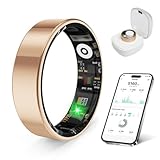
- 【Check the Size Before Purchase】 Before buying the prxxhri Smart Ring, we strongly suggest that you refer to the size chart and carefully measure the circumference of your finger. This will ensure you get the most comfortable wearing experience and easily avoid any unnecessary returns or exchanges.
- 【Real-time Accurate Sleep & Fitness Monitoring】 prxxhri smart ring tracks your sleep quality and daily activities in real time. With advanced sensors, it provides precise data about your sleep cycle, helping you optimize rest and recovery. Whether you are tracking steps, calories or exercise performance, this smart ring can provide you with the most accurate insights to support your fitness goals and enhance your overall health.It is a good choice for family and friends.
- Health Monitoring】The prxxhri ring features advanced 4.0 sensors that automatically measure your heart rate, and blood pressure every 30 min when worn. It provides continuous health tracking and comprehensive wellness management all day.
- 【3-5 Day Battery Life】 With a 3-5 day battery life, the prxxhri smart ring ensures continuous health monitoring without frequent charging. When used with the smart charging case, the usage time can even exceed 20 days. Whether you are tracking sleep patterns or fitness activities, you can count on long-lasting performance without constant interruptions.
- 【80-meter Waterproof, Suitable for Various Scenarios】 The prxxhri Smart Ring has excellent waterproof performance, with a waterproof depth of up to 80 meters. Whether it's for daily wear, an intense workout session or a pleasant swimming time, it can handle it with ease. What's more, even if you have sensitive skin, you can still enjoy an extremely comfortable wearing experience when wearing this ring.
Rather than taking generic sleep, heart rate variability, and temperature trends and retrofitting them to cycle phases, Oura claims the model learns expected physiological ranges and transitions specific to female hormonal rhythms. In practice, that means deviations are evaluated against a phase-aware baseline, not a one-size-fits-all norm.
This approach aligns with how clinicians interpret data, where context matters as much as raw numbers. A temperature rise or HRV dip can signal stress, illness, or ovulation depending on timing, and the model is designed to distinguish between those scenarios.
What “trained on clinical research” actually implies
Oura is careful to say the model is informed by clinical research, not that it replaces clinical diagnostics. The training incorporates validated findings on endocrine cycles, metabolic shifts across cycle phases, and sleep architecture changes associated with hormonal fluctuations.
Importantly, this does not mean Oura is running randomized trials on ring users in real time. It means established research has been translated into probabilistic frameworks that help the algorithm weigh signals differently depending on reproductive context.
For users, the practical effect should be fewer false alarms and more relevant explanations. A restless night during the luteal phase should not trigger the same recovery warnings as the same data point outside the cycle context.
How this changes cycle tracking and fertility insights
Oura has offered cycle tracking for years, but this model underpins a more dynamic interpretation of temperature trends and readiness metrics. Instead of focusing solely on predicting period start dates, the system aims to contextualize daily recommendations around where the user is hormonally.
For fertility-aware users, this could mean more nuanced ovulation windows and clearer explanations of confidence levels, rather than binary fertile or not-fertile labels. Oura continues to emphasize that its predictions are informational, not contraceptive-grade, which remains a critical distinction.
The advantage over simpler trackers is not accuracy claims alone, but interpretability. Users are shown why certain days feel harder or easier, based on physiology rather than vague wellness language.
Pregnancy, postpartum, and menopause are explicitly in scope
One of the most notable aspects of the announcement is the inclusion of pregnancy, postpartum recovery, and perimenopause in the model’s design goals. These stages are often excluded from wearable algorithms or treated as data anomalies.
Oura indicates that the AI adapts expectations for sleep, cardiovascular metrics, and readiness during these phases, rather than penalizing users for normal biological changes. That reframing can significantly affect daily guidance, especially when traditional readiness scores might otherwise trend downward for months.
However, Oura is not claiming clinical-grade pregnancy monitoring. The model supports insight adaptation, not risk detection or medical decision-making, and users are repeatedly directed to healthcare providers for clinical concerns.
Where the limitations still are
Despite the clinical grounding, this is still a consumer wearable AI operating on indirect signals like skin temperature and optical heart rate. Hormones themselves are not being measured, and individual variability remains significant.
The model’s effectiveness depends on consistent wear, stable baselines, and accurate cycle logging when applicable. Users with irregular cycles, hormonal conditions, or recent contraceptive changes may still see less precise insights.
There is also limited transparency around which studies were used and how diverse the training data truly is, a common issue across health AI. Oura’s credibility here will depend on how well the insights hold up across different ages, body types, and health backgrounds.
How this positions Oura relative to other wearables
Most mainstream wearables, including smartwatches with cycle tracking, still treat women’s health as a feature layer rather than a modeling foundation. Oura’s announcement suggests a deeper architectural commitment, using women-specific physiology as a core design input.
That does not automatically make Oura more accurate than competitors, but it does signal a strategic focus that others have been slower to adopt. For users prioritizing cycle-aware recovery, fertility context, or menopause-sensitive guidance, this model may represent a meaningful differentiator.
At the same time, Oura remains a ring with multi-day battery life, passive wear comfort, and a software-first experience. The AI model enhances those strengths, but it does not change the fundamental trade-offs compared to smartwatch ecosystems with richer displays and active inputs.
From Generic Wellness AI to Clinically Informed Models: Why Training Data Matters
What Oura is signaling with this model is not just smarter insights, but a shift in how health AI is built under the hood. After outlining where the model still falls short and how it compares strategically, the key question becomes why this approach to training data meaningfully changes the user experience.
Why most wellness AI plateaus quickly
Most wearable health models are trained on broad population datasets optimized for average behavior. They learn correlations between activity, sleep, heart rate, and outcomes like “readiness” or “stress,” but they struggle when physiology changes in non-linear ways.
Female hormonal cycles introduce predictable but complex shifts in resting heart rate, temperature, respiratory rate, and sleep architecture. When an AI model has not been explicitly trained on these dynamics, it often misclassifies normal hormonal variation as strain, illness, or poor recovery.
This is why many users see readiness scores dip during the luteal phase, pregnancy, or perimenopause without actionable context. The model is doing what it was trained to do, but the training data itself is incomplete.
What “clinically informed” actually changes in a model
Oura’s new model is trained using findings from peer-reviewed women’s health research, rather than treating cycle phases as a lightweight tagging layer. That means the model has learned, in advance, how physiological signals are expected to shift across menstrual phases, pregnancy progression, postpartum recovery, and menopause transition.
In practical terms, this allows the AI to reinterpret the same raw data differently depending on biological context. A higher nighttime heart rate or elevated skin temperature is no longer automatically framed as negative if it aligns with a known hormonal pattern.
This does not require new sensors or clinical-grade measurements. It is a software-level reframing of meaning, built on prior medical knowledge rather than post-hoc adjustments.
From symptom detection to expectation modeling
Generic wellness AI is largely reactive. It flags deviations from baseline and infers that something might be wrong.
A clinically informed model is more predictive in nature. It understands what changes are likely to occur next and can adjust guidance before the user experiences friction, confusion, or unnecessary concern.
For example, rather than warning users that recovery appears impaired, the model can explain that sleep efficiency or cardiovascular strain is temporarily shifting due to cycle phase. That context reduces anxiety and helps users make better decisions about training, workload, and rest.
Why this matters specifically for women using Oura daily
Oura’s ring form factor already emphasizes passive, long-term data collection. Its comfort, lightweight titanium build, and multi-day battery life make it realistic to wear continuously across months or years, which is essential for modeling hormonal patterns accurately.
A clinically grounded AI model extracts more value from that continuity. Instead of forcing users to mentally filter their scores based on cycle awareness, the software does that interpretive work automatically.
This is especially relevant for users tracking fertility, navigating pregnancy recovery, or entering perimenopause, where changes unfold gradually and are easy to misread without proper context.
How this separates substance from “AI-powered” marketing
Many wearables now advertise AI-driven insights, but the term often refers to generic machine learning applied to standard wellness metrics. Without domain-specific training, those models are limited by the assumptions baked into their datasets.
By contrast, Oura’s emphasis on clinical women’s health research suggests a narrower but deeper intelligence. The model is not trying to answer every health question; it is focused on interpreting signals within a specific physiological framework.
That focus increases credibility, even with the transparency gaps that remain. The value here comes less from flashy features and more from reducing misinterpretation over time.
The trade-off users should understand
This approach improves relevance, not certainty. The model still operates on indirect measurements, and individual variability remains large.
However, for users who have felt that generic wellness scores fail to reflect their lived experience, this shift in training philosophy is meaningful. It reframes the wearable from a blunt evaluator into a more biologically literate companion, without crossing into medical diagnosis.
Rank #2

- 【24/7 Heart Rate Monitor 】This blood pressure watch supports real-time dynamic heart rate, blood oxygen, blood pressure ,Sleep Tracking,temperature monitoring so you can know more about your physical condition.
- 【Sleep Tracking 】The Smart watches monitors your sleep and analyzes your sleep quality through Deep Sleep, Light Sleep, Awake stage, gives you a nightly sleep score in the app, leading a healthy lifestyle.
- 【25 Sport Modes Activity Tracker】you can select any number of sports modes in the app as your exclusive sports mode to record your sports data.can record all daily health data such as steps, distance, and calorie consumption in the App "Keep Health"
- 【1.10 inch AMOLED HD Touchscreen】 The durable stainless steel frame of C60 pairs flawlessly with the Skin-friendly fitness straps, while its 1.10 inch AMOLED HD Touch Color Screen design and multitude of invigorating watch faces blow you away any moment
- 【Smart Functions】An easy-to-use activity fitness tracker with various intelligent features. Including Call & Message Reminder,Remote Photograph, Drink Water Reminder, Sedentary Reminder, Female Health,Family Health, Alarm Clock, Stopwatch, Find Device, etc
As wearables continue to compete on software intelligence rather than hardware alone, training data quality becomes the real differentiator. Oura’s move suggests that the next phase of health tracking will be defined less by new sensors and more by who teaches their AI the right physiology to begin with.
The Clinical Research Foundation: What Kind of Women’s Health Science Powers the Model
The emphasis on training data naturally leads to a harder question: what does “clinical women’s health research” actually mean in this context, and how is it different from the population-level wellness data most wearables rely on?
Oura’s claim is not about adding more sensors or collecting more raw signals. It is about anchoring interpretation to established physiological research that describes how female biology changes across time, life stages, and hormonal states.
Research rooted in hormonal physiology, not generic averages
At the core of the model is clinical literature on menstrual cycle physiology, where temperature, heart rate, and heart rate variability shift predictably across follicular, ovulatory, and luteal phases. These patterns are well-documented in endocrinology and reproductive health research, but they are often underutilized in consumer wearables.
Instead of treating cycle-related variation as statistical noise, the model treats it as signal. That distinction matters when nightly temperature rises are evaluated differently depending on cycle phase, recent ovulation, or postpartum status.
This grounding allows the software to contextualize changes that would otherwise trigger misleading readiness or recovery alerts. A temperature elevation tied to progesterone is not interpreted the same way as one linked to illness or acute stress.
Clinical datasets that reflect real female life stages
Beyond menstrual cycles, the training draws from research covering pregnancy, postpartum recovery, and perimenopause. These are periods where baseline physiology shifts for months or years, making short-term models ineffective.
Clinical pregnancy research, for example, documents sustained increases in resting heart rate, altered sleep architecture, and changing autonomic balance. A model trained on that data is less likely to flag normal pregnancy-related changes as chronic strain.
Perimenopause research contributes another layer, capturing increased variability rather than neat cyclical patterns. This helps explain why some users experience erratic readiness or sleep scores if the model assumes cycle regularity that no longer exists.
Peer-reviewed validation rather than retrospective pattern mining
A key difference from generic AI models is the use of prospectively designed studies rather than retrospective data scraping. Clinical research typically defines hypotheses in advance, controls for confounders, and uses validated outcome measures.
That structure shapes how the model learns relationships between signals, rather than simply identifying correlations after the fact. It reduces the risk of overfitting to behaviors common among early adopters or fitness-focused users.
While Oura does not disclose full model architecture, its published research history shows repeated validation against clinical benchmarks. This includes comparisons to basal body temperature methods and established sleep scoring techniques.
Why this matters for wearables that look identical on the wrist
From a hardware perspective, Oura Ring has not radically changed in form factor, materials, or comfort. The slim titanium band, multi-day battery life, and unobtrusive wear remain largely the same, especially compared to bulkier wrist-based competitors.
What changes is the meaning extracted from the same signals. Two devices can collect similar temperature and HRV data, but the one trained on women-specific clinical frameworks will explain those numbers differently.
This is where software becomes the differentiator users actually feel day to day. Scores fluctuate less erratically, explanations align more closely with lived experience, and long-term trends make more sense without constant manual interpretation.
Clinical grounding does not equal medical authority
It is important to separate clinical training from clinical diagnosis. The model does not replace medical testing, nor does it claim to detect conditions like infertility, pregnancy complications, or hormonal disorders.
What it offers is biological literacy at scale. The insights are better informed, but they remain probabilistic and dependent on consistent wear, proper fit, and individual variability.
Users still need to interpret trends over weeks and months, not react to single-day changes. Clinical research improves the odds of meaningful interpretation, not the certainty of outcomes.
Positioning Oura against the broader wearable market
Most mainstream smartwatches prioritize breadth, offering cycle tracking as one feature among many. Their models are typically optimized for general fitness, cardiovascular health, and activity recognition across mixed populations.
Oura’s approach is narrower but deeper. By building intelligence around specific female physiological processes, it trades universality for relevance, particularly for users whose health experience does not align with male-centric baselines.
This strategy does not make Oura objectively better for every user. It does, however, clarify who the platform is increasingly designed for, and why its AI claims rest more on scientific lineage than marketing language.
How the New AI Interprets Oura Ring Data Differently Across the Female Lifespan
The most consequential shift with Oura’s new AI model is not what the ring measures, but how those measurements are contextualized over time. Temperature deviation, heart rate variability, resting heart rate, and sleep architecture are no longer treated as static wellness signals. Instead, they are interpreted through physiological frameworks that change across reproductive stages.
This matters because female biology is not linear. Hormonal rhythms reshape baseline expectations repeatedly across decades, and a model trained primarily on mixed or male-dominant datasets tends to misclassify those changes as noise, stress, or recovery debt.
Cycle-aware interpretation during reproductive years
For users with menstrual cycles, the AI explicitly models cyclical hormonal phases as the default state, not an exception. Luteal-phase temperature elevation, changes in overnight heart rate, and suppressed HRV are weighted differently than they would be in a generic recovery model.
Rather than flagging these patterns as signs of poor sleep or mounting strain, the system frames them as expected biological shifts. This reduces false negatives where users are told they are “under-recovered” despite feeling normal, and it also improves the clarity of long-term readiness trends.
In practical use, this means daily scores fluctuate less dramatically around ovulation and premenstrual phases. The explanations focus more on phase-specific expectations, helping users distinguish between normal hormonal effects and signals that truly deviate from their personal baseline.
Fertility and early pregnancy context without overreach
Temperature trends and HRV patterns associated with ovulation and potential conception are interpreted with tighter confidence bounds. The AI is trained to recognize sustained temperature elevation patterns consistent with post-ovulatory progesterone influence, rather than reacting to single-night spikes.
Importantly, the model avoids definitive language. It does not declare pregnancy or fertility outcomes, but it becomes more conservative in how it labels recovery, stress, and readiness during ambiguous physiological states.
For users trying to conceive or navigating early pregnancy uncertainty, this results in fewer misleading alerts. The system prioritizes stability and pattern recognition over speculative insight, aligning better with how clinicians evaluate early physiological changes.
Adaptive baselines during pregnancy
Pregnancy represents a fundamental reset of what “normal” looks like across nearly every metric Oura tracks. Resting heart rate trends upward, HRV often declines, sleep becomes more fragmented, and temperature regulation shifts.
The new AI model accounts for these trajectories as expected adaptations rather than deteriorations. Readiness and sleep insights are reframed around relative stability and deviation from pregnancy-adjusted baselines, not pre-pregnancy norms.
This reduces the psychological burden of constantly seeing declining scores during a period when physiological strain is unavoidable. The emphasis shifts toward consistency, rest adequacy, and recovery pacing rather than performance optimization.
Postpartum recalibration instead of snapback assumptions
One of the most clinically informed changes appears in how the AI handles the postpartum period. Rather than assuming a rapid return to pre-pregnancy baselines, the model treats postpartum recovery as a prolonged, nonlinear phase.
Sleep disruption, autonomic nervous system instability, and temperature variability are interpreted within a wider acceptable range. The system becomes more tolerant of irregular data, acknowledging that fragmented sleep and stress are structural, not behavioral failures.
For users, this translates into insights that feel less judgmental and more realistic. The AI emphasizes trend stabilization over daily perfection, which better reflects postpartum physiology and mental health realities.
Rank #3

- 【Check the Size Before Purchase】 Before buying the prxxhri Smart Ring, we strongly suggest that you refer to the size chart and carefully measure the circumference of your finger. This will ensure you get the most comfortable wearing experience and easily avoid any unnecessary returns or exchanges.
- 【Real-time Accurate Sleep & Fitness Monitoring】 prxxhri smart ring tracks your sleep quality and daily activities in real time. With advanced sensors, it provides precise data about your sleep cycle, helping you optimize rest and recovery. Whether you are tracking steps, calories or exercise performance, this smart ring can provide you with the most accurate insights to support your fitness goals and enhance your overall health.It is a good choice for family and friends.
- Health Monitoring】The prxxhri ring features advanced 4.0 sensors that automatically measure your heart rate, and blood pressure every 30 min when worn. It provides continuous health tracking and comprehensive wellness management all day.
- 【3-5 Day Battery Life】 With a 3-5 day battery life, the prxxhri smart ring ensures continuous health monitoring without frequent charging. When used with the smart charging case, the usage time can even exceed 20 days. Whether you are tracking sleep patterns or fitness activities, you can count on long-lasting performance without constant interruptions.
- 【80-meter Waterproof, Suitable for Various Scenarios】 The prxxhri Smart Ring has excellent waterproof performance, with a waterproof depth of up to 80 meters. Whether it's for daily wear, an intense workout session or a pleasant swimming time, it can handle it with ease. What's more, even if you have sensitive skin, you can still enjoy an extremely comfortable wearing experience when wearing this ring.
Menopause and perimenopause as distinct physiological states
Perimenopause and menopause introduce variability that often confounds traditional wearable algorithms. Nighttime temperature spikes, sleep interruptions, and HRV instability are common, yet generic models frequently mislabel these as chronic stress or declining fitness.
Oura’s AI is trained to recognize these patterns as hormonally driven transitions. Temperature deviations associated with vasomotor symptoms are interpreted differently from illness-related fever or acute strain responses.
This allows long-term trends to remain interpretable even when day-to-day data appears volatile. Users gain clearer separation between menopausal symptoms and signals that warrant lifestyle adjustment or medical attention.
Why this changes the day-to-day software experience
Across all life stages, the most noticeable difference is narrative coherence. The same titanium ring, with the same battery life, comfort profile, and unobtrusive form factor, now tells a story that aligns more closely with lived experience.
Insights feel less reactive and more explanatory. Weekly and monthly views gain importance, while single-day fluctuations carry less emotional weight.
This is where Oura’s clinical training shows its value. The AI does not add new sensors or promise medical certainty, but it significantly improves interpretive accuracy for women whose physiology has historically been treated as a deviation from the norm rather than the norm itself.
Real-World User Impact: Cycle Tracking, Fertility, Pregnancy, and Menopause Insights
What ultimately matters is how this clinically trained AI changes everyday use, not how it sounds on a product page. In practice, Oura’s updated model reshapes how cycle-related signals are detected, contextualized, and communicated across months and years of wear.
The hardware remains familiar: a lightweight titanium ring with multi-day battery life, no screen, and minimal maintenance. What changes is the interpretive layer that sits between raw data and user understanding.
Cycle tracking that reflects hormonal physiology, not calendar averages
Traditional cycle tracking algorithms often assume consistency as a baseline, flagging deviations as anomalies. Oura’s new model treats variability as an expected feature of real menstrual cycles, particularly for users with irregular periods, hormonal conditions, or lifestyle stressors.
Temperature shifts, resting heart rate changes, and HRV trends are interpreted in relation to prior cycles rather than population-level averages. This makes ovulation estimates and luteal phase insights feel less brittle, especially for users whose cycles don’t conform to a 28-day template.
In the app, this shows up as fewer abrupt recalibrations and more confidence ranges instead of definitive predictions. For users, that translates into guidance that feels cautious but credible rather than overly precise and frequently wrong.
Fertility insights grounded in longitudinal pattern recognition
For users trying to conceive, the AI’s biggest impact is consistency over time. Rather than recalculating fertile windows aggressively each cycle, the system weighs multi-cycle trends in temperature and recovery metrics, reducing the noise caused by travel, illness, or short-term sleep disruption.
This is particularly relevant for ring-based tracking, where overnight skin temperature is the primary fertility signal. The clinical training helps the model distinguish ovulatory shifts from stress-related or environmental temperature changes, a common failure point in generic fertility algorithms.
Importantly, Oura continues to position these insights as supportive rather than diagnostic. The AI improves signal interpretation, but it does not replace medical-grade fertility monitoring, a boundary that remains clearly communicated in the software experience.
Pregnancy tracking that adapts as physiology changes
Pregnancy introduces rapid and sustained changes in cardiovascular load, thermoregulation, and sleep architecture. Many wearables struggle here, interpreting normal pregnancy-related increases in resting heart rate or temperature as signs of declining health.
Oura’s updated model reframes these changes as expected adaptations. Baselines shift gradually, and insights prioritize stability and recovery trends over performance or optimization metrics.
For users, this reduces unnecessary alerts and reframes daily readiness-style scores into something more supportive. The ring’s comfort, low-profile design, and long battery life also matter more during pregnancy, when tolerance for charging routines and wrist-worn devices often decreases.
Menopause insights that preserve meaning amid volatility
During perimenopause and menopause, data volatility is the norm. Sleep fragmentation, night sweats, and fluctuating HRV can render many wearables effectively unusable for insight-driven guidance.
Here, the clinical grounding of Oura’s AI is most apparent. Temperature elevations linked to vasomotor symptoms are treated differently than fever or illness, and sleep disruptions are contextualized within hormonal transition rather than framed as behavioral failure.
This allows long-term trends to remain readable even when nightly data looks chaotic. Users can still track whether interventions like cooling strategies, exercise adjustments, or sleep timing changes are helping, without chasing false negatives in daily scores.
What this means for daily usability and decision-making
Across all stages, the experience becomes less about reacting to single data points and more about understanding trajectories. Weekly and monthly views gain practical relevance, while daily fluctuations are explained rather than amplified.
This positions Oura differently from competitors that rely on similar sensors but apply more generalized AI models. The value is not in claiming new capabilities, but in interpreting existing signals with an understanding of female physiology across life stages.
There are limits. This is still a consumer wearable, not a medical device, and users with complex health conditions should not treat insights as clinical guidance. But for women historically underserved by one-size-fits-all algorithms, the shift toward clinically informed interpretation represents a meaningful upgrade in how wearable data supports real life.
Credibility vs. Marketing AI: What This Model Can — and Cannot — Claim Medically
All of this context-aware interpretation naturally raises a harder question: when Oura says its new AI is trained on clinical women’s health research, what does that actually mean in medical terms, and where does credibility end and marketing begin?
The distinction matters, because “AI-powered” has become shorthand across wearables for everything from simple trend smoothing to quasi-diagnostic claims. Oura’s approach sits somewhere more grounded than most, but it still operates firmly within consumer-device boundaries.
What “trained on clinical research” actually implies
Oura is not claiming that the ring diagnoses conditions, predicts disease, or replaces clinical judgment. Instead, the model has been informed by peer-reviewed research datasets and validated physiological patterns related to menstrual cycles, pregnancy, postpartum recovery, and menopausal transition.
In practical terms, this means the AI is less likely to misclassify expected hormonal changes as anomalies. Elevated nighttime temperature during the luteal phase, suppressed HRV during early pregnancy, or fragmented sleep during perimenopause are treated as physiologically plausible states, not automatically as stress, illness, or user error.
This is a meaningful distinction from generic models trained primarily on large, mixed-population datasets where male physiology or hormonally stable baselines dominate. The sensors are the same—skin temperature, heart rate, HRV, movement—but the interpretive lens is different.
Why this is still not a medical-grade system
Even with clinical research informing the model, Oura’s AI does not meet the regulatory threshold of a medical device. It does not undergo the same validation pathways as FDA-cleared fertility monitors, diagnostic sleep studies, or cardiology tools.
The ring collects proxy signals, not direct measurements of hormones, ovulation, or metabolic health. Skin temperature trends can suggest cycle phases, but they cannot confirm ovulation. HRV changes can correlate with stress or recovery, but they cannot identify endocrine disorders or cardiovascular disease.
Oura’s language and product design largely respect these limits. Insights are framed as patterns, likelihoods, and trends, not actionable diagnoses, which is where many consumer health platforms get into trouble.
Where the model earns real credibility
The strongest medical credibility comes not from new measurements, but from restraint. By acknowledging what data variability looks like in female physiology, the model avoids overcorrecting or generating false alarms.
For example, a smartwatch might flag repeated “poor recovery” scores during perimenopause without context, nudging users toward unnecessary behavior changes or anxiety. Oura’s AI, by contrast, can recognize that sustained HRV suppression alongside temperature instability may reflect hormonal transition rather than deteriorating fitness or sleep hygiene.
This doesn’t make the insight clinical, but it makes it more trustworthy. Users can make informed lifestyle adjustments—cooling the sleep environment, adjusting training load, or shifting sleep expectations—without feeling that their body is “failing” the algorithm.
The line Oura cannot cross—and mostly doesn’t
What the model cannot legitimately claim is predictive or diagnostic authority. It cannot tell users they are infertile, entering menopause at a specific stage, experiencing a pathological pregnancy complication, or developing a medical condition.
Rank #4

- Multi-Functional Sports Tracking & 100+ Sport Modes:The fitness watch is equipped with more than 100 sports modes, such as walking, running, swimming, hiking, cycling, mountaineering, yoga, etc. Accurately record all-day activities, this fitness tracker for men and women is waterproof with an IP68 rating, you can safely wear it for swimming, washing hands and showering. However, it is not recommended to use it in hot water (sauna) or sea water (diving).
- All Day Health Monitoring:This smartwatch for Android and Iphone (Please note: it requires iOS 9.0 and above and Android 6.0 operating system) is equipped with advanced sensors that provide insights to help you better understand your health and adjust your lifestyle. It not only can monitors your health indicators (heart rate, blood oxygen, sleep), but also records women's menstrual period. It can also automatically monitor your sleep status and provide a comprehensive sleep quality analysis to help you have a better sleep.
- Smart Notifications & Bluetooth Calling:Make and receive calls directly from your smartwatch with SMS and calling features through the built-in microphone. Stay connected to SMS and app messages (text, Facebook, WhatsApp, Instagram, Twitter, etc.) and never miss anything important. The AI Voice feature on this smartwatch lets you free your hands to control music playback, check the weather, set alarms, timers, and more by just speaking into your watch (message replies are not supported).
- Variety of Watch Faces & Customization Options:This multifunctional smartwatch is equipped with a 1.27-inch round full touch screen, which brings you a refined visual experience and a better appearance experience. You can upload your favorite pictures as the watch face. It contains many daily practical functions that you can choose by yourself, such as message reminders, weather forecasts, music control, stress monitoring, alarm settings, stopwatch, timer, sedentary reminders, breathing guidance, raise to wake, find phone, adjustable brightness, etc.
- Worry-free after-sales services:KEEPONFIT smartwatch supports SMS and call functions, and is seamlessly compatible with most iOS 9.0 and above and Android 6.0 and above smartphones (only for smartphones, not for PC, laptop or iPad), plz make sure download the VeryFit App and turn the bluetooth on before you connect it to your phone.Making it a great gift for boyfriends and girlfriends! We are committed to providing you with the best service, if you have any questions, please feel free to let us know, our professional technical team will serve you within 24 hours!
It also cannot replace conversations with clinicians, especially for users with irregular cycles, endocrine disorders, fertility challenges, or high-risk pregnancies. The data may support those conversations, but it should never substitute for them.
Importantly, Oura does not position this AI as a medical advisor. The platform’s messaging stays within wellness framing, which preserves both regulatory safety and user trust.
How this positions Oura relative to competitors
Most competitors rely on broadly trained AI models that optimize for population averages. Apple Watch, Garmin, Fitbit, and Samsung all offer cycle tracking and wellness insights, but their interpretation engines are still largely generalized, even when features are women-focused.
Oura’s advantage is not superior sensors or more aggressive claims. The ring’s comfort, lightweight titanium build, and multi-day battery life support continuous wear, but the real differentiation lies in how data is contextualized across life stages.
Rather than promising more accuracy, Oura promises fewer misinterpretations. For users navigating hormonal change, that can be more valuable than another percentage point of sensor precision.
Marketing AI versus meaningful interpretation
Marketing AI tends to emphasize novelty: new scores, new labels, new alerts. Clinically informed AI emphasizes coherence: fewer alerts, clearer explanations, and trends that remain interpretable over months rather than days.
Oura’s model leans toward the latter. It doesn’t make the ring a medical device, but it does make the experience feel less adversarial and more aligned with how female physiology actually behaves.
For users evaluating whether this matters, the question isn’t whether Oura’s AI can diagnose. It’s whether it helps them understand their body without overstating what wearable data can truly deliver.
Privacy, Data Governance, and Ethical AI in Women’s Health Wearables
The moment AI moves from generic wellness scoring into hormonally sensitive interpretation, privacy stops being a background consideration and becomes central to the product’s credibility. Cycle data, fertility signals, pregnancy markers, and menopause-related patterns are not just metrics; in many jurisdictions, they carry legal, social, and ethical risk if mishandled.
Oura’s decision to emphasize clinical grounding makes its data practices more visible, not less. Training on women’s health research raises the bar for how data is collected, processed, and ultimately protected across the platform.
What “clinically informed” means for data handling
Training an AI model on peer-reviewed women’s health research does not mean user data is fed directly into clinical datasets. Instead, the model learns from established physiological frameworks, validated biomarkers, and documented cycle-stage dynamics, then applies those patterns to individual ring data.
From a governance perspective, this separation matters. It allows Oura to benefit from decades of reproductive health research without exposing user-level data to external institutions or repurposing it beyond the wellness context users consent to.
This approach contrasts with more opaque AI systems that rely heavily on aggregated consumer data to refine predictions. Those systems may improve statistically, but they often struggle to explain how or why specific insights are generated.
On-device signals, cloud processing, and user control
Oura Ring collects raw physiological signals such as skin temperature deviation, heart rate variability, respiratory rate, and sleep staging through its lightweight titanium hardware. These signals are processed into insights via cloud-based models, including the new women’s health–specific AI layers.
The ethical question is not whether cloud processing exists, but how transparently it is governed. Oura maintains user-level controls over data sharing, research participation, and account deletion, which becomes especially important when reproductive data is involved.
For daily wearability, this matters as much as comfort or battery life. A ring that users feel compelled to remove during sensitive life stages is functionally worse than one they trust enough to wear continuously.
Regulatory caution without surveillance anxiety
Women’s health wearables operate in a regulatory gray zone. Cycle tracking is not regulated like glucose monitoring or ECG, but it intersects with healthcare systems, insurance, and reproductive rights in ways few other wellness features do.
Oura’s consistent positioning of its AI as wellness-focused rather than diagnostic is not just legal risk management. It limits downstream uses of the data, reducing the likelihood that insights are interpreted as medical determinations by third parties.
This restraint also influences model design. Ethical AI in this context favors conservative interpretation, fewer definitive labels, and a clear boundary between trend awareness and clinical decision-making.
Bias, representation, and the limits of clinical datasets
Clinical women’s health research has historically underrepresented certain populations, including women of color, individuals with atypical cycles, and those with complex endocrine conditions. An AI trained on this literature inherits both its strengths and its blind spots.
Oura’s advantage is not that it eliminates bias, but that it acknowledges it implicitly through cautious output. By framing insights as evolving patterns rather than fixed truths, the system reduces the risk of misclassifying normal variation as dysfunction.
For users, this translates into fewer alarming alerts and more emphasis on longitudinal trends. Over months of wear, the ring becomes more interpretable, not more intrusive.
Ethical AI as a product experience, not a policy page
Ethical AI in wearables is often discussed in terms of white papers and compliance statements. In practice, users experience it through tone, frequency of notifications, and how often the platform says “we don’t know.”
Oura’s women’s health AI reflects this restraint in its software experience. Insights arrive in context, aligned with sleep, recovery, and readiness rather than isolated reproductive alerts that dominate the dashboard.
That design choice reinforces trust. It signals that the platform is there to support understanding, not to extract maximum engagement from highly sensitive data.
Why this matters more for women than for most users
For many women, cycle and fertility data can influence medical care, workplace decisions, family planning, and mental health. A misinterpreted insight is not just annoying; it can be destabilizing.
By anchoring its AI in established research and pairing it with conservative data governance, Oura positions itself as a quieter but more dependable companion. The ring’s physical comfort, minimal form factor, and multi-day battery life enable continuous wear, but trust enables continuous use.
In a category increasingly crowded with AI-driven promises, ethical restraint becomes a differentiator. For women navigating complex physiological transitions, that restraint may be the most meaningful feature of all.
How Oura’s Approach Compares to Apple, Garmin, Fitbit, and Other Wearable Platforms
The contrast between Oura and its larger competitors becomes clearer once you view women’s health not as a feature, but as a modeling problem. Most mainstream platforms still treat cycle tracking as a data overlay on top of generalized wellness metrics. Oura is attempting to invert that relationship by shaping the model itself around reproductive physiology.
Apple: powerful sensors, generalized intelligence
Apple Watch offers some of the most sophisticated consumer-grade sensors available, including FDA-cleared temperature trend tracking and cycle predictions integrated into Health. Its strength lies in hardware precision, ecosystem integration, and developer extensibility rather than domain-specific AI models.
Apple’s cycle predictions are generated through statistical inference layered onto broad population data, not a model trained explicitly on women’s health clinical literature. This makes the experience capable and flexible, but less opinionated, with insights that often remain descriptive rather than interpretive.
For users, this means Apple excels at showing what is happening, but is more cautious about explaining why. Oura’s approach shifts more of the interpretive burden onto the model, while Apple leaves interpretation largely to clinicians or third-party apps.
Garmin: performance-first, reproductive health second
Garmin’s wearables are engineered around endurance training, recovery, and physiological load, with menstrual cycle and pregnancy tracking added as secondary layers. The platform uses cycle phase estimations primarily to contextualize training readiness and exertion.
While Garmin has expanded women’s health features in recent years, its algorithms are not publicly positioned as being trained on clinical reproductive health research. The result is a system that adapts workouts around cycle phases, but offers limited depth around hormonal transitions, fertility nuance, or perimenopausal variability.
Oura diverges by placing reproductive signals at the core of its health modeling rather than treating them as modifiers to athletic performance. This distinction matters most for users whose primary goal is health understanding rather than training optimization.
💰 Best Value

- Inspire 3 is the tracker that helps you find your energy, do what you love and feel your best. All you have to do is wear it.Operating temperature: 0° to 40°C
- Move more: Daily Readiness Score(1), Active Zone Minutes, all-day activity tracking and 24/7 heart rate, 20+ exercise modes, automatic exercise tracking and reminders to move
- Stress less: always-on wellness tracking, daily Stress Management Score, mindfulness sessions, relax breathing sessions, irregular heart rhythm notifications(2), SpO2(3), menstrual health tracking, resting heart rate and high/low heart rate notifications
- Sleep better: automatic sleep tracking, personalized Sleep Profile(1), daily detailed Sleep Score, smart wake vibrating alarm, sleep mode
- Comfortably connected day and night: calls, texts & smartphone app notifications(4), color touchscreen with customizable clock faces, super lightweight and water resistant to 50 meters, up to 10 day battery life(5)
Fitbit and Google Health: accessibility over specialization
Fitbit has long emphasized approachable health tracking, with menstrual health tools designed to be simple, visual, and easy to adopt. Its cycle predictions rely on large-scale user data and pattern recognition, optimized for engagement and clarity rather than clinical specificity.
Google’s broader health AI initiatives bring computational scale, but Fitbit’s women’s health features remain relatively conservative in scope. Insights are intentionally high-level, avoiding deeper interpretive claims that might require medical framing.
Compared to Oura, Fitbit’s approach prioritizes reach and usability over depth. Oura’s clinical grounding narrows the audience slightly but increases confidence for users seeking evidence-informed interpretation rather than general wellness cues.
Samsung and hybrid smartwatch platforms
Samsung Health integrates cycle tracking and temperature-based insights across Galaxy Watch devices, often in partnership with third-party fertility algorithms. The experience is tightly coupled to smartphone usage and daily interaction rather than passive, long-term modeling.
These platforms tend to emphasize feature parity with Apple rather than differentiation through research specialization. As a result, women’s health insights often feel bolted on, competing with notifications, workouts, and productivity tools for attention.
Oura’s ring form factor and app design allow reproductive insights to sit alongside sleep and recovery without being visually or cognitively crowded. That restraint supports longitudinal understanding rather than moment-to-moment intervention.
WHOOP and readiness-centric platforms
WHOOP approaches health through the lens of strain, recovery, and behavioral optimization, with menstrual cycle tracking used to contextualize readiness scores. Its insights are data-dense and performance-oriented, appealing to users comfortable interpreting metrics.
However, WHOOP’s modeling is not positioned as being trained on women’s health clinical research, and reproductive insights often serve the readiness algorithm rather than standing on their own. Hormonal changes are acknowledged, but rarely explored in depth.
Oura’s model treats reproductive physiology as a primary signal rather than a confounder. For women navigating fertility planning, cycle irregularity, or menopause, that difference shapes how insights are framed and trusted.
Clinical grounding versus platform scale
What ultimately separates Oura is not sensor superiority or app polish, but the decision to constrain its AI using peer-reviewed women’s health research. This limits the breadth of claims the system can responsibly make, but increases the reliability of the claims it does surface.
Larger platforms benefit from scale, computational resources, and rapid feature deployment. Oura benefits from focus, with a narrower scope that allows its AI to be more conservative, more contextual, and less reactive.
For users choosing between platforms, the trade-off becomes clear. Oura is optimized for quiet, continuous interpretation of women’s health over time, while most smartwatches remain optimized for versatility, responsiveness, and general-purpose health tracking.
What this means in daily use
In practical terms, Oura users are less likely to see sharp alerts or definitive predictions tied to a single cycle or temperature deviation. Instead, insights evolve gradually as the model builds confidence across weeks and months of consistent wear.
Apple, Garmin, and Fitbit provide broader health visibility across fitness, productivity, and communication, often at the cost of deeper reproductive nuance. Oura sacrifices screen real estate and app sprawl to prioritize comfort, multi-day battery life, and uninterrupted data continuity.
For women who want reproductive health treated as a complex biological system rather than a calendar feature, Oura’s approach represents a meaningful shift in how wearable AI is designed.
What This Means for Buyers and Existing Oura Users: Who Benefits Most and Why
Seen in context, Oura’s new AI model is less about adding another feature and more about redefining who the product is truly built for. By anchoring its intelligence in clinical women’s health research, Oura is signaling that reproductive physiology is not a niche add-on, but a core design principle that shapes how every insight is generated.
For buyers and existing users alike, the implications are practical, personal, and unevenly distributed. Some users will feel the impact immediately, while others may find that this approach intentionally leaves certain expectations unmet.
Women actively managing reproductive health will see the clearest value
Women tracking fertility, cycle irregularity, or hormonal transitions stand to benefit the most from this shift. The AI’s training allows it to interpret temperature trends, resting heart rate shifts, and recovery metrics through a reproductive lens rather than treating hormonal variation as statistical noise.
In daily use, this means fewer contradictory insights during luteal phases, fewer misleading readiness dips during ovulation, and more context around why sleep, strain tolerance, or recovery may fluctuate across the cycle. The value is not in predicting exact outcomes, but in offering explanations that align with lived physiological experience.
For users planning pregnancy or navigating post-partum recovery, the model’s conservatism also matters. Insights evolve slowly and avoid overconfident projections, which reduces the risk of emotionally charged false positives that can occur when algorithms overfit short-term data.
Menopause and perimenopause users gain something most wearables still lack
One of the quiet strengths of Oura’s approach is its relevance for perimenopausal and menopausal users, a group often underserved by mainstream wearables. Traditional cycle tracking tools begin to degrade as cycles become irregular, leaving users with vague or inaccurate feedback.
By grounding interpretation in broader hormonal patterns rather than strict cycle regularity, Oura’s AI can still contextualize sleep disruption, thermoregulation changes, and recovery volatility. This does not solve menopause tracking outright, but it offers continuity where many platforms effectively drop off.
For users in this life stage, the ring’s comfort, lightweight titanium construction, and unobtrusive form factor also matter. Nightly wear is realistic even during hot flashes or restless sleep, preserving the data continuity the AI depends on.
Existing Oura users benefit without changing how they wear the ring
For current Oura owners, this update does not require new hardware, altered routines, or more manual input. The same sensors, battery life of roughly four to seven days depending on ring size and usage, and passive overnight wear continue to apply.
What changes is the interpretation layer. Over time, users may notice that insights feel less reactive to single nights and more stable across weeks, especially during hormonal transitions. This can make the app feel quieter, but also more trustworthy.
The trade-off is patience. The model’s strength emerges with consistency, so users who wear the ring intermittently or expect immediate clarity from a few nights of data may not experience the full benefit.
Fitness-first and smartwatch power users may find the approach limiting
Not every buyer is the ideal audience for this model. Users who prioritize real-time metrics, on-wrist feedback, structured training plans, or deep workout analytics may still be better served by Apple Watch, Garmin, or similar platforms.
Oura remains screenless and intentionally passive. There is no haptic coaching mid-run, no GPS, and no instant physiological alerts beyond gentle app notifications. The AI’s clinical grounding favors long-term interpretation over moment-to-moment responsiveness.
For some, this restraint will feel like clarity. For others, it will feel like omission.
Credibility over novelty shapes the value proposition
Perhaps the most important takeaway for buyers is that Oura’s AI is not positioned as a discovery engine that constantly surfaces new claims. Its clinical training narrows what it is willing to say, which reduces novelty but increases credibility.
This matters in a market increasingly saturated with generative health insights that sound confident but lack biological grounding. Oura’s model is designed to avoid overstating certainty, especially in areas where women’s health has historically been oversimplified or under-researched.
The result is a platform that feels more like a long-term health companion than a feature-driven gadget.
Who should choose Oura now
Oura is best suited for users who value comfort, multi-day battery life, and uninterrupted overnight data over interactive displays and broad app ecosystems. Women who want reproductive health treated as foundational biology rather than a calendar overlay will find the strongest alignment.
For existing users, this update deepens the ring’s original promise rather than changing it. For new buyers, it clarifies what Oura is and what it is not: a focused wearable built to interpret women’s health over time, using AI constrained by evidence rather than ambition.
In an industry that often equates intelligence with speed and scale, Oura’s decision to move slower, narrower, and more clinically grounded may be exactly what sets it apart.