Wearable health tracking has reached a point where steps, sleep scores, and readiness metrics no longer answer the most pressing question many users have: why their body responds the way it does to everyday choices. Oura’s expansion into metabolic health is about closing that gap, linking what you eat to how your body actually processes it, rather than relying on proxies like calories burned or generic nutrition advice.
For existing Oura Ring users, this move signals a shift from passive observation to cause-and-effect insight. By layering meal tracking and Dexcom-powered glucose data on top of sleep, recovery, and stress metrics, Oura is positioning itself as a platform that explains patterns, not just records them, at a moment when users are actively searching for more personalized, actionable health guidance.
The timing aligns with a broader metabolic health reckoning
Metabolic health has quietly become one of the most urgent issues in consumer wellness, driven by rising rates of insulin resistance, prediabetes, and energy dysregulation even among people who appear outwardly healthy. Traditional fitness wearables have largely sidestepped this, focusing on activity and cardiovascular markers while treating nutrition as a manual log or an afterthought.
Oura’s move lands as continuous glucose monitoring is shifting from clinical necessity to lifestyle optimization. Dexcom’s growing presence outside strictly medical use has normalized glucose as a feedback signal, and Oura is capitalizing on that moment by integrating it into a form factor users already wear 24/7, without asking them to switch platforms or rethink their habits entirely.
🏆 #1 Best Overall

- Advanced Glucometer Kit: metene TD-4116 diabetes testing kit is equipped with advanced technologies, brings more accurate and reliable results and better experience for your blood sugar control; a control solution is included for checking the glucometer and strips
- Easy to Use: The blood glucose monitor is with code-free design, ready for testing once insert the strip correctly; the quick guide inside the package lists the steps to do a test clearly, easy to follow; any problem about operation, we are here ready to answer and provide glucose monitoring system instructional videos
- 7 Seconds And 0.7µl Blood: This blood glucose meter kit just needs 0.7 microliter blood sample and 7 seconds to get you blood glucose value; Fast, minimizes wound and less painful
- More Clearly Glucose Trend: 4 modes to record your glucose value according to different time, shows your glucose trend more clearly; 450 blood sugar values storage, continuous 14/21/28/60/90 day average, which brings more convenient Diabetes management for you and your health provider
- User-friendly for The Aged: 4 reminder alarms could be set everyday to remind the aged to do a test in time, considerate; the display is larger than most glucose monitors, showing the results more clearly, easier to read for the aged
Meal tracking becomes meaningful when paired with physiology
On its own, meal tracking has long been one of the least loved features in health apps, largely because it demands effort without offering proportional insight. Oura’s approach reframes meals as metabolic events, correlating food intake with glucose responses, sleep quality, overnight recovery, and next-day readiness.
This matters because it shifts the user experience from compliance to curiosity. Instead of tracking meals to hit abstract macros or calorie targets, users can see how a late dinner affects overnight glucose stability, or how a carb-heavy lunch impacts afternoon stress and focus, all contextualized within Oura’s existing biometric framework.
Dexcom integration signals a strategic step beyond rings and scores
By partnering with Dexcom rather than attempting to estimate glucose indirectly, Oura is acknowledging the limits of optical sensors and leaning into clinically trusted hardware where accuracy matters. This positions Oura differently from smartwatch-based solutions that often rely on inferred metabolic metrics, and closer to a hybrid model that blends medical-grade inputs with consumer-friendly interpretation.
Strategically, this expands Oura’s relevance beyond sleep optimization into daily decision-making around food, timing, and recovery. It also broadens the ecosystem appeal, making the ring more valuable not just to biohackers and quantified-self enthusiasts, but to users who want clearer signals about energy crashes, weight management struggles, or unexplained fatigue without committing to a full medical program.
From Sleep Ring to Health Platform: How Oura’s Strategy Is Evolving
What emerges from meal-linked glucose insights is a clearer picture of where Oura is heading as a company. The ring is no longer the product; it is the delivery mechanism for a broader health intelligence platform that increasingly spans sleep, recovery, stress, activity, and now metabolic responses.
This shift has been underway for years, but glucose makes it explicit. Oura is moving from retrospective scoring to explanatory context, helping users understand why their readiness dipped, why sleep felt fragmented, or why energy flattened in the afternoon.
From nightly scores to continuous context
Historically, Oura’s value centered on overnight metrics: sleep stages, heart rate variability, resting heart rate, and temperature trends. These are still foundational, but on their own they explain outcomes more than causes.
Metabolic data changes that dynamic by extending insight into waking hours, where behaviors actually occur. Meals, timing, and composition become inputs that can be directly linked to downstream effects on sleep quality, recovery, and next-day performance.
Why glucose fits Oura’s long-term product philosophy
Glucose is not being positioned as a standalone dashboard or a medical metric to obsess over. Instead, Oura treats it as another signal that helps explain physiological load, much like HRV or temperature deviation.
That approach aligns with Oura’s established design language: reduce raw data overload, surface patterns, and frame insights in terms of readiness, resilience, and sustainable habits. The Dexcom integration feeds high-resolution data into this model without forcing users to interpret every spike manually.
A platform play, not a hardware arms race
Unlike smartwatch brands that compete on screens, processors, and ever-expanding sensor arrays, Oura continues to lean into comfort, battery life, and passive wearability. The ring’s multi-day battery life, lightweight titanium construction, and unobtrusive form factor remain critical to enabling continuous data capture.
By outsourcing glucose sensing to Dexcom rather than chasing non-invasive estimation, Oura avoids compromising its hardware identity. This reinforces a strategy where best-in-class external sensors plug into Oura’s software layer, rather than turning the ring into an all-in-one device that does everything passably.
How this compares to other metabolic health solutions
Standalone CGM platforms often emphasize granular glucose graphs, alerts, and performance optimization, which can be powerful but cognitively demanding. Nutrition apps typically focus on logging accuracy, calorie targets, or macronutrient adherence, with limited physiological feedback.
Oura sits between these worlds. It does not replace dedicated metabolic coaching platforms, but it offers something they often lack: longitudinal sleep, recovery, and stress context that shows how metabolism interacts with the rest of the body over weeks and months.
Who this evolution is actually for
This expansion will resonate most with users who already trust Oura as a baseline health companion and want deeper insight without switching ecosystems. It suits people experimenting with meal timing, carbohydrate sensitivity, training load, or energy management rather than those seeking clinical glucose management.
It is less compelling for users who want real-time alerts, aggressive intervention prompts, or prescription-driven care. Oura remains a lifestyle optimization tool, even as it incorporates medical-grade inputs.
Why this move matters beyond Oura
Oura’s embrace of metabolic health signals a broader shift in wearables toward interconnected physiology rather than isolated metrics. Sleep, stress, activity, and nutrition are increasingly being treated as interdependent systems, not separate app silos.
By making glucose understandable and optional rather than central and intimidating, Oura lowers the barrier to metabolic awareness. That has implications not just for rings, but for how future health platforms blend clinical accuracy with consumer-friendly interpretation.
Meal Tracking, the Oura Way: What’s Actually Being Logged and Why
After positioning glucose as contextual rather than commanding, Oura applies the same philosophy to food. Meal tracking here is not about precision nutrition or exhaustive macro accounting; it is about anchoring physiological signals to real-world behaviors without turning eating into a data-entry chore.
Instead of asking users to quantify everything, Oura focuses on a smaller set of inputs that meaningfully influence glucose, sleep, recovery, and stress. The result feels less like logging for compliance and more like tagging experiences for interpretation later.
Meal timing comes first, not calories
The most fundamental data point Oura cares about is when you eat. Users log meals by time, with optional context, allowing the platform to correlate glucose responses, overnight recovery, and readiness scores against eating patterns.
This emphasis reflects a growing body of evidence around circadian alignment and metabolic health. Late dinners, inconsistent meal timing, and compressed eating windows often show up more clearly in sleep latency, resting heart rate, and overnight glucose stability than calorie totals ever do.
For Oura, knowing that dinner happened at 9:30 pm is often more actionable than knowing it contained 680 calories.
Food type, not food math
When users add detail beyond timing, Oura encourages qualitative classification rather than numerical breakdowns. Meals can be tagged by dominant characteristics such as carbohydrate-heavy, protein-forward, mixed, or lighter snacks, along with notes like alcohol, dessert, or caffeine-adjacent.
This approach lowers friction while still enabling pattern recognition. Over time, users can see whether carb-heavy dinners correspond with prolonged glucose elevation, fragmented sleep, or reduced next-day readiness without needing to weigh ingredients or scan barcodes.
It also acknowledges reality. Most people abandon calorie tracking because it is mentally taxing and socially inconvenient, especially for long-term use.
Photo logging as optional memory, not analysis
Oura allows meal photos, but they are not used for automated macro estimation or nutritional scoring. Instead, photos act as visual anchors that help users recall portion size, meal composition, and context when reviewing glucose curves or recovery trends days later.
This is a subtle but important distinction. The photo is there to support reflection, not to generate judgment or false precision. It reinforces Oura’s role as an interpretive layer rather than an authoritative nutrition calculator.
In practice, this makes meal logging feel closer to journaling than accounting.
How meals connect to Dexcom glucose data
When paired with Dexcom CGM data, logged meals become temporal markers on glucose graphs rather than isolated entries. Users can see post-meal glucose rise, duration above baseline, and overnight stabilization without being bombarded by alerts or thresholds.
Oura does not foreground metrics like time-in-range or glycemic variability unless the user actively explores them. Instead, it surfaces trends such as meals that consistently lead to prolonged elevation or meals that coincide with smoother overnight glucose and better readiness scores.
This reinforces learning through repetition. The insight emerges not from one spike, but from seeing the same pattern recur across days and weeks.
Why Oura avoids prescriptive feedback
Notably absent are direct instructions like “avoid this food” or “reduce carbs by X grams.” Oura does not attempt to replace a nutritionist, metabolic coach, or clinical CGM platform.
The platform assumes that its users are capable of making informed adjustments once patterns are visible. By keeping feedback descriptive rather than prescriptive, Oura reduces the risk of overcorrection, anxiety, or disordered eating behaviors that can emerge from overly rigid tracking systems.
This restraint also aligns with Oura’s broader identity as a long-term companion rather than a short-term optimization tool.
Rank #2

- HSA/FSA eligible. No prescription needed.
- 24/7 GLUCOSE TRACKING. See your glucose response to food, exercise, sleep, and other lifestyle factors via the Lingo app.
- OPTIMIZE YOUR NUTRITION. Discover which foods work for you and those that don't. The Lingo app shows you how specific meals and other factors impact your glucose, so you can learn from your insights and build healthier habits.
- NAVIGATE PREDIABETES WITH A NEW VIEW OF YOU. More time in healthy glucose range is linked to lower diabetes risk. Three out of four users with prediabetes say Lingo was effective in helping to achieve their health goals¹.
- HEALTHY GLUCOSE SUPPORTS HEART HEALTH. What you eat matters to your glucose and your heart. Keeping your glucose in a healthy range (70–140 mg/dL) more often can help protect your heart from heart disease²⁻⁴.
What this means for daily usability
From a usability standpoint, meal tracking fits naturally into Oura’s low-maintenance ethos. Logging takes seconds, works equally well on mobile-first workflows, and does not meaningfully impact battery life or ring comfort since all inputs are software-based.
For users already wearing the ring 24/7, meals become just another layer of context alongside sleep, activity, and stress. There is no need to remember a second device, manage another subscription-heavy app, or reconcile conflicting dashboards.
The value comes not from obsessively logging every bite, but from consistently capturing enough signal to let the data tell a coherent story over time.
Dexcom Integration Explained: How Continuous Glucose Monitoring Works With Oura
Meal logging provides context, but glucose data is what turns that context into a measurable physiological response. This is where Oura’s partnership with Dexcom materially changes what the ring can tell you about metabolic health, moving beyond inferred trends into real-time biological feedback.
Rather than attempting to build its own glucose sensor, Oura integrates with Dexcom’s established continuous glucose monitoring hardware, leveraging clinical-grade data while keeping the Oura Ring itself unchanged in size, weight, comfort, or battery life.
What Dexcom brings to the equation
Dexcom CGMs use a small wearable sensor inserted just under the skin, typically worn on the upper arm or abdomen. The sensor measures glucose levels in interstitial fluid every few minutes, providing a near-continuous stream of data rather than isolated finger-prick snapshots.
In practical terms, this means glucose trends are visible throughout the day and night, including during sleep, exercise, stress, and post-meal recovery. For Oura users, this fills a critical gap: the ring excels at capturing sleep quality, readiness, heart rate variability, and temperature, but glucose has historically been inferred rather than measured.
Dexcom’s sensors are designed for multi-day wear, with water resistance suitable for showers and workouts, and require no interaction once applied. The physical experience is separate from the ring, but the data experience is unified inside the Oura app.
How the data flows into the Oura app
Once connected, Dexcom’s glucose readings sync into Oura’s software layer, where they are time-aligned with sleep, activity, stress, and meal logs. This temporal alignment is the key differentiator, as glucose is not shown in isolation but overlaid with daily behaviors.
A logged meal becomes a marker on the glucose curve. A late-night workout, poor sleep, or high stress day becomes visible as a backdrop to slower glucose recovery or higher overnight baselines.
Oura does not replicate Dexcom’s native app experience. There are no alarms, no urgent notifications, and no constant prompts to intervene. Instead, glucose data is treated as another long-term signal, similar to resting heart rate or HRV, meant to be observed over time rather than managed minute-by-minute.
Continuous glucose monitoring without clinical overload
Traditional CGM platforms are often built for people managing diabetes or working closely with clinicians. They emphasize thresholds, alerts, and immediate corrective action, which can feel overwhelming or unnecessary for metabolically healthy users.
Oura deliberately strips this layer back. Glucose is presented as a smooth curve with emphasis on patterns: how high it rises after meals, how long it stays elevated, and how it behaves overnight when the body should be recovering.
This design choice mirrors Oura’s broader philosophy. The goal is not tight glycemic control in a medical sense, but awareness of how everyday choices influence metabolic stability across days and weeks.
How glucose insights interact with sleep and readiness
One of the more compelling aspects of the integration is how glucose trends intersect with Oura’s core metrics. Elevated or unstable glucose in the evening can be seen alongside reduced deep sleep, higher resting heart rate, or suppressed HRV overnight.
Over time, users may notice that meals associated with smoother glucose curves also correlate with better readiness scores the next morning. Conversely, repeated late spikes may align with poorer recovery even if sleep duration appears adequate.
This does not imply direct causation, but it does create a feedback loop that is difficult to ignore. Glucose stops being an abstract number and becomes part of the same narrative as sleep debt, stress load, and recovery capacity.
Who this integration is actually for
The Dexcom integration is best suited to users who are curious about metabolic health but prefer a low-friction, non-clinical experience. It appeals to people who want to learn how their body responds to food timing, composition, and lifestyle habits without committing to rigid tracking or constant alerts.
It is less appropriate for users who need detailed medical management, insulin dosing guidance, or real-time glucose alarms. Oura is explicit in positioning this as an educational and awareness-driven tool, not a replacement for diabetes care or nutritional counseling.
Importantly, the ring itself remains unchanged. Comfort, durability, and battery life are exactly what existing users expect, with glucose insights added purely through software and an optional external sensor.
Why this matters in the wider wearable landscape
Most wearables still approach metabolic health indirectly, using proxies like activity levels, calorie estimates, or heart rate responses. By integrating with Dexcom, Oura sidesteps years of hardware development and immediately gains access to one of the most meaningful metabolic signals available.
Strategically, this positions Oura between clinical-grade sensing and consumer-grade usability. It also sets a precedent for how advanced biosensors can be layered into existing wearables without compromising form factor, comfort, or everyday wearability.
For users, the significance is simple: glucose becomes part of a broader, cohesive health story rather than another app to manage. That cohesion, more than the sensor itself, is what makes the Dexcom integration genuinely transformative for Oura’s metabolic health ambitions.
What Insights Users Really Get: From Glucose Spikes to Daily Readiness Scores
Once glucose data and meal logs are folded into Oura’s ecosystem, the experience shifts away from raw numbers and toward pattern recognition. The app is not asking users to micromanage every gram of carbohydrate, but to notice how their body reacts across the day and, crucially, into the night. That long-view perspective is where Oura’s interpretation layer does most of the work.
Understanding glucose responses without staring at a graph
At the most basic level, users can see how their glucose rises and falls after meals, snacks, and late-night eating. Instead of a constant real-time trace demanding attention, Oura emphasizes post-meal trends and ranges, highlighting when spikes are higher, longer, or more variable than usual.
Over time, this builds a personal baseline. A bowl of pasta may barely register for one user but produce a pronounced spike for another, and Oura makes those differences visible without framing them as good or bad. The insight is observational rather than prescriptive, encouraging curiosity rather than compliance.
Meal timing, composition, and context
Where the system becomes more interesting is when glucose data is viewed alongside meal timing and composition. Logging a meal late in the evening, for example, can reveal not just a glucose response, but how long levels remain elevated into the night.
When paired with sleep data, users may start to see that meals high in refined carbohydrates or eaten close to bedtime correlate with higher nighttime glucose and more fragmented sleep. The app does not claim causation, but it makes the relationship hard to ignore, especially when the same pattern repeats across multiple days.
From glucose variability to recovery signals
Oura places particular emphasis on glucose stability rather than isolated spikes. Large swings, especially late in the day, are contextualized as potential stressors that may tax recovery systems overnight.
This is where metabolic health starts to intersect with familiar Oura metrics like resting heart rate, heart rate variability, and overnight body temperature trends. Elevated nighttime glucose often appears alongside suppressed HRV or higher resting heart rate, creating a multi-signal picture of reduced recovery capacity.
How glucose feeds into Readiness scores
Rather than introducing a separate “glucose score,” Oura integrates metabolic signals into its existing Readiness framework. Glucose patterns act as a modifier, subtly influencing how prepared the body appears for the day ahead.
If a user experiences repeated late-evening glucose elevations paired with shorter or more disrupted sleep, the next day’s Readiness score may reflect that compounded strain. The feedback is indirect but meaningful, reinforcing the idea that metabolic choices are part of the same recovery equation as training load and sleep debt.
Day-to-day guidance without clinical overreach
The practical output is not a set of rigid rules, but gentle behavioral nudges. Users may see insights suggesting earlier dinners, more balanced macronutrient combinations, or simply greater awareness of how certain foods affect them personally.
Crucially, Oura avoids insulin guidance, thresholds for medical intervention, or real-time alerts. This keeps the experience aligned with wellness rather than treatment, reducing anxiety while still delivering actionable awareness.
Long-term pattern recognition over short-term optimization
The real value emerges after weeks, not days. As data accumulates, users can identify which habits consistently support stable glucose, better sleep, and higher Readiness scores.
Rank #3
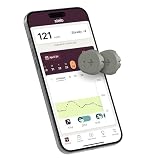
- ✅ For people NOT using insulin, ages 18 years and older
- ❌ Don’t use if: On insulin, on dialysis, or have problematic hypoglycemia
- YOUR SUCCESS, OUR COMMITMENT: If your biosensor fails before the 15-day wear time is up,[2] we will replace it for free. [3]
- PRODUCT SUPPORT: Provided by Stelo through SteloBot, which can be accessed via the Stelo app by going to Settings > Contact. SteloBot virtual support assistant is available 24/7, and live agent support available during regular business hours
- PERSONALIZED INSIGHTS: Understand your glucose patterns and how your glucose reacts to food, activity, and sleep
This long-term lens differentiates Oura from standalone CGM apps that often prioritize immediate glucose control. Here, glucose becomes another signal feeding into an integrated health narrative, one that prioritizes sustainability, comfort, and daily wearability over constant optimization.
What users should not expect
It is important to be clear about the limits. This is not a diagnostic tool, nor is it designed for managing diabetes or making medication decisions.
Users looking for precise carbohydrate counting, predictive glucose modeling, or minute-by-minute alerts will likely find Oura’s approach too restrained. The strength of the system lies in synthesis, not granularity, and it is deliberately tuned for reflection rather than intervention.
Who This Is For (and Who It Isn’t): Ideal Users, Limitations, and Expectations
Seen in the context above, Oura’s metabolic push is less about turning the ring into a medical device and more about clarifying who benefits from an added layer of metabolic awareness. The experience rewards patience, curiosity, and a willingness to think in trends rather than targets.
Ideal for existing Oura users who want deeper context
For long-time Oura Ring owners, this expansion feels like a natural evolution rather than a pivot. Meal logging and glucose insights provide missing context around why Readiness or sleep scores fluctuate, especially for users who already track training load, recovery, and bedtime routines.
Because the ring remains lightweight, unobtrusive, and multi-day wearable, the added metabolic layer does not change how it feels to live with day to day. The value comes from software synthesis, not from adding another device to charge, wear, or manage constantly.
Well-suited to the metabolically curious, not the clinically managed
This system fits users interested in understanding how food timing, composition, and consistency affect energy and recovery. Athletes in base training, knowledge workers managing cognitive fatigue, and wellness-focused users experimenting with meal timing will find the insights intuitive and non-alarming.
It is less appropriate for individuals who require tight glucose control, medical supervision, or real-time decision support. Oura’s deliberate avoidance of alerts, thresholds, and corrective prompts means it complements curiosity-driven self-experimentation rather than clinical care.
Best for long-term thinkers, not short-term optimizers
Oura’s metabolic insights reward consistency over intensity. Logging meals sporadically or using CGM data for only a few days will produce limited value, as the system relies on pattern recognition across weeks.
Users accustomed to immediate feedback loops, such as post-meal spike alarms or numeric glucose targets, may find the experience understated. Here, progress shows up gradually as more stable sleep, smoother Readiness trends, and fewer recovery surprises rather than instant metabolic “wins.”
Comfort-first users who dislike wrist-based overload
For those already fatigued by bulky smartwatches or notification-heavy platforms, the ring-first approach remains a core advantage. The Oura Ring’s compact form factor, smooth interior, and low-profile materials keep it comfortable during sleep and daily wear, which is essential when metabolic insights depend on uninterrupted data collection.
The Dexcom component does introduce an external sensor, but it remains optional and temporary rather than a permanent second wearable. That balance matters for users who value minimalism and adherence over maximal instrumentation.
Not designed for nutrition purists or precision trackers
Oura’s meal tracking is intentionally lightweight. It favors qualitative awareness over gram-level macronutrient breakdowns, barcode scanning, or exhaustive food databases.
Users who enjoy detailed calorie accounting, strict diet frameworks, or performance nutrition modeling may find the logging experience too abstract. Oura assumes that most people benefit more from noticing patterns than from chasing nutritional perfection.
Limited appeal without ecosystem buy-in
The metabolic features make the most sense when combined with Oura’s broader health stack. Sleep, Readiness, activity, and now glucose are designed to inform each other, not stand alone.
Users who plan to dip in only for glucose visualization, without engaging with sleep or recovery metrics, may feel underwhelmed. The platform’s strength lies in integration, and without that buy-in, much of its nuance is lost.
Clear expectations around what this is not
This is not a replacement for a CGM-first platform, nor is it a medical-grade metabolic management tool. It does not diagnose, predict, or intervene.
What it offers instead is coherence: a way to see how eating habits quietly shape recovery, sleep quality, and daily readiness over time. For the right user, that perspective is more sustainable than constant correction, and far easier to live with.
How Oura’s Approach Compares to Other Glucose & Nutrition Tracking Solutions
Seen in context, Oura’s metabolic expansion sits deliberately between hardcore CGM platforms and traditional nutrition apps. It borrows physiological depth from continuous glucose monitoring while retaining the ring’s low-friction, long-horizon view of health.
Rather than competing head-on with every glucose or food tracking solution, Oura is carving out a distinct middle ground focused on behavioral insight, comfort, and long-term adherence.
Versus CGM-first platforms like Levels, Nutrisense, and Veri
CGM-native platforms are built around glucose as the primary signal. Their apps prioritize real-time glucose curves, spike thresholds, meal scoring systems, and frequent alerts designed to shape eating decisions immediately.
Oura treats glucose as contextual data, not the main event. Dexcom-powered readings are layered alongside sleep quality, overnight recovery, resting heart rate, and readiness, shifting the focus from “what spiked me?” to “how did this pattern affect my body over days or weeks?”
This difference matters in daily life. CGM-first platforms reward constant attention and frequent logging, while Oura’s approach tolerates gaps and imperfection, making it easier to sustain for users who want insight without turning food into a full-time project.
Versus smartwatch-based health ecosystems
Apple Watch, Garmin, and Samsung all support nutrition logging through third-party apps, and some can ingest CGM data via integrations. The experience, however, is fragmented across multiple dashboards, permissions, and notification layers.
Oura benefits from being a single-purpose health platform. The ring’s lightweight hardware, multi-day battery life, and absence of a screen reduce behavioral noise, while the app presents glucose, meals, and recovery metrics in a unified narrative.
Smartwatches still win on real-time interaction and exercise depth, but for metabolic health, their wrist-based form factor can feel intrusive. Oura’s comfort during sleep and all-day wear gives it an advantage when consistency matters more than immediacy.
Versus traditional nutrition and calorie-tracking apps
Apps like MyFitnessPal, Cronometer, or Lose It excel at nutritional precision. Barcode scanning, gram-level macros, micronutrient breakdowns, and calorie targets are their core strengths.
Oura intentionally avoids that paradigm. Meal entries are abstracted, quick, and non-judgmental, designed to capture timing and general composition rather than exact intake.
For users driven by weight loss targets, bodybuilding macros, or clinical diet plans, this will feel insufficient. For those interested in understanding how eating behaviors intersect with sleep depth, overnight recovery, and next-day readiness, the lighter approach can be more revealing.
Versus recovery-focused wearables like Whoop
Whoop and Oura share a philosophy centered on recovery and longitudinal trends rather than performance metrics alone. Both emphasize sleep, strain, and readiness-style scoring.
The key difference is that Oura’s metabolic layer is being built directly into its core health model. Glucose responses are not an add-on or experimental feature, but another signal influencing how recovery is interpreted.
Whoop users seeking metabolic insights still rely heavily on external apps and manual interpretation. Oura’s advantage lies in synthesis, even if its glucose insights remain less granular than CGM-specialist tools.
Hardware comfort and adherence as a differentiator
Most glucose platforms assume users are willing to wear a second device continuously or cycle through sensors with minimal friction. In practice, adherence often drops once novelty fades.
Oura’s ring-first model minimizes that burden. The titanium construction, rounded interior, and unobtrusive profile make it one of the easiest health wearables to forget you are wearing, especially overnight.
The Dexcom sensor is temporary by design, allowing users to run focused metabolic experiments without committing to permanent dual-wear. That flexibility is rare in the glucose tracking space and likely to appeal to users who value sustainability over constant monitoring.
Rank #4

- NOTE: After installing the batteries and while the screen is off, simply insert a test strip to wake the meter—no need to press any buttons.
- Accurate and Reliable Testing: LinkSun G-425-1 blood glucose meter adopts advanced detection and production technology to provide more accurate and reliable results. It has an accuracy of up to ±12%, complies with the ISO 15197:2015 standard, and has not had any market recalls in the past 20 years. A control solution is included for checking the glucometer and strips.
- Simple and Easy to Use: The blood glucose meter adopts a no-coding design and can be tested after inserting the test strip; a quick guide is included in the package, which clearly lists the test steps and is easy to follow; if you have any operational problems, we are always available to provide help and tutorials on the blood glucose monitoring system video.
- Quick Test Time: Ready out of the box, just 5 seconds countdown for daily testing. 5 levels of lancing strengths with 5 the deepest depth suits differnt types of finger skins.
- Control Solution Mode: Always switch to CTL Mode before using control solution. After inserting the test strip, press and hold the “M” button until the “CTL” icon appears in the upper right corner of the screen. Testing without CTL Mode may give incorrect results. Press and hold “M” again to return to blood measurement mode.
Who gains the most from Oura’s comparative position
Oura’s metabolic tools are best suited to users who already trust sleep and recovery as foundational health signals. For them, glucose becomes another lens, not a separate obsession.
Those seeking medical-grade glucose management, real-time alerts, or strict nutritional control will still gravitate toward CGM-first ecosystems. Oura is not replacing those platforms; it is reframing glucose as part of everyday wellness rather than a standalone metric.
In doing so, Oura positions itself less as a metabolic authority and more as an interpreter, translating complex physiological data into patterns that fit naturally into daily life.
Hardware Meets Biology: Wearability, Battery Life, and Real-World Use With CGMs
What ultimately determines whether metabolic data becomes useful or abandoned is not sensor accuracy alone, but how comfortably that sensor fits into daily life. Oura’s approach treats glucose tracking as a temporary biological probe layered onto an already well-worn device, rather than a permanent lifestyle change.
That framing has direct implications for comfort, charging behavior, and how long users realistically stick with the experiment.
The ring as the anchor device
The Oura Ring remains the constant in this setup, and its physical design matters more once glucose enters the picture. At roughly 4 to 6 grams depending on size, with a smooth titanium shell and recessed sensors, it avoids the pressure points and strap tension that can complicate overnight wear on watches.
Because glucose responses are interpreted alongside sleep stages, skin temperature trends, and overnight heart rate variability, uninterrupted nocturnal wear is non-negotiable. Rings excel here, especially for side sleepers and users sensitive to wrist bulk.
From a durability standpoint, Oura’s PVD-coated titanium holds up well to daily abrasion, though glucose experiments often increase hand washing and food prep. The ring’s water resistance and sealed construction handle that without changing user behavior, which is the point.
Battery life under metabolic load
Oura’s battery life remains in the 4 to 7 day range depending on ring size, signal quality, and feature usage. Adding meal logging and CGM-linked insights does not meaningfully change on-ring power consumption, because the glucose data is processed in the cloud rather than streamed continuously to the ring.
This separation is critical. Unlike wrist-based CGM integrations that can accelerate battery drain through constant Bluetooth polling, Oura preserves its charging rhythm even during metabolic studies.
In practice, users still charge for 30 to 80 minutes every few days, often during showers or desk time. That predictability supports adherence far better than devices that require daily top-ups once advanced health features are enabled.
Dexcom CGMs: temporary, targeted, and intentional
Dexcom’s role in Oura’s ecosystem is deliberately constrained. Users apply a Dexcom sensor for a defined period, typically around 10 to 14 days depending on the model, then remove it once the experiment ends.
This limited duration lowers the psychological and physical cost of participation. Skin irritation, adhesive fatigue, and body awareness are real barriers to long-term CGM use, especially among non-diabetic users.
By treating the CGM as a short-term diagnostic lens rather than a permanent accessory, Oura aligns with how most wellness-focused users actually behave. The ring remains the everyday wearable; the CGM is a temporary assistant.
Dual-wear comfort and social friction
Wearing two health devices simultaneously introduces friction beyond comfort alone. There is also visibility, body placement, and how often the device prompts explanation or adjustment.
The Dexcom sensor, typically worn on the upper arm or abdomen, is discreet but not invisible. For many users, knowing it is temporary makes that visibility easier to tolerate, especially compared to always-on CGM subscriptions.
Meanwhile, the ring remains socially neutral. It does not signal medical monitoring or performance tracking, which reduces the self-consciousness that can quietly erode long-term adherence.
Data synchronization and latency in real life
Glucose data does not stream directly from Dexcom hardware into the ring. Instead, it flows from Dexcom to Oura’s platform with a delay that prioritizes stability over immediacy.
This design choice reinforces Oura’s philosophy. The platform is not built for real-time glucose alarms or rapid correction loops, but for pattern recognition tied to meals, sleep, and recovery.
Users checking post-meal responses will notice that insights arrive as interpreted trends rather than minute-by-minute graphs. For wellness users, this reduces anxiety while still preserving behavioral insight.
Charging logistics when two devices are involved
Running a CGM introduces a second charging or replacement cycle, even if temporary. Dexcom sensors are disposable and require no daily charging, which pairs well with Oura’s low-frequency charging needs.
There is no scenario where both devices demand attention on the same day unless planned poorly. That separation helps prevent the sense of maintenance overload that causes many users to abandon multi-device setups.
From a habit standpoint, Oura remains the only device that requires routine care, reinforcing its role as the primary health companion.
Movement, exercise, and sensor interference
Physical activity introduces edge cases for glucose wearability. High-sweat workouts, contact sports, and repetitive arm movement can challenge CGM adhesion.
Because Oura does not rely on the CGM for exercise metrics, sensor interruptions during workouts do not compromise strain or recovery tracking. Glucose gaps are contextualized rather than treated as failures.
This tolerance for imperfect data is an underappreciated advantage. It allows users to live normally without protecting the sensor at all costs.
What real-world adherence looks like after the novelty fades
Most users will not run back-to-back CGM cycles. Instead, they are likely to deploy glucose tracking a few times per year around dietary changes, training blocks, or health resets.
Oura’s hardware strategy supports that cadence. The ring continues gathering baseline data indefinitely, while glucose appears when needed and disappears without consequence.
That rhythm mirrors how people actually experiment with health. It also differentiates Oura from platforms that implicitly expect continuous metabolic surveillance.
Hardware strategy as product philosophy
Oura’s decision to keep its core hardware unchanged while expanding biologically is not accidental. By avoiding new straps, screens, or sensors, it preserves the familiarity that long-term users value.
The biology gets more complex, but the hardware stays quiet. For many, that balance is what makes metabolic health approachable rather than overwhelming.
In this sense, wearability is not just a comfort metric. It is the foundation that determines whether biology becomes insight or just more data left unused.
Privacy, Data Interpretation, and the Line Between Wellness and Medical Insight
As Oura pushes deeper into metabolic territory, the conversation inevitably shifts from comfort and cadence to responsibility. Glucose data is more intimate than sleep or steps, and how it is stored, interpreted, and framed matters as much as the sensor itself.
Oura’s approach here is deliberately conservative, and that restraint is part of the product story rather than a limitation.
Where glucose data lives and who controls it
Oura positions glucose readings as user-owned wellness data, even when sourced from a regulated medical device like a Dexcom CGM. The data flows into Oura’s platform through explicit user consent and can be disconnected at any time without affecting core ring functionality.
💰 Best Value

- CLINICALLY PROVEN ACCURACY: Track and manage your diabetes confidently with our reliable blood glucose monitoring system. Readings that are personalized, HI/LO target ranges, and easy-to-understand summaries of your blood sugar test results (1)
- BLUETOOTH CONNECTIVITY: Sync your glucose monitor kit and get readings automatically to a free app via Bluetooth for seamless tracking and data sharing with our blood sugar testing kit
- EASY TO USE: SmartLIGHT target range indicator (2) instantly shows if blood sugar levels are above, below, or within target range for quick, clear feedback
- SECOND-CHANCE SAMPLING (3): Apply additional blood to the same test strip within 60 seconds to help reduce strip waste, avoid unnecessary retesting, and save money over time with our blood sugar testing kit
- NO CODING REQUIRED: Get fast, accurate results without the hassle of manual coding, reducing the risk of user error and making testing simpler, quicker, and more reliable
Importantly, Oura does not sell identifiable health data, nor does it position glucose insights as a gateway to insurance, employer wellness programs, or clinical decision-making. That separation reduces downstream risk for users experimenting with metabolic tracking out of curiosity rather than necessity.
For a category where data misuse anxiety is a real adoption barrier, this opt-in, compartmentalized model lowers the psychological cost of trying glucose monitoring.
Wellness framing versus medical reality
Despite Dexcom’s clinical pedigree, Oura is careful not to medicalize the experience. The app avoids diagnostic language, thresholds tied to disease states, or alerts that imply intervention.
Instead, glucose is framed as a response signal, showing how meals, sleep, stress, and movement interact. A spike is not labeled “bad,” nor is stability labeled “good,” without context from the user’s broader behavior patterns.
This distinction is subtle but critical. It keeps Oura on the wellness side of regulatory boundaries while reducing the risk of users self-diagnosing based on incomplete understanding.
The interpretation problem: patterns over points
Glucose data is notoriously easy to misread, especially when viewed in isolation. A single elevated reading can reflect sleep deprivation, intense exercise, or even sensor lag, rather than dietary failure.
Oura’s interface emphasizes trends, timing, and repeatability over raw numbers. Meals are evaluated based on their downstream effects across hours, not minutes, and are paired with sleep quality and readiness scores to reinforce systems thinking.
This helps prevent the common quantified-self trap of chasing perfect curves instead of learning resilient habits.
Meal tracking without calorie obsession
Unlike traditional nutrition apps, Oura’s meal tracking is intentionally lightweight. Users log what and when they eat, not precise macros or caloric totals, unless they choose to add detail.
The goal is correlation, not accounting. By linking meals to glucose responses and overnight recovery, Oura sidesteps the burnout that accompanies rigid food logging while still delivering actionable insight.
For many users, this will be the first time nutrition data feels additive rather than punitive.
Who this insight is for, and who should look elsewhere
Oura’s metabolic expansion is best suited for metabolically healthy individuals seeking awareness, athletes fine-tuning fueling strategies, or users navigating lifestyle changes. It is not a substitute for medical guidance for people with diabetes or other metabolic conditions requiring clinical oversight.
Those users may still benefit from Dexcom’s native apps, which offer alerts, dosing integrations, and healthcare sharing features that Oura intentionally avoids. The platforms are complementary, not interchangeable.
Understanding that boundary is essential to using the system responsibly.
Strategic implications for the wearable ecosystem
By integrating glucose as a contextual signal rather than a constant metric, Oura sets a precedent for how advanced biomarkers can enter consumer wearables without overwhelming users. It suggests a future where biology is sampled selectively, interpreted holistically, and retired gracefully when no longer needed.
That philosophy contrasts sharply with always-on surveillance models. It also aligns with how most people actually want to engage with their health: informed, not obsessed.
In drawing a clear line between wellness insight and medical intervention, Oura may be defining the rules for the next phase of consumer metabolic tracking.
The Bigger Picture: What This Signals for the Future of Wearables and Metabolic Health
Taken together, Oura’s approach to meal logging and Dexcom-powered glucose insight is less about adding another feature and more about redefining how advanced health data enters everyday wearables. The significance lies not in glucose itself, but in how selectively and thoughtfully it’s used.
This is a clear signal that the next phase of wearables is shifting from accumulation to interpretation.
From sensor arms race to insight design
For years, wearable progress was measured by how many sensors could be crammed into a device, often at the expense of clarity. Oura’s metabolic expansion suggests that raw data saturation has hit diminishing returns for most users.
Instead, the competitive edge is moving toward insight design: deciding when data matters, how long it should be surfaced, and when it’s better to step back. Glucose becomes a temporary lens rather than a permanent dashboard fixture.
That design restraint may prove more valuable than adding yet another always-on metric.
Metabolic health as a bridge between fitness and recovery
Glucose sits at a unique intersection of nutrition, stress, sleep, and exercise, which aligns naturally with Oura’s strengths in recovery and readiness. By contextualizing glucose alongside overnight heart rate, HRV, and sleep timing, Oura reframes metabolism as a 24-hour system rather than a post-meal spike chart.
This moves metabolic health out of the gym-only or food-only silo. It becomes something shaped by late nights, intense training blocks, alcohol, illness, and even travel.
That holistic framing is likely how metabolic tracking becomes mainstream without becoming medicalized.
Rings, not watches, as the metabolic anchor
There’s also a form factor story unfolding here. Smart rings like Oura prioritize comfort, multi-day battery life, and passive wear over screens and constant interaction, which makes them well suited for long-term physiological pattern detection.
Unlike watches that encourage frequent checking, the ring fades into the background. That subtlety matters when dealing with sensitive data like glucose, where over-monitoring can quickly undermine mental well-being.
In this sense, Oura’s hardware philosophy is reinforcing its software philosophy: less interruption, more reflection.
A template other platforms are likely to follow
Oura’s integration sets a precedent that other wearable platforms will almost certainly study closely. Apple, Garmin, Samsung, and others are all circling metabolic health, but few have clearly articulated how to introduce it without turning consumer devices into quasi-medical tools.
By relying on partnerships for regulated hardware, limiting real-time alerts, and focusing on retrospective insight, Oura offers a template that balances innovation with responsibility. It shows how to explore powerful biomarkers without triggering regulatory friction or user anxiety.
Expect future wearable launches to borrow heavily from this playbook.
What this means for users in the long run
For users, the bigger takeaway is choice. Metabolic data no longer has to be all-or-nothing, clinical or absent. It can be something you engage with during a learning phase, then step away from once patterns are understood.
That flexibility respects the reality that health is seasonal. Training cycles, life stress, and goals change, and wearables need to adapt accordingly.
If Oura executes this well over time, it reinforces a future where wearables act less like monitors and more like quiet advisors.
Closing perspective
Oura’s move into metabolic health doesn’t declare that glucose is the next must-have metric for everyone. Instead, it argues that context is the real upgrade.
By pairing lightweight meal tracking with optional, time-bound glucose insight, Oura is betting that understanding beats obsession. If that bet pays off, it won’t just shape Oura’s roadmap, but the broader direction of consumer health technology.
In that sense, this expansion isn’t just a feature update. It’s a statement about what wearable health should become next.