Smart rings promise insight without intrusion, but not all of them are built with the same philosophy. Some are lifestyle companions that quietly shape daily habits, while others lean toward clinical-grade monitoring with a sharper focus on specific conditions. Understanding where Oura Ring 3 and Circul sit on that spectrum is essential, because their differences are less about which is “better” and more about what kind of health relationship you want on your finger.
Both devices strip away screens in favor of passive, 24/7 data capture, yet they arrive there from very different backgrounds. One is rooted in behavioral science and long-term wellness trends, the other in medical monitoring and physiological specificity. This section clarifies those identities before we get into sensors, accuracy, and day-to-day performance.
Oura Ring 3: A lifestyle-first health platform disguised as jewelry
Oura Ring 3 positions itself as a holistic wellness ring, designed to guide behavior over weeks and months rather than diagnose issues in the moment. Its core value lies in trend analysis across sleep, readiness, and activity, using nightly biometrics like heart rate variability, resting heart rate, temperature deviation, and respiratory rate to generate easy-to-digest scores.
Physically, Oura leans heavily into comfort and wearability. The lightweight titanium build, smooth interior molding, and low-profile design make it viable for 24/7 wear, including sleep, strength training, and everyday tasks where bulkier rings become distracting. This design-first approach is intentional, as Oura’s usefulness depends on consistent long-term wear rather than short, targeted measurement windows.
🏆 #1 Best Overall
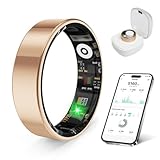
- 【Check the Size Before Purchase】 Before buying the prxxhri Smart Ring, we strongly suggest that you refer to the size chart and carefully measure the circumference of your finger. This will ensure you get the most comfortable wearing experience and easily avoid any unnecessary returns or exchanges.
- 【Real-time Accurate Sleep & Fitness Monitoring】 prxxhri smart ring tracks your sleep quality and daily activities in real time. With advanced sensors, it provides precise data about your sleep cycle, helping you optimize rest and recovery. Whether you are tracking steps, calories or exercise performance, this smart ring can provide you with the most accurate insights to support your fitness goals and enhance your overall health.It is a good choice for family and friends.
- Health Monitoring】The prxxhri ring features advanced 4.0 sensors that automatically measure your heart rate, and blood pressure every 30 min when worn. It provides continuous health tracking and comprehensive wellness management all day.
- 【3-5 Day Battery Life】 With a 3-5 day battery life, the prxxhri smart ring ensures continuous health monitoring without frequent charging. When used with the smart charging case, the usage time can even exceed 20 days. Whether you are tracking sleep patterns or fitness activities, you can count on long-lasting performance without constant interruptions.
- 【80-meter Waterproof, Suitable for Various Scenarios】 The prxxhri Smart Ring has excellent waterproof performance, with a waterproof depth of up to 80 meters. Whether it's for daily wear, an intense workout session or a pleasant swimming time, it can handle it with ease. What's more, even if you have sensitive skin, you can still enjoy an extremely comfortable wearing experience when wearing this ring.
From a product standpoint, Oura is less a device and more an ecosystem. The ring is the sensor hub, but the real product lives in the app and subscription model, where contextual insights, trend baselines, and coaching narratives are delivered. It is aimed at users who want to optimize sleep quality, recovery balance, and daily readiness without feeling like they are under medical surveillance.
Circul: A medical-leaning smart ring focused on targeted physiological monitoring
Circul approaches the smart ring category from a more clinical direction, prioritizing continuous physiological measurement over lifestyle scoring. Its defining feature is real-time blood oxygen saturation tracking, paired with heart rate and optional alerts, making it particularly relevant for users concerned with sleep apnea, altitude adaptation, or respiratory health.
The hardware reflects this focus. Circul is bulkier and more utilitarian than Oura, with visible sensor housing and a form factor that prioritizes stable signal acquisition over minimalism. It is comfortable enough for sleep and extended wear, but it feels like a monitoring device first and an accessory second, which is an important distinction for daily usability.
Where Oura abstracts complexity into wellness narratives, Circul presents rawer data with a narrower scope. Its value proposition is strongest for users who want continuous SpO2 visibility and are willing to trade aesthetic subtlety and lifestyle polish for more direct physiological insight. This positions Circul closer to a consumer-accessible medical device than a generalized wellness ring.
Two philosophies, two ideal users
At a positioning level, Oura Ring 3 is built for people optimizing how they feel, train, and recover over time. It excels when worn continuously, synced daily, and interpreted as part of a broader health routine that values patterns more than individual data points.
Circul, by contrast, is built for people who want to watch a specific metric closely and in near real time. Its appeal grows when there is a defined concern or condition driving the purchase, rather than general curiosity about sleep quality or readiness trends.
This philosophical split explains many of the differences we will explore next, from sensor prioritization and battery trade-offs to app design and long-term value. Once you understand what kind of smart ring each device is trying to be, the rest of the comparison becomes far clearer.
Design, Build Quality & Wearability: Comfort, Sizing, and 24/7 Use
That philosophical split between lifestyle wellness and targeted physiological monitoring becomes immediately tangible once these rings are on your finger. Design and wearability are not superficial concerns here; they directly influence how reliably the devices are worn around the clock, which in turn determines data quality and long-term value.
Form factor and visual presence
Oura Ring 3 is intentionally discreet, designed to pass as a piece of minimalist jewelry rather than a piece of health hardware. Its low-profile, uninterrupted outer shell avoids visible seams or sensor windows, helping it blend into both casual and professional settings without drawing attention.
Circul makes no attempt to disappear. The ring has a visibly raised sensor module and a more mechanical silhouette, signaling its function as a monitoring device. In daily wear, it looks closer to a medical-grade tool than an accessory, which some users will find reassuring and others will find intrusive.
Materials, finishing, and durability
Oura Ring 3 is constructed from lightweight titanium with a durable PVD coating, available in multiple finishes that range from matte to gloss. The surface resists scratches well for a wearable that is constantly in contact with desks, gym equipment, and door handles, though lighter finishes can show wear over time.
Circul uses a combination of plastic and medical-grade materials optimized for sensor stability rather than luxury feel. The finish is more utilitarian, and while it does not feel fragile, it lacks the refined tactile quality of Oura. The trade-off is robustness in signal acquisition rather than cosmetic longevity.
Thickness, weight, and finger feel
In absolute terms, Oura Ring 3 is slimmer and lighter, with weight varying by size but generally remaining unobtrusive after the first few days of wear. Its inner surface is smoothly contoured, and the sensors sit flush enough that pressure points during sleep are rare once sizing is correct.
Circul is noticeably thicker and heavier, largely due to its protruding sensor housing. During daytime use this is manageable, but at night some users may be more aware of its presence, particularly if they sleep with hands under pillows or clenched. Comfort is acceptable, but never forgettable.
Sizing systems and fit precision
Oura’s sizing process is one of the most refined in the category. The company provides a detailed sizing kit with half-size precision achieved through subtle internal geometry, and recommends wearing the sizing ring for at least 24 hours to confirm comfort across temperature changes and activity.
Circul also offers a sizing kit, but fit tolerance is less forgiving. Because accurate SpO2 measurement depends on consistent skin contact, even slight looseness can degrade data quality. This makes correct sizing more critical, and finger swelling overnight can occasionally affect comfort or readings.
24/7 wear, including sleep and activity
Oura Ring 3 is built explicitly for continuous wear. It is comfortable enough for sleep tracking, light exercise, desk work, and even showering, with water resistance rated for everyday exposure. Over time, many users report forgetting they are wearing it at all, which is the ideal outcome for passive health tracking.
Circul can be worn continuously, but the experience is more intentional. It excels during sleep, where its SpO2 tracking is most valuable, but daytime wear can feel more cumbersome, especially during manual tasks or workouts. It is better suited to periods of focused monitoring rather than effortless all-day use.
Practical durability and lifestyle compatibility
Oura’s sealed design and absence of moving parts make it resilient to sweat, rain, and routine handwashing. While not designed for heavy manual labor or weightlifting with knurled bars, it holds up well to typical urban and fitness-oriented lifestyles.
Circul’s exposed sensor area requires slightly more care. It is durable enough for daily life, but users need to be more conscious of knocks and prolonged pressure on the sensor module. This reinforces its identity as a health instrument that benefits from mindful use rather than a ring you never think about.
Wearability as a reflection of intent
Ultimately, wearability mirrors intent. Oura Ring 3 prioritizes long-term comfort and aesthetic neutrality so that it can quietly collect data over months and years without disrupting daily life. Circul prioritizes measurement integrity, even if that means sacrificing elegance and invisibility.
For users who want a ring they can live with continuously, across social, professional, and athletic contexts, Oura’s design philosophy is clearly more accommodating. For users who value stable, continuous physiological readings above all else, Circul’s compromises in comfort and appearance may be entirely justified.
Sensor Stack & Raw Data Capture: What Each Ring Actually Measures
Wearability sets the stage, but sensors define the substance. Once comfort and form factor determine whether a ring stays on your finger, the sensor stack determines whether the data collected is broad, deep, and reliable enough to be meaningful over time.
Oura Ring 3 and Circul approach this problem from opposite ends of the spectrum. Oura favors a multi-sensor, longitudinal wellness model, while Circul is engineered as a high-fidelity physiological measurement device with a narrower focus.
Oura Ring 3: Multi-sensor wellness tracking optimized for trends
Oura Ring 3 uses a combination of optical, thermal, and motion sensors to build a holistic picture of health rather than targeting a single clinical-grade metric. Its core sensing system is designed to work passively in the background, prioritizing consistency over maximal signal intensity.
At the heart of the ring are infrared PPG sensors used to measure heart rate, heart rate variability (HRV), and respiratory rate. Oura employs multiple wavelengths and sensor placements around the inner circumference of the ring, allowing it to adapt to finger movement and changes in blood perfusion throughout the night.
A digital temperature sensor measures deviations from your personal baseline rather than absolute skin temperature. This approach is critical to Oura’s value proposition, as it allows the ring to detect subtle physiological shifts associated with illness, menstrual cycle changes, or recovery strain without overpromising medical-grade accuracy.
A 3D accelerometer tracks movement, enabling sleep stage detection, restlessness, nap recognition, and daily activity estimation. While Oura does not include GPS or continuous high-intensity workout tracking, its motion data is tuned for sleep quality and recovery context rather than athletic performance metrics.
Blood oxygen sensing is present but used selectively. Oura captures overnight SpO2 trends rather than continuous daytime readings, focusing on identifying breathing irregularities and long-term oxygen saturation patterns instead of real-time monitoring.
In practical terms, Oura’s raw data capture favors stability and repeatability. Measurements are taken at intervals optimized for battery life and long-term wear, which means the ring excels at identifying trends across weeks and months rather than delivering second-by-second physiological feedback.
Circul: Medical-style pulse oximetry with continuous granularity
Circul’s sensor stack is unapologetically focused on signal fidelity. Its primary function is continuous pulse oximetry, and nearly every design decision flows from that objective.
Circul uses a transmissive PPG sensor configuration, similar to clinical fingertip pulse oximeters. This allows it to measure SpO2, heart rate, respiratory rate, and perfusion index with higher temporal resolution than most consumer wearables.
Unlike reflective PPG systems commonly used in smartwatches and rings, Circul’s approach passes light through the finger, resulting in stronger signal acquisition, particularly during sleep. This is why Circul is often favored by users monitoring sleep apnea, oxygen desaturation events, or cardiovascular irregularities.
The ring captures continuous SpO2 data throughout the night and can do so during the day if worn, producing dense datasets that show minute-by-minute oxygen fluctuations. This level of granularity is closer to clinical monitoring than wellness tracking, though it still sits firmly in the consumer health category.
Motion sensing is present but secondary. Circul includes basic movement detection primarily to contextualize oxygen and heart rate readings, not to provide detailed activity or sleep stage analytics. There is no temperature sensor, and recovery metrics such as HRV are not as central to its platform.
In short, Circul prioritizes depth over breadth. It captures fewer types of data, but the data it does capture is dense, continuous, and optimized for physiological precision.
Raw data philosophy: longitudinal insight vs immediate physiological clarity
The most important distinction between these two rings is not what they measure, but how and why they measure it. Oura’s sensor stack is designed to quietly sample multiple signals and fuse them into readiness, sleep, and recovery models that improve with time.
Rank #2

- ACCURATE SIZING ESSENTIAL - Oura Ring 4 uses unique sizing different from standard jewelry rings; use the Oura Ring 4 Sizing Kit to find your perfect fit before purchasing
- OURA MEMBERSHIP - First month of membership is included with purchase, for new members only. Subscription is 5.99/mo afterwards. Or opt for the annual prepaid option for 69.99. Membership is tied to your account via the Oura App, not your physical ring
- ACCURACY - SMART SENSING - Oura tracks over 50 health metrics, including sleep, activity, stress, heart health, and women’s health metrics. Oura Ring 4 is powered by Smart Sensing, which adapts to you — delivering accurate, continuous data, day and night
- LONG LASTING BATTERY - With up to 8 days of battery life, no screens and no vibrations, Oura Ring 4 allows you to focus on the present. From a workout to a night out — you’re free to forget it’s on. Until you start getting compliments
- HSA/FSA ELIGIBLE - We can accept HSA or FSA funds for the following: Oura Ring, additional chargers, and shipping
Circul’s sensor stack is designed to observe the body in near real time. Its continuous data capture can reveal acute events and short-term physiological changes that Oura’s interval-based sampling may smooth over.
For users interested in understanding how lifestyle, stress, and sleep habits affect their health across seasons and years, Oura’s broader sensor array provides more contextual information. For users who need detailed oxygen and heart rate visibility, especially during sleep, Circul’s focused approach offers insights that few rings can match.
Environmental factors, finger anatomy, and signal reliability
Both rings benefit from finger-based measurement, which generally offers better PPG signal quality than wrist-based wearables due to higher capillary density. However, their different sensor designs respond differently to real-world conditions.
Oura’s distributed sensors are more forgiving of finger movement and changes in hand position, making them well suited to all-night wear without requiring conscious adjustment. Signal quality improves over time as the algorithms learn your baseline patterns.
Circul’s transmissive sensor demands more consistent placement and pressure. When worn correctly, it delivers excellent signal clarity, but improper fit or frequent hand movement can interrupt readings, particularly during daytime use.
This reinforces the broader theme of intent. Oura is optimized for passive, low-maintenance data capture, while Circul rewards careful wear with richer physiological detail.
What each ring truly measures well
Oura Ring 3 excels at measuring trends: sleep regularity, recovery readiness, resting heart rate shifts, HRV baselines, and temperature deviations over time. Its sensor stack supports a wellness narrative built on patterns rather than moments.
Circul excels at moments: oxygen desaturation events, heart rate variability during sleep, and immediate physiological responses that benefit from continuous observation. Its strength lies in visibility rather than interpretation.
Understanding this difference is essential, because neither ring is universally better. They simply measure different things, in different ways, for different kinds of users.
Health Metrics & Accuracy: Sleep, SpO₂, HRV, and Clinical Credibility
The contrast between Oura Ring 3 and Circul+ becomes clearest when accuracy is defined not just by sensor capability, but by intent. One ring is built to contextualize health over weeks and months, the other to surface clinically meaningful signals in near real time.
Both approaches are valid, but they lead to very different experiences once you look closely at sleep staging, oxygen tracking, heart rate variability, and how much trust you can place in the numbers.
Sleep tracking depth and staging reliability
Oura Ring 3 approaches sleep as a multi-dimensional physiological state rather than a single score. It combines infrared PPG, motion sensors, and temperature deviation to model sleep stages, latency, efficiency, and disturbances across the night.
In practice, Oura’s sleep detection is among the most consistent in the ring category, particularly for total sleep time and bedtime consistency. Stage classification is directionally reliable rather than clinical-grade, but trends tend to align well with polysomnography comparisons published in independent validation studies.
Circul+ also tracks sleep duration and nocturnal heart rate, but sleep staging is not its primary strength. Its focus remains on cardiorespiratory signals during rest, making it more useful for observing what happens during sleep rather than interpreting why sleep quality changes.
SpO₂ measurement: spot checks versus continuous visibility
This is where Circul+ clearly separates itself. Using a transmissive PPG design that passes light through the finger rather than reflecting it, Circul can measure blood oxygen saturation continuously throughout the night and on demand during the day.
When fit correctly, SpO₂ readings are stable, granular, and responsive to subtle desaturation events. This makes Circul particularly compelling for users concerned about sleep-disordered breathing, altitude adaptation, or respiratory conditions.
Oura Ring 3 measures SpO₂ passively during sleep only, reporting average oxygen saturation and breathing regularity rather than a continuous waveform. The data is useful for trend detection, but it does not surface moment-to-moment drops or event-level detail.
Heart rate and HRV accuracy in real-world use
Oura’s strength lies in nighttime heart rate and HRV baselines. By prioritizing measurement during deep sleep when movement is minimal, it produces remarkably stable resting heart rate curves and HRV averages that are well suited for recovery and readiness modeling.
The ring does not attempt high-frequency HRV sampling during the day, which limits its usefulness for acute stress detection but improves consistency. For most users, the overnight HRV trend is what matters most for understanding training load, illness, or burnout.
Circul+ captures heart rate continuously and can surface HRV-related patterns during sleep, but its accuracy is more sensitive to motion and fit. When worn securely at night, the data is excellent; during the day, signal interruptions are more common than with Oura’s reflective array.
Clinical credibility and validation posture
Circul+ occupies a rare position in the consumer ring market due to its medical lineage. Earlier Circul devices received FDA clearance as pulse oximeters, and that heritage shows in how the product prioritizes raw signal visibility over lifestyle scoring.
This does not make Circul a diagnostic tool, but it does lend credibility to its SpO₂ and heart rate readings, particularly for users who want numbers that resemble hospital-grade metrics. The on-ring display reinforces this mindset, turning the ring into a monitoring instrument rather than a background tracker.
Oura takes a different path, leaning heavily into peer-reviewed research collaborations rather than regulatory classification. Its algorithms are continuously refined using large population datasets, which improves pattern recognition even if the ring itself is not clinically certified.
Consistency, comfort, and measurement trade-offs
Accuracy is inseparable from wearability. Oura’s lighter titanium build, smooth interior, and lack of a display make it easier to forget overnight, which directly improves data continuity across weeks.
Circul+ is thicker and more prescriptive about finger choice and fit, and its OLED screen adds both value and bulk. Users who tolerate that trade-off are rewarded with deeper physiological insight, but long-term adherence can be more challenging for passive wearers.
Ultimately, Oura maximizes accuracy through consistency and context, while Circul maximizes accuracy through direct measurement. Which matters more depends entirely on whether you value seamless longitudinal insight or high-resolution physiological visibility.
Day-to-Day Tracking Experience: Passive Insights vs On-Demand Monitoring
The philosophical split between Oura Ring 3 and Circul+ becomes most obvious once the ring is no longer new and simply part of daily life. One fades into the background and speaks only when it has something meaningful to say; the other invites interaction, checks, and conscious measurement throughout the day.
This distinction shapes not just how often you look at your data, but how you relate to your health metrics over weeks and months of wear.
Oura Ring 3: Invisible tracking, delayed insight
Oura’s day-to-day experience is built around absence. There is no screen, no button, and no real-time readout, which means the ring never asks for attention while you are working, training, or sleeping.
Data collection happens continuously in the background, with heart rate, temperature deviation, and movement sampled at intervals optimized for battery life and signal stability. You only see the results once you open the app, typically in the morning or after a sync.
This delay is intentional. Oura’s software reframes raw biometrics into Readiness, Sleep, and Activity scores that emphasize trends over moments, discouraging reactive behavior based on single data points.
Circul+: Immediate feedback, intentional engagement
Circul+ takes the opposite approach by putting your vitals directly on the ring. A quick tap cycles through real-time heart rate, SpO₂, and other metrics, turning the device into a pocket-sized monitoring instrument.
This immediacy is powerful for users who want to spot-check physiological status during workouts, breathwork, altitude exposure, or moments of perceived stress. The ring feels active rather than ambient, rewarding curiosity with instant numbers.
The trade-off is mental load. Circul+ invites frequent interaction, and for some users, that can shift the experience from wellness awareness to data vigilance.
App interaction and daily rituals
Oura’s app encourages a once-or-twice-daily rhythm. Morning check-ins surface overnight recovery insights, while evening prompts focus on activity balance and readiness for the next day.
Notifications are sparse and contextual, often nudging users to rest, move lightly, or wind down based on accumulated signals rather than momentary spikes. Over time, this creates a feedback loop that feels advisory rather than directive.
Circul’s app behaves more like a dashboard than a journal. It emphasizes raw charts, session-style recordings, and historical comparisons, which appeals to users who want to analyze data manually rather than accept algorithmic summaries.
Rank #3

- ACCURATE SIZING ESSENTIAL - Oura Ring 4 uses unique sizing different from standard jewelry rings; use the Oura Ring 4 Sizing Kit to find your perfect fit before purchasing
- OURA MEMBERSHIP - First month of membership is included with purchase, for new members only. Subscription is 5.99/mo afterwards. Or opt for the annual prepaid option for 69.99. Membership is tied to your account via the Oura App, not your physical ring
- ACCURACY - SMART SENSING - Oura tracks over 50 health metrics, including sleep, activity, stress, heart health, and women’s health metrics. Oura Ring 4 is powered by Smart Sensing, which adapts to you — delivering accurate, continuous data, day and night
- LONG LASTING BATTERY - With up to 8 days of battery life, no screens and no vibrations, Oura Ring 4 allows you to focus on the present. From a workout to a night out — you’re free to forget it’s on. Until you start getting compliments
- HSA/FSA ELIGIBLE - We can accept HSA or FSA funds for the following: Oura Ring, additional chargers, and shipping
Battery life and charging cadence in real use
Oura’s passive model pays dividends in battery life. Most users can comfortably go four to seven days between charges, making it easy to maintain uninterrupted sleep and recovery datasets.
Charging is quick and predictable, and the lack of a display or constant user interaction reduces variability in drain. This consistency supports long-term adherence, especially for users who dislike managing yet another device.
Circul+ typically requires more frequent charging due to its screen and real-time monitoring features. While still manageable, the shorter battery window introduces more interruptions, particularly for users who rely on overnight SpO₂ tracking.
Comfort, discretion, and social wearability
In daily wear, Oura behaves more like a traditional titanium band than a piece of tech. Its smooth interior, balanced weight, and absence of visible electronics make it socially invisible in most settings.
Circul+ is more conspicuous, both visually and physically. The OLED display and thicker profile signal its function clearly, which some users appreciate and others find limiting for all-day wear.
This difference matters in environments where discretion, typing comfort, or prolonged hand use is a priority.
Psychological impact of passive vs active data
Oura’s strength lies in reducing cognitive friction. By abstracting physiology into scores and trends, it helps users focus on behavior change rather than measurement itself.
Circul+ appeals to a more hands-on mindset. Seeing numbers in real time can be motivating and educational, but it also requires discipline to avoid overinterpreting normal variability.
Neither approach is inherently better. The right choice depends on whether you want your ring to quietly guide your habits or actively participate in your health decisions throughout the day.
Battery Life, Charging & Long-Term Ownership Practicalities
The passive-versus-active philosophy outlined above carries direct consequences for how often these rings demand attention, and how seamlessly they fit into long-term routines. Battery behavior, charging rituals, and ownership friction ultimately determine whether a smart ring becomes a habit or a hassle after the novelty wears off.
Battery life and charging cadence in real use
Oura Ring 3 benefits from its screen-free, background-tracking approach, delivering a realistic four to seven days per charge depending on ring size, firmware, and feature usage. Smaller sizes tend to sit closer to the lower end, but even then the cadence is forgiving enough to avoid data gaps for most users.
Circul+ trades longevity for immediacy. With its OLED display, continuous SpO₂ monitoring, and user-initiated measurements, most owners will be charging every one to two days, particularly if overnight oxygen tracking is enabled consistently.
This difference becomes most noticeable during travel, illness, or high-stress periods, when remembering to charge is least convenient but longitudinal data is most valuable.
Charging hardware, speed, and day-to-day friction
Oura’s puck-style charger is minimal, stable, and nearly foolproof, with a full top-up typically taking under 90 minutes. Because charging is infrequent, most users develop a simple rhythm, often pairing it with a shower or desk break rather than planning around it.
Circul+ uses a proprietary charging cradle and cable, and while charging times are not excessive, the higher frequency makes logistics more noticeable. Forgetting the charger for a weekend away is far more disruptive here than it would be with Oura.
Neither solution is inherently problematic, but Oura’s lower interaction requirement reduces mental overhead over months and years of ownership.
Battery degradation and lifespan expectations
Like all lithium-based wearables, both rings experience gradual battery capacity loss over time. Oura’s longer charge cycles work in its favor, as fewer total charge events typically translate to slower degradation across a two- to three-year window.
Circul+’s more frequent charging accelerates cycle count accumulation, which may lead to earlier declines in usable runtime. While this does not render the device unusable, it can compress an already short battery window into something more restrictive over time.
Neither ring offers user-replaceable batteries, making long-term battery health a meaningful ownership consideration rather than a theoretical one.
Software updates, compatibility, and aging hardware
Oura has a proven track record of maintaining software support across multiple hardware generations, with firmware and app updates often improving battery efficiency rather than eroding it. Compatibility with both iOS and Android remains stable, and background syncing minimizes active power drain on the ring itself.
Circul+’s feature set places heavier demands on both hardware and software, and updates tend to focus on functionality rather than optimization. As sensors age and batteries degrade, the margin for inefficiency becomes smaller, making consistency more dependent on careful user management.
This distinction matters for buyers who expect their ring to age gracefully rather than require increasingly deliberate attention.
Cost of ownership beyond the purchase price
Battery life ties directly into value perception, especially when combined with Oura’s subscription model. While the recurring fee adds to long-term cost, the hardware’s endurance and reduced charging friction help justify extended use beyond the initial excitement phase.
Circul+ avoids a mandatory subscription, which appeals to buyers sensitive to ongoing fees. However, the higher interaction burden and potentially shorter effective lifespan may offset those savings for users seeking multi-year reliability.
In practical terms, Oura asks more financially over time, while Circul+ asks more behaviorally, and understanding which cost you feel more acutely is central to choosing the right ring.
App Experience & Data Interpretation: Oura App vs Circul+ Ecosystem
Battery longevity and hardware aging shape how often you interact with a smart ring, but the app ultimately defines whether that interaction feels rewarding or burdensome. This is where Oura and Circul+ diverge most clearly, not in what they measure, but in how they contextualize that data and how much effort they expect from the user to extract value.
Philosophy: Guided Insights vs Raw Physiological Monitoring
Oura’s app is built around interpretation first and measurement second. It assumes the user wants actionable guidance rather than continuous streams of raw biometrics, and it structures the entire experience around that assumption.
Circul+ takes the opposite stance. Its ecosystem is designed to surface detailed physiological signals, particularly oxygen saturation and heart rate trends, and leaves interpretation largely to the user.
This philosophical split influences everything from dashboard layout to notification behavior and long-term engagement.
Dashboard Design and Daily Usability
The Oura app opens to a clean, narrative-style dashboard centered on three core scores: Sleep, Readiness, and Activity. Each score is a synthesis of multiple metrics, with clear visual hierarchies that prioritize trends over individual data points.
Scrolling deeper reveals contributors like HRV, resting heart rate, body temperature deviation, and sleep stages, but these are always framed in context. The app consistently answers the question, “Why does today look different from yesterday?”
Circul+’s app is more utilitarian and data-forward. The primary views emphasize SpO2 waveforms, pulse rate graphs, and time-stamped readings, often presented in longer charts that resemble clinical monitoring tools rather than consumer wellness dashboards.
For users accustomed to medical-grade pulse oximeters or sleep lab reports, this can feel reassuringly serious. For casual or time-constrained users, it can feel dense and cognitively demanding.
Sleep Analysis and Recovery Interpretation
Oura’s sleep reporting is one of its strongest differentiators. Sleep stages are presented alongside sleep timing consistency, latency, efficiency, and overnight physiological recovery signals, all tied back to the Readiness score.
Crucially, Oura emphasizes longitudinal trends rather than single-night anomalies. A poor night is contextualized within a rolling baseline, reducing anxiety and discouraging overreaction to short-term fluctuations.
Circul+ excels at overnight oxygen saturation tracking, including detection of desaturation events and variability across the night. This level of detail is valuable for users monitoring sleep-disordered breathing or altitude adaptation.
However, Circul+ offers less synthesis across recovery markers. The user is expected to interpret whether changes in SpO2, heart rate, or motion meaningfully affect readiness or performance the following day.
Rank #4
- ACCURATE SIZING ESSENTIAL - Oura Ring 4 uses unique sizing different from standard jewelry rings; use the Oura Ring 4 Sizing Kit to find your perfect fit before purchasing
- OURA MEMBERSHIP - First month of membership is included with purchase, for new members only. Subscription is 5.99/mo afterwards. Or opt for the annual prepaid option for 69.99. Membership is tied to your account via the Oura App, not your physical ring
- ACCURACY - SMART SENSING - Oura tracks over 50 health metrics, including sleep, activity, stress, heart health, and women’s health metrics. Oura Ring 4 is powered by Smart Sensing, which adapts to you — delivering accurate, continuous data, day and night
- LONG LASTING BATTERY - With up to 8 days of battery life, no screens and no vibrations, Oura Ring 4 allows you to focus on the present. From a workout to a night out — you’re free to forget it’s on. Until you start getting compliments
- HSA/FSA ELIGIBLE - We can accept HSA or FSA funds for the following: Oura Ring, additional chargers, and shipping
Health Metrics Depth and Sensor Transparency
Oura abstracts its sensor data behind scores and insights, which improves accessibility but obscures some technical detail. Advanced users can still access raw trends, but the app rarely foregrounds sampling rates or signal confidence.
This abstraction supports consistency across hardware generations and helps the app age gracefully as sensors improve. It also reduces friction for users who want clarity without complexity.
Circul+ is far more transparent about what it measures and when. The app makes it clear when readings are continuous, when they are spot-checked, and how signal quality affects data reliability.
This transparency benefits technically inclined users, but it also highlights limitations more starkly, particularly during motion or periods of poor ring fit.
Behavioral Nudges, Notifications, and Coaching
Oura’s coaching system is subtle and context-aware. Notifications are tied to detected trends, such as sustained HRV drops or rising temperature baselines, and they often include specific, achievable suggestions.
The tone is deliberately non-alarmist. Even when flagging potential strain or illness risk, the app frames recommendations conservatively, encouraging rest rather than prescribing action.
Circul+ is quieter in terms of behavioral nudging. Alerts are more likely to be metric-based, such as low oxygen saturation thresholds, rather than lifestyle guidance.
This makes Circul+ feel less intrusive, but also less supportive for users seeking a coach-like experience rather than a monitoring tool.
Data Export, Integrations, and Power-User Appeal
Oura integrates smoothly with Apple Health, Google Fit, and a growing list of third-party platforms, allowing its synthesized metrics to inform broader health ecosystems. Data export is possible, though still filtered through Oura’s interpretive lens.
This suits users who want their ring to complement a smartwatch or fitness platform without duplicating effort. It also reinforces Oura’s role as a wellness hub rather than a diagnostic device.
Circul+ offers more granular data access and export options, appealing to researchers, clinicians, and quantified-self users who prefer to analyze trends independently. Its data feels closer to source, even if that comes at the expense of polish.
The trade-off is integration depth. Circul+ operates more as a standalone system, requiring deliberate effort to fold its insights into a broader health workflow.
Long-Term Engagement and Cognitive Load
Over months of use, Oura’s app minimizes cognitive fatigue by automating interpretation and emphasizing stability. The user checks in, absorbs the message, and moves on.
This design aligns well with the ring’s longer battery life and lower interaction burden, reinforcing a low-friction ownership experience.
Circul+ demands more attention, both in charging cadence and in data review. For motivated users, this creates a sense of control and insight density.
For others, it risks becoming another health app that is respected more than it is regularly opened.
Subscriptions, Pricing & Total Cost of Ownership
As the daily interaction burden increases with data depth, cost structures start to matter more over time. This is where Oura Ring 3 and Circul+ diverge as sharply as their software philosophies, and where buying decisions often crystallize after the first year of ownership.
Upfront Hardware Pricing
Oura Ring 3 positions itself firmly in the premium wellness category. Depending on finish, prices typically range from the lower end for the basic Heritage model to a noticeable premium for Stealth or gold-toned finishes, with the underlying hardware remaining identical across variants.
Circul+ is generally priced lower at purchase, often landing closer to the mid-range smartwatch band rather than luxury wearables. There is little price differentiation tied to aesthetics, reflecting Circul+’s utilitarian focus on medical-grade sensing rather than jewelry-like presentation.
The immediate takeaway is simple: Oura asks you to pay for refinement and industrial design upfront, while Circul+ prioritizes sensor access and functionality per dollar.
Subscription Models and Ongoing Fees
Oura’s subscription is mandatory for meaningful use. Without it, the ring still collects data, but access to readiness scores, sleep staging, trends, and most interpretive insights is heavily restricted.
The monthly fee is modest in isolation, but it reframes the product as a service rather than a one-time purchase. Over multiple years, the subscription often exceeds the initial hardware cost, especially for users who upgrade rings infrequently.
Circul+ takes a more traditional hardware-first approach. Core functionality, data access, and historical tracking are available without a required subscription, which immediately lowers long-term financial commitment.
Optional cloud services or advanced reporting tools may exist depending on region and use case, but they are not central to day-to-day operation. For users wary of recurring fees, this alone can be decisive.
Total Cost Over One, Two, and Three Years
Viewed over a single year, the difference between the two is noticeable but not dramatic. Oura’s higher entry price combined with subscription fees places it ahead, but still within the range many smartwatch owners already accept.
By year two, the gap widens. The cumulative subscription cost becomes a meaningful percentage of total spend, effectively locking users into Oura’s ecosystem to justify the ongoing expense.
At three years and beyond, Oura becomes a premium commitment, justified primarily by app experience, battery longevity, and low-effort engagement. Circul+ remains comparatively economical, assuming the user is comfortable managing data manually and charging more frequently.
Value Alignment with Usage Style
For users who engage briefly, trust the algorithm, and want actionable summaries without interpretation fatigue, Oura’s subscription can feel justified. The cost buys not just features, but time, clarity, and reduced mental overhead.
Circul+ delivers value differently. Its cost efficiency shines for users who actively analyze trends, export data, or integrate readings into external workflows. Here, ownership cost stays closely tied to hardware lifespan rather than software rent.
Neither approach is inherently superior, but they reward different behaviors. Passive wellness monitoring favors Oura’s model, while active self-quantification leans strongly toward Circul+.
Resale, Longevity, and Hidden Costs
Oura rings retain some resale value thanks to brand recognition and durable materials, though subscription transferability remains a limitation. Battery degradation over multiple years is inevitable, but Oura’s longer real-world battery life slows the wear cycle.
Circul+ devices tend to depreciate faster, reflecting their niche audience and medical-adjacent positioning. However, the absence of mandatory fees offsets this for users who keep the device long term.
Hidden costs ultimately come down to behavior. Oura charges financially for convenience, while Circul+ charges in attention, effort, and engagement. Understanding which currency you value more is key to assessing true ownership cost.
Who Each Ring Is For: Ideal User Profiles and Use Cases
With cost, subscriptions, and engagement style now clearly separated, the decision pivots from features to fit. These rings reward different behaviors, tolerances, and expectations around how health data should appear in daily life.
The question is less which ring is better, and more which ring aligns with how you want to interact with your body data.
Oura Ring 3: The Passive Optimizer
Oura is built for users who want health insights to surface quietly, consistently, and without manual effort. It suits people who value interpretation over raw data and prefer guidance framed as readiness, recovery, and trends rather than measurements.
This profile often includes professionals, frequent travelers, and smartwatch-fatigued users who want to remove screens without losing awareness. The slim titanium ring, smooth interior molding, and rounded edges make it easy to wear 24/7, including during sleep, showers, and low-impact workouts.
💰 Best Value

- 【Check the Size Before Purchase】 Before buying the prxxhri Smart Ring, we strongly suggest that you refer to the size chart and carefully measure the circumference of your finger. This will ensure you get the most comfortable wearing experience and easily avoid any unnecessary returns or exchanges.
- 【Real-time Accurate Sleep & Fitness Monitoring】 prxxhri smart ring tracks your sleep quality and daily activities in real time. With advanced sensors, it provides precise data about your sleep cycle, helping you optimize rest and recovery. Whether you are tracking steps, calories or exercise performance, this smart ring can provide you with the most accurate insights to support your fitness goals and enhance your overall health.It is a good choice for family and friends.
- Health Monitoring】The prxxhri ring features advanced 4.0 sensors that automatically measure your heart rate, and blood pressure every 30 min when worn. It provides continuous health tracking and comprehensive wellness management all day.
- 【3-5 Day Battery Life】 With a 3-5 day battery life, the prxxhri smart ring ensures continuous health monitoring without frequent charging. When used with the smart charging case, the usage time can even exceed 20 days. Whether you are tracking sleep patterns or fitness activities, you can count on long-lasting performance without constant interruptions.
- 【80-meter Waterproof, Suitable for Various Scenarios】 The prxxhri Smart Ring has excellent waterproof performance, with a waterproof depth of up to 80 meters. Whether it's for daily wear, an intense workout session or a pleasant swimming time, it can handle it with ease. What's more, even if you have sensitive skin, you can still enjoy an extremely comfortable wearing experience when wearing this ring.
Sleep-focused users are especially well served. Oura’s strength lies in long-term sleep staging, HRV baselines, respiratory rate trends, and illness detection presented in a way that does not require physiological literacy.
The app experience matters here. Oura users tend to open the app once or twice a day, absorb the score-driven narrative, and move on, trusting the system to flag meaningful changes.
Oura also fits users already embedded in consumer wellness ecosystems. Compatibility with iOS and Android is seamless, and integrations with Apple Health, Google Fit, and third-party training platforms reduce friction.
The subscription becomes acceptable when time, cognitive load, and consistency are valued more than ownership purity. For users who want wellness tracking to feel invisible rather than technical, Oura’s model aligns cleanly.
Circul+: The Active Self-Quantifier
Circul+ is designed for users who want access to physiological signals themselves, not just conclusions drawn from them. It appeals to quantified-self enthusiasts, health hackers, and medically curious users who prefer to interrogate data rather than receive summaries.
This group often includes athletes managing recovery, users tracking oxygen saturation or pulse variability due to health conditions, and those working alongside clinicians or coaches. Circul+’s continuous SpO2 monitoring and ECG capability position it closer to medical-adjacent wearables than lifestyle trackers.
The physical experience is different. Circul+ is bulkier, less jewelry-like, and more noticeable during sleep, especially for side sleepers or users with smaller hands.
Battery life and charging cadence require intent. Circul+ users are comfortable planning charging windows and accepting shorter runtimes in exchange for higher-frequency data capture.
The software experience reflects this trade-off. Circul+ provides charts, exports, and historical views that reward hands-on analysis, but it asks the user to decide what matters.
For users who already use spreadsheets, third-party dashboards, or clinical portals, the lack of a subscription feels liberating rather than limiting. Value here is defined by access and control, not polish.
Fitness and Training Use Cases
Neither ring replaces a sports watch for GPS-based training, interval tracking, or real-time performance metrics. Their value emerges outside the workout, not during it.
Oura works well for endurance athletes and recreational trainers who care about recovery signals, sleep debt, and readiness to train. It quietly informs when to push or pull back without interfering mid-session.
Circul+ is better suited to athletes experimenting with altitude adaptation, breathing efficiency, or oxygen saturation trends. Its data depth supports hypothesis testing, but only for users willing to interpret it.
Health Monitoring and Medical Curiosity
Users with chronic conditions, sleep-disordered breathing concerns, or post-illness monitoring often gravitate toward Circul+. Continuous SpO2 and ECG readings provide reassurance and documentation that lifestyle-focused platforms do not emphasize.
Oura is less diagnostic but more predictive. It excels at detecting deviations from personal baselines, making it useful for early illness awareness, stress accumulation, and long-term wellness shifts.
Neither device is a medical replacement, but their philosophies differ. Circul+ documents physiology, while Oura contextualizes it.
Wearability, Lifestyle, and Aesthetic Priorities
For users who view a ring as an accessory first and a sensor second, Oura’s materials, finishes, and low-profile design matter. It pairs naturally with mechanical watches, bracelets, or formal wear without drawing attention.
Circul+ prioritizes function over form. It is best treated as a tool worn with intent rather than a piece of everyday jewelry.
Lifestyle tolerance is key. If removing a ring for meetings, sleep, or social settings feels disruptive, Oura fits better.
Who Should Look Elsewhere
Users seeking real-time workout feedback, haptic alerts, or visual interfaces will be better served by smartwatches. Smart rings remain complementary, not comprehensive.
Those unwilling to charge frequently should avoid Circul+. Those resistant to subscriptions will struggle to extract full value from Oura.
Ultimately, these rings are not competing for the same user as much as they are filtering for different mindsets. The right choice reflects how actively you want to participate in your own data story.
Final Verdict: Which Smart Ring Wins for Your Health Goals?
By this point, the distinction between Oura Ring 3 and Circul+ should feel less like a spec-sheet debate and more like a question of intent. Both rings collect meaningful physiological data, but they reward very different types of users over weeks, months, and years of wear.
The “winner” is not universal. It depends on whether you want your ring to quietly guide your habits or actively interrogate your biology.
Choose Oura Ring 3 if Your Goal Is Sustainable Wellness
Oura Ring 3 is the smarter long-term companion for most health-conscious consumers. Its strength lies in how seamlessly it blends into daily life while still delivering reliable insights on sleep, recovery, stress, and readiness.
Comfort is central to that experience. The low-profile titanium shell, smooth inner molding, and balanced weight distribution make it easy to forget you are wearing it, even overnight or alongside a mechanical watch or bracelet. Battery life consistently lands around five to seven days in real-world use, which reduces friction and supports continuous tracking.
Where Oura truly differentiates itself is software maturity. The app translates raw signals like heart rate variability, skin temperature deviation, and resting heart rate into trends and recommendations that are actionable without being intrusive. You are not asked to analyze graphs daily; instead, the platform highlights when something meaningfully changes and explains why it matters.
The subscription model remains a sticking point, but for users who value interpretation, longitudinal insights, and a polished ecosystem, it pays for itself over time. Oura is ideal for users focused on sleep quality, stress management, illness detection, and habit optimization rather than medical-grade monitoring.
Choose Circul+ if Your Goal Is Physiological Exploration
Circul+ is the better tool for users who want to observe their body more directly and are comfortable engaging with raw data. Continuous SpO2 tracking, spot ECG measurements, and respiration insights give it a clinical edge that lifestyle rings do not attempt to match.
This depth comes with trade-offs. The ring is thicker, more conspicuous, and less forgiving for 24/7 wear, particularly during sleep or in professional settings. Battery life is shorter, often requiring daily or near-daily charging depending on monitoring intensity, which interrupts data continuity.
The app experience reflects its priorities. Circul+ presents data in a more literal format, offering fewer interpretations and more responsibility to the user. For athletes testing altitude adaptation, individuals monitoring breathing irregularities, or users with specific health concerns who want ongoing documentation, this approach can be empowering.
Circul+ works best when worn deliberately. It is not jewelry and does not try to be. For users who treat it as a diagnostic instrument rather than a lifestyle accessory, its value is clear.
Accuracy, Reliability, and Trust Over Time
Neither ring replaces medical devices, but both are credible within their intended scope. Oura’s strength is consistency and baseline tracking, where small deviations over time often matter more than absolute numbers. Circul+ prioritizes measurement frequency and signal availability, particularly for oxygen saturation and cardiac rhythm.
In practice, Oura tends to be more forgiving of imperfect wear and daily variability. Circul+ rewards careful positioning, intentional usage, and user literacy. Trust builds differently with each: Oura through pattern recognition, Circul+ through measurement access.
The Bottom Line
If your goal is to improve sleep, manage stress, and understand recovery without thinking about sensors, Oura Ring 3 is the clear winner. It delivers a refined, low-effort experience that fits naturally into modern life and supports sustainable behavior change.
If your goal is to monitor oxygen levels, cardiac signals, or breathing patterns with greater immediacy, Circul+ offers capabilities Oura intentionally avoids. It demands more from the user, but it also gives more back to those willing to engage deeply.
These rings do not truly compete; they filter. Oura selects for users who want guidance. Circul+ selects for users who want evidence. Knowing which role you want your smart ring to play is the most important health decision in this comparison.