Smart rings promise something deceptively simple: meaningful health insight without the friction of a smartwatch. If you are comparing Oura Ring and Ultrahuman Ring Air, you are likely past the hype phase and trying to answer harder questions about accuracy, comfort, long-term value, and whether the data actually changes how you train, recover, or sleep.
This comparison is not about which ring has the flashiest launch or the loudest marketing. It is about how two of the most serious players in the smart ring category approach biometric tracking from fundamentally different philosophies, and what that means once the ring has been on your finger for months, not days.
Oura is the category veteran, with multiple hardware generations and one of the deepest sleep and recovery datasets in consumer wearables. Ultrahuman Ring Air is the challenger, leaning into metabolic health, real-time coaching, and a no-subscription model that appeals to data-driven users who want ownership over their metrics. On the surface they look similar, but they behave very differently in daily use.
What problem each ring is trying to solve
Oura is built around readiness and recovery, prioritizing sleep quality, overnight heart rate variability, resting heart rate, and temperature trends to guide how hard you should push each day. It is optimized for passive tracking, minimal interaction, and long-term trend analysis rather than moment-to-moment feedback.
🏆 #1 Best Overall
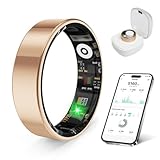
- 【Check the Size Before Purchase】 Before buying the prxxhri Smart Ring, we strongly suggest that you refer to the size chart and carefully measure the circumference of your finger. This will ensure you get the most comfortable wearing experience and easily avoid any unnecessary returns or exchanges.
- 【Real-time Accurate Sleep & Fitness Monitoring】 prxxhri smart ring tracks your sleep quality and daily activities in real time. With advanced sensors, it provides precise data about your sleep cycle, helping you optimize rest and recovery. Whether you are tracking steps, calories or exercise performance, this smart ring can provide you with the most accurate insights to support your fitness goals and enhance your overall health.It is a good choice for family and friends.
- Health Monitoring】The prxxhri ring features advanced 4.0 sensors that automatically measure your heart rate, and blood pressure every 30 min when worn. It provides continuous health tracking and comprehensive wellness management all day.
- 【3-5 Day Battery Life】 With a 3-5 day battery life, the prxxhri smart ring ensures continuous health monitoring without frequent charging. When used with the smart charging case, the usage time can even exceed 20 days. Whether you are tracking sleep patterns or fitness activities, you can count on long-lasting performance without constant interruptions.
- 【80-meter Waterproof, Suitable for Various Scenarios】 The prxxhri Smart Ring has excellent waterproof performance, with a waterproof depth of up to 80 meters. Whether it's for daily wear, an intense workout session or a pleasant swimming time, it can handle it with ease. What's more, even if you have sensitive skin, you can still enjoy an extremely comfortable wearing experience when wearing this ring.
Ultrahuman Ring Air, by contrast, positions itself as an active metabolic and performance companion. It emphasizes circadian rhythm alignment, activity timing, and energy management, with insights designed to influence behavior throughout the day rather than only in the morning summary.
Why this comparison goes beyond specs
Battery life, sensor count, and materials matter, but they do not tell you how a ring feels during sleep, how reliable the data is during restless nights or intense training blocks, or whether the app experience motivates consistency. This is especially important for rings, where comfort, sizing accuracy, and subtle design details can determine whether you wear it 24/7 or abandon it after a few weeks.
We will examine how each ring handles real-world wearability, including thickness, edge finishing, weight distribution, and how they hold up against water exposure, workouts, and long-term skin contact. These factors quietly shape data quality just as much as sensor hardware.
How to think about value and ecosystem fit
Price alone does not define value in smart rings. Oura’s subscription model changes the long-term cost equation but also funds one of the most mature health analytics platforms available. Ultrahuman’s subscription-free approach lowers ownership cost but places more emphasis on whether its current feature set aligns with your goals today.
Equally important is how each ring fits into your broader ecosystem, whether you already use a smartwatch, rely on Apple Health or Google Fit, or care about integrations with training platforms and nutrition data. Understanding these trade-offs upfront is the difference between buying the best ring on paper and buying the right ring for your lifestyle.
Hardware, Materials, and Comfort: Ring Design, Thickness, Weight, and Daily Wearability
Because smart rings are worn continuously, hardware decisions matter more here than on almost any other wearable. Subtle differences in thickness, edge geometry, and weight distribution can influence sleep comfort, workout tolerance, and whether the ring fades into the background or constantly reminds you it is there.
Both Oura Ring and Ultrahuman Ring Air aim for all-day, all-night wear, but they take slightly different approaches in how they balance durability, sensor housing, and physical presence on the finger.
Materials and Build Quality
Oura Ring (Gen 3) uses a titanium outer shell with a non-metallic inner lining designed to sit flush against the skin. The exterior finish varies by color option, but the underlying construction prioritizes scratch resistance and long-term structural integrity.
Ultrahuman Ring Air is also built from aerospace-grade titanium, with a strong emphasis on minimizing mass without compromising rigidity. Its inner surface uses a skin-safe resin coating that feels smoother and slightly warmer on contact, particularly noticeable during cold-weather wear.
In hand, both rings feel premium, but Oura leans more toward a jewelry-like finish, while Ultrahuman’s aesthetic feels more technical and performance-oriented.
Thickness, Profile, and Sensor Housing
Oura Ring Gen 3 measures approximately 2.55 mm in thickness, with a flattened top section that houses its sensor array. This creates a subtle “top-heavy” profile that can be felt during gripping motions or when pressure is applied to the hand, such as during sleep with hands tucked under a pillow.
Ultrahuman Ring Air is slightly thinner at roughly 2.45 mm and maintains a more uniform circular profile around the finger. The smoother contour reduces pressure points and makes it less noticeable during finger flexion and extension.
In practical terms, the Ultrahuman Ring Air tends to disappear more easily during long wear sessions, while Oura’s profile is still comfortable but more perceptible during certain movements.
Weight and Finger Fatigue
Weight is one of the most underappreciated factors in ring comfort. Oura Ring Gen 3 typically weighs between 4 and 6 grams depending on size, which is light compared to watches but still noticeable on smaller fingers.
Ultrahuman Ring Air is significantly lighter, ranging from roughly 2.4 to 3.6 grams. This lower mass reduces finger fatigue during typing, sleep, and endurance activities where micro-movements add up over time.
For users sensitive to asymmetry or who plan to wear the ring alongside a traditional watch, Ultrahuman’s lighter build offers a tangible comfort advantage.
Edge Design and Daily Interaction
Oura’s edges are gently rounded but retain a slightly squared-off feel near the sensor bump. This can occasionally catch on pockets or gym equipment, especially for users who wear the ring on the index finger.
Ultrahuman Ring Air uses more aggressively chamfered edges and a continuous curve, which slides more easily against fabrics and skin. During daily tasks like lifting weights, opening jars, or gripping handlebars, it feels less intrusive.
Neither ring is ideal for heavy barbell training, but Ultrahuman’s shape and lower profile make it marginally more workout-friendly.
Comfort During Sleep and Long-Term Skin Contact
Sleep comfort is where differences become most apparent over time. Oura’s inner lining is smooth and stable, but the slightly heavier feel can be noticeable for light sleepers or those who change positions frequently.
Ultrahuman Ring Air excels here due to its lighter weight and even pressure distribution. Users who are sensitive to finger accessories during sleep often adapt more quickly to the Ultrahuman.
Both rings are designed for continuous skin contact, and neither showed consistent issues with irritation when properly sized, though fit accuracy is critical for both.
Water Resistance and Durability in Real Life
Both Oura Ring and Ultrahuman Ring Air are rated for water resistance up to 100 meters. This makes them safe for showering, swimming, and exposure to sweat without special precautions.
In long-term wear, Oura’s finishes tend to show micro-scratches sooner, especially in darker colorways, while Ultrahuman’s coating does a better job masking cosmetic wear. Structurally, both rings hold up well to daily abuse, but neither is immune to cosmetic damage from metal-on-metal contact.
Durability here is less about failure and more about how well the ring maintains its appearance over months of constant use.
Sizing, Fit Accuracy, and Wear Consistency
Both companies provide sizing kits, and using them is non-negotiable for reliable data and comfort. Oura’s sizing tends to be slightly more forgiving due to its internal shape, while Ultrahuman requires a closer fit to ensure consistent sensor contact.
A well-sized ring from either brand should feel snug without restricting circulation, remain stable during hand movement, and not rotate excessively. When sizing is correct, both rings support true 24/7 wear, but Ultrahuman’s lighter and thinner design makes that consistency easier to maintain for more users.
These physical design choices ultimately influence not just comfort, but data reliability, since poor fit or intermittent wear directly impacts sensor accuracy and long-term insights.
Sensors and Health Tracking Accuracy: HR, HRV, SpO₂, Skin Temperature, and Motion Data
All the comfort and fit considerations above ultimately matter for one reason: sensor stability. Smart rings live or die by how consistently their optical and motion sensors maintain contact with the finger, and this is where Oura Ring and Ultrahuman Ring Air begin to diverge in philosophy as much as execution.
Both devices rely on multi-wavelength photoplethysmography, temperature sensors, and inertial motion tracking, but they prioritize different time windows, sampling strategies, and downstream interpretation of that data.
Heart Rate Tracking: Resting Precision vs All-Day Context
Oura Ring has long been optimized for resting and sleep-based heart rate accuracy. Its optical array, combining green and infrared LEDs, samples heart rate frequently during sleep and periods of inactivity, producing exceptionally stable resting heart rate trends across nights.
In practice, Oura’s nightly heart rate curves are smooth, consistent, and resilient to minor movement. This makes it particularly strong for identifying baseline shifts tied to illness, overreaching, or recovery debt rather than moment-to-moment exertion.
Ultrahuman Ring Air takes a broader approach by emphasizing continuous heart rate tracking throughout the day. While its resting heart rate accuracy during sleep is comparable, its daytime data provides more granularity around stress, light activity, and metabolic fluctuations.
During higher-intensity movement, neither ring rivals a chest strap or a well-fitted smartwatch. However, Ultrahuman’s more aggressive daytime sampling gives it an edge for users who want contextual heart rate insight beyond sleep alone.
HRV Measurement: Stability vs Responsiveness
Heart rate variability is where methodological differences become especially clear. Oura primarily measures HRV during sleep, focusing on periods of low movement and parasympathetic dominance to minimize noise.
This approach produces highly stable HRV baselines over time, which is why Oura’s Readiness trends tend to feel conservative but trustworthy. Night-to-night variability reflects true physiological changes rather than daily behavioral noise.
Ultrahuman also prioritizes sleep-based HRV but layers in additional interpretive context tied to circadian rhythm and daytime stress exposure. The raw HRV values themselves are broadly comparable when conditions are controlled, but Ultrahuman’s platform reacts more quickly to short-term stressors.
For biohackers or athletes who want to see how late meals, travel, or training load affect recovery within 24 hours, Ultrahuman’s responsiveness can feel more informative. For users who value long-term trend fidelity over sensitivity, Oura remains the steadier reference.
SpO₂ Tracking: Nighttime Screening, Not Medical Diagnostics
Both rings offer overnight blood oxygen saturation monitoring using red and infrared light, and both restrict SpO₂ sampling primarily to sleep to preserve battery life and improve signal quality.
Oura’s SpO₂ reporting is conservative and trend-focused. It excels at highlighting consistent drops or increased variability over time rather than flagging single-night anomalies, which reduces false alarms but may feel understated.
Ultrahuman’s SpO₂ presentation is slightly more granular, often tying oxygen saturation changes to sleep stages, respiratory patterns, or recovery scores. In real-world use, average saturation values align closely between the two when fit is correct.
Rank #2

- ACCURATE SIZING ESSENTIAL - Oura Ring 4 uses unique sizing different from standard jewelry rings; use the Oura Ring 4 Sizing Kit to find your perfect fit before purchasing
- OURA MEMBERSHIP - First month of membership is included with purchase, for new members only. Subscription is 5.99/mo afterwards. Or opt for the annual prepaid option for 69.99. Membership is tied to your account via the Oura App, not your physical ring
- ACCURACY - SMART SENSING - Oura tracks over 50 health metrics, including sleep, activity, stress, heart health, and women’s health metrics. Oura Ring 4 is powered by Smart Sensing, which adapts to you — delivering accurate, continuous data, day and night
- LONG LASTING BATTERY - With up to 8 days of battery life, no screens and no vibrations, Oura Ring 4 allows you to focus on the present. From a workout to a night out — you’re free to forget it’s on. Until you start getting compliments
- HSA/FSA ELIGIBLE - We can accept HSA or FSA funds for the following: Oura Ring, additional chargers, and shipping
Neither device should be viewed as a diagnostic tool for sleep apnea, but both are effective at raising early awareness of potential breathing-related sleep disturbances when trends deviate from baseline.
Skin Temperature: Detecting Subtle Physiological Shifts
Skin temperature sensing is one of the quiet strengths of both platforms. Each ring uses a dedicated temperature sensor to track nightly deviations from personal baseline rather than absolute temperature values.
Oura’s temperature trends are particularly well-integrated into its readiness and illness detection logic. Small sustained elevations are often reflected quickly in recovery scores, even before subjective symptoms appear.
Ultrahuman treats temperature as part of a broader metabolic and circadian picture. Its insights frequently link temperature shifts to late eating, travel, or training stress, which appeals to users actively experimenting with lifestyle variables.
Accuracy here is less about raw precision and more about consistency. With proper sizing, both rings deliver reliable, repeatable temperature deviation data that is genuinely actionable over time.
Motion Data and Sleep Stage Detection
Both rings use multi-axis accelerometers to detect movement, posture changes, and micro-awakenings during sleep. Oura’s sleep staging has matured over multiple hardware generations and remains one of the most refined among non-EEG consumer wearables.
Sleep onset, wake time, and restlessness are generally accurate, with fewer false awakenings compared to earlier smart ring competitors. This stability contributes to Oura’s reputation for dependable long-term sleep trend analysis.
Ultrahuman’s sleep tracking has improved rapidly and performs well for total sleep time and efficiency. Its staging can be slightly more sensitive to movement, which may overestimate light sleep in restless sleepers but also captures fragmentation more aggressively.
For users focused on recovery optimization, both rings provide sufficient motion fidelity to support meaningful insights. Differences are more about interpretation and presentation than raw sensor capability.
Sensor Reliability Over Long-Term Wear
Over months of continuous use, Oura’s strength lies in data continuity. Its algorithms smooth out occasional sensor dropouts, producing clean longitudinal charts that are ideal for tracking slow physiological change.
Ultrahuman’s lighter hardware and tighter fit requirements mean that accuracy is more dependent on sizing discipline. When fit is optimal, its sensor data is robust; when fit is marginal, daytime readings are more likely to show gaps.
Neither ring is immune to signal degradation from cold hands, dehydration, or extreme motion. However, in stable daily use, both deliver sensor accuracy that exceeds what most users expect from a device worn on the finger.
The real distinction is not whether the data is accurate, but how each platform chooses to interpret and prioritize that accuracy for different types of users and goals.
Sleep Tracking Face-Off: Stages, Sleep Scores, Consistency, and Overnight Insights
Building on sensor fidelity and motion interpretation, the real differentiation appears once raw data is translated into sleep stages, scores, and nightly narratives. This is where Oura and Ultrahuman reveal very different philosophies about what “good sleep tracking” actually means.
Sleep Stage Modeling and Granularity
Oura uses a five-stage sleep model: awake, light, deep, REM, and latency, derived from heart rate variability, temperature deviation, respiratory rate, and movement. Its staging tends to favor stability over sensitivity, smoothing brief disturbances into broader sleep phases rather than fragmenting the night.
In practical terms, this means Oura often reports longer, more consolidated deep and REM blocks. For users who value trend consistency over night-to-night volatility, this approach makes longitudinal comparisons far more reliable.
Ultrahuman Ring Air uses a more reactive staging model that leans heavily on movement and heart rate shifts. Light sleep and awakenings are more frequently detected, especially in users who toss, turn, or sleep lightly.
This can make Ultrahuman feel more “honest” on restless nights, but it also introduces variability that can complicate long-term comparisons. Athletes and biohackers who want to see every disruption may prefer this transparency, while others may find it overly noisy.
Sleep Scores: Readiness vs Performance Framing
Oura’s Sleep Score is one of the most refined composite metrics in consumer wearables. It blends duration, efficiency, timing, restfulness, REM, deep sleep, and physiological signals into a single number that rarely swings without cause.
Because the score is tightly anchored to personal baselines, it excels at answering one question: how well did you sleep relative to yourself? This makes it especially valuable for users managing chronic sleep debt, stress, or lifestyle changes.
Ultrahuman’s sleep scoring is framed more through a performance and recovery lens. Scores respond quickly to late nights, alcohol, intense training, and circadian disruption, sometimes more sharply than Oura’s.
That responsiveness can be motivating for users actively manipulating sleep variables. The trade-off is that short-term experimentation can produce wider score fluctuations that feel less forgiving, particularly during irregular schedules.
Consistency and Long-Term Sleep Trends
Consistency is where Oura quietly excels. Its nightly data rolls up into weekly, monthly, and seasonal views that remain coherent even when individual nights are imperfect.
Because Oura de-emphasizes outliers, trend lines for sleep duration, REM percentage, and efficiency are easier to interpret over long periods. This makes it a strong tool for identifying slow improvements or regressions tied to behavior changes.
Ultrahuman’s trend views are more granular and dynamic. Variability is preserved rather than smoothed, which can highlight patterns like midweek sleep debt or post-training sleep disruption with greater clarity.
For analytically minded users, this offers more raw material. For others, it can feel like too much information without enough contextual filtering.
Overnight Insights and Morning Feedback
Oura’s overnight insights prioritize clarity and restraint. Morning summaries focus on what changed, why it likely happened, and how it affects readiness for the day ahead.
The language is calm and advisory rather than prescriptive, which suits users who want guidance without anxiety. Over time, these insights build a narrative that feels cohesive rather than reactive.
Ultrahuman delivers denser overnight feedback, often tying sleep outcomes directly to training load, recovery status, and metabolic context. The app encourages experimentation, offering more direct cause-and-effect framing.
This approach resonates with users actively optimizing performance or following structured protocols. It can, however, feel intense for those seeking a more passive, wellness-oriented sleep companion.
Naps, Irregular Sleep, and Real-World Use
Oura automatically detects naps and integrates them into total sleep and readiness calculations with minimal user input. Short daytime sleep rarely destabilizes nightly trends, reinforcing Oura’s bias toward long-term equilibrium.
Ultrahuman also detects naps but treats them more explicitly as recovery events. In users with split sleep schedules or shift work, this can provide more detailed accounting, though it may complicate daily score interpretation.
In real-world wear, both rings remain comfortable enough for overnight use, with Ultrahuman’s lighter weight favoring sensitive sleepers and Oura’s smoother inner finish excelling during long, uninterrupted nights. The difference is not comfort, but how much attention each platform demands once you wake up.
Recovery, Readiness, and Stress Metrics: How Each Ring Interprets Your Body’s Signals
Building on how each platform handles sleep variability and overnight feedback, recovery and readiness are where their philosophies become unmistakably different. Both rings draw from similar physiological inputs, but they translate those signals into guidance using very different mental models.
The Physiological Inputs Beneath the Scores
At the sensor level, Oura and Ultrahuman Ring Air rely on overlapping fundamentals: overnight heart rate, heart rate variability, respiratory rate, skin temperature deviation, and movement. Both rings also factor in prior activity and recent sleep debt to contextualize recovery.
Where they diverge is not data collection, but how aggressively that data is interpreted. Oura applies heavier normalization across multi-day baselines, while Ultrahuman preserves more day-to-day volatility in its recovery logic.
In practice, this means Oura is less likely to overreact to a single hard workout or poor night of sleep. Ultrahuman, by contrast, is more willing to flag acute strain even if longer-term trends remain positive.
Readiness vs Recovery: Different Framing, Different Psychology
Oura’s Readiness Score is deliberately conservative. It reflects a blend of sleep quality, HRV balance, resting heart rate trends, temperature deviations, and recent activity load, weighted to promote sustainable behavior over time.
The score is paired with plain-language contributors like “HRV balance” or “recovery index,” helping users understand what moved the needle without feeling judged. This approach aligns well with users who want to maintain consistency rather than chase daily optimization.
Ultrahuman frames recovery as a more tactical metric. Its Recovery Score responds faster to physiological stressors, particularly changes in HRV and resting heart rate relative to short-term baselines.
For athletes or users training with intent, this responsiveness can feel more honest. The downside is that recovery scores can fluctuate sharply, especially during high-volume training blocks or travel-heavy weeks.
Rank #3

- ACCURATE SIZING ESSENTIAL - Oura Ring 4 uses unique sizing different from standard jewelry rings; use the Oura Ring 4 Sizing Kit to find your perfect fit before purchasing
- OURA MEMBERSHIP - First month of membership is included with purchase, for new members only. Subscription is 5.99/mo afterwards. Or opt for the annual prepaid option for 69.99. Membership is tied to your account via the Oura App, not your physical ring
- ACCURACY - SMART SENSING - Oura tracks over 50 health metrics, including sleep, activity, stress, heart health, and women’s health metrics. Oura Ring 4 is powered by Smart Sensing, which adapts to you — delivering accurate, continuous data, day and night
- LONG LASTING BATTERY - With up to 8 days of battery life, no screens and no vibrations, Oura Ring 4 allows you to focus on the present. From a workout to a night out — you’re free to forget it’s on. Until you start getting compliments
- HSA/FSA ELIGIBLE - We can accept HSA or FSA funds for the following: Oura Ring, additional chargers, and shipping
Stress Tracking: Passive Awareness vs Active Interpretation
Oura treats stress primarily as a background signal. Daytime stress is inferred from heart rate, HRV suppression, and movement patterns, but it is presented as a trend rather than a moment-to-moment alarm.
This passive framing encourages reflection without demanding constant intervention. It works best for users who value mental health awareness but do not want their ring dictating behavioral changes throughout the day.
Ultrahuman’s stress tracking is more assertive. Stress states are surfaced clearly and often linked to metabolic or training context, especially when paired with workouts or prolonged inactivity.
The app nudges users to interpret stress as something to manage actively, whether through movement, breathing, or recovery strategies. This can be empowering, but it requires a higher level of engagement and self-regulation.
Training Load, Adaptation, and Recovery Debt
Oura incorporates activity into readiness, but it avoids explicit training load terminology. Even when paired with frequent workouts, the system emphasizes balance rather than progression, making it compatible with unstructured fitness routines.
This makes Oura forgiving for smartwatch owners who already track workouts elsewhere and simply want a recovery lens layered on top. The ring rarely conflicts with external training plans because it does not try to own them.
Ultrahuman leans more directly into training adaptation. Recovery is positioned as a limiter or enabler of performance, and the app encourages users to adjust intensity based on physiological feedback.
For users following structured programs or experimenting with biohacking protocols, this tighter coupling between strain and recovery can feel more actionable. It can also feel restrictive if your lifestyle does not allow frequent adjustment.
Long-Term Signal Stability vs Short-Term Precision
Over weeks and months, Oura excels at pattern recognition. Its readiness trends smooth out noise and make it easier to spot slow-building fatigue, seasonal changes, or lifestyle-driven improvements.
Ultrahuman prioritizes precision in the near term. It is better at highlighting when something is off right now, even if that deviation resolves quickly.
Neither approach is inherently superior, but they serve different personalities. Oura rewards patience and consistency, while Ultrahuman rewards attention and experimentation.
How This Feels in Daily Wear
From a hardware perspective, both rings remain unobtrusive during recovery tracking, with no haptic interruptions or intrusive alerts. Battery life plays a subtle role here, as Oura’s longer endurance reduces the chance of missing recovery data due to charging lapses.
Ultrahuman’s lighter profile makes it easy to forget during intense training phases, but its more data-dense app experience ensures you remember it once you open the dashboard. The recovery conversation continues long after the ring comes off the charger.
Ultimately, recovery, readiness, and stress are less about absolute accuracy and more about interpretation. Oura acts like a steady advisor, while Ultrahuman behaves more like a performance coach, and that difference shapes how each ring fits into real lives.
Activity and Movement Tracking: Steps, Workouts, Calories, and Limitations vs Smartwatches
After recovery and readiness, activity tracking is where expectations often collide with reality for first-time smart ring buyers. Both Oura Ring and Ultrahuman Ring Air measure movement continuously, but neither is designed to replace a dedicated sports watch.
Instead, activity sits downstream of recovery in their philosophies. Movement is contextual data, not the primary goal.
Step Counting and Daily Movement
Both rings track steps using accelerometer-based motion analysis, and in day-to-day walking they are broadly comparable. Over long periods, trends matter more than daily totals, and both platforms are good at showing whether you are generally moving more or less week to week.
Oura tends to smooth step counts and occasionally undercount short, fragmented movement like pacing or household tasks. This aligns with its bias toward consistency rather than chasing exact daily numbers.
Ultrahuman is slightly more aggressive in crediting movement, particularly during active workdays or frequent transitions. That can feel more motivating, but it also increases the chance of overcounting during non-walking hand motion.
Activity Goals and Movement Scoring
Oura frames activity through a daily activity score that blends steps, active calories, and recovery context. On low-readiness days, the ring intentionally lowers activity targets to reduce strain, reinforcing its recovery-first identity.
Ultrahuman uses movement as part of a broader metabolic and performance model. Activity targets remain more stable, and the app emphasizes how movement interacts with glucose trends, fatigue, and training load.
This difference matters psychologically. Oura gives permission to rest, while Ultrahuman nudges you to move with intent.
Workout Tracking: What Rings Can and Cannot Do
Neither ring has onboard GPS, which immediately separates them from smartwatches for outdoor training. Distance, pace, and route data rely on phone-based tracking when available, and even then remain secondary metrics.
Oura supports workout logging and automatic activity detection for common activities like walking, running, and cycling. Heart rate during workouts is captured, but the experience is more passive than interactive.
Ultrahuman places more emphasis on structured workouts, offering dedicated workout modes and clearer post-session summaries. It feels closer to a lightweight training log, though still without the real-time feedback athletes expect from wrist-based devices.
Heart Rate During Exercise
Finger-based optical heart rate sensing has advantages for resting and sleep data, but it is less stable during high-intensity or arm-dominant workouts. Both rings perform best during steady-state cardio and struggle more with intervals, strength training, or sports involving gripping.
Oura’s heart rate data during exercise is best interpreted as directional rather than precise. It works well for effort categorization but not for heart rate zone training.
Ultrahuman attempts more granular interpretation during workouts, but the underlying hardware limitations remain. Neither ring should be used as a primary heart rate tool for serious training.
Calorie Estimates and Energy Expenditure
Calorie tracking is one of the most misunderstood features of smart rings. Both platforms estimate energy expenditure using movement, heart rate, and personal profile data, but the margin of error is significant.
Oura’s calorie estimates are conservative and tightly coupled to readiness. On fatigued days, it intentionally avoids rewarding high burn numbers.
Ultrahuman presents calorie data more prominently, often linking it to metabolic health and fueling decisions. This can be useful for awareness, but it should not be treated as a precise intake guide.
Strength Training and Non-Step Activities
Like most wearables without dedicated motion classification for lifting, both rings struggle with strength training. Reps, sets, load, and muscular strain are not directly measured.
Oura typically logs these sessions as low-step activities with modest calorie burn unless heart rate rises significantly. Ultrahuman is slightly better at recognizing sustained effort, but neither replaces a workout-specific tracker or app.
For athletes who prioritize gym work, rings function better as recovery monitors than training recorders.
Comfort, Wearability, and Real-World Movement
During activity, comfort becomes part of tracking quality. Oura’s slightly thicker profile is noticeable during gripping movements like kettlebells or pull-ups, though the smooth interior helps reduce pressure points.
Ultrahuman Ring Air’s lighter weight and slimmer feel make it easier to forget during workouts, especially for users with smaller hands. The tradeoff is that lighter mass can amplify motion artifacts during fast movements.
Neither ring is ideal for contact sports, and removing the ring during high-risk activities is still advisable.
How This Compares to Smartwatches
Compared to smartwatches, both rings are limited in immediacy and detail. There are no live pace alerts, no on-device coaching, and no glanceable screens during workouts.
Where rings win is continuity. They capture movement without asking you to start or stop sessions and integrate that data directly into recovery and readiness models.
For smartwatch owners, the ring works best as a complementary device. Let the watch handle training execution, and let the ring interpret how that training affects your body over time.
Who Activity Tracking Is Really For
If your primary goal is optimizing training performance, neither ring should be your only activity tracker. They lack the precision and real-time control that athletes depend on.
Rank #4
- ACCURATE SIZING ESSENTIAL - Oura Ring 4 uses unique sizing different from standard jewelry rings; use the Oura Ring 4 Sizing Kit to find your perfect fit before purchasing
- OURA MEMBERSHIP - First month of membership is included with purchase, for new members only. Subscription is 5.99/mo afterwards. Or opt for the annual prepaid option for 69.99. Membership is tied to your account via the Oura App, not your physical ring
- ACCURACY - SMART SENSING - Oura tracks over 50 health metrics, including sleep, activity, stress, heart health, and women’s health metrics. Oura Ring 4 is powered by Smart Sensing, which adapts to you — delivering accurate, continuous data, day and night
- LONG LASTING BATTERY - With up to 8 days of battery life, no screens and no vibrations, Oura Ring 4 allows you to focus on the present. From a workout to a night out — you’re free to forget it’s on. Until you start getting compliments
- HSA/FSA ELIGIBLE - We can accept HSA or FSA funds for the following: Oura Ring, additional chargers, and shipping
If your goal is understanding how much you move, how that movement impacts recovery, and when to push or pull back, both rings deliver value. Oura does this with restraint and long-term context, while Ultrahuman does it with immediacy and metabolic framing.
Activity tracking is not where these rings dominate, but it is where their philosophies become impossible to ignore.
Battery Life, Charging, and Long-Term Durability in Real-World Use
All-day continuity only works if the ring stays on your finger, and that ultimately comes down to how often you have to take it off. After activity tracking philosophy, battery behavior is the next place where Oura and Ultrahuman quietly reveal their priorities.
Advertised Battery Life vs What You Actually Get
Oura Ring typically delivers five to seven days on a full charge in real-world use, assuming continuous sleep tracking, daily activity detection, and standard background measurements. Users who enable frequent blood oxygen sampling or who move frequently throughout the day will land closer to the lower end of that range.
Ultrahuman Ring Air usually runs four to six days under similar conditions, with variability depending on how aggressively you engage metabolic features and daytime insights. Its more frequent daytime sensing can nibble away at battery faster, especially during high-movement days.
Neither ring consistently hits its maximum claims unless usage is conservative. In practice, both settle into a weekly or twice-weekly charging rhythm, which is manageable but not invisible.
Ring Size, Sensor Density, and Battery Tradeoffs
Smaller ring sizes shorten battery life on both platforms due to reduced internal volume. This matters more than many buyers expect, especially for users with smaller hands who are already drawn to smart rings for comfort.
Oura has a slight edge here because its firmware prioritizes overnight data capture over daytime intensity when battery dips. Ultrahuman tends to preserve feature availability more evenly, even if that means charging a bit more often.
For buyers choosing between sizes, battery life should be part of the sizing decision, not an afterthought.
Charging Experience and Day-to-Day Friction
Oura uses a compact, size-specific charging puck that holds the ring securely and aligns cleanly every time. A full charge takes roughly 80 minutes, and topping up for 20 to 30 minutes is usually enough to get through another night.
Ultrahuman Ring Air uses a magnetic dock with a lighter, more minimal feel. Charging times are comparable, often slightly faster from near-empty, but alignment can be more sensitive depending on surface and cable tension.
Neither ring supports fast charging in the way smartwatches do, but both make opportunistic charging easy. Most long-term users end up charging during showers or desk time rather than planning around it.
Battery Degradation Over Months and Years
Lithium-ion degradation is unavoidable in a sealed ring, and both companies acknowledge this quietly through expected lifespan guidance. After 18 to 24 months, most users report modest but noticeable reductions in time between charges.
Oura’s longer history shows predictable decline rather than sudden drops, which aligns with conservative power management. Ultrahuman’s newer hardware appears stable so far, but long-term data is still accumulating.
Neither ring offers user-replaceable batteries, so longevity becomes part of the cost-of-ownership equation rather than a simple spec comparison.
Materials, Water Resistance, and Daily Abuse
Both rings use titanium shells with matte finishes designed to minimize visible scratching. In reality, micro-abrasions are inevitable within weeks, especially for users who lift weights, work with tools, or wear the ring continuously.
Oura and Ultrahuman are both rated for water exposure up to 100 meters, making them safe for swimming, showering, and daily washing. Chlorine and saltwater have not shown systemic issues, but cosmetic wear accelerates with frequent exposure.
The slimmer profile of Ultrahuman Ring Air slightly reduces edge contact with surfaces, while Oura’s thicker build distributes impacts more evenly. Neither is immune to cosmetic aging, but structural failures remain rare.
Long-Term Wearability and Reliability
Over months of wear, comfort and durability intersect. Oura’s added thickness can feel more present but also provides a sense of solidity during knocks and pressure events.
Ultrahuman’s lighter mass fades into the background more easily, though some users report being more cautious during manual tasks. That awareness can indirectly extend cosmetic life but adds mental overhead.
In long-term testing, both rings hold up well mechanically. The bigger differentiator is how their battery strategies align with your tolerance for charging and your expectation of device lifespan.
Battery life will not sell either ring on its own, but it will quietly shape your experience every single week you own one.
App Experience and Data Interpretation: Coaching, Trends, Insights, and Ease of Use
After months of wear, the ring itself fades into the background, and the app becomes the product you actually interact with every day. This is where Oura and Ultrahuman diverge most clearly, not in raw data collection, but in how that data is framed, explained, and acted upon.
Both platforms surface sleep, recovery, activity, and cardiovascular signals from similar sensor inputs. The difference lies in whether the app feels like a coach guiding decisions or a dashboard presenting information for you to interpret.
Oura App: Polished Coaching and Behavioral Context
Oura’s app is built around interpretation first and metrics second. Readiness, Sleep, and Activity scores act as gateways, pulling multiple signals into a single narrative that reduces cognitive load for daily check-ins.
Instead of exposing every variable equally, Oura prioritizes trend-aware insights. HRV, resting heart rate, respiratory rate, and temperature deviation are shown with clear baselines and historical context, making it easy to understand whether today is meaningfully different from your norm.
Coaching prompts are conservative and behaviorally grounded. Suggestions around sleep timing, rest days, or winding down routines are rarely aggressive, which makes them easier to follow over the long term but occasionally frustrating for users seeking sharper performance-oriented direction.
Sleep analysis remains Oura’s strongest pillar. Stage breakdowns, latency, efficiency, and chronotype modeling are paired with long-term graphs that reveal seasonal and lifestyle patterns rather than just night-to-night variability.
For most users, the app feels calm, stable, and predictable. It excels at answering “How am I doing overall?” rather than “How hard can I push today?”
Ultrahuman App: Metric Density and Performance Emphasis
Ultrahuman’s app takes the opposite approach, surfacing more data sooner and trusting the user to engage with it. Recovery, sleep, and activity metrics are tightly integrated with metabolic and stress-related signals, creating a more performance-driven environment.
The Recovery Score pulls heavily from HRV trends, sleep quality, and resting heart rate, but Ultrahuman exposes the underlying contributors more transparently. Users can drill down quickly without navigating multiple layers of interpretation.
Ultrahuman’s strength lies in longitudinal analytics. Week-over-week and month-over-month trend views are easier to access, which appeals to users tracking training blocks, lifestyle experiments, or biohacking protocols.
Sleep insights are detailed but less narrative-driven. You receive the data clearly, but the app often stops short of telling you what to do next unless you actively explore recommendations or pair the ring with Ultrahuman’s broader metabolic ecosystem.
For analytically minded users, the app feels empowering. For others, it can feel busy, especially in the first few weeks of use.
Trends, Baselines, and Long-Term Signal Clarity
Both apps rely on personal baselines rather than population averages, which is critical for HRV, temperature, and recovery interpretation. Oura tends to wait longer before making strong claims, smoothing out noise but sometimes delaying actionable feedback.
Ultrahuman adapts faster to changes, which can be motivating during training phases but may amplify short-term fluctuations. Users sensitive to daily score swings may find this mentally taxing, while others appreciate the responsiveness.
Over months, Oura’s trend graphs emphasize stability and directionality. Ultrahuman’s visuals emphasize variability and range, which better suits users experimenting with sleep schedules, nutrition timing, or training intensity.
Neither approach is inherently superior. The right choice depends on whether you want your app to act as a filter or a microscope.
Ease of Use, Navigation, and Daily Habit Fit
Oura’s interface is cleaner and more linear. Most users develop a daily rhythm of checking Readiness in the morning and Sleep in the evening, with minimal friction.
Ultrahuman’s navigation is denser, with more tiles, charts, and cross-links. Power users will appreciate the depth, but casual users may ignore entire sections simply to avoid information overload.
Both apps sync reliably in the background and handle missed data gracefully. Firmware updates are infrequent and generally unobtrusive, with no meaningful difference in day-to-day stability.
💰 Best Value

- 【Check the Size Before Purchase】 Before buying the prxxhri Smart Ring, we strongly suggest that you refer to the size chart and carefully measure the circumference of your finger. This will ensure you get the most comfortable wearing experience and easily avoid any unnecessary returns or exchanges.
- 【Real-time Accurate Sleep & Fitness Monitoring】 prxxhri smart ring tracks your sleep quality and daily activities in real time. With advanced sensors, it provides precise data about your sleep cycle, helping you optimize rest and recovery. Whether you are tracking steps, calories or exercise performance, this smart ring can provide you with the most accurate insights to support your fitness goals and enhance your overall health.It is a good choice for family and friends.
- Health Monitoring】The prxxhri ring features advanced 4.0 sensors that automatically measure your heart rate, and blood pressure every 30 min when worn. It provides continuous health tracking and comprehensive wellness management all day.
- 【3-5 Day Battery Life】 With a 3-5 day battery life, the prxxhri smart ring ensures continuous health monitoring without frequent charging. When used with the smart charging case, the usage time can even exceed 20 days. Whether you are tracking sleep patterns or fitness activities, you can count on long-lasting performance without constant interruptions.
- 【80-meter Waterproof, Suitable for Various Scenarios】 The prxxhri Smart Ring has excellent waterproof performance, with a waterproof depth of up to 80 meters. Whether it's for daily wear, an intense workout session or a pleasant swimming time, it can handle it with ease. What's more, even if you have sensitive skin, you can still enjoy an extremely comfortable wearing experience when wearing this ring.
Coaching Tone and Psychological Impact
An underrated difference is how each app makes you feel. Oura’s coaching language is reassuring and forgiving, which reduces anxiety around poor nights of sleep or missed activity goals.
Ultrahuman’s tone is more neutral and data-forward. It avoids moralizing behavior but also offers less emotional cushioning, which can be either refreshing or intimidating depending on personality.
Over long-term use, this psychological framing matters as much as accuracy. A ring that quietly encourages consistency often outperforms one that overwhelms with insight, even if the latter is more technically detailed.
Subscription, Feature Access, and Value Perception
Oura’s app experience is gated behind a monthly subscription, and its best features lose much of their value without it. The upside is ongoing refinement, stable coaching quality, and consistent UX improvements.
Ultrahuman does not currently charge a subscription, which significantly changes the value equation. All core insights, trends, and analytics are accessible without recurring costs, making the app feel more transparent and user-owned.
This difference alone can outweigh stylistic preferences for many buyers. Over several years of ownership, app access costs can rival the price of the hardware itself.
App Experience Verdict: Who Each Platform Serves Best
Oura delivers a refined, approachable app that excels at long-term health awareness, sleep optimization, and habit formation. It is ideal for users who want guidance without micromanagement and prefer clarity over density.
Ultrahuman appeals to users who enjoy interpreting data, tracking experiments, and pushing performance variables. Its app rewards curiosity and consistency, especially for athletes and biohackers comfortable with self-directed insight.
Both apps are mature, stable, and accurate. The decision comes down to whether you want your ring to translate your health into gentle advice or hand you the raw materials and step aside.
Subscriptions, Pricing, and Overall Value: What You Pay Upfront and Over Time
The contrast in app philosophy naturally leads to cost structure, because how each company monetizes software directly affects long-term ownership. With smart rings, the sticker price is only part of the equation. The real question is how much value you extract after one, two, or three years of daily wear.
Upfront Hardware Pricing and What’s Included
Oura Ring Gen 3 typically retails between $299 and $349 depending on finish, with premium materials like brushed titanium commanding the higher end. The box includes the ring, a charging puck, and access to the app, but full functionality is time-limited without a subscription. A sizing kit is usually free, but replacement chargers and accessories are sold separately.
Ultrahuman Ring Air generally lands slightly higher at $349 to $399 depending on region and promotions. The ring is made from titanium with a matte or satin finish, and the package includes a compact USB-C charging dock. Like Oura, a sizing kit is part of the purchase flow, but there is no software tiering after setup.
From a pure hardware standpoint, neither ring feels overpriced relative to build quality, sensor density, and comfort. The pricing difference only becomes meaningful once software access over time is factored in.
Subscription Costs and Feature Lock-In
Oura requires an ongoing subscription of $5.99 per month or $69.99 per year to unlock readiness scores, sleep staging trends, long-term insights, and most coaching features. Without it, the ring still collects data, but the app experience is heavily reduced and largely limited to basic metrics. For most users, the subscription is not optional if the ring is to remain useful.
Ultrahuman currently operates with no subscription at all. Sleep, recovery, movement, HRV trends, and metabolic-adjacent insights are available in full without recurring fees. Software updates and new features have historically been included at no extra cost.
This single difference dramatically alters perceived ownership. With Oura, you are buying into an ecosystem; with Ultrahuman, you are buying a product.
Long-Term Cost of Ownership
Over three years, Oura’s subscription adds roughly $210 on top of the initial hardware purchase. When combined with a $300 to $350 ring, total ownership cost approaches or exceeds $550. That puts it closer to premium smartwatch territory despite having a narrower feature scope.
Ultrahuman’s long-term cost remains fixed at the initial purchase price unless you replace the ring. There are no hidden tiers, locked insights, or feature downgrades over time. For users who plan to wear a ring continuously for several years, this difference compounds quickly.
Battery longevity also plays into value. Both rings average four to seven days per charge depending on usage, but battery degradation over time can shorten that window, potentially leading to earlier replacement regardless of brand.
Warranty, Support, and Upgrade Considerations
Oura offers a standard one-year warranty, with extended coverage available in some regions. Software support is mature and reliable, but hardware upgrades typically mean buying a new ring at full price. There is no official battery replacement program for older rings.
Ultrahuman also provides a one-year warranty, with a reputation for responsive support and aggressive firmware updates. As a newer company, its long-term upgrade cadence is less predictable, but early adopters have benefited from frequent app improvements without added cost.
Neither brand currently offers a clear path for affordable battery servicing, which makes total cost of ownership partly dependent on how well the ring’s battery holds up over time.
Overall Value: Who Pays More and Who Gets More
Oura delivers strong value for users who appreciate polished coaching, behavioral guidance, and a highly stable software experience, even if it comes with a recurring fee. The subscription funds continuous refinement, and for many users, that ongoing evolution justifies the cost. It feels like a premium service layered on top of premium hardware.
Ultrahuman offers exceptional value for data-driven users who want full control without recurring charges. The absence of a subscription makes the Ring Air easier to justify financially, especially for athletes, experimenters, or smartwatch owners adding a ring as a secondary tracker. Over time, it is simply the less expensive ring to own.
The decision ultimately reflects how you value software. If guided interpretation and long-term polish matter more than total cost, Oura makes sense; if ownership and transparency matter more, Ultrahuman’s pricing model is hard to ignore.
Ecosystem Compatibility and Ideal User Profiles: Which Ring Makes Sense for You
After weighing hardware longevity, pricing models, and support, the deciding factor for many buyers comes down to how well each ring fits into an existing ecosystem. Smart rings rarely live in isolation; they coexist with smartphones, smartwatches, training platforms, and broader health goals. This is where Oura and Ultrahuman begin to diverge in philosophy more than in raw capability.
Smartphone Platforms and Health App Integration
Both rings support iOS and Android, but their depth of integration differs. Oura integrates tightly with Apple Health, syncing sleep stages, heart rate, HRV, temperature trends, and activity data reliably and with minimal lag. On Android, support is solid but slightly less central to the experience, reflecting Oura’s long-standing iOS-first development bias.
Ultrahuman also syncs with Apple Health and Google Health Connect, and it does so with more openness around raw data access. Metrics like HRV, sleep timing, skin temperature, and activity energy are easily shared downstream to other apps. For users building multi-app workflows, especially on Android, Ultrahuman feels more flexible and less opinionated.
Smartwatch Pairing: Ring as a Companion, Not a Replacement
Neither ring is designed to replace a smartwatch for real-time workouts, GPS tracking, or on-wrist interaction. Instead, they work best as passive, always-on sensors that complement devices like an Apple Watch, Garmin, or WHOOP-style tracker.
Oura pairs especially well with Apple Watch users who want to offload sleep, recovery, and readiness tracking to a lighter, more comfortable form factor. Many users wear their Apple Watch during the day and rely on the ring overnight, using Oura’s Readiness Score to contextualize Apple Watch activity and training load.
Ultrahuman integrates naturally into setups that already include Garmin, Polar, or COROS devices. Its emphasis on recovery metrics, metabolic health, and training-day readiness makes it appealing to athletes who already track workouts elsewhere and want deeper insight into how their body is responding over time.
Data Philosophy: Guided Insights vs User-Controlled Interpretation
Oura’s ecosystem is built around interpretation. The app prioritizes daily scores, trends, and behavioral nudges, translating complex biometrics into clear recommendations about sleep timing, training intensity, and recovery needs. For users who want answers rather than datasets, this approach reduces friction and decision fatigue.
Ultrahuman leans toward transparency and experimentation. While it provides readiness and recovery indicators, it places more emphasis on underlying metrics and contextual trends. Users are encouraged to interpret their data, test variables like meal timing or training volume, and draw their own conclusions over time.
Comfort, Wearability, and Lifestyle Fit
Both rings are compact and lightweight enough for 24/7 wear, but lifestyle differences matter. Oura’s rounded inner profile and refined finishes make it feel more like a traditional piece of jewelry, blending easily into professional or social settings. It is particularly well-suited to users who value discretion and comfort during sleep.
Ultrahuman Ring Air is thinner and lighter, with a flatter outer profile that appeals to performance-oriented users. It wears well during training, daily activity, and sleep, but its aesthetic is more utilitarian. Athletes and biohackers are less likely to care; fashion-conscious users may notice the difference.
Who Should Choose Oura Ring
Oura is the better choice for users who want a polished, low-effort health companion. If you value guided insights, consistent coaching, and a highly refined app experience, Oura’s ecosystem delivers that reliably. It fits especially well for Apple-centric users, smartwatch owners seeking better sleep and recovery tracking, and anyone who prefers interpretation over analysis.
The subscription makes the most sense if you engage with the app daily and treat it as an ongoing health service. For users focused on long-term wellness, stress management, and sleep optimization rather than performance experimentation, Oura remains the most approachable smart ring.
Who Should Choose Ultrahuman Ring Air
Ultrahuman is ideal for users who want ownership of their data without recurring fees. Athletes, fitness enthusiasts, and biohackers who already use training platforms or smartwatches will appreciate how easily the Ring Air slots into existing systems. The lack of a subscription lowers long-term cost and makes it easier to justify as a secondary tracker.
It is particularly compelling for users interested in recovery, metabolic health, and training readiness, and for Android users who want deeper integration flexibility. If you enjoy digging into trends and using wearables as tools rather than coaches, Ultrahuman’s ecosystem aligns well with that mindset.
Final Take: Ecosystem First, Hardware Second
At a hardware level, Oura Ring and Ultrahuman Ring Air are closer than their communities sometimes suggest. Battery life, comfort, and core sensor accuracy are broadly comparable. The real difference is how each brand expects you to interact with your data and how that data fits into the rest of your digital health stack.
Choose Oura if you want a refined, guided experience that works quietly in the background and tells you what matters most. Choose Ultrahuman if you want flexibility, control, and long-term value without a subscription. In the end, the best ring is the one that disappears into your life while making your health decisions clearer, not more complicated.