Most people don’t wake up sick. They wake up slightly off, a little warmer than usual, with a restless night of sleep and a body that’s quietly working harder than it should. Oura has built its entire platform around catching those subtle shifts before symptoms become obvious, and early illness detection is where that philosophy finally clicks into something immediately useful.
This rollout isn’t about turning the Oura Ring into a medical device or diagnosing disease. It’s about giving you a meaningful heads-up, grounded in your own long-term baseline, at a moment when small behavior changes can actually make a difference. Rest more, cancel that hard workout, hydrate, or simply pay attention instead of pushing through.
What follows explains why Oura is prioritizing illness detection now, how the ring knows something’s off before you do, and why this feature lands differently than similar promises from watches and fitness trackers.
A decade of baseline data is finally paying off
Oura’s biggest advantage isn’t a single sensor or algorithm, it’s historical context. The ring has been collecting nightly data on temperature deviation, resting heart rate, heart rate variability, and respiratory rate for years, building an unusually stable picture of what “normal” looks like for each individual wearer.
🏆 #1 Best Overall

- 【Check the Size Before Purchase】 Before buying the prxxhri Smart Ring, we strongly suggest that you refer to the size chart and carefully measure the circumference of your finger. This will ensure you get the most comfortable wearing experience and easily avoid any unnecessary returns or exchanges.
- 【Real-time Accurate Sleep & Fitness Monitoring】 prxxhri smart ring tracks your sleep quality and daily activities in real time. With advanced sensors, it provides precise data about your sleep cycle, helping you optimize rest and recovery. Whether you are tracking steps, calories or exercise performance, this smart ring can provide you with the most accurate insights to support your fitness goals and enhance your overall health.It is a good choice for family and friends.
- Health Monitoring】The prxxhri ring features advanced 4.0 sensors that automatically measure your heart rate, and blood pressure every 30 min when worn. It provides continuous health tracking and comprehensive wellness management all day.
- 【3-5 Day Battery Life】 With a 3-5 day battery life, the prxxhri smart ring ensures continuous health monitoring without frequent charging. When used with the smart charging case, the usage time can even exceed 20 days. Whether you are tracking sleep patterns or fitness activities, you can count on long-lasting performance without constant interruptions.
- 【80-meter Waterproof, Suitable for Various Scenarios】 The prxxhri Smart Ring has excellent waterproof performance, with a waterproof depth of up to 80 meters. Whether it's for daily wear, an intense workout session or a pleasant swimming time, it can handle it with ease. What's more, even if you have sensitive skin, you can still enjoy an extremely comfortable wearing experience when wearing this ring.
Because the ring is worn 24/7 and optimized for sleep, it captures these metrics in a low-noise state when your body isn’t influenced by movement, stress, caffeine, or exercise. That makes deviations more meaningful. A small temperature rise paired with suppressed HRV and an elevated resting heart rate overnight is far more telling than a single daytime spike on a wrist-worn device.
Early illness detection is essentially Oura saying it finally has enough longitudinal data, across millions of nights, to confidently flag when multiple systems drift out of sync in a pattern that strongly correlates with infection or immune stress.
Temperature deviation is the anchor metric, not the headline
While temperature deviation gets the most attention, Oura doesn’t treat it as a standalone signal. The ring measures skin temperature every minute during sleep, then compares that to your personal baseline rather than a population average.
What matters is how that change lines up with other markers. A mild temperature increase alongside rising respiratory rate often indicates the body is mounting an immune response. If that’s paired with a noticeable drop in HRV and a higher-than-normal resting heart rate, the confidence level increases significantly.
This multi-metric approach reduces false alarms. A warm bedroom or late-night alcohol might nudge temperature alone, but it won’t usually suppress HRV and elevate respiratory rate in the same way illness does. That’s where Oura’s software experience feels mature rather than reactive.
Why Oura is rolling this out now, not earlier
Consumer wearables have promised early sickness detection since the pandemic, but most struggled with consistency. Oura waited, quietly refining how these signals interact over time instead of pushing notifications that users would quickly learn to ignore.
The timing also reflects a broader shift in how people use wearables. Users aren’t just tracking workouts anymore, they’re managing recovery, burnout, sleep debt, and long-term resilience. Early illness detection fits directly into that mindset, especially as hybrid work and flexible schedules make proactive rest more realistic.
From a product standpoint, Oura’s current hardware is stable, comfortable, and unobtrusive enough that users actually wear it through the night, every night. Battery life of around a week means fewer gaps in data, which is essential when detecting gradual physiological changes instead of sudden events.
How actionable the alerts actually are
Oura doesn’t tell you that you are sick. It tells you that your body is under strain and behaving differently than usual, often one to three days before symptoms appear. That distinction matters.
In practice, the alert typically shows up as a message suggesting rest, lighter activity, and increased attention to sleep. It often coincides with a drop in your Readiness Score, reinforcing the recommendation without feeling alarmist.
For most users, the value isn’t clinical certainty, it’s timing. Knowing when to skip a hard workout or prioritize recovery can shorten illness duration or at least prevent digging a deeper hole. That’s a level of guidance many wrist-based wearables still struggle to deliver cleanly.
Why this matters compared to other wearables
Smartwatches like Apple Watch and Fitbit can surface elevated heart rate or temperature trends, but they often rely on daytime data influenced by movement and external stressors. Oura’s illness detection is built almost entirely around sleep, where the signal-to-noise ratio is dramatically better.
The ring’s lightweight titanium build, lack of a screen, and unobtrusive fit mean users rarely remove it overnight. That consistency is a quiet but decisive advantage. Without regular nighttime wear, early detection simply doesn’t work.
Oura is betting that users care less about flashy metrics and more about feeling better, sooner. Early illness detection isn’t a gimmick add-on, it’s a natural extension of a platform that treats sleep and recovery as the foundation of health, not the afterthought.
The Science Behind It: How Oura Rings Spot Illness Before You Feel Sick
What makes Oura’s illness detection feel different isn’t a single breakthrough metric, but how several subtle signals are combined and interpreted over time. The ring isn’t hunting for disease labels; it’s watching for deviations from your personal baseline that suggest your body is mounting a stress or immune response. Because those changes often start during sleep, Oura’s entire system is optimized around nighttime physiology.
Baseline-first modeling, not population averages
Oura builds a rolling baseline for each user using weeks of historical data, rather than comparing you to generalized “healthy” norms. That matters because one person’s normal resting heart rate or HRV can look abnormal for someone else. Illness detection triggers when multiple metrics drift meaningfully away from your own established patterns, not when you cross an arbitrary threshold.
This individualized approach is why Oura usually asks for at least two weeks of consistent wear before its insights become reliable. The ring needs enough data to understand what “normal” truly looks like for your body.
Skin temperature deviation as an early warning signal
One of Oura’s most important illness indicators is nightly skin temperature deviation. Instead of showing raw temperature, Oura tracks how much warmer or cooler your skin is compared to your personal baseline.
When your immune system activates, inflammatory processes often raise core body temperature slightly, even before you consciously feel unwell. Oura’s sensors can detect these small overnight shifts, sometimes as little as a few tenths of a degree, especially when they persist across consecutive nights.
Temperature alone doesn’t trigger an alert, but it’s often the first domino to fall.
Resting heart rate trends that reveal internal stress
Resting heart rate is another key signal, particularly when it rises during sleep. Elevated nighttime heart rate suggests your cardiovascular system is working harder at rest, which commonly happens during infection, inflammation, or systemic stress.
Oura focuses on trends rather than single-night spikes. A sustained increase across multiple nights carries far more weight than one anomalous reading after a late dinner or stressful day.
Because the ring measures heart rate continuously during sleep, the data is less contaminated by movement, caffeine, or emotional stress than daytime readings.
Heart rate variability and the nervous system response
Heart rate variability, or HRV, reflects the balance of your autonomic nervous system. When your body is under strain, HRV often drops as sympathetic activity increases.
Oura watches for meaningful reductions in your average nightly HRV, especially when paired with higher resting heart rate and temperature deviation. This combination strongly suggests that your body has shifted into a defensive, recovery-prioritized state.
Importantly, HRV is highly individual, which makes Oura’s baseline-driven interpretation far more useful than raw HRV numbers shown in isolation.
Respiratory rate adds context, not noise
Respiratory rate is a quieter but increasingly valuable piece of the puzzle. A higher-than-normal breathing rate during sleep can indicate respiratory strain, fever response, or systemic stress.
Oura treats changes in respiratory rate as contextual reinforcement rather than a primary trigger. When respiration rises alongside temperature and heart rate changes, the confidence of an early illness signal increases significantly.
This layered approach reduces false positives and keeps alerts from feeling random or overly sensitive.
Why sleep is the ideal window for detection
All of these metrics are captured during sleep for a reason. Sleep minimizes external variables like movement, posture changes, and environmental stressors that distort daytime readings.
The ring’s lightweight titanium construction and lack of a screen make overnight wear almost effortless, which is critical for consistency. Reliable illness detection isn’t about sensor sophistication alone, it’s about collecting clean data every single night.
This is where Oura quietly outperforms many wrist-based wearables that are frequently removed, charged, or worn loosely during sleep.
How accurate the system really is
Oura’s illness detection is not a diagnostic tool, and it doesn’t claim to be. Its strength lies in sensitivity and timing, not specificity.
Internal research and large-scale user data have shown that these combined physiological shifts often appear one to three days before self-reported symptoms. That early window is where behavior change, like prioritizing sleep or dialing back training, can meaningfully alter how an illness unfolds.
Rank #2

- 【Size Before You Buy】Before purchasing Milavan, we recommend ordering our sizing kit to try on. If you prefer not to use the kit, please refer to the size chart and measure your finger circumference for a more comfortable fit
- 【Health Monitoring】The slim ring features advanced 4.0 sensors that automatically measure your heart rate, blood oxygen, and blood pressure every 30 min when worn. It provides continuous health tracking and comprehensive wellness management all day
- 【Intelligent Sleep Tracker】The fitness ring automatically monitors your sleep quality. It can record deep & light sleep duration, eye movement, and wakefulness. You can view various indicators anytime in the app and adjust your lifestyle based on reports
- 【8 Sports Modes Tracking】Such as Running, Cycling, Skipping Rope, Walking, Hiking, Yoga, Dancing, and Golf. The smart ring automatically tracks the workout route, sport time, steps, heart rate, speed, calories burned, and distance in the app
- 【Sport & Fitness Stylish Partner】Upgraded to a slim 2mm thickness with a specially polished inner surface,making it comfortably suited for most sports.Activate sports modes to receive data from the app, helping you achieve more effective guidance
False alerts can happen, particularly during periods of heavy training, travel, or acute stress. Oura mitigates this by requiring multiple converging signals rather than reacting to isolated changes.
What users should realistically expect from the rollout
When the feature flags potential illness, the messaging is intentionally restrained. You’ll see guidance to rest, reduce strain, and monitor recovery, not warnings or medical language.
This design choice reflects how the system is meant to be used: as a decision-support tool, not a health verdict. The goal is to help you act earlier, not to tell you what’s wrong.
For users already engaged with Readiness and sleep data, the illness insights feel like a natural extension rather than a separate feature.
Why this matters in the broader wearable landscape
Most wearables still treat illness detection as an afterthought, surfacing raw metrics and leaving interpretation up to the user. Oura’s approach is more opinionated, translating complex physiological data into a simple question: should you push today, or protect recovery?
The ring’s long battery life, typically around seven days, ensures minimal data gaps during critical periods. That continuity is essential for detecting gradual physiological drift rather than sudden events.
In a market crowded with screens, notifications, and fitness bravado, Oura’s illness detection stands out by focusing on restraint, consistency, and biological reality.
The Key Biometrics That Change First — And What Each One Really Means
What makes Oura’s illness detection feel different is that it doesn’t rely on a single red flag. Instead, it watches for small but meaningful shifts across several baseline-driven biomarkers that tend to change before you consciously feel unwell.
These signals are already part of the ring’s daily Readiness logic, but during illness onset, they move in a specific pattern. Understanding what each one represents helps explain why Oura can nudge you to slow down before symptoms take over.
Body temperature deviation: the earliest warning sign
Oura doesn’t track absolute temperature like a thermometer. It measures nightly skin temperature and looks for deviations from your personal baseline.
When your immune system activates, even subtly, metabolic heat production increases. That often shows up as a sustained temperature elevation of just a few tenths of a degree, well before a clinical fever develops.
This metric is especially powerful because it’s highly individualized. A +0.3°C deviation for one person can be far more meaningful than a +0.6°C change for someone else, which is why Oura focuses on trends rather than thresholds.
Resting heart rate: your cardiovascular system under load
An elevated resting heart rate during sleep is one of the clearest signs that your body is working harder than usual. During early illness, your heart often beats faster to support immune response and inflammation control.
What matters here isn’t a single bad night, but persistence. If your nightly resting heart rate stays elevated across consecutive nights without an obvious cause like alcohol or late exercise, it becomes a strong contextual signal.
Because Oura measures heart rate continuously overnight in a low-motion, low-noise environment, it can detect changes that daytime wearables often miss or misclassify.
Heart rate variability: stress before you feel stressed
HRV reflects the balance between your sympathetic and parasympathetic nervous systems. When illness begins, that balance shifts toward physiological stress, and HRV often drops.
This decrease can happen surprisingly early, sometimes even before temperature rises. It’s your nervous system signaling that recovery resources are being diverted elsewhere.
Oura’s strength here is long-term baseline tracking. A low HRV value isn’t inherently bad, but a sudden dip relative to your normal range is one of the most reliable early indicators that something is off.
Respiratory rate: subtle changes in oxygen demand
Respiratory rate tends to change more gradually, but it plays an important supporting role. Even a small increase in breaths per minute can reflect rising oxygen demand or airway irritation.
This metric is particularly useful for identifying respiratory infections, where breathing efficiency is affected before congestion or coughing becomes obvious.
Because respiratory rate is derived from minute chest movements during sleep, it benefits from the ring’s stable fit and lightweight titanium construction, which minimizes motion artifacts compared to wrist-worn devices.
Why convergence matters more than any single metric
On their own, each of these biomarkers can fluctuate for benign reasons like stress, travel, or poor sleep. What triggers illness insights is when several of them shift together, in the same direction, relative to your baseline.
This multi-signal approach is what keeps Oura’s alerts conservative. It’s also why the ring doesn’t react to one hard workout or a late night, but does respond when your physiology shows a coordinated stress response.
The result is a system that prioritizes biological context over raw numbers, translating complex internal data into guidance that actually fits into daily decision-making.
From Raw Signals to Smart Alerts: How Oura’s Algorithms Decide You’re Getting Sick
All of those converging signals only become useful once Oura’s software decides they mean something. This is where the ring shifts from being a passive data collector to an active health monitor, translating nightly physiology into an illness risk assessment that’s meant to be acted on, not just observed.
Rather than flagging sickness based on a single abnormal reading, Oura looks for coordinated deviation patterns across temperature, HRV, resting heart rate, and respiratory rate. The system is designed to answer a specific question: is your body behaving differently than it normally does when it’s healthy?
Baseline first, alerts second
Oura’s illness detection starts with a personal baseline built over weeks of consistent wear. This baseline isn’t a fixed average but a dynamic range that adapts slowly as your health, fitness, and lifestyle change.
When new data comes in overnight, each metric is evaluated against that baseline instead of against population norms. A resting heart rate of 62 bpm might be high for one person and low for another, which is why Oura avoids universal thresholds.
This baseline-first approach is critical for smart rings, where comfort and battery life encourage long-term wear. With up to a week of battery life and a lightweight titanium body that rarely needs to come off, Oura can collect enough continuous data to make deviations meaningful.
Temperature deviation as the anchor signal
Among all the metrics, temperature deviation carries the most weight in illness detection. Oura doesn’t measure absolute skin temperature during the day, but instead focuses on overnight trends when external factors are minimized.
A sustained elevation above your baseline, even by a few tenths of a degree, acts as an anchor signal. On its own, it won’t trigger an alert, but it primes the algorithm to look more closely at supporting metrics.
This is one area where a finger-worn device has a clear advantage over wrist wearables. The finger’s vascular structure allows for more consistent skin temperature readings during sleep, improving signal reliability.
HRV and resting heart rate: stress meets load
Once temperature deviation is detected, Oura’s system examines autonomic stress through HRV and cardiovascular load through resting heart rate. A dropping HRV combined with a rising resting heart rate is a classic early illness pattern.
What matters here is timing and direction, not magnitude. A small but simultaneous shift in both metrics often carries more predictive value than a dramatic change in just one.
Rank #3
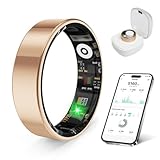
- 【Check the Size Before Purchase】 Before buying the prxxhri Smart Ring, we strongly suggest that you refer to the size chart and carefully measure the circumference of your finger. This will ensure you get the most comfortable wearing experience and easily avoid any unnecessary returns or exchanges.
- 【Real-time Accurate Sleep & Fitness Monitoring】 prxxhri smart ring tracks your sleep quality and daily activities in real time. With advanced sensors, it provides precise data about your sleep cycle, helping you optimize rest and recovery. Whether you are tracking steps, calories or exercise performance, this smart ring can provide you with the most accurate insights to support your fitness goals and enhance your overall health.It is a good choice for family and friends.
- Health Monitoring】The prxxhri ring features advanced 4.0 sensors that automatically measure your heart rate, and blood pressure every 30 min when worn. It provides continuous health tracking and comprehensive wellness management all day.
- 【3-5 Day Battery Life】 With a 3-5 day battery life, the prxxhri smart ring ensures continuous health monitoring without frequent charging. When used with the smart charging case, the usage time can even exceed 20 days. Whether you are tracking sleep patterns or fitness activities, you can count on long-lasting performance without constant interruptions.
- 【80-meter Waterproof, Suitable for Various Scenarios】 The prxxhri Smart Ring has excellent waterproof performance, with a waterproof depth of up to 80 meters. Whether it's for daily wear, an intense workout session or a pleasant swimming time, it can handle it with ease. What's more, even if you have sensitive skin, you can still enjoy an extremely comfortable wearing experience when wearing this ring.
This pairing also helps the algorithm distinguish illness from training fatigue. After a hard workout, resting heart rate may rise, but HRV often rebounds quickly. During illness, HRV suppression tends to persist.
Respiratory rate as a confirmation layer
Respiratory rate adds another layer of confidence, particularly for viral or respiratory infections. Even minor increases can signal that the body is working harder to maintain oxygen balance.
Because respiratory rate changes more slowly, it often lags behind HRV and heart rate shifts. When it does move in the same direction, it strengthens the overall illness probability score.
Oura’s snug, low-profile fit helps here. Unlike bulkier wrist devices that can shift overnight, the ring’s stability improves consistency in detecting the micro-movements used to estimate breathing.
Confidence thresholds and conservative alerts
Oura’s illness insights are intentionally conservative. The system waits until multiple signals cross internal confidence thresholds over more than one night before notifying you.
This reduces false positives from late nights, alcohol, travel, or acute stress. It also explains why you might feel “off” for a day before seeing an alert, as the algorithm looks for sustained patterns rather than one-night anomalies.
When an alert does appear, it’s framed as a heads-up, not a diagnosis. The language encourages rest, hydration, and reduced strain, rather than medical conclusions.
What accuracy looks like in the real world
In practice, Oura’s illness detection is best at identifying the early physiological stress response that precedes symptoms. Many users report alerts one to three days before they feel sick, particularly for viral infections.
It’s less reliable for sudden-onset issues or conditions that don’t significantly affect autonomic balance, such as minor injuries. This is a limitation of all passive wearables, not just rings.
The value isn’t in certainty, but in timing. Getting an early signal can meaningfully change behavior, prompting earlier rest that may shorten or soften the illness.
Why this rollout matters compared to other wearables
Most wrist-based wearables surface illness-related data indirectly, leaving users to interpret graphs and trends themselves. Oura’s approach is more opinionated, packaging complex biometrics into a clear, contextual alert.
That shift matters for everyday usability. A ring with no screen relies entirely on software clarity, and this feature represents a move toward more proactive health guidance rather than retrospective analysis.
As health tracking moves beyond fitness into prevention, Oura’s illness detection shows how form factor, comfort, and long-term data continuity can unlock insights that are difficult to replicate with devices designed primarily for daytime use.
How Accurate Is Oura’s Illness Detection? What the Research and Real-World Data Say
Oura’s illness detection doesn’t rely on guesswork or symptom logging. It’s built on years of peer-reviewed research, population-scale data, and a conservative interpretation layer designed to avoid crying wolf.
Accuracy here isn’t about diagnosing a specific illness. It’s about reliably detecting when your body’s baseline physiology has shifted into a stress or immune-response state that often precedes feeling sick.
The science behind Oura’s early illness signals
Oura’s core advantage is longitudinal data. Because the ring is worn nearly 24/7 and especially during sleep, it builds a highly personalized baseline for each user rather than relying on population averages.
The illness detection feature looks for coordinated deviations across four primary metrics: overnight temperature deviation, heart rate variability, resting heart rate, and respiratory rate. A single outlier won’t trigger an alert; the system looks for sustained, multi-signal changes over consecutive nights.
This approach is supported by multiple Oura-led and independent studies, including research published during the COVID-19 pandemic showing that changes in temperature and HRV could be detected one to three days before symptom onset in a significant portion of users.
Temperature deviation: the anchor metric
Oura doesn’t measure absolute body temperature like a thermometer. Instead, it tracks nightly skin temperature deviation relative to your personal baseline, which is far more meaningful for early detection.
Even small increases, often as little as 0.3 to 0.5 degrees Celsius above baseline, can signal immune activation. Because the ring is worn on the finger, where blood flow changes are pronounced during sleep, temperature trends tend to be stable and repeatable night to night.
This makes temperature deviation one of Oura’s most reliable illness indicators, especially for viral infections and systemic inflammatory responses.
HRV and resting heart rate: stress on the autonomic nervous system
Heart rate variability is where Oura’s sleep-first design pays off. HRV is most interpretable during deep rest, and overnight measurements reduce noise from movement, caffeine, and daily stressors.
During the early stages of illness, HRV typically drops while resting heart rate rises. Oura’s algorithms look for this paired pattern rather than either metric in isolation.
Real-world data shows this combination is particularly effective at distinguishing illness-related stress from short-term factors like a hard workout or a late meal, which may affect one metric but not all of them together.
Respiratory rate: the subtle but important signal
Respiratory rate tends to be stable in healthy adults, making even small changes noteworthy. Oura monitors overnight breathing patterns and flags increases that persist across multiple nights.
This metric became especially relevant during COVID-era research, where elevated respiratory rate often appeared alongside temperature and heart rate changes before users reported symptoms.
On its own, respiratory rate isn’t decisive. In combination, it strengthens the confidence of the alert and reduces false positives.
What peer-reviewed studies actually show
In published studies involving tens of thousands of users, Oura’s algorithms were able to detect physiological changes associated with illness before symptom onset in a majority of cases, often 24 to 72 hours early.
Detection rates varied by individual and illness type, with viral infections showing the strongest signal. Accuracy improved significantly when users had at least several weeks of baseline data, reinforcing the importance of consistent wear.
Crucially, these studies emphasize probability, not certainty. The system is designed to increase the odds of early awareness, not to guarantee detection every time.
How this holds up in everyday use
Outside the lab, user reports largely align with the research. Many long-term Oura users describe receiving an alert one or two days before feeling noticeably sick, often prompting them to cancel workouts, prioritize sleep, or hydrate more aggressively.
False positives do happen, most commonly during periods of heavy training, alcohol use, or disrupted sleep from travel. Oura mitigates this by requiring multiple nights of corroborating data, but it can’t eliminate lifestyle-induced noise entirely.
Equally important is what Oura doesn’t catch well: sudden illnesses, mild localized infections, or conditions that don’t significantly affect autonomic or thermoregulatory systems.
Why accuracy here feels different from other wearables
Many smartwatches collect similar raw data, but they often present it as charts without interpretation. Oura’s accuracy advantage comes from contextualizing those signals into a single, cautious insight rather than asking users to play data scientist.
Rank #4
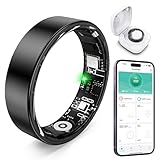
- 【Check the Size Before Purchase】 Before buying the Free Shark Smart Ring, we strongly suggest that you refer to the size chart and carefully measure the circumference of your finger. This will ensure you get the most comfortable wearing experience and easily avoid any unnecessary returns or exchanges.
- 【Intelligent Sleep Tracker, Caring for Your Health】 This Free Shark fitness ring is like a considerate little assistant for your sleep health. It will accurately monitor the quality of your sleep, and record in detail the durations of deep sleep and light sleep, as well as the specific situations of your wakeful states. You just need to open the app at any time, and you can clearly view all kinds of sleep indicators. Then, according to the professional reports, you can easily adjust your lifestyle to embrace better-quality sleep.
- 【Diverse Health Monitoring, All-round Protection】 The Free Shark Smart Ring has a variety of powerful health monitoring modes. Whether it's running, walking, hiking, cycling, yoga, dancing, skipping rope or other sports, it can automatically and accurately track key data such as the exercise route, exercise time, steps taken, heart rate, speed, calories burned and exercise distance in the app. Moreover, it can continuously track important health data such as heart rate and blood oxygen throughout the 24 hours of the day, protecting your physical health in an all-round way.
- 【80-meter Waterproof, Suitable for Various Scenarios】 The Free Shark Smart Ring has excellent waterproof performance, with a waterproof depth of up to 80 meters. Whether it's for daily wear, an intense workout session or a pleasant swimming time, it can handle it with ease. What's more, even if you have sensitive skin, you can still enjoy an extremely comfortable wearing experience when wearing this ring.
- 【Long Battery Life and Ultra-thin Design, Enjoy the Convenience】 The Free Shark Smart Ring has a very strong battery life. After a full charge, the battery can last up to 5 days, easily keeping up with your busy lifestyle. When used with the smart charging case, the usage time can even exceed 30 days. It is widely compatible with both Android and iOS systems, which is very convenient and practical. In addition, the updated design is lighter, thinner and more comfortable, with a greatly improved wearing fit. It's so light that you can hardly feel it on your finger.
The ring’s comfort and unobtrusive form factor also matter. High adherence leads to cleaner data, especially overnight, where illness-related changes are most visible.
In that sense, accuracy isn’t just about sensors. It’s about long-term wearability, baseline depth, and software that knows when to speak up and when to stay quiet.
What users should realistically expect
Oura’s illness detection is best viewed as an early warning system, not a medical test. When it works, it gives you time, sometimes days, to adjust behavior before symptoms peak.
It won’t catch everything, and it won’t always be right. But when combined with consistent wear, good sleep hygiene, and an understanding of your own patterns, it offers a level of proactive insight that few wearables currently match.
For users who value prevention over post-hoc analysis, that tradeoff makes the accuracy feel not just sufficient, but genuinely useful.
What Users Will Actually See: Alerts, Insights, and Recommended Actions
All of that accuracy and context ultimately has to surface in a way that’s useful in daily life. Oura’s illness detection rollout is intentionally restrained, favoring clarity over constant nudges, and what users see reflects that philosophy.
The alert itself: subtle, not alarming
When Oura detects a meaningful deviation from your baseline, the first thing you’ll see is a notification framed around “signs of strain” or “possible illness,” not a diagnosis. The language is cautious by design, emphasizing that your body is under more stress than usual rather than declaring that you are sick.
Inside the app, this typically appears as a card on the Home tab, often tied to your Readiness score taking a noticeable dip. You won’t get repeated push notifications throughout the day, which helps prevent alert fatigue and keeps the signal feeling meaningful.
Which metrics are driving the insight
Tapping into the alert reveals a breakdown of the signals that triggered it. Most often, this includes elevated skin temperature deviation from your personal baseline, suppressed HRV, and an increase in resting heart rate during sleep.
In some cases, respiratory rate is also flagged, especially when it rises alongside temperature changes. The app doesn’t show raw overnight graphs by default, but it clearly labels which metrics are “outside your normal range,” making the insight understandable even for users who don’t live in charts.
How Oura explains what’s happening
Oura pairs the data with plain-language context about why these changes matter. You’ll typically see explanations about how the immune response increases metabolic demand, raises heart rate, and reduces autonomic recovery before you consciously feel unwell.
This is where Oura’s long-term baseline really shows its value. The app explicitly references your personal trends, reinforcing that this is about deviation, not comparison to population averages or fixed thresholds.
Recommended actions: behavior-first, not medical
Instead of telling you what you have, Oura focuses on what to do next. The most common recommendations include prioritizing sleep, reducing training intensity, staying hydrated, and avoiding late nights or alcohol.
If the signals are strong enough, Oura may suggest enabling Rest Mode, which temporarily pauses activity goals and shifts emphasis entirely to recovery. This is particularly useful for athletes or highly active users who might otherwise push through early warning signs.
How this changes your daily scores
When illness signals are present, your Readiness score becomes the primary guidepost. Even if your Sleep score looks solid, Readiness may remain suppressed to reflect the physiological strain beneath the surface.
Activity goals automatically adjust downward, which helps align expectations with reality. Rather than feeling like you’re “failing” your goals, the system reframes rest as the correct response.
What you won’t see — and why that matters
There’s no symptom checklist, no disease labels, and no urgent escalation language. Oura deliberately avoids turning this into a medical screening tool, which keeps the experience grounded and legally safe, but also more trustworthy.
You also won’t see instant alerts after a single bad night. The system waits for patterns, reinforcing that this is about trends over time, not isolated fluctuations from stress, travel, or a late dinner.
Real-world usability over raw data overload
From a usability standpoint, this rollout fits naturally into Oura’s existing software experience. The ring itself remains passive, lightweight, and comfortable enough for continuous wear, while the app does the interpretive heavy lifting.
Battery life and durability aren’t affected, since all of this relies on sensors Oura already uses nightly. For users, that means no new charging habits, no new modes to remember, and no extra friction added to daily wear.
Why this feels more actionable than similar features elsewhere
Many smartwatches surface illness-related signals as disconnected metrics or experimental “health trends.” Oura’s approach stands out by bundling those signals into a single, behavior-oriented insight tied directly to sleep, recovery, and activity decisions.
For users who want guidance rather than constant self-analysis, that makes the feature feel less like another dashboard and more like a quiet advisor that speaks up only when it matters.
How This Compares to Apple Watch, Whoop, Fitbit, and Garmin
Oura’s illness detection sits in a crowded field, but it approaches the problem differently. Where most wearables surface “something’s off” as a cluster of metrics, Oura prioritizes pattern recognition during sleep and converts that into behavior guidance first, data second.
That design choice becomes clearer when you line it up against the major players most people already recognize.
Apple Watch: powerful sensors, lighter interpretation
Apple Watch has some of the most advanced health sensors on the market, including overnight wrist temperature trends, resting heart rate, HRV, and blood oxygen. With watchOS, Apple also introduced a Vitals view that flags outliers across these metrics when you sleep.
The difference is interpretation. Apple tends to stop at notification-level awareness, telling you that several metrics are outside your baseline, but not explicitly reframing your day around recovery or rest. There’s no direct equivalent to Oura’s illness signal influencing daily goals or recovery recommendations.
In practice, Apple Watch works best for users who want visibility and control, and are comfortable deciding what “take it easy” means on their own. Oura assumes you want the system to make that call for you.
Whoop: strain-aware, but illness is still contextual
Whoop has long been strong in recovery analysis, using HRV, resting heart rate, respiratory rate, and sleep performance to shape its Recovery score. When illness is suspected, Whoop often reflects it indirectly through a sharply reduced Recovery and guidance to lower Strain.
Where it differs from Oura is clarity. Whoop rarely says, explicitly, that your body is showing early illness signals. Instead, it presents the data contextually and leaves interpretation up to the user, often framed through training readiness rather than general health.
This makes Whoop especially compelling for athletes, but less intuitive for users who want a simple health-first explanation instead of performance language.
Fitbit: health trends with softer guardrails
Fitbit’s approach sits somewhere in the middle. Its Health Metrics dashboard tracks skin temperature variation, breathing rate, resting heart rate, and HRV, and the Daily Readiness Score adjusts activity expectations when recovery looks compromised.
However, Fitbit typically treats these as wellness trends rather than a cohesive illness-detection system. You may notice several metrics drifting in the wrong direction, but there’s no unified signal that frames this as your body potentially fighting something.
Fitbit works well for users who like broad health visibility and longer-term patterns, but it doesn’t yet match Oura’s ability to convert subtle changes into a single, confidence-building recommendation.
Garmin: performance-first, health second
Garmin devices collect an enormous amount of physiological data, including HRV status, resting heart rate, respiration, Body Battery, and Training Readiness. When illness looms, these numbers often degrade quickly and visibly.
💰 Best Value

- 【Check the Size Before Purchase】 Before buying the BIEMHA Smart Ring, we strongly suggest that you refer to the size chart and carefully measure the circumference of your finger. This will ensure you get the most comfortable wearing experience and easily avoid any unnecessary returns or exchanges.
- 【Real-time Accurate Sleep & Fitness Monitoring】 BIEMHA smart ring tracks your sleep quality and daily activities in real time. With advanced sensors, it provides precise data about your sleep cycle, helping you optimize rest and recovery. Whether you are tracking steps, calories or exercise performance, this smart ring can provide you with the most accurate insights to support your fitness goals and enhance your overall health.It is a good choice for family and friends.
- 【Health Monitoring】The BIEMHA ring features advanced 4.0 sensors that automatically measure your heart rate, and blood pressure every 30 min when worn. It provides continuous health tracking and comprehensive wellness management all day.
- 【3-5 Day Battery Life】 With a 3-5 day battery life, the BIEMHA smart ring ensures continuous health monitoring without frequent charging. When used with the smart charging case, the usage time can even exceed 20 days. Whether you are tracking sleep patterns or fitness activities, you can count on long-lasting performance without constant interruptions.
- 【80-meter Waterproof, Suitable for Various Scenarios】 The BIEMHA Smart Ring has excellent waterproof performance, with a waterproof depth of up to 80 meters. Whether it's for daily wear, an intense workout session or a pleasant swimming time, it can handle it with ease. What's more, even if you have sensitive skin, you can still enjoy an extremely comfortable wearing experience when wearing this ring.
The challenge is synthesis. Garmin excels at showing what changed, but less at explaining why it matters outside of training load and recovery cycles. For non-athletes, illness signals can get lost among training metrics, stress graphs, and workout analytics.
Oura’s advantage here is focus. By limiting the scope to sleep-driven health signals, it reduces noise and increases interpretability.
Why Oura’s approach feels different in daily life
The common thread across watches is that illness detection is emergent rather than explicit. Oura flips that relationship, starting with the insight and letting the data support it quietly in the background.
The ring’s form factor plays a role, too. Continuous overnight wear, minimal distraction, multi-day battery life, and a lightweight titanium build make it easier to collect stable baselines, which is critical for detecting small deviations in temperature, HRV, and heart rate.
Instead of asking you to monitor yourself more closely, Oura asks you to trust the system a little more. For users who want early awareness without turning their wrist into a control panel, that difference is meaningful.
Who This Feature Is Best (and Worst) For in Real Life
Seen in that light, Oura’s illness detection isn’t trying to replace a doctor or diagnose a specific condition. It’s designed to quietly flag when your baseline is drifting in a way that usually precedes feeling unwell, and that framing makes it far more useful for some people than others.
Best for people who want early warning, not medical answers
If you’re the type of person who usually realizes you’re getting sick only once symptoms hit hard, this feature fits naturally into daily life. Oura often surfaces temperature deviation, rising resting heart rate, suppressed HRV, and subtle respiratory changes one to three days before you’d normally connect the dots yourself.
That early nudge matters most when it changes behavior. Users who actually scale back workouts, protect sleep, or adjust social plans when the app suggests “take it easy” will get far more value than those who treat it as an interesting chart.
Ideal for desk workers, frequent travelers, and parents
People with relatively stable routines benefit disproportionately because Oura’s illness signals depend on clean baselines. Office workers, parents juggling sleep debt, and frequent flyers tend to see clearer deviations when something is off, especially after travel stress or disrupted sleep.
The ring’s comfort and near-weightless titanium build help here. Because it’s easy to wear overnight without thinking about it, Oura can track consistent sleep data, which is where most of the illness detection confidence comes from.
Well-suited to people who don’t want a screen-driven experience
If you find smartwatches distracting or uncomfortable at night, Oura’s form factor is a quiet advantage. There’s no glowing display, no taps or alerts on your finger, and the battery typically lasts several days, so you’re not constantly managing charging.
That uninterrupted wear improves data quality. Stable overnight temperature trends and HRV readings are far more reliable when the device stays on your body every night, not just when you remember to wear it.
Helpful for recovery-focused athletes, not peak-performance chasers
Athletes in base-building or recovery phases often get meaningful insights from illness detection. A sudden drop in HRV paired with elevated temperature deviation can help justify backing off before turning a mild immune response into a multi-week setback.
However, competitive athletes deep in a training block may find Oura overly conservative. Heavy training, altitude exposure, or heat adaptation can trigger illness-style signals even when performance is on track, which requires experience to interpret correctly.
Less useful if your schedule or physiology is highly irregular
Shift workers, night-shift clinicians, and anyone with wildly inconsistent sleep timing may struggle to get clean illness signals. When circadian disruption is constant, changes in temperature, heart rate, and HRV become harder to attribute to sickness rather than schedule stress.
Oura can still provide trends, but the confidence of its recommendations drops when baselines are unstable. In those cases, the feature feels more suggestive than actionable.
Not a fit for users who want certainty or diagnosis
This feature doesn’t tell you what you’re sick with, and it won’t confirm whether you should seek medical care. It’s a probabilistic signal based on deviations, not a clinical test, and users expecting definitive answers may be disappointed.
Oura is careful with its language, but the value depends on understanding that “your body may be under strain” is not the same as “you are sick.” That distinction matters.
A tougher sell for subscription-averse buyers
Illness detection lives behind Oura’s membership, which remains a sticking point for some users. If you prefer one-time hardware purchases with all features unlocked, the ongoing cost may outweigh the benefit, even if the feature itself works well.
For users already paying for the ecosystem, though, this rollout meaningfully strengthens the case that Oura’s software adds real health value beyond raw metrics.
Best for people willing to act on subtle signals
Ultimately, this feature shines for users who respect small warnings. If you’re willing to sleep more, hydrate, skip a hard workout, or cancel plans based on early physiological changes, Oura’s illness detection can feel almost uncanny in how often it’s right.
If you tend to ignore your body until it forces your hand, the ring will still notice what’s happening. Whether that insight changes anything is up to you.
Why This Rollout Matters for the Future of Smart Rings and Preventive Health
All of those caveats aside, this rollout represents a meaningful shift in what smart rings are trying to be. Oura isn’t just adding another chart or readiness score; it’s moving toward passive, anticipatory health guidance that operates before you feel unwell.
That distinction matters, because prevention only works when it arrives early enough to change behavior.
Smart rings are evolving from trackers to interpreters
Most wearables still treat health data as something users must decode themselves. You’re shown heart rate, HRV, temperature, or respiratory rate, then expected to connect the dots after the fact.
Oura’s illness detection flips that model by doing the synthesis for you, quietly comparing nightly data against your long-term baseline and surfacing a single, human-readable signal. This is the difference between data collection and physiological interpretation, and it’s where smart rings have a natural advantage over wrist-worn devices.
The form factor finally aligns with preventive health
Rings are uniquely suited to this kind of monitoring because they’re worn consistently, sleep comfortably, and rarely come off. Oura’s lightweight titanium build, smooth interior profile, and multi-day battery life mean it captures the subtle overnight changes where early illness signals actually appear.
Preventive health doesn’t work if the sensor isn’t on your body during rest, recovery, and sleep. In that sense, this rollout validates the smart ring form factor as more than a novelty and positions it as a serious long-term health companion.
A quiet challenge to smartwatch-first health ecosystems
Apple, Garmin, and Fitbit all track similar metrics, but most surface them reactively or require active checking. Oura’s approach is less about dashboards and more about nudges, meeting users where they are rather than asking them to analyze trends daily.
This matters because many people don’t want to manage their health like a spreadsheet. By turning deviations in temperature, resting heart rate, HRV, and respiratory rate into a simple “take it easier today” message, Oura sets a precedent other wearables will likely follow.
Early illness detection reframes how users value wearables
Step counts and workout tracking are easy to understand, but they rarely change outcomes when you’re already exhausted or getting sick. Catching strain early reframes wearables as tools for damage control rather than performance optimization.
For users who’ve questioned whether health wearables genuinely improve wellbeing, this feature provides a tangible answer. Avoiding one hard workout, one stressful meeting, or one poorly timed social obligation can be more impactful than hitting a daily activity goal.
This is a foundation, not a finished product
Oura’s illness detection isn’t perfect, and it doesn’t claim to be. But as models improve, datasets grow, and longitudinal baselines deepen, this kind of feature becomes more precise, more personalized, and more context-aware.
What’s launching now feels like the first credible step toward wearables that help users stay healthy rather than simply document when they weren’t. That’s a subtle shift, but it’s one with long-term implications for how we relate to our bodies and the technology we wear every day.
In practical terms, Oura’s rollout shows what the future of smart rings looks like: unobtrusive hardware, deeply contextual software, and health insights that arrive early enough to matter. For preventive health, that’s not just a feature update, it’s a change in philosophy.