Oura passing 5.5 million rings sold is not just a company milestone; it marks a structural shift in how consumers think about fitness tracking. For years, wearables growth was synonymous with smartwatches and wrist-based trackers, devices that asked users to actively engage with screens, notifications, and daily charging routines. A ring quietly reaching this scale forces the industry to confront a new reality: passive, always-on health tracking has moved from niche experiment to mainstream expectation.
This number matters because it arrives in a mature wearables market where overall unit growth has slowed. Smartwatch shipments have plateaued in several regions, fitness bands have largely collapsed into entry-level smartwatch territory, and differentiation has become incremental. Oura’s growth, in contrast, has accelerated precisely by rejecting the wrist-first paradigm and focusing on a form factor that prioritizes comfort, battery life, and physiological signal quality over interaction.
What follows is not a story about one successful product, but about why smart rings are reshaping the fitness tracker category itself, and what Oura’s scale tells us about where wearables are heading next.
From quantified self curiosity to mainstream health tool
Selling 5.5 million units puts Oura in a different league than most health-tech startups, but the more important detail is who is buying them. Early adopters were biohackers, elite athletes, and sleep researchers willing to tolerate rough software and limited insights. Today’s buyers include everyday users who may already own an Apple Watch or Garmin but want something they can forget they are wearing.
🏆 #1 Best Overall
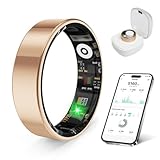
- 【Check the Size Before Purchase】 Before buying the prxxhri Smart Ring, we strongly suggest that you refer to the size chart and carefully measure the circumference of your finger. This will ensure you get the most comfortable wearing experience and easily avoid any unnecessary returns or exchanges.
- 【Real-time Accurate Sleep & Fitness Monitoring】 prxxhri smart ring tracks your sleep quality and daily activities in real time. With advanced sensors, it provides precise data about your sleep cycle, helping you optimize rest and recovery. Whether you are tracking steps, calories or exercise performance, this smart ring can provide you with the most accurate insights to support your fitness goals and enhance your overall health.It is a good choice for family and friends.
- Health Monitoring】The prxxhri ring features advanced 4.0 sensors that automatically measure your heart rate, and blood pressure every 30 min when worn. It provides continuous health tracking and comprehensive wellness management all day.
- 【3-5 Day Battery Life】 With a 3-5 day battery life, the prxxhri smart ring ensures continuous health monitoring without frequent charging. When used with the smart charging case, the usage time can even exceed 20 days. Whether you are tracking sleep patterns or fitness activities, you can count on long-lasting performance without constant interruptions.
- 【80-meter Waterproof, Suitable for Various Scenarios】 The prxxhri Smart Ring has excellent waterproof performance, with a waterproof depth of up to 80 meters. Whether it's for daily wear, an intense workout session or a pleasant swimming time, it can handle it with ease. What's more, even if you have sensitive skin, you can still enjoy an extremely comfortable wearing experience when wearing this ring.
This transition mirrors a broader shift in consumer priorities. Instead of chasing step counts or workout badges, users increasingly care about sleep quality, recovery readiness, stress load, and long-term trends. These are metrics that benefit from continuous wear and high-quality nocturnal data, areas where rings outperform wrist devices simply by staying on the body longer and more consistently.
Oura’s scale validates that demand at a mass-market level. It suggests that health tracking has matured beyond novelty and performance metrics into something closer to daily infrastructure, like a mattress or running shoes rather than a gadget you interact with constantly.
Why the ring form factor unlocked growth
The physical design of a smart ring solves several problems that have constrained wrist-based trackers for years. A ring weighs only a few grams, has no protruding screen, and distributes pressure evenly around the finger, making it comfortable for 24/7 wear, including sleep. For many users, that alone removes the biggest barrier to consistent health tracking.
Battery life is another decisive advantage. Oura’s multi-day battery, typically around 5 to 7 days depending on usage and generation, dramatically reduces charging friction. Compared to smartwatches that demand daily charging or compromise features to last longer, rings better match the expectation of passive monitoring.
There is also a data-quality argument. The finger is a strong site for photoplethysmography, offering stable blood flow and less motion artifact during sleep than the wrist. This allows more reliable heart rate, heart rate variability, and temperature trend detection, which are foundational to recovery and readiness scores.
At 5.5 million units, these benefits are no longer theoretical or confined to lab studies. They are being validated across a massive, diverse user base, reinforcing the ring as a viable primary tracker rather than a companion device.
Health metrics over features: a different value proposition
Oura’s success highlights a divergence in how wearables deliver value. Smartwatches compete on features: displays, apps, LTE, payment systems, workout modes, and increasingly AI-driven coaching. Smart rings compete on outcomes: sleep improvement, illness detection, stress awareness, and behavioral nudges.
Oura’s temperature trend tracking, for example, became widely known during the pandemic for its potential to detect early signs of illness. Its readiness score combines heart rate variability, resting heart rate, sleep metrics, and activity balance into a single daily signal that is easy to understand without being simplistic.
This abstraction layer matters. Many consumers do not want raw data or charts; they want actionable insight that fits into their daily decisions. By focusing on interpretation rather than interaction, Oura positioned itself closer to a health service than a gadget, which helps explain why users tolerate and even accept its subscription model.
The subscription question, answered by scale
Oura’s monthly subscription was controversial when introduced, particularly among early adopters accustomed to one-time hardware purchases. Reaching 5.5 million sales suggests that the broader market views ongoing software, algorithm updates, and longitudinal insights as worth paying for.
This has implications far beyond Oura. It signals that consumers are increasingly comfortable with wearables as services rather than products, provided the value is clear and the hardware enables long-term use. Rings, with their slower replacement cycles and minimal fashion-driven obsolescence, are well-suited to this model.
For the industry, this challenges smartwatch makers who still rely heavily on hardware upgrade cycles. A ring that lasts several years and improves through software updates shifts the revenue focus toward retention and health outcomes rather than annual feature checklists.
Medical credibility and institutional adoption
Another underappreciated factor behind Oura’s growth is its increasing alignment with medical and research communities. Partnerships with universities, sports organizations, and health studies have lent credibility to its metrics and helped refine its algorithms using large-scale, real-world data.
While Oura is not a medical device in the regulatory sense, its emphasis on validated correlations, population-level trends, and transparent methodology resonates with users who want more than wellness marketing. At millions of units, this data flywheel becomes a competitive moat, improving accuracy and insight in ways smaller competitors struggle to match.
This also positions smart rings as a bridge between consumer wearables and preventative health, an area where traditional fitness trackers have often overpromised and underdelivered.
What 5.5 million means for smartwatches and trackers
Oura’s milestone does not mean smartwatches are obsolete. Wrist-based devices remain superior for real-time workout tracking, navigation, notifications, and on-device interaction. For runners, cyclists, and power users, watches will continue to dominate.
What changes is the default assumption that a watch must be the center of personal health tracking. Rings are increasingly becoming the always-on baseline layer, handling sleep, recovery, and stress, while watches become situational tools for training and productivity.
At 5.5 million sales, Oura demonstrates that coexistence is not only possible but preferred by many users. The wearables conversation is no longer about choosing the best device, but about choosing the right combination, and smart rings have firmly earned their place in that equation.
From Niche Biohacker Tool to Mainstream Health Wearable: The Smart Ring’s Rise
Seen through the lens of coexistence rather than replacement, Oura’s growth makes more sense as part of a broader behavioral shift. The smart ring did not win by outgunning smartwatches on features, but by quietly removing friction from everyday health tracking in ways wrist-based devices never fully solved.
Origins in biohacking and quantified self culture
Smart rings emerged in the early 2010s as tools for biohackers obsessed with sleep stages, HRV trends, and recovery scores rather than step counts or workout maps. Early adopters tolerated rough apps, opaque scoring models, and limited compatibility because rings offered something rare at the time: accurate, continuous data without a glowing screen strapped to the wrist.
Oura’s early versions leaned heavily into this crowd, prioritizing overnight data capture, long battery life, and raw physiological metrics over consumer-friendly polish. The audience was small, but deeply engaged, and willing to interpret trends rather than expect instant coaching.
That foundation mattered. When consumer interest in sleep, stress, and recovery exploded, smart rings already had a decade-long head start in understanding what actually changes behavior.
The form factor advantage traditional trackers never cracked
The ring format solved a comfort problem that smartwatches and bands still struggle with. A titanium or coated steel ring weighing just a few grams, with no screen and no vibrations, disappears during sleep, travel, and daily wear.
This matters more than it sounds. Sleep and recovery tracking only work when devices are worn consistently, and wrists are the first place users abandon tech overnight. Fingers, by contrast, already carry jewelry, and the ring form fits naturally into existing habits without demanding attention.
Durability also plays a role. With fewer moving parts, no glass display, and water resistance designed for 24/7 wear, smart rings age more like jewelry than gadgets. Users are less likely to upgrade annually, reinforcing the shift toward long-term ownership and software-driven value.
Battery life and the death of daily charging anxiety
Battery life has become one of the clearest differentiators between rings and traditional fitness trackers. Where most smartwatches still require daily or near-daily charging, smart rings routinely last five to seven days, even with continuous heart rate and temperature sensing.
This changes user behavior. Instead of planning charging windows around sleep or workouts, rings fade into the background, which is precisely when passive health tracking works best. The fewer interruptions, the more complete the data, and the more meaningful the insights.
At scale, this reliability advantage compounds. A ring that is worn every night for years produces a longitudinal health record that short-lived wrist devices rarely achieve.
Health metrics that prioritize trends over theatrics
Smart rings also succeeded by narrowing their scope. Rather than chasing every possible metric, they focused on signals that benefit from consistency: resting heart rate, HRV, respiratory rate, skin temperature deviations, and sleep regularity.
These metrics are not flashy, but they are predictive. Over time, they reveal illness onset, overtraining, chronic stress, and recovery debt with surprising clarity. This aligns closely with preventative health goals, where direction matters more than daily highs and lows.
By avoiding on-device interaction and workout theatrics, rings reframed health tracking as a background process. The insight arrives later, in context, rather than demanding attention mid-day.
Subscription models that made sense to users
The shift toward subscriptions was controversial, but smart rings executed it more cleanly than many smartwatch brands. Because the hardware does not change rapidly, users can justify paying for ongoing software improvements, refined algorithms, and deeper longitudinal analysis.
In practice, this model aligned incentives. Companies invest in data science and clinical validation rather than cosmetic hardware refreshes, while users see tangible improvements without replacing their device.
At 5.5 million units, this approach has proven viable at scale, suggesting consumers are willing to pay for insight if the hardware fades into the background and the value compounds over time.
Mainstream validation beyond the enthusiast bubble
The final shift from niche to mainstream came when smart rings stopped being explained and started being assumed. Integration with iOS and Android health platforms, compatibility with popular training apps, and growing visibility in professional sports and corporate wellness programs normalized the category.
Smart rings are now worn by people who have never heard the term HRV, guided by readiness scores and simple language rather than charts. That translation layer, built on years of data refinement, lowered the barrier to entry without diluting the core value.
Rank #2

- ACCURATE SIZING ESSENTIAL - Oura Ring 4 uses unique sizing different from standard jewelry rings; use the Oura Ring 4 Sizing Kit to find your perfect fit before purchasing
- OURA MEMBERSHIP - First month of membership is included with purchase, for new members only. Subscription is 5.99/mo afterwards. Or opt for the annual prepaid option for 69.99. Membership is tied to your account via the Oura App, not your physical ring
- ACCURACY - SMART SENSING - Oura tracks over 50 health metrics, including sleep, activity, stress, heart health, and women’s health metrics. Oura Ring 4 is powered by Smart Sensing, which adapts to you — delivering accurate, continuous data, day and night
- LONG LASTING BATTERY - With up to 8 days of battery life, no screens and no vibrations, Oura Ring 4 allows you to focus on the present. From a workout to a night out — you’re free to forget it’s on. Until you start getting compliments
- HSA/FSA ELIGIBLE - We can accept HSA or FSA funds for the following: Oura Ring, additional chargers, and shipping
What began as a biohacker experiment has matured into a health wearable that fits into ordinary life, quietly collecting the kind of data that only becomes powerful when nothing gets in the way of wearing it.
Why Rings Beat Bands: Form Factor, Comfort, and the Shift to Passive Health Tracking
If smart rings succeeded on data and software, they won the market on form factor. The ring quietly solved problems that wrist-based trackers have spent a decade trying to minimize rather than eliminate.
Where bands ask users to adapt their behavior, rings adapt to the user. That difference has reshaped how people think about health tracking and why devices like Oura moved from curiosity to category leader.
Form factor as strategy, not novelty
A smart ring is worn where people already tolerate jewelry 24 hours a day. There is no screen to manage, no strap to adjust, and no visual reminder that you are “tracking” yourself.
At roughly 3–5 grams, with thickness closer to a wedding band than a gadget, modern smart rings disappear physically in a way wrist trackers never quite manage. That invisibility is not cosmetic; it is foundational to adherence.
Comfort drives compliance, and compliance drives data quality
Health tracking only works if the device is worn consistently, including during sleep, illness, travel, and rest days. Rings outperform bands here because they remove friction rather than merely reducing it.
Wrist-based trackers struggle with pressure points, skin irritation, watch tan lines, and sleep discomfort, especially for side sleepers. A properly fitted ring avoids all of these while remaining secure during daily movement.
Night-first wearability unlocked better health metrics
Smart rings were designed around sleep from the outset, not as a secondary mode. The finger provides strong photoplethysmography signals due to dense capillary beds and minimal motion at night.
This allowed rings to focus on resting heart rate, HRV, respiratory rate, temperature deviation, and sleep architecture long before step counts or workout animations mattered. Over time, those signals proved more predictive of health outcomes than daytime activity metrics alone.
Passive tracking replaced performative fitness
Traditional fitness trackers reward visible effort: steps taken, calories burned, workouts logged. Smart rings flipped that model by prioritizing physiological response over visible activity.
Instead of asking users to press buttons or start sessions, rings infer load and recovery from the body itself. This shift aligns with modern health science, where adaptation, readiness, and resilience matter more than raw volume.
Battery life reinforced the background-device philosophy
Most smart rings offer 4–7 days of battery life without compromising comfort or size. More importantly, charging is infrequent enough that it does not interrupt behavioral continuity.
By contrast, smartwatches demand daily or near-daily charging, creating gaps in nighttime data that weaken longitudinal analysis. Rings optimize for uninterrupted time series rather than feature density.
Materials and durability made constant wear realistic
Titanium shells, scratch-resistant coatings, and water resistance suitable for showering and swimming removed the need to take rings off. This is a subtle but crucial distinction.
A wearable that survives daily life without ceremony is more likely to stay on during precisely the moments that matter most, including recovery periods and early illness onset.
Health insight without constant notification fatigue
Rings deliberately avoid real-time alerts, vibrating reminders, and screen-driven engagement loops. Insights are delivered later, synthesized into readiness scores and trend summaries.
This separation of data collection and data interpretation reduces anxiety while improving comprehension. Users engage with their health intentionally, not reactively.
Finger-based tracking complemented, rather than competed with, watches
For many users, smart rings did not replace smartwatches; they freed them. Rings handle baseline health, sleep, and recovery, while watches focus on training sessions, navigation, and communication.
This division of labor explains why ring adoption has grown alongside smartwatch ownership rather than purely at its expense. The ring becomes the health foundation, the watch the situational tool.
Why this shift mattered for Oura at scale
Oura’s growth to 5.5 million units is not just about brand execution; it reflects how well the ring form factor matches passive health tracking. The product does not demand attention, does not require habit formation, and does not age visibly year to year.
As wearables move toward preventative health and long-term trend analysis, the devices that win will be the ones people forget they are wearing. Rings were built for that reality from day one.
Health Metrics That Matter: Sleep, Recovery, Readiness, and the Science Behind Oura’s Data
What ultimately separates Oura from earlier fitness trackers is not the ring itself, but the hierarchy of metrics it chose to prioritize. Instead of chasing step counts, workout badges, or real-time performance coaching, Oura built its platform around physiological signals that change slowly, predict health outcomes, and benefit most from uninterrupted measurement.
This focus aligns with the broader shift in wearables away from activity logging toward baseline health intelligence. Sleep, recovery, and readiness are not just softer lifestyle metrics; they are the foundation upon which training capacity, immune resilience, and long-term wellbeing are built.
Sleep as the anchor metric, not a secondary feature
Sleep is the most data-rich state a wearable can observe, and Oura treats it as the primary signal rather than an overnight add-on. With the ring worn continuously and comfortably, Oura captures resting heart rate, heart rate variability, respiratory rate, blood oxygen trends, movement, and overnight skin temperature across the full sleep window.
Because users rarely remove the ring at night, Oura’s sleep dataset is unusually clean. There are fewer missing hours, fewer partial nights, and far less variability caused by charging behavior, which improves the reliability of longitudinal trends.
Oura’s sleep staging combines accelerometer data with optical heart signals to estimate time spent in light, deep, and REM sleep. While no consumer wearable matches polysomnography, Oura’s strength lies in consistency rather than single-night precision. The system is designed to detect changes over time, which is what actually matters for health decisions.
Heart rate variability and the importance of nighttime baselines
Heart rate variability, measured as the variation between heartbeats, is one of the most sensitive indicators of autonomic nervous system balance. Higher HRV generally reflects better recovery and stress resilience, while suppressed HRV can indicate fatigue, illness, or overtraining.
Oura measures HRV during sleep, when external stressors and movement are minimized. This is a critical distinction from wearables that sample HRV sporadically during the day, where caffeine, posture, and mental load can distort readings.
By anchoring HRV to a stable nighttime baseline, Oura can identify subtle deviations that may not be perceptible to the user yet. This is why many users report early illness signals or recovery warnings before symptoms appear.
Skin temperature trends as an early signal, not a diagnostic claim
The ring’s temperature sensors do not provide an absolute body temperature. Instead, Oura tracks deviations from an individual’s long-term baseline, measured at the finger where blood flow changes are detectable during sleep.
These temperature trends are used to flag physiological stress, menstrual cycle phases, and potential illness onset. Importantly, Oura positions this data as contextual insight rather than medical diagnosis, which keeps expectations aligned with what consumer wearables can responsibly deliver.
Over time, this relative approach proves more useful than spot measurements. A half-degree shift from personal norm often matters more than hitting a generic threshold.
Readiness scores as synthesis, not simplification
Raw health data is overwhelming for most users, which is why Oura’s Readiness score became central to its user experience. Rather than asking users to interpret HRV charts and temperature graphs independently, Oura synthesizes multiple signals into a single daily indicator.
Readiness blends sleep quality, resting heart rate trends, HRV, recent activity load, and recovery time. The goal is not to tell users what to do, but to frame decisions about training intensity, workload, or rest within physiological context.
This abstraction is often criticized by data purists, yet it is precisely what enables mainstream adoption. A score that nudges behavior is more impactful than perfect data that never gets acted upon.
Why recovery-first metrics outperform activity-first tracking
Traditional fitness trackers were built around movement: steps, calories, and minutes of activity. These metrics reward visible effort but often ignore whether the body is actually adapting well to that effort.
Rank #3

- ACCURATE SIZING ESSENTIAL - Oura Ring 4 uses unique sizing different from standard jewelry rings; use the Oura Ring 4 Sizing Kit to find your perfect fit before purchasing
- OURA MEMBERSHIP - First month of membership is included with purchase, for new members only. Subscription is 5.99/mo afterwards. Or opt for the annual prepaid option for 69.99. Membership is tied to your account via the Oura App, not your physical ring
- ACCURACY - SMART SENSING - Oura tracks over 50 health metrics, including sleep, activity, stress, heart health, and women’s health metrics. Oura Ring 4 is powered by Smart Sensing, which adapts to you — delivering accurate, continuous data, day and night
- LONG LASTING BATTERY - With up to 8 days of battery life, no screens and no vibrations, Oura Ring 4 allows you to focus on the present. From a workout to a night out — you’re free to forget it’s on. Until you start getting compliments
- HSA/FSA ELIGIBLE - We can accept HSA or FSA funds for the following: Oura Ring, additional chargers, and shipping
Oura inverts this model by treating recovery as the limiting factor. Activity is logged, but it is interpreted through the lens of sleep debt, autonomic stress, and cumulative strain rather than celebrated in isolation.
This philosophy resonates with endurance athletes, shift workers, and aging users alike. It also scales better across life stages, where optimal activity levels change but recovery capacity remains the constant bottleneck.
Clinical validation and where consumer science still has limits
Oura has invested heavily in academic partnerships, resulting in a growing body of peer-reviewed research using its data for sleep, cardiovascular health, and population-scale trend analysis. This validation does not make the ring a medical device, but it does reinforce confidence in its measurements.
At the same time, Oura is transparent about limitations. Sleep staging is an estimate, calorie burn is directional, and readiness scores are probabilistic rather than prescriptive. This honesty helps prevent the false precision trap that undermined trust in earlier wearables.
The science works because expectations are managed. Oura provides context and trend awareness, not clinical certainty.
Why these metrics scale better than features
As Oura’s installed base grew into the millions, the value of its approach compounded. Sleep, HRV, and temperature trends become more meaningful with time, and users are rewarded for long-term wear rather than constant interaction.
This stands in contrast to feature-heavy trackers that age quickly as screens, processors, and interfaces become outdated. Oura’s core metrics remain relevant regardless of generation, hardware refresh, or aesthetic revision.
In a market increasingly defined by preventative health and behavioral insight, the metrics that matter are the ones that persist quietly in the background. Oura’s success suggests that the future of wearables belongs less to devices that demand attention, and more to those that patiently observe.
Battery Life, Accuracy, and 24/7 Wearability: Where Smart Rings Outperform Fitness Trackers
The emphasis on long-term trends rather than moment-to-moment interaction naturally elevates a different set of hardware priorities. Once the screen is removed from the equation, battery life, sensor stability, and physical comfort become the core enablers of continuous insight. This is where smart rings, and Oura in particular, have built a structural advantage over traditional fitness trackers.
Battery life designed around continuity, not features
Most wrist-based fitness trackers still revolve around displays, haptics, and frequent user input, all of which draw power and shorten usable cycles. Even efficient models typically require charging every one to three days if sleep tracking and continuous heart rate monitoring are enabled. That cadence alone introduces data gaps, especially overnight, when charging is most inconvenient.
Smart rings operate under a different constraint set. With no display, minimal interaction, and highly optimized firmware, devices like the Oura Ring can sustain four to seven days of real-world use while running full-time biometric tracking. The longer battery window reinforces habit formation by reducing the likelihood that users simply take the device off and forget to put it back on.
Finger-based sensing and why placement matters
Accuracy is not just about sensor quality but also about where those sensors sit on the body. The finger offers a dense network of arteries close to the skin surface, providing stronger and more consistent photoplethysmography signals than the wrist, particularly during sleep. This becomes critical for metrics like resting heart rate, heart rate variability, and respiratory rate.
Wrist trackers are more susceptible to motion artifacts, strap tightness variability, and positional drift during the night. Rings benefit from a stable, evenly distributed contact area that moves less relative to the skin, allowing cleaner signal capture with fewer corrective algorithms. The result is not perfection, but higher confidence in trend direction and night-to-night comparisons.
Sleep tracking without compromise
Sleep is the cornerstone of Oura’s platform, and the ring form factor aligns with that priority better than any wrist-based alternative. Many users subconsciously adjust sleep posture to accommodate a watch, loosening straps or removing the device entirely. A properly sized ring, weighing just a few grams, fades into the background within days.
This physical invisibility translates directly into better data continuity. Because the ring is worn consistently through the night, Oura can build multi-year sleep baselines that would be difficult to maintain with devices that users periodically abandon. Over time, consistency becomes a stronger asset than marginal gains in feature breadth.
True 24/7 wearability and lifestyle neutrality
Fitness trackers still carry visual and social signaling. They look like devices, which can feel out of place in formal settings, at work, or alongside traditional watches. Rings occupy a different cultural category, blending into existing jewelry norms rather than competing with them.
This neutrality enables uninterrupted wear across contexts, including professional environments, travel, and even activities where watches are impractical or prohibited. When a device never needs to be consciously managed, the data it produces becomes more representative of real life rather than selectively captured moments.
Charging behavior and the psychology of friction
Charging frequency is not just a technical metric but a behavioral one. A device that needs power every night subtly trains users to treat tracking as optional. Missed nights accumulate, and long-term datasets fragment.
Smart rings reduce that friction by making charging an occasional task rather than a routine. Oura’s charging cycle is short enough to fit into idle moments, and infrequent enough that it does not displace sleep tracking. Over months and years, this small difference compounds into markedly better longitudinal health insight.
Durability, materials, and real-world wear
From a hardware perspective, smart rings benefit from simpler mechanical requirements. Oura’s use of titanium construction, scratch-resistant coatings, and water resistance designed for continuous wear aligns with its always-on philosophy. There are no exposed buttons, no glass screens, and fewer failure points.
Fitness trackers, especially lower-cost models, still contend with strap degradation, clasp failures, and screen damage. While premium smartwatches have improved dramatically, they remain more complex objects performing more roles. Rings succeed by doing fewer things exceptionally well, and by surviving daily life with minimal intervention.
The Subscription Question: How Oura’s Business Model Redefined Wearable Economics
The same design choices that make smart rings easier to live with also make them easier to monetize differently. Once wear becomes continuous and data becomes longitudinal, the value shifts away from the object on your finger and toward the interpretation layered on top of it.
Oura understood this earlier than almost anyone in consumer wearables. Its subscription model did not simply add recurring revenue; it reshaped expectations about what users are actually paying for in modern health tracking.
From hardware margins to data continuity
Traditional fitness trackers have lived and died by hardware sales. The device was the product, and software was largely a value-add designed to keep users inside an ecosystem long enough to justify the next upgrade.
Oura inverted that logic. The ring is a durable sensor platform with a multi-year lifespan, while the subscription monetizes ongoing analysis, trend detection, and personalized health context. This reduces dependence on constant hardware refresh cycles, which have become increasingly unsustainable as sensors mature and year-over-year gains shrink.
At 5.5 million rings sold, this matters because it suggests scale is now being driven by retention and engagement, not just shipments. Each ring represents a long-term data relationship rather than a one-off transaction.
Why subscriptions make sense for rings, not just companies
Subscription models are often unpopular in consumer tech, but smart rings are uniquely positioned to justify them. Unlike smartwatches, which deliver obvious daily utility through screens, notifications, and apps, rings trade immediacy for depth.
The real value of a ring emerges over weeks and months. Sleep regularity trends, recovery baselines, stress patterns, and physiological deviations only become meaningful with time. Oura’s Readiness and Sleep Scores are not static features; they evolve as the system learns the wearer.
A one-time purchase model struggles to support that kind of ongoing computation, cloud processing, and algorithm refinement. The subscription aligns cost with value delivery in a way that feels more defensible than paywalls around basic step counts or heart rate.
Software as the differentiator, not the sensor stack
By 2025, the hardware gap between wearables has narrowed dramatically. Optical heart rate sensors, temperature tracking, blood oxygen estimation, and accelerometers are widely available across price tiers.
What separates platforms now is interpretation. Oura’s subscription funds a software experience that prioritizes clarity over raw data density, surfacing insights without overwhelming users with charts. The app emphasizes trends, deviations, and actionable guidance rather than real-time metrics.
This is particularly important for rings, which lack screens and therefore rely entirely on post-hoc analysis. Without strong software, a smart ring is just a passive recorder. With it, the ring becomes a health companion.
Reducing churn through behavioral lock-in
The longer someone wears an Oura Ring, the harder it is to leave. Not because of proprietary hardware, but because of accumulated personal baselines.
Sleep debt trends, recovery norms, menstrual cycle predictions, and stress responses are deeply individual. Starting over on another platform means weeks or months of recalibration, during which insights are less reliable.
This creates a subtle but powerful form of lock-in that is very different from app ecosystems or notification dependence. It is rooted in self-knowledge. The subscription reinforces this by continuously adding value to historical data, not just new features.
Pricing psychology and perceived fairness
Oura’s monthly fee remains a point of debate, but its impact on purchasing behavior is more nuanced than raw backlash suggests. Many buyers now evaluate wearables on total cost of ownership rather than upfront price alone.
Rank #4
- ACCURATE SIZING ESSENTIAL - Oura Ring 4 uses unique sizing different from standard jewelry rings; use the Oura Ring 4 Sizing Kit to find your perfect fit before purchasing
- OURA MEMBERSHIP - First month of membership is included with purchase, for new members only. Subscription is 5.99/mo afterwards. Or opt for the annual prepaid option for 69.99. Membership is tied to your account via the Oura App, not your physical ring
- ACCURACY - SMART SENSING - Oura tracks over 50 health metrics, including sleep, activity, stress, heart health, and women’s health metrics. Oura Ring 4 is powered by Smart Sensing, which adapts to you — delivering accurate, continuous data, day and night
- LONG LASTING BATTERY - With up to 8 days of battery life, no screens and no vibrations, Oura Ring 4 allows you to focus on the present. From a workout to a night out — you’re free to forget it’s on. Until you start getting compliments
- HSA/FSA ELIGIBLE - We can accept HSA or FSA funds for the following: Oura Ring, additional chargers, and shipping
Compared to premium smartwatches that cost significantly more and still push users toward ancillary services or upgrades, Oura’s model can feel more predictable. The ring hardware is relatively affordable for a titanium device with multi-day battery life, water resistance, and no planned obsolescence cycle tied to annual releases.
Importantly, Oura avoided gating basic functionality entirely. Users can still access limited data without a subscription, framing the paid tier as enhancement rather than ransom. That distinction matters in consumer trust.
How subscriptions enabled medical and research credibility
Oura’s business model has also supported deeper investment in validation, partnerships, and regulatory alignment. Continuous revenue makes it easier to fund longitudinal studies, algorithm audits, and collaborations with academic and medical institutions.
This has helped position the ring not just as a wellness gadget, but as a credible health monitoring tool. Features like temperature-based illness detection and cycle tracking benefit directly from large, consistent datasets and ongoing refinement.
As smart rings edge closer to medical-grade applications, subscriptions become less about features and more about responsibility. Data accuracy, privacy infrastructure, and clinical relevance all carry ongoing costs.
Ripple effects across the wearable market
Oura’s success has not gone unnoticed. Competing smart ring makers are increasingly launching with subscription-first strategies, while traditional fitness brands are reevaluating free-tier models that no longer scale.
Even smartwatch platforms are shifting emphasis toward services, coaching, and health insights that extend beyond the device itself. The difference is that rings were built for this from the start, without the expectation that hardware alone would carry the business.
At 5.5 million units, Oura has demonstrated that consumers will accept subscriptions when the device is unobtrusive, the battery lasts days instead of hours, and the software genuinely improves with time. This is less about rings versus watches, and more about a broader recalibration of what people expect wearables to do, and how they are willing to pay for that value over the long term.
Medical Validation and Trust: Regulatory Progress, Research Partnerships, and Credibility
That recalibration naturally raises a harder question: when wearables move beyond step counts and calorie estimates, how much should users trust the data. Oura’s rise to 5.5 million sales coincides with a deliberate push to earn credibility not just with consumers, but with regulators, clinicians, and researchers.
Unlike many fitness trackers that still frame health features as lifestyle add-ons, Oura has steadily positioned the ring as a long-term physiological monitoring platform. That shift has required slower product cycles, conservative claims, and a visible investment in validation rather than headline-grabbing features.
From wellness gadget to regulated health-adjacent device
Oura has been careful to operate in the space between consumer wellness and medical devices, aligning with regulatory frameworks without overpromising diagnostic authority. The ring is marketed primarily as a wellness product, but its health features are increasingly developed with regulatory scrutiny in mind.
This includes compliance with FDA and CE requirements where applicable, especially as features like heart rhythm insights, temperature deviation, and blood oxygen trends edge closer to clinical relevance. Even when features are not formally cleared as medical diagnostics, the development process increasingly mirrors medical-grade validation standards.
That approach contrasts with earlier generations of fitness trackers, which often launched features first and adjusted claims later. Oura’s slower, more cautious rollout has helped build trust with users who are relying on the ring for daily health decisions rather than casual fitness motivation.
Research partnerships as a credibility engine
A major pillar of Oura’s legitimacy comes from its extensive research collaborations. The company has partnered with institutions such as UCSF, academic sleep labs, and public health researchers to validate metrics across sleep, recovery, illness detection, and reproductive health.
During the pandemic, Oura’s temperature deviation data was used in large-scale studies exploring early illness detection, introducing millions of users to the idea that passive wearables could spot physiological changes before symptoms appear. More recent research has expanded into menstrual cycle prediction, pregnancy trends, and long-term cardiovascular markers.
Crucially, these studies are not just marketing exercises. They rely on longitudinal datasets collected over years, something wrist-based trackers struggle to maintain due to lower adherence and daily charging requirements.
Why the ring form factor matters for clinical-quality data
Medical credibility is not only about algorithms; it is also about consistent, high-quality signal capture. The smart ring’s form factor plays a quiet but critical role here.
Worn on the finger, Oura benefits from stronger photoplethysmography signals than the wrist, improving heart rate variability and blood oxygen accuracy during sleep. The titanium construction, low profile, and lack of a screen reduce pressure points and nighttime discomfort, leading to higher overnight wear compliance.
Battery life of four to seven days, depending on model and usage, further supports uninterrupted data collection. In clinical terms, fewer gaps mean more reliable trend analysis, which is essential when metrics like resting heart rate or temperature deviation are interpreted over weeks rather than hours.
Algorithm transparency and cautious feature framing
Another trust-building factor has been how Oura communicates uncertainty. Readiness scores, sleep staging, and stress indicators are presented as probabilistic insights rather than definitive judgments.
This matters in a market where some wearables blur the line between coaching and diagnosis. Oura consistently frames its insights as decision-support tools, encouraging users to interpret trends rather than react to single data points.
That restraint has helped the brand maintain credibility with both consumers and medical professionals, even as its feature set grows more sophisticated.
Privacy, data governance, and long-term trust
As health data becomes more sensitive, trust increasingly hinges on how that data is stored, used, and shared. Oura’s subscription model has allowed it to avoid aggressive data monetization strategies that undermine confidence in other parts of the wearable industry.
Users retain control over data sharing for research, and aggregated datasets are anonymized before analysis. For a device that tracks sleep, body temperature, and reproductive health, this governance layer is as important as sensor accuracy.
In practice, this has made Oura more palatable to institutional partners and health-conscious consumers alike, reinforcing its position as a serious health platform rather than a novelty tracker.
Setting expectations for the wider smart ring category
Oura’s regulatory posture and research-first mindset are now shaping expectations across the smart ring market. New entrants are increasingly pressured to demonstrate validation, publish white papers, and articulate clear boundaries between wellness insights and medical claims.
This is one reason smart rings are pulling ahead of traditional fitness trackers in perceived trust. The category’s leading brand has defined success not by feature count, but by credibility, comfort, and long-term reliability.
At 5.5 million units sold, Oura’s greatest achievement may not be market share alone, but redefining what consumers expect from health wearables. Smart rings are no longer experimental accessories; they are becoming trusted companions in daily health awareness, with validation and responsibility built into the product’s DNA.
Competition Heats Up: Samsung Galaxy Ring, Ultrahuman, RingConn, and the Post-Oura Landscape
Oura’s success has not gone unnoticed, and its emphasis on credibility, comfort, and longitudinal health tracking has effectively defined the rules of engagement for anyone entering the category. What has changed in the past 18 months is the caliber of competitors willing to play by those rules, including consumer electronics giants and well-capitalized specialists alike. The result is a smart ring market that now looks less experimental and more like a true pillar of the wearable industry.
Samsung Galaxy Ring: mainstream validation at scale
Samsung’s entry into smart rings is the clearest signal yet that the category has crossed from niche into mass-market relevance. The Galaxy Ring prioritizes passive health tracking, multi-day battery life, and near-invisible wearability, deliberately avoiding screens or interaction models that would undermine the form factor’s appeal. This mirrors Oura’s philosophy, but with Samsung’s manufacturing scale, supply chain leverage, and global retail footprint behind it.
Crucially, Samsung is positioning the Galaxy Ring as a companion rather than a replacement for the Galaxy Watch. Sleep tracking, recovery metrics, and readiness-style insights are handled by the ring, while workouts and notifications remain watch-centric, creating a division of labor that plays to each device’s strengths. That ecosystem-level thinking lowers adoption friction for existing smartwatch users and reinforces the idea that rings excel at continuous health monitoring rather than real-time fitness feedback.
Battery life expectations also shift here, with Samsung targeting multi-day endurance that matches or exceeds most fitness bands. Once a company of Samsung’s size normalizes week-long charging cycles for a ring-sized device, it becomes a baseline expectation rather than a differentiator.
Ultrahuman and RingConn: aggressive alternatives with distinct philosophies
While Samsung validates the category from the top down, brands like Ultrahuman and RingConn are pushing it forward from the edges. Ultrahuman has leaned heavily into metabolic health, positioning its ring as a tool for glucose-adjacent insights, recovery optimization, and performance-oriented users. Its software experience emphasizes actionable feedback and integrations, appealing to athletes and biohacking enthusiasts who want more interpretation layered on top of raw data.
RingConn, by contrast, competes on simplicity, cost transparency, and battery life. By eliminating subscriptions and focusing on core metrics like sleep, activity, heart rate, and SpO2, it targets users fatigued by monthly fees and feature bloat. Longer battery life and lighter construction make it appealing for users who prioritize comfort and low maintenance over deep analytics.
Neither brand matches Oura’s research depth or institutional partnerships, but both demonstrate how flexible the smart ring concept has become. The market is no longer converging on a single use case, but branching into lifestyle wellness, performance tracking, and minimalist health monitoring.
The subscription question and shifting value perception
Oura’s subscription model once stood out as controversial, but it has quietly reset expectations across the category. Consumers now associate recurring fees with ongoing algorithm improvements, clinical validation, and long-term data analysis rather than locked hardware features. Competitors choosing not to charge subscriptions must instead compete on price, battery life, or niche specialization.
💰 Best Value

- 【Check the Size Before Purchase】 Before buying the prxxhri Smart Ring, we strongly suggest that you refer to the size chart and carefully measure the circumference of your finger. This will ensure you get the most comfortable wearing experience and easily avoid any unnecessary returns or exchanges.
- 【Real-time Accurate Sleep & Fitness Monitoring】 prxxhri smart ring tracks your sleep quality and daily activities in real time. With advanced sensors, it provides precise data about your sleep cycle, helping you optimize rest and recovery. Whether you are tracking steps, calories or exercise performance, this smart ring can provide you with the most accurate insights to support your fitness goals and enhance your overall health.It is a good choice for family and friends.
- Health Monitoring】The prxxhri ring features advanced 4.0 sensors that automatically measure your heart rate, and blood pressure every 30 min when worn. It provides continuous health tracking and comprehensive wellness management all day.
- 【3-5 Day Battery Life】 With a 3-5 day battery life, the prxxhri smart ring ensures continuous health monitoring without frequent charging. When used with the smart charging case, the usage time can even exceed 20 days. Whether you are tracking sleep patterns or fitness activities, you can count on long-lasting performance without constant interruptions.
- 【80-meter Waterproof, Suitable for Various Scenarios】 The prxxhri Smart Ring has excellent waterproof performance, with a waterproof depth of up to 80 meters. Whether it's for daily wear, an intense workout session or a pleasant swimming time, it can handle it with ease. What's more, even if you have sensitive skin, you can still enjoy an extremely comfortable wearing experience when wearing this ring.
This dynamic mirrors what happened in the smartwatch market a decade earlier, but with a key difference: smart rings are judged less on features and more on trust. Accuracy, consistency, and restraint matter more than flashy additions, and that favors companies willing to invest in software and validation over rapid hardware iteration.
As more entrants arrive, pricing pressure is increasing, but race-to-the-bottom tactics remain risky. A ring that tracks sleep, temperature, and recovery becomes part of a user’s health routine, and switching costs rise quickly once trust is established.
A post-Oura market defined by coexistence, not replacement
Despite fears that smart rings might cannibalize smartwatches or fitness bands, real-world usage suggests a more nuanced outcome. Rings are increasingly chosen for 24/7 wear, sleep tracking, and long-term health trends, while watches remain dominant for workouts, navigation, and real-time interaction. This complementary relationship expands the overall wearable market rather than shrinking it.
What Oura’s 5.5 million sales have ultimately done is prove that a screenless, comfort-first device can succeed at scale. Competitors are no longer asking whether smart rings have a future, but how they differentiate within one. That shift, more than any single product launch, marks the beginning of the post-Oura landscape.
Do Smart Rings Replace Smartwatches—or Finally Free Them to Be What They’re Best At?
As smart rings move from curiosity to category leader, the obvious question follows: what happens to the smartwatch when the smallest wearable takes over the most persistent health tracking? Oura’s scale has made that question unavoidable, but the answer emerging from real-world use is less about replacement and more about realignment. Rings are not killing smartwatches; they are quietly redefining what a watch should and should not try to do.
Why smartwatches struggled with 24/7 health tracking
Smartwatches were never designed to be worn all the time, even if marketing eventually pushed them in that direction. Case thickness, protruding sensors, strap pressure points, and nightly charging all add friction when a device is meant to disappear during sleep. Even the best-designed watches remain noticeable on the wrist in bed, particularly for side sleepers.
Battery life compounds the issue. A modern smartwatch with GPS, a high-refresh display, and app notifications typically needs daily or near-daily charging, forcing users to choose between sleep data and daytime functionality. Rings, optimized for low-power sensors and no display, flipped that equation by making continuous wear the default rather than the compromise.
The ring advantage: form factor dictates behavior
The success of smart rings is rooted less in features and more in ergonomics. A titanium or stainless steel ring weighing a few grams, with rounded interior edges and no external interaction surface, becomes mentally invisible within days. That invisibility is not a flaw; it is the product.
From a data perspective, finger placement offers strong signal quality for heart rate variability, skin temperature deviation, and overnight oxygen saturation. These metrics matter most during sleep and recovery, precisely when watches are least comfortable. Oura’s growth shows that many consumers prioritize reliable baseline health trends over interactive dashboards.
What rings do well—and deliberately avoid
Smart rings dominate in passive health monitoring, not active fitness guidance. They excel at sleep staging, readiness or recovery scoring, illness detection trends, and long-term cardiovascular signals. Their multi-day battery life, often four to seven days depending on size, reinforces consistent data collection rather than feature experimentation.
What rings avoid is equally important. There is no screen to tempt notifications, no workout maps to distract from form, and no expectation of real-time interaction. That restraint aligns with a growing segment of users who want health insights without another digital surface competing for attention.
Why watches still win for performance and interaction
Smartwatches remain unmatched for workouts, navigation, and moment-to-moment feedback. GPS accuracy, on-device coaching, interval timing, music control, and third-party app ecosystems all require a screen and processing power that rings intentionally lack. For runners, cyclists, and gym-focused users, a watch remains the primary training tool.
Physical controls, haptic feedback, and glanceable data also matter during exertion. A ring cannot replace the utility of checking pace mid-run or following a mapped route on the wrist. Instead, it offloads recovery and readiness tracking, allowing the watch to focus on performance rather than endurance as a wearable.
The unbundling of the fitness tracker
Traditional fitness bands once tried to split the difference between watches and rings, offering basic screens with limited power and moderate battery life. Smart rings have effectively absorbed their core value proposition while doing it more comfortably and discreetly. As a result, the mid-market tracker is being squeezed from both ends.
Consumers now increasingly assemble a wearable stack rather than choosing a single device. A ring handles sleep and health baselines, while a smartwatch or sports watch handles workouts and daily interaction. This modular approach mirrors how enthusiasts pair mechanical watches with fitness tech, wearing each when it suits the moment.
What Oura’s scale reveals about consumer priorities
Reaching 5.5 million sales is not just a volume milestone; it signals a shift in what mainstream users value. The willingness to wear a ring every day, pay a subscription, and trust algorithm-driven insights shows growing acceptance of long-term health monitoring over instant gratification. The data relationship matters more than the device itself.
Oura’s emphasis on trend accuracy, medical advisory partnerships, and gradual software evolution reflects this mindset. Users are not chasing new hardware annually; they are building a health record. That dynamic favors form factors that can be worn continuously without fatigue or aesthetic compromise.
Smartwatches, liberated rather than threatened
As rings take over the least glamorous but most critical health tasks, smartwatches gain freedom. They no longer need to pretend they are comfortable sleep companions or all-day wellness oracles. Instead, they can lean into what they do best: interaction, performance, and personal expression.
This separation may even improve watch design. Thinner cases, brighter displays, more powerful processors, and richer software experiences become easier to justify when battery life is no longer expected to stretch across multiple nights. The watch becomes an active tool again, not a silent observer.
The future is coexistence, not convergence
The wearable market once chased convergence, attempting to fold every function into a single device. Smart rings have broken that logic by proving that specialization can scale. Their rise suggests a future where wearables are chosen by role, not hierarchy.
In that future, rings quietly collect the data that matters most, while watches deliver the experiences users actively engage with. Oura’s success does not mark the end of the smartwatch era; it marks the moment watches were finally allowed to stop trying to be everything at once.
What Oura’s Success Signals About the Future of Fitness Trackers and Wearable Health Tech
Taken together, Oura’s rise reframes the last decade of wearable experimentation into something more coherent. The market is no longer asking how many features can be crammed into a device, but how seamlessly health tracking can disappear into daily life. That distinction explains why a ring, once considered an extreme niche, has reached 5.5 million sales while many traditional fitness bands stagnate.
From visible tech to invisible health infrastructure
Oura’s success points to a future where the most important wearables are the least noticeable. Rings win not because they are more powerful than watches, but because they are easier to live with across weeks, months, and years. Comfort, light weight, durable materials, and multi-day battery life matter more than screens or flashy interactions when the goal is continuous data capture.
This is a fundamental shift from the early fitness tracker era. Step counters and wristbands were motivational tools meant to be checked constantly. Smart rings function more like health infrastructure, always present, rarely demanding attention, and quietly building long-term context in the background.
Health metrics are moving from snapshots to narratives
Reaching millions of users validates Oura’s core philosophy: trends matter more than moments. Sleep stages, readiness scores, resting heart rate, heart rate variability, respiratory rate, and temperature deviation become powerful only when tracked consistently over time. Rings are uniquely suited to this because they are worn during sleep without discomfort, gaps, or battery anxiety.
This signals where the broader market is headed. Consumers are increasingly comfortable with algorithmic insights that summarize complex data into interpretable guidance, as long as the system earns trust. Medical advisory boards, validation studies, and partnerships with healthcare researchers are no longer optional extras; they are central to credibility in the next phase of wearable health tech.
Subscription models are becoming normalized, but only with clear value
Oura’s scale also confirms that subscriptions can work in wearables, provided they are tied to meaningful software evolution. Users are not paying for raw sensor access; they are paying for interpretation, longitudinal analysis, and features that improve over time without replacing hardware. This model aligns incentives toward better insights rather than faster upgrade cycles.
The implication for competitors is clear. Hardware margins alone are no longer enough, and one-off device sales struggle to sustain deep health platforms. Wearables that cannot justify ongoing value through software, coaching, or clinically relevant insights will find it harder to compete, regardless of how polished the physical product may be.
Battery life and wearability now outrank raw performance
Traditional fitness trackers often chased smartwatch-like capabilities, adding color displays, GPS, and touch interfaces at the expense of endurance. Smart rings reverse that priority. Multi-day battery life, quick charging, water resistance, and materials that withstand constant wear matter more than peak processing power.
Oura’s dominance reinforces that many users prefer fewer interactions, not more. They want a device that works for five to seven days, survives workouts and showers, and does not need to be removed at night. This recalibration challenges the assumption that progress in wearables always means more features on the device itself.
Smart rings are not replacing watches, but redefining their role
Rather than killing the smartwatch, Oura’s success clarifies what watches should be. Rings excel at passive health monitoring; watches excel at active engagement. Notifications, workouts, navigation, payments, and rich app ecosystems still belong on the wrist, where screens, buttons, and haptics make sense.
This division of labor benefits both categories. Watches can prioritize performance, display quality, software fluidity, and even traditional watchmaking values like case design and strap comfort. Rings can focus on sensors, algorithms, and endurance. The consumer wins by choosing complementary tools instead of compromised hybrids.
The end of the “fitness tracker” as we knew it
Perhaps the clearest signal from Oura’s 5.5 million sales is that the old fitness tracker category is dissolving. Simple bands that offer basic metrics without deep insight or comfort advantages are being squeezed from both sides. On one end are powerful smartwatches; on the other are discreet, specialized health devices like rings.
In that landscape, success depends on clarity of purpose. Oura knew exactly what problem it was solving: long-term health understanding through effortless wear. Its growth suggests the future belongs to wearables that respect the user’s body, routines, and attention span.
A quieter, more mature wearable future
Oura’s rise marks a maturation of the wearable market. The excitement is no longer about novelty, but about reliability, trust, and usefulness over time. Smart rings have moved from curiosity to cornerstone because they align with how people actually want to live with technology.
The broader takeaway is not that rings will dominate everything, but that wearables are finally being designed around human behavior rather than technical possibility. Oura’s success shows where the industry is heading: fewer screens, better data, longer horizons, and devices that earn their place by staying out of the way.