Oura’s latest announcement isn’t about chasing a flashy new sensor headline or reinventing the smart ring form factor. It’s about tightening the entire ecosystem around how the ring is worn, how it’s powered, and how its data can be validated and extended beyond what optical sensors alone can see. For existing users, this answers long-standing friction points; for newcomers, it clarifies what Oura thinks the next phase of personal health tracking looks like.
At a glance, the update covers three distinct pillars: new ceramic ring finishes that change durability and wearability, a redesigned charging case meant to make living with a ring less fragile, and a $99 at-home blood testing service designed to anchor Oura’s readiness and metabolic metrics to lab-grade biomarkers. Each element matters on its own, but the intent only fully makes sense when you look at how they interlock.
What follows is a precise breakdown of what Oura actually announced, what is genuinely new versus iterative, and how each piece alters the real-world value of owning — and committing to — Oura’s platform.
Ceramic ring finishes: durability, skin comfort, and a more watch-like approach to materials
Oura has expanded its ring lineup with full ceramic finishes, moving beyond surface coatings toward a material choice that changes how the ring ages on the hand. Ceramic, unlike PVD-coated titanium, is inherently scratch-resistant and color-stable, meaning the finish won’t fade or show wear patterns over years of daily use. This is a quiet but meaningful upgrade for a device designed to be worn 24/7, including during sleep, workouts, and handwashing.
🏆 #1 Best Overall
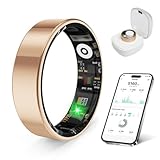
- 【Check the Size Before Purchase】 Before buying the prxxhri Smart Ring, we strongly suggest that you refer to the size chart and carefully measure the circumference of your finger. This will ensure you get the most comfortable wearing experience and easily avoid any unnecessary returns or exchanges.
- 【Real-time Accurate Sleep & Fitness Monitoring】 prxxhri smart ring tracks your sleep quality and daily activities in real time. With advanced sensors, it provides precise data about your sleep cycle, helping you optimize rest and recovery. Whether you are tracking steps, calories or exercise performance, this smart ring can provide you with the most accurate insights to support your fitness goals and enhance your overall health.It is a good choice for family and friends.
- Health Monitoring】The prxxhri ring features advanced 4.0 sensors that automatically measure your heart rate, and blood pressure every 30 min when worn. It provides continuous health tracking and comprehensive wellness management all day.
- 【3-5 Day Battery Life】 With a 3-5 day battery life, the prxxhri smart ring ensures continuous health monitoring without frequent charging. When used with the smart charging case, the usage time can even exceed 20 days. Whether you are tracking sleep patterns or fitness activities, you can count on long-lasting performance without constant interruptions.
- 【80-meter Waterproof, Suitable for Various Scenarios】 The prxxhri Smart Ring has excellent waterproof performance, with a waterproof depth of up to 80 meters. Whether it's for daily wear, an intense workout session or a pleasant swimming time, it can handle it with ease. What's more, even if you have sensitive skin, you can still enjoy an extremely comfortable wearing experience when wearing this ring.
From a comfort perspective, ceramic also brings thermal neutrality. It doesn’t feel as cold as bare metal in winter or as warm after prolonged skin contact, which matters for overnight wear and for maintaining consistent skin temperature readings. Oura isn’t changing the internal sensor stack or ring thickness here, but material choice alone can influence perceived bulk, slipperiness against adjacent fingers, and long-term skin tolerance.
This move also signals a philosophical shift. By adopting materials more common in luxury watches and jewelry, Oura is positioning the ring less as a disposable gadget and more as a long-term object. That matters in a category where competitors often treat hardware as secondary to subscriptions, and where users increasingly expect a premium wearable to look acceptable in formal and professional settings.
The charging case: solving portability, protection, and battery anxiety
The new charging case addresses one of the least glamorous but most complained-about aspects of owning a smart ring: keeping it charged without babying a loose puck. Instead of a stationary charger meant to live on a nightstand, the case functions as both a protective shell and a portable power source, allowing users to top up the ring while traveling or between activities.
Practically, this changes usage behavior. A ring with roughly a week of battery life doesn’t need daily charging, but it does need predictable, low-friction recharging to avoid gaps in sleep and recovery data. The case reduces the likelihood of leaving the charger behind, damaging it in a bag, or skipping a charge until the ring is dead.
From an ecosystem standpoint, this brings Oura closer to the accessory logic seen in true wireless earbuds and high-end wearables, where charging is integrated into the object’s lifecycle. It doesn’t extend battery life on paper, but it increases effective uptime, which is what actually matters for longitudinal health tracking.
The $99 blood testing service: lab data meets continuous wearables
The most consequential announcement is Oura’s $99 blood testing service, which moves the company decisively into preventive health territory. This is an at-home blood test kit, processed by certified labs, designed to measure biomarkers that optical sensors can only infer indirectly. While Oura hasn’t positioned this as diagnostic, the intent is to ground trends like readiness, stress, cardiovascular age, and metabolic health in objective lab results.
The service integrates directly into the Oura app, allowing users to see blood markers alongside sleep, activity, heart rate variability, and temperature trends. This creates context that wearables alone can’t provide, such as validating whether persistent fatigue aligns with iron status, inflammation markers, or metabolic indicators. It’s a snapshot rather than continuous monitoring, but it adds depth where rings are inherently limited.
There are important constraints to understand. This is not real-time data, not medical advice, and not a replacement for clinician-ordered labs. Results are periodic, user-initiated, and intended for trend awareness rather than diagnosis. Still, at $99, it undercuts many direct-to-consumer lab panels and positions Oura against platforms like Whoop and Apple, which rely entirely on sensor-derived estimates without blood-based grounding.
Pricing-wise, the service sits outside the Oura membership, signaling an à la carte approach to deeper health insights. For users already paying a monthly subscription, the value depends on how much they want corroboration and personalization beyond algorithmic scoring. For Oura, it’s a clear step toward becoming a health data hub rather than just a passive tracker.
Ceramic Ring Finishes Explained: Materials, Durability, Wearability, and Why Oura Is Leaning Into Premium Design
As Oura pushes deeper into lab-validated health data, the hardware is evolving in parallel to feel less like a disposable gadget and more like a long-term personal object. Ceramic finishes are not just an aesthetic update; they signal a shift in how Oura wants its ring to be worn, perceived, and kept over years of daily use. The message is subtle but clear: if this data is meant to guide health decisions, the device collecting it should feel permanent.
What “ceramic” means in a smart ring context
Oura’s ceramic rings use advanced zirconia-based ceramics, the same class of material found in high-end watch cases and luxury jewelry. This is not ceramic coating over metal, but a material choice that prioritizes surface hardness, color stability, and skin compatibility. Zirconia typically measures around 8 to 8.5 on the Mohs hardness scale, making it far more scratch-resistant than titanium or stainless steel.
The upside is obvious in daily wear. Keys, desks, gym equipment, and laptops are far less likely to leave visible marks, which matters for a ring that’s worn 23 hours a day. The finish also resists fading, so lighter colors stay consistent rather than developing uneven patina over time.
Durability trade-offs: scratch resistance vs impact risk
Ceramic’s strength comes with a known compromise: it is hard, but less forgiving under sharp impact. Unlike metal, which dents or deforms, ceramic can crack if subjected to a strong point load, such as a drop onto tile or a hard edge at the wrong angle. In practice, this risk is lower than many assume, but it is real and worth acknowledging.
For most users, the trade-off favors ceramic. Smart rings are low-profile, lightweight, and less exposed than watch cases, reducing impact scenarios. Oura is betting that long-term cosmetic durability matters more to its audience than extreme abuse tolerance.
Wearability: weight, thermal feel, and skin comfort
Ceramic has a distinct feel compared to metal. It is lighter than steel, similar in perceived weight to titanium, and thermally neutral, meaning it does not feel cold in winter or hot in summer. This matters for sleep tracking, where tactile awareness can subtly affect comfort and compliance.
From a dermatological standpoint, ceramic is hypoallergenic and inert. Users sensitive to nickel or certain metal alloys often tolerate ceramic better, especially with continuous wear. Over weeks and months, this can be the difference between consistent data collection and a ring that comes off overnight.
Finishing quality and why it matters for a ring with no screen
Without a display, buttons, or visible sensors, the exterior finish carries disproportionate importance. Surface uniformity, edge rounding, and polish consistency are what users interact with every time they rotate the ring or slide it on and off. Ceramic allows for a depth of finish that metal struggles to maintain once scratched.
This is where Oura is borrowing cues from watchmaking rather than consumer electronics. High-gloss ceramic reflects light differently than PVD-coated metal, and matte ceramic maintains texture without showing wear patterns. The ring becomes jewelry first, sensor platform second.
Impact on internal design: antennas, sensors, and battery
Ceramic is RF-transparent, which benefits Bluetooth communication and internal antenna design. Unlike solid metal shells, ceramic does not require as many workarounds to maintain signal quality, helping with connection stability and sync reliability. This is particularly relevant as Oura adds more data-heavy features like blood test integration and richer longitudinal analytics.
The material choice does not directly increase battery capacity, but it supports consistent performance. Combined with the new charging case, the focus shifts from raw battery life to minimizing interruptions in data collection. In an ecosystem built on trends rather than moments, that reliability compounds over time.
Why Oura is leaning into premium now
Ceramic finishes align with Oura’s broader repositioning from wellness accessory to health platform. As the company introduces paid services like blood testing and deepens its subscription model, the ring itself must justify staying on the finger indefinitely. Premium materials reinforce that commitment psychologically as much as physically.
This also differentiates Oura from competitors like Whoop, which emphasizes disposability and strap replacement, and from smartwatches, which users often remove. A ceramic ring suggests longevity, care, and intention, which matches the preventive health narrative Oura is building.
The New Oura Charging Case: Portability, Battery Management, and What It Signals About Everyday Ring Use
The move to ceramic reframes the ring as something you keep on, but the new charging case addresses the reality of how often people actually take it off. Together, they reveal a shift in priorities: fewer forced breaks in data collection, less friction around power management, and a clearer understanding that smart rings live very different lives than watches. The charging case is not an accessory flourish; it is an infrastructural update.
From bedside dock to mobile power: why a case matters
Until now, Oura’s charging experience has been largely static, centered around a single-ring puck that lives at home. That model assumes predictable routines, which is at odds with how many users actually wear the ring: during travel, overnight stays, or multi-day stretches away from a primary charger.
The new charging case introduces a buffer between the ring and the wall outlet. By carrying multiple full charges on hand, it reduces the odds that the ring hits zero during sleep or recovery windows, which are disproportionately important for Oura’s readiness and long-term trend analysis.
Battery management as a data integrity problem
Oura’s battery life has always been adequate rather than exceptional, typically requiring top-ups every few days depending on features and ring size. What changes with the charging case is not capacity on the ring itself, but the reliability of keeping it within an optimal charge range.
For a platform that emphasizes longitudinal insights over single metrics, missed nights matter. Even a single gap can skew baselines for heart rate variability, temperature trends, and sleep staging, so a portable charging safety net directly supports data continuity rather than convenience alone.
Design cues borrowed from earbuds, not watches
The closest analog to Oura’s charging case is not a smartwatch power bank but true wireless earbuds. Like earbuds, a smart ring is small, frequently worn, and easy to forget to charge until it is already depleted.
By adopting a case-based charging model, Oura implicitly acknowledges that rings behave more like passive wearables than interactive devices. There is no screen reminding you to charge it, so the system has to compensate through hardware design rather than user prompts.
What Oura has and hasn’t disclosed so far
Oura has positioned the charging case as an optional accessory rather than a replacement for the existing charger. As of launch, the company has not publicly detailed the case’s internal battery capacity, exact number of full ring charges, charging speed, or whether it supports USB-C fast charging beyond baseline expectations.
Rank #2

- ACCURATE SIZING ESSENTIAL - Oura Ring 4 uses unique sizing different from standard jewelry rings; use the Oura Ring 4 Sizing Kit to find your perfect fit before purchasing
- OURA MEMBERSHIP - First month of membership is included with purchase, for new members only. Subscription is 5.99/mo afterwards. Or opt for the annual prepaid option for 69.99. Membership is tied to your account via the Oura App, not your physical ring
- ACCURACY - SMART SENSING - Oura tracks over 50 health metrics, including sleep, activity, stress, heart health, and women’s health metrics. Oura Ring 4 is powered by Smart Sensing, which adapts to you — delivering accurate, continuous data, day and night
- LONG LASTING BATTERY - With up to 8 days of battery life, no screens and no vibrations, Oura Ring 4 allows you to focus on the present. From a workout to a night out — you’re free to forget it’s on. Until you start getting compliments
- HSA/FSA ELIGIBLE - We can accept HSA or FSA funds for the following: Oura Ring, additional chargers, and shipping
That restraint is notable. Oura is emphasizing behavioral outcomes over spec-sheet competition, framing the case as a lifestyle enabler rather than a technical upgrade, which aligns with its broader shift toward health services and subscriptions.
Everyday wear implications: fewer off-finger hours
Smart rings already have an advantage over watches in overnight comfort, but charging has remained their weak point. Users often charge during sleep because it is the easiest routine, precisely when Oura collects its most valuable data.
A charging case makes opportunistic charging viable: topping up during a shower, a commute, or desk time without being tethered to a wall. Over weeks and months, those marginal gains translate into meaningfully denser datasets.
Signaling maturity in the smart ring category
The introduction of a charging case signals that Oura sees smart rings moving beyond early-adopter tolerance for inconvenience. This is a maturation moment similar to when smartwatches shifted from daily charging anxiety to multi-day expectations through ecosystem-level solutions.
It also subtly raises expectations for competitors. As blood testing, recovery analytics, and preventive health insights become more central to Oura’s value proposition, power management stops being a hardware footnote and becomes a core part of the health promise.
Inside Oura’s $99 Blood Testing Service: What Biomarkers Are Tested, How Sampling Works, and Clinical Context
Oura’s move into blood testing is the logical extension of the ecosystem signals introduced by the charging case. If the case is about keeping the ring on your finger more consistently, the $99 blood testing service is about anchoring Oura’s passive, longitudinal signals to occasional biochemical ground truth.
This is not a pivot into diagnostics, but a deliberate step toward preventive health context. Oura is positioning blood data as a periodic calibration layer that helps explain why trends in sleep, readiness, or cardiovascular strain are moving the way they are.
What the $99 test actually includes
At launch, Oura describes the service as a single-panel blood test priced at $99 per draw, ordered through the Oura app. The company frames it as an entry-level snapshot rather than a comprehensive lab workup, designed to be repeated periodically rather than used as a one-off deep dive.
The biomarkers emphasized are those most directly relevant to Oura’s existing analytics: cardiometabolic health, inflammation, and nutrient status. Oura has indicated the panel includes markers such as HbA1c for long-term glucose control, lipid-related measures tied to cardiovascular risk, inflammatory indicators like C-reactive protein, and select micronutrients commonly associated with fatigue, recovery, and immune function.
Importantly, this is not a hormone-heavy panel and not a replacement for physician-ordered blood work. Oura is deliberately avoiding areas that would require clinical interpretation beyond lifestyle guidance, reinforcing that this service sits adjacent to wellness, not medical diagnosis.
How sampling works: low-friction by design
Oura’s blood testing is designed around accessibility rather than clinical depth. The sampling process uses an at-home collection kit, relying on a finger-prick blood sample rather than a full venous draw at a lab.
This matters for adherence. Just as the ring’s comfort and ceramic finishes aim to reduce friction in daily wear, at-home blood collection lowers the psychological and logistical barrier that keeps many users from ever testing at all.
Once collected, samples are mailed to a certified lab partner for analysis, with results flowing back into the Oura app rather than a standalone portal. The goal is to keep blood data inside the same behavioral loop as sleep scores, readiness trends, and recovery metrics.
How blood results integrate with Oura’s existing data
Blood results do not replace Oura’s daily metrics; they contextualize them. In the app, biomarkers are presented alongside historical trends in sleep, heart rate variability, resting heart rate, and activity load.
For example, elevated inflammation markers may be shown in relation to prolonged readiness suppression or increased cardiovascular strain. Changes in glucose-related markers can be viewed against long-term sleep consistency, meal timing patterns, and overnight recovery scores.
This longitudinal framing is where Oura’s ring-first approach becomes meaningful. A smartwatch can capture workouts and spot checks, but a ring that is worn nearly 24/7 provides the behavioral substrate that makes occasional blood data interpretable over months, not days.
Clinical context: what this is and what it is not
Oura is explicit that its blood testing service is not diagnostic and not a substitute for clinical care. Results are accompanied by educational ranges and trend explanations, not medical advice or treatment recommendations.
This distinction matters legally and ethically, but it also shapes user expectations. Blood markers fluctuate for reasons ranging from acute illness to travel stress, and Oura’s value lies in helping users understand those fluctuations in the context of their lived behavior, not in flagging disease states.
For users already under medical supervision, Oura’s blood data is best viewed as complementary. It can help explain why recovery feels off or why sleep quality has plateaued, but it should not be used to self-manage conditions without professional input.
Pricing, frequency, and who it makes sense for
At $99 per test, Oura’s pricing lands well below traditional comprehensive panels but above impulse-level wellness purchases. This positions the service for periodic use, perhaps one to three times per year, rather than monthly monitoring.
The service makes the most sense for existing Oura users who already trust the app as their primary health dashboard. Without the ring’s continuous data, the blood results lose much of their interpretive power.
For prospective buyers comparing Oura to alternatives like Whoop or an Apple Watch, blood testing highlights a philosophical difference. Oura is betting that fewer, higher-quality touchpoints combined with deep longitudinal context will outperform constant prompts and screens when it comes to sustainable health insight.
Data Integration Deep Dive: How Blood Test Results Combine With Oura Ring Metrics (Sleep, HRV, Readiness, Trends)
What differentiates Oura’s blood testing service is not the panel itself, but where the results land. Instead of existing as a static PDF or a one-off dashboard, blood markers are folded into an ecosystem that already understands how you sleep, recover, move, and respond to stress across weeks and months.
This is where Oura’s emphasis on passive, near-constant wear pays off. The ring’s ceramic construction, slim profile, and multi-day battery life mean most users rarely take it off, giving Oura a continuous physiological baseline that blood data can meaningfully anchor to.
From snapshot to timeline: contextualizing blood markers
Blood tests are inherently episodic. A single draw reflects a moment influenced by recent sleep, illness, training load, nutrition, and even travel, which is why standalone results often feel confusing or contradictory.
Within the Oura app, blood markers are positioned as timestamped reference points on an existing health timeline. Users can see how a marker like inflammation, iron status, or metabolic indicators aligns with preceding weeks of sleep efficiency, resting heart rate, temperature deviation, and HRV trends.
This transforms interpretation from “Is this number good or bad?” into “What was happening in my body leading up to this?” That shift reduces anxiety-driven overreaction while encouraging pattern recognition rather than fixation on absolute values.
Sleep data as the interpretive backbone
Oura’s sleep tracking is already one of its strongest differentiators versus wrist-based wearables, thanks to finger-based PPG sensitivity and minimal motion artifact. Blood results are layered on top of detailed sleep architecture, timing consistency, and overnight physiological load.
If a blood marker associated with recovery or immune stress comes back outside an optimal range, the app can point to recent sleep debt, irregular bedtimes, or reduced deep sleep as plausible contributors. Conversely, stable blood markers paired with strong sleep metrics reinforce which behaviors are working.
This bidirectional relationship matters because it reframes sleep from a wellness platitude into a measurable lever that correlates with internal biomarkers, not just subjective energy levels.
Rank #3

- ACCURATE SIZING ESSENTIAL - Oura Ring 4 uses unique sizing different from standard jewelry rings; use the Oura Ring 4 Sizing Kit to find your perfect fit before purchasing
- OURA MEMBERSHIP - First month of membership is included with purchase, for new members only. Subscription is 5.99/mo afterwards. Or opt for the annual prepaid option for 69.99. Membership is tied to your account via the Oura App, not your physical ring
- ACCURACY - SMART SENSING - Oura tracks over 50 health metrics, including sleep, activity, stress, heart health, and women’s health metrics. Oura Ring 4 is powered by Smart Sensing, which adapts to you — delivering accurate, continuous data, day and night
- LONG LASTING BATTERY - With up to 8 days of battery life, no screens and no vibrations, Oura Ring 4 allows you to focus on the present. From a workout to a night out — you’re free to forget it’s on. Until you start getting compliments
- HSA/FSA ELIGIBLE - We can accept HSA or FSA funds for the following: Oura Ring, additional chargers, and shipping
HRV and readiness: explaining the “why” behind scores
Oura’s Readiness Score is a composite that blends HRV, resting heart rate, body temperature trends, sleep quality, and recent activity. For long-term users, changes in Readiness are familiar, but the underlying causes can still feel opaque.
Blood testing adds explanatory depth rather than altering daily scores. If HRV has been suppressed for weeks and a blood marker suggests elevated physiological stress or suboptimal recovery capacity, the relationship becomes clearer without implying causation or diagnosis.
Importantly, Oura does not use blood results to dynamically change Readiness algorithms day-to-day. Instead, the data sits alongside HRV trends, offering context that helps users decide whether a low score reflects temporary lifestyle strain or something more persistent worth addressing with professional guidance.
Trend analysis over months, not optimization theater
One of the more restrained aspects of Oura’s approach is its avoidance of immediate “action steps” tied to blood data. There are no aggressive optimization prompts, supplement recommendations, or daily targets derived from lab values.
Instead, the app emphasizes longitudinal comparison. Users can see whether markers improve, worsen, or remain stable across multiple tests and how those changes map to evolving sleep consistency, training volume, seasonal stress, or recovery habits.
This slower feedback loop aligns with the realities of biology. Most meaningful changes in blood markers occur over months, and Oura’s ring-first data model supports that cadence far better than devices optimized for constant alerts and on-wrist decision-making.
What Oura does not integrate, by design
It is equally important to note what Oura deliberately avoids. Blood data is not used for real-time alerts, medical risk flags, or prescriptive health interventions. There is no attempt to replace clinical interpretation or provide diagnostic thresholds.
This restraint reduces both regulatory complexity and user misinterpretation. In a market where some platforms blur the line between wellness and medicine, Oura’s separation keeps the experience grounded and lowers the risk of users drawing unsafe conclusions from incomplete data.
For consumers accustomed to the Apple Watch’s on-demand metrics or Whoop’s daily strain coaching, this may feel conservative. For users seeking sustainable insight rather than constant optimization pressure, it will feel refreshingly disciplined.
Ecosystem implications: why integration matters more than the test itself
On its own, a $99 blood test is easy to replicate. What is harder to replicate is a platform that can meaningfully contextualize that data using a device people actually wear while sleeping, working, traveling, and recovering.
The ceramic ring’s durability and comfort, paired with the new charging case that reduces friction around power management, increase the likelihood of uninterrupted data collection. That continuity is what allows blood results to function as interpretive anchors instead of isolated health trivia.
In this sense, Oura’s blood testing service is less a new feature and more an ecosystem amplifier. It reinforces the value of long-term ring ownership and positions Oura not as a gadget, but as a slow-burn health record built around real-world wearability and biological patience.
Limitations and Caveats: Testing Frequency, Medical Accuracy, Privacy Considerations, and What This Is Not
As Oura expands from passive sensing into lab-based biomarkers, the boundaries of the system matter as much as the features themselves. The ceramic finishes, charging case, and blood testing service all strengthen the ecosystem, but none eliminate the fundamental constraints of biology, testing logistics, or medical regulation.
Understanding these limits is essential for setting expectations and deciding whether this service complements your existing health routine or introduces friction you may not want.
Testing frequency: why this is inherently not “always-on” health data
The $99 blood testing service is designed for periodic snapshots, not continuous monitoring. Unlike sleep, heart rate, or temperature trends captured nightly by the ring, blood markers are expected to be measured a few times per year, not weekly or monthly for most users.
This cadence reflects both physiology and practicality. Many biomarkers change slowly, and frequent testing would add cost, burden, and noise without meaningfully improving insight for a generally healthy population.
For users accustomed to daily readiness scores or strain metrics, this slower rhythm can feel disconnected. In practice, the blood test functions more like a calibration point for long-term trends rather than a feedback loop that drives short-term behavior changes.
Medical accuracy: lab-grade testing, consumer-grade interpretation
The blood samples themselves are processed through certified laboratories, which means the raw measurements are clinically valid. That distinction is important: this is not a finger-waving estimate or optical proxy like SpO₂ or skin temperature.
Where Oura draws a clear line is interpretation. Results are contextualized against population ranges and your historical data, but they are not framed as diagnoses, treatment recommendations, or risk predictions.
This protects users from false certainty but also limits how actionable the data may feel. If you are expecting medical-grade insight without involving a clinician, this service will feel intentionally restrained.
What this is not: no diagnostics, no alerts, no clinical replacement
Oura’s blood testing service is not a diagnostic tool, a disease screening program, or a substitute for primary care. There are no emergency alerts, no thresholds that trigger warnings, and no claims of detecting conditions early.
This is a deliberate design choice, not a technical shortcoming. By keeping blood data firmly in the wellness and self-tracking category, Oura avoids the pitfalls that have challenged other health platforms attempting to cross into regulated medical territory.
For some users, especially those managing chronic conditions, this limitation will be decisive. Oura is building a longitudinal health record, not a medical monitoring device.
Privacy and data stewardship: more sensitive data, higher stakes
Blood biomarkers carry a different level of sensitivity than sleep scores or step counts. Oura states that users retain control over their data, and that blood results are handled with the same privacy framework as existing biometric information.
Even so, expanding into lab data raises new questions about data storage, third-party processing, and long-term retention. Users must be comfortable with the idea that deeply personal biological information is now part of their wearable ecosystem.
This makes Oura’s historically conservative posture around data sharing and advertising especially relevant. The company’s value proposition increasingly depends on trust, not just accuracy or industrial design.
Cost stacking and value perception over time
At $99 per test, blood analysis is not prohibitively expensive, but it is additive. When combined with the cost of the ring, optional ceramic finishes, and the ongoing Oura membership, the total investment becomes non-trivial.
The value equation only works if users engage with the data over months or years. A single test without follow-up context is unlikely to justify the expense, especially for users who already receive annual blood work through traditional healthcare channels.
This positions the service squarely for long-term Oura users rather than casual buyers. It rewards consistency, patience, and a willingness to think in trends rather than instant answers.
Hardware reality check: rings still have physical limits
Even with improved ceramic durability and a more travel-friendly charging case, a smart ring remains a compact device. Battery life, sensor placement, and comfort constraints mean Oura must prioritize nighttime and passive tracking over active, high-frequency measurements.
Rank #4
- ACCURATE SIZING ESSENTIAL - Oura Ring 4 uses unique sizing different from standard jewelry rings; use the Oura Ring 4 Sizing Kit to find your perfect fit before purchasing
- OURA MEMBERSHIP - First month of membership is included with purchase, for new members only. Subscription is 5.99/mo afterwards. Or opt for the annual prepaid option for 69.99. Membership is tied to your account via the Oura App, not your physical ring
- ACCURACY - SMART SENSING - Oura tracks over 50 health metrics, including sleep, activity, stress, heart health, and women’s health metrics. Oura Ring 4 is powered by Smart Sensing, which adapts to you — delivering accurate, continuous data, day and night
- LONG LASTING BATTERY - With up to 8 days of battery life, no screens and no vibrations, Oura Ring 4 allows you to focus on the present. From a workout to a night out — you’re free to forget it’s on. Until you start getting compliments
- HSA/FSA ELIGIBLE - We can accept HSA or FSA funds for the following: Oura Ring, additional chargers, and shipping
Blood testing does not change that equation; it complements it. The ring provides context, not causality, and its strength remains unobtrusive wearability rather than comprehensive physiological coverage.
Users expecting the blood service to compensate for what rings cannot measure directly may misunderstand the intent. Oura is layering depth onto an already narrow but reliable data stream, not trying to become an all-in-one health device.
The bigger picture: intentional limits as a strategic choice
Taken together, these caveats reveal a consistent philosophy. Oura is expanding carefully, adding depth without chasing immediacy, and resisting the temptation to over-medicalize consumer hardware.
For the right user, these constraints are not flaws but guardrails. For others, particularly those seeking real-time intervention or clinical-grade insight, they define exactly why this ecosystem may not be the right fit.
The blood testing service, like the ceramic ring and charging case, enhances continuity rather than capability. Its usefulness depends less on what it promises today and more on how comfortably it fits into a long-term, low-friction health record built around everyday wear.
Pricing and Value Analysis: Ring Cost, Membership Fees, Blood Testing Add-On, and Total Cost of Ownership
Viewed through the lens of Oura’s intentionally narrow, long-horizon philosophy, pricing becomes less about the sticker shock of individual components and more about the cumulative commitment to an ecosystem. The ceramic finishes, charging case, and blood testing service do not reset Oura’s cost structure so much as clarify who the platform is really built for.
This is not a one-time gadget purchase. It is an ongoing relationship with hardware, software, and now optional biological sampling layered over time.
Ring pricing: ceramic finishes push Oura further into luxury-adjacent territory
The core Oura Ring remains priced in the premium wearable bracket, with standard finishes historically sitting around the low-to-mid $300 range and higher-end materials pushing well beyond that. The newly announced ceramic finishes sit firmly at the top of the lineup, positioning the ring closer to fine jewelry than disposable tech.
Ceramic offers tangible benefits beyond aesthetics. It improves scratch resistance over coated titanium, feels warmer and smoother on the finger during sleep, and better resists cosmetic wear from constant contact with desks, gym equipment, and pockets.
That said, the ceramic upgrade is primarily a longevity and comfort play, not a functional one. Sensors, battery life, and software features remain consistent across finishes, so buyers are paying for durability, appearance, and the likelihood that the ring will still look acceptable after years of 24/7 wear.
The charging case: small accessory, meaningful quality-of-life cost
Oura’s new charging case is priced as an accessory rather than a core requirement, but it subtly shifts the ownership experience. Previously, charging the ring required a fixed puck and cable, reinforcing the idea that Oura lived on a nightstand.
The case introduces portability and redundancy. It makes weekend travel, gym bags, and work trips easier without forcing users to pack proprietary cables, and it reduces anxiety around battery management for a device that cannot be worn while charging.
From a value perspective, the charging case is unlikely to sway new buyers on its own. Its appeal is strongest for long-term users who already see the ring as a daily health companion and are willing to pay extra to remove friction from an established habit.
Membership fees: the real cost driver over time
Oura’s monthly membership remains the most consequential line item in the value equation. Without an active subscription, the ring’s data access is sharply limited, turning what looks like a premium piece of hardware into a largely passive sensor.
At roughly the cost of a mid-tier streaming service each month, the fee grants access to readiness scores, sleep staging, temperature trends, recovery insights, and long-term analytics. Over multiple years, this recurring charge can easily surpass the initial cost of the ring itself.
For engaged users, the membership fee is defensible because Oura’s value compounds with time. Trends become more meaningful after six months, seasonal patterns emerge after a year, and multi-year baselines are where the platform truly differentiates itself from smartwatch dashboards built around daily metrics.
The $99 blood testing service: optional depth, not a default expense
The newly announced $99 blood testing service sits deliberately outside the core subscription. It is priced per test rather than bundled, reinforcing that this is an occasional calibration tool rather than a routine feature.
What users are paying for is not just lab processing but interpretation in context. Blood biomarkers are overlaid with Oura’s longitudinal data, allowing changes in sleep, temperature, and recovery to be viewed alongside snapshots of metabolic, cardiovascular, or inflammatory markers.
Value here depends heavily on cadence. A single test offers limited insight, while periodic testing spaced across months or years begins to justify the cost by anchoring wearable-derived trends to physiological reality.
Total cost of ownership: who the math actually works for
When hardware, accessories, membership, and optional blood testing are tallied, Oura’s total cost of ownership quickly exceeds that of most smartwatches. Unlike an Apple Watch, however, Oura is not chasing breadth of features or app ecosystems.
The value proposition favors users who prioritize comfort, battery life measured in days rather than hours, and a device that disappears into daily life rather than demanding interaction. Rings are worn during sleep without friction, do not compete with mechanical watches during the day, and collect data passively with minimal behavior change.
For users who actively review trends, act on recovery signals, and revisit their data over long timeframes, the cumulative cost aligns with the depth of insight delivered. For casual users or those seeking immediate, actionable feedback from workouts or stress events, the same math will feel hard to justify.
How Oura’s pricing compares to alternatives
Against Whoop, Oura’s model trades higher upfront hardware costs for a lower long-term subscription burden. Against an Apple Watch, it sacrifices versatility and real-time feedback in exchange for comfort, battery life, and sleep-first accuracy.
The blood testing service further differentiates Oura from both camps. Neither Whoop nor Apple currently integrates consumer-accessible blood testing directly into their ecosystems in this way, making Oura’s $99 add-on less about competition and more about signaling a preventive health direction.
Ultimately, Oura’s pricing structure reinforces a clear message. This ecosystem is designed for people willing to invest steadily, think in trends, and accept that meaningful health insight is built slowly rather than unlocked instantly.
Ecosystem Positioning: How This Move Stacks Up Against Whoop, Apple Watch, Garmin, and Preventive Health Platforms
Seen in context, Oura’s ceramic finishes, charging case, and optional $99 blood testing service are not incremental accessories. They are ecosystem signals, each aimed at reinforcing Oura’s position as a low-friction, long-horizon health platform rather than a performance tracker or smartwatch replacement.
This matters because Oura is no longer competing on sensors alone. It is competing on how comfortably users can live with its hardware, how long they stay subscribed, and how credibly its data can claim to reflect underlying physiology rather than surface-level activity.
Against Whoop: from recovery scores to physiological grounding
Whoop remains Oura’s closest conceptual rival, with a subscription-first model, recovery-centric insights, and an emphasis on trends over screens. Where Whoop doubles down on continuous strain and coaching loops, Oura is leaning into comfort, discretion, and now biochemical validation.
The ceramic ring finishes and charging case sharpen this contrast. Oura looks and wears more like jewelry, with improved scratch resistance and a premium feel that blends into daily life, while Whoop still presents as overt sports equipment with fabric bands and a utilitarian charger. For users who wear mechanical watches or value minimalism, Oura’s form factor remains uniquely non-competitive with traditional wristwear.
The blood testing service is the more strategic differentiator. Whoop infers recovery from heart rate variability, resting heart rate, and sleep metrics; Oura is now offering a way to periodically anchor those signals to biomarkers like lipids, inflammation markers, or metabolic indicators. This does not replace daily recovery scores, but it reframes them as proxies that can be checked against lab data, something Whoop currently does not integrate directly.
💰 Best Value

- 【Check the Size Before Purchase】 Before buying the prxxhri Smart Ring, we strongly suggest that you refer to the size chart and carefully measure the circumference of your finger. This will ensure you get the most comfortable wearing experience and easily avoid any unnecessary returns or exchanges.
- 【Real-time Accurate Sleep & Fitness Monitoring】 prxxhri smart ring tracks your sleep quality and daily activities in real time. With advanced sensors, it provides precise data about your sleep cycle, helping you optimize rest and recovery. Whether you are tracking steps, calories or exercise performance, this smart ring can provide you with the most accurate insights to support your fitness goals and enhance your overall health.It is a good choice for family and friends.
- Health Monitoring】The prxxhri ring features advanced 4.0 sensors that automatically measure your heart rate, and blood pressure every 30 min when worn. It provides continuous health tracking and comprehensive wellness management all day.
- 【3-5 Day Battery Life】 With a 3-5 day battery life, the prxxhri smart ring ensures continuous health monitoring without frequent charging. When used with the smart charging case, the usage time can even exceed 20 days. Whether you are tracking sleep patterns or fitness activities, you can count on long-lasting performance without constant interruptions.
- 【80-meter Waterproof, Suitable for Various Scenarios】 The prxxhri Smart Ring has excellent waterproof performance, with a waterproof depth of up to 80 meters. Whether it's for daily wear, an intense workout session or a pleasant swimming time, it can handle it with ease. What's more, even if you have sensitive skin, you can still enjoy an extremely comfortable wearing experience when wearing this ring.
Against Apple Watch: depth over immediacy
Apple Watch continues to dominate on breadth, with real-time notifications, ECG, AFib history, workout detection, and third-party app ecosystems. Oura does not challenge that dominance, and these updates make clear it is not trying to.
Instead, the ceramic finishes and charging case reinforce Oura’s role as a device you forget you are wearing. Multi-day battery life, no glowing screen, and comfort during sleep remain core advantages, particularly for users who already wear an Apple Watch selectively or not at all.
The blood testing service pushes Oura further into territory Apple approaches indirectly. Apple aggregates lab results through Health records, but it does not initiate testing or frame results inside its own readiness and sleep narratives. Oura’s approach is narrower but more opinionated, integrating lab snapshots directly into its interpretation layer rather than leaving users to reconcile disparate data sources on their own.
Against Garmin and performance-first wearables
Garmin’s ecosystem excels at training load, endurance metrics, and outdoor navigation, backed by devices with physical buttons, rugged materials, and weeks-long battery life. Oura does not compete on athletic specificity, and these announcements underscore that divide.
Ceramic finishes and a compact charging case are lifestyle upgrades, not performance features. They appeal to users who value durability against scratches and a refined look over bezel protection or water-rated buttons.
Where Garmin offers physiological depth through VO2 max, lactate threshold, and training readiness, Oura is betting on longitudinal health relevance. Blood testing complements this by adding markers that matter outside of training cycles, such as cardiovascular risk or metabolic health, areas Garmin touches only indirectly.
Positioning within preventive health platforms
The $99 blood testing service places Oura adjacent to, but not in direct competition with, companies like Function Health, InsideTracker, or primary care-based lab panels. Those platforms prioritize comprehensive biomarker coverage and physician-facing reports, often at significantly higher annual costs.
Oura’s advantage is integration rather than scope. By tying lab results into existing sleep, readiness, and trend data, Oura lowers the barrier for users who are curious about preventive health but not ready to commit to full-scale lab subscriptions or concierge medicine.
The limitation is cadence and interpretation. Periodic consumer blood tests cannot capture day-to-day fluctuations, and Oura must remain cautious in how it frames insights to avoid medical overreach. The value lies in pattern validation over time, not diagnosis or acute intervention.
What this reveals about Oura’s long-term strategy
Taken together, these updates show Oura investing in retention and legitimacy rather than feature arms races. Ceramic materials improve durability and perceived value, the charging case reduces friction for travel and daily use, and blood testing adds a layer of credibility to wearable-derived insights.
This positions Oura as a slow-health platform. It is designed for users who think in months and years, who value comfort and invisibility, and who are willing to periodically spend more to deepen their understanding rather than upgrade hardware annually.
In an ecosystem crowded with screens, alerts, and performance metrics, Oura is carving out space as a quiet, data-rich companion. These moves make that positioning clearer, more defensible, and more distinct from both fitness trackers and clinical health platforms.
Who Should Care—and Who Shouldn’t: Ideal Users, Use Cases, and Whether This Pushes Oura Into ‘Preventive Health’ Territory
All of these moves—ceramic finishes, a charging case, and optional blood testing—make sense only if you look at Oura through the lens it is clearly favoring. This is not about attracting every fitness enthusiast or smartwatch upgrader. It is about deepening relevance for a specific kind of long-term user.
Ideal users: long-horizon health thinkers, not daily metric chasers
The clearest beneficiary is the user who already treats Oura as an always-on background device. If you value comfort, minimal interaction, and data that accumulates meaning over months rather than days, these updates directly improve the experience.
Ceramic finishes matter here not just aesthetically, but psychologically. A more durable, scratch-resistant material reinforces the idea that the ring is meant to be worn continuously, through sleep, work, travel, and rest days, without feeling disposable or precious.
The charging case similarly signals long-term use. It reduces friction for users who travel frequently, work remotely, or simply want fewer charging rituals competing for attention, a meaningful upgrade when battery life is measured in days rather than hours.
Users curious about preventive health, but not ready for clinical platforms
The $99 blood testing service is squarely aimed at health-aware consumers who want more than wearable-derived proxies but less than a full lab subscription. These users may already understand concepts like cholesterol, glucose, or inflammation markers but lack the context to connect them to daily behaviors.
By integrating blood markers alongside sleep regularity, readiness trends, and long-term baselines, Oura offers a narrative rather than a report. The value is not the raw lab numbers, but the ability to see whether what the ring has been suggesting aligns with what the blood confirms.
This is particularly relevant for users entering their late 30s, 40s, and beyond, where cardiovascular and metabolic risk begin to matter more than peak VO2 max or interval splits.
Existing Oura users weighing ecosystem depth versus alternatives
For current members, these updates quietly strengthen the case to stay. Whoop emphasizes performance strain and recovery cycles, while Apple Watch continues to expand clinical-grade features behind a screen-first interface.
Oura’s approach remains different. It prioritizes passive data collection, multi-day averages, and subtle behavioral nudges, now reinforced by optional lab validation. If you already prefer a ring over a wrist-based device for comfort, sleep tracking, and discretion, these additions make the ecosystem feel more complete rather than more complicated.
The ceramic finishes also matter here in terms of perceived value. As smart rings become more common, material quality and finishing will increasingly separate premium devices from commodity wearables.
Who shouldn’t care: performance maximalists and hands-on athletes
If your primary goal is real-time training guidance, pace alerts, or structured workout feedback, none of these announcements meaningfully change Oura’s limitations. A charging case does not replace GPS, and blood tests will not optimize your intervals.
Similarly, users who enjoy interacting with their data multiple times per day may find Oura’s slow, reflective feedback loop frustrating. The platform still assumes you are willing to wait for trends to emerge rather than react immediately.
For these users, a smartwatch or dedicated fitness tracker remains the better tool, even if it means sacrificing comfort or battery longevity.
Does this cross into preventive health territory?
Cautiously, yes—but with clear guardrails. Preventive health is not defined by diagnoses or treatments, but by early awareness, longitudinal context, and behavior change over time.
Oura’s blood testing does not attempt to replace a physician or comprehensive lab panels. Instead, it acts as a periodic anchor point, validating or questioning what wearable-derived trends suggest about sleep debt, recovery capacity, and systemic stress.
The risk lies in overinterpretation, which Oura appears aware of. As long as insights are framed around patterns, baselines, and prompts for follow-up rather than conclusions, this sits comfortably in the preventive health category without becoming medicalized.
The bottom line for buyers and upgraders
These updates will not suddenly make Oura essential for everyone. They are designed to make Oura more meaningful for the right people.
If you want a comfortable, durable, low-interruption device that quietly builds a personal health history—and now offers optional biological context to support that story—this is Oura at its most coherent. If you want immediate performance feedback, constant interaction, or clinical certainty, this ecosystem will still feel intentionally restrained.
In that restraint lies Oura’s identity. With these additions, it is not trying to be louder or faster, but steadier, deeper, and more aligned with how long-term health actually unfolds.