The Pebble 2 sits at a strange intersection of nostalgia and genuine practicality. People don’t search for it today because it was the most powerful smartwatch of its era, but because it represented a different philosophy—one that modern wearables have largely abandoned. If you’re here, you’re probably wondering not just what the Pebble 2 was, but whether its ideas still make sense in 2026, and whether owning one today is charmingly minimalist or simply outdated.
This section matters because understanding the Pebble 2’s context explains both its cult following and its limitations. Pebble didn’t lose because its hardware failed; it lost because the smartwatch market changed direction. To judge the Pebble 2 fairly today, you have to understand the world it was built for, and why that world disappeared.
The Pebble Philosophy in a Pre-Apple Watch World
When the Pebble 2 launched in late 2016, the smartwatch category was still unsettled. Apple Watch existed, Android Wear was evolving, and fitness bands were splitting off into their own category. Pebble’s core belief was that a smartwatch should be an extension of your phone, not a tiny computer strapped to your wrist.
That philosophy drove every decision: a low-power e-paper display instead of OLED, physical buttons instead of touch, and multi-day battery life instead of flashy animations. Pebble users checked notifications, controlled music, tracked steps, and occasionally launched lightweight apps, but the watch never tried to replace the phone. In hindsight, it feels closer to a modern notification-first fitness watch than a traditional smartwatch.
🏆 #1 Best Overall
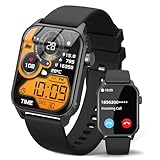
- 【1.83" HD Display & Customizable Watch Faces】Immerse yourself in a vibrant 1.83-inch IPS display, boasting a sharp resolution of 240*284 for crystal-clear visuals. Effortlessly personalize your smart watch with a wide array of customizable watch faces to suit your personal style for every occasion—whether trendy, artistic, or minimalist—ideal for casual, sporty, or professional. Its sleek, modern design complements any outfit, blending technology and fashion seamlessly for everyday wear
- 【120 Sports Modes & Advanced Health Tracking】Our TK29 smart watches for women men come equipped with 120 sports modes, allowing you to effortlessly track a variety of activities such as walking, running, cycling, and swimming. With integrated heart rate and sleep monitors, you can maintain a comprehensive overview of your health, achieve your fitness goals, and maintain a balanced, active lifestyle with ease. Your ideal wellness companion (Note: Step recording starts after exceeding 20 steps)
- 【IP67 Waterproof & Long-Lasting Battery】Designed to keep up with your active lifestyle, this smartwatch features an IP67 waterproof rating, ensuring it can withstand splashes, sweat, and even brief submersion, making it perfect for workouts, outdoor adventures, or rainy days. Its reliable 350mAh battery offering 5-7 days of active use and up to 30 days in standby mode, significantly reducing frequent charging. Ideal for all-day wear, whether you’re at the gym, outdoors, or simply on the go
- 【Stay Connected Anytime, Anywhere】Stay informed and in control with Bluetooth call and music control features. Receive real-time notifications for calls, messages, and social media apps like Facebook, WhatsApp, Twitter, and Instagram directly on your smartwatch. Easily manage calls, control your music playlist, and stay updated without needing to reach for your phone. Perfect for work, workouts, or on-the-go, this watch keeps you connected and never miss important updates wherever you are
- 【Multifunction & Wide Compatibility】Seamlessly handle heart rate monitoring, sleep tracking, and enjoy conveniences like camera/music control, Seamlessly handle heart rate monitoring, sleep tracking, and more-all directly from your wrist. This 1.83 inches HD smartwatch is compatible with iPhone (iOS 9.0+) & Android (5.0+), ensuring smooth daily connectivity and convenience throughout your day. More than just a timepiece, it’s a stylish, all-in-one wearable for smarter, healthier living
What Made the Pebble 2 Different from Everything Else
The Pebble 2 refined the original Pebble formula rather than reinventing it. The polycarbonate case was lighter and thinner than earlier models, the buttons were clickier and more reliable, and the e-paper display remained always-on and sunlight-readable. At roughly 31mm wide and just over 11mm thick, it wore more like a small digital watch than a gadget.
Battery life was the headline feature. Five to seven days was normal, not aspirational, even with notifications flowing constantly. There was no charging anxiety, no nightly ritual, and no need to baby the battery. In today’s market, where many entry-level smartwatches still struggle to clear two days, that endurance remains impressive.
Fitness Tracking Without the Fitness Obsession
The Pebble 2 added heart-rate monitoring, which was controversial at the time and feels primitive now. It tracked steps, sleep, and continuous heart rate, but didn’t pretend to be a training computer. There was no GPS, no advanced metrics, and no deep workout analytics unless you leaned heavily on third-party apps.
What it offered instead was passive awareness. You wore it, it collected basic data, and it stayed out of the way. For many users, that balance was ideal, and it’s one reason the Pebble 2 still appeals to people burned out by hyper-detailed health dashboards and constant activity nudges.
The Software Ecosystem That Refused to Die
Pebble the company collapsed shortly after the Pebble 2 launched, with Fitbit acquiring its assets and shutting down official support. By normal tech logic, that should have been the end. Instead, the community stepped in.
Projects like Rebble kept the Pebble ecosystem alive long after its official death, restoring app downloads, notifications, and weather services. While compatibility requires more effort today—especially on newer versions of iOS and Android—the fact that a discontinued smartwatch from 2016 can still function meaningfully in 2026 is remarkable. That longevity is part of why people still care.
Why the Pebble 2 Still Gets Compared to Modern Budget Watches
In pure specs, the Pebble 2 loses to almost any modern smartwatch under $100. You won’t get a color touchscreen, voice assistants, GPS, or rich health metrics. What you get instead is focus, restraint, and a user experience that values reliability over features.
For certain users—minimalists, developers, notification-heavy professionals, or anyone who prioritizes battery life above all else—the Pebble 2 still competes on its own terms. It isn’t better than modern watches, but it is different in a way the market no longer serves well, which is exactly why it refuses to be forgotten.
Design, Comfort, and Build Quality: Lightweight Plastic Done Right
After talking about longevity and restraint at the software level, the physical design of the Pebble 2 makes even more sense. This is a watch built to disappear on your wrist, not to perform as jewelry or a tech status symbol. In an era now dominated by glass slabs and metal frames, Pebble’s plastic-first approach feels almost contrarian—and surprisingly well judged.
A Familiar Pebble Shape, Refined
At first glance, the Pebble 2 looks almost identical to the original Pebble and Pebble Steel models. The softly rounded rectangular case, four-button layout, and unapologetically utilitarian aesthetic remained intact. Dimensions are compact by modern standards, measuring roughly 39 x 30 x 5.2 mm, and that thin profile is still impressive even today.
The case is made from polycarbonate rather than metal, but the finish avoids the toy-like feel you might expect. Pebble opted for a matte, slightly textured surface that resists fingerprints and hides scuffs well, especially on darker colorways. It doesn’t scream premium, but it also doesn’t feel cheap in daily handling.
Incredibly Light, Effortlessly Comfortable
Weight is where the Pebble 2 still embarrasses modern budget smartwatches. At around 31 grams with the strap, it’s so light that you quickly forget it’s there. That lack of wrist presence becomes a defining feature over weeks of wear, not just a spec-sheet advantage.
For sleep tracking and all-day notification duty, this matters more than it sounds. There’s no pressure point on the wrist, no top-heavy case shifting during movement, and no need to loosen the strap to stay comfortable. Even users sensitive to bulky wearables tend to tolerate the Pebble 2 remarkably well.
Buttons Over Touch: A Design Choice That Aged Well
The four physical buttons—two on the right, one on the left, plus a back button—remain one of Pebble’s most underrated design decisions. They offer consistent tactile feedback and work just as well with gloves, wet hands, or in cold weather. In 2026, that reliability still feels refreshing.
Because there’s no touchscreen, the display is always readable without accidental inputs. Scrolling notifications, launching apps, and controlling music feels deliberate rather than fiddly. Compared to modern budget watches with laggy touch panels, Pebble’s button-driven navigation often feels faster and more predictable.
The E-Paper Display: Practical Over Pretty
The black-and-white e-paper display is a core part of the Pebble 2’s physical identity. At 1.26 inches with a 144 x 168 resolution, it’s not sharp by today’s standards, but it remains exceptionally legible. Sunlight readability is excellent, often outperforming modern LCD-based budget watches outdoors.
There’s a subtle front light for nighttime visibility, activated via a wrist flick or button press. It’s evenly diffused and easy on the eyes, reinforcing the watch’s always-on, low-distraction philosophy. You won’t get animations or visual flair, but you will get instant readability with zero battery anxiety.
Strap System and Real-World Wearability
The Pebble 2 uses standard 22 mm quick-release straps, which gives it more flexibility than many modern proprietary systems. The included silicone strap is soft, lightweight, and breathable enough for all-day wear, though it lacks the premium feel of modern fluoroelastomer bands. Still, replacements are cheap, widely available, and easy to swap.
Because the watch is so light, strap choice has an outsized impact on comfort. Pair it with a nylon or fabric strap, and it becomes almost unnoticeable. For users considering a second-hand purchase today, worn or stretched original straps are common, but replacements are thankfully trivial.
Durability and Long-Term Wear Concerns
Pebble rated the Pebble 2 for 30 meters of water resistance, which translates to splash-proof and rain-safe rather than swim-ready by modern standards. Hand washing, showers, and light exposure were generally fine in practice, but this was never a sports watch built for water abuse.
Long-term durability is the bigger concern in 2026. Many Pebble 2 units developed button failures over time due to internal membrane degradation, a known weak point of the design. Plastic cases also show age more clearly than metal, with micro-scratches and shine developing after years of wear.
That said, when you find a well-preserved unit, the overall build still holds up better than expected. The Pebble 2 wasn’t built to feel luxurious; it was built to be worn constantly. A decade later, that design philosophy remains evident every time it quietly does its job without demanding attention.
E‑Paper Display Experience: Readability, Backlight, and Timeless Practicality
The Pebble 2’s e‑paper display is the core reason the watch still feels relevant in 2026, especially when viewed through the lens of daily usability rather than spec-sheet competition. It’s a screen designed to be glanced at dozens of times a day without friction, fatigue, or battery penalty. That philosophy becomes clearer the longer you live with it.
Daylight Readability and Always‑On Clarity
The 1.26‑inch black-and-white e‑paper panel remains permanently visible, with no wake gesture required. In direct sunlight, contrast actually improves, making time, notifications, and simple widgets easier to read outdoors than many modern budget LCD watches. This is one of the few smartwatch displays that behaves more like a traditional watch dial than a miniature phone screen.
Resolution is modest by today’s standards at 144 × 168 pixels, but the pixel density is well judged for its size. Text is crisp enough for notifications, and Pebble’s UI favors high-contrast fonts and layouts that avoid clutter. You never feel like the display is fighting its own limitations.
Interface Density and Practical Information Design
Pebble OS was built around the constraints of e‑paper, and it shows in how efficiently information is presented. Watch faces prioritize legibility over decoration, often displaying time, date, steps, and battery status without visual noise. Even third-party faces from the old Pebble ecosystem tend to respect these constraints, aging better than early color smartwatch designs.
Scrolling through menus or notifications produces brief flashes as the display refreshes, a characteristic of e‑paper that feels dated but never distracting. More importantly, the content remains readable even mid-refresh, reinforcing the sense that the display exists to inform rather than impress.
Backlight Behavior and Low‑Light Usability
In low light, the Pebble 2 relies on a soft front light rather than a traditional backlight. Activated by a wrist flick or button press, it evenly illuminates the display without washing out contrast or blasting your eyes at night. The effect is closer to reading a softly lit e‑reader than checking a glowing phone screen.
This approach makes nighttime use surprisingly pleasant, whether you’re checking the time in bed or glancing at a notification in a dark room. There’s no automatic brightness curve or manual adjustment, but the single brightness level is well chosen and rarely feels inadequate.
Power Efficiency and Battery Longevity Benefits
Because the display consumes almost no power when static, it plays a huge role in the Pebble 2’s multi-day battery life. Leaving the screen always on doesn’t feel like a compromise, because it isn’t one. Even with frequent notifications and backlight use, the display never feels like the limiting factor.
This stands in stark contrast to modern OLED and LCD watches, where aggressive screen management is necessary to hit acceptable battery numbers. With Pebble 2, the display works quietly in the background, enabling the watch’s broader low-maintenance appeal.
How It Compares to Modern Budget Smartwatch Displays
Against today’s entry-level smartwatches, the Pebble 2’s display loses on color, animation, and resolution. What it gains is immediacy, consistency, and visibility across environments, especially outdoors. For users tired of wrist-based screens that demand attention, the Pebble’s restraint can feel refreshing rather than limiting.
Fitness bands and budget smartwatches often rely on bright panels to mask weak ambient light performance. The Pebble 2 does the opposite, leaning on ambient light as its strength and using illumination only when necessary. It’s a fundamentally different design philosophy that still resonates.
Aging, Ghosting, and Long‑Term Display Considerations
Most Pebble 2 displays have aged gracefully, but second-hand buyers should watch for faint ghosting or uneven contrast, especially on heavily used units. These artifacts are usually cosmetic and don’t meaningfully impact readability. Unlike OLED, there’s no burn-in risk, which works in the Pebble’s favor over the long term.
Rank #2
![Apple Watch Series 11 [GPS 46mm] Smartwatch with Jet Black Aluminum Case with Black Sport Band - M/L. Sleep Score, Fitness Tracker, Health Monitoring, Always-On Display, Water Resistant](https://m.media-amazon.com/images/I/312K597M2uL._SL160_.jpg)
- HYPERTENSION NOTIFICATIONS — Apple Watch Series 11 can spot signs of chronic high blood pressure and notify you of possible hypertension.*
- KNOW YOUR SLEEP SCORE — Sleep score provides an easy way to help track and understand the quality of your sleep, so you can make it more restorative.
- EVEN MORE HEALTH INSIGHTS — Take an ECG anytime.* Get notifications for a high and low heart rate, an irregular rhythm,* and possible sleep apnea.* View overnight health metrics with the Vitals app* and take readings of your blood oxygen.*
- STUNNING DESIGN — Thin and lightweight, Series 11 is comfortable to wear around the clock — while exercising and even when you’re sleeping, so it can help track your key metrics.
- A POWERFUL FITNESS PARTNER — With advanced metrics for all your workouts, plus features like Pacer, Heart Rate Zones, training load, Workout Buddy powered by Apple Intelligence from your nearby iPhone,* and more. Series 11 also comes with three months of Apple Fitness+ free.*
The plastic lens is more prone to fine scratches than modern glass-covered displays, though these rarely interfere with visibility due to the matte nature of e‑paper. In practice, the display often remains the least problematic component on an aging Pebble 2, quietly continuing to do exactly what it was designed to do.
Battery Life and Charging: The Pebble Advantage That Still Embarrasses Modern Watches
That quiet, always-on display advantage flows directly into the Pebble 2’s most enduring party trick: battery life that still feels rebellious in 2026. Where modern watches apologize for daily charging, the Pebble 2 simply keeps going. It’s the kind of endurance that changes how you think about wearing a smartwatch at all.
Real‑World Battery Life: Still Measured in Days, Not Hours
When new, Pebble rated the Pebble 2 for around seven days, and even today many well-kept units still deliver five to six days of real-world use. That includes continuous Bluetooth connection, frequent notifications, periodic backlight activation, and occasional fitness tracking. You don’t have to baby settings or disable features to get there.
Compared to modern budget smartwatches that promise “up to” five days but often land closer to two, the Pebble 2 feels liberating. There’s no anxiety about squeezing in a charge before bed or mid‑day top‑ups. You wear it like a watch, not a device that constantly negotiates for wall time.
Always‑On Without Penalty
What makes this endurance especially impressive is that the display never turns off. Time, notifications, and glanceable information are always visible, with zero hit to longevity. That’s a stark contrast to OLED-based watches where always‑on modes are carefully throttled compromises.
In daily use, this translates to consistency. The experience on day one is the same as on day four, without the creeping dimness or feature restrictions modern watches impose as battery levels drop. The Pebble 2 doesn’t ration functionality to survive.
Charging: Slow by Today’s Standards, Stress‑Free by Design
Charging the Pebble 2 takes roughly two to three hours from empty, using its proprietary clip-style USB charger. It’s not fast, and there’s no quick-charge magic here. But because you’re only doing it once or twice a week, the speed rarely matters.
The clip itself is secure and lightweight, though losing it is a real concern given Pebble’s discontinued status. There’s no wireless charging, no pogo-pin dock, and no ecosystem convenience. What you get instead is predictability: plug it in, walk away, and forget about it.
Battery Aging and Second‑Hand Reality
Time hasn’t been equally kind to every Pebble 2 battery. Some heavily used units now struggle to clear three days, especially if the battery has been repeatedly deep-cycled. Unfortunately, battery replacement is not straightforward and typically requires donor parts or skilled hands.
That said, even a “degraded” Pebble 2 often outlasts a brand-new budget smartwatch. A three-day Pebble still feels generous in a world where nightly charging has become normalized. It’s a rare case where aging hardware remains competitive through sheer efficiency.
Why This Still Matters in 2026
Battery life isn’t just a spec; it defines how a watch fits into your routine. The Pebble 2’s endurance makes it feel more like a passive companion than an active responsibility. You don’t plan your day around it, and that’s exactly the point.
Modern watches have become more capable, but also more demanding. The Pebble 2 stands as a reminder that thoughtful design, low-power components, and clear priorities can deliver a better lived experience than brute-force hardware ever could.
Fitness and Health Tracking: What Pebble 2 Can (and Can’t) Measure
That long battery life isn’t just a convenience; it directly shapes how the Pebble 2 approaches fitness and health. Rather than chasing exhaustive metrics, Pebble focused on lightweight, always-on tracking that could run quietly in the background for days. The result feels very different from the sensor-heavy, data-hungry watches that dominate today’s entry-level market.
Built-In Sensors: Modest, but Purposeful
The Pebble 2 includes a 3-axis accelerometer and an optical heart rate sensor, a notable upgrade over the original Pebble and Pebble Time. There’s no GPS, no barometer, no gyroscope, and no blood oxygen or temperature sensing. Everything it measures flows from motion data and heart rate alone.
This limited sensor suite is a constraint, but also a strength. By avoiding power-hungry components, the Pebble 2 can track continuously without turning fitness into a battery-draining event. It’s fitness as a background process, not a mode you have to consciously enable and manage.
Step Tracking and Daily Activity
At its core, the Pebble 2 is a competent step tracker. Daily step counts are generally consistent and align well with other wrist-based trackers of its era. It also tracks active time and estimates distance walked using stride-based calculations rather than GPS.
What’s missing is nuance. There’s no automatic activity classification beyond basic movement, no intensity minutes, and no adaptive goals. Compared to modern budget trackers, the Pebble 2 feels static, but for users who just want a reliable daily movement baseline, it still does the job cleanly.
Heart Rate Monitoring: Functional, Not Medical
The optical heart rate sensor works continuously or on-demand, depending on settings and apps. Resting heart rate trends are where it’s most useful, offering a broad view of cardiovascular patterns over time rather than precise moment-to-moment readings. During workouts, accuracy is acceptable for steady-state activities but struggles with rapid changes or high-intensity intervals.
There’s no ECG, no HRV analysis, and no alerts for abnormal readings. This is not a health diagnostic tool, and it never pretends to be. In 2026 terms, it’s closer to a wellness indicator than a true health monitor.
Workout Tracking: Basic and App-Dependent
Out of the box, Pebble’s native fitness tracking is minimal. Most structured workout tracking relies on third-party apps like Pebble Health, Misfit, or community-built fitness apps that filled gaps left by the core software. These apps allow manual workout initiation, heart rate logging, and duration tracking.
Without GPS, outdoor activities like running and cycling lack route maps and pace accuracy. Distance estimates are purely accelerometer-based, which is serviceable for casual jogging but unreliable for serious training. Compared to modern fitness bands, this is where the Pebble 2 shows its age most clearly.
Sleep Tracking: Surprisingly Solid for Its Time
Sleep tracking is one of the Pebble 2’s quieter strengths. Using motion and heart rate data, it can estimate sleep duration and rough sleep stages. While it doesn’t offer the granular breakdowns or coaching insights found on newer devices, its consistency is commendable.
Comfort plays a big role here. The lightweight polycarbonate case and soft silicone strap make overnight wear easy, and the multi-day battery means you don’t have to choose between sleep data and daytime use. For many users, that alone made Pebble a better sleep companion than more capable but shorter-lived watches.
No GPS, No SpO2, No Safety Net
It’s important to be blunt about what the Pebble 2 cannot do. There’s no GPS for independent outdoor tracking, no blood oxygen monitoring, no fall detection, and no emergency features. It won’t replace a modern smartwatch for safety-focused users or athletes who rely on precise metrics.
This limitation is amplified by Pebble’s discontinued ecosystem. While the community has kept many services alive, cloud-backed health platforms and long-term data continuity are not guaranteed. Buying a Pebble 2 today means accepting a self-contained, sometimes fragile fitness experience.
How It Compares to Modern Budget Wearables
Against a 2026 entry-level fitness band, the Pebble 2 loses on raw capability. Even inexpensive trackers now offer GPS variants, SpO2, better workout detection, and polished health dashboards. On paper, the Pebble looks outmatched.
In daily use, though, it still feels refreshingly low-friction. There are no nags to stand, breathe, hydrate, or subscribe. Fitness data exists for your reference, not to gamify your behavior. For users who value passive tracking and long battery life over feature density, that restraint remains appealing.
Who Fitness Tracking on the Pebble 2 Is Really For
The Pebble 2 makes sense for casual movers, step counters, and sleep-trackers who want basic health awareness without turning their wrist into a constant coach. It also suits secondary-watch use, where fitness data is supplementary rather than central.
For serious athletes, health-focused users, or anyone expecting modern smartwatch safeguards, it falls short. The Pebble 2’s fitness story is one of intentional simplicity, and whether that feels liberating or limiting depends entirely on what you expect your watch to measure—and what you’re happy to leave unmeasured.
Software, Apps, and the Post‑Shutdown Reality: Life After Pebble Servers
If the Pebble 2’s hardware and fitness approach feel refreshingly restrained, its software story is where nostalgia collides most directly with reality. This was a watch designed around cloud services, an app store, and constant connectivity to Pebble’s servers—and those pillars officially vanished years ago.
What remains today is a mix of clever community preservation, unofficial workarounds, and unavoidable friction. Using a Pebble 2 in 2026 is absolutely possible, but it no longer resembles the seamless experience Pebble originally promised.
The Official Shutdown—and What Actually Broke
When Fitbit acquired Pebble in late 2016, official server support ended not long after. The Pebble app store, account system, voice dictation servers, and many cloud-backed services were shut down entirely.
Crucially, the watches themselves did not stop working. Timekeeping, notifications, buttons, vibration motor, display, and basic fitness tracking all continue to function independently. The Pebble 2 did not brick itself when the lights went out.
What disappeared was the infrastructure that made Pebble feel alive: easy app discovery, automatic firmware updates, voice replies, and seamless syncing across devices.
Rank #3

- Bluetooth Call and Message Alerts: Smart watch is equipped with HD speaker, after connecting to your smartphone via bluetooth, you can answer or make calls, view call history and store contacts through directly use the smartwatch. The smartwatches also provides notifications of social media messages (WhatsApp, Twitter, Facebook, Instagram usw.) So that you will never miss any important information.
- Smart watch for men women is equipped with a 320*380 extra-large hd full touch color screen, delivering exceptional picture quality and highly responsive touch sensitivity, which can bring you a unique visual and better interactive experience, lock screen and wake up easily by raising your wrist. Though “Gloryfit” app, you can download more than 102 free personalised watch faces and set it as your desktop for fitness tracker.
- 24/7 Heart Rate Monitor and Sleep Tracker Monitor: The fitness tracker watch for men has a built-in high-performance sensor that can record our heart rate changes in real time. Monitor your heart rate 26 hours a day and keep an eye on your health. Synchronize to the mobile phone app"Gloryfit", you can understand your sleep status(deep /light /wakeful sleep) by fitness tracker watch develop a better sleep habit and a healthier lifestyle.
- IP68 waterproof and 110+ Sports Modes: The fitness tracker provides up to 112+ sports modes, covering running, cycling, walking, basketball, yoga, football and so on. Activity trackers bracelets meet the waterproof requirements for most sports enthusiasts' daily activities, such as washing hands or exercising in the rain, meeting daily needs (note: Do not recommended for use in hot water or seawater.)
- Multifunction and Compatibility: This step counter watch also has many useful functions, such as weather forecast, music control, sedentary reminder, stopwatch, alarm clock, timer, track female cycle, screen light time, find phone etc. The smart watch with 2 hrs of charging, 5-7 days of normal use and about 30 days of standby time. This smart watches for women/man compatible with ios 9.0 and android 6.2 and above devices.
Rebble: The Community That Refused to Let Pebble Die
The single biggest reason the Pebble 2 remains usable today is Rebble, a volunteer-run community project that rebuilt much of Pebble’s backend from scratch. Rebble effectively acts as a replacement server ecosystem, allowing Pebble watches to pair with modern phones again.
With Rebble, you regain access to an app store, firmware updates, time synchronization, weather services, and basic cloud functionality. Setup requires a bit more effort than the original Pebble experience, but it is well-documented and stable enough for daily use.
This is not an officially supported solution, and longevity depends entirely on community interest. Still, years later, Rebble remains active—a testament to how devoted Pebble’s user base still is.
App Availability: Smaller, Quieter, but Still Functional
Pebble once had thousands of apps and watchfaces, ranging from simple utilities to ambitious third-party services. Today, the ecosystem is slimmer, and development has slowed to a trickle.
Most of the essentials are still available. You’ll find clean digital and analog watchfaces, weather apps, calendar views, music controls, timers, alarms, and notification utilities. Many of the best Pebble apps were lightweight and offline-friendly to begin with, which works in the watch’s favor now.
What you won’t find are modern integrations. Spotify control is limited, smart home support is inconsistent, and anything that relied on proprietary APIs or paid cloud services is often broken or abandoned. The Pebble 2 works best when you treat it as a notification-forward watch with customizable faces, not a miniature app platform.
Notifications: Still One of Pebble’s Strongest Traits
Even after the shutdown, Pebble notifications remain surprisingly good. The watch mirrors notifications from Android and iOS, and its always-on e-paper display makes glancing at messages effortless.
On Android, functionality is broader. You can interact with notifications, dismiss them, and in some cases use canned responses. On iOS, Apple’s restrictions limit interaction, but basic alerts still work reliably.
What’s gone is voice dictation. Pebble’s microphone hardware is still present on the Pebble 2, but the voice-to-text servers were shut down permanently. That feature is unlikely to ever return.
Firmware and Stability in 2026
Pebble OS itself is effectively frozen in time. Rebble maintains compatibility and distributes the final Pebble firmware versions, but there are no new features, performance improvements, or security updates.
That sounds worse than it is. Pebble OS was always simple, efficient, and extremely stable. Crashes are rare, battery life remains predictable, and the UI is still faster than many modern budget smartwatches weighed down by bloated software.
The flip side is compatibility risk. A future phone OS update could break Pebble pairing entirely. There is no corporate roadmap ensuring Pebble will keep working indefinitely.
Health and Fitness Data: Local, Limited, and Fragile
Pebble’s fitness data handling reflects its era. Steps, sleep, and activity are tracked locally and synced to the phone, but long-term cloud storage is not guaranteed.
Rebble provides basic data syncing, but it is not a robust health platform. There’s no deep analytics, no automatic export pipelines, and no guaranteed continuity if services change.
For casual tracking, this is fine. For users who expect years of historical health data, it’s a clear weakness compared to even the cheapest modern fitness bands.
Daily Usability Without the Cloud Safety Net
Living with a Pebble 2 today requires a mindset shift. You must be comfortable troubleshooting, following setup guides, and accepting occasional hiccups.
Once configured, daily use is remarkably smooth. Battery life still stretches multiple days, notifications arrive reliably, and the watch never nags you to subscribe, upgrade, or close activity rings. The physical buttons remain a joy compared to touch-only interfaces.
But every interaction carries a quiet understanding: this is a legacy device surviving on goodwill and ingenuity, not corporate support.
Is the Software Experience Still “Good” in 2026?
That depends entirely on expectations. If you judge the Pebble 2 by modern smartwatch standards—rich app ecosystems, cloud-backed health insights, AI features—it falls short immediately.
If you judge it by what it does consistently well, the picture changes. As a notification watch with unmatched battery efficiency, an always-readable display, and a minimalist software philosophy, it still delivers something modern devices often overlook.
The Pebble 2’s post-shutdown software experience is no longer convenient—but it remains coherent, purposeful, and surprisingly usable for those willing to meet it on its own terms.
Daily Use in 2026: Notifications, Controls, and Smartphone Compatibility Today
All of that context matters once you start wearing the Pebble 2 every day again. Notifications, basic controls, and phone compatibility are where legacy smartwatches either quietly fade into frustration—or prove they still earn wrist time.
Notifications: Still the Pebble 2’s Core Strength
If your primary reason for wearing a smartwatch is notifications, the Pebble 2 remains surprisingly competent in 2026. Alerts arrive quickly, the vibration motor is sharp without being aggressive, and the always-on e-paper display makes every notification readable at a glance.
Unlike modern OLED watches that demand a wrist flick, the Pebble 2 is always legible in daylight and never blinding at night. That single trait continues to feel liberating when you’re checking messages outdoors, on a bike, or in bright office lighting.
The limitations are familiar but manageable. Notifications are read-only in most cases, with no inline images, emojis rendered as basic characters, and occasional formatting quirks depending on the app. What you gain in simplicity, you give up in richness.
Message Handling and Replies: Functional, Not Conversational
Quick replies still work on Android through Rebble, though support varies by phone model and OS version. Predefined responses and basic voice replies remain usable, but they feel increasingly constrained compared to modern watches that offer full keyboards or AI-assisted responses.
On iOS, the situation is far more limited. Apple’s restrictions mean Pebble functions primarily as a notification mirror, with no meaningful reply support. You can read messages, but interaction stops there.
For users who treat their watch as an awareness tool rather than a communication hub, this is rarely a dealbreaker. For anyone expecting to handle conversations from their wrist, the Pebble 2 shows its age quickly.
Physical Controls: Buttons That Still Outclass Touchscreens
The Pebble 2’s four-button layout remains one of its most enduring strengths. In daily use, physical controls are faster, more precise, and dramatically more reliable than touchscreens—especially in cold weather, rain, or during workouts.
Scrolling through notifications, dismissing alerts, and navigating menus can all be done without looking directly at the watch. Muscle memory develops quickly, and the interface rewards deliberate input rather than swipes and taps.
Compared to modern budget smartwatches that rely on laggy touch panels and side buttons as afterthoughts, the Pebble 2 still feels purpose-built. It is unapologetically utilitarian, and daily usability is better because of it.
Music and Media Controls: Basic but Dependable
Music control remains one of the Pebble 2’s most reliable secondary features. Play, pause, track skipping, and volume control continue to work across most major music apps on Android.
There is no onboard storage and no streaming independence, which places it firmly behind modern watches. But as a remote control for your phone, it does the job without fuss or battery drain.
In practice, this is the kind of feature you forget exists until you need it—then appreciate how quickly it responds without unlocking a phone.
Rank #4
![Apple Watch Series 11 [GPS 42mm] Smartwatch with Rose Gold Aluminum Case with Light Blush Sport Band - S/M. Sleep Score, Fitness Tracker, Health Monitoring, Always-On Display, Water Resistant](https://m.media-amazon.com/images/I/31J+F-pXaWL._SL160_.jpg)
- HYPERTENSION NOTIFICATIONS — Apple Watch Series 11 can spot signs of chronic high blood pressure and notify you of possible hypertension.*
- KNOW YOUR SLEEP SCORE — Sleep score provides an easy way to help track and understand the quality of your sleep, so you can make it more restorative.
- EVEN MORE HEALTH INSIGHTS — Take an ECG anytime.* Get notifications for a high and low heart rate, an irregular rhythm,* and possible sleep apnea.* View overnight health metrics with the Vitals app* and take readings of your blood oxygen.*
- STUNNING DESIGN — Thin and lightweight, Series 11 is comfortable to wear around the clock — while exercising and even when you’re sleeping, so it can help track your key metrics.
- A POWERFUL FITNESS PARTNER — With advanced metrics for all your workouts, plus features like Pacer, Heart Rate Zones, training load, Workout Buddy powered by Apple Intelligence from your nearby iPhone,* and more. Series 11 also comes with three months of Apple Fitness+ free.*
Call Alerts and Interaction: Notification-Only by Design
Incoming call notifications remain clear and immediate. You can see who is calling and dismiss or silence the alert directly from the watch.
There is no speaker, no microphone for calls, and no expectation that the Pebble 2 should replace your phone. In 2026, this simplicity feels almost refreshing.
Modern watches increasingly blur the line between phone and wrist computer. Pebble never tried, and its restraint keeps daily use straightforward.
Android vs iPhone Compatibility in 2026
Android users continue to have the best experience by a wide margin. Rebble support, notification handling, replies, and app compatibility all remain more flexible on Android, especially for users willing to tweak permissions and battery optimization settings.
On iPhone, compatibility is fragile and increasingly dependent on workarounds. iOS updates can introduce notification delays, connection drops, or pairing issues with little warning, and there is no guarantee future versions will maintain current functionality.
This gap is not a flaw of the Pebble itself, but it directly affects whether the watch makes sense for you today. Android users can still rely on it daily. iPhone users must accept that it works now, not necessarily forever.
Connection Stability and Real-World Reliability
Once paired and properly configured, the Pebble 2 is remarkably stable day to day. Bluetooth connections tend to hold, notifications arrive consistently, and battery life remains unaffected by background syncing.
Problems tend to surface during phone OS updates, app permission resets, or when switching devices. These moments require patience and a willingness to troubleshoot, but they are not daily occurrences.
In regular use, the Pebble 2 fades into the background in the best possible way. It does its job quietly, without constant prompts, updates, or feature churn—something many modern wearables have forgotten how to do.
Reliability, Known Issues, and Second‑Hand Buying Risks
That quiet, dependable day‑to‑day experience only holds if the hardware itself is still healthy. This is where the Pebble 2 shows its age most clearly, and where buying one in 2026 becomes less about features and more about risk management.
Long‑Term Hardware Durability
The Pebble 2 was never built to luxury watch standards, but its lightweight polycarbonate shell has aged better than many expected. Cracking is rare unless the watch has been heavily abused, and the low mass means it tends to survive drops that would dent heavier metal‑bodied smartwatches.
The buttons, however, are a known weak point. Frequent presses over several years can lead to mushy feedback or intermittent failure, particularly on the up and down navigation buttons used for notifications and apps.
The Gorilla Glass lens holds up reasonably well, but many second‑hand units show micro‑scratches. They are usually invisible when the E‑Paper display is active, though they can catch light at certain angles.
Battery Aging: The Single Biggest Risk
Battery degradation is the most common and most serious issue with the Pebble 2 today. Original units shipped with a small lithium‑ion cell designed for multi‑day endurance, but eight to ten years later, capacity loss is unavoidable.
In real‑world second‑hand examples, battery life can range anywhere from three days down to less than 24 hours. Sudden drops from 40 percent to zero are not uncommon on heavily worn units.
Battery replacement is technically possible but not officially supported. It requires opening the sealed body, sourcing a compatible cell, and accepting that water resistance will almost certainly be compromised afterward.
Water Resistance and Seal Degradation
The Pebble 2 was rated for basic water resistance when new, suitable for showers and rain rather than serious swimming. Over time, adhesive seals degrade, especially on watches that have been exposed to heat, sweat, or frequent moisture.
In 2026, it is safest to assume any second‑hand Pebble 2 is no longer water resistant. Even if the seller claims otherwise, the risk of moisture ingress during hand washing or workouts is real.
For daily wear, this means treating the Pebble 2 more like a vintage mechanical watch than a modern fitness tracker. It can handle normal life, but it should not be trusted in water.
Display and Sensor Reliability
The black‑and‑white E‑Paper display is one of the Pebble 2’s most reliable components. Burn‑in is not an issue, contrast remains strong, and dead pixels are relatively rare compared to early OLED smartwatches from the same era.
The optical heart rate sensor is more hit‑or‑miss. Some units continue to track reliably for casual activity, while others struggle with inconsistent readings or complete sensor failure.
Given the basic nature of Pebble’s fitness tracking, this is less catastrophic than on modern health‑focused watches. Still, buyers expecting dependable heart rate data should manage expectations.
Software Longevity and Cloud Dependencies
Thanks to the Rebble community, Pebble services remain functional well past the platform’s official shutdown. App downloads, firmware updates, weather, and basic cloud features still work today.
That said, everything runs on borrowed time. APIs can change, third‑party services can disappear, and there is no commercial entity guaranteeing long‑term uptime.
If your tolerance for occasional outages or manual fixes is low, this is an important consideration. The Pebble 2 rewards users who are comfortable with community‑driven solutions and occasional tinkering.
Second‑Hand Market Realities
Most Pebble 2 watches available today come from eBay, local classifieds, or private sales rather than refurbished retailers. Condition varies wildly, and listings often lack meaningful battery health information.
Straps are usually third‑party replacements, which is not necessarily a problem given the standard 22 mm lug width. Comfort remains excellent due to the watch’s slim profile and low weight, regardless of strap choice.
Original charging cables are another pain point. Replacements exist, but cheap third‑party cables can be unreliable, leading to slow charging or intermittent connections.
What to Check Before Buying
Ask for real battery life numbers, not percentage screenshots. A seller who can describe how many days it lasts in actual use is far more credible than one quoting on‑screen stats.
Check button responsiveness and request confirmation that all buttons register consistently. Button failure is far more annoying in daily use than cosmetic wear.
Finally, clarify phone compatibility and testing. A Pebble 2 that pairs cleanly with a modern Android phone is far more valuable than one last used with an outdated device.
Risk Versus Reward in 2026
Buying a Pebble 2 today is not about getting a cheap smartwatch. It is about choosing a very specific experience and accepting the trade‑offs that come with discontinued hardware.
When you find a well‑kept unit with a healthy battery, the reliability can still be surprisingly good. When you do not, the charm wears off quickly.
Understanding these risks upfront is what separates a satisfying nostalgic purchase from a frustrating experiment.
💰 Best Value
![Apple Watch Series 11 [GPS 42mm] Smartwatch with Jet Black Aluminum Case with Black Sport Band - S/M. Sleep Score, Fitness Tracker, Health Monitoring, Always-On Display, Water Resistant](https://m.media-amazon.com/images/I/31ybzrJZckL._SL160_.jpg)
- HYPERTENSION NOTIFICATIONS — Apple Watch Series 11 can spot signs of chronic high blood pressure and notify you of possible hypertension.*
- KNOW YOUR SLEEP SCORE — Sleep score provides an easy way to help track and understand the quality of your sleep, so you can make it more restorative.
- EVEN MORE HEALTH INSIGHTS — Take an ECG anytime.* Get notifications for a high and low heart rate, an irregular rhythm,* and possible sleep apnea.* View overnight health metrics with the Vitals app* and take readings of your blood oxygen.*
- STUNNING DESIGN — Thin and lightweight, Series 11 is comfortable to wear around the clock — while exercising and even when you’re sleeping, so it can help track your key metrics.
- A POWERFUL FITNESS PARTNER — With advanced metrics for all your workouts, plus features like Pacer, Heart Rate Zones, training load, Workout Buddy powered by Apple Intelligence from your nearby iPhone,* and more. Series 11 also comes with three months of Apple Fitness+ free.*
Pebble 2 vs Modern Budget Smartwatches and Fitness Bands
Once you accept the risks of buying a discontinued device, the next logical question is whether the Pebble 2 still makes sense against what you can buy new for similar money. In 2026, sub‑$100 smartwatches and fitness bands are everywhere, and on paper they often look far more capable.
The reality is more nuanced. The Pebble 2 competes less on features and more on philosophy, usability, and the kind of relationship you want with a wearable.
Display and Readability
The Pebble 2’s monochrome e‑paper display remains its most distinctive advantage. Outdoors, especially in direct sunlight, it is clearer than nearly every budget LCD or low‑brightness AMOLED panel on the market.
Modern fitness bands often rely on small, vibrant color screens that look great indoors but drain battery quickly and can be harder to read at a glance. Pebble’s always‑on screen, combined with physical buttons, still excels at passive information delivery rather than constant interaction.
Battery Life: Still Competitive in Practice
A healthy Pebble 2 typically delivers five to seven days of real‑world battery life. That puts it on par with, or better than, many modern budget smartwatches that promise long life but fall to two or three days once notifications, heart rate tracking, and brighter displays are enabled.
Fitness bands often last longer, sometimes exceeding a week, but they achieve this by dramatically limiting interaction and app functionality. The Pebble 2 sits in a rare middle ground, offering smartwatch features without the daily charging anxiety common in entry‑level Wear OS or watchOS alternatives.
Notifications and Daily Usability
Pebble’s notification handling remains one of its strongest traits. Messages are delivered quickly, displayed cleanly, and can be dismissed or acted upon without touching the phone.
Many modern budget watches overwhelm users with cluttered interfaces, laggy animations, or inconsistent notification syncing. Pebble’s simpler software stack avoids this, making it feel faster and more intentional despite its age.
Fitness Tracking: Then vs Now
This is where the Pebble 2 shows its age most clearly. Step counting and basic activity tracking are still functional, but accuracy and depth fall well short of modern fitness bands.
Today’s entry‑level wearables routinely offer continuous heart rate tracking, SpO2 estimates, sleep staging, and guided workouts. Pebble’s fitness features feel minimalist by comparison, better suited to casual awareness than serious health monitoring.
Software Ecosystem and App Depth
Modern budget smartwatches benefit from active development, cloud‑backed services, and regular firmware updates. Even inexpensive models now integrate tightly with Android or iOS health platforms.
Pebble’s ecosystem is frozen in time, kept alive by community effort rather than commercial backing. While this limits future expansion, it also results in a surprisingly stable experience once configured, with no sudden feature removals tied to shifting business models.
Build Quality and Wear Comfort
At roughly 31 grams without a strap, the Pebble 2 is dramatically lighter than most modern smartwatches. Its slim plastic case, while not luxurious, prioritizes comfort over flash.
Many budget smartwatches chase a premium look with metal cases and glossy finishes, often at the expense of thickness and weight. For all‑day and overnight wear, the Pebble 2 still feels more watch‑like than many newer alternatives.
Compatibility and Long‑Term Viability
Modern fitness bands and smartwatches are designed for current phones, operating systems, and security requirements. Pairing is effortless, and support is predictable.
Pebble 2 compatibility depends on community‑maintained apps and workarounds, which may break with future OS updates. This makes Pebble ownership less about convenience and more about commitment.
Value Proposition in 2026
If your goal is maximum features per dollar, a modern fitness band will outperform the Pebble 2 almost every time. You will get better sensors, better health insights, and official support.
If your priority is long battery life, excellent readability, physical controls, and a distraction‑free smartwatch experience, the Pebble 2 still offers something unique. It is not better than modern budget wearables across the board, but it is different in ways that still matter to a specific kind of user.
For buyers who value clarity over color, buttons over touch, and simplicity over endless features, the Pebble 2 continues to justify its place in a world that largely moved on without it.
Who the Pebble 2 Still Makes Sense For — And Who Should Avoid It
By this point, the Pebble 2’s appeal is less about raw capability and more about philosophy. It rewards users who value restraint, longevity, and clarity over novelty, polish, or platform guarantees.
The Minimalist Who Wants a Watch, Not a Wrist Computer
If you want notifications, time, basic activity tracking, and nothing more, the Pebble 2 remains remarkably satisfying. The always-on e-paper display is readable in all lighting, never nags you to interact, and feels closer to a traditional digital watch than a modern smartwatch screen.
Its 39 mm plastic case and featherweight build virtually disappear on the wrist. For people who find current watches bulky, glossy, or overstimulating, the Pebble 2 still feels refreshingly restrained.
Button-First Users Who Exercise or Work Outdoors
Physical buttons are the Pebble 2’s quiet superpower. You can control music, start workouts, scroll notifications, or check the time with gloves on, wet hands, or in bright sun without fighting a touchscreen.
Runners, cyclists, and hikers who value reliability over advanced metrics will appreciate how predictable the interface remains. There is no lag, no accidental taps, and no dependency on swipe gestures that fail when conditions are less than ideal.
Battery Life Loyalists
Charging once every five to seven days still feels liberating in 2026. Even budget smartwatches with color displays and GPS struggle to match that endurance without compromises.
For overnight wear, sleep tracking, or travel, the Pebble 2’s battery behavior reduces mental overhead. You stop planning your day around charging, which is something many modern devices quietly reintroduce.
Tinkerers and Community-Driven Users
Pebble ownership today assumes a degree of technical curiosity. Community-maintained apps, sideloading, and compatibility fixes are part of the experience rather than exceptions.
If you enjoy keeping legacy hardware alive, the Pebble 2 offers a stable platform with a surprisingly mature app catalog frozen at its peak. Once configured, it tends to keep working without drama.
As a Secondary or Purpose-Built Watch
The Pebble 2 makes a lot of sense as a second device. It works well as a sleep tracker, a gym watch, or a low-distraction daily companion alongside a mechanical watch or even a flagship smartwatch.
Because it is inexpensive on the second-hand market and comfortable enough for continuous wear, it fills niches that modern watches often overlook.
Who Should Avoid the Pebble 2
If you want advanced health metrics, the Pebble 2 will disappoint. There is no GPS, no blood oxygen tracking, no ECG, and no modern health insights beyond step counting and basic sleep data.
Users who expect seamless iOS or Android integration should also look elsewhere. Notifications are functional but limited, replies are restricted on iPhone, and future OS updates may eventually break compatibility despite community efforts.
Those Expecting Modern Smartwatch Conveniences
There is no contactless payment, no voice assistant, no LTE option, and no rich app ecosystem evolving forward. The vibration motor is adequate but unsophisticated, and fitness tracking lacks the polish and accuracy of even modest modern bands.
If you want touch navigation, animated interfaces, or deep third-party service integration, the Pebble 2 will feel dated almost immediately.
Buy It for What It Is, Not What It Was
In 2026, the Pebble 2 is no longer a general recommendation, but it is still a meaningful one. It rewards users who understand its constraints and actively want a simpler, calmer wearable experience.
For the right person, the Pebble 2 remains a reminder that smartwatches do not have to be loud, short-lived, or demanding. It is not a better smartwatch than modern alternatives, but it is a more deliberate one—and for a specific audience, that distinction still matters.