Pebble’s name still triggers a very specific memory for longtime smartwatch users: a device that quietly solved daily problems without demanding attention. Long battery life measured in days, a screen you could read in direct sun, physical buttons you could use with gloves, and an ecosystem that rewarded tinkering rather than locking it down. In a market now dominated by glass slabs that behave like wrist-mounted phones, those values feel less outdated than unfinished.
The reason Pebble keeps resurfacing in 2026 rumor cycles isn’t nostalgia alone. It’s frustration with where mainstream wearables have landed: ever-brighter OLEDs that drain in a day, software stacks tied tightly to single phone platforms, and health features that are impressive on spec sheets but inconsistent in real-world use. Pebble’s original design philosophy directly counters those trends, which is why any hint of revival immediately attracts serious attention rather than casual curiosity.
Understanding why the rumors exist, and why they persist, requires stepping back from leaks and speculation and looking at Pebble’s lasting impact on how enthusiasts think a smartwatch should behave. Before we talk about what might be coming, it’s worth grounding the conversation in why the idea of a modern Pebble still makes sense at all.
The Pebble Philosophy Aged Better Than Expected
Pebble was never about raw power or premium materials, and that turned out to be its greatest strength. Its low-power e-paper displays prioritized legibility and efficiency over visual flair, enabling five to seven days of battery life when competitors struggled to hit 24 hours. Even in 2026, very few smartwatches can claim that kind of endurance without aggressive feature compromises.
🏆 #1 Best Overall
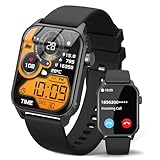
- 【1.83" HD Display & Customizable Watch Faces】Immerse yourself in a vibrant 1.83-inch IPS display, boasting a sharp resolution of 240*284 for crystal-clear visuals. Effortlessly personalize your smart watch with a wide array of customizable watch faces to suit your personal style for every occasion—whether trendy, artistic, or minimalist—ideal for casual, sporty, or professional. Its sleek, modern design complements any outfit, blending technology and fashion seamlessly for everyday wear
- 【120 Sports Modes & Advanced Health Tracking】Our TK29 smart watches for women men come equipped with 120 sports modes, allowing you to effortlessly track a variety of activities such as walking, running, cycling, and swimming. With integrated heart rate and sleep monitors, you can maintain a comprehensive overview of your health, achieve your fitness goals, and maintain a balanced, active lifestyle with ease. Your ideal wellness companion (Note: Step recording starts after exceeding 20 steps)
- 【IP67 Waterproof & Long-Lasting Battery】Designed to keep up with your active lifestyle, this smartwatch features an IP67 waterproof rating, ensuring it can withstand splashes, sweat, and even brief submersion, making it perfect for workouts, outdoor adventures, or rainy days. Its reliable 350mAh battery offering 5-7 days of active use and up to 30 days in standby mode, significantly reducing frequent charging. Ideal for all-day wear, whether you’re at the gym, outdoors, or simply on the go
- 【Stay Connected Anytime, Anywhere】Stay informed and in control with Bluetooth call and music control features. Receive real-time notifications for calls, messages, and social media apps like Facebook, WhatsApp, Twitter, and Instagram directly on your smartwatch. Easily manage calls, control your music playlist, and stay updated without needing to reach for your phone. Perfect for work, workouts, or on-the-go, this watch keeps you connected and never miss important updates wherever you are
- 【Multifunction & Wide Compatibility】Seamlessly handle heart rate monitoring, sleep tracking, and enjoy conveniences like camera/music control, Seamlessly handle heart rate monitoring, sleep tracking, and more-all directly from your wrist. This 1.83 inches HD smartwatch is compatible with iPhone (iOS 9.0+) & Android (5.0+), ensuring smooth daily connectivity and convenience throughout your day. More than just a timepiece, it’s a stylish, all-in-one wearable for smarter, healthier living
Equally important was Pebble’s insistence on buttons alongside the screen. Physical controls improved reliability during workouts, cold weather, and sleep-adjacent use, long before those scenarios became talking points again. Modern watches are slowly reintroducing tactile input through rotating crowns and haptic tricks, but Pebble solved that problem outright a decade ago.
An Open Ecosystem That Still Feels Rare
Pebble’s software story remains unusually relevant. PebbleOS was lightweight, predictable, and open enough that independent developers could build watchfaces, utilities, and niche apps without corporate gatekeeping. The result was not an app store filled with shovelware, but a genuinely experimental ecosystem tailored to enthusiasts.
That openness didn’t disappear when Pebble the company did. Community projects like Rebble kept servers alive, maintained compatibility with modern phones, and demonstrated that the platform’s fundamentals were sound. In 2026, when even basic smartwatch features can be paywalled or region-locked, that legacy carries real weight.
Why the Market Is Ready to Listen Again
The smartwatch market has matured, but it has also narrowed. Apple, Samsung, and Google dominate by integrating deeply with their own ecosystems, leaving little room for cross-platform, enthusiast-first devices. For Android and iOS users who want neutrality, simplicity, and multi-day battery life, options remain surprisingly limited.
At the same time, interest in alternative wearables has grown. Devices like Garmin’s Instinct line, hybrid watches, and open-source projects have proven that not every buyer wants a miniature smartphone on their wrist. Pebble’s original positioning fits neatly into that space, which explains why even unverified signals spark outsized discussion.
Separating Legacy, Signals, and Speculation
It’s critical to be clear about what Pebble is today versus what people hope it could be. Pebble as a company does not exist in its original form, and there is no officially announced product roadmap as of 2026. What does exist are trademarks, former team members still active in hardware and software, and a user base that has never fully moved on.
This gap between absence and demand is where the rumors live. Some are grounded in credible industry movement, others are extrapolated from community projects or supply chain chatter, and many are pure wishful thinking. Understanding Pebble’s enduring relevance helps explain why all three get conflated, and why this article will treat them very differently as we move forward.
What’s Actually Happening With Pebble in 2026: Verified Signals, Leaks, and Credible Sources
After separating nostalgia from speculation, the next step is grounding the conversation in what can be verified today. In 2026, there is still no officially announced Pebble smartwatch, but there are concrete signals that keep the brand from being purely historical. These signals come from trademarks, infrastructure, people, and the unusually durable afterlife of the Pebble platform itself.
The Pebble Name Is No Longer in Corporate Limbo
One of the most important but often misunderstood developments is trademark ownership. The Pebble trademark and related branding assets are no longer buried inside Google’s post-Fitbit acquisition portfolio. They were reacquired by Pebble founder Eric Migicovsky, returning legal control of the name to its original creator.
This does not mean a product announcement is imminent, but it does matter. Trademark control is a prerequisite for any legitimate hardware revival, collaboration, or licensing effort. Without it, even a well-funded team would be forced to ship under a different name, which historically kills momentum for nostalgia-driven hardware.
From an industry perspective, this is a necessary condition, not a sufficient one. It removes a blocker rather than signaling a launch, but it is one of the few developments that is both verifiable and strategically meaningful.
No Confirmed Hardware, and No Credible Supply Chain Leaks
As of early 2026, there are no reliable hardware leaks pointing to a Pebble-branded smartwatch in production. There have been no component manifests, certification filings, FCC documents, or factory rumors that meet the usual standards applied to consumer electronics reporting.
This absence is telling. Even small-batch or crowdfunded hardware tends to leave a paper trail months before announcement, especially for devices with radios, Bluetooth stacks, or health sensors. The lack of such evidence strongly suggests that no Pebble hardware is currently in late-stage development.
Occasional claims about e-paper suppliers, low-power SoCs, or boutique manufacturing runs tend to collapse under scrutiny. Most can be traced back to generic components already used by Garmin, industrial wearables, or hobbyist projects rather than anything Pebble-specific.
The Rebble Ecosystem Is Still the Strongest Signal of Viability
Where Pebble remains unusually alive is software and services. The Rebble project continues to maintain server infrastructure that keeps original Pebble watches functional with modern Android and iOS devices. This includes notifications, weather, time sync, and app delivery.
From a usability standpoint, this matters more than it sounds. Many original Pebble and Pebble Time units are now over a decade old, yet still deliver multi-day battery life, always-on displays, and reliable notification handling. That endurance highlights how conservative hardware choices, efficient firmware, and e-paper displays translate into real-world longevity.
For anyone evaluating whether a modern Pebble concept makes sense in 2026, Rebble is effectively a long-running proof-of-concept. It shows that the core experience still works, still has users, and still solves problems that modern smartwatch platforms often complicate.
Former Pebble Talent Is Active, but Not Reassembled
Another recurring rumor involves former Pebble engineers and designers. Many remain active in hardware startups, developer tools, and communication platforms, often intersecting with open-source or cross-platform work. However, there is no evidence of a reunited Pebble team operating under a new entity or skunkworks project.
This distinction is important. Talent adjacency is not the same as organizational momentum. While informal collaboration or advisory roles are plausible, there is no verified signal of a staffed hardware program with industrial design, firmware, and manufacturing all moving in parallel.
In practical terms, this suggests that if a Pebble successor ever appears, it is more likely to begin as a tightly scoped, enthusiast-first device rather than a full-scale consumer relaunch. Anything larger would require visible hiring, funding, or partnerships that simply are not present today.
Open-Source Firmware and “Pebble-Like” Projects Fuel Confusion
Several modern projects borrow heavily from Pebble’s philosophy: low-power displays, button-driven interfaces, simple notification models, and open SDKs. Some even run Pebble-compatible watchfaces or APIs. These efforts are real, but they are not Pebble.
Because these projects often circulate in the same communities that kept Pebble alive, they are frequently misinterpreted as precursors or soft launches. In reality, they demonstrate demand rather than direction. They also underline how fragmented the enthusiast smartwatch space remains without a unifying brand.
The takeaway is subtle but important. Pebble’s influence is visible everywhere, but influence should not be mistaken for resurrection.
What Credible Sources Are Actually Saying
Across interviews, forum posts, and public comments from people closest to Pebble’s legacy, the messaging has been remarkably consistent. There is affection for the platform, pride in its design decisions, and openness to future experimentation, but no promises.
When pressed about new hardware, responses tend to emphasize how difficult the market has become. Component costs, certification burdens, platform politics, and consumer expectations around health tracking all raise the bar significantly compared to Pebble’s original era.
For analysts, this consistency lends credibility. The absence of hype, teaser campaigns, or vague countdowns suggests that, for now, honesty is winning over attention-seeking. If something changes, it is likely to do so quietly before it does so loudly.
What We Can Say With Confidence in 2026
There is no new Pebble smartwatch you can buy, preorder, or meaningfully track toward release today. There is also no indication that one has been secretly completed or shelved at the last minute. That reality should temper expectations.
At the same time, Pebble is not a dead brand drifting untethered from its creator or its community. The name is controlled, the software legacy is operational, and the market conditions that once made Pebble compelling have arguably returned in new forms.
This tension between absence and readiness is why Pebble rumors persist, and why they deserve careful, disciplined analysis rather than dismissal or hype.
The Role of Eric Migicovsky, RePebble, and the Open-Source PebbleOS Legacy
If Pebble still feels unusually “alive” in 2026 despite having no active product line, that persistence traces back to three interlocking forces. The first is Eric Migicovsky himself, the second is the loosely organized but highly motivated RePebble community, and the third is the unusually complete open-source afterlife of PebbleOS.
Together, they explain why Pebble rumors never fully collapse under scrutiny, even when no hardware exists.
Eric Migicovsky: Custodian, Not Teaser-in-Chief
Eric Migicovsky has never behaved like an executive trying to resurrect a brand through hype. Since Pebble’s assets were sold to Fitbit in 2016 and later passed through Google’s acquisition, his public posture has been consistent: proud of what Pebble got right, realistic about why it failed, and cautious about revisiting hardware in a far harsher market.
In interviews and public posts over the past several years, Migicovsky has emphasized how dramatically expectations have shifted. A modern smartwatch is now assumed to deliver multi-day battery life, robust health metrics, polished phone integrations, regulatory compliance, and ongoing software support, all at a price consumers have been trained to expect from companies operating at enormous scale.
That framing matters. It positions Migicovsky less as a secretive founder with a prototype in his drawer and more as a steward of an idea waiting for the right alignment of technology, cost, and personal motivation.
Why His Involvement Still Carries Weight
Despite the absence of product signals, Migicovsky’s name continues to anchor Pebble credibility. He retains control over the Pebble trademark, remains engaged with former employees and community leaders, and has never distanced himself from the platform’s design philosophy.
In enthusiast hardware, that combination is rare. It means any future Pebble-branded device would not be a licensing play or nostalgia cash-in, but something he would likely need to personally believe improves on the original formula.
It also means that when Migicovsky declines to speculate publicly, the silence itself becomes informative. The lack of vague promises or crowdfunding-style language suggests restraint, not abandonment.
RePebble: Community Energy Without Corporate Illusion
RePebble is often misunderstood as a reboot effort. In practice, it functions more like an archival, support, and advocacy layer for existing Pebble hardware and software.
The project emerged to keep servers alive, preserve app distribution, and ensure that watches designed over a decade ago could still pair with modern phones. Its contributors focus on compatibility fixes, infrastructure continuity, and documentation rather than industrial design or manufacturing.
This distinction is crucial. RePebble keeps Pebble usable, not reborn, and that practical mission has earned it credibility within the community.
What RePebble Tells Us About Demand
The continued activity around RePebble in 2026 is one of the strongest signals that Pebble’s original value proposition still resonates. Users are maintaining watches with modest processors, low-resolution displays, and minimal sensors because the experience remains coherent.
Long battery life, instant readability, physical buttons that work in the rain, and a UI that never competes with the phone are not nostalgic traits. They are deliberate design decisions that still feel underserved in the current market.
RePebble’s persistence suggests that if new hardware appeared with those priorities intact, it would not be starting from zero.
PebbleOS Open Source: A Rarely Matched Software Afterlife
When PebbleOS was open-sourced, it created an unusual situation in consumer electronics. The operating system, APIs, and tooling survived almost intact, allowing developers to study, modify, and extend a production-grade smartwatch platform rather than a theoretical one.
As a result, PebbleOS is not frozen in amber. Community-maintained forks have improved phone compatibility, added features, and kept the app ecosystem functional long after official support ended.
This matters for any future Pebble-adjacent device because software, not hardware, was always Pebble’s differentiator.
Rank #2
![Apple Watch Series 11 [GPS 46mm] Smartwatch with Jet Black Aluminum Case with Black Sport Band - M/L. Sleep Score, Fitness Tracker, Health Monitoring, Always-On Display, Water Resistant](https://m.media-amazon.com/images/I/312K597M2uL._SL160_.jpg)
- HYPERTENSION NOTIFICATIONS — Apple Watch Series 11 can spot signs of chronic high blood pressure and notify you of possible hypertension.*
- KNOW YOUR SLEEP SCORE — Sleep score provides an easy way to help track and understand the quality of your sleep, so you can make it more restorative.
- EVEN MORE HEALTH INSIGHTS — Take an ECG anytime.* Get notifications for a high and low heart rate, an irregular rhythm,* and possible sleep apnea.* View overnight health metrics with the Vitals app* and take readings of your blood oxygen.*
- STUNNING DESIGN — Thin and lightweight, Series 11 is comfortable to wear around the clock — while exercising and even when you’re sleeping, so it can help track your key metrics.
- A POWERFUL FITNESS PARTNER — With advanced metrics for all your workouts, plus features like Pacer, Heart Rate Zones, training load, Workout Buddy powered by Apple Intelligence from your nearby iPhone,* and more. Series 11 also comes with three months of Apple Fitness+ free.*
Why PebbleOS Still Feels Modern in Daily Use
Even by 2026 standards, PebbleOS remains remarkably efficient. Its event-driven design, minimal animations, and aggressive power management were optimized for e-paper and transflective displays, resulting in battery life measured in days or weeks rather than hours.
The interface scales well to small screens, respects glance-based interaction, and avoids the notification overload that plagues many modern wearables. Physical buttons are first-class inputs, not legacy fallbacks.
For enthusiasts, these traits are not merely charming. They represent a coherent alternative philosophy that has largely disappeared from mainstream smartwatch design.
The Limits of Open Source Without Hardware
Open software alone cannot ship a watch. Modern health tracking requires calibrated sensors, validated algorithms, and regulatory approvals that community projects cannot realistically provide at scale.
Bluetooth stacks, mobile OS background execution limits, and certification requirements all impose constraints that PebbleOS can only partially work around. This is why most Pebble-compatible projects remain hobbyist or niche rather than mass-market.
The gap between a functioning OS and a commercially viable device is precisely where rumors tend to flourish.
What This Triad Means for a Hypothetical Pebble 2026
Taken together, Migicovsky’s cautious stewardship, RePebble’s pragmatic maintenance, and the living PebbleOS codebase form a kind of readiness state. Nothing is imminent, but little would need to be rediscovered from scratch.
Design principles are known. Software foundations exist. A community of users and developers remains engaged and vocal about what they want and what they do not.
If Pebble were ever to return, it would not need to chase Apple or Samsung feature-for-feature. It would need to respect the legacy that has quietly, stubbornly refused to disappear.
Why a Pebble Revival Is Hard in Today’s Smartwatch Market
The quiet persistence of Pebble’s ideas makes a comeback feel tantalizingly plausible. Yet the same forces that flattened Pebble the first time have hardened into structural barriers that are even tougher to navigate in 2026.
What once looked like a plucky alternative market has consolidated into something closer to a platform war with very little oxygen at the edges.
The Smartwatch Market Has Re-centered Around Health, Not Timekeeping
In Pebble’s heyday, notifications and glanceable utility were the killer features. Today, most buyers evaluate smartwatches primarily through the lens of health metrics, recovery scores, sleep staging, and regulatory-backed insights.
That shift raises the bar far beyond adding a heart rate sensor. Modern expectations include SpO2 trends, skin temperature deltas, menstrual tracking, ECG or AFib alerts, and increasingly opaque algorithmic interpretations that are difficult to validate without clinical partnerships.
Pebble’s philosophy was always about transparency and user control, but the market now rewards devices that behave more like medical peripherals than digital watches.
Regulation Is an Invisible but Crushing Constraint
Health features are no longer just technical challenges; they are legal ones. FDA clearance, CE marking, and region-specific medical compliance add cost, risk, and long development cycles that disproportionately hurt small or revived brands.
Even companies like Fitbit struggled under this burden before Google’s acquisition gave them regulatory and financial cover. For a hypothetical Pebble revival, every promised sensor becomes a potential liability rather than a simple spec-sheet win.
Avoiding advanced health tracking entirely would preserve Pebble’s ethos, but it would also sharply limit mainstream appeal in 2026.
Phone Platforms Are Less Friendly Than They Used to Be
Pebble thrived when iOS and Android still tolerated deep background access and permissive Bluetooth behavior. Those days are gone, replaced by aggressive power management, notification restrictions, and API churn that even well-funded companies struggle to keep up with.
Apple Watch succeeds largely because it is exempt from Apple’s own rules. Wear OS survives because Google controls both sides of the equation.
A third-party smartwatch platform must constantly adapt to mobile OS updates that can silently degrade features users take for granted, from reliable notifications to background sync.
Battery Life Is Pebble’s Strength, but Also a Market Mismatch
Pebble’s multi-day or multi-week battery life remains deeply appealing to enthusiasts. However, the broader market has been conditioned to accept daily charging in exchange for OLED displays, fluid animations, and sensor-heavy operation.
Transflective or e-paper displays still excel outdoors and sip power, but they look austere next to modern AMOLED panels. For many buyers, perceived value is tied to visual richness rather than endurance.
A Pebble revival would have to re-educate consumers on why less spectacle can mean better daily wearability.
Hardware Economics Are Brutal at Small Scale
Pebble’s original success was fueled by Kickstarter momentum and favorable component pricing in a very different supply-chain era. In 2026, small production runs face higher per-unit costs, tighter supplier minimums, and less flexibility on custom components.
Even basics like vibration motors, physical buttons with reliable sealing, and durable polycarbonate or stainless steel cases become expensive when you are not ordering at Apple or Samsung volumes. Tooling for a comfortable 42–44mm case that wears well across wrist sizes is not trivial.
Margins disappear quickly when you prioritize build quality, repairability, and longevity over disposable hardware cycles.
Ecosystems Now Expect Ongoing Services, Not Just Devices
Modern wearables are rarely sold as standalone products. Cloud sync, long-term data storage, coaching features, firmware updates, and customer support all imply ongoing operational costs.
Pebble famously avoided subscriptions, but that stance is harder to sustain when users expect multi-year software support and compatibility with evolving phone platforms. Even an open-source OS does not eliminate the need for paid infrastructure and dedicated maintainers.
This tension between sustainability and user trust is one of the hardest problems any Pebble-like project would face.
The Enthusiast Audience Is Passionate, but Finite
There is no question that former Pebble owners remain vocal and emotionally invested. However, nostalgia does not always translate into a large enough addressable market to support new hardware, especially at realistic price points.
Enthusiasts want physical buttons, week-long battery life, and hackable software, but they also want solid fitness tracking, durable materials, and reliable phone integration. Delivering all of that without compromise pushes costs into uncomfortable territory.
The danger is building the perfect watch for a community that loves it, but is not large enough to sustain it long-term.
Competing Without Competing Is a Narrow Path
Pebble cannot out-Apple Apple, and it should not try. Yet carving out a distinct lane means saying no to features that the broader market assumes are mandatory.
That requires unusually clear positioning, disciplined product management, and users willing to accept trade-offs rather than spec-sheet maximalism. Few modern hardware startups survive on restraint alone.
The irony is that Pebble’s original clarity of purpose is still its greatest asset, but also the reason a revival must be approached with extreme caution.
Display First: Why E‑Paper (and Not OLED) Remains Pebble’s Biggest Differentiator
If Pebble is ever reborn in a meaningful way, it almost certainly starts with the screen. Not the processor, not the sensors, and not the app ecosystem, but the choice to reject OLED entirely.
That decision would be less about nostalgia and more about strategic restraint. In a market addicted to brightness wars and spec-sheet theatrics, display technology is the clearest line Pebble can draw between itself and everyone else.
The Original Pebble Insight Still Holds
Pebble’s earliest watches used monochrome e‑paper not because it was trendy, but because it aligned with how a watch is actually used. You glance at it dozens or hundreds of times a day, often in bright sunlight, often for less than a second.
That usage pattern has not changed in 2026, even if marketing narratives have. OLED excels at visual drama, but it is fundamentally optimized for interaction-heavy devices, not ambient information surfaces.
Always-On Without Apology
One of e‑paper’s defining advantages remains its true always-on nature. There is no low-power mode, no dimmed fallback face, and no subtle anxiety about whether a gesture was recognized.
Time, notifications, and complications are simply there, legible at any angle, without animation or delay. That immediacy is difficult to quantify on a spec sheet, but it dramatically shapes daily usability.
Battery Life Is a Design Outcome, Not a Feature
Week-long battery life was never a magic trick; it was the logical result of display physics. An e‑paper or memory LCD panel consumes power only when changing state, which pairs naturally with glance-based software.
Modern OLED watches can stretch to two or three days, but only by aggressively managing refresh rates, brightness, and background behavior. Pebble’s approach avoids that entire complexity stack, which matters for long-term reliability and software simplicity.
Sunlight Readability Still Wins in the Real World
No OLED smartwatch, regardless of peak nits, is as consistently readable outdoors as a reflective display. This is especially true during long walks, runs, bike rides, or workdays spent outside.
Pebble’s screens behaved more like traditional watches in this respect, becoming clearer as ambient light increased. That trait remains rare, and for many enthusiasts, quietly essential.
Color E‑Paper Has Finally Caught Up Enough
One credible reason Pebble moved slowly toward color was technical maturity, not philosophy. Early color e‑paper was slow, washed out, and fragile, which limited design possibilities.
Rank #3

- Bluetooth Call and Message Alerts: Smart watch is equipped with HD speaker, after connecting to your smartphone via bluetooth, you can answer or make calls, view call history and store contacts through directly use the smartwatch. The smartwatches also provides notifications of social media messages (WhatsApp, Twitter, Facebook, Instagram usw.) So that you will never miss any important information.
- Smart watch for men women is equipped with a 320*380 extra-large hd full touch color screen, delivering exceptional picture quality and highly responsive touch sensitivity, which can bring you a unique visual and better interactive experience, lock screen and wake up easily by raising your wrist. Though “Gloryfit” app, you can download more than 102 free personalised watch faces and set it as your desktop for fitness tracker.
- 24/7 Heart Rate Monitor and Sleep Tracker Monitor: The fitness tracker watch for men has a built-in high-performance sensor that can record our heart rate changes in real time. Monitor your heart rate 26 hours a day and keep an eye on your health. Synchronize to the mobile phone app"Gloryfit", you can understand your sleep status(deep /light /wakeful sleep) by fitness tracker watch develop a better sleep habit and a healthier lifestyle.
- IP68 waterproof and 110+ Sports Modes: The fitness tracker provides up to 112+ sports modes, covering running, cycling, walking, basketball, yoga, football and so on. Activity trackers bracelets meet the waterproof requirements for most sports enthusiasts' daily activities, such as washing hands or exercising in the rain, meeting daily needs (note: Do not recommended for use in hot water or seawater.)
- Multifunction and Compatibility: This step counter watch also has many useful functions, such as weather forecast, music control, sedentary reminder, stopwatch, alarm clock, timer, track female cycle, screen light time, find phone etc. The smart watch with 2 hrs of charging, 5-7 days of normal use and about 30 days of standby time. This smart watches for women/man compatible with ios 9.0 and android 6.2 and above devices.
By 2026, modern color e‑paper and memory LCD variants offer higher contrast, faster partial refresh, and improved saturation without abandoning power efficiency. No credible rumor suggests Pebble would chase high-frame-rate color, but a restrained, functional palette is now realistic.
Lower Visual Drama, Higher Information Density
OLED encourages oversized typography, animated transitions, and minimal data per screen. E‑paper rewards thoughtful layout, dense information, and predictable hierarchy.
Classic Pebble watchfaces often displayed time, date, weather, steps, battery, and notifications at once, without feeling crowded. That design language feels almost radical today, precisely because it treats the watch as an information instrument rather than a miniature phone.
Thermal, Thickness, and Comfort Implications
Display choice affects more than pixels. E‑paper panels generate negligible heat and require simpler driver electronics, which can translate into thinner cases and more flexible internal layouts.
For a watch in the 38–42mm range, worn all day and night, that matters. Lighter weight, flatter casebacks, and fewer thermal spikes directly improve comfort and long-term wearability.
Durability and Aging Gracefully
OLED panels degrade over time, with burn-in and color shift becoming visible after years of use. That is an acceptable trade-off for phones, but less so for a watch meant to last.
E‑paper displays age far more gracefully, maintaining legibility long after batteries and straps have been replaced. For a Pebble-aligned philosophy that values repairability and longevity, this is not a minor detail.
The Software Stack Becomes Simpler on Purpose
Choosing e‑paper constrains the UI, and that constraint is liberating. Developers design for clarity, low refresh, and deterministic behavior rather than animation frameworks and GPU acceleration.
This aligns naturally with PebbleOS’s event-driven model and the open-source ecosystem that grew around it. It also lowers the barrier for hobbyist developers who care more about function than flourish.
Why OLED Would Undermine the Point
An OLED Pebble would invite constant comparisons to Apple Watch, Galaxy Watch, and Pixel Watch. Those are battles Pebble cannot win on polish, app ecosystems, or health feature breadth.
By rejecting OLED outright, Pebble avoids competing on the wrong axis. The display becomes a statement of intent rather than a compromise.
The Wishlist Reality Check
Enthusiasts dreaming of ultra-high-resolution, fast-refresh e‑paper need to temper expectations. Physics still applies, and trade-offs remain unavoidable.
What is realistic is a modestly larger panel than the Pebble Time, improved contrast, thinner bezels, hardened glass, and better front lighting. If those fundamentals are right, the rest of the watch has room to breathe.
Battery Life Above All: What a Modern Pebble Would Need to Deliver (Realistically)
Once the display philosophy is set, battery life becomes the inevitable next domino. An e‑paper Pebble in 2026 would not be forgiven for merely matching mainstream smartwatches; it would need to meaningfully outperform them in everyday endurance.
This is not nostalgia talking. Battery life was Pebble’s defining competitive advantage, and without reclaiming that ground, the rest of the design logic collapses.
The Minimum Viable Win: 7 Days, No Asterisks
For a modern Pebble to feel legitimate, seven full days of real-world use should be the baseline, not an optimistic lab figure. That means notifications on, backlight in regular use, sleep tracking enabled, and at least some light interaction each day.
Anything less risks feeling like a regression from the Pebble Time era, especially when battery technology itself has improved since 2016. Former Pebble owners remember charging once or twice a week, not planning their usage around a charger.
The Stretch Goal That Matters: 10–14 Days
The more compelling target is closer to two weeks, which would once again place Pebble in a different category from Apple, Samsung, and Google. This is achievable, but only with disciplined feature selection and ruthless power budgeting.
That likely means a battery in the 180–250mAh range housed in a 38–42mm case with moderate thickness, paired with an efficient microcontroller rather than a smartphone-class SoC. Comfort matters here; a slightly thicker mid-case is acceptable if weight stays low and the caseback remains flat.
Processor Choice Is More Important Than Battery Size
Modern low-power MCUs from Nordic, Ambiq, or similar vendors can idle at microamp levels while still handling Bluetooth LE, sensor polling, and UI updates. This is the architectural lane Pebble historically occupied, and it remains the right one.
A return to this class of silicon, rather than chasing Wear OS–style performance, is what makes multi-day endurance realistic. It also keeps thermals low, which improves skin comfort during sleep and long wear sessions.
Bluetooth, Not LTE, and No Apologies
Any credible Pebble revival rumor consistently points away from cellular connectivity, and that restraint is essential. LTE radios are battery poison in a small case, and they fundamentally change usage patterns in ways Pebble never intended.
Bluetooth LE 5.x, with aggressive connection intervals and smart notification batching, is sufficient for Pebble’s core value proposition. Phone dependence is not a weakness here; it is a deliberate trade that buys days of extra runtime.
Health Tracking Without the Battery Death Spiral
Basic health features are unavoidable in 2026, but they must be chosen carefully. Step counting, sleep tracking via accelerometer, and periodic heart rate sampling are realistic without destroying battery life.
What should be avoided are continuous SpO2, ECG, skin temperature trending, and always-on optical heart rate during workouts. Those features are table stakes for mainstream platforms, but they are incompatible with Pebble’s endurance-first identity.
Backlight Discipline and Frontlight Realism
Even with e‑paper, lighting strategy matters. A low-power frontlight, used sparingly and intelligently, preserves nighttime readability without turning the display into a battery liability.
Automatic brightness based on ambient light, short illumination timeouts, and no always-on glow are essential. This is an area where Pebble historically did well, and expectations have not changed.
Charging Strategy: Slow, Simple, and Infrequent
Fast charging is less important when charging happens once every week or two. A simple pogo-pin or USB-based solution is more aligned with repairability and longevity than sealed inductive coils.
Wireless charging adds thickness, cost, and inefficiency, all for a problem Pebble does not need to solve. What matters more is predictable charging behavior and battery health over years, not minutes shaved off top-ups.
Software as the Silent Battery Multiplier
PebbleOS’s event-driven model remains uniquely well-suited to long battery life. By waking the system only when something meaningful happens, it avoids the background churn that drains modern smartwatch platforms.
An open but constrained app environment, with strict limits on background execution and sensor access, is not anti-developer. It is what allows a watch to last long enough that users forget where the charger is.
What the Rumors Actually Support
As of 2026, the most credible Pebble-adjacent signals continue to emphasize long battery life as non-negotiable rather than aspirational. References to e‑paper, low-power silicon, and simplified software stacks consistently appear together, which is telling.
What has not surfaced are hints of cellular radios, high-refresh displays, or health feature arms races. The absence of those rumors is as important as what is being discussed, because it suggests the original priorities remain intact.
The Unforgiving Reality Check
If a modern Pebble launches with three-day battery life, no amount of charm or open-source goodwill will save it. The market already has dozens of watches that need frequent charging, and none of them are short on polish.
Battery life is not just a spec for Pebble; it is the foundation on which every other design decision rests. Without clear, undeniable endurance leadership, the rest of the wishlist becomes academic.
Buttons, Not Touchscreens: Interaction Philosophy and Wearability Expectations
If battery life is the foundation, physical buttons are the load-bearing walls. Every credible Pebble-adjacent discussion that leans into multi-week endurance implicitly assumes minimal reliance on touch input, because touchscreens are not just displays, they are power and software multipliers.
Pebble’s original interaction model was never about nostalgia or contrarianism. It was a pragmatic response to the realities of tiny screens, limited attention, and a device meant to be used in motion, in poor lighting, and with imperfect hands.
Why Buttons Still Make Sense in 2026
Capacitive touch remains poorly suited to e‑paper displays, especially monochrome or low-refresh panels. Gesture recognition, palm rejection, and visual feedback all demand higher refresh rates and more aggressive screen polling, which directly conflicts with the event-driven, sleep-heavy software model discussed earlier.
Buttons, by contrast, are electrically cheap and computationally simple. A hardware interrupt triggered by a button press wakes the system precisely when needed, and nowhere else, preserving the same predictable power behavior that makes long battery life believable rather than theoretical.
Glanceability Over Gestures
Pebble’s strength was always glanceability, not manipulation. Scrolling a notification with a side button while walking, cycling, or carrying groceries is meaningfully more reliable than aiming a finger at a 1.2‑inch display, especially one optimized for static clarity rather than fluid animation.
In a modern context, this matters even more. Larger wrists, gloves, sweat, rain, and winter use all punish touch-first designs, while buttons remain indifferent to conditions that defeat capacitive sensors.
Wearability Is an Input Problem Too
Interaction philosophy cannot be separated from comfort. A watch that expects frequent swipes and taps incentivizes larger displays, edge-to-edge glass, and thinner bezels, all of which push devices toward wider cases and higher center-of-gravity profiles.
A button-driven Pebble-style watch can afford smaller display cutouts, thicker protective bezels, and lighter materials without feeling dated. That freedom matters for all-day wear, especially for users who want something closer to a traditional 38–42 mm watch footprint rather than a slab of glass strapped to the wrist.
Button Count, Placement, and Muscle Memory
Historically, Pebble’s three-button layout on one side was not accidental. It enabled blind navigation, consistent muscle memory, and one-handed operation without visual confirmation, something modern smartwatch interfaces still struggle to replicate convincingly.
Rumors have not yet converged on a specific button configuration, but any serious Pebble revival would be expected to prioritize tactile differentiation. Distinct shapes, spacing, and click resistance matter more than aesthetics, because the goal is confident input without looking.
The Touchscreen Compromise, If It Exists
Some credible speculation suggests a hybrid approach: a low-power touch layer used sparingly, primarily for watch face selection or coarse navigation, rather than continuous interaction. If implemented, this would need to be opt-in at the software level, with no core functionality dependent on touch.
Rank #4
![Apple Watch Series 11 [GPS 42mm] Smartwatch with Rose Gold Aluminum Case with Light Blush Sport Band - S/M. Sleep Score, Fitness Tracker, Health Monitoring, Always-On Display, Water Resistant](https://m.media-amazon.com/images/I/31J+F-pXaWL._SL160_.jpg)
- HYPERTENSION NOTIFICATIONS — Apple Watch Series 11 can spot signs of chronic high blood pressure and notify you of possible hypertension.*
- KNOW YOUR SLEEP SCORE — Sleep score provides an easy way to help track and understand the quality of your sleep, so you can make it more restorative.
- EVEN MORE HEALTH INSIGHTS — Take an ECG anytime.* Get notifications for a high and low heart rate, an irregular rhythm,* and possible sleep apnea.* View overnight health metrics with the Vitals app* and take readings of your blood oxygen.*
- STUNNING DESIGN — Thin and lightweight, Series 11 is comfortable to wear around the clock — while exercising and even when you’re sleeping, so it can help track your key metrics.
- A POWERFUL FITNESS PARTNER — With advanced metrics for all your workouts, plus features like Pacer, Heart Rate Zones, training load, Workout Buddy powered by Apple Intelligence from your nearby iPhone,* and more. Series 11 also comes with three months of Apple Fitness+ free.*
The risk is not that touch exists, but that it becomes necessary. The moment a Pebble-style watch requires touch to dismiss alerts, navigate menus, or manage apps, it ceases to be compatible with the battery and usability promises that define the category.
Buttons as an Accessibility Feature
Physical controls are not just a preference; they are an accessibility advantage. Users with motor impairments, reduced dexterity, or visual limitations consistently report better outcomes with tactile input than with gesture-driven interfaces.
In an era where most smartwatches quietly optimize for the healthiest and most attentive users, a button-first design is an inclusive choice. That inclusivity aligns with Pebble’s original ethos of building tools for real people, not demos for keynote stages.
Durability, Sealing, and Long-Term Wear
Buttons also simplify durability engineering. A well-sealed mechanical button with known travel and force characteristics is easier to waterproof, repair, and validate over years than a large bonded glass panel with edge sensors and complex lamination.
From a wearability standpoint, this translates into fewer accidental activations, less screen-on time, and a device that feels calmer on the wrist. That calmness is part of why former Pebble owners often describe the experience as less stressful, even if they struggle to articulate why.
What to Expect Realistically
As of 2026, there is no credible signal pointing to a fully touch-driven Pebble successor. Everything that appears grounded in reality continues to assume buttons as the primary interface, with any touch capability treated as secondary or optional.
This is not a rejection of progress, but a recognition of fit-for-purpose design. A Pebble that abandons buttons would not just be different; it would be solving a different problem entirely.
Software, Apps, and Openness: What an Enthusiast Pebble Ecosystem Would Look Like in 2026
The button-first philosophy outlined above only works if the software respects it. Pebble’s original success was never just about hardware frugality, but about an operating system that treated attention, battery, and user agency as finite resources.
In 2026, any credible Pebble revival would live or die on whether it can rebuild that philosophy in a very different software landscape.
An OS Built Around Latency, Not Animation
The defining trait of classic PebbleOS was not simplicity, but immediacy. Button presses produced instant, predictable results, with no animation debt or delayed state changes.
A modern Pebble OS would need to preserve that feel while supporting newer radios, sensors, and notification standards. That likely means a real-time or near-real-time OS core, not a stripped-down Android fork or Linux layer weighed down by services the watch does not need.
From a usability standpoint, this matters more than raw features. A watch that responds instantly to input feels faster than one with twice the processing power but layered abstractions.
Battery-First Software Design as a Hard Constraint
Battery life is not just a hardware outcome; it is a software policy decision. Pebble’s multi-day endurance came from aggressive limits on background execution, radio usage, and screen-on time.
In 2026, an enthusiast Pebble would need to double down on this with explicit app energy budgets. Developers should know, in clear terms, how often they can wake the CPU, access sensors, or transmit data without degrading the core experience.
This kind of constraint-driven design is unpopular in mainstream app ecosystems, but it is exactly what allowed Pebble to deliver five to ten days of real-world wear on modest batteries.
A Return to a True App Store, Not a Feature Dump
The original Pebble app store thrived because it was small, opinionated, and discoverable. Watchfaces, utilities, and micro-apps were treated as first-class citizens, not buried under fitness dashboards and subscription upsells.
A 2026 Pebble ecosystem would benefit from curating for intent rather than volume. Tools like calendar companions, transit alerts, habit nudges, and glanceable data should be easier to surface than full-screen experiences that fight the hardware.
For users, this translates into a watch that feels personal again. You install things because they solve a specific problem, not because an algorithm pushed them at checkout.
Compatibility Without Platform Capture
One of Pebble’s quiet advantages was its platform neutrality. It worked with iOS and Android without becoming a hostage to either ecosystem’s priorities.
In 2026, this is harder but more important than ever. A revived Pebble would need to support modern notification APIs, encrypted messaging handoffs, and health permissions without requiring deep system hooks that Apple or Google can revoke at will.
Realistically, this means accepting some limitations on iOS while ensuring the core experience remains intact. Pebble users historically tolerated this trade-off because the watch offered something fundamentally different from an Apple Watch.
Health and Fitness as Optional Layers, Not the Core
No credible rumor suggests a Pebble-class device will try to outgun Garmin or Apple on health tracking. What makes more sense is modular support for basics like step counting, sleep estimation, and perhaps heart rate, exposed through open APIs.
The key is that these features should never dominate the interface. Health data should be accessible when you want it, not constantly demanding attention or driving engagement loops.
For many former Pebble owners, the appeal was precisely that the watch did not judge them. It informed, then got out of the way.
Open APIs, Long-Term SDK Stability, and Offline-First Thinking
Pebble’s developer community survived its official death because the platform was understandable and hackable. Tools like Rebble proved there is still appetite for an SDK that prioritizes stability over novelty.
A 2026 ecosystem would need to commit to long-term API compatibility, even at the cost of slower feature rollout. Breaking watchfaces or apps every year is acceptable in phone ecosystems, but it is fatal to niche hardware with long replacement cycles.
Offline-first behavior should also be non-negotiable. Apps and watchfaces should continue working without a phone nearby, with sync treated as a convenience rather than a dependency.
User Control, Not Engagement Metrics
Perhaps the most radical idea a modern Pebble could reintroduce is the absence of dark patterns. No streaks, no engagement timers, no nudges designed to increase wrist checks.
Instead, users should have granular control over notifications, vibrations, and app behavior. Pebble’s original vibration motor, paired with custom patterns, remains one of the most underrated interface elements in smartwatch history.
In 2026, that kind of intentional design would feel almost subversive. It would also be deeply aligned with an enthusiast audience that values tools over dopamine.
What Seems Plausible Versus What Remains Aspirational
There are no verified signals of a fully open-source Pebble OS backed by a major hardware release. That remains an aspirational goal, constrained by certification, security, and commercial realities.
What does seem plausible is a semi-open platform with published SDKs, community app distribution, and a clear line between system software and user-installed code. This middle ground is less romantic, but far more achievable.
If Pebble returns in 2026, its software will not win by chasing feature parity. It will win by remembering that a watch is something you live with, not something you manage.
Health, Fitness, and Sensors: How Much Is Enough Without Becoming an Apple Watch Clone?
After software philosophy, health tracking is where a hypothetical Pebble 2026 would face its hardest identity test. Add too little, and it feels antiquated next to even budget fitness bands. Add too much, and it risks becoming a smaller, slower imitation of platforms Pebble never tried to outgun in the first place.
The original Pebble succeeded precisely because it treated health as supportive context, not as the reason for the product’s existence. Any modern reboot would need to respect that boundary while acknowledging that expectations in 2026 are materially higher than they were in 2013.
The Baseline Has Moved, Even for Enthusiasts
In 2026, step counting and sleep duration alone would no longer feel sufficient, even to Pebble’s most forgiving fans. Optical heart rate sensing is now table stakes, not because everyone wants deep biometrics, but because it enables basic fitness trends without user friction.
A single rear optical sensor module, flush-mounted for comfort and paired with a lightweight composite or bead-blasted aluminum case, would likely be enough. Pebble never chased ultra-thin profiles, but real-world wearability still matters, especially for sleep tracking on a watch that should disappear on the wrist rather than demand attention.
Crucially, heart rate data would need to remain local-first, stored on-device with optional sync, rather than treated as a cloud subscription funnel. That philosophy aligns directly with Pebble’s historical distrust of data hoarding and analytics dashboards that prioritize retention over usefulness.
Sleep Tracking Without the Surveillance Vibe
Sleep tracking feels almost mandatory now, but it does not need to look like an Apple Watch health report. A Pebble-style approach would favor consistency over clinical depth, focusing on sleep duration, rough stages, and long-term trends rather than nightly scores that gamify rest.
This is where Pebble’s traditional strengths could quietly resurface. An always-on memory-in-pixel display, paired with a conservative vibration motor and multi-day battery life, is inherently better suited to overnight wear than bright OLED panels that need aggressive power management.
Comfort matters more than sensor density here. A sub-40mm case option, curved caseback, and breathable silicone or fabric strap would do more for sleep adoption than adding temperature deltas or respiratory rate graphs most users never act on.
Fitness Tracking as Logging, Not Coaching
Pebble was never a sports watch, and it should not pretend to become one in 2026. GPS is the most contentious sensor in any Pebble rumor discussion, largely because it has outsized implications for battery life, thickness, and cost.
If GPS appears at all, it would make sense as a low-power, opt-in feature rather than a constant expectation. A single-band GNSS chip used for occasional runs or walks, not daily activity rings, would fit Pebble’s ethos far better than multi-band athletic positioning that demands nightly charging.
Activity tracking should remain passive and descriptive. No animated rings, no training load scores, and no algorithmic coaching nudges. Just clean logs, exportable data, and compatibility with third-party platforms for users who want to go deeper elsewhere.
What Sensors Pebble Should Probably Skip
There is a strong argument that certain sensors, while impressive on spec sheets, would actively harm a modern Pebble. Blood oxygen saturation is the clearest example, adding cost and regulatory complexity while delivering limited value outside of medical or altitude-specific contexts.
ECG sits in a similar category. Beyond certification hurdles, it shifts the product narrative toward medical-grade promises Pebble historically avoided. That territory also comes with legal obligations and user expectations that clash with an enthusiast-driven, long-lifecycle device.
💰 Best Value
![Apple Watch Series 11 [GPS 42mm] Smartwatch with Jet Black Aluminum Case with Black Sport Band - S/M. Sleep Score, Fitness Tracker, Health Monitoring, Always-On Display, Water Resistant](https://m.media-amazon.com/images/I/31ybzrJZckL._SL160_.jpg)
- HYPERTENSION NOTIFICATIONS — Apple Watch Series 11 can spot signs of chronic high blood pressure and notify you of possible hypertension.*
- KNOW YOUR SLEEP SCORE — Sleep score provides an easy way to help track and understand the quality of your sleep, so you can make it more restorative.
- EVEN MORE HEALTH INSIGHTS — Take an ECG anytime.* Get notifications for a high and low heart rate, an irregular rhythm,* and possible sleep apnea.* View overnight health metrics with the Vitals app* and take readings of your blood oxygen.*
- STUNNING DESIGN — Thin and lightweight, Series 11 is comfortable to wear around the clock — while exercising and even when you’re sleeping, so it can help track your key metrics.
- A POWERFUL FITNESS PARTNER — With advanced metrics for all your workouts, plus features like Pacer, Heart Rate Zones, training load, Workout Buddy powered by Apple Intelligence from your nearby iPhone,* and more. Series 11 also comes with three months of Apple Fitness+ free.*
Skin temperature, stress scoring, and readiness metrics may be technically feasible, but they risk reintroducing the very engagement loops Pebble once resisted. More data is not inherently better if it encourages compulsive checking rather than informed use.
Battery Life Is the Hidden Health Feature
Any discussion of health sensors on a Pebble 2026 ultimately circles back to battery life. Multi-day endurance is not just a convenience; it is what makes passive health tracking feel trustworthy rather than burdensome.
A realistic target would be five to seven days with heart rate sampling enabled and notifications active, assuming a memory-in-pixel display and restrained background processing. That kind of longevity changes how people relate to the watch, making health data feel ambient rather than demanding.
Charging once or twice a week also reinforces Pebble’s role as a tool you live with. It supports sleep tracking by default and reduces the psychological tax of device maintenance, something mainstream smartwatches still struggle to escape.
Rumors Versus Reality on Health Ambitions
As of 2026, there are no credible signals that any Pebble-adjacent project is pursuing advanced medical-grade sensors or Apple-level health frameworks. What does surface repeatedly in community discussions is a desire for restraint, not reinvention.
The most plausible scenario is a modest, carefully chosen sensor stack designed to support basic fitness, long-term trends, and third-party experimentation through the SDK. That would be entirely consistent with Pebble’s history of enabling rather than prescribing.
A Pebble that tracks enough to be useful, but not enough to be intrusive, would feel almost anachronistic in today’s market. For the audience that still misses Pebble, that restraint might be the most modern feature of all.
The 2026 Pebble Wish List: A Grounded, No‑Hype Spec Sheet for a Modern Pebble
If health ambitions must stay modest to protect battery life and mental bandwidth, the rest of the watch needs to be ruthlessly intentional. A Pebble revival would not win by chasing flagship specs, but by assembling a coherent, durable, and developer-friendly platform that feels calm in daily wear.
What follows is not a fantasy spec dump. It is a realistic, supply-chain-aware, and historically consistent wish list that reflects what a modern Pebble would need to succeed in 2026 without betraying its DNA.
Display: Memory-in-Pixel, Refined Not Replaced
The display remains the philosophical core of any Pebble. A modern Sharp or JDI memory‑in‑pixel panel, likely in the 1.3 to 1.4‑inch range, still makes the most sense.
Higher contrast, improved color saturation over the original Pebble Time, and better front-light uniformity would be welcome, but always with sunlight legibility as the priority. Touch support should remain optional at most, as physical buttons are central to Pebble’s glanceable, eyes‑free interaction model.
A flat display with minimal curvature would also simplify durability and repairs. Pebble never needed visual drama; it needed clarity at a glance.
Case, Dimensions, and Wearability
Pebble’s comfort advantage came from restraint, not styling bravado. A case thickness around 11 mm, with a footprint similar to the Pebble Time Steel or Pebble 2, would keep it wearable across wrist sizes.
Aluminum for the base model and stainless steel for a premium variant feel both realistic and historically aligned. Titanium would be aspirational but likely cost‑prohibitive for an enthusiast‑scale production run.
Water resistance should land at 5 ATM minimum, with physical buttons designed for wet use. Pebble was always a watch you forgot you were wearing, and that invisibility remains the goal.
Buttons First, Always
Three or four physical buttons are non‑negotiable. They are faster, more reliable in motion, and far less cognitively demanding than touch gestures.
A modern Pebble could refine button feel with better sealing, tighter tolerances, and clearer tactile differentiation. Long‑press and chorded inputs should remain part of the interaction model, preserving Pebble’s efficiency without overwhelming casual users.
This is not nostalgia. It is ergonomics.
Battery Life as a Design Constraint
Battery capacity should be sized backward from the experience, not the spec sheet. Five to seven days with notifications, heart rate sampling, and occasional GPS use should be the floor, not the ceiling.
That likely means a battery in the 250–300 mAh range paired with an ultra‑efficient microcontroller rather than a smartwatch‑class SoC. Charging could remain proprietary or move to USB‑C pogo pins, but it should be fast, predictable, and infrequent.
Wireless charging would be unnecessary overhead. Pebble users value certainty over convenience theater.
Processor and Performance: Fast Enough Is Enough
A modern low‑power ARM Cortex‑M series chip would be more than sufficient. The goal is instant UI response, reliable notifications, and smooth scrolling, not animations for their own sake.
RAM in the 256–512 KB range and several megabytes of flash storage would support watchfaces, apps, and logs without encouraging bloat. Pebble thrived because constraints forced good software behavior.
Boot times, wake latency, and button response matter far more than benchmark scores.
Connectivity: Practical, Not Exhaustive
Bluetooth Low Energy remains the backbone, with rock‑solid notification mirroring on both Android and iOS. Pebble’s historic strength here should be considered table stakes, not a differentiator.
Wi‑Fi is optional and arguably unnecessary. NFC could be useful for simple authentication or DIY projects, but full payment frameworks would add cost, regulation, and ongoing maintenance that conflict with Pebble’s long‑life ethos.
GPS, if included, should be power‑gated and used sparingly, aimed at casual activity tracking rather than marathon analytics.
Software Philosophy: Open, Stable, and Boring in the Best Way
A Pebble 2026 should run a modernized descendant of PebbleOS, not Wear OS or a generic RTOS skin. The UI should be familiar to returning users while smoothing rough edges for newcomers.
An open SDK, local compilation, and long‑term API stability are essential. Developers should feel confident that an app written in year one will still function years later.
Cloud dependence should be minimal. Sync should work offline where possible, and core features must not vanish if a server shuts down.
Watchfaces and Customization: The Soul of Pebble
Watchfaces are not decoration on a Pebble; they are the primary interface. A modern Pebble should support thousands of faces with deep customization, low power impact, and instant switching.
Always‑on display behavior should be native, not simulated. Complications should update predictably without draining the battery.
This is where Pebble still outclasses most modern smartwatches, and it remains one of its strongest emotional hooks.
Health and Fitness: Enough to Be Useful
Heart rate, step tracking, sleep detection, and basic activity profiles are sufficient. The emphasis should be on long‑term trends, not daily scores or readiness theatrics.
Data ownership matters here. Local storage, simple exports, and third‑party integration should be prioritized over glossy dashboards.
Pebble users historically wanted insight, not judgment. That philosophy still resonates.
Straps, Serviceability, and Longevity
Standard 20 mm or 22 mm lugs are essential. Quick‑release is nice, but compatibility with existing strap ecosystems matters more.
Battery replacement and basic repairs should be possible without destroying the device. A Pebble is not fashion jewelry; it is a tool meant to age with its owner.
Long software support, even if feature‑conservative, would reinforce trust in the platform.
Price and Value Reality
A realistic target price would sit between $149 and $249 depending on materials. That positions Pebble as a deliberate alternative to mainstream smartwatches, not a bargain gadget.
Value here is not measured in sensors per dollar, but in years of use per charge cycle. Pebble’s original success came from feeling fair, not flashy.
That calculus still holds.
Why This Spec Sheet Matters
A grounded Pebble 2026 does not need to disrupt the market. It needs to serve a specific audience exceptionally well.
By prioritizing battery life, clarity, openness, and comfort, a modern Pebble could once again feel like a quiet rebellion against notification overload and planned obsolescence. In a landscape obsessed with more, a Pebble that deliberately does less might be exactly what still feels new.