The Polar Loop Gen 2 arrived at a moment when the fitness tracker category was exploding outward and fragmenting at the same time. Between 2014 and 2016, activity bands shifted from novelty step counters into lifestyle devices expected to track sleep, sync seamlessly with phones, and last a full workweek without a charger. For buyers revisiting the Loop Gen 2 today, the real question is not whether it was competent, but why competence alone was no longer enough.
This retrospective looks at the Loop Gen 2 as a product of its era, not through modern expectations. Understanding why it struggled to stand out requires zooming out to the competitive pressure Polar faced, the design and software bets it made, and the rapid redefinition of what a fitness tracker was supposed to be. Only then does its quiet disappearance from mainstream conversation make sense.
The fitness tracker gold rush
By late 2014, Fitbit had already moved beyond the clip-on era and was establishing wrist-based trackers as default. Devices like the Fitbit Flex, Charge, and Charge HR normalized all-day wear, smartphone-first setup, and simple visual feedback that favored immediacy over depth. Garmin, meanwhile, was straddling fitness trackers and sports watches, pulling more serious athletes toward GPS-enabled wearables like the Vivoactive.
This period marked a shift from raw activity data to interpreted insights. Sleep stages, inactivity alerts, guided goals, and weekly progress summaries became expected features rather than differentiators. The market was no longer forgiving toward products that required work to understand or configure, regardless of brand pedigree.
🏆 #1 Best Overall
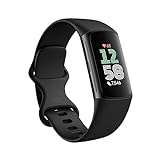
- Find your way seamlessly during runs or rides with turn-by-turn directions from Google Maps on Fitbit Charge 6[7, 8]; and when you need a snack break on the go, just tap to pay with Google Wallet[8, 9]
Polar’s position: sports science credibility, consumer hesitation
Polar entered this era with unmatched physiological credibility. Its chest-strap heart rate monitors were the gold standard for athletes, coaches, and labs, and Polar Flow was already a robust training analysis platform compared to most consumer dashboards. The Loop line was meant to translate that expertise into an always-on activity tracker for everyday users.
The problem was positioning. Polar spoke fluently to endurance athletes but hesitated to fully embrace the lifestyle-first framing that Fitbit and Jawbone were mastering. The Loop Gen 2 sat awkwardly between serious training tool and casual wellness band, appealing strongly to neither group.
Design language in a rapidly maturing category
Visually, the Loop Gen 2 doubled down on minimalism: a slim silicone band, monochrome LED dot-matrix display, and a fixed bracelet-style fit that had to be cut to size. In isolation, it was clean and durable, with good comfort for sleep tracking and no protrusions to catch on clothing. Materials were basic but robust, prioritizing sweat resistance over style experimentation.
However, the market was already moving toward interchangeable bands, visible displays, and accessories that allowed trackers to pass as everyday wear rather than gym gear. Against the Fitbit Charge’s OLED screen or even the softer aesthetics of the Flex, the Loop Gen 2 looked functional but emotionally flat.
Software expectations were rising faster than hardware
The Polar Flow ecosystem was powerful, especially for users invested in training metrics and long-term trends. Activity goals were adaptive, sleep tracking was reliable for its time, and data accuracy for steps and calories was competitive. Battery life of around five days was solid, and syncing over Bluetooth was generally stable once set up.
Where it faltered was accessibility. Flow’s interface assumed a level of user engagement and curiosity that casual buyers did not always have, and the Loop Gen 2’s limited on-device feedback meant frequent app checks were necessary. Competitors were learning how to simplify motivation and surface insights directly on the wrist.
A crowded middle ground with shrinking tolerance
Between 2014 and 2016, the middle of the fitness tracker market became the most dangerous place to compete. Basic bands were being commoditized, while smartwatches like the Apple Watch were redefining expectations around screens, notifications, and app ecosystems. Consumers began asking not just how much data a tracker collected, but what it did for them day to day.
The Polar Loop Gen 2 entered this environment without a clear disruptive angle. It was accurate, comfortable, and backed by serious science, yet it lacked the immediacy, flexibility, and polish that were becoming table stakes. That context is essential to understanding why a capable tracker from a respected brand could still feel lost in the shuffle.
Design and Hardware Revisited: Minimalism to a Fault
Seen through a mid-2010s lens, the Loop Gen 2’s hardware choices feel like a deliberate doubling down on restraint at a moment when the market was rewarding visibility and versatility. Polar refined the original Loop’s concept rather than rethinking it, and that decision shaped nearly every aspect of the physical experience. What once read as focused minimalism increasingly came across as stubborn conservatism.
Form factor: slimmer, softer, still anonymous
The Gen 2 band was marginally slimmer and more flexible than the original Loop, improving long-term comfort and making 24/7 wear genuinely easy. At roughly 11 mm thick, it sat flatter on the wrist than many contemporaries, with no raised module or sharp edges. For sleep tracking and all-day wear, it remained one of the least intrusive trackers of its era.
That same low-profile design, however, rendered it visually indistinct. From a distance, the Loop Gen 2 could pass for a rubberized bracelet or medical ID band rather than a piece of consumer tech. While some users appreciated the discretion, it limited the device’s ability to function as an everyday accessory rather than purely athletic equipment.
Materials and finishing: durable but utilitarian
Polar stuck with a soft-touch silicone band and a glossy plastic display window embedded directly into the strap. The material resisted sweat and moisture well, and durability over months of wear was generally excellent. Scratches accumulated slowly, but the band retained its structural integrity better than some early Fitbit Flex units.
The downside was tactility and perceived value. There was little variation in texture or finish, and no metal accents or interchangeable components to elevate the look. Compared to the Fitbit Charge HR, which at least attempted a watch-like presence, the Loop Gen 2 felt closer to a training aid than a lifestyle product.
A display that told you almost nothing
The monochrome LED display was the Loop Gen 2’s most polarizing hardware element. It remained hidden until tapped, at which point it scrolled through steps, calories, distance, and activity progress using segmented numerals. In bright light, visibility was acceptable; in low light, it was inconsistent without repeated taps.
This design forced a reliance on memory and interpretation. There were no icons, no contextual cues, and no way to glance down and instantly understand your status. As competitors moved toward OLED displays with continuous readouts, the Loop Gen 2’s interface felt more like a debugging tool than a motivational screen.
No heart rate sensor, no forgiveness
Perhaps the most consequential hardware omission was the lack of an optical heart rate sensor. Polar continued to position chest straps as the gold standard for heart rate accuracy, and from a sports science perspective, that stance was defensible. From a consumer standpoint, it was rapidly becoming untenable.
By the time the Loop Gen 2 was on shelves, wrist-based heart rate had become an expectation rather than a luxury. Fitbit, Garmin, and even budget-oriented brands were integrating optical sensors, trading some accuracy for convenience. The Loop Gen 2 required pairing with external Polar straps for heart rate data, adding friction that most mainstream users were no longer willing to accept.
Fixed sizing and the problem of commitment
Polar’s cut-to-fit approach allowed the Loop Gen 2 to accommodate a wide range of wrist sizes, but it also introduced hesitation at purchase. Once trimmed, the band could not be resized or resold easily. This made the device feel semi-permanent in a way that clashed with fast-moving upgrade cycles.
Interchangeable bands were becoming a key differentiator across the category. They allowed personalization, extended product lifespan, and made wearables feel less disposable. The Loop Gen 2 offered none of that flexibility, reinforcing its identity as a single-purpose object rather than a modular platform.
Charging, buttons, and everyday friction
Charging relied on a proprietary USB clip that attached to contacts on the underside of the band. It worked reliably, but alignment could be finicky, and losing the cable rendered the device unusable. At a time when competitors were still proprietary but moving toward more robust docks, this felt like an unresolved compromise.
The absence of physical buttons reinforced the minimalist ethos but limited control. All interactions depended on taps and gestures, which were inconsistent during workouts or with sweaty hands. Simple actions, like checking progress mid-run, were less intuitive than they needed to be.
Durability and water resistance: quietly excellent
Where the Loop Gen 2 rarely disappointed was durability. It handled daily wear, gym sessions, and swimming without complaint, and water resistance was sufficient for most non-diving activities. This reliability aligned with Polar’s reputation for serious training equipment rather than fashion-forward gadgets.
Yet durability alone was no longer enough to differentiate. As build quality across the category improved, consumers began valuing expressive design and interaction just as highly as toughness. The Loop Gen 2 excelled at surviving use, but struggled to justify itself during use.
Hardware as philosophy, not adaptation
In hindsight, the Loop Gen 2’s design reads less like a misstep and more like a philosophical stand. Polar prioritized accuracy, comfort, and long-term wear over experimentation and visual engagement. That approach served existing Polar loyalists well but failed to attract new users entering the wearable space for broader reasons.
The hardware told a clear story about what Polar valued, but it did not evolve fast enough to reflect what the market was starting to demand. Minimalism, once a strength, became a constraint that the Loop Gen 2 could not escape.
Core Tracking Capabilities: Activity, Sleep, and the Limits of Optical Ambition
If the Loop Gen 2’s hardware expressed Polar’s philosophy, its tracking capabilities revealed the practical consequences of that stance. This was a fitness band built around movement volume rather than physiological depth, doubling down on activity accumulation at a moment when the market was pivoting toward richer, sensor-driven insights.
Polar’s confidence in its training heritage was evident, but so were the blind spots. What the Loop Gen 2 chose not to measure became just as important as what it did.
Activity tracking: precise steps, narrow interpretation
At its core, the Loop Gen 2 was an activity tracker in the most literal sense. It counted steps, estimated distance, and translated movement into calorie burn using Polar’s proprietary algorithms, which factored in user-entered data like age, height, weight, and sex. Step counting accuracy was solid by the standards of the time, especially during consistent walking or running.
Problems emerged when movement deviated from that narrow definition. Weight training, cycling, and non-step-based workouts were either underestimated or reduced to generic “activity” time. Competitors like Fitbit were already experimenting with broader activity recognition, while Garmin was layering GPS-based context onto similar metrics.
Polar attempted to offset this limitation through the Polar Flow platform, where activities could be logged manually. While accurate on paper, this added friction and assumed a level of discipline that casual users rarely maintained.
Daily goals and the tyranny of uniformity
The Loop Gen 2’s activity goal system reflected Polar’s belief in consistency over customization. Users selected one of three preset daily activity levels, which then translated into a fixed movement target visualized as progress bars on the LED display. It was simple, readable, and easy to understand.
Rank #2

- Inspire 3 is the tracker that helps you find your energy, do what you love and feel your best. All you have to do is wear it.Operating temperature: 0° to 40°C
- Move more: Daily Readiness Score(1), Active Zone Minutes, all-day activity tracking and 24/7 heart rate, 20+ exercise modes, automatic exercise tracking and reminders to move
- Stress less: always-on wellness tracking, daily Stress Management Score, mindfulness sessions, relax breathing sessions, irregular heart rhythm notifications(2), SpO2(3), menstrual health tracking, resting heart rate and high/low heart rate notifications
- Sleep better: automatic sleep tracking, personalized Sleep Profile(1), daily detailed Sleep Score, smart wake vibrating alarm, sleep mode
- Comfortably connected day and night: calls, texts & smartphone app notifications(4), color touchscreen with customizable clock faces, super lightweight and water resistant to 50 meters, up to 10 day battery life(5)
That simplicity, however, ignored variability. Recovery days, illness, or heavy training sessions were not meaningfully accommodated. Fitbit’s adaptive goals and Garmin’s emerging training load concepts offered a more flexible interpretation of daily readiness, even if they were still imperfect.
The Loop Gen 2 asked users to meet the goal regardless of context, reinforcing a static definition of “enough” activity that began to feel dated surprisingly quickly.
Sleep tracking: competent, but shallow
Sleep tracking was one of the Loop Gen 2’s more successful features, at least within its self-imposed constraints. It automatically detected sleep duration and interruptions, presenting total sleep time and restlessness data in Polar Flow. For users focused on basic accountability, this was sufficient.
What it lacked was interpretation. There were no sleep stages, no readiness scores, and no integration with daytime performance metrics. As Fitbit began popularizing REM and deep sleep breakdowns, and Garmin moved toward recovery-oriented insights, Polar’s sleep data felt observational rather than actionable.
In hindsight, this was a missed opportunity. Polar understood training adaptation better than most competitors, yet the Loop Gen 2 treated sleep as a static log instead of a foundational performance input.
The conspicuous absence of optical heart rate
The defining limitation of the Loop Gen 2 was its complete lack of onboard heart rate sensing. At a time when optical heart rate sensors were becoming standard on wrist-based trackers, Polar chose not to include one, citing accuracy concerns and battery trade-offs.
Instead, heart rate data required pairing the Loop Gen 2 with an external Polar chest strap, such as the H7. This preserved Polar’s gold-standard heart rate accuracy but undermined the band’s everyday convenience. Casual users were unlikely to wear a chest strap for spontaneous workouts or daily activity tracking.
Competitors accepted optical heart rate’s imperfections and iterated rapidly. Polar held the line, and the Loop Gen 2 paid the price in relevance.
Calories without context
Without continuous heart rate data, calorie estimates relied heavily on movement and demographic assumptions. For steady-state activities like walking, this produced reasonable results. During high-intensity or strength-based workouts, accuracy dropped off sharply.
This gap mattered because calories were one of the Loop Gen 2’s headline metrics. Users saw numbers increase, but lacked confidence in what they truly represented. Fitbit’s optical heart rate-enabled calorie tracking, while not perfect, felt more responsive to effort changes in real time.
Polar’s approach was scientifically conservative, but consumer expectations had already shifted toward perceived responsiveness over theoretical purity.
Training features that lived elsewhere
Polar’s defense was that serious training tools existed beyond the Loop Gen 2 itself. When paired with compatible Polar watches or heart rate straps, users could access detailed metrics like Training Load and recovery status within Polar Flow. The Loop Gen 2 was never intended to replace those devices.
The problem was positioning. The Loop Gen 2 was marketed alongside mainstream fitness bands, not as a peripheral for an existing Polar ecosystem. New users encountered its limitations before discovering the depth available elsewhere, if they discovered it at all.
Fitbit and Garmin integrated depth directly into their wearables. Polar fragmented it across products.
Consistency over curiosity
What stands out in retrospect is how consistent the Loop Gen 2 was with Polar’s internal logic. The data it collected was stable, repeatable, and aligned with long-term activity trends rather than moment-to-moment variability. For users who valued longitudinal consistency, this had merit.
Yet the broader market was becoming more curious. Users wanted to see heart rate spikes, sleep phases, and training effects visualized instantly. The Loop Gen 2 asked them to trust the system instead of engaging with it.
That trust had to be earned, and by the time the Loop Gen 2 arrived, Polar was no longer the only credible voice in the room.
When restraint became a liability
The Loop Gen 2’s core tracking capabilities were not flawed so much as incomplete for their era. Each metric worked within its defined scope, but the scope itself was increasingly out of step with consumer expectations. Optical heart rate, imperfect as it was, had crossed the threshold from novelty to necessity.
Polar’s reluctance to compromise on sensor accuracy resulted in a product that felt technically honest but experientially thin. The Loop Gen 2 tracked activity reliably, monitored sleep adequately, and integrated cleanly with Polar Flow.
It simply asked users to accept less at a time when the market was offering more, and that proved to be a losing bet.
The Missing Heart: Reliance on External Sensors in an Evolving Market
If restraint had already begun to look like a liability, the absence of onboard heart rate tracking crystallized the problem. By the time the Loop Gen 2 reached shelves, heart rate was no longer viewed as an advanced metric reserved for serious athletes. It had become the emotional center of the fitness tracking experience.
Polar’s decision to omit an optical heart rate sensor was not accidental, nor was it careless. It was rooted in a long-held belief that wrist-based optical sensors were too inconsistent to meet Polar’s accuracy standards, especially during dynamic movement.
Accuracy over immediacy
From a sports science perspective, Polar’s stance was defensible. Chest straps like the H7 and later the H10 delivered clean ECG-based signals, with far less noise than early-generation optical sensors from Fitbit or Garmin. For structured training, interval work, and heart rate zone analysis, the data quality gap was real.
The problem was not accuracy, but access. Requiring an external sensor introduced friction at precisely the moment the market was optimizing for ease, immediacy, and passive insight. Users had to remember the strap, wear it correctly, moisten the electrodes, and accept a chest-mounted accessory for everyday tracking.
A broken feedback loop
Without continuous heart rate data, the Loop Gen 2’s activity metrics felt abstract. Calories burned, activity percentages, and daily goals lacked physiological context, making the experience feel oddly hollow despite Polar Flow’s analytical depth. The band tracked movement diligently, but it could not explain effort.
Competitors were already closing that gap visually and emotionally. Fitbit’s wrist-based heart rate, imperfect as it was, created a constant feedback loop that encouraged user engagement throughout the day. Garmin followed a similar path, embedding optical sensors across its lineup and refining algorithms rather than waiting for sensor perfection.
External sensors as an ecosystem tax
For existing Polar users, the reliance on external sensors was familiar and often accepted. Many already owned a chest strap and understood when and why to use it. In that context, the Loop Gen 2 functioned as a capable secondary display and activity companion rather than a standalone tracker.
For new users, it felt like an extra cost and an extra decision. Buying a slim silicone band that still required a separate device to unlock core metrics ran counter to the direction of the category. What Polar framed as modular flexibility was perceived as fragmentation.
Comfort, continuity, and daily wear
The Loop Gen 2 itself was light, flexible, and comfortable enough for all-day wear. Its minimalist design and smooth materials made it unobtrusive, especially compared to bulkier early smartwatches. Battery life was strong, often stretching close to a week, reinforcing its always-on intent.
Yet the moment heart rate entered the conversation, continuity broke down. Chest straps were not designed for sleep, casual wear, or spontaneous activity, which meant heart rate data became episodic rather than continuous. As sleep tracking and recovery insights grew more heart-rate dependent across the industry, the Loop Gen 2 increasingly felt incomplete.
The cost of waiting too long
Polar eventually embraced optical heart rate, and when it did, it brought its usual rigor to sensor placement and signal processing. But the Loop Gen 2 arrived in the gap between principle and pragmatism. The market had already decided that imperfect heart rate was better than none.
Rank #3

- 【BUILT-IN GPS SMART WATCH – GO FURTHER, FREER, SMARTER】No phone? No problem. This fitness watch for women, featuring the latest 2025 technology, includes an advanced professional-grade GPS chip that precisely tracks every route, distance, pace (real-time & average), and calorie burned—completely phone-free. Whether you're chasing new personal records or exploring off the beaten path, your full journey is automatically mapped and synced in the app. Train smarter. Move with purpose. Own your progress. Own your journey.
- 【BLUETOOTH 5.3 CALLS & SMART NOTIFICATIONS】Stay effortlessly connected with this smart watch for men and women, featuring dual Bluetooth modes (BT 3.0 + BLE 5.3) and a premium microphone for crystal-clear calls right from your wrist—perfect for driving, workouts, or busy days. Receive instant alerts for calls, texts, and popular social apps like WhatsApp and Facebook. Just raise your wrist to view notifications and never miss an important moment.
- 【100+ SPORT MODES & IP68 WATERPROOF & DUSTPROOF】This sport watch is a versatile activity and fitness tracker with 100+ modes including running, cycling, yoga, and more. It features quick-access buttons and automatic running/cycling detection to start workouts instantly. Accurately track heart rate, calories, distance, pace, and more. Set daily goals on your fitness tracker watch and stay motivated with achievement badges. With IP68 waterproof and dustproof rating, it resists rain and sweat for any challenge. Not suitable for showering, swimming, or sauna.
- 【24/7 HEALTH ASSISTANT & SMART REMINDERS】This health watch continuously monitors heart rate, blood oxygen, and stress levels for comprehensive wellness tracking. Sleep monitoring includes deep, light, REM sleep, and naps to give you a full picture of your rest. Stay on track with smart reminders for sedentary breaks, hydration, medication, and hand washing. Women can also monitor menstrual health. Includes guided breathing exercises to help you relax. Your ultimate health watch with event reminders for a healthier life.
- 【ULTRA HD DISPLAY, LIGHTWEIGHT & CUSTOMIZABLE DIALS】This stylish wrist watch features a 1.27-inch (32mm) 360×360 ultra HD color display with a 1.69-inch (43mm) dial, offering vivid details and responsive touch. Its minimalist design fits both business and casual looks. Switch freely among built-in designer dials or create your own DIY watch face using photos, colors, and styles to showcase your unique personality. Perfect as a cool digital watch and fashion wrist watch.
In hindsight, the Loop Gen 2’s missing heart was not just a hardware omission. It was a strategic hesitation, one that revealed how quickly expectations were shifting and how unforgiving the fitness tracker market had become for products that asked users to adapt instead of adapting themselves.
Software, Polar Flow, and the Ecosystem Problem
If the Loop Gen 2’s hardware limitations exposed Polar’s strategic hesitation, the software experience revealed a deeper tension. Polar Flow was, and still is, a platform built by sports scientists rather than product marketers. That pedigree brought credibility, but it also created friction in a market increasingly driven by immediacy and habit-forming design.
Polar Flow’s strengths: depth, accuracy, and discipline
At its core, Polar Flow was analytically strong even by modern standards. Activity totals, training load, calorie estimates, and recovery metrics were grounded in years of physiological research rather than trend-chasing features. For users coming from Polar’s heart rate monitors or running watches, the logic felt familiar and trustworthy.
The data presentation favored longitudinal understanding over daily gratification. Weekly and monthly views, trend lines, and training summaries rewarded consistency, aligning well with Polar’s endurance-focused philosophy. In isolation, Flow was not a weak platform; it was simply designed for a different kind of user than the Loop Gen 2 was trying to attract.
Where Flow clashed with the Loop Gen 2’s intent
The problem was not what Polar Flow did, but how it paired with a screenless, always-on activity band. The Loop Gen 2 offered limited real-time feedback, pushing users into the app for context and validation. That made the software experience central rather than complementary, and Flow was not optimized for that role.
Compared to Fitbit’s app at the time, Flow felt slower to surface wins. Achievements, streaks, and passive encouragement existed, but they were understated and easy to miss. For casual users checking their phone multiple times a day, the feedback loop lacked urgency and emotional pull.
An ecosystem built inward, not outward
Polar Flow was tightly integrated with Polar hardware, but largely isolated beyond it. Third-party app support was limited, exports were functional rather than seamless, and social features were minimal. In a period when Fitbit was building community and Garmin was expanding platform partnerships, Polar remained inward-facing.
This mattered because the Loop Gen 2 relied on software to justify its simplicity. Without rich integrations or social gravity, the band felt like an endpoint rather than a gateway. Users were less likely to build habits around Flow if it did not connect to the rest of their digital fitness life.
Mobile experience and daily usability
On both iOS and Android, Polar Flow was stable and generally reliable, but not particularly fast or fluid. Syncing was dependable, yet rarely invisible, and small delays reinforced the sense that Flow was a tool to consult rather than a companion to live in. The interface prioritized clarity over delight, which appealed to experienced athletes but left newcomers cold.
Notifications, reminders, and prompts were conservative. Where competitors nudged users with frequent micro-interactions, Polar trusted motivation to come from intention. That assumption worked for dedicated athletes, but it underestimated how many Loop buyers were still forming their fitness identity.
The missing bridge between hardware and ambition
The Loop Gen 2 sat awkwardly between Polar’s serious training devices and the mass-market trackers it was competing against. Polar Flow reflected the former, while the hardware aimed at the latter. Without deeper on-device feedback or a more adaptive software layer, the two never fully aligned.
In hindsight, this mismatch explains much of the Loop Gen 2’s quiet fade. The software was too demanding for casual users and too limited, given the hardware, for committed ones. Polar Flow did not fail the Loop Gen 2 outright, but it asked more patience and context than the product itself could provide.
Lessons Polar would later absorb
Later Polar devices began to close this gap, pairing optical heart rate, richer displays, and more proactive software features with the same analytical backbone. Flow itself evolved, becoming more approachable without abandoning its scientific roots. Those improvements, however, arrived after the Loop line had already lost relevance.
Viewed in retrospect, the Loop Gen 2 was not undone by bad software. It was undone by software that belonged to a different era of Polar’s identity, one still negotiating how to translate elite training expertise into everyday wearable experiences.
Battery Life, Durability, and Day-to-Day Wearability
If the software revealed Polar’s identity crisis, the physical experience of living with the Loop Gen 2 made it tangible. This was a device meant to be worn constantly, quietly gathering data in the background, and its success or failure depended less on features than on whether it disappeared comfortably into daily life.
Battery life that favored consistency over ambition
By contemporary standards, the Loop Gen 2’s battery life was respectable rather than impressive. Polar quoted up to eight days of use, and in real-world conditions that typically translated to five to seven days with continuous activity tracking and regular syncing.
That longevity reflected the Loop’s conservative hardware choices. The low-resolution monochrome LED display, lack of GPS, and absence of optical heart rate all reduced power draw, resulting in a device that asked little attention once charged.
Charging itself, however, was a point of friction. The proprietary USB clip worked reliably but felt inelegant even at the time, and losing it rendered the Loop unusable. As competitors moved toward standardized or more robust charging solutions, Polar’s approach underscored how transitional the Loop Gen 2 already felt.
Materials, water resistance, and long-term durability
Physically, the Loop Gen 2 was tougher than it looked. The soft-touch silicone band resisted cracking and discoloration better than many early-generation trackers, and the sealed construction gave it confidence-inspiring water resistance for swimming, showering, and sweaty training sessions.
Over extended use, the band’s integrated design became both strength and weakness. There were no removable straps to fail or loosen, but there was also no way to replace a worn band without replacing the entire device. For users accustomed to traditional watches or modular trackers, this felt disposable rather than durable.
The LED display, hidden beneath the silicone surface, aged gracefully. It was immune to scratches in daily wear, but visibility suffered in bright sunlight, reinforcing the sense that the Loop was designed for consultation rather than interaction.
Comfort and fit in continuous wear
At roughly 13 millimeters thick and noticeably rigid compared to later fitness bands, the Loop Gen 2 never fully disappeared on the wrist. It was light, but its inflexible core made it more noticeable during sleep and certain wrist positions, especially for smaller wrists.
Sizing was another hurdle. Polar required users to cut the band to fit, a one-time, irreversible process that demanded confidence and precision. Once sized correctly, the fit was secure, but the anxiety of trimming an expensive device created unnecessary friction at setup.
For day-to-day activities, the Loop performed adequately. It stayed put during workouts, did not pinch or chafe under most conditions, and remained comfortable enough for all-day wear, but it rarely achieved the effortless comfort that competitors like Fitbit were beginning to deliver.
Living with the Loop: subtle, but sometimes too silent
The Loop Gen 2’s minimalism extended into daily interactions. Vibration alerts were gentle and easy to miss, and the touch-sensitive display required deliberate gestures rather than casual glances. This aligned with Polar’s low-interruption philosophy, but it reduced the Loop’s usefulness as a lifestyle companion.
As a timepiece, it was serviceable but uninspiring. The LED numerals conveyed time and progress clearly in low light, yet lacked the immediacy and expressiveness of emerging OLED displays found on rival bands.
In hindsight, the Loop Gen 2 asked users to adapt to it rather than the other way around. Its battery life, durability, and comfort were all acceptable in isolation, but together they reflected a product engineered with restraint when the market was accelerating toward convenience, customization, and constant engagement.
Head-to-Head in Hindsight: Polar Loop Gen 2 vs Fitbit Charge and Garmin Vivosmart
Placed against its most direct rivals of the mid-2010s, the Polar Loop Gen 2’s restraint becomes more pronounced. Fitbit and Garmin were not just iterating on hardware at the time; they were actively redefining what a fitness band was expected to do, how it should feel on the wrist, and how deeply it should integrate into daily life.
This comparison, viewed through the lens of hindsight, explains why the Loop Gen 2 struggled to assert a clear identity despite Polar’s strong sports science pedigree.
Design philosophy and wearability
The Loop Gen 2’s rigid, monocoque construction immediately set it apart, and not always to its advantage. While the seamless silicone exterior was durable and water-resistant, it lacked the flexibility and ergonomic shaping that Fitbit was already refining in the Charge line.
Fitbit Charge models from the same era used softer elastomers, slimmer profiles, and conventional clasp systems. They were easier to size, more forgiving on smaller wrists, and simply faded into the background during sleep, which mattered greatly for a device marketed around 24/7 wear.
Rank #4

- 24H Accurate Heart Rate Monitoring: Go beyond basic tracking. Our watch automatically monitors your heart rate, blood oxygen (SpO2), and sleep patterns throughout the day and night. Gain deep insights into your body's trends and make informed decisions for a healthier lifestyle.
- Practical Sports Modes & Smart Activity Tracking: From running and swimming to yoga and hiking, track a wide range of activities with precision. It automatically records your steps, distance, calories burned, and duration, helping you analyze your performance and crush your fitness goals.
- 1-Week Battery Life & All-Day Wear: Say goodbye to daily charging. With an incredible up to 7-10 days of battery life on a single charge, you can wear it day and night for uninterrupted sleep tracking and worry-free travel. Stay connected to your data without the hassle.
- Comfortable to Wear & IP68 Waterproof: The lightweight, skin-friendly band is crafted for all-day comfort, even while you sleep. With IP68 waterproof, it withstands rain, sweat, It is not suitable for swimming or showering.
- Ease of Use and Personalized Insights via Powerful App: The display is bright and easy to read, even outdoors. Unlock the full potential of your watch. Sync with our dedicated app to view detailed health reports, customize watch faces, set sedentary reminders, and manage your preferences with ease.
Garmin’s Vivosmart took a different approach, emphasizing slimness and wrist-hugging curvature. It was not luxurious, but it was purpose-built for comfort, and its flexible band design avoided the one-cut-only anxiety that defined the Loop’s setup experience.
Displays, interaction, and daily usability
Polar’s LED matrix display felt conservative even at launch. It prioritized durability and low power consumption, but required intentional interaction, with tap-and-hold gestures that were less intuitive than the swipe-based OLED interfaces emerging elsewhere.
Fitbit’s OLED screens, while not large, transformed usability. Real-time stat visibility, clearer time display, and immediate feedback during workouts made the Charge feel more like a companion device than a passive tracker.
Garmin’s Vivosmart struck a middle ground. Its segmented display was minimal, but paired with more responsive touch input and clearer iconography, making it easier to check progress mid-activity without breaking stride.
Fitness tracking depth and accuracy
This is where Polar’s reputation carried weight, but also where expectations were mismatched. The Loop Gen 2 tracked steps, calories, sleep, and activity intensity reliably, yet lacked onboard heart rate sensing at a time when competitors were beginning to integrate optical sensors directly into the band.
Fitbit’s Charge HR, in particular, changed buyer expectations almost overnight. Continuous heart rate tracking enabled more meaningful calorie estimates, resting heart rate trends, and basic training insights without requiring an external chest strap.
Garmin leaned into activity categorization and ecosystem consistency. While early Vivosmart models were not as heart-rate-focused, they integrated cleanly with Garmin Connect, offering long-term data visualization that appealed to users already invested in Garmin’s broader fitness platform.
Software ecosystems and platform gravity
Polar Flow was, and remains, a technically competent platform. Its training load insights, activity summaries, and clean data presentation reflected Polar’s sports science roots, but the Loop Gen 2 itself did not fully capitalize on that strength.
Fitbit’s app excelled at motivation. Badges, social challenges, and clear progress visuals encouraged habitual use, even among users who were not performance-focused. The hardware and software reinforced each other in a way the Loop never quite achieved.
Garmin’s ecosystem favored data continuity and device longevity. Users could upgrade hardware without abandoning their historical data, making even entry-level bands like the Vivosmart feel like gateways rather than dead ends.
Battery life, reliability, and ownership experience
Battery performance was one of the Loop Gen 2’s quiet strengths. Its low-power display and restrained feature set delivered multi-day endurance that remained consistent over time, with minimal degradation.
Fitbit’s brighter displays and heart rate sensors shortened battery life, but most users accepted that trade-off in exchange for richer data and better interaction. Regular charging became part of the routine, rather than a point of friction.
Garmin sat closer to Polar in endurance, often delivering five to seven days of use. Combined with robust syncing and fewer software hiccups, it reinforced Garmin’s reputation for reliability, even in its simpler wearables.
Value perception and market positioning
At launch, the Loop Gen 2 struggled to justify its price relative to its feature set. It was well-built and accurate within its scope, but that scope was narrow at a time when competitors were rapidly expanding theirs.
Fitbit charged similar prices but offered visible innovation, especially with heart rate integration and lifestyle features. Garmin, meanwhile, positioned the Vivosmart as part of a broader athletic ecosystem, giving buyers a sense of future-proofing.
In hindsight, the Loop Gen 2 was neither aspirational nor aggressively practical. It occupied a cautious middle ground in a market that was rewarding boldness, iteration, and user-centric design evolution.
Why It Failed to Stand Out: Strategic Missteps and Timing Issues
Seen in isolation, the Polar Loop Gen 2 was competent and thoughtfully engineered. Viewed in market context, however, its problem was not what it did wrong, but when and how cautiously it chose to evolve.
Polar entered the second-generation Loop cycle with deep physiological credibility, but the category itself was already shifting away from pure activity tracking toward lifestyle-oriented, sensor-rich wearables. The Gen 2 arrived into a market that was no longer forgiving incrementalism.
Incremental hardware in a market demanding visible change
Physically, the Loop Gen 2 was almost indistinguishable from its predecessor. The slim silicone band, segmented LED display, and minimalist clasp remained comfortable and durable, but they did little to signal progress on the wrist.
At a time when competitors were introducing optical heart rate sensors, touchscreens, and more expressive displays, Polar doubled down on restraint. The Loop Gen 2 felt more like a refinement for existing Polar loyalists than a product designed to win over new users browsing store shelves.
This conservative hardware strategy limited its shelf appeal. In a category where instant visual differentiation increasingly mattered, the Loop Gen 2 simply did not look new enough.
The missing heart rate sensor problem
Perhaps the most consequential omission was onboard heart rate tracking. By the time the Loop Gen 2 launched, continuous optical heart rate monitoring was quickly becoming table stakes rather than a premium feature.
Polar’s reliance on external chest straps for accurate heart rate data made sense from a sports science perspective, but it clashed with consumer expectations. Fitbit had normalized passive, all-day heart rate data, even if it came with trade-offs in accuracy.
For many buyers, the absence of a wrist-based sensor made the Loop Gen 2 feel outdated on arrival. Accuracy mattered, but convenience was winning the market.
Software ambition lagging behind hardware reliability
Polar Flow remained analytically sound but emotionally flat. The platform excelled at structured training insights, recovery guidance, and long-term physiological trends, yet it struggled to make daily activity feel engaging.
Compared to Fitbit’s gamified feedback loops or Garmin’s sense of progression across devices, Flow felt static. The Loop Gen 2 generated data reliably, but it did not give users enough reasons to check in multiple times per day.
This imbalance hurt retention. Users appreciated the accuracy, but habit formation increasingly depended on software personality, not just correctness.
A confused target audience
The Loop Gen 2 sat awkwardly between two buyer profiles. Casual users found it too spartan and less intuitive than Fitbit, while performance-focused athletes were more likely to gravitate toward Polar’s own GPS watches.
Without GPS, heart rate, or advanced on-device training tools, the Loop Gen 2 was not a true athlete’s companion. Without lifestyle features, rich notifications, or social engagement, it struggled to appeal to mainstream wellness users.
That middle positioning left the Loop Gen 2 without a clear narrative. It was competent, but competence alone rarely drives category leadership.
Timing against accelerating competition cycles
The wearable market was moving faster than Polar anticipated. Fitbit was iterating annually, rapidly improving sensors and software, while Garmin was methodically expanding its ecosystem with strong backward compatibility.
💰 Best Value

- 【Superb Visual Experience & Effortless Operation】Diving into the latest 1.58'' ultra high resolution display technology, every interaction on the fitness watch is a visual delight with vibrant colors and crisp clarity. Its always on display clock makes the time conveniently visible. Experience convenience like never before with the intuitive full touch controls and the side button, switch between apps, and customize settings with seamless precision.
- 【Comprehensive 24/7 Health Monitoring】The fitness watches for women and men packs 24/7 heart rate, 24/7 blood pressure and blood oxygen monitors. You could check those real-time health metrics anytime, anywhere on your wrist and view the data record in the App. The heart rate monitor watch also tracks different sleep stages for light and deep sleep,and the time when you wake up, helps you to get a better understanding of your sleep quality.
- 【120+ exercise modes & All-Day Activity Tracking】There are more than 120 exercise modes available in the activity trackers and smartwatches, covering almost all daily sports activities you can imagine, gives you new ways to train and advanced metrics for more information about your workout performance. The all-day activity tracking feature monitors your steps, distance, and calories burned all the day, so you can see how much progress you've made towards your fitness goals.
- 【Messages & Incoming Calls Notification】With this smart watch fitness trackers for iPhone and android phones, you can receive notifications for incoming calls and read messages directly from your wrist without taking out your phone. Never miss a beat, stay in touch with loved ones, and stay informed of important updates wherever you are.
- 【Essential Assistant for Daily Life】The fitness watches for women and men provide you with more features including drinking water and sedentary reminder, women's menstrual period reminder, breath training, real-time weather display, remote camera shooting, music control,timer, stopwatch, finding phone, alarm clock, making it a considerate life assistant. With the GPS connectivity, you could get a map of your workout route in the app for outdoor activity by connecting to your phone GPS.
Polar’s slower cadence made the Loop Gen 2 feel dated sooner than expected. Even users who appreciated its stability sensed that competitors were pushing forward more aggressively.
In hindsight, the Loop Gen 2 was released into a narrowing window for minimalist activity bands. Within a year or two, the market’s attention had shifted decisively toward smartwatches and hybrid fitness devices.
Lessons from a cautious evolution
The Loop Gen 2 illustrates the risk of prioritizing refinement over reinvention in a fast-moving category. Polar trusted its strengths in accuracy, durability, and sports science, but underestimated how quickly consumer expectations were changing.
What it did well, it did quietly. What it failed to do was make those strengths visible, desirable, and future-facing in a crowded retail landscape.
As a result, the Loop Gen 2 became less a flawed product and more a case study in missed momentum, overshadowed not by inferior rivals, but by bolder ones.
What Polar Learned (and What Buyers Learned) from the Loop Era
Seen in hindsight, the Loop era functioned less as a commercial success and more as a strategic proving ground. The Gen 2, in particular, clarified where Polar’s instincts aligned with the market and where they quietly diverged.
Accuracy alone was no longer a selling point
Polar entered the Loop era confident that credible activity tracking and physiological logic would speak for themselves. Step counts, calorie estimates, and sleep data were generally solid, but by the mid-2010s that baseline accuracy had become table stakes.
Competitors like Fitbit wrapped similar data in friendlier visuals, clearer goals, and more emotionally engaging feedback loops. Buyers learned that “correct” data was not enough if it did not feel motivating or immediately legible in daily use.
Minimalist hardware needed maximal software clarity
The Loop Gen 2’s silicone band, slim profile, and lightweight construction made it comfortable for 24/7 wear, even by modern standards. Its durability and water resistance suited long-term use, but the single-row LED display and tap-based interaction demanded patience.
Polar Flow was powerful, yet it assumed a level of user commitment that casual buyers did not always bring. The lesson for Polar was that minimalist hardware only works when software does more of the conversational heavy lifting.
Undefined products struggle inside fast-moving ecosystems
The Loop Gen 2 existed outside Polar’s core strength: integrated training systems built around heart rate and sport-specific metrics. Without optical heart rate, GPS, or native workout modes, it sat uncomfortably beside Polar’s own Vantage and M-series watches.
Buyers, meanwhile, learned to look beyond brand reputation and ask harder questions about ecosystem fit. A tracker that does not clearly plug into a broader platform risks feeling like a technological cul-de-sac.
Cadence and visibility mattered as much as engineering
Polar’s cautious update cycle contrasted sharply with Fitbit’s rapid iteration and Garmin’s long-term ecosystem continuity. Even when the Loop Gen 2 worked reliably, it lacked the sense of momentum that reassures buyers their device will evolve.
From this era, Polar learned that silence can be misread as stagnation. Buyers learned to value not just current features, but the likelihood of meaningful updates and long-term platform investment.
The market outgrew single-purpose bands faster than expected
The Loop Gen 2 arrived just before smartwatches absorbed the role of basic activity trackers. Notifications, app ecosystems, and wrist-based heart rate quickly became expected, not optional.
In retrospect, the Loop line marked the end of a transitional phase in wearables. For Polar and its customers alike, it underscored that simplicity must either be radically intuitive or deeply specialized to survive shifting expectations.
Final Retrospective Verdict: Who the Polar Loop Gen 2 Was Really For
Seen through the lens of today’s wearables landscape, the Polar Loop Gen 2 makes sense only when you narrow the audience considerably. It was never a mainstream tracker, and it was never meant to compete head-on with feature-rich rivals like the Fitbit Charge HR or Garmin Vivosmart HR.
Instead, it was a product built around a very specific philosophy that the market was already beginning to leave behind.
Best suited to Polar loyalists who already understood the ecosystem
The Loop Gen 2 worked best for users who were already invested in Polar Flow and owned a compatible Polar heart rate strap. In that setup, the band functioned as a passive, always-on activity log that fed into a deeper training analysis elsewhere.
For athletes who treated the band as a background data collector rather than a primary training tool, its limitations were easier to accept. Outside that niche, the lack of optical heart rate and workout autonomy was a constant friction point.
Appealing to minimalists who valued comfort over capability
Physically, the Loop Gen 2 remains one of the more comfortable activity bands Polar ever produced. Its slim silicone construction, light weight, and excellent water resistance made it easy to forget on the wrist during sleep, showers, and long workdays.
Battery life stretching close to a week reinforced that low-maintenance appeal. The problem was that minimal hardware no longer felt like a virtue once competitors paired similar comfort with far richer feature sets.
A poor fit for comparison shoppers in its own era
Even at launch, the Loop Gen 2 struggled under side-by-side scrutiny. Fitbit offered heart rate, better displays, and clearer daily feedback, while Garmin was already signaling longer-term ecosystem stability and multi-device continuity.
For buyers cross-shopping based on value and longevity, the Loop Gen 2 rarely justified its place unless brand loyalty overrode feature comparisons. In hindsight, that made it vulnerable in a market increasingly driven by spec sheets and visible progress.
Not a collector’s classic, but an instructive dead end
Unlike certain early GPS watches or pioneering smartwatches, the Loop Gen 2 has not aged into a nostalgic icon. Its design is understated rather than distinctive, and its functionality is tightly bound to a platform that has since moved on.
What it offers now is historical context rather than practical utility. It represents a moment when fitness trackers could still afford to be single-purpose, just before that tolerance evaporated.
The clearest lesson: clarity matters as much as competence
The Polar Loop Gen 2 was not a bad device, but it was an undefined one. It lived between categories at a time when consumers were demanding sharper distinctions and faster evolution.
In retrospect, it was for disciplined users who wanted quiet accountability rather than motivation, and who were willing to build a system around it. Everyone else moved on, and the market moved with them.
As a final verdict, the Loop Gen 2 stands as a reminder that strong engineering alone does not guarantee relevance. In the fast-moving world of wearables, a product must not only work well, but clearly explain why it exists.