Polar’s Vantage M line has always been the brand’s balancing act: serious training metrics without the price, size, or weight penalty of its flagship models. With the Vantage M3, Polar is no longer just refining that formula, it’s rewriting it. ECG, full-color mapping, and an AMOLED display are not incremental upgrades in Polar’s ecosystem; they’re technologies that until now defined its premium tier.
For athletes weighing Garmin’s Forerunner line, COROS’s aggressive value plays, or Suunto’s outdoor-first approach, the M3 arrives at a moment when Polar needed to reassert relevance. This launch is about more than specs. It signals a shift in how Polar wants performance-focused users to experience training, recovery, and everyday wear, without forcing them into the size or price of a Vantage V3 or Grit X Pro.
What follows is a clear breakdown of what the Vantage M3 adds, why these changes matter physiologically and practically, and how this watch reshapes Polar’s lineup for runners, triathletes, and endurance athletes who care as much about training signal quality as they do about usability.
ECG on the wrist, finally brought down-market
The inclusion of ECG is arguably the most strategically important upgrade on the Vantage M3. Polar’s ECG implementation is not about continuous heart rhythm monitoring or AFib alerts in the Apple Watch sense, but about spot-check measurements that feed into orthostatic tests, recovery status, and training readiness. For endurance athletes, this provides higher-resolution insight into autonomic nervous system balance when paired with heart rate variability trends.
🏆 #1 Best Overall
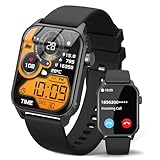
- 【1.83" HD Display & Customizable Watch Faces】Immerse yourself in a vibrant 1.83-inch IPS display, boasting a sharp resolution of 240*284 for crystal-clear visuals. Effortlessly personalize your smart watch with a wide array of customizable watch faces to suit your personal style for every occasion—whether trendy, artistic, or minimalist—ideal for casual, sporty, or professional. Its sleek, modern design complements any outfit, blending technology and fashion seamlessly for everyday wear
- 【120 Sports Modes & Advanced Health Tracking】Our TK29 smart watches for women men come equipped with 120 sports modes, allowing you to effortlessly track a variety of activities such as walking, running, cycling, and swimming. With integrated heart rate and sleep monitors, you can maintain a comprehensive overview of your health, achieve your fitness goals, and maintain a balanced, active lifestyle with ease. Your ideal wellness companion (Note: Step recording starts after exceeding 20 steps)
- 【IP67 Waterproof & Long-Lasting Battery】Designed to keep up with your active lifestyle, this smartwatch features an IP67 waterproof rating, ensuring it can withstand splashes, sweat, and even brief submersion, making it perfect for workouts, outdoor adventures, or rainy days. Its reliable 350mAh battery offering 5-7 days of active use and up to 30 days in standby mode, significantly reducing frequent charging. Ideal for all-day wear, whether you’re at the gym, outdoors, or simply on the go
- 【Stay Connected Anytime, Anywhere】Stay informed and in control with Bluetooth call and music control features. Receive real-time notifications for calls, messages, and social media apps like Facebook, WhatsApp, Twitter, and Instagram directly on your smartwatch. Easily manage calls, control your music playlist, and stay updated without needing to reach for your phone. Perfect for work, workouts, or on-the-go, this watch keeps you connected and never miss important updates wherever you are
- 【Multifunction & Wide Compatibility】Seamlessly handle heart rate monitoring, sleep tracking, and enjoy conveniences like camera/music control, Seamlessly handle heart rate monitoring, sleep tracking, and more-all directly from your wrist. This 1.83 inches HD smartwatch is compatible with iPhone (iOS 9.0+) & Android (5.0+), ensuring smooth daily connectivity and convenience throughout your day. More than just a timepiece, it’s a stylish, all-in-one wearable for smarter, healthier living
Crucially, this moves ECG out of Polar’s flagship-only territory. Athletes who previously needed a Vantage V3 to access Polar’s deeper recovery stack can now integrate ECG-derived data into daily training decisions at a lower price point. For runners and triathletes managing load across long blocks, this makes the M3 a more serious training instrument rather than just a metrics viewer.
Onboard mapping changes how the M-series is used outdoors
Onboard maps fundamentally change what the Vantage M line is capable of in real-world use. Previous M-series watches were excellent for structured training but limited for exploration, relying heavily on breadcrumb routes without true spatial context. The M3’s mapping brings turn-by-turn awareness, elevation context, and visual confirmation that matters when fatigue sets in or conditions deteriorate.
For trail runners, ultra athletes, and cyclists who venture beyond familiar routes, this is a practical safety and confidence upgrade. It also closes one of the most obvious gaps between Polar and competitors like Garmin’s Forerunner 965 or COROS Apex Pro, both of which normalized mapping well below flagship pricing. The M3 finally feels like a watch you can trust when things go off-plan.
AMOLED isn’t just about looks, it’s about usability
The shift to an AMOLED display is easy to dismiss as cosmetic, but it has real implications for training and daily wear. Higher contrast, sharper data fields, and improved readability during intervals or races reduce cognitive load when glancing at metrics under stress. For athletes who train by power, pace zones, or lap-specific targets, this matters more than screen resolution specs suggest.
From a lifestyle perspective, AMOLED also makes the Vantage M3 more viable as an all-day watch. Better indoor visibility, richer watch faces, and smoother UI interactions help Polar compete in a market where Garmin and Apple have set expectations for display quality. The challenge, as always, is battery life, and Polar’s reputation will hinge on how well it balances screen tech with multi-day endurance use.
Positioning the M3 inside Polar’s evolving lineup
The Vantage M3 now sits in a far more aggressive position within Polar’s range. It narrows the experiential gap to the Vantage V3 while maintaining a lighter, more wearable form factor that many runners prefer. For athletes who don’t need dual-frequency GPS or sapphire glass, the M3 starts to look like the rational choice rather than a compromise.
At the same time, this launch clarifies Polar’s intent: advanced physiological insight is no longer reserved for top-tier buyers. By bringing ECG, mapping, and AMOLED together in the M-series, Polar is signaling that its competitive edge lies in training intelligence and recovery science, not just hardware hierarchy. Whether that’s enough to pull athletes away from entrenched Garmin ecosystems is the real question the M3 is designed to answer.
AMOLED Comes to Vantage: Display Quality, Visibility, and Battery Trade-Offs
With the Vantage M3, Polar finally embraces AMOLED, and the decision feels less like a style pivot and more like a functional recalibration. After closing the gap on mapping and navigation, the display becomes the interface athletes rely on to actually use those features under load. In that sense, AMOLED is the connective tissue that makes the M3’s broader upgrades feel cohesive rather than bolted on.
Sharper data, lower friction during hard efforts
AMOLED’s biggest win on the Vantage M3 is contrast. High-contrast numerals, deeper blacks, and more saturated colors make pace, power, and heart rate zones easier to read at a glance, particularly during intervals or races when dwell time matters. Compared to Polar’s older MIP-based displays, the cognitive effort required to interpret data is noticeably reduced.
This is especially relevant for athletes using structured workouts or power-based training. Zone shading, lap alerts, and recovery prompts benefit from color differentiation that doesn’t wash out in mixed lighting. It’s not about looking premium; it’s about reducing missed cues when fatigue sets in.
Outdoor visibility and real-world conditions
One of the traditional arguments against AMOLED in sports watches has been sunlight readability. In practice, modern high-brightness AMOLED panels have largely neutralized that concern, and the Vantage M3 follows that trend. In direct sun, the display remains legible without aggressive wrist flicks, particularly when always-on brightness is tuned conservatively.
That said, Polar’s implementation still prioritizes efficiency over spectacle. The panel doesn’t chase extreme brightness levels like some lifestyle-focused smartwatches, which helps maintain consistency during long sessions. For trail runners and cyclists glancing mid-effort, the balance feels intentional rather than restrained.
Mapping, navigation, and color as a functional upgrade
AMOLED pays dividends once you start using onboard maps. Routes, breadcrumbs, and turn prompts are simply easier to parse when terrain lines, paths, and course overlays have clearer color separation. This matters when you’re navigating unfamiliar ground and making decisions on the move, not studying the screen at a stop.
Compared to MIP-based mapping on older Polar models, the M3’s screen makes navigation feel more confidence-inspiring. It doesn’t replace a phone for complex planning, but it significantly improves situational awareness during races or long training days where wrong turns carry real costs.
Daily wearability and interface fluidity
Beyond training, AMOLED changes how the Vantage M3 fits into daily life. Watch faces look cleaner indoors, animations feel smoother, and menu navigation benefits from higher perceived responsiveness even when the underlying performance is similar. For athletes who wear one watch 24/7, this reduces the friction between “training tool” and “daily companion.”
The lighter M-series case also helps here. Combined with the display, the M3 feels less like a dedicated session-only device and more like something you can comfortably wear to work, sleep, and recovery days without constantly noticing it on the wrist.
The battery trade-off, realistically framed
AMOLED always comes with an energy cost, and Polar is clearly aware of the expectations set by Garmin’s Forerunner 965 and similar rivals. The Vantage M3 doesn’t aim to win battery-life bragging contests, but it targets a practical middle ground: long enough for multi-day training blocks, short trips, and endurance events without daily charging anxiety.
Always-on display modes and high brightness will shorten runtime, particularly with GPS and mapping active, but Polar’s power profiles give athletes meaningful control. For most runners and triathletes, the trade-off feels acceptable given the usability gains, especially if you’re not chasing ultramarathon-length GPS sessions every weekend.
How this display choice positions the M3 competitively
By moving to AMOLED, Polar removes one of the most visible reasons athletes drifted toward Garmin or COROS. The M3 now looks contemporary next to watches like the Forerunner 265 or Apex Pro, without abandoning Polar’s emphasis on training load, recovery, and physiological context. It’s a statement that Polar no longer sees display tech as separate from performance credibility.
For buyers weighing value, this matters. The Vantage M3 no longer asks you to tolerate an outdated interface in exchange for strong analytics. Instead, it presents a more balanced proposition where screen quality, battery life, and training depth are in conversation rather than competition.
Built-In ECG Explained: What Polar’s ECG Can (and Can’t) Tell Athletes
With the display and daily-wear experience now firmly modernized, the addition of built-in ECG is Polar’s clearest signal that the Vantage M3 is meant to be worn continuously, not just during workouts. This is less about flashy medical claims and more about adding another layer of physiological context to Polar’s existing recovery-first philosophy.
ECG on the M3 sits alongside heart rate, HRV, and sleep metrics rather than replacing them. Think of it as a targeted snapshot tool, not a constant background sensor running during training.
What Polar’s ECG actually measures
The Vantage M3 uses a single-lead ECG, similar in principle to what we’ve seen from Apple, Garmin, and Fitbit. By placing a finger on the bezel electrode, the watch records the electrical activity of your heart over a short, controlled window while you remain still.
From a physiological standpoint, this allows the watch to detect normal sinus rhythm and flag potential irregularities, most notably signs consistent with atrial fibrillation. It’s a resting measurement, not something captured during exercise, intervals, or daily movement.
For athletes, this kind of ECG reading is most useful when taken consistently under similar conditions, such as first thing in the morning or during a deliberate recovery check-in. The value comes from trend awareness and peace of mind rather than immediate performance feedback.
How ECG fits into Polar’s training and recovery ecosystem
Unlike brands that treat ECG as a standalone health feature, Polar positions it as a supporting data point within its broader ecosystem. ECG readings complement Nightly Recharge, orthostatic testing, and HRV-based recovery insights rather than driving training decisions on their own.
In practice, this means ECG isn’t telling you whether to do intervals or a long run. Instead, it helps contextualize how your cardiovascular system is behaving when at rest, particularly during periods of heavy load, accumulated fatigue, or illness.
For endurance athletes managing long training blocks, that context matters. An unusual ECG reading paired with poor sleep, suppressed HRV, and rising resting heart rate is more meaningful than any single metric viewed in isolation.
What ECG on the M3 cannot do
It’s important to be clear about the limitations, especially for buyers cross-shopping watches based on health features. The Vantage M3’s ECG is not a continuous monitor, not a diagnostic medical device, and not designed to detect all forms of cardiac issues.
It won’t capture exercise-induced arrhythmias, stress-related spikes during hard sessions, or anything that occurs outside the brief recording window. If you’re looking for real-time alerts during training or all-day ECG tracking, this isn’t that kind of tool.
Rank #2
![Apple Watch Series 11 [GPS 46mm] Smartwatch with Jet Black Aluminum Case with Black Sport Band - M/L. Sleep Score, Fitness Tracker, Health Monitoring, Always-On Display, Water Resistant](https://m.media-amazon.com/images/I/312K597M2uL._SL160_.jpg)
- HYPERTENSION NOTIFICATIONS — Apple Watch Series 11 can spot signs of chronic high blood pressure and notify you of possible hypertension.*
- KNOW YOUR SLEEP SCORE — Sleep score provides an easy way to help track and understand the quality of your sleep, so you can make it more restorative.
- EVEN MORE HEALTH INSIGHTS — Take an ECG anytime.* Get notifications for a high and low heart rate, an irregular rhythm,* and possible sleep apnea.* View overnight health metrics with the Vitals app* and take readings of your blood oxygen.*
- STUNNING DESIGN — Thin and lightweight, Series 11 is comfortable to wear around the clock — while exercising and even when you’re sleeping, so it can help track your key metrics.
- A POWERFUL FITNESS PARTNER — With advanced metrics for all your workouts, plus features like Pacer, Heart Rate Zones, training load, Workout Buddy powered by Apple Intelligence from your nearby iPhone,* and more. Series 11 also comes with three months of Apple Fitness+ free.*
Polar is also careful, appropriately, in how it frames the results. The watch can suggest when something looks atypical, but it cannot tell you why, nor can it replace professional medical evaluation.
How Polar’s ECG compares to Garmin and Apple
Garmin’s ECG implementation on recent models is broadly similar in function, offering on-demand readings with limited integration into daily training guidance. Apple remains the most health-forward, with deeper historical logs, notifications, and a stronger medical narrative.
Polar’s differentiation isn’t technical novelty but contextual restraint. The M3 doesn’t overload you with alerts or graphs; it quietly adds another signal for athletes who already value Polar’s slower, trend-based approach to recovery and readiness.
For users who prioritize performance over general wellness dashboards, this will feel aligned. For those seeking a more proactive health-monitoring experience, Apple still leads.
Who benefits most from ECG on the Vantage M3
ECG on the M3 makes the most sense for athletes who already wear their watch 24/7 and care about understanding how training stress shows up beyond pace and power. Masters athletes, high-volume endurance trainers, and anyone returning from illness or extended fatigue stand to gain the most reassurance from periodic checks.
For younger or purely performance-focused athletes, ECG may be used infrequently, but its presence still adds value by future-proofing the device and reinforcing its role as a daily health companion. Importantly, it doesn’t complicate the experience for those who choose to ignore it.
Viewed in context, Polar’s ECG isn’t about turning the Vantage M3 into a medical device. It’s about rounding out a watch that now looks, feels, and functions like something you can rely on not just for sessions, but for understanding your body between them.
Onboard Mapping and Navigation: From Breadcrumbs to Real Route Guidance
If ECG rounds out the Vantage M3 as a daily health tool, onboard mapping is what finally completes its transition into a true adventure-capable training watch. This is the most tangible functional leap the M-series has seen since its introduction, moving Polar beyond basic route awareness into something that can actively guide you mid-session.
Until now, Polar’s mid-range watches relied on breadcrumb trails and preloaded routes viewed as simple lines on a blank background. That approach worked for course adherence, but it offered little situational context when things went wrong, or when plans changed on the fly.
What “real” mapping means on the Vantage M3
The Vantage M3 introduces full-color onboard maps with terrain, roads, trails, and water features rendered directly on the watch. Routes are no longer just lines to follow; they exist within a navigable landscape that helps you understand where you are and what’s around you.
This matters most when you’re off your planned path. A missed turn in a trail race or an unfamiliar urban run is easier to recover from when you can visually reorient yourself rather than backtracking blindly.
Route creation, syncing, and turn awareness
Routes are still created in Polar Flow, either by importing GPX files or building courses using Flow’s mapping tools, then synced to the watch. Once loaded, the M3 supports turn-by-turn guidance, with on-screen prompts and vibration alerts as junctions approach.
This brings Polar closer to Garmin’s long-established navigation experience, though it remains more streamlined. You get what you need to stay on course without the dense menus or configurable layers found on high-end Fenix or Epix models.
Navigation during training, not just navigation mode
A key improvement is how seamlessly mapping integrates into training views. You can switch between performance metrics and the map screen during an active session without disrupting data recording or GPS accuracy.
For runners and triathletes following structured workouts, this balance matters. You’re not forced to choose between navigation and training fidelity, and the watch doesn’t treat mapping as a separate, expedition-only feature.
AMOLED display changes the navigation experience
The move to an AMOLED display has an outsized impact on mapping usability. Colors are clearer, contrast is higher, and fine details like trail splits and contour lines are easier to interpret at a glance.
Brightness scales well outdoors, and the touch response feels more deliberate than earlier Polar implementations. That said, Polar still prioritizes button navigation during activities, which reduces accidental inputs when sweating or wearing gloves.
Battery trade-offs and real-world endurance
Onboard maps and an AMOLED panel naturally increase power demands, but Polar manages this with adjustable performance modes. In typical GPS training with mapping enabled, battery life is competitive for the category, though it doesn’t match the longest-lasting MIP-based rivals.
For ultra-distance athletes, careful planning around refresh rates and GPS settings will be necessary. For most runners, cyclists, and trail users, the balance between visibility and endurance feels well judged.
How it stacks up against Garmin, COROS, and Suunto
Garmin remains the benchmark for mapping depth, with features like POI search, round-trip routing, and more mature rerouting logic. The Vantage M3 doesn’t aim to replace a Fenix or Epix; instead, it delivers the core navigational tools most athletes actually use.
Compared to COROS, Polar’s maps feel more visually refined, though COROS still holds an edge in battery efficiency. Against Suunto, the M3 offers a more modern display experience, while Suunto retains strengths in outdoor-specific route planning and heatmaps.
Who benefits most from mapping on the M3
Athletes who train in unfamiliar areas, travel frequently, or race on technical courses gain the most from this upgrade. Trail runners and gravel cyclists, in particular, will appreciate having contextual awareness without carrying a phone.
For road runners who rarely leave known routes, mapping may be used sparingly. Even then, its presence elevates the M3 from a pure training instrument to a more versatile watch that can handle unexpected detours, travel runs, and exploratory sessions with confidence.
Training, Recovery, and Polar Flow: How the New Hardware Enhances Polar’s Core Strengths
The Vantage M3’s biggest story isn’t that Polar added headline features like ECG and maps, but how those additions reinforce what Polar already does exceptionally well. This watch is still built around training adaptation, recovery readiness, and long-term load management, with the new hardware acting as a clearer lens rather than a distraction.
Where some competitors use new sensors to broaden lifestyle appeal, Polar uses them to sharpen performance decision-making. The result is a watch that feels more coherent inside Polar Flow, not more complicated.
ECG as a recovery and readiness tool, not a medical gimmick
The addition of ECG on the Vantage M3 follows Polar’s established philosophy: spot-check measurement used to improve training insight, not continuous medical monitoring. ECG recordings feed directly into features like the Orthostatic Test, giving endurance athletes a more stable baseline for tracking autonomic nervous system stress over time.
This is particularly relevant for athletes who already rely on HRV trends to guide intensity and rest days. Compared to optical-only HRV sampling, ECG offers cleaner signal acquisition when conditions are controlled, which reduces noise in readiness assessments rather than flooding users with alerts.
Polar is clear that this is not a diagnostic ECG and does not attempt atrial fibrillation detection like some mainstream smartwatches. For its target audience, that restraint is a strength, keeping the data focused on performance context rather than health anxiety.
AMOLED improves interpretation, not just aesthetics
The move to AMOLED has a subtle but meaningful impact on how training and recovery data is consumed day to day. Nightly Recharge summaries, sleep stage breakdowns, and training load visuals are easier to read at a glance, especially in low-light environments where Polar watches are often checked before early sessions.
During workouts, clearer color separation improves legibility of heart rate zones, power targets, and pace guidance without increasing cognitive load. This matters when fatigue is high and decision-making needs to be fast, particularly in interval sessions or long endurance blocks.
Rank #3

- Bluetooth Call and Message Alerts: Smart watch is equipped with HD speaker, after connecting to your smartphone via bluetooth, you can answer or make calls, view call history and store contacts through directly use the smartwatch. The smartwatches also provides notifications of social media messages (WhatsApp, Twitter, Facebook, Instagram usw.) So that you will never miss any important information.
- Smart watch for men women is equipped with a 320*380 extra-large hd full touch color screen, delivering exceptional picture quality and highly responsive touch sensitivity, which can bring you a unique visual and better interactive experience, lock screen and wake up easily by raising your wrist. Though “Gloryfit” app, you can download more than 102 free personalised watch faces and set it as your desktop for fitness tracker.
- 24/7 Heart Rate Monitor and Sleep Tracker Monitor: The fitness tracker watch for men has a built-in high-performance sensor that can record our heart rate changes in real time. Monitor your heart rate 26 hours a day and keep an eye on your health. Synchronize to the mobile phone app"Gloryfit", you can understand your sleep status(deep /light /wakeful sleep) by fitness tracker watch develop a better sleep habit and a healthier lifestyle.
- IP68 waterproof and 110+ Sports Modes: The fitness tracker provides up to 112+ sports modes, covering running, cycling, walking, basketball, yoga, football and so on. Activity trackers bracelets meet the waterproof requirements for most sports enthusiasts' daily activities, such as washing hands or exercising in the rain, meeting daily needs (note: Do not recommended for use in hot water or seawater.)
- Multifunction and Compatibility: This step counter watch also has many useful functions, such as weather forecast, music control, sedentary reminder, stopwatch, alarm clock, timer, track female cycle, screen light time, find phone etc. The smart watch with 2 hrs of charging, 5-7 days of normal use and about 30 days of standby time. This smart watches for women/man compatible with ios 9.0 and android 6.2 and above devices.
Importantly, Polar has resisted the temptation to overload the screen with animations or excessive widgets. The AMOLED panel supports clarity, not spectacle, and still pairs with button-first control for reliable interaction when running hard or wearing gloves.
Training Load Pro benefits from richer session context
Polar’s Training Load Pro has long been one of the most respected load modeling systems in endurance wearables, combining cardiovascular load, muscular load, and perceived exertion. With onboard mapping now in play, those session metrics gain better contextual grounding, especially for trail and mixed-terrain athletes.
Elevation profiles, terrain changes, and route variability help explain why two runs with similar duration and pace can generate very different strain scores. Over time, this allows athletes to interpret load trends with more nuance rather than questioning whether the model is overreacting.
Compared to Garmin’s Acute Load or COROS’ training metrics, Polar’s strength remains its emphasis on longitudinal adaptation rather than short-term performance readiness. The M3’s hardware upgrades don’t change that philosophy; they simply make it easier to trust the numbers.
Recovery features remain Polar’s quiet advantage
Nightly Recharge continues to anchor the recovery experience, combining sleep quality, ANS charge, and baseline comparisons into a single readiness snapshot. The improved display and faster interface make it more likely that athletes will actually review these insights consistently rather than ignoring them after initial setup.
ECG-supported testing adds confidence for users who take recovery seriously and want repeatable conditions for trend analysis. While competitors may offer more recovery scores or training readiness labels, Polar’s approach remains more transparent about what is being measured and why it matters.
For athletes balancing high training volume with work or travel stress, this clarity is often more actionable than a single readiness number. It encourages adjustment rather than obedience.
FitSpark, fueling, and day-to-day guidance
FitSpark recommendations feel more relevant when recovery and load inputs are stronger, which is where the M3’s upgrades quietly pay off. Suggested sessions align more accurately with how recovered the athlete actually is, reducing the risk of stacking intensity on top of fatigue.
While Polar’s fueling guidance remains more conservative than Garmin’s real-time prompts, it integrates cleanly into long sessions without overwhelming the user. Mapping also supports better planning for nutrition stops and route-specific pacing, even if the watch avoids heavy on-screen alerts.
This reinforces the M3’s role as a coach-in-the-background rather than a command center on the wrist.
Polar Flow as the unifying layer
All of these improvements ultimately land in Polar Flow, which remains one of the most coherent platforms for endurance athletes who value long-term trends. The M3 doesn’t fragment the experience; ECG, maps, and AMOLED visuals slot into existing dashboards without forcing users to relearn how Polar thinks about training.
Flow’s web and mobile views continue to excel at season planning, fatigue tracking, and post-session analysis, especially for runners and triathletes who care more about consistency than gamification. Compared to Garmin Connect’s breadth or COROS’ minimalism, Polar Flow sits in a deliberate middle ground.
For athletes already invested in Polar’s ecosystem, the Vantage M3 feels less like a new direction and more like a refinement that makes familiar tools sharper, clearer, and easier to trust over months of training rather than weeks of novelty.
Design, Build, and Wearability: Case Size, Buttons, Durability, and Everyday Comfort
After the software, sensors, and training logic, the physical experience of the Vantage M3 is where Polar’s philosophy becomes tangible. This is a watch designed to disappear during long sessions and busy days, rather than announce itself as a gadget first and training tool second.
Case size and on-wrist proportions
The Vantage M3 lands in a sweet spot for endurance athletes who want modern screen real estate without committing to a bulky, ultra-style chassis. Its mid-sized case wears smaller than many AMOLED-equipped competitors, particularly Garmin’s Epix or Suunto Race, thanks to a relatively thin profile and restrained lug-to-lug length.
For runners and triathletes with slimmer wrists, this matters over multi-hour sessions where leverage and bounce can become real comfort issues. The M3 stays planted during cadence-heavy running and aero-position cycling without the top-heavy feel that sometimes comes with brighter displays and larger batteries.
AMOLED integration without design excess
Polar has integrated the AMOLED panel with more restraint than many rivals. Bezels remain functional rather than vanishingly thin, which helps with accidental touch prevention and preserves structural rigidity around the display.
In practice, this means better durability and fewer unintended swipes when wet, sweaty, or wearing gloves. The display elevates map legibility and data contrast, but the watch still looks and feels like a training instrument, not a lifestyle-first smartwatch chasing visual drama.
Button layout and control philosophy
The five-button layout will be immediately familiar to long-time Polar users, and it remains one of the brand’s quiet strengths. Physical buttons dominate navigation during training, with the touchscreen serving as a secondary input rather than a requirement.
This approach shines in cold weather, open water, and high-intensity intervals where touchscreens can become unreliable. Compared to touchscreen-heavy designs from Apple or Huawei, and even Garmin’s increasing reliance on touch, the M3 prioritizes muscle memory and certainty under fatigue.
Materials, finishing, and durability
The case construction leans toward reinforced polymer with a metal bezel, balancing weight savings against impact resistance. It doesn’t aim to feel luxurious in the traditional watch sense, but the finishing is clean, purposeful, and consistent with Polar’s performance-first identity.
Water resistance is fully appropriate for triathlon use, open-water swimming, and repeated exposure to sweat and rain. While it doesn’t chase dive-watch specifications, it is built for daily abuse rather than occasional activity, which aligns with how serious athletes actually use their gear.
Strap design and long-session comfort
Polar’s strap design continues to favor flexibility and breathability over visual flair. The included silicone band is soft enough for all-day wear yet stable under high-intensity movement, avoiding pressure points during long runs or brick sessions.
Importantly, the strap system supports easy swaps, making it straightforward to move between a training strap and something more understated for work or travel. For athletes who wear their watch nearly 24/7 to support recovery tracking, this adaptability improves compliance without compromising data quality.
Weight, balance, and sleep wearability
One of the M3’s most underrated qualities is how unobtrusive it feels during sleep. The balanced weight distribution and curved caseback reduce pressure on the wrist, which matters for accurate overnight heart rate, HRV, and ECG readings.
Compared to heavier AMOLED watches that can feel present at night, the M3 is easier to forget, which ultimately supports better recovery data. For athletes who take sleep and overnight metrics seriously, comfort here is not a luxury feature but a functional one.
Everyday aesthetics versus training identity
Visually, the Vantage M3 remains unmistakably a sports watch, but it’s toned down enough to work outside training contexts. It avoids the rugged excess of some adventure watches while steering clear of smartwatch fashion trends that age quickly.
This restrained design reinforces Polar’s broader positioning. The M3 is built to support consistency over years of training, not to impress at launch, and that mindset carries through every physical design choice from case thickness to button feel.
Battery Life in the Real World: AMOLED, GPS Modes, and Multi-Day Training Use
After comfort and wearability, battery life is the next constraint that defines how seamlessly a watch fits into a serious training routine. With the Vantage M3, Polar is balancing three power-hungry additions at once: an AMOLED display, onboard mapping, and more continuous background health sensing, including ECG.
The result is not a battery monster in the old transflective-display sense, but it is far more practical than early AMOLED sports watches that struggled beyond a couple of days. The key is understanding how the M3 behaves across different usage patterns rather than focusing on a single headline number.
Rank #4
![Apple Watch Series 11 [GPS 42mm] Smartwatch with Rose Gold Aluminum Case with Light Blush Sport Band - S/M. Sleep Score, Fitness Tracker, Health Monitoring, Always-On Display, Water Resistant](https://m.media-amazon.com/images/I/31J+F-pXaWL._SL160_.jpg)
- HYPERTENSION NOTIFICATIONS — Apple Watch Series 11 can spot signs of chronic high blood pressure and notify you of possible hypertension.*
- KNOW YOUR SLEEP SCORE — Sleep score provides an easy way to help track and understand the quality of your sleep, so you can make it more restorative.
- EVEN MORE HEALTH INSIGHTS — Take an ECG anytime.* Get notifications for a high and low heart rate, an irregular rhythm,* and possible sleep apnea.* View overnight health metrics with the Vitals app* and take readings of your blood oxygen.*
- STUNNING DESIGN — Thin and lightweight, Series 11 is comfortable to wear around the clock — while exercising and even when you’re sleeping, so it can help track your key metrics.
- A POWERFUL FITNESS PARTNER — With advanced metrics for all your workouts, plus features like Pacer, Heart Rate Zones, training load, Workout Buddy powered by Apple Intelligence from your nearby iPhone,* and more. Series 11 also comes with three months of Apple Fitness+ free.*
AMOLED without abandoning endurance-first priorities
The shift to AMOLED fundamentally changes how the Vantage M3 consumes power in daily use. The display is brighter, higher contrast, and vastly better indoors and at night, but it also introduces variability depending on how often the screen is active.
In day-to-day smartwatch-style use, with gesture wake enabled, notifications flowing, and nightly sleep tracking active, the M3 is best thought of as a multi-day watch rather than a week-long one. For most athletes, that translates to roughly four to five days between charges, assuming one hour of GPS training per day.
Polar mitigates AMOLED drain intelligently. Always-on display modes are optional rather than default, and the UI favors dark backgrounds that reduce pixel activation, which helps preserve battery without compromising readability.
GPS modes and what they mean for long sessions
Battery life during training depends heavily on GPS configuration, and this is where the M3 remains aligned with Polar’s performance-first philosophy. In its highest accuracy GPS mode, suitable for interval work, racing, and pace-critical sessions, the watch is designed to comfortably handle a full marathon or long triathlon leg without anxiety.
For ultra-distance athletes or multi-day events, the lower-power GPS modes extend recording time substantially by reducing sampling frequency and background sensor load. These modes are particularly effective for trail running, hiking, or stage races where absolute pace precision is less critical than total duration and elevation tracking.
Mapping adds another variable. Actively viewing maps, scrolling routes, or frequently checking navigation cues increases display-on time, which has a measurable impact on battery. Used sparingly, mapping does not radically change total endurance, but athletes planning all-day navigation-heavy outings should budget power accordingly.
Training blocks, recovery tracking, and real-world charging habits
Where the Vantage M3 lands comfortably is in week-long training blocks rather than single extreme sessions. A typical structure of daily workouts, overnight HRV and sleep tracking, and occasional route navigation fits cleanly into a rhythm of charging every few days, often aligning naturally with rest days or easy sessions.
This matters because Polar’s ecosystem places heavy emphasis on recovery metrics like Nightly Recharge and orthostatic-style trends. Battery life that reliably supports uninterrupted overnight tracking is more valuable here than raw GPS-hour bragging rights.
Compared to Garmin’s Forerunner AMOLED models, the M3 generally trades a bit of maximum GPS endurance for a cleaner recovery-focused experience and lighter overnight feel. Against COROS, Polar gives up some ultra-endurance dominance but offers a more refined display and deeper sleep integration.
Who the battery profile actually suits
The Vantage M3 is not built for athletes who expect to record 100-mile races with full accuracy and no mid-event charging. That role remains better served by larger, heavier watches with transflective displays and oversized batteries.
Instead, the M3’s battery profile is optimized for consistency: frequent training, reliable recovery tracking, and enough headroom to support long weekend sessions without compromise. For runners, triathletes, and disciplined endurance athletes training year-round rather than chasing extremes, that balance makes practical sense.
Viewed in context, the AMOLED display does not undermine the M3’s endurance credentials. It reshapes them, prioritizing clarity, usability, and recovery continuity over absolute maximum runtime, which aligns closely with how most serious athletes actually train.
Where the Vantage M3 Sits in Polar’s Lineup: M3 vs Vantage V3 vs Pacer Pro
After looking at battery behavior and training rhythms, the next question is positioning. Polar’s current lineup is no longer split simply by “cheap vs expensive,” but by how much technology, display sophistication, and physiological depth an athlete actually wants on the wrist.
The Vantage M3 is the hinge point of that strategy. It pulls genuinely high-end features downward without fully inheriting the size, weight, or cost of the flagship.
Vantage M3: the modern all-rounder with flagship taste
The Vantage M3 replaces the old idea of a “midrange” Polar watch with something more ambitious. AMOLED, ECG, and onboard mapping are not token upgrades here; they fundamentally change how the watch is used day to day, from clearer workouts to confidence when training on unfamiliar routes.
Physically, the M3 stays compact enough for smaller wrists and overnight comfort. It avoids the bulk of Polar’s largest cases while still feeling solid, with a sports-focused polymer body, a well-protected display, and a strap that disappears during sleep tracking rather than reminding you it’s there.
Functionally, the M3 is aimed at athletes who train frequently and want visibility into recovery trends, heart health snapshots via ECG, and practical navigation without stepping into expedition-watch territory. It is less about extremes and more about consistency and clarity.
Vantage V3: the flagship for maximal depth and endurance
The Vantage V3 remains Polar’s no-compromise performance watch. It scales everything up: larger AMOLED display, more premium materials, longer battery life, and greater headroom for long GPS sessions with mapping always on.
On the wrist, the V3 feels like a serious tool. The case is bigger, the screen more immersive, and the weight more noticeable during sleep or very long runs. For athletes who prioritize multi-day endurance events, frequent navigation, or simply want the most complete Polar experience available, those trade-offs are intentional.
Where the M3 borrows features from the V3, it does not fully replicate the flagship’s stamina or physical presence. The V3 is built for athletes who want zero doubt about battery margins and maximum feature overlap with Polar’s sports science platform.
Pacer Pro: the lightweight training-first alternative
The Pacer Pro sits at the opposite end of the spectrum from the V3, and now clearly below the M3 in terms of technology. It uses a traditional transflective display, skips ECG and onboard maps, and focuses on core training metrics rather than expanded health insights.
What it offers instead is simplicity and weight savings. The Pacer Pro is exceptionally light, unobtrusive during fast running, and easy to live with for athletes who want structured training, solid GPS accuracy, and Polar’s coaching tools without extra layers of complexity.
For runners who train hard but value minimalism, the Pacer Pro still makes sense. For those who want richer visuals, deeper health context, and navigation safety nets, the M3 is the clear step up.
Choosing between them: size, depth, and how you actually train
The practical choice between these three comes down to how often you push the edges of battery life and feature use. If your training includes frequent long routes, travel races, or all-day outdoor sessions, the Vantage V3’s extra endurance and screen real estate justify the size.
If your training is built around weekly volume, structured workouts, recovery tracking, and occasional long sessions rather than constant extremes, the Vantage M3 lands in a sweet spot. It delivers modern display tech and advanced health features without demanding the wrist real estate or budget of the flagship.
If you want Polar’s training intelligence in the lightest, most stripped-back form, and you are comfortable navigating with your phone or pre-planned courses, the Pacer Pro remains a focused, cost-effective tool.
Seen this way, the Vantage M3 is not a compromise model. It is Polar’s statement that most serious athletes want high-end insight and usability, just not at the cost of comfort, practicality, or everyday wearability.
Competitive Context: Vantage M3 vs Garmin Forerunner, COROS Pace, and Suunto Race
Stepping outside Polar’s own lineup, the Vantage M3 lands in one of the most hotly contested segments of the performance-watch market. This is the space dominated by Garmin’s Forerunner series, COROS’s Pace line, and Suunto’s Race, all of which promise serious training depth without the bulk or cost of full flagship adventure watches.
What makes the M3 interesting is that it does not chase maximum specs in one direction. Instead, it combines ECG-grade health sensing, full-color mapping, and an AMOLED display in a size and weight class that remains genuinely usable for daily training and sleep tracking.
Vantage M3 vs Garmin Forerunner: ecosystem depth vs physiological insight
Garmin’s closest comparisons sit in the Forerunner 265 and Forerunner 965. The 265 matches the M3 on AMOLED display and lightweight comfort, but it lacks onboard maps and relies more heavily on Garmin’s broad ecosystem rather than deep physiological interpretation.
💰 Best Value
![Apple Watch Series 11 [GPS 42mm] Smartwatch with Jet Black Aluminum Case with Black Sport Band - S/M. Sleep Score, Fitness Tracker, Health Monitoring, Always-On Display, Water Resistant](https://m.media-amazon.com/images/I/31ybzrJZckL._SL160_.jpg)
- HYPERTENSION NOTIFICATIONS — Apple Watch Series 11 can spot signs of chronic high blood pressure and notify you of possible hypertension.*
- KNOW YOUR SLEEP SCORE — Sleep score provides an easy way to help track and understand the quality of your sleep, so you can make it more restorative.
- EVEN MORE HEALTH INSIGHTS — Take an ECG anytime.* Get notifications for a high and low heart rate, an irregular rhythm,* and possible sleep apnea.* View overnight health metrics with the Vitals app* and take readings of your blood oxygen.*
- STUNNING DESIGN — Thin and lightweight, Series 11 is comfortable to wear around the clock — while exercising and even when you’re sleeping, so it can help track your key metrics.
- A POWERFUL FITNESS PARTNER — With advanced metrics for all your workouts, plus features like Pacer, Heart Rate Zones, training load, Workout Buddy powered by Apple Intelligence from your nearby iPhone,* and more. Series 11 also comes with three months of Apple Fitness+ free.*
The Forerunner 965 adds full mapping and longer battery life, but it does so in a larger case with a higher price tag and a stronger tilt toward multi-band GPS performance and feature breadth. For athletes who want maximum routing tools, music storage, and Garmin’s Connect IQ ecosystem, the 965 still leads on versatility.
Where the Vantage M3 pushes back is in how it contextualizes effort and recovery. Polar’s ECG-enabled orthostatic tests, Nightly Recharge, and cardio load modeling are designed to answer why your training feels the way it does, not just how much you did. Garmin provides enormous volume and trend tracking, but Polar remains more opinionated, which many coached athletes prefer.
Vantage M3 vs COROS Pace: depth versus efficiency
COROS has built its reputation on battery efficiency, simplicity, and a very clean training interface. The Pace series, especially the Pace 3, remains one of the lightest and longest-lasting options for runners who value uninterrupted tracking over visual richness.
However, the Pace line still uses a transflective display and relies on breadcrumb-style navigation rather than true onboard mapping. There is also no ECG or comparable recovery test framework, with COROS focusing more on workload metrics and fitness trend lines.
The Vantage M3 trades some of COROS’s extreme battery efficiency for a more immersive and informative daily experience. The AMOLED screen improves glanceability during intervals and navigation, while ECG and sleep-driven recovery metrics make it easier to adjust training intensity without external tools.
Vantage M3 vs Suunto Race: similar ambition, different execution
Suunto Race is arguably the most direct philosophical competitor to the M3. Both use AMOLED displays, both support full offline maps, and both target serious endurance athletes rather than lifestyle smartwatch users.
The Race distinguishes itself with a larger, brighter screen and strong outdoor navigation tools, particularly for trail running and mountain use. Its interface favors exploration and route planning, often appealing to athletes who prioritize navigation confidence over compact wearability.
The Vantage M3 counters with a smaller, lighter case that disappears more easily on the wrist during sleep and high-cadence sessions. It also brings ECG into the equation, which Suunto does not currently offer, giving Polar an edge for athletes who care as much about recovery validation as they do about route guidance.
Display technology, battery reality, and daily wear
AMOLED is now becoming table stakes in this segment, but implementation matters. Polar’s display tuning on the M3 balances contrast and power draw in a way that favors training readability rather than smartwatch flash.
Battery life remains competitive rather than class-leading, especially when maps and GPS are in regular use. Compared to COROS, you will charge more often, and compared to Garmin’s larger Forerunners, you may not stretch as far into multi-day ultra territory.
In return, the M3 stays lighter and more comfortable than most map-equipped rivals. That matters over months of training, where sleep tracking consistency and wrist comfort often matter more than theoretical maximum runtime.
Who each watch is really for
The Vantage M3 is best suited to athletes who want structured training guidance, recovery validation, and modern visuals in a watch that can be worn 24/7 without fatigue. It is a deliberate middle ground between stripped-down performance tools and full-scale adventure computers.
Garmin’s Forerunner line remains the best choice for athletes who want ecosystem breadth, device integration, and extensive third-party features. COROS Pace is still the efficiency king for runners who value battery life and simplicity above all else.
Suunto Race appeals to athletes whose training frequently depends on maps and navigation, and who are comfortable with a larger, more outdoors-first form factor. The M3 stands apart by making advanced health insight, mapping, and AMOLED usability feel normal rather than excessive in everyday training.
Who Should Buy the Polar Vantage M3 (and Who Shouldn’t)
Seen in context, the Vantage M3 makes the most sense when you view it as a refinement of Polar’s core philosophy rather than a spec-chasing pivot. It takes tools that used to live at the top of the lineup and packages them in a watch that prioritizes comfort, training consistency, and recovery insight over raw adventure credentials.
Buy the Vantage M3 if you train often and care about recovery quality
The M3 is a strong fit for runners, triathletes, and endurance-focused athletes who train four to seven days a week and want their watch to actively guide load management. Polar’s training ecosystem remains one of the best at connecting sessions, sleep, HRV-derived recovery metrics, and readiness into a single narrative that is easy to trust.
The addition of ECG reinforces that recovery-first identity. While it is not a medical device, the ability to capture on-demand electrical heart data adds confidence around baseline rhythm checks and post-training recovery trends, especially when combined with Polar’s Nightly Recharge and orthostatic-style insights.
If you are the kind of athlete who actually adjusts intensity based on fatigue signals rather than ignoring them, the M3 plays directly to that mindset.
Buy it if you want maps without wearing an adventure brick
Onboard mapping shifts the Vantage M line into new territory, but the implementation is intentionally restrained. It is there to support structured training in unfamiliar areas, long runs, and route-based sessions, not to replace a full outdoor navigation computer.
The payoff is a watch that stays compact, light, and comfortable enough for 24/7 wear. The case disappears under sleeves, the strap remains unobtrusive during sleep, and the overall balance works well for smaller wrists or athletes who dislike the top-heavy feel of larger map-equipped watches.
For runners and triathletes who occasionally need navigation but spend most of their time executing training plans, this balance is exactly right.
Buy it if you value display clarity and daily usability
The AMOLED display improves more than aesthetics. It makes interval pacing, structured workouts, and map glances easier to interpret at speed, particularly in low light or early-morning training.
Polar has avoided turning the M3 into a lifestyle-first smartwatch, and that restraint matters. The interface remains training-centric, battery drain stays predictable, and you are not paying for app ecosystems or smartwatch features that add little to athletic performance.
If you want a modern-looking sports watch that still behaves like a serious training tool, the M3 lands comfortably in that middle ground.
Skip it if battery life is your top priority
Athletes who regularly race ultras, multi-day events, or stage races will still find better options elsewhere. COROS continues to dominate when it comes to efficiency per charge, and Garmin’s larger Forerunner and Fenix models stretch further when navigation and GPS are active for long hours.
The M3’s battery life is adequate for marathon training, long rides, and most triathlon use, but it is not built to disappear into the wilderness for days at a time. If charging frequency is a dealbreaker, this is not the right compromise.
Skip it if you want a full smartwatch or deep ecosystem integration
The Vantage M3 remains focused on training, not on becoming a wrist-based extension of your phone. There is no app store, limited third-party integration, and fewer lifestyle conveniences compared to Garmin’s broader ecosystem.
Athletes who rely on music storage, payments, advanced smartwatch interactions, or heavy platform cross-compatibility may find the experience too restrained. Polar’s software is cohesive, but intentionally closed.
Skip it if you already own a recent Vantage V-series watch
For athletes already using a Vantage V2 or V3, the M3 is not a clear upgrade. You would gain AMOLED and ECG in a smaller package, but you would likely give up some battery headroom and premium build feel.
The M3 is better viewed as a leap forward for M-series users or athletes coming from older Polar hardware, rather than a replacement for Polar’s flagship models.
The bottom line
The Polar Vantage M3 is for athletes who want meaningful health insight, structured training guidance, and modern usability in a watch that stays comfortable enough to wear every hour of the day. ECG, mapping, and AMOLED are not headline gimmicks here; they serve a training-first purpose that fits naturally into Polar’s performance-driven ecosystem.
If your priorities lean toward recovery validation, disciplined training execution, and long-term wearability, the M3 is one of the most thoughtfully balanced sports watches in its class. If you need extreme battery life, a sprawling smartwatch platform, or expedition-grade navigation, your money is better spent elsewhere.