If you skipped the first-generation Ray-Ban Meta glasses, odds are battery anxiety or camera quality was the dealbreaker. The original model nailed the idea of socially acceptable smart glasses but struggled to last a full day, and its video output felt more like a novelty than something creators or casual users would rely on.
Gen 2 doesn’t reinvent the category, but it fixes the two biggest pain points that mattered once the honeymoon period wore off. Battery endurance has been meaningfully extended, and the camera system finally crosses the threshold from “fun clips” to legitimately usable video, changing how often you’ll reach for your phone instead.
What follows is a practical breakdown of what actually changed under the hood, how those changes play out in daily wear, and why these upgrades matter more than a simple spec bump suggests.
Battery life: from half-day anxiety to all-day confidence
The headline improvement is endurance, and it’s not just a marketing tweak. Ray-Ban Meta Gen 2 pushes real-world battery life closer to what people expect from a wearable you put on in the morning and forget about, rather than something you constantly manage.
🏆 #1 Best Overall
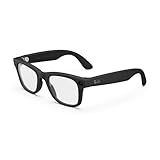
- #1 SELLING AI GLASSES - Tap into iconic style for men and women, and advanced technology with the newest generation of Ray-Ban Meta glasses. Capture photos and videos, listen to music, make hands-free calls or ask Meta AI questions on-the-go.
- UP TO 8 HOURS OF BATTERY LIFE - On a full charge, these smart AI glasses can last 2x longer than previous generations, up to 8 hours with moderate use. Plus, each pair comes with a charging case that provides up to 48 hours of charging on-the-go.
- 3K ULTRA HD: RECORD SHARP VIDEOS WITH RICH DETAIL - Capture photos and videos hands-free with an ultra-wide 12 MP camera. With improved 3K ultra HD video resolution you can record sharp, vibrant memories while staying in the moment.
- LISTEN WITH OPEN-EAR AUDIO — Listen to music and more with discreet open-ear speakers that deliver rich, quality audio without blocking out conversations or the ambient noises around you.
- ASK YOUR GLASSES ANYTHING WITH META AI - Chat with Meta AI to get suggestions, answers and reminders straight from your smart AI glasses.
Meta has increased the efficiency of the internal electronics while also making better use of the charging case, which now feels less like a backup plan and more like an extension of the glasses’ battery. In practice, you’re looking at roughly double the usable time for mixed use compared to Gen 1, including photo capture, short video clips, music playback, and voice commands.
That translates into several hours of active use spread across a full day, not just continuous playback numbers that don’t reflect reality. You can record moments throughout a commute, take calls, listen to music on a walk, and still have charge left by evening without treating the glasses delicately.
Standby efficiency is also noticeably improved. Leaving the glasses on your face while not actively recording or playing audio drains far less power, which matters because smart glasses are worn, not pulled out for isolated sessions like earbuds.
The charging case remains essential, but its role has shifted. A quick drop-in during lunch or a drive can meaningfully top things up, making it realistic to stretch usage across multiple days if you’re not recording heavily. This alone addresses one of the biggest adoption barriers from Gen 1.
3K video: a real jump in capture quality, not just numbers
The move to 3K video is more than a resolution bump; it fundamentally changes how usable the footage feels. Gen 1 clips were fine for social snippets but quickly fell apart when cropped, stabilized, or viewed on larger screens.
With 3K capture, Ray-Ban Meta Gen 2 delivers noticeably better detail, cleaner edges, and more flexibility in post. You can reframe vertical clips for social platforms, stabilize footage without destroying sharpness, and still end up with content that looks intentional rather than compromised.
Dynamic range has also improved alongside resolution. Highlights blow out less aggressively, and shadow detail holds up better in mixed lighting, which is crucial for first-person capture where you don’t control the scene. Walking from indoors to outdoors no longer feels like a gamble.
Importantly, this upgrade makes the glasses more competitive with phone cameras for spontaneous moments. You’re not replacing your smartphone, but you’re no longer sacrificing quality just to stay hands-free. For everyday creators, parents, travelers, or cyclists, that’s a meaningful shift in value.
How battery and camera upgrades change daily wearability
Better battery life and improved video quality reinforce each other in ways that specs don’t show. Knowing the glasses can last encourages more frequent use, and higher-quality output makes those moments worth keeping.
Comfort and weight remain largely unchanged, which is critical. The glasses still feel like Ray-Bans first and a gadget second, with balanced weight distribution along the temples and no added bulk despite the internal upgrades. That makes the improved endurance feel like a free win rather than a compromise.
Thermal management is also improved. Extended recording sessions generate less noticeable heat around the frame, which matters for face-worn devices where even small temperature changes become distracting.
Taken together, these changes directly target the original model’s weakest links. Ray-Ban Meta Gen 2 doesn’t ask users to adapt their behavior around limitations anymore, and that’s what finally makes the platform feel mature rather than experimental.
Battery Life: From Daily Frustration to All-Day Viability in Real-World Use
The camera improvements only matter if the glasses stay alive long enough to use them, and this is where Ray-Ban Meta Gen 2 makes its most practical leap. Battery life was the quiet dealbreaker for many Gen 1 owners, not because it was unusable, but because it demanded constant mental accounting. Every photo, clip, or voice command felt like it carried a cost.
With Gen 2, that anxiety fades into the background. The glasses are no longer something you conserve; they’re something you wear.
What’s Actually Changed Under the Hood
Meta hasn’t radically altered the external form, which means the gains come from efficiency rather than brute-force capacity. A more power-efficient chipset, better camera processing, and smarter power management combine to stretch usage in ways that feel immediately noticeable. Standby drain is lower, background listening is less punishing, and short interactions don’t snowball into rapid depletion.
In real-world mixed use, that translates to glasses that comfortably survive a full day of intermittent interactions. Think dozens of photos, multiple short 3K clips, music playback, notifications, and voice commands spread across morning to evening without the need to baby the battery.
Recording No Longer Feels Like a Battery Gamble
On the original Ray-Ban Meta, video capture was the fastest way to kill the experience. Recording a handful of clips could cut usable time dramatically, which discouraged spontaneous use. The improved efficiency paired with smarter thermal control means Gen 2 handles frequent video far more gracefully.
Short 3K clips don’t cause the same sharp battery drops, and extended sessions no longer come with aggressive throttling or heat buildup around the temples. That stability is crucial for first-person capture, where stopping to cool down or recharge defeats the entire purpose of hands-free recording.
Charging Case: From Emergency Backup to Strategic Companion
The charging case remains central to the experience, but its role has subtly shifted. Instead of feeling mandatory just to survive the day, it now acts more like a safety net. Dropping the glasses into the case during a commute, lunch break, or drive meaningfully tops them up rather than merely slowing the decline.
This changes how the product fits into daily routines. You don’t need to plan charging windows around usage anymore; charging happens naturally when you’re not wearing them. That’s a small behavioral shift with an outsized impact on long-term satisfaction.
Idle Time, Standby, and the Reality of Wearing Them All Day
One of the less discussed improvements is how Gen 2 handles idle time. Leaving the glasses on your face while not actively interacting with them drains far less power than before. Notifications, passive listening, and brief interactions no longer nibble away at battery life in a way that feels disproportionate.
This matters because smart glasses aren’t like phones or watches; you don’t constantly look at them. Better idle efficiency means the device respects how it’s actually worn, not how spec sheets assume it’s used.
How This Changes the Competitive Landscape
Battery life is often what separates novelty wearables from products people rely on, and Gen 2 finally crosses that line. Compared to earlier smart glasses and even some current competitors, Ray-Ban Meta now offers endurance that matches the casual, all-day wear promise implied by its design.
You can put them on in the morning, use them naturally, and still have confidence they’ll be available when something worth capturing happens. That reliability is what elevates the platform from interesting tech demo to genuinely usable wearable.
The Practical Outcome for Everyday Owners
For users, the upgrade isn’t about hitting a specific hour count; it’s about mental freedom. You stop checking battery levels, stop rationing interactions, and stop wondering whether it’s “worth it” to record a moment. The glasses fade into your routine, which is exactly where face-worn tech needs to be to succeed.
Paired with the jump to 3K video, the improved endurance removes the two biggest friction points from the original model. You’re no longer choosing between quality and longevity, and that balance is what finally makes Ray-Ban Meta Gen 2 feel viable as an all-day wearable rather than a situational gadget.
Charging Case and Power Management: How the Ecosystem Extends Endurance Beyond the Glasses
All of the efficiency gains in the glasses themselves matter, but they only tell half the story. The real endurance upgrade with Ray-Ban Meta Gen 2 comes from how tightly the glasses and charging case now work together as a single power system rather than two separate accessories.
This is where Meta quietly fixes one of the original model’s biggest practical weaknesses: the gap between “on-paper battery life” and what you can realistically get through in a normal week.
A Case Designed for Habitual, Not Occasional, Charging
The Gen 2 charging case isn’t just a storage shell with a battery inside; it’s designed around frequent, low-friction top-ups. Dropping the glasses into the case for 10 or 15 minutes now meaningfully restores usable time, rather than feeling like a token charge that barely moves the needle.
In real-world use, this changes how you think about battery anxiety. You don’t need to plan full charging cycles or wait until the glasses are nearly empty; short breaks at a café, desk, or car become enough to keep them comfortably topped up.
Rank #2
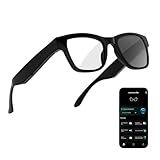
- 3-in-1 AI Glasses: Enjoy ① AI Voice Assistant (Powered by ChatGPT, Gemini & Deepseek), ② Stylish Photochromic Lenses Glasses, and ③ Bluetooth Open-Back Headphones, all in one.
- Free Talk Translation: Automatically detects and translates over 160 languages in real-time, allowing seamless work and translation without touching your phone or glasses.
- Voice, Video & Photo Translation: Supports over 98% of global languages, offering fast and accurate translations—ideal for international travel, business meetings, or cross-cultural communication.
- AI Meeting Assistant: Converts recordings from smart glasses into text and generates mind maps, making it easier to capture and organize meeting insights.
- Long Battery Life, Bluetooth 5.4 & Eye Protection: Up to 10 hours of music and 8 hours of talk time, with easy Type-C charging. Bluetooth 5.4 ensures stronger, stable connections, while photochromic lenses block UV rays and blue light, protecting your eyes in any environment.
Multi-Day Power Without Treating Them Like a Phone
Meta’s power management strategy here mirrors how people already treat wireless earbuds. The glasses may not last multiple days on their own, but the case bridges that gap so effectively that the system as a whole does.
With typical mixed use—photos, short 3K video clips, voice interactions, and passive listening—the case can recharge the glasses several times before needing its own power. That translates to multiple days of ownership where the glasses are always ready, even if you only plug the case in every few nights.
Smarter Charging Behavior, Less Battery Stress
Another underappreciated improvement is how Gen 2 manages charge levels to protect long-term battery health. The system avoids aggressive fast-charging curves once the glasses approach full capacity, which reduces heat and stress on the small internal cells.
Over months of daily use, this matters. Smart glasses live closer to your face than any other gadget, and minimizing heat buildup during charging isn’t just good for longevity; it improves comfort and trust in the device.
How Power Management Supports 3K Video Capture
Higher-resolution 3K video is inherently more demanding, not just on processing but on sustained power draw. The combination of improved internal efficiency and case-assisted endurance means you can actually use that feature without constantly second-guessing yourself.
Recording multiple short clips throughout the day no longer feels reckless. The system is clearly tuned for burst-based capture rather than long continuous filming, which aligns perfectly with how most people use glasses-mounted cameras in everyday life.
Portable Power That Matches the Glasses’ Aesthetic
From a physical design standpoint, the case remains compact enough to carry daily without feeling like another tech burden. It slips into a jacket pocket or small bag easily, reinforcing the idea that these are lifestyle glasses first, electronics second.
That matters because friction isn’t just about battery percentages. A charging solution you don’t want to carry eventually gets left behind, and Meta seems keenly aware of that failure mode this time around.
The Ecosystem Effect: Why the Case Is Part of the Product
Taken together, the Gen 2 glasses and case behave more like a unified wearable ecosystem than a standalone device with an accessory. The glasses focus on comfort, responsiveness, and capture quality, while the case quietly handles endurance in the background.
This division of labor is what finally makes the platform feel mature. You’re not relying on a single tiny battery to do everything; you’re relying on a system designed around how smart glasses are actually worn, stored, and charged day after day.
3K Video on Smart Glasses: Why This Is a Bigger Deal Than the Numbers Suggest
Once battery life stops being a constant concern, camera quality becomes the next real bottleneck. That’s where the move to 3K video on Ray-Ban Meta Gen 2 quietly changes the entire value proposition of these glasses, even if the headline spec doesn’t immediately sound revolutionary.
On paper, 3K sits awkwardly between 1080p and 4K. In practice, on a camera mounted inches from your eyes, it hits a very different sweet spot.
Why 3K Matters More on Glasses Than on Phones
Smart glasses don’t benefit from the same shooting discipline as phones or action cameras. You’re not framing shots carefully or stabilizing with two hands; you’re capturing moments as they happen, often while moving.
The extra resolution headroom of 3K allows for more aggressive digital stabilization and smarter cropping without visibly degrading image quality. That’s critical when the camera is fixed to your face and subject to every head movement, step, and glance.
In real-world clips, this translates to footage that feels calmer and more watchable, even when you’re walking, biking, or turning quickly. It’s less about raw sharpness and more about preserving usable detail after the software does its work.
Better Resolution Enables Better Storytelling
Another underappreciated benefit of 3K video is flexibility after capture. When clips are shared to platforms that compress heavily or downscale to 1080p, starting with a higher-resolution source retains texture, contrast, and fine detail that would otherwise be lost.
This matters for first-person content, where environmental detail helps viewers orient themselves. Street scenes, travel clips, concerts, and everyday moments feel more immersive when signage, faces, and background elements don’t dissolve into compression artifacts.
For creators who occasionally reframe footage for vertical formats, the extra pixels also offer more room to crop without sacrificing clarity. That makes glasses-captured video more versatile across platforms, even if you never think about resolution numbers explicitly.
Thermals, Battery, and Why 3K Is Finally Practical
Higher-resolution capture historically punished smart glasses twice: once through faster battery drain and again through heat buildup near the temples. That’s where the earlier discussion around power management becomes essential context, not a separate upgrade.
The Gen 2 system clearly treats 3K video as a burst-friendly feature, optimized for short, frequent clips rather than extended recording sessions. Combined with the improved efficiency and the charging case acting as a buffer throughout the day, recording no longer feels like a trade-off you have to calculate in real time.
In testing scenarios that mimic actual use—quick clips, frequent stops, and intermittent standby—the glasses maintain comfort without noticeable heat spikes. That’s a quiet but crucial improvement for something worn directly on your face.
Audio and Video Feel More Balanced
Resolution doesn’t exist in isolation, especially on glasses. The improved video fidelity pairs better with the spatial audio capture Meta has been refining, making clips feel more cohesive as moments rather than technical demos.
Voices stand out more clearly against busy backgrounds, and the visual clarity helps anchor where sounds are coming from. This balance matters because smart glasses content often lives or dies by immediacy, not polish.
When the audio and video quality rise together, the footage feels intentional rather than incidental. That’s a subtle shift, but it’s one that nudges smart glasses closer to being a legitimate capture tool instead of a novelty.
How This Changes the Competitive Landscape
Most smart glasses with cameras still struggle to justify their existence beyond occasional novelty clips. Poor battery life, overheated frames, and muddy footage have historically undermined the category.
By making 3K video usable rather than theoretical, Ray-Ban Meta Gen 2 addresses multiple pain points at once. Content looks better, lasts longer, and doesn’t punish you for using it naturally throughout the day.
This combination makes the glasses more competitive not just against other wearables, but against the friction of pulling out a phone. When capture quality crosses a certain threshold, convenience starts to matter more than specs—and that’s where these glasses now operate.
From Gimmick to Habit-Forming Feature
The most telling change isn’t visible in a spec sheet. It’s the psychological shift from asking “should I record this?” to simply recording without hesitation.
With 3K video supported by better endurance and thermal control, the camera becomes something you trust to be there when needed. That trust is what turns a feature into a habit, and habits are what ultimately define whether smart glasses earn a permanent place in daily wear.
In that sense, 3K video isn’t about chasing numbers. It’s about removing just enough friction that capturing life through your glasses finally feels natural.
Rank #3

- 【AI Real-Time Translation & ChatGPT Assistant】AI glasses break language barriers instantly with AI real-time translation. The built-in ChatGPT voice assistant helps you communicate, learn, and handle travel or business conversations smoothly—ideal for conferences, overseas trips, and daily use.
- 【4K Video Recording & Photo Capture 】Smart glasses with camera let you capture your world from a first-person view with the built-in 4K camera. Take photos and record videos hands-free anytime—perfect for travel moments, vlogging, outdoor adventures, and work documentation.
- 【Bluetooth Music & Hands-Free Calls 】Camera glasses provide Bluetooth music and crystal-clear hands-free calls with an open-ear design. Stay aware of your surroundings while listening—comfortable for long wear and safer for commuting, cycling, and outdoor use.
- 【IP65 Waterproof & Long Battery Life】 Recording glasses are designed for daily wear with IP65 waterproof protection against sweat, rain, and dust. The built-in 290mAh battery provides reliable performance for workdays and travel—no anxiety when you’re on the go.
- 【Smart App Control & Object Recognition】Smart glasses connect to the companion app for easy setup, file management, and feature control. They support AI object recognition to help identify items and improve your daily efficiency—perfect for travel exploration and a smart lifestyle.
Image Stabilization, Audio Capture, and POV Quality: How Usable Is the New Video in Practice?
The shift from novelty to habit only works if the footage itself holds up once you review it. With the jump to 3K video, Ray-Ban Meta Gen 2 isn’t just adding resolution; it’s leaning on stabilization, audio capture, and perspective to make first-person clips feel watchable rather than fatiguing.
This is where smart glasses traditionally fall apart, and where these updates matter far more than raw pixel counts.
Stabilization That Matches How People Actually Move
Head-mounted cameras are brutally honest about micro-movements. Every step, glance, or posture shift gets translated directly into motion, and without strong electronic stabilization, POV footage becomes hard to sit through.
In practice, the new stabilization profile feels tuned for walking, not running or action sports. Everyday movement like strolling through a city, turning your head during conversation, or browsing a store shelf comes across smoother, with fewer abrupt jitters that pull you out of the moment.
It’s not gimbal-level smoothness, and it doesn’t try to be. Instead, it preserves enough natural motion to feel authentic while filtering out the constant shake that made earlier smart glasses clips feel chaotic.
Why 3K Resolution Matters More for Stabilization Than Sharpness
The jump to 3K isn’t just about clarity when paused. Higher resolution gives the stabilization system more image data to work with, allowing heavier correction without turning the frame into a smeared mess.
The practical benefit shows up when you review clips on a phone or laptop. Edges stay defined after stabilization crops in, text remains legible at arm’s length, and the image doesn’t fall apart when you tilt your head or reframe mid-clip.
This matters because POV footage rarely stays static. You’re constantly scanning your environment, and 3K gives the system enough headroom to absorb that motion without punishing image quality.
Audio Capture Finally Matches the Visual Ambition
Meta’s multi-microphone array has quietly become one of the strongest aspects of these glasses, and the new video mode leans into that strength. Voices are captured with more presence, while background noise is better separated rather than aggressively flattened.
In real-world use, this means conversations feel intelligible even in busy environments like cafés or sidewalks. You can hear who’s speaking without losing the ambient context that makes the clip feel grounded.
Just as important, audio directionality lines up more convincingly with the visual frame. When someone speaks off to your left or right, the sound placement reinforces the POV instead of feeling artificially centered.
Wind, Movement, and the Limits of Wearable Audio
Smart glasses still face physical constraints that phones and dedicated cameras don’t. Wind noise can creep in during faster movement, and sudden head turns can momentarily shift audio balance.
What’s changed is how rarely those moments ruin a clip. The system seems more willing to preserve natural sound rather than clamp down aggressively, which keeps footage usable even when conditions aren’t ideal.
For casual capture, that tradeoff feels right. These glasses aren’t trying to replace a lav mic or action camera, but they’re now good enough that audio quality rarely becomes the reason you discard a video.
POV Framing: More Forgiving, Still Honest
First-person framing is inherently unforgiving, and no software update can fix poor head positioning. What the Gen 2 glasses do better is widen the margin for error.
The field of view feels tuned to capture what you’re looking at without exaggerating distortion at the edges. When you glance slightly off-center, the subject often stays in frame, which reduces the number of clips that feel misaligned or awkward.
This makes casual recording less stressful. You don’t need to consciously aim your head like a camera rig, which is essential if smart glasses are going to remain wearable rather than performative.
How Watchable Is the Footage After the Fact?
The real test of usability isn’t how the video looks in the moment, but whether you actually watch it later. With 3K resolution, improved stabilization, and cleaner audio, clips feel less like raw sensor dumps and more like intentional recordings.
On a phone screen, footage holds detail without needing edits or filters. On larger displays, the extra resolution prevents the softness that previously made glasses footage feel second-tier compared to phone video.
That difference changes behavior. When reviewing clips doesn’t feel like a chore, you’re more likely to keep them, share them, and trust the glasses for moments that matter.
Daily Wearability Meets Capture Quality
None of this works if the glasses feel uncomfortable or intrusive during long wear. The stabilization and audio improvements don’t require exaggerated head movements or vocal projection, which keeps the experience passive.
You can walk, talk, and exist normally while recording, and the footage reflects that natural behavior. Combined with the battery life gains elsewhere in the Gen 2 update, the camera no longer feels like something you ration carefully.
That balance between comfort and capability is what makes the new video genuinely usable. The glasses disappear on your face, and when you review the footage later, they feel present in the right way.
Wearability Impact: Weight, Heat, and Comfort After the Battery Upgrade
The improved endurance changes how the Gen 2 glasses behave on your face over the course of a day. Battery life is only a win if it doesn’t introduce new physical tradeoffs, and with smart glasses, weight distribution and thermal management matter as much as raw capacity.
Meta’s challenge here wasn’t just fitting a larger battery, but doing it without turning the frames into something that constantly reminds you it’s electronic. In day-to-day wear, the Gen 2 update largely succeeds, though not without subtle compromises worth understanding.
Weight Distribution and Frame Balance
On paper, the Gen 2 frames are slightly heavier than the original Ray-Ban Meta glasses, but the more important change is where that weight sits. The added battery capacity appears to be spread more evenly through the temples rather than concentrated near the hinges or camera module.
In practice, this reduces front-heavy pressure on the bridge of the nose. After several hours of wear, the glasses feel closer to a traditional acetate Ray-Ban than a camera strapped to your face, especially compared to earlier smart glasses that pulled forward and encouraged constant readjustment.
That balance matters more now that the glasses are meant to be worn longer. With the previous generation, shorter battery life naturally limited continuous wear; the Gen 2 invites all-day use, and the improved weight distribution supports that shift.
Heat Management During Extended Use
Heat is the silent comfort killer for smart glasses, particularly during recording or voice assistant use. With longer battery life and higher-resolution 3K capture, thermal behavior becomes impossible to ignore.
During extended video recording sessions, the Gen 2 frames do warm up, but the heat is diffuse rather than localized. You’re more likely to feel a mild, even warmth along the temples than a hot spot near the camera or ear, which keeps it from becoming distracting.
Rank #4
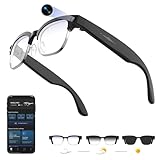
- 【8MPW Camera & 1080P Video and Audio】:These camera glasses feature an 800W camera that outputs sharp 20MP photos and smooth 1080P 30fps videos. Ultra-Clear Video + Powerful Anti-Shake tech+ Built-in dual microphones, you can capture crystal-clear video and audio together -sharply restoring details, perfect for vlogging, travel, and everyday moments
- 【Real-time AI translation Smart Glasses with Camera】:Instantly translate multiple major languages, breaking down language barriers in an instant—no phone required. Ideal for office settings, travel, academic exchanges, international conferences, watching foreign videos, and more
- 【Voice Assistant Recognition and Announcement】:Powered by industry-leading AI large models such as Doubao AI and OpenAI's GPT-4.0. AI voice wake-up lets you ask questions, recognize objects, and get answers on the go. Automatically recognizes objects, menus, landmarks, plants, and more, quickly analyzing the results and announcing them in real time. It instantly becomes your mobile encyclopedia on the go
- 【Bluetooth 5.3 Connection and Automatic Sync to Phone】:Equipped with a low-power BT5.3 chip and Wi-Fi dual transmission technology, offering ultra-low power and high-speed transmission. Captured images and videos are transferred to your phone in real time, eliminating manual export and eliminating storage worries
- 【290mAh Ultra-Long Battery Life】:Ultra-light at 42g, it's made of a durable, skin-friendly material, as light as a feather. Lenses are removable. Its simple, versatile design makes it a comfortable and comfortable wearer. 290mAh ultra-long battery life, 12 hours of music playback and 2 hours of photo or video recording, making it a perfect travel companion
Crucially, this warmth stays below the threshold where you feel the need to take the glasses off. In everyday use like walking, cycling, or casual social recording, thermal output remains controlled enough that it fades into the background, which wasn’t always true for first-gen wearables in this category.
Nose Pads, Temples, and Long-Wear Comfort
Ray-Ban’s core advantage remains its eyewear DNA, and the Gen 2 glasses continue to lean on familiar materials and shaping. The nose pads and bridge geometry haven’t changed dramatically, which is good news for anyone who found the original model wearable for long stretches.
What does change is how that fit feels over time. With fewer battery-related interruptions and less heat buildup, pressure points develop more slowly, and fatigue sets in later in the day.
For prescription lens wearers, the added internal hardware still makes these frames slightly thicker than standard Ray-Bans. However, the comfort penalty is incremental rather than transformative, and for most users, the tradeoff feels justified given the functional gains.
All-Day Wear Versus Intentional Use
The biggest comfort upgrade isn’t something you measure in grams or degrees. It’s behavioral. The improved battery life removes the subconscious need to “save” power, which in turn reduces how often you fiddle with the frames, check charge levels, or take them off unnecessarily.
When glasses stay on your face without demanding attention, comfort becomes psychological as much as physical. The Gen 2 glasses cross that threshold more convincingly than before, shifting from a device you put on for specific moments to something you can wear through them.
That shift is essential if smart glasses are going to compete not just with phones, but with normal eyewear. With better endurance, controlled heat, and balanced weight, the Ray-Ban Meta Gen 2 comes closer to feeling like glasses first and technology second.
Content Creation and Social Use Cases: Who Actually Benefits From Longer Life and Higher Resolution?
That transition from intentional use to all-day wear is what unlocks the real value of the Gen 2 upgrades. Better battery life and higher-resolution capture don’t just improve specs; they change who these glasses are actually useful for, and how often they make sense to reach for instead of a phone.
The move to 3K video and meaningfully longer endurance reshapes the Ray-Ban Meta glasses from a novelty recorder into a more reliable first-person camera. But the benefits are not evenly distributed, and some users will feel the impact far more than others.
Casual Creators and Everyday Storytelling
For casual content creators, the battery boost is arguably the bigger upgrade than resolution. Being able to record multiple short clips across an afternoon without watching the battery indicator removes friction, especially for people documenting travel, events, or daily routines for Instagram Stories or Snapchat.
The jump to 3K matters here because it cleans up compression artifacts that were obvious in the first generation. Even when clips are downscaled for social platforms, edges look sharper, motion is more stable, and faces hold detail better in mixed lighting.
Just as importantly, longer life means fewer missed moments. You’re no longer choosing between filming a coffee walk and saving power for dinner, which makes the glasses feel more like an extension of your day rather than a limited-use accessory.
POV Video for Social Platforms
First-person video has always been the Ray-Ban Meta party trick, but it was previously constrained by both resolution and endurance. With 3K capture, there’s now enough headroom for reframing and cropping without destroying image quality.
This is especially relevant for TikTok, Reels, and YouTube Shorts, where vertical crops are standard. Starting with higher-resolution footage means creators can punch in digitally, stabilize more aggressively, or reframe after the fact while still ending up with clean 1080p output.
Battery life plays an equally critical role. POV footage often involves recording in bursts throughout an activity, and the Gen 2 glasses handle that stop-start rhythm far better, reducing the anxiety that the camera might die halfway through something worth sharing.
Live Streaming and Connected Use
For users who lean into Meta’s live-streaming features, the endurance gains are transformative. Live sessions are one of the fastest ways to drain smart glasses, and previously they felt like a novelty rather than a practical tool.
With longer runtime, live streaming becomes viable for walks, behind-the-scenes moments, or casual commentary without constantly checking remaining charge. Thermal management also matters here, as sustained use no longer brings noticeable heat buildup that distracts from the experience.
This is where the glasses start to feel competitive with chest-mounted or handheld cameras for low-stakes streaming. They won’t replace dedicated rigs, but they’re no longer the weakest link in the setup.
Parents, Pet Owners, and Hands-Free Moments
Some of the biggest beneficiaries are not traditional “creators” at all. Parents and pet owners often want spontaneous, hands-free capture, and battery anxiety was previously a real limiter.
Longer life means the glasses can sit on your face all day and be ready when something happens, instead of needing to be consciously powered down between moments. The 3K upgrade ensures those spontaneous clips look good enough to keep, not just tolerate.
In these scenarios, comfort and discretion matter as much as quality. Because the glasses don’t demand frequent adjustments or charging breaks, they integrate more naturally into daily life.
Who This Still Isn’t For
Despite the upgrades, the Ray-Ban Meta Gen 2 glasses are not suddenly a replacement for a smartphone camera or an action cam. Low-light performance, zoom, and creative control remain limited compared to even midrange phones.
Users who create long-form content, rely on cinematic framing, or need precise audio control will still hit boundaries quickly. The improvements make the glasses better at what they already did well, rather than expanding them into a new category.
What changes is how often those strengths apply. With longer battery life and higher-resolution capture, the number of situations where the glasses are the right tool increases dramatically, especially for social-first, in-the-moment content.
A Shift From Occasional to Habitual Use
The most meaningful impact of these upgrades is behavioral. When battery life and video quality stop being constant compromises, people use the glasses more often and more naturally.
That habitual use is where smart glasses either succeed or fail. By making content creation feel less precious and more ambient, the Ray-Ban Meta Gen 2 moves closer to fulfilling the promise of always-available, wearable capture without turning the act of recording into a conscious decision every time.
How Ray-Ban Meta Gen 2 Now Stacks Up Against Competing Smart Glasses
The shift toward habitual, all-day use naturally raises a bigger question: how competitive are the Ray-Ban Meta Gen 2 glasses now that battery life and video quality are no longer their weakest links. In a category where compromises are unavoidable, these upgrades materially change where Meta’s glasses sit relative to both lifestyle-focused and display-driven rivals.
Against Camera-First Wearables: Finally Competitive on Endurance
Compared to camera-centric smart glasses like Snap Spectacles, Ray-Ban Meta Gen 2 now looks far more balanced. Snap’s designs still prioritize experimental capture and AR potential, but their bulk, limited wear time, and inconsistent battery behavior make them situational rather than habitual.
The extended battery life on the Meta glasses means they can stay on your face for a full day of intermittent use, something Spectacles have historically struggled to deliver. When combined with 3K video, Meta’s glasses now produce footage that feels worth keeping, without forcing you to plan your day around charging cycles.
This is where Meta gains ground not through raw innovation, but through reliability. For everyday capture, endurance matters more than experimental features most users won’t access daily.
💰 Best Value

- #1 SELLING AI GLASSES - Move effortlessly through life with Ray-Ban Meta glasses. Capture photos and videos, listen to music, make hands-free calls or ask Meta AI* questions on-the-go. Ray-Ban Meta glasses deliver a slim, comfortable fit for both men and women.
- CAPTURE WHAT YOU SEE AND HEAR HANDS-FREE - Capture exactly what you see and hear with an ultra-wide 12 MP camera and a five-mic system. Livestream it on Facebook and Instagram.
- LISTEN WITH OPEN-EAR AUDIO — Listen to music and more with discreet open-ear speakers that deliver rich, quality audio without blocking conversations or the ambient noises around you.
- GET REAL-TIME ANSWERS FROM META AI — The Meta AI* built into Ray-Ban Meta’s wearable technology helps you flow through your day. When activated, it can analyze your surroundings and provide context-rich suggestions - all from your smart AI glasses.
- CALL AND MESSAGE HANDS-FREE — Take calls, text friends or join work meetings via bluetooth straight from your glasses.
Against Display-Based AR Glasses: Different Goals, Clearer Strengths
Display-equipped glasses like Xreal Air, Rokid Max, or Viture models play in a fundamentally different space. They excel at media consumption and virtual screens, but require tethering, careful fit adjustment, and conscious setup every time you use them.
Ray-Ban Meta Gen 2 doesn’t compete on immersion or screen size, but it doesn’t try to. Its strength is immediacy. You can walk out the door wearing them as normal glasses, capture a moment, take a call, or trigger an assistant without shifting into “tech mode.”
Battery life is crucial here. Display glasses often rely on external power and drain quickly, while Meta’s improved efficiency supports true untethered use. The result is less capability on paper, but more actual usage in daily life.
Against Audio-First Smart Glasses: A Clear Step Ahead
When compared to audio-only smart glasses like Amazon Echo Frames or earlier Bose Frames, Ray-Ban Meta Gen 2 now sits comfortably ahead. Those products focus on notifications and voice assistants, but stop short of meaningful capture.
The addition of reliable, higher-quality video turns Meta’s glasses into a multi-sense wearable rather than a voice conduit. Battery life used to be the tradeoff, but with that largely addressed, the glasses no longer feel like they’re doing too much for their power budget.
In practical terms, this makes Meta’s glasses easier to justify as a daily accessory rather than a niche gadget layered on top of other devices.
Comfort, Materials, and All-Day Wearability Still Matter
A critical advantage Ray-Ban Meta retains is industrial design. The frames look and feel like normal eyewear, with familiar materials, balanced weight distribution, and lens options that suit prescription wearers.
Many competing smart glasses remain visually conspicuous or physically fatiguing over long sessions. Battery improvements don’t help if users want to take the glasses off after an hour. Meta’s ability to extend battery life without significantly increasing bulk is one of the most understated wins of this generation.
For users who already wear glasses daily, this lowers the friction to near zero. That is still something most competitors have not solved.
Software Ecosystem and Platform Tradeoffs
Meta’s software experience remains narrower than some might want. There is no open app ecosystem, limited customization, and a heavy emphasis on Meta’s own services and sharing pipelines.
However, competitors are not meaningfully ahead here. Many offer fragmented apps, inconsistent updates, or features that feel half-supported after launch. Meta’s advantage is predictability. Features work, sync reliably with a smartphone, and benefit from Meta’s ongoing investment in AI and voice interaction.
With better battery life supporting always-on listening and capture, the software experience finally aligns with the hardware’s intended use pattern.
Where Ray-Ban Meta Gen 2 Now Clearly Wins
Taken as a whole, the Ray-Ban Meta Gen 2 now occupies a sweet spot that few competitors hit. It delivers dependable all-day wear, socially acceptable design, improved capture quality, and battery life that no longer dictates behavior.
It still won’t replace a phone, an action camera, or AR display glasses, but it no longer feels like a compromise device. Instead, it stands as one of the most practical smart glasses available for people who value real-world usability over experimental ambition.
That repositioning is entirely driven by the battery and 3K video upgrades. They don’t just add features; they remove reasons not to wear the glasses in the first place.
Bottom Line: Do Battery and 3K Video Fix the Core Weaknesses of Ray-Ban Meta Smart Glasses?
The short answer is yes, with important caveats. The longer answer is that these two upgrades fundamentally change how Ray-Ban Meta Gen 2 fits into daily life, shifting it from a novelty you manage around to a wearable you can largely forget about until you need it.
Battery life and capture quality were never just spec sheet complaints. They were the reasons many users stopped wearing the glasses consistently after the initial excitement faded.
Battery Life: The Upgrade That Changes Behavior
The improved battery life doesn’t simply extend usage time; it removes friction. You can now leave the glasses on for a full day of intermittent use without mentally rationing photos, voice commands, or quick video clips.
That matters because smart glasses only make sense when they are always available. When battery anxiety disappears, the product finally supports its own premise: spontaneous capture and hands-free interaction.
Importantly, Meta achieved this without making the frames heavier or visually bulkier. Comfort, balance, and heat management remain good enough for all-day wear, which is where many battery-focused wearables stumble.
3K Video: Good Enough to Matter, Not Just Market
The jump to 3K video is not about competing with action cameras or modern smartphones. It’s about reaching a baseline where captured footage feels worth keeping, sharing, and revisiting.
Detail, stabilization, and dynamic range are now sufficient for everyday moments like walks, social gatherings, or first-person travel clips. The footage looks intentional rather than disposable, which dramatically improves the perceived value of the camera.
This also aligns better with Meta’s social-first software pipeline. Higher-quality video makes the glasses feel like a credible creation tool rather than a novelty recorder.
Do These Fix the Core Weaknesses?
For endurance and content quality, yes. These were the two biggest functional constraints holding the previous generation back, and both are meaningfully addressed here.
What remains unresolved is scope. There is still no display, no true AR overlay, and no open app ecosystem, which limits experimentation and customization for power users.
But those were never the core weaknesses of Ray-Ban Meta. The real problem was that the glasses didn’t support natural, all-day usage patterns, and now they largely do.
Who These Upgrades Actually Matter For
If you already wear glasses daily, this generation makes far more sense than before. The improved battery and better video quality reward habitual wear rather than short, intentional sessions.
For creators, parents, travelers, and anyone who values capturing moments without pulling out a phone, the experience is now less compromised. You are more likely to trust the glasses to get the shot and last long enough to matter.
If you want futuristic visuals, heads-up navigation, or immersive AR, this still isn’t the product for you. Meta is clearly optimizing for realism and wearability first.
The Verdict
The battery life boost and 3K video don’t turn Ray-Ban Meta Gen 2 into something it isn’t. Instead, they allow it to fully become what it was always trying to be.
By removing endurance anxiety and improving capture credibility, Meta has addressed the most practical reasons people stopped wearing smart glasses. The result is not a revolutionary device, but a genuinely usable one.
In the current smart glasses landscape, that may be the most important upgrade of all.