RayNeo Air 4 arrives at a moment when “smart glasses” still means very different things depending on who you ask. These are not AI assistants on your face, and they are not full mixed-reality computers. Instead, Air 4 squarely targets the fastest-growing subcategory in wearables right now: lightweight display glasses designed to give you a large, private screen anywhere, paired with decent audio and minimal friction.
If you have followed devices like Xreal Air 2, Rokid Max, or earlier RayNeo models, the core idea will feel familiar. Plug them into a phone, handheld console, laptop, or tablet, and the glasses act as an external display floating in front of your eyes. What makes Air 4 worth paying attention to is how aggressively RayNeo is refining the fundamentals rather than chasing gimmicks, especially with HDR10-certified micro-OLED panels and audio tuned in partnership with Bang & Olufsen.
This section breaks down exactly what the RayNeo Air 4 is meant to be, what it deliberately avoids trying to do, and where it sits in the rapidly crowding display-glasses landscape.
A portable private display, not “smart” in the Meta sense
At its core, RayNeo Air 4 is a wearable display and audio device that mirrors content from another screen. There is no onboard app ecosystem, no cameras for photos or spatial mapping, and no standalone processing power to run experiences by itself. Everything you see comes from a connected device via USB-C DisplayPort Alt Mode.
🏆 #1 Best Overall
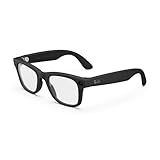
- #1 SELLING AI GLASSES - Tap into iconic style for men and women, and advanced technology with the newest generation of Ray-Ban Meta glasses. Capture photos and videos, listen to music, make hands-free calls or ask Meta AI questions on-the-go.
- UP TO 8 HOURS OF BATTERY LIFE - On a full charge, these smart AI glasses can last 2x longer than previous generations, up to 8 hours with moderate use. Plus, each pair comes with a charging case that provides up to 48 hours of charging on-the-go.
- 3K ULTRA HD: RECORD SHARP VIDEOS WITH RICH DETAIL - Capture photos and videos hands-free with an ultra-wide 12 MP camera. With improved 3K ultra HD video resolution you can record sharp, vibrant memories while staying in the moment.
- LISTEN WITH OPEN-EAR AUDIO — Listen to music and more with discreet open-ear speakers that deliver rich, quality audio without blocking out conversations or the ambient noises around you.
- ASK YOUR GLASSES ANYTHING WITH META AI - Chat with Meta AI to get suggestions, answers and reminders straight from your smart AI glasses.
That distinction matters, because expectations around “smart glasses” are often shaped by products like Meta Ray-Ban or Apple Vision Pro. Air 4 is closer to a personal cinema or external monitor you can slip into a jacket pocket. Think Netflix on a flight, console gaming from a Steam Deck, or extending your laptop desktop at a café without pulling out a monitor.
Why HDR10 micro-OLED actually matters here
RayNeo is leaning hard on HDR10 support, and this is not just a spec-sheet flex. Micro-OLED displays already excel at contrast and pixel density, but proper HDR tone mapping improves highlight detail and shadow depth in ways that are immediately noticeable when the “screen” fills much of your field of view.
Compared to older SDR-only display glasses, HDR10 content feels less flat and more cinematic, particularly for movies and games mastered with high dynamic range in mind. In practical terms, this helps Air 4 compete more directly with the latest Xreal and Rokid panels, which have been steadily pushing brightness, color accuracy, and perceived sharpness year over year.
Bang & Olufsen audio as a comfort and quality play
The Bang & Olufsen tuning is not about blasting bass into the room. Open-ear speaker systems in display glasses live or die by clarity, balance, and how fatigue-free they are over long sessions. B&O’s involvement signals an emphasis on soundstage and mid-range intelligibility rather than sheer volume.
For daily use, this matters more than it might sound. Many users rely on the glasses’ speakers for casual viewing, gaming, or productivity, only switching to earbuds when privacy is essential. Clean, well-tuned audio reduces the friction of that decision and makes Air 4 feel more like a complete device rather than a display that still needs accessories to shine.
Where Air 4 fits versus Xreal and Rokid
Conceptually, RayNeo Air 4 competes directly with Xreal Air 2 and Rokid Max rather than trying to reinvent the category. All three focus on comfort-first eyewear design, high-resolution micro-OLED displays, and broad device compatibility. The differences come down to tuning, refinement, and how well each brand balances visuals, audio, and wearability.
RayNeo’s play with Air 4 appears to be tightening the experience rather than expanding it. HDR10 support and branded audio are incremental upgrades, but they target areas that materially affect how often you actually want to use the glasses. This is less about new use cases and more about making existing ones feel polished and dependable.
Who these glasses are really for
RayNeo Air 4 is aimed at users who already understand the appeal of display glasses and want a more premium execution. Mobile gamers, frequent travelers, remote workers who want a second screen without carrying extra gear, and media consumers who value immersion without isolation are the clearest audience.
They are not for users expecting notifications, voice assistants, fitness tracking, or AR overlays anchored to the real world. RayNeo is making a deliberate bet that doing one thing well, delivering a high-quality private display with good audio in a comfortable form, is more valuable right now than chasing the broader, messier definition of “smart glasses.”
HDR10 Micro-OLED Displays Explained: Brightness, Contrast, and Why It Matters for Display Glasses
If RayNeo’s audio story is about reducing friction, the display is about raising the ceiling. Air 4’s use of HDR10-capable micro-OLED panels isn’t a spec-sheet flex so much as a response to the biggest complaint about early display glasses: they looked fine on paper, but flat and compromised in real use.
To understand why this matters, it helps to unpack what micro-OLED and HDR actually do differently in glasses versus a phone, tablet, or TV.
Why micro-OLED is still the gold standard for display glasses
Micro-OLED panels place self-emissive pixels directly on a silicon backplane, allowing extremely high pixel density in a very small physical area. In display glasses like the Air 4, those tiny panels are magnified through optics to create the illusion of a large virtual screen floating several feet away.
The benefit isn’t just sharpness. Micro-OLED’s pixel-level light control means true blacks, high contrast, and consistent color without the light bleed or haze that can affect LCD-based systems. For something worn centimeters from your eyes, that control is critical for comfort and clarity.
RayNeo sticking with micro-OLED puts Air 4 squarely in the same technical class as Xreal Air 2 and Rokid Max, but panel tuning is where differentiation actually happens.
HDR10 in glasses is less about brightness, more about range
HDR10 doesn’t magically turn display glasses into mini OLED TVs strapped to your face. Peak brightness is still limited by thermal constraints, power delivery, and eye comfort. What HDR10 enables here is better dynamic range within those limits.
In practice, this means highlights pop without crushing shadow detail, and dark scenes retain texture instead of collapsing into gray mush. Movies mastered for HDR look more dimensional, games feel more atmospheric, and even productivity tasks benefit from improved separation between UI elements.
For a private display meant to replace or supplement a laptop screen, that contrast range matters far more than raw nits.
Brightness versus perceived brightness in real-world use
One of the most misunderstood aspects of display glasses is brightness. On paper, numbers can look underwhelming compared to smartphones. In use, perceived brightness is shaped by optics, contrast, and how well the display holds up against ambient light.
Micro-OLED’s deep blacks mean brighter elements appear brighter by comparison, even if absolute luminance is modest. RayNeo’s HDR tuning leans into this, creating an image that reads clearly indoors, on planes, and in shaded outdoor environments without pushing eye strain.
That balance is essential for long sessions, especially for travel or work scenarios where these glasses are meant to stay on for hours.
Color accuracy and fatigue over long sessions
Another quiet benefit of HDR-capable micro-OLED is color stability. When displays struggle to hit brightness targets, colors often shift or wash out. HDR tuning allows the panel to preserve saturation without overshooting, keeping skin tones natural and UI elements legible.
For users watching extended content, gaming, or using Air 4 as a second screen, this reduces visual fatigue. It’s the difference between a display that feels impressive for ten minutes and one you forget you’re wearing after an hour.
That comfort-first approach mirrors RayNeo’s positioning elsewhere, prioritizing sustained usability over demo-floor wow factor.
How Air 4 compares to Xreal and Rokid on visuals
Conceptually, RayNeo Air 4 doesn’t leapfrog Xreal Air 2 or Rokid Max in resolution class, but HDR10 support and tuning give it a different visual character. Xreal has focused heavily on optical sharpness and software ecosystem, while Rokid often pushes brightness for bolder visuals.
RayNeo’s approach with Air 4 appears more balanced. The emphasis is on contrast, tone mapping, and visual comfort, aligning with its audio philosophy of refinement rather than brute force.
For buyers choosing between these brands, the question isn’t which has the “best” display on paper, but which one you’ll actually enjoy using most often. In that context, HDR10 micro-OLED isn’t just a feature, it’s a signal of where RayNeo thinks display glasses need to mature next.
Bang & Olufsen Audio Tuning: Why Premium Sound Is a Bigger Deal Than You Think
If RayNeo’s display strategy is about long-term visual comfort, its decision to partner with Bang & Olufsen follows the same philosophy on the audio side. In display glasses, sound isn’t a secondary feature; it’s half the experience, especially when the glasses are positioned as a private, wearable screen you can use anywhere.
Most smart glasses live or die by their speakers. You can tolerate minor compromises in brightness or field of view, but thin, harsh, or tinny audio becomes fatiguing fast when the speakers are centimeters from your ears.
Why open-ear audio is uniquely hard to get right
Unlike earbuds or headphones, smart glasses rely on open-ear speakers that sit in the arms and fire sound toward the ear without sealing it. That design preserves situational awareness, but it creates serious acoustic challenges around bass response, clarity, and sound leakage.
Without careful tuning, dialogue gets lost, music sounds hollow, and higher volumes bleed outward. This is where many display glasses stumble, delivering visuals that feel cinematic paired with audio that feels like an afterthought.
Bang & Olufsen’s involvement suggests RayNeo is taking this constraint seriously rather than treating audio as a checkbox feature.
Rank #2
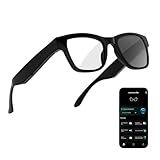
- 3-in-1 AI Glasses: Enjoy ① AI Voice Assistant (Powered by ChatGPT, Gemini & Deepseek), ② Stylish Photochromic Lenses Glasses, and ③ Bluetooth Open-Back Headphones, all in one.
- Free Talk Translation: Automatically detects and translates over 160 languages in real-time, allowing seamless work and translation without touching your phone or glasses.
- Voice, Video & Photo Translation: Supports over 98% of global languages, offering fast and accurate translations—ideal for international travel, business meetings, or cross-cultural communication.
- AI Meeting Assistant: Converts recordings from smart glasses into text and generates mind maps, making it easier to capture and organize meeting insights.
- Long Battery Life, Bluetooth 5.4 & Eye Protection: Up to 10 hours of music and 8 hours of talk time, with easy Type-C charging. Bluetooth 5.4 ensures stronger, stable connections, while photochromic lenses block UV rays and blue light, protecting your eyes in any environment.
What B&O tuning actually changes in daily use
Bang & Olufsen isn’t just lending a logo; its value lies in frequency balancing, psychoacoustic tuning, and making small drivers sound fuller than their physical size suggests. For Air 4, that likely translates into cleaner mids for dialogue, controlled treble that avoids sharpness, and bass that feels present without distortion.
In practical terms, this matters most for streaming, gaming, and productivity. Voices in movies remain intelligible at lower volumes, background music doesn’t overpower system sounds, and you’re less tempted to crank volume just to hear detail.
That restraint ties directly back to fatigue. Just as HDR tuning reduces visual strain, better audio tuning reduces listening fatigue during long sessions.
Sound leakage, privacy, and the “public use” problem
One of the quiet frustrations with early display glasses has been sound leakage in shared spaces. Train cars, offices, and planes expose the limits of poorly tuned open speakers.
B&O-style tuning prioritizes directional audio and controlled dispersion, meaning more sound reaches the wearer and less escapes into the room. While Air 4 won’t replace noise-isolating headphones, it should allow comfortable listening without broadcasting your content to nearby seats.
For a device positioned as a portable private display, that balance is crucial.
Audio-visual coherence matters more than specs
Great display glasses don’t just have good screens and good speakers; they synchronize the two into a cohesive experience. Lip-sync accuracy, spatial consistency, and tonal balance all affect whether content feels immersive or slightly “off.”
RayNeo’s emphasis on refined HDR visuals pairs naturally with B&O’s tuning philosophy. Neither is about pushing extremes; both aim for coherence, comfort, and realism over spec-sheet bravado.
This is especially noticeable in gaming and console streaming, where positional cues, environmental sounds, and dialogue clarity shape immersion as much as resolution or refresh rate.
How Air 4’s audio approach compares to Xreal and Rokid
Xreal has steadily improved its speaker performance generation over generation, but its strength remains optics and ecosystem integration. Rokid often pushes louder output, which can be impressive initially but less controlled over longer sessions.
RayNeo’s Air 4 appears to stake out a different position. Rather than chasing volume or gimmicky spatial effects, it focuses on tuning quality and listenability, aligning more closely with how people actually use display glasses day to day.
For buyers deciding between these platforms, audio may end up being the differentiator you notice most after the first week. A display can wow you in a demo, but sound is what determines whether you reach for the glasses again on your next flight, commute, or late-night gaming session.
Why this partnership signals a category shift
The inclusion of Bang & Olufsen tuning suggests RayNeo sees smart glasses maturing beyond novelty hardware. As these devices move toward longer wear times and broader use cases, premium audio stops being optional.
Air 4’s HDR10 micro-OLED display sets the visual foundation, but B&O-tuned audio is what makes that display usable without friction. Together, they point to a more holistic idea of what display glasses should deliver: not just impressive components, but a comfortable, cohesive experience you can live with for hours.
Design, Comfort, and Wearability: How the Air 4 Fits Into Everyday Use
If audio and visuals determine whether smart glasses feel immersive, design and comfort decide whether you actually keep them on. RayNeo’s Air 4 clearly treats wearability as a core feature rather than a secondary consideration, and that philosophy shows up the moment you put them on.
These are still unmistakably display glasses, not fashion eyewear, but they lean closer to everyday sunglasses than many earlier-generation competitors. That balance matters, because Air 4 is positioned for extended sessions rather than quick demos.
Frame design and materials
The Air 4 uses a clean, modern frame with softly rounded edges that avoids the overtly “techy” aesthetic some AR glasses lean into. It is understated enough to wear in public without attracting constant attention, especially in darker lens configurations.
RayNeo appears to favor lightweight composite materials rather than premium metals, and that choice feels intentional. The frame doesn’t project luxury in the way titanium might, but it prioritizes weight distribution and long-term comfort over showroom appeal.
Build quality feels reassuringly solid where it matters, particularly around the hinges and temple arms. There’s minimal creaking when adjusting the fit, which is important for a device designed to be worn, removed, and repositioned frequently throughout the day.
Weight balance and pressure points
Comfort with display glasses lives or dies by balance, and Air 4 gets most of this equation right. The weight is spread evenly across the nose bridge and temples, reducing the front-heavy sensation that can cause fatigue during longer viewing sessions.
Nose pads are soft and slightly grippy, helping the glasses stay stable without digging in. Even after extended use, pressure buildup is noticeably controlled compared to bulkier designs from earlier RayNeo and Rokid models.
Temple arms apply gentle, consistent tension rather than clamping pressure. This makes Air 4 easier to wear alongside over-ear headphones or when reclining, two scenarios where poorly balanced glasses quickly become annoying.
Fit flexibility and everyday ergonomics
RayNeo continues the now-standard approach of adjustable nose pads and a geometry that works across a wide range of face shapes. While not custom-fit, the Air 4 avoids the “one-size-fits-some” problem that can plague display glasses with narrower frames.
The glasses sit at a natural viewing angle without requiring constant micro-adjustments. Once dialed in, the display alignment stays consistent whether you’re sitting upright, leaning back on a couch, or lying down during travel.
This stability is especially important for gaming and productivity use, where even small shifts can break immersion or force you to reposition the glasses mid-session. Air 4’s ergonomics suggest RayNeo understands that display glasses are increasingly used for hours, not minutes.
Thermal comfort and long-session wear
Heat management is an under-discussed aspect of smart glasses, and Air 4 handles it quietly but effectively. During extended media playback or gaming, warmth around the lenses and temples remains present but controlled.
There are no obvious hotspots that force you to take breaks prematurely. That makes Air 4 better suited to long flights, remote work setups, or console streaming sessions than designs that grow uncomfortable over time.
Combined with the restrained audio tuning discussed earlier, the glasses encourage longer, more relaxed use rather than short bursts of novelty-driven engagement.
How Air 4 compares to Xreal and Rokid on wearability
Xreal remains one of the strongest benchmarks for lightweight comfort, and Air 4 competes closely rather than clearly surpassing it. Where RayNeo differentiates itself is in balance and stability during movement, particularly when reclining or changing posture.
Rokid’s designs often feel more aggressive in styling and slightly heavier on the face, which can be fatiguing during longer sessions. Air 4 positions itself as the calmer, more neutral option, trading visual flair for wearability consistency.
For users planning to treat display glasses as a daily companion rather than an occasional gadget, this approach makes sense. Comfort becomes the feature you notice most after the initial excitement wears off.
Rank #3

- 【AI Real-Time Translation & ChatGPT Assistant】AI glasses break language barriers instantly with AI real-time translation. The built-in ChatGPT voice assistant helps you communicate, learn, and handle travel or business conversations smoothly—ideal for conferences, overseas trips, and daily use.
- 【4K Video Recording & Photo Capture 】Smart glasses with camera let you capture your world from a first-person view with the built-in 4K camera. Take photos and record videos hands-free anytime—perfect for travel moments, vlogging, outdoor adventures, and work documentation.
- 【Bluetooth Music & Hands-Free Calls 】Camera glasses provide Bluetooth music and crystal-clear hands-free calls with an open-ear design. Stay aware of your surroundings while listening—comfortable for long wear and safer for commuting, cycling, and outdoor use.
- 【IP65 Waterproof & Long Battery Life】 Recording glasses are designed for daily wear with IP65 waterproof protection against sweat, rain, and dust. The built-in 290mAh battery provides reliable performance for workdays and travel—no anxiety when you’re on the go.
- 【Smart App Control & Object Recognition】Smart glasses connect to the companion app for easy setup, file management, and feature control. They support AI object recognition to help identify items and improve your daily efficiency—perfect for travel exploration and a smart lifestyle.
Designed for real-world routines, not just demos
Air 4’s design choices align closely with RayNeo’s broader message about coherence and usability. The glasses feel optimized for real routines: commuting, couch gaming, late-night viewing, and working from a laptop without isolating yourself from your surroundings.
They are not trying to disappear entirely, but they avoid fighting your face, your posture, or your habits. That alone marks a meaningful step forward for a category still learning how to integrate into everyday life.
In practice, Air 4’s comfort and wearability reinforce the idea that these glasses are meant to be lived with, not just shown off.
Connectivity and Compatibility: Phones, Laptops, Consoles, and Use-Case Reality
Comfort and thermals only matter if the glasses slot cleanly into the devices you already use. With Air 4, RayNeo leans hard into the now-familiar “display-first” philosophy, prioritising broad wired compatibility over experimental wireless tricks.
This is not a standalone computer or AR headset. Air 4 lives or dies by how easily it becomes a private screen for your existing gear.
USB‑C DisplayPort is the backbone
At its core, Air 4 relies on USB‑C DisplayPort Alt Mode for both video and power. That keeps latency extremely low and avoids battery anxiety inside the glasses themselves, but it also means compatibility depends entirely on the source device.
Most modern Android phones with USB‑C video-out work as expected, including flagship Samsung, Google, and Xiaomi models. Plug in, mirror the display, and the glasses behave like an external HDR monitor hovering in front of you.
Android phones: the cleanest experience
On Android, Air 4 feels closest to the intended use-case. Samsung DeX, Motorola Ready For, and similar desktop-style modes translate well to the glasses, especially for productivity or split-screen media use.
HDR10 support is meaningful here, not just a spec-sheet checkbox. Streaming apps that allow HDR playback deliver noticeably better contrast and highlight detail than earlier generation display glasses, particularly in darker scenes.
iPhone compatibility comes with caveats
iPhone users are not locked out, but the experience is less elegant. You’ll need a USB‑C iPhone (iPhone 15 and newer) or a Lightning-to-HDMI adapter plus an additional HDMI-to-USB‑C converter.
Functionally it works, but the chain of adapters adds bulk and friction. This is not RayNeo’s limitation so much as Apple’s continued resistance to open video-out workflows on mobile.
Laptops and tablets: where Air 4 starts to make sense
On laptops, Air 4 behaves exactly like a portable external monitor. macOS, Windows, and ChromeOS all recognise the glasses instantly, allowing screen mirroring or extended desktop modes without additional software.
For remote work, travel, or cramped desk setups, this is one of Air 4’s strongest use cases. The perceived screen size makes spreadsheets, timelines, and documents usable, even if text-heavy work still benefits from careful scaling and font adjustments.
Handheld gaming PCs and consoles
Air 4 pairs naturally with handheld PCs like Steam Deck, ASUS ROG Ally, and Lenovo Legion Go. These devices already expect external displays, and the glasses slot in cleanly with minimal setup.
Nintendo Switch works in docked mode via USB‑C video-out or HDMI adapters, making Air 4 a compelling personal screen for travel or shared spaces. PlayStation and Xbox consoles require HDMI adapters, which introduces extra cables but remains practical for couch or bedside gaming.
Latency, refresh behaviour, and real-world gaming
Because Air 4 is a wired display, latency is effectively negligible. Fast-paced games feel responsive, and there’s no wireless compression artefacting to distract from the experience.
The limitation is not speed but ergonomics. Long gaming sessions remain more comfortable with a controller and relaxed posture, which Air 4 supports well, but it won’t replace a large TV for social or competitive play.
Audio routing and device control
Bang & Olufsen–tuned speakers integrate directly into the USB‑C audio path, meaning sound follows the display without additional pairing steps. Devices see Air 4 as both a monitor and an audio output, simplifying switching between speakers, headphones, and the glasses.
Volume control remains device-driven, which keeps behaviour predictable across platforms. There’s no companion app layer here trying to override system audio logic, and that restraint improves day-to-day usability.
What Air 4 is not trying to do
There is no wireless casting, no onboard app ecosystem, and no spatial operating system layered on top. Air 4 is not competing with Vision Pro-style computing or even lightweight AR overlays from more experimental brands.
RayNeo’s bet is that reliability, low latency, and broad device compatibility matter more than ambitious software. For users who want a private, portable HDR display that simply works across phones, laptops, and consoles, that trade-off feels intentional rather than limiting.
Media, Gaming, and Productivity Scenarios: Who Benefits Most from the Air 4
With RayNeo clearly positioning the Air 4 as a dependable wired display rather than an experimental AR computer, its strengths show up most clearly when you map it to everyday scenarios. Think of it less as “smart glasses” in the sci‑fi sense, and more as a high-quality, head-worn external monitor with audio that finally doesn’t feel like an afterthought.
Private media consumption: the Air 4’s natural home turf
For solo viewing, the Air 4 plays directly into the reasons display glasses exist in the first place. HDR10 support gives movies and TV real punch, especially in darker scenes where cheaper micro‑OLED implementations tend to crush detail or wash out highlights.
Paired with Bang & Olufsen–tuned open-ear speakers, the experience feels self-contained in a way earlier RayNeo models and some rivals struggled to achieve. Compared to Xreal Air or Rokid Max, the Air 4’s audio presentation sounds fuller and better balanced at moderate volumes, reducing the urge to immediately reach for earbuds.
This makes the glasses particularly well-suited to travel scenarios. Long flights, train commutes, and hotel stays are where a private 100-plus-inch virtual screen actually feels transformative, without the isolation or fatigue of sealed headphones.
Handheld and console gaming: where low latency matters more than features
The Air 4 shines with handheld PCs and consoles because it avoids overengineering. Wired USB‑C video means there’s no input lag penalty, no wireless interference, and no battery anxiety tied to the glasses themselves.
On devices like Steam Deck or ROG Ally, the Air 4 essentially turns a portable console into a head-mounted living room setup. Compared to Xreal’s Nebula-based approach, RayNeo’s simplicity means fewer compatibility headaches and zero dependency on platform-specific software.
Console gamers benefit too, particularly in shared spaces. The glasses won’t replace a TV for social play, but for late-night sessions or cramped environments, they offer a practical alternative that feels mature rather than experimental.
Productivity and mobile work: useful, but narrowly defined
For productivity, the Air 4 is best understood as a focus tool rather than a multi-monitor replacement. Text clarity is strong enough for email, documents, and light coding, especially when driven by a laptop or tablet that already supports external displays cleanly.
What it lacks, compared to software-heavy competitors, is spatial window management. There’s no virtual desktop spreading apps across your field of view, which means productivity gains come from isolation and screen size, not from workflow innovation.
This makes the Air 4 ideal for coffee shops, airports, or shared offices where screen privacy matters. It’s less compelling for users who want immersive AR-style multitasking, but more reliable for those who simply want a big, sharp display anywhere.
Rank #4
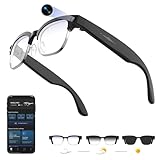
- 【8MPW Camera & 1080P Video and Audio】:These camera glasses feature an 800W camera that outputs sharp 20MP photos and smooth 1080P 30fps videos. Ultra-Clear Video + Powerful Anti-Shake tech+ Built-in dual microphones, you can capture crystal-clear video and audio together -sharply restoring details, perfect for vlogging, travel, and everyday moments
- 【Real-time AI translation Smart Glasses with Camera】:Instantly translate multiple major languages, breaking down language barriers in an instant—no phone required. Ideal for office settings, travel, academic exchanges, international conferences, watching foreign videos, and more
- 【Voice Assistant Recognition and Announcement】:Powered by industry-leading AI large models such as Doubao AI and OpenAI's GPT-4.0. AI voice wake-up lets you ask questions, recognize objects, and get answers on the go. Automatically recognizes objects, menus, landmarks, plants, and more, quickly analyzing the results and announcing them in real time. It instantly becomes your mobile encyclopedia on the go
- 【Bluetooth 5.3 Connection and Automatic Sync to Phone】:Equipped with a low-power BT5.3 chip and Wi-Fi dual transmission technology, offering ultra-low power and high-speed transmission. Captured images and videos are transferred to your phone in real time, eliminating manual export and eliminating storage worries
- 【290mAh Ultra-Long Battery Life】:Ultra-light at 42g, it's made of a durable, skin-friendly material, as light as a feather. Lenses are removable. Its simple, versatile design makes it a comfortable and comfortable wearer. 290mAh ultra-long battery life, 12 hours of music playback and 2 hours of photo or video recording, making it a perfect travel companion
Comfort, fatigue, and real-world session length
Comfort ultimately defines who will stick with display glasses long-term. The Air 4’s balanced weight and open-ear audio make it easier to wear for extended sessions than many earlier-generation rivals, particularly during video or gaming marathons.
That said, it still asks you to manage posture and eye strain thoughtfully. Productivity sessions tend to top out sooner than media viewing, reinforcing the idea that these glasses complement, rather than replace, traditional monitors.
Who the Air 4 is really for—and who it isn’t
The Air 4 makes the most sense for users who already own capable source devices and want a portable, private screen that works every time. Frequent travelers, handheld gaming enthusiasts, and apartment dwellers with limited space will feel its value immediately.
If you’re chasing cutting-edge AR interfaces or hoping for glasses that think independently, RayNeo isn’t trying to meet you there. But if your priority is a dependable HDR display with surprisingly good built-in audio, the Air 4 feels like a confident, incremental step forward for the category rather than a sideways experiment.
RayNeo Air 4 vs Xreal and Rokid: How It Stacks Up Conceptually
Seen in context, the RayNeo Air 4 isn’t trying to out-innovate the category so much as refine a specific interpretation of it. Where Xreal and Rokid increasingly frame their glasses as gateways into spatial computing ecosystems, RayNeo positions the Air 4 as a dependable display-and-audio endpoint that behaves more like a premium peripheral than an experimental platform.
That distinction matters, because it shapes everything from hardware priorities to software ambition. The Air 4 competes less on futuristic AR tricks and more on whether the fundamentals of screen quality, sound, comfort, and reliability are nailed.
Display philosophy: image quality over spatial ambition
Conceptually, RayNeo’s HDR10-equipped micro-OLED panels reflect a focus on cinematic punch rather than virtual workspace complexity. The Air 4 emphasizes contrast, color depth, and perceived sharpness, aiming to make movies, games, and streamed content look rich even in bright environments.
Xreal and Rokid, by contrast, often lean into wider feature sets like adjustable screen distance, multi-window layouts, or pseudo-AR anchoring. Those features can be impressive when they work, but they also introduce setup friction and occasional instability that RayNeo appears deliberately intent on avoiding.
The Air 4’s approach is more conservative, but also more predictable. You get a large, floating screen that looks consistently good across phones, laptops, and handheld consoles, without needing companion apps to unlock basic usability.
Audio strategy: B&O tuning as a differentiator
Audio is where RayNeo draws one of its clearest conceptual lines. By leaning on Bang & Olufsen tuning rather than chasing raw loudness or novelty speaker placement, the Air 4 treats sound as an integral part of the viewing experience rather than a checkbox feature.
Xreal and Rokid glasses typically offer competent open-ear audio, but they’re rarely memorable. RayNeo’s B&O partnership signals an understanding that many users will consume long-form video or play games without headphones, making tonal balance and fatigue more important than sheer volume.
This doesn’t replace proper over-ear or in-ear headphones, but it narrows the gap enough that casual viewing feels complete out of the box. For commuters, travelers, and couch gamers, that completeness matters more than spec-sheet bravado.
Software ecosystems: minimalism versus modular add-ons
RayNeo’s software philosophy is intentionally restrained. The Air 4 relies on the host device to do the heavy lifting, functioning as a clean external display rather than a semi-independent computing layer.
Xreal and Rokid have gone further down the ecosystem path, offering dedicated apps, optional compute packs, and evolving spatial interfaces. For enthusiasts, that experimentation is part of the appeal, but it also means dealing with firmware quirks, OS compatibility gaps, and a steeper learning curve.
The Air 4’s minimalism won’t excite AR purists, but it lowers the barrier to entry. Plug in a cable, mirror or extend your screen, and start watching or working with little cognitive overhead.
Comfort, wearability, and long-session intent
All three brands now understand that comfort is non-negotiable, but their priorities differ subtly. RayNeo’s balanced weight distribution and open-ear design reinforce its role as something you might wear for a full movie, a long flight, or an extended gaming session.
Xreal and Rokid glasses can feel similarly light, but their heavier reliance on software-driven interaction can encourage more frequent adjustments and interruptions. RayNeo’s more passive use case results in fewer reasons to fidget or reconfigure once you’re settled.
This difference aligns with RayNeo’s broader identity: less about interacting with digital space, more about disappearing into content without distractions.
Who wins on concept depends on what you value
If you’re drawn to the idea of glasses as a future computing platform, Xreal and Rokid remain more adventurous. Their products feel like ongoing experiments, occasionally thrilling and occasionally frustrating, but clearly aimed at what AR could become.
The RayNeo Air 4 feels more grounded in what display glasses already do well. By prioritizing HDR visuals, credible built-in audio, and straightforward compatibility, it sharpens the category’s most practical use case rather than redefining it.
Conceptually, that makes the Air 4 less ambitious but arguably more mature. It doesn’t ask you to believe in a roadmap; it asks you to enjoy a private, high-quality screen right now.
What’s Missing or Still Compromised in 2026 Smart Glasses
For all the maturity on display with the RayNeo Air 4, its strengths also underline the broader limits of smart glasses as a category in 2026. These devices are clearly better than they were even two years ago, but they still sit in an in-between space: more capable than novelty gadgets, yet short of feeling like a true computing platform.
RayNeo’s decisions are mostly deliberate, but they don’t magically solve the industry’s long-running constraints.
No real autonomy, just smarter dependence
The Air 4 is still entirely dependent on a tethered device for power and content. Whether you’re plugged into a phone, handheld console, laptop, or tablet, the glasses themselves have no onboard compute, storage, or battery to speak of.
That keeps weight down and thermal management simple, but it also reinforces the idea that smart glasses remain accessories, not standalone products. In contrast, even Xreal’s optional compute packs hint at a future where glasses do more than mirror another screen, however clunky those solutions may still be.
HDR visuals, but no environmental awareness
RayNeo’s HDR10-capable micro-OLED panels deliver impressive contrast and perceived brightness for media consumption, yet they remain isolated from the world around you. There’s no camera-based spatial awareness, no passthrough AR, and no understanding of your physical environment.
This keeps the Air 4 focused and distraction-free, but it also limits use cases to seated, stationary scenarios. Smart glasses in 2026 still struggle to bridge the gap between immersive display and contextual awareness without becoming heavier, hotter, and far more expensive.
Audio is finally credible, but still not private
The Bang & Olufsen-tuned open-ear audio is one of the Air 4’s biggest upgrades, offering clearer mids and better spatial presence than the tinny speakers that plagued earlier generations. For casual viewing and gaming, it’s good enough that you won’t immediately reach for earbuds.
Still, open-ear audio remains a compromise. Sound leakage is inevitable, bass depth is limited, and noisy environments quickly expose the ceiling of what even premium tuning can achieve without physical isolation.
Software ambition remains modest by design
RayNeo avoids the complexity of spatial operating systems, gesture controls, or persistent AR layers. That makes the Air 4 refreshingly reliable, but it also means there’s little room to grow beyond screen mirroring and extended desktop use.
Xreal and Rokid continue to experiment with floating windows, virtual desktops, and spatial UIs, albeit with inconsistent results. RayNeo’s approach is safer, but it leaves power users with fewer reasons to keep exploring after the initial honeymoon phase.
💰 Best Value

- #1 SELLING AI GLASSES - Move effortlessly through life with Ray-Ban Meta glasses. Capture photos and videos, listen to music, make hands-free calls or ask Meta AI* questions on-the-go. Ray-Ban Meta glasses deliver a slim, comfortable fit for both men and women.
- CAPTURE WHAT YOU SEE AND HEAR HANDS-FREE - Capture exactly what you see and hear with an ultra-wide 12 MP camera and a five-mic system. Livestream it on Facebook and Instagram.
- LISTEN WITH OPEN-EAR AUDIO — Listen to music and more with discreet open-ear speakers that deliver rich, quality audio without blocking conversations or the ambient noises around you.
- GET REAL-TIME ANSWERS FROM META AI — The Meta AI* built into Ray-Ban Meta’s wearable technology helps you flow through your day. When activated, it can analyze your surroundings and provide context-rich suggestions - all from your smart AI glasses.
- CALL AND MESSAGE HANDS-FREE — Take calls, text friends or join work meetings via bluetooth straight from your glasses.
Comfort gains don’t erase ergonomic limits
Weight distribution and nose support have improved across the category, and the Air 4 is comfortable enough for a full movie or long flight. Even so, extended multi-hour use still introduces subtle fatigue, particularly around the bridge of the nose and temples.
Prescription lens compatibility helps, but it adds cost and complexity. Smart glasses in 2026 still aren’t something most people forget they’re wearing the way they might with lightweight headphones or a smartwatch.
Productivity is possible, not frictionless
Using the Air 4 as a portable monitor for email, documents, or coding is genuinely useful, especially when paired with a laptop or handheld PC. However, text clarity depends heavily on fit, IPD alignment, and the quality of the source device’s output.
Without native multitasking tools or input methods, productivity remains situational rather than transformative. These glasses enhance existing workflows instead of redefining them.
Incremental progress, not a category leap
The Air 4 doesn’t fail at anything it sets out to do, but it also doesn’t resolve the bigger question hanging over smart glasses: what finally makes them indispensable? Better displays and better audio improve the experience, but they don’t fundamentally change how or when most people will reach for them.
In that sense, RayNeo’s latest launch reflects the state of smart glasses in 2026 as a whole. The technology is refined, the rough edges are smoother, yet the leap from compelling accessory to essential device remains just out of reach.
Pricing, Positioning, and Value Proposition in the Current Smart Glasses Market
After acknowledging that the Air 4 refines rather than redefines the category, the next question becomes unavoidable: where does RayNeo think this product sits, and does the pricing justify what you actually get day to day?
RayNeo is clearly betting that display quality and audio credibility are now strong enough differentiators to support a more confident, premium-leaning position in a crowded but still niche market.
Pricing relative to Xreal and Rokid
At launch, the RayNeo Air 4 lands in the upper-middle of the display glasses price spectrum, with regional pricing that broadly clusters around the mid-to-high $400 range before accessories. That places it slightly above entry-level display glasses, but below the experimental or compute-assisted AR devices that still struggle with bulk and battery trade-offs.
This positions the Air 4 directly against Xreal’s Air 2 Pro and just above Rokid’s Max, both of which have established themselves as reliable, if imperfect, category benchmarks. RayNeo is not undercutting rivals here; it is matching them feature for feature and arguing that HDR10 panels and Bang & Olufsen-tuned audio justify the parity.
What you’re paying for, in practical terms
The clearest value argument is visual fidelity. HDR10 support, higher perceived contrast, and strong brightness levels matter more than headline resolution in glasses that sit centimeters from your eyes, and RayNeo is leaning into that reality rather than chasing spec-sheet bravado.
Audio is the second pillar of the pricing story. Bang & Olufsen branding will raise eyebrows, but the tuning genuinely improves clarity and spatial separation compared to the thin, directional sound typical of open-ear glasses, especially for movies and handheld gaming.
Accessories, prescriptions, and the hidden cost of ownership
Like its competitors, the Air 4’s base price does not reflect the full cost for many buyers. Prescription lens inserts are effectively mandatory for anyone who normally wears glasses, and they add both cost and setup friction to the experience.
Cable quality, adapters for consoles or phones without USB-C video out, and optional nose pads also factor into real-world ownership. None of this is unusual in the category, but it does mean the Air 4 rarely stays a single-line-item purchase.
Positioning as a companion, not a standalone device
RayNeo is careful not to oversell autonomy or intelligence. The Air 4 is unapologetically a companion display for phones, laptops, handheld PCs, and consoles, not a self-contained computing platform.
This honesty works in its favor when evaluating value. You are not paying for underpowered onboard processors or half-baked spatial interfaces, but for a reliable private screen that behaves predictably across devices you already own.
Who the Air 4 makes sense for
For frequent travelers, commuters, and gamers who want a portable big-screen experience without drawing attention, the Air 4 offers a strong balance of comfort, image quality, and audio immersion. It also suits productivity users who understand its limits and want a second screen rather than a spatial workstation replacement.
Less compelling is the value proposition for casual users who will only occasionally mirror a phone or watch short videos. At this price level, the Air 4 rewards consistent use, not novelty-driven curiosity.
Incremental value in a maturing category
In the broader smart glasses market of 2026, the Air 4 represents sensible, consumer-facing progress rather than a leap forward. The pricing reflects a category that is stabilizing, where brands compete on refinement, comfort, and media quality instead of speculative futures.
RayNeo’s value proposition is therefore straightforward: if you already believe in display glasses as a useful accessory, the Air 4 is one of the most polished executions yet. If you’re still waiting for smart glasses to feel indispensable, the price won’t change your mind, but it may make the wait more enjoyable.
Verdict: Is RayNeo Air 4 a Meaningful Step Forward or a Polished Iteration?
Seen in the context of everything that came before it, the RayNeo Air 4 feels less like a reinvention and more like a confident tightening of the formula. That may sound conservative, but in a category where comfort, visual quality, and frictionless use matter more than novelty, refinement carries real weight.
The Air 4 doesn’t try to redefine what display glasses are meant to be. Instead, it focuses on executing the core promise better than most of its peers, with clearer visuals, more credible audio, and fewer compromises in daily use.
Why HDR10 and B&O audio actually matter
HDR10 support is not just a spec-sheet flourish here. In real-world use, it translates into better highlight control, deeper perceived contrast, and more consistent brightness when watching modern streaming content or playing HDR-enabled games.
Paired with Bang & Olufsen–tuned speakers, the Air 4 delivers a more cohesive audiovisual experience than earlier RayNeo models and many direct rivals. Compared with the flatter, more directional audio found on several Xreal and Rokid glasses, the Air 4 sounds fuller and less fatiguing during long sessions, especially in quiet environments.
Incremental gains, but in the right places
Against competitors like the Xreal Air 2 Pro or Rokid Max, the Air 4 does not dramatically outpace them on raw resolution or field of view. Where it gains ground is in tuning: color balance out of the box, perceived sharpness across the lens, and a more forgiving fit for a wider range of face shapes.
These improvements won’t headline a spec comparison chart, but they show up in day-to-day usability. Long flights, extended gaming sessions, or multi-hour workdays are simply easier to tolerate with fewer pressure points and more stable visuals.
A companion device that knows its role
RayNeo’s decision to double down on the Air 4 as a companion display rather than a semi-smart wearable is ultimately what keeps expectations aligned with reality. There is no awkward attempt at gesture-driven UIs, partial autonomy, or underpowered onboard computing.
That clarity puts the Air 4 in direct conceptual alignment with how most people actually use display glasses today. It excels as a private, portable screen for phones, laptops, handheld PCs, and consoles, rather than pretending to be a lightweight AR future that still isn’t ready.
So, step forward or safe refinement?
The honest answer is that it’s both. The RayNeo Air 4 does not push the category into new territory, but it meaningfully raises the quality bar for what consumers should expect from media-focused smart glasses in 2026.
If you already see value in display glasses, the Air 4 is one of the most complete and well-judged options available right now. If you’re waiting for smart glasses to become indispensable rather than optional, this launch won’t change that calculus, but it does make the present version of the idea more comfortable, more immersive, and easier to live with.