If you flip over a modern Fitbit and really look at the glowing window against your skin, you’re seeing the quiet center of gravity for almost every metric you care about. Heart rate, sleep stages, stress, SpO2, even readiness-style scores all trace back to that tiny optical stack. Fitbit hasn’t been shouting about changes here, but the hardware itself tells a very different story than it did just a few product cycles ago.
What’s changed isn’t a single sensor or a flashy new spec line. It’s a rebalancing of light wavelengths, emitter layouts, and signal priorities that fundamentally alters how Fitbit collects biological data from your wrist. Understanding that shift is the key to understanding why some metrics feel more stable, others more demanding on battery, and why Fitbit’s future accuracy bets look very different from its past.
From green-first to multi-wavelength by default
For years, Fitbit leaned heavily on green LEDs as the workhorse of wrist-based heart rate tracking. Green light is strongly absorbed by hemoglobin, which makes it excellent for detecting pulse signals during movement-heavy activities like running or HIIT. The tradeoff is that green light struggles with deeper tissue penetration and becomes noisier during sleep or low-perfusion states.
Recent Fitbit sensor arrays quietly reduce that green-only dominance. Red and infrared LEDs now sit alongside green emitters as equal partners rather than secondary tools. This matters because red and infrared wavelengths penetrate deeper into tissue, offering cleaner signals for resting heart rate, overnight variability, and blood oxygen estimation.
🏆 #1 Best Overall

- Inspire 3 is the tracker that helps you find your energy, do what you love and feel your best. All you have to do is wear it.Operating temperature: 0° to 40°C
- Move more: Daily Readiness Score(1), Active Zone Minutes, all-day activity tracking and 24/7 heart rate, 20+ exercise modes, automatic exercise tracking and reminders to move
- Stress less: always-on wellness tracking, daily Stress Management Score, mindfulness sessions, relax breathing sessions, irregular heart rhythm notifications(2), SpO2(3), menstrual health tracking, resting heart rate and high/low heart rate notifications
- Sleep better: automatic sleep tracking, personalized Sleep Profile(1), daily detailed Sleep Score, smart wake vibrating alarm, sleep mode
- Comfortably connected day and night: calls, texts & smartphone app notifications(4), color touchscreen with customizable clock faces, super lightweight and water resistant to 50 meters, up to 10 day battery life(5)
Why red light isn’t just about SpO2 anymore
Most users associate red light with SpO2, since oxygenated and deoxygenated blood reflect red and infrared light differently. That’s still true, but Fitbit’s newer sensor stacks are using those wavelengths more often and for more than overnight oxygen snapshots. Red light produces more stable readings when motion is minimal, which makes it ideal for sleep, stress baselines, and recovery metrics.
By leaning harder on red and infrared during low-motion periods, Fitbit can smooth heart rate trends and reduce false variability spikes. The result is less jitter in sleep graphs and fewer unexplained dips in nightly metrics, even if the app never tells you which LED did the work.
Emitter layout and skin contact have quietly improved
The changes aren’t just about color, but geometry. Newer Fitbit devices show denser emitter groupings and revised photodiode placement designed to capture more reflected light with less power. This improves signal-to-noise ratio without increasing LED brightness, which directly affects comfort and battery life during all-day wear.
Better layout also means more consistent readings across different wrist sizes and skin tones. Optical sensors are notoriously sensitive to gaps, hair, tattoos, and strap tension, so these physical refinements matter just as much as the wavelengths themselves in real-world wearability.
Sampling strategy is doing more work than raw hardware
Fitbit has also changed how often and when different LEDs fire. Green light still dominates during workouts where motion artifact is unavoidable, but red and infrared take over during sleep, sedentary periods, and guided breathing sessions. This adaptive sampling reduces wasted power and prioritizes cleaner data streams depending on context.
The end user never sees this handoff, but it explains why battery life hasn’t collapsed despite more sensors being active. It also hints at why firmware updates can meaningfully change accuracy without any visible hardware revision.
What this shift signals about Fitbit’s priorities
This sensor shake-up reflects a move away from pure fitness tracking toward clinically adjacent health monitoring. Red and infrared data are more compatible with regulatory frameworks, longitudinal health trends, and algorithmic validation. Fitbit is clearly building a sensor foundation that can support future features without swapping hardware every generation.
For users, this means today’s Fitbit is already collecting richer raw data than earlier models, even if the app surface looks familiar. The real change is happening under the glass, one wavelength at a time.
Red vs green light 101: How optical sensors read your body (and why wavelength matters)
All of these behind-the-scenes changes only make sense once you understand what the lights themselves are actually doing. Optical heart and health sensors don’t “see” your vitals directly; they infer them by how different wavelengths of light interact with blood, tissue, and motion at the wrist.
At the core is photoplethysmography, or PPG. LEDs shine light into your skin, photodiodes measure what bounces back, and algorithms translate those tiny fluctuations into heart rate, breathing patterns, and blood oxygen trends.
Why green light became the workout default
Green LEDs sit in a wavelength range that’s strongly absorbed by hemoglobin. That makes changes in blood volume with each heartbeat stand out clearly, which is why green light excels at heart rate tracking during movement-heavy activities.
There’s another practical advantage: green light doesn’t penetrate very deeply. That shallower interaction means it’s less influenced by bone and deeper tissue, giving cleaner pulse signals when your arm is swinging, flexing, or gripping handlebars.
The trade-off is power and comfort. Green LEDs typically need to run brighter and more frequently to stay locked on during exercise, which is why sustained GPS workouts are still the biggest battery drain on any Fitbit or smartwatch.
Red and infrared: slower, deeper, and more clinically useful
Red and infrared wavelengths penetrate further into the skin and scatter differently through tissue. That depth makes them better suited to detecting slower, more stable physiological changes rather than rapid beats under motion stress.
This is why red and infrared are essential for SpO2 estimation. Oxygenated and deoxygenated blood absorb these wavelengths differently, allowing Fitbit to estimate blood oxygen saturation during sleep when your wrist is still and signals are clean.
The same stability is valuable for overnight heart rate variability, respiratory rate, and sleep stage modeling. These metrics rely on subtle timing and amplitude changes that green light can mask when noise creeps in.
Skin tone, tattoos, and why wavelength choice affects inclusivity
Melanin absorbs light, and darker skin tones can reduce signal strength, especially with green LEDs. Tattoos introduce another wildcard, as ink can scatter or block specific wavelengths unpredictably.
Red and infrared light are generally less affected by surface pigmentation because they travel deeper before reflecting back. By leaning more heavily on these wavelengths outside of workouts, Fitbit can improve consistency across a wider range of users without forcing tighter straps or higher LED power.
This isn’t just a technical tweak; it directly affects trust. A health metric that only works well for certain wrists is a product liability in a market moving toward regulated health features.
Motion versus meaning: matching wavelength to context
The key insight behind Fitbit’s rebalancing is that no single color is best all the time. Green light excels when motion is unavoidable and immediate heart rate matters, while red and infrared shine when the body is at rest and deeper signals become readable.
By switching wavelengths based on activity state, Fitbit can extract more meaningful data without increasing sensor bulk or sacrificing comfort. That matters for all-day wear, where a device has to sit flat, breathe against the skin, and avoid hot spots over long periods.
It also explains why some metrics feel “smarter” over time even on the same hardware. As the software learns when to trust each wavelength, accuracy improves without a visible spec change.
Why this matters for Fitbit’s future accuracy and regulation
From a regulatory perspective, red and infrared data align more closely with how medical-grade pulse oximeters and clinical PPG systems work. That makes validation easier and opens the door to features that go beyond fitness into health monitoring.
For consumers, the payoff is quieter progress rather than flashy specs. Better sleep insights, more reliable resting heart trends, and fewer unexplained gaps in SpO2 charts all stem from smarter wavelength use.
In competitive terms, this puts Fitbit closer to the direction Apple and advanced medical wearables are heading, without forcing users to accept thicker cases, shorter battery life, or stiffer bands just to gain accuracy.
Why Fitbit is rebalancing red and green LEDs now — accuracy, skin tone, and motion artefacts
What Fitbit is really reacting to here is a convergence of three pressures: the limits of green light during everyday movement, growing scrutiny around skin tone bias, and rising expectations that wrist-based health data should behave more like clinical signals than fitness guesses.
Green LEDs got Fitbit where it is today, but they are no longer enough on their own. As Fitbit pushes deeper into sleep analytics, SpO2 trends, and long-term heart health, the trade-offs baked into green-heavy designs are becoming harder to ignore.
The physics problem: why green light struggles beyond workouts
Green light is excellent at detecting rapid blood volume changes near the skin’s surface, which is why it became the default for wrist heart-rate tracking during exercise. The signal is strong, responsive, and relatively cheap in terms of power consumption.
The downside is depth. Green wavelengths are easily scattered by skin, tissue, and hair, which makes them sensitive to wrist movement, strap looseness, and changes in contact pressure during daily wear.
That sensitivity shows up as noise when the goal shifts from instant heart rate to stable overnight trends. During sleep or sedentary periods, green light can overreact to micro-movements, producing variability that looks physiological but isn’t.
Red and infrared: slower, deeper, and more consistent
Red and infrared LEDs penetrate further into tissue, interacting with larger blood vessels and producing signals that change more slowly. That makes them less responsive to sudden wrist shifts and better suited for resting heart rate, sleep staging, and oxygen saturation.
This is also why SpO2 measurement depends almost entirely on red and infrared wavelengths. Oxygenated and deoxygenated blood absorb these colors differently, allowing algorithms to estimate blood oxygen levels over time.
By rebalancing toward red and infrared outside of workouts, Fitbit can reduce false variability without increasing strap tension or sensor pressure. The watch becomes more forgiving, which is crucial for comfort during overnight wear and all-day use.
Skin tone bias is no longer a side issue
Another driver behind this shift is skin tone equity, something the wearable industry can no longer treat as a footnote. Melanin absorbs green light more aggressively than red or infrared, weakening green-based signals for users with darker skin tones.
In practice, that can mean more dropouts, delayed heart-rate lock, or inconsistent readings that feel random to the user. Even when averages look fine in lab testing, the lived experience can be frustrating.
Rank #2

- Inspire 3 is the tracker that helps you find your energy, do what you love and feel your best. All you have to do is wear it. Compatibility-Apple iOS 15 or higher, Android OS 9 or higher
- Move more: Daily Readiness Score(1), Active Zone Minutes, all-day activity tracking and 24/7 heart rate, 20+ exercise modes, automatic exercise tracking and reminders to move
- Stress less: always-on wellness tracking, daily Stress Management Score, mindfulness sessions, relax breathing sessions, irregular heart rhythm notifications(2), SpO2(3), menstrual health tracking, resting heart rate and high/low heart rate notifications
- Sleep better: automatic sleep tracking, personalized Sleep Profile(1), daily detailed Sleep Score, smart wake vibrating alarm, sleep mode
- Comfortably connected day and night: calls, texts & smartphone app notifications(4), color touchscreen with customizable clock faces, super lightweight and water resistant to 50 meters, up to 10 day battery life(5)
Red and infrared wavelengths are less affected by surface pigmentation because they travel deeper before reflecting back. By leaning more heavily on these wavelengths outside of workouts, Fitbit can improve consistency across a wider range of users without forcing tighter straps or higher LED power.
Motion artefacts: choosing the right light at the right time
Motion artefacts are the hidden enemy of wrist-based biometrics. Every arm swing, keyboard tap, or bedsheet adjustment introduces noise that the sensor has to separate from actual blood flow.
Green light excels when motion is expected and intensity is high, because the signal-to-noise ratio remains usable even as the wrist moves. That makes it ideal for running, HIIT, and gym sessions where responsiveness matters more than subtlety.
Red and infrared, by contrast, shine when motion is minimal and signal quality matters more than speed. Fitbit’s rebalancing strategy reflects a growing confidence in its activity detection, allowing the system to switch wavelengths based on context rather than locking into one compromise all day.
Software maturity makes this possible now
This kind of dynamic wavelength strategy only works if the software layer is good enough to manage it. Fitbit’s recent progress in activity classification, sleep detection, and continuous background tracking is what enables the hardware to be used more intelligently.
Instead of blasting all LEDs equally, the system can prioritize stability during rest and responsiveness during movement. That reduces power draw, limits heat buildup under the caseback, and improves comfort over long wear periods.
From the user’s perspective, this shows up as fewer gaps in overnight data, calmer resting heart-rate graphs, and SpO2 trends that feel less erratic from night to night.
Why this timing matters for Fitbit’s competitive position
This shift also signals where Fitbit wants to compete next. As health features inch closer to regulatory oversight, reliance on red and infrared data aligns better with clinical validation pathways used by medical-grade PPG devices.
Apple, Samsung, and medical wearables are already moving in this direction, prioritizing deeper, more stable signals over flashy real-time responsiveness. Fitbit’s rebalancing narrows that gap without resorting to thicker cases, heavier sensor stacks, or aggressive battery trade-offs.
For users, it means progress that’s subtle but meaningful. The watch feels the same on the wrist, but the data becomes more trustworthy, especially during the quiet hours when long-term health insights are built.
Heart rate tracking under the microscope: What changes for workouts, daily stats, and trends
If the sensor strategy described earlier is the “why,” heart rate tracking is where most users will feel the “so what.” This is the metric Fitbit relies on more than any other, feeding workouts, calorie burn, sleep staging, readiness scores, and long-term health trends.
By rebalancing how green, red, and infrared light are used across different contexts, Fitbit isn’t chasing headline-grabbing new features. It’s trying to make heart rate data more internally consistent, which matters far more than shaving a second off peak detection.
Workouts: Faster lock, fewer spikes, cleaner effort zones
During workouts, green light still does the heavy lifting. Its shallow penetration and strong signal response make it ideal for tracking rapid changes in blood volume as cadence and intensity fluctuate.
What changes is how aggressively Fitbit leans on green-only data. With better motion classification, the system can commit earlier and more confidently to high-frequency green sampling, reducing the “searching” behavior that causes early workout spikes or sudden mid-session drops.
In practice, this means heart rate zones settle faster, interval peaks look more believable, and recovery dips don’t lag behind reality. For runners, cyclists, and HIIT users, it’s the difference between reacting to your body and reacting to a smoothed guess of it.
Strength training and gym work: Less guesswork under load
Gym sessions have always been a weak spot for wrist-based PPG. Grip tension, wrist flexion, and isometric holds distort blood flow and confuse optical sensors.
Here, Fitbit’s smarter wavelength switching matters more than raw sensor power. By blending green data with stabilizing input from red and infrared when motion becomes repetitive or constrained, the system can reject some of the noise that used to inflate heart rate during lifts.
The result isn’t medical-grade precision, but it’s a step toward more believable average heart rates and calorie estimates for strength-focused users. That’s important as Fitbit continues to push gym-friendly features without forcing users toward chest straps.
All-day heart rate: Smoother baselines, fewer phantom fluctuations
Outside workouts, the biggest change is subtlety. Continuous heart rate tracking benefits less from speed and more from stability, which is where red and infrared light excel.
By prioritizing these wavelengths during sedentary periods, Fitbit reduces the micro-spikes caused by arm movements, typing, or casual walking. Resting heart rate becomes less reactive to daily noise and more reflective of actual physiological load.
Over time, this produces calmer graphs and more reliable daily averages. You’re less likely to see unexplained jumps at your desk or artificial dips while watching TV, which builds trust in the baseline metrics Fitbit uses elsewhere.
Sleep tracking: Heart rate as a foundation, not a side effect
Sleep is where this sensor shift quietly pays off the most. Heart rate variability, sleep stage classification, and overnight trends all depend on clean, uninterrupted data.
Red and infrared light penetrate deeper and remain stable even when circulation slows, making them better suited to overnight tracking. By leaning into these wavelengths, Fitbit can reduce dropouts caused by loose fit, cooler skin, or side-sleeping pressure points.
For users, this shows up as fewer missing segments, more consistent overnight heart rate curves, and sleep scores that don’t swing wildly without an obvious cause. The watch becomes less sensitive to how you sleep and more focused on how your body behaves while doing it.
Long-term trends: Making small changes add up
Daily heart rate accuracy is nice, but Fitbit’s real bet is on trends. Resting heart rate changes over weeks, heart rate variability baselines, and cardio fitness estimates all rely on consistency more than perfection.
By separating “fast and reactive” tracking from “slow and stable” tracking, Fitbit reduces the chance that short-term noise bleeds into long-term insights. That makes trendlines more resilient, especially for users who wear their device nearly 24/7.
This is also where value shows up for non-athletes. Even if you never open a heart rate zone chart, the downstream metrics feel more grounded and less prone to sudden recalibration.
What this means for trust, not just numbers
The biggest shift isn’t that Fitbit’s heart rate suddenly becomes more accurate in every scenario. It’s that the data behaves more predictably across contexts.
When workouts feel responsive, daily stats feel calm, and sleep data feels dependable, users stop second-guessing the sensor. That trust is critical as Fitbit layers more health interpretations on top of heart rate, from readiness scores to potential clinical features down the line.
This sensor rebalancing doesn’t make the watch look different or feel heavier on the wrist. But it quietly reshapes how heart rate underpins the entire Fitbit experience, turning a familiar metric into something users can rely on without constantly checking if it makes sense.
SpO₂, sleep stages, and overnight health: The hidden role of red light in Fitbit’s algorithms
That growing sense of trust matters most at night, when the watch stops reacting to movement and starts interpreting physiology. Sleep, breathing, and blood oxygen are all slower signals, and they reward stability far more than speed.
This is where Fitbit’s quiet shift toward red and infrared light pays off in ways most users never directly see, but absolutely feel in their morning reports.
Why SpO₂ lives and dies by red light
Blood oxygen saturation is fundamentally a red-light measurement. SpO₂ algorithms rely on the difference in absorption between red and infrared wavelengths as oxygenated and deoxygenated hemoglobin pass through capillaries.
Green light, excellent for daytime heart rate, simply doesn’t penetrate deeply enough or behave consistently enough to support reliable SpO₂ on the wrist. Red and infrared light travel further into tissue, bounce back from blood-rich layers, and remain readable even when perfusion drops during sleep.
For Fitbit, prioritizing these wavelengths overnight reduces the number of partial readings, gaps, or nights where SpO₂ data is missing altogether. That’s especially important for users with cooler extremities, looser strap fit, or mattresses that compress the wrist at odd angles.
Rank #3
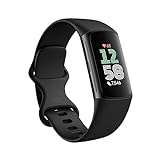
- Find your way seamlessly during runs or rides with turn-by-turn directions from Google Maps on Fitbit Charge 6[7, 8]; and when you need a snack break on the go, just tap to pay with Google Wallet[8, 9]
Sleep stages depend on what happens between heartbeats
Sleep tracking isn’t just about motion or total sleep time. Modern Fitbit sleep staging relies heavily on heart rate variability, breathing rate, and subtle changes in pulse amplitude across the night.
Those signals live in the space between beats, not the beats themselves. Red and infrared sensors produce smoother photoplethysmography waveforms during low-movement conditions, giving Fitbit’s algorithms more confidence when distinguishing light sleep, deep sleep, and REM.
The result isn’t that sleep stages suddenly become clinically precise, but that they stop feeling erratic. Fewer nights jump from “excellent” to “poor” sleep without a lifestyle explanation, and stage durations look more consistent week to week.
Overnight heart rate: the backbone of readiness and recovery
Resting heart rate and overnight heart rate trends sit at the core of Fitbit’s broader health metrics. Daily readiness scores, stress trends, and even illness detection features lean heavily on what happens while you’re asleep.
Red-light stability reduces false dips and spikes caused by position changes or temporary signal loss. That makes nightly baselines more reliable, which in turn sharpens deviations when something actually changes, like accumulated fatigue or the early stages of a respiratory infection.
For users, this shows up as insights that feel timely rather than confusing. When Fitbit flags a higher-than-normal resting heart rate, it’s more likely to reflect physiology instead of sensor noise.
Breathing rate, variability, and subtle health signals
Fitbit’s breathing rate metric is derived indirectly from heart rate modulation, not from a dedicated airflow sensor. That makes clean overnight pulse data essential.
Red and infrared light improve signal continuity, which allows the algorithms to detect small rhythmic patterns associated with respiration. This is particularly relevant for sleep apnea risk screening, even if Fitbit stops short of formal diagnosis.
Consistency matters here. One noisy night can throw off a rolling average, but stable sensors help keep longer-term breathing trends intact and interpretable.
Battery life, comfort, and why overnight tracking is a design problem
There’s also a practical hardware angle. Red and infrared LEDs typically draw more power than green ones, especially when run continuously overnight.
Fitbit’s rebalancing suggests confidence in its power management and sensor efficiency. Overnight tracking remains enabled without forcing shorter battery life or bulkier designs, preserving the lightweight feel and multi-day endurance that many Fitbit users prioritize over flashy displays or heavy casings.
Comfort plays a role too. When sensors are more tolerant of slight movement or looser fit, users don’t have to cinch the band tightly to get usable data, which directly improves sleep comfort and long-term wearability.
What this reveals about Fitbit’s health strategy
This emphasis on red light isn’t just about better sleep charts. It signals where Fitbit sees future differentiation: longitudinal health monitoring rather than moment-to-moment performance metrics.
Regulatory-grade features, whether for sleep apnea detection, cardiovascular risk trends, or passive wellness screening, all demand dependable overnight data. By reinforcing the wavelengths best suited for that environment, Fitbit is laying groundwork that aligns with both consumer trust and potential clinical validation.
It’s a reminder that some of the most important upgrades in wearables aren’t visible on the spec sheet. They happen in how light moves through skin at 3 a.m., and how confidently the software can interpret what it finds there.
Battery life, comfort, and hardware trade-offs: The real-world cost of sensor decisions
The shift toward red and infrared sensing doesn’t happen in a vacuum. Every wavelength choice carries downstream consequences for battery size, device thickness, charging cadence, and how a tracker actually feels on the wrist after a week of real use.
Fitbit’s recalibration matters because it forces hard engineering trade-offs that most spec sheets gloss over. If the sensor stack gets heavier, hotter, or hungrier for power, the entire product experience changes.
Why LEDs quietly dominate battery drain
Optical heart-rate sensors are among the most power-hungry components in a wearable, especially during overnight tracking when they run for hours without interruption. Green LEDs are relatively efficient for high-signal daytime readings, but they struggle through motion and low perfusion, which often leads to higher sampling rates to compensate.
Red and infrared light penetrate deeper and maintain cleaner signals at lower intensities, but the emitters themselves typically require more power per pulse. The real gain comes when firmware can lower duty cycles, reducing how often the LEDs need to fire to maintain usable data.
This is where Fitbit’s confidence shows. A sensor stack that leans more on red light only works if the system-level power management is tight enough to preserve multi-day battery life without inflating the battery cell or cutting features elsewhere.
Thickness, weight, and the invisible comfort tax
Adding or rebalancing LEDs isn’t just an electrical decision; it’s a mechanical one. More emitters and photodiodes increase the footprint of the sensor window, which can push the watch thicker or force compromises in internal layout.
Fitbit has historically favored slim, lightweight cases with soft resin backs and gently radiused edges. Maintaining that profile while evolving the sensor array suggests careful packaging, not brute-force hardware expansion like we’ve seen in some bulkier performance watches.
Comfort matters most at night. A thinner sensor bump, lower operating heat, and less need for a tight strap directly affect whether users keep the device on for sleep tracking, which in turn determines data continuity.
Strap tension, skin contact, and signal tolerance
One underappreciated benefit of red and infrared sensing is tolerance to imperfect fit. Green light sensors often demand tighter strap tension to reduce motion artifacts, which can lead to pressure points or numbness during sleep.
By improving signal quality at looser fits, Fitbit reduces the need for users to overtighten bands. That’s a small change with outsized impact, especially for all-night wear on smaller wrists or with flexible woven and silicone straps.
This also improves inclusivity. Deeper-penetrating wavelengths tend to perform more consistently across different skin tones and with light tattoos, reducing the number of users who experience erratic readings through no fault of their own.
Charging habits and daily usability
Battery life isn’t just about how many days a tracker lasts, but how it fits into daily routines. Devices that demand nightly charging often lose overnight data, undermining the very health insights Fitbit is prioritizing.
By keeping overnight power draw predictable, Fitbit preserves the habit of charging during showers or desk time rather than before bed. That consistency is critical for longitudinal metrics like resting heart rate, breathing rate, and SpO2 trends.
It’s also a value proposition. Users don’t feel punished for enabling advanced health features, which reinforces trust that the tracker is designed around real life, not lab conditions.
What these trade-offs say about Fitbit’s priorities
Choosing sensor stability over raw daytime responsiveness signals a clear bias toward passive health monitoring. Fitbit appears willing to accept slightly less aggressive workout sampling if it means cleaner, more reliable overnight data.
That aligns with a future where regulatory-facing features and long-term risk indicators matter more than instantaneous performance metrics. Hardware decisions like these suggest Fitbit is optimizing for endurance, comfort, and consistency rather than chasing headline-grabbing specs.
For users, the payoff is subtle but meaningful. Better sensors that disappear into daily wear are ultimately more valuable than ones that demand constant attention, tighter straps, or more frequent charging.
Regulation and credibility: Medical-grade ambitions, FDA pressure, and Google’s influence
The shift toward deeper-penetrating red and infrared light doesn’t stop at comfort or cleaner sleep data. It also reflects a quieter but more consequential reality: if Fitbit wants its health metrics to carry medical weight, its sensors must satisfy regulators, clinicians, and researchers, not just consumers glancing at morning dashboards.
This is where Fitbit’s sensor shake-up moves from usability upgrade to strategic necessity.
From “wellness” to regulated health features
For years, Fitbit lived safely in the wellness category, where heart rate trends and sleep stages could be directionally useful without needing to be clinically defensible. That buffer is shrinking as features like atrial fibrillation detection, SpO2 trend reporting, and irregular rhythm notifications push closer to regulated medical territory.
Rank #4

- Fitbit Charge 6 tracks key metrics from calories and Active Zone Minutes to Daily Readiness and sleep[4]; move more with 40+ exercise modes, built-in GPS, all-day activity tracking, 24/7 heart rate, automatic exercising tracking, and more
- See your heart rate in real time when you link your Charge 6 to compatible exercise machines, like treadmills, ellipticals, and more[5]; and stay connected with YouTube Music controls[6]
- Explore advanced health insights with Fitbit Charge 6; track your response to stress with a stress management score; learn about the quality of your sleep with a personalized nightly Sleep Score; and wake up more naturally with the Smart Wake alarm
- Find your way seamlessly during runs or rides with turn-by-turn directions from Google Maps on Fitbit Charge 6[7,8]; and when you need a snack break on the go, just tap to pay with Google Wallet[8,9]
- Please refer to the “Legal” section below for all applicable legal disclaimers denoted by the bracketed numbers in the preceding bullet points (e.g., [1], [2], etc
Red and infrared LEDs are foundational to this transition. Green light excels at surface-level pulse detection during movement, but it’s more sensitive to noise, pressure, and skin variability. Red and infrared wavelengths penetrate deeper and interact more directly with blood volume changes, which makes them better suited to the kind of consistency regulators expect.
When the FDA evaluates software-based health features, it doesn’t just look at algorithms in isolation. It assesses the entire measurement chain, from optical emission to photodiode capture to signal processing. Improving sensor stability at the hardware level reduces the statistical gymnastics required later, which simplifies validation and lowers regulatory risk.
Why SpO2 and sleep metrics attract extra scrutiny
Oxygen saturation is a prime example of where sensor physics and regulation collide. SpO2 relies on comparing how red and infrared light are absorbed by oxygenated versus deoxygenated blood, and small inaccuracies can compound over time.
If readings drift due to loose bands, skin tone variability, or overnight movement, the data becomes harder to defend in a regulatory context. Fitbit’s emphasis on red and infrared performance during sleep isn’t just about better charts; it’s about ensuring the underlying signal holds up under clinical-style testing.
Sleep tracking faces similar pressure. Metrics like breathing rate and overnight heart rate variability are increasingly framed as early indicators of illness or stress. Once you start making those claims, even implicitly, you invite closer oversight, and that demands sensors that behave predictably across millions of wrists, not just ideal test subjects.
Google’s imprint on Fitbit’s hardware strategy
Since the Google acquisition, Fitbit’s hardware decisions have taken on a different tone. There’s less emphasis on flashy sensor counts and more focus on repeatability, data quality, and long-term platform credibility.
Google has deep experience navigating regulated environments, from medical AI research to FDA-cleared software pathways. That influence shows up in Fitbit’s sensor rebalancing, where fewer compromises at the optical level translate into fewer edge cases downstream.
It also aligns Fitbit more closely with Google’s broader health ambitions. High-confidence physiological data is far more valuable when it can feed into longitudinal health models, population-level research, or future diagnostic tools. Green light still plays a role, especially for workouts and daytime responsiveness, but it’s no longer the star of the show.
Credibility as a competitive differentiator
In a crowded wearables market, accuracy claims are easy to make and hard to prove. What separates serious health platforms from fitness toys is not how fast a heart rate locks on during a sprint, but how reliable the data remains over weeks, months, and years.
By prioritizing red and infrared performance, Fitbit is effectively betting on trust as a feature. Cleaner signals mean fewer silent corrections, fewer unexplained metric swings, and more confidence when the app flags a deviation from your baseline.
For users, this matters even if they never think about regulators or clinical validation. A tracker that’s built to survive FDA scrutiny is one that’s more likely to deliver stable, believable insights in everyday life. That credibility, once earned, is hard for competitors to undercut with spec-sheet bravado alone.
How Fitbit’s approach now compares to Apple, Garmin, Samsung, and Whoop
Fitbit’s pivot toward red and infrared-first sensing doesn’t exist in a vacuum. It puts the company on a more direct collision course with rivals that have already decided whether they’re building lifestyle gadgets, sports instruments, or quasi-medical platforms.
The differences aren’t just philosophical. They show up in LED choices, photodiode layouts, algorithms, battery trade-offs, and how much confidence each brand has in the numbers it shows you day after day.
Apple: Green for speed, red and infrared for validation
Apple has long taken a hybrid approach. Green LEDs still do the heavy lifting for real-time heart rate during workouts, where responsiveness matters more than long-term signal purity.
Where Apple separates itself is in how aggressively it leans on red and infrared for health features that carry higher stakes. Blood oxygen, sleep staging, AFib history, and temperature trend modeling all rely on deeper-penetrating wavelengths and extensive signal correction.
The difference is intent. Apple treats these sensors as part of a broader health ecosystem tied to FDA-cleared features and clinical partnerships, while Fitbit is increasingly trying to make that level of rigor the baseline rather than the premium tier.
Garmin: Performance-first, health second
Garmin’s Elevate sensor stack has evolved quickly, now mixing green, red, and infrared across most modern models. The priority, however, remains athletic reliability rather than passive health surveillance.
Green light dominates during high-motion activities, paired with aggressive filtering to preserve battery life on devices that often last one to three weeks. Red and infrared are used for SpO2 and sleep, but typically with stricter conditions, such as nighttime-only measurement.
Compared to Fitbit’s new direction, Garmin accepts more situational variability in exchange for endurance, ruggedness, and real-time performance. Fitbit is chasing consistency across all-day wear, even if that means less emphasis on edge-case athletic scenarios.
Samsung: Sensor ambition, software inconsistency
Samsung’s BioActive sensor is arguably the most ambitious on paper. It combines green, red, infrared, and electrical sensors into a single module designed to handle heart rate, SpO2, ECG, and body composition.
The challenge has been follow-through. Data quality can vary significantly by wrist fit, skin tone, and firmware version, and battery life on Galaxy Watches often limits how aggressively sensors can be used overnight.
Fitbit’s recalibration stands in contrast here. Rather than adding more sensing modes, Fitbit is narrowing the problem space, focusing on fewer wavelengths that behave predictably across millions of users and long-term wear.
Whoop: Red and infrared without a screen to distract
Whoop is the closest philosophical neighbor to Fitbit’s new posture. Its strap relies heavily on red and infrared sensing, optimized for continuous wear, recovery metrics, and longitudinal trends rather than moment-to-moment feedback.
Without a display, Whoop can afford to sample conservatively and prioritize signal quality over responsiveness. Battery life, comfort, and consistency take precedence, which aligns well with its strain and recovery model.
The key difference is accessibility. Fitbit aims to bring that level of passive reliability into a mainstream, screen-based tracker that still handles workouts, notifications, and daily usability without demanding a subscription-first mindset.
Where Fitbit now sits in the competitive spectrum
Fitbit is no longer chasing Apple on features, Garmin on sports depth, or Samsung on sensor density. Instead, it’s carving out space as the platform that treats physiological data as something you build trust in over time.
That choice influences everything from LED selection to firmware update cadence to how aggressively metrics are surfaced in the app. Heart rate trends, sleep scores, and SpO2 baselines become quieter but sturdier, less reactive to noise and more resistant to long-term drift.
In a market where everyone claims accuracy, Fitbit’s bet is that fewer colors, used more deliberately, can do more for real-world health tracking than any spec sheet arms race.
What this means for existing Fitbit owners vs future devices
The immediate question for most readers is practical rather than philosophical: does this sensor rethink change anything on your wrist today, or is it only laying groundwork for what comes next?
The answer is both, but unevenly. Firmware can only take existing hardware so far, and Fitbit’s strategy draws a clearer line than before between what current devices can refine and what future models are being purpose-built to do.
For current Fitbit owners: quieter improvements, not new tricks
If you’re wearing a recent Fitbit with red and infrared LEDs already onboard, you’re unlikely to see dramatic new metrics suddenly appear. Instead, expect subtle shifts in how existing data behaves, especially overnight.
Heart rate traces may look less jumpy during sleep, SpO2 trends may update less frequently but stabilize over weeks, and sleep staging may lean more heavily on consistency than on moment-to-moment variability. These are algorithmic recalibrations, not feature unlocks.
This also explains why Fitbit updates often feel underwhelming at first glance. When the goal is to reduce noise rather than surface new numbers, the improvement shows up in long-term confidence rather than daily novelty.
Hardware ceilings still matter
There are hard limits to what older Fitbits can benefit from. LED placement, photodiode sensitivity, and even case thickness determine how clean a signal the firmware can extract.
Slim trackers with smaller optical windows are more sensitive to wrist movement and fit issues, especially on smaller wrists or during side-sleeping. No amount of software tuning can fully compensate for photons that never reach the sensor in the first place.
💰 Best Value

- Enduring Battery Life: Keep moving with a 7-day battery life and water resistance for all your activities, rain or shine.
Battery size is another constraint. Older devices can’t afford aggressive sampling without sacrificing multi-day wear, which means Fitbit must prioritize efficiency over experimentation.
Why this matters more for future Fitbit devices
The real payoff of this sensor shake-up lands with upcoming hardware. By committing to fewer wavelengths, Fitbit can redesign the entire sensor stack around predictable behavior rather than theoretical capability.
That affects everything from LED power draw to thermal management to how tightly the sensor sits against the skin. Expect thicker sensor modules, wider optical windows, and more forgiving strap designs that maintain contact without needing to be worn uncomfortably tight.
In practice, this could mean better data for more people, not just ideal users with perfect fit and skin conditions. It’s a move toward population-scale reliability rather than lab-grade precision.
Battery life and comfort become strategic advantages
Red and infrared LEDs are more power-hungry than green, but they also age more gracefully and behave more consistently across skin tones. By leaning into them deliberately, Fitbit can optimize duty cycles instead of constantly juggling multiple light sources.
This opens the door to longer real-world battery life even as sensors run more consistently overnight. For users, that translates into fewer charging interruptions and more complete sleep datasets.
Comfort also improves when the device doesn’t need to clamp down to maintain signal quality. Slightly looser wear, fewer pressure points, and better tolerance of wrist position all matter when you’re wearing a tracker 24/7.
What not to expect: instant parity with Apple or Garmin
This shift doesn’t mean Fitbit is about to match Apple Watch’s ECG depth or Garmin’s multi-band training analytics. Those platforms are solving different problems with different trade-offs.
Fitbit is optimizing for longitudinal health signals that remain interpretable months later, not peak performance metrics during a single workout. That distinction matters if you care more about sleep debt, resting heart rate drift, or baseline oxygen saturation than VO2 max graphs.
For many users, that’s a better match to how wearables are actually used day to day.
A clearer upgrade decision for owners on the fence
For existing owners, this strategy sharpens the value of waiting versus upgrading. If your current Fitbit already delivers stable sleep and heart rate trends, you may gain more from firmware polish than from new hardware.
But if you’ve struggled with inconsistent readings, poor overnight SpO2 capture, or sensitivity to strap tightness, the next generation of devices is likely where the real improvement arrives. The gains won’t be flashy, but they should be tangible over weeks of wear.
Fitbit is signaling that accuracy will come from hardware discipline as much as software intelligence, and that’s a meaningful shift for anyone deciding when to stick, upgrade, or move on.
The bigger picture: Why sensor choices will define Fitbit’s survival in the wearables race
Stepping back, Fitbit’s recalibration around red and green light sensors isn’t just a tuning exercise. It’s a strategic bet on what kind of wearable company Fitbit wants to be in a market that’s rapidly sorting winners from also-rans.
As hardware margins thin and smartwatch features plateau, the quality, consistency, and interpretability of sensor data is becoming the real differentiator. Fitbit’s future depends less on flashy screens or faster processors, and more on whether its sensors can deliver trustable health signals day after day.
Red light vs green light: choosing signal integrity over spectacle
Green LEDs are excellent for capturing heart rate during movement because hemoglobin absorbs green light strongly, producing a clean pulse waveform during workouts. But green light struggles at night, penetrates less deeply, and is more sensitive to skin tone, tattoos, and strap pressure.
Red and infrared light penetrate deeper into tissue and interact differently with blood oxygenation, making them essential for SpO2 and overnight heart rate variability. By prioritizing these wavelengths, Fitbit is choosing stability during long, low-motion wear over peak performance during a single run.
That choice aligns tightly with how most people actually use Fitbits: sleeping, working, walking, and living with them on their wrist for days at a time.
Why this matters more than new features
In 2026, nearly every smartwatch can track steps, log workouts, and show notifications. What fewer devices do well is build a coherent, reliable baseline of your physiology that still makes sense months later.
Sleep staging, resting heart rate trends, respiratory rate, and overnight SpO2 all depend on sensors behaving predictably under imperfect conditions. If those inputs are noisy, no amount of machine learning downstream can fully correct the damage.
Fitbit’s renewed focus on fewer, better-optimized light sources acknowledges a hard truth: accuracy begins at the diode, not in the app.
Regulation, credibility, and the medicalization of wearables
Sensor discipline also has regulatory implications. As wearables drift closer to medical-adjacent claims, regulators care less about feature breadth and more about repeatability, validation, and known failure modes.
Red and infrared-based measurements are better understood clinically and easier to benchmark against reference devices. That makes them a safer foundation if Fitbit wants to expand health features without triggering credibility gaps or regulatory friction.
In other words, this isn’t just about better sleep charts; it’s about building a platform regulators and clinicians don’t immediately distrust.
The competitive landscape Fitbit is really fighting in
Apple and Garmin are chasing performance ceilings, layering ECGs, training load metrics, and athlete-focused analytics on top of powerful silicon. Fitbit is aiming for something narrower but arguably more defensible: passive, longitudinal health monitoring that works for normal bodies in messy real life.
That only works if users believe the numbers. A week of bad SpO2 readings or erratic sleep scores erodes trust faster than the absence of a premium feature ever could.
By stabilizing its sensor foundation, Fitbit is trying to win on reliability rather than raw capability.
What this means for buyers deciding where to place their trust
For consumers, this shift should recalibrate expectations. Future Fitbits may not look dramatically different, nor will they suddenly dominate spec sheets.
What should improve is how they feel to live with: fewer nights with missing data, less need to overtighten the strap, more confidence that trends actually reflect your body. Over months of wear, that matters more than one impressive metric.
Battery life, comfort, and consistency are not side benefits here; they are the product.
A quiet but necessary bet on survival
Fitbit’s sensor shake-up won’t generate launch-day hype, but it addresses the exact failure points that have slowly eroded user confidence. In a mature wearables market, survival favors companies that know what not to chase.
By doubling down on red light stability, controlled green light use, and disciplined sensor design, Fitbit is choosing to compete where it still has a credible edge. If it executes well, the payoff won’t be instant, but it could be enduring.
In a race increasingly defined by trust rather than novelty, that may be Fitbit’s most important move yet.