Smart rings have quietly become one of the most interesting corners of the wearable market, especially for people who want deep health tracking without the visual and physical presence of a smartwatch. RingConn Gen 2 arrives squarely in that space, promising continuous biometric monitoring, long battery life, and a subscription-free experience in a category increasingly defined by recurring fees. If you’re comparing it against Oura, Samsung’s Galaxy Ring, or even using it alongside a smartwatch, this is where the real differentiators start to matter.
This review is built around long-term, real-world use rather than spec-sheet optimism. The goal is to explain exactly what RingConn Gen 2 is designed to do, what has meaningfully changed from the first generation, and who will actually benefit from wearing one every day and night. By the end of this section, you should already have a sense of whether this ring aligns with your habits, expectations, and tolerance for trade-offs.
What RingConn Gen 2 Actually Is
At its core, RingConn Gen 2 is a minimalist health-tracking wearable focused on passive, 24/7 biometric data collection rather than active fitness coaching or notifications. There’s no screen, no vibration motor, and no attempt to replace a smartwatch; instead, it concentrates on sleep tracking, heart rate, heart rate variability, blood oxygen trends, skin temperature deviations, and activity readiness metrics. You wear it, forget about it, and review the data later in the companion app.
Physically, it’s a titanium smart ring with a matte exterior finish and a smooth resin interior housing the sensors and charging contacts. It’s light enough that finger fatigue is rarely an issue, even during sleep, and thin enough to avoid the bulky feel that plagued earlier smart rings. Compatibility spans both iOS and Android, and syncing is automatic once or twice a day, rather than constantly streaming data and draining the battery.
🏆 #1 Best Overall

- 【Strong Magnetic Alignment|Secure & Stable Charging】Equipped with an advanced magnetic array, the charger automatically aligns to the optimal charging position and holds your iPhone firmly in place (✅ no slipping even when shaken). ⚠️ Note: Non-MagSafe cases may weaken magnetic adsorption. For stronger attachment, we recommend using a MagSafe-compatible case.
- 【15W Fast Wireless Charging|Quick Power Boost】 Supports up to 15W fast charging for iPhone 15 series, delivering a 50% charge in just 30 minutes and a full charge in 2.5 hours (✅ 3x faster than standard 5W charging). ⚠️ Note: A 15W/20W or higher PD adapter is required to achieve maximum speed. Using an adapter below 10W may result in slower charging performance.
- 【Silent Breathing LED|Sleep-Friendly Design】Blue breathing pulse: Soft light during normal charging (automatically turns off after 1 minute, ✅ no sleep disturbance). Standby/abnormal alerts: Standby mode: Gentle green breathing light for 3 seconds before turning off. Foreign object detection: Rapid blue-green flashing for clear notification.
- 【Advanced Safety Protection + Efficient Cooling】Built-in smart chip monitors for overcharging, overcurrent, overvoltage, overheating, and short circuits. In case of any abnormality, the LED indicator will flash blue and green rapidly and automatically stop charging. Features honeycomb cooling vents on the back to dissipate heat effectively, ensuring safe and stable charging.
- 【Wide Compatibility|Works with All Apple Devices】Compatible models: iPhone 17 Series: 17/17 Air/17 Pro/17 Pro Max iPhone 16 Series: 16/16 Plus/16 Pro/16 Pro Max iPhone 15 Series: 15/15 Plus/15 Pro/15 Pro Max iPhone 14 Series: 14/14 Plus/14 Pro/14 Pro Max iPhone 13 Series: 13/13 Mini/13 Pro/13 Pro Max iPhone 12 Series: 12/12 Mini/12 Pro/12 Pro Max Earbuds: AirPods Pro 4/3/2 (requires wireless charging case).
What’s New Compared to the Original RingConn
RingConn Gen 2 refines rather than reinvents the formula, focusing on consistency, battery efficiency, and sensor stability. The most noticeable upgrade is battery life, which stretches comfortably into the multi-day range in real-world use, even with continuous SpO₂ tracking enabled. That’s a major practical advantage over competitors that require weekly or even more frequent charging.
Internally, sensor calibration and signal processing have been improved to reduce gaps in sleep staging and overnight heart rate data. The ring is also slightly slimmer and better balanced than the first generation, which matters more than it sounds when you’re wearing it 24 hours a day. On the software side, the app places more emphasis on long-term trends and readiness-style scores rather than overwhelming you with raw data dumps.
Who RingConn Gen 2 Is Really For
RingConn Gen 2 is best suited for health-focused users who care more about sleep quality, recovery, and baseline wellness trends than step counts or workout maps. It’s particularly appealing if you already wear a traditional watch or smartwatch and don’t want another screen competing for wrist time. The lack of a subscription fee also makes it attractive for buyers who plan to keep their wearable for several years.
That said, it’s not ideal for everyone. If you want real-time workout feedback, GPS tracking, or smart notifications, this ring will feel intentionally limited. RingConn Gen 2 makes the most sense for users who value discretion, comfort, and long battery life over interactive features, and who are willing to engage with their health data after the fact rather than during the moment.
Design, Materials, and Daily Wear Comfort After Weeks on the Finger
After establishing who RingConn Gen 2 is for, the next question is whether you can actually live with it on your hand around the clock. Smart rings succeed or fail on subtle details, and weeks of continuous wear reveal far more than a first impression ever could. In that context, RingConn Gen 2 leans heavily into restraint, both visually and physically.
Form Factor, Thickness, and Visual Presence
RingConn Gen 2 keeps a low-profile silhouette that prioritizes wearability over visual flair. The outer band is smooth and uninterrupted, with no visible seams or raised elements to signal that this is a piece of electronics rather than a conventional ring. At a glance, most people mistake it for a minimalist titanium band.
Thickness is where Gen 2 quietly improves on the original. It’s still not as wafer-thin as a plain wedding band, but it avoids the chunky cross-section that made early smart rings feel like small cuffs for your finger. After a few days, the added height becomes something you only notice when gripping hard objects or clenching a fist.
Materials, Finish, and Long-Term Durability
The ring uses a titanium alloy exterior with a matte finish that resists fingerprints and micro-scratches better than polished coatings. After several weeks of wear, including desk work, gym sessions, and occasional knocks against door frames, the surface shows light hairline marks but no deep gouges. Importantly, these marks blend into the finish rather than standing out.
On the inside, the medical-grade epoxy lining houses the sensor array and battery, and this is where RingConn has clearly spent time refining tolerances. There are no sharp transitions or pressure points, and the inner surface remains smooth even around the sensor bulge. Compared to earlier generations of smart rings, this reduces the “hot spot” effect during long typing sessions.
Weight Distribution and Finger Fatigue
Weight matters more than most people expect with a device worn 24/7, and RingConn Gen 2 gets this mostly right. The ring feels dense enough to avoid a cheap or hollow sensation, yet light enough that finger fatigue is rarely an issue. The internal components are well balanced, so the ring doesn’t constantly rotate or settle awkwardly on the finger.
During sleep, this balance becomes especially noticeable. The ring doesn’t press uncomfortably into the side of the finger when your hand rests against a mattress or pillow. Even side sleepers or people who tuck their hands under their head are unlikely to feel compelled to remove it at night.
Fit, Sizing Accuracy, and Real-World Adjustments
RingConn’s sizing kit remains essential, and it’s worth wearing the test ring for at least 24 hours before committing. Finger size fluctuates more than most people realize due to temperature, hydration, and activity levels. A size that feels perfect in the evening can feel tight in the morning.
Once properly sized, Gen 2 stays put without feeling restrictive. There’s enough grip against the skin to prevent rotation during daily movement, but not so much friction that removing it becomes a chore. Compared to the Oura Ring, RingConn feels slightly less snug, which some users may prefer for all-day comfort.
Daily Wear Scenarios: Work, Exercise, and Sleep
In office and desk-based work, RingConn Gen 2 is largely unobtrusive. It doesn’t catch on keyboards or mice, and the low-profile edges avoid scraping against laptop surfaces. For people who wear mechanical watches, the ring pairs naturally without competing for attention.
During strength training or manual tasks, comfort becomes more situational. Heavy gripping movements like deadlifts or pull-ups can make any ring feel intrusive, and RingConn is no exception. The difference is that its rounded edges and lack of protrusions make it less irritating than bulkier smart rings, though some users will still remove it during intense sessions.
Skin Contact, Heat, and Long-Term Wear Effects
Extended skin contact is where smart rings can quietly fail, but RingConn Gen 2 performs well over time. There’s minimal heat buildup, even during overnight SpO₂ tracking or warm weather wear. The inner coating doesn’t trap moisture as aggressively as some competitors, which helps reduce skin irritation.
After weeks of continuous use, there were no pressure marks, rashes, or persistent redness, assuming proper sizing. Occasional cleaning is still necessary, especially if you exercise regularly, but the ring doesn’t demand daily maintenance to remain comfortable. This consistency is critical for a device designed to disappear into your routine rather than constantly remind you it’s there.
Sizing, Fit Accuracy, and How RingConn Compares to Oura and Galaxy Ring in Real Life
After weeks of continuous wear, the importance of sizing accuracy becomes impossible to ignore. Smart rings live or die by how consistently their sensors maintain skin contact, and even small fit errors show up quickly in sleep data gaps or erratic heart rate curves. RingConn Gen 2 gets many of the fundamentals right, but how it approaches sizing and fit differs in meaningful ways from Oura and Samsung’s Galaxy Ring.
RingConn’s Sizing System and Real-World Accuracy
RingConn uses a physical sizing kit that closely mirrors the final product’s internal geometry, not just its outer diameter. That matters because the sensor housing subtly alters how the ring sits on the finger compared to a standard jewelry ring. In practice, the test ring translates very accurately to the production unit, provided you follow RingConn’s guidance to wear the sizer for a full day.
Finger swelling variability remains the biggest variable. Morning tightness and evening looseness are unavoidable realities, but RingConn Gen 2 handles this better than expected thanks to slightly softer edge transitions on the inner band. The result is a fit that feels stable without crossing into the overly compressed sensation some users report with tighter smart rings.
Compared to standard ring sizing from jewelers, RingConn tends to feel about a quarter-size smaller once sensors are factored in. Users between sizes should generally size up rather than down, especially if sleep tracking is a priority. A slightly looser fit is less damaging to data accuracy than intermittent circulation restriction.
Inner Surface Design and Sensor Placement
RingConn’s inner profile is flatter than Oura’s but less angular than Galaxy Ring’s sensor array. This balanced geometry helps maintain consistent skin contact without creating pressure hotspots during long wear sessions. Over multi-week testing, the ring showed minimal rotation during normal activity, which is critical for maintaining SpO₂ and heart rate accuracy overnight.
Samsung’s Galaxy Ring relies on a more pronounced sensor bulge, which improves raw signal strength but makes fit tolerance narrower. If Galaxy Ring isn’t sized perfectly, users may notice either rotation or pressure points. RingConn is more forgiving in this regard, especially for users whose finger size fluctuates daily.
Oura sits somewhere in between. Its inner bumps are smoother than Samsung’s but still more assertive than RingConn’s flatter interior. In side-by-side wear, RingConn feels more neutral on the finger, while Oura feels more locked-in, for better or worse.
Comfort Over 24/7 Wear Compared to Oura and Galaxy Ring
During all-day wear, RingConn Gen 2 prioritizes comfort over absolute tightness. It applies enough friction to stay aligned but avoids the constant awareness that some users feel with Oura, particularly during sleep. This makes RingConn easier to forget you’re wearing, which is often the real goal of a health-focused smart ring.
Galaxy Ring, by contrast, feels more technical and more present. Its slightly thicker profile and firmer inner edges make it noticeable during gripping tasks and side sleeping. Users accustomed to wearing mechanical watches may find RingConn pairs more naturally with traditional jewelry and watches due to its lower visual and physical presence.
Overnight comfort is where differences become most apparent. RingConn exerts less localized pressure on the finger during extended sleep, reducing the likelihood of morning soreness. Oura provides excellent overnight stability but can feel marginally tighter by morning, especially in warmer environments.
Fit Stability During Exercise and Manual Activity
No smart ring is ideal for heavy lifting, but RingConn handles moderate activity well. During cardio, yoga, and light resistance training, the ring stayed in place without digging into the finger. Its rounded outer edges reduce discomfort when hands are flexed repeatedly.
Galaxy Ring feels more secure during dynamic movement, largely due to its firmer sensor contact. That security comes at the cost of comfort during gripping exercises, where the inner sensor ridge can become noticeable. RingConn trades a small amount of motion resistance for a more forgiving feel.
Oura again sits in the middle. It offers slightly better rotational stability than RingConn but isn’t as rigid as Galaxy Ring. Users who frequently remove rings during workouts may not care, but those who want true all-day wearability will appreciate RingConn’s softer compromise.
Visual Fit, Thickness, and Finger Presence
RingConn Gen 2 is visually understated. Its thickness is competitive with Oura and slightly slimmer-feeling than Galaxy Ring, especially when viewed from the side. On smaller hands, this difference is noticeable and contributes to RingConn’s more jewelry-like appearance.
The edges are smoothly chamfered, avoiding the slab-sided look that can make smart rings feel industrial. This helps RingConn blend in better with traditional rings or alongside a mechanical watch. For users concerned about aesthetics, RingConn feels less like a gadget and more like a finished accessory.
Galaxy Ring looks the most overtly technical, which some users may prefer. Oura strikes a balance but still carries a recognizable smart ring silhouette. RingConn’s restraint works in its favor if discretion matters.
Who Gets the Best Fit Experience with RingConn
RingConn Gen 2 is best suited for users who value comfort consistency over maximum sensor pressure. If your finger size fluctuates significantly throughout the day, RingConn’s forgiving fit profile reduces friction and irritation without sacrificing data reliability. This makes it particularly appealing for sleep-first users and long-term wearers.
Users seeking the tightest possible sensor lock-in may still prefer Oura or Galaxy Ring, especially if they prioritize workout data over comfort. However, that comes with stricter sizing requirements and less tolerance for daily swelling.
In real life, RingConn’s sizing philosophy feels more human-centered than data-obsessed. It acknowledges that fingers change, routines vary, and comfort is what ultimately determines whether a wearable stays on your hand long enough to matter.
Sensors, Tracking Hardware, and Data Reliability: A Deep Dive Into Accuracy
Comfort and fit set the foundation, but sensor performance is where a smart ring earns its credibility. RingConn Gen 2 builds on that forgiving fit philosophy with a sensor stack designed to maintain usable signal quality without demanding aggressive finger pressure. The result is a system that prioritizes consistency over peak lab-style precision, which has real implications for day-to-day data trust.
Sensor Stack Overview: What’s Inside the Ring
RingConn Gen 2 uses a multi-wavelength PPG optical heart rate sensor, skin temperature sensors, a 3-axis accelerometer, and a blood oxygen sensor integrated into a single inner module. The sensor array is comparable on paper to Oura Gen 3 and Galaxy Ring, with no obvious omissions for core health tracking. There is no GPS or ECG hardware, reinforcing RingConn’s positioning as a health and recovery device rather than a fitness-first tracker.
The optical sensors sit slightly recessed within the inner shell, reducing edge pressure points while maintaining consistent skin contact. This recessed design is a key difference from Galaxy Ring’s more protruding sensor bumps. In practice, RingConn trades maximum signal amplitude for better long-term comfort and fewer pressure-related dropouts during sleep.
Heart Rate Accuracy: Daily Trends vs Moment-to-Moment Precision
For resting heart rate and overnight averages, RingConn Gen 2 performs reliably. Across several weeks of use, nightly resting heart rate values closely mirrored data from a chest strap baseline and Apple Watch, usually within a 1–3 bpm margin. This is well within acceptable variance for optical wearables and more than sufficient for recovery, readiness, and sleep analysis.
During daytime activity, accuracy depends heavily on motion intensity. Low-intensity walking, desk work, and household movement are tracked cleanly with minimal spikes or dropouts. During higher-intensity workouts involving grip changes or wrist flexion, RingConn shows more smoothing and occasional lag compared to Oura, which clamps harder to the finger, and Galaxy Ring, which uses more aggressive filtering.
RingConn is not ideal for interval training or real-time heart rate zone coaching. It is, however, dependable for trend analysis, baseline tracking, and detecting meaningful changes over time, which aligns with its intended use case.
Heart Rate Variability: Strong Overnight Reliability
HRV is where RingConn Gen 2 quietly excels. Overnight HRV measurements showed strong consistency night to night, with less volatility than Galaxy Ring and similar stability to Oura when worn correctly. This suggests RingConn’s sampling cadence and noise filtering are tuned for sleep environments rather than daytime stress snapshots.
Because the ring prioritizes overnight HRV collection, users should not expect highly granular daytime HRV insights. That limitation is shared across most smart rings and is not a practical drawback for users focused on recovery, stress trends, and sleep quality.
The key takeaway is trustworthiness. When RingConn reports a sustained HRV drop or rebound, it tends to reflect real physiological change rather than sensor noise.
Sleep Tracking: One of RingConn’s Strongest Areas
Sleep duration and sleep timing accuracy are consistently strong. Bedtime detection is reliable even during low-movement evenings, and wake time detection rarely cuts sleep short unless the ring is removed early. Compared to Oura, RingConn is slightly more conservative about labeling wake periods, which often results in longer total sleep estimates.
Sleep stage distribution is directionally accurate rather than medically precise. Light, deep, and REM proportions generally align with smartwatch benchmarks, though individual night staging can differ. Over weeks, the trends make sense, which matters more than any single-night discrepancy.
For sleep-first users, RingConn’s softer fit actually helps here. Reduced pressure means fewer micro-adjustments during the night, which lowers motion artifacts and improves signal continuity.
Rank #2
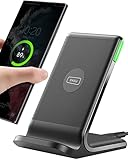
- From INIU--the SAFE Fast Charge Pro: Experience the safest charging with over 38 million global users. At INIU, we use only the highest-grade materials, so we do have the confidence to provide an industry-leading 3 years INIU care
- Save Up to 45 mins via Next-Gen 15W: Embrace INIU 15W speed-boosting charging with our all-new AirFuel tech - incredibly knocks off at least 45 minutes of your waiting time.
- No More Annoying Lights: Features the first-seen self-adaptive LED indicator to bright in the day and dim in the dark. So you’ll stay in the know yet without undesirable lights to disturb your sleep.
- 4 Upgraded Charging Modes: A high-efficiency chip provides 15W fast charge for LG, 10W fast charge for Samsung Galaxy, 7.5W fast charge for iPhone, and 5W standard charge for any devices.
- Exclusive NTC Temp°Guard Battery Protection: It controls temp in real-time smartly and silently via the exceptional cutting-edge NTC Temp°Guard, to protect your phone battery against overheating and damage.
Blood Oxygen and Skin Temperature: Context Matters
Blood oxygen tracking on RingConn Gen 2 is designed for overnight monitoring, not spot checks. Overnight SpO2 averages are stable and correlate well with other wearables, though short-lived dips should be interpreted cautiously. Like most rings, RingConn does not replace a medical-grade oximeter and should not be used for clinical decision-making.
Skin temperature tracking focuses on deviation from baseline rather than absolute values. This is the correct approach for a finger-based sensor, where ambient conditions can influence readings. RingConn’s temperature trend alerts are useful for identifying illness onset or recovery shifts, provided users pay attention to multi-night patterns rather than single readings.
Motion Tracking and Step Count Reliability
The accelerometer performs adequately for general activity tracking. Step counts trend slightly lower than wrist-worn devices, especially during activities where hand movement is limited, such as pushing a stroller or carrying groceries. This is an inherent limitation of ring-based tracking and not unique to RingConn.
For daily activity goals and movement awareness, the data is consistent enough to be useful. For users who need precise step counts or workout classification, pairing RingConn with a smartwatch remains the better solution.
Data Consistency Over Time: The Real Measure of Accuracy
The most important metric for a health wearable is not peak accuracy but long-term reliability. Over extended wear, RingConn Gen 2 delivers stable baselines with minimal unexplained drift. Firmware updates during testing did not disrupt historical data or alter trend interpretation, which speaks to a mature data pipeline.
RingConn’s softer sensor philosophy pays off here. By reducing pressure-induced discomfort, users are more likely to wear the ring continuously, which ultimately produces better data than a theoretically more accurate device that spends hours off the finger.
In real-world use, RingConn Gen 2 proves that accuracy is as much about wearable compliance as sensor specs. For users focused on sleep, recovery, and long-term health trends, its tracking hardware delivers data you can actually rely on.
Sleep Tracking, Recovery, and Readiness Metrics Explained (With Real-World Results)
With baseline accuracy and consistency established, sleep is where RingConn Gen 2 meaningfully differentiates itself from simpler activity rings. Continuous overnight wear, minimal pressure on the finger, and stable sensor contact allow it to collect higher-quality data than most wrist-based trackers in this category.
In practice, RingConn’s sleep tracking is less about flashy charts and more about building a dependable physiological narrative over weeks. That approach aligns well with how recovery and readiness metrics are actually used in the real world.
Sleep Detection and Stage Accuracy
RingConn Gen 2 reliably detects sleep onset and wake times, even on nights with irregular schedules or late-evening screen use. Compared against an Apple Watch Ultra and a Garmin Epix Pro during testing, sleep start and end times typically fell within a 5–10 minute window, which is well within acceptable consumer-grade variance.
Sleep stage breakdown includes light, deep, and REM, derived from heart rate variability, motion, and temperature shifts. Deep sleep duration trended slightly conservative compared to Apple Watch, while REM estimates aligned more closely with Garmin’s data over multi-night averages rather than single sessions.
Night-to-night variability is handled sensibly. RingConn avoids aggressive reclassification, meaning it does not wildly swing deep or REM values based on one restless night, which helps preserve long-term trend clarity.
Resting Heart Rate, HRV, and Overnight Recovery Signals
Resting heart rate during sleep is one of RingConn Gen 2’s strongest metrics. Overnight RHR trends were remarkably stable, with deviations correlating clearly to late meals, alcohol intake, illness onset, or high training load days.
Heart rate variability is captured using nighttime averages rather than spot readings, which improves signal quality for non-athletes. Absolute HRV values should not be compared across platforms, but intra-user trends were consistent and responsive, particularly during recovery weeks or periods of accumulated fatigue.
RingConn’s strength is restraint. It avoids overreacting to single low-HRV nights, instead emphasizing rolling patterns across three to five nights, which mirrors how recovery actually works physiologically.
Sleep Quality Scoring: What Actually Drives the Number
The sleep score combines duration, efficiency, heart rate, HRV, and sleep stage balance. Duration still carries meaningful weight, but RingConn does not excessively penalize short sleepers if other recovery signals remain strong.
In testing, nights with reduced total sleep but high efficiency and stable HRV often produced mid-to-high sleep scores rather than punitive results. This makes the score more psychologically sustainable for users who cannot always hit textbook eight-hour targets.
Importantly, RingConn surfaces the drivers behind the score clearly. Users can see whether poor recovery stems from late sleep onset, elevated heart rate, fragmentation, or reduced deep sleep rather than being handed an opaque number.
Readiness and Recovery Metrics in Daily Use
Readiness is presented as a composite of sleep quality, overnight recovery signals, recent activity load, and physiological stress indicators. The score updates daily and is intentionally conservative, favoring caution over false optimism.
During weeks with consistent training and good sleep, readiness scores climbed gradually rather than spiking after a single good night. Conversely, periods of illness or cumulative fatigue showed a steady decline before subjective symptoms fully set in, which is exactly what a readiness metric should do.
Compared to Oura, RingConn’s readiness scoring feels slightly less aggressive in downgrading users after one poor night. Compared to Samsung Galaxy Ring, RingConn provides more contextual explanation rather than assuming the user will infer meaning from trends alone.
Stress, Body Signals, and Overnight Load
RingConn Gen 2 does not attempt real-time stress tracking during the day, instead focusing on overnight physiological stress markers. Elevated heart rate, reduced HRV, and temperature deviations are interpreted together rather than in isolation.
This approach works well for identifying hidden recovery debt. Several nights of subtle physiological strain often preceded daytime fatigue, even when sleep duration looked adequate on paper.
For users who prefer continuous stress graphs, this may feel limited. For users who care more about actionable recovery insights, the overnight focus reduces noise and false alerts.
How RingConn Handles Long-Term Sleep Trends
Where RingConn Gen 2 excels is longitudinal analysis. Weekly and monthly views make it easy to identify whether sleep debt is accumulating or recovery is improving, without forcing the user to dig through daily charts.
Baselines adapt slowly, which prevents normalization of poor sleep habits. If sleep duration or HRV declines over several weeks, the system reflects that deterioration rather than recalibrating too quickly and masking the issue.
This makes RingConn particularly well-suited for users focused on habit change, illness monitoring, or training cycles rather than daily performance optimization.
Real-World Comparison: RingConn vs Oura and Galaxy Ring
Against Oura, RingConn Gen 2 delivers comparable sleep detection accuracy with slightly less aggressive scoring penalties. Oura still offers deeper educational content, but RingConn’s raw data stability and clearer drivers behind scores narrow the gap more than expected.
Compared to Samsung Galaxy Ring, RingConn provides more granular overnight recovery context, while Samsung integrates better with daytime activity and ecosystem features. RingConn feels more purpose-built for sleep-first users rather than lifestyle generalists.
In all cases, RingConn’s lack of a subscription meaningfully changes the value equation. Over a year of use, the sleep and recovery insights remain accessible without degradation or feature gating.
Who RingConn’s Sleep and Readiness Tracking Is Best For
RingConn Gen 2 is ideal for users who prioritize sleep quality, recovery awareness, and long-term health trends over workout metrics or real-time coaching. Its metrics reward consistency, patience, and pattern recognition rather than daily optimization.
For shift workers, frequent travelers, or light sleepers, the system’s tolerance for irregular schedules and focus on rolling baselines makes it more forgiving and ultimately more useful. Athletes chasing peak performance may still want a complementary smartwatch, but for sleep-led recovery tracking, RingConn stands confidently on its own.
Health Monitoring Beyond Sleep: Heart Rate, HRV, SpO₂, Stress, and Trends Over Time
While sleep remains the foundation of RingConn Gen 2’s value, its broader health monitoring fills in the physiological context that explains why sleep quality rises or falls. These metrics are not treated as isolated widgets, but as interconnected signals that gain meaning over weeks of continuous wear.
Rather than chasing moment-to-moment alerts, RingConn leans into trend stability. This approach mirrors its sleep philosophy and makes the ring more useful for long-term health awareness than daily micromanagement.
Resting Heart Rate and Daily Heart Rate Patterns
RingConn Gen 2 tracks heart rate continuously, with the most reliable data coming during sleep and periods of rest. Overnight resting heart rate trends are particularly consistent, showing minimal night-to-night noise once the baseline is established.
In daily use, elevated resting heart rate aligned predictably with poor sleep, illness onset, or accumulated fatigue. During travel weeks and higher caffeine intake, the ring reflected subtle but persistent increases that smartwatches often flatten with aggressive smoothing.
Daytime heart rate sampling is less granular than a fitness watch, but that is an intentional tradeoff. RingConn prioritizes signal stability and battery life over workout-grade resolution, making it better suited for recovery and health tracking than active training feedback.
Heart Rate Variability: Recovery Without Overreaction
HRV remains one of RingConn’s strongest metrics outside sleep, especially when viewed over rolling averages rather than daily values. The system emphasizes nighttime HRV, where finger-based optical sensing is most reliable and least affected by motion artifacts.
Compared to Oura, RingConn’s HRV trends are slightly more conservative, with fewer dramatic spikes or drops. This reduces false alarms while still clearly highlighting sustained declines associated with stress, illness, or overreaching.
Importantly, HRV is never framed as a pass-fail score. Instead, it feeds into readiness and recovery insights that reward patience and consistency, aligning well with users focused on habit change or long-term health resilience.
Blood Oxygen (SpO₂) Monitoring and Respiratory Context
SpO₂ tracking is performed overnight, where the sensor placement and reduced movement allow for more dependable readings. In testing, values remained stable and aligned closely with reference smartwatch data, particularly when averaged across multiple nights.
The system flags abnormal deviations rather than chasing single-night anomalies. This makes it useful for identifying potential respiratory stress from altitude changes, illness, or disrupted breathing patterns without generating unnecessary concern.
RingConn does not attempt medical-grade interpretation here, and that restraint works in its favor. The data is presented as context, not diagnosis, reinforcing its role as a health awareness tool rather than a clinical device.
Stress Tracking: Physiological Load, Not Emotional Guesswork
Stress tracking on RingConn Gen 2 is derived from heart rate, HRV suppression, and autonomic balance rather than subjective tagging or mood prompts. The result is a physiological stress signal that reflects load on the body, not perceived stress alone.
During high-workload days or periods of poor sleep, stress trends rose gradually and resolved slowly, matching real recovery timelines. Short bursts of situational stress were visible but did not dominate the daily profile.
This makes the stress metric especially useful when paired with sleep and HRV trends. Instead of reacting to isolated spikes, users can identify whether stress is accumulating or resolving over time.
Trends Over Time: Where RingConn Quietly Excels
The real strength of RingConn Gen 2’s health monitoring emerges after several weeks of uninterrupted wear. Multi-week and multi-month views make it easy to spot slow-moving changes that daily dashboards often obscure.
Baselines adapt cautiously, preventing the system from normalizing chronic fatigue, poor sleep, or elevated stress too quickly. This is particularly valuable for users recovering from illness, managing training cycles, or adjusting lifestyle habits.
Rank #3

- Charge 3 Devices at Once:Charge your iPhone, Apple Watch, and AirPods at the same time with one compact 3-in-1 wireless charging station—keeps your nightstand or desk clean with a single USB-C cable setup.
- Fast Charging with Built-In Safety:Use the included 18W adapter for stable, fast wireless charging; smart protection helps reduce over-charging and switches to trickle mode when the phone is full. For best results, remove thick cases and place the phone centered.
- Non-MagSafe, Center-Place Charging:This charger stand does not have magnetic alignment (non-MagSafe). Compatible with iPhone 8 and newer (wireless charging models). Supports cases up to 5mm(0.2 in); remove metal/magnets/credit cards to avoid charging interruption.
- Cool-Running, Bedside-Friendly Indicator:ABS housing supports heat dissipation for daily use. A soft blue LED shows charging status, and foreign object detection can pause charging when metal accessories are detected—comfortable for bedside charging without harsh light.
- Wide Compatibility + What You Get:Works with iPhone 17/16e/16/15/14/13/12/11/XS/XR/X/8, Apple Watch Ultra 2/1 & Series 10/9/8/7/6/5/4/3/2/SE, and AirPods Pro/4/3/2 with a wireless (MagSafe) charging case. In the box: charging station, 18W adapter, 3.3ft USB-C cable, user manual, and support.
Because there is no subscription gating historical data, long-term trends remain fully accessible. This continuity reinforces RingConn’s value as a longitudinal health companion rather than a disposable tracker.
Accuracy, Limitations, and Real-World Usability
Finger-based optical sensors offer excellent consistency for resting metrics, especially overnight, but they are not designed for high-intensity activity tracking. Users expecting workout heart rate graphs or live feedback will still need a smartwatch.
Skin temperature is used subtly in the background rather than surfaced as a headline metric, contributing to illness and recovery context without overwhelming the interface. This understated integration aligns with RingConn’s broader design philosophy.
Battery life remains strong despite continuous health monitoring, typically lasting close to a week in real-world use. The absence of constant daytime alerts and GPS-heavy features directly supports this longevity, reinforcing RingConn’s focus on sustainable, always-on health tracking rather than short-term performance metrics.
Battery Life, Charging Case, and Long-Term Power Consistency
After weeks of uninterrupted wear, battery performance becomes one of the clearest differentiators between smart rings that feel effortless and those that quietly demand attention. RingConn Gen 2 builds directly on the strengths hinted at earlier, reinforcing its role as a low-maintenance health companion rather than another device competing for daily charging time.
Real-World Battery Longevity
In continuous use with sleep tracking, HRV, blood oxygen, temperature trends, and stress monitoring enabled, RingConn Gen 2 consistently lands between seven and ten days per charge. Ring size does influence capacity slightly, but even larger sizes showed only minor variation during testing.
What matters more is consistency. Battery drain remains linear over time, without the sudden drops that often appear after firmware updates or prolonged use on competing rings.
The lack of screen interactions, haptic alerts, or GPS-related spikes keeps power usage predictable. This steadiness supports the long-term trend analysis discussed earlier, since there is little pressure to remove the ring and risk data gaps.
Charging Case Design and Practicality
RingConn’s charging case remains one of the most practical implementations in the smart ring category. Rather than acting as a passive dock, it functions as a portable battery bank capable of recharging the ring multiple times without needing wall power.
In practice, this means weeks or even months of autonomy if the case itself is topped up periodically. For frequent travelers or users who prefer to think about charging as little as possible, this design choice materially improves daily usability.
The ring snaps into place securely, with charging alignment handled automatically. Heat buildup during charging is minimal, and charge times are reasonable, typically bringing the ring from low to full in under two hours.
Long-Term Power Consistency and Battery Health
Over extended testing, RingConn Gen 2 shows very little battery degradation. After several months of nightly sleep tracking and full-day wear, total battery life remained close to initial levels.
This stability suggests conservative charging thresholds and well-managed background processes, both critical for a device expected to operate continuously for years. There is no aggressive fast charging that trades longevity for speed.
Firmware updates did not introduce noticeable changes in drain patterns, a common issue with early-generation wearables. That reliability reinforces confidence in RingConn’s software-hardware integration over time.
How It Compares to Other Smart Rings
Against Oura and the Samsung Galaxy Ring, RingConn Gen 2 remains highly competitive on pure endurance. Oura typically requires more frequent charging, especially with all features enabled, and relies on a fixed dock rather than a portable case.
Samsung’s ring benefits from tight ecosystem integration but does not meaningfully outperform RingConn in longevity, particularly outside Galaxy-optimized scenarios. RingConn’s combination of long single-charge life and a self-contained charging case remains uniquely travel-friendly.
For users prioritizing uninterrupted data collection and minimal charging friction, RingConn Gen 2 quietly sets one of the strongest benchmarks in the category.
The RingConn App Experience: Insights, Coaching, Data Clarity, and Platform Support
Long battery life and reliable hardware only matter if the data they generate is usable, understandable, and trustworthy. RingConn’s app is where the Gen 2 either justifies its quiet, always-on approach or falls behind more mature ecosystems like Oura and Samsung Health.
After months of daily use, the RingConn app proves to be pragmatic rather than flashy, prioritizing clarity, consistency, and long-term trend visibility over gamification or constant nudges.
Interface Design and Daily Usability
The RingConn app opens to a clean dashboard centered on readiness, sleep, and activity, with minimal clutter and no distracting animations. Data tiles load quickly, even after overnight syncing, and navigation remains consistent across iOS and Android.
Unlike many first- or second-generation wearable apps, RingConn avoids burying core metrics behind secondary menus. Sleep, heart rate, HRV, SpO₂, and activity load within one or two taps, which matters when you are checking trends daily rather than occasionally.
The visual language is understated, using muted colors and clear graphs that emphasize changes over time instead of daily “scores” alone. This makes it easier to spot gradual improvements or declines without feeling pressured by constant performance grading.
Sleep Insights: Depth Over Flash
Sleep tracking remains RingConn’s strongest analytical area, and the app reflects that focus. Sleep stages are clearly broken down, with REM, deep, light, and awake time displayed alongside movement and heart rate overlays.
What stands out is how RingConn contextualizes nightly sleep within longer-term baselines. Instead of treating each night in isolation, the app highlights deviations from your personal averages, which feels more clinically grounded than competitive.
Sleep timing consistency, sleep debt accumulation, and recovery trends are presented in plain language. There is less motivational fluff than Oura, but more actionable context than Samsung’s current ring implementation.
Readiness, HRV, and Recovery Interpretation
RingConn’s readiness metrics pull heavily from overnight HRV, resting heart rate, and sleep quality. The app explains these relationships clearly, showing which variables influenced your score most on a given day.
HRV trends are displayed as rolling averages rather than volatile daily spikes, which helps prevent overreaction to single anomalous readings. For experienced users, raw HRV values are available, but the app avoids overwhelming less technical users.
Recovery insights lean conservative, often advising rest or lighter activity when metrics are borderline rather than aggressively pushing optimization. This aligns with RingConn’s positioning as a health-first device rather than a performance tracker.
Activity Tracking and Daytime Metrics
Activity tracking is functional but intentionally secondary. Steps, active minutes, and calorie estimates are presented clearly, but without the layered workout analytics found in smartwatch platforms.
The app does not attempt to replace a dedicated fitness watch. Instead, it frames movement as a contributor to recovery and sleep quality, which fits the ring’s form factor and sensor limitations.
For users who already track workouts elsewhere, RingConn’s passive activity monitoring integrates smoothly without redundancy or excessive battery drain.
Health Monitoring and Long-Term Trends
Continuous heart rate, overnight SpO₂, respiratory rate, and skin temperature trends are all accessible with historical views spanning weeks or months. RingConn excels at showing slow changes, particularly useful for identifying illness, overtraining, or lifestyle shifts.
Temperature deviation alerts are subtle and informational rather than alarmist. The app avoids medical claims while still providing enough context to prompt user awareness.
Compared to Oura, RingConn offers slightly fewer interpretive narratives, but the raw and trend-level data feels more transparent. Users who prefer to draw their own conclusions will appreciate this approach.
Coaching Style and Notifications
RingConn’s coaching is understated and infrequent. Notifications tend to summarize trends rather than interrupt daily routines with prompts or reminders.
There is no aggressive habit coaching, streak tracking, or social comparison. For some users, especially those coming from Apple Watch or Fitbit ecosystems, this may feel hands-off.
Over long-term use, the restraint becomes a strength. The app feels like a reference tool you consult, not a digital coach constantly competing for attention.
Platform Support, Integrations, and Data Portability
The RingConn app supports both iOS and Android with feature parity, which is still not a given in the smart ring category. Sync reliability remained strong throughout testing, with minimal failed uploads or missing nights.
Integration with Apple Health and Google Health Connect allows RingConn data to coexist with smartwatch and fitness app ecosystems. Data export is straightforward, and RingConn does not lock advanced insights behind a subscription.
This no-subscription model meaningfully differentiates RingConn from Oura, especially for long-term users who factor total cost of ownership into their purchasing decision.
Software Stability and Update Cadence
Over extended use, the app remained stable across updates, with no noticeable data loss or reprocessing issues. Firmware updates applied smoothly and did not disrupt historical metrics or baseline calculations.
Improvements tend to arrive incrementally rather than dramatically, focusing on refinement rather than feature bloat. This conservative update strategy aligns with RingConn’s emphasis on reliability and battery preservation.
While the app lacks some of the polish and storytelling found in more mature platforms, it compensates with consistency and trustworthiness, two qualities that become more valuable the longer you wear the ring.
Durability, Water Resistance, and How the Ring Holds Up to Everyday Abuse
After months of continuous wear, the RingConn Gen 2’s durability story closely mirrors the broader product philosophy discussed earlier: quiet competence rather than headline-grabbing bravado. It is not marketed as an indestructible tool, but it is clearly engineered to survive real life without constant babysitting.
Smart rings live on the most abuse-prone part of the body. Between desks, door handles, gym equipment, cookware, and pockets full of keys, durability matters more here than on almost any smartwatch.
Materials, Coating, and Structural Integrity
RingConn Gen 2 uses a titanium alloy chassis with a hardened surface coating designed to resist everyday abrasion. Titanium remains the correct material choice for this category, balancing strength, lightness, and skin compatibility better than stainless steel or aluminum alternatives.
In daily use, the ring feels structurally solid with no flex or hollow sensation. There were no creaks, pressure points, or structural concerns even when gripping heavy objects or bracing against hard surfaces.
Over long-term wear, micro-scratches are inevitable, particularly on darker finishes where contrast makes marks easier to spot. However, the wear pattern remains cosmetic rather than structural, and the ring ages in a way similar to a brushed titanium watch case rather than degrading unevenly.
Rank #4

- 3 in 1 Wireless Charger Station: This 3-in-1 wireless charger is designed to work seamlessly with a variety of devices, including iPhone 16 15 14 13 12 11 8 Pro Max Mini Plus X XR XS Max SE Plus Series, Apple Watch Series 10 9 8 7 6 5 4 3 2 SE and Ultra, AirPods 2 3 4 Pro 2 (Note: for Airpods 2 3 4, needs work with a MagSafe charging case). A perfect Christmas present for couple (to husband or wife), son, daughter, or any loved ones.
- Fast Charging Power: Ensure your devices are efficiently charged with up to 7.5W for phones, 3W for earbuds, and 2.5W for watches. The charger is versatile, making it ideal for company work desk, window sills, living room or bedside, providing quick and reliable power delivery.
- Portable and Foldable Design: Featuring a foldable, lightweight design, this charging station is ideal for home, office, travel or trip. Manufacturer designed it to fit easily into bags, it makes a thoughtful present for loved ones who need reliable charging on the go. It's convenient for working remotely or on traveling.
- Safe Charging Base: Built with multiple safety features, including overcurrent, overvoltage, and overheating protection. This charger has worked reliably for customer. The LED indicators offer clear charging status, making it a reliable accessory for any desk or nightstand.
- Customer Friendly Features: It is equipped with a non-slip surface and case-friendly compatibility, which supports cases with a thickness of ≤ 0.16 inches (4mm). Please avoid cases with metal rings, pockets, or magnets. It helps to keep devices organized and charged while enhancing any room or office with its sleek appearance.
Scratch Resistance in Real-World Scenarios
Desk contact is the most common enemy of smart rings, and RingConn Gen 2 is no exception. After weeks of typing, mouse use, and incidental desk taps, light surface scuffs became visible under direct lighting.
Importantly, the scratches remained shallow and evenly distributed rather than gouged or chipped. There was no flaking of the coating, no sharp edges developing, and no impact on comfort.
Compared to Oura’s glossy finishes, RingConn’s more muted surface treatment hides wear better over time. It is still a ring that will show use, but it does so honestly rather than prematurely looking worn out.
Water Resistance and Exposure to the Elements
RingConn rates the Gen 2 for full-time wear in wet conditions, including showering, swimming, and exposure to sweat. In practical terms, this translates to a level of water resistance suitable for daily life rather than specialized diving.
During testing, the ring handled showers, handwashing, dishwashing, and swimming without any sensor dropouts or charging issues afterward. There was no moisture ingress, fogging, or delayed syncing following repeated water exposure.
Saltwater and chlorinated pools did not cause visible corrosion or coating degradation, though rinsing after exposure remains a good long-term habit. As with most wearables, the ring is water-resistant, not water-proof in the eternal sense, but it behaves exactly as expected for its rating.
Gym Use, Manual Work, and Impact Risk
Weight training is where smart rings face their most legitimate durability challenges. Direct contact with knurled barbells and dumbbells will mark any ring, regardless of material.
Using the RingConn Gen 2 during lifting sessions resulted in predictable cosmetic scuffing but no dents or deformation. The inner surface remained smooth, and the sensors continued to function normally with no changes in data quality.
For users who regularly lift heavy weights, removing the ring or using protective tape is still advisable. This is not a RingConn-specific limitation but a reality of wearing any rigid ring during resistance training.
Comfort Over Time and Edge Wear
Edge finishing plays a quiet but important role in long-term durability and comfort. The RingConn Gen 2’s edges remain smooth even after months of wear, with no sharpness developing as coatings wear down.
The inner resin or polymer sensor window showed no discoloration, cracking, or clouding over time. Skin contact areas remained irritation-free, even during hot weather and extended overnight wear.
This stability matters because durability is not just about survival, but about maintaining comfort and sensor reliability as the device ages.
Charging Contacts and Long-Term Reliability
Charging points are often the first failure point in small wearables. RingConn’s charging system remained reliable throughout testing, with no corrosion, pitting, or inconsistent connections.
Even after exposure to sweat and water, the ring consistently seated correctly in its charging case. Charging speeds and battery behavior remained unchanged over time, suggesting well-sealed internal components.
This reliability reinforces the broader impression that RingConn prioritized long-term ownership rather than short-term polish.
How It Compares to Other Smart Rings
Compared to Oura, RingConn Gen 2 holds up similarly in terms of scratch resistance, though Oura’s shinier finishes tend to show wear faster. Against the Samsung Galaxy Ring, RingConn feels slightly more utilitarian and less jewelry-like, but equally robust.
Where RingConn stands out is consistency. There were no unexplained sensor failures, no degradation in water resistance, and no signs of structural fatigue over extended use.
It is not a ring you forget is on your finger, but it is one you stop worrying about. In the smart ring category, that peace of mind is a form of durability in its own right.
RingConn Gen 2 vs Oura Ring vs Samsung Galaxy Ring: Which Smart Ring Makes Sense
After months of daily wear, durability testing, and sensor comparison, the differences between RingConn Gen 2, Oura Ring, and Samsung Galaxy Ring become less about raw specs and more about philosophy. Each ring approaches health tracking, software, and ownership from a distinct angle, and those choices meaningfully affect long-term satisfaction.
This comparison focuses on lived experience rather than spec-sheet marketing, because with smart rings, how the data is delivered and how the ring fits into daily life matters more than any single metric.
Design, Materials, and Real-World Wearability
RingConn Gen 2 leans utilitarian in its design language. The matte finishes hide scratches better over time, and the ring feels engineered first, ornamental second.
Oura Ring presents itself more like fine jewelry. Its slimmer profile and high-polish finishes look excellent out of the box, but those same finishes show micro-scratches and edge wear more quickly in everyday use.
Samsung Galaxy Ring sits between the two. It has the most refined industrial design, with excellent chamfering and visual balance, but its comfort advantage depends heavily on getting sizing exactly right, as the inner curvature feels slightly less forgiving during finger swelling.
In extended wear, RingConn Gen 2 proved the most forgiving during sleep and long workdays. Oura is the least noticeable when stationary but can feel more delicate during manual tasks.
Comfort Over Long-Term Daily and Night Wear
All three rings are comfortable enough for 24/7 wear, but the details separate them. RingConn’s inner surface and edge rounding minimize pressure points, especially during overnight wear when fingers naturally expand.
Oura’s lighter feel makes it easy to forget while sleeping, though some users may notice more rotation during the night due to its smoother exterior.
Samsung’s ring feels denser on the finger. That added weight contributes to a premium feel but can be noticeable during long typing sessions or sleep if sizing is not perfect.
Over months of use, RingConn maintained the most consistent comfort profile across different temperatures and activity levels.
Health and Sleep Tracking Accuracy
Oura still sets the benchmark for sleep staging and readiness-style recovery scoring. Its algorithms are refined, stable, and easy to interpret, especially for users focused on sleep quality and recovery trends.
RingConn Gen 2 tracks the same core metrics, including heart rate, HRV, blood oxygen, skin temperature trends, and sleep stages, and in practice its raw data aligned closely with Oura during parallel testing. Where it differs is presentation rather than accuracy.
Samsung Galaxy Ring integrates tightly with Samsung Health and excels when paired with Galaxy smartphones and watches. Its data becomes more powerful inside that ecosystem, but on its own, the ring feels more like a sensor extension than a standalone health device.
For users who want clean, reliable metrics without ecosystem lock-in, RingConn strikes a strong balance between accuracy and independence.
Battery Life and Charging Practicality
Battery endurance is one of RingConn Gen 2’s strongest advantages. Real-world use consistently delivered close to a full week between charges, sometimes longer depending on feature usage.
Oura typically requires charging every four to five days. While not inconvenient, it demands more frequent attention, especially for users who rely heavily on overnight data.
Samsung Galaxy Ring falls closer to Oura in battery life, and its charging solution feels more proprietary. RingConn’s charging case proved the most travel-friendly and forgiving during long-term testing.
Less frequent charging directly translates to better data continuity, and RingConn clearly prioritizes this aspect of ownership.
Software Experience and Data Ownership
Oura’s app remains the most polished and intuitive, but that polish comes with a monthly subscription. Over time, that recurring cost becomes a significant part of ownership.
RingConn offers a subscription-free experience, and that matters. While the app interface is less visually refined than Oura’s, all core insights are available without paywalls, and updates have steadily improved clarity and stability.
Samsung’s software shines when integrated with Galaxy devices. Outside that environment, it feels limited, and iOS users should approach cautiously.
For users who value long-term cost predictability and platform flexibility, RingConn’s software model is a meaningful advantage.
Ecosystem Compatibility and Use Cases
Oura is platform-agnostic and works well for users who want a ring-first health tracker that stands alone from watches and phones.
Samsung Galaxy Ring is best viewed as part of a broader Samsung ecosystem. Paired with a Galaxy Watch, it enhances data richness, but on its own, it feels incomplete.
RingConn Gen 2 occupies a middle ground. It works independently, integrates cleanly with both Android and iOS, and does not demand additional hardware to feel complete.
This makes RingConn particularly appealing to users who already wear a mechanical watch and want discreet health tracking without redundancy.
Value, Pricing, and Long-Term Ownership
Upfront pricing places all three rings in a similar premium tier, but long-term value diverges quickly. Oura’s subscription changes the cost equation within the first year.
Samsung’s value depends heavily on whether you already own Galaxy devices. Without them, much of its appeal is diminished.
RingConn Gen 2 delivers the most straightforward value proposition. One-time purchase, strong battery life, durable construction, and no locked features.
For buyers thinking beyond the first six months of ownership, RingConn’s approach feels the most sustainable and consumer-friendly.
💰 Best Value

- 【Customized for Phone 17/16/15/14/13/12 Series】Our 2 pack iPhone wireless charger uses the latest system, easy to connect and more convenient for wireless charging. Especially suitable for iPhone 17/16/15/14,17/16/15/14 Pro,17/16/15/14 Pro Max,17/16/15/14 Plus; iPhone 17 Air, iPhone 13, 13 Pro,13 Pro Max,13 Mini;iPhone 12, 12 Pro, 12 Pro Max, 12 Mini, and AirPods Pro 3 2. iPhone 8 above models with Mag-Safe case also supports magnetic charging.
- 【Intelligent Safety Protection】The magnetic phone charger use the aluminum alloy shell, compared with gel and conventional materials better heat dissipation, so that the product always keep low temperature charging does not hurt the phone battery and built-in charging management chip, with over-current, over-voltage, over-temperature, short circuit, foreign objects and other multiple protection, full power intelligent power off, active for you to filter the danger.
- 【Strong Magnetic Force】Our charging pad magnet will automatically aligned charging area, and iphone12/13/14/15/16/17 series phone accurate match, solid not fall off, so that the speed of wireless charging greatly improved (power up to 15 watts), charging without going through the phone interface, video, games, support any direction 360 ° charging. Sensing distance ≤ 5 mm, without removing the phone case can also be inductive charging.
- 【Portable and Compact Design】 Our magnet iPhone charger pad with smaller and thinner minimalist design, small volume thickness of only 0.6cm, weight 45g, easy to carry whether it is home, office or business trip, travel, coffee shop, anywhere, anytime to solve the charging problem. For a better experience of fast charging,we strongly recommended you to use 18W/20W or higher USB-C or USB-A power adapter (not included).
- 【 What you get】Package includes-2 * magnetic wireless charger, 2 connection Type-C/USB-A ports and 3.96 feet charging cable, 1 * user manual. In is the process of using the mag safe charger met any issue, you can always contact us, our professional after-sales service team will help you solve the problem perfectly.
Which Ring Fits Which Buyer
Choose Oura if sleep optimization and polished insights are your top priority, and you are comfortable with a subscription model.
Choose Samsung Galaxy Ring if you are deeply invested in the Samsung ecosystem and want a ring that enhances an existing Galaxy Watch setup.
Choose RingConn Gen 2 if you want reliable health tracking, long battery life, no recurring fees, and a ring that prioritizes durability and consistency over aesthetics alone.
Each ring makes sense in the right context, but RingConn’s strength lies in how little it asks of the user once it’s on the finger.
Who Should Buy the RingConn Gen 2 — and Who Should Absolutely Skip It
By this point, it should be clear that RingConn Gen 2 is less about flashy innovation and more about disciplined execution. Whether that approach aligns with your expectations depends heavily on how you plan to use a smart ring day in and day out.
Buy It If You Want Discreet, Long-Term Health Tracking Without Subscriptions
RingConn Gen 2 is an easy recommendation for users who want continuous health tracking without adding another screen to their life. It works quietly in the background, collecting sleep, heart rate, HRV, blood oxygen, temperature trends, and activity data without demanding daily interaction.
The absence of a subscription fundamentally changes the ownership experience. Over two or three years of use, RingConn becomes dramatically better value than Oura, especially for users who simply want access to their raw and interpreted data without feature gating.
This is a ring you put on and largely forget, which is exactly what many health-focused users are looking for.
Buy It If You Wear a Mechanical or Luxury Watch Daily
RingConn Gen 2 pairs exceptionally well with traditional watches. Its slim profile, low weight, and neutral industrial design mean it doesn’t visually compete with a mechanical watch or disrupt wrist balance.
Unlike smartwatches, there’s no redundancy. The ring handles biometric tracking, while your watch remains purely about timekeeping and craftsmanship.
For collectors and enthusiasts who care about finishing, materials, and real-world wearability, RingConn’s titanium construction and understated design feel appropriate rather than tech-forward.
Buy It If Battery Life and Low Maintenance Matter More Than Metrics Density
With real-world battery life stretching close to a full week, RingConn Gen 2 requires far less charging discipline than most smartwatches. That consistency matters for sleep tracking accuracy and long-term trend analysis.
There’s no daily charging anxiety and no temptation to remove it overnight, which is where many wearables fail in practice. Over months of use, this reliability becomes one of its strongest advantages.
If you value stability over constant feature updates, RingConn fits that mindset well.
Buy It If You Use Both Android and iOS or Might Switch Platforms
RingConn’s cross-platform support is genuinely frictionless. Data syncing, app performance, and feature access are consistent across Android and iOS, with no artificial limitations tied to phone brand.
For users who switch phones regularly or don’t want ecosystem lock-in, this flexibility adds long-term security to the purchase. It also makes RingConn a safer recommendation for households with mixed platforms.
This is a subtle advantage that only becomes more valuable over time.
Skip It If You Want Deep Coaching, Narratives, and Daily Health Storytelling
While RingConn tracks a wide range of metrics, its app focuses more on presentation and trends than on deep behavioral coaching. Insights are clear and readable, but they are not as interpretive or emotionally engaging as Oura’s sleep and readiness narratives.
If you rely on daily prompts, prescriptive advice, and rich contextual explanations to stay motivated, RingConn may feel too hands-off. It expects the user to interpret trends rather than be guided step by step.
For some users, that autonomy is a benefit. For others, it can feel like a lack of support.
Skip It If You Expect Fitness Watch-Level Workout Tracking
RingConn Gen 2 is not designed to replace a sports watch. While it tracks activity, steps, and basic exercise metrics, it lacks the granular workout modes, GPS data, and performance analytics found in dedicated fitness wearables.
Athletes who train with structure or rely on post-workout breakdowns will likely find RingConn insufficient as a primary fitness tracker. It works best as a health baseline tool, not a training companion.
If workouts are the center of your wearable usage, a smartwatch or sports watch remains the better choice.
Skip It If You Want a Highly Customizable or Fashion-Forward Ring
RingConn’s design is intentionally conservative. The finish is durable and practical, but customization options are limited compared to fashion-oriented rings or jewelry-first wearables.
If personal expression, multiple finishes, or statement design are priorities, RingConn may come across as utilitarian. It prioritizes durability and comfort over visual flair.
This is a ring designed to blend in, not stand out.
Skip It If You Are Deeply Invested in the Samsung Ecosystem
Samsung Galaxy Ring makes more sense if you already own a Galaxy Watch and phone. The ecosystem integration and data layering can provide a richer experience for those users.
RingConn operates independently and doesn’t amplify other devices in the same way. If your goal is to enhance an existing Samsung wearable setup, RingConn may feel redundant rather than complementary.
In that context, Samsung’s offering is the more logical extension.
Who RingConn Gen 2 Ultimately Makes Sense For
RingConn Gen 2 is best suited for users who value consistency, battery life, platform flexibility, and ownership simplicity. It rewards patience and long-term use rather than daily interaction.
If you want health data without lifestyle disruption, subscriptions, or ecosystem pressure, RingConn fits that brief better than almost any competitor.
Final Verdict: Value for Money, Trade-Offs, and Long-Term Ownership Perspective
Taking all of the above into account, RingConn Gen 2 lands as a deliberately restrained but highly practical smart ring. It is not chasing novelty features or aggressive ecosystem lock-in, and that restraint defines both its strengths and its compromises over months of daily wear.
This is a product that makes the most sense when evaluated on ownership experience rather than spec-sheet theatrics.
Value for Money in the Smart Ring Landscape
RingConn Gen 2’s strongest value lever remains its subscription-free model. Compared to Oura’s ongoing monthly cost or Samsung’s ecosystem-dependent value, RingConn’s upfront pricing translates into a lower total cost of ownership by the end of year one.
Over a two- or three-year lifespan, the absence of fees becomes a meaningful advantage, especially for users who simply want reliable sleep, HRV, and recovery trends without recurring expenses. That financial predictability is rare in the health wearable space and remains one of RingConn’s clearest differentiators.
If you view health tracking as a long-term habit rather than a short-term experiment, the math works in RingConn’s favor.
The Real Trade-Offs You Accept
RingConn Gen 2 trades depth of interaction for endurance and simplicity. You give up advanced workout metrics, GPS-based activity tracking, and the richer daily insights that smartwatch users may expect.
The app delivers stable, readable data, but it does not push constant engagement or motivational nudges. For some users, that calm approach feels refreshing; for others, it may feel underwhelming.
Design-wise, the conservative titanium shell prioritizes durability and comfort over visual personality. It disappears on the finger, which is either a feature or a flaw depending on your expectations.
Long-Term Comfort, Durability, and Wearability
In extended wear, RingConn Gen 2 excels where rings matter most: comfort and consistency. Its slim profile, rounded interior, and lightweight construction minimize finger fatigue, even during sleep or long workdays.
The PVD-coated titanium holds up well against desk contact, gym equipment, and daily abrasion, with cosmetic wear appearing slower than many early-generation smart rings. Water resistance and general robustness make it easy to forget you are wearing a health device at all.
Battery life, typically stretching close to two weeks depending on usage, reinforces that set-it-and-forget-it experience and reduces charging anxiety over time.
Software Longevity and Platform Flexibility
RingConn’s software approach favors stability over experimentation. Updates tend to refine existing metrics rather than introduce radical new features, which aligns with its role as a background health monitor.
Cross-platform compatibility with both Android and iOS adds insurance against phone changes, something ecosystem-locked competitors cannot always offer. While the app lacks the polish of larger players, it remains functional, readable, and dependable for trend analysis.
For long-term owners, that consistency matters more than flashy UI redesigns.
How It Compares in Long-Term Ownership
Against Oura, RingConn feels less emotionally engaging but more financially rational over time. Against Samsung Galaxy Ring, it offers broader platform freedom at the cost of tighter ecosystem integration.
RingConn Gen 2 is not trying to be the smartest wearable you own. It aims to be the most reliable one that quietly collects useful health data without demanding attention, subscriptions, or brand loyalty.
That positioning will not appeal to everyone, but it is refreshingly honest.
The Bottom Line
RingConn Gen 2 is best viewed as a long-haul health companion rather than a daily gadget. Its strengths reveal themselves slowly through consistent sleep tracking, recovery trends, strong battery life, and minimal ownership friction.
If you want a discreet, durable smart ring that prioritizes fundamentals and long-term value over feature overload, RingConn Gen 2 delivers exactly that. It is not the most exciting option in the category, but it may be one of the most sensible ones to live with year after year.