RingConn isn’t trying to win this launch cycle with flashy promises or medical-grade buzzwords. Instead, the company has teased just enough about Gen 2 to target the two pain points smart ring buyers complain about most: battery anxiety and long-term comfort. For anyone already familiar with Gen 1—or weighing Oura, Ultrahuman, or RingConn as a smartwatch companion—these early details immediately set expectations for where the category may be heading next.
What follows is a clear separation between what RingConn has officially confirmed, what can be reasonably inferred from its past hardware decisions, and what remains entirely unanswered. This distinction matters, because Gen 2 looks less like a radical reinvention and more like a focused refinement aimed at daily wearability rather than headline-grabbing features.
Confirmed: 12-Day Battery Life Is the Headline Feature
RingConn has publicly stated that Gen 2 will deliver up to 12 days of battery life on a single charge. In the smart ring space, that figure is significant, not just as a spec-sheet flex but as a practical shift in how the device fits into daily life.
Most current smart rings cluster between 4 and 7 days in real-world use, depending on sleep tracking, HR sampling frequency, and SpO₂ usage. If RingConn’s claim holds under typical mixed usage, Gen 2 would meaningfully reduce charging interruptions and make continuous health tracking more realistic over multi-week periods. That has downstream effects on data continuity, sleep trend accuracy, and overall user compliance.
🏆 #1 Best Overall
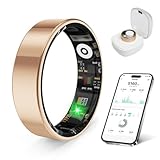
- 【Check the Size Before Purchase】 Before buying the prxxhri Smart Ring, we strongly suggest that you refer to the size chart and carefully measure the circumference of your finger. This will ensure you get the most comfortable wearing experience and easily avoid any unnecessary returns or exchanges.
- 【Real-time Accurate Sleep & Fitness Monitoring】 prxxhri smart ring tracks your sleep quality and daily activities in real time. With advanced sensors, it provides precise data about your sleep cycle, helping you optimize rest and recovery. Whether you are tracking steps, calories or exercise performance, this smart ring can provide you with the most accurate insights to support your fitness goals and enhance your overall health.It is a good choice for family and friends.
- Health Monitoring】The prxxhri ring features advanced 4.0 sensors that automatically measure your heart rate, and blood pressure every 30 min when worn. It provides continuous health tracking and comprehensive wellness management all day.
- 【3-5 Day Battery Life】 With a 3-5 day battery life, the prxxhri smart ring ensures continuous health monitoring without frequent charging. When used with the smart charging case, the usage time can even exceed 20 days. Whether you are tracking sleep patterns or fitness activities, you can count on long-lasting performance without constant interruptions.
- 【80-meter Waterproof, Suitable for Various Scenarios】 The prxxhri Smart Ring has excellent waterproof performance, with a waterproof depth of up to 80 meters. Whether it's for daily wear, an intense workout session or a pleasant swimming time, it can handle it with ease. What's more, even if you have sensitive skin, you can still enjoy an extremely comfortable wearing experience when wearing this ring.
RingConn has not yet detailed battery capacity, charging speed, or whether the 12-day figure assumes disabled features. Until those variables are clarified, this remains a best-case claim—but it is one that clearly positions Gen 2 above Oura Ring Gen 3 and Ultrahuman Ring Air in endurance-first messaging.
Confirmed: Ultralight Design With a Clear Comfort Focus
The second concrete tease is weight reduction. RingConn has described Gen 2 as ultralight, signaling a priority on all-day and all-night wear comfort rather than adding new sensors at the cost of bulk.
While no gram figure has been shared, this suggests either a thinner internal stack, more efficient component layout, or material optimization. Gen 1 was already competitive in comfort, particularly for users who dislike the top-heavy feel of some sensor domes. Going lighter would directly benefit sleep tracking adherence and reduce awareness during typing, workouts, and longer wear periods.
Material specifics have not been confirmed, but RingConn’s existing use of durable, skin-safe metals and matte finishes suggests continuity rather than experimentation. If titanium or a similar alloy remains in play, weight savings may come from internal engineering rather than exterior changes.
Likely Improvements Based on Gen 1—but Not Officially Confirmed
RingConn has not announced new sensors, expanded health metrics, or algorithm upgrades. That silence is telling. Rather than chasing ECG or novel biomarkers, Gen 2 appears positioned as an efficiency upgrade.
Based on Gen 1’s strengths, it is reasonable to expect continued focus on sleep stages, resting heart rate, HRV trends, blood oxygen during sleep, and recovery insights. Battery gains often come from improved sensor duty cycling and chipset efficiency, which could indirectly improve data consistency without changing the visible feature list.
Importantly, there has been no confirmation of FDA-cleared features, medical claims, or expanded daytime activity tracking. Anyone expecting a leap into smartwatch territory should recalibrate expectations accordingly.
Software and Ecosystem: What RingConn Hasn’t Said Yet
There has been no official word on app redesigns, new scoring models, or deeper platform integrations. RingConn’s current ecosystem is valued for being subscription-free, and the absence of any tease around pricing tiers or memberships strongly suggests that philosophy will continue—but this is not yet guaranteed.
Compatibility details remain unannounced, including Android and iOS version support or any new export options for third-party platforms. For quantified-self users, this is a major unanswered question, especially as competitors continue to refine data accessibility and trend visualization.
Positioning Against Oura and Ultrahuman
By leading with battery life and weight rather than exclusive metrics, RingConn is drawing a clear contrast with Oura’s ecosystem-driven model and Ultrahuman’s metabolic performance angle. This is a play for users who want a ring that disappears on the finger, lasts close to two weeks, and quietly collects baseline health data without demanding daily attention.
If the 12-day claim holds up and comfort genuinely improves, Gen 2 could appeal strongly to smartwatch owners who want a secondary device for sleep and recovery—without overlapping charging schedules or subscription fatigue.
Launch Timing, Pricing, and the Biggest Unknowns
RingConn has not shared a launch date, preorder window, or pricing guidance. Historically, RingConn has undercut Oura on upfront cost while offering a complete feature set without monthly fees. Whether Gen 2 maintains that value positioning will heavily influence its competitiveness.
What remains unanswered is whether battery gains come with trade-offs in sampling resolution, whether durability ratings improve, and how much lighter “ultralight” actually is in daily use. Until those details emerge, Gen 2 looks promising—but deliberately restrained in what it’s willing to promise publicly.
Why a 12-Day Battery Life Is a Big Deal in the Smart Ring Category
RingConn’s decision to headline Gen 2 with a 12-day battery life isn’t just a marketing flex—it directly addresses one of the biggest friction points in the smart ring category. Battery anxiety matters more on a ring than on almost any other wearable, because rings are designed to be forgotten, not managed.
In a space where most competitors still struggle to break the one-week mark in real-world use, pushing toward two weeks meaningfully changes how the device fits into daily life. It shifts a smart ring from “another thing you need to charge” into something closer to passive infrastructure for health data.
The Reality of Smart Ring Battery Constraints
Smart rings operate under extreme physical limitations compared to watches or bands. There’s minimal internal volume for batteries, no room for large antennas, and constant skin contact that complicates thermal management and sensor placement.
That’s why most current-generation rings, including Oura Ring Gen 3 and Ultrahuman Ring Air, typically land between four and seven days depending on size, feature usage, and signal strength. Sleep tracking, overnight SpO2, and continuous temperature sensing are especially battery-intensive, and those are precisely the features most users want enabled all the time.
Why 12 Days Changes User Behavior
A 12-day claim, if it holds up outside of controlled conditions, fundamentally alters charging cadence. Instead of weekly top-ups or planning around travel, users could realistically charge the ring twice a month and forget about it in between.
For sleep-focused wearables, this matters more than headline fitness features. Missed nights due to low battery quietly degrade trend accuracy, recovery baselines, and long-term insights. Longer battery life directly supports better data continuity, which is where smart rings deliver the most value.
Secondary Wearable Appeal for Smartwatch Owners
RingConn has consistently attracted users who already wear an Apple Watch, Galaxy Watch, or Garmin during the day. In that context, battery longevity isn’t just about convenience—it’s about avoiding overlap.
A ring that lasts close to two weeks can handle sleep, resting heart rate, temperature deviation, and recovery tracking without syncing charging schedules with a smartwatch that already needs daily or near-daily power. That separation of roles is exactly what many smartwatch owners are looking for, and it’s where Gen 2’s battery promise could resonate most strongly.
Ultralight Design and Battery Efficiency Go Hand in Hand
RingConn hasn’t disclosed Gen 2’s exact weight yet, but pairing “ultralight” with extended battery life suggests deeper efficiency gains rather than simply packing in a larger cell. Lighter rings tend to improve comfort, reduce micro-movements during sleep, and allow tighter, more stable sensor contact with the skin.
From an engineering perspective, this often points to improvements in chipset efficiency, sensor duty cycling, and background processing rather than brute-force battery capacity. If true, that’s a more sustainable approach that benefits long-term wearability and thermal comfort, not just runtime.
How This Positions RingConn Against Oura and Ultrahuman
Oura has leaned heavily into ecosystem depth, polished insights, and subscription-backed software evolution, while Ultrahuman emphasizes metabolic performance and athlete-forward features. RingConn’s 12-day battery tease positions Gen 2 differently: as the low-maintenance, high-endurance option.
That stance will appeal to users who value consistency and comfort over constant interaction. It also reinforces RingConn’s brand identity as a subscription-free, set-and-forget health tracker, provided the battery gains don’t come at the expense of sensor fidelity or sampling frequency.
What to Watch for When the Full Specs Drop
Battery life claims in wearables always come with caveats. The key questions will be whether 12 days reflects typical usage with sleep tracking, SpO2, and temperature enabled, and how much variance exists between ring sizes.
Equally important is charging speed and battery longevity over time. A long runtime paired with slow charging or rapid capacity degradation would blunt the real-world benefit. Until RingConn shares testing parameters and size-specific estimates, the 12-day figure should be read as a strong signal of intent—one that raises expectations across the entire smart ring category.
Ultralight Design: Comfort, Sizing, and Why Weight Matters More Than You Think
After positioning battery life as a strategic differentiator, RingConn’s emphasis on an ultralight build is the other half of the equation. In smart rings, grams matter far more than spec sheets suggest, especially when a device is meant to be worn 24/7 rather than interacted with intermittently like a smartwatch.
Weight directly affects whether a ring fades into the background or becomes a constant reminder on your finger. For long-term adherence to sleep, recovery, and health tracking, that distinction is critical.
Why Even Small Weight Reductions Change Real-World Wearability
Most smart rings cluster within a narrow weight range, but the difference between “light” and “unnoticeable” is surprisingly small. A fraction of a gram can influence finger fatigue, pressure points during sleep, and how often users subconsciously adjust or remove the ring.
Rank #2

- ACCURATE SIZING ESSENTIAL - Oura Ring 4 uses unique sizing different from standard jewelry rings; use the Oura Ring 4 Sizing Kit to find your perfect fit before purchasing
- OURA MEMBERSHIP - First month of membership is included with purchase, for new members only. Subscription is 5.99/mo afterwards. Or opt for the annual prepaid option for 69.99. Membership is tied to your account via the Oura App, not your physical ring
- ACCURACY - SMART SENSING - Oura tracks over 50 health metrics, including sleep, activity, stress, heart health, and women’s health metrics. Oura Ring 4 is powered by Smart Sensing, which adapts to you — delivering accurate, continuous data, day and night
- LONG LASTING BATTERY - With up to 8 days of battery life, no screens and no vibrations, Oura Ring 4 allows you to focus on the present. From a workout to a night out — you’re free to forget it’s on. Until you start getting compliments
- HSA/FSA ELIGIBLE - We can accept HSA or FSA funds for the following: Oura Ring, additional chargers, and shipping
Heavier rings tend to rotate more during hand movement, which disrupts sensor alignment on the palmar side of the finger. An ultralight design reduces rotational inertia, helping the optical heart rate and SpO2 sensors maintain consistent skin contact without requiring a tighter, less comfortable fit.
Sleep Comfort Is the Real Battlefield
Daytime comfort is only half the story. Sleep is where smart rings either justify their existence or quietly fail, and weight plays an outsized role here.
During sleep, users are far more sensitive to pressure and imbalance, especially for side sleepers or those who clench their hands. A lighter ring reduces localized pressure against the finger and mattress, lowering the chance of numbness or subconscious removal during the night, which directly impacts data continuity.
Sizing Consistency and Sensor Accuracy
RingConn has not yet shared details on size range or whether Gen 2 introduces revised internal geometries, but weight reduction often goes hand in hand with better size scaling. Larger ring sizes typically require bigger batteries and frames, which can skew comfort and runtime expectations across the lineup.
If RingConn has managed to keep weight low while maintaining similar battery life across sizes, that would be a meaningful engineering achievement. In practice, it would mean fewer compromises for users with larger fingers, who often see reduced battery life or bulkier profiles in competing rings.
Materials, Thickness, and Edge Finishing Matter More Than Marketing Claims
Ultralight does not automatically mean thin, nor does thin guarantee comfort. The way mass is distributed around the finger, edge chamfering, and inner surface curvature all influence how a ring feels after hours of wear.
RingConn Gen 1 was already competitive in terms of comfort, with a smooth interior and restrained thickness. If Gen 2 refines this further through lighter materials, improved internal milling, or slimmer sensor housings, the benefits will show up in reduced hotspot pressure and better long-term skin tolerance.
Why Weight Also Affects Battery Efficiency and Thermals
There’s a less obvious benefit to lighter hardware: thermal behavior. Heavier rings with denser internal components can retain heat, particularly during continuous nighttime tracking or workouts.
An ultralight chassis can dissipate heat more evenly, improving skin comfort and potentially allowing sensors to operate at higher consistency without throttling. This aligns with RingConn’s 12-day battery claim, suggesting a system-level optimization rather than isolated improvements.
How This Compares to Oura and Ultrahuman in Daily Use
Oura has steadily refined comfort over generations, but its focus on premium materials and ecosystem depth means weight has plateaued rather than dropped dramatically. Ultrahuman, by contrast, leans into performance tracking, sometimes at the expense of absolute invisibility on the finger.
RingConn’s ultralight positioning signals a different priority: minimizing friction in daily wear. For users who already wear a traditional watch or mechanical timepiece, this matters, as a ring must coexist without drawing attention or becoming a distraction.
What Buyers Should Watch for Next
The unanswered questions now center on numbers. Exact weight per size, thickness measurements, material composition, and whether RingConn has altered its sizing kit approach will all determine whether “ultralight” translates into a tangible upgrade over Gen 1.
Equally important is whether RingConn maintains its subscription-free model while delivering these refinements. If the company can pair a genuinely lighter ring with consistent sizing and the teased battery life, Gen 2 could appeal strongly to users who want health tracking that disappears into daily life rather than demanding engagement.
Expected Upgrades Over RingConn Gen 1: Sensors, Accuracy, and Everyday Wear
If the ultralight chassis and extended battery life are the foundation of RingConn Gen 2, the real story will be what happens on the inside. A lighter ring only matters if sensor fidelity, signal stability, and day-to-day reliability improve alongside it.
RingConn has not fully disclosed the Gen 2 sensor stack yet, but based on its teasers and the competitive landscape, several upgrades are not just likely but necessary to justify a generational leap.
Refined PPG Hardware and Signal Quality
RingConn Gen 1 relied on a conventional green and infrared PPG array, delivering solid sleep and resting heart rate data but occasionally lagging behind Oura in motion-heavy scenarios. With Gen 2’s focus on efficiency, a redesigned PPG module with higher sensitivity photodiodes and improved LED placement is a reasonable expectation.
Better optical coupling would allow RingConn to reduce LED power draw while improving signal-to-noise ratio, directly supporting the claimed 12-day battery life. This is especially important for nighttime measurements like HRV, where consistency matters more than raw sampling frequency.
Skin Temperature Accuracy and Thermal Isolation
Skin temperature tracking is now table stakes in premium smart rings, but accuracy hinges on thermal isolation rather than sensor count. Gen 1 offered useful trend data, yet it could be influenced by ambient temperature shifts and prolonged daytime wear.
An ultralight Gen 2 design suggests revised internal layering, potentially separating the temperature sensor more effectively from the battery and SoC. If RingConn has improved thermal buffering, users should see cleaner overnight baselines and more reliable deviation alerts for illness or recovery stress.
Improved Motion Sensing for Activity and Sleep
Accelerometer performance is often overlooked, but it underpins both activity detection and sleep staging. Gen 1 was competent for steps and basic workouts, though it leaned conservative in activity classification compared to Ultrahuman’s more aggressive approach.
A newer, lower-power IMU would allow higher-resolution motion data without sacrificing battery life. This could improve wake detection, reduce false sleep interruptions, and make passive activity tracking more trustworthy for users who do not log workouts manually.
Fit Consistency and Sensor Contact Across Sizes
One quiet weakness of many smart rings is performance variance between sizes. Larger rings can struggle with consistent sensor contact, while smaller sizes risk pressure hotspots that affect comfort and blood flow.
If RingConn has revised its internal curvature or sensor housing geometry for Gen 2, accuracy should become more uniform across the size range. This would be a meaningful upgrade for buyers who sit between sizes or wear the ring on different fingers depending on the day.
Everyday Comfort: Thickness, Edges, and Long-Term Wear
RingConn’s ultralight positioning strongly implies a slimmer profile, even if total thickness reductions are modest on paper. Small changes in edge chamfering, inner shell smoothness, and weight distribution can dramatically affect how a ring feels after 18 to 24 hours of continuous wear.
For users pairing a smart ring with a mechanical watch or smartwatch, reduced bulk matters. A Gen 2 ring that disappears under gloves, during typing, or while sleeping would reinforce RingConn’s appeal as a passive health companion rather than a constant reminder on the hand.
Durability and Surface Finishing Expectations
Weight reduction often raises durability questions, particularly around scratch resistance and long-term coating wear. RingConn Gen 1 held up reasonably well, but competitors like Oura have set expectations for premium finishes that age gracefully.
If RingConn is using a lighter titanium alloy or revised coating process, buyers should watch for how Gen 2 balances mass reduction with abrasion resistance. Everyday wear includes desks, gym equipment, and door handles, not just lab conditions.
Algorithmic Accuracy and Software Maturity
Hardware gains only translate into better health insights if the algorithms evolve alongside them. RingConn’s app has steadily improved, but it still trails Oura in longitudinal insight depth and Ultrahuman in performance-focused analytics.
Gen 2 presents an opportunity to recalibrate baselines using cleaner sensor data, potentially improving readiness, recovery, and sleep scoring accuracy. Maintaining the brand’s subscription-free model while delivering smarter interpretation would be a major differentiator if executed well.
What This Means for Real-World Use
Taken together, these expected upgrades point toward a ring that is less intrusive, more consistent, and better suited for continuous wear. The goal is not headline-grabbing metrics, but quieter improvements that users feel through fewer missed nights, more stable trends, and less awareness of the ring itself.
Rank #3

- ACCURATE SIZING ESSENTIAL - Oura Ring 4 uses unique sizing different from standard jewelry rings; use the Oura Ring 4 Sizing Kit to find your perfect fit before purchasing
- OURA MEMBERSHIP - First month of membership is included with purchase, for new members only. Subscription is 5.99/mo afterwards. Or opt for the annual prepaid option for 69.99. Membership is tied to your account via the Oura App, not your physical ring
- ACCURACY - SMART SENSING - Oura tracks over 50 health metrics, including sleep, activity, stress, heart health, and women’s health metrics. Oura Ring 4 is powered by Smart Sensing, which adapts to you — delivering accurate, continuous data, day and night
- LONG LASTING BATTERY - With up to 8 days of battery life, no screens and no vibrations, Oura Ring 4 allows you to focus on the present. From a workout to a night out — you’re free to forget it’s on. Until you start getting compliments
- HSA/FSA ELIGIBLE - We can accept HSA or FSA funds for the following: Oura Ring, additional chargers, and shipping
Until RingConn publishes full specifications, these remain informed expectations rather than confirmed features. Still, the emphasis on ultralight design and extended battery life strongly suggests Gen 2 is targeting refinement and reliability over flashy additions, a strategy that resonates with experienced wearable users.
Health Tracking Focus: Sleep, Recovery, and Readiness in a Ring-First Form Factor
With comfort, durability, and algorithmic maturity setting the foundation, RingConn Gen 2’s real test will be whether its health tracking feels more dependable and actionable over weeks, not just impressive on a spec sheet. Smart rings live or die by consistency, and this is where the teased 12-day battery life and ultralight build directly shape sleep, recovery, and readiness outcomes.
Rather than chasing workout metrics better handled by watches, RingConn continues to frame Gen 2 as a background health monitor. That positioning aligns squarely with the use cases where rings outperform wrist wearables: overnight tracking, long-term trend analysis, and low-friction daily wear.
Sleep Tracking as the Core Use Case
Sleep remains the most natural strength of a ring-first form factor, and RingConn appears to be doubling down on that advantage. A lighter ring reduces finger awareness during micro-movements at night, which can improve signal stability for heart rate, HRV, and skin temperature trends.
RingConn has not confirmed new sleep stages or novel metrics, but longer battery life strongly implies fewer compromises in overnight sampling rates. Compared to Gen 1, users should realistically expect more complete sleep records across consecutive nights, especially for those who previously stretched charging intervals too far.
Against competitors, Oura still sets the benchmark for sleep insight depth and historical comparisons, while Ultrahuman emphasizes sleep as fuel for performance. RingConn’s opportunity with Gen 2 is to narrow the reliability gap through hardware consistency rather than reimagining sleep science.
Recovery Metrics Driven by HRV Stability
Recovery scores in smart rings are only as good as their HRV baselines, and baseline quality depends on uninterrupted wear. A 12-day battery changes how often users remove the ring, reducing data fragmentation that can distort recovery trends.
RingConn has hinted at refined sensors rather than expanded sensor arrays, which suggests incremental accuracy gains instead of new physiological signals. If cleaner optical readings are paired with smarter filtering, Gen 2 recovery scores could become less reactive and more reflective of genuine physiological strain.
This matters when compared to Ultrahuman’s more aggressive, athlete-leaning recovery model and Oura’s conservative readiness framing. RingConn’s strength has been approachability, and Gen 2 seems positioned to make recovery insights feel steadier rather than more complex.
Readiness Without Wrist Fatigue
Readiness is where smart rings quietly compete with smartwatches, offering daily guidance without demanding attention. RingConn’s readiness approach has historically been simpler than Oura’s, but also easier to interpret at a glance.
An ultralight ring enhances this experience by encouraging true 24/7 wear, including during typing, commuting, and sleep. Over time, that uninterrupted dataset can improve day-to-day readiness accuracy more than adding new metrics ever could.
Importantly, RingConn remains committed to a subscription-free model, which changes how readiness is perceived. Buyers are not paying monthly for evolving insights, so Gen 2’s readiness improvements need to feel meaningful out of the box rather than promised through future paywalled features.
Why Battery Life Is a Health Feature, Not a Convenience
In the smart ring category, battery life directly influences health tracking quality. Every skipped night or partial day introduces noise, and shorter battery cycles disproportionately hurt readiness and recovery metrics.
If RingConn delivers close to the teased 12-day figure in real-world use, it would outlast Oura Ring Gen 3 and most Ultrahuman Ring Air usage patterns by a noticeable margin. That advantage compounds over time, especially for users who travel frequently or dislike charging routines.
For quantified-self users, fewer charging interruptions also mean cleaner longitudinal datasets. This is where Gen 2 could quietly outperform competitors, not by measuring more, but by missing less.
Confirmed Signals vs Educated Expectations
What RingConn has officially teased is limited: a significantly lighter chassis and up to 12 days of battery life. There has been no confirmation of new sensors, expanded health categories, or major app redesigns.
Based on Gen 1 behavior and current market trends, buyers should expect refinement rather than reinvention. Incremental gains in sleep continuity, recovery stability, and readiness confidence are the most realistic outcomes.
The unanswered questions remain around launch timing, final weight figures by ring size, and whether software updates will accompany the hardware at launch. Pricing has not been discussed, but maintaining aggressive value positioning without a subscription will be critical if RingConn wants Gen 2 to convert Oura-curious buyers rather than just satisfy existing users.
RingConn vs Oura vs Ultrahuman: Early Positioning and Competitive Advantages
With battery life framed as a data-quality issue rather than a convenience perk, RingConn Gen 2 enters a competitive field where small hardware trade-offs have outsized downstream effects. Oura and Ultrahuman have both matured into credible health platforms, but they arrive at the problem from very different philosophical and commercial angles.
RingConn’s early positioning suggests it wants to win not by outgunning rivals on features, but by reducing friction: fewer charges, less weight, and no subscription standing between the user and their data.
Battery Life as a Strategic Differentiator
If the teased 12-day battery life holds up beyond marketing conditions, RingConn Gen 2 would immediately leapfrog Oura Ring Gen 3’s typical 4–7 day window and Ultrahuman Ring Air’s roughly 4–6 days depending on usage. That gap is not cosmetic; it reshapes how consistently users capture sleep, recovery, and baseline trends.
Oura’s shorter cycle is partially offset by fast charging and a polished charging puck, but it still requires active management. Ultrahuman’s real-time metabolic ambitions further tax its battery, especially for users engaging frequently with live data views.
RingConn’s approach prioritizes passive continuity. Less frequent charging means fewer missed nights, and for readiness-driven users, that translates into cleaner longitudinal datasets rather than more granular point-in-time metrics.
Weight, Comfort, and the Reality of 24/7 Wear
RingConn has explicitly teased a significantly lighter chassis, though final gram figures by ring size remain unknown. Even modest reductions matter here; smart rings live or die by whether users forget they are wearing them during sleep, workouts, and daily tasks.
Oura Ring Gen 3 is well-finished and durable, but its thickness and internal sensor bump are still perceptible for some users, particularly those sensitive to finger pressure during sleep. Ultrahuman Ring Air improved meaningfully on comfort versus its predecessor, yet still trends slightly bulkier than the lightest rings on the market.
If RingConn Gen 2 meaningfully reduces mass without compromising structural integrity or battery size, it strengthens its appeal as a true background health device rather than a gadget that occasionally demands attention.
Software Philosophy: Depth vs Dependability
Oura remains the category leader in software maturity, particularly around sleep staging, readiness interpretation, and trend visualization. Its insights are refined, but increasingly gated behind a monthly subscription, which alters the value equation over long ownership cycles.
Ultrahuman differentiates through ambition. Its app leans into metabolic health, real-time feedback, and experimentation, appealing to biohackers who enjoy active engagement and frequent feature updates. The trade-off is complexity and, at times, less interpretive clarity for users who just want stable daily signals.
RingConn’s software has historically favored simplicity and offline-first reliability. With no subscription layer, Gen 2’s app experience must feel complete at launch. Incremental improvements to readiness confidence, sleep consistency, and recovery scoring matter more here than flashy new dashboards.
Value Proposition and Subscription Economics
The absence of a subscription remains RingConn’s sharpest competitive edge. Over two to three years of ownership, Oura’s monthly fees can exceed the upfront cost difference between rings, a reality that increasingly factors into buying decisions.
Rank #4
- ACCURATE SIZING ESSENTIAL - Oura Ring 4 uses unique sizing different from standard jewelry rings; use the Oura Ring 4 Sizing Kit to find your perfect fit before purchasing
- OURA MEMBERSHIP - First month of membership is included with purchase, for new members only. Subscription is 5.99/mo afterwards. Or opt for the annual prepaid option for 69.99. Membership is tied to your account via the Oura App, not your physical ring
- ACCURACY - SMART SENSING - Oura tracks over 50 health metrics, including sleep, activity, stress, heart health, and women’s health metrics. Oura Ring 4 is powered by Smart Sensing, which adapts to you — delivering accurate, continuous data, day and night
- LONG LASTING BATTERY - With up to 8 days of battery life, no screens and no vibrations, Oura Ring 4 allows you to focus on the present. From a workout to a night out — you’re free to forget it’s on. Until you start getting compliments
- HSA/FSA ELIGIBLE - We can accept HSA or FSA funds for the following: Oura Ring, additional chargers, and shipping
Ultrahuman currently avoids subscriptions as well, but compensates with higher engagement demands and more frequent app interactions. RingConn’s pitch is quieter: pay once, wear consistently, and let the data accumulate without friction.
Pricing for Gen 2 has not been announced, but RingConn will need to preserve its aggressive value positioning to convert Oura-curious buyers rather than simply retaining its existing base.
What RingConn Still Needs to Prove
Despite the promising early signals, RingConn Gen 2 enters this comparison with more unanswered questions than its rivals. Sensor changes, algorithm updates, durability improvements, and platform integrations have not been confirmed.
Oura and Ultrahuman benefit from established ecosystems and predictable update cadences. RingConn must demonstrate that its hardware gains are matched by ongoing software support, even without subscription revenue.
For now, Gen 2’s competitive advantage is clarity of purpose. If the final product delivers ultralight comfort, genuinely extended battery life, and stable readiness insights without recurring costs, RingConn positions itself not as the most advanced ring on paper, but potentially the easiest one to live with every single day.
Battery Tech, Charging, and Real-World Usability Questions Still Unanswered
That clarity of purpose now hinges on one claim more than any other: battery life. RingConn’s Gen 2 tease highlights a headline 12-day endurance figure, paired with an ultralight redesign, but the engineering decisions behind that number remain largely opaque.
In a category where single-digit real-world battery life is still the norm, RingConn is signaling that power efficiency, not feature sprawl, is the core upgrade story. Whether that promise survives daily wear, continuous sensing, and real-world usage patterns is the question that will define Gen 2’s credibility.
What “12 Days” Likely Means in Practice
RingConn has not disclosed testing conditions for its 12-day estimate, and that omission matters. Smart ring battery claims typically assume baseline sleep tracking, periodic heart rate sampling, and limited daytime activity detection rather than continuous high-frequency monitoring.
If Gen 2 reaches 12 days with always-on SpO2 disabled, reduced daytime sampling, or conservative temperature tracking, the number becomes less disruptive than it sounds. Oura Gen 3, for reference, can approach 6–7 days under similarly optimized conditions, while Ultrahuman generally trades endurance for richer daytime metrics.
The more interesting angle is whether RingConn has improved standby efficiency without gutting signal quality. Longer battery life only meaningfully improves usability if readiness, sleep staging, and overnight heart rate variability remain stable across the entire discharge cycle, not just during the first few days.
Battery Density vs Weight: The Ultralight Trade-Off
RingConn is also teasing an “ultralight” design, which introduces an inherent tension. Smaller mass typically means less room for battery capacity, making a 12-day claim more impressive but also more technically fragile.
Gen 1 RingConn was already among the lighter rings in the category, which contributed to strong overnight comfort and low finger fatigue. If Gen 2 pushes weight down further while extending runtime, it suggests either a higher-density cell, more aggressive power gating, or both.
What remains unknown is how this affects thermal behavior and charging speed. Compact batteries can heat more quickly during fast charging, which in a ring form factor directly impacts comfort, material longevity, and long-term battery health.
Charging Method, Downtime, and Daily Friction
RingConn has not yet confirmed whether Gen 2 retains the same charging cradle design or introduces faster top-up capabilities. Charging ergonomics matter more for rings than watches, because removal breaks continuous data streams.
A 12-day battery life reduces friction only if charging itself is predictable and brief. A long charge time, even if infrequent, still disrupts sleep tracking and recovery trends.
There is also no confirmation on whether RingConn has added battery health management features, such as optimized charging limits or adaptive trickle charging. Over multi-year ownership, these details matter more than peak runtime figures.
Durability, Water Exposure, and Battery Longevity
Extended battery life also raises durability questions. Smart rings are exposed to frequent hand washing, temperature swings, and accidental impacts, all of which degrade battery performance over time.
RingConn has not detailed whether Gen 2 includes improved sealing, higher water resistance, or reinforced internal structures to protect the battery from micro-shifts. For users who wear a ring 24/7, battery longevity is not just about days per charge, but years before noticeable degradation.
Oura’s multi-generation experience has shown that battery performance inevitably declines, even with conservative charging. RingConn’s lack of a subscription model increases the expectation that the hardware itself must age gracefully.
What Still Needs Confirmation Before This Claim Holds Weight
At this stage, RingConn’s battery story is directionally promising but incomplete. We do not yet know sampling rates, sensor duty cycles, or how aggressively Gen 2 prioritizes battery over daytime metrics.
There is also no clarity on whether users will have manual control over power profiles or if RingConn intends to keep its historically minimalist approach. For quantified-self users, transparency around these trade-offs matters as much as raw endurance.
If RingConn can demonstrate that its 12-day figure holds under typical wear, with stable sleep, HRV, and readiness data, Gen 2 could meaningfully reset expectations for non-subscription smart rings. Until then, battery life remains the most exciting claim and the biggest unanswered question attached to this launch.
Platform, App, and Ecosystem: What We Expect from RingConn’s Software Stack
Battery life and hardware efficiency only matter if the software layer knows how to use them well. With Gen 2 promising longer runtime and a lighter chassis, the platform experience will determine whether RingConn’s gains translate into cleaner data, lower friction, and better long-term usability.
RingConn has not yet detailed major software changes alongside its Gen 2 tease, but its history gives us a useful baseline. The company has consistently positioned itself as a no-subscription, hardware-first alternative to Oura, and Gen 2 will need to reinforce that identity rather than blur it.
RingConn App: Likely Evolution, Not Reinvention
Based on Gen 1, RingConn’s app philosophy has leaned toward clarity over depth. Sleep stages, resting heart rate, HRV trends, and activity summaries are presented with minimal visual noise, which appeals to users who want daily signals rather than raw data overload.
For Gen 2, the expectation is refinement rather than a ground-up redesign. Longer battery life enables more consistent overnight sampling, which should improve trend stability in sleep, recovery, and readiness-style insights, even if RingConn avoids naming them as such.
What remains unclear is whether RingConn will expose more advanced metrics or keep its current top-line approach. Power users may hope for expanded HRV context, longitudinal baselines, or clearer attribution between sleep quality and daytime stress, especially now that the hardware can theoretically support it.
Battery-Aware Software and Sampling Trade-Offs
A 12-day battery claim raises immediate questions about how the software manages sensor duty cycles. RingConn has historically favored conservative sampling during the day and higher fidelity overnight, a balance that likely continues in Gen 2.
If the company introduces adaptive sampling based on activity or sleep detection, Gen 2 could feel smarter without becoming more complex. For example, increasing heart rate resolution during workouts or stress periods while preserving low-power idle states during sedentary hours would align well with its efficiency-first narrative.
What users will want, especially in a non-subscription ecosystem, is transparency. Clear explanations of how often sensors are active, what data may be deprioritized to save power, and whether users can influence those choices would meaningfully differentiate RingConn from more opaque competitors.
💰 Best Value

- 【Check the Size Before Purchase】 Before buying the prxxhri Smart Ring, we strongly suggest that you refer to the size chart and carefully measure the circumference of your finger. This will ensure you get the most comfortable wearing experience and easily avoid any unnecessary returns or exchanges.
- 【Real-time Accurate Sleep & Fitness Monitoring】 prxxhri smart ring tracks your sleep quality and daily activities in real time. With advanced sensors, it provides precise data about your sleep cycle, helping you optimize rest and recovery. Whether you are tracking steps, calories or exercise performance, this smart ring can provide you with the most accurate insights to support your fitness goals and enhance your overall health.It is a good choice for family and friends.
- Health Monitoring】The prxxhri ring features advanced 4.0 sensors that automatically measure your heart rate, and blood pressure every 30 min when worn. It provides continuous health tracking and comprehensive wellness management all day.
- 【3-5 Day Battery Life】 With a 3-5 day battery life, the prxxhri smart ring ensures continuous health monitoring without frequent charging. When used with the smart charging case, the usage time can even exceed 20 days. Whether you are tracking sleep patterns or fitness activities, you can count on long-lasting performance without constant interruptions.
- 【80-meter Waterproof, Suitable for Various Scenarios】 The prxxhri Smart Ring has excellent waterproof performance, with a waterproof depth of up to 80 meters. Whether it's for daily wear, an intense workout session or a pleasant swimming time, it can handle it with ease. What's more, even if you have sensitive skin, you can still enjoy an extremely comfortable wearing experience when wearing this ring.
Platform Compatibility and Daily Usability
RingConn has supported both iOS and Android without feature disparity, and there is no indication Gen 2 will change that. In a category where Android users often feel like second-class citizens, maintaining parity is not a small advantage.
The app’s background sync behavior will matter more with longer battery life. Less frequent charging means fewer natural sync moments, so Gen 2’s platform must reliably cache data, recover gracefully from missed syncs, and avoid aggressive battery optimization conflicts on Android devices.
RingConn has also avoided locking users into constant cloud dependency. If Gen 2 continues to allow local data access with delayed uploads, it would reinforce the brand’s appeal to privacy-conscious and internationally mobile users.
No Subscription: Expectations Are Higher, Not Lower
RingConn’s no-subscription model remains one of its strongest differentiators against Oura. But as competitors invest heavily in software insights funded by recurring fees, RingConn cannot rely on price alone to carry the experience.
Gen 2 will likely need to show incremental intelligence in its scoring and insights without hiding core features behind future paywalls. That includes clearer explanations of what readiness or recovery indicators actually mean, not just whether they are “good” or “bad.”
Without a subscription buffer, software updates must feel meaningful. Buyers will expect continued algorithm tuning, device longevity support, and possibly new insights delivered post-launch, not a static app frozen at release.
Ecosystem Ambitions: Focused, Not Expansive
Unlike Samsung or Apple, RingConn is unlikely to build a broad hardware ecosystem, and that restraint may work in its favor. A smart ring is most compelling when it complements, rather than competes with, a smartwatch.
If Gen 2 improves data export, third-party integration, or interoperability with platforms like Apple Health, Google Fit, or training-focused apps, it would strengthen its role as a background health sensor. This is especially relevant for smartwatch owners who want sleep and recovery tracking without wearing a watch overnight.
RingConn has not teased deeper ecosystem plays, and that may be intentional. A stable, reliable software stack that quietly does its job may be the most honest companion to an ultralight ring designed to be forgotten on the finger.
What Still Needs to Be Shown
At this stage, RingConn’s software story is largely implied rather than confirmed. We do not yet know whether Gen 2 introduces new algorithms, revised scoring models, or simply benefits from cleaner data enabled by improved hardware efficiency.
The risk is not that RingConn does too little, but that expectations rise faster than the platform evolves. With longer battery life and lighter design grabbing headlines, the app must quietly prove that it can turn those advantages into better insight, not just longer uptime.
For Gen 2 to fully deliver, RingConn’s software stack needs to mature in step with its hardware ambitions. The next round of disclosures, particularly around data handling, insight depth, and update cadence, will be critical in determining whether this ring is merely efficient or genuinely smart.
Launch Timeline, Pricing Signals, and Who the RingConn Gen 2 Is Really For
With hardware efficiency and software maturity now clearly intertwined, the next questions are practical ones. When does RingConn Gen 2 actually arrive, how much will it likely cost, and which users will benefit most from its particular set of trade-offs.
Launch Window: Reading Between the Teasers
RingConn has not published a fixed launch date, but the cadence of its teasers strongly suggests a near-term release rather than a distant concept reveal. Historically, RingConn has favored short teaser-to-launch cycles, particularly with Gen 1, where public previews were followed by retail availability within a matter of weeks rather than quarters.
The emphasis on concrete claims like a 12-day battery life and an ultralight build points to late-stage hardware validation, not early R&D. Battery estimates at this level are rarely communicated unless firmware, power management, and sensor sampling profiles are close to final.
A realistic expectation is a launch announcement within the next product cycle, followed by shipping shortly thereafter, rather than a prolonged pre-order window. For buyers, that matters because early smart ring hardware tends to evolve quickly, and long delays often coincide with last-minute compromises or quiet spec changes.
Pricing Signals: Likely Holding the No-Subscription Line
While RingConn has not confirmed pricing, there are strong signals that Gen 2 will remain aligned with the brand’s defining value proposition: a one-time hardware purchase with no recurring subscription. That alone continues to differentiate it from Oura, whose monthly fee has become a central consideration for long-term ownership cost.
Gen 1 launched at a price that undercut Oura while positioning itself above budget-focused newcomers. Given the claimed improvements in battery longevity, weight reduction, and internal efficiency, a modest price increase would not be surprising, but a dramatic shift would risk eroding RingConn’s core appeal.
Expect pricing to land in the same general bracket as Gen 1 or slightly above, but still meaningfully below the total cost of ownership of a subscription-based ring over two to three years. For quantified-self users who plan to keep hardware for the long haul, that math remains compelling.
Competitive Positioning: Battery Life as a Strategic Weapon
In the smart ring category, battery life is not just a convenience feature, it directly affects data continuity. A claimed 12-day runtime puts RingConn Gen 2 in a different usage tier than most current competitors, including Oura and Ultrahuman, which typically require weekly or near-weekly charging under real-world conditions.
Longer battery life reduces charging friction, but more importantly, it minimizes data gaps during sleep and recovery tracking. For users who rely on trend analysis rather than day-to-day metrics, consistency matters more than flashy features.
If RingConn can deliver that battery life without aggressive sensor downsampling or reduced nighttime tracking fidelity, it positions Gen 2 as a quietly more reliable long-term health sensor. That reliability, rather than novelty, is what may resonate most with experienced wearable users.
Who This Ring Is Actually For
RingConn Gen 2 is not trying to replace a smartwatch, and that restraint is key to understanding its audience. This is a device for users who already wear an Apple Watch, Garmin, or similar during the day and want a lighter, less intrusive way to capture sleep, recovery, and baseline health data overnight.
It is also well-suited to users who have bounced off smart rings in the past due to charging fatigue or comfort issues. An ultralight design combined with extended battery life directly addresses the two most common reasons rings end up in drawers rather than on fingers.
Conversely, users looking for rich daytime fitness metrics, real-time workout guidance, or deep coaching features may still find smartwatches more satisfying. RingConn’s value lies in passive, background tracking that prioritizes wearability and longevity over interaction.
What Buyers Should Expect Next
The next phase of RingConn’s rollout will need to clarify what the hardware gains translate to in daily use. Buyers should look for confirmation around real-world battery life across different finger sizes, whether the ultralight claim reflects thinner walls, new materials, or internal component redesign, and how durability has been preserved.
Equally important will be transparency around software updates post-launch. Longer battery life raises expectations that the ring will remain viable for years, not just months, and that means sustained algorithm improvements and platform support.
If RingConn can follow its efficiency-focused hardware story with equally disciplined software communication, Gen 2 could solidify its place as one of the most pragmatic smart rings on the market. Not the flashiest, not the most social, but one designed for people who value comfort, continuity, and ownership clarity over hype.