Rokid’s global rollout of the AI Glasses Style lands at a moment when many consumers are curious about AI hardware but unconvinced by bulky AR headsets or notification-heavy smart glasses. What has actually launched is not a prototype or developer kit, but a finished consumer product priced at $299, positioned as an always-available AI companion that you wear like normal glasses. Understanding what Rokid is selling, and just as importantly what it is not selling, is key to judging whether this category makes sense for you.
These glasses do not try to replace your phone, smartwatch, or display-based AR headset. Instead, they aim to sit in the same mental space as wireless earbuds and voice assistants, but with a more contextual, hands-free interface anchored to your line of sight and physical presence. This section breaks down the hardware, the software experience, and why Rokid believes now is the right time to push screenless AI glasses beyond China and into global markets.
What Rokid Has Actually Launched
The Rokid AI Glasses Style are commercially available smart glasses with no visual display, no waveguides, and no AR overlays. They look closer to thick-rimmed fashion eyewear than tech hardware, weighing roughly in the same comfort range as premium acetate frames, and are designed for all-day wear rather than short demo sessions. The frames house microphones, speakers, a camera, onboard sensors, and battery components distributed across the temples to maintain balance.
At $299, Rokid is deliberately undercutting display-based smart glasses and AR devices, which often start well north of $500 and quickly climb higher. This price point also places them closer to high-end earbuds and entry-level smartwatches, signaling that Rokid sees these glasses as a companion device rather than a primary computing platform. Prescription lens support and standard sunglass variants are part of the offering, reinforcing that this is meant to replace something you already wear, not add another gadget.
🏆 #1 Best Overall
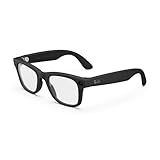
- #1 SELLING AI GLASSES - Tap into iconic style for men and women, and advanced technology with the newest generation of Ray-Ban Meta glasses. Capture photos and videos, listen to music, make hands-free calls or ask Meta AI questions on-the-go.
- UP TO 8 HOURS OF BATTERY LIFE - On a full charge, these smart AI glasses can last 2x longer than previous generations, up to 8 hours with moderate use. Plus, each pair comes with a charging case that provides up to 48 hours of charging on-the-go.
- 3K ULTRA HD: RECORD SHARP VIDEOS WITH RICH DETAIL - Capture photos and videos hands-free with an ultra-wide 12 MP camera. With improved 3K ultra HD video resolution you can record sharp, vibrant memories while staying in the moment.
- LISTEN WITH OPEN-EAR AUDIO — Listen to music and more with discreet open-ear speakers that deliver rich, quality audio without blocking out conversations or the ambient noises around you.
- ASK YOUR GLASSES ANYTHING WITH META AI - Chat with Meta AI to get suggestions, answers and reminders straight from your smart AI glasses.
How Screenless AI Glasses Actually Work Day to Day
Without a display, the Rokid AI Glasses rely entirely on voice interaction, audio feedback, and contextual sensing. You speak to the glasses to ask questions, request translations, summarize information, control connected apps, or trigger AI-powered assistance, with responses delivered through open-ear speakers built into the frame. The experience is closer to having a conversational AI assistant hovering with you than glancing at notifications or visual cards.
Most processing is cloud-based, with the glasses tethering to a smartphone for connectivity, similar to how many smartwatches and earbuds function. Battery life is measured in practical daily usage rather than continuous active interaction, with Rokid prioritizing standby efficiency so the glasses feel available rather than fragile. In real-world terms, this positions them as something you casually talk to throughout the day, not a device you manage minute by minute.
Why Rokid Is Avoiding a Display on Purpose
The absence of a display is not a cost-cutting accident but a strategic decision. Displays add weight, complexity, power drain, and social friction, all of which have slowed mainstream adoption of AR glasses. By removing the visual layer entirely, Rokid sidesteps many of the comfort, battery, and privacy concerns that have plagued earlier smart glasses attempts.
This also reframes expectations. You are not meant to read messages, navigate maps visually, or consume media through the glasses. Instead, they function as an ambient AI interface, closer in spirit to an invisible smartwatch that speaks rather than vibrates, and listens rather than tracks your wrist. For users already fatigued by screens, that constraint is part of the appeal.
How This Compares Conceptually to Smartwatches and Earbuds
Compared to a smartwatch, the Rokid AI Glasses offer less structured health tracking and no visual feedback, but a more natural conversational interface. There is no screen to glance at, no taps or swipes, and no constant reminders competing for attention. In exchange, you gain hands-free access to AI assistance in moments where pulling out a phone or checking a watch feels awkward or disruptive.
Against earbuds, the glasses provide similar voice-driven functionality but with better spatial awareness and all-day wearability. You do not insert or remove them repeatedly, and the microphones are positioned to better capture natural speech without sealing off your ears. This makes them feel more like an extension of your presence rather than an accessory you consciously put on for a task.
Why the Global Launch Matters Right Now
Rokid has operated in China for years, refining its AI and hardware through enterprise and consumer products before attempting a broader international push. Launching the AI Glasses Style globally at this price signals confidence that AI-first wearables no longer need a display to justify their existence. It also reflects a growing belief that conversational AI is mature enough to be useful without visual scaffolding.
For consumers, this launch matters because it tests whether screenless AI glasses can become a legitimate third pillar alongside watches and earbuds. If successful, it suggests a future where AI interfaces fade further into the background, prioritizing presence, comfort, and immediacy over constant visual engagement. Whether that feels liberating or limiting depends on how much you value doing less with your eyes and more with your voice.
From China to the World: Rokid’s Global Push and the Significance of a $299 Price Point
Rokid’s decision to take the AI Glasses Style beyond China is less about novelty and more about timing. Screenless AI wearables only make sense if voice models are fast, accurate, and context-aware enough to fade into daily life, and Rokid is betting that this threshold has finally been crossed. A global launch reframes the product from a regional experiment into a statement about where personal computing might be heading next.
Rokid’s China-First Playbook, Now Exported
Rokid is not a startup discovering hardware for the first time, but a company that has spent years shipping AR and AI devices in China across consumer and enterprise segments. That background matters because it explains why the AI Glasses Style feel restrained rather than speculative, prioritizing comfort, battery life, and reliability over flashy optics. The global rollout suggests Rokid believes these fundamentals now translate across cultural and usage differences.
Unlike many Western-first wearables that iterate publicly, Rokid has refined its voice stack, microphone tuning, and low-power operation largely out of view. By the time the product reaches international markets, it arrives as a comparatively mature system rather than a developer-facing beta. That confidence underpins the decision to compete directly with mainstream consumer electronics pricing, not just niche enthusiast gear.
Why $299 Changes the Conversation
At $299, the AI Glasses Style sit well below the psychological barrier that has limited smart glasses adoption for a decade. This is not a luxury experiment priced like early Google Glass or a developer toy competing with AR headsets that cost as much as a smartphone. Instead, it lands squarely in smartwatch and premium earbud territory, where consumers already accept incremental, lifestyle-focused upgrades.
This price reframes the glasses as an accessory you try, not a platform you commit to. For smartwatch users accustomed to spending $250 to $400 for annual upgrades with modest gains, a $299 AI-first wearable feels like a reasonable bet. It lowers the risk of exploring a new interaction model that may complement existing devices rather than replace them.
Screenless by Design, Not by Compromise
The absence of a display is not simply a cost-saving measure, but a deliberate positioning choice that keeps the glasses lightweight and socially neutral. Without waveguides, projectors, or visible optics, the frames can focus on comfort, acoustic output, and all-day wearability rather than visual spectacle. That restraint is what allows Rokid to hit this price while maintaining materials and build quality acceptable for everyday use.
Functionally, the glasses rely on continuous voice interaction, spatial audio cues, and tight phone connectivity to replace what a screen would normally provide. Notifications are spoken or summarized, queries are conversational, and responses are designed to be ephemeral rather than browsed. This makes the product closer to an ambient interface than a miniature computer, which aligns with its pricing and intended usage.
Positioning Against Watches, Earbuds, and AR Glasses
For smartwatch owners, the $299 price places the AI Glasses Style in familiar upgrade territory, but with a very different value proposition. You trade metrics, haptics, and glanceable visuals for presence, immediacy, and zero visual interruption. The overlap is not functional, but philosophical, appealing to users who want less quantification and more assistance.
Against earbuds, the pricing highlights comfort and persistence as the differentiators. You wear the glasses all day without sealing your ears, removing them between conversations, or managing cases and charging cycles as frequently. Compared to AR glasses, the value gap is even starker, as Rokid avoids competing on immersion and instead competes on practicality and approachability.
Global Availability as a Stress Test for the Category
Launching globally at this price forces screenless AI glasses to stand on their own merits rather than on hype or regional novelty. International users bring different privacy expectations, usage patterns, and tolerance for voice-first interfaces, making this a real-world validation of the concept. If the AI Glasses Style resonate outside China, it strengthens the argument that conversational wearables can scale beyond early adopters.
The $299 figure ensures that success or failure will be attributed to the experience itself, not an exclusionary price. That makes Rokid’s global push less about market expansion and more about category definition. Whether consumers embrace or reject the idea will say as much about the future of ambient AI as it does about this specific product.
What Are Screenless AI Smart Glasses? Understanding the Category Rokid Is Betting On
To understand why Rokid’s AI Glasses Style exist at all, you have to step away from the idea that smart glasses are supposed to show you things. Screenless AI smart glasses reject the visual-first assumption entirely, treating your face not as a display surface, but as a listening post for ambient intelligence.
In practical terms, these are glasses that behave more like a persistent voice assistant than a miniature computer. They sit on your face all day, stay connected to your phone and the cloud, and quietly wait until you need information, action, or context delivered through audio rather than visuals.
From Visual Computing to Ambient Assistance
Most smart glasses experiments over the past decade have chased visual augmentation, from Google Glass to Magic Leap to today’s enterprise AR headsets. Rokid is deliberately walking away from that lineage, positioning AI Glasses Style closer to an always-available assistant than an augmented reality device.
By removing the display, Rokid eliminates weight, heat, optical alignment issues, and the social friction that comes with visible tech on your face. What remains is a lightweight frame focused on microphones, speakers, battery efficiency, and software intelligence rather than pixels per inch.
This shift reframes what “smart” means in eyewear. Instead of adding information to your field of view, the glasses add context to your moment, surfacing answers, reminders, translations, or summaries only when asked.
How Screenless Glasses Actually Work Day to Day
Screenless AI glasses rely on a tight pairing between hardware and software rather than on-device computing power alone. The glasses handle voice capture, audio output, and basic controls, while heavier AI processing happens on a connected smartphone or in the cloud.
Interactions are conversational and transient. You ask a question, receive a spoken response through open-ear speakers, and then move on, with no interface to browse, scroll, or revisit unless you ask again.
This makes the experience fundamentally different from smartwatch interactions. There are no glanceable complications, no persistent notifications stacking up, and no visual feedback loop encouraging frequent checking. The design assumes that less information, delivered at the right moment, is better than constant access.
Why Audio-First Matters for Comfort and Wearability
One of the underappreciated advantages of screenless smart glasses is physical comfort. Without displays, waveguides, or projection systems, frames can be lighter and better balanced, closer to conventional eyewear in weight and proportions.
Open-ear audio avoids the fatigue and isolation of earbuds, especially during long wear. You remain aware of your surroundings, conversations, and environmental sounds, which makes the glasses viable for commuting, office work, or casual social settings.
Battery life also benefits from the absence of a screen. Instead of powering a display continuously, energy is spent only when listening or responding, allowing for longer all-day usage patterns that align with how people already wear glasses.
Conceptual Overlap With Watches, Earbuds, and AR Glasses
Screenless AI glasses sit in an unusual middle ground between established wearable categories. Like smartwatches, they are always with you, but they avoid metrics, dashboards, and visual overload. Like earbuds, they are voice-centric, but without sealing your ears or demanding constant insertion and removal.
Compared to AR glasses, the philosophical difference is even sharper. AR tries to enhance reality visually, while screenless AI glasses aim to stay out of the way until needed, prioritizing discretion over immersion.
This conceptual positioning explains both the appeal and the risk. For users tired of screens and notifications, the promise is compelling. For those who expect visible feedback and clear utility at a glance, the category can feel abstract or incomplete.
Why the Category Only Works at the Right Price
The $299 price point is not incidental to the definition of screenless AI glasses. Without a display, consumers expect simplicity, comfort, and reliability rather than cutting-edge hardware theatrics.
At this level, the value proposition becomes experiential rather than spec-driven. You are not buying resolution, refresh rates, or sensors; you are buying a change in how you access information throughout the day.
Rokid’s bet is that enough users are ready for an ambient AI layer that feels less like a device and more like a presence. Screenless AI smart glasses only make sense if they fade into daily life, and pricing them like a premium accessory rather than a futuristic experiment is central to making that possible.
How Rokid AI Glasses Work Without a Display: Voice-First AI, Audio Feedback, and Sensors
Removing the display forces Rokid to answer a harder question than most wearables ever face: how do you deliver useful intelligence without asking the user to look at anything. The answer is a tightly integrated system built around voice input, contextual sensing, and subtle audio output, designed to behave more like an assistant sitting on your shoulder than a gadget demanding attention.
Instead of competing with your phone or watch screen, Rokid AI Glasses aim to reduce how often you need them. That design philosophy shapes every technical choice, from microphones and speakers to how the AI decides when to speak and when to stay silent.
Voice as the Primary Interface, Not a Backup
Voice is not an optional control method here; it is the product. Rokid uses always-available voice wake and conversational commands to trigger nearly every function, whether that is asking a question, setting a reminder, translating speech, or querying your schedule.
Crucially, this is not framed as shouting commands into the air. The microphones are tuned for close-range, low-volume speech, allowing interactions that feel more like murmuring to a smartwatch than issuing a smart speaker directive. That distinction matters in offices, cafés, and public transport, where social friction can make or break voice-first devices.
Rank #2
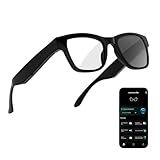
- 3-in-1 AI Glasses: Enjoy ① AI Voice Assistant (Powered by ChatGPT, Gemini & Deepseek), ② Stylish Photochromic Lenses Glasses, and ③ Bluetooth Open-Back Headphones, all in one.
- Free Talk Translation: Automatically detects and translates over 160 languages in real-time, allowing seamless work and translation without touching your phone or glasses.
- Voice, Video & Photo Translation: Supports over 98% of global languages, offering fast and accurate translations—ideal for international travel, business meetings, or cross-cultural communication.
- AI Meeting Assistant: Converts recordings from smart glasses into text and generates mind maps, making it easier to capture and organize meeting insights.
- Long Battery Life, Bluetooth 5.4 & Eye Protection: Up to 10 hours of music and 8 hours of talk time, with easy Type-C charging. Bluetooth 5.4 ensures stronger, stable connections, while photochromic lenses block UV rays and blue light, protecting your eyes in any environment.
The AI layer handles natural language rather than rigid phrasing. You are not memorising commands; you are speaking intent. This mirrors how modern voice assistants on phones and watches have evolved, but the glasses remove the visual confirmation loop, making response accuracy and contextual understanding far more critical.
Audio Feedback Designed for Awareness, Not Isolation
Without a display, all output comes through audio, but Rokid avoids turning the glasses into pseudo-earbuds. The speakers are open and directional, positioned near the temples to deliver sound to the wearer while remaining aware of their surroundings.
This approach prioritises situational awareness over immersion. Navigation cues, notifications, and AI responses are audible without sealing off environmental sound, which is essential for commuting, walking, or working around others. It is closer in spirit to bone-conduction headsets than true wireless earbuds, but with a lighter, more glasses-like presence.
The trade-off is intentional. Audio is meant to be brief, informative, and dismissible, not a constant stream. The system is designed to speak when needed and then get out of the way, reinforcing the idea that these glasses supplement reality rather than replace it.
Sensor Intelligence Fills the Visual Gap
To compensate for the lack of a display, Rokid leans heavily on sensors to provide context. Motion sensors track head movement and activity state, allowing the AI to infer whether you are walking, sitting, or stationary, which influences how and when feedback is delivered.
Environmental sensors help the system understand ambient noise levels and adjust audio output accordingly. In quieter spaces, responses stay subdued; in louder settings, clarity takes priority. This adaptive behaviour is essential when audio is the only feedback channel.
There is also an implicit trust placed in spatial awareness. While these are not full AR glasses, the sensors allow Rokid to time prompts intelligently, avoiding interruptions during conversations or movement-heavy moments. This is where screenless design either succeeds or fails, and Rokid’s approach suggests an emphasis on restraint rather than feature overload.
AI Processing: Cloud-First, Device-Aware
The intelligence behind Rokid AI Glasses is split between on-device processing and cloud-based AI models. Basic wake detection, noise filtering, and simple commands happen locally to keep latency low and battery use efficient.
More complex queries, translations, and reasoning tasks are handled in the cloud, where larger language models can operate without hardware constraints. This mirrors how most smartwatch assistants work today, but the absence of a display increases the pressure on response quality and timing.
The result is an experience where answers need to be concise, accurate, and immediately useful. There is no screen to scroll, no visual clarification, and no opportunity for silent correction. If the AI speaks, it must be worth hearing.
Battery Life as a Functional Advantage
One of the least glamorous but most important benefits of going screenless is power efficiency. Displays are among the most energy-hungry components in any wearable, and removing one fundamentally changes usage patterns.
Rokid AI Glasses spend most of their time in a low-power listening state, waking fully only when engaged. This allows them to stretch battery life across a full day of intermittent use, aligning with how people already wear prescription or sun glasses.
This is comparable to how smartwatches achieve longevity by dimming or sleeping their screens, but here the saving is structural rather than incremental. For users, it means fewer charging rituals and less anxiety about whether the device will last until evening.
Comfort, Weight, and All-Day Wearability
Without a display module, Rokid can prioritise balance and comfort. The weight distribution is closer to conventional eyewear, reducing nose pressure and temple fatigue during extended wear.
Materials and frame design matter more here than spec sheets. If the glasses do not feel normal on your face, the AI becomes irrelevant. Rokid’s challenge is less about innovation and more about restraint, ensuring the hardware disappears once worn.
This mirrors the evolution of smartwatch design, where comfort, thickness, and strap integration eventually mattered more than processor speed. Screenless glasses accelerate that learning curve because there is nothing else to distract from physical wearability.
What You Gain, and What You Give Up
Working without a display is not a compromise-free choice. You give up glanceable information, visual confirmation, and the ability to browse or skim. Tasks that benefit from visuals still belong on phones, watches, or AR glasses.
What you gain is immediacy and discretion. Information arrives when you ask for it, in a form that does not pull your eyes away from the world. For quick questions, reminders, translations, or contextual help, that trade-off can feel liberating rather than limiting.
This is why Rokid AI Glasses are best understood not as failed AR glasses, but as an alternative interface philosophy. They do not aim to replace screens everywhere. They aim to reduce how often you need one, and that distinction defines how the entire system works.
Design, Wearability, and Hardware Fundamentals: Why These Look Like Normal Glasses (On Purpose)
The design philosophy behind Rokid AI Glasses Style becomes clearer once you accept what they are deliberately not trying to be. These are not face computers, not miniature TVs, and not fashion statements built around visible technology. They are intentionally understated because their success depends on being worn like ordinary glasses, not showcased like gadgets.
That choice shapes every hardware decision, from frame thickness to component placement. Just as early smartwatches struggled until they started to resemble actual watches, screenless AI glasses only work if they feel socially invisible.
A Familiar Frame, Not a Futuristic Object
At a glance, Rokid AI Glasses Style pass as contemporary eyewear rather than experimental tech. The frames avoid aggressive angles, exposed sensors, or asymmetrical arms that immediately signal “smart device.” This is critical for global adoption, where cultural tolerance for visible wearables varies widely.
The absence of a display module allows the lenses to remain optically normal. There is no prism, waveguide, or reflective layer to distort vision or complicate prescription integration. For users who already wear glasses, this matters more than any headline spec.
Frame proportions are closer to standard acetate or lightweight composite frames than AR headsets. That keeps the visual profile discreet in meetings, on public transport, or during social interactions where overt tech can feel intrusive.
Weight Distribution and the Importance of Balance
Without the mass of a display engine, Rokid can distribute weight more evenly across the frame. Most of the electronics, including batteries, microphones, and processing components, are embedded along the temples rather than concentrated at the front.
This mirrors good watch design, where case thickness and lug balance determine whether a watch disappears on the wrist or constantly reminds you it is there. With glasses, poor balance translates into nose pressure, ear fatigue, and subtle headaches over time.
By keeping the center of gravity close to the ears rather than the bridge of the nose, Rokid prioritises multi-hour wear. That makes intermittent AI use feel natural, rather than something you put on briefly and remove once the novelty fades.
Materials, Build Quality, and Daily Durability
Rokid’s material choices focus on resilience rather than luxury. Frames are designed to survive daily handling, bag storage, and one-handed removal without feeling fragile or overly precious.
This is a practical decision for a $299 product positioned as a daily interface, not an occasional accessory. Like a mid-range smartwatch or wireless earbuds, these need to tolerate sweat, skin oils, temperature changes, and repeated charging cycles.
Finishing is intentionally muted. There is no high-polish metal or decorative flourish that would clash with prescription lenses or sunglasses variants. The goal is compatibility with everyday life, not visual dominance.
Audio, Microphones, and the Invisible Interface
With no screen, audio becomes the primary output, and microphone quality becomes the true interface bottleneck. Rokid integrates directional microphones along the frame to capture voice commands without requiring exaggerated speech or head positioning.
Open-ear audio allows responses to be heard without sealing off the world, similar to bone-conduction headphones or open-fit earbuds. This keeps situational awareness intact, which is essential when wearing the glasses outdoors or in shared spaces.
The result is an interface that feels conversational rather than transactional. You are not tapping, swiping, or waiting for visual confirmation. You speak, listen, and move on, which aligns more closely with how people already use voice assistants through earbuds or smart speakers.
Controls Without Touchscreens
Physical interaction is minimal by design. Simple touch or gesture controls on the frame arms handle core functions like activation, volume adjustment, or mode switching.
This avoids the learning curve and awkwardness of mid-air gestures seen in some AR systems. The interaction model is closer to tapping an earbud or pressing a smartwatch side button, prioritising muscle memory over novelty.
By limiting control complexity, Rokid reduces accidental inputs and cognitive load. The glasses are meant to respond when needed and remain silent otherwise.
Battery Placement and Charging Practicalities
Battery capacity is constrained by form factor, but placement matters as much as size. Housing batteries along the temples spreads weight while allowing enough capacity for a full day of intermittent use.
Charging is handled through a dedicated connector rather than wireless charging. While less elegant than a watch-style charging puck, this approach is more space-efficient and thermally predictable in a slim frame.
This reinforces the idea that Rokid AI Glasses are closer to eyewear with intelligence added than electronics disguised as glasses. Power management supports the lifestyle rather than demanding new habits.
Why Normal Matters More Than Impressive
The most important hardware achievement here is restraint. Rokid resists the temptation to add features that would compromise wearability, even if those features might photograph better in marketing materials.
Rank #3

- 【AI Real-Time Translation & ChatGPT Assistant】AI glasses break language barriers instantly with AI real-time translation. The built-in ChatGPT voice assistant helps you communicate, learn, and handle travel or business conversations smoothly—ideal for conferences, overseas trips, and daily use.
- 【4K Video Recording & Photo Capture 】Smart glasses with camera let you capture your world from a first-person view with the built-in 4K camera. Take photos and record videos hands-free anytime—perfect for travel moments, vlogging, outdoor adventures, and work documentation.
- 【Bluetooth Music & Hands-Free Calls 】Camera glasses provide Bluetooth music and crystal-clear hands-free calls with an open-ear design. Stay aware of your surroundings while listening—comfortable for long wear and safer for commuting, cycling, and outdoor use.
- 【IP65 Waterproof & Long Battery Life】 Recording glasses are designed for daily wear with IP65 waterproof protection against sweat, rain, and dust. The built-in 290mAh battery provides reliable performance for workdays and travel—no anxiety when you’re on the go.
- 【Smart App Control & Object Recognition】Smart glasses connect to the companion app for easy setup, file management, and feature control. They support AI object recognition to help identify items and improve your daily efficiency—perfect for travel exploration and a smart lifestyle.
This is the same inflection point smartwatches reached when thinner cases, better straps, and longer battery life became more important than raw specs. Screenless AI glasses reach that conclusion earlier because comfort is not optional.
If these did not look and feel like normal glasses, the AI would never become part of daily routine. By prioritising familiarity, Rokid increases the likelihood that users will actually wear them long enough for the intelligence to matter.
The AI Experience Explained: Use Cases That Make Sense Beyond the Hype
Once the hardware fades into the background, the question shifts from what these glasses are to why you would keep them on. Rokid’s bet is that screenless AI only works when it solves small, frequent problems without demanding attention in return.
This is not about replacing a phone or competing with AR displays. It is about inserting intelligence into moments where pulling out a screen would feel excessive or socially awkward.
Contextual Voice Assistance That Feels Closer to Earbuds Than AR
At its core, the Rokid AI Glasses behave more like an always-available voice assistant than a visual computing platform. You ask questions, request actions, or trigger summaries, and the response comes through audio without breaking eye contact with the world.
This makes the experience feel familiar to anyone who has used smart earbuds or a smartwatch voice assistant. The difference is placement: intelligence lives at eye level, not in your pocket or on your wrist.
Because there is no display to reference, Rokid prioritises concise, spoken answers over verbose explanations. That constraint actually improves usability, especially when you are walking, commuting, or mid-task.
Real-Time Information Without the Phone Reflex
One of the most compelling use cases is instant, glance-free information retrieval. Asking for directions, checking a schedule, or confirming a fact happens without the habitual phone unlock-scroll-lock cycle.
This mirrors the early promise of smartwatches, which succeeded by reducing phone dependency rather than eliminating it. Rokid applies the same philosophy but removes the visual component entirely.
For users already comfortable with voice queries on a watch, the transition feels natural. The glasses simply shift that interaction to a more discreet and hands-free form factor.
Translation and Language Assistance That Matches Real Life
Live translation is often marketed as a headline feature, but its real value shows up in short, practical exchanges. Asking for directions, ordering food, or understanding a brief response works better than attempting full conversational fluency.
Audio-first translation avoids the cognitive overload of reading text overlays or subtitles. You stay engaged with the person in front of you rather than focusing on a screen floating in space.
This is where screenless design becomes an advantage, not a limitation. By removing visual ambition, Rokid keeps translation grounded in everyday scenarios rather than staged demos.
Memory, Reminders, and Light Cognitive Offloading
Rokid positions its AI as a lightweight memory companion rather than a life-logging system. You can ask it to remember details, set contextual reminders, or recall information later without pulling out another device.
This overlaps conceptually with smartwatch reminders but feels less transactional. Speaking a thought aloud and moving on is faster than tapping through menus or dictating into a phone.
The glasses succeed when they help reduce mental clutter, not when they try to act as a second brain. Short-term assistance beats long-term data hoarding in a wearable that lives on your face.
Navigation and Situational Awareness Without Visual Overlays
Navigation through audio cues avoids one of AR’s long-standing problems: visual distraction. Instead of arrows floating in your field of view, you receive spoken prompts that keep your attention on the environment.
This is particularly effective for walking and public transport, where glancing at a phone can feel unsafe or discourteous. The experience is closer to having someone quietly guide you than following a map.
Compared to smartwatch navigation, audio-first guidance scales better over longer periods. You do not need to glance down repeatedly, which makes it more suitable for travel and unfamiliar cities.
How This Compares to Smartwatches, Earbuds, and AR Glasses
Smartwatches excel at quick visual checks and health tracking, but they still demand wrist attention. Earbuds offer discreet audio interaction but lack environmental context and always-on presence.
AR glasses promise immersive information but struggle with comfort, battery life, and social acceptance. Rokid deliberately avoids that trade-off by removing the display entirely.
The result is not a replacement for any of these categories but a bridge between them. Rokid AI Glasses occupy a narrow but meaningful space where intelligence is ambient, optional, and largely invisible.
Why These Use Cases Justify a $299 Global Play
At $299, expectations need to be grounded in daily usefulness rather than futuristic spectacle. Rokid’s value proposition hinges on frequency of use, not feature count.
If the glasses become something you wear for hours and interact with dozens of times in small ways, the pricing makes sense. If you expect visual wow moments or app ecosystems, they will feel underwhelming.
This is the same decision calculus early smartwatch buyers faced. The category only made sense once people accepted that quiet utility, not flash, was the real upgrade.
Battery Life, Connectivity, and Day-to-Day Practicality in the Real World
All of the ambient intelligence described earlier only works if the glasses can realistically stay on your face for most of the day. This is where screenless design quietly reshapes expectations around battery life, connectivity, and how often you actually think about charging another device.
Rokid’s approach is pragmatic rather than headline-driven, prioritizing endurance during intermittent use instead of chasing unrealistic all-day continuous interaction claims.
Battery Life Built for Intermittent, Not Constant, Use
Without a display to power, battery drain is dominated by microphones, open-ear speakers, onboard processing, and wireless communication. In practice, this shifts the usage model closer to smart earbuds than AR glasses with visual engines running continuously.
For real-world use, that means several hours of active interaction spread across a full day rather than a single marathon session. Asking for directions, translating a sentence, triggering AI queries, or listening to short responses barely dents the battery compared to always-on visual overlays.
This usage pattern mirrors how people actually engage with voice assistants. You do not talk to them constantly, but you want them available whenever you do.
Charging Behavior and Daily Routines
Rokid AI Glasses Style charge via standard USB-C, which immediately lowers friction compared to proprietary charging solutions. That matters when this is a secondary wearable rather than a primary device like a phone or watch.
Most owners will likely treat charging as an overnight or desk-based habit, similar to wireless earbuds. Because the glasses are not meant to replace headphones or a smartwatch, occasional top-ups fit naturally into existing routines.
The absence of a bulky battery module also helps maintain balance and comfort, reinforcing the idea that endurance is achieved through efficiency rather than capacity.
Phone Dependency and Connectivity Reality
These glasses are not standalone computers. They rely heavily on a paired smartphone for connectivity, cloud AI access, and contextual data.
Bluetooth handles the low-latency audio interaction, while the phone manages internet access, AI processing requests, and language models. In daily use, this dependency feels similar to a smartwatch without LTE, where the experience degrades gracefully rather than collapsing outright.
If your phone battery is dead or your connection is poor, the glasses lose much of their intelligence. That trade-off is intentional and keeps weight, heat, and cost under control.
Audio Quality, Awareness, and Public Use
Open-ear audio is central to day-to-day practicality. Rokid’s speakers are tuned for clarity rather than immersion, allowing spoken responses without isolating you from traffic, conversations, or announcements.
This design choice reinforces situational awareness, particularly during navigation and travel. You can hear instructions without broadcasting them loudly or sealing yourself off from your surroundings.
Compared to earbuds, this makes the glasses easier to wear for long stretches, especially in environments where constant isolation would feel inappropriate.
Comfort Over Long Sessions
Battery and connectivity choices directly affect physical comfort. By keeping components lightweight and heat output low, Rokid avoids the fatigue that plagues many early AR glasses.
Rank #4
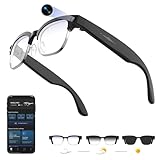
- 【8MPW Camera & 1080P Video and Audio】:These camera glasses feature an 800W camera that outputs sharp 20MP photos and smooth 1080P 30fps videos. Ultra-Clear Video + Powerful Anti-Shake tech+ Built-in dual microphones, you can capture crystal-clear video and audio together -sharply restoring details, perfect for vlogging, travel, and everyday moments
- 【Real-time AI translation Smart Glasses with Camera】:Instantly translate multiple major languages, breaking down language barriers in an instant—no phone required. Ideal for office settings, travel, academic exchanges, international conferences, watching foreign videos, and more
- 【Voice Assistant Recognition and Announcement】:Powered by industry-leading AI large models such as Doubao AI and OpenAI's GPT-4.0. AI voice wake-up lets you ask questions, recognize objects, and get answers on the go. Automatically recognizes objects, menus, landmarks, plants, and more, quickly analyzing the results and announcing them in real time. It instantly becomes your mobile encyclopedia on the go
- 【Bluetooth 5.3 Connection and Automatic Sync to Phone】:Equipped with a low-power BT5.3 chip and Wi-Fi dual transmission technology, offering ultra-low power and high-speed transmission. Captured images and videos are transferred to your phone in real time, eliminating manual export and eliminating storage worries
- 【290mAh Ultra-Long Battery Life】:Ultra-light at 42g, it's made of a durable, skin-friendly material, as light as a feather. Lenses are removable. Its simple, versatile design makes it a comfortable and comfortable wearer. 290mAh ultra-long battery life, 12 hours of music playback and 2 hours of photo or video recording, making it a perfect travel companion
For users accustomed to wearing prescription or sunglasses all day, the experience is closer to normal eyewear than a tech gadget. That matters because practicality is less about specs and more about whether you forget you are wearing them.
This is where screenless design again proves its value, not as a compromise, but as an enabler of wearability.
Durability, Environmental Use, and Everyday Wear
Rokid AI Glasses Style are designed for everyday environments rather than extreme conditions. They can handle commuting, walking, light travel, and extended indoor use without demanding special care.
They are not ruggedized fitness wearables or waterproof sports gear, and they are not trying to be. The target use case is daily life, not edge cases.
This aligns with the product’s broader positioning as an ambient assistant rather than an activity tracker or adventure device.
How This Practicality Compares to Smartwatches and Earbuds
Smartwatches offer superior battery predictability because they are always on your wrist, but they also require constant visual engagement. Earbuds provide strong audio interaction but introduce comfort fatigue and social friction when worn all day.
Rokid sits between these categories. Battery life is less predictable than a watch but more forgiving than earbuds, especially when used intermittently.
The key difference is behavioral. You wear the glasses because they are already there, not because you consciously decide to put tech on.
What This Means for Global, Everyday Adoption
For a $299 global product, day-to-day practicality matters more than spec-sheet dominance. Battery life that supports natural interaction patterns and connectivity that leans on devices people already own lowers the barrier to entry.
Rokid is betting that users will accept phone dependence and modest endurance in exchange for comfort, discretion, and utility. That bet only works if the glasses fade into daily routines rather than demanding constant attention.
In that sense, battery life and connectivity are not limitations here. They are the quiet enablers of a wearable that aims to be present without being intrusive.
Smart Glasses vs Smartwatches vs Earbuds vs AR Glasses: Where Rokid Fits in the Wearables Ecosystem
All of the trade-offs discussed so far naturally lead to a bigger question. If Rokid AI Glasses Style are not trying to replace your phone, watch, or headphones, where exactly do they belong in the modern wearables landscape?
The answer sits at the intersection of convenience, discretion, and ambient computing, a space that existing categories only partially address.
Smartwatches: Visual Control and Structured Interaction
Smartwatches remain the most mature category in personal wearables because they combine predictable battery life, tactile input, and always-available glanceable information. A watch is anchored to the wrist, with a screen that demands visual attention but rewards it with clarity and control.
However, watches are inherently interruptive. Every interaction requires a glance, a tap, or a wrist raise, which works well for notifications, fitness tracking, and timekeeping, but less well for continuous assistance.
Rokid diverges by removing the visual layer entirely. Instead of pulling your attention downward, it keeps interaction at head level and largely voice-driven, which changes not just how often you interact, but how consciously you do so.
Earbuds: Audio-First AI With Social and Comfort Costs
Wireless earbuds have quietly become powerful AI endpoints, especially with voice assistants, real-time translation, and call handling. From a technical standpoint, they are closer to Rokid than smartwatches are.
The limitation is wearability over time. Ear fatigue, pressure, and social signaling all make all-day earbud use impractical for many people, even with excellent noise transparency modes.
Rokid avoids the in-ear problem entirely. By placing audio near the ears without blocking them, it aims for longer-term comfort and reduced social friction, especially in shared spaces or conversations.
AR Glasses: Visual Ambition, Practical Friction
True AR glasses promise the most transformative experiences, with spatial computing, overlays, and persistent digital information in your field of view. They also come with high costs, bulkier hardware, limited battery life, and steeper learning curves.
For most consumers, AR glasses remain aspirational rather than habitual. They are impressive in demos but difficult to integrate into everyday routines without friction.
Rokid’s screenless approach is a deliberate step away from AR complexity. By removing displays, optics, and visual calibration, it lowers cost, weight, and cognitive load, making daily use more realistic at a global $299 price point.
Why Screenless Smart Glasses Are a Distinct Category
Rokid is not a smartwatch alternative because it does not track health metrics or offer persistent visual feedback. It is not an earbud replacement because it is worn continuously without isolating the user. It is not an AR headset because it does not attempt to augment reality visually.
Instead, it functions as an ambient AI layer. The glasses are present, listening when needed, silent when not, and ready without requiring a gesture, screen, or device handoff.
This places Rokid in a new but increasingly relevant category: wearable AI interfaces that prioritize presence over performance and availability over immersion.
How This Changes Daily Interaction Patterns
The key difference is behavioral rather than technical. With a watch, you check information. With earbuds, you initiate interaction. With AR glasses, you engage intentionally.
With Rokid, interaction becomes opportunistic. You speak when a question arises, you listen when information is useful, and you move on without a visible transaction.
That subtle shift is what makes screenless smart glasses feel less like a gadget and more like an extension of daily behavior.
Global Relevance at the $299 Level
At $299, Rokid sits well below most AR hardware and within reach of mainstream smartwatch buyers. Crucially, it does not require users to abandon existing devices or ecosystems.
Phone dependence, which would be a weakness for standalone AR, becomes a strength here. The glasses leverage smartphones for connectivity, processing, and updates while minimizing onboard complexity.
This makes Rokid easier to scale globally, especially in markets where consumers already rely heavily on smartphones but may not want another screen competing for attention.
Who Rokid Is Really For
Rokid AI Glasses Style make the most sense for users who already own a smartwatch and earbuds but feel friction switching between them. They are for people who want assistance without constant checking and answers without visible interaction.
They are not productivity workstations or fitness power tools. They are a quiet layer that fills the gaps between existing wearables.
In that sense, Rokid is not competing head-on with watches, earbuds, or AR glasses. It is occupying the spaces between them, where convenience, comfort, and subtlety matter more than raw capability.
Who Should Actually Buy Rokid AI Glasses Style—and Who Probably Shouldn’t
Once you understand Rokid’s role as a quiet, opportunistic layer rather than a destination device, the buying decision becomes less about specs and more about personal habits. These glasses reward certain behaviors and frustrate others, often in ways that aren’t obvious from a feature list.
This is not a question of whether Rokid is good or bad hardware. It is about fit, both literal and behavioral.
Smartwatch Power Users Who Feel Notification Fatigue
If you already wear a smartwatch daily but find yourself checking it more than you want, Rokid makes immediate sense. Instead of glancing at a wrist screen for reminders, translations, or quick answers, you can ask once and move on without breaking eye contact or posture.
Rokid works best alongside a watch rather than instead of it. Let the watch handle time, health metrics, and alerts, while the glasses absorb the cognitive overhead of small questions that don’t deserve a screen tap.
For people who value presence and minimal visible interaction, this division of labor feels natural within days.
Earbud Users Who Want Less Isolation
Rokid’s open-ear audio approach is ideal for users who rely on voice assistants but dislike being sonically sealed off from the world. Unlike noise-isolating earbuds, these glasses allow ambient awareness while still delivering clear spoken responses.
💰 Best Value

- #1 SELLING AI GLASSES - Move effortlessly through life with Ray-Ban Meta glasses. Capture photos and videos, listen to music, make hands-free calls or ask Meta AI* questions on-the-go. Ray-Ban Meta glasses deliver a slim, comfortable fit for both men and women.
- CAPTURE WHAT YOU SEE AND HEAR HANDS-FREE - Capture exactly what you see and hear with an ultra-wide 12 MP camera and a five-mic system. Livestream it on Facebook and Instagram.
- LISTEN WITH OPEN-EAR AUDIO — Listen to music and more with discreet open-ear speakers that deliver rich, quality audio without blocking conversations or the ambient noises around you.
- GET REAL-TIME ANSWERS FROM META AI — The Meta AI* built into Ray-Ban Meta’s wearable technology helps you flow through your day. When activated, it can analyze your surroundings and provide context-rich suggestions - all from your smart AI glasses.
- CALL AND MESSAGE HANDS-FREE — Take calls, text friends or join work meetings via bluetooth straight from your glasses.
This matters in cities, offices, and shared spaces where wearing earbuds feels socially or situationally awkward. You can interact with AI without signaling that you’re “plugged in.”
If you already treat earbuds as tools rather than entertainment devices, Rokid may replace a surprising percentage of your assistant usage.
Travelers, Commuters, and Multilingual Users
Screenless smart glasses shine when hands and attention are already occupied. Rokid’s translation, navigation prompts, and contextual queries are far more useful when walking through unfamiliar environments than when sitting at a desk.
Because the glasses rely on a paired smartphone for connectivity and processing, they scale well internationally without the friction of region-locked hardware. For global travelers, that phone dependence becomes a practical advantage rather than a compromise.
This is one of the clearest use cases where Rokid feels purpose-built rather than experimental.
Design-Conscious Wearers Who Care About Comfort
Unlike bulky AR headsets or camera-heavy smart glasses, Rokid AI Glasses Style are meant to be worn all day. Weight distribution, materials, and understated styling matter here more than resolution or field of view.
If you already wear prescription glasses or sunglasses comfortably for long stretches, Rokid will feel familiar rather than intrusive. Comfort is not a secondary consideration; it is the enabling feature.
Anyone who has abandoned previous smart glasses due to fatigue or social discomfort should pay attention to this iteration.
Early Adopters Curious About AI Interfaces, Not AR Visuals
Rokid is a compelling entry point for people who want to understand where AI interfaces are going without committing to full AR. There is no display to calibrate, no visual overlays to manage, and no learning curve around gestures.
What you are buying is interaction design, not immersion. For many early adopters, that makes Rokid feel more like a prototype of the future than a novelty.
At $299, it is also priced like an experiment rather than a sunk-cost platform bet.
Who Will Likely Be Disappointed
If you expect visual information, heads-up notifications, or any form of augmented display, Rokid will not meet those expectations. There is no screen, no projection, and no visual UI of any kind.
Fitness-focused users will also find little value here. There is no onboard health tracking, no sensors competing with a smartwatch, and no attempt to replace wrist-based metrics.
Finally, users who want a standalone device without phone dependence should look elsewhere. Rokid assumes a smartphone-centric world and is designed to disappear into that ecosystem, not replace it.
Why This Distinction Matters
Rokid AI Glasses Style are not a general-purpose wearable. They are a highly specific response to a growing problem: too many screens demanding attention at the wrong moments.
For the right user, they reduce friction and mental load in subtle but meaningful ways. For the wrong one, they will feel limited, redundant, or confusingly quiet.
Understanding which camp you fall into is the real purchasing decision, far more than the $299 price tag.
Is This a New Wearable Category or a Transitional Device? Market Implications and What Comes Next
The most important question Rokid AI Glasses Style raises is not whether they are good, but what they actually are in the broader wearable landscape. They do not behave like smartwatches, do not replace earbuds, and deliberately avoid the visual ambitions of AR glasses.
That ambiguity is not a weakness. It is the point.
Screenless AI Glasses as a Distinct Interaction Layer
Rokid sits in a space that did not meaningfully exist before: a face-worn, always-available AI interface that adds no visual noise. Unlike watches, it is not glance-based, and unlike earbuds, it is not optimized for constant media playback.
This makes it less about consumption and more about intent. You ask, you listen, and the device disappears again.
In that sense, Rokid behaves more like an ambient interface layer than a gadget competing for attention.
Why This Is Not Just a Stopgap Before AR
It is tempting to frame screenless AI glasses as a temporary compromise until AR hardware becomes smaller, cheaper, and socially acceptable. That assumption misses an important behavioral shift.
Many users do not want more visual information, even if it is perfectly rendered. They want fewer interruptions, faster access to answers, and less cognitive overhead.
Rokid’s lack of a display is not a missing feature; it is an intentional constraint that aligns with how people already use voice assistants, but places them in a more natural physical position.
How This Compares to Smartwatches and Earbuds
Smartwatches excel at passive tracking, quick notifications, and tactile feedback, but they still demand visual attention and wrist movement. Earbuds are excellent for audio, but socially ambiguous when worn continuously and poorly suited to quick, contextual interactions.
Rokid splits the difference by staying visible but unobtrusive. It is present without signaling distraction, and interactive without requiring posture changes.
Rather than replacing either category, it complements both, acting as a lightweight command layer above them.
Global Pricing and the Experimentation Effect
At $299, Rokid AI Glasses Style land in a psychologically important zone. This is not impulse-buy cheap, but it is accessible enough to encourage experimentation without long-term commitment.
That matters globally, especially in markets where AR headsets remain financially and culturally out of reach. Rokid’s pricing positions it as a learning device for users and a data-gathering platform for the category itself.
In that sense, early buyers are not just customers; they are participants in defining how this form factor should be used.
Implications for the Wearables Market
If Rokid succeeds, it validates the idea that AI does not need a screen to be valuable. That has ripple effects across wearables, from voice-first watches to camera-free smart jewelry and context-aware earbuds.
It also pressures larger players to think beyond display roadmaps and consider interaction quality as a primary differentiator. Comfort, battery life, microphone quality, and latency suddenly matter more than pixel density.
This is a subtle but meaningful shift in what innovation looks like.
What Comes Next for Screenless AI Glasses
Expect rapid iteration in software long before hardware changes. Improvements in contextual awareness, language handling, and cross-app integration will do more for usability than adding sensors or displays.
On the hardware side, incremental gains in battery efficiency, weight reduction, and acoustic tuning will define second- and third-generation models. Prescription integration and broader frame style options will also be critical for mainstream adoption.
The long-term trajectory is not toward replacing phones or watches, but toward becoming a trusted, low-friction interface that earns its place on your face.
So, New Category or Transitional Device?
Rokid AI Glasses Style feel less like a bridge to something else and more like the first clear expression of a new category: ambient AI wearables. They are not trying to be everything, and that restraint is exactly why they work.
For users who recognize the problem of too many screens and too much visual demand, this category will make immediate sense. For everyone else, it may take time and lived experience to understand why less can genuinely be more.
Either way, Rokid has started a conversation the wearables industry can no longer ignore.