Most buyers treat smartwatch shape as a style choice, but after testing dozens of models across Apple, Samsung, Google, Garmin, and Huawei, it’s clear the geometry of the case quietly dictates how the entire device behaves on your wrist. Shape influences how much information you see at a glance, how comfortable the watch feels over a long day, and even how naturally the software works. Get this choice wrong and the watch can feel like a compromise no matter how advanced the features list looks.
Round versus square isn’t about fashion trends or brand identity alone. It affects ergonomics, touch accuracy, battery efficiency, strap fit, and how well the watch integrates into your daily habits, from workouts to sleep tracking. Understanding these differences early makes the buying decision far more rational, especially if you plan to wear the watch all day, every day.
Display efficiency and usable screen space
Square and rectangular displays use space more efficiently, especially for text-heavy interfaces like notifications, messages, and app lists. Apple Watch, Pixel Watch UI elements adapted to squares, and Samsung’s squircle layouts consistently show more information without scrolling compared to round equivalents of similar case size. This matters more than raw screen inches, particularly for quick interactions on the move.
Round displays, while visually pleasing, inherently waste pixels at the edges when showing lists, maps, or workout data. Manufacturers compensate with curved UI elements and circular complications, but there’s no escaping the fact that content density is lower. For users who rely heavily on notifications, calendar previews, or third-party apps, this difference becomes noticeable within days.
🏆 #1 Best Overall
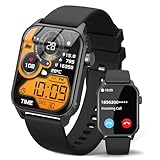
- 【1.83" HD Display & Customizable Watch Faces】Immerse yourself in a vibrant 1.83-inch IPS display, boasting a sharp resolution of 240*284 for crystal-clear visuals. Effortlessly personalize your smart watch with a wide array of customizable watch faces to suit your personal style for every occasion—whether trendy, artistic, or minimalist—ideal for casual, sporty, or professional. Its sleek, modern design complements any outfit, blending technology and fashion seamlessly for everyday wear
- 【120 Sports Modes & Advanced Health Tracking】Our TK29 smart watches for women men come equipped with 120 sports modes, allowing you to effortlessly track a variety of activities such as walking, running, cycling, and swimming. With integrated heart rate and sleep monitors, you can maintain a comprehensive overview of your health, achieve your fitness goals, and maintain a balanced, active lifestyle with ease. Your ideal wellness companion (Note: Step recording starts after exceeding 20 steps)
- 【IP67 Waterproof & Long-Lasting Battery】Designed to keep up with your active lifestyle, this smartwatch features an IP67 waterproof rating, ensuring it can withstand splashes, sweat, and even brief submersion, making it perfect for workouts, outdoor adventures, or rainy days. Its reliable 350mAh battery offering 5-7 days of active use and up to 30 days in standby mode, significantly reducing frequent charging. Ideal for all-day wear, whether you’re at the gym, outdoors, or simply on the go
- 【Stay Connected Anytime, Anywhere】Stay informed and in control with Bluetooth call and music control features. Receive real-time notifications for calls, messages, and social media apps like Facebook, WhatsApp, Twitter, and Instagram directly on your smartwatch. Easily manage calls, control your music playlist, and stay updated without needing to reach for your phone. Perfect for work, workouts, or on-the-go, this watch keeps you connected and never miss important updates wherever you are
- 【Multifunction & Wide Compatibility】Seamlessly handle heart rate monitoring, sleep tracking, and enjoy conveniences like camera/music control, Seamlessly handle heart rate monitoring, sleep tracking, and more-all directly from your wrist. This 1.83 inches HD smartwatch is compatible with iPhone (iOS 9.0+) & Android (5.0+), ensuring smooth daily connectivity and convenience throughout your day. More than just a timepiece, it’s a stylish, all-in-one wearable for smarter, healthier living
Ergonomics and long-term comfort
Case shape directly affects how a smartwatch sits against the wrist, especially during extended wear. Square watches distribute their footprint across more surface area, which can reduce pressure points despite appearing larger on paper. This is why many users find a 45mm Apple Watch more comfortable over 12 hours than a similarly weighted round sports watch.
Round watches tend to feel more natural on smaller wrists and during dynamic movement. The absence of corners reduces the chance of edge pressure during push-ups, cycling, or sleep, which is one reason Garmin and Huawei stick with round designs for endurance-focused models. Comfort isn’t just about size; it’s about how shape interacts with wrist anatomy over time.
Interaction, touch accuracy, and controls
Square screens offer predictable touch zones and easier edge-based gestures, which benefits modern smartwatch operating systems. Swiping, scrolling, and tapping small UI elements feels more precise, especially when one-handed or mid-activity. This becomes critical during workouts, navigation, or when replying to messages quickly.
Round displays rely more heavily on physical controls like rotating bezels or crowns to offset touch limitations. When well executed, as seen on Galaxy Watch or classic Garmin models, this can be extremely intuitive. When it’s not, touch targets near curved edges can feel cramped or inconsistent, particularly with gloves or sweaty hands.
Aesthetics, versatility, and how it fits your wardrobe
Round smartwatches borrow heavily from traditional watchmaking proportions, which helps them blend seamlessly with formal wear and conventional straps. Lug width, case thickness, and bezel finishing often mirror mechanical watches, making them easier to style with leather, metal bracelets, or NATO straps. For users who value a watch-first appearance, this matters more than screen shape.
Square watches lean into a modern, tech-forward identity that doesn’t try to hide what it is. This can be a positive if you want a device that looks contemporary and intentional, especially with sport bands or integrated bracelets. The trade-off is versatility, as square cases can look out of place in more traditional settings depending on strap choice and finish.
Fitness tracking and sensor performance
Sensor placement and skin contact are subtly influenced by case shape. Square designs often allow for a larger sensor window and more consistent contact, improving heart-rate and SpO2 reliability during everyday wear. This is particularly noticeable during sleep tracking, where stable contact matters more than peak accuracy.
Round sports watches often compensate with thicker cases and more pronounced sensor domes. This improves performance during high-intensity workouts but can feel intrusive during rest or sleep. If your primary use is endurance training, the trade-off favors round designs, while general health tracking often benefits from square geometry.
Battery capacity and internal layout
Internal space efficiency favors square and rectangular designs, allowing manufacturers to fit larger batteries relative to footprint. This is one reason square watches often deliver stronger real-world battery life despite brighter displays and faster processors. It’s not universal, but the physics are hard to ignore.
Round cases leave unused internal corners, forcing tighter component stacking or smaller batteries. Brands counter this with power-efficient software or thicker cases, which can affect comfort and aesthetics. Battery life isn’t just about software optimization; shape plays a foundational role.
Ecosystem alignment and software philosophy
Some ecosystems are fundamentally designed around a specific shape. Apple’s watchOS is built for a rectangular canvas, and its consistency across apps reflects that from the first swipe. Trying to imagine it on a round display highlights how deeply shape is baked into the experience.
Wear OS and proprietary fitness platforms are more adaptable, but still feel optimized depending on brand intent. Samsung balances round hardware with hybrid UI logic, while Garmin prioritizes data density over visual polish. Choosing a shape often means choosing the philosophy behind the software, not just the hardware shell.
Display Geometry Explained: Content Density, Readability, and Touch Accuracy
Once software philosophy and internal layout are set, the display becomes the primary way you experience that intent on your wrist. Screen shape dictates how much information fits comfortably, how quickly your eyes can parse it, and how reliably your finger lands where it should. These differences become obvious not in spec sheets, but in daily interactions like reading notifications mid-walk or starting a workout with sweaty hands.
Effective screen area and content density
Square and rectangular displays make fuller use of their physical footprint. A 1.9-inch rectangular screen, like those found on larger Apple Watch or Fitbit models, typically offers more usable pixels than a similarly sized round display because there are no curved edges truncating text or data fields. This directly benefits message previews, calendar entries, maps, and fitness dashboards where straight lines and lists dominate.
Round displays lose effective area to their geometry, even when the diagonal measurement looks competitive on paper. Text often has to be scaled down or wrapped more aggressively, and UI elements are pushed inward to avoid clipping near the edges. Brands like Garmin mitigate this with high-resolution panels and dense layouts, but you still see fewer characters per line compared to a square watch of similar dimensions.
Readability at a glance
At arm’s length, shape influences how quickly information registers. Square screens naturally align with how we read, top to bottom and left to right, making notifications and metrics easier to scan in motion. This is especially noticeable during workouts, where a quick glance at pace, heart rate, or interval time needs to be instantly legible.
Round watches shine when displaying radial or single-focus information. Analog-style watch faces, progress rings, and compass-style navigation feel intuitive and visually balanced on a circular canvas. For users who prioritize time-first readability or prefer minimalist data presentation, round displays can feel calmer and less visually busy.
Touch accuracy and edge interaction
Touch input is where geometry has the most practical impact. Square displays offer predictable touch zones all the way to the corners, which improves accuracy for small buttons, scrolling lists, and text input. This consistency matters when replying to messages, navigating dense menus, or using third-party apps designed with phone-like UI logic.
Round displays introduce natural dead zones near the edges, where touch targets must be inset to avoid accidental misses. Manufacturers compensate with larger buttons or rotating bezels and crowns, as seen on Samsung Galaxy Watch or classic Garmin models. These physical controls are excellent for sweaty workouts or gloved use, but they also highlight that pure touch interaction is less forgiving on a circular screen.
Scrolling, gestures, and real-world ergonomics
Vertical scrolling feels more natural on square screens because content can move in straight lines without tapering. Lists retain consistent width as you scroll, which reduces eye strain and makes long interactions, like reviewing health trends or adjusting settings, feel more phone-like. This also pairs well with slimmer cases, keeping the watch comfortable during extended wear.
On round displays, scrolling content narrows toward the top and bottom, subtly changing text alignment as you move. It’s not a dealbreaker, but over long sessions it can feel less stable visually. Many round watches lean into gesture-based navigation or page-based layouts to minimize this effect, reinforcing their role as glanceable tools rather than mini smartphones.
Outdoor visibility and display tech pairing
Display geometry also interacts with panel technology. Square watches frequently use bright OLED displays with aggressive edge illumination, making full use of their shape for vibrant visuals and sharp contrast. This benefits indoor readability and rich UI animations but can impact battery life if brightness is pushed outdoors.
Round sports watches often pair their shape with transflective or memory-in-pixel displays, prioritizing sunlight visibility over color depth. The circular format complements this approach by framing data cleanly in the center, even if overall resolution feels lower. For hikers, runners, and cyclists who value legibility in harsh light, this combination can outweigh the benefits of a larger rectangular canvas.
What this means for everyday use
If your smartwatch is an extension of your phone, handling messages, apps, and dense data throughout the day, square geometry consistently delivers a more efficient and forgiving experience. The gains in content density and touch accuracy are small individually, but add up over hundreds of interactions per week.
If your watch is primarily a timepiece with smart support layered on top, round displays preserve the visual language of traditional watches while still delivering essential data. The trade-offs in content efficiency are real, but for many users they’re acceptable in exchange for aesthetics, physical controls, and a more classic wrist presence.
Everyday Usability: Navigation, Notifications, and App Design in Real Life
The differences between round and square displays become most obvious once the novelty fades and the watch settles into daily routines. This is where dozens of small interactions—checking a notification mid-meeting, dismissing an alert while walking, scrolling through a workout summary—reveal which shape works with you rather than demanding adaptation.
Navigation: Touch, scroll, and physical controls
Square watches tend to feel immediately intuitive because their interfaces borrow heavily from smartphone logic. Vertical scrolling behaves predictably from edge to edge, menus align cleanly, and gestures like swipe-back or pull-down for quick settings are forgiving, even on smaller wrists.
Round watches rely more on rotational logic, whether through bezels like Samsung’s Galaxy Watch Classic, crowns on Garmin and Huawei models, or touch-based radial menus. This can be extremely satisfying once learned, especially with physical controls that allow navigation without obscuring the screen, but it’s less discoverable for first-time users.
In real-world testing, one-handed use often favors square designs with strong gesture systems and larger touch targets. Round watches shine when paired with tactile inputs, where a knurled bezel or crown provides precise control during workouts, in rain, or while wearing gloves.
Notifications: Reading, acting, and dismissing quickly
Notification handling is where geometry has an outsized impact on comfort. Square displays show more text per line and more lines per screen, reducing the need to scroll through emails, messages, or calendar alerts.
On round screens, notifications are typically reformatted into narrower columns, with aggressive line breaks near the top and bottom. Short messages are fine, but longer threads require more scrolling and visual adjustment, which can slow down quick triage.
Action buttons—reply, archive, mute—are also easier to tap reliably on square watches. On round models, these controls are often pushed toward the center or split across pages to avoid curved edges, adding an extra step but keeping the interface visually balanced.
Quick replies, typing, and voice input
If you frequently respond from your wrist, square watches have a clear advantage. On-screen keyboards, whether full QWERTY or swipe-based, are more usable on rectangular displays, and dictation prompts are easier to access without navigating away from the message.
Rank #2
![Apple Watch Series 11 [GPS 46mm] Smartwatch with Jet Black Aluminum Case with Black Sport Band - M/L. Sleep Score, Fitness Tracker, Health Monitoring, Always-On Display, Water Resistant](https://m.media-amazon.com/images/I/312K597M2uL._SL160_.jpg)
- HYPERTENSION NOTIFICATIONS — Apple Watch Series 11 can spot signs of chronic high blood pressure and notify you of possible hypertension.*
- KNOW YOUR SLEEP SCORE — Sleep score provides an easy way to help track and understand the quality of your sleep, so you can make it more restorative.
- EVEN MORE HEALTH INSIGHTS — Take an ECG anytime.* Get notifications for a high and low heart rate, an irregular rhythm,* and possible sleep apnea.* View overnight health metrics with the Vitals app* and take readings of your blood oxygen.*
- STUNNING DESIGN — Thin and lightweight, Series 11 is comfortable to wear around the clock — while exercising and even when you’re sleeping, so it can help track your key metrics.
- A POWERFUL FITNESS PARTNER — With advanced metrics for all your workouts, plus features like Pacer, Heart Rate Zones, training load, Workout Buddy powered by Apple Intelligence from your nearby iPhone,* and more. Series 11 also comes with three months of Apple Fitness+ free.*
Round watches typically lean on canned replies, voice dictation, or companion phone actions. This works well for users who treat the watch as a filter rather than a communication hub, but it’s less flexible if you want to handle conversations independently.
Voice assistants behave similarly on both shapes, but square watches often surface assistant cards and follow-up prompts more cleanly. The extra horizontal space helps prevent the interface from feeling cramped during multi-step interactions.
App design and third-party support
App ecosystems are still largely optimized for square displays, particularly on platforms like watchOS. Developers can lay out lists, charts, and controls without fighting curved edges, resulting in apps that feel more complete and less compromised.
On round watches, the best apps are those designed specifically with circular constraints in mind. Fitness dashboards, timers, navigation cues, and music controls work exceptionally well, while productivity and data-heavy apps often feel simplified or truncated.
This distinction matters over time. A square watch encourages broader app use because fewer interactions feel awkward, whereas round watches excel when apps stay focused, purposeful, and glanceable.
Comfort during frequent interactions
Shape also influences how the watch feels during repeated use. Square cases tend to be thinner and distribute screen real estate closer to the wrist edges, making taps feel lighter and more controlled. However, sharp corners can occasionally press into the wrist during flexion, depending on case size and strap choice.
Round watches often feel more natural as physical objects, with smoother edges and cases that rotate slightly with wrist movement. This can reduce pressure points during long days, especially on larger sports-oriented models with thicker cases and softer straps.
Materials and finishing amplify these differences. Polished steel square watches feel more like jewelry and tech combined, while brushed titanium or fiber-reinforced polymer round watches emphasize durability and low-key wearability.
Living with the interface, day after day
Over weeks of use, square watches reward users who want consistency, speed, and minimal friction across many small interactions. They fade into the background by behaving exactly as expected, which is often the highest compliment for everyday tech.
Round watches ask for a bit more intentionality, but return it with character and clarity of purpose. When navigation aligns with physical controls and apps respect the circular format, the experience feels focused rather than compromised, especially for fitness, outdoor, and time-first use cases.
The key is not which shape is objectively better, but which one aligns with how often you interact, how long you stay on-screen, and whether your watch is a mini computer or a modern interpretation of a traditional timepiece.
Comfort and Wearability: Case Shape, Wrist Fit, Thickness, and All-Day Use
Once interface habits are established, comfort becomes the deciding factor that determines whether a smartwatch feels like a trusted companion or something you tolerate. Case shape, thickness, and how the watch interacts with your wrist over a full day matter more than spec sheets suggest.
Case shape and wrist anatomy
Square watches tend to occupy more of the wrist’s visual and physical footprint, even when their measurements appear modest on paper. The straight edges and corners push closer to the wrist’s outer edges, which can feel stable during taps but slightly intrusive during wrist flexion, especially on smaller wrists.
Round watches sit more organically on the arm because the case follows the natural curvature of the wrist. This usually results in fewer pressure points and a sensation closer to wearing a traditional analog watch, particularly noticeable during long periods of inactivity or desk work.
Lug design, footprint, and real wrist fit
Comfort is influenced as much by lug-to-lug length as by case diameter or width. Square watches often integrate the strap directly into the case, creating a compact, uniform footprint that works well for users with flatter wrists but can feel rigid on more tapered arms.
Round watches typically rely on traditional lugs, which allow the strap to drape downward more naturally. This flexibility helps larger round cases feel less imposing and improves comfort during movement, especially for sports and outdoor-focused models from Garmin, Huawei, and Samsung.
Thickness, weight, and balance
Square smartwatches, particularly those optimized for daily productivity, are often thinner and more evenly balanced across the wrist. This low-profile feel reduces the tendency for the watch to catch on sleeves and makes extended typing or laptop use more comfortable.
Round watches are more likely to be thicker due to stacked sensors, larger batteries, or mechanical-style design priorities. When well-balanced and paired with lightweight materials like titanium or reinforced polymer, that thickness fades away, but poorly distributed weight can cause the watch to shift during activity.
Strap integration and pressure distribution
Straps play an outsized role in all-day comfort, and case shape influences how well they perform. Square watches often feel best with softer fluoroelastomer or fabric straps that counteract rigid case geometry and reduce edge pressure.
Round watches are more forgiving across strap types, from silicone and nylon to leather and metal bracelets. The circular case allows tension to distribute more evenly, which becomes noticeable during workouts, long walks, or extended wear in warmer conditions.
All-day and overnight wear
For users who track sleep, recovery, or continuous health metrics, comfort over 20-plus hours is critical. Square watches excel here when they are thin and paired with breathable straps, but bulkier models can press into the wrist when sleeping on your side.
Round watches often feel less noticeable overnight due to smoother edges and better rotation with wrist movement. That said, thicker sport-focused models may still feel cumbersome unless weight and strap flexibility are carefully managed.
Who each shape suits best from a comfort standpoint
Square watches tend to suit users who prioritize frequent interaction, lighter cases, and a secure, planted feel throughout the day. They work best on wrists that can accommodate their broader footprint without edge contact becoming distracting.
Round watches favor users who value passive comfort, longer wear cycles, and a watch that moves naturally with the body. For fitness-heavy routines, outdoor use, or those sensitive to pressure points, the round case often proves easier to live with hour after hour.
Aesthetics and Watch Heritage: Modern Tech Tool vs Traditional Timepiece
After living with a watch on the wrist all day and night, how it looks begins to matter as much as how it feels. Comfort determines whether you tolerate a design, but aesthetics determine whether you enjoy wearing it, especially outside of workouts or sleep tracking.
Square smartwatches: purpose-built and unapologetically digital
Square smartwatches lean into their identity as modern tools rather than descendants of traditional horology. Designs like the Apple Watch or Pixel Watch Active variants prioritize screen clarity, dense information layouts, and visual efficiency over classic proportions.
The flat edges, sharp corners, and minimal bezels communicate functionality first. On the wrist, they read more like compact computers than jewelry, which appeals strongly to users who want their watch to look contemporary, intentional, and visibly smart.
Round smartwatches: visual continuity with watchmaking history
Round watches immediately tap into centuries of watch design language, even when the internals are fully digital. From Garmin’s tool-watch aesthetic to Samsung’s more refined finishes and Huawei’s polished cases, the circular form feels familiar before the screen even lights up.
That familiarity matters in daily life. A round smartwatch is more likely to pass as a conventional timepiece at a glance, especially when paired with a leather strap, metal bracelet, or analog-style watch face.
Finishing, materials, and perceived quality
Case shape strongly influences how materials are perceived. Square watches often highlight precision machining, chamfered edges, and uniform finishes, which works well with aluminum, stainless steel, and ceramic but can also emphasize wear marks over time.
Round watches benefit from curves that soften visual aging. Brushed titanium, polished steel, and even reinforced polymers tend to hide scuffs better, and domed or subtly curved glass adds depth that elevates perceived value.
Watch faces and visual balance
Square displays excel at dense data presentation, which reinforces their tech-forward aesthetic. Complications, widgets, and notifications feel naturally arranged, making the watch look active and purposeful even when idle.
Round displays trade some information density for symmetry. Analog-style faces, radial complications, and minimalist layouts feel visually calm, and for many users that restraint makes the watch feel more like an accessory than a dashboard.
Rank #3

- Bluetooth Call and Message Alerts: Smart watch is equipped with HD speaker, after connecting to your smartphone via bluetooth, you can answer or make calls, view call history and store contacts through directly use the smartwatch. The smartwatches also provides notifications of social media messages (WhatsApp, Twitter, Facebook, Instagram usw.) So that you will never miss any important information.
- Smart watch for men women is equipped with a 320*380 extra-large hd full touch color screen, delivering exceptional picture quality and highly responsive touch sensitivity, which can bring you a unique visual and better interactive experience, lock screen and wake up easily by raising your wrist. Though “Gloryfit” app, you can download more than 102 free personalised watch faces and set it as your desktop for fitness tracker.
- 24/7 Heart Rate Monitor and Sleep Tracker Monitor: The fitness tracker watch for men has a built-in high-performance sensor that can record our heart rate changes in real time. Monitor your heart rate 26 hours a day and keep an eye on your health. Synchronize to the mobile phone app"Gloryfit", you can understand your sleep status(deep /light /wakeful sleep) by fitness tracker watch develop a better sleep habit and a healthier lifestyle.
- IP68 waterproof and 110+ Sports Modes: The fitness tracker provides up to 112+ sports modes, covering running, cycling, walking, basketball, yoga, football and so on. Activity trackers bracelets meet the waterproof requirements for most sports enthusiasts' daily activities, such as washing hands or exercising in the rain, meeting daily needs (note: Do not recommended for use in hot water or seawater.)
- Multifunction and Compatibility: This step counter watch also has many useful functions, such as weather forecast, music control, sedentary reminder, stopwatch, alarm clock, timer, track female cycle, screen light time, find phone etc. The smart watch with 2 hrs of charging, 5-7 days of normal use and about 30 days of standby time. This smart watches for women/man compatible with ios 9.0 and android 6.2 and above devices.
How each shape fits into different wardrobes
Square smartwatches integrate seamlessly into casual, athletic, and modern professional settings. They look at home with activewear, office-casual outfits, and tech-forward fashion, but can feel visually out of place with formal attire.
Round smartwatches are more adaptable across dress codes. With the right strap and watch face, the same device can move from gym to office to dinner without calling attention to its digital nature.
Emotional connection and long-term satisfaction
Aesthetic preference isn’t just about first impressions; it shapes how attached you feel to the device over years of use. Square watches tend to age like electronics, with design cycles that make older models feel dated more quickly.
Round watches age more gracefully because their form is timeless. Even as software evolves, the physical design continues to align with traditional expectations of what a watch should look like, which can enhance long-term satisfaction for heritage-minded buyers.
Fitness, Health, and Sports Tracking: Does Shape Affect Performance?
Once the conversation moves from aesthetics to daily use, fitness and health tracking become the deciding factors for many buyers. Here, the shape of a smartwatch doesn’t change the underlying sensors, but it does influence how effectively you interact with data during movement, workouts, and recovery.
Sensor accuracy and wrist contact
From a pure measurement standpoint, round and square watches perform similarly when they use the same-generation sensors. Heart rate, blood oxygen, skin temperature, ECG, and stress tracking depend far more on sensor quality, LED placement, and algorithms than on screen shape.
Where shape plays a subtle role is how consistently the watch maintains contact with your wrist. Square watches like the Apple Watch or Pixel Watch (despite its rounded case, the display logic still applies) tend to sit flatter on the wrist, which can help maintain stable contact during high-cadence activities like running or HIIT.
Round watches, especially larger sport-focused models from Garmin or Huawei, often have thicker cases and curved backs designed to centralize sensor pressure. This can improve accuracy during endurance sports, but only if the case size and lug-to-lug length match your wrist well.
Workout visibility and real-time data access
During active workouts, display efficiency matters more than aesthetics. Square displays can show more metrics at once without shrinking text, which is especially noticeable during interval training, strength sessions, or guided workouts.
This is one reason Apple Watch dominates in gym and class-based fitness environments. Timers, heart rate zones, rep counts, and prompts are easier to glance at mid-set without breaking form.
Round watches excel in sports where you focus on one or two key metrics at a time. For running, cycling, hiking, or swimming, a large central data field surrounded by secondary metrics feels intuitive and less visually noisy, particularly on watches like the Garmin Forerunner, Fenix, or Huawei Watch GT series.
Navigation, maps, and outdoor sports
Shape becomes more relevant when maps enter the picture. Square screens offer a larger usable map area within the same case size, making turns, elevation changes, and breadcrumb trails easier to interpret at a glance.
This benefits urban runners, cyclists, and anyone using turn-by-turn navigation. Grid-based map rendering simply fits more naturally on rectangular displays.
Round watches rely on clever scaling and zoom controls to compensate. High-end Garmin and Huawei models handle this well, but map reading can still feel more constrained, especially in dense trail networks where peripheral detail matters.
Comfort during long sessions and recovery tracking
Comfort isn’t just about how a watch looks; it directly impacts recovery tracking and sleep data quality. Square watches distribute weight more evenly across the wrist, which many users find more comfortable during sleep and extended wear.
Their flatter profile also reduces pressure points when typing, cycling on hoods, or resting your wrist on a desk. That consistency improves overnight heart rate variability, sleep stage tracking, and resting heart rate trends.
Round watches can feel more natural during daytime movement, particularly with flexible silicone or nylon straps that allow the case to pivot slightly. For ultra-endurance athletes or hikers wearing a watch for days at a time, this can reduce wrist fatigue.
Sport modes, software, and ecosystem influence
The strongest performance differences aren’t driven by shape alone, but by the ecosystems that favor each design. Square watches are tightly integrated into smartphone platforms, with richer third-party fitness apps, better coaching visuals, and deeper health dashboards.
Apple Watch and Wear OS devices shine in holistic health tracking, blending activity, recovery, mindfulness, and medical-grade features into a cohesive experience. The square display enhances that by making complex information easier to digest.
Round watches dominate in sport-first ecosystems. Garmin, in particular, prioritizes battery life, multi-band GPS, advanced training metrics, and physical buttons, all of which matter more in demanding environments than screen real estate.
Battery life and endurance implications
Battery life indirectly affects fitness performance by shaping how often you need to charge. Square watches typically have shorter battery life due to brighter displays, higher refresh rates, and constant background activity.
For daily workouts and regular charging, this isn’t an issue. For multi-day hikes, ultra runs, or travel-heavy schedules, round sport watches with lower-power displays and larger internal batteries hold a clear advantage.
This endurance-first design philosophy often pairs better with round cases, which can accommodate thicker batteries without feeling visually awkward.
Who benefits most from each shape?
If your fitness routine centers around gym workouts, guided classes, urban running, or integrated health tracking with your phone, square watches provide a more immediate, glanceable experience. The performance benefit comes from visibility and software polish rather than raw sensor capability.
If your priorities lean toward endurance sports, outdoor navigation, or training depth over visual density, round watches align better with those demands. Their shape supports longer battery life, physical controls, and a calmer data presentation that works well in motion.
In practice, both shapes can track fitness accurately. The real performance difference lies in how easily you can access, interpret, and trust the data when it matters most.
Battery Life and Internal Engineering: How Shape Influences Endurance
Once you move past software and fitness features, the round-versus-square debate becomes far more mechanical. Battery life isn’t just about capacity on a spec sheet; it’s the result of how efficiently a watch’s internal volume is used, how the display draws power, and how aggressively the software wakes the hardware.
This is where shape stops being cosmetic and starts dictating real-world endurance.
Internal volume: why geometry matters more than thickness
A square or rectangular case can theoretically use its internal space more efficiently, packing components tightly with fewer curved voids. Apple exploits this extremely well, stacking battery cells, processors, sensors, and haptics in a compact, layered layout that maximizes function per cubic millimeter.
The trade-off is that these designs tend to stay thin and wrist-hugging, which limits how large the battery can grow without compromising comfort. Even with clever packaging, there’s only so much vertical space before a square watch starts feeling slab-like on smaller wrists.
Round watches, by contrast, naturally accept more unused space around the edges of the display, but that space can be repurposed for thicker batteries. Brands like Garmin and Huawei lean into this, allowing cases to grow deeper rather than wider, preserving visual balance while increasing capacity.
Display shape and power consumption
Square displays excel at information density, but they are almost always high-brightness OLED panels running at higher refresh rates. That combination looks fantastic for notifications, workouts, and animated interfaces, but it draws power constantly, especially with always-on display modes enabled.
Round watches often pair their shape with more conservative display technology. Garmin’s transflective MIP screens are the clearest example, remaining readable in sunlight while sipping power, even with the display technically “always on.”
Rank #4
![Apple Watch Series 11 [GPS 42mm] Smartwatch with Rose Gold Aluminum Case with Light Blush Sport Band - S/M. Sleep Score, Fitness Tracker, Health Monitoring, Always-On Display, Water Resistant](https://m.media-amazon.com/images/I/31J+F-pXaWL._SL160_.jpg)
- HYPERTENSION NOTIFICATIONS — Apple Watch Series 11 can spot signs of chronic high blood pressure and notify you of possible hypertension.*
- KNOW YOUR SLEEP SCORE — Sleep score provides an easy way to help track and understand the quality of your sleep, so you can make it more restorative.
- EVEN MORE HEALTH INSIGHTS — Take an ECG anytime.* Get notifications for a high and low heart rate, an irregular rhythm,* and possible sleep apnea.* View overnight health metrics with the Vitals app* and take readings of your blood oxygen.*
- STUNNING DESIGN — Thin and lightweight, Series 11 is comfortable to wear around the clock — while exercising and even when you’re sleeping, so it can help track your key metrics.
- A POWERFUL FITNESS PARTNER — With advanced metrics for all your workouts, plus features like Pacer, Heart Rate Zones, training load, Workout Buddy powered by Apple Intelligence from your nearby iPhone,* and more. Series 11 also comes with three months of Apple Fitness+ free.*
OLED round displays, like those on Samsung Galaxy Watch or Pixel Watch, sit somewhere in the middle. They look vibrant but still struggle to match the endurance of sport-focused round watches because circular OLED panels waste pixels at the corners while demanding similar brightness levels.
Battery size versus charging behavior
Square watches tend to assume frequent charging as part of daily life. Apple Watch, Pixel Watch, and many Wear OS devices are designed around overnight or even opportunistic top-ups, supported by fast charging and aggressive battery management.
This works well if your routine already includes regular charging windows. It breaks down when you stack long workouts, sleep tracking, travel, and cellular use across multiple days without access to a charger.
Round endurance watches assume the opposite. Multi-day, sometimes multi-week battery targets shape everything from processor choice to background sync frequency, making them better suited to continuous wear without lifestyle adjustments.
Processor efficiency and thermal constraints
Internal engineering isn’t just about battery size; it’s also about how heat and power are managed. Square watches pack powerful processors tightly, which enables fluid interfaces but also generates more heat during GPS use, calls, or app-heavy sessions.
That thermal load forces the system to throttle or consume more power to maintain performance. Over time, this directly affects endurance during long workouts or navigation sessions.
Round sport watches typically use less power-hungry chipsets with slower clock speeds, but they run cooler and more predictably. The result is consistent battery drain rather than dramatic drops under load, which matters more than peak responsiveness when you’re hours into an activity.
Buttons, touch, and energy efficiency
Input methods also play a role. Square watches rely heavily on touch interaction, which keeps the display active and bright during workouts and navigation.
Round watches often incorporate physical buttons or rotating bezels that allow interaction with the screen mostly off. This reduces wake cycles, lowers brightness demands, and subtly extends battery life over long sessions.
In practice, this is one reason round watches feel calmer and more reliable in endurance scenarios. You’re not fighting the interface, and the hardware isn’t working harder than it needs to.
Real-world endurance: what users actually experience
In daily use, most square watches deliver 18 to 36 hours with everything enabled, including sleep tracking and workouts. That’s enough for many users, but it requires discipline and a charger nearby.
Round lifestyle watches with OLED displays often stretch to two or three days, depending on usage. Round sport watches frequently go far beyond that, with five days at the low end and multiple weeks in smartwatch mode at the high end.
The key takeaway isn’t that one shape is universally better, but that each shape reflects a different assumption about how a watch fits into your life. Square designs optimize for daily performance and visual richness, while round designs prioritize endurance and autonomy through their internal engineering choices.
Ecosystem and Platform Bias: Why Apple, Samsung, Garmin, and Google Choose Differently
By the time you factor in battery behavior, thermal limits, and interaction models, the case for round versus square is already tilting in certain directions. The final and often decisive push comes from ecosystem priorities, because software platforms don’t just adapt to hardware shape, they quietly demand it.
Each major smartwatch player has optimized its operating system, app design, and even business model around a specific form factor. Once that commitment is made, reversing it becomes impractical, even if the alternative has clear advantages in other use cases.
Apple Watch: square as an extension of iOS, not watchmaking
Apple’s square display is a direct consequence of its software philosophy. WatchOS prioritizes glanceable information, dense notifications, and app layouts that mirror iPhone UI logic, all of which benefit from straight edges and predictable touch targets.
In real-world use, the square shape allows more usable text at smaller sizes, clearer lists, and fewer clipped elements during messaging or calendar interactions. That matters because Apple positions the Watch as a wrist-based iPhone companion first, and a watch second.
From a hardware perspective, the flat display also simplifies haptics, speaker placement, and uniform screen brightness. The trade-off is aesthetic and ergonomic, but Apple’s ecosystem loyalty is strong enough that most users accept the look in exchange for seamless integration, polished apps, and market-leading health features.
Samsung: round hardware shaped by Android heritage and visual identity
Samsung sits in a more conflicted position, but its preference for round designs reflects both brand identity and platform reality. Wear OS, even after Google’s redesigns, still handles circular layouts better than square ones when it comes to watch faces, radial menus, and gesture-based navigation.
The Galaxy Watch line leans into this with rotating bezels or touch bezels that reduce reliance on the screen. That choice improves one-handed usability and lowers power draw during frequent interactions, which helps offset Wear OS’s heavier background processes.
Samsung also cares deeply about visual continuity with traditional watches, especially in markets where smartwatches are still judged as fashion objects. A round case, polished steel finishes, and conventional lug spacing make the device feel less like a gadget and more like a watch you’d wear outside the gym.
Garmin: round as a non-negotiable tool requirement
Garmin’s commitment to round watches is driven almost entirely by function rather than aesthetics. Its software is built around continuous data recording, long-duration GPS tracking, and low-interruption operation, all of which favor circular displays with fixed data fields.
On the wrist, this translates to screens that are readable at a glance in bright sunlight, with minimal animation and predictable layouts. Physical buttons are central to the experience, allowing full control with gloves, wet fingers, or during high-movement activities.
A square Garmin would offer little practical benefit within its ecosystem. The company’s users value battery life measured in days or weeks, robust materials like fiber-reinforced polymer or titanium, and consistency across models, all of which are easier to maintain within a round, tool-watch architecture.
Google and Pixel Watch: round design constrained by software ambition
Google’s Pixel Watch highlights the tension between visual elegance and platform limitations. The round, domed display is visually striking and compact on smaller wrists, but it exposes Wear OS’s ongoing struggle with information density.
Notifications, tiles, and third-party apps often feel cramped, with text scaling and edge clipping more noticeable than on square competitors. Google compensates with aggressive UI animations and gesture navigation, which look fluid but increase power consumption and interaction time.
The choice of round here is less about usability leadership and more about differentiation. Google wants the Pixel Watch to feel like a modern interpretation of a classic watch, even if the software occasionally reminds you that Wear OS still isn’t fully optimized for that ambition.
Ecosystem lock-in: why shape often follows software, not user preference
Once users commit to an ecosystem, shape becomes a secondary consideration. iPhone owners overwhelmingly choose Apple Watch despite its square design, while Android users often default to round options that align better with Wear OS aesthetics and third-party watch faces.
App developers also reinforce this bias. Designing for Apple Watch means assuming a square canvas, while Wear OS apps are typically optimized for circular displays, even when square hardware exists.
Over time, these assumptions harden into platform norms. The result is that round versus square is rarely just a design choice, it’s a signal of which ecosystem you’re buying into and which compromises you’re implicitly accepting.
Who Each Shape Is Best For: Matching Design to Lifestyle, Wrist Size, and Priorities
Once ecosystem realities are acknowledged, the decision becomes more personal. Shape starts to matter most when you look at how you actually use a smartwatch day to day, how it sits on your wrist, and what you expect it to replace or complement in your life.
Square smartwatches: best for digital-first, notification-heavy lifestyles
Square designs favour users who treat their smartwatch as an extension of their phone. The extra vertical height and usable corners make notifications, emails, calendar previews, and app interfaces easier to scan at a glance, especially when text size is increased for accessibility.
If you’re frequently triaging messages, controlling music, using navigation prompts, or interacting with third-party apps, square screens simply waste less space. This is why the Apple Watch remains unmatched for productivity-oriented use, even among people who don’t love its aesthetics.
💰 Best Value
![Apple Watch Series 11 [GPS 42mm] Smartwatch with Jet Black Aluminum Case with Black Sport Band - S/M. Sleep Score, Fitness Tracker, Health Monitoring, Always-On Display, Water Resistant](https://m.media-amazon.com/images/I/31ybzrJZckL._SL160_.jpg)
- HYPERTENSION NOTIFICATIONS — Apple Watch Series 11 can spot signs of chronic high blood pressure and notify you of possible hypertension.*
- KNOW YOUR SLEEP SCORE — Sleep score provides an easy way to help track and understand the quality of your sleep, so you can make it more restorative.
- EVEN MORE HEALTH INSIGHTS — Take an ECG anytime.* Get notifications for a high and low heart rate, an irregular rhythm,* and possible sleep apnea.* View overnight health metrics with the Vitals app* and take readings of your blood oxygen.*
- STUNNING DESIGN — Thin and lightweight, Series 11 is comfortable to wear around the clock — while exercising and even when you’re sleeping, so it can help track your key metrics.
- A POWERFUL FITNESS PARTNER — With advanced metrics for all your workouts, plus features like Pacer, Heart Rate Zones, training load, Workout Buddy powered by Apple Intelligence from your nearby iPhone,* and more. Series 11 also comes with three months of Apple Fitness+ free.*
Square cases also tend to work well for users who prefer clarity over subtlety. Icons are larger, touch targets are more forgiving, and complications can be packed densely without feeling compromised by curved edges.
Round smartwatches: best for watch traditionalists and fitness-focused users
Round smartwatches appeal most to people who want their device to still feel like a watch first. If you wear a smartwatch alongside mechanical watches, or want something that blends into formal or social settings, a round case with slim lugs and a conventional dial layout feels more natural.
For fitness and outdoor use, round designs often align better with long battery life and rugged construction. Brands like Garmin and Huawei lean into this by prioritising transflective or low-power AMOLED displays, thicker bezels for protection, and cases built from steel, titanium, or reinforced polymers.
Round watches also excel when you interact less frequently but for longer sessions. Reviewing a workout, checking recovery metrics, or using always-on data fields during activities feels cohesive on a circular dial, even if notifications aren’t as information-dense.
Wrist size and comfort: how shape changes perceived dimensions
Shape dramatically affects how large a watch wears, regardless of its stated measurements. Square watches often appear larger than their millimetre size suggests because the corners extend visually across the wrist, particularly on wrists under 160 mm in circumference.
Round watches distribute their footprint more evenly and can feel smaller, even when the case diameter is technically larger. A 44 mm round watch with short lugs can wear more comfortably than a 41 mm square watch with flat sides and sharp corners.
Thickness matters as much as width. Square designs often stack sensors, displays, and batteries vertically, leading to taller cases that can catch on sleeves, while round watches tend to taper more naturally toward the wrist.
Straps, materials, and long-term wearability
Square smartwatches usually rely on proprietary strap systems to maintain clean lines and integrated lugs. This looks refined but limits experimentation, and replacement bands are often more expensive.
Round smartwatches almost always use standard lug widths, opening up endless strap options in leather, rubber, nylon, or metal. For users who value personalization or already own a strap collection, this flexibility adds real long-term value.
Material choice also intersects with shape. Square watches frequently use polished aluminum or stainless steel that emphasizes their modern, tech-forward identity, while round watches more often embrace brushed finishes that hide wear and feel more tool-like over time.
Health tracking priorities and interaction style
If health tracking is passive and background-oriented, either shape works well. Step counting, sleep tracking, heart rate monitoring, and SpO2 measurements don’t meaningfully benefit from one display geometry over the other.
Active engagement is where differences emerge. Square displays make it easier to interpret health trends, read charts, and interact with coaching prompts, while round displays feel more intuitive for glanceable metrics during workouts.
Touch navigation also feels different. Swiping through lists and cards is more predictable on square screens, while rotating crowns and bezel gestures pair more naturally with round cases.
First-time buyers versus experienced smartwatch users
First-time smartwatch buyers often adapt more quickly to square designs because they mirror phone interfaces. The learning curve is gentler, and the immediate utility is obvious.
Experienced users, especially those upgrading from fitness watches or hybrid models, tend to gravitate toward round designs once they understand their own usage patterns. At that stage, comfort, battery endurance, and visual harmony often outweigh raw interface efficiency.
Neither choice is inherently more advanced. The best option is the one that aligns with how often you look at your wrist, how long you wear the watch each day, and whether you want it to replace a traditional watch or coexist alongside one.
Expert Verdict and Buying Advice: Choosing the Right Shape with Confidence
By this point, the pattern should be clear: round versus square isn’t about right or wrong design, but about alignment with how you live with a smartwatch day after day. Shape influences how information is presented, how the watch feels on your wrist over long hours, and whether it integrates seamlessly into your personal style.
After testing dozens of models across Apple, Samsung, Google, Garmin, Huawei, and beyond, our expert takeaway is simple. Choose the shape that supports your habits, not the one that looks best in a spec table.
Choose a square smartwatch if utility comes first
Square smartwatches excel when the display is doing most of the work. If you read notifications frequently, interact with apps, respond to messages, or view detailed health charts, the extra usable screen area genuinely improves daily usability.
This is where platforms like Apple Watch and some Wear OS models feel most efficient. The software is optimized around lists, cards, and dense information, and the shape reinforces that efficiency without requiring extra gestures or scrolling.
Square designs also tend to work well for smaller wrists when matched correctly. Shorter lug-to-lug dimensions and flatter case profiles can make them feel less bulky than their measurements suggest.
Choose a round smartwatch if comfort and longevity matter more
Round smartwatches shine when wearability and endurance are the priority. The curved case edges, centered mass, and traditional lug placement often distribute weight more evenly, making them easier to wear for 24-hour tracking.
Battery life is frequently stronger in this category, particularly among fitness-forward models from Garmin and Huawei. Fewer pixels, simpler interfaces, and restrained animations translate into real-world gains measured in days rather than hours.
If you want a smartwatch that quietly supports workouts, sleep tracking, and health monitoring without demanding attention, round designs tend to fade into the background in the best possible way.
Let your ecosystem decide if you’re already invested
For many buyers, the ecosystem narrows the choice before shape even enters the conversation. iPhone users looking for the deepest integration will inevitably end up with a square Apple Watch, and that’s not a compromise in usability or polish.
Android users have more flexibility, but the same logic applies. Samsung’s square-leaning interface preferences and Google’s Material You design language feel most natural on rectangular displays, while fitness-first platforms are built around round hardware.
If switching ecosystems isn’t on the table, lean into the shape that your chosen platform clearly supports best.
Wrist size, materials, and long-term comfort matter more than aesthetics
Photos rarely tell the full story of how a smartwatch wears. Case thickness, underside curvature, material choice, and strap integration have more impact on comfort than whether the display is round or square.
Lighter aluminum cases favor all-day wear, while stainless steel and titanium add heft that some users enjoy and others tire of quickly. Standard lug widths on round watches also make it easier to fine-tune comfort with third-party straps over time.
If possible, try the watch on or at least check real-world lug-to-lug measurements. A well-sized watch in either shape will outperform a poorly fitted one every single day.
The expert bottom line
Square smartwatches are better tools, while round smartwatches are better companions. One prioritizes efficiency and interaction, the other prioritizes comfort, battery life, and visual harmony.
Neither shape is inherently more advanced, premium, or future-proof. The best smartwatch is the one that fits your wrist, suits your routine, and still feels right six months after the novelty wears off.
Choose the shape that supports how often you look at your wrist, how long you wear the watch, and whether you want technology to stand out or quietly blend in. Get that right, and the rest of the experience tends to fall into place.