If you’ve ever finished a run thinking, “That pace felt harder than it should have,” you’ve already brushed up against the problem running power tries to solve. Pace tells you how fast you moved across the ground, heart rate tells you how your body responded, but neither fully explains how much work you were actually doing moment to moment. Running power aims to fill that gap by quantifying effort in real time.
Power can sound intimidating, especially if your only reference point is cycling watts or a screen full of unfamiliar numbers on a new watch. In reality, it’s one of the most intuitive metrics once you understand what it represents and why modern GPS watches have started pushing it so hard. By the end of this section, you’ll understand what running power actually measures, how your watch estimates it, and why it can be more practical than pace or heart rate in many real‑world training scenarios.
Running power, stripped down to the basics
Running power is a measure of how much mechanical work you’re producing to move your body forward, expressed in watts. One watt equals one joule of energy per second, so higher watts mean you’re expending more energy every second to maintain your movement. Unlike pace, which only looks at speed over distance, power reflects how hard your body is working to achieve that speed.
Think of power as effort made visible. If you run uphill, into a headwind, or on soft terrain, your pace may slow even though your effort increases. Power rises immediately in those situations, because your muscles are doing more work even if the stopwatch disagrees.
🏆 #1 Best Overall

- Easy-to-use running smartwatch with built-in GPS for pace/distance and wrist-based heart rate; brilliant AMOLED touchscreen display with traditional button controls; lightweight design in 43 mm size
- Up to 11 days of battery life in smartwatch mode and up to 19 hours in GPS mode
- Reach your goals with personalized daily suggested workouts that adapt based on performance and recovery; use Garmin Coach and race adaptive training plans to get workout suggestions for specific events
- 25+ built-in activity profiles include running, cycling, HIIT, strength and more
- As soon as you wake up, get your morning report with an overview of your sleep, recovery and training outlook alongside weather and HRV status (data presented is intended to be a close estimation of metrics tracked)
Why pace and heart rate don’t tell the full story
Pace is simple and familiar, but it’s blind to conditions. A 5:00/km pace on a flat road and a 5:00/km pace up a long climb are not equivalent efforts, yet pace treats them as identical. This is why runners often overcook hills or struggle to pace races with variable terrain.
Heart rate adds useful physiological context, but it lags behind effort and is influenced by heat, hydration, fatigue, stress, caffeine, and even sleep quality. On short intervals or sudden terrain changes, heart rate reacts too slowly to guide immediate decisions. Power responds instantly, giving you a clearer picture of what you’re doing right now, not what your body felt 30 seconds ago.
What actually goes into a running power number
Modern running power is not measured directly like cycling power at the crank. Instead, your watch estimates it using a combination of inputs: speed from GPS, acceleration from internal sensors, vertical oscillation, cadence, gradient, and sometimes wind or body mass. Chest‑mounted sensors and foot pods can add more precise motion data, but wrist‑based watches have become surprisingly capable on their own.
Different brands use different algorithms, which means a watt value from one ecosystem is not interchangeable with another. This isn’t a flaw so much as a reminder that running power is best used consistently within the same device and software platform. What matters is how your power trends over time, not how your numbers compare to someone else’s.
Why power is especially useful in real‑world running
Power shines when conditions are messy, which is most outdoor running. Hills, wind, trail surfaces, and fatigue all distort pace, but power stays tied to effort. If you aim to hold a steady power output on rolling terrain, your pace will naturally rise and fall while your workload stays controlled.
This is also where smartwatches earn their keep. Watches from brands like Garmin, COROS, Polar, and Suunto integrate power directly into workouts, alerts, and post‑run analysis, often with battery life sufficient for long runs and ultras. The watch becomes less about chasing a number on flat roads and more about managing effort wherever you run.
What running power is not
Running power is not a magic replacement for pace or heart rate. It doesn’t tell you everything about fatigue, muscle damage, or how close you are to blowing up late in a race. It’s one tool, not a verdict.
It’s also not about hitting a perfect watt number every run. Early on, power is most valuable as a reference point, helping you notice patterns like drifting power at the same pace or unusually high watts on easy days. Used this way, it becomes a feedback system rather than a rulebook.
How runners actually use power in training and racing
In training, power can cap easy runs so they stay easy, especially on hills where pace would push effort too high. It can anchor interval sessions by keeping intensity consistent across repeats, even if terrain or wind changes. Over time, you’ll see that you can hold the same power at faster paces, a clear sign of improved efficiency.
In racing, power helps prevent early mistakes. Starting a hilly race at goal pace often leads to spikes in effort that come back to haunt you later. Starting at goal power smooths those spikes, keeps the early kilometers under control, and often leads to stronger finishes, even if the watch shows slower splits at first.
Understanding what running power represents is the foundation. Once that clicks, the numbers on your watch stop feeling abstract and start becoming actionable, which is where the real training value begins.
Running Power vs Pace vs Heart Rate: Why Power Adds a Missing Dimension
Once you understand that power reflects real workload rather than surface speed, it becomes easier to see why pace and heart rate sometimes fall short. Both are useful, but each tells only part of the story, especially once terrain, conditions, and fatigue enter the picture. Power sits between them, responding fast like pace but anchored to effort like heart rate.
Pace: Simple, familiar, and easily fooled
Pace is the most intuitive metric because it describes what runners feel directly: how fast you’re covering ground. On flat roads in calm conditions, it works extremely well and remains indispensable for race execution and comparisons across workouts.
The problem appears when conditions change. Hills, wind, trail surfaces, heat, and even sharp turns distort pace without necessarily changing effort, which is why runners often overcook climbs and tailwinds while chasing a pace target that no longer reflects reality.
Heart rate: Internal load with a delayed response
Heart rate shows how hard your cardiovascular system is working, making it valuable for easy runs, long-term aerobic development, and recovery tracking. It’s also device-agnostic, working similarly whether you’re using a Garmin Forerunner, a COROS Pace, or a Polar Vantage.
Its limitation is timing and variability. Heart rate lags behind effort changes, drifts upward over long runs, and is influenced by heat, hydration, caffeine, stress, and sleep, which makes it unreliable for short intervals, hill repeats, or precise pacing early in races.
Running power: External workload in real time
Running power estimates how much mechanical work you’re producing at any moment, expressed in watts. It responds immediately to changes in effort, whether you surge uphill, fight a headwind, or accelerate out of a corner.
This immediacy is the key difference. Power doesn’t care how fast you’re moving or how stressed your body feels internally; it reflects what you’re asking your muscles to do right now, which is why it fills the gap between pace and heart rate.
Why power stays stable when pace and heart rate drift
On a climb, pace drops even though effort rises, and heart rate may take 20 to 60 seconds to catch up. Power spikes instantly, showing the true cost of that hill before your breathing or heart rate fully respond.
On a downhill, the opposite happens. Pace improves and heart rate may stay elevated, but power drops, signaling reduced muscular load and an opportunity to recover without slowing down unnecessarily.
How smartwatches calculate running power
Most modern watches estimate power using a combination of pace, acceleration, vertical oscillation, cadence, grade, and runner mass. Brands like Garmin, COROS, Polar, and Suunto process this data directly on the watch, without needing a chest strap or foot pod, though optional sensors can refine accuracy.
The calculation isn’t measuring force plates or oxygen consumption, but it is consistent. Consistency matters more than lab-grade precision because training decisions rely on trends, not single data points.
Power vs heart rate in daily training decisions
Heart rate excels at answering “how stressed is my system today,” which makes it valuable for easy runs and recovery days. Power answers “how much work am I doing right now,” which is more useful when effort needs to stay capped despite terrain or conditions.
Used together, they highlight fatigue early. If power stays constant but heart rate climbs unusually fast, it’s a sign to back off even if the pace still looks acceptable.
Why power helps standardize effort across terrain
Power allows workouts to travel well. A steady-state run at a target wattage feels similar whether you’re running rolling roads, hilly trails, or windy coastal paths, which is nearly impossible to achieve with pace alone.
This is especially valuable for runners who don’t train on flat loops. Watches with long battery life and reliable GPS, like those designed for trail and ultra use, make power-based pacing practical far beyond the track.
Where pace still matters
Power doesn’t replace pace; it reframes it. Pace remains critical for race-specific sessions, benchmarking progress, and understanding what a given effort produces in real-world speed.
The difference is intent. With power guiding effort and pace showing outcome, runners can stop forcing splits and start observing performance improvements as they happen.
Why power doesn’t replace heart rate either
Power can’t tell you how recovered you are, how well you slept, or how close you are to systemic fatigue. Heart rate trends, resting values, and variability still matter, especially when training volume increases.
The advantage is clarity. Power defines the workload, heart rate shows how your body responds to it, and together they create a fuller picture than either metric alone.
The missing dimension: separating effort from outcome
Pace shows outcome without context, and heart rate shows internal response without immediacy. Power isolates effort itself, which is why it remains stable when everything else shifts.
Once runners experience that separation, training becomes less reactive and more controlled. The watch stops dictating behavior and starts informing decisions, one watt at a time.
How Running Power Is Calculated: Inside Your Watch, Algorithms, and Sensors
If power defines effort, the obvious next question is how a watch on your wrist can estimate something that traditionally required lab-grade force plates. The answer sits at the intersection of motion sensors, satellite data, biomechanical models, and a surprising amount of math running quietly in the background.
Modern running power is not measured directly. It is modeled in real time using data streams your watch already collects, interpreted through algorithms designed to approximate the mechanical work of running outdoors.
The core idea: estimating mechanical work, not measuring force
In physics terms, power is the rate at which work is done. For running, that work includes lifting and lowering your center of mass, accelerating and decelerating your body each stride, and overcoming gravity, terrain, and sometimes wind.
Your watch cannot measure muscle force or ground reaction forces directly. Instead, it estimates how much mechanical work is being performed based on how your body moves through space and how quickly that movement changes.
The sensors that make it possible
Every power-enabled running watch relies on a combination of sensors already embedded for navigation and activity tracking. The most important are the accelerometer, gyroscope, GPS, and often a barometric altimeter.
The accelerometer measures how your wrist moves in three dimensions thousands of times per second. From this, the watch infers cadence, vertical oscillation, impact patterns, and changes in speed within each stride.
The gyroscope adds rotational context, helping distinguish arm swing from whole-body movement. This improves stability when estimating how your body accelerates forward versus up and down.
GPS provides speed and position over ground, while the barometric altimeter refines elevation changes far more accurately than GPS alone. This is critical for climbing and descending, where power demands change dramatically even if pace does not.
From motion to watts: what the algorithms are doing
The software inside your watch takes raw sensor data and applies biomechanical models developed from large datasets of runners tested in controlled environments. These models estimate how much energy is required to sustain a given combination of speed, slope, and body movement.
Vertical movement matters because lifting your body against gravity costs energy. Horizontal acceleration matters because each stride involves subtle braking and re-acceleration. The algorithm accounts for both to estimate total mechanical power output.
Some platforms also incorporate runner mass, either entered manually or estimated, because moving a heavier body at the same speed requires more work. This is why power values are individualized in a way pace cannot be.
Why wrist-based power works, and where it struggles
Wrist-based power has improved significantly in recent years, largely due to better motion filtering and higher sensor sampling rates. For steady running on consistent terrain, it delivers remarkably stable effort readings without extra hardware.
The limitation is signal noise. Arm movement varies between runners and even within a single run as fatigue sets in, terrain changes, or form deteriorates. Algorithms smooth this noise, but rapid surges or technical terrain can temporarily distort readings.
This is why short spikes matter less than trends. Power is best interpreted over rolling averages, much like heart rate, rather than second-by-second precision.
Footpods and chest sensors: adding biomechanical fidelity
External sensors, particularly footpods, improve power estimation by measuring movement closer to the source of force production. A pod mounted on the shoe captures ground contact time, stride length, and impact dynamics with higher fidelity than the wrist.
This allows for more precise modeling of how efficiently force is applied each step. Some systems separate total power into components such as form-related movement versus forward propulsion, offering deeper insight into running economy.
Rank #2
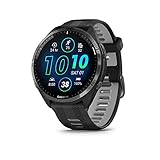
- Brilliant AMOLED touchscreen display with traditional button controls and lightweight titanium bezel
- Battery life: up to 23 days of battery life in smartwatch mode, up to 31 hours in GPS mode
- Confidently run any route using full-color, built-in maps and multi-band GPS
- Training readiness score is based on sleep quality, recovery, training load and HRV status to determine if you’re primed to go hard and reap the rewards (data presented is intended to be a close estimation of metrics tracked)
- Plan race strategy with personalized daily suggested workouts based on the race and course that you input into the Garmin Connect app and then view the race widget on your watch; daily suggested workouts adapt after every run to match performance and recovery
The trade-off is complexity. Footpods add cost, require charging, and must be paired and maintained. For many runners, wrist-based power is sufficient, while data-focused athletes may appreciate the added resolution.
Handling hills, descents, and variable terrain
Climbing is where power shines and pace fails. The barometric altimeter detects grade changes in real time, allowing the algorithm to increase estimated power output even if speed drops significantly.
Descending introduces the opposite problem. Mechanical work decreases, but impact forces rise. Most power models intentionally reduce power values downhill, reflecting lower metabolic cost even though muscular strain may increase.
Trail running adds surface variability that no watch can fully capture. Loose gravel, mud, and technical footing alter energy cost without obvious changes in motion data, which is why power should guide effort ranges rather than serve as an absolute truth.
The wind problem and what watches can’t see
One major variable remains largely invisible to watches: wind. Headwinds increase energy cost dramatically, but unless paired with environmental sensors or modeled indirectly, most systems cannot fully account for it.
Some platforms estimate wind resistance by analyzing discrepancies between expected and actual speed changes, but this remains an approximation. In strong wind, power may still underestimate true physiological load, making heart rate a useful secondary check.
Battery life, processing power, and real-world usability
Running power calculations require continuous sensor sampling and real-time processing. This has implications for battery life, especially during long runs or ultras.
Watches designed for endurance use balance sampling rates and algorithm complexity to preserve battery life without sacrificing meaningful accuracy. Efficient chipsets, optimized firmware, and larger cases allow power to run for hours without becoming a drain.
From a comfort standpoint, nothing changes for wrist-based systems. Footpods add minimal weight but are another piece of gear to manage, which matters for runners who value simplicity.
Why different watches report different power numbers
There is no universal standard for running power. Each brand uses its own model assumptions, sensor fusion techniques, and smoothing logic.
This means power values are internally consistent but not directly comparable across platforms. The number itself matters less than how it behaves within your own ecosystem over time.
Consistency is the goal. When calculated the same way, power becomes a reliable internal ruler for effort, even if the absolute wattage differs from another runner’s watch.
What your watch is really giving you
Running power is not a lab measurement. It is a real-time estimate designed to be actionable outdoors, across terrain, and under fatigue.
What your watch provides is not perfection, but immediacy. It gives you a stable signal of effort when pace lies and heart rate lags, built from sensors you already wear and algorithms refined through millions of runs.
Wrist‑Based Power vs Foot Pods vs Chest Sensors: Accuracy, Trade‑offs, and Real‑World Use
With no universal standard for running power, the hardware doing the measuring matters as much as the algorithm interpreting it. Where sensors sit on your body determines what motion they see, what forces they infer, and how stable the power signal feels when conditions change.
This is why two runners on the same course, at the same pace, can see different power numbers depending on whether the data comes from the wrist, the shoe, or the torso.
Wrist‑based running power: Convenience first, context-aware by design
Wrist-based power uses a fusion of GPS pace, wrist accelerometers, gyroscopes, barometric altitude, and body metrics to estimate mechanical work. Apple Watch, Garmin, Polar, COROS, and Suunto all lean heavily on this approach because it requires no extra hardware.
The biggest advantage is simplicity. Nothing changes in your setup, comfort, or routine, and power is always there whether you planned to use it or not.
Accuracy is strongest in steady-state outdoor running where GPS quality is good. Modern multi-band GNSS and improved arm-swing modeling have narrowed the gap significantly compared to earlier generations.
Where wrist-based power struggles is rapid pace change and environments where GPS is compromised. Tight switchbacks, urban canyons, tree cover, and treadmills introduce noise that must be smoothed out, increasing short-term lag.
Arm motion also matters. Runners who carry bottles, push strollers, or climb steep terrain with poles can distort accelerometer patterns, leading to brief spikes or drops that don’t reflect true effort.
Battery impact is modest. Watches designed for endurance can run wrist-based power for marathon-length efforts and beyond, especially when paired with efficient chipsets and slightly reduced GPS sampling.
For most recreational and serious runners, wrist-based power is accurate enough to guide effort, especially when used as a range rather than a single target number.
Foot pods: Mechanical purity and terrain independence
Foot pods measure motion at ground contact, capturing cadence, stride length, vertical oscillation, and impact forces directly from the shoe. Because they don’t rely on GPS, their data remains stable indoors, on treadmills, and under dense cover.
This makes foot-pod-based power particularly attractive for runners who train across varied environments or prioritize repeatability over convenience. Stryd is the most widely known example, with algorithms tuned specifically around lower-leg mechanics.
Short-term responsiveness is excellent. Power changes appear almost instantly during surges, hill transitions, and interval work, which many experienced athletes prefer for pacing precision.
The trade-off is ecosystem dependence. You are adding hardware that must be charged, paired, updated, and occasionally forgotten at home. Compatibility varies by watch brand, and not all platforms expose the same metrics.
Comfort is generally a non-issue once attached, but it is still another object on the shoe that can be knocked loose in mud, snow, or trail conditions.
Battery life is usually excellent, often lasting weeks, but it becomes another variable to manage before long runs or races.
Chest sensors: Bridging motion and physiology
Chest-based running power, as implemented by some platforms, uses high-resolution accelerometers located near the body’s center of mass. This positioning captures torso movement, ground reaction patterns, and vertical displacement with less influence from arm swing or foot strike variability.
The result is often a smoother power trace than wrist-based systems, especially during form changes late in a run. Because chest straps already house heart rate sensors, the physiological context is baked in.
Responsiveness sits between wrist and foot pod. Changes are detected quickly, but not always as instantly as a shoe-mounted sensor during sharp accelerations.
Comfort and fit matter more here. A loose strap degrades data quality, and some runners dislike chest straps for daily training, even if they tolerate them on race day.
Battery life is typically strong, often measured in months, but replacement or recharging cycles vary by model.
Which system is “most accurate” depends on what you value
Accuracy in running power is not absolute. It is defined by consistency, responsiveness, and relevance to how you actually train.
Wrist-based power excels in ease of use and long-term trend tracking. It is always available, requires no decisions, and integrates cleanly into daily training and recovery metrics.
Foot pods deliver the most mechanically stable signal across surfaces and conditions, making them ideal for runners who want precise control during intervals, hills, and treadmill sessions.
Chest sensors strike a middle ground, offering strong biomechanical insight with added physiological context, but at the cost of wearing additional gear.
Real-world guidance for choosing the right setup
If you are new to running power, start with what your watch already provides. Learn how power behaves relative to pace and heart rate across easy runs, workouts, and fatigue before adding complexity.
If you race on hilly terrain, train indoors frequently, or rely heavily on structured power zones, a foot pod can provide cleaner feedback and tighter control.
If you already wear a chest strap for heart rate and want improved stability without changing footwear, chest-based power can be a logical upgrade.
No matter the sensor, stay within one ecosystem. Mixing sources or comparing wattage across platforms undermines the very consistency that makes power useful in the first place.
Running power works best when it becomes familiar. Once you understand how your chosen system responds to effort, terrain, and fatigue, the exact sensor location matters far less than how well you trust the signal.
Understanding Running Power Metrics: Watts, W/kg, Form Power, and Efficiency
Once you have chosen a sensor ecosystem and learned to trust its signal, the next step is understanding what the numbers actually represent. Running power is only useful when you know which metrics matter for your goals and which ones are better treated as supporting context rather than targets.
Unlike pace or heart rate, power is not a single concept displayed in different ways. Modern watches and sensors expose multiple layers of the same effort signal, each designed to answer a slightly different training question.
Watts: the raw cost of moving your body forward
Watts represent the absolute rate at which you are doing mechanical work while running. In simple terms, it reflects how much energy per second is required to move your body at a given speed, on a given surface, under current conditions.
This is why power responds instantly to hills, wind, and surges. The moment you start climbing or accelerate, watts rise even if pace and heart rate lag behind.
On a typical GPS watch, wattage is calculated using a combination of speed, vertical oscillation, acceleration, slope, and body mass. Wrist-based systems infer these variables through motion sensors and barometric data, while foot pods and chest sensors capture them closer to the source of movement.
Rank #3

- Our brightest AMOLED touchscreen display with button controls and an aluminum bezel in 42 mm size to fit smaller wrists
- Up to 10 days of battery life in smartwatch mode and up to 18 hours in GPS mode for a more complete picture of your training and recovery
- Train for an event, achieve a milestone, or improve your fitness with Garmin Coach training plans; these running and triathlon plans are personalized to you and adapt based on your performance and recovery
- Training readiness score is based on sleep quality, recovery, training load and HRV status to determine if you’re primed to go hard and get the most out of your workout (data presented is intended to be a close estimation of metrics tracked)
- Built-in microphone and speaker let you make and take phone calls from your wrist when your watch is paired to your smartphone — and you can even use your smartphone’s voice assistant to respond to text messages and more
Because watts are absolute, they scale with body size. A larger runner producing 320 watts and a smaller runner producing 260 watts may be working equally hard relative to their physiology.
In day-to-day training, raw watts are most useful for internal comparisons. You learn what “easy,” “steady,” and “hard” feel like in watts for your own body, on your usual terrain, using the same device.
Watts per kilogram (W/kg): leveling the playing field
W/kg divides your power output by body weight, creating a relative intensity metric. This is particularly helpful when comparing efforts across runners, tracking fitness changes with weight fluctuations, or analyzing race performance.
For many runners, W/kg feels more intuitive once they get past the decimals. A long run at 3.8 W/kg and a threshold workout at 4.6 W/kg are easier to contextualize across different conditions than raw watts alone.
Most watches calculate W/kg automatically once your body weight is set correctly in the user profile. This makes accuracy in your watch setup more than administrative housekeeping; it directly affects how your training data is interpreted.
W/kg also highlights why power can outperform pace on hilly or technical courses. Pace may swing wildly, but relative effort remains remarkably stable when viewed through W/kg.
Form Power and movement-related watts
Form Power, popularized by Stryd but conceptually echoed in other platforms, estimates the portion of your total power that does not contribute to forward motion. This includes vertical movement, braking forces, and lateral oscillation.
Higher Form Power does not automatically mean poor running form. Sprinting, uphill running, fatigue, and uneven terrain all increase movement-related costs.
Where Form Power becomes useful is in trend analysis. If your Form Power rises disproportionately late in long runs or during threshold efforts, it may indicate fatigue-driven inefficiency rather than intentional intensity.
Smartwatches display this metric differently depending on the ecosystem. Some show it as a standalone watt value, while others integrate it into efficiency or running dynamics screens alongside cadence and ground contact time.
It is a metric to observe, not to chase. Attempting to consciously lower Form Power mid-run often leads to overthinking mechanics rather than better performance.
Running efficiency and power-based economy
Efficiency metrics attempt to describe how effectively you turn power into speed. Some platforms express this as pace per watt, others as an efficiency score that blends speed, power, and biomechanical stability.
These values are highly device-specific and should never be compared across brands or sensors. What matters is how your own efficiency trends over weeks and months under similar conditions.
Improving efficiency usually shows up as faster pace at the same watts or lower watts at the same pace. This is where running power quietly becomes a powerful long-term development tool rather than a flashy workout metric.
Efficiency gains often come from aerobic development, better fatigue resistance, and consistent mileage, not from consciously manipulating stride mechanics. The data reflects adaptation; it does not cause it.
How watches calculate and present these metrics in practice
Modern GPS watches handle power calculations onboard, using accelerometers, gyroscopes, barometers, and satellite-derived speed. The quality of this processing depends heavily on the watch’s sensor suite, firmware, and how cleanly it handles smoothing and responsiveness.
Higher-end watches tend to offer more stable real-time power and richer post-run analysis, but battery life and comfort still matter. A lightweight watch with slightly noisier data that you wear every day often delivers better long-term insight than a heavier device you leave at home.
Software presentation is just as important as hardware. Clear power graphs, lap-level averages, and customizable data screens make it far easier to actually use these metrics during training rather than just reviewing them afterward.
Compatibility also matters. Power metrics integrate best when your watch, training platform, and sensor ecosystem speak the same language, preserving data continuity across firmware updates and device upgrades.
Which metrics you should actually pay attention to
For most runners, average watts or W/kg per lap are the most actionable metrics during workouts. They provide immediate feedback without overwhelming you mid-run.
Form Power and efficiency are better reviewed after the run, ideally alongside heart rate and perceived effort. They help explain why a workout felt harder or easier than expected.
Trying to monitor every available power metric at once is a fast path to distraction. A clean watch face, good strap fit, and consistent data collection matter far more than chasing theoretical precision.
Understanding these metrics does not mean mastering them all at once. The real value of running power emerges when a few key numbers become familiar enough that they fade into the background, quietly guiding smarter, more consistent training.
Setting Your Power Zones: Threshold Power, Critical Power, and Practical Testing Methods
Once power numbers stop feeling abstract, the next step is anchoring them to your own physiology. Just like pace zones or heart rate zones, power only becomes useful when it is individualized and repeatable across different days, routes, and conditions.
Power zones give structure to workouts and context to fatigue. They allow your watch to become a pacing tool rather than just a recording device, especially when terrain or weather makes pace unreliable.
Threshold Power: The Anchor for Most Training
Threshold Power, often called Functional Threshold Power (FTP) in cycling-derived models, represents the highest power you can sustain for roughly an hour without steadily accumulating fatigue. For runners, it aligns closely with lactate threshold effort rather than a fixed time duration.
Most watches and training platforms define power zones as percentages of this threshold value. Get threshold power reasonably accurate, and the rest of your zones fall into place with minimal complexity.
In practical terms, threshold power is the wattage you could hold during a hard but controlled tempo run where breathing is deep, conversation is broken, and form remains stable. If your threshold estimate feels too high to sustain for 30 to 40 minutes in training, it probably is.
Critical Power: A More Flexible Model for Real-World Running
Critical Power (CP) models approach the problem differently. Instead of assuming a single one-hour benchmark, CP estimates your sustainable power based on multiple maximal efforts over different durations.
This matters for runners because very few people run a clean, evenly paced one-hour test on the road. Hills, turns, wind, and fatigue resistance all affect pacing, and CP is often better at handling those realities.
Many modern watches and platforms update critical power dynamically as you log hard efforts over time. When implemented well, CP adapts to fitness changes without forcing frequent formal tests, making it more practical for runners training year-round.
How Watches Estimate Power Zones Automatically
Most GPS watches offer automatic power zone calculation once enough data is collected. They typically rely on recent race efforts, structured workouts, or detected threshold runs to estimate threshold or critical power.
The accuracy of these estimates depends heavily on data quality. Consistent wear, good GPS reception, stable heart rate capture, and firmware that handles smoothing intelligently all contribute to better zone definitions.
Watches with strong battery life and comfortable, secure straps tend to produce better long-term power data simply because they are worn more often. A perfectly specified watch that is left charging is less useful than a slightly noisier device that captures every run.
Practical Field Tests You Can Actually Repeat
For runners who want tighter control, simple field tests remain valuable. A widely used option is a 20-minute hard effort after a thorough warm-up, with threshold power estimated as roughly 95 percent of your average power for that segment.
Another practical approach is a 30-minute steady effort where you record the average power of the final 20 minutes. This reduces the risk of starting too hard and better reflects sustainable effort.
These tests work best on flat, uninterrupted routes or tracks. If terrain forces variability, focus on holding steady effort rather than chasing a perfectly flat power line on your watch screen.
Using Races and Hard Workouts as Implicit Tests
Not every runner needs a formal test day. Well-paced races from 5K to half marathon provide excellent data for power modeling when captured cleanly.
A 10K race, for example, often settles slightly above threshold power for trained runners. If your watch or platform supports post-run analysis, these efforts can refine your zones without disrupting your training plan.
This approach also reflects how power is used in the real world. Your best data often comes from moments when motivation is high and effort is honest, not from sterile test protocols.
Adjusting Zones as Fitness and Conditions Change
Power zones are not permanent. As fitness improves, fatigue resistance changes, or body weight shifts, the wattage associated with each zone will drift.
Many watches allow automatic zone updates, but it is worth reviewing them manually every few months. If easy runs consistently feel too hard at Zone 2 power, or threshold workouts feel unsustainably aggressive, your zones may be outdated.
Environmental factors matter too. Heat, altitude, and terrain can all suppress sustainable power, which is why power is a guide rather than a rule. Smart runners learn the feel behind each zone, not just the number on the screen.
Making Power Zones Usable on the Watch
The best power zones are the ones you can actually see and understand mid-run. Configure your watch to show lap average power alongside current power, rather than instant power alone, to reduce noise.
Screen readability, button layout, and vibration alerts all affect how usable power zones are during hard efforts. Watches with intuitive interfaces and responsive controls reduce cognitive load when you are already working.
Ultimately, power zones should simplify decision-making, not complicate it. When set correctly, they let you run by feel with confirmation, rather than chasing fluctuating pace or waiting for heart rate to catch up.
Training With Power Day‑to‑Day: Easy Runs, Intervals, Hills, and Long Runs Explained
Once your zones are set and usable on the watch, power stops being an abstract metric and becomes a daily decision‑making tool. The real value shows up not in lab tests or race analysis, but in ordinary runs where conditions, terrain, and fatigue rarely cooperate.
Unlike pace, which drifts with hills and wind, or heart rate, which lags and accumulates fatigue noise, power lets you anchor effort consistently. The key is understanding how that anchor should feel across different types of runs, and how your watch presents the data in real time.
Rank #4

- Easy-to-use running watch monitors heart rate (this is not a medical device) at the wrist and uses GPS to track how far, how fast and where you’ve run.Special Feature:Bluetooth.
- Battery life: up to 2 weeks in smartwatch mode; up to 20 hours in GPS mode
- Plan your race day strategy with the PacePro feature (not compatible with on-device courses), which offers GPS-based pace guidance for a selected course or distance
- Run your best with helpful training tools, including race time predictions and finish time estimates
- Track all the ways you move with built-in activity profiles for running, cycling, track run, virtual run, pool swim, Pilates, HIIT, breathwork and more
Easy Runs: Guarding the Low End of Effort
Easy runs are where power often helps runners the most, especially those who tend to overcook their aerobic days. Because power responds instantly to changes in effort, it exposes subtle surges that pace might hide and heart rate might forgive until it is too late.
For most runners, easy runs live in Zone 1 to low Zone 2 power. On the watch, this usually feels almost uncomfortably restrained at first, particularly on flat routes where pace looks slower than expected.
This is where lap average power becomes more useful than instant power. A steady lap average smooths out stride-to-stride fluctuation and helps you stay honest without staring at the screen every few seconds.
Terrain is where power shines here. On rolling paths or trails, maintaining a consistent easy-run power means naturally slowing on climbs and letting pace drift faster on descents without conscious micromanagement.
From a wearable perspective, this is also a comfort test. Watches with lighter cases, softer straps, and stable wrist-based sensors tend to disappear during long easy miles, making it easier to focus on feel rather than data anxiety.
Intervals and Hard Workouts: Precision Without Overreaction
Intervals are where power replaces guesswork with repeatable structure. Instead of chasing pace that may vary with wind or surface, you target a narrow power range tied directly to your physiological limit.
For threshold intervals, this usually means sitting just under or around critical power. The watch should be set to show lap average power prominently, with alerts only if you drift far outside the target range.
Shorter VO2 max intervals benefit from power as well, but with a caveat. Instant power can spike aggressively during accelerations, so focusing on the middle portion of each interval rather than the first 10 seconds leads to better execution.
Good watch ergonomics matter here. Clear vibration alerts, responsive lap buttons, and minimal screen lag reduce friction during fast transitions. Battery performance is rarely an issue in interval sessions, but software stability and data clarity are.
Perhaps most importantly, power discourages racing your workouts. If one interval creeps 10–15 watts higher than planned, you will see it immediately and understand why the next rep feels harder.
Hills: Letting Power Normalize the Terrain
Hills are where power earns its reputation as a terrain‑agnostic metric. Pace becomes meaningless on sustained climbs, and heart rate often lags behind the true effort until you are already overextended.
By targeting a consistent power output on hills, you prevent the classic mistake of surging early and paying for it later. The climb feels controlled, even if pace drops dramatically.
Downhill running benefits too. Power naturally falls as gravity assists you, encouraging restraint and reducing eccentric load that can accumulate unnoticed when chasing fast downhill splits.
Trail runners, in particular, gain value here. Watches that combine barometric altitude, accelerometer data, and GPS smoothing tend to produce more stable power estimates on uneven terrain, making hills feel less chaotic from an effort standpoint.
Over time, runners often report that hill confidence improves. You stop fearing climbs because you understand exactly how hard they should feel, regardless of gradient or length.
Long Runs: Managing Fatigue, Not Just Speed
Long runs reveal the difference between power as a pacing tool and power as a fatigue management tool. Early in the run, target power may feel trivial. Late in the run, the same number tells a very different story.
A common strategy is to cap long-run power slightly below upper Zone 2 for the first half, then allow a controlled rise if the run includes a progression. The watch becomes a governor rather than a motivator.
Drift analysis becomes useful here. If power stays stable but heart rate climbs steadily, you are accumulating cardiovascular strain without increasing mechanical output, a sign to back off or fuel earlier next time.
Battery life and comfort matter most on long runs. Watches with efficient GPS modes, readable displays in bright light, and straps that do not cause hotspots earn their keep over two to three hours on the wrist.
Power also simplifies fueling decisions. When you know the mechanical work you are producing, it becomes easier to predict energy cost and avoid the late‑run fade that comes from mismatched effort and intake.
Blending Power With Feel and Other Metrics
Day‑to‑day training with power works best when it complements, rather than replaces, perceived effort and heart rate. Power tells you what you are doing; feel tells you whether it is sustainable.
Smartwatch ecosystems increasingly surface these relationships automatically, overlaying power, heart rate, cadence, and elevation in post‑run analysis. Over time, patterns emerge that sharpen intuition rather than dull it.
The goal is not to stare at watts forever. The goal is to internalize what different power zones feel like across terrains and conditions, so the watch becomes a quiet confirmation rather than a constant instructor.
Used this way, power becomes less about chasing numbers and more about protecting consistency. That consistency, built across ordinary easy runs and disciplined workouts, is where long‑term improvement actually lives.
Racing and Pacing With Power: How to Stay Consistent Across Hills, Wind, and Heat
Once power is familiar in training, its biggest payoff arrives on race day. This is where the metric stops being educational and starts being protective, keeping effort stable when pace and heart rate become unreliable.
Racing with power shifts the question from “How fast am I going?” to “How hard am I working right now?” That distinction matters most when the course or conditions refuse to cooperate.
Why Power Beats Pace on Variable Courses
Pace assumes flat ground and calm air. The moment the course tilts upward or a headwind appears, pace punishes you for effort that may actually be perfectly appropriate.
Power accounts for grade, acceleration, and changes in resistance. When you crest a hill and see pace slow but power remain on target, the watch confirms you are racing smart rather than losing fitness.
This is especially valuable on rolling courses where micro‑surges accumulate unnoticed. Power smooths those spikes, helping you avoid burning matches that cannot be recovered later.
Setting a Race Power Target That Holds Up
Race power targets usually anchor to recent threshold or critical power estimates, adjusted for distance. A common mistake is choosing a number that feels comfortable at the start but ignores cumulative fatigue.
For a half marathon, many runners land slightly below threshold power. For a marathon, the target often sits closer to upper Zone 2 or low Zone 3, depending on durability and fueling.
Modern watches make this practical by showing lap or 3‑ to 10‑second averaged power rather than raw instantaneous data. The smoothing matters, especially in crowded starts where constant surging can distort readings.
Managing Hills Without Overcooking the Climb
Climbs are where power pacing pays for itself. The goal is not to hold pace uphill, but to cap power at or just above race target.
Letting power drift 5 to 10 percent higher on short hills is usually fine. Letting it spike 20 percent higher repeatedly is how races unravel quietly.
On the descent, resist the urge to “win back” time. If power drops slightly below target while gravity does the work, that is free speed without additional cost.
Running Into the Wind With Mechanical Honesty
Wind is deceptive because it does not show up on elevation charts. Pace drops, effort rises, and heart rate lags just enough to tempt you into pushing harder than planned.
Power reflects that added resistance immediately. Holding target watts into a headwind may feel slow, but it prevents the muscular fatigue that arrives later when the wind turns neutral or favorable.
Watches with responsive power algorithms and good GPS stability handle these transitions better. A stable fit, lightweight case, and a strap that does not shift under arm swing all improve data reliability in blustery conditions.
Heat, Cardiac Drift, and Why Power Needs Context
Heat introduces a different problem. Mechanical output may stay steady while heart rate climbs due to thermal strain and dehydration.
Power keeps you honest about workload, but it should not override physiology. If heart rate drifts well beyond normal for a given power and perceived effort rises sharply, adjusting target power downward is a sign of maturity, not weakness.
Some watch platforms now integrate temperature data and post‑run heat-adjusted analysis. During the race, however, your best tool is still the relationship between power, heart rate, and feel that you have learned in training.
Using Lap Power and Alerts Without Obsessing
For racing, lap average power is often more useful than real‑time numbers. It smooths noise from turns, aid stations, and brief terrain changes.
Power alerts can help, but they should be set conservatively. A narrow alert range leads to constant beeping and cognitive overload when focus should be external.
The best setups use subtle vibration alerts and clear, high‑contrast displays. Battery life also matters here, as high‑accuracy GPS and power calculations can drain smaller watches before the finish line if settings are not dialed in.
When Power Should Take a Back Seat
No metric deserves blind obedience. Technical trails, sharp switchbacks, and crowded city races can all produce erratic power readings.
In these moments, perceived effort leads, with power acting as a post‑hoc check rather than a real‑time commander. The goal is consistency of outcome, not purity of data.
Racing well with power is ultimately about restraint. It keeps you from proving fitness early so you can express it late, across terrain, weather, and fatigue that would otherwise steal it from you unnoticed.
Which Watches and Platforms Do Power Best? Garmin, COROS, Polar, Suunto, and Apple
Once you accept that power is only as useful as the context around it, the choice of watch and platform becomes less about a single number and more about how well the ecosystem helps you interpret that number over weeks and months.
💰 Best Value

- Brilliant AMOLED touchscreen display with traditional button controls; lightweight design in 46 mm size
- Up to 13 days of battery life in smartwatch mode and up to 20 hours in GPS mode
- As soon as you wake up, get your morning report with an overview of your sleep, recovery and training outlook alongside HRV status, training readiness and weather (data presented is intended to be a close estimation of metrics tracked)
- Plan race strategy with personalized daily suggested workouts based on the race and course that you input into the Garmin Connect app and then view the race widget on your watch; daily suggested workouts adapt after every run to match performance and recovery
- Training readiness score is based on sleep quality, recovery, training load and HRV status to determine if you’re primed to go hard and get the most out of your workout (data presented is intended to be a close estimation of metrics tracked)
All of the major players now offer native running power without a foot pod, but they differ significantly in how power is calculated, displayed, trained against, and reviewed after the run. Hardware comfort, GPS quality, battery endurance, and software maturity all influence how trustworthy and actionable those watts actually are.
Garmin: The Most Complete Power Ecosystem
Garmin’s running power is deeply embedded across its performance lineup, from the Forerunner 255 and 265 through the 955, 965, and Fenix and Epix families. Power is calculated on-wrist using GPS, barometric altitude, pace changes, and accelerometer data, with optional refinement when paired to the HRM‑Pro or HRM‑Pro Plus chest straps.
The watches themselves tend to be lightweight for their size, with polymer cases on the Forerunners and metal-bezel options on Fenix and Epix models. Strap stability is excellent, especially on the nylon UltraFit bands, which helps reduce micro-movements that can introduce noise into power data during faster running.
Where Garmin stands apart is software depth. Power integrates into structured workouts, PacePro race plans, TrainingPeaks syncing, and native power zones that can be based on critical power rather than a fixed FTP-style estimate.
Post-run, Garmin Connect lets you analyze average power, lap power, grade-adjusted behavior, and power distribution without leaving the platform. For experienced runners, the ability to layer power against heart rate, temperature, and elevation over long time scales makes Garmin the most complete choice for power-driven training.
Battery life is also a practical advantage. Even mid-range Forerunners can handle marathon-length events with high-accuracy GPS and power enabled, while Fenix and Enduro models are built for ultra-distance use without compromise.
COROS: Power as a Pacing Tool First
COROS treats power primarily as a real-time pacing and workload metric rather than an abstract training number. Power is available across the Pace, Apex, and Vertix series, calculated natively without additional sensors.
COROS watches are known for their minimalist hardware and excellent comfort. The cases are slim, the digital crown is glove-friendly, and the silicone and nylon straps hold securely without needing aggressive tightening. This stable fit pays dividends for power consistency, especially during long steady runs.
The COROS app emphasizes clarity. Power zones are simple, lap and average power are easy to see mid-run, and post-run analysis avoids overwhelming charts. For many runners, this makes power easier to adopt without falling into data paralysis.
Battery life is a standout. Even the smaller Pace models deliver multi-day training with power enabled, making COROS attractive for runners who value simplicity, reliability, and long sessions over deep analytical tools.
Where COROS lags slightly is in advanced power modeling. There is less emphasis on long-term critical power trends or cross-metric analytics compared to Garmin, but for execution-focused runners, that restraint can be a strength.
Polar: Power Through the Lens of Physiology
Polar’s running power is closely tied to its physiological training philosophy. Available on models like the Pacer Pro, Vantage V2, and Grit X series, Polar calculates power on the wrist using GPS and barometric data, with no external sensor required.
Polar watches are among the most comfortable to wear for long durations. They are light, low-profile, and balanced on the wrist, with soft straps that minimize pressure points. That comfort encourages consistent wear, which matters when power is evaluated alongside recovery and readiness metrics.
Power in Polar Flow is framed in relation to heart rate zones, perceived effort, and fatigue. Instead of pushing raw watt targets, Polar encourages runners to understand how power behaves relative to cardiovascular strain and recovery status.
This approach resonates with athletes who value holistic training more than aggressive performance chasing. However, runners who want extensive power-based workouts or granular lap-level power analysis may find Polar’s tools less flexible than Garmin’s.
Suunto: Power for Terrain and Adventure
Suunto integrates running power across its modern lineup, including the Suunto 9 Peak Pro and Vertical. Power is calculated natively and is particularly useful in hilly and mountainous environments, where pace quickly loses meaning.
Suunto’s hardware leans toward durability. Cases are compact but robust, buttons are tactile, and sapphire glass is common even on lighter models. The watches sit securely on the wrist, an important factor when power calculations rely on consistent motion sensing during uneven running.
The Suunto app presents power cleanly, with an emphasis on elevation, vertical speed, and effort over terrain. Power zones are supported, but Suunto’s strength lies in showing how power fluctuates across climbs, descents, and mixed surfaces.
Battery life is excellent, especially in endurance modes that still preserve power data. For trail runners and mountain athletes, Suunto offers one of the most intuitive ways to use power where it matters most: controlling effort when terrain constantly changes.
Apple Watch: Power with Caveats
Apple introduced native running power with watchOS updates on Apple Watch Series models and the Ultra, calculated using GPS, accelerometer data, and machine learning. No external sensor is required, and power fields are easy to add to run views.
Hardware comfort is high, especially with the Sport Loop and Trail Loop bands. The Apple Watch Ultra, with its larger case and flatter back, offers improved stability for longer runs, while standard models remain better suited to shorter sessions.
Where Apple shines is display clarity and ease of use. Power is readable at a glance, haptic alerts are subtle, and integration with third-party apps like TrainingPeaks, Stryd, and intervals-focused platforms expands its capabilities.
Battery life remains the limiting factor. Even the Ultra requires careful management for long races, and standard models may struggle beyond marathon distance with full GPS and power tracking enabled. For runners training primarily on the road and valuing a smartwatch-first experience, Apple’s power implementation is capable but not yet class-leading for endurance depth.
Choosing the Right Platform for How You Actually Train
The best power platform is the one that matches your training personality. Data-driven planners tend to thrive in Garmin’s ecosystem, while execution-focused runners may prefer COROS’s clarity.
Physiology-first athletes often align with Polar, terrain-focused runners gravitate toward Suunto, and smartwatch-centric runners will appreciate Apple’s accessibility despite its endurance limits.
Power is not a universal solution, and no watch makes it magic. The goal is to choose a platform that reinforces good decisions, stays readable under fatigue, and fits comfortably enough that you forget about the hardware and focus on the run.
Is Running Power Worth It for You? Who Benefits Most—and Common Mistakes to Avoid
After choosing a platform that matches how you train, the next question is more personal: does running with power actually add value for you right now. Power can be transformative for some runners and largely redundant for others, depending on experience, terrain, and how much cognitive load you want during a run.
The key is understanding where power simplifies decisions rather than complicating them, and where it risks becoming another number that distracts from consistent training.
Runners Who Benefit Most from Power-Based Training
Power is most useful for runners whose pace is frequently disrupted by external factors. If your routes include rolling hills, long climbs, technical trails, wind exposure, or variable surfaces, power offers a steadier representation of effort than pace ever can.
Trail runners and ultra-distance athletes often see the clearest benefits. On steep grades where pace becomes meaningless and heart rate lags, power provides an immediate ceiling for effort that helps prevent early fatigue and late-race collapse.
Heavier or more muscular runners also tend to benefit. Because power reflects mechanical work rather than speed alone, it normalizes effort in ways pace cannot, making workouts and race execution more repeatable across conditions.
Coached athletes and self-coached runners who follow structured plans often find power valuable as a precision tool. Interval targets remain consistent in heat, at altitude, or on tired legs, reducing the temptation to chase pace when the body is not ready.
Who May Not Need Power—At Least Not Yet
If you are early in your running journey, power is rarely the first metric to master. Perceived effort, basic pacing awareness, and heart rate trends usually deliver most of the gains without adding complexity.
Runners who train almost exclusively on flat roads at steady intensities may also find limited incremental benefit. In these scenarios, pace already tracks effort closely, and power may simply mirror what you are seeing on the screen.
There is also a personality factor. If seeing too many metrics causes stress or constant second-guessing, power can become counterproductive. Training works best when the data reinforces confidence rather than undermines it.
Common Mistakes That Undermine Running Power
The most frequent mistake is treating power zones as absolute truths. Running power is not as standardized as cycling power, and values can vary between devices, wrist placement, firmware updates, and whether an external sensor is used.
Another pitfall is overreacting to second-by-second fluctuations. Power is inherently noisy, especially on the wrist, and chasing instantaneous numbers leads to erratic pacing. Most watches perform best when you rely on lap averages, rolling averages, or alerts rather than raw live spikes.
Many runners also skip calibration or baseline testing. Without establishing a critical power or equivalent threshold value, power targets are guesswork. This is where platforms that guide testing and zone setting through their software experience tend to deliver better outcomes.
Power Should Complement, Not Replace, Other Signals
Running power works best when viewed alongside heart rate and perceived effort. A rising heart rate at a stable power output can signal fatigue, dehydration, or accumulating stress long before pace falls apart.
Likewise, unusually high power at an easy effort may indicate form inefficiencies, stiffness, or terrain factors worth investigating rather than simply pushing harder.
Modern watches make this integration easier by allowing multiple fields on a single screen, haptic alerts for power caps, and post-run analysis that overlays power, heart rate, elevation, and cadence. The value comes from patterns, not isolated numbers.
Making Power Practical in Day-to-Day Training
For most runners, the simplest entry point is using power as a governor rather than a target. Setting an upper limit for long runs, climbs, or early race miles helps control enthusiasm and preserve energy.
Workouts benefit from broader ranges rather than narrow targets. Allowing a small power band accommodates terrain and fatigue while keeping effort honest.
Over time, power becomes less about watching the screen and more about educating feel. The best outcome is not perfect execution but improved intuition about what sustainable effort actually feels like across different conditions.
The Bottom Line
Running power is not mandatory, nor is it a shortcut to fitness. Its real strength lies in effort consistency when pace and heart rate fall short, especially in complex environments.
If your watch is comfortable enough to forget, the battery lasts for your longest runs, and the software presents power clearly without clutter, it can be a meaningful addition to your training toolkit.
Used thoughtfully, power sharpens decision-making and builds discipline. Used blindly, it becomes noise. The difference is not the metric itself, but how well it aligns with how you run, where you run, and what you want to improve.