Samsung has now gone on record that smart glasses are coming, and for the first time we have a concrete window: 2026. That confirmation alone marks a shift from years of patent-watching and leaks into an actual product roadmap, and it tells us Samsung sees lightweight AR eyewear as a core wearable category, not an experiment.
If you are trying to understand what is truly locked in versus what is still fluid, this is the section that matters most. Samsung has been careful with its language, but across earnings calls, executive interviews, and platform announcements, a clear timeline and strategy have emerged that helps set realistic expectations for early buyers.
Samsung’s 2026 window is not a leak, it’s a deliberate signal
Samsung’s confirmation of smart glasses arriving in 2026 has come through official channels, not supply-chain rumors. Senior executives have publicly stated that smart glasses are in active development and positioned after the company’s first Android XR headset, which is expected to arrive earlier.
This sequencing is important. Samsung is framing glasses as a second-phase product, built on the software, developer tools, and user learnings established by its upcoming XR headset rather than as a standalone moonshot.
🏆 #1 Best Overall
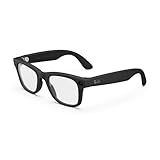
- #1 SELLING AI GLASSES - Tap into iconic style for men and women, and advanced technology with the newest generation of Ray-Ban Meta glasses. Capture photos and videos, listen to music, make hands-free calls or ask Meta AI questions on-the-go.
- UP TO 8 HOURS OF BATTERY LIFE - On a full charge, these smart AI glasses can last 2x longer than previous generations, up to 8 hours with moderate use. Plus, each pair comes with a charging case that provides up to 48 hours of charging on-the-go.
- 3K ULTRA HD: RECORD SHARP VIDEOS WITH RICH DETAIL - Capture photos and videos hands-free with an ultra-wide 12 MP camera. With improved 3K ultra HD video resolution you can record sharp, vibrant memories while staying in the moment.
- LISTEN WITH OPEN-EAR AUDIO — Listen to music and more with discreet open-ear speakers that deliver rich, quality audio without blocking out conversations or the ambient noises around you.
- ASK YOUR GLASSES ANYTHING WITH META AI - Chat with Meta AI to get suggestions, answers and reminders straight from your smart AI glasses.
What is confirmed is timing at the calendar-year level, not a specific launch month or event. Samsung has not committed to CES, MWC, or an Unpacked launch yet, which strongly suggests flexibility depending on platform readiness and competitive pressure.
How smart glasses fit into Samsung’s broader XR roadmap
Samsung has already confirmed that it is working on a full XR headset in collaboration with Google and Qualcomm, running what is now publicly known as Android XR. That headset is widely expected to arrive before the glasses, likely serving as the ecosystem’s anchor device.
The smart glasses, arriving in 2026, will run on the same Android XR foundation. This is a confirmed platform strategy, not speculation, and it places Samsung’s glasses squarely inside the broader Android wearable ecosystem alongside Galaxy phones, watches, earbuds, and tablets.
In practical terms, this means Samsung is prioritizing continuity of software experience, app compatibility, and account-level integration over rushing hardware to market.
What Samsung has and has not confirmed about the hardware itself
Samsung has not officially disclosed the final form factor, display technology, or industrial design of its smart glasses. There has been no confirmation of waveguide type, field of view, monocular versus binocular displays, or whether the device will resemble traditional eyewear or a more tech-forward design.
What has been implicitly confirmed is intent. Samsung has described the glasses as consumer-focused and lightweight, not an enterprise or developer-only product. That aligns them more closely with everyday wearable use rather than the bulkier XR headsets currently dominating the market.
There has also been no official confirmation of onboard cameras, prescription lens support, or battery placement, all of which remain open questions that will directly affect comfort, privacy acceptance, and daily wearability.
Software and ecosystem commitments that are already locked in
The strongest confirmations so far are on the software side. Samsung has publicly committed to Android XR as the operating system layer, co-developed with Google, and powered by Qualcomm silicon.
This matters because it strongly suggests deep Google service integration, including Maps, Assistant or its successor, and potentially Gemini-powered contextual AI features. While specific apps are not confirmed, Samsung has made it clear that glasses will not launch into an empty app ecosystem.
Equally important is Samsung’s track record with ecosystem continuity. Expect tight pairing with Galaxy smartphones, cross-device notifications, and shared account identity, even though exact feature lists are still unannounced.
How Samsung’s confirmed approach differs from Apple and Meta
Samsung’s 2026 confirmation places it between Meta’s aggressive early push and Apple’s cautious, premium-first strategy. Meta has already shipped Ray-Ban smart glasses focused on cameras and AI, while Apple has yet to confirm any smart glasses at all beyond Vision Pro.
Samsung’s choice to wait until 2026, after establishing Android XR with a headset, suggests a more layered rollout. Rather than launching glasses as a novelty, Samsung appears to be positioning them as a natural extension of an existing wearable stack, similar to how Galaxy Watch evolved alongside Galaxy phones.
This slower, ecosystem-first approach reduces the risk of early obsolescence but also means first-generation buyers should expect a product that prioritizes foundational features over futuristic demos.
What the 2026 timeline realistically means for buyers
A 2026 launch does not mean full maturity on day one. Samsung’s language suggests a first-generation consumer product, likely focused on notifications, navigation, lightweight AR overlays, voice interaction, and tight phone dependency rather than fully independent spatial computing.
Battery life, thermal management, and all-day comfort will almost certainly involve trade-offs, especially if displays are included. Samsung has not promised all-day use, standalone cellular connectivity, or advanced hand-tracking, and buyers should not assume them.
What is confirmed is intent, platform alignment, and timing. For early adopters, Samsung’s 2026 smart glasses represent the beginning of a long-term category commitment, not a one-off experiment, and that distinction matters more than any single spec sheet.
Why Samsung Entering Smart Glasses Matters for Wearables (And Why It’s Not Just Another XR Headset)
Samsung’s confirmation that it will ship smart glasses in 2026 reframes the category in a way few other companies can. This is not a startup probing product–market fit or a social media company experimenting at the edges of hardware. It is the world’s largest Android hardware ecosystem holder deliberately expanding wearables beyond the wrist and ears.
What makes this moment significant is not novelty, but intent. Samsung is signaling that smart glasses are graduating from side-project XR to a core wearable form factor, one that can sit alongside watches, rings, earbuds, and phones as part of a daily-use stack.
Smart glasses as a wearable, not a headset
Samsung’s framing matters because smart glasses solve a different problem than XR headsets. Headsets like Vision Pro or Quest are about immersion, productivity sessions, or gaming blocks; smart glasses are about glanceable information, context, and continuity throughout the day.
Everything Samsung has said, and importantly not said, points to glasses designed for short interactions rather than long sessions. Think notification triage, turn-by-turn navigation, lightweight translation, voice prompts, and visual nudges that complement a phone instead of replacing it.
This distinction is critical for wearables buyers who care about comfort and real-world usability. Glasses must be light, thermally conservative, and socially acceptable in a way no headset ever has to be.
Why Samsung’s scale changes the risk profile of the category
Smart glasses have failed before largely because they lacked ecosystem gravity. Without phone integration, developer tools, distribution, and long-term software support, even impressive hardware becomes obsolete quickly.
Samsung enters with advantages Meta and most startups lack. It controls phones, watches, earbuds, displays, silicon partnerships, and Android’s largest premium user base outside Apple. That scale reduces the chance that first-generation glasses become abandoned experiments.
For buyers, this matters because longevity is part of value. A device worn on your face needs confidence that software updates, app compatibility, and account continuity will extend beyond a single product cycle.
The Android XR effect on wearables, not just mixed reality
Samsung’s earlier confirmation of Android XR is often discussed in headset terms, but its more important implication is glasses. A shared XR framework allows Samsung to spread development costs and attract developers without asking them to build a glasses-only platform from scratch.
That means smart glasses can inherit navigation APIs, notification handling, voice services, and spatial UI principles already proven elsewhere. This is how watches matured on Android: not by radical features, but by steady software refinement.
If Android XR succeeds even modestly on headsets, smart glasses benefit indirectly, gaining apps and services without being the primary testbed.
How this reshapes competition with Meta and Apple
Meta currently dominates smart glasses through Ray-Ban by focusing on cameras and AI first, displays second. Apple, meanwhile, has not publicly committed to glasses at all, keeping its attention on a high-end headset that remains out of reach for most consumers.
Samsung’s approach lands between those extremes. It is neither purely camera-forward nor purely immersive, and it is likely priced and positioned closer to mainstream wearables than luxury computing devices.
That balance could normalize smart glasses for Android users in the same way Galaxy Watch normalized smartwatches outside Apple’s ecosystem. If Samsung succeeds, it pressures Apple to clarify its own glasses roadmap and forces Meta to move beyond novelty-driven use cases.
What this means for everyday wearability and design priorities
Unlike phones or watches, glasses succeed or fail on comfort first. Weight distribution, hinge durability, lens thickness, heat near the temples, and compatibility with prescription lenses matter more than raw specs.
Samsung’s experience with materials, mass manufacturing, and ergonomic iteration gives it a real advantage here. Expect conservative industrial design choices aimed at all-day wear, not experimental forms that draw attention.
Battery life will likely be measured in partial days with heavy use, not multi-day endurance, and that is acceptable if charging fits into existing habits. As with watches, consistency and predictability matter more than headline numbers.
Why this is a wearables milestone, not a gimmick launch
The most important signal in Samsung’s confirmation is commitment. A public 2026 timeline, platform alignment, and ecosystem messaging indicate a multi-generation plan rather than a one-off product.
For wearables enthusiasts, this marks the first time smart glasses feel inevitable rather than optional. Once a company like Samsung treats them as a core category, others must follow or risk ecosystem gaps.
This does not mean instant mass adoption, but it does mean smart glasses are entering the same slow, iterative path that turned early smartwatches into everyday devices. For consumers watching the category mature, that shift is far more important than any single feature Samsung eventually announces.
Samsung’s Likely Smart Glasses Strategy: Lightweight AR, Not Vision Pro-Style Headsets
The clearest takeaway from Samsung’s confirmation is what these glasses are not. Everything about the timeline, partner alignment, and language points away from a bulky, immersive headset and toward lightweight augmented reality glasses designed for daily use.
That distinction matters because it defines who these glasses are for. Samsung appears to be targeting people who already wear glasses or smartwatches, not early adopters willing to tolerate discomfort in exchange for cutting-edge immersion.
Rank #2
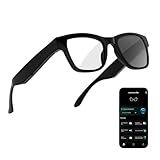
- 3-in-1 AI Glasses: Enjoy ① AI Voice Assistant (Powered by ChatGPT, Gemini & Deepseek), ② Stylish Photochromic Lenses Glasses, and ③ Bluetooth Open-Back Headphones, all in one.
- Free Talk Translation: Automatically detects and translates over 160 languages in real-time, allowing seamless work and translation without touching your phone or glasses.
- Voice, Video & Photo Translation: Supports over 98% of global languages, offering fast and accurate translations—ideal for international travel, business meetings, or cross-cultural communication.
- AI Meeting Assistant: Converts recordings from smart glasses into text and generates mind maps, making it easier to capture and organize meeting insights.
- Long Battery Life, Bluetooth 5.4 & Eye Protection: Up to 10 hours of music and 8 hours of talk time, with easy Type-C charging. Bluetooth 5.4 ensures stronger, stable connections, while photochromic lenses block UV rays and blue light, protecting your eyes in any environment.
What Samsung has actually confirmed versus what remains informed speculation
Officially, Samsung has confirmed a 2026 launch window and its intent to enter the smart glasses category as part of its broader extended reality push. It has also publicly aligned with Google on Android XR, signaling platform-level support rather than a one-off hardware experiment.
What Samsung has not confirmed are display specs, input methods, camera capabilities, or whether the first generation will even be sold globally. Any discussion of waveguides, microLED, or gesture controls remains educated inference based on Samsung’s supply chain strengths and ecosystem strategy.
Why Samsung is unlikely to chase a Vision Pro-style experience
Apple’s Vision Pro is a room-scale computer with displays, cooling systems, and battery packs that fundamentally limit portability. Samsung has no incentive to replicate that approach when its competitive advantage lies in scale, cost control, and wearability.
A head-mounted computer also conflicts with Samsung’s existing wearables portfolio. Galaxy Watch, Galaxy Buds, and Galaxy phones already handle compute-heavy tasks, making glasses better suited as a contextual display layer rather than a standalone machine.
The Meta comparison: less spectacle, more integration
Meta’s Ray-Ban smart glasses emphasize cameras, social capture, and AI-assisted audio, with visuals largely absent. Samsung is unlikely to ignore cameras entirely, but it also has less reason to prioritize social spectacle over utility.
Where Meta leans on cloud AI and content platforms, Samsung can lean on device-to-device integration. Notifications, navigation, translation, fitness cues, and glanceable information fit naturally into Samsung’s existing ecosystem without demanding constant camera use.
Design priorities: comfort, optics, and prescription support first
If Samsung wants these glasses worn all day, weight distribution and thermal management will matter more than resolution numbers. Thin lenses, conservative frame thickness, and hinges designed for thousands of open-close cycles will define success more than flashy demos.
Prescription lens compatibility is also critical. Samsung understands from the Galaxy Watch market that accessories and fit options drive adoption, and smart glasses will live or die by how easily they adapt to real vision needs.
Expected features that align with a lightweight AR philosophy
Expect heads-up notifications, turn-by-turn navigation, real-time translation, and contextual prompts tied to location or activity. These are low-latency, glance-based use cases that complement phones and watches rather than replacing them.
Battery life will likely land in the range of several active hours or a full day of intermittent use. That sounds modest, but for glasses, predictable behavior and fast charging are more important than endurance benchmarks.
How this strategy fits Samsung’s long-term wearables roadmap
Samsung’s strength has always been iterative refinement across generations. A conservative first release allows the company to learn about optics, comfort, and real-world behavior without overpromising immersion.
For consumers, this signals patience and stability. These glasses are unlikely to be transformative overnight, but they are positioned to evolve the same way Galaxy Watch did: quietly, steadily, and with a clear path toward becoming normal rather than novel.
Confirmed vs Credible Expectations: Display Tech, Cameras, AI, and Sensors
At this stage, Samsung is deliberately drawing a narrow line between what it has publicly acknowledged and what it is clearly building toward. That distinction matters, because early smart glasses live or die on execution, not ambition, and Samsung appears intent on managing expectations rather than chasing spectacle.
What follows separates what Samsung has effectively confirmed through briefings, supply-chain signals, and platform disclosures from what can be credibly inferred based on its existing component strengths, software roadmap, and wearables playbook.
Display technology: confirmed direction, conservative first-gen targets
Samsung has confirmed that its first smart glasses will use a transparent, lens-based display rather than a fully immersive headset approach. This places them firmly in the lightweight AR category, closer to glanceable information overlays than spatial computing.
While Samsung has not published resolution or field-of-view numbers, the credible expectation is a microdisplay solution optimized for brightness, efficiency, and clarity rather than immersion. Given Samsung Display’s leadership in micro-OLED and waveguide-related R&D, a monochrome or limited-color display is far more likely than full-color AR in a first generation.
From a real-world wearability standpoint, this aligns with Samsung’s stated priorities around comfort and all-day use. Narrow fields of view reduce eye strain, simplify optics, and allow thinner lenses, all of which matter more than spec-sheet bravado in something meant to be worn like regular eyewear.
Cameras: officially acknowledged, but functionally constrained
Samsung has confirmed that cameras will be part of the system, but how they are used is where expectations need tempering. This is not shaping up to be a social capture-first device in the way Meta’s Ray-Ban partnership has been positioned.
Credibly, the camera system will prioritize computer vision over continuous photo or video recording. Expect it to be used for environmental understanding, object recognition, and context-aware AI features rather than hands-free vlogging or livestreaming.
That approach also fits Samsung’s privacy posture. Limited camera activation, clear LED indicators, and strict system-level permissions are all likely, especially as Samsung pushes these glasses into markets where public recording remains socially sensitive.
AI: confirmed integration, on-device emphasis where it matters
Samsung has been explicit that AI is central to its smart glasses strategy, and this is one area where confirmation and expectation strongly overlap. The glasses are expected to integrate deeply with Galaxy AI services already rolling out across phones, tablets, and watches.
In practical terms, that means real-time translation, contextual summaries, and glanceable prompts delivered through the display rather than full conversational agents living inside the glasses themselves. On-device AI processing will handle low-latency tasks, with more complex queries handed off to a paired Galaxy phone or cloud services as needed.
This hybrid approach mirrors Samsung’s broader AI philosophy: keep responsiveness local, but lean on the ecosystem for heavier lifting. For users, it means faster interactions, better battery behavior, and less heat buildup in a device worn on the face.
Sensors: quietly critical, largely borrowed from Samsung’s wearables playbook
Samsung has not published a full sensor list, but enough is known to outline realistic expectations. Head tracking, motion sensors, ambient light detection, and proximity sensing are essentially guaranteed, as they are foundational to any usable AR overlay.
What is less certain, but credible, is the inclusion of sensors that tie the glasses into Samsung’s health and activity ecosystem. While no one should expect full biometric tracking from eyewear in 2026, posture cues, activity context, and subtle fitness prompts that complement Galaxy Watch data are plausible.
Samsung’s advantage here is software unification. Sensors do not need to be groundbreaking if they integrate cleanly with existing health, navigation, and notification frameworks that users already trust.
What Samsung is clearly not promising yet
Just as important as what Samsung is building is what it is avoiding. There has been no confirmation of immersive spatial computing, hand-mesh tracking, or standalone app ecosystems living entirely on the glasses.
Battery life claims have also been conspicuously absent, which suggests Samsung is still tuning real-world usage patterns rather than chasing headline numbers. Based on comparable devices, a full day of intermittent use remains a realistic expectation, not continuous AR operation.
For early buyers, this restraint is a positive signal. It suggests Samsung is prioritizing stability, comfort, and ecosystem fit over speculative features that rarely survive first-generation hardware.
Why this matters in the broader AR wearables landscape
Samsung’s confirmed and implied choices position its smart glasses as a counterweight to both Meta’s content-driven approach and Apple’s top-down spatial computing ambitions. Rather than redefining computing, Samsung appears focused on making AR quietly useful.
That may sound less exciting, but it is how wearables become normal. If Samsung executes well, these glasses will feel less like a gadget you show off and more like something you forget you are wearing until you need it.
How Samsung Smart Glasses Could Integrate with Galaxy Watches, Phones, and the Wider Ecosystem
If Samsung’s smart glasses are meant to feel quietly useful rather than revolutionary, ecosystem integration is where that promise lives or dies. This is not a standalone computing bet, but an extension of the Galaxy stack that already spans phones, watches, earbuds, tablets, and laptops.
Samsung has not confirmed specific cross-device features yet, but its history with One UI, Galaxy Wearables, and SmartThings gives us a clear framework for how the pieces are likely to work together.
Galaxy phones as the computational and connectivity hub
The safest assumption is that Galaxy phones will do the heavy lifting. Processing, app execution, cellular connectivity, and most AI workloads are far more likely to live on the phone than inside the glasses themselves.
This mirrors how Galaxy Watches offload complex tasks to paired phones, preserving battery life and keeping hardware lightweight. For glasses, that trade-off matters even more, as comfort, weight distribution, and heat management directly affect wearability.
In practical terms, expect the glasses to act as a context-aware display layer. Navigation prompts, translation overlays, notifications, and glanceable information would be rendered in the user’s field of view while the phone handles computation in the background.
Galaxy Watch as the primary input and health anchor
Where Samsung’s approach could quietly outclass competitors is input. Galaxy Watches already handle touch, voice, physical controls, and biometric sensing, which makes them a natural companion to glasses that lack rich input surfaces.
A watch could manage confirmations, dismissals, and quick actions without forcing users to gesture in the air or tap the glasses frame constantly. This keeps interactions discreet and socially acceptable, something first-generation AR devices often get wrong.
Rank #3

- 【AI Real-Time Translation & ChatGPT Assistant】AI glasses break language barriers instantly with AI real-time translation. The built-in ChatGPT voice assistant helps you communicate, learn, and handle travel or business conversations smoothly—ideal for conferences, overseas trips, and daily use.
- 【4K Video Recording & Photo Capture 】Smart glasses with camera let you capture your world from a first-person view with the built-in 4K camera. Take photos and record videos hands-free anytime—perfect for travel moments, vlogging, outdoor adventures, and work documentation.
- 【Bluetooth Music & Hands-Free Calls 】Camera glasses provide Bluetooth music and crystal-clear hands-free calls with an open-ear design. Stay aware of your surroundings while listening—comfortable for long wear and safer for commuting, cycling, and outdoor use.
- 【IP65 Waterproof & Long Battery Life】 Recording glasses are designed for daily wear with IP65 waterproof protection against sweat, rain, and dust. The built-in 290mAh battery provides reliable performance for workdays and travel—no anxiety when you’re on the go.
- 【Smart App Control & Object Recognition】Smart glasses connect to the companion app for easy setup, file management, and feature control. They support AI object recognition to help identify items and improve your daily efficiency—perfect for travel exploration and a smart lifestyle.
Health data is another obvious link. The glasses are unlikely to track heart rate or sleep themselves, but they could surface real-time context from the watch, such as posture reminders during desk work, workout cues during outdoor runs, or fatigue prompts based on activity trends.
One UI and Android XR as the connective tissue
Samsung’s strength has always been software cohesion across wildly different form factors. If the glasses run a variant of Android XR layered with One UI design language, users should encounter familiar navigation logic rather than a brand-new interface paradigm.
This matters for adoption. Notifications behaving consistently across phone, watch, and glasses reduces cognitive load and makes the glasses feel like a natural extension of existing devices rather than an experimental offshoot.
Samsung’s recent emphasis on continuity features, such as multi-device copy and paste, call handoff, and shared notifications, strongly suggests similar behavior for glasses. A navigation session started on a phone could shift to the glasses automatically once the device detects motion or outdoor activity.
Audio, voice, and earbuds as part of the loop
Smart glasses without integrated audio rarely succeed, and Samsung already controls this layer through Galaxy Buds. Rather than building bulky speakers into the glasses, Samsung could lean on seamless Buds pairing for navigation cues, calls, and voice responses.
Voice assistants are especially important here. Hands-free interaction becomes more viable when glasses, phone, watch, and earbuds act as a single conversational system rather than competing microphones.
This approach also allows Samsung to keep the glasses lighter and better balanced, improving comfort for extended wear without sacrificing functionality.
SmartThings, context awareness, and ambient computing
Samsung’s broader ecosystem ambitions extend beyond personal devices. SmartThings integration opens the door to contextual automation, where the glasses respond to environment and intent rather than direct commands.
Imagine subtle overlays for appliance status, home navigation prompts when carrying groceries, or visual confirmation when smart locks engage. These are small interactions, but they align with Samsung’s philosophy of ambient computing rather than immersive worlds.
None of this requires advanced spatial mapping or full AR object placement. It relies on proximity awareness, device state, and reliable software orchestration, areas where Samsung already has operational experience.
What early buyers should realistically expect at launch
At launch, integration will likely be conservative rather than comprehensive. Core phone pairing, watch-assisted input, notification mirroring, navigation overlays, and limited contextual prompts are realistic expectations.
More advanced behaviors, such as deeper health insights, expanded SmartThings automation, or third-party app innovation, are far more likely to arrive through software updates after Samsung observes real-world usage.
For buyers already invested in the Galaxy ecosystem, this matters more than raw specs. The glasses will make the most sense as an additive device, not a replacement, and their value will scale directly with how many Galaxy products a user already owns.
Samsung vs Meta vs Apple: How the 2026 Glasses Could Differ Philosophically and Practically
Seen in context, Samsung’s confirmed 2026 smart glasses are less about beating competitors to technical extremes and more about positioning within an already crowded, ideologically divided category. Meta and Apple have both shown their hands, and Samsung’s moves so far suggest it is deliberately choosing a third path.
Rather than chasing maximum immersion or social disruption, Samsung appears to be framing smart glasses as a practical extension of devices people already wear daily. That framing matters, because it influences everything from hardware design to software limits and even how early buyers should judge success.
Samsung’s likely philosophy: glasses as an accessory, not a destination
Samsung’s public language and ecosystem history point toward glasses that behave more like a Galaxy Watch for your face than a standalone computing platform. Notifications, navigation cues, light contextual overlays, and voice interaction are the core use cases being signaled, not full spatial computing.
This mirrors Samsung’s smartwatch strategy over the past decade. Galaxy Watches rarely introduce radical new interaction models first, but they excel at fitting naturally into everyday routines with strong phone dependence and cross-device handoff.
Practically, this implies lighter hardware, smaller batteries, and limited on-lens visuals compared to more ambitious AR concepts. For comfort and all-day wear, that tradeoff is not a weakness; it is arguably the point.
Meta’s approach: fast iteration and social-first functionality
Meta, by contrast, has already established a different baseline with its Ray-Ban smart glasses. Those products prioritize cameras, audio, and AI-powered capture over visual overlays, turning glasses into always-available social sensors rather than heads-up displays.
Philosophically, Meta is comfortable shipping imperfect hardware early and improving it rapidly through software updates and generational refreshes. The emphasis is on scale, data, and behavior change rather than polish or deep ecosystem refinement.
For users, this means Meta’s glasses feel more experimental and more outward-facing. They are better suited for content capture, AI interaction, and social sharing than for subtle productivity or system-level integration with watches and phones.
Apple’s anticipated direction: glasses as a future interface layer
Apple has not confirmed smart glasses timelines in the way Samsung has, but its trajectory with Vision Pro makes its philosophy clear. Apple sees head-worn devices as long-term interface replacements, not accessories, even if early products are transitional.
When Apple eventually enters the glasses category, the expectation is tight hardware-software integration, custom silicon, and a carefully constrained feature set designed to feel inevitable rather than optional. Apple typically waits until it can control comfort, battery life, and interaction to a high standard before shipping.
In practical terms, that suggests Apple’s glasses will likely arrive later, cost more, and do more on their own. They may also demand greater behavioral change from users compared to Samsung’s or Meta’s offerings.
Display ambition versus everyday wearability
One of the clearest philosophical splits is how much visual information each company believes belongs in your field of view. Samsung appears cautious, favoring glanceable overlays that complement a phone or watch rather than compete with them.
Meta currently minimizes displays altogether, focusing instead on audio and AI feedback. Apple, based on its broader strategy, is the most likely to push toward richer visual interfaces once technical constraints allow.
For early buyers, this distinction affects comfort, battery life, and social acceptability. Glasses that show less tend to weigh less, last longer, and attract less attention, which aligns closely with Samsung’s wearable DNA.
Ecosystem dependence and switching costs
Samsung’s biggest differentiator may not be the glasses themselves but how dependent they are on the Galaxy ecosystem. If you already use a Galaxy phone, watch, and earbuds, the glasses could feel like a natural upgrade rather than a new category to learn.
Meta’s glasses are more platform-agnostic but also less deeply integrated with any single device. Apple’s future glasses will almost certainly be tightly locked to the iPhone, creating high switching costs but also a highly cohesive experience.
This means Samsung’s glasses are likely to appeal most strongly to existing Galaxy users, not curious outsiders. Their value proposition scales with ecosystem buy-in rather than raw feature lists.
What this means for buyers comparing across brands
Comparing Samsung, Meta, and Apple smart glasses in 2026 will not be about specs alone. It will be about how much change a user wants to invite into their daily habits.
Samsung is positioning itself for users who want incremental utility, comfort, and familiarity. Meta targets users willing to experiment publicly and frequently. Apple will aim for users ready to commit to a new interface paradigm when it finally arrives.
Understanding these philosophical differences now helps set realistic expectations. Samsung’s glasses are unlikely to be the most futuristic on paper, but they may be the easiest to live with, which for a first-generation product can be the most important metric of all.
Realistic Use Cases at Launch: Notifications, Navigation, Fitness, Workflows, and Everyday Wear
If Samsung’s first smart glasses are designed to be lived in rather than demonstrated, their early usefulness will revolve around small, frequent interactions that reduce phone dependence without demanding constant visual attention. This is where Samsung’s conservative display philosophy and deep Galaxy integration begin to feel like advantages rather than limitations.
At launch, expect Samsung to focus on scenarios that already work well on smartwatches, then extend them into the line of sight where glancing is faster and more natural. The goal is not to replace your phone or laptop, but to make them slightly less necessary throughout the day.
Notifications that prioritize restraint over immersion
The most immediate and realistic use case is glanceable notifications, delivered with more context than a watch but less intrusion than a phone screen. Incoming messages, calls, calendar alerts, ride arrivals, and smart home prompts are all likely candidates.
Samsung is unlikely to flood the display with rich media or long text at launch. Expect single-line previews, icons, and subtle visual cues that complement haptic or audio feedback through Galaxy Buds.
For Galaxy Watch users, this will feel familiar rather than revolutionary. The difference is posture and timing: a quick upward glance instead of a wrist twist, which matters when your hands are full or your watch is covered by a jacket.
Rank #4
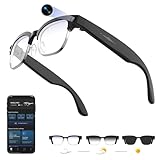
- 【8MPW Camera & 1080P Video and Audio】:These camera glasses feature an 800W camera that outputs sharp 20MP photos and smooth 1080P 30fps videos. Ultra-Clear Video + Powerful Anti-Shake tech+ Built-in dual microphones, you can capture crystal-clear video and audio together -sharply restoring details, perfect for vlogging, travel, and everyday moments
- 【Real-time AI translation Smart Glasses with Camera】:Instantly translate multiple major languages, breaking down language barriers in an instant—no phone required. Ideal for office settings, travel, academic exchanges, international conferences, watching foreign videos, and more
- 【Voice Assistant Recognition and Announcement】:Powered by industry-leading AI large models such as Doubao AI and OpenAI's GPT-4.0. AI voice wake-up lets you ask questions, recognize objects, and get answers on the go. Automatically recognizes objects, menus, landmarks, plants, and more, quickly analyzing the results and announcing them in real time. It instantly becomes your mobile encyclopedia on the go
- 【Bluetooth 5.3 Connection and Automatic Sync to Phone】:Equipped with a low-power BT5.3 chip and Wi-Fi dual transmission technology, offering ultra-low power and high-speed transmission. Captured images and videos are transferred to your phone in real time, eliminating manual export and eliminating storage worries
- 【290mAh Ultra-Long Battery Life】:Ultra-light at 42g, it's made of a durable, skin-friendly material, as light as a feather. Lenses are removable. Its simple, versatile design makes it a comfortable and comfortable wearer. 290mAh ultra-long battery life, 12 hours of music playback and 2 hours of photo or video recording, making it a perfect travel companion
Navigation that works while walking, cycling, and commuting
Turn-by-turn navigation is one of the clearest wins for lightweight smart glasses, and Samsung has already demonstrated strong mapping and transit integration across its phones and watches. In glasses form, this likely means directional arrows, distance prompts, and arrival notifications rather than full map overlays.
This approach aligns with battery and comfort constraints. A simple arrow anchored near the edge of your vision is more usable over a 30-minute walk than a constantly rendered map.
For cyclists and commuters, this could quietly replace frequent phone checks without the bulk of a head-mounted display. It also fits Samsung’s preference for features that work globally, not just in dense urban centers with perfect mapping data.
Fitness and health as an extension of Galaxy Watch, not a replacement
Samsung has not confirmed any standalone health sensors in the glasses themselves, and that is an important expectation to set early. Fitness use cases will almost certainly depend on pairing with a Galaxy Watch for heart rate, GPS, and body metrics.
Where the glasses add value is situational awareness. Pace, distance, lap splits, and workout prompts can appear in your field of view during runs or walks without breaking rhythm.
This mirrors how heads-up displays are used in cycling computers and performance eyewear today. The glasses act as a passive display layer, not a primary fitness device, preserving comfort and battery life while still offering meaningful utility.
Light productivity and task workflows
Samsung’s smart glasses are unlikely to launch as full productivity tools, but they may quietly improve everyday workflows for Galaxy users. Think meeting reminders, task checklists, translation prompts, and contextual suggestions pulled from your phone.
For example, walking into a scheduled meeting could trigger a brief agenda preview. Scanning a boarding pass on your phone might surface gate changes or boarding calls without unlocking your device again.
These are not headline features, but they reduce friction in ways that add up. Samsung’s strength here will depend heavily on One UI optimization and how intelligently it prioritizes information rather than how much it displays.
Audio-first interactions with visual reinforcement
Like Meta, Samsung appears to be leaning toward an audio-centric interaction model, especially early on. Voice commands, spoken responses, and AI summaries are likely to do most of the work, with visuals acting as confirmation rather than the main event.
This has practical benefits. It allows the glasses to remain lighter, cooler, and socially acceptable while still supporting assistant-driven tasks like sending messages, setting reminders, or asking for quick information.
For users already comfortable talking to Bixby or Google Assistant through Galaxy Buds, this will feel like a natural evolution rather than a behavioral leap.
Everyday wearability as a core feature, not an afterthought
Perhaps the most important use case is simply wearing them all day. Samsung’s history with watches suggests a strong focus on balance, weight distribution, and materials that do not fatigue the wearer.
Expect conservative frame designs, likely plastic or lightweight composite materials, and a form factor that accommodates prescription lenses without awkward adapters. Battery life will matter more than peak brightness, with realistic expectations landing closer to all-day assisted use rather than hours of continuous display time.
If Samsung gets this right, the glasses will disappear into daily routines in the same way a Galaxy Watch does. That invisibility, more than any single feature, may define whether Samsung’s first smart glasses succeed with real users rather than early demos.
What early buyers should realistically expect on day one
Early adopters should approach Samsung’s 2026 smart glasses as a companion device, not a platform shift. Their value will be highest for existing Galaxy users who already rely on Samsung’s ecosystem for communication, navigation, and fitness.
The most compelling experiences will be quiet, contextual, and frequent rather than dramatic. If that sounds underwhelming, it is worth remembering that the smartwatch followed a similar path before becoming indispensable.
Samsung appears to be betting that usefulness, comfort, and trust are better long-term foundations than spectacle. For a first-generation product in a still-maturing category, that may be the most realistic strategy of all.
Battery Life, Comfort, and Design Challenges Samsung Must Solve Before 2026
If Samsung’s strategy hinges on smart glasses that quietly blend into daily life, then the hardest work now lies in the unglamorous fundamentals. Battery endurance, physical comfort, and industrial design will determine whether these glasses are worn for twelve hours or abandoned after twelve minutes.
Unlike phones or watches, smart glasses have no margin for compromise. Any friction is amplified because the device lives on the face, not in a pocket.
Battery life: the defining constraint of first-generation smart glasses
Samsung has not published battery specifications, but it has implicitly framed expectations by emphasizing assistant-driven and contextual use rather than immersive visuals. That signals a design target closer to all-day standby with intermittent interactions, not continuous display-on time.
In practical terms, early buyers should expect usage patterns similar to wireless earbuds with smart features. Think hours of passive availability, notifications, navigation prompts, and voice queries, punctuated by short bursts of visual output rather than persistent overlays.
The challenge is energy density. Even with Samsung’s in-house battery expertise, the volume available inside eyeglass temples is tiny compared to a watch case or earbud shell. Every milliwatt saved through low-power displays, efficient processors, and aggressive sleep states will directly translate into comfort and wear time.
Thermal management and weight distribution
Battery life is inseparable from heat. A warm smartwatch is tolerable; warm frames resting on the temples and nose bridge are not.
Samsung’s advantage here is experience. Galaxy Watch generations have steadily improved thermal efficiency by balancing processor load, sensor activation, and chassis materials, and those lessons will need to scale even further in glasses. The goal is not peak performance, but stable, cool operation over long sessions.
Weight distribution will matter as much as raw grams. Even a relatively light frame can cause fatigue if batteries, displays, and sensors are front-heavy. Expect Samsung to explore symmetrical temple designs and potentially modular internals to keep pressure off the nose and ears during extended wear.
Comfort as an all-day wearable, not a tech accessory
Smart glasses cannot behave like gadgets that are consciously “put on” for a task. They must behave like prescription eyewear: worn absentmindedly, adjusted rarely, and forgotten quickly.
This places pressure on hinge quality, temple flex, and nose pad design. Small tolerances matter here in a way they rarely do on watches, where strap adjustability masks fit issues. Samsung will need multiple frame sizes or at least adaptable ergonomics to accommodate different head shapes without relying on aftermarket fixes.
Materials will play a critical role. Lightweight composites, soft-touch coatings, and skin-friendly finishes are far more important than premium metals. Durability still matters, but not at the expense of comfort or daily usability.
Design restraint and social acceptability
Samsung appears acutely aware that smart glasses fail the moment they announce themselves as “tech.” Camera placement, frame thickness, and visible sensors all influence how comfortable others feel during interactions.
Expect conservative aesthetics that resemble everyday eyewear rather than futuristic headsets. This is not about playing it safe; it is about avoiding the social friction that limited earlier attempts at face-worn computing.
From a buyer’s perspective, this restraint is a feature. Glasses that look normal are more likely to be worn consistently, which is ultimately what unlocks value from contextual assistance and notifications.
Prescription support and optical compromises
One of the least visible but most consequential challenges is prescription compatibility. Smart glasses that require clip-ons or thick lens adapters risk alienating a huge portion of potential users.
Samsung has signaled that prescription lenses will be part of the plan, but execution will matter. Lens thickness, field of view, and optical clarity all interact with display placement, and compromises here can affect both comfort and usability.
Early adopters should expect limitations. High prescriptions may reduce display brightness or usable viewing angles, and lens turnaround times could be slower than traditional eyewear. This is a growing pain of the category, not a Samsung-specific flaw, but it will shape first-generation satisfaction.
Durability, sweat, and real-world wear
Unlike phones, glasses are exposed constantly. Sweat, skin oils, temperature swings, and accidental drops are part of daily life.
Samsung’s wearables track record suggests it will aim for meaningful ingress protection, but expectations should remain realistic. These glasses are unlikely to be gym-proof or rain-proof in the way a Galaxy Watch is, at least initially.
For consumers, this means understanding the use case. They are designed for daily errands, commuting, and workdays, not high-impact sports or harsh environments.
💰 Best Value

- #1 SELLING AI GLASSES - Move effortlessly through life with Ray-Ban Meta glasses. Capture photos and videos, listen to music, make hands-free calls or ask Meta AI* questions on-the-go. Ray-Ban Meta glasses deliver a slim, comfortable fit for both men and women.
- CAPTURE WHAT YOU SEE AND HEAR HANDS-FREE - Capture exactly what you see and hear with an ultra-wide 12 MP camera and a five-mic system. Livestream it on Facebook and Instagram.
- LISTEN WITH OPEN-EAR AUDIO — Listen to music and more with discreet open-ear speakers that deliver rich, quality audio without blocking conversations or the ambient noises around you.
- GET REAL-TIME ANSWERS FROM META AI — The Meta AI* built into Ray-Ban Meta’s wearable technology helps you flow through your day. When activated, it can analyze your surroundings and provide context-rich suggestions - all from your smart AI glasses.
- CALL AND MESSAGE HANDS-FREE — Take calls, text friends or join work meetings via bluetooth straight from your glasses.
What these challenges mean for early buyers
Taken together, battery life, comfort, and design will define the first generation more than software features or app support. If Samsung succeeds, the glasses will feel like an extension of existing Galaxy habits rather than a new device category to learn.
If it falls short, even strong ecosystem integration will struggle to overcome physical discomfort or inconsistent endurance. For early buyers, patience and realistic expectations will be essential.
Samsung’s confirmation of a 2026 launch suggests it understands the stakes. Solving these challenges is not optional; it is the difference between smart glasses as a curiosity and smart glasses as a daily wearable.
Pricing, Availability, and Who Should Actually Consider Buying the First Generation
All of those trade-offs inevitably lead to the most practical questions: how much will these cost, when can you actually buy them, and whether being first in line makes sense at all. Samsung has confirmed timing more clearly than pricing, and that alone says a lot about how cautiously it is approaching this category.
Expected pricing and where Samsung is likely to land
Samsung has not announced a price, but the market context narrows the range. Meta’s Ray-Ban smart glasses sit around the mid-hundreds, while Apple’s Vision Pro lives in an entirely different, multi-thousand-dollar reality.
Samsung’s first smart glasses are extremely unlikely to chase Vision Pro-level pricing. Based on component costs, display tech, and Samsung’s historical positioning with Galaxy wearables, a price somewhere above premium earbuds but below a flagship smartphone is the most realistic scenario.
Expect something that feels expensive for glasses but not shocking for a first-generation wearable, especially one tied into the Galaxy ecosystem. Prescription lenses will almost certainly be an additional cost, and that add-on could meaningfully change the final out-of-pocket price for many buyers.
Availability: a controlled rollout is the smart bet
While Samsung has confirmed a 2026 launch window, do not expect a global, day-one release across all major markets. Samsung’s recent wearable launches suggest a staggered approach, starting with core regions like South Korea, the US, and parts of Europe.
Supply constraints around displays, sensors, and custom optics make a limited initial release more likely than mass availability. This is also a way for Samsung to gather real-world usage data before scaling aggressively.
For consumers, that means early access may depend heavily on geography. Even within supported markets, certain configurations, especially prescription options, may ship later or in smaller quantities.
First-generation pricing versus long-term value
The more important question is not whether the price is “fair,” but whether the value makes sense right now. First-generation smart glasses will almost certainly depreciate faster than a Galaxy Watch or phone as hardware and software mature.
Battery life, display efficiency, and comfort improvements tend to arrive quickly in second-generation wearables. Buyers should assume that today’s limitations will be addressed relatively fast, sometimes within a single product cycle.
If you are used to upgrading phones yearly or watches every two years, that depreciation may be acceptable. If you expect glasses to last half a decade like traditional eyewear, the first generation will feel like a short-term experiment.
Who should seriously consider buying at launch
These glasses will make the most sense for deeply invested Galaxy users who already rely on Samsung phones, earbuds, and watches daily. Ecosystem integration, not raw AR capability, will be the core value proposition at launch.
Developers, product designers, and tech professionals who want hands-on experience with Samsung’s AR direction will also find value early. Understanding interaction models, notification behavior, and comfort limits in real-world use is something no demo can fully convey.
Early adopters who enjoy living with unfinished edges, occasional bugs, and evolving software will likely be satisfied. For this group, being part of the category’s formative phase is a feature, not a drawback.
Who should wait, and why patience may pay off
If you primarily want smart glasses for immersive visuals, rich 3D experiences, or all-day endurance, the first generation is unlikely to deliver. These will be assistive, glanceable, and context-aware, not transformative computing replacements.
Buyers with complex prescriptions or sensitivity to weight and facial pressure should also consider waiting. Second-generation designs typically bring thinner frames, better balance, and more refined optical solutions.
Most consumers will be better served by observing how Samsung responds to early feedback. A 2027 or 2028 model is far more likely to feel like a polished daily wearable rather than a promising prototype.
The realistic buyer mindset for 2026
Samsung’s debut smart glasses should be approached the way the original Galaxy Watch or early foldables were: ambitious, imperfect, and direction-setting. They are a statement of intent more than a final form.
For the right buyer, that makes them compelling despite the compromises. For everyone else, they are a signal that the category is finally becoming mainstream enough to wait for refinement rather than novelty.
Understanding which side of that line you fall on will matter far more than the spec sheet when these glasses finally arrive.
Early Buyer Guidance: Who Should Wait, Who Should Watch Closely, and What to Expect Next
Taken together, everything Samsung has confirmed and implied points to a careful, ecosystem-first entry rather than a moonshot device. That framing is essential when deciding whether 2026 is the right moment to buy, or simply the right moment to pay attention.
Who should watch closely in 2026
Deeply invested Galaxy users should be watching Samsung’s first smart glasses more closely than anyone else. If your daily setup already includes a Galaxy phone, Galaxy Watch, and Galaxy Buds, these glasses are designed to slot naturally into that workflow, acting as an extension rather than a standalone computer.
Expect notification mirroring, contextual prompts, navigation cues, and light AI assistance to feel familiar and well-integrated, even if the hardware itself is conservative. Samsung’s advantage is not pushing boundaries in optics, but making the glasses feel like a natural part of the One UI and Galaxy ecosystem from day one.
Developers, product designers, and professionals interested in spatial interfaces should also pay attention. Even limited AR functionality can be valuable when it establishes interaction patterns, comfort thresholds, and social acceptability in real-world use rather than controlled demos.
Who should wait, and why patience may pay off
If your expectations are shaped by Apple Vision Pro demos or high-end mixed reality headsets, Samsung’s first-generation glasses will almost certainly disappoint. These are not designed for immersive media, virtual workspaces, or extended 3D interaction.
Users sensitive to weight distribution, nose pressure, or frame thickness should be cautious as well. First-generation smart glasses tend to prioritize housing components over long-term comfort, and refinements in materials, hinge design, and balance usually arrive one or two generations later.
There is also no urgency for buyers who value battery longevity above all else. Early smart glasses typically offer limited all-day endurance, especially once cameras, displays, and always-on sensors are involved, and Samsung is unlikely to defy physics on its first attempt.
The realistic buyer mindset for 2026
The healthiest way to view Samsung’s debut smart glasses is as a directional product, similar to the original Galaxy Fold or early Galaxy Watches. They establish a platform, test consumer tolerance, and signal long-term commitment rather than deliver perfection.
For early adopters who enjoy living on the edge of new categories, that makes them exciting. Software updates, evolving AI features, and expanding app support will likely matter more over time than launch-day specifications.
For most consumers, however, the smarter move is to treat this first model as reconnaissance. Watching how Samsung iterates on design, comfort, and real-world usability will provide clearer signals about when smart glasses are ready to become an everyday accessory rather than a tech experiment.
What to expect next from Samsung
Between now and launch, expect Samsung to emphasize partnerships, developer tools, and ecosystem messaging more than raw hardware reveals. The company will likely frame these glasses as complementary to phones and watches, not as devices that replace them.
Incremental leaks and controlled previews should clarify display type, camera intent, and AI capabilities, but major surprises are unlikely. Samsung’s strategy appears deliberately cautious, aiming to avoid the overpromising that has hurt earlier smart glass efforts across the industry.
Longer term, the real story will begin after launch. How quickly Samsung refines the form factor, expands software functionality, and responds to early user feedback will determine whether these glasses become a niche accessory or the foundation of a multi-year wearable platform.
For readers trying to decide how much emotional and financial energy to invest now, the answer is simple. Watch closely, stay curious, and calibrate expectations carefully. Samsung’s 2026 smart glasses matter not because they will change everything overnight, but because they mark the moment Samsung is finally ready to play the long game in AR wearables.