Samsung’s long-rumored smart glasses have finally moved from vague executive hints into something more concrete, and the reason this leak matters is that it’s unusually specific by Samsung standards. Instead of a single prototype or an exploratory patent filing, the report points to two distinct Galaxy Glasses variants, internal codenames, and a clear target window of 2026. That combination suggests a real product roadmap, not just a lab experiment.
If you’ve been following Samsung’s wearable strategy through Galaxy Watch, Galaxy Ring, and its recent Android XR partnerships, this leak helps explain where glasses actually fit. It also clarifies why Samsung appears to be taking a slower, more segmented approach than Apple’s Vision Pro-style push. Understanding what’s rumored, who’s reporting it, and why the timeline matters is key to judging whether Galaxy Glasses are something to anticipate—or something to keep at arm’s length for now.
Where the leak comes from and why it carries weight
The report traces back to Korean supply-chain and development sources rather than marketing leaks or speculative patents, which historically tend to be more accurate with Samsung hardware. These are the same channels that have correctly flagged early Galaxy Watch redesigns and Samsung’s health sensor timelines before public confirmation. While not official, the sourcing aligns with how Samsung’s internal roadmaps usually surface.
What’s notable is that the leak references products already in development rather than “under consideration,” language Samsung suppliers use carefully. Tooling, component sourcing, and OS planning appear to be underway, which strongly implies Samsung expects at least one version to ship. That alone separates this from earlier Galaxy Glasses rumors that never progressed past concept-stage chatter.
🏆 #1 Best Overall
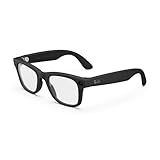
- #1 SELLING AI GLASSES - Tap into iconic style for men and women, and advanced technology with the newest generation of Ray-Ban Meta glasses. Capture photos and videos, listen to music, make hands-free calls or ask Meta AI questions on-the-go.
- UP TO 8 HOURS OF BATTERY LIFE - On a full charge, these smart AI glasses can last 2x longer than previous generations, up to 8 hours with moderate use. Plus, each pair comes with a charging case that provides up to 48 hours of charging on-the-go.
- 3K ULTRA HD: RECORD SHARP VIDEOS WITH RICH DETAIL - Capture photos and videos hands-free with an ultra-wide 12 MP camera. With improved 3K ultra HD video resolution you can record sharp, vibrant memories while staying in the moment.
- LISTEN WITH OPEN-EAR AUDIO — Listen to music and more with discreet open-ear speakers that deliver rich, quality audio without blocking out conversations or the ambient noises around you.
- ASK YOUR GLASSES ANYTHING WITH META AI - Chat with Meta AI to get suggestions, answers and reminders straight from your smart AI glasses.
The two codenames and what “two versions” likely means
According to the leak, Samsung is working on two Galaxy Glasses models under separate internal codenames, widely interpreted as serving different use cases rather than regional variants. In Samsung’s wearable history, multiple codenames usually signal tiered functionality, not just size or cosmetic differences. Think Galaxy Watch vs. Watch Pro, not LTE vs. non-LTE.
The most realistic interpretation is a split between a lightweight, non-display smart glasses model and a more advanced display-equipped AR version. The former would focus on audio, notifications, AI assistance, camera input, and all-day comfort, competing directly with Meta Ray-Ban and future Google-backed designs. The latter would likely incorporate waveguide displays, limited AR overlays, and a more complex thermal and battery architecture, closer to an Android XR reference device than a fashion-first wearable.
Why Samsung would separate consumer and advanced models
Samsung has learned, sometimes painfully, that mass-market wearables live or die on comfort, battery life, and price. A display-free Galaxy Glasses model could realistically hit multi-day battery life, stay under 50 grams, and work seamlessly with Galaxy phones, watches, and earbuds. That kind of product fits Samsung’s strength in ecosystem integration rather than bleeding-edge optics.
A second, more advanced version gives Samsung room to experiment with displays, spatial UI, and developer tools without forcing compromises onto mainstream buyers. It also mirrors Samsung’s broader strategy of letting early adopters and enterprise users absorb first-generation limitations before features trickle down. This approach reduces reputational risk while still planting a flag in AR.
Why the 2026 timeline is deliberate, not delayed
At first glance, 2026 sounds late, especially with Apple, Meta, and Google all accelerating their XR narratives. In reality, that timing aligns with several dependencies Samsung cannot rush. Microdisplay yields, waveguide efficiency, on-device AI power efficiency, and battery density all need meaningful improvements to make glasses viable beyond novelty.
It also lines up with Android XR’s maturation cycle. Google has been clear that XR glasses, not just headsets, are part of the platform’s future, but the software stack isn’t consumer-ready yet. Samsung waiting until 2026 allows One UI, Galaxy AI features, and Android XR frameworks to converge into something usable on the face, not just impressive on a demo stage.
How this fits into Samsung’s broader wearable ecosystem
Galaxy Glasses don’t exist in isolation; they make sense only when paired with a Galaxy phone, watch, and earbuds. Expect glasses to offload heavy processing to a phone, rely on Galaxy Watch for health and gesture input, and use Buds for spatial audio and voice interaction. This modular approach keeps glasses light while reinforcing Samsung’s ecosystem lock-in.
The leak reinforces that Samsung sees glasses as an extension of its wearables stack, not a replacement for phones or watches. If the two-version strategy holds, Galaxy Glasses could become the most flexible wearable Samsung has launched yet, scaling from passive daily companion to active AR interface depending on how deep users want to go.
Two Versions, One Platform: What Samsung Likely Means by Dual Galaxy Glasses Models
Taken together, the leak doesn’t suggest two entirely separate product lines so much as a single Galaxy Glasses platform expressed at two levels of ambition. Samsung has used this playbook before in wearables, offering shared software foundations while diverging sharply on hardware capability, price, and target user.
What matters most is that both versions would likely run the same Android XR-based stack, integrate with Galaxy phones and watches in similar ways, and support overlapping apps. The differentiation would come from how much visual computing happens on the face versus offloaded to the phone, and how much Samsung is willing to ask users to tolerate in size, weight, and cost.
A baseline “viewer” model focused on everyday utility
The first version is best understood as a lightweight, display-limited or even display-less smart glasses product. Think notifications, navigation cues, translation prompts, camera-based AI features, and contextual audio rather than full spatial overlays.
In practical terms, this likely means no waveguide-based AR display, or at most a very simple monocular panel used sparingly. By avoiding complex optics, Samsung can keep frame thickness closer to regular eyewear, manage heat more easily, and push battery life into all-day territory with intermittent use.
This model would lean heavily on the Galaxy phone for processing, similar to how Galaxy Watch models offload tasks to phones today. Comfort and wearability become the selling points here: lightweight materials, balanced temples, standard lens compatibility, and a form factor you could realistically wear for hours without fatigue.
A higher-end AR-capable model aimed at developers and power users
The second version is where the leak gets more ambitious. This is likely the Galaxy Glasses variant with proper near-eye displays, spatial anchoring, and richer interaction models, even if still far from sci‑fi holograms.
Expect waveguide optics, higher power draw, and a noticeably thicker frame profile, particularly around the temples where batteries, sensors, and compute modules would live. Battery life would almost certainly be measured in hours rather than days, making this a more deliberate-use device rather than something you forget you’re wearing.
This version would exist to push Android XR forward, giving developers and early adopters real hardware to build against. Samsung has historically been willing to ship technically impressive but niche hardware to seed ecosystems, even if mass adoption comes later.
Why Samsung would keep both models on one software foundation
Running both versions on the same platform reduces fragmentation, which has plagued smart glasses before. Developers can target a single SDK, scaling experiences up or down depending on whether a display is present.
For users, this means continuity. Apps that start as glanceable audio or phone-mirrored experiences on the base model could later evolve into spatial overlays if someone upgrades to the more advanced glasses. That upgrade path is crucial if Samsung wants Galaxy Glasses to feel like a family, not experiments.
It also allows Samsung to refine interaction models gradually. Voice, head movement, and subtle gestures can be standardized across both versions, while visual output adapts to hardware capability rather than forcing entirely different UX paradigms.
Parallels with Samsung’s existing wearable tiering strategy
This dual-model approach mirrors how Samsung already segments Galaxy Watch and Galaxy Buds lines. There’s usually a mainstream option optimized for comfort and value, alongside a more feature-dense version that pushes sensors, materials, or performance.
Applied to glasses, that could mean differences in frame materials, sensor arrays, and thermal design rather than just software toggles. A base model might prioritize lightweight plastics and minimal cameras, while the AR-focused version could use metal reinforcement, additional depth sensors, and active cooling strategies.
Samsung has learned that not every user wants the most advanced hardware on their body all day. Giving people choice without splitting the ecosystem is a lesson hard-earned in wearables.
What this split signals about Samsung’s confidence level
Perhaps most telling is what the two-version leak says about Samsung’s own expectations. This doesn’t read like a company betting everything on a single, mass-market AR breakthrough.
Instead, it suggests cautious confidence: enough belief to invest in real AR hardware, but enough restraint to hedge with a simpler model that can succeed even if AR adoption remains slow. That balance aligns with Samsung’s recent wearable launches, which increasingly favor iterative gains over moonshots.
For readers watching the space closely, the takeaway isn’t which version sounds cooler. It’s that Samsung appears committed to glasses as a category, but realistic about how uneven the path to mainstream adoption will be.
Display vs Non‑Display Glasses: The Most Plausible Split Explained
If Samsung really is planning two Galaxy Glasses models for 2026, the most credible interpretation isn’t “cheap versus premium” in the traditional sense. It’s display versus non‑display, a split that neatly explains the rumored timelines, hardware complexity, and Samsung’s cautious posture around mainstream AR adoption.
This approach also dovetails with how the company has historically introduced new wearable categories. Samsung tends to lead with a broadly wearable, socially acceptable product, then layer in more ambitious hardware once interaction norms and software expectations are better understood.
The non‑display model: context, capture, and all‑day wearability
The non‑display Galaxy Glasses would likely function as an always‑available companion rather than a visual computing device. Think camera, microphones, speakers, sensors, and tight Galaxy AI integration, without the complexity or cost of waveguides or micro‑OLED panels.
From a design standpoint, this version would almost certainly prioritize weight and balance over raw capability. Plastic or TR‑90 frames, minimal metal reinforcement, and careful weight distribution around the temples would be essential to keep total mass close to conventional eyewear, likely under 40 grams if Samsung wants true all‑day comfort.
Rank #2
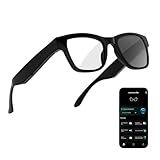
- 3-in-1 AI Glasses: Enjoy ① AI Voice Assistant (Powered by ChatGPT, Gemini & Deepseek), ② Stylish Photochromic Lenses Glasses, and ③ Bluetooth Open-Back Headphones, all in one.
- Free Talk Translation: Automatically detects and translates over 160 languages in real-time, allowing seamless work and translation without touching your phone or glasses.
- Voice, Video & Photo Translation: Supports over 98% of global languages, offering fast and accurate translations—ideal for international travel, business meetings, or cross-cultural communication.
- AI Meeting Assistant: Converts recordings from smart glasses into text and generates mind maps, making it easier to capture and organize meeting insights.
- Long Battery Life, Bluetooth 5.4 & Eye Protection: Up to 10 hours of music and 8 hours of talk time, with easy Type-C charging. Bluetooth 5.4 ensures stronger, stable connections, while photochromic lenses block UV rays and blue light, protecting your eyes in any environment.
Battery life becomes far more manageable without a display in the mix. A non‑display model could realistically target a full waking day of intermittent use, leaning on a low‑power SoC, aggressive standby modes, and short, burst‑based tasks like photo capture, voice queries, or contextual audio prompts.
Functionally, this is where Samsung can normalize glasses as an extension of the Galaxy ecosystem. Hands‑free Gemini or Bixby queries, quick audio summaries, translation through bone‑conduction or discreet open‑ear speakers, and passive health or posture sensing all make sense without forcing users to accept visible screens on their face.
The display model: true AR, higher expectations, higher risk
The display‑equipped Galaxy Glasses are where things get exponentially harder. Adding even a modest monocular display means waveguides, projectors, brightness management, heat dissipation, and far more demanding software expectations.
Samsung has the display expertise to pull this off, but physics remains the bottleneck. To deliver readable overlays in daylight without bulky frames, Samsung would likely use a single‑eye micro‑OLED system with limited field of view, optimized for glanceable information rather than immersive visuals.
Weight and thermal constraints would immediately differentiate this model from its non‑display sibling. Metal frame elements, thicker temples, and possibly active thermal spreading would be necessary, pushing comfort closer to “several hours” rather than “all day,” much like early LTE smartwatches compared to today’s refined designs.
Battery life would also be a trade‑off, not a strength. Even with offloading heavy processing to a paired Galaxy phone, users should expect shorter sessions, deliberate usage patterns, and a product that feels closer to a tool than a passive companion.
Why this split makes sense for Android XR and Galaxy AI
Seen through Samsung’s broader strategy, a display versus non‑display split allows Android XR and Galaxy AI to scale organically. The non‑display glasses establish interaction norms, data pipelines, and developer interest without requiring full AR investment from day one.
By the time the display model arrives, Samsung can reuse voice controls, head gestures, spatial awareness logic, and AI summarization across both products. The display simply becomes an output layer, not a fundamentally different platform, reducing fragmentation and developer fatigue.
This mirrors how Samsung matured smartwatch UX. Early Galaxy Watches focused on notifications and fitness, while later models layered in LTE independence, advanced health sensors, and richer apps once users were comfortable wearing them continuously.
What this means for buyers watching the 2026 timeline
For enthusiasts, the key insight is that these two Galaxy Glasses wouldn’t be competing products. They’d be adjacent entry points into the same ecosystem, optimized for very different tolerance levels around visibility, comfort, and social acceptability.
The non‑display version is the one most people could realistically imagine wearing daily, much like standard glasses or earbuds. The display version is for early adopters willing to accept compromises in exchange for spatial information and hands‑free visuals.
In that context, the rumored two‑model strategy feels less like indecision and more like discipline. Samsung isn’t trying to force AR glasses into everyone’s life at once. It’s building a ramp, and display versus non‑display is the most believable way to do it.
How Galaxy Glasses Would Fit Into Samsung’s Android XR and One UI Ecosystem
The two‑model strategy only really makes sense when viewed through Samsung’s software stack rather than the hardware alone. Galaxy Glasses wouldn’t be a standalone platform in the way early smartwatches once tried to be; they’d function as another surface for One UI and Android XR to express themselves.
Samsung has spent years unifying phones, watches, tablets, buds, and even laptops under a shared interaction language. Glasses would be the next logical extension, not a reset.
Android XR as the invisible backbone
Android XR is likely doing far more work behind the scenes than users will ever notice. For non‑display Galaxy Glasses, XR becomes the framework that manages spatial awareness, contextual audio, head gestures, and voice‑first interactions without demanding a visual UI at all.
That’s critical, because it allows Samsung to train developers and users on XR concepts without forcing optics, waveguides, or battery‑draining displays into the equation. Think of it as XR without the spectacle.
For the display‑equipped version, Android XR would simply expose those same systems visually. Navigation prompts, AI summaries, and glanceable widgets become optional overlays rather than the core experience.
One UI as the consistency layer across devices
If Galaxy Glasses launch in 2026, they’ll almost certainly inherit One UI design principles rather than introducing a new interface paradigm. That means predictable gestures, familiar notification logic, and tight continuity with Galaxy phones and watches.
A calendar reminder seen on a Galaxy Watch could be acknowledged via a subtle head nod. A navigation cue started on a Galaxy phone could surface as audio on non‑display glasses or as an arrow overlay on display models.
This consistency matters for comfort and daily wearability. Just as Samsung refined watch ergonomics, button placement, and haptics over multiple generations, glasses will need to feel intuitive within minutes, not days.
The phone still does the heavy lifting
Despite the futuristic framing, Galaxy Glasses would remain deeply dependent on a paired Galaxy smartphone. Processing, AI inference, location data, and connectivity would largely live on the phone to keep glasses lighter, cooler, and more socially acceptable.
This mirrors Samsung’s current smartwatch approach, where the watch excels at sensing and presentation but relies on the phone for sustained performance and battery efficiency. For glasses, that balance becomes even more important given size constraints and facial comfort.
Expect battery life measured in sessions rather than days, especially on display models. Non‑display glasses could stretch longer, but neither version is likely to replace a phone’s role in the ecosystem.
Where Galaxy Watch quietly becomes essential
One under‑discussed piece of this ecosystem is how Galaxy Watch could act as a control and validation layer. Wrist‑based inputs are often more discreet than voice or head gestures, particularly in public spaces.
Health data, posture awareness, and activity context from the watch could also inform how Galaxy Glasses behave. A walking navigation prompt might surface differently than one triggered while driving or sitting at a desk.
Samsung already treats its watches as long‑term companions built for comfort, durability, and all‑day wear. Glasses would likely assume the watch is present, much like LTE models assume a phone nearby even when operating independently.
Galaxy AI as the reason glasses exist at all
Without Galaxy AI, smart glasses risk becoming notification mirrors or novelty cameras. With it, they become contextual filters that decide what deserves your attention before you ever look at a screen.
On non‑display glasses, this could mean whispered summaries, real‑time translation through bone‑conduction audio, or proactive reminders based on what the cameras and sensors detect. The value isn’t what you see, but what you don’t have to check anymore.
Display models simply externalize that same intelligence visually. Instead of pulling out a phone or lifting a wrist, information appears where your attention already is, even if only for a second.
Rank #3

- 【AI Real-Time Translation & ChatGPT Assistant】AI glasses break language barriers instantly with AI real-time translation. The built-in ChatGPT voice assistant helps you communicate, learn, and handle travel or business conversations smoothly—ideal for conferences, overseas trips, and daily use.
- 【4K Video Recording & Photo Capture 】Smart glasses with camera let you capture your world from a first-person view with the built-in 4K camera. Take photos and record videos hands-free anytime—perfect for travel moments, vlogging, outdoor adventures, and work documentation.
- 【Bluetooth Music & Hands-Free Calls 】Camera glasses provide Bluetooth music and crystal-clear hands-free calls with an open-ear design. Stay aware of your surroundings while listening—comfortable for long wear and safer for commuting, cycling, and outdoor use.
- 【IP65 Waterproof & Long Battery Life】 Recording glasses are designed for daily wear with IP65 waterproof protection against sweat, rain, and dust. The built-in 290mAh battery provides reliable performance for workdays and travel—no anxiety when you’re on the go.
- 【Smart App Control & Object Recognition】Smart glasses connect to the companion app for easy setup, file management, and feature control. They support AI object recognition to help identify items and improve your daily efficiency—perfect for travel exploration and a smart lifestyle.
Why Samsung’s ecosystem advantage matters here
Samsung is uniquely positioned to make Galaxy Glasses feel less experimental because it controls so many touchpoints. Phones, watches, earbuds, tablets, and even TVs already share accounts, settings, and behavioral data.
That scale allows Samsung to tune comfort, usability, and value in a way smaller XR players can’t. Materials, weight distribution, heat management, and even hinge durability can be informed by decades of hardware iteration across categories.
If Galaxy Glasses succeed, it won’t be because they’re revolutionary on day one. It’ll be because they feel like they belong, sliding naturally into an ecosystem users already trust and wear daily.
Hardware Expectations: Cameras, Sensors, Audio, Battery Life, and Wearability Realities
If Galaxy Glasses are meant to feel like a natural extension of Samsung’s existing wearables, the hardware can’t chase spectacle at the expense of comfort. Every component choice will be shaped by a simple constraint: these are meant to be worn for hours, not minutes, and likely alongside a Galaxy Watch and earbuds.
The leak pointing to two versions makes the hardware story easier to parse. A lighter, non‑display model can prioritize cameras, microphones, and audio efficiency, while a display‑equipped version absorbs the cost, weight, and power penalties that come with visual output.
Cameras: Context first, content second
Expect cameras to be optimized for awareness rather than photography. Think wide‑angle sensors in the 8–12MP range with fast readout, tuned for computer vision tasks like object recognition, text capture, and spatial mapping rather than social media video.
Samsung has little incentive to compete directly with phone cameras here. Heat, battery drain, and privacy optics all argue against high‑resolution, always‑on recording, especially for a consumer product intended for public use.
A dual‑camera setup is plausible on the display model to support depth sensing or more reliable hand‑tracking. The non‑display version could settle for a single forward‑facing camera supplemented by inertial data from the frame itself and the paired watch.
Sensors: Borrowed intelligence from the wrist and beyond
Onboard sensors will likely be minimal but strategic. Accelerometers, gyroscopes, proximity sensors, and ambient light sensors are table stakes, enabling head‑movement detection, context awareness, and adaptive audio or display brightness.
More advanced sensing, such as heart rate, skin temperature, or stress indicators, almost certainly remains the job of the Galaxy Watch. Samsung already has validated sensor stacks there, and duplicating them in glasses would add bulk without much benefit.
What matters is sensor fusion across devices. Glasses can interpret what you’re looking at, the watch can interpret how your body is responding, and Galaxy AI connects the dots into something actionable rather than overwhelming.
Audio: Bone conduction or open‑ear realism
Audio is arguably the most important output channel for early Galaxy Glasses. Leaks and industry precedent suggest open‑ear speakers or bone‑conduction drivers rather than sealed earbuds, preserving environmental awareness and social acceptability.
Samsung has years of tuning experience from Galaxy Buds, but glasses demand a different balance. Volume must be intelligible without leaking excessively, and microphones must isolate voice commands in noisy, real‑world environments.
Expect multi‑mic arrays with aggressive noise suppression and beamforming. Real‑time translation, AI summaries, and navigation cues only work if input and output feel effortless, not like talking to a gadget.
Battery life: The hardest compromise
Battery life will define how these products are perceived more than any spec sheet bullet. A realistic target for first‑generation hardware is four to six hours of active use for the display model, potentially longer for the non‑display version relying primarily on audio and intermittent camera activation.
All‑day standby is more important than all‑day active use. Glasses that survive a full workday, surfacing information selectively, fit Samsung’s ecosystem philosophy better than ones that demand midday charging.
Charging cases, similar to earbuds, are likely. They solve portability, protect the lenses and frame, and quietly acknowledge that glasses, like watches, are not meant to run flat before bedtime.
Wearability: Weight, balance, and the unglamorous details
This is where Samsung’s hardware maturity could matter most. Weight distribution across the temples, hinge durability, nose pad comfort, and thermal management are not headline features, but they decide whether a product gets worn or abandoned.
A non‑display model could realistically land under 50 grams, approaching the feel of thick sunglasses. A display model will be heavier, and success will hinge on whether that extra mass is balanced well enough to avoid pressure points during long sessions.
Materials will likely mirror Samsung’s watch strategy: lightweight alloys, reinforced polymers, and understated finishes that don’t scream prototype. Interchangeable frames or prescription lens support would significantly affect real‑world adoption, even if they complicate manufacturing.
Two versions, two realities
Taken together, the hardware points toward a pragmatic split. One version acts as an always‑with‑you AI sensor and audio interface, leaning heavily on the Galaxy Watch and phone. The other pushes into visual augmentation, accepting trade‑offs in weight, heat, and battery life in exchange for richer interactions.
Neither version needs to be perfect in 2026. They need to be wearable enough that users trust them daily, and restrained enough that Galaxy AI feels helpful rather than intrusive.
That balance, more than any individual component, will determine whether Galaxy Glasses feel like the next logical step in Samsung’s wearable lineup or just another ambitious experiment.
Control and Input: Voice, Gestures, Galaxy Watch Pairing, and Phone Dependency
If Samsung is serious about making Galaxy Glasses wearable all day, control has to disappear into the background. The leaks so far suggest an input stack that is deliberately conservative, borrowing heavily from what already works across Galaxy phones and watches rather than inventing a brand‑new interaction language.
That choice matters, because input friction is where most smart glasses fail. Touchpads on temples, tiny buttons, and over‑ambitious gesture systems tend to break immersion or draw unwanted attention in public.
Voice first, but not voice only
Voice control is almost certainly the primary input method, with Galaxy AI doing the heavy lifting. This aligns with Samsung’s recent push to make on‑device and hybrid AI feel ambient rather than summoned, especially across earbuds, watches, and phones.
For a non‑display version, voice is not optional; it is the interface. Think quick commands for notifications, translation, reminders, navigation prompts, and audio capture, with bone‑conduction or open‑ear speakers handling feedback in a way that preserves situational awareness.
The display model changes the equation slightly. Voice remains central, but it can be augmented by glanceable UI elements that confirm actions visually, reducing the need to speak every command out loud in social settings.
Gestures: restrained, contextual, and likely watch‑assisted
Hand gestures are rumored, but expectations should be tempered. Samsung has experimented with gesture control before, from early Galaxy phones to recent XR demos, and the company tends to favor reliability over flash.
Rank #4
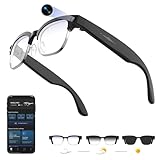
- 【8MPW Camera & 1080P Video and Audio】:These camera glasses feature an 800W camera that outputs sharp 20MP photos and smooth 1080P 30fps videos. Ultra-Clear Video + Powerful Anti-Shake tech+ Built-in dual microphones, you can capture crystal-clear video and audio together -sharply restoring details, perfect for vlogging, travel, and everyday moments
- 【Real-time AI translation Smart Glasses with Camera】:Instantly translate multiple major languages, breaking down language barriers in an instant—no phone required. Ideal for office settings, travel, academic exchanges, international conferences, watching foreign videos, and more
- 【Voice Assistant Recognition and Announcement】:Powered by industry-leading AI large models such as Doubao AI and OpenAI's GPT-4.0. AI voice wake-up lets you ask questions, recognize objects, and get answers on the go. Automatically recognizes objects, menus, landmarks, plants, and more, quickly analyzing the results and announcing them in real time. It instantly becomes your mobile encyclopedia on the go
- 【Bluetooth 5.3 Connection and Automatic Sync to Phone】:Equipped with a low-power BT5.3 chip and Wi-Fi dual transmission technology, offering ultra-low power and high-speed transmission. Captured images and videos are transferred to your phone in real time, eliminating manual export and eliminating storage worries
- 【290mAh Ultra-Long Battery Life】:Ultra-light at 42g, it's made of a durable, skin-friendly material, as light as a feather. Lenses are removable. Its simple, versatile design makes it a comfortable and comfortable wearer. 290mAh ultra-long battery life, 12 hours of music playback and 2 hours of photo or video recording, making it a perfect travel companion
Rather than full mid‑air gesture vocabularies, the more realistic approach is limited, context‑aware gestures: subtle head movements, taps on the frame, or wrist‑based gestures detected via a paired Galaxy Watch. This avoids the fatigue and social awkwardness that doomed earlier gesture‑heavy wearables.
If the Watch becomes a gesture proxy, it neatly solves two problems at once. It provides precise motion data, and it shifts complex sensing away from the glasses, helping with weight, heat, and battery constraints.
The Galaxy Watch as a control hub, not an accessory
One of the more interesting implications of the leaks is how central the Galaxy Watch could become. Rather than treating the watch as optional, Samsung appears to be positioning it as a secondary control surface for Galaxy Glasses.
This fits Samsung’s ecosystem logic. The watch already handles quick replies, health context, and authentication, and it sits in a socially acceptable interaction zone. A glance, a twist of the wrist, or a simple touch interaction is far less intrusive than poking at glasses in public.
For users already invested in Galaxy Watch hardware, this could feel natural. For everyone else, it quietly raises the effective cost of entry, especially if meaningful functionality is gated behind watch pairing.
Phone dependency: unavoidable, but strategic
Despite talk of edge AI, Galaxy Glasses will almost certainly be phone‑dependent in 2026. Offloading processing, connectivity, and heavy AI workloads to a Galaxy smartphone keeps the glasses lighter and cooler, and aligns with Samsung’s broader Android XR roadmap.
This dependency is not necessarily a weakness. It allows Samsung to iterate faster, push software updates more aggressively, and use the phone as a visual fallback for tasks that do not belong on a tiny display or audio interface.
The risk is usability fragmentation. A non‑display model may feel too limited without a phone nearby, while a display model risks duplicating phone functions unless Samsung is disciplined about what belongs in your line of sight and what stays in your pocket.
Two versions, two control philosophies
The rumored split between versions likely extends to control philosophy as much as hardware. The non‑display model leans heavily on voice, audio, and watch‑based input, functioning as an extension of Galaxy AI rather than a standalone computer.
The display model can justify more direct interaction, but even here Samsung seems unlikely to chase fully independent operation. Expect restrained visuals, minimal touch input, and a continued reliance on phone and watch for anything complex.
If this sounds cautious, it should. Control is where smart glasses either feel magical or exhausting, and Samsung’s leaks point toward a company more interested in sustained daily use than in headline‑grabbing demos.
Samsung vs Meta vs Apple: Where Galaxy Glasses Would Compete — and Where They Wouldn’t
Seen through the lens of control philosophy and ecosystem dependency, Galaxy Glasses are not shaping up as a direct assault on everything Meta and Apple are building. They look more like a selective challenge, aimed at specific usage windows where glasses make sense without asking users to change how they behave in public.
That distinction matters, because Meta and Apple are solving very different problems with very different tolerances for size, weight, battery life, and social friction.
Against Meta: everyday utility versus always‑on capture
Meta’s Ray‑Ban Smart Glasses have succeeded not because of displays or spatial computing, but because they feel like normal eyewear that happens to do a few useful things. Camera capture, open‑ear audio, and low‑friction voice access are the core pillars, and Meta is steadily layering AI on top.
Samsung’s non‑display Galaxy Glasses would compete directly in this space, but from a different angle. Where Meta optimizes for content capture and cloud‑based AI, Samsung appears more focused on contextual assistance tied to your personal devices, your health data, and your daily routines.
The difference is subtle but important. Meta’s glasses want to see the world and share it; Samsung’s want to understand the user inside that world. That makes Galaxy Glasses less compelling as social capture tools, but potentially more valuable as private, glance‑free companions.
Where Samsung likely would not compete is in camera‑forward storytelling. Meta has already normalized outward‑facing cameras in glasses, and Samsung may decide that the privacy, thermal, and battery trade‑offs are not worth it for a first‑generation mass product.
Against Meta’s future AR: refusing the arms race
Meta’s long‑term ambition is full AR glasses, and its prototypes show a willingness to tolerate thicker frames, external compute pucks, and aggressive power budgets to get there. Samsung’s leaked direction suggests restraint instead of escalation.
Even a display‑equipped Galaxy Glasses model in 2026 is unlikely to chase wide‑field visuals, hand‑tracking heavy interfaces, or persistent spatial UI. Samsung seems more interested in delivering narrow, high‑confidence interactions that can survive all‑day wear.
This is not a technological shortfall so much as a product philosophy choice. Samsung appears content to let Meta burn capital proving what is possible, while it focuses on what is repeatable, manufacturable, and socially durable at scale.
Against Apple: complement versus replacement
Apple’s Vision Pro does not compete with Galaxy Glasses at all, and that is by design. Vision Pro is a spatial computer you put on to do a task, while Galaxy Glasses are shaping up to be something you forget you are wearing.
The more interesting comparison is not with Vision Pro, but with the glasses Apple has not yet released. If Apple launches lightweight smart glasses later in the decade, they will almost certainly be tightly bound to the iPhone and Apple Watch, with Apple‑controlled silicon and aggressive vertical integration.
Samsung’s approach mirrors that structure, but with important differences. Galaxy Glasses would sit inside a more modular ecosystem, leaning on Galaxy phones, Galaxy Watch, and Android XR rather than replacing them. That makes Samsung’s glasses less authoritative, but more flexible across price tiers and hardware generations.
Where Samsung would struggle is polish. Apple’s strength is not feature breadth, but cohesion: displays tuned to human perception, materials chosen for comfort, and software that hides complexity. Samsung can match hardware ambition, but matching Apple’s end‑to‑end refinement remains an open question.
Ecosystem gravity as the real battlefield
The most meaningful competition is not glasses versus glasses, but ecosystems versus ecosystems. Galaxy Glasses only make sense if they feel like a natural extension of devices users already trust and wear daily.
Samsung’s advantage here is volume and familiarity. Galaxy Watch already owns health tracking, authentication, and quick interactions, while Galaxy phones handle the heavy lifting. Glasses become an access layer, not a destination device.
Meta lacks that personal hardware depth beyond phones it does not control, while Apple lacks Samsung’s willingness to experiment across multiple form factors simultaneously. This middle ground is where Galaxy Glasses could thrive, even if they never become the most technically impressive option.
Where Galaxy Glasses would deliberately not play
Galaxy Glasses are unlikely to be gaming platforms, productivity workstations, or cinematic displays. They are also unlikely to replace phones, watches, or earbuds in any meaningful way.
Instead, they would live in the seams between devices, handling moments that are too quick for a phone, too visual for a watch, and too contextual for audio alone. That is a narrow target, but it is also where long‑term wearables tend to survive.
💰 Best Value

- #1 SELLING AI GLASSES - Move effortlessly through life with Ray-Ban Meta glasses. Capture photos and videos, listen to music, make hands-free calls or ask Meta AI* questions on-the-go. Ray-Ban Meta glasses deliver a slim, comfortable fit for both men and women.
- CAPTURE WHAT YOU SEE AND HEAR HANDS-FREE - Capture exactly what you see and hear with an ultra-wide 12 MP camera and a five-mic system. Livestream it on Facebook and Instagram.
- LISTEN WITH OPEN-EAR AUDIO — Listen to music and more with discreet open-ear speakers that deliver rich, quality audio without blocking conversations or the ambient noises around you.
- GET REAL-TIME ANSWERS FROM META AI — The Meta AI* built into Ray-Ban Meta’s wearable technology helps you flow through your day. When activated, it can analyze your surroundings and provide context-rich suggestions - all from your smart AI glasses.
- CALL AND MESSAGE HANDS-FREE — Take calls, text friends or join work meetings via bluetooth straight from your glasses.
If Samsung executes this correctly, Galaxy Glasses would not win spec comparisons or demo days. They would win by being worn tomorrow, and the day after that, without becoming a chore.
Why Samsung Is Waiting Until 2026: Lessons from Gear VR, Google Glass, and Vision Pro
Seen through that lens, a 2026 launch stops looking conservative and starts looking corrective. Samsung has been here before, and the cost of arriving too early is written all over its own product history.
Gear VR taught Samsung that hardware without a platform ages instantly
Gear VR was ambitious, accessible, and ultimately disposable. By tethering the experience to Galaxy phones and letting software maturity lag behind hardware iteration, Samsung created a product that felt impressive in demos but fragile in daily use.
Thermal throttling, inconsistent frame pacing, and limited comfort made extended wear unrealistic, while content discovery never evolved beyond novelty. When phone designs changed, Gear VR died overnight, not because VR failed, but because the platform underneath it never stabilized.
That lesson matters for Galaxy Glasses. Glasses cannot be accessories that break every two years when phones change shape or silicon cycles shift. Waiting until 2026 gives Samsung time to anchor glasses to Android XR as a persistent platform, not a disposable shell.
Google Glass proved that social readiness matters as much as optics
Google Glass was not just early, it was socially uncalibrated. The hardware worked, the software mostly did, but the product arrived before norms around visible cameras, passive recording, and public acceptability had settled.
Samsung appears keenly aware of this. Recent leaks emphasize lighter frames, subtle sensors, and reliance on companion devices for heavy compute, all choices that reduce both physical and social intrusion.
The extra time also allows Samsung to observe how Meta’s Ray-Ban glasses normalize the category. By 2026, consumers may no longer ask why someone is wearing smart glasses, only what they do, and that shift is essential for mass-market adoption.
Vision Pro reset expectations for polish, not volume
Apple’s Vision Pro did not validate mixed reality as a mass product, but it did redefine what refinement looks like. Display quality, spatial audio, eye tracking, and material choices raised the bar for comfort and perceptual credibility.
Samsung cannot and likely will not chase Vision Pro directly with Galaxy Glasses. But Vision Pro forced every competitor to slow down and reassess tolerances for latency, visual stability, and wearability.
Releasing glasses in 2024 or 2025 would have locked Samsung into first-generation compromises just as Apple reset user expectations. A 2026 window allows Samsung to iterate display engines, waveguides, and battery distribution until they feel invisible rather than impressive.
Why two versions make more sense after the market matures
The rumored two-version strategy only works if the ecosystem is ready to support it. One plausible split is a lightweight, non-display or notification-focused consumer model and a more advanced display-equipped variant aimed at developers, navigation-heavy users, or enterprise pilots.
Launching both too early would fracture developer attention and confuse consumers. Waiting allows Samsung to establish baseline behaviors, software primitives, and interaction norms before introducing tiers.
By 2026, Samsung can also leverage Galaxy Watch as an input and authentication layer, reducing the need for touch surfaces or bulky frames. That kind of cross-device choreography requires time to feel natural rather than engineered.
Android XR needs time to become invisible
For Galaxy Glasses to succeed, Android XR must fade into the background. Setup, pairing, updates, and power management need to feel as effortless as earbuds, not like managing a secondary computer.
Samsung’s delay suggests a recognition that software friction kills wearables faster than missing features. Battery life measured in all-day wear, frames that disappear on the face, and heat that never announces itself are table stakes, not luxuries.
By 2026, if Samsung gets this right, Galaxy Glasses will not feel like a new category. They will feel like something that should have existed all along, and that is the real advantage of waiting.
Should Wearable Enthusiasts Care Now? What This Leak Signals for the Future of Smart Glasses
The immediate temptation is to dismiss a 2026 product as distant noise, especially in a category that has promised revolutions for over a decade. But this leak matters precisely because it reframes smart glasses as a long-term wearable platform, not a flashy side project.
Samsung signaling two Galaxy Glasses variants, years in advance, suggests internal confidence that the category is finally stabilizing. For enthusiasts, that is often the first real indicator that hardware, software, and user expectations are converging rather than fighting each other.
This is about ecosystem readiness, not a single product
Samsung rarely moves this early unless it sees alignment across silicon, software, and companion devices. Galaxy Glasses only make sense if they slot cleanly into the existing Galaxy stack, with phones handling compute bursts, watches acting as input and authentication, and earbuds managing audio and spatial cues.
For wearable fans, this mirrors the early days of Galaxy Watch maturing alongside One UI and health platforms. The glasses themselves may be new, but the strategy is familiar: make the experience feel like an extension of devices you already trust on your body.
Two versions hint at maturity, not fragmentation
The rumored dual-model approach is less about upselling and more about risk management. A lightweight, non-display or glance-based model prioritizes comfort, battery life, and social acceptability, while a display-equipped version can push navigation, contextual overlays, and developer experimentation.
This split matters because it acknowledges different tolerances for weight, heat, and visual intrusion. Just as not everyone wants an LTE smartwatch or a Pro-level fitness sensor suite, not every face is ready for always-on displays, and Samsung appears to be designing around that reality.
The 2026 timeline is a tell, not a delay
From a wearable analyst’s perspective, 2026 is not conservative, it is deliberate. It allows Android XR to mature into something closer to a service layer than an operating system you notice, with predictable battery behavior, stable gesture models, and consistent app primitives.
It also aligns with expected gains in waveguide efficiency, micro-display brightness, and distributed battery layouts that improve comfort during all-day wear. Glasses live on the face, not the wrist, so tolerance for bulk, imbalance, and heat is far lower than with watches or headsets.
Why this should be on your radar even if you won’t buy Gen 1
Even if you have no intention of buying first-generation Galaxy Glasses, this leak sets expectations for where wearables are heading next. It suggests that the post-smartwatch era is not about replacing watches or phones, but about redistributing tasks across devices in more subtle ways.
Notifications become spatial, navigation becomes peripheral, and interactions become smaller and more contextual. For enthusiasts who care about real-world wearability, comfort over hours, and tech that disappears when not needed, that shift is far more important than raw specs.
In that sense, the Galaxy Glasses leak is less about a product launch and more about a philosophical pivot. Samsung appears to be betting that smart glasses will only succeed once they stop asking users to think about them, and if that bet holds, 2026 could mark the moment wearables finally move from impressive to indispensable.