Released in mid‑2020, the Galaxy Watch 3 arrived at a moment when Samsung already knew exactly what it was doing with smartwatches. Buyers today usually aren’t looking at it as “the latest model,” but as a premium holdover from an era when Samsung’s wearables were defined by hardware refinement, battery efficiency, and a clear identity separate from Google’s ecosystem. Understanding where the Galaxy Watch 3 fits in that timeline is essential to judging whether it still earns a place on your wrist in 2024 and beyond.
This watch sits at a crossroads: old enough to be affordable on the refurbished market, yet modern enough to feel complete rather than compromised. It represents the last fully realized expression of Samsung’s Tizen-based smartwatch vision, before a strategic pivot that reshaped everything that followed. What that means in practice affects software longevity, daily usability, and who this watch still makes sense for today.
The culmination of Samsung’s early smartwatch philosophy
The Galaxy Watch 3 followed the original Galaxy Watch (2018) and the Watch Active line, combining the traditional styling Samsung briefly abandoned with the slimmed-down internals it had learned to perfect. At just 45g for the 45mm model and noticeably thinner than the first Galaxy Watch, it finally delivered a watch that felt elegant rather than bulky on smaller wrists. Stainless steel construction, Gorilla Glass DX, and the return of the physical rotating bezel positioned it as Samsung’s most “watch-like” smartwatch to date.
This was also the point where Samsung stopped experimenting and started polishing. The rotating bezel was no longer a novelty but a deeply integrated control system that made navigating notifications, apps, and workouts genuinely easier than touch-only rivals. Even today, few smartwatches match how natural and satisfying that interaction feels in daily use.
🏆 #1 Best Overall
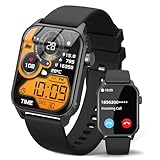
- 【1.83" HD Display & Customizable Watch Faces】Immerse yourself in a vibrant 1.83-inch IPS display, boasting a sharp resolution of 240*284 for crystal-clear visuals. Effortlessly personalize your smart watch with a wide array of customizable watch faces to suit your personal style for every occasion—whether trendy, artistic, or minimalist—ideal for casual, sporty, or professional. Its sleek, modern design complements any outfit, blending technology and fashion seamlessly for everyday wear
- 【120 Sports Modes & Advanced Health Tracking】Our TK29 smart watches for women men come equipped with 120 sports modes, allowing you to effortlessly track a variety of activities such as walking, running, cycling, and swimming. With integrated heart rate and sleep monitors, you can maintain a comprehensive overview of your health, achieve your fitness goals, and maintain a balanced, active lifestyle with ease. Your ideal wellness companion (Note: Step recording starts after exceeding 20 steps)
- 【IP67 Waterproof & Long-Lasting Battery】Designed to keep up with your active lifestyle, this smartwatch features an IP67 waterproof rating, ensuring it can withstand splashes, sweat, and even brief submersion, making it perfect for workouts, outdoor adventures, or rainy days. Its reliable 350mAh battery offering 5-7 days of active use and up to 30 days in standby mode, significantly reducing frequent charging. Ideal for all-day wear, whether you’re at the gym, outdoors, or simply on the go
- 【Stay Connected Anytime, Anywhere】Stay informed and in control with Bluetooth call and music control features. Receive real-time notifications for calls, messages, and social media apps like Facebook, WhatsApp, Twitter, and Instagram directly on your smartwatch. Easily manage calls, control your music playlist, and stay updated without needing to reach for your phone. Perfect for work, workouts, or on-the-go, this watch keeps you connected and never miss important updates wherever you are
- 【Multifunction & Wide Compatibility】Seamlessly handle heart rate monitoring, sleep tracking, and enjoy conveniences like camera/music control, Seamlessly handle heart rate monitoring, sleep tracking, and more-all directly from your wrist. This 1.83 inches HD smartwatch is compatible with iPhone (iOS 9.0+) & Android (5.0+), ensuring smooth daily connectivity and convenience throughout your day. More than just a timepiece, it’s a stylish, all-in-one wearable for smarter, healthier living
The final flagship of the Tizen era
More than any spec sheet detail, the Galaxy Watch 3’s identity is defined by its software platform. It runs Samsung’s Tizen OS, refined over multiple generations into a fast, battery-efficient, and stable system that prioritized core smartwatch tasks over app sprawl. Navigation was immediate, animations were smooth, and battery life reliably landed around two days with mixed use, something many Wear OS watches still struggle to achieve.
Its release came just one year before Samsung abandoned Tizen entirely in favor of Wear OS with the Galaxy Watch 4. That makes the Watch 3 the last flagship to benefit from Samsung’s fully in-house smartwatch vision, for better and for worse. While it lacks access to newer Google-first apps, it also avoids many of the performance and battery trade-offs that early Wear OS transitions introduced.
A bridge between classic watches and modern health tracking
The Galaxy Watch 3 was also Samsung’s most serious attempt at merging traditional watch aesthetics with medical-grade ambition. ECG and blood pressure monitoring were introduced through software updates, alongside SpO2 tracking, advanced sleep analysis, and structured workout modes. While some features were region-locked and required compatible Samsung phones, the hardware itself was forward-thinking for its time.
From a wearability standpoint, this balance remains one of its strongest assets. It looks appropriate with a leather strap in professional settings, yet remains comfortable enough for all-day wear and overnight sleep tracking. Few smartwatches manage to avoid looking dated while also avoiding the “mini smartphone on the wrist” problem, and this is where the Watch 3 still quietly excels.
Positioned between nostalgia and practical value today
In Samsung’s timeline, the Galaxy Watch 3 now sits as a transitional icon rather than a stepping stone. It is neither the future of Samsung’s ecosystem nor an obsolete relic, but a refined endpoint for users who value design, intuitive controls, and reliable everyday performance over cutting-edge integrations. Its position makes it uniquely appealing to buyers who want a premium-feeling smartwatch without committing to Samsung’s newer Wear OS direction.
Understanding this context clarifies why the Galaxy Watch 3 is still discussed as “great” rather than merely “old.” It wasn’t replaced because it failed, but because Samsung chose a new path, leaving behind a smartwatch that remains remarkably complete on its own terms.
Design, Case Sizes, and Wearability: Why It Still Feels Like a ‘Real’ Watch
That sense of completeness carries directly into the Galaxy Watch 3’s physical design. This is where Samsung’s in-house philosophy was most visible, resulting in a smartwatch that still reads as a watch first and a piece of tech second. Even years later, it avoids the visual fatigue that affects many early-generation smartwatches.
Classic proportions with modern restraint
The Galaxy Watch 3 was offered in two case sizes: 41mm and 45mm. Unlike many contemporary smartwatches that chased screen dominance at the expense of balance, both sizes here feel thoughtfully proportioned, with slim bezels and a case thickness just over 11mm that sits closer to a traditional automatic watch than a slab-like computer.
On the wrist, the 41mm model wears compact and understated, well suited to smaller wrists or anyone who prefers classic dimensions. The 45mm version offers a larger display without tipping into bulky territory, thanks to its short lug-to-lug length and curved caseback.
Stainless steel construction that still feels premium
Samsung opted for stainless steel rather than aluminum, and that decision remains one of the Watch 3’s biggest advantages today. The case has a reassuring density without feeling heavy, and the brushed and polished surfaces hold up well against daily wear.
The display is protected by Gorilla Glass DX, which was specifically tuned to reduce glare and improve outdoor readability. Combined with the Super AMOLED panel beneath, the watch remains easy to read in bright conditions without resorting to aggressive brightness levels that drain the battery.
The rotating bezel: still unmatched for tactile control
The physical rotating bezel remains the Galaxy Watch 3’s defining feature, and it is just as satisfying now as it was at launch. It clicks with mechanical precision, allowing you to navigate notifications, widgets, and menus without obscuring the screen or smearing it with fingerprints.
This control method is not just nostalgic; it is genuinely practical. During workouts, in wet conditions, or while wearing gloves, the bezel offers a level of reliability that touch-only interfaces still struggle to match.
Buttons, symmetry, and everyday usability
Flanking the case are two low-profile buttons with a clean, symmetrical layout. They provide quick access to navigation and shortcuts without protruding enough to dig into the wrist during movement or sleep.
The overall ergonomics feel carefully considered. The watch sits flat, distributes weight evenly, and avoids the top-heavy sensation common to larger smartwatches with oversized displays.
Strap compatibility and personal expression
Samsung leaned into standard watch conventions by using conventional lug widths: 20mm on the 41mm model and 22mm on the 45mm. This opens the door to a vast aftermarket of leather, rubber, nylon, and metal straps, making it easy to tailor the watch to different settings.
With a leather strap, the Watch 3 blends seamlessly into formal or office environments. Swap to silicone or fabric, and it transitions comfortably into workouts and casual wear without looking out of place.
All-day comfort and overnight wear
Comfort is where the Galaxy Watch 3 quietly excels. Despite its stainless steel construction, the watch remains light enough for continuous wear, including sleep tracking. The curved caseback and well-placed sensors reduce pressure points, even for side sleepers.
This makes it particularly effective as a health-focused device that you can actually keep on your wrist around the clock. Many smartwatches promise comprehensive tracking, but fewer manage to do so without reminding you they are there.
Durability without visual compromise
The Watch 3 carries 5ATM water resistance and MIL-STD-810G durability certification. In practical terms, this means it handles swimming, rain, sweat, and everyday knocks without demanding special care.
Crucially, this durability does not come at the expense of aesthetics. The Galaxy Watch 3 looks refined, not rugged, proving that resilience and elegance do not have to be mutually exclusive.
Why the design still holds up today
In a market increasingly dominated by minimalist rectangles and digital-first styling, the Galaxy Watch 3 continues to appeal to buyers who want their smartwatch to feel like a watch. Its proportions, materials, and physical controls give it a timeless quality that newer models sometimes lack.
For anyone prioritizing comfort, versatility, and traditional watch sensibilities, this is one area where the Galaxy Watch 3 does not feel dated at all. It feels resolved, as if Samsung reached a natural design endpoint before choosing to move on.
Display, Controls, and Daily Interaction: The Rotating Bezel Advantage
That sense of resolution in the Galaxy Watch 3 design carries directly into how you interact with it every day. This is a smartwatch that feels considered not just in how it looks, but in how it asks you to touch, scroll, and engage with information dozens of times per day.
Samsung’s combination of a high-quality AMOLED display and the physical rotating bezel remains one of the most user-friendly interaction systems ever put on a smartwatch. Even years later, it still stands apart from touch-only designs that dominate the current market.
A display that still looks excellent in 2025
The Galaxy Watch 3 uses a circular Super AMOLED display that measures 1.2 inches on the 41mm model and 1.4 inches on the 45mm. With sharp resolution, deep blacks, and excellent contrast, the screen remains highly legible in both indoor and outdoor conditions.
Brightness is more than sufficient for direct sunlight, and the always-on display option retains clarity without excessive battery drain. Compared to newer OLED panels, peak brightness is slightly lower, but in daily use this rarely becomes a limitation.
Rotating bezel: more than a signature feature
The physical rotating bezel is the defining interaction feature of the Galaxy Watch 3, and it remains genuinely useful rather than nostalgic. Scrolling through notifications, widgets, apps, and menus with a tactile click is faster and more precise than swipe gestures, especially when moving quickly or wearing gloves.
This mechanical interaction reduces reliance on touch, keeping fingerprints off the screen and improving usability during workouts or in wet conditions. It also allows Samsung’s interface to feel layered and organized rather than crowded, with content advancing cleanly one “tick” at a time.
Buttons and tactile feedback done right
Complementing the bezel are two side buttons with firm, well-defined clicks. The upper button handles app access and back navigation, while the lower button serves as home and power, creating a control layout that is easy to learn and hard to mis-trigger.
Haptic feedback is subtle but informative, reinforcing actions without becoming intrusive. Over time, muscle memory takes over, and interacting with the Watch 3 becomes second nature in a way that many purely touch-based smartwatches never quite achieve.
Everyday usability in motion
In real-world use, the bezel proves especially valuable during activities like walking, commuting, or exercising. Scrolling through music tracks, checking pace during a run, or dismissing notifications mid-workout is significantly easier with a physical control you can feel.
This also benefits accessibility and one-handed use. The watch remains operable when your fingers are sweaty, cold, or gloved, which is a quiet but meaningful advantage over newer designs that assume ideal conditions.
Glass, protection, and long-term wear
The display is protected by Corning Gorilla Glass DX, which offers improved scratch resistance and reduced glare compared to earlier smartwatch glass treatments. While it is not sapphire, it holds up well against daily wear, especially when paired with the raised bezel that provides natural edge protection.
After months of use, many units show minimal micro-scratching unless subjected to rough environments. This reinforces the sense that the Watch 3 was designed for long-term ownership rather than annual replacement.
Interface flow and visual clarity
Samsung’s One UI Watch interface, in its Tizen-based form on the Watch 3, was clearly designed around the bezel-first interaction model. Widgets snap into place, notifications are easy to parse, and the circular layout feels intentional rather than compromised.
Animations are smooth, transitions are predictable, and information density is well balanced. Even compared to newer Wear OS implementations, the Watch 3 often feels more coherent in daily navigation, if not as expansive in third-party app support.
Where age begins to show
The main limitation here is not hardware, but software longevity. The Galaxy Watch 3 does not run modern Wear OS versions and lacks some newer visual flourishes and app integrations found on recent Samsung watches.
Rank #2
![Apple Watch Series 11 [GPS 46mm] Smartwatch with Jet Black Aluminum Case with Black Sport Band - M/L. Sleep Score, Fitness Tracker, Health Monitoring, Always-On Display, Water Resistant](https://m.media-amazon.com/images/I/312K597M2uL._SL160_.jpg)
- HYPERTENSION NOTIFICATIONS — Apple Watch Series 11 can spot signs of chronic high blood pressure and notify you of possible hypertension.*
- KNOW YOUR SLEEP SCORE — Sleep score provides an easy way to help track and understand the quality of your sleep, so you can make it more restorative.
- EVEN MORE HEALTH INSIGHTS — Take an ECG anytime.* Get notifications for a high and low heart rate, an irregular rhythm,* and possible sleep apnea.* View overnight health metrics with the Vitals app* and take readings of your blood oxygen.*
- STUNNING DESIGN — Thin and lightweight, Series 11 is comfortable to wear around the clock — while exercising and even when you’re sleeping, so it can help track your key metrics.
- A POWERFUL FITNESS PARTNER — With advanced metrics for all your workouts, plus features like Pacer, Heart Rate Zones, training load, Workout Buddy powered by Apple Intelligence from your nearby iPhone,* and more. Series 11 also comes with three months of Apple Fitness+ free.*
That said, core interactions remain fast, stable, and intuitive. For users who value reliability and ergonomics over experimental features, this trade-off is easy to accept.
Why the bezel still matters today
In an era where most smartwatches have converged on touchscreens and digital crowns, the Galaxy Watch 3’s rotating bezel remains uniquely satisfying. It adds a layer of mechanical engagement that aligns closely with traditional watchmaking while solving real usability problems.
For buyers considering a refurbished or discounted premium smartwatch, this interaction model alone keeps the Galaxy Watch 3 relevant. It is not just a legacy feature; it is a reminder that good design ages far more gracefully than raw specifications.
Performance and Software Experience: Tizen OS in a Post-Wear OS World
The rotating bezel may be the Galaxy Watch 3’s most visible calling card, but it only works because the software underneath remains responsive and predictable. Even years after launch, the Watch 3 still feels composed in daily use, which is not something that can be said for every aging smartwatch.
This is where Tizen, now effectively a retired platform, earns a more nuanced reassessment in 2024 and beyond. While Samsung has moved on to Wear OS for its newer watches, the Watch 3 benefits from a software stack that was already mature when development slowed.
Day-to-day performance and responsiveness
Powered by Samsung’s Exynos 9110 chipset with 1GB of RAM, the Galaxy Watch 3 is not impressive on paper by modern standards. In practice, it remains smooth for core tasks like scrolling through widgets, handling notifications, and tracking workouts.
There is very little stutter in navigation, and the bezel-driven interface reduces reliance on touch precision. This matters more than raw processing power when you are interacting with a small circular display multiple times a day.
App launches are not instantaneous, but they are consistent. The watch never feels unpredictable, which is arguably more important than speed in a device designed for frequent, brief interactions.
Tizen OS strengths that still hold up
Tizen was designed around efficiency, and that design philosophy continues to pay dividends. Battery drain remains well controlled, with most users still achieving a solid day and a half to two days on a charge with mixed use.
The system is also remarkably stable. Crashes are rare, background processes behave sensibly, and the interface does not degrade over time in the way some more complex platforms can.
Samsung’s widget-centric layout remains one of the most readable and logically structured smartwatch interfaces ever shipped. Information is presented cleanly, with excellent contrast and spacing that benefits quick glances in real-world conditions.
The app ecosystem reality check
This is where the Watch 3’s age becomes unavoidable. Tizen’s third-party app ecosystem is effectively frozen, and popular modern smartwatch apps are no longer being developed for it.
There is no native Google ecosystem support, no Google Assistant, and no expansion path for new platform features. What you see today is essentially what you will have for the rest of the watch’s usable life.
That said, the built-in apps cover the essentials well. Notifications, music controls, offline Spotify playback, navigation prompts, and Samsung Pay all work reliably, provided you are using a compatible Android phone.
Compatibility and ecosystem limitations
The Galaxy Watch 3 works best, and in some cases only fully, with Samsung smartphones. Advanced health features like ECG and blood pressure monitoring require Samsung’s own apps and regional approval.
Support for non-Samsung Android phones is still functional, but increasingly limited compared to newer Galaxy Watch models. iPhone compatibility, once a selling point, is no longer supported in any meaningful way.
This makes the Watch 3 a poor choice for users planning to switch ecosystems, but a comfortable fit for long-term Samsung phone owners who value consistency over novelty.
Health tracking accuracy versus modern expectations
Core health metrics such as heart rate, sleep tracking, and step counting remain accurate and dependable. The Watch 3 was already strong in these areas at launch, and those fundamentals have not aged poorly.
Where it lags behind newer models is in advanced sleep analysis, recovery metrics, and continuous background sensing. Modern Galaxy Watches provide deeper insights and more proactive coaching.
Still, for users who want reliable data rather than constant nudges, the Watch 3 delivers a calmer, less intrusive health tracking experience that some may actually prefer.
Software longevity and long-term ownership
Samsung has effectively ended major feature updates for the Galaxy Watch 3, and security updates are now sporadic or discontinued depending on region. This is the clearest signal that Tizen-based watches are no longer part of Samsung’s forward strategy.
However, the watch does not feel abandoned in daily use. Core functionality works as expected, syncing remains reliable, and there are no critical features that have degraded with time.
For buyers considering a refurbished or heavily discounted unit, this trade-off is crucial. You are not buying into a growing platform, but you are getting a refined, stable experience that still performs its primary role exceptionally well.
Health and Fitness Tracking: Accuracy, Sensors, and What Still Holds Up
Coming off the reality check around software longevity, the Galaxy Watch 3’s health and fitness capabilities are where its age matters less than you might expect. Samsung built this watch at a time when it was aggressively positioning itself as a health-focused wearable, not just a notification screen with steps attached.
What’s important in 2024–2026 is separating raw sensor reliability from newer layers of interpretation and coaching. The Watch 3 still does the former very well.
Heart rate tracking: Still reliable where it counts
The Galaxy Watch 3 uses Samsung’s optical heart rate sensor with continuous and periodic tracking options. In real-world use, resting heart rate, walking data, and steady-state cardio readings remain consistent and believable.
Compared against chest straps and newer Galaxy Watch models, it can lag slightly during rapid intensity changes, such as interval training. This was common for optical sensors of its generation and doesn’t meaningfully affect casual fitness tracking or trend monitoring.
For everyday health awareness, sleep averages, and zone-based workouts, the Watch 3’s heart rate data still holds up better than many budget wearables released years later.
ECG and blood pressure: Ahead of its time, with caveats
The Galaxy Watch 3 was one of Samsung’s early ECG-enabled watches, and that hardware remains fully capable today. ECG readings are clean and easy to perform, though they are strictly limited to supported regions and require a Samsung phone and Samsung Health Monitor app.
Blood pressure monitoring is more controversial. It relies on periodic calibration with a traditional cuff, and accuracy varies depending on user compliance and physiology.
Used responsibly and as a trend indicator rather than a medical replacement, it can be useful. Treated as a diagnostic tool, it should not be.
Blood oxygen and stress tracking: Basic, but functional
Blood oxygen (SpO2) tracking was enabled later via software and works primarily during sleep. It provides overnight averages rather than continuous daytime monitoring.
The data is generally stable but lacks the contextual insights and alerts found on newer models. There is no altitude adjustment or respiratory trend analysis layered on top.
Stress tracking uses heart rate variability and manual prompts. It feels dated compared to modern wellness dashboards, but the readings themselves remain internally consistent and useful for users who prefer checking in rather than being constantly nudged.
Sleep tracking: Accurate stages, limited interpretation
Sleep tracking is one of the Watch 3’s strongest remaining features. Sleep onset, wake times, and stage detection are reliable, and overnight heart rate tracking remains solid.
Where it falls behind is interpretation. There is no sleep coaching score evolution, limited recovery context, and no integration with broader readiness metrics.
For users who want to understand when and how long they slept, rather than being told how to optimize it, the Watch 3 offers a refreshingly straightforward approach.
Workout tracking and GPS performance
The Watch 3 supports a wide range of workout modes, including automatic detection for walking and running. Tracking reliability for distance and pace is strong, aided by integrated GPS that remains accurate in open environments.
Rank #3

- Bluetooth Call and Message Alerts: Smart watch is equipped with HD speaker, after connecting to your smartphone via bluetooth, you can answer or make calls, view call history and store contacts through directly use the smartwatch. The smartwatches also provides notifications of social media messages (WhatsApp, Twitter, Facebook, Instagram usw.) So that you will never miss any important information.
- Smart watch for men women is equipped with a 320*380 extra-large hd full touch color screen, delivering exceptional picture quality and highly responsive touch sensitivity, which can bring you a unique visual and better interactive experience, lock screen and wake up easily by raising your wrist. Though “Gloryfit” app, you can download more than 102 free personalised watch faces and set it as your desktop for fitness tracker.
- 24/7 Heart Rate Monitor and Sleep Tracker Monitor: The fitness tracker watch for men has a built-in high-performance sensor that can record our heart rate changes in real time. Monitor your heart rate 26 hours a day and keep an eye on your health. Synchronize to the mobile phone app"Gloryfit", you can understand your sleep status(deep /light /wakeful sleep) by fitness tracker watch develop a better sleep habit and a healthier lifestyle.
- IP68 waterproof and 110+ Sports Modes: The fitness tracker provides up to 112+ sports modes, covering running, cycling, walking, basketball, yoga, football and so on. Activity trackers bracelets meet the waterproof requirements for most sports enthusiasts' daily activities, such as washing hands or exercising in the rain, meeting daily needs (note: Do not recommended for use in hot water or seawater.)
- Multifunction and Compatibility: This step counter watch also has many useful functions, such as weather forecast, music control, sedentary reminder, stopwatch, alarm clock, timer, track female cycle, screen light time, find phone etc. The smart watch with 2 hrs of charging, 5-7 days of normal use and about 30 days of standby time. This smart watches for women/man compatible with ios 9.0 and android 6.2 and above devices.
In urban settings with tall buildings, GPS drift can appear, especially compared to newer multi-band systems. Still, routes are clean enough for recreational runners and walkers reviewing performance rather than racing for marginal gains.
Post-workout summaries are clear and well-organized, even if they lack advanced metrics like running power, VO2 max estimates, or training load analysis.
What’s missing by modern standards
By today’s expectations, several features are notably absent. There is no body composition analysis, no skin temperature tracking, and no true recovery or readiness score.
Continuous background sensing is limited, and health insights are largely reactive rather than predictive. Newer Galaxy Watch models clearly outperform the Watch 3 in proactive health guidance.
However, none of these omissions prevent the Watch 3 from performing accurate baseline tracking. They affect depth, not reliability.
Comfort, wearability, and long-term tracking consistency
Health tracking only works if the watch is comfortable enough to wear all day and night. At roughly 45 grams without a strap and housed in stainless steel, the Watch 3 feels substantial but well-balanced.
The curved caseback, traditional lug design, and wide strap compatibility make it easy to achieve a secure fit. This directly improves sensor contact and data consistency, especially during sleep.
Compared to bulkier modern fitness watches, the Watch 3 often feels more like a traditional timepiece that happens to track your health, which encourages longer wear and more complete data.
Accuracy over ambition
The Galaxy Watch 3 does not try to reinvent health tracking anymore, but what it does measure, it measures with confidence. Steps, heart rate, sleep, and basic workouts are dependable and repeatable.
For buyers evaluating it today, that distinction matters. You are choosing stability and accuracy over cutting-edge features and predictive health analytics.
As part of a broader evaluation of whether the Watch 3 is still a great smartwatch, its health tracking remains one of the strongest arguments in its favor, provided you understand exactly what it is, and is not, trying to be.
Battery Life and Charging: Real-World Endurance in 2024–2026
Battery life is where the Galaxy Watch 3 most clearly shows its age, but it is also where expectations matter most. In daily use today, endurance depends less on Samsung’s original claims and more on how the watch fits into modern routines shaped by newer, longer-lasting competitors.
If you approach the Watch 3 as a traditional smartwatch that needs regular charging rather than a multi-day fitness tracker, its behavior remains predictable and manageable.
What battery life looks like today, not in spec sheets
When new, the Galaxy Watch 3 was rated for up to two days of use, depending on size and settings. In 2024–2026, most units realistically deliver between 24 and 36 hours with typical mixed usage.
That includes notifications, continuous heart rate tracking, sleep tracking, and occasional workouts. With Always-On Display disabled and GPS used sparingly, many users can still make it from morning to the following evening without anxiety.
Enable Always-On Display, frequent GPS workouts, or long LTE sessions on cellular models, and battery life compresses quickly. In those scenarios, daily charging becomes non-negotiable.
The impact of battery aging and refurbished units
Battery health is the single biggest variable when buying a Galaxy Watch 3 today. Units that have been sitting unused or have undergone professional refurbishment often perform noticeably better than heavily worn originals.
A degraded battery does not usually fail catastrophically, but it does shorten the margin for error. A long run with GPS or a busy notification day can push an aging unit into evening recharge territory.
For buyers considering refurbished models, prioritizing sellers that replace or certify battery health meaningfully improves the ownership experience. This matters more than cosmetic condition at this stage in the watch’s lifecycle.
Charging speed and daily usability
Charging remains one of the Watch 3’s quieter strengths. Even with reduced battery capacity over time, a full charge typically takes under two hours using Samsung’s magnetic puck.
Short top-ups are effective. A 20 to 30 minute charge while showering or during desk time often restores enough power for the rest of the day and overnight sleep tracking.
This quick recovery helps offset the limited endurance and keeps the watch usable for people who already charge their phone daily.
Wireless charging quirks and ecosystem friction
The Galaxy Watch 3 technically supports Qi-based wireless charging, but real-world compatibility is inconsistent. It works reliably with Samsung’s own chargers and PowerShare-enabled Galaxy phones, but third-party Qi pads are hit or miss.
Unlike newer Galaxy Watches, charging alignment can be finicky, especially on flat pads without guides. The safest approach remains using the included puck or an official Samsung accessory.
For Android users already deep in Samsung’s ecosystem, PowerShare remains a convenient fallback. For everyone else, charging is functional but less flexible than modern standards.
Sleep tracking versus battery anxiety
Sleep tracking is one of the Watch 3’s more reliable features, but it requires planning. With typical daily usage, most users need to charge either in the morning or early evening to ensure enough overnight battery.
The watch does not aggressively drain during sleep, but starting the night below 30 percent is risky. This encourages a predictable routine rather than spontaneous overnight wear.
Compared to newer Galaxy Watches that can stretch into a second night, the Watch 3 feels more deliberate. It asks for intention, not constant monitoring.
How it compares to modern Galaxy Watches
Against the Galaxy Watch 5, Watch 6, and Watch 6 Classic, the Watch 3 falls clearly behind in efficiency. Newer models benefit from improved processors, more efficient displays, and refined power management under Wear OS.
Those watches routinely offer 36 to 48 hours of use under similar conditions, sometimes more with conservative settings. They also manage background sensing with less penalty.
However, the Watch 3’s battery behavior is stable and predictable. There are no sudden drains, thermal issues, or erratic standby losses that plagued some early Wear OS transitions.
Who the battery life still works for
The Galaxy Watch 3 remains viable for users who are comfortable with daily charging and value consistency over endurance. Office workers, casual fitness users, and those who remove their watch at night or during desk hours will find it manageable.
It is less suitable for endurance athletes, frequent travelers, or users who want to forget about charging for multiple days. For those buyers, newer Galaxy Watches or fitness-first brands make more sense.
As part of the broader picture, battery life does not disqualify the Watch 3 from being a great smartwatch. It simply defines the kind of smartwatch it still is, and the kind of owner it suits best.
Compatibility and Ecosystem Realities: Android, Samsung Phones, and iPhone Limitations
Battery life shapes how you live with a smartwatch day to day, but compatibility defines whether the experience ever feels complete. With the Galaxy Watch 3, Samsung’s ecosystem decisions matter as much now as the hardware itself.
This is a watch that can feel effortless or frustrating depending entirely on the phone it’s paired with. In 2024 and beyond, that distinction is impossible to ignore.
Android compatibility: technically broad, practically uneven
On paper, the Galaxy Watch 3 works with most modern Android phones running Android 5.0 or later. In practice, the experience varies widely depending on how close your phone is to Samsung’s own software stack.
Paired with a Pixel, OnePlus, or Motorola device, core functions like notifications, fitness tracking, and call handling work reliably. The watch remains responsive, Bluetooth stability is solid, and battery behavior stays predictable.
Rank #4
![Apple Watch Series 11 [GPS 42mm] Smartwatch with Rose Gold Aluminum Case with Light Blush Sport Band - S/M. Sleep Score, Fitness Tracker, Health Monitoring, Always-On Display, Water Resistant](https://m.media-amazon.com/images/I/31J+F-pXaWL._SL160_.jpg)
- HYPERTENSION NOTIFICATIONS — Apple Watch Series 11 can spot signs of chronic high blood pressure and notify you of possible hypertension.*
- KNOW YOUR SLEEP SCORE — Sleep score provides an easy way to help track and understand the quality of your sleep, so you can make it more restorative.
- EVEN MORE HEALTH INSIGHTS — Take an ECG anytime.* Get notifications for a high and low heart rate, an irregular rhythm,* and possible sleep apnea.* View overnight health metrics with the Vitals app* and take readings of your blood oxygen.*
- STUNNING DESIGN — Thin and lightweight, Series 11 is comfortable to wear around the clock — while exercising and even when you’re sleeping, so it can help track your key metrics.
- A POWERFUL FITNESS PARTNER — With advanced metrics for all your workouts, plus features like Pacer, Heart Rate Zones, training load, Workout Buddy powered by Apple Intelligence from your nearby iPhone,* and more. Series 11 also comes with three months of Apple Fitness+ free.*
However, setup is heavier than with Wear OS watches. You need multiple Samsung apps, including Galaxy Wearable, Samsung Health, and plugin services, which can feel redundant on non-Samsung phones.
Samsung phones: the intended experience
With a Samsung Galaxy phone, the Watch 3 feels properly integrated rather than merely compatible. Features like ECG, blood pressure tracking (where regionally supported), advanced sleep insights, and deeper notification controls unlock fully.
Samsung Health syncs seamlessly, background connections are more stable, and updates arrive more consistently. The watch also mirrors Samsung phone behaviors more intelligently, from Do Not Disturb syncing to call and message handling.
This pairing highlights what the Watch 3 was designed to be: an extension of a Samsung phone, not just a generic smartwatch. Even years later, that cohesion remains one of its strongest traits.
Health features and regional limitations
Some of the Watch 3’s headline health features depend not only on your phone, but also on your region and Samsung account setup. ECG and blood pressure monitoring require Samsung Health Monitor, which is officially supported only on certain Galaxy phones.
Workarounds exist, but they add friction and uncertainty, especially after OS updates. For buyers expecting Apple Watch–style plug-and-play medical features, this reality can be disappointing.
That said, heart rate tracking, SpO2 during sleep, activity detection, and sleep staging work consistently across Android devices. The fundamentals remain reliable, even if the advanced tools are gated.
iPhone support: effectively obsolete
While the Galaxy Watch 3 technically launched with iPhone compatibility, that support has aged poorly. Newer versions of iOS restrict background connectivity, limit notification interactions, and reduce overall stability.
Samsung has also deprioritized iOS support in its apps, leading to occasional sync failures and missing features. Over time, the experience has shifted from compromised to borderline impractical.
In real terms, the Galaxy Watch 3 should not be considered a viable option for iPhone users in 2024. Even at a steep discount, the limitations outweigh the hardware’s appeal.
Tizen’s legacy and long-term software reality
The Watch 3 runs Tizen, Samsung’s former smartwatch platform, which has since been replaced by Wear OS in newer Galaxy Watches. While the software remains stable, feature updates have effectively stopped.
App availability is frozen in time. Essential functions work, but third-party apps are limited, and there is no path to Wear OS upgrades.
This does not break the watch, but it does define its ceiling. The Watch 3 is a finished product, not an evolving one.
Who the ecosystem still makes sense for
If you own a Samsung phone and want a refined, classic-looking smartwatch with strong health tracking fundamentals, the Galaxy Watch 3 still fits naturally. Its physical rotating bezel, stainless steel case, and balanced dimensions give it a timeless quality that newer, sportier models lack.
For Android users outside Samsung’s ecosystem, it remains usable but less compelling than Wear OS alternatives with longer software futures. And for iPhone users, it simply no longer makes sense.
The Galaxy Watch 3’s greatness today depends less on what it can do, and more on where it lives. In the right ecosystem, it still feels thoughtfully designed and dependable. Outside of it, the cracks become harder to ignore.
Build Quality, Durability, and Long-Term Ownership Considerations
Once you accept the Galaxy Watch 3 as a “finished” product in software terms, the conversation naturally shifts to hardware. This is where the Watch 3 still makes a surprisingly strong case for itself, especially compared to many modern smartwatches that prioritize lightness and cost efficiency over tactile quality.
Samsung built this watch to feel permanent, and that decision continues to pay dividends years after launch.
Materials, case construction, and finishing
The Galaxy Watch 3 uses a stainless steel case paired with Gorilla Glass DX on the display, immediately setting it apart from the aluminum-dominated midrange smartwatches of today. The steel has real heft without being overbearing, giving the watch a reassuring, traditional wristwatch feel rather than a disposable gadget vibe.
Finishing is clean and consistent, with polished chamfers that catch light nicely and brushed surfaces that hide minor wear well. Even after extended use, most Watch 3 units age gracefully, developing character rather than obvious cosmetic fatigue.
This is one of the few smartwatches that still looks appropriate next to a mechanical watch collection, especially in silver or black with a leather strap.
The rotating bezel: durability through usability
Samsung’s physical rotating bezel remains one of the most durable and user-friendly interface designs ever put on a smartwatch. Unlike touch-only navigation, it reduces repeated screen contact, minimizes smudging, and lowers the risk of micro-scratches over time.
Mechanically, the bezel is robust. It has defined clicks, resists wobble, and continues to function reliably years later, provided basic care is taken.
From a longevity standpoint, it is not just a signature feature, but a genuinely protective one, shielding the display edges and reducing reliance on touch gestures that can become frustrating as screens age.
Water resistance and everyday toughness
The Galaxy Watch 3 carries a 5ATM water resistance rating along with MIL-STD-810G certification, which in real-world terms translates to confidence rather than invincibility. It handles rain, showers, hand washing, and swimming without complaint, assuming seals remain intact and the watch has not been abused.
That said, this is not a rugged sports watch. Drops onto hard surfaces can mark the steel, and the glass, while strong, is not sapphire.
For daily life, workouts, and casual outdoor use, durability is more than sufficient. For high-impact environments, newer Galaxy Watch models or dedicated sports watches make more sense.
Strap compatibility and comfort over time
Samsung’s use of standard 20mm or 22mm lugs, depending on case size, is a quiet long-term win. It allows owners to replace worn straps easily and experiment with leather, silicone, nylon, or metal options without proprietary limitations.
Comfort remains excellent, helped by curved lugs that pull the watch snugly onto the wrist. Even the larger 45mm model wears flatter than its dimensions suggest, making it suitable for all-day use without pressure points.
As straps wear out far sooner than the watch itself, this openness significantly extends the usable life of the hardware.
Battery aging and serviceability realities
Battery degradation is the most unavoidable long-term issue with the Galaxy Watch 3. When new, it delivered a reliable one-and-a-half to two days for most users. Several years later, many units now hover closer to a full day, depending on health tracking and notification load.
The battery is not user-replaceable, and official replacements can be difficult or uneconomical depending on region. Third-party repairs exist, but quality varies.
This is the single biggest factor limiting true long-term ownership. The watch’s body may hold up beautifully, but battery health ultimately determines whether it remains convenient or becomes a daily charging chore.
Buttons, sensors, and aging electronics
Physical buttons on the Watch 3 are solid and tactile, with fewer long-term complaints than capacitive or haptic alternatives. Failures are rare, and responsiveness generally remains consistent over time.
Health sensors, including heart rate and SpO2, continue to perform reliably, though they lack some of the refinement and redundancy found in newer models. They age functionally rather than catastrophically, remaining usable even as newer algorithms surpass them.
Electronics-wise, the Watch 3 has proven stable. Crashes and hardware faults are uncommon, reinforcing its reputation as a mature, well-tested design.
Ownership value in 2024–2026
As a long-term ownership proposition, the Galaxy Watch 3 succeeds because it was overbuilt relative to its era. Its materials, controls, and overall construction outlast its software relevance, which is an unusual but welcome inversion in consumer tech.
For buyers considering refurbished or well-priced used units, build quality is not the risk factor. Battery health and ecosystem fit are.
💰 Best Value
![Apple Watch Series 11 [GPS 42mm] Smartwatch with Jet Black Aluminum Case with Black Sport Band - S/M. Sleep Score, Fitness Tracker, Health Monitoring, Always-On Display, Water Resistant](https://m.media-amazon.com/images/I/31ybzrJZckL._SL160_.jpg)
- HYPERTENSION NOTIFICATIONS — Apple Watch Series 11 can spot signs of chronic high blood pressure and notify you of possible hypertension.*
- KNOW YOUR SLEEP SCORE — Sleep score provides an easy way to help track and understand the quality of your sleep, so you can make it more restorative.
- EVEN MORE HEALTH INSIGHTS — Take an ECG anytime.* Get notifications for a high and low heart rate, an irregular rhythm,* and possible sleep apnea.* View overnight health metrics with the Vitals app* and take readings of your blood oxygen.*
- STUNNING DESIGN — Thin and lightweight, Series 11 is comfortable to wear around the clock — while exercising and even when you’re sleeping, so it can help track your key metrics.
- A POWERFUL FITNESS PARTNER — With advanced metrics for all your workouts, plus features like Pacer, Heart Rate Zones, training load, Workout Buddy powered by Apple Intelligence from your nearby iPhone,* and more. Series 11 also comes with three months of Apple Fitness+ free.*
If you value physical craftsmanship, traditional aesthetics, and hardware that still feels premium years later, the Galaxy Watch 3 remains one of Samsung’s most enduring smartwatch designs, even as time quietly limits how far it can still go.
Value in Today’s Market: New Old Stock vs Refurbished Pricing
All of the long-term considerations around battery health, software relevance, and aging electronics come sharply into focus when you look at what the Galaxy Watch 3 actually costs today. Its value proposition in 2024–2026 is no longer about competing head-to-head with modern flagships, but about whether the price aligns with what it still does exceptionally well.
This is where the distinction between new old stock and refurbished units matters more than it would for a newer smartwatch.
New old stock: The illusion of “new”
New old stock Galaxy Watch 3 units still appear occasionally through secondary retailers, clearance channels, or regional distributors. These are technically unused, sealed watches that have sat in inventory since around 2020–2021.
The upside is obvious: pristine casing, unmarked glass, untouched straps, and a battery that has not been through daily charge cycles. From a physical and cosmetic standpoint, this is as close as you can get to experiencing the Watch 3 as it was originally sold.
The downside is less visible but just as important. Lithium-ion batteries age even when not actively used, and a four-to-five-year-old battery may already have lost some capacity simply due to time. You are paying a premium for “newness,” not necessarily for better longevity.
Pricing for new old stock often lands uncomfortably high relative to what the watch can still offer. In many markets, it can approach or even exceed the cost of newer entry-level Galaxy Watch models that benefit from longer software support and better efficiency.
Refurbished units: Where the real value lives
Refurbished Galaxy Watch 3 units dominate the used market, and this is where the watch makes the strongest financial case. Prices are typically a fraction of the original launch cost, reflecting its discontinued status and aging platform.
A good refurbishment includes a tested battery, cleaned sensors, verified button function, and minimal cosmetic wear. Because the Watch 3’s stainless steel case and rotating bezel age gracefully, even lightly used units often look excellent on the wrist.
Battery condition becomes the defining variable. A well-refurbished unit with 80–90 percent battery health can realistically deliver a full day of use with room to spare, which aligns with the watch’s original real-world performance. Poorly refurbished units, on the other hand, can turn ownership into a nightly charging obligation from day one.
Price-to-experience in 2024–2026
At the right refurbished price, the Galaxy Watch 3 still offers a level of material quality, comfort, and tactile interaction that is rare at the low-to-mid end of today’s smartwatch market. Stainless steel construction, a physical rotating bezel, and a refined AMOLED display give it a sense of permanence that many newer, cheaper watches lack.
Software limitations are real, but they are also predictable. You are buying a stable, mature platform rather than a future-proof one. Notifications, health tracking, and daily smartwatch essentials remain reliable, even if advanced features and long-term updates are off the table.
When priced correctly, the Watch 3 feels less like outdated tech and more like a premium object with a defined lifespan. That distinction is crucial for buyers who value experience over novelty.
Who should buy which version
New old stock only makes sense for collectors, enthusiasts who specifically want an untouched example, or buyers who prioritize cosmetic perfection above all else. For most users, the price premium is difficult to justify given the inevitable software ceiling.
Refurbished units are the sensible choice for value-focused buyers, especially Android users who want a polished smartwatch experience without paying modern flagship prices. The key is buying from a reputable seller with transparent battery testing and a meaningful warranty.
If the price starts creeping too close to newer Galaxy Watch models, the equation changes quickly. But when found at the right refurbished cost, the Galaxy Watch 3 still earns its place as a genuinely satisfying smartwatch to wear and live with today.
Who Should Still Buy the Galaxy Watch 3 — and Who Shouldn’t
Seen in context, the Galaxy Watch 3 makes sense only when expectations are calibrated correctly. This is no longer a “latest and greatest” smartwatch, but it remains a thoughtfully engineered one with a specific audience in mind.
The deciding factors are less about raw features and more about how you value materials, interface design, and day-to-day wearability versus long-term software headroom.
Buy the Galaxy Watch 3 if you value traditional watch feel and premium build
If you want a smartwatch that still looks and feels like a proper watch, the Galaxy Watch 3 continues to stand out. The stainless steel case, slim lugs, and finely machined rotating bezel give it a tactile quality that many newer, more affordable smartwatches simply do not match.
At 41 mm and 45 mm, it wears comfortably on a wide range of wrists, with balanced weight and excellent strap compatibility. Paired with leather, rubber, or metal, it transitions cleanly between casual, work, and semi-formal settings in a way that sport-first designs often struggle with.
For buyers who prioritize physical interaction over swipe-heavy interfaces, the rotating bezel remains one of Samsung’s best ideas. It is intuitive, precise, and still more satisfying than touch-only navigation in daily use.
Buy it if you’re an Android or Samsung phone user who wants stability, not experimentation
Paired with a Samsung Galaxy phone, the Watch 3 still delivers a smooth, reliable experience for notifications, calls, music controls, and basic app interactions. The software may be frozen in time, but it is also well-optimized and largely free of surprises.
Health tracking remains competent for everyday users, with solid heart rate monitoring, sleep tracking, SpO₂ estimates, and guided workouts. ECG and blood pressure features, where supported, still function as intended, though they no longer represent a cutting-edge health platform.
If you want a smartwatch that does the fundamentals consistently without chasing new features or interface changes, the Watch 3’s mature Tizen software can feel refreshingly predictable.
Buy it if you’re shopping refurbished and the price is clearly right
The Galaxy Watch 3 only makes sense as a value-driven purchase. At the right refurbished price, it offers materials, finishing, and usability that would cost significantly more if bought new today.
Battery life of around a full day to a day and a half, assuming decent battery health, remains acceptable for this class. Wireless charging, water resistance, and durable construction still hold up well in real-world use.
For buyers who see smartwatches as consumable tech with a defined lifespan, the Watch 3 offers a premium experience without premium pricing, as long as you buy from a reputable refurbisher.
You should skip the Galaxy Watch 3 if long-term software support matters to you
There is no escaping the software reality. The Galaxy Watch 3 is effectively at the end of its update life, with no path to Wear OS and no expectation of meaningful new features.
If you want ongoing platform improvements, expanding app ecosystems, or deeper integration with modern health services, newer Galaxy Watch models or Pixel-compatible Wear OS watches are better choices.
This is not a smartwatch to buy if you plan to keep it for five more years or expect it to evolve alongside your phone.
Skip it if you want advanced fitness tracking or multi-day battery life
While the Watch 3 is capable for casual fitness and daily activity tracking, it is not designed for serious athletes. There is no dual-band GPS, no advanced training metrics, and battery life is nowhere near modern fitness-first watches.
Users who want multi-day endurance, continuous GPS workouts, or deep recovery analytics will be better served by newer Galaxy Watch models or dedicated fitness watches from Garmin or similar brands.
Charging daily is part of the ownership experience, not an occasional inconvenience.
Skip it if you’re outside the Samsung ecosystem or on iPhone
Although basic Android compatibility exists, the Watch 3 is clearly optimized for Samsung phones. Certain health features, customization options, and system integrations work best—or only—within Samsung’s ecosystem.
iPhone users should look elsewhere entirely. Support is limited, and the experience does not justify the compromises when better-integrated alternatives exist.
Final verdict: a great smartwatch, with boundaries
The Galaxy Watch 3 is still a great smartwatch when judged by build quality, interface design, and everyday usability. Its rotating bezel, premium materials, and refined display give it a sense of purpose that transcends spec sheets.
What it is not is future-proof. You are buying a finished product, not a growing one.
For the right buyer—especially someone who values how a watch wears and feels as much as what it tracks—the Galaxy Watch 3 remains a satisfying companion even in 2024–2026. For everyone else, Samsung’s newer models exist precisely because priorities have shifted.