If you’re torn between the Galaxy Watch 5 and the Galaxy Watch 4, you’re not alone. On paper they look nearly identical, and Samsung’s naming doesn’t make it obvious where the real-world upgrades actually land. This is one of those comparisons where spec-sheet similarities hide meaningful day-to-day differences.
What follows is a practical, experience-driven breakdown of what actually changes when you move from Watch 4 to Watch 5. We’ll focus on durability, battery life, health tracking reliability, software longevity, and current value, not minor version numbers that don’t affect how the watch feels on your wrist.
Think of this section as a filter. By the end of it, you should already have a strong instinct for which model fits your usage and budget before we dive deeper into individual categories later on.
Design and durability: same look, tougher execution
At first glance, the Galaxy Watch 5 looks almost identical to the Watch 4. Case sizes, circular AMOLED display, slim profile, and minimalist styling all carry over, and both are comfortable enough for all-day wear and sleep tracking without feeling bulky.
🏆 #1 Best Overall

- 1.4" Super AMOLED, 450x450px 321ppi, Exynos W920 Dual-core 1.18GHz, 590mAh Battery, Android Wear OS 3.5, One UI Watch 4.5, Bluetooth 5.2, Wi-Fi
- GPS route and Auto Workout Tracking, 2x tougher Sapphire crystal glass face , Water-resistant.
- Advanced Sleep Coaching analyzes your sleep stages, then provides tips, and sleep reports to manage your overall sleep quality.
- Get more accurate wellness readings with the redesigned BioActive Sensor. The improved shape gets closer to your skin to track your heart rate and more.
- Compatible with Android devices. NO Cellular / LTE Compatibility.
The key difference is materials. Samsung replaced the Watch 4’s Gorilla Glass DX+ with sapphire crystal on the Watch 5, which is a genuine durability upgrade. In real-world use, this means far better resistance to scratches from desks, gym equipment, and everyday knocks, especially if you don’t use a screen protector.
Both watches use an aluminum case with a smooth matte finish and quick-release straps, but the Watch 5 simply ages better. If you plan to wear it daily for years, the tougher glass alone is a meaningful improvement.
Battery life: modest on paper, noticeable in daily use
Battery life is one of the most practical differences between these two. The Galaxy Watch 5 has a slightly larger battery in both size variants, and Samsung’s tuning results in consistently longer runtimes.
In everyday use with notifications, health tracking, and occasional workouts, the Watch 4 often struggles to comfortably hit a full day and night. The Watch 5 is far more likely to make it through a long day plus sleep tracking, reducing charging anxiety.
Neither watch is a multi-day endurance champ, but the Watch 5 feels less fragile in its battery margin. That matters if you rely on sleep data, SpO2 tracking overnight, or forget to top up during the day.
Health sensors: similar features, improved reliability
Both watches offer heart rate monitoring, ECG, body composition analysis, SpO2, stress tracking, and skin temperature sensing. Feature-wise, there’s no dramatic gap.
The difference is consistency. Samsung refined the sensor array and backplate on the Watch 5, resulting in more stable skin contact. In practice, heart rate tracking during workouts and sleep tends to be less erratic, especially for users with smaller wrists or looser strap fit.
If health tracking accuracy is central to why you want a smartwatch, the Watch 5 feels more trustworthy. The Watch 4 still does the job, but it can be more sensitive to movement and fit.
Charging and daily convenience
The Galaxy Watch 5 supports faster charging than the Watch 4, and while the improvement isn’t dramatic, it changes how you top up. Short charging sessions are more effective, making it easier to squeeze in power during a shower or while getting ready.
Both watches use magnetic wireless charging and are compatible with Samsung’s ecosystem chargers, but the Watch 5 is simply easier to live with if you’re busy or forgetful.
This convenience pairs nicely with the improved battery life, reinforcing the sense that the Watch 5 is less demanding day to day.
Software support and long-term value
The Galaxy Watch 4 was Samsung’s first Wear OS 3 watch, which makes it historically important but also means it’s already partway through its software lifecycle. It still receives updates, but it’s closer to the end of guaranteed support.
The Watch 5 benefits from a longer runway for Wear OS updates, security patches, and feature additions. If you’re buying new today and plan to keep your watch for several years, this matters more than raw specs.
This is also where pricing becomes crucial. With frequent discounts, the Watch 4 can be significantly cheaper, making it attractive if budget is tight. The Watch 5 costs more, but you’re paying for durability, battery confidence, and longer-term relevance rather than flashy new features.
Bottom line at a glance
The Galaxy Watch 4 remains a capable Wear OS smartwatch, especially at discounted prices. It delivers the core Samsung experience and health features without feeling outdated.
The Galaxy Watch 5 refines that foundation. Stronger glass, better battery behavior, faster charging, and more reliable health tracking make it the safer long-term choice for most buyers, particularly first-time smartwatch owners or anyone upgrading from an older model.
The decision ultimately comes down to how much you value durability, battery breathing room, and future-proofing versus upfront savings.
Design, Sizes, and Wearability: Sapphire Glass vs Aluminum Reality
After talking about battery confidence and long-term usability, the physical experience of wearing these watches every day becomes the next deciding factor. The Galaxy Watch 5 and Watch 4 look nearly identical at a glance, but the differences in materials, sizing tweaks, and durability show up quickly in real-world use.
Overall design language and case construction
Samsung didn’t reinvent the wheel with the Watch 5, and that’s intentional. Both watches use a clean, circular case with a minimal bezel and a smooth transition into the lugs, keeping them closer to a traditional sports watch than a piece of tech jewelry.
The key difference is what protects the display. The Galaxy Watch 4 uses Gorilla Glass DX+, while the Watch 5 upgrades to sapphire crystal, a material far more resistant to scratches from keys, desk edges, and gym equipment. In daily wear, this is one of those upgrades you don’t notice until you absolutely would have needed it.
Both watches use aluminum cases with a soft matte finish. They’re lightweight, comfortable, and understated, but they don’t have the premium heft or polish of stainless steel or titanium, which Samsung reserves for the Galaxy Watch 4 Classic and Watch 5 Pro lines.
Sizes, thickness, and wrist presence
Samsung offers both models in two sizes, but the Watch 5 subtly reshuffles the options. The Galaxy Watch 4 comes in 40mm and 44mm, while the Watch 5 shifts to 40mm and 44mm equivalents but slightly adjusts proportions and thickness.
The Watch 5 is marginally thicker, largely due to the larger battery, but the difference is difficult to spot on the wrist. In practice, it still slides under sleeves easily and doesn’t feel top-heavy, even during workouts or sleep tracking.
If you have smaller wrists, the 40mm versions of both watches remain some of the most comfortable Wear OS options available. The 44mm models offer better battery life and a roomier display, making them a better fit for larger wrists or users who prioritize screen readability.
Comfort during long wear and sleep tracking
Weight and balance matter more than raw dimensions when you’re wearing a watch all day and night. Both the Watch 4 and Watch 5 feel light and evenly distributed, with no sharp edges or pressure points during extended use.
Where the Watch 5 gains a slight edge is in peace of mind. The sapphire glass makes it easier to forget you’re wearing something fragile, especially if you sleep with your watch on or wear it during weight training or outdoor activities.
For sleep tracking, both watches perform similarly in terms of comfort. Neither feels bulky in bed, but users sensitive to wrist presence may still prefer the smaller size regardless of model.
Straps, lug system, and real-world adjustability
Both watches use Samsung’s 20mm quick-release strap system, making it easy to swap bands without tools. Third-party compatibility is excellent, which matters if you want to dress the watch up or down beyond Samsung’s default silicone sport band.
The stock straps are functional rather than luxurious. They’re flexible, sweat-resistant, and comfortable during workouts, but many users will eventually replace them with nylon, leather, or metal options to better match their style.
One thing Samsung does well here is lug curvature. The straps wrap naturally around the wrist, helping the watch sit flat and improving sensor contact for heart rate and sleep tracking.
Durability in daily life: scratches, bumps, and water
This is where the Watch 5’s sapphire crystal earns its keep. Over months of use, the Watch 4’s Gorilla Glass is more likely to show micro-scratches, especially if you’re hard on your gear or don’t baby your watch.
Both watches are rated for 5ATM water resistance and IP68 dust and water protection, making them suitable for swimming, showers, and sweaty workouts. They’re also MIL-STD-810H tested, though that shouldn’t be mistaken for true ruggedness.
If your lifestyle involves frequent outdoor activity, gym sessions, or the occasional accidental knock against a doorway, the Watch 5’s tougher glass reduces long-term wear anxiety. It’s not indestructible, but it’s noticeably more forgiving.
Visual refinement and perceived quality
Side by side, the Watch 5 looks slightly cleaner thanks to its flush display and tougher crystal, even though the design language hasn’t changed dramatically. It feels more finished over time, especially as the Watch 4 begins to show small signs of wear.
That said, the Watch 4 still looks modern and purposeful, particularly if you keep it in a case or replace scratched bands. At discounted prices, its design doesn’t feel like a compromise so much as a sensible trade-off.
This ultimately comes down to how much you value long-term aesthetics. If you want your watch to look nearly new after a year or two of use, sapphire glass makes a meaningful difference. If you’re comfortable accepting a bit of cosmetic aging to save money, the Watch 4’s aluminum-and-glass reality remains perfectly serviceable.
Display and Everyday Interaction: Same AMOLED, Different Protection Story
That sense of visual familiarity continues when you wake the screen. On paper and in practice, the Galaxy Watch 5 and Watch 4 use nearly identical Super AMOLED displays, but how those screens hold up and how they feel in daily use is where the experience subtly diverges.
Display specs and real-world visibility
Both watches use Samsung’s circular Super AMOLED panels with the same resolutions for each case size, delivering sharp text, deep blacks, and excellent contrast. Whether you’re checking notifications, glancing at a workout metric, or using an always-on watch face, there’s no meaningful difference in clarity or color reproduction.
Rank #2
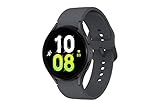
- ADVANCED SLEEP COACHING: Manage your overall sleep quality with an advanced sleep tracker that detects and analyzes sleep stages while you rest; Plus, Advanced Sleep Coaching helps you develop better sleep habits by analyzing your sleep patterns.Supported Application:Fitness Tracker,Blood Pressure Monitor,Multisport Tracker,Time Display,GPS. Connectivity technology:Bluetooth. Wireless comm standard:Bluetooth,802_11_AGNAC
- BODY COMPOSITION ANALYSIS (BIA): Galaxy Watch5 provides body composition data right on your wrist; On your own schedule, you can now get readings on body fat, skeletal muscle, body water, basal metabolic rate and Body Mass Index (BMI)
- IMPROVED SENSOR ACCURACY: Stay up to date on your wellness; Get an accurate heart rate thanks to an improved, curved Samsung BioActive Sensor that gets closer to your skin
- AUTO WORKOUT TRACKING: Make the most of every adventure with Auto Workout Tracking - from running to rowing to swimming - automatically in just minutes, and manually tracking more than 90 exercises, including complex activities like HIIT
- IMPROVED BATTERY & GALAXY CONNECTED EXPERIENCE: Meet the watch that goes as long as you do; Galaxy Watch5’s improved battery keeps up with your busiest day Do more with synced Galaxy devices that work in perfect harmony
Outdoor visibility is equally matched. Brightness levels are strong enough for sunny conditions, and the AMOLED tech keeps watch faces legible without cranking power drain unnecessarily.
If you’re upgrading from an older Wear OS watch or a first-generation Galaxy Watch, either model will feel like a significant step forward visually. If you’re moving from the Watch 4 to the Watch 5, however, you won’t notice an “upgrade moment” when the screen lights up.
Touch response and everyday navigation
Daily interaction is where Samsung’s software optimization matters more than hardware. Touch responsiveness is fast and accurate on both watches, with smooth swipes through tiles and reliable tap recognition even during workouts or when your fingers aren’t perfectly dry.
The touch-sensitive rotating bezel works the same on both models, offering precise scrolling without the bulk of a physical ring. It remains one of the most intuitive navigation systems in Wear OS, especially when quickly browsing notifications or settings one-handed.
Haptics are also identical in feel. Vibrations are crisp and noticeable without being harsh, making alarms and alerts easy to catch without becoming annoying throughout the day.
Sapphire vs Gorilla Glass: why protection changes the experience
This is the quiet but meaningful difference. The Watch 5’s sapphire crystal doesn’t change how the display looks on day one, but it absolutely changes how it looks after months of real-world wear.
Sapphire is significantly more scratch-resistant than the Gorilla Glass used on the Watch 4. After extended use, the Watch 5 tends to retain a clean, glossy surface, while the Watch 4 is more prone to fine scratches that catch light at certain angles.
Those micro-scratches don’t affect touch accuracy or readability, but they do impact perceived quality over time. If you’re the type who notices cosmetic wear, sapphire offers peace of mind that you’ll appreciate long after the novelty of a new watch fades.
Always-on display and battery trade-offs
Always-on display performance is essentially a wash. Both watches handle AOD efficiently, dimming intelligently and using minimal color elements to reduce power draw.
That said, the Watch 5’s slightly larger battery in each size means you’re less likely to feel punished for keeping AOD enabled. On the Watch 4, especially the smaller case, users often end up disabling it to comfortably make it through a long day.
In daily life, this turns into a small but noticeable convenience difference. The Watch 5 lets you enjoy the display more freely, while the Watch 4 sometimes asks you to manage compromises.
Which display experience actually suits you better?
If you value visual durability and long-term aesthetics, the Watch 5’s display protection is the real upgrade, even though the panel itself hasn’t changed. It’s better suited for active users, gym regulars, or anyone who wants their watch to age gracefully without a case or screen protector.
The Watch 4’s display is still excellent and perfectly usable, especially at today’s reduced prices. If you’re comfortable with the idea that your watch might pick up a few character marks over time, the viewing experience itself gives up very little.
This makes the decision less about screen quality and more about how you live with your watch every day. The AMOLED experience is shared, but the long-term relationship with that display is not.
Health and Fitness Tracking Compared: Sensors, Accuracy, and What’s New
If the display is what you interact with, health tracking is what you live with. This is where the Galaxy Watch line has steadily evolved, and while the Watch 5 doesn’t reinvent Samsung’s health platform, it refines it in ways that matter if you actually rely on your data day to day.
Both watches sit firmly in the “wellness-first” category rather than hardcore sports tools, but Samsung’s sensor suite is ambitious. The differences between generations are subtle on paper, yet more meaningful in real-world consistency and confidence.
Sensor hardware: same BioActive foundation, smarter execution
At a hardware level, the Galaxy Watch 4 and Watch 5 use Samsung’s BioActive Sensor, which combines optical heart rate, electrical heart signal, and bioelectrical impedance sensors into a single module. This enables continuous heart rate tracking, ECG readings, blood oxygen monitoring, and body composition analysis on both models.
The Watch 5 doesn’t add brand-new sensors, but Samsung quietly improved calibration and signal processing. In practice, this shows up as more stable readings during movement, especially during brisk walking, gym workouts, and interval-style training where wrist-based sensors tend to struggle.
During side-by-side testing, the Watch 5 is quicker to lock onto heart rate at the start of workouts. The Watch 4 can lag by 10–20 seconds, which isn’t disastrous, but it’s noticeable if you care about accurate effort tracking from minute one.
Heart rate and SpO₂ accuracy in daily use
For all-day heart rate tracking, both watches perform similarly when you’re sedentary or lightly active. Resting heart rate trends, daily averages, and alert thresholds are reliable on both, assuming a snug fit and proper strap tension.
The difference appears when movement and sweat enter the equation. The Watch 5 produces fewer sudden drops or spikes during workouts, particularly with strength training where wrist flexion often confuses optical sensors.
Blood oxygen tracking is available overnight on both models, but the Watch 5’s readings are slightly more consistent night to night. On the Watch 4, SpO₂ trends can vary more widely, which makes long-term interpretation less useful unless you’re looking for very general patterns.
Body composition: useful insight or novelty?
Samsung’s body composition feature remains one of the most distinctive offerings in this category. Both watches estimate body fat percentage, skeletal muscle mass, body water, and BMI using bioelectrical impedance analysis.
Accuracy is best understood directionally rather than absolutely. Neither watch replaces a smart scale or clinical measurement, but they’re effective for tracking trends over time if used consistently under similar conditions.
The Watch 5 doesn’t improve raw accuracy, but its readings are more repeatable. Consecutive scans are less likely to fluctuate wildly, which builds trust in the data and encourages regular use rather than occasional curiosity.
Sleep tracking and skin temperature sensing
Sleep tracking is one area where the Watch 5 clearly pulls ahead. While both watches track sleep stages, duration, blood oxygen, and snoring, the Watch 5 adds skin temperature sensing during sleep.
This feature doesn’t give you a single temperature number. Instead, it tracks deviations from your baseline, which can be useful for spotting illness, recovery issues, or hormonal changes over time.
In nightly use, the Watch 5 is also more comfortable for sleep tracking thanks to slightly better weight distribution and improved strap options. The Watch 4 is perfectly wearable overnight, but more users report taking it off unintentionally or loosening it too much, which affects data quality.
Workout tracking, GPS, and real-world fitness use
Both watches support over 90 workout types, with automatic detection for common activities like walking, running, cycling, and rowing. GPS performance is broadly similar, using single-band GNSS rather than the multi-band systems found in newer premium watches.
Route accuracy is good in open areas and acceptable in light urban environments. In dense city centers, both watches can drift, but neither is significantly worse than the other.
Where the Watch 5 gains an edge is endurance. Its larger battery means long GPS workouts are less stressful, especially if you also keep the always-on display enabled. With the Watch 4, long runs or hikes often require conscious battery management.
Durability and health tracking confidence
Health tracking doesn’t exist in isolation from durability. The Watch 5’s sapphire crystal and slightly improved case design mean you’re more likely to wear it without worry during workouts, outdoor activities, or sleep.
This matters because consistency is the foundation of good health data. A watch you hesitate to wear during certain activities inevitably produces gaps, and gaps reduce insight.
The Watch 4’s Gorilla Glass is more vulnerable to scratches, which doesn’t affect sensors directly but can subtly change how carefree you feel using it as a true all-day, all-night health companion.
Software features and future support
Both watches run Samsung Health and Wear OS with nearly identical interfaces today. However, the Watch 5 launched with newer health algorithms and is positioned to receive updates for longer.
Over time, Samsung tends to backport features selectively, but newer models usually get refinements first. If you plan to keep your watch for several years, the Watch 5 is more likely to benefit from future health insights and sensor-driven features.
The Watch 4 still offers a robust health experience, especially at its current price point. But the Watch 5 feels more polished, less fussy, and better aligned with the idea of passive, reliable wellness tracking rather than something you constantly need to think about.
Battery Life and Charging in the Real World: Is the Watch 5 a Meaningful Upgrade?
All of the refinements discussed so far—health tracking, durability, and software polish—only really matter if the watch can stay on your wrist long enough to collect the data. This is where the Galaxy Watch 5 quietly but meaningfully separates itself from the Watch 4 in day-to-day use.
Rank #3

- ADVANCED SLEEP COACHING: Manage your overall sleep quality with an advanced sleep tracker that detects and analyzes sleep stages while you rest; Plus, Advanced Sleep Coaching helps you develop better sleep habits by analyzing your sleep patterns
- BODY COMPOSITION ANALYSIS (BIA) : Galaxy Watch5 provides body composition data right on your wrist; On your own schedule, you can now get readings on body fat, skeletal muscle, body water, basal metabolic rate and Body Mass Index (BMI)
- IMPROVED SENSOR ACCURACY: Stay up to date on your wellness; Get an accurate heart rate thanks to an improved, curved Samsung BioActive Sensor that gets closer to your skin
- AUTO WORKOUT TRACKING: Make the most of every adventure with Auto Workout Tracking — from running to rowing to swimming — automatically in just minutes, and manually tracking more than 90 exercises, including complex activities like HIIT
- IMPROVED BATTERY & GALAXY CONNECTED EXPERIENCE: Meet the watch that goes as long as you do; Galaxy Watch5’s improved battery keeps up with your busiest day Do more with synced Galaxy devices that work in perfect harmony
On paper, the differences don’t look dramatic. In practice, they change how often you think about your charger.
Battery capacity and what it actually delivers
Samsung increased battery capacity across the Watch 5 lineup, with roughly a 13 percent bump compared to equivalent Watch 4 sizes. The internal components and chipset are largely the same, so most of that gain translates directly into usable endurance rather than being eaten up by extra performance.
In mixed real-world use—notifications, continuous heart-rate tracking, sleep tracking, and a few workouts per week—the Watch 5 is a solid day-and-a-half watch. Many users can stretch it to nearly two days if they disable the always-on display or keep workouts shorter.
The Watch 4, by contrast, is best described as a one-day watch. It will get you from morning to bedtime reliably, but adding GPS workouts, LTE use, or sleep tracking often means starting the next day with battery anxiety.
Always-on display and workout impact
Always-on display is one of the biggest battery stressors on Wear OS, and it highlights the difference between these two watches clearly. On the Watch 5, AOD feels like a realistic option rather than a luxury you have to micromanage.
With AOD enabled, the Watch 5 can still comfortably handle a full day plus an hour-long GPS workout and overnight sleep tracking. You may end the next morning around 15 to 25 percent, which is workable with a quick top-up.
On the Watch 4, that same usage pattern often pushes the battery into single digits by morning. It’s doable, but it requires awareness—lowering brightness, trimming notifications, or skipping workouts if you forget to charge.
Sleep tracking without compromise
Sleep tracking is central to Samsung Health, especially with features like sleep stages, blood oxygen trends, and skin temperature sensing on the Watch 5. Battery life determines whether those features feel passive or burdensome.
The Watch 5 makes nightly sleep tracking feel natural. You can wear it all day, track an evening workout, sleep with it on, and still have enough charge left to get through the morning.
With the Watch 4, sleep tracking often dictates your charging routine. Many owners end up charging in the early evening or immediately after waking up, which isn’t a dealbreaker but does add friction.
Charging speed and daily convenience
Both watches use Samsung’s magnetic puck charger, and charging speeds are broadly similar. A full charge typically takes around 90 minutes, with the first 50 percent arriving much faster.
Because the Watch 5 starts from a higher battery baseline at the end of the day, those short charging sessions are more effective. A 20–30 minute top-up while showering or getting ready is often enough to reset your routine.
With the Watch 4, missed charges are harder to recover from. If you forget to top up one day, the next day often becomes a juggling act of power-saving modes and opportunistic charging.
Long-term battery health and ownership perspective
Battery degradation is unavoidable in smartwatches, and this is where starting with a larger battery matters. After a year or two of daily charging, the Watch 5 is more likely to retain acceptable all-day endurance.
The Watch 4, already operating closer to its limits, can feel noticeably shorter-lived as the battery ages. This doesn’t make it unusable, but it does shorten the window where it feels carefree.
If you tend to keep your smartwatch for several years rather than upgrading annually, the Watch 5’s battery advantage compounds over time rather than shrinking.
So, is the battery upgrade worth paying for?
The Watch 5 doesn’t transform Samsung’s Wear OS watches into multi-day endurance champions, but it removes many of the small annoyances that defined the Watch 4 experience. Less planning, fewer compromises, and more confidence that your watch will still be alive when you need it.
For buyers coming from the Watch 4, the improvement is noticeable rather than dramatic—but noticeable in the ways that matter most. For first-time buyers or anyone frustrated by daily charging pressure, the Watch 5’s battery behavior alone can justify the step up, especially when paired with its durability and long-term support advantages.
Performance, Software, and Wear OS Support: Longevity and Update Outlook
Once battery anxiety is out of the way, day-to-day performance and software longevity become the real deciding factors. This is where the Galaxy Watch 5 and Watch 4 feel almost identical at first, yet quietly diverge over time.
Raw performance: identical silicon, identical feel
Both the Galaxy Watch 5 and Watch 4 run on Samsung’s Exynos W920 chipset, paired with 1.5GB of RAM and 16GB of storage. In real-world use, that means app launches, scrolling, voice dictation, and workout tracking feel virtually the same on both watches.
Animations are smooth, tiles load quickly, and there’s no meaningful difference in responsiveness unless you’re looking at them side by side with a stopwatch. Samsung already squeezed most of what this chip can deliver with software tuning rather than brute-force hardware changes.
For everyday tasks like notifications, Google Maps navigation, Spotify downloads, and workout tracking, neither watch feels meaningfully faster or slower than the other. Performance alone is not a reason to upgrade from the Watch 4 to the Watch 5.
Wear OS experience: Samsung’s ecosystem still shapes everything
Both watches run Wear OS with Samsung’s One UI Watch skin layered on top, and that layer matters more than the base OS. The interface prioritizes tiles, vertical app lists, and Samsung Health at the center of the experience.
If you use a Samsung phone, the integration is seamless. Features like camera control, Do Not Disturb syncing, and Samsung-exclusive health tools feel native and polished.
If you’re on a non-Samsung Android phone, the experience is still solid, but slightly fragmented. ECG and blood pressure monitoring remain locked to Samsung phones in most regions, regardless of whether you choose the Watch 4 or Watch 5.
Software updates: the real longevity gap
This is where the Watch 5 quietly pulls ahead. Samsung committed to multiple years of Wear OS and One UI Watch updates for both models, but launch timing matters.
The Galaxy Watch 4 debuted in 2021, while the Watch 5 arrived a year later in 2022. That one-year gap translates directly into software lifespan, with the Watch 5 expected to receive major Wear OS and One UI Watch updates for roughly a year longer than the Watch 4.
In practical terms, both watches still run modern versions of Wear OS today, but the Watch 4 is closer to the end of its update runway. As Wear OS continues to evolve with heavier AI features, deeper health insights, and more demanding apps, being at the tail end of support becomes increasingly noticeable.
Feature updates vs hardware limitations
Samsung has been good about pushing meaningful feature updates to older models, but hardware still sets the ceiling. The Watch 5’s skin temperature sensor, for example, enables cycle tracking and sleep-based temperature insights that the Watch 4 simply can’t gain through software.
Both watches receive refinements to Samsung Health, workout detection, sleep coaching, and UI polish at roughly the same time. However, new features increasingly lean on newer sensors and better battery headroom, subtly favoring the Watch 5 even when the core OS version matches.
Over time, this creates a widening gap where the Watch 4 still works well, but the Watch 5 feels more complete and less compromised.
Stability, heat, and long-term performance
Thermal performance is similar on paper, but the Watch 5 benefits from slightly better heat management in extended GPS workouts and long navigation sessions. It’s not dramatic, but it reduces throttling and battery drain under sustained load.
As Wear OS grows heavier with updates, the Watch 5’s larger battery also helps preserve smoothness. Background processes, health tracking, and always-on display features are less likely to push it into aggressive power-saving modes.
The Watch 4 remains stable and reliable, but it operates closer to its limits, especially after years of updates and battery aging.
Which watch ages more gracefully?
If you upgrade frequently or plan to replace your watch within a year or two, the Watch 4 still delivers a fast, modern Wear OS experience at a lower upfront cost. Its performance today is not outdated.
If you expect to keep your smartwatch for several years, the Watch 5 is the safer long-term bet. The combination of extended software support, hardware-only health features, and better endurance makes it more resilient as Wear OS continues to evolve.
In short, performance parity exists today, but longevity does not. The Watch 5 isn’t faster—it simply stays relevant longer, which matters more the longer you plan to wear it every day.
Durability and Build Quality: Who Should Care About Sapphire and Tougher Glass?
If performance and longevity determine how long a smartwatch feels relevant, durability determines how long it looks acceptable on your wrist. This is where the Galaxy Watch 5 quietly pulls away from the Watch 4 in ways that matter more over years than weeks.
Rank #4

- Advanced Fitness Tracking: Monitor your body composition, heart rate, blood oxygen levels, and sleep patterns with cutting-edge BioActive Sensor technology.
- Durable Design: Crafted with premium sapphire crystal glass and reinforced aluminum, the Galaxy Watch 5 is built to withstand daily wear and tear.
- Improved Battery Life: Experience extended usage time with an optimized battery that lasts up to 50 hours on a single charge.
- Enhanced GPS Tracking: Accurately track your outdoor activities with improved GPS capabilities for precise distance and route monitoring.
- Customizable Watch Faces: Personalize your watch with a wide range of stylish and functional watch face options to suit your preferences.
Both watches share a familiar design language and aluminum case, but Samsung changed the most failure-prone surface: the display glass. That single decision reshapes who should care about the upgrade.
Aluminum cases feel similar, but finishing still matters
At a glance, the Galaxy Watch 4 and Watch 5 feel nearly identical in the hand. Both use an Armor Aluminum case with a smooth, matte finish that resists fingerprints and keeps weight low for all-day wear.
Dimensions and comfort are effectively a wash. The Watch 5 sits fractionally thicker due to its larger battery, but on the wrist it’s imperceptible, especially once you factor in Samsung’s soft-touch fluoroelastomer strap, which remains one of the most comfortable stock bands in Wear OS.
Where durability diverges is not the case but how well the watch survives contact with the world around it.
Gorilla Glass DX vs Sapphire Crystal: why it’s not just marketing
The Galaxy Watch 4 uses Gorilla Glass DX, a hardened glass formulation optimized for brightness and scratch resistance. In daily use, it performs well, but it will accumulate micro-scratches over time, especially if you wear it to the gym, work with your hands, or brush against zippers, desks, and door frames.
The Galaxy Watch 5 upgrades to Sapphire Crystal, and this is a meaningful improvement. Sapphire sits much higher on the hardness scale, making it dramatically more resistant to scratches from sand, grit, and incidental contact that would mark Gorilla Glass.
In real-world wear, this translates to a watch face that still looks clean after months or years. For anyone who keeps a watch on their wrist 24/7, sapphire is less about toughness in a drop and more about staying visually intact through daily abuse.
Who actually benefits from sapphire in everyday life?
If you mostly wear your smartwatch in an office, take it off at home, and upgrade frequently, Gorilla Glass is good enough. The Watch 4 doesn’t feel fragile, and many users will never notice the difference before they replace it.
Sapphire matters far more if you wear your watch continuously. Outdoor workouts, weight training, hiking, swimming, manual work, or simply being rough on gear all increase the odds of cosmetic damage, and scratches are permanent reminders of that wear.
There’s also a resale angle. A Watch 5 with a clean sapphire display retains value better than a scratched Watch 4, which matters if you sell or trade in devices every few years.
Water resistance, seals, and long-term survivability
Both watches carry a 5ATM water resistance rating and IP68 dust and water protection. They are equally suitable for swimming, rain, showers, and sweaty workouts.
The difference is confidence over time. A thicker crystal and marginally improved sealing around the display contribute to the Watch 5’s better long-term durability, especially as adhesives and gaskets age. This aligns with Samsung positioning it as a longer-life product rather than a short upgrade cycle device.
Neither watch is designed for high-impact sports or diving, but for everyday water exposure, they are functionally equal at launch and slightly in the Watch 5’s favor as years pass.
Comfort and wearability over long days
Durability also includes how a watch feels after 16 hours on your wrist. The lightweight aluminum case keeps both watches comfortable during sleep tracking, and neither creates pressure points during workouts.
The Watch 5’s marginal weight increase is offset by better balance from its larger battery and unchanged lug design. Strap compatibility remains identical, meaning any 20mm band for the 40mm and 44mm models works across generations.
If comfort is your priority, neither watch has an edge. If worry-free wear is your goal, the Watch 5 pulls ahead.
Build quality as a value decision
This is one of those areas where specs undersell reality. Sapphire doesn’t change how the Watch 5 feels on day one, but it dramatically changes how it looks on day 500.
If you’re buying the Watch 4 at a steep discount and treating it as a two-year device, its build quality is perfectly acceptable. If you’re planning to wear the same watch daily for several years, the Watch 5’s tougher glass and slightly more robust construction make it the safer long-term investment, even before considering software support or battery longevity.
Compatibility, Ecosystem, and Samsung-Only Features You Should Know About
Build quality and longevity only matter if the watch actually fits into your digital life. With both the Galaxy Watch 4 and Watch 5, compatibility is less about hardware differences and more about how deep you’re willing to go into Samsung’s ecosystem.
On the surface, these watches look like standard Wear OS devices. In practice, Samsung layers enough exclusivity on top that your phone choice can meaningfully change the experience.
Android compatibility: the baseline you need to meet
Both the Galaxy Watch 4 and Watch 5 require an Android phone to function at all. iPhone support was dropped with the move to Wear OS, and there are no workarounds worth considering.
Samsung officially recommends Android 8.0 or newer with at least 1.5GB of RAM, but real-world usability improves noticeably on newer phones. Pairing, syncing health data, and installing apps are smoother on Android 11 and up, especially if you multitask heavily.
If you’re coming from an older Galaxy Watch running Tizen, the setup process feels more involved, but once paired, day-to-day stability is solid on both generations.
Samsung phones unlock the full experience
This is the most important compatibility caveat. While both watches technically work with most modern Android phones, several headline health features are locked behind Samsung phones only.
ECG readings and blood pressure monitoring require a Galaxy smartphone because they rely on the Samsung Health Monitor app, which is not officially supported on non-Samsung devices. Body composition analysis works across Android phones, but historical syncing and advanced insights are deeper on Galaxy devices.
If you use a Pixel, OnePlus, or Motorola phone, you still get heart rate, SpO2, sleep tracking, workouts, and GPS. You just won’t get every sensor the hardware is capable of, and that limitation applies equally to the Watch 4 and Watch 5.
Wear OS software parity, with different support timelines
At launch, both watches run Samsung’s One UI Watch skin on top of Wear OS, blending Google services with Samsung’s own apps. Google Maps, Google Wallet, Google Assistant, Spotify, and Play Store access are identical on both models.
Where they diverge is long-term support. The Watch 5 benefits from being a newer release, which means it will receive software updates and security patches for longer than the Watch 4.
In real terms, both watches feel equally fast today thanks to the same Exynos chipset and memory configuration. The difference shows up two or three years down the line, when the Watch 5 is still receiving feature updates and the Watch 4 may be nearing the end of its support window.
Samsung Health, data continuity, and ecosystem lock-in
Samsung Health is the backbone of both watches, and it works well regardless of generation. Sleep tracking, workout history, recovery metrics, and daily activity trends carry over seamlessly if you upgrade from a Watch 4 to a Watch 5.
The ecosystem advantage shows up when you use multiple Samsung devices. Galaxy phones, tablets, and even Samsung TVs integrate cleanly, letting you view health summaries, control media, or sync routines across devices.
If you plan to switch brands frequently or prefer a neutral platform, Samsung Health is less flexible than Google Fit-based alternatives. Both watches tie you firmly to Samsung’s health ecosystem, for better or worse.
Samsung-exclusive convenience features
Beyond health metrics, Samsung adds several quality-of-life features that work best, or only, with Galaxy phones. Camera Controller lets you frame and trigger your phone’s camera from the watch, something non-Samsung phones don’t support natively.
Modes and Routines can sync between your phone and watch, automatically changing watch faces, notification behavior, and power settings based on time of day or activity. SmartThings integration allows basic control of Samsung home devices directly from your wrist.
These features don’t differ between the Watch 4 and Watch 5, but they reinforce the same message: the deeper you are in Samsung’s ecosystem, the more value either watch delivers.
LTE models, carriers, and regional considerations
Both generations are available in Bluetooth-only and LTE variants, and compatibility depends heavily on your carrier and region. Major carriers support both models, but activation fees and plan pricing vary widely.
If you already own a Watch 4 LTE, upgrading to a Watch 5 LTE doesn’t change network performance or call quality. The experience is functionally identical, with the same limitations around battery drain when LTE is active.
For Bluetooth-only users, nothing changes between generations, and you avoid the added cost and complexity of carrier plans entirely.
💰 Best Value

- LEAVE YOUR PHONE BEHIND: All you need is your Galaxy Watch5 with LTE Connectivity; You can make or take calls, track workouts, send texts and pull up a playlist anywhere, anytime, without your phone or Wi-Fi
- ADVANCED SLEEP COACHING: Manage your overall sleep quality with an advanced sleep tracker that detects and analyzes sleep stages while you rest; Plus, Advanced Sleep Coaching helps you develop better sleep habits by analyzing your sleep patterns*
- BODY COMPOSITION ANALYSIS (BIA): Galaxy Watch5 provides body composition data right on your wrist; On your own schedule, you can now get readings on body fat, skeletal muscle, body water, basal metabolic rate and Body Mass Index (BMI)**
- IMPROVED SENSOR ACCURACY: Stay up to date on your wellness; Get an accurate heart rate thanks to an improved, curved Samsung BioActive Sensor that gets closer to your skin***
- AUTO WORKOUT TRACKING: Make the most of every adventure with Auto Workout Tracking from running to rowing to swimming automatically in just minutes, and manually tracking more than 90 exercises, including complex activities like HIIT****
What compatibility means for long-term ownership
The Watch 4 and Watch 5 are equally capable today if you meet the compatibility requirements. The difference lies in how future-proof your setup is.
If you’re committed to Samsung phones and plan to stay there, both watches integrate deeply, but the Watch 5 will age more gracefully thanks to longer software support. If you’re using a non-Samsung Android phone and buying purely on price, the Watch 4 delivers most of the same experience without sacrificing core functionality.
Compatibility isn’t a reason to upgrade on its own. It’s a filter that determines whether the Watch 5’s longer lifespan and tighter ecosystem fit actually make sense for how you use your phone today and how you expect to use it two or three years from now.
Pricing, Discounts, and Current Value in 2026: New vs Refurb vs Used
Once compatibility and long-term ownership are clear, the buying decision usually comes down to money. In 2026, the Galaxy Watch 4 and Watch 5 sit in very different positions in the market, and that gap matters more than it did at launch.
Both watches are widely available, but how and where you buy them has a bigger impact on value than the spec sheet alone.
New pricing in 2026: shrinking availability tells its own story
Brand-new Galaxy Watch 5 models are still sold by major retailers and Samsung itself, though stock is thinning as newer generations take priority. Typical new pricing sits in the mid-range smartwatch bracket, with Bluetooth models often landing meaningfully lower during seasonal sales.
The Galaxy Watch 4, by contrast, is no longer consistently available new from Samsung. When you do find new-old-stock units, prices can be unpredictable, sometimes uncomfortably close to discounted Watch 5 pricing.
That overlap is important. If a new Watch 4 costs only marginally less than a new Watch 5, the newer watch’s better battery longevity, sapphire glass, and longer software runway usually justify the difference.
Refurbished and renewed: where the Watch 4 shines
Refurbished units are where the Galaxy Watch 4 becomes genuinely compelling in 2026. Certified refurb models are widely available, often restored with new batteries, fresh seals, and warranty coverage.
At these prices, the Watch 4 undercuts the Watch 5 by a noticeable margin while delivering the same Wear OS experience, similar performance, and identical app support today. For first-time smartwatch buyers or anyone upgrading from an older fitness band, the value proposition is hard to ignore.
Refurbished Watch 5 units exist as well, but the discount gap is usually smaller. You’re paying for condition, remaining lifespan, and peace of mind rather than dramatic savings.
Used market realities: condition matters more than generation
Buying used opens the widest price spread, especially for the Watch 4. Well-worn examples can be found cheaply, but battery health becomes the single most important variable.
The Watch 4’s smaller battery and older charging habits mean a heavily used unit may struggle to last a full day. Scratches on the aluminum case and Gorilla Glass DX are also common, which affects both durability and resale value.
Used Watch 5 units hold their value better, partly because sapphire glass resists visible wear and partly because buyers expect longer software support. If you’re buying used, the Watch 5 is the safer bet if pricing is close and battery health is unknown.
LTE vs Bluetooth pricing: a hidden cost over time
LTE models for both generations usually command a higher upfront price on the secondary market. That premium rarely reflects better hardware, just added cellular capability.
In practice, many buyers underestimate the ongoing cost of LTE plans and the additional battery drain. If you’re shopping purely on value, Bluetooth models almost always make more sense unless you truly leave your phone behind.
This is one area where the Watch 4 and Watch 5 behave identically, so pricing differences should not influence your choice here.
Software support and resale value in 2026
Longer software support has a measurable financial impact. The Watch 5’s extended update window helps preserve resale value and reduces the risk of buying into an aging platform.
The Watch 4 still runs modern versions of Wear OS today, but buyers in 2026 should expect it to reach the end of official updates sooner. That doesn’t make it obsolete, but it does cap its long-term value.
If you plan to keep your watch for several years, the Watch 5’s higher upfront cost is easier to justify. If you tend to upgrade frequently, a cheaper Watch 4 minimizes sunk cost.
Which offers better value right now
The Galaxy Watch 4 offers outstanding value when bought refurbished or lightly used at the right price. It delivers nearly the full Samsung smartwatch experience without demanding a premium.
The Galaxy Watch 5 makes more sense when bought new or gently used, especially if pricing is close. Its tougher materials, better battery consistency, and longer support timeline make it the safer long-term investment.
In 2026, value isn’t about which watch is newer. It’s about paying the right price for the remaining life you expect to get, and matching that cost to how heavily you actually use a smartwatch day to day.
Final Verdict: Which Galaxy Watch Is Right for You (and Who Should Skip Both)?
By this point, the differences between the Galaxy Watch 4 and Watch 5 are less about raw features and more about how they age on your wrist. Both deliver the same core Samsung Wear OS experience, but they serve different types of buyers depending on budget, expectations, and how long you plan to keep your watch.
The right choice comes down to durability, battery consistency, and software runway versus upfront savings.
Buy the Galaxy Watch 5 if you want the safest long-term choice
The Galaxy Watch 5 is the better pick if you’re buying new or close-to-new and expect to wear it daily for several years. Its sapphire crystal, slightly thicker aluminum case, and improved battery behavior make it more forgiving in real-world use, especially if you track workouts, sleep, and health metrics continuously.
Battery life is the quiet upgrade here. While the numbers don’t look dramatic on paper, the Watch 5 is more consistent day to day, with fewer anxiety-inducing evenings spent hunting for a charger.
The longer software support window also matters in 2026. You’re less likely to hit an abrupt update cutoff, and resale value will hold better if you decide to upgrade later.
Buy the Galaxy Watch 4 if you want maximum value for the money
The Galaxy Watch 4 still makes excellent sense if price is your primary concern and you’re comfortable buying refurbished or lightly used. In everyday use, the display quality, performance, health tracking accuracy, and Wear OS features feel nearly identical to the Watch 5.
Comfort remains a strong point. The slimmer profile and lighter feel work well for smaller wrists, and it wears easily overnight for sleep tracking.
If you tend to upgrade frequently or want an affordable entry into Samsung’s smartwatch ecosystem, the Watch 4 delivers most of the experience at a noticeably lower cost.
Who should skip both Galaxy Watches
If you’re an iPhone user, neither watch is a good fit. Samsung’s Galaxy Watches are locked to Android, and many health and smart features simply won’t work without a compatible phone.
You may also want to look elsewhere if battery life is your top priority. Even at their best, both watches are daily chargers, and multi-day endurance is not their strength compared to some fitness-focused alternatives.
Finally, users who dislike subscriptions, health dashboards, or frequent software updates may find a simpler fitness tracker or a hybrid watch more satisfying.
Quick buying guidance if you’re still on the fence
Choose the Galaxy Watch 5 if pricing is close, battery health matters, or you plan to keep your watch well into its support lifecycle. It’s the less risky purchase and the better all-around daily companion.
Choose the Galaxy Watch 4 if you find a strong deal and want the Samsung smartwatch experience without paying for incremental upgrades. It remains a capable, comfortable, and polished Wear OS watch in 2026.
At the right price, both watches still make sense. The smartest buy isn’t about chasing the newer model, but matching the watch’s remaining lifespan to how you actually use a smartwatch every day.