If you’ve owned a Galaxy Watch in the last few generations, the pattern is familiar: sleek hardware, great screens, impressive health tracking, and then the quiet resignation of nightly charging. Samsung’s watches have become more capable every year, but real-world battery life has barely moved, and for many users it’s gone backwards once all features are enabled.
This frustration isn’t coming from unrealistic expectations. It’s coming from users who see fitness bands lasting a week, rival platforms squeezing out extra hours, and smartphones charging faster than ever, while a $400 smartwatch still demands daily power babysitting.
Understanding why Galaxy Watch battery life feels stuck requires looking past spec sheets and into the physics, software trade-offs, and design decisions Samsung has been boxed into. Only then does it become clear why a genuine battery breakthrough, not another optimization pass, is the only way forward.
The tyranny of size: tiny batteries, massive expectations
A Galaxy Watch has roughly the internal volume of a large coin stack, and once you account for the display, sensors, speaker, vibration motor, antennas, and structural reinforcement, the battery is left fighting for millimeters. Typical capacities hover around 300–425mAh depending on size, which is extremely small compared to even compact smartphones.
🏆 #1 Best Overall
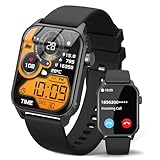
- 【1.83" HD Display & Customizable Watch Faces】Immerse yourself in a vibrant 1.83-inch IPS display, boasting a sharp resolution of 240*284 for crystal-clear visuals. Effortlessly personalize your smart watch with a wide array of customizable watch faces to suit your personal style for every occasion—whether trendy, artistic, or minimalist—ideal for casual, sporty, or professional. Its sleek, modern design complements any outfit, blending technology and fashion seamlessly for everyday wear
- 【120 Sports Modes & Advanced Health Tracking】Our TK29 smart watches for women men come equipped with 120 sports modes, allowing you to effortlessly track a variety of activities such as walking, running, cycling, and swimming. With integrated heart rate and sleep monitors, you can maintain a comprehensive overview of your health, achieve your fitness goals, and maintain a balanced, active lifestyle with ease. Your ideal wellness companion (Note: Step recording starts after exceeding 20 steps)
- 【IP67 Waterproof & Long-Lasting Battery】Designed to keep up with your active lifestyle, this smartwatch features an IP67 waterproof rating, ensuring it can withstand splashes, sweat, and even brief submersion, making it perfect for workouts, outdoor adventures, or rainy days. Its reliable 350mAh battery offering 5-7 days of active use and up to 30 days in standby mode, significantly reducing frequent charging. Ideal for all-day wear, whether you’re at the gym, outdoors, or simply on the go
- 【Stay Connected Anytime, Anywhere】Stay informed and in control with Bluetooth call and music control features. Receive real-time notifications for calls, messages, and social media apps like Facebook, WhatsApp, Twitter, and Instagram directly on your smartwatch. Easily manage calls, control your music playlist, and stay updated without needing to reach for your phone. Perfect for work, workouts, or on-the-go, this watch keeps you connected and never miss important updates wherever you are
- 【Multifunction & Wide Compatibility】Seamlessly handle heart rate monitoring, sleep tracking, and enjoy conveniences like camera/music control, Seamlessly handle heart rate monitoring, sleep tracking, and more-all directly from your wrist. This 1.83 inches HD smartwatch is compatible with iPhone (iOS 9.0+) & Android (5.0+), ensuring smooth daily connectivity and convenience throughout your day. More than just a timepiece, it’s a stylish, all-in-one wearable for smarter, healthier living
Lithium-ion chemistry has improved slowly over the past decade, delivering incremental gains rather than leaps. Samsung can tweak energy density at the margins, but it can’t magically double capacity without making the watch thicker, heavier, or uncomfortable on the wrist.
For users, that means battery life is permanently constrained by physics unless the underlying battery technology changes. Software efficiency can help, but it can’t overcome a hard ceiling imposed by cell size.
Always-on displays and brighter panels changed the game
Samsung’s AMOLED displays are among the best in the wearable space, with high brightness, rich color, and smooth refresh rates. But the move toward larger screens, thinner bezels, and brighter outdoor visibility has dramatically increased power draw.
Always-on display modes, while visually elegant, quietly consume energy all day. Even with aggressive dimming and low-refresh states, they represent a constant drain that didn’t exist on older, simpler wearables.
Users notice this immediately when switching AOD off and suddenly gaining hours, or even a full day, of battery life. That trade-off makes the limitation feel less like a technical necessity and more like a compromise forced onto the user.
Health tracking runs 24/7, whether you notice or not
Modern Galaxy Watches don’t just track steps or workouts; they continuously monitor heart rate, sleep stages, blood oxygen, skin temperature trends, stress, and more. Many of these sensors run in the background around the clock, quietly sipping power every minute.
Advanced sleep tracking alone can consume a significant chunk of battery overnight, especially when combined with SpO2 and temperature sampling. For users who bought the watch specifically for health insights, disabling these features to save battery defeats the entire purpose.
The result is a growing sense that you’re paying for premium sensors you can’t fully use without sacrificing endurance. That tension has become one of the biggest sources of user dissatisfaction.
Wear OS power demands keep climbing
Samsung’s switch to Wear OS brought richer apps, better Google integration, and smoother performance, but it also increased baseline power consumption. Background services, Google Assistant hooks, Play Services syncing, and third-party apps all add invisible overhead.
Even when you’re not actively using the watch, the operating system is doing more than previous generations ever did. This makes standby drain harder to eliminate without aggressive task killing, which would harm the user experience.
Compared to simpler operating systems on fitness-focused wearables, Wear OS trades endurance for capability. Many Galaxy Watch owners love the flexibility, but they’re increasingly frustrated by the battery cost of that choice.
Charging hasn’t kept pace with expectations
Daily charging might be tolerable if it were fast and forgiving, but Galaxy Watch charging speeds remain conservative. A full charge can take well over an hour, and short top-ups often don’t deliver meaningful gains.
Wireless charging adds convenience but also inefficiency, generating heat and slowing charge rates to protect battery health. That’s sensible engineering, but it clashes with modern user habits shaped by fast-charging phones and earbuds.
When users forget to charge overnight, the watch often can’t recover quickly enough before the day begins. That turns battery anxiety into a recurring lifestyle annoyance rather than a one-off inconvenience.
Why optimization alone is no longer enough
Samsung has already squeezed most of the easy efficiency gains out of its current design. Processors have improved, software tuning continues, and sensor algorithms are more refined than ever, yet battery life remains stubbornly flat.
Each new feature added to Galaxy Watch models tends to consume the gains made elsewhere. The net result is stagnation, not progress, in day-to-day endurance.
This is why users are fed up rather than merely impatient. They’ve watched multiple generations arrive with promises of smarter, more capable watches, while the core battery experience barely evolves, setting the stage for why a genuinely new battery approach could finally break the cycle.
The Rumored Breakthrough: Solid-State and Advanced Stacked Battery Tech Explained
If optimization has reached its practical limits, the only way out of the battery stalemate is a hardware shift. That’s exactly what recent supply-chain chatter and patent filings suggest Samsung is exploring for the Galaxy Watch 9 generation.
Rather than squeezing marginal gains from the same lithium-ion pouch cells used for years, Samsung appears to be investigating two closely related ideas: solid-state batteries and advanced stacked cell architectures. Either would represent the biggest internal redesign of a Galaxy Watch since the original model.
What smartwatch batteries look like today
Current Galaxy Watches rely on ultra-thin lithium-ion or lithium-polymer pouch cells. These use a liquid electrolyte, flat electrode layers, and a protective pouch that prioritizes safety and flexibility over raw energy density.
This design works, but it’s inherently constrained. The battery must fit around antennas, sensors, haptics, and the SoC, leaving unused internal volume and limiting how much capacity Samsung can physically install without increasing thickness or weight.
In a 40–44 mm case worn tightly on the wrist, even a few tenths of a millimeter matter for comfort, strap fit, and long-term wearability. That’s why Samsung has historically chosen conservative battery sizes rather than pushing thickness like a rugged sports watch.
Solid-state batteries, explained without the hype
A solid-state battery replaces the liquid electrolyte with a solid material, often ceramic or polymer-based. This allows electrodes to be packed more tightly and reduces the need for bulky protective layers.
In practical terms for a smartwatch, solid-state cells can offer higher energy density in the same physical volume. That could translate to 20–40 percent more capacity without making the watch thicker, or similar capacity with improved safety and longevity.
They also tolerate higher charge rates and heat better, which matters in a tiny enclosure already juggling wireless charging coils and skin-contact temperature limits. For a Galaxy Watch, that could mean faster charging without the aggressive throttling users see today.
Advanced stacked battery tech may arrive first
Full solid-state batteries are still expensive and difficult to mass-produce at smartwatch scale. This is why many analysts believe Samsung’s first move will be advanced stacked lithium-ion cells rather than true solid-state chemistry.
Stacked batteries replace the traditional jelly-roll or flat-layer layout with vertically stacked electrode sheets. This improves space efficiency and current flow, especially in small, irregular shapes like a round watch case.
Samsung SDI has already demonstrated stacked battery designs in other compact electronics. Applying that expertise to wearables would be far less risky than jumping straight to next-generation chemistry.
Why stacked cells matter more than they sound
In a smartwatch, unused internal volume is the enemy. Stacked cells can be shaped more precisely around components like the BioActive sensor array, speaker, and vibration motor.
That means Samsung could increase capacity without changing external dimensions or sacrificing comfort. A Galaxy Watch 9 could feel identical on the wrist while quietly lasting a full extra day for many users.
This also improves thermal behavior. More efficient internal layout reduces hotspots during charging and heavy sensor use, which directly affects battery health and long-term degradation.
Real-world impact: what users would actually notice
For most Galaxy Watch owners, the biggest win wouldn’t be headline battery numbers but reliability. Instead of ending the day at 10–15 percent, the watch might finish with 30–40 percent remaining under the same usage.
Sleep tracking becomes less stressful, especially for users who rely on overnight health metrics. Forgetting to charge one evening would be far less punishing the next morning.
Charging behavior could improve as well. Even modest increases in charge rate efficiency could turn a 15-minute top-up into something genuinely useful rather than symbolic.
Durability and battery aging benefits
Solid-state and stacked designs both promise improved cycle life. Less heat, reduced swelling, and more stable internal chemistry mean batteries degrade more slowly over time.
That matters for a device many users keep for three to four years. Today’s Galaxy Watches often feel battery-worn long before their processors or sensors become obsolete.
Better longevity also improves resale value and sustainability, two areas Samsung has publicly emphasized in recent years.
How this compares to Apple and Google
Apple is rumored to be exploring similar battery technologies for future Apple Watches, but it tends to adopt them cautiously and quietly. Google’s Pixel Watch, by contrast, is still early in its hardware evolution and struggles even more with battery constraints.
If Samsung moves first, it could reclaim a narrative advantage in wearables. Battery life is one of the few areas where Apple Watch dominance isn’t absolute, and Android users are especially sensitive to endurance compromises.
A Galaxy Watch 9 that reliably outlasts both rivals without sacrificing Wear OS features would stand out in a crowded, increasingly iterative market.
Rank #2
![Apple Watch Series 11 [GPS 46mm] Smartwatch with Jet Black Aluminum Case with Black Sport Band - M/L. Sleep Score, Fitness Tracker, Health Monitoring, Always-On Display, Water Resistant](https://m.media-amazon.com/images/I/312K597M2uL._SL160_.jpg)
- HYPERTENSION NOTIFICATIONS — Apple Watch Series 11 can spot signs of chronic high blood pressure and notify you of possible hypertension.*
- KNOW YOUR SLEEP SCORE — Sleep score provides an easy way to help track and understand the quality of your sleep, so you can make it more restorative.
- EVEN MORE HEALTH INSIGHTS — Take an ECG anytime.* Get notifications for a high and low heart rate, an irregular rhythm,* and possible sleep apnea.* View overnight health metrics with the Vitals app* and take readings of your blood oxygen.*
- STUNNING DESIGN — Thin and lightweight, Series 11 is comfortable to wear around the clock — while exercising and even when you’re sleeping, so it can help track your key metrics.
- A POWERFUL FITNESS PARTNER — With advanced metrics for all your workouts, plus features like Pacer, Heart Rate Zones, training load, Workout Buddy powered by Apple Intelligence from your nearby iPhone,* and more. Series 11 also comes with three months of Apple Fitness+ free.*
How likely is this for Galaxy Watch 9?
The most realistic scenario is a hybrid step forward rather than a moonshot. Advanced stacked batteries are highly plausible, while true solid-state cells may debut in limited form or reserved for higher-end models.
Samsung has the supply chain, battery division, and manufacturing scale to pull this off faster than most competitors. The remaining question is whether yields and costs align in time for the Watch 9 production window.
If even part of this rumored battery shift makes it into the final product, it would mark a rare moment where smartwatch battery life genuinely moves forward instead of treading water.
How This Battery Tech Differs from Today’s Galaxy Watch Lithium-Ion Cells
To understand why the rumored Galaxy Watch 9 battery upgrade matters, it helps to look closely at what Samsung is using today. Current Galaxy Watches rely on conventional lithium-ion polymer pouch cells, a mature, reliable technology that has also become a major limiting factor.
These batteries are safe, predictable, and inexpensive at scale, but they’re fundamentally constrained by chemistry and physical packaging. In a device as compact and sensor-dense as a smartwatch, those constraints are increasingly hard to work around.
What’s inside today’s Galaxy Watch batteries
Modern Galaxy Watches use flat lithium-ion polymer cells with liquid electrolytes, stacked in a single-layer or simple multi-layer configuration. The pouch format is thin and flexible, which helps Samsung fit batteries into round cases without sharp corners, but it wastes internal volume.
Energy density is the biggest issue. Even with incremental improvements year over year, these cells deliver roughly the same watt-hours per cubic millimeter as they did several generations ago.
That’s why Galaxy Watch battery capacity bumps are usually modest, and why real-world battery life improvements tend to come from software optimizations rather than hardware breakthroughs.
Why lithium-ion struggles in smartwatches specifically
Lithium-ion cells don’t scale down gracefully. As batteries get smaller, a higher percentage of their internal volume is taken up by separators, safety buffers, and structural materials rather than energy-storing components.
In a smartwatch, that means less usable capacity than the headline number suggests. Add constant heart rate tracking, GPS bursts, LTE radios, bright AMOLED displays, and always-on sensors, and the battery is under near-continuous stress.
Heat is another challenge. Liquid electrolytes are sensitive to temperature, and repeated fast charging or sustained GPS workouts can accelerate chemical degradation over time.
How stacked battery designs change the equation
Stacked battery technology rethinks how layers inside the cell are arranged. Instead of spreading components horizontally, they’re stacked vertically in a more compact, tightly integrated structure.
This improves volumetric energy density, allowing more capacity in the same physical footprint. In practical terms, Samsung could either increase battery life without making the watch thicker, or keep capacity similar while freeing up internal space for sensors, haptics, or cooling.
Stacked cells also tend to distribute electrical load more evenly, which can reduce localized heat buildup during charging and heavy use.
What solid-state brings that lithium-ion can’t
Solid-state batteries go a step further by replacing the liquid electrolyte with a solid one. This dramatically improves stability and reduces the risk of swelling, leakage, or thermal runaway.
For a wearable that lives on your wrist during workouts, sleep, and charging cycles, that stability matters. It allows for denser packing of active materials and more aggressive charging profiles without the same long-term damage.
While true solid-state smartwatch batteries are still early, even partial adoption, such as semi-solid electrolytes, would represent a meaningful departure from today’s lithium-ion limitations.
Charging behavior and real-world usability differences
Today’s Galaxy Watch batteries charge cautiously to protect cell health. Fast charging is usually front-loaded, with steep slowdowns after 50 to 60 percent.
Advanced stacked or solid-state-inspired designs can tolerate higher charge rates for longer. That’s where the rumored improvements could feel transformative, especially for users who rely on short charging windows before bed or workouts.
This isn’t just about speed on a spec sheet. It’s about making quick top-ups actually change how you use the watch day to day.
Battery aging and long-term ownership impact
Lithium-ion batteries degrade through electrolyte breakdown, electrode expansion, and heat-related stress. In small devices, that degradation is felt sooner and more sharply.
Stacked and solid-state designs promise slower capacity loss over hundreds of charge cycles. That directly addresses a common Galaxy Watch complaint: a device that feels battery-compromised well before it feels outdated.
For users who keep their watches three or four years, this could be just as important as headline battery life gains.
Design freedom and comfort implications
A more efficient battery doesn’t just affect endurance. It gives Samsung more flexibility in case thickness, weight distribution, and internal layout.
That could translate into slimmer profiles, better balance on smaller wrists, or room for improved haptics and sensors without sacrificing comfort. In wearables, millimeters and grams matter more than in almost any other consumer device.
If Samsung uses the efficiency gains wisely, the Galaxy Watch 9 could feel subtly but meaningfully better on the wrist, not just longer-lasting on paper.
Why this is more than another incremental upgrade
Lithium-ion improvements have largely plateaued for wearables. Most recent gains have come from chip efficiency and software tuning, not battery breakthroughs.
The rumored shift for Galaxy Watch 9 represents a structural change rather than another tweak. It attacks the problem at the cell level, which is where genuine leaps in battery life and longevity begin.
That’s why this battery tech, if it arrives as expected, stands apart from the small, safe upgrades Galaxy Watch owners have grown used to.
Real-World Impact: Battery Life, Charging Speed, Safety, and Long-Term Durability
If Samsung does move the Galaxy Watch 9 to a stacked or next-generation battery architecture, the biggest question isn’t the lab theory. It’s how that change reshapes everyday use on a wrist that’s already crowded with sensors, radios, and always-on software demands.
This is where the rumored technology stops being abstract and starts to matter to owners who charge nightly, track sleep, and expect a premium wearable to last more than two upgrade cycles.
What battery life gains could actually look like day to day
A higher energy-density cell doesn’t automatically mean a watch that suddenly lasts a full week. What it realistically enables is headroom: more capacity in the same volume, or similar capacity with less strain on the battery.
In practical terms, that could mean two full days with all health tracking active, rather than one day with compromises. Always-on display, continuous heart rate, overnight sleep tracking, and occasional GPS workouts could coexist without forcing mid-day charging anxiety.
For Galaxy Watch owners coming from Watch 6 or earlier models, the improvement would likely feel less like a headline number and more like reliability. The watch simply makes it through demanding days without careful micromanagement.
Charging speed and the psychology of short top-ups
Samsung has already pushed charging speed faster than many rivals, but current lithium-ion cells hit thermal and chemical limits quickly. That’s why rapid charging often slows dramatically after the first 10–15 minutes.
Stacked or solid-state-inspired designs can tolerate higher current more safely, at least in theory. If Samsung pairs that with refined thermal management, short charging windows become genuinely useful rather than symbolic.
That changes habits. A 10-minute charge while showering could realistically restore several hours of use, including sleep tracking later that night. For a device worn nearly 24/7, this is arguably more impactful than raw capacity.
Safety, heat management, and wrist-level consequences
Any battery discussion on a wrist-worn device has to address safety first. The Galaxy Watch sits against skin, during exercise, sleep, and elevated body temperatures.
One advantage of newer battery architectures is improved structural stability. Reduced swelling, better resistance to microfractures, and less volatile electrolyte behavior all lower risk under stress conditions like fast charging or high ambient heat.
From a user perspective, this shows up as less warmth during charging, fewer long-term bulging issues, and more consistent performance across seasons. It also gives Samsung room to push charging speeds without flirting with discomfort or safety tradeoffs.
Rank #3

- Bluetooth Call and Message Alerts: Smart watch is equipped with HD speaker, after connecting to your smartphone via bluetooth, you can answer or make calls, view call history and store contacts through directly use the smartwatch. The smartwatches also provides notifications of social media messages (WhatsApp, Twitter, Facebook, Instagram usw.) So that you will never miss any important information.
- Smart watch for men women is equipped with a 320*380 extra-large hd full touch color screen, delivering exceptional picture quality and highly responsive touch sensitivity, which can bring you a unique visual and better interactive experience, lock screen and wake up easily by raising your wrist. Though “Gloryfit” app, you can download more than 102 free personalised watch faces and set it as your desktop for fitness tracker.
- 24/7 Heart Rate Monitor and Sleep Tracker Monitor: The fitness tracker watch for men has a built-in high-performance sensor that can record our heart rate changes in real time. Monitor your heart rate 26 hours a day and keep an eye on your health. Synchronize to the mobile phone app"Gloryfit", you can understand your sleep status(deep /light /wakeful sleep) by fitness tracker watch develop a better sleep habit and a healthier lifestyle.
- IP68 waterproof and 110+ Sports Modes: The fitness tracker provides up to 112+ sports modes, covering running, cycling, walking, basketball, yoga, football and so on. Activity trackers bracelets meet the waterproof requirements for most sports enthusiasts' daily activities, such as washing hands or exercising in the rain, meeting daily needs (note: Do not recommended for use in hot water or seawater.)
- Multifunction and Compatibility: This step counter watch also has many useful functions, such as weather forecast, music control, sedentary reminder, stopwatch, alarm clock, timer, track female cycle, screen light time, find phone etc. The smart watch with 2 hrs of charging, 5-7 days of normal use and about 30 days of standby time. This smart watches for women/man compatible with ios 9.0 and android 6.2 and above devices.
Long-term durability and ownership beyond the upgrade cycle
Battery degradation is the silent killer of smartwatches. Displays, processors, and sensors often age well enough, but a worn battery makes the entire device feel obsolete.
If the Galaxy Watch 9’s battery chemistry genuinely slows capacity loss, owners could see usable endurance remain stable for three to four years instead of noticeably dipping after 18–24 months. That aligns better with how long people keep traditional watches and even modern smartphones.
This also impacts resale value and hand-me-down viability. A used smartwatch with healthy battery life is far more appealing than one that requires daily charging twice a day.
How this compares to Apple Watch and Pixel Watch realities
Apple has focused heavily on efficiency gains through silicon and software, but battery capacity growth has been incremental. The Apple Watch remains a daily charger by design, even in its Ultra models.
Google’s Pixel Watch, especially the first generation, highlighted how punishing small batteries can be when paired with ambitious software. Even the Pixel Watch 2 leans more on optimization than cell-level innovation.
If Samsung meaningfully upgrades battery architecture first, it gains a structural advantage rather than a tuning edge. That’s harder for competitors to close quickly, especially in a form factor where internal volume is brutally constrained.
Comfort, weight, and subtle wearability benefits
Battery efficiency doesn’t just affect endurance. It influences how the watch feels on the wrist hour after hour.
A denser cell could allow Samsung to redistribute weight, slightly reduce thickness, or improve balance on smaller wrists. Even a one-millimeter reduction or a few grams saved can improve comfort during sleep tracking and long workouts.
For users sensitive to bulk or pressure points, these changes can matter as much as battery life itself. The best smartwatch battery upgrade is often the one you stop thinking about entirely.
The realistic expectation to keep in mind
Even if the Galaxy Watch 9 adopts this technology, it won’t magically escape the physics of a tiny enclosure packed with sensors, radios, and a bright display. Software behavior, LTE usage, GPS frequency, and health features will still define daily endurance.
What changes is the margin. More flexibility, less degradation, faster recovery from short charges, and fewer compromises baked into everyday use.
That’s why this rumored battery shift feels meaningful. Not because it promises miracles, but because it targets the exact friction points Galaxy Watch owners have lived with for years.
Why Samsung Is Uniquely Positioned to Pull This Off (Samsung SDI, Timelines, and Patents)
What makes this rumor feel less like wishful thinking and more like a plausible inflection point is who sits behind Samsung’s battery roadmap. Unlike most smartwatch makers, Samsung doesn’t need to wait for a supplier to invent something new and then adapt it to a watch-sized enclosure.
Samsung SDI and the advantage of in-house battery science
Samsung SDI has been publicly working on next-generation lithium technologies for years, including stacked cell architectures and early solid-state battery research. These aren’t theoretical lab projects; SDI already supplies batteries for wearables, smartphones, EVs, and industrial applications at scale.
That matters because smartwatch batteries live in a brutally constrained design space. Having direct access to cell engineers allows Samsung to co-design the battery around the Galaxy Watch’s curved case, sensor array, and wireless charging coil rather than forcing a generic cell to fit.
Stacked batteries are a realistic near-term win
While true solid-state batteries remain further out, stacked lithium-ion cells are very much a 2025–2026 technology. By layering electrodes more efficiently instead of rolling them, energy density can increase without growing footprint or thickness.
For a Galaxy Watch, that could translate into a tangible bump in capacity within the same 40–44mm case sizes, or the same battery life in a thinner, better-balanced watch. Either outcome directly improves daily wearability, especially for sleep tracking and smaller wrists.
Patents point to wearables, not just phones
Samsung has filed multiple battery-related patents that explicitly reference compact devices with curved housings and irregular internal volumes. Several describe stacked or laminated cells optimized for circular or asymmetrical enclosures, which is a telltale sign they’re thinking beyond rectangular smartphones.
Patents alone don’t guarantee shipping products, but they do show intent. More importantly, they show that Samsung has been solving the exact geometric problems smartwatches present, not retrofitting phone tech and hoping for the best.
Timelines line up with a Galaxy Watch 9 window
Samsung SDI has previously indicated that stacked battery production would mature mid-decade, with early deployments in smaller electronics before scaling outward. Wearables are an ideal proving ground because the absolute capacity is small, the performance gains are immediately noticeable, and the risk profile is manageable.
If Samsung were to introduce this quietly in a Galaxy Watch generation, it would fit their historical pattern. The original Galaxy Watch Ultra already tested a larger battery strategy; the Watch 9 would be a logical place to refine the chemistry itself.
Vertical integration shortens feedback loops
Samsung’s ability to iterate quickly is understated. The same corporate ecosystem controls the battery, the Exynos wearable chipset, the display, the charging system, and One UI Watch’s power behavior.
That allows fine-tuning across the entire stack, from charging curves that reduce long-term degradation to software features that exploit faster charge acceptance during short top-ups. Apple has a similar advantage, but Apple has not prioritized cell-level innovation in watches to the same extent.
Why competitors can’t easily respond
Apple and Google rely on external battery suppliers and prioritize predictability over experimentation in wearables. Even if a new battery architecture proves superior, qualifying it for mass production, safety certification, and global shipping takes time.
Samsung’s willingness to accept slightly more engineering risk gives it a structural edge. If the Galaxy Watch 9 lands with a genuine battery architecture upgrade, competitors won’t be able to match it with a software update or a minor capacity bump the following year.
Galaxy Watch 9 vs Apple Watch and Pixel Watch: Could Samsung Leapfrog the Competition?
Taken in context, Samsung’s battery experimentation doesn’t exist in a vacuum. It directly targets the weakest shared limitation of the Apple Watch and Pixel Watch, both of which remain constrained by flat, single-layer lithium-ion cells optimized for safety and predictability rather than volumetric efficiency.
If Samsung delivers even a modest stacked-cell advantage in the Galaxy Watch 9, the competitive balance could shift in a way we haven’t seen since Apple first moved to LTPO OLED displays.
Apple Watch: unmatched polish, stubborn battery ceilings
Apple Watch hardware remains exceptionally refined, with thin cases, excellent haptics, and some of the best sensor accuracy in the category. Case materials, from aluminum to stainless steel to titanium, are impeccably finished, and Apple’s strap ecosystem is still the most comfortable and versatile for all-day wear.
Battery life, however, has barely moved. Most Apple Watch models still hover around 18 to 36 hours in real-world mixed use, with Ultra models stretching further largely through brute-force capacity and thicker cases rather than chemistry innovation.
Apple’s strength is system-level efficiency, not cell-level breakthroughs. Its SiP design, display power management, and watchOS optimizations are class-leading, but they’re increasingly compensating for a battery architecture that hasn’t meaningfully changed in years.
Pixel Watch: elegant design, but power still feels borrowed
The Pixel Watch excels in software cohesion, Fitbit-driven health insights, and visual elegance. Its domed glass and compact dimensions make it one of the most comfortable smartwatches on smaller wrists, but that comfort comes at the cost of internal volume.
Google’s reliance on off-the-shelf battery solutions shows. Even with incremental improvements in Pixel Watch 2, endurance remains a one-day affair for most users, especially with always-on display and continuous health tracking enabled.
Without vertical integration in battery manufacturing, Google is structurally limited. Any leap forward would require suppliers to prioritize smartwatch-specific innovation, which remains unlikely given smartphones still dominate volume and margins.
Where stacked batteries could change the daily experience
A stacked or laminated battery architecture doesn’t just mean more milliamp-hours. It allows Samsung to reshape the battery to fit unused internal contours, reducing wasted space around sensors, antennas, and mounting points.
In practical terms, that could mean two days of use with always-on display enabled, or a full day plus sleep tracking and morning workouts without charging anxiety. Even a 20 to 30 percent gain would be transformative at current baseline levels.
Charging behavior matters just as much. Higher charge acceptance could enable meaningful top-ups during short routines like showering or commuting, rather than planning around long charging sessions.
Durability, longevity, and thermal advantages
Battery degradation is an under-discussed pain point in smartwatches. Thin cells under constant thermal stress from processors, radios, and fast charging degrade faster than phone batteries.
Stacked designs can improve thermal distribution and reduce peak stress during charging. Over a two- or three-year ownership window, that could mean the Galaxy Watch 9 holds its endurance better than rivals, not just on day one but years later.
This matters for resale value, trade-in programs, and users who don’t upgrade annually. It’s also an area where Apple and Google have been conservative, prioritizing absolute safety over long-term capacity retention gains.
Software leverage: where Samsung could press its advantage
Samsung’s control over One UI Watch gives it room to exploit hardware gains aggressively. More battery headroom allows less restrictive background task limits, more frequent sensor polling, and richer watch face animations without constant power compromises.
Rank #4
![Apple Watch Series 11 [GPS 42mm] Smartwatch with Rose Gold Aluminum Case with Light Blush Sport Band - S/M. Sleep Score, Fitness Tracker, Health Monitoring, Always-On Display, Water Resistant](https://m.media-amazon.com/images/I/31J+F-pXaWL._SL160_.jpg)
- HYPERTENSION NOTIFICATIONS — Apple Watch Series 11 can spot signs of chronic high blood pressure and notify you of possible hypertension.*
- KNOW YOUR SLEEP SCORE — Sleep score provides an easy way to help track and understand the quality of your sleep, so you can make it more restorative.
- EVEN MORE HEALTH INSIGHTS — Take an ECG anytime.* Get notifications for a high and low heart rate, an irregular rhythm,* and possible sleep apnea.* View overnight health metrics with the Vitals app* and take readings of your blood oxygen.*
- STUNNING DESIGN — Thin and lightweight, Series 11 is comfortable to wear around the clock — while exercising and even when you’re sleeping, so it can help track your key metrics.
- A POWERFUL FITNESS PARTNER — With advanced metrics for all your workouts, plus features like Pacer, Heart Rate Zones, training load, Workout Buddy powered by Apple Intelligence from your nearby iPhone,* and more. Series 11 also comes with three months of Apple Fitness+ free.*
That could close the experiential gap with Apple Watch in responsiveness and smoothness, while simultaneously beating it on endurance. For Android users, that combination has been elusive.
Pixel Watch remains cleaner and more minimalist in software philosophy, but Samsung’s broader feature set benefits more directly from extra power budget.
Could Samsung realistically leapfrog both?
If the Galaxy Watch 9 ships with stacked battery technology at scale, Samsung would be the first major smartwatch maker to move beyond incremental capacity bumps. Apple would likely respond eventually, but its product cycles and certification timelines mean it wouldn’t be immediate.
Google, lacking battery vertical integration, would be even slower to react. Any response would likely come via efficiency tweaks rather than fundamental hardware changes.
The risk for Samsung is execution. New battery architectures must meet global safety standards, survive millions of charge cycles, and work across multiple case sizes without compromising comfort or thickness. If those hurdles are cleared, the competitive advantage could last more than a single generation.
In that scenario, the Galaxy Watch 9 wouldn’t just compete on features or price. It would compete on something users feel every single day, often subconsciously, which is exactly where meaningful platform shifts begin.
Design and Wearability Implications: Thinner Cases, Bigger Displays, or More Sensors?
If Samsung really does unlock meaningful battery density gains, the most interesting question isn’t just how long the Galaxy Watch 9 lasts. It’s what Samsung chooses to do with that reclaimed internal space, because design trade-offs define day-to-day comfort more than raw endurance ever will.
Historically, smartwatch makers have spent battery improvements defensively, simply offsetting brighter displays, faster chips, and more sensors. A genuinely higher-density battery gives Samsung the rare chance to spend that budget offensively, reshaping the physical watch itself.
Thinner cases and improved wrist comfort
The most conservative and arguably most user-friendly move would be thinner cases across both standard and Classic models. Galaxy Watches have improved ergonomically in recent generations, but they still sit thicker than many users expect, especially on smaller wrists.
Even shaving 0.8 to 1.2mm off case thickness would materially change how the watch wears under cuffs, during sleep tracking, and in all-day use. Reduced vertical mass also improves stability during workouts, where a top-heavy watch can shift and compromise heart rate accuracy.
For users already satisfied with screen size and feature sets, this is the least flashy but most impactful outcome. It’s also the hardest to market, which may work against it internally.
Bigger displays without ballooning the case
A more visible play would be pushing display size further while keeping overall dimensions flat. Samsung already leads on AMOLED quality, and extra battery headroom could support slightly larger panels with higher sustained brightness and more aggressive always-on modes.
Narrower bezels or a modest diagonal increase would make One UI Watch feel roomier, especially for notifications, navigation, and third-party apps. This would also help Samsung further differentiate from Pixel Watch, which still feels cramped despite excellent software polish.
The risk is diminishing returns. Larger displays increase power draw, and if Samsung spends too much of its battery advantage here, real-world longevity gains could feel underwhelming.
More sensors, higher fidelity health tracking
The most strategically ambitious option is reinvesting battery gains into sensors rather than form factor. Samsung’s BioActive sensor already combines optical heart rate, ECG, and BIA, but it remains power-limited in sampling frequency and duration.
More battery headroom enables longer continuous monitoring, higher-resolution signal processing, and potentially new metrics that are currently impractical at scale. Overnight tracking accuracy, irregular heart rhythm detection, and stress monitoring would all benefit from less aggressive power throttling.
This path aligns with Samsung’s health ambitions, but it also carries regulatory complexity and uneven regional feature rollouts, which can dilute perceived value.
Classic vs standard: diverging design strategies
Battery advances may also widen the design split between Galaxy Watch 9 variants. The Classic model, with its rotating bezel and heavier steel construction, has always traded slimness for tactility and durability.
Samsung could use denser batteries to slim the Classic without sacrificing its mechanical character, making it more wearable as a daily watch rather than a niche enthusiast option. Meanwhile, the standard aluminum model could prioritize thinness and lightness, appealing to fitness-first users.
That kind of segmentation would mirror traditional watchmaking logic, where case thickness, materials, and movement architecture define distinct wearing experiences.
Materials, durability, and thermal considerations
Higher-density batteries also raise thermal and structural questions. Samsung may need to adjust internal framing, heat dissipation paths, or even material choices to ensure consistent performance during fast charging and heavy sensor use.
Expect continued use of sapphire glass, aluminum or stainless steel cases, and standardized strap lugs for ecosystem compatibility. What changes is how tightly everything is packed, and how well Samsung manages heat without making the case uncomfortable during workouts or charging.
Execution matters here. A thinner watch that runs warm or feels fragile would undermine any battery advantage.
The most likely outcome: a balanced reallocation
The realistic scenario is not an extreme pivot in one direction, but a careful spread of gains. Slightly thinner cases, marginally larger or brighter displays, and modest sensor improvements that together feel transformative in daily use.
That kind of change doesn’t photograph well on spec sheets, but it’s exactly what users notice after weeks of wear. If Samsung gets this balance right, the Galaxy Watch 9 could feel less like a tech object strapped to the wrist and more like a refined instrument designed to disappear when you’re not thinking about it.
And in wearables, that’s often the clearest sign of real progress.
What the Leaks and Industry Signals Actually Say About Galaxy Watch 9 Adoption Odds
All of the above only matters if Samsung is actually ready to ship this battery technology at scale. That’s where the leaks, supply-chain signals, and Samsung’s own recent behavior become more telling than any single rumor.
Right now, the picture that emerges is cautious optimism rather than moonshot speculation.
What’s actually being rumored, and what isn’t
Notably, no credible leak suggests a dramatic jump to exotic chemistries like full solid-state lithium metal in the Galaxy Watch 9. Those technologies remain expensive, yield-constrained, and highly sensitive to thermal stress, especially in devices that sit against skin all day.
Instead, the more consistent signal points toward higher-density lithium-ion variants, potentially using stacked electrode designs, silicon-enhanced anodes, or advanced packaging borrowed from smartphone battery R&D. These aren’t science experiments; they’re evolutionary steps that Samsung SDI has already demonstrated publicly in other form factors.
That distinction matters. Incremental chemistry and packaging upgrades are far more likely to make it into a mass-market wearable on a predictable launch cycle.
Why Samsung is better positioned than most to try this
Samsung has an unusual advantage in wearables because it controls far more of the stack than most competitors. Battery cells, SoCs, displays, and even parts of the manufacturing process are either internal or deeply integrated through long-term suppliers.
We’ve already seen Samsung deploy new battery designs first in its own phones before trickling them down to smaller devices. The Galaxy Z Fold and Ultra phone lines have often acted as proving grounds for denser cells and tighter thermal envelopes.
From an industry standpoint, moving that know-how into a smartwatch is less risky than it sounds, especially when the expected gains are in the 10 to 20 percent range rather than something headline-grabbing but unstable.
Certification filings and component timelines
One subtle but important signal comes from regulatory filings and component lead times. Galaxy Watch certifications have historically appeared only months before launch, leaving little room for last-minute hardware pivots.
If the Watch 9 were planning a radical battery overhaul, we’d expect delays, staggered model availability, or regional differentiation. So far, none of that noise has surfaced in credible channels.
That strongly suggests Samsung is confident in the manufacturability of whatever battery improvements it’s planning. In other words, this looks like a controlled upgrade, not a risky bet that could collapse under volume pressure.
How this compares to Apple and Google’s current trajectory
Apple remains extremely conservative with battery chemistry in wearables. The Apple Watch prioritizes predictable performance, thinness, and tight thermal control over endurance gains, relying heavily on software optimization instead.
Google’s Pixel Watch line, meanwhile, is still playing catch-up on fundamentals like efficiency and sensor power draw. Battery life improvements there are more likely to come from SoC changes than cell innovation in the near term.
If Samsung can meaningfully improve battery density without increasing thickness, it creates a rare competitive opening: longer real-world battery life without sacrificing wearability. That’s something neither Apple nor Google seems poised to deliver immediately.
💰 Best Value
![Apple Watch Series 11 [GPS 42mm] Smartwatch with Jet Black Aluminum Case with Black Sport Band - S/M. Sleep Score, Fitness Tracker, Health Monitoring, Always-On Display, Water Resistant](https://m.media-amazon.com/images/I/31ybzrJZckL._SL160_.jpg)
- HYPERTENSION NOTIFICATIONS — Apple Watch Series 11 can spot signs of chronic high blood pressure and notify you of possible hypertension.*
- KNOW YOUR SLEEP SCORE — Sleep score provides an easy way to help track and understand the quality of your sleep, so you can make it more restorative.
- EVEN MORE HEALTH INSIGHTS — Take an ECG anytime.* Get notifications for a high and low heart rate, an irregular rhythm,* and possible sleep apnea.* View overnight health metrics with the Vitals app* and take readings of your blood oxygen.*
- STUNNING DESIGN — Thin and lightweight, Series 11 is comfortable to wear around the clock — while exercising and even when you’re sleeping, so it can help track your key metrics.
- A POWERFUL FITNESS PARTNER — With advanced metrics for all your workouts, plus features like Pacer, Heart Rate Zones, training load, Workout Buddy powered by Apple Intelligence from your nearby iPhone,* and more. Series 11 also comes with three months of Apple Fitness+ free.*
Adoption odds across the Galaxy Watch 9 lineup
The most plausible scenario is selective adoption rather than blanket implementation. The Classic and Pro-style variants are the strongest candidates, where weight and thickness tolerances are slightly more forgiving and users expect premium materials and longer endurance.
For the standard aluminum model, Samsung may choose a more conservative approach, reallocating gains toward thinness and comfort instead of raw battery life. That keeps the lineup cohesive while still showcasing progress.
This kind of tiered strategy aligns with how traditional watch brands differentiate movements and case construction across collections, and it reduces risk if early yields aren’t perfect.
What this means for real buyers deciding whether to wait
If you’re frustrated by having to charge your Galaxy Watch daily, the signals suggest the Watch 9 could meaningfully reduce that friction, even if it doesn’t double endurance overnight. The likely gains are measured in comfort and consistency: fewer anxiety charges, more predictable overnight tracking, and better resilience during heavy workout days.
If, however, you’re expecting a multi-day endurance leap that rivals dedicated sports watches, the leaks don’t support that expectation yet. This is refinement, not reinvention.
The key takeaway from the industry signals is confidence. Samsung appears to be preparing a battery upgrade it believes it can ship reliably, support thermally, and integrate without compromising wearability. That alone makes the Galaxy Watch 9 one of the more credible battery-focused upgrades in recent smartwatch cycles.
Potential Downsides: Cost, Early-Gen Risks, and Software Optimization Challenges
The optimism around improved battery density needs to be balanced with some practical realities. Even if Samsung has a viable next-generation cell ready, translating lab-level gains into a mass-market smartwatch is where the hardest trade-offs tend to surface.
Higher component costs and price pressure
Advanced battery chemistries don’t come cheap, especially in the first one or two production cycles. If Samsung is moving toward higher-density lithium variants or early solid-state-adjacent designs, the cost per cell will almost certainly exceed the lithium-ion packs used in current Galaxy Watches.
That cost has to land somewhere. It could mean higher retail pricing for the Watch 9 Classic or Pro variants, or more subtle compromises like unchanged storage, reused displays, or fewer case size options to keep margins intact.
For buyers already sensitive to smartwatch pricing creeping toward flagship phone territory, this could make the battery upgrade feel less like a free win and more like a premium tax. Traditional watchmaking parallels apply here too: better “movement” technology often arrives first in the higher tiers, not the entry models.
First-generation reliability and long-term degradation risks
Early adoption always carries uncertainty, especially with batteries. Even if Samsung has validated safety and thermal stability, real-world smartwatch usage is punishing: constant micro-charging, overnight wear, skin heat, sweat exposure, and daily discharge cycles.
Higher energy density can also accelerate degradation if charge management isn’t conservative. That could mean the Watch 9 ships with software limits that intentionally underutilize the full capacity at launch, only unlocking gains later once long-term behavior is better understood.
For users who keep their watches for three or four years, the question isn’t just day-one battery life. It’s whether that advantage holds up after hundreds of cycles without swelling, reduced peak capacity, or unexpected shutdowns during workouts or sleep tracking.
Thermal management in a thinner, tighter chassis
Packing more energy into the same physical volume increases thermal complexity. Smartwatches already operate in constrained conditions, with minimal airflow and direct contact with the wrist acting as both a heat sink and a comfort limiter.
If Samsung uses battery gains to push thinner cases or lighter profiles, there’s less internal space for heat dissipation. That can force conservative CPU throttling during GPS-heavy workouts, LTE usage, or extended navigation sessions.
From a wearability standpoint, excessive warmth matters. A watch that technically lasts longer but becomes uncomfortable during long runs or summer wear undermines the everyday usability gains buyers actually care about.
Software optimization remains the real gatekeeper
Even the best battery hardware is only as good as the software managing it. Wear OS has improved, but background sync behavior, third-party app efficiency, and health feature scheduling still play a massive role in real-world endurance.
Samsung’s One UI Watch layer adds polish and features, but it also adds complexity. New battery tech will require refined charging curves, smarter sleep-state transitions, and better predictive power management to avoid wasting density gains on inefficiencies.
There’s also a compatibility angle. If developers don’t optimize for the Watch 9’s power profile, early adopters may see inconsistent results depending on their app mix, watch face choice, and usage patterns, at least until the ecosystem catches up.
Charging expectations may not change as much as hoped
One quiet risk is mismatched expectations around charging speed. Higher-density cells often charge more slowly to preserve longevity, especially in compact devices without active cooling.
That could mean longer top-up times despite better overall endurance. For users accustomed to quick morning boosts before heading out, slower charging could feel like a regression even if total battery life improves.
Unless Samsung pairs the new battery with meaningful charging architecture updates, the daily charging experience may not evolve at the same pace as the headline endurance numbers.
Should You Wait for the Galaxy Watch 9 or Buy Now? A Buyer-Focused Verdict
All of the battery discussion above leads to a practical question that matters far more than lab numbers or leaked specs: does the rumored battery tech actually change the buying decision today?
The answer depends less on hype and more on how frustrated you are with your current Galaxy Watch’s day-to-day endurance, charging habits, and long-term durability.
Wait if battery life is your single biggest pain point
If you’re currently stretching a Galaxy Watch 5 or Watch 6 through long days, travel, or multi-hour GPS workouts, the Watch 9 is shaping up to be a meaningful inflection point.
A higher-density cell, even without dramatic capacity increases, could translate into an extra half to full day of real-world use. That’s the difference between charging every night out of necessity and charging when it’s convenient.
Just as important, newer battery chemistry tends to degrade more slowly. If Samsung implements this correctly, Watch 9 owners may see more consistent battery life after 18–24 months compared to today’s models, which often lose noticeable capacity within the first year.
Buy now if your current watch already fits your routine
For users who are already comfortable charging nightly or topping up during desk time, the Watch 6 series remains a very complete package.
Performance is smooth, health tracking is mature, and One UI Watch is stable. Case sizing, display quality, haptics, and strap compatibility are already well-optimized, and there’s little indication the Watch 9 will radically change the physical wearing experience beyond potential weight or thickness tweaks.
If you prioritize proven behavior over first-generation battery tech, buying now avoids early adopter uncertainty around charging speed, thermal behavior, and software tuning.
Early adopters should expect evolution, not miracles
It’s important to temper expectations. Even if Samsung adopts a silicon-heavy or stacked cell architecture, the Galaxy Watch 9 won’t suddenly become a week-long endurance device like some fitness-first wearables.
Wear OS, LTE radios, bright AMOLED displays, and continuous health sensors impose hard limits. The realistic upside is fewer compromises, not a total redefinition of smartwatch battery life.
There’s also a ramp-up period to consider. Initial firmware versions may not fully exploit the new battery profile, and third-party apps could lag behind in optimization, especially if Samsung changes power management behavior under the hood.
How this stacks up against Apple and Google
Apple is still conservative with battery chemistry, focusing more on SoC efficiency and software control. Google’s Pixel Watch line, meanwhile, continues to lag behind Samsung on endurance consistency.
If Samsung moves first with a more advanced battery structure, the Watch 9 could quietly become the most balanced Wear OS option for users who want flagship features without constant battery anxiety.
That advantage matters more in daily wear than spec-sheet battles. A watch that comfortably survives sleep tracking, a full workday, and an evening workout without micromanagement simply feels better to live with.
The buyer’s bottom line
Wait for the Galaxy Watch 9 if battery life, longevity, and fewer charging compromises are central to how you use your smartwatch. The rumored battery tech has a credible path to delivering tangible quality-of-life gains, even if charging speed and thermal limits remain in play.
Buy now if your current habits already align with what Samsung offers today, or if you value stability over speculation. The Watch 6 lineup is refined, comfortable, and functionally complete.
Either way, the bigger takeaway is this: Samsung finally appears to be treating battery technology as a core differentiator rather than a background spec. If that shift holds, the Galaxy Watch 9 may not just last longer per charge, but age better over years of real-world wear, and that’s the kind of upgrade that actually changes ownership satisfaction.