If you’ve ever searched for a Samsung Galaxy Watch and walked away more confused than informed, you’re not alone. Product pages, forums, and even retailers still casually mix terms like Tizen, Android Wear, and Wear OS as if they’re interchangeable, when in reality they describe very different eras of smartwatch software. That confusion directly affects which phones work best, which apps you can install, how long your watch will be supported, and whether it’s a smart buy in 2026 or beyond.
This matters because Samsung didn’t just change operating systems once. It went through three distinct phases, each with different strengths, trade‑offs, and long‑term implications for owners. If you’ve owned an older Galaxy Watch, your experience may be wildly different from someone buying a Galaxy Watch 6 or 7 today.
What follows is a clean reset of the conversation. We’ll untangle what Tizen actually was, what Android Wear used to mean, how modern Wear OS is fundamentally different, and where Samsung’s current watches really sit in that landscape so you can evaluate compatibility, app depth, performance, battery life, and future value with clarity rather than marketing noise.
Tizen: Samsung’s Closed but Highly Optimized Era
Tizen was Samsung’s in‑house operating system, used on Galaxy Watches from the original 2018 model through the Galaxy Watch 3 in 2020. It was not Android-based, did not run Google apps natively, and lived almost entirely inside Samsung’s own ecosystem. Think of it less like Android and more like a custom firmware designed to extract maximum efficiency from modest smartwatch hardware.
🏆 #1 Best Overall
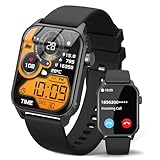
- 【1.83" HD Display & Customizable Watch Faces】Immerse yourself in a vibrant 1.83-inch IPS display, boasting a sharp resolution of 240*284 for crystal-clear visuals. Effortlessly personalize your smart watch with a wide array of customizable watch faces to suit your personal style for every occasion—whether trendy, artistic, or minimalist—ideal for casual, sporty, or professional. Its sleek, modern design complements any outfit, blending technology and fashion seamlessly for everyday wear
- 【120 Sports Modes & Advanced Health Tracking】Our TK29 smart watches for women men come equipped with 120 sports modes, allowing you to effortlessly track a variety of activities such as walking, running, cycling, and swimming. With integrated heart rate and sleep monitors, you can maintain a comprehensive overview of your health, achieve your fitness goals, and maintain a balanced, active lifestyle with ease. Your ideal wellness companion (Note: Step recording starts after exceeding 20 steps)
- 【IP67 Waterproof & Long-Lasting Battery】Designed to keep up with your active lifestyle, this smartwatch features an IP67 waterproof rating, ensuring it can withstand splashes, sweat, and even brief submersion, making it perfect for workouts, outdoor adventures, or rainy days. Its reliable 350mAh battery offering 5-7 days of active use and up to 30 days in standby mode, significantly reducing frequent charging. Ideal for all-day wear, whether you’re at the gym, outdoors, or simply on the go
- 【Stay Connected Anytime, Anywhere】Stay informed and in control with Bluetooth call and music control features. Receive real-time notifications for calls, messages, and social media apps like Facebook, WhatsApp, Twitter, and Instagram directly on your smartwatch. Easily manage calls, control your music playlist, and stay updated without needing to reach for your phone. Perfect for work, workouts, or on-the-go, this watch keeps you connected and never miss important updates wherever you are
- 【Multifunction & Wide Compatibility】Seamlessly handle heart rate monitoring, sleep tracking, and enjoy conveniences like camera/music control, Seamlessly handle heart rate monitoring, sleep tracking, and more-all directly from your wrist. This 1.83 inches HD smartwatch is compatible with iPhone (iOS 9.0+) & Android (5.0+), ensuring smooth daily connectivity and convenience throughout your day. More than just a timepiece, it’s a stylish, all-in-one wearable for smarter, healthier living
In daily use, Tizen excelled at smooth navigation, excellent battery life, and tight integration with Samsung phones. Rotating bezels felt mechanically purposeful, animations were fluid even on slower Exynos chips, and multi-day battery life was realistic without aggressive power-saving. The watches were also physically refined, with slim cases, comfortable lugs, and lightweight aluminum or stainless steel builds that wore closer to traditional watches than early Android competitors.
Where Tizen struggled was software depth. The Galaxy Store for watches never reached critical mass, third-party apps were often abandoned, and popular services arrived late or not at all. If you valued Spotify offline playback, basic notifications, and Samsung Health, Tizen was great, but if you wanted a living app ecosystem, it was already a dead end by the time Samsung exited it.
Android Wear: An Older Google Platform That Samsung Never Used
One of the most persistent myths is that older Galaxy Watches ran Android Wear. They never did. Android Wear was Google’s original smartwatch OS from 2014 to around 2018, used by brands like LG, Motorola, Huawei, and Fossil, and it was notoriously inefficient.
Android Wear suffered from laggy performance, inconsistent hardware standards, poor battery life, and limited health tracking. Watches were often thick, plasticky, and uncomfortable for all-day wear, with one-day battery life being optimistic. This reputation still colors how some buyers think about Wear OS today, even though the platform has been completely rebuilt.
Samsung avoided Android Wear entirely during this period, choosing Tizen specifically because it could deliver better endurance and tighter control over hardware and software. That decision paid off short-term, but it also isolated Samsung from Google’s growing services and developer base.
Modern Wear OS: A Joint Samsung-Google Reboot
What we now call Wear OS, starting with Wear OS 3, is not a continuation of Android Wear in the way most people assume. It is a ground-up rework led jointly by Google and Samsung, first launched on the Galaxy Watch 4 in 2021. The architecture, performance model, and developer framework are fundamentally different.
Samsung brought its hardware optimization, low-power expertise, and UI design into the platform, while Google delivered Play Store access, Maps, Assistant, Wallet, and a modern app framework. The result is an OS that feels far closer to a smartphone companion than a glorified fitness band. App availability expanded dramatically, system animations became consistently smooth, and health tracking gained depth without destroying battery life.
Crucially, Samsung didn’t just adopt Wear OS; it reshaped it. One UI Watch sits on top of Wear OS, preserving Samsung’s design language, navigation logic, and health presentation. This is why a Galaxy Watch feels distinctly Samsung despite running Google’s platform underneath.
Why Tizen vs Wear OS Is Not About Speed Anymore
A common assumption is that Tizen was faster or more efficient than Wear OS. That used to be true, but it no longer reflects reality. Modern Galaxy Watches running Wear OS with Exynos W-series or Snapdragon W5 chips are just as fluid, while offering vastly more capability.
Battery life is often cited as a loss, but in practice, Galaxy Watch models still deliver one to two days depending on size, display brightness, LTE usage, and health tracking load. Larger cases with 44–47mm dimensions and thicker profiles naturally house bigger batteries, while sapphire glass and aluminum or steel cases maintain durability without excessive weight. The trade-off today is not endurance versus features, but how much smartwatch functionality you actually want to use.
Comfort and wearability have also improved. Slimmer casebacks, better strap integration, and lighter materials mean modern Wear OS Galaxy Watches sit flatter on the wrist than many Tizen-era models, especially during sleep tracking and workouts.
The Real Difference Today: Ecosystem Lock‑In and Longevity
The most important distinction now isn’t Tizen versus Wear OS, but isolation versus integration. Tizen watches are effectively frozen in time, receiving minimal maintenance updates and no meaningful app growth. They still function, but they are no longer evolving products.
Modern Wear OS Galaxy Watches are tied into Google’s roadmap, Samsung’s update cadence, and a living developer ecosystem. They receive multi-year software support, improved health algorithms, expanded fitness metrics, and better cross-device experiences with Android phones, earbuds, and tablets. Some features remain Samsung-exclusive, particularly advanced health insights, but the platform itself is no longer a silo.
This is where buying implications become real. Choosing a Galaxy Watch today isn’t just about design, rotating bezels, or titanium versus aluminum cases. It’s about whether the software will still feel modern and supported three years from now, and that question now has a very different answer than it did in the Tizen era.
A Brief History of Samsung Galaxy Watch Software: From Tizen Independence to Google Partnership
To understand why the buying decision looks so different today, it helps to step back and trace how Samsung got here. The shift from Tizen to Wear OS wasn’t abrupt or cosmetic; it was the result of nearly a decade of experimentation, strengths, compromises, and ultimately, a strategic reset.
The Early Android Wear Experiment: A Short‑Lived Start
Samsung’s first modern smartwatches, like the 2014 Gear Live, actually ran Google’s original Android Wear. On paper, this promised app compatibility and Google services, but in practice the software was heavy, battery life was poor, and performance on early Exynos silicon felt constrained.
Daily usability suffered. Thick cases, warm-running chipsets, and inconsistent responsiveness made it clear that Android Wear, as it existed then, didn’t align with Samsung’s priorities around endurance, comfort, and mass‑market reliability.
Tizen: Samsung’s Bid for Full Control
By 2015, Samsung pivoted decisively to Tizen, starting with the Gear S2 and later maturing with the Galaxy Watch, Watch Active, and Galaxy Watch 3. Tizen was lightweight, efficient, and tightly optimized for Samsung’s circular displays, rotating bezels, and custom Exynos wearable processors.
Battery life immediately improved, often stretching to two or even three days on larger 44–46mm cases. The UI was fluid, touch targets were wrist-friendly, and physical controls like the rotating bezel felt purpose-built rather than adapted from phone software.
Where Tizen Excelled—and Where It Quietly Fell Behind
At its peak, Tizen delivered one of the best smartwatch core experiences available. Notifications were fast, fitness tracking was reliable, sleep tracking matured quickly, and Samsung Health became a genuinely strong platform for everyday users.
The problem wasn’t what Tizen did well, but what it couldn’t attract. Third‑party app support remained thin, Google services were absent, and developers increasingly ignored the platform as Wear OS and watchOS pulled ahead in scale.
The App Gap Becomes a Long‑Term Liability
By the late Tizen era, popular apps either never arrived or stopped being updated. Spotify worked, but alternatives were scarce; navigation options were limited; and smart home integrations lagged behind Android and iOS ecosystems.
For existing owners, this didn’t break the watch overnight. But it quietly capped how future‑proof a Galaxy Watch could be, no matter how good the hardware, materials, or comfort were.
Android Wear Becomes Wear OS—and Samsung Re‑Enters the Fold
Google’s rebranding of Android Wear to Wear OS was more than a name change, but it still struggled with performance and battery efficiency until hardware caught up. Qualcomm’s early Snapdragon Wear chips and Google’s software optimizations simply weren’t competitive with Apple or Samsung’s Tizen watches.
This set the stage for the 2021 partnership announcement, where Samsung and Google agreed to co‑develop a unified platform. The result was Wear OS powered by Samsung, first shipping on the Galaxy Watch 4 series.
Galaxy Watch 4: The True Turning Point
The Galaxy Watch 4 didn’t just switch operating systems; it fused Google’s app ecosystem with Samsung’s hardware and interface philosophy. One UI Watch layered Samsung’s design language on top of Wear OS, preserving familiar navigation while unlocking the Play Store and Google services.
Performance improved dramatically thanks to the Exynos W920, and later W930 and W1000 chips refined this further. Cases became slimmer, casebacks flatter, and overall wearability improved despite more powerful internals and brighter displays.
Health Features, Data, and the New Software Trade‑Off
With Wear OS, Samsung doubled down on health tracking, introducing features like body composition analysis, ECG, and blood pressure monitoring in select regions. These features remained tied to Samsung Health and Samsung phones, reinforcing a different kind of ecosystem lock‑in than Tizen had.
The upside was faster algorithm improvements and deeper integration with Android devices. The downside was that some advanced health insights still require a Galaxy phone, even though the underlying OS is now shared with other Android watches.
What This History Means for Buyers Today
Tizen watches reflect a period when Samsung prioritized independence and efficiency over openness. Wear OS Galaxy Watches reflect a recognition that long‑term value now comes from shared platforms, developer scale, and sustained software evolution.
This historical arc explains why older Tizen models still feel polished but stagnant, while modern Galaxy Watches feel more like living products. The operating system is no longer just software; it defines how long the watch stays relevant, how many features it gains over time, and how well it fits into the broader Android world.
What Tizen Actually Did Better: Performance, Battery Life, and Samsung’s Old Ecosystem Control
Before Wear OS brought scale and app parity, Tizen represented a different philosophy. Samsung treated the watch as an appliance first and a mini smartphone second, and that mindset produced some real advantages that longtime Galaxy Watch owners still remember fondly.
Lean Software, Predictable Performance
Tizen was lightweight by design, and on watch hardware that mattered more than raw specs. Even early Galaxy Watch and Watch Active models with modest RAM felt consistently smooth because the OS wasn’t juggling background services designed for phones.
Animations were simpler, app switching was faster, and UI latency stayed low even after years of updates. There was very little thermal throttling, so performance didn’t degrade during workouts or long GPS sessions the way early Wear OS watches often did.
Samsung also tightly controlled what ran in the background. That meant fewer rogue processes, fewer sync storms, and a system that behaved the same on day 700 as it did on day 7.
Battery Life That Felt Effortless
Battery life is where Tizen built its strongest reputation. Two to three days of real-world use was normal on 42–46 mm Galaxy Watch models, even with continuous heart rate monitoring and regular notifications.
The efficiency came from aggressive power management and fewer always-on services. GPS workouts were less draining, standby drain was minimal, and you didn’t have to micromanage tiles, permissions, or background activity to get through a weekend.
Physically, this allowed Samsung to keep cases reasonably slim for the era. Stainless steel bodies, rotating bezels, and solid gaskets delivered durability without forcing oversized batteries or uncomfortable thickness on the wrist.
Hardware and Software Designed Together
Tizen-era Galaxy Watches felt cohesive because Samsung controlled everything. The SoC, display driver, vibration motor tuning, sensor sampling rates, and UI behavior were all developed in-house with one OS target.
That integration showed up in subtle but important ways. Haptic feedback felt precise rather than buzzy, rotating bezel input was perfectly synchronized with on-screen motion, and always-on displays were readable without excessive power draw.
Comfort also benefited. Flatter casebacks, predictable heat output, and balanced weight distribution made these watches easy to wear overnight, which mattered for sleep tracking long before it became a mainstream selling point.
A Smaller App Ecosystem, but a More Stable One
Tizen’s app store was undeniably limited, but the apps that did exist were generally optimized for the hardware. There was less ported junk, fewer half-abandoned apps, and fewer experiences that felt like phone software awkwardly shrunk to a wrist.
Rank #2
![Apple Watch Series 11 [GPS 46mm] Smartwatch with Jet Black Aluminum Case with Black Sport Band - M/L. Sleep Score, Fitness Tracker, Health Monitoring, Always-On Display, Water Resistant](https://m.media-amazon.com/images/I/312K597M2uL._SL160_.jpg)
- HYPERTENSION NOTIFICATIONS — Apple Watch Series 11 can spot signs of chronic high blood pressure and notify you of possible hypertension.*
- KNOW YOUR SLEEP SCORE — Sleep score provides an easy way to help track and understand the quality of your sleep, so you can make it more restorative.
- EVEN MORE HEALTH INSIGHTS — Take an ECG anytime.* Get notifications for a high and low heart rate, an irregular rhythm,* and possible sleep apnea.* View overnight health metrics with the Vitals app* and take readings of your blood oxygen.*
- STUNNING DESIGN — Thin and lightweight, Series 11 is comfortable to wear around the clock — while exercising and even when you’re sleeping, so it can help track your key metrics.
- A POWERFUL FITNESS PARTNER — With advanced metrics for all your workouts, plus features like Pacer, Heart Rate Zones, training load, Workout Buddy powered by Apple Intelligence from your nearby iPhone,* and more. Series 11 also comes with three months of Apple Fitness+ free.*
Core functions worked offline more reliably. Music controls, workouts, alarms, and timers behaved consistently even when the phone connection dropped, reinforcing the idea that the watch was self-sufficient rather than dependent.
For users who valued reliability over experimentation, this trade-off made sense. You gave up breadth, but gained predictability.
Samsung’s Old Ecosystem Control: Restrictive, but Cohesive
Tizen locked users into Samsung services, but it did so cleanly. Samsung Health, Samsung Pay, and Samsung’s notification handling were deeply integrated and rarely conflicted with third-party frameworks.
Features either worked or didn’t exist at all. There were fewer duplicated services, fewer permission conflicts, and less confusion about which app controlled which function.
This control also meant fewer surprises after updates. Tizen updates were infrequent but conservative, prioritizing stability over headline features, which is why many older Galaxy Watches still feel polished despite being software-dead today.
Why Some Users Still Miss It
In hindsight, Tizen excelled at being a watch OS rather than a wrist computer OS. It prioritized battery life, tactile interaction, and dependable daily use over app density and cross-platform ambition.
For buyers who mainly wanted timekeeping, notifications, workouts, and health tracking without thinking about software management, Tizen delivered an experience that felt finished.
That’s the irony of Samsung’s shift. Wear OS brought future-proofing and ecosystem scale, but it also sacrificed some of the quiet efficiency that made Tizen-era Galaxy Watches so easy to live with.
Why Samsung Abandoned Tizen: App Gaps, Developer Reality, and Long‑Term Platform Risk
The very qualities that made Tizen feel calm and dependable also revealed its ceiling. As smartwatch expectations shifted from “a great digital watch” to “a small but capable computer,” Samsung ran into problems that optimization alone couldn’t solve.
The App Gap That Never Really Closed
Tizen’s limited app store wasn’t just about quantity, it was about category gaps. There were fewer serious third‑party fitness tools, weaker navigation options, limited smart home control, and almost no depth beyond Samsung’s own first‑party software.
Major developers rarely treated Tizen as a first‑class platform. When apps did arrive, updates lagged behind phone and Wear OS versions, and features were often missing entirely, which became more noticeable as users compared watches side by side.
This mattered in daily use. A Galaxy Watch on Tizen could track runs beautifully and last days on a charge, but if your preferred fitness service, messaging platform, or productivity tool wasn’t supported, there was no workaround.
Developer Reality: One More Platform Was a Deal‑Breaker
From a developer perspective, Tizen was a hard sell. It required separate tooling, a smaller potential audience, and ongoing maintenance for hardware that refreshed every year with new sensors, screen sizes, and performance profiles.
As Wear OS matured and Apple Watch continued to dominate mindshare, Tizen became the third ecosystem competing for attention. For many teams, it simply wasn’t worth the investment, especially when Samsung’s own market share didn’t guarantee meaningful app revenue.
This created a feedback loop. Fewer apps meant fewer users cared about the platform, which further reduced developer interest, regardless of how good the hardware itself had become.
Scaling Health and Smart Features Needed External Momentum
Samsung’s ambitions were also expanding. Advanced health metrics like ECG, blood pressure trends, sleep coaching, and continuous wellness insights require constant regulatory work, data partnerships, and software iteration.
Running this entirely in-house on Tizen limited how fast Samsung could move and how widely features could roll out. By aligning with Google, Samsung gained access to shared health frameworks, cloud services, and cross‑platform APIs that made long‑term health development more sustainable.
This wasn’t about abandoning Samsung Health as an identity. It was about ensuring that Galaxy Watches could evolve alongside the broader Android health ecosystem instead of competing against it.
Long‑Term Platform Risk Was the Real Breaking Point
The biggest issue with Tizen wasn’t what it lacked in the present, but what it risked in the future. A proprietary OS lives or dies by the owner’s willingness to support it indefinitely, and history isn’t kind to niche platforms once priorities shift.
For consumers, that risk shows up quietly. Apps stop updating, services deprecate without replacements, and security support eventually ends, even if the hardware still feels perfectly wearable on the wrist.
Samsung recognized that asking buyers to invest in another closed platform, while Android and Apple ecosystems accelerated, would eventually erode trust, no matter how polished Tizen felt today.
Why Wear OS Was a Strategic Exit, Not a Technical Failure
Samsung didn’t leave Tizen because it was broken. It left because it had done everything it reasonably could within its constraints.
Wear OS offered something Tizen never could on its own: shared risk. App development, platform evolution, and long‑term compatibility were no longer Samsung’s responsibility alone, reducing the chance that Galaxy Watch owners would wake up to an ecosystem quietly winding down.
In that sense, the shift wasn’t about replacing a bad OS with a better one. It was about trading a beautifully controlled system for one that could survive, grow, and remain relevant years after the hardware left the store shelf.
Modern Wear OS on Galaxy Watches: How Samsung’s Version Differs From Stock Wear OS
Samsung’s move to Wear OS didn’t mean surrendering control of the Galaxy Watch experience. Instead, it marked a pivot to a hybrid platform where Google supplies the foundation, and Samsung reshapes almost everything you actually touch.
If Tizen was a fully bespoke operating system and early Android Wear felt generic, modern Galaxy Watches sit somewhere in between. They run Wear OS at the core, but behave very differently from a Pixel Watch or a Fossil on your wrist.
One UI Watch Sits on Top of Wear OS
The most important distinction is One UI Watch, Samsung’s custom interface layered over Wear OS. This governs navigation, visual design, app layouts, quick settings, notifications, and how information is prioritized throughout the day.
On a Galaxy Watch, Wear OS doesn’t look or feel like Google’s default vision. Menus are denser but more structured, tiles are information‑rich, and the system is clearly designed around glanceability rather than app hopping.
Samsung also tunes the interface to physical hardware. The rotating bezel on Classic models, or the touch bezel on standard models, is deeply integrated into scrolling and selection in a way stock Wear OS rarely matches.
App Support: Shared Storefront, Different Priorities
Galaxy Watches use the Google Play Store for Wear OS apps, which is the single biggest functional upgrade over Tizen. Developers now build for one Android smartwatch platform instead of choosing whether Galaxy Watch users are worth supporting.
That said, Samsung still curates the experience. Many first‑party apps are Samsung alternatives rather than Google defaults, and some watch faces and companion tools are distributed through the Galaxy Store instead of Play.
In practical terms, you get access to the same third‑party apps as other Wear OS watches, but your default ecosystem nudges you toward Samsung’s services unless you actively opt out.
Samsung Health Replaces Google Fit at the Core
On stock Wear OS, Google Fit and Health Connect form the backbone of health data. On Galaxy Watches, Samsung Health takes that central role, even though Health Connect runs quietly in the background.
All sensors feed into Samsung Health first. Daily activity, sleep stages, body composition, ECG, and blood pressure live inside Samsung’s app, with optional syncing outward rather than inward.
This gives Samsung tighter control over accuracy tuning, regulatory approvals, and long‑term health feature development. It also means the experience is most complete when paired with a Samsung phone.
Performance Tuning Is More Aggressive Than Stock Wear OS
Samsung doesn’t just customize software; it tunes Wear OS for its own silicon. Galaxy Watches use Exynos W‑series chips, and One UI Watch is optimized to reduce background drain and animation overhead.
Compared to early Wear OS devices, Galaxy Watches feel smoother in daily use, with fewer stutters when scrolling tiles or launching apps. Battery life is still not class‑leading, but it is more predictable than many stock Wear OS implementations.
This matters in real wearability. A watch that makes it through a full day with sleep tracking, workouts, and notifications is far more usable than one that feels fast but dies early.
Assistant, Payments, and Messaging Are Dual‑Stacked
Samsung takes a “both, but ours first” approach to core services. Google Assistant is available, but Bixby remains deeply embedded in system controls and device automation.
For payments, Google Wallet is supported, yet Samsung Pay often integrates more cleanly with Galaxy phones and regional banks. Messaging defaults to Samsung’s apps, even though Google alternatives are installable.
This dual‑stack design offers flexibility, but it also creates friction if you expect a Pixel‑like experience. Galaxy Watches work best when you accept Samsung’s ecosystem as the primary layer.
Phone Compatibility Still Isn’t Equal
Although Galaxy Watches run Wear OS, they are not platform‑neutral in practice. Pairing with a Samsung phone unlocks features that are unavailable or limited on other Android devices.
Rank #3

- Bluetooth Call and Message Alerts: Smart watch is equipped with HD speaker, after connecting to your smartphone via bluetooth, you can answer or make calls, view call history and store contacts through directly use the smartwatch. The smartwatches also provides notifications of social media messages (WhatsApp, Twitter, Facebook, Instagram usw.) So that you will never miss any important information.
- Smart watch for men women is equipped with a 320*380 extra-large hd full touch color screen, delivering exceptional picture quality and highly responsive touch sensitivity, which can bring you a unique visual and better interactive experience, lock screen and wake up easily by raising your wrist. Though “Gloryfit” app, you can download more than 102 free personalised watch faces and set it as your desktop for fitness tracker.
- 24/7 Heart Rate Monitor and Sleep Tracker Monitor: The fitness tracker watch for men has a built-in high-performance sensor that can record our heart rate changes in real time. Monitor your heart rate 26 hours a day and keep an eye on your health. Synchronize to the mobile phone app"Gloryfit", you can understand your sleep status(deep /light /wakeful sleep) by fitness tracker watch develop a better sleep habit and a healthier lifestyle.
- IP68 waterproof and 110+ Sports Modes: The fitness tracker provides up to 112+ sports modes, covering running, cycling, walking, basketball, yoga, football and so on. Activity trackers bracelets meet the waterproof requirements for most sports enthusiasts' daily activities, such as washing hands or exercising in the rain, meeting daily needs (note: Do not recommended for use in hot water or seawater.)
- Multifunction and Compatibility: This step counter watch also has many useful functions, such as weather forecast, music control, sedentary reminder, stopwatch, alarm clock, timer, track female cycle, screen light time, find phone etc. The smart watch with 2 hrs of charging, 5-7 days of normal use and about 30 days of standby time. This smart watches for women/man compatible with ios 9.0 and android 6.2 and above devices.
ECG, blood pressure monitoring, advanced camera controls, and deeper system integration require Samsung Health Monitor and Samsung frameworks. With a non‑Samsung Android phone, the watch still works, but not at full capacity.
This is one of the clearest ways Samsung’s Wear OS differs from stock. Google aims for broad Android compatibility; Samsung optimizes for its own hardware family.
Updates Follow Samsung’s Clock, Not Google’s
On stock Wear OS watches, updates arrive directly from Google or the hardware partner with minimal customization. Galaxy Watches follow Samsung’s update cadence, which prioritizes stability and regional rollout control.
Major Wear OS versions arrive later, but security patches and feature refinements are consistent. Historically, Samsung has supported Galaxy Watches for several years, though not indefinitely.
For buyers, this reinforces the shift away from Tizen’s long‑term uncertainty while still acknowledging that Samsung controls the lifecycle, not Google alone.
What This Means on the Wrist Day to Day
In daily wear, a Galaxy Watch feels less like an Android gadget and more like a refined consumer product. The interface is calmer, fitness tracking is front‑and‑center, and hardware features like bezels and haptics are fully utilized.
Materials, case finishing, strap comfort, and display tuning all support that goal. The software doesn’t distract from the watch; it reinforces its role as something you wear continuously, not something you manage.
That’s the defining difference. Modern Wear OS on Galaxy Watches isn’t about becoming more like Google’s vision. It’s about using Google’s platform to strengthen Samsung’s own.
Apps, Services, and Ecosystem Lock‑In: Samsung Health, Google Apps, and Third‑Party Support
That wrist‑level experience only works because Samsung tightly controls what lives on the watch. The biggest practical difference between Tizen‑era Galaxy Watches and today’s Wear OS models isn’t the interface. It’s which services are allowed to be essential, and which ones are optional.
Samsung Health Is Still the Center of Gravity
Regardless of operating system, Samsung Health remains the core service around which Galaxy Watches are designed. Fitness tracking, recovery metrics, sleep analysis, body composition, and long‑term trend data all live inside Samsung’s ecosystem first.
On Wear OS models, Samsung Health doesn’t feel like a third‑party app layered over Google’s platform. It is deeply embedded into the system, from background sensors to daily activity prompts and watch‑face complications.
This continuity is intentional. Tizen users who migrate to Wear OS Galaxy Watches retain historical data, familiar layouts, and nearly identical workout flows, reducing friction even as the underlying OS changes.
Health Features Are Technically Wear OS, Practically Samsung‑Only
Advanced health features highlight where ecosystem lock‑in becomes unavoidable. ECG, blood pressure calibration, and some sleep insights require Samsung Health Monitor and a compatible Samsung phone.
While the watch hardware is capable regardless of paired phone, software permissions and regulatory frameworks are gated by Samsung’s own apps. This mirrors Apple’s approach more than Google’s, prioritizing controlled reliability over openness.
For buyers, this means Wear OS does not automatically equal universal Android freedom. On a Galaxy Watch, health depth still depends on committing to Samsung’s mobile ecosystem.
Google Apps Are Present, but Not in Charge
Modern Galaxy Watches ship with Google services preloaded. Google Maps, Google Wallet, YouTube Music, and the Play Store are first‑class citizens, not afterthoughts.
That said, these apps coexist with Samsung alternatives rather than replacing them. Samsung Pay remains prominent, Samsung Internet is still available, and Samsung’s system UI dictates how notifications and quick actions behave.
The result is a layered experience. You gain access to Google’s app ecosystem without surrendering Samsung’s design priorities or default behaviors.
Assistant, Payments, and the Reality of Choice
Google Assistant is now the primary voice assistant on Galaxy Watches, replacing Bixby in most regions. Performance is faster and more capable than earlier Wear OS generations, especially for dictation, reminders, and smart home controls.
Payments follow a similar dual‑track logic. Google Wallet works broadly across Android, but Samsung Pay offers tighter integration with Samsung phones and regional banking partnerships.
The choice exists, but it isn’t neutral. Samsung subtly nudges users toward its own services through defaults, setup flows, and feature parity.
Third‑Party Apps: From Tizen’s Weakness to Wear OS’s Strength
This is where the shift away from Tizen matters most. Tizen’s app ecosystem was limited, inconsistently updated, and often abandoned by developers over time.
Wear OS dramatically improves access to mainstream third‑party apps. Spotify, Strava, WhatsApp companions, calendar tools, navigation apps, and niche fitness platforms are better supported and more frequently updated.
Not every Android app works well on a watch, but the platform no longer feels isolated. Galaxy Watches now benefit from the same developer momentum driving the broader Wear OS space.
Watch Faces, Customization, and Creative Control
Watch face support also expanded with Wear OS, but Samsung still shapes the experience. The Galaxy Watch Face Studio and Play Store coexist, giving designers more tools while keeping Samsung’s visual language consistent.
Customization remains deep without becoming chaotic. Case sizes, rotating bezels, haptics, and display brightness all influence how faces behave in real‑world wear, not just how they look in screenshots.
Compared to Tizen, the ecosystem is more open. Compared to stock Wear OS, it is more curated.
What Lock‑In Really Means for Buyers
Ecosystem lock‑in on a Galaxy Watch is not accidental, but it is also not absolute. You gain access to Google’s app universe while remaining anchored to Samsung Health and Samsung services.
For Samsung phone owners, this creates a cohesive, low‑friction experience with strong long‑term support. For non‑Samsung Android users, it introduces compromises that no OS label can fully explain.
The move from Tizen to Wear OS didn’t eliminate Samsung’s control. It made that control more powerful by placing it on top of a healthier, more future‑proof platform.
Performance, Battery Life, and Real‑World Usability: Tizen Watches vs Wear OS Galaxy Watches
The platform shift from Tizen to Wear OS didn’t just change app availability or ecosystem politics. It fundamentally altered how Galaxy Watches feel hour‑to‑hour, how often you think about charging, and how confidently the watch fades into the background of daily life.
For long‑time Samsung users, this is where nostalgia for Tizen still surfaces, and where Wear OS must justify its heavier footprint.
Chipsets, Animations, and Day‑to‑Day Responsiveness
Tizen Galaxy Watches were famously efficient because the software and hardware were tightly controlled. Exynos-based models like the Galaxy Watch Active 2 or Galaxy Watch 3 felt fluid not because they were powerful, but because the OS was lean.
Animations were simple, background processes were limited, and the rotating bezel or touch interface rarely stuttered. Even years later, many Tizen watches still feel responsive for basic tasks like notifications, fitness tracking, and media control.
Wear OS Galaxy Watches rely on more capable silicon to offset a heavier operating system. Chips like the Exynos W920 and W930 deliver noticeably faster app launches, smoother multitasking, and better graphics handling.
In real-world use, this means maps load faster, third‑party apps behave more reliably, and voice interactions feel less delayed. The trade‑off is that performance is now dependent on raw horsepower rather than efficiency alone.
Battery Life: Efficiency vs Capability
Battery life is where Tizen built its reputation. Many users comfortably achieved two to three days on models with modest battery capacities, even with always‑on displays disabled only selectively.
This endurance came from limited background activity and tightly constrained app behavior. You weren’t asking much of the watch, and the OS wasn’t asking much of the battery either.
Wear OS Galaxy Watches are more demanding by design. Background syncing, Google services, richer notifications, and continuous health tracking place constant load on the system.
In practical terms, most modern Galaxy Watches running Wear OS land firmly in the one‑to‑two‑day range. Larger cases with bigger batteries help, but they do not fully restore Tizen‑era endurance.
Samsung has improved efficiency with each generation, but the laws of physics still apply. More capability means more consumption, especially for users who lean heavily on GPS workouts, LTE, or always‑on displays.
Health and Fitness Tracking Under Load
Tizen handled health tracking efficiently because Samsung controlled the entire pipeline. Heart rate, sleep, and activity metrics were gathered quietly in the background with minimal battery impact.
Rank #4
![Apple Watch Series 11 [GPS 42mm] Smartwatch with Rose Gold Aluminum Case with Light Blush Sport Band - S/M. Sleep Score, Fitness Tracker, Health Monitoring, Always-On Display, Water Resistant](https://m.media-amazon.com/images/I/31J+F-pXaWL._SL160_.jpg)
- HYPERTENSION NOTIFICATIONS — Apple Watch Series 11 can spot signs of chronic high blood pressure and notify you of possible hypertension.*
- KNOW YOUR SLEEP SCORE — Sleep score provides an easy way to help track and understand the quality of your sleep, so you can make it more restorative.
- EVEN MORE HEALTH INSIGHTS — Take an ECG anytime.* Get notifications for a high and low heart rate, an irregular rhythm,* and possible sleep apnea.* View overnight health metrics with the Vitals app* and take readings of your blood oxygen.*
- STUNNING DESIGN — Thin and lightweight, Series 11 is comfortable to wear around the clock — while exercising and even when you’re sleeping, so it can help track your key metrics.
- A POWERFUL FITNESS PARTNER — With advanced metrics for all your workouts, plus features like Pacer, Heart Rate Zones, training load, Workout Buddy powered by Apple Intelligence from your nearby iPhone,* and more. Series 11 also comes with three months of Apple Fitness+ free.*
The downside was limited data sharing and fewer integrations beyond Samsung Health. For many users, this was sufficient but insular.
Wear OS introduces more complex sensor fusion and broader data access. Continuous heart rate, SpO2, skin temperature trends, ECG, and body composition analysis run alongside Google services and third‑party fitness apps.
This richer health stack improves insights but increases background activity. During heavy tracking days, such as long GPS workouts or multi‑session training, battery drain is noticeably steeper than on older Tizen models.
Daily Usability, Comfort, and Wearability
In daily wear, Tizen watches excelled at disappearing on the wrist. Lighter cases, simpler haptics, and predictable behavior made them feel closer to traditional watches with smart features layered on.
Materials like aluminum and stainless steel were well finished, case thickness was modest, and strap options sat comfortably for all‑day wear. You interacted when needed, then forgot about the watch.
Wear OS Galaxy Watches feel more like compact computers. The displays are brighter, haptics are sharper, and interactions are more frequent because the watch can do more.
This increases wrist presence, especially on larger models. Comfort remains excellent, but the psychological sense of wearing a device rather than a watch is stronger.
Charging Habits and Long‑Term Ownership
Tizen watches encouraged relaxed charging routines. Skipping a night on the charger was rarely stressful, and battery degradation over time felt gradual.
Wear OS Galaxy Watches require more disciplined charging habits. Overnight charging becomes routine, and heavy users may top up during the day.
Over years of ownership, this difference matters. Batteries age faster when cycled more frequently, making long‑term endurance a more important consideration for Wear OS buyers.
Updates, Stability, and Aging Gracefully
Tizen watches rarely changed dramatically after launch. Updates focused on stability and minor feature additions, which helped performance remain consistent over time.
The platform aged quietly, but it also stagnated. New features eventually bypassed older models entirely.
Wear OS evolves more aggressively. System updates, app revisions, and feature drops can improve functionality but also increase system load.
The upside is longer relevance and better future compatibility. The downside is that older hardware may feel the strain sooner, making initial performance headroom more important when buying.
In real-world usability, the shift from Tizen to Wear OS is a move from restrained efficiency to expanded capability. Whether that feels like progress depends less on spec sheets and more on how you actually live with the watch on your wrist.
Health, Fitness, and Sensors: What Changed (and What Didn’t) After the Wear OS Switch
If the shift from Tizen to Wear OS changed how Galaxy Watches feel as computers on your wrist, health and fitness is where Samsung was most careful not to break what already worked. The headline story is continuity layered with expansion rather than a clean break.
Samsung’s health philosophy survived the platform switch largely intact, but the way data is processed, visualised, and shared has evolved alongside Google’s deeper involvement.
Core Sensors: Mostly the Same Hardware, Better Exploited
The fundamental sensor stack did not radically change when Samsung moved to Wear OS. Optical heart rate, accelerometer, gyroscope, barometer, ambient light sensor, and GPS were already strong under Tizen.
What changed was how aggressively Samsung began to use those sensors together. Later Tizen models introduced BioActive-style sensor fusion, but Wear OS Galaxy Watches made it central to the experience.
Body composition analysis, ECG, and blood pressure tracking were not born from Wear OS itself. They were Samsung-led features that matured as the hardware and regulatory approvals caught up.
Heart Rate, ECG, and Blood Pressure: Samsung Health Still Runs the Show
Despite running Wear OS, Galaxy Watches do not hand health tracking over to Google Fit. Samsung Health remains the primary system for collecting, interpreting, and storing biometric data.
Heart rate tracking frequency and accuracy are broadly comparable between late Tizen watches and early Wear OS models in daily use. Resting heart rate trends, continuous monitoring, and workout tracking feel familiar if you’re upgrading.
ECG and blood pressure features continue to be region-locked and phone-dependent. You still need a compatible Samsung Galaxy phone for calibration and ongoing use, which is an ecosystem lock-in that Wear OS does not remove.
Sleep Tracking: Incremental Gains, Not a Revolution
Sleep tracking was already a strength of Tizen-era Galaxy Watches, and that foundation carried forward. Automatic detection, sleep stages, blood oxygen monitoring, and snoring detection all existed in some form before the OS switch.
Wear OS Galaxy Watches refined these features rather than reinventing them. Sleep coaching, improved insights, and more detailed trends feel more polished, but the nightly experience is similar.
Battery life remains the limiting factor. Advanced sleep metrics are more useful on paper than in practice if charging anxiety discourages wearing the watch overnight.
Fitness Tracking and Workout Depth
Workout detection and tracking consistency remained a Samsung strength across both platforms. Tizen watches were reliable, low-maintenance fitness companions that rarely needed babysitting mid-session.
Wear OS brought better third-party fitness app support, but Samsung’s own workout modes still dominate the default experience. Runners, walkers, cyclists, and gym users will recognise the same structure with more data fields and cleaner visuals.
GPS accuracy improved gradually through hardware refinements rather than OS magic. Dual-band GPS on newer models matters more than whether the watch runs Tizen or Wear OS.
Third-Party Fitness Apps: The Biggest Practical Upgrade
This is where the Wear OS switch genuinely changed buying implications. Tizen’s app ecosystem was narrow, with limited fitness platforms and slow updates.
Wear OS unlocked native access to apps like Strava, Adidas Running, Komoot, Calm, and stronger Google Maps integration. Syncing workouts across services is easier and more reliable.
For serious fitness users already embedded in cross-platform ecosystems, Wear OS makes Galaxy Watches feel less isolated and more cooperative.
Google Fit vs Samsung Health: Parallel, Not Unified
Wear OS does not mean Google Fit replaces Samsung Health. Instead, they coexist awkwardly.
Samsung Health still captures the most detailed data, while Google Fit acts more as a pass-through for broader ecosystem compatibility. Data duplication and partial syncing are common, depending on app permissions.
This layered approach adds flexibility but also complexity. Tizen was simpler, but Wear OS gives you more exit routes if you ever leave Samsung’s hardware ecosystem.
Durability, Comfort, and All-Day Wear in Health Context
From a physical standpoint, Galaxy Watches remained excellent health companions across both platforms. Case sizes, curved backs, and strap ergonomics continue to support all-day and overnight wear.
Materials like aluminum and stainless steel feel robust without excessive weight, and the sensor bump rarely causes pressure points. This consistency matters more for health tracking than raw software features.
The trade-off is thermal and power management. Wear OS watches run warmer under heavy tracking loads, subtly reminding you that more processing is happening beneath the sapphire or Gorilla Glass.
What Didn’t Change: Samsung’s Control Over Health Data
Perhaps the most important constant is Samsung’s tight control over its health ecosystem. Wear OS did not open ECG, blood pressure, or body composition features to non-Samsung phones.
This makes Galaxy Watches powerful but opinionated health tools. They work best when paired with Samsung phones and Samsung accounts.
For buyers hoping Wear OS would make Galaxy Watches more platform-agnostic in health tracking, that expectation remains largely unmet.
Compatibility and Buying Implications: Android Phones, Samsung Phones, and iPhone Reality
All of the software nuance between Tizen and Wear OS eventually collapses into a much simpler question for buyers: what phone are you pairing this watch with, today and two years from now.
💰 Best Value
![Apple Watch Series 11 [GPS 42mm] Smartwatch with Jet Black Aluminum Case with Black Sport Band - S/M. Sleep Score, Fitness Tracker, Health Monitoring, Always-On Display, Water Resistant](https://m.media-amazon.com/images/I/31ybzrJZckL._SL160_.jpg)
- HYPERTENSION NOTIFICATIONS — Apple Watch Series 11 can spot signs of chronic high blood pressure and notify you of possible hypertension.*
- KNOW YOUR SLEEP SCORE — Sleep score provides an easy way to help track and understand the quality of your sleep, so you can make it more restorative.
- EVEN MORE HEALTH INSIGHTS — Take an ECG anytime.* Get notifications for a high and low heart rate, an irregular rhythm,* and possible sleep apnea.* View overnight health metrics with the Vitals app* and take readings of your blood oxygen.*
- STUNNING DESIGN — Thin and lightweight, Series 11 is comfortable to wear around the clock — while exercising and even when you’re sleeping, so it can help track your key metrics.
- A POWERFUL FITNESS PARTNER — With advanced metrics for all your workouts, plus features like Pacer, Heart Rate Zones, training load, Workout Buddy powered by Apple Intelligence from your nearby iPhone,* and more. Series 11 also comes with three months of Apple Fitness+ free.*
This is where Samsung’s platform shift delivers clarity in some areas, and hard limits in others.
Using a Galaxy Watch With Samsung Phones: The Intended Experience
Galaxy Watches running Wear OS are still designed first and foremost for Samsung phones. Pairing is faster, background syncing is more reliable, and system-level features behave as advertised.
Health features like ECG, blood pressure, and body composition remain locked behind Samsung Health Monitor, which still requires a compatible Samsung phone in most regions. This restriction existed on Tizen and carried over unchanged to Wear OS.
Daily usability also benefits from tighter integration. Features like Do Not Disturb sync, alarm mirroring, camera controller support, and deeper notification actions feel smoother and more predictable on Galaxy phones.
If you own a recent Galaxy S, Z Fold, or Z Flip device, a modern Galaxy Watch is still one of the most cohesive smartwatch experiences available on Android.
Galaxy Watches With Non-Samsung Android Phones: Better Than Tizen, Still Compromised
This is where Wear OS materially improves the situation compared to Tizen, but does not fully solve it.
On phones from Google, OnePlus, Xiaomi, or Motorola, Galaxy Watches now benefit from native Google services. Google Maps, Google Wallet, Assistant, Play Store apps, and third-party fitness services work far more reliably than they ever did on Tizen.
However, Samsung-specific health features remain restricted, and some convenience functions are still missing or degraded. Camera controls may not work, Samsung Health Monitor remains inaccessible, and certain background processes are more aggressive about being killed by non-Samsung Android skins.
The watch remains very usable, especially for notifications, workouts, and payments, but it is no longer the fully unlocked device Samsung marketing often implies. You gain ecosystem openness, but you still lose parts of the premium health stack.
Battery Life and Performance Implications Across Android Phones
Phone compatibility also subtly affects battery life. On Samsung phones, background syncing and health services are tuned to coexist with Samsung’s power management.
On other Android phones, Wear OS Galaxy Watches can drain faster due to less predictable background behavior. Heavy notification loads, frequent GPS workouts, or third-party fitness syncing amplify this difference.
This does not make the watch unreliable, but it does mean real-world endurance can vary depending on the phone brand. Buyers comparing spec sheets alone often miss this variable.
The iPhone Reality: Wear OS Ended the Relationship
For iPhone users, the transition from Tizen to Wear OS was not an evolution, but an exit.
Tizen-based Galaxy Watches offered limited but functional iOS compatibility. Notifications worked, fitness tracking synced, and the watch could function as a basic companion for users who preferred Samsung’s hardware design over Apple Watch.
Wear OS Galaxy Watches no longer support iPhone pairing at all. There is no official workaround, and sideloading solutions are unstable and incomplete.
If you use an iPhone, a modern Galaxy Watch is simply not an option. This is one of the clearest buying implications of Samsung’s platform shift.
Future-Proofing: Platform Choice as a Long-Term Bet
Wear OS gives Galaxy Watches a longer software runway than Tizen ever could. App developers are building for Wear OS, not for Samsung-exclusive platforms, and Google’s ongoing updates benefit Galaxy hardware directly.
That said, Samsung has not loosened its grip on core health features, and there is no indication this will change. Future-proofing applies more to apps, payments, and navigation than to medical-grade tracking.
If you plan to stay within Samsung’s phone ecosystem, Wear OS Galaxy Watches are safer long-term buys than late-generation Tizen models. If you expect to switch Android brands, Wear OS reduces friction but does not eliminate compromise.
Buying Guidance Based on Your Phone Today
For Samsung phone owners, the answer is straightforward. A modern Galaxy Watch on Wear OS delivers the most complete experience Samsung offers, with few meaningful downsides compared to Tizen.
For non-Samsung Android users, the decision depends on priorities. If Google services, app choice, and cross-platform fitness syncing matter more than Samsung-exclusive health features, Wear OS Galaxy Watches are finally viable.
For iPhone users, the platform decision has already been made for you. Galaxy Watches are no longer part of that conversation, regardless of hardware quality or price.
Which Galaxy Watch Should You Buy Today? OS‑Based Recommendations and Future‑Proofing Advice
With the platform differences now clear, the buying decision becomes less about specs and more about software trajectory. Samsung’s hardware is consistently strong, but the operating system underneath determines how long that hardware stays relevant, how flexible it feels day to day, and how many compromises you will live with over time.
This is where separating legacy Tizen models from modern Wear OS Galaxy Watches matters more than screen size, case finish, or even battery capacity.
If You Are Choosing Between New and Used Galaxy Watches
If you are buying new at retail, the decision is already made for you. Every current Galaxy Watch ships with Wear OS co-developed with Google, and Samsung has fully exited Tizen for watches.
If you are considering a used or discounted Galaxy Watch, especially older models like the Galaxy Watch Active2 or Galaxy Watch 3, pause and reassess. These Tizen-based watches still offer solid build quality, smooth rotating bezels or touch controls, and respectable battery life, but their software future is effectively over.
Tizen models receive only maintenance updates, no meaningful new features, and shrinking app compatibility. As daily companions in 2026 and beyond, they feel increasingly frozen in time.
Best Choice for Samsung Phone Owners
If you use a Samsung Galaxy phone, a modern Wear OS Galaxy Watch is the clear recommendation. You get the full health feature set, including ECG, blood pressure tracking in supported regions, advanced sleep analysis, and tight integration with Samsung Health.
Hardware-wise, recent Galaxy Watches combine slim aluminum or stainless steel cases, bright AMOLED displays, and comfortable strap systems that work well for all-day wear. The rotating bezel on Classic models remains one of the most intuitive physical interfaces in smartwatches, especially for notifications and maps.
From a future-proofing perspective, Samsung phone owners benefit most from Wear OS updates, Google app support, and Samsung’s continued investment in its health platform. This is the least compromised Galaxy Watch experience available today.
Best Choice for Non-Samsung Android Users
For Android users on Pixel, OnePlus, Xiaomi, or other brands, Wear OS Galaxy Watches are finally viable in a way Tizen never was. Google Maps, Google Wallet, Assistant, and third-party apps behave as expected, and fitness data can be routed to broader ecosystems more easily.
That said, some Samsung-exclusive health features remain locked behind Samsung phones, and setup still nudges you toward Samsung accounts and services. These are annoyances rather than deal-breakers, but they are real.
If you value build quality, display clarity, and battery efficiency over absolute platform neutrality, a Wear OS Galaxy Watch is a strong option. If openness matters more than polish, you may still want to compare alternatives like Pixel Watch or other Wear OS brands.
Why Tizen Galaxy Watches No Longer Make Sense for Most Buyers
Tizen-based Galaxy Watches are not bad devices, but they are stranded on an abandoned platform. App development has effectively stopped, voice assistants feel dated, and integrations increasingly fail quietly rather than loudly.
Battery life on Tizen models can still be competitive, and their hardware finishing holds up well, especially stainless steel cases and physical bezels. For a very specific buyer looking for a basic notification and fitness watch at a steep discount, they can still function.
For anyone thinking beyond the next year, however, Tizen is a short-term solution with long-term frustration baked in.
Health Tracking, Longevity, and Software Reality
Samsung’s health tracking accuracy has improved across both platforms, but the real difference is refinement and continuity. Wear OS models receive algorithm updates, UI improvements, and feature expansions that never reach Tizen hardware.
Sensors, comfort, and durability are broadly comparable across generations, with modern models offering better thermal management, faster processors, and more responsive touch input. Over time, these small gains add up to a watch that feels current rather than tolerated.
If health data matters to you as a long-term record rather than a novelty, Wear OS Galaxy Watches are the safer investment.
Final Buying Advice: Platform First, Hardware Second
When choosing a Galaxy Watch today, start with the operating system and work outward. Wear OS is not perfect, and Samsung still enforces ecosystem boundaries, but it is the only Galaxy Watch platform with a future.
Tizen watches belong to a closed chapter in Samsung’s wearable history. They were elegant, efficient, and occasionally ahead of their time, but they no longer align with how smartwatches are evolving.
If you want a Galaxy Watch that will still feel supported, relevant, and usable several years from now, the answer is simple. Buy for Wear OS, choose the hardware that fits your wrist and lifestyle, and let the platform carry you forward rather than hold you back.