After years of leaks, prototypes, and carefully worded confirmations, Samsung has now crossed the line from concept to commercial reality. The Galaxy XR is official, priced at $1,799, and positioned as Samsung’s most ambitious wearable since the original Galaxy Watch reshaped Android smartwatches. This is not a side experiment or developer kit; it is a full-scale consumer XR product meant to anchor a new category inside the Galaxy ecosystem.
What Samsung just launched is best understood as a spatial computer designed for daily, room-scale use rather than a gaming headset or niche VR device. Built in close partnership with Google and Qualcomm, Galaxy XR blends mixed reality passthrough, immersive virtual environments, and Android-native software in a form factor Samsung believes people will actually tolerate for extended sessions. If you’ve been curious about XR but hesitant to spend Apple Vision Pro money or lock yourself into a closed ecosystem, this launch is directly aimed at you.
Over the next section, we’re going to unpack what Galaxy XR actually is, who Samsung expects to buy it, and why this three-way partnership matters more than any single spec. The goal isn’t hype; it’s clarity around where this device fits in your tech life and whether it earns a place alongside your phone, watch, and earbuds.
What Samsung Actually Launched
Galaxy XR is a standalone mixed reality headset powered by Qualcomm’s latest XR-focused Snapdragon platform, designed specifically for sustained spatial workloads rather than burst mobile performance. Samsung is emphasizing low-latency passthrough, high-resolution micro-OLED displays, and inside-out tracking that does not require external sensors or room setup. This positions it squarely in the same functional category as Apple Vision Pro, not Meta Quest.
🏆 #1 Best Overall

- NEARLY 30% LEAP IN RESOLUTION — Experience every thrill in breathtaking detail with sharp graphics and stunning 4K Infinite Display.
- NO WIRES, MORE FUN — Break free from cords. Play, exercise and explore immersive worlds— untethered and without limits.
- 2X GRAPHICAL PROCESSING POWER — Enjoy lightning-fast load times and next-gen graphics for smooth gaming powered by the Snapdragon XR2 Gen 2 processor.
- EXPERIENCE VIRTUAL REALITY — Blend virtual objects with your physical space and experience two worlds at once.
- 2+ HOURS OF BATTERY LIFE — Charge less, play longer and stay in the action with an improved battery that keeps up.
The hardware reflects Samsung’s wearables DNA more than its phone business. Weight distribution is front-balanced but mitigated through a rear-mounted battery pack, reducing facial pressure during longer sessions. Samsung is clearly chasing comfort and real-world usability rather than short demo experiences, with breathable face padding, adjustable straps, and a design intended to accommodate glasses without aftermarket inserts.
Battery life is rated for roughly two to three hours of active mixed reality use, with support for hot-swapping via an external battery module. That may sound familiar, but it’s a practical acknowledgment that XR sessions often revolve around productivity blocks, media viewing, or creative work rather than all-day wear. This is not a headset you forget you’re wearing, but it is one Samsung expects you to keep on longer than past Android-based attempts.
Why Google and Qualcomm Are Central to This Device
Galaxy XR is the first consumer product built on Google’s new Android XR platform, which extends Android beyond flat screens into spatial computing. That matters because it brings decades of app development, account infrastructure, and cross-device continuity into XR without requiring developers to start from zero. Google apps like YouTube, Maps, Photos, and Workspace are not ports; they are native spatial experiences designed alongside the OS.
Qualcomm’s role is equally strategic. The Snapdragon XR chipset inside Galaxy XR is optimized for sustained performance, on-device AI processing, and advanced sensor fusion. This enables real-time hand tracking, eye tracking, and environmental mapping without cloud dependency, which is critical for privacy, latency, and battery efficiency. Unlike earlier Android VR headsets, this is not a phone chip repurposed for a visor.
The partnership signals that Samsung is not trying to out-Apple Apple in isolation. Instead, it’s building an ecosystem where hardware, silicon, and software roadmaps are aligned from day one. For Android users who have watched Wear OS mature after years of fragmentation, this coordinated approach should feel familiar and reassuring.
Who Galaxy XR Is Actually For
At $1,799, Galaxy XR is clearly not a mass-market device, and Samsung isn’t pretending otherwise. This headset is aimed at early adopters, developers, creators, and productivity-focused users who already live deep inside the Galaxy and Android ecosystem. If you use a Galaxy phone, Galaxy Watch, and Galaxy Buds, this headset is designed to feel like an extension rather than an alien platform.
Samsung is also targeting users who found Apple Vision Pro impressive but impractical. Galaxy XR promises tighter integration with Android phones, better openness for third-party hardware and software, and a less locked-down approach to multitasking and file management. For professionals who rely on Google services, Android apps, and cross-device workflows, that distinction matters more than raw display specs.
This is not primarily a gaming headset, and Samsung has been careful not to market it as one. Instead, the emphasis is on spatial productivity, media consumption, communication, and creative tools. Think floating workspaces, immersive video, and collaborative environments rather than motion-controlled action games.
How It Fits Into Samsung’s Wearables Strategy
Galaxy XR is best viewed as the next node in Samsung’s expanding wearable network. Just as Galaxy Watch became the health and notification layer for Galaxy phones, XR is positioned as the spatial layer for work, creativity, and entertainment. Samsung has hinted at cross-device continuity features where notifications, apps, and media move fluidly between phone, watch, tablet, and headset.
Importantly, this launch also sets the stage for future, more affordable XR devices. Samsung has historically used high-end first-generation products to establish design language, developer interest, and ecosystem momentum before scaling down. Galaxy XR feels like that kind of foundation product rather than a one-off experiment.
Whether this headset succeeds will depend less on specs and more on software depth and comfort over time. But as a statement of intent, Galaxy XR confirms that Samsung sees extended reality as a core wearable category, not a side project. For anyone tracking the future of Android-based wearables, this launch is the moment XR stopped being theoretical and started being real.
Inside the $1,799 Galaxy XR Headset: Hardware, Display Tech, Comfort, and Real-World Wearability
If Galaxy XR is meant to function as the spatial layer of Samsung’s wearable ecosystem, the physical hardware has to disappear as much as possible once it’s on your face. That goal shapes nearly every design decision here, from the display stack to how weight is distributed across the head. Samsung is clearly chasing long-session comfort and visual fidelity over spectacle.
This is also where the Samsung–Google–Qualcomm partnership becomes tangible. Galaxy XR isn’t just an Android headset with a Samsung logo; it’s a tightly engineered reference platform designed to show what Android-based XR can look like at the high end.
Industrial Design and Materials
Galaxy XR uses a front-heavy visor design, but Samsung has worked to soften the visual bulk with curved glass, muted finishes, and a slimmer profile than many early XR prototypes. The front shell combines reinforced glass and magnesium alloy, balancing rigidity with weight savings. It looks premium without drifting into the jewelry-like aesthetic Apple chose for Vision Pro.
The headset relies on a halo-style headband rather than soft fabric straps, with a rigid rear support that spreads weight across the crown and back of the head. This approach prioritizes stability for productivity use rather than quick on-and-off gaming sessions. The overall design signals that Samsung expects users to sit, work, and watch for extended periods.
Display Technology and Visual Experience
At the core of Galaxy XR is a dual micro-OLED display system supplied by Samsung Display, with per-eye resolution firmly in “retina-class” territory for XR viewing distances. Samsung has emphasized pixel density and contrast rather than raw brightness numbers, aiming to reduce screen-door effect and eye strain during long sessions. Blacks are effectively infinite, which matters when floating windows in dark virtual spaces.
Field of view is wide enough to feel immersive without pushing distortion at the edges, and lens design appears optimized for clarity in the central viewing zone where productivity apps live. Unlike gaming-focused headsets, this setup prioritizes text sharpness and UI legibility over peripheral spectacle. If you spend time reading documents or working in virtual desktops, that trade-off makes sense.
Processing Hardware and Thermal Design
Powering Galaxy XR is a custom Qualcomm XR chipset developed in close collaboration with Samsung and Google, tuned specifically for Android XR workloads. This silicon focuses on sustained performance rather than peak benchmarks, with dedicated blocks for spatial tracking, AI-assisted scene understanding, and low-latency hand input. The result is smoother multitasking across floating apps rather than flashy demos that throttle after ten minutes.
Thermals are managed through a combination of internal heat spreaders and passive ventilation channels that avoid blowing air directly onto the user’s face. Samsung has clearly learned from early VR discomfort complaints. During longer demos, the headset reportedly stays warm but not distracting, which is critical for a device meant to replace monitors rather than supplement them.
Input, Tracking, and Sensors
Galaxy XR relies heavily on inside-out tracking using multiple outward-facing cameras, depth sensors, and infrared arrays. Hand tracking is the primary interaction method, supported by eye tracking for UI focus and subtle gestures. Physical controllers are optional rather than mandatory, reinforcing the headset’s productivity-first positioning.
Eye tracking also plays a role in performance optimization, with foveated rendering reducing GPU load by prioritizing resolution where you’re actually looking. This is less about headline features and more about making the headset usable for hours without fatigue or thermal throttling. In practice, it’s one of the quiet enablers of real-world wearability.
Comfort, Fit, and Long-Session Wearability
Comfort is where Galaxy XR most clearly distances itself from experimental XR hardware. The facial interface uses a replaceable, breathable cushion designed to minimize pressure points around the cheeks and forehead. Samsung has also accounted for glasses wearers with adjustable lens spacing and generous eye relief.
Weight distribution is the real story. By shifting some mass toward the rear and avoiding overly dense front optics, Galaxy XR feels more balanced than many standalone headsets. It’s still not light, but it’s manageable in a way that supports two- to three-hour sessions without constant adjustment.
Battery Life and Power Strategy
Galaxy XR uses an external battery pack connected via cable, a decision that may feel inelegant but makes practical sense. Keeping the battery off the headset reduces front weight and heat while allowing Samsung to offer meaningful runtime for productivity use. Expect a few hours of active mixed reality work rather than all-day endurance.
For desk-based scenarios, the headset can run tethered to power, effectively turning it into a stationary spatial workstation. This flexibility mirrors how many professionals already use laptops docked at desks, and it reinforces the idea that Galaxy XR is a tool, not a toy.
How It Feels in Real Use
In real-world use, Galaxy XR feels closer to wearing a specialized work device than an entertainment gadget. It’s something you put on with intention, not something you casually grab like earbuds. That framing matters when judging comfort, because expectations are different.
Samsung isn’t pretending this replaces lightweight AR glasses or everyday wearables. Instead, Galaxy XR aims to replace monitors, tablets, and even some laptop use cases when you’re stationary. Viewed through that lens, the hardware choices make sense, and the $1,799 price begins to feel less like a luxury tax and more like an early-adopter investment in a new class of wearable computing.
Android XR Explained: Google’s New Spatial Platform and Why This Isn’t Just Another Android Fork
The hardware decisions behind Galaxy XR only make sense once you understand the software foundation it’s built on. Android XR is not a lightly modified phone OS stretched across a headset display, and it’s not a repeat of Google’s earlier, more tentative XR efforts. This is Google positioning spatial computing as a first-class pillar of the Android ecosystem, alongside phones, watches, tablets, and cars.
Samsung’s headset is the first real proof point of that strategy. Galaxy XR isn’t running “Android, but in 3D”; it’s running an operating system designed from the ground up for persistent spatial interfaces, tracked input, and long-session productivity.
What Android XR Actually Is
At its core, Android XR is a dedicated platform layer built on Android’s modern foundations, but with a spatial windowing system, native 3D UI primitives, and system-level support for passthrough mixed reality. Instead of apps simply scaling to a larger display, Android XR treats physical space as the canvas.
Windows can be anchored in place, resized in three dimensions, and recalled across sessions. That persistence is critical for real work, because it turns the headset into a spatial workstation rather than a transient viewing device. Close the headset, come back later, and your environment is still there.
This is where earlier Android-based headsets fell short. They treated XR as a mode; Android XR treats it as an environment.
Why This Isn’t Google Cardboard 2.0
It’s tempting to view Android XR through the lens of Google Glass, Daydream, or Cardboard, but that framing misses what’s changed. Those efforts were experimental layers added onto mobile Android, constrained by phone hardware and touch-first assumptions.
Android XR is being developed in parallel with dedicated XR silicon from Qualcomm and reference hardware from Samsung. The OS, the chipset, and the thermal envelope are co-designed, which allows for features like low-latency hand tracking, high-resolution passthrough, and sustained performance over multi-hour sessions.
Rank #2
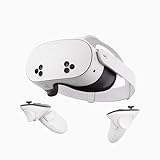
- NO WIRES, MORE FUN — Break free from cords. Game, play, exercise and explore immersive worlds — untethered and without limits.
- 2X GRAPHICAL PROCESSING POWER — Enjoy lightning-fast load times and next-gen graphics for smooth gaming powered by the SnapdragonTM XR2 Gen 2 processor.
- EXPERIENCE VIRTUAL REALITY — Take gaming to a new level and blend virtual objects with your physical space to experience two worlds at once.
- 2+ HOURS OF BATTERY LIFE — Charge less, play longer and stay in the action with an improved battery that keeps up.
- 33% MORE MEMORY — Elevate your play with 8GB of RAM. Upgraded memory delivers a next-level experience fueled by sharper graphics and more responsive performance.
Just as importantly, Google is committing its core app teams to the platform. Native versions of Google Workspace apps are designed for spatial layouts, not mirrored phone screens, signaling that Android XR isn’t optional inside Google’s own ecosystem.
The Role of Qualcomm: Performance Without the Tether
Qualcomm’s XR-specific Snapdragon platform underpins everything Android XR is trying to achieve. This isn’t about raw benchmark numbers; it’s about predictable performance, thermal stability, and power efficiency in a wearable form factor.
By offloading spatial tracking, sensor fusion, and AI workloads to dedicated blocks on the chipset, Android XR avoids the stutter and heat buildup that plagued earlier standalone headsets. That’s why Galaxy XR can sustain productivity workloads for hours, especially when paired with its external battery strategy.
For wearables enthusiasts used to judging smartwatches by sustained performance rather than peak bursts, this approach will feel familiar. The goal is consistency, not spectacle.
A Familiar Ecosystem, Reimagined in 3D
One of Android XR’s biggest advantages is continuity. Existing Android developers can bring apps into XR using familiar tools, but with spatial extensions that allow interfaces to break free of flat rectangles.
Notifications behave more like ambient glanceable elements, floating at the periphery rather than demanding full attention. Multitasking feels closer to a desk setup than a phone switcher, with multiple apps visible at once and positioned where your eyes naturally rest.
For Galaxy users, there’s also deep integration with Samsung’s ecosystem. Expect seamless handoff from Galaxy phones, quick pairing with Galaxy Buds, and cross-device workflows that mirror what Samsung has already built for tablets and laptops, now extended into physical space.
How Android XR Differs From Apple’s visionOS
Comparisons to Apple’s Vision Pro are inevitable, but Android XR is taking a meaningfully different path. VisionOS is tightly controlled, deeply curated, and anchored to Apple’s hardware-first philosophy.
Android XR, by contrast, is built to scale across multiple manufacturers, price tiers, and form factors. Galaxy XR is the flagship expression today, but the platform is clearly designed to outlive any single headset.
That openness matters for long-term adoption. It’s the same dynamic that allowed Wear OS to evolve from early missteps into a credible smartwatch platform once Google, Samsung, and Qualcomm aligned. Android XR feels like that lesson applied to spatial computing from day one.
Why This Matters for Wearables, Not Just Headsets
Android XR isn’t isolated from the rest of Google’s wearable strategy. It’s designed to coexist with Wear OS, Android phones, and even future AR glasses, creating a layered computing model where devices hand off tasks based on context.
Your smartwatch remains the glanceable, always-on layer. Your phone handles pocketable computing. Galaxy XR becomes the deep-focus environment for work, creation, and immersive communication.
Seen this way, Galaxy XR isn’t trying to replace your other wearables. It’s extending the Android ecosystem upward into space, giving Google and Samsung a credible answer to Apple’s spatial ambitions without abandoning the openness that made Android dominant in the first place.
Why the Samsung–Google–Qualcomm Alliance Matters: Snapdragon XR, AI, and Ecosystem Leverage
What makes Galaxy XR strategically important isn’t just the headset itself, but the three-way alignment behind it. Samsung brings hardware scale and industrial design, Google brings the platform and services layer, and Qualcomm supplies the silicon that makes spatial computing viable outside a walled garden.
This isn’t a loose partnership of convenience. It’s a deliberate attempt to recreate the conditions that allowed Android phones and Wear OS watches to mature after years of fragmentation.
Snapdragon XR: Purpose-Built Silicon, Not a Repurposed Phone Chip
At the heart of Galaxy XR is Qualcomm’s latest Snapdragon XR platform, a chipset family designed specifically for sustained spatial workloads rather than bursty smartphone tasks. That distinction matters for thermals, battery life, and long-session comfort, all of which have historically limited XR adoption.
Snapdragon XR integrates dedicated blocks for computer vision, sensor fusion, and low-latency passthrough, allowing Galaxy XR to track head position, hands, and physical space without relying on external sensors. The payoff is a headset that feels responsive even during multitasking-heavy use, while keeping heat away from the user’s face.
For wearable enthusiasts, the parallel is familiar. Just as smartwatch-specific chips enabled always-on displays and multi-day battery life, XR-specific silicon is what allows Galaxy XR to function as a daily-use computer rather than a demo device.
On-Device AI as a Core System Feature, Not a Cloud Add-On
The Snapdragon XR platform also underpins Galaxy XR’s AI ambitions. Much of the spatial awareness, hand tracking, and context recognition runs locally, reducing latency and avoiding constant cloud dependency.
This matters beyond performance. On-device AI enables features like real-time workspace adjustments, adaptive window placement, and natural-language system controls without feeling laggy or intrusive. It also aligns with Samsung and Google’s broader push toward privacy-aware, hybrid AI models across phones, watches, and now XR.
Seen in this light, Galaxy XR becomes another node in Google’s AI-first device strategy, alongside Pixel phones and Wear OS watches. The headset isn’t an isolated experiment, but a new surface for the same intelligence layer to operate across.
Google’s Platform Leverage: Apps, Services, and Developer Gravity
Google’s role goes far beyond branding Android XR. It brings immediate access to a mature app ecosystem, familiar developer tools, and services users already rely on daily.
For developers, Android XR lowers the barrier to entry. Existing Android apps can be adapted into spatial environments without starting from scratch, accelerating content availability in a way no first-generation platform can manage alone.
For users, it means Galaxy XR launches with practical software from day one. Productivity apps, communication tools, and media services feel like extensions of what’s already on your phone and watch, not experimental side projects.
Samsung’s Hardware Scale and Wearable DNA
Samsung’s contribution is equally critical. Few companies have the manufacturing scale, supply chain control, and wearable experience to ship a complex XR headset at volume.
That shows up in practical details: weight distribution designed for longer wear, materials chosen for durability and comfort, and a design language that feels closer to premium wearables than developer hardware. Samsung’s experience balancing performance and battery life in smartwatches translates directly to XR, where every gram and watt matters.
Just as importantly, Samsung controls a massive installed base of Galaxy phones, tablets, watches, and earbuds. Galaxy XR slots naturally into that ecosystem, reinforcing brand loyalty while reducing friction for first-time XR users.
Why This Alliance Changes the Competitive Math
Individually, none of these companies could challenge Apple’s vertical integration in spatial computing. Together, they offer a different model: one that prioritizes scale, choice, and cross-device continuity.
For consumers, this means Galaxy XR isn’t a dead-end purchase tied to a single generation of hardware. It’s an entry point into an Android XR ecosystem that’s explicitly designed to expand across price tiers, form factors, and manufacturers.
For the broader wearables market, the implication is clear. If this alliance holds, XR won’t remain a niche category defined by one premium headset. It becomes the next layer of Android’s wearable stack, sitting above watches and phones, and reshaping how all of them work together.
Galaxy XR vs Apple Vision Pro vs Meta Quest: Specs, Pricing, Philosophy, and Trade-Offs
Seen in context, Galaxy XR is less about chasing Apple spec-for-spec and more about redefining what a premium Android XR headset should be. Samsung, Google, and Qualcomm are positioning it between Apple’s uncompromising first-generation vision and Meta’s aggressively accessible VR-first lineup.
That middle ground is deliberate, and it shapes everything from hardware choices to software priorities and pricing strategy.
Pricing and Market Positioning
At $1,799, Galaxy XR lands almost exactly halfway between Meta’s Quest 3 at $499 and Apple Vision Pro at $3,499. That price signals seriousness without exclusivity, targeting early adopters who want high-end hardware but aren’t ready to pay Apple’s early-ecosystem tax.
Apple Vision Pro is unapologetically positioned as a technological statement piece. It’s priced like a first-generation luxury watch with a new movement: expensive, heavy with ambition, and clearly designed to define a category rather than maximize volume.
Rank #3
- NO WIRES, MORE FUN — Break free from cords. Game, play, exercise and explore immersive worlds — untethered and without limits.
- 2X GRAPHICAL PROCESSING POWER — Enjoy lightning-fast load times and next-gen graphics for smooth gaming powered by the SnapdragonTM XR2 Gen 2 processor.
- EXPERIENCE VIRTUAL REALITY — Take gaming to a new level and blend virtual objects with your physical space to experience two worlds at once.
- 2+ HOURS OF BATTERY LIFE — Charge less, play longer and stay in the action with an improved battery that keeps up.
- 33% MORE MEMORY — Elevate your play with 8GB of RAM. Upgraded memory delivers a next-level experience fueled by sharper graphics and more responsive performance.
Meta, by contrast, continues to treat XR as a mass-market computing experiment. Quest hardware is priced to move units, with thinner margins and a heavy emphasis on gaming, social VR, and developer scale over premium materials or long-session comfort.
Display, Optics, and Visual Priorities
Apple still holds the crown for raw display ambition. Vision Pro’s micro-OLED panels, extremely high pixel density, and aggressive foveated rendering target visual fidelity above all else, even if it comes with trade-offs in weight, heat, and cost.
Samsung’s Galaxy XR appears more balanced. While not chasing Apple’s absolute pixel density, it emphasizes clarity, color consistency, and eye comfort over extended sessions, drawing on Samsung’s deep display manufacturing expertise rather than pushing bleeding-edge panel economics.
Meta’s Quest 3 takes a pragmatic route. Its pancake lenses and LCD panels are good enough for immersion and gaming, but visual sharpness and contrast clearly trail the other two, especially for text-heavy productivity and multi-window workflows.
Performance Silicon and Thermal Philosophy
Apple’s approach is vertically integrated and brute-force. Vision Pro pairs desktop-class silicon with a dedicated sensor-processing chip, delivering immense headroom but also requiring an external battery and careful thermal management.
Galaxy XR leans on Qualcomm’s latest XR-specific Snapdragon platform, optimized for sustained performance rather than peak benchmarks. That matters for real-world use, where thermals, battery drain, and consistent frame rates determine whether you can actually wear the device for hours.
Meta’s Quest devices sit lower on the performance curve but benefit from years of optimization around mobile XR workloads. For games and social experiences, they perform well, but advanced multitasking and spatial productivity push their limits quickly.
Software Ecosystems and App Reality
This is where philosophical differences become impossible to ignore. Apple is building a new spatial operating system almost from scratch, with limited backward compatibility and a tightly controlled app experience.
Galaxy XR takes the opposite path. Android XR is explicitly designed to extend existing Android apps into spatial environments, meaning email, messaging, productivity tools, and media services feel familiar on day one.
Meta continues to dominate in VR-native content. Its app ecosystem excels at immersive games and social worlds, but traditional productivity and cross-device continuity remain secondary concerns.
Comfort, Wearability, and Daily Use
Apple’s industrial design is stunning, but Vision Pro’s weight and front-heavy balance are real considerations. Like a beautifully finished but oversized watch, it impresses immediately yet demands compromises in long-term wearability.
Samsung applies its wearable DNA more subtly. Galaxy XR’s weight distribution, padding, and materials prioritize extended use, reflecting lessons learned from years of refining smartwatches, earbuds, and foldables that people actually wear all day.
Meta’s Quest headsets are improving, but comfort often depends on aftermarket straps and accessories. They’re designed for sessions, not for seamless integration into a full workday.
Compatibility and Ecosystem Lock-In
Apple Vision Pro is deeply tied to the Apple ecosystem. If you live entirely within iPhone, Mac, and iCloud, the experience is cohesive and powerful, but stepping outside that bubble quickly reveals limitations.
Galaxy XR thrives on openness. It works naturally with Galaxy phones, tablets, watches, and earbuds, but it’s also built for the broader Android universe, making it easier to mix brands and devices without friction.
Meta’s ecosystem is the most platform-agnostic, but also the least integrated. It doesn’t meaningfully extend your phone or computer in the way Apple and Samsung are attempting.
The Real Trade-Offs Buyers Need to Understand
Choosing between these headsets isn’t about finding a single winner. It’s about aligning with a philosophy.
Apple offers the most ambitious vision of spatial computing, but at a steep price and with first-generation constraints. Meta delivers accessibility and fun, but with clear limits in productivity and premium feel. Samsung’s Galaxy XR sits between them, prioritizing practical software, balanced hardware, and ecosystem continuity over spectacle.
For wearable enthusiasts used to weighing movement reliability against finishing, or battery life against thickness, the calculus feels familiar. Galaxy XR may not be the most extreme in any one category, but like a well-engineered daily watch, it’s designed to be lived with, not just admired.
Apps, Experiences, and Day-One Use Cases: Productivity, Media, Fitness, and Cross-Device Continuity
That “designed to be lived with” philosophy only holds up if there’s something meaningful to do the moment Galaxy XR goes on your head. Samsung knows that hardware comfort without software depth quickly turns an XR headset into an expensive novelty, which is why the $1,799 Galaxy XR launch leans heavily on practical, familiar experiences rather than experimental demos.
This is where the Samsung–Google–Qualcomm partnership starts to feel tangible. Galaxy XR doesn’t ask users to relearn computing from scratch; it extends workflows they already have across phones, watches, tablets, and PCs into spatial space.
Productivity: Spatial Android, Not Reinvented Computing
At launch, Galaxy XR positions productivity as its strongest justification for daily wear. Built on Android XR with Google’s spatial UI layer, the headset runs familiar Android and web-based tools in resizable, persistent virtual displays rather than forcing developers into fully bespoke 3D environments.
Google Workspace apps like Gmail, Docs, Sheets, and Meet are optimized for floating multi-window layouts, making Galaxy XR feel more like an infinite desktop than a sci-fi interface. Samsung’s own apps, including Samsung Notes, Internet, and DeX-style app management, reinforce that “work-first” mentality.
For users already invested in Samsung phones or tablets, the continuity is immediate. You can pull an active app or browser session from your Galaxy phone into XR, edit it hands-free with voice or paired keyboard input, then push it back without breaking context.
Media and Entertainment: Cinematic, Not Isolated
Media consumption is predictably one of Galaxy XR’s most polished experiences on day one, but Samsung takes a more balanced approach than Apple’s hyper-immersive theater model. Video apps like YouTube, Netflix, Prime Video, and Samsung TV Plus focus on large, high-resolution virtual screens that stay anchored in your space rather than fully enclosing you.
This design choice aligns with Galaxy XR’s lighter weight and extended-wear intent. You’re encouraged to watch a film, then glance at notifications, control playback from a Galaxy Watch, or answer a message on your phone without tearing the headset off.
Spatial audio is tightly integrated with Galaxy Buds, allowing automatic handoff and head-tracked sound when paired. It’s a small detail, but it reinforces Samsung’s emphasis on XR as an extension of everyday devices, not a siloed experience.
Fitness and Wellness: XR as a Companion, Not a Coach
Unlike Meta, which leans heavily into fully immersive fitness apps, Samsung’s approach is more conservative and arguably more wearable-centric. Galaxy XR integrates with Samsung Health as a secondary display and visualization layer rather than a standalone fitness platform.
Live workout metrics from a Galaxy Watch can float in your field of view during indoor cycling, treadmill runs, or guided strength sessions. Heart rate, zones, and timers are readable at a glance, turning the headset into a large, context-aware dashboard rather than a replacement for the watch.
This matters for comfort and safety. Galaxy XR isn’t designed for high-impact movement, but it excels as a companion device for controlled environments, recovery sessions, and guided wellness content like meditation and breathing exercises.
Gaming and Immersive Experiences: A Measured First Step
Gaming on Galaxy XR exists, but it’s not the headline feature at launch. Android XR supports both controller-based games and gesture-driven interactions, with several optimized titles available from day one, including spatial puzzle games and casual experiences adapted from Android.
What’s notably absent is a heavy push toward room-scale, physically demanding gameplay. That’s a deliberate trade-off, reflecting Samsung’s prioritization of comfort, battery life, and long-session usability over adrenaline-driven immersion.
Qualcomm’s XR-optimized Snapdragon platform ensures stable performance and low latency, but Samsung seems content to let gaming evolve organically rather than forcing parity with Meta’s Quest ecosystem on day one.
Cross-Device Continuity: Where Galaxy XR Feels Most “Samsung”
The most compelling use case isn’t any single app; it’s how Galaxy XR fits into an existing Samsung wearable stack. Notifications sync seamlessly with Galaxy Watch, media controls remain accessible on your wrist, and Galaxy Buds automatically manage audio routing without manual switching.
Rank #4

- 256GB Storage Capacity
- Top VR Experience: Oculus Quest 2 features a blazing-fast processor, top hand-tracking system, and 1832 x 1920 Pixels Per Eye high-resolution display, offering an incredibly immersive and smooth VR gaming experience.
- Anti-Slip Controller Grip Covers: grip covers are made of nice silicone material that effectively prevents sweat, dust, and scratches. Anti-slip bumps enhance the handgrip and feel.
- Adjustable Knuckle Straps: knuckle straps make it possible to relax your hands without dropping the controllers. High-quality PU material offers extra durability and velcro design makes it easy to adjust the strap length to different needs.
If you’re already wearing a Samsung smartwatch, Galaxy XR feels less like a new device and more like another screen in your personal network. Calendar alerts, health prompts, and even navigation cues can be mirrored or expanded in XR without duplicating effort.
This layered approach mirrors how seasoned watch enthusiasts think about daily wear. Just as a smartwatch complements a mechanical watch rather than replacing it, Galaxy XR is designed to complement phones, watches, and tablets instead of competing with them for attention.
What Day-One Use Tells Us About Samsung’s XR Strategy
Samsung’s day-one app lineup makes one thing clear: Galaxy XR is not chasing spectacle. It’s chasing utility, continuity, and long-term comfort.
For early adopters used to evaluating wearables based on how they integrate into real routines, this matters more than flashy demos. Galaxy XR may not deliver the most jaw-dropping moments in XR today, but it offers one of the clearest paths toward making spatial computing something you actually use beyond the first week.
Where Wearables Converge: How Galaxy XR Connects with Galaxy Watches, Phones, and Health Data
Seen through Samsung’s broader wearables lens, Galaxy XR is less a standalone headset and more an extension of the Galaxy body area network. The same philosophy that links Galaxy Watch, Galaxy Ring, phones, and earbuds now stretches into spatial computing, with XR acting as a high-bandwidth, high-context display rather than a self-contained silo.
That distinction matters because Samsung is not asking users to rebuild habits. It’s asking them to elevate workflows and health insights they already trust on their wrist and in their pocket.
Galaxy Watch as the Persistent Control Layer
Galaxy Watch plays a subtle but critical role once Galaxy XR is in use. Notifications, timers, call handling, and media playback remain anchored to the watch, reducing the need for gesture-heavy XR interactions during long sessions.
From a wearability perspective, this is smart ergonomics. The watch’s familiar haptic motor, compact AMOLED display, and always-on comfort handle quick interactions better than floating menus, especially during seated work or extended viewing.
Samsung is effectively positioning the watch as a physical “movement” in the system: reliable, efficient, and optimized for repeat interactions, much like a well-regulated automatic caliber you trust daily.
Health Data Moves From Metrics to Context
Where Galaxy XR becomes genuinely differentiated is how it treats health data already captured by Galaxy Watch sensors. Heart rate trends, stress indicators, sleep debt, and activity history can surface inside XR as ambient context rather than interruptive alerts.
Instead of a buzz on your wrist, Galaxy XR can adapt environments based on physiological state. Lower lighting, reduced notification density, or guided breathing overlays can appear when stress levels rise, using data already validated through Samsung Health.
This is not about turning XR into a fitness device. It’s about letting long-term biometric tracking inform how immersive computing behaves around you.
Phones as the Anchor, Not the Star
Your Galaxy phone remains the system’s anchor point, handling authentication, app continuity, and background processing. Galaxy XR mirrors and expands phone-based apps without forcing developers to rebuild everything from scratch.
Messages, productivity tools, navigation, and even camera feeds flow naturally into XR when needed, then retreat back to the phone when the headset comes off. That fluid handoff is essential for daily usability, especially for users who already manage work, fitness, and communication through a single device.
Samsung’s approach contrasts with XR platforms that try to replace the phone outright, a strategy that often collapses under real-world friction.
One Health Platform, Multiple Surfaces
Samsung Health quietly becomes one of Galaxy XR’s most important software layers. Data remains centralized, with the watch capturing, the phone processing, and XR visualizing in higher-dimensional ways.
Post-workout summaries can appear as spatial dashboards. Sleep trends can be explored visually without digging through menus. Even long-term metrics like VO2 max estimates or recovery scores become easier to understand when presented spatially rather than as dense charts.
For users already invested in Samsung’s health ecosystem, XR adds interpretability rather than redundancy.
Why This Matters More Than Specs
At $1,799, Galaxy XR has to justify itself beyond display resolution or chipset benchmarks. Samsung’s answer is ecosystem leverage: the value compounds if you already wear a Galaxy Watch, carry a Galaxy phone, and rely on Samsung Health daily.
This mirrors how seasoned watch collectors evaluate value. A watch is never judged in isolation; it’s judged by how it wears, how it fits into a rotation, and how reliably it serves its purpose over time.
Galaxy XR is being positioned the same way: not as a spectacle you visit, but as a device that earns its place through consistency, comfort, and integration across the wearables you already live with.
Battery Life, Performance, and Practical Limitations: What Early Adopters Need to Know
All of that ecosystem elegance only matters if Galaxy XR can last long enough, stay comfortable enough, and perform consistently enough to be worn outside of carefully staged demos. This is where Samsung’s first-generation hardware realities come into focus, and where early adopters should calibrate expectations carefully.
Battery Life Is Measured in Sessions, Not Days
Samsung is not positioning Galaxy XR as an all-day wearable in the way a smartwatch or even a laptop might be. Internal battery capacity is intentionally constrained to manage weight and thermal output, resulting in use patterns that favor focused sessions rather than continuous wear.
Early guidance points to roughly two to three hours of mixed-use XR, with intensive spatial apps, high-brightness passthrough, and multi-window productivity pulling that closer to the lower end. Light media viewing or static workspace use stretches it slightly, but Galaxy XR is fundamentally a device you plan around, not one you forget you’re wearing.
External Power and Tethering Trade Freedom for Comfort
Samsung’s solution mirrors a familiar wearable compromise. By offloading some power management and background tasks to the paired Galaxy phone, Galaxy XR reduces onboard battery strain and headset heat, but at the cost of total independence.
This approach will feel natural to Galaxy Watch users who already rely on their phone as a processing anchor. The trade-off is that true untethered, leave-your-phone-behind XR remains out of reach, especially for longer sessions or travel use.
Qualcomm Performance Prioritizes Stability Over Raw Brute Force
At the core of Galaxy XR is a custom Snapdragon XR platform developed closely with Qualcomm, tuned less for peak benchmark dominance and more for sustained performance. Samsung appears keenly aware of the thermal throttling issues that have plagued earlier standalone XR headsets.
The result is performance that feels consistent rather than explosive. Complex spatial environments, multi-app workspaces, and real-time phone mirroring run smoothly, but Galaxy XR avoids pushing frame rates or visual density to extremes that would compromise comfort over time.
Thermals, Weight, and Facial Comfort Still Define Usability
Even with careful tuning, this is still a $1,799 computer worn on your face. Samsung’s weight distribution and padding are well-considered, but extended sessions inevitably introduce pressure points, especially during productivity-heavy use.
Thermal management is noticeably improved over earlier XR attempts, yet heat buildup around the forehead and temples remains a limiting factor. Like a heavy mechanical watch, Galaxy XR can feel beautifully engineered while still reminding you of its mass after prolonged wear.
Passthrough and Visual Fidelity Are Good, Not Magical
Samsung’s high-resolution displays and improved passthrough cameras deliver a convincing mixed reality experience, but expectations should be grounded. Text clarity, edge distortion, and real-world depth perception are strong enough for productivity and navigation, yet still fall short of perfect visual transparency.
Compared to Apple Vision Pro, Galaxy XR prioritizes usability and ecosystem integration over absolute visual spectacle. That choice aligns with Samsung’s broader wearable philosophy, but it also means early adopters should expect refinement over time rather than instant visual transcendence.
Software Maturity Will Lag Hardware Ambition
While Google’s XR platform gives Galaxy XR a stronger starting point than most first-generation devices, app depth remains uneven. Core Google and Samsung experiences are polished, but third-party XR-native apps are still catching up.
This mirrors the early days of Wear OS, where hardware often outpaced software imagination. Galaxy XR is usable and compelling today, but its full value depends on developers embracing spatial interfaces beyond novelty.
💰 Best Value

- VR HEADSET COMPATIBILITY: Works seamlessly with 4.7-6.5 inches smartphones such as for iPhone 16/16 Pro/15/15 Pro/14/13 Pro/13/13 Mini/12 Pro/12/12 Mini/11 Pro/11/8 Plus/8/7 Plus/7/ MAX/XR/X; for Samsung Galaxy S25/S24/S23/S22/S21/S21 Ultra/S20/S10/S10e/S10 Plus/S9/S9 Plus/Note 10 Plus/Note 10/ 9/8/A20e/A50 etc
- INTEGRATED AUDIO VR SET: Features built-in foldable Bluetooth headphones for complete audio immersion while enjoying VR content
- VERSATILE USE VIRTUAL REALITY HEADSET: Perfect for watching 3D movies and playing virtual reality games with comfortable viewing experience for both adults and kids
- VIRTUAL REALITY VISUAL EXPERIENCE: Delivers immersive 3D viewing with adjustable focal settings to accommodate different visual requirements
- ADJUSTABLE DESIGN VR HEADSET: Ergonomically designed headset with adjustable straps for secure and comfortable fit during extended VR sessions. Ideal gift option for everyone
Who These Limitations Actually Matter To
For smartwatch users accustomed to charging nightly, planning sessions, and accepting trade-offs in exchange for advanced capability, Galaxy XR’s limitations will feel familiar. This is not a mass-market, all-day wearable, and Samsung isn’t pretending otherwise.
Galaxy XR is designed for users who understand that first-generation ecosystem devices evolve through iteration. Early adopters are buying into a platform trajectory, not a finished endpoint, and Samsung is clearly betting that its watch, phone, and health ecosystem will make that journey worth taking.
Developer and Ecosystem Implications: What Galaxy XR Signals for Android-Based Wearables
If Galaxy XR feels like a platform bet rather than a polished endpoint, that framing matters most for developers. Samsung is signaling that XR is no longer a side experiment adjacent to Android wearables, but the next expansion layer of the same ecosystem that already spans phones, watches, earbuds, and health services.
This section is where Galaxy XR’s real long-term weight sits, especially for anyone who lived through the early Wear OS years and understands how slowly—but decisively—platform gravity can shift.
Android XR as a Continuation, Not a Reset
Google’s XR platform underpinning Galaxy XR is deliberately evolutionary. Instead of asking developers to relearn everything from scratch, it extends familiar Android paradigms into spatial contexts, with existing Android Studio tooling, Kotlin/Java foundations, and growing support for Unity and Unreal.
That lowers the psychological and financial barrier for mobile and Wear OS developers who already build for Android phones or Galaxy Watches. The message is clear: spatial apps should feel like an extension of Android, not a parallel universe with its own rules.
Why Qualcomm’s Role Matters More Than the Spec Sheet
Qualcomm’s involvement goes beyond raw performance. Its XR-focused Snapdragon platform is designed to share architectural DNA with the chips already powering premium Android phones and smartwatches, making cross-device optimization more practical than theoretical.
For developers, this means performance tuning, power management strategies, and on-device AI workflows can scale across phones, watches, and headsets. That continuity is something Android-based wearables have historically lacked, and Galaxy XR is the first product to meaningfully address it.
Samsung’s Ecosystem Gravity Is the Real Incentive
Samsung is not relying on XR app sales alone to attract developers. Galaxy XR plugs directly into Samsung accounts, SmartThings, Samsung Health, and Galaxy device continuity, creating multiple surfaces where a single experience can live.
A fitness developer, for example, can build a spatial coaching interface on Galaxy XR that pulls biometric data from a Galaxy Watch and syncs progress through a Galaxy phone. This kind of cross-wearable experience has been promised for years, but Galaxy XR is the first time Samsung has a device capable of making it compelling.
Wear OS Lessons Are Being Applied, Not Repeated
The uneven early history of Wear OS is clearly informing Samsung and Google’s XR strategy. Instead of flooding the platform with half-baked apps, early Galaxy XR software emphasizes fewer, deeper experiences that showcase spatial utility rather than novelty.
For developers, that suggests a slower ramp but potentially higher quality bar. The opportunity is not to clone mobile apps in 3D space, but to rethink interaction models in ways that justify a head-worn device, much like complications and glanceable UI eventually defined smartwatch software.
Monetization and Enterprise Use Will Shape the App Landscape
At $1,799, Galaxy XR is priced closer to professional tools than impulse gadgets. That reality will shape the developer ecosystem toward productivity, design, remote collaboration, training, and health-adjacent applications before consumer entertainment fully matures.
Samsung’s strength in enterprise device management and Knox security gives developers a clearer path to B2B deployments than most XR competitors. For Android-based wearables, this could mirror how ruggedized Galaxy Watches found success in healthcare and logistics long before mainstream consumers noticed.
Fragmentation Risks Are Real, but Better Contained
Android’s long-standing fragmentation problem does not disappear in XR. Differences in sensors, display characteristics, and interaction hardware across future Android XR headsets will challenge developers, just as varying screen sizes once did on phones.
The difference this time is intent. Samsung, Google, and Qualcomm are visibly coordinating reference designs, performance targets, and API behavior, suggesting a tighter ecosystem than past Android experiments in VR and AR.
What This Means for the Future of Android Wearables
Galaxy XR reframes Android-based wearables as a layered ecosystem rather than isolated product categories. Watches handle continuous health tracking and notifications, phones remain the hub, and XR becomes the space where information, work, and media expand beyond screens.
For developers willing to think in ecosystems rather than single devices, Galaxy XR is an invitation to build experiences that feel coherent across wrist, pocket, and face. That shift may take years to fully pay off, but it is the most credible blueprint Android wearables have had yet.
The Bigger Picture: Is Galaxy XR the Inflection Point for Android Extended Reality?
Taken together, Galaxy XR feels less like a single product launch and more like Android’s long-delayed reset in extended reality. Samsung is not just shipping a headset; it is attempting to define what a credible, scalable Android XR platform looks like when hardware, silicon, and software are aligned from day one.
The question is whether this moment marks a true inflection point, or simply the most polished attempt yet.
Why This Launch Is Structurally Different From Past Android XR Attempts
Previous Android VR and AR efforts struggled because responsibility was fragmented. OEMs built headsets, Google provided incomplete platforms, and chipmakers optimized late, leaving developers to bridge the gaps.
With Galaxy XR, Samsung controls industrial design, thermals, displays, and ergonomics, Qualcomm anchors performance targets with XR-specific silicon, and Google owns the operating system, app frameworks, and spatial UX primitives. That three-way commitment dramatically reduces the “who blinks first” problem that killed earlier ecosystems.
This is closer to how Wear OS stabilized after Google and Samsung aligned on Exynos, Snapdragon, and software direction, rather than the anything-goes Android Wear era.
Positioning Against Apple Vision Pro Without Chasing It
At $1,799, Galaxy XR clearly acknowledges Apple Vision Pro as the reference point, but it does not attempt a spec-for-spec imitation. Samsung’s approach prioritizes broader Android compatibility, familiar app surfaces, and a faster path for existing developers, even if it concedes some polish at the extremes.
Where Apple bets on vertical integration and premium isolation, Samsung is betting that an XR headset can feel like an extension of devices people already own. For Galaxy Watch users, Galaxy phone owners, and Android tablet users, Galaxy XR is meant to slot into an existing digital routine rather than replace it.
That distinction matters because XR adoption will hinge less on demos and more on daily usability, comfort over multi-hour sessions, and how seamlessly it fits alongside watches, phones, and laptops.
The Wearables Lens: XR as the Next Layer, Not the Next Replacement
From a wearables perspective, Galaxy XR reinforces a long-term shift toward layered computing. Smartwatches remain unbeatable for passive health tracking, notifications, and all-day comfort, while XR handles spatial work, immersive media, and contextual information that simply does not fit on a wrist or phone screen.
Samsung’s ecosystem strength lies in how these layers talk to each other. Health data from Galaxy Watch, authentication via phone, and contextual awareness across devices give Galaxy XR a role that feels additive rather than redundant.
If Samsung executes well, XR becomes the place you go for depth, not frequency, much like how mechanical watches coexist with smartwatches by serving different emotional and functional needs.
The Real Test: Can Samsung Sustain the Platform Past the Hype Cycle?
The hardest part begins after launch. Galaxy XR will need rapid software iteration, visible developer wins, and second-generation hardware that meaningfully improves comfort, weight distribution, and battery efficiency.
Samsung’s history suggests it can do this if sales are strong enough to justify iteration, as seen with Galaxy Watch refining health sensors, materials, and real-world wearability over multiple generations. If Galaxy XR stalls at version one, it risks becoming another impressive but isolated Android experiment.
The difference now is that Samsung, Google, and Qualcomm all have strategic reasons to keep pushing, even if early volumes are modest.
So, Is This the Inflection Point?
Galaxy XR does not instantly make extended reality mainstream, nor does it solve every usability or content challenge. What it does accomplish is more important: it gives Android XR a credible center of gravity for the first time.
For developers, it offers a stable target. For users, it offers a headset that fits into an existing wearable ecosystem. For the industry, it signals that Android is done dabbling and ready to compete seriously in spatial computing.
Whether Galaxy XR becomes a breakout product or a foundation stone, its real legacy may be that it finally makes Android extended reality feel inevitable rather than experimental.