If most wearables reward you with rings, streaks, and gentle nudges, Pavlok does the opposite. It’s a wrist-worn device designed to punish you, deliberately and conditionally, when you do the thing you’re trying to stop. The premise is uncomfortable by design, and that discomfort is the product.
This isn’t a smartwatch in disguise or a fitness tracker with an attitude problem. Pavlok sits in a different category altogether: behavioral tech that uses aversive conditioning, borrowed straight from psychology labs, to interrupt habits in real time. To understand whether that’s clever, reckless, or surprisingly effective, you have to understand what Pavlok actually is and what it is not.
A wearable built around aversion, not affirmation
At its core, Pavlok is a lightweight plastic wristband with a small electrode module on the underside, a vibration motor, LEDs, and Bluetooth connectivity. There’s no display, no step counter worth caring about, and no ambition to replace your watch. Everything about the hardware serves one function: delivering an immediate negative stimulus when a trigger occurs.
That stimulus can be a vibration, a loud beep, or an electrical shock, adjustable in intensity through the app. The shock is the headline feature, but it’s better understood as a sharp static-like pulse rather than anything medically comparable to clinical electroshock. It’s meant to be unpleasant, not dangerous, and brief enough to act as an interruption rather than a punishment that lingers.
🏆 #1 Best Overall
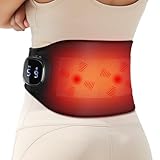
- Wireless and Portable: Say goodbye to tangled cords and limited mobility. Our wireless heating pad offers soothing comfort anytime, anywhere—whether at home, in the office, or on the go. Experience the freedom of warmth and vibration massage wherever you are.
- Gentle Warming Comfort: The heating pad with massager offers 9 heat levels to support warmth and ease after a tiring day. For best use, wear clothing under the belt and adjust the settings to find the most comfortable level for you.
- Custom Vibration: Enjoy 5 massage modes—wave, interval, constant, rapid alternating taps, and knead-then-tap—each adjustable with 3 intensity levels(low, medium, high) to match your preference. Short-press the button to switch modes, and long-press to adjust intensity, giving you a tailored relaxation experience.
- Adjustable Comfort Fit: The wearable heating pad features dual straps for a customizable fit around your waist. It also includes an extra extension strap that fits up to a 58" waist, providing secure and comfortable wear.
- Dual Control Systems: Customize the warmth and vibration settings of the back heating pad using either the app or button controls. Button control is quick and easy, while app control offers more visibility and additional timing options.
How Pavlok actually triggers behavior change
Pavlok is built on the principle of classical conditioning, specifically aversive conditioning. When an unwanted behavior is immediately followed by an unpleasant sensation, the brain begins to associate the two, weakening the habit loop over time. This is the same mechanism historically used for things like smoking cessation, just miniaturized and put on your wrist.
The device can be triggered manually by pressing a button when you catch yourself in the act, automatically via timers and location-based rules, or remotely through integrations and accountability partners. That last part matters, because Pavlok assumes your willpower is unreliable and designs around that assumption rather than pretending discipline is enough.
What it feels like to wear, day to day
Physically, Pavlok is closer to a slim fitness band than a watch, with a soft silicone strap and a case that stays unobtrusive under a sleeve. Comfort is acceptable for all-day wear, though the electrode contact needs to be snug against the skin to work consistently. It’s not something you forget is there, especially psychologically, but it doesn’t feel bulky or heavy.
Battery life typically spans several days depending on usage, with shocks draining more power than vibrations or beeps. Charging is simple and infrequent enough not to become its own habit hurdle. Water resistance is sufficient for daily life, but this is not a swim tracker or a rugged outdoor device.
Software, control, and the ethics baked in
The Pavlok app is where the real product lives. It handles intensity limits, safety lockouts, habit schedules, and integrations, and it forces users to make conscious decisions about how and when punishment is applied. Importantly, there are hard caps on shock strength and frequency, reflecting an awareness that this tool can be misused.
Ethically, Pavlok sits in a gray area that the company doesn’t entirely shy away from. It assumes that some users respond better to immediate consequences than to abstract goals, but it also requires a degree of self-consent and self-awareness. This is not something you strap onto someone else without buy-in, and it’s not suitable for users with certain medical conditions, anxiety disorders, or a history of self-harm.
How this differs from conventional wearables
Traditional wearables aim to quantify behavior and motivate change through insight and positive reinforcement. Pavlok skips quantification almost entirely and focuses on interruption. There’s no obsession with metrics, trends, or long-term health dashboards, just a binary feedback loop of action and consequence.
That makes it less versatile but more targeted. If you want to sleep better, exercise more, or track your health, Pavlok is the wrong tool. If you want to stop biting your nails, procrastinating at your desk, doom-scrolling at night, or reaching for a cigarette, it’s operating in a lane most wearables won’t touch.
Who Pavlok is actually for, and who should walk away
Pavlok tends to appeal to people who have tried softer habit tools and bounced off them. It’s for users who understand their triggers, accept short-term discomfort, and want a circuit breaker rather than a coach. The learning curve is less about technology and more about emotional readiness.
It is not for anyone looking for passive self-improvement or a general wellness companion. If the idea of being shocked by your own wrist sounds humiliating, anxiety-inducing, or ethically wrong to you, that reaction is valid and probably decisive. Pavlok doesn’t try to persuade everyone, and understanding that is the first step to deciding whether this extreme approach belongs on your wrist at all.
The Behavioral Science Behind the Shock: How Aversion Conditioning Works (and Where It Breaks Down)
To understand why Pavlok exists at all, you have to move out of the usual wearable mindset and into the older, less comfortable corners of behavioral psychology. This device is not about motivation, self-tracking, or identity-building. It’s built around aversion conditioning, a mechanism that predates apps, dashboards, and even modern neuroscience.
Aversion conditioning in plain terms
Aversion conditioning works by pairing an unwanted behavior with an immediate negative stimulus. Over time, the brain starts to associate the behavior itself with discomfort, reducing the urge to repeat it. This is classical conditioning territory, closer to Pavlov’s dogs than to modern habit-streak gamification.
The key ingredient here is immediacy. The closer the consequence is to the behavior, the stronger the associative learning tends to be. Pavlok’s shock, vibration, or alarm is designed to fire in the same moment you bite a nail, open a distracting app, or light a cigarette.
Why immediacy beats insight for some people
Most wearables rely on delayed feedback: a sleep score in the morning, a weekly activity report, a gentle nudge after the fact. For behaviors driven by impulse rather than reflection, that delay is often fatal. The brain that makes the decision is not the same brain that reads charts later.
Pavlok targets the impulsive loop directly. It doesn’t ask you to remember why you want to change or visualize a better future. It simply interrupts the behavior at the point of execution, which can be powerful for habits that feel automatic or dissociative.
The role of user-controlled punishment
One important distinction is that Pavlok is not imposing punishment externally. The user sets the rules, the triggers, and the intensity. From a behavioral ethics standpoint, this matters because the aversive stimulus is self-administered and consent-driven.
This framing shifts Pavlok from coercion to self-binding. Similar principles show up in commitment contracts, app blockers, or even deleting social media accounts. The shock is just a more visceral enforcement mechanism.
What the science says, and what it doesn’t
There is evidence that aversion-based techniques can suppress behaviors in the short term, particularly when the behavior is simple and clearly defined. Nail-biting, posture slouching, and phone overuse fit this profile. Pavlok users often report fast initial results, sometimes within days.
What the research is less confident about is long-term habit replacement. Aversion can stop a behavior, but it doesn’t automatically install a better one. Without a positive alternative, extinction can stall or rebound once the aversive stimulus is removed.
The problem of habituation
One of the biggest risks with shock-based wearables is habituation. The brain adapts quickly to repeated stimuli, especially when the intensity is predictable. What feels disruptive on day one can fade into background annoyance by week three.
Pavlok attempts to mitigate this with adjustable intensity, randomized patterns, and escalating consequences. Even so, the ceiling is capped for safety reasons, which means the system has finite leverage. If a user consistently overrides the shock mentally, the conditioning loop weakens.
Stress, anxiety, and cognitive spillover
Aversion doesn’t operate in isolation. For some users, especially those prone to anxiety, the anticipation of punishment can bleed into stress responses unrelated to the target habit. The wrist becomes a source of vigilance rather than support.
This is where Pavlok can cross from tool to burden. Behavioral science shows that excessive punishment can impair self-regulation rather than improve it, particularly when users start associating the device itself with failure or shame.
Why Pavlok avoids constant wear
Unlike smartwatches designed for 24/7 use, Pavlok is often better deployed surgically. Wearing it only during high-risk contexts, like late-night scrolling or work hours prone to procrastination, reduces cognitive load and emotional fatigue.
This selective use aligns with how aversion conditioning performs best: short, focused exposures tied to specific triggers. Treating Pavlok like a general-purpose wearable misunderstands both its psychology and its limits.
Where aversion breaks down entirely
Aversion conditioning struggles with complex, emotionally layered behaviors. Overeating, substance dependence, and compulsions tied to trauma or mood disorders don’t respond reliably to simple punishment loops. In these cases, shock can suppress symptoms without addressing causes.
Pavlok is blunt by design, and blunt tools have boundaries. When a habit is serving a psychological function beyond convenience or impulse, interruption alone is rarely enough.
Wearing Pavlok Day to Day: Design, Comfort, Battery Life, and App Experience
If Pavlok works best when worn selectively rather than constantly, its physical and digital design matter in a different way than a smartwatch’s. You are not judging it on elegance or all-day invisibility, but on whether it is tolerable, dependable, and psychologically neutral enough to deploy when you need it. Day-to-day usability becomes part of the conditioning loop itself.
Industrial design and wrist presence
Pavlok’s design is unapologetically utilitarian. The module is compact but chunky, with a plastic housing that prioritizes durability and electrode contact over aesthetics.
On the wrist, it reads closer to a medical or research device than a lifestyle accessory. That visual language can be motivating for some users, reinforcing that this is a tool with a specific job, but it can feel awkward or conspicuous in social settings.
The finish and materials are serviceable rather than refined. Compared to even entry-level smartwatches, Pavlok feels less polished, which subtly reinforces that it is not meant to be worn as a personal identity object.
Comfort, fit, and electrode contact
Comfort depends heavily on strap adjustment and skin sensitivity. The silicone strap is flexible and lightweight, but it needs to be worn snugly for the electrodes to maintain reliable contact.
Too loose, and alerts may misfire or feel inconsistent. Too tight, and pressure builds quickly, especially during longer sessions or in warm conditions.
Because Pavlok relies on direct skin contact, sweat and movement matter. During desk work or evening use it largely disappears, but during workouts or sleep it can feel intrusive, which reinforces the case for context-specific wear rather than 24/7 use.
Living with shocks, vibrations, and beeps
The physical sensations themselves are predictable once calibrated. Vibrations are comparable to a firm smartwatch haptic, audio alerts are sharp but brief, and shocks are localized and fast rather than lingering.
What matters day to day is not intensity but anticipation. Even when set low, knowing the device can escalate creates a low-grade cognitive tension that some users find motivating and others find exhausting.
This is where comfort and psychology intersect. A device that is slightly uncomfortable or visually conspicuous can amplify the sense of punishment, whether intended or not.
Rank #2

- Unmedicated, No Sensation or Heat: This device is completely drug-free, allowing continuous use alongside other medications. It is sensation-free, meaning you won't experience any heat or vibration while wearing it.
- No Harmful Side Effects: ActiPatch has no harmful side effects and is safe for use by individuals with back, knee, muscle, joint pain, the elderly, and those who are bedridden.
- Small and Lightweight to Wear: ActiPatch is small and lightweight, making it comfortable and easy to wear throughout the day. Its discreet design allows for continuous use without interfering with your daily activities.
- No Sensation or Heat: Place the device's loop area directly over the source of the pain for optimal results. For maximum pain relief, wear the device continuously in the targeted area until the pain diminishes.
- Wearable 24/7: It is recommended to use the device for a minimum of 12 hours per day, and it can be worn for up to 24 hours per day.
Battery life and charging reality
Battery life is adequate but not generous. With intermittent use, most users can expect several days between charges, but frequent shocks or constant connectivity shorten that window quickly.
Charging is straightforward, though not especially fast. Because Pavlok is often used in bursts rather than continuously, battery anxiety is less about daily depletion and more about forgetting to charge before a high-risk period.
This makes Pavlok less forgiving than mainstream wearables. If the battery dies during a trigger window, the behavioral contract collapses instantly.
Durability and daily resilience
Pavlok is built to survive daily friction rather than abuse. It handles desk knocks, bag drops, and routine wear without complaint, but it does not invite rough treatment.
Water resistance is sufficient for handwashing and light sweat, but it is not a swim-ready device. That limitation reinforces the idea that Pavlok is something you put on deliberately, not something you forget about.
Over time, the strap and housing hold up reasonably well, though they lack the premium feel or modular replaceability found in higher-end wearables.
The app as the real control surface
The Pavlok app is where the system’s complexity lives. It handles habit definitions, trigger rules, intensity levels, schedules, and escalation logic, effectively acting as the device’s brain.
For motivated users, this flexibility is empowering. You can fine-tune when, how, and why the device intervenes, aligning punishment closely with specific behaviors rather than vague goals.
For beginners, the learning curve is real. The app can feel dense, and misconfiguration can lead to either over-punishment or ineffective nudging, both of which undermine trust in the system.
Software reliability and behavioral friction
Day to day, the app is mostly stable but not frictionless. Bluetooth connectivity can be inconsistent, and occasional sync hiccups break the illusion of immediacy that aversion conditioning relies on.
Notifications are functional rather than elegant. They do their job, but they lack the contextual intelligence or subtlety seen in more mature health platforms.
From a behavioral perspective, this matters. When friction creeps into setup or execution, users are more likely to disengage, especially once the novelty wears off.
Compatibility and ecosystem limits
Pavlok plays only loosely with broader wearable ecosystems. While it can coexist with smartphones and basic notification systems, it does not integrate deeply with health platforms or productivity tools.
This isolation is partly intentional. Pavlok is not trying to be your everything device, but a focused instrument for interruption.
The trade-off is that it feels siloed. Users expecting seamless data sharing or holistic habit dashboards may find the experience narrower than anticipated.
What daily wear reveals about who Pavlok is for
Wearing Pavlok day to day makes its philosophy unmistakable. This is not a comfort-first, lifestyle-enhancing wearable, but a behaviorally aggressive tool designed to be taken seriously.
For users who want structure, accountability, and sharp intervention during specific moments, the compromises in comfort and polish are acceptable. For those seeking gentle guidance or ambient support, the daily experience may feel unnecessarily harsh.
The device does not disappear into your life. It asks to be acknowledged, and that demand is both its greatest strength and its most significant cost.
Does Shock-Based Habit Breaking Actually Work? Evidence, Anecdotes, and Expectation Management
The experience of wearing Pavlok makes one thing clear: this device is betting on a very old behavioral idea executed through very modern hardware. After the daily realities of comfort, software friction, and ecosystem limits, the obvious question is whether the shocks themselves actually do what they promise.
What behavioral science says about aversion
Shock-based habit interruption draws from classical conditioning, the same family of learning mechanisms explored in early behaviorist research. When an unpleasant stimulus reliably follows a specific action, the brain can learn to associate the two and reduce the behavior over time.
In tightly controlled lab settings, aversive conditioning can be effective, especially for simple, well-defined actions. Nail biting, posture correction, and compulsive phone checking map more cleanly to this model than complex habits like emotional eating or chronic procrastination.
What matters most is timing and consistency. The stimulus must occur immediately and predictably after the target behavior, otherwise the association weakens or attaches to the wrong cue.
How Pavlok translates theory into a wrist-worn device
Pavlok’s approach is not continuous shock, but interruptive feedback. The electrical stimulus is brief, adjustable in intensity, and designed to surprise rather than injure.
From a hardware perspective, this matters. The device is lightweight and simple, but its haptic motor, electrodes, and battery are tuned for fast response rather than elegance or endurance, with battery life typically measured in days rather than weeks.
This immediacy is the core value proposition. When the system works as intended, the feedback loop is tight enough to feel causally linked to the behavior, which is essential for conditioning to take hold.
What the evidence actually looks like
There is no large-scale, peer-reviewed clinical trial proving Pavlok permanently breaks habits. Most of the available evidence is a mix of small studies, self-reported outcomes, and anecdotal data collected through the company’s user base.
That does not mean it is ineffective, but it does mean expectations need to be calibrated. The strongest signals of success tend to appear in short-term behavior suppression rather than long-term habit replacement.
In other words, Pavlok is better at stopping something in the moment than teaching what should replace it.
Patterns from real-world user anecdotes
Across forums, reviews, and long-term user stories, a consistent pattern emerges. Pavlok works best for habits that are frequent, automatic, and easily detectable, either by the user or via a button press.
Users trying to curb snacking, smoking cues, or phone overuse often report an initial drop in behavior within days. The shock creates a pause, and that pause is often enough to interrupt the automatic loop.
Where anecdotes turn negative is when users expect the device to do the motivational work for them. Without a replacement behavior or clear goal, many report either shock fatigue or simple workarounds that bypass the trigger.
The novelty effect and behavioral decay
One of the biggest risks with shock-based wearables is habituation. Over time, the nervous system adapts, and what once felt jarring becomes tolerable or even ignorable.
Some users increase shock intensity to compensate, but this introduces diminishing returns and ethical questions about escalation. Others disengage entirely once the emotional impact fades.
This is not unique to Pavlok. Many habit tools, from streak-based apps to fitness trackers, suffer from novelty decay, but aversive tools feel the drop-off more acutely because their entire mechanism relies on emotional salience.
Safety, ethics, and psychological side effects
Physically, Pavlok’s shocks are designed to be safe for most healthy adults, with intensity levels far below medical or industrial electrical stimulation. Still, it is not recommended for users with heart conditions, neurological disorders, or implanted medical devices.
Psychologically, the picture is more nuanced. Some users experience increased anxiety, resentment toward the device, or negative self-talk if shocks feel punitive rather than corrective.
From a behavioral health perspective, this matters. Habit change is more sustainable when it preserves a sense of agency rather than replacing it with fear-based compliance.
Rank #3
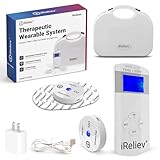
- 2 in 1 Wireless System: iReliev Therapeutic Wearable System Combines Two Therapies in 1 device.
- WHAT IS TENS?: Stands for "Transcutaneous Electrical Nerve Stimulation"- a safe, non-invasive, drug free method of pain relief used by Physical Therapists and prescribed Doctors for over 30 years. Delivers low-voltage pulses to the skin to stimulate nerve fibers effectively blocking the pain signal to your brain. Also increases natural endorphins--a natural pain reliever. You might just say GOODBYE to those pain pills! Comes with 8 TENS modes for pain relief and arthritis. FDA cleared.
- WHAT IS EMS?: Electrical Muscle Stimulation (EMS) also known as nueromuscular electrical stimulation (NMES) is the elicitation of muscle contraction using electrical impulses. EMS has the potential to serve as a strength training and rehab tool as well as offer post-exercise recovery benefits for athletes. Comes with 6 EMS modes for strength, endurance, exercise warm up and muscle recovery.
- The convenience of wireless makes this system extremely easy to use and set up. Comes with 2 wireless pods (set as unified Channel 1) but is capable of running up to 4 isolated modes for unique settings per pods. You can buy additional pods (come in a pair) to have as back up or use as many as you need on your body.
- Includes: (1) Hand Control, (2) Wireless Pods, (2) 3″ x 5″ self-adhesive reusable electrodes, rechargeable lithium ion battery, USB/ AC adapter, Carrying Case, quick start guide, and instruction manual.
Expectation management: what Pavlok can and cannot do
Pavlok is not a habit-building solution on its own. It does not teach routines, build identity-based habits, or address underlying emotional drivers.
What it can do is create a sharp interruption, buying the user a moment of awareness. That moment can be powerful when paired with intention, planning, and a clear understanding of why the habit exists in the first place.
Used as a surgical tool rather than a lifestyle companion, shock-based interruption can be effective. Used as a shortcut to self-discipline, it almost always disappoints.
Safety, Ethics, and the ‘Is This Too Extreme?’ Question
By this point, the core tension around Pavlok should be clear. If shock-based interruption is powerful precisely because it feels aversive, where is the line between effective behavioral feedback and unnecessary punishment?
This is the question that divides Pavlok’s audience more than battery life, app design, or even long-term efficacy. It is also where wearable tech stops being neutral hardware and starts making value judgments about how people should change.
Physical safety: what the shocks actually are
Pavlok’s electrical stimulus is best described as a sharp neuromuscular jolt rather than a true “shock” in the medical or industrial sense. The output is measured in milliamps and milliseconds, designed to activate surface nerves without penetrating tissue or affecting cardiac rhythm.
For most healthy adults, this places it well within consumer safety thresholds. That said, the company explicitly advises against use for anyone with heart conditions, epilepsy, neurological disorders, or implanted medical devices, and that warning should be taken seriously.
In daily wear, the hardware itself poses few risks. The lightweight plastic case, silicone strap, and modest wrist footprint make it comparable to a basic fitness band in comfort, though the firm strap fit required for reliable stimulation can cause skin irritation for some users over long periods.
Software safeguards and user control
One ethical strength of Pavlok’s system is that shocks are user-authorized rather than externally imposed. Intensity levels are adjustable in-app, shocks can be disabled entirely, and alternative cues like vibration or sound are always available.
This matters because it preserves consent at the system level. Unlike coercive behavioral tools, Pavlok requires the user to define triggers, confirm actions, and decide whether aversive feedback remains part of the plan.
However, consent becomes murkier over time. When users escalate intensity to overcome habituation, the line between intentional discomfort and self-punishment can blur, especially if progress stalls.
The psychological risk: punishment versus learning
From a behavioral science perspective, punishment suppresses behavior but does not teach replacement behaviors. If Pavlok is used without a clear alternative action, the brain learns avoidance rather than adaptation.
Some users report increased anxiety, shame, or frustration when shocks feel like evidence of failure instead of feedback. This emotional framing can quietly undermine motivation, particularly for habits tied to stress, compulsive behavior, or self-regulation challenges.
In contrast, users who frame shocks as informational interrupts rather than penalties tend to fare better. The difference is subtle but important: one reinforces awareness, the other reinforces self-criticism.
Is this ethically different from other wearables?
At first glance, Pavlok feels categorically harsher than a smartwatch nudging you to stand or close a ring. But many mainstream wearables already use pressure, guilt, and social comparison as motivational levers, just without physical sensation.
The ethical distinction is not that Pavlok uses discomfort, but that it makes the cost explicit and immediate. There is no abstraction layer, no friendly animation, no softened language around “missed goals.”
For some users, that honesty is refreshing. For others, it crosses a boundary they did not realize mattered until they felt it on their wrist.
Who should not use Pavlok
Pavlok is a poor fit for users with anxiety disorders, trauma histories, or a tendency toward self-punitive thinking. In those cases, aversive feedback can amplify existing vulnerabilities rather than support change.
It is also ill-suited for habits driven by emotional regulation, such as stress eating or compulsive phone use rooted in loneliness. Interrupting the behavior without addressing the emotional driver often leads to substitution rather than resolution.
If you are looking for a gentle habit companion that fades into the background, this is not that device. Pavlok demands engagement, reflection, and a willingness to confront discomfort directly.
Extreme tool or precise instrument?
Whether Pavlok feels extreme depends less on the hardware than on how narrowly it is used. As a constant enforcer, it risks becoming adversarial; as a targeted interrupt for specific, well-defined behaviors, it can be surprisingly surgical.
The ethical case strengthens when shocks are rare, intentional, and paired with a clear plan for what happens after the interruption. It weakens when the device becomes a blunt substitute for self-understanding.
This is not a wearable that disappears into daily life. It asks an explicit question every time it fires: is this discomfort moving you closer to the person you are trying to become, or just reminding you of what you want to stop doing?
Who Pavlok Is For — and Who Should Stay Far Away
By this point, it should be clear that Pavlok is not a neutral tool. It takes a strong position on how behavior change should feel, and that alone narrows the audience dramatically.
The question is not whether shock-based interruption can work in theory, but whether it fits your psychology, your habits, and your tolerance for friction in daily life.
Pavlok is for people who want interruption, not insight
Pavlok works best for users who already understand their habit patterns and are frustrated by how automatic they’ve become. If you know exactly when and why you light a cigarette, hit snooze, or open a distracting app—and still do it anyway—Pavlok’s value is in breaking the loop, not explaining it.
This makes it appealing to highly self-aware users who feel that reflection has plateaued. The device does not teach you why a habit exists; it forces a moment of pause when willpower reliably fails.
It suits narrowly defined, high-frequency behaviors
The strongest use cases are habits with clear triggers and clear stop points: smoking, nail biting, posture slouching, or habitual snoozing. These behaviors happen often enough that immediate feedback can reshape muscle memory and attention.
Pavlok struggles when goals are vague or emotionally complex. “Be less stressed” or “use my phone more intentionally” are too diffuse to map cleanly onto a zap, vibration, or beep.
Good fit for users who can self-calibrate discomfort
Pavlok’s effectiveness depends heavily on how responsibly the user sets intensity and frequency. People who can treat the shock as a signal rather than a punishment tend to adapt better and escalate less.
From a hardware standpoint, this means being comfortable wearing a rigid plastic wrist device that prioritizes function over refinement. The band is lightweight and durable enough for daily wear, but it lacks the soft-touch materials, curved cases, or passive comfort tuning found in mainstream fitness trackers.
Not for users seeking passive or invisible support
If you want a wearable that fades into the background, Pavlok is fundamentally misaligned with that goal. Battery life is measured in days, not weeks, and the companion app requires active configuration to remain useful.
There is no ambient health tracking, no recovery scores, and no long-term trend visualization to quietly reinforce progress. Pavlok asks to be noticed, configured, and consciously engaged with.
Stay far away if you struggle with self-punishment
Users with anxiety disorders, trauma histories, or tendencies toward harsh self-criticism should approach Pavlok with extreme caution—or not at all. Aversive feedback can quickly become reinforcing in unhealthy ways, especially when behavior change is framed as moral failure.
In these cases, the shock does not interrupt the habit so much as validate negative self-talk. No amount of app settings can compensate for that mismatch.
Not a substitute for emotional regulation or support
Habits rooted in stress, loneliness, or emotional coping rarely respond well to physical interruption alone. Removing the behavior without addressing its function often leads to substitution, not resolution.
Compared to conventional wearables that nudge sleep hygiene, breathing, or activity levels, Pavlok offers no physiological context. It does not track stress, heart rate variability, or recovery, which limits its usefulness for emotionally driven habits.
Rank #4

- Relieve lower, mid & upper back pain from sciatica, arthritis, muscle tension, inflammation, and injury; the WiTouch Pro's gentle nerve stimulation helps you relax and recover
- Manufactured in Chattanooga, TN by Hollywog, the WiTouch Pro was the first wireless, wearable TENS product on the market; the lightweight, minimal design allows the portable TENS device to be worn discreetly under clothing, making it ideal for use at home or on-the-go
- Simply apply gel pads and place the TENS unit anywhere along the spine where you feel pain; adjust the intensity of your treatment with the buttons on the device or via Bluetooth with the WiTouch Pro app, available on iOS and Android
- Choose from 4 electrotherapy programs, including the patented and exclusive WiTouch Pro treatment program; each program offers 15 levels of intensity with professional strength power output of 0 ~ 110 mA; track your progress directly from the WiTouch Pro app
- You will receive the WiTouch Pro TENS Unit and accessories, including 3 pairs of exclusive Hollywog gel pads, 2 AAA batteries, a mini screwdriver to access the battery compartment, and a quickstart guide; the WiTouch Pro TENS Unit is FSA and/or HSA eligible; do not use this device if you have a cardiac pacemaker, implanted defibrillator or electronic device, or are connected to high frequency surgical equipment
Best for users who treat it as a tool, not a judge
The users who report the most sustainable outcomes tend to use Pavlok sparingly and strategically. Shocks are rare, intentional, and paired with a clear alternative action rather than open-ended avoidance.
In that mode, Pavlok becomes less of an enforcer and more of a boundary marker. The device does not tell you who to be, but it does ask whether you are willing to feel a brief cost to stop doing something you’ve already decided no longer serves you.
Pavlok vs Conventional Habit Tools: How It Compares to Smartwatches, Apps, and Accountability Systems
Seen in context, Pavlok sits at the far end of the habit-change spectrum. Where most tools rely on insight, encouragement, or social pressure, Pavlok relies on immediate consequence.
Understanding whether that trade-off makes sense requires comparing it not just to other wearables, but to the broader ecosystem of habit tools people actually use day to day.
Against Smartwatches: Punishment vs Feedback Loops
Smartwatches from Apple, Garmin, Samsung, and Fitbit are built around feedback, not interruption. They surface trends in sleep, activity, heart rate, or stress, then use nudges, rings, or reminders to guide behavior over time.
From a hardware perspective, they are also optimized for passive wear. Larger cases but smoother edges, softer straps, and battery life measured in days to weeks make them easy to forget once strapped on.
Pavlok is the opposite experience. The band is lighter and smaller, but the purpose is constant salience rather than comfort, and battery life is closer to two to five days depending on usage.
Behaviorally, this matters. Smartwatches support habit formation through awareness and self-efficacy, while Pavlok enforces habit interruption through aversion.
If your problem is that you forget to stand, move, or wind down, a smartwatch is usually sufficient. If your problem is that you act despite knowing better in the moment, Pavlok is designed to intervene where dashboards and streaks fail.
Against Habit Apps: Friction vs Willpower
Habit apps like Streaks, Habitica, Atomic Habits–inspired trackers, or mindfulness tools depend on self-reporting and intrinsic motivation. They work best when users enjoy tracking, reflection, and gradual improvement.
The limitation is friction. Logging a failure requires honesty, and skipping a reminder has no immediate cost beyond guilt or lost streaks.
Pavlok removes that friction by externalizing consequence. The shock, vibration, or alarm happens regardless of how motivated or tired you are, which is precisely why some users find it effective.
The trade-off is flexibility. Apps adapt easily to changing goals and emotional states, while Pavlok’s logic is binary: behavior occurred or it didn’t, and the response is pre-set.
Against Accountability Systems: Private Consequence vs Social Pressure
Accountability partners, coaches, and group challenges rely on social consequences. Miss a goal, and you explain yourself to another human being.
For many people, this is powerful but fragile. Travel, schedule drift, or discomfort with confrontation often erodes consistency over time.
Pavlok offers accountability without social exposure. The consequence is immediate, private, and repeatable, which appeals to users who dislike public failure or negotiation.
At the same time, it lacks empathy. A coach can adapt expectations when life intervenes; Pavlok cannot tell the difference between resistance and overload unless you intervene manually.
Data Depth vs Behavioral Precision
Conventional wearables excel at data aggregation. They track physiology, detect patterns, and increasingly attempt to infer readiness or stress through algorithms.
Pavlok collects almost none of this. There is no heart rate sensor, no sleep staging, and no recovery metrics to contextualize behavior.
What it offers instead is precision at the decision point. When a specific action occurs, Pavlok responds instantly, without interpretation or delay.
For habit interruption, that immediacy can matter more than insight. For habit formation rooted in energy, mood, or health constraints, the lack of context is a real limitation.
Comfort, Wearability, and Long-Term Use
Most smartwatches are designed to be worn 24/7, with attention to case finishing, strap materials, and skin contact over long periods. Even budget models prioritize comfort because compliance depends on it.
Pavlok is wearable, but not invisible. The strap is functional rather than luxurious, and the sensation of wearing it is part of the behavioral contract.
This makes it poorly suited to indefinite use. Many successful users treat Pavlok as a temporary intervention, not a permanent accessory.
Value Depends on the Problem You’re Solving
As a piece of hardware, Pavlok offers less than a smartwatch at a similar price point. You are not paying for sensors, displays, or premium materials.
What you are paying for is a specific behavioral mechanism that most mainstream tools deliberately avoid. Aversive conditioning is uncomfortable, ethically complex, and situationally effective.
If your habits respond to insight, tracking, or encouragement, Pavlok is unnecessary. If they persist precisely because insight hasn’t helped, Pavlok occupies a niche few other tools are willing to touch.
Real-World Use Cases: Smoking, Procrastination, Phone Addiction, and Other Common Targets
Once you understand Pavlok as a tool for interrupting behavior rather than optimizing health, its real-world use cases become clearer. People don’t generally reach for an aversive wearable to build a gentle habit; they turn to it when a behavior feels stubborn, reflexive, or resistant to insight-based methods.
What follows are the most common targets, how Pavlok is actually used in each case, and where the approach tends to break down.
Smoking and Vaping: Classic Aversive Conditioning
Smoking is Pavlok’s most straightforward use case, largely because the habit has a clear, repeatable physical trigger. The moment the cigarette reaches the mouth, the user presses the button or triggers a zap through a preconfigured rule.
Behaviorally, this mirrors textbook aversive conditioning. The goal is not to punish craving, but to contaminate the ritual itself with an unpleasant association.
Users who report success tend to use Pavlok early in a quit attempt, when the habit loop is still active and automatic. Over time, the zap often becomes unnecessary as the anticipation alone is enough to disrupt the action.
The limitation is obvious: Pavlok cannot detect smoking on its own. Compliance depends on the user’s willingness to self-administer discomfort at precisely the wrong moment.
For heavy smokers or vapers who are ambivalent about quitting, this self-enforcement requirement often undermines effectiveness. For those already committed but struggling with reflexive lapses, it can be surprisingly effective.
Procrastination and Task Avoidance: Context Is Everything
Procrastination is more complex because it is rarely tied to a single physical gesture. Users attempt to define triggers such as opening distracting websites, sitting idle during work hours, or ignoring scheduled prompts.
In practice, this requires tight integration with Pavlok’s app and, often, third-party automation tools. The wearable itself has no screen, no task list, and no understanding of what you should be doing.
When configured well, Pavlok can act as a sharp external nudge during moments of drift. A zap after ten minutes of inactivity can be enough to snap attention back to the task.
💰 Best Value

- Pain Relief
- Drug Free
- Neuromodulation
- electroceutical
- Wearable Medical Device
Where it fails is nuance. Not all avoidance is irrational, and Pavlok cannot tell the difference between productive incubation and genuine procrastination.
For users prone to burnout, this can quickly become counterproductive. The device enforces action, not judgment, which makes it a blunt instrument in cognitively demanding work.
Phone Addiction and Compulsive Scrolling
Phone overuse is one of Pavlok’s most popular modern targets, particularly among users who feel trapped by reflexive checking rather than intentional use.
Typical setups involve triggering a vibration or shock when specific apps are opened, when screen time exceeds a threshold, or when the phone is unlocked during restricted hours.
The immediate feedback can be powerful. Unlike app blockers, Pavlok introduces a physical consequence that bypasses negotiation and rationalization.
This can be especially effective for late-night scrolling, where willpower is depleted and the behavior feels automatic.
However, the friction of setup matters. Reliable phone-based triggers depend on software permissions, operating system stability, and consistent connectivity.
When triggers misfire or lag, trust erodes quickly. Behavioral tools only work when the consequence feels causally linked to the action.
Nail Biting, Skin Picking, and Other Body-Focused Habits
Body-focused repetitive behaviors sit somewhere between motor habit and emotional coping mechanism. Pavlok is often used here in manual mode, with the user delivering a zap when they catch themselves mid-action.
This works best for habits that occur consciously but compulsively. The shock acts as a pattern interrupt rather than a cure.
Some users report reduced frequency over weeks, particularly when Pavlok is paired with awareness training. Others find the approach aversive without being transformative.
The ethical line is thin in this category. These behaviors are often linked to anxiety or neurodivergence, and punishment-based tools can exacerbate shame if used without care.
Pavlok’s lack of contextual sensing means it cannot distinguish stress-driven behavior from idle habit, placing responsibility squarely on the user to avoid misuse.
Dietary Habits and Impulse Eating
Using Pavlok for eating behaviors is controversial, and for good reason. Some users attempt to zap when reaching for junk food, snacking late at night, or breaking fasting windows.
From a behavioral perspective, this is risky territory. Food-related habits are deeply tied to physiology, emotion, and energy balance.
While Pavlok may help interrupt mindless snacking, it is poorly suited to addressing hunger-driven behavior. The absence of biometric data like glucose, activity, or sleep makes the feedback blind.
For users with a history of disordered eating, this use case is actively discouraged. Aversive conditioning around food can reinforce unhealthy relationships rather than resolve them.
What These Use Cases Reveal About Pavlok’s Strengths
Across all these scenarios, a pattern emerges. Pavlok works best when a habit is physically discrete, consciously recognizable, and already viewed by the user as unwanted.
It struggles with behaviors that require interpretation, compassion, or physiological context. Unlike smartwatches that aim to guide behavior through insight, Pavlok enforces change through immediacy.
The hardware reflects this philosophy. Battery life is measured in days rather than weeks, the strap prioritizes security over comfort, and the lack of a display reinforces its role as an intervention device rather than a lifestyle companion.
In real-world use, Pavlok is less a wearable you live with and more a tool you deploy. Its effectiveness depends less on what it can sense and more on what you are willing to confront.
The Bottom Line: Is Pavlok a Breakthrough Habit Tool or a Niche Experiment?
Pavlok ultimately forces a reframing of what we expect from wearables. It is not trying to understand you, motivate you, or gently guide you toward better choices. It exists to interrupt behavior, force awareness, and apply consequences when willpower alone has failed.
That makes it neither a universal solution nor a gimmick. It is a sharp instrument, effective in the right hands and counterproductive in the wrong ones.
What Pavlok Gets Right
For a narrow set of habits, Pavlok does something few tools can. It collapses the gap between intention and action, making the cost of a behavior immediate instead of abstract.
From a behavioral science standpoint, this immediacy matters. Aversive conditioning can work when the behavior is simple, repetitive, and already cognitively labeled as unwanted.
The hardware supports this singular mission. The secure strap, vibration motor, and electric stimulus are all tuned for reliability rather than comfort or aesthetics, and the lack of a screen keeps focus on response rather than reflection.
Where It Falls Short
Pavlok’s biggest limitation is not the shock itself but its lack of context. It cannot tell why a behavior is happening, only that it occurred or is about to occur.
Compared to smartwatches that blend activity, sleep, heart rate, and trends into behavioral insight, Pavlok operates in isolation. There is no adaptive intelligence, no physiological guardrails, and no built-in sense of emotional state.
Battery life, app friction, and the need for constant user calibration further reinforce that this is a tool you actively manage, not a passive companion you forget you are wearing.
Who Pavlok Is Actually For
Pavlok makes the most sense for highly self-aware users tackling specific, surface-level habits. Think nail biting, compulsive phone checking, or posture correction rather than anxiety, overeating, or burnout.
It also suits people who respond poorly to gamification or soft nudges. If rings, streaks, and motivational quotes feel meaningless to you, Pavlok’s bluntness may feel refreshingly honest.
It is a poor fit for users with trauma histories, eating disorders, chronic stress, or conditions where punishment-based feedback could amplify harm. In those cases, insight-driven or therapeutic tools are safer and more effective.
Breakthrough or Experiment?
Pavlok is not a breakthrough in the sense of replacing conventional wearables. It does not advance sensing, health tracking, or long-term behavior modeling.
What it does represent is a proof point. There is demand for devices that do not coddle, that prioritize action over explanation, and that acknowledge how stubborn habits can be.
Seen this way, Pavlok is less a future-of-wearables product and more a behavioral edge case made physical.
The Verdict
Pavlok works, but only under strict conditions and with deliberate intent. When used thoughtfully, it can break habits that have resisted gentler approaches, acting as a temporary scaffold rather than a permanent solution.
It is not a lifestyle wearable, a wellness device, or a substitute for self-understanding. It is an intervention tool, one that should be used briefly, intentionally, and with clear exit criteria.
If you are looking for insight, motivation, or holistic health tracking, Pavlok will disappoint you. If you are looking to disrupt a specific behavior you are ready to give up, and you understand the psychological trade-offs, it may be exactly as extreme as you need.