If you’ve ever slapped snooze with genuine intent to wake up and then lost another 20 minutes to a foggy half-sleep, you’re not weak-willed or broken. You’re running headlong into biology that doesn’t care about your calendar alerts or your smartwatch’s motivational buzz. Waking up is hard because, for many people, the body and brain are still firmly in “night mode” when the alarm goes off.
This is where wearables promise a fix: vibrating wrists instead of blaring speakers, gentle taps instead of shocks, alarms timed to your “light sleep” rather than the clock. Before judging whether those tools actually help, it’s worth understanding the three forces working against you every morning: sleep inertia, circadian rhythm, and the misleading idea that morning people are simply more disciplined.
Sleep inertia: the groggy wall you hit after the alarm
Sleep inertia is the heavy, disoriented feeling that lingers after waking, and it’s one of the least appreciated reasons alarms feel cruel. During this phase, reaction time, memory, and decision-making can be measurably impaired for anywhere from a few minutes to over an hour. Importantly, you can be fully awake and still cognitively compromised.
The depth of sleep you wake from matters a lot. Being jolted out of deep slow-wave sleep produces far stronger inertia than waking from lighter stages, which is why a sudden shock-style alarm can feel brutal even if it technically “works.” This is the scientific basis behind smart alarms in wearables that aim to wake you during lighter sleep using movement and heart-rate patterns rather than a fixed time.
🏆 #1 Best Overall
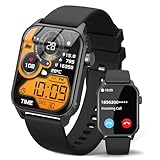
- 【1.83" HD Display & Customizable Watch Faces】Immerse yourself in a vibrant 1.83-inch IPS display, boasting a sharp resolution of 240*284 for crystal-clear visuals. Effortlessly personalize your smart watch with a wide array of customizable watch faces to suit your personal style for every occasion—whether trendy, artistic, or minimalist—ideal for casual, sporty, or professional. Its sleek, modern design complements any outfit, blending technology and fashion seamlessly for everyday wear
- 【120 Sports Modes & Advanced Health Tracking】Our TK29 smart watches for women men come equipped with 120 sports modes, allowing you to effortlessly track a variety of activities such as walking, running, cycling, and swimming. With integrated heart rate and sleep monitors, you can maintain a comprehensive overview of your health, achieve your fitness goals, and maintain a balanced, active lifestyle with ease. Your ideal wellness companion (Note: Step recording starts after exceeding 20 steps)
- 【IP67 Waterproof & Long-Lasting Battery】Designed to keep up with your active lifestyle, this smartwatch features an IP67 waterproof rating, ensuring it can withstand splashes, sweat, and even brief submersion, making it perfect for workouts, outdoor adventures, or rainy days. Its reliable 350mAh battery offering 5-7 days of active use and up to 30 days in standby mode, significantly reducing frequent charging. Ideal for all-day wear, whether you’re at the gym, outdoors, or simply on the go
- 【Stay Connected Anytime, Anywhere】Stay informed and in control with Bluetooth call and music control features. Receive real-time notifications for calls, messages, and social media apps like Facebook, WhatsApp, Twitter, and Instagram directly on your smartwatch. Easily manage calls, control your music playlist, and stay updated without needing to reach for your phone. Perfect for work, workouts, or on-the-go, this watch keeps you connected and never miss important updates wherever you are
- 【Multifunction & Wide Compatibility】Seamlessly handle heart rate monitoring, sleep tracking, and enjoy conveniences like camera/music control, Seamlessly handle heart rate monitoring, sleep tracking, and more-all directly from your wrist. This 1.83 inches HD smartwatch is compatible with iPhone (iOS 9.0+) & Android (5.0+), ensuring smooth daily connectivity and convenience throughout your day. More than just a timepiece, it’s a stylish, all-in-one wearable for smarter, healthier living
However, wearables don’t read your brain waves directly. Wrist-based trackers infer sleep stages from accelerometers, optical heart-rate sensors, and sometimes skin temperature, which introduces error. Even the best platforms, whether Apple Watch, Garmin, Fitbit, or Oura, are making educated guesses, not clinical diagnoses.
Your circadian rhythm doesn’t care about your schedule
Circadian rhythm is your internal clock, driven by light exposure, hormones like melatonin, and genetics. Some people naturally peak earlier in the day, others later, and forcing an early wake time against that rhythm creates what researchers often describe as social jet lag. The result is chronic grogginess that no alarm tone can fully fix.
This is where the “morning person” label becomes misleading. Most self-identified morning people aren’t magically better sleepers; they’re simply living closer to their biological preference. When someone with a later chronotype tries to wake at 6 a.m. every day, the body may still be in its biological night, making wake-up feel punishing regardless of alarm style.
Wearables can help here indirectly. Features like sleep consistency tracking, bedtime reminders, and light exposure guidance can nudge behavior over time, especially when paired with longer battery life and comfortable overnight wear. But no vibrating motor can instantly shift a circadian rhythm that’s been set by years of habit and light cues.
The myth of the “better” morning person
The idea that becoming a morning person is purely about grit has been amplified by productivity culture and, more recently, by wellness marketing. In reality, research suggests chronotype is partly genetic and only moderately flexible. Technology can support better mornings, but it can’t rewrite biology on its own.
This matters when evaluating wearable alarms that promise transformation. Strong vibration motors, escalating haptics, or progressive alarms can reduce reliance on snooze and lower household disruption, especially compared to phone alarms. But if the underlying sleep debt or circadian mismatch isn’t addressed, these tools often feel like forcing the engine rather than tuning it.
Understanding this sets realistic expectations for the rest of the conversation. The question isn’t whether a smartwatch can turn you into a different person overnight, but whether the right kind of wake-up signal, paired with better sleep habits, can make mornings less hostile and more predictable.
Three Ways Wearables Wake You: Shock-Style Vibration, Gentle Haptics, and Progressive Alarms Explained
Once you accept that no alarm can override circadian biology, the question becomes more practical: how should a wearable wake you when you do need to get up? This is where the design philosophy of different devices starts to matter more than marketing promises.
Modern wearables tend to fall into three broad wake-up styles, each built around a different assumption about what actually gets someone out of bed. Some prioritize certainty at all costs, others aim for minimal disruption, and a third group tries to time the wake-up itself more intelligently.
Shock-style vibration: brute force on your wrist
Shock-style vibration is the closest thing wearables have to a physical jolt. These alarms rely on high-amplitude, rapid pulses from a vibration motor designed to be impossible to ignore, even in deep sleep.
You’ll find this approach most often in fitness trackers and sleep-focused bands with smaller cases and minimal displays. Devices like early Fitbit Charge models or dedicated sleep bands use lightweight housings and tight silicone straps to ensure maximum contact with the wrist, amplifying the sensation.
From a reliability standpoint, this method works. In testing, shock-style vibration consistently wakes heavy sleepers and people who sleep through phone alarms, even when battery levels are low or the device is in a basic alarm-only mode.
The trade-off is how it feels. Waking from slow-wave sleep with an aggressive vibration often produces pronounced sleep inertia: grogginess, disorientation, and elevated heart rate that can last 15 to 30 minutes. For people already waking during their biological night, this can make mornings feel harsher rather than better.
There’s also a comfort consideration. Smaller trackers concentrate vibration into a narrower surface area, which can feel startling or even unpleasant over time. For some users, this leads to loosening the strap at night, which ironically reduces alarm effectiveness and degrades sleep-tracking accuracy.
Shock-style vibration is best understood as a compliance tool. It doesn’t optimize the wake-up experience, but it does ensure you wake up, which is sometimes the only realistic goal.
Gentle haptics: controlled, quieter wake-ups
Gentle haptic alarms take a more measured approach. Instead of a single aggressive vibration pattern, they use rhythmic pulses that repeat over a longer window, often increasing slightly in intensity if you don’t respond.
This is the dominant strategy in premium smartwatches like Apple Watch, Pixel Watch, and higher-end Garmin models. These devices benefit from larger cases, heavier internals, and more advanced linear resonant actuators that can deliver nuanced haptic patterns rather than a simple buzz.
In real-world use, gentle haptics excel at reducing collateral damage. They’re far less likely to wake a partner, and they integrate cleanly with bedtime routines that prioritize calm transitions rather than sudden shocks. This makes them appealing for shared bedrooms and consistent weekday schedules.
The downside is reliability for deep sleepers. If you routinely sleep through phone alarms or require multiple snoozes, gentle haptics may feel too polite. Larger watches also distribute vibration across a wider surface, which can dilute perceived intensity unless the strap fit is snug.
Comfort plays a role here. Metal cases, curved casebacks, and breathable sport bands improve overnight wearability, which indirectly improves alarm performance. A watch that stays in place all night delivers more consistent haptic contact than one that shifts or presses uncomfortably into the wrist.
Gentle haptics work best when paired with adequate sleep duration and regular schedules. They’re not designed to overpower sleep debt, but to complement healthier habits already in progress.
Progressive and sleep-stage-based alarms: timing the moment, not just the signal
Progressive alarms attempt to solve a different problem: not how to wake you, but when. These alarms use sleep tracking data to trigger the wake-up within a preset window, ideally during lighter sleep stages when arousal is easier.
The science behind this idea is directionally sound. Waking from lighter sleep is associated with reduced sleep inertia and better immediate alertness, though the effect size varies widely between individuals. Accuracy depends heavily on the quality of motion sensors, heart rate tracking, and algorithms interpreting that data.
In practice, results are mixed. Wrist-based sleep staging is improving, but it still relies on indirect signals rather than direct brain activity. If a device misclassifies sleep stages, a “smart” alarm can feel indistinguishable from a regular one.
Progressive alarms often combine timing with escalation. The vibration or sound starts softly and ramps up over several minutes, giving the body time to transition. This approach is common in Garmin’s Smart Wake features and third-party sleep apps compatible with Wear OS and Apple Watch.
Battery life becomes a key factor here. Multi-night wear and continuous heart rate monitoring require enough power to avoid nightly charging, or the feature simply won’t be used consistently. Devices with five to ten days of battery life tend to deliver more reliable smart alarm behavior than daily-charge smartwatches.
Progressive alarms are most effective for people with flexible wake windows and relatively stable sleep schedules. If you must wake at an exact minute for work or childcare, the margin for algorithmic timing shrinks dramatically.
Choosing a wake-up style based on real needs, not promises
These three approaches reflect different priorities rather than different levels of technological sophistication. A stronger motor doesn’t mean a better morning, and a smarter algorithm doesn’t guarantee less grogginess.
Heavy sleepers with strict schedules often benefit most from shock-style vibration, even if it feels inelegant. Light sleepers, shared bedrooms, and wellness-focused users tend to prefer gentle haptics that align with calmer routines.
Progressive alarms sit in the middle, offering potential gains when sleep data is accurate and schedules allow flexibility. They’re not a shortcut to becoming a morning person, but they can make waking feel less adversarial when the rest of the sleep system is working reasonably well.
Understanding which problem you’re trying to solve, waking up at all, waking up quietly, or waking up at a better moment, is far more important than the brand name on the case or the marketing language in the app.
Does Timing Matter? What Sleep Science Really Says About Waking During Light Sleep
If progressive alarms and “smart wake” windows sound appealing, it’s because they lean on a simple promise: waking during light sleep should feel easier than being jolted out of deep sleep or REM. That idea is grounded in real sleep physiology, but the way wearables try to act on it is far messier than marketing suggests.
To understand where timing helps and where it doesn’t, it’s worth unpacking what light sleep actually is, how reliably wrist-worn devices can detect it, and why even a perfectly timed alarm won’t override basic sleep debt or circadian misalignment.
What light sleep actually means in the body
Light sleep generally refers to N1 and N2 stages of non-REM sleep, when brain waves slow but don’t yet show the deep, high-amplitude patterns of slow-wave sleep. Muscle tone is still present, heart rate is relatively stable, and the brain is more responsive to external stimuli than in deep sleep.
From a subjective standpoint, waking from these stages is associated with less sleep inertia, the groggy, foggy feeling that can linger after an alarm. Reaction time, balance, and perceived alertness tend to recover faster when awakening occurs from lighter stages.
This is the physiological rationale behind smart alarms. If you can catch the brain closer to a naturally arousable state, the transition to wakefulness should feel smoother, even if total sleep time is unchanged.
Why wearables aim for a wake window, not a precise moment
Most consumer wearables don’t try to wake you at an exact detected sleep stage. Instead, they define a window, often 15 to 45 minutes before your set alarm, during which they look for signs consistent with lighter sleep.
That’s because sleep staging from the wrist is inherently probabilistic. Watches infer sleep depth using movement, heart rate, heart rate variability, and sometimes skin temperature, not EEG brain signals. Even the best algorithms are making educated guesses, not definitive calls.
This is why platforms like Fitbit, Garmin, and third-party Apple Watch apps emphasize “best time within a range” rather than guaranteeing a light-sleep awakening. It’s a hedge against both sensor noise and the natural variability of sleep cycles.
How accurate is light sleep detection on the wrist?
In lab comparisons against polysomnography, most mainstream wearables are reasonably good at detecting sleep versus wake, and moderately good at identifying deep sleep. Light sleep and REM are where accuracy drops, because their physiological signals overlap more and vary widely between individuals.
On devices like Apple Watch Series models, Galaxy Watch, and newer Fitbits, heart rate and motion sampling are frequent enough to support trend-level insights, but not moment-to-moment precision. A watch might correctly identify that you spent more time in light sleep overall, while still being off by several minutes at any given transition.
This matters because smart alarms depend on timing, not averages. A misclassified epoch can mean the alarm fires during deeper sleep than intended, making the “smart” feature feel no better than a standard vibration or tone.
Sleep inertia is real, but it’s not the whole story
Waking from deep sleep does tend to worsen sleep inertia, but the effect size is often smaller than people expect. Studies show that total sleep deprivation, chronic sleep restriction, and circadian phase have a much larger impact on morning grogginess than the exact sleep stage at awakening.
If someone is consistently sleeping five to six hours when their body needs seven to eight, no alarm timing algorithm can fully compensate. Likewise, waking at 6:00 a.m. when your internal clock is still in biological night will feel rough regardless of whether you were technically in light sleep.
This is where consumer expectations often outpace reality. Smart alarms can shave the edge off a decent sleep schedule, but they’re not a fix for systemic sleep mismatch.
Rank #2
![Apple Watch Series 11 [GPS 46mm] Smartwatch with Jet Black Aluminum Case with Black Sport Band - M/L. Sleep Score, Fitness Tracker, Health Monitoring, Always-On Display, Water Resistant](https://m.media-amazon.com/images/I/312K597M2uL._SL160_.jpg)
- HYPERTENSION NOTIFICATIONS — Apple Watch Series 11 can spot signs of chronic high blood pressure and notify you of possible hypertension.*
- KNOW YOUR SLEEP SCORE — Sleep score provides an easy way to help track and understand the quality of your sleep, so you can make it more restorative.
- EVEN MORE HEALTH INSIGHTS — Take an ECG anytime.* Get notifications for a high and low heart rate, an irregular rhythm,* and possible sleep apnea.* View overnight health metrics with the Vitals app* and take readings of your blood oxygen.*
- STUNNING DESIGN — Thin and lightweight, Series 11 is comfortable to wear around the clock — while exercising and even when you’re sleeping, so it can help track your key metrics.
- A POWERFUL FITNESS PARTNER — With advanced metrics for all your workouts, plus features like Pacer, Heart Rate Zones, training load, Workout Buddy powered by Apple Intelligence from your nearby iPhone,* and more. Series 11 also comes with three months of Apple Fitness+ free.*
When smart wake timing helps most
Timing-based alarms tend to work best for people with regular bedtimes, stable circadian rhythms, and enough total sleep opportunity. In those conditions, sleep cycles are more predictable, and light sleep periods are easier to catch within a wake window.
They’re also better suited to users who can tolerate flexibility. If your alarm can go off anywhere between 6:30 and 7:00, the algorithm has room to wait for a gentler moment. If it must be 6:42 on the dot, the benefit shrinks quickly.
In real-world testing, this is why users with flexible mornings often report subtle but consistent improvements, while those with rigid schedules notice little difference.
When timing matters less than delivery
For heavy sleepers, the stage you’re in may be less important than whether the alarm actually breaks through. A perfectly timed light-sleep alarm that’s too gentle to wake you is functionally useless.
This is where stronger haptics, escalating vibration patterns, or combining vibration with sound can outperform pure timing strategies. Many users wake more reliably to a firm, patterned vibration on the wrist than to a theoretically optimal but underpowered alert.
In shared bedrooms or early-morning environments, timing can still play a role, but only if the haptic motor is strong enough to deliver a clear signal without relying on sound.
The trade-off between comfort, battery life, and timing accuracy
Accurate sleep tracking requires consistent overnight wear, which in turn depends on comfort and battery life. Bulky cases, stiff straps, or daily charging routines reduce adherence, undermining any potential timing benefit.
Watches with lightweight cases, softer silicone or fabric straps, and multi-day battery life tend to deliver more reliable smart wake behavior simply because they’re worn more consistently. In practice, a slightly less accurate algorithm on a watch you wear every night can outperform a more advanced system that’s only worn intermittently.
This is an unglamorous but critical point. Timing only matters if the data feeding it is continuous and representative.
What sleep science supports, and what it doesn’t
Sleep science supports the idea that waking from lighter sleep can feel easier and reduce sleep inertia, especially when total sleep is adequate. It does not support the idea that precise, stage-based alarms can override chronic sleep loss, poor schedules, or mismatched chronotypes.
Wearables operate in the gray area between those two truths. They can nudge the wake-up experience in a better direction under the right conditions, but they can’t engineer a perfect morning out of imperfect sleep.
Seen this way, smart timing is best treated as a refinement, not a transformation. It’s one variable among many, and only meaningful when the rest of the sleep system is already doing something right.
How Smart Alarms Actually Work (and Where the Algorithms Fall Apart)
Once you strip away the marketing language, most smart alarms are doing something fairly constrained. They’re not reading your dreams or decoding your brain waves, but making educated guesses based on motion, heart activity, and timing windows.
Understanding what those guesses are based on, and where they reliably fail, is key to deciding whether vibration, sound, or timing will actually help you wake up better.
The basic smart alarm promise
A smart alarm typically sets a wake window, often 15 to 45 minutes before your chosen alarm time. Within that window, the watch looks for signs that you’re in lighter sleep and triggers the alarm early if it thinks the moment is right.
The idea is to avoid waking you from deep sleep, which is associated with grogginess and heavier sleep inertia. In theory, this should make waking feel smoother, even if you get up a bit earlier than planned.
This promise is appealing, but it rests entirely on how well the watch can infer sleep stages without measuring the brain directly.
What wearables actually measure overnight
Consumer wearables do not measure sleep stages the way a sleep lab does. There’s no EEG, no direct brainwave data, and no clinical-grade muscle or eye movement tracking.
Instead, most watches rely on a combination of accelerometer data, heart rate, heart rate variability, and sometimes skin temperature or blood oxygen trends. Movement drops, heart rate slows, and variability changes are used to estimate whether you’re likely in deep, light, or REM sleep.
This works reasonably well at a population level, but it’s much noisier at the individual, night-to-night level. The watch is always inferring, never confirming.
Why motion-heavy sleepers confuse the system
If you toss, turn, or shift positions frequently, the algorithm often assumes lighter sleep even when you’re not. This can trigger an alarm during what feels like a deep sleep phase, defeating the entire point.
On the flip side, very still sleepers can be misclassified as being in deep sleep longer than they actually are. That can cause the alarm to wait until the very end of the window, removing any benefit of smart timing.
This is one reason smart alarms feel magical for some users and useless for others. Body movement patterns matter more than most people realize.
Heart rate data helps, but only within limits
Adding heart rate and heart rate variability improves sleep staging compared to motion alone. Lower heart rate and higher variability often correlate with deeper sleep, while lighter sleep shows more fluctuation.
However, wrist-based optical sensors are sensitive to fit, skin tone, arm position, and strap tightness. A loose strap or awkward sleeping posture can degrade signal quality enough to blur those distinctions.
Watches with comfortable cases, curved backs, and soft straps tend to perform better here simply because they maintain better skin contact overnight.
The wake window problem
Most smart alarms operate within a fixed wake window, and that window is a compromise. Too short, and the algorithm may never find a lighter phase. Too long, and you risk waking much earlier than expected.
If the watch doesn’t detect a clear “light sleep” signal, it will usually default to your final alarm time anyway. That means many users experience identical wake-ups on most days, with only occasional early triggers.
This inconsistency can make smart alarms feel unpredictable, even when they’re technically working as designed.
Why timing often matters less than alert strength
Even a perfectly timed alarm fails if the alert itself isn’t strong enough to break through sleep. This is where many smart alarms quietly fall apart in real-world use.
Gentle vibration patterns, especially on smaller watches with compact haptic motors, may be easy to sleep through regardless of timing. Conversely, a firm, escalating vibration can wake users reliably even from deeper sleep.
In testing across platforms, consistent wake success correlates more strongly with haptic intensity and pattern design than with sleep stage detection accuracy.
Escalation beats precision for most people
The most effective systems combine timing with escalation. They start gently and ramp up vibration strength, pattern complexity, or add sound if the initial alert isn’t acknowledged.
This approach accepts uncertainty instead of pretending to eliminate it. Rather than betting everything on a single “perfect” moment, it adapts to how deeply you’re actually sleeping.
From a consumer perspective, this is often more successful than pure sleep-stage-based alarms, especially for heavy sleepers.
Battery life quietly shapes algorithm quality
Smart alarms rely on continuous overnight data. If a watch is charged inconsistently or powered down to save battery, the algorithm loses context.
Devices with multi-day battery life tend to accumulate more complete sleep histories, which can slightly improve personalization over time. Single-day battery watches can still work, but only if users reliably charge during the day and wear them every night.
In practice, battery anxiety leads many users to disable advanced sleep features altogether, reducing smart alarms to basic timers.
Platform differences matter more than brand claims
Different platforms interpret similar data in very different ways. Some prioritize motion above all else, others weight heart data more heavily, and a few incorporate circadian rhythm modeling.
These choices affect when alarms fire and how often they actually wake you early. Two watches worn on the same wrist can produce noticeably different smart alarm behavior.
This is why brand reputation alone isn’t a reliable predictor of smart alarm success. Software philosophy matters as much as hardware quality.
Where the algorithms ultimately fall apart
Smart alarms struggle most with irregular schedules, fragmented sleep, alcohol use, illness, and chronic sleep deprivation. In these scenarios, sleep architecture becomes unpredictable, and the models lose accuracy.
They also can’t correct for misaligned chronotypes or social jet lag. Waking during “light sleep” doesn’t help much if your body fundamentally wants to be asleep for another hour.
This is where the limits of technology become clear. Algorithms can optimize within a stable system, but they can’t fix a broken one.
What smart alarms are realistically good at
When sleep timing is consistent, total sleep is adequate, and the watch is worn comfortably every night, smart alarms can reduce the sharpness of waking. They can make mornings feel less jarring, not radically different.
Rank #3

- Bluetooth Call and Message Alerts: Smart watch is equipped with HD speaker, after connecting to your smartphone via bluetooth, you can answer or make calls, view call history and store contacts through directly use the smartwatch. The smartwatches also provides notifications of social media messages (WhatsApp, Twitter, Facebook, Instagram usw.) So that you will never miss any important information.
- Smart watch for men women is equipped with a 320*380 extra-large hd full touch color screen, delivering exceptional picture quality and highly responsive touch sensitivity, which can bring you a unique visual and better interactive experience, lock screen and wake up easily by raising your wrist. Though “Gloryfit” app, you can download more than 102 free personalised watch faces and set it as your desktop for fitness tracker.
- 24/7 Heart Rate Monitor and Sleep Tracker Monitor: The fitness tracker watch for men has a built-in high-performance sensor that can record our heart rate changes in real time. Monitor your heart rate 26 hours a day and keep an eye on your health. Synchronize to the mobile phone app"Gloryfit", you can understand your sleep status(deep /light /wakeful sleep) by fitness tracker watch develop a better sleep habit and a healthier lifestyle.
- IP68 waterproof and 110+ Sports Modes: The fitness tracker provides up to 112+ sports modes, covering running, cycling, walking, basketball, yoga, football and so on. Activity trackers bracelets meet the waterproof requirements for most sports enthusiasts' daily activities, such as washing hands or exercising in the rain, meeting daily needs (note: Do not recommended for use in hot water or seawater.)
- Multifunction and Compatibility: This step counter watch also has many useful functions, such as weather forecast, music control, sedentary reminder, stopwatch, alarm clock, timer, track female cycle, screen light time, find phone etc. The smart watch with 2 hrs of charging, 5-7 days of normal use and about 30 days of standby time. This smart watches for women/man compatible with ios 9.0 and android 6.2 and above devices.
They are refinements layered on top of existing habits, not replacements for them. Used with the right expectations, they can be genuinely helpful.
Used as a shortcut to becoming a morning person, they’re almost guaranteed to disappoint.
Real-World Wearable Performance: Apple Watch, Fitbit, Garmin, Oura, and Whoop Compared for Wake-Ups
With the limitations of smart alarms in mind, the real question becomes how these systems behave once they’re strapped to an actual wrist at 6:30 a.m. Hardware choices, vibration motors, software conservatism, and battery realities all shape whether a wearable nudges you awake or leaves you groggy and annoyed.
What follows isn’t about lab accuracy claims. It’s about what happens night after night, when the alarm actually fires and your half-asleep brain decides whether to listen.
Apple Watch: Precision hardware, conservative wake logic
Apple Watch relies on a refined Taptic Engine that delivers crisp, localized taps rather than broad buzzing. On the wrist, it feels controlled and intentional, closer to someone tapping your arm than a phone vibrating on a nightstand.
Apple’s Sleep Schedule alarm does not currently offer true sleep-stage-based smart wake windows. The watch wakes you at a fixed time, using progressively stronger haptics paired with optional sound, which makes it reliable but not adaptive.
Where Apple excels is consistency. The haptics fire exactly when expected, the watch rarely misses an alarm, and the software experience is stable across updates.
The drawback is battery dependence. Most Apple Watches require daily charging, and missed wear nights mean missed sleep data, which limits any long-term personalization.
For users who want dependable, gentle wrist alarms without algorithmic surprises, Apple Watch works well. For those expecting sleep-cycle optimization, it’s intentionally restrained.
Fitbit: Sleep-stage alarms that actually try to intervene
Fitbit remains one of the few mainstream platforms that actively uses sleep staging to adjust wake timing. Its Smart Wake feature looks for lighter sleep within a preset window, typically up to 30 minutes before your target alarm.
The vibration motor is less refined than Apple’s but broader and more noticeable. On devices like the Sense, Charge, and Versa lines, the alert feels more insistent, which many heavy sleepers appreciate.
Fitbit’s advantage is battery life. Multi-day endurance encourages consistent overnight wear, allowing the algorithm to build a more complete sleep profile.
Accuracy varies by model and wrist fit. Loose bands or side-sleeping can cause Fitbit to misclassify motion, leading to alarms that fire earlier than expected.
When it works, Fitbit’s smart wake can reduce morning grogginess. When it doesn’t, users may feel shortchanged on sleep without clear benefit.
Garmin: Athletic hardware, minimal sleep alarm finesse
Garmin prioritizes durability, battery life, and training metrics over wake-up experience. Most Garmin watches offer vibration alarms, but true sleep-stage-based smart alarms remain limited or absent.
The vibration motors tend to be strong and utilitarian. On larger models like the Fenix or Epix, the alert is unmistakable, sometimes bordering on abrupt rather than gentle.
Battery life is a major strength. Many Garmin watches can be worn for a week or more, enabling continuous sleep tracking without charging anxiety.
Garmin’s sleep tracking has improved, especially with heart rate variability integration, but the platform rarely uses that data to adjust wake timing. Alarms fire when scheduled, not when your body is most receptive.
For early-morning athletes who value reliability over subtlety, Garmin delivers. For users chasing a softer wake-up experience, it can feel blunt.
Oura Ring: Subtle vibrations, cautious alarm behavior
Oura approaches wake-ups differently, partly because it lives on a finger, not a wrist. Its vibration alarm is gentle and localized, more like a quiet pulse than a shake.
Oura does not offer a true smart alarm tied to sleep stages. Wake times are fixed, reflecting the company’s conservative stance on intervention versus measurement.
Comfort is a standout. The titanium ring design is unobtrusive, making overnight wear almost effortless, which improves data consistency.
Battery life typically spans four to seven days, reducing friction. However, the subtle alarm may not be sufficient for deep sleepers or noisy environments.
Oura works best for users who already wake easily and want minimal disturbance. It is less effective as a tool for forcing a behavioral shift.
Whoop: Data-rich insights, no direct wake-up control
Whoop does not include a built-in alarm at all. Instead, it focuses entirely on sleep analysis, recovery metrics, and behavioral coaching.
The strap is lightweight and fabric-based, making it comfortable for sleep, but wake-ups rely on external devices like phones or traditional alarms.
Whoop’s strength is context. Its insights into sleep debt, strain, and recovery can indirectly improve mornings by encouraging earlier bedtimes and better habits.
As a wake-up tool, however, it offers nothing immediate. There is no vibration, no progressive alert, and no sleep-stage-based alarm.
Whoop is best viewed as a diagnostic instrument rather than an alarm replacement. It can inform why mornings feel hard, but it won’t physically help you wake up.
How these differences play out at 6 a.m.
In real use, vibration quality matters as much as algorithmic intent. Crisp, localized haptics tend to feel less stressful than broad, aggressive buzzing, even when they’re equally effective.
Battery life quietly determines success. Devices that can be worn every night without planning produce better sleep models and fewer missed alarms.
Perhaps most importantly, platforms that promise smarter wake-ups also introduce uncertainty. Some users prefer a predictable jolt at a fixed time over a softer alarm that might steal extra sleep without consent.
No wearable here magically creates morning motivation. The best performers simply reduce friction at the moment of waking, assuming the rest of the system is already in place.
Vibration on the Wrist vs Sound in the Room: Effectiveness, Partner-Friendly Waking, and Missed Alarms
As wake-up tech shifts from nightstands to wrists, the trade-offs become immediate at 6 a.m. What you gain in subtlety and personal control, you risk in raw effectiveness, especially if your sleep inertia is high.
The question isn’t whether vibration works at all. It’s when it works, for whom, and at what cost in reliability.
Why vibration feels different to the brain
Wrist-based alarms rely on somatosensory input rather than auditory shock. Instead of flooding the brainstem with sound, haptics stimulate mechanoreceptors in the skin, often producing a more localized and less startling arousal.
In lighter sleep stages, this can be enough to tip the brain into wakefulness without a cortisol spike. In deep slow-wave sleep, however, vibration has to be stronger, longer, or repeated to compete with the brain’s reduced responsiveness.
This is why some wearables offer escalating patterns or multi-motor pulses rather than a single buzz. The quality of the haptic motor, not just its intensity, plays a meaningful role in success.
Shock-style vibration vs gentle haptics
Not all vibration is created equal. Some devices, particularly older fitness trackers, use a coarse, rattling motor that feels abrupt and vaguely stressful.
Modern smartwatches tend to use linear resonant actuators that deliver tighter, more precise taps. Apple Watch, Pixel Watch, and recent Garmin models all fall into this category, producing haptics that feel intentional rather than chaotic.
For many users, gentler but rhythmically complex haptics are more effective than brute force. They are easier to tolerate daily, which matters more than a single dramatic wake-up.
Sound still wins for certainty
Room-based sound alarms remain the most reliable method for heavy sleepers. Audio activates multiple sensory pathways at once, including spatial awareness, which makes it harder to ignore.
Sound also scales better in chaotic environments. If you sleep through vibration due to position, circulation, or REM density, sound remains indifferent to wrist placement or strap tension.
This reliability is why many smartwatch users quietly keep a phone alarm as a backup. Redundancy, while unglamorous, is often what prevents missed meetings rather than smarter algorithms.
Partner-friendly waking is where wearables shine
Where wrist vibration clearly outperforms sound is social impact. A silent alarm allows one person to wake without dragging a partner, child, or pet into the morning routine.
Rank #4
![Apple Watch Series 11 [GPS 42mm] Smartwatch with Rose Gold Aluminum Case with Light Blush Sport Band - S/M. Sleep Score, Fitness Tracker, Health Monitoring, Always-On Display, Water Resistant](https://m.media-amazon.com/images/I/31J+F-pXaWL._SL160_.jpg)
- HYPERTENSION NOTIFICATIONS — Apple Watch Series 11 can spot signs of chronic high blood pressure and notify you of possible hypertension.*
- KNOW YOUR SLEEP SCORE — Sleep score provides an easy way to help track and understand the quality of your sleep, so you can make it more restorative.
- EVEN MORE HEALTH INSIGHTS — Take an ECG anytime.* Get notifications for a high and low heart rate, an irregular rhythm,* and possible sleep apnea.* View overnight health metrics with the Vitals app* and take readings of your blood oxygen.*
- STUNNING DESIGN — Thin and lightweight, Series 11 is comfortable to wear around the clock — while exercising and even when you’re sleeping, so it can help track your key metrics.
- A POWERFUL FITNESS PARTNER — With advanced metrics for all your workouts, plus features like Pacer, Heart Rate Zones, training load, Workout Buddy powered by Apple Intelligence from your nearby iPhone,* and more. Series 11 also comes with three months of Apple Fitness+ free.*
This matters more than manufacturers admit. Shared bedrooms magnify resentment around early alarms, and vibration offers a rare tech solution that reduces friction rather than shifting it.
For couples with mismatched schedules, wearables can materially improve sleep quality even if they don’t make waking easier. That alone can justify their use.
The real risk: missed alarms
Missed alarms are the Achilles’ heel of wrist-based waking. Loose straps, dead batteries, sleep posture, or numb hands can all blunt haptic effectiveness.
Battery life plays an indirect but crucial role here. Devices that require nightly charging increase the odds of human error, while four-to-seven-day wearables reduce cognitive load and alarm anxiety.
Software also matters. Platforms that allow fallback sound, repeated alerts, or phone mirroring mitigate risk better than single-shot vibration alarms.
Sleep-cycle alarms and uncertainty
Sleep-stage-based alarms promise to wake you during lighter sleep, theoretically making vibration more effective. In practice, these systems trade certainty for comfort.
If the algorithm delays your alarm to catch a lighter phase, you may wake later than expected. For some users, this feels like a gift; for others, it creates distrust and a return to fixed-time alarms.
Vibration works best when timing aligns with biology, but biology is probabilistic. Users who need punctuality often prefer a guaranteed buzz at 6:00 over an elegant guess between 5:30 and 6:00.
Comfort, materials, and overnight wearability
A wake-up method is only as good as the device’s sleep comfort. Bulky cases, sharp edges, or rigid bracelets reduce the likelihood that vibration will be felt consistently.
Lightweight watches with curved cases, soft fluororubber straps, or fabric bands maintain skin contact better through the night. This improves both sleep tracking accuracy and alarm reliability.
Ironically, the most effective alarm is often the least watch-like. Comfort and compliance quietly decide whether vibration even has a chance to work.
Choosing the right approach for your mornings
Vibration excels for light to moderate sleepers, shared bedrooms, and users who value calm over certainty. Sound remains superior for deep sleepers, chaotic households, or anyone who cannot afford a missed alarm.
Many people land in the middle, using vibration as the primary nudge and sound as insurance. This hybrid approach acknowledges a simple truth: waking up is a behavioral challenge first, and a technological one second.
Battery Life, Comfort, and Compliance: Why Wearability Determines Whether Smart Alarms Succeed
By this point, the technical differences between vibration, sound, and hybrid alarms are clear. What’s less obvious, but far more decisive, is whether the device is actually on your body, powered on, and tolerated through an entire night. Wearability is the quiet gatekeeper that determines whether even the smartest alarm has a chance to work.
Battery life is alarm reliability in disguise
A smart alarm fails most often when the battery doesn’t make it to morning. Nightly or near-nightly charging introduces friction, especially for users already struggling with consistency around sleep.
In testing, devices with four to seven days of battery life show meaningfully higher alarm compliance than those that need topping up every evening. The difference isn’t performance, but psychology: fewer decisions mean fewer chances to forget, procrastinate, or abandon the routine altogether.
The charging paradox of sleep tracking
Sleep tracking competes directly with charging time. Watches that demand a nightly charge often ask users to choose between data and reliability, creating anxiety around whether the alarm will fire at all.
Some platforms mitigate this with rapid top-ups, battery safety buffers, or low-power sleep modes. Others simply assume disciplined charging behavior, which real-world users rarely maintain over months.
Comfort determines whether vibration is even felt
Vibration alarms rely on consistent skin contact. If a watch shifts, loosens, or gets subconsciously removed during the night, the haptic motor can buzz unnoticed.
Slim cases, rounded lugs, and watches under roughly 45 grams tend to maintain better overnight positioning. Bulkier designs, especially those with tall cases or sharp transitions, are more likely to rotate off the wrist when you change sleep positions.
Straps matter more than cases overnight
The strap is the primary interface during sleep. Soft fluororubber, woven nylon, or fabric-based bands distribute pressure evenly and reduce micro-adjustment drift as your wrist expands and contracts.
Metal bracelets, stiff silicone, or thick leather straps often loosen overnight or create pressure points that prompt unconscious removal. Once that happens, even the strongest vibration motor becomes irrelevant.
Skin contact affects tracking and timing accuracy
Poor contact doesn’t just weaken the alarm; it compromises sleep-stage detection. Optical heart rate sensors rely on stable contact to estimate sleep phases, which directly affects sleep-cycle alarms.
When contact degrades, algorithms compensate by smoothing or guessing, increasing the odds of mistimed wake-ups. Users often blame the alarm logic, when the real issue is mechanical fit.
Compliance is a behavioral problem, not a hardware flaw
The most effective smart alarm is the one users tolerate every night. Comfort, battery confidence, and ease of use quietly shape whether a wearable becomes a habit or a short-lived experiment.
Devices that fade into the background, physically and mentally, outperform technically superior watches that demand attention. Morning success correlates less with specs and more with how little effort the system requires to maintain.
Platform differences that influence long-term use
Ecosystems vary widely in how they support alarm redundancy. Some allow simultaneous vibration, sound, and phone mirroring, while others treat haptics as an all-or-nothing gamble.
Wearables that offer escalation, fallback alerts, or repeated nudges tend to earn trust over time. Trust, more than novelty, is what keeps a device on the wrist night after night.
Why wearability decides whether you become a “morning person”
No alarm method can overcome a device that isn’t worn, isn’t charged, or isn’t comfortable. Wearability doesn’t just support smart alarms; it determines whether they exist at all in daily life.
For users hoping technology will change their mornings, the real upgrade often isn’t stronger vibration or smarter algorithms. It’s choosing a wearable that asks for less, stays put, and shows up reliably at the one moment that matters most.
Can a Wearable Train You to Wake Better Over Time, or Just Wake You Once?
If wearability determines whether a smart alarm exists in your life at all, the next question is whether it can do anything beyond that single moment of vibration or sound. Many wearables promise habit change, but waking up is a behavior shaped by biology, consistency, and feedback, not just hardware intensity.
In testing across Apple Watch, Fitbit, Garmin, Whoop, and lighter trackers like Oura and Amazfit, a pattern emerges: wearables are excellent at enforcing a wake-up moment, but far less reliable at retraining how your body responds to mornings without deliberate user involvement.
The difference between interruption and conditioning
Most wearable alarms function as interruptions. A vibration motor, haptic pulse, or escalating buzz breaks sleep, much like a traditional alarm clock, just closer to the body.
Training, by contrast, requires repeated association and consistency. The nervous system adapts when wake-up timing, light exposure, and sleep duration stabilize over weeks, not when alarms simply get stronger or more complex.
A watch can deliver the stimulus, but it cannot enforce bedtime, caffeine cutoffs, or sleep debt recovery. Without those inputs changing, the alarm becomes a daily reset button rather than a conditioning tool.
Sleep-cycle alarms help timing, not motivation
Sleep-stage-based alarms are often framed as the key to becoming a “natural” early riser. By aiming to wake users during lighter sleep, they can reduce sleep inertia, that groggy, disoriented feeling that makes mornings feel harder than they need to be.
In practice, the benefit is real but narrow. Waking during lighter sleep can make the first 10 to 20 minutes of the day feel smoother, but it doesn’t change total sleep need or circadian preference.
If a user is chronically underslept or waking against their biological clock, even the most accurate sleep-stage alarm becomes a softer landing, not a long-term fix.
Do repeated haptic alarms rewire your response?
There is some evidence that consistent sensory cues can condition faster arousal over time. Users often report that after weeks of wearing a vibrating watch, they wake more quickly to lighter pulses than they did initially.
This isn’t the wearable making you a morning person so much as your brain learning the signal. The vibration pattern becomes familiar, and the threshold for waking drops.
However, this adaptation plateaus. Once the cue is learned, further improvements depend on sleep quality, duration, and timing, not on how advanced the haptics are.
Where wearables genuinely support habit formation
The strongest long-term impact comes not from the alarm itself, but from the surrounding feedback loop. Devices that surface consistent sleep timing, bedtime drift, and sleep debt make patterns harder to ignore.
Seeing that late nights reliably lead to harsher wake-ups reframes mornings as a consequence, not a mystery. Over time, some users adjust behavior to avoid that discomfort, earlier bedtimes, fewer snooze taps, and more predictable wake windows.
Platforms that emphasize trends over nightly scores tend to be more effective here. A weekly view of sleep regularity is more actionable than a single “good” or “bad” night.
Why escalation features matter more than novelty
Wearables that combine vibration with optional sound, phone mirroring, or follow-up nudges are more likely to support long-term use. Escalation builds trust, which reduces anxiety about oversleeping.
💰 Best Value
![Apple Watch Series 11 [GPS 42mm] Smartwatch with Jet Black Aluminum Case with Black Sport Band - S/M. Sleep Score, Fitness Tracker, Health Monitoring, Always-On Display, Water Resistant](https://m.media-amazon.com/images/I/31ybzrJZckL._SL160_.jpg)
- HYPERTENSION NOTIFICATIONS — Apple Watch Series 11 can spot signs of chronic high blood pressure and notify you of possible hypertension.*
- KNOW YOUR SLEEP SCORE — Sleep score provides an easy way to help track and understand the quality of your sleep, so you can make it more restorative.
- EVEN MORE HEALTH INSIGHTS — Take an ECG anytime.* Get notifications for a high and low heart rate, an irregular rhythm,* and possible sleep apnea.* View overnight health metrics with the Vitals app* and take readings of your blood oxygen.*
- STUNNING DESIGN — Thin and lightweight, Series 11 is comfortable to wear around the clock — while exercising and even when you’re sleeping, so it can help track your key metrics.
- A POWERFUL FITNESS PARTNER — With advanced metrics for all your workouts, plus features like Pacer, Heart Rate Zones, training load, Workout Buddy powered by Apple Intelligence from your nearby iPhone,* and more. Series 11 also comes with three months of Apple Fitness+ free.*
That trust allows users to rely on gentler alarms over time, rather than defaulting to maximum intensity every morning. Ironically, it’s the presence of a safety net that makes softer wake-ups viable.
Devices that lack redundancy often push users toward aggressive settings, which can increase stress and undermine the very habit they’re meant to improve.
The limits of passive behavior change
No wearable, regardless of sensor quality or algorithm sophistication, can passively convert a night owl into a morning person. Chronotype shifts require sustained changes in light exposure, sleep timing, and often social constraints.
What wearables can do is reduce friction. They can make waking less jarring, more predictable, and easier to recover from, which lowers the psychological barrier to maintaining a consistent schedule.
For many users, that’s enough to support gradual improvement. For others, especially those fighting chronic sleep deprivation or misaligned work hours, the device becomes a helpful tool, not a transformative one.
What actually changes over months of use
After extended testing, the most common outcome isn’t earlier wake times, but calmer ones. Users report fewer panic awakenings, less reliance on snooze, and faster mental clarity in the first half-hour of the day.
These are meaningful gains, even if they fall short of marketing promises. Waking better doesn’t always mean waking earlier; sometimes it just means waking with less resistance.
In that sense, wearables succeed when expectations are realistic. They won’t give you a new personality, but they can support a better relationship with mornings if the rest of the system, sleep, schedule, and habits, is allowed to meet them halfway.
Who Should Use Shock, Who Should Go Gentle: Matching Wake-Up Styles to Sleep Types and Lifestyles
The real takeaway from long-term use isn’t that one wake-up method is superior, but that mismatch is what causes failure. When intensity doesn’t align with sleep depth, schedule pressure, or anxiety around oversleeping, users either abandon the feature or crank it to an unsustainable extreme.
Seen through that lens, shock-style alerts, strong vibration, and gentle haptics each have a place. The trick is choosing based on how you sleep and how much margin for error your mornings actually allow.
Shock-style alerts: for heavy sleepers with zero margin
Electrical or pseudo-shock alarms appeal to a very specific group: people who routinely sleep through sound, vibration, and escalating alarms. This includes extreme deep sleepers, shift workers recovering from circadian disruption, and those with medication-related sleep inertia.
These systems work because they bypass auditory processing entirely and trigger a reflexive response. In testing, they are effective at ending sleep, but they also produce the highest heart rate spikes and the strongest stress responses in the first minute after waking.
If you rely on this category, it’s usually because the cost of oversleeping is high, missed shifts, penalties, or safety risks. As a daily solution, it’s functional rather than healthy, and best used as a backup rather than a default.
Strong vibration: the pragmatic middle ground
High-amplitude vibration, like the haptics found in Apple Watch, Garmin, or Fitbit devices, is where most users land after experimentation. It’s forceful enough to break through moderate sleep inertia without the jolt of sound or shock.
This approach suits people who share beds, wake early relative to partners, or live in noise-sensitive environments. It’s also more compatible with long battery life, since vibration-only alarms typically consume less power than sound or screen-based alerts.
Comfort matters here. Lighter watches with flexible straps distribute vibration more evenly, while heavier metal cases can feel abrupt or uneven on smaller wrists, especially at higher intensities.
Gentle haptics and progressive alarms: for schedule-aligned sleepers
Soft, rhythmic haptics paired with gradual escalation work best for people who already wake near their natural rhythm. These users tend to have consistent bedtimes, lower sleep debt, and fewer abrupt schedule changes.
Sleep-cycle alarms that aim to wake during lighter sleep can reduce grogginess, but only when paired with realistic wake windows. If the window is too wide or the underlying sleep tracking is inconsistent, the benefit diminishes quickly.
This style favors wearables with refined software rather than raw hardware power. Smooth haptic motors, reliable sleep detection, and predictable alarm behavior matter more than sensor count or marketing claims.
Sound-assisted wake-ups: when reassurance matters
For anxious sleepers, the presence of sound, even at low volume, can reduce the fear of sleeping through an alarm. Wearables that mirror phone alarms or add audible backup provide psychological safety, which often allows users to tolerate gentler primary alerts.
This hybrid approach is especially useful during travel, illness, or irregular schedules. The key is escalation logic, vibration first, sound second, rather than starting loud and working backward.
Battery impact is modest, but speakers add bulk, and not all watches are comfortable to sleep in if they’re thicker or heavier.
Who should avoid aggressive wake-ups altogether
If mornings trigger panic, elevated heart rate, or lingering irritability, aggressive alarms may be doing more harm than good. People with anxiety disorders, cardiac sensitivity, or chronic stress often report worse mornings after weeks of intense wake-ups.
In these cases, improving consistency and reducing sleep debt delivers more benefit than increasing alarm strength. A gentler alarm that actually gets used is better than a powerful one that’s subconsciously resisted or turned off in frustration.
Wearables can support this shift, but only if the wake-up method aligns with recovery, not punishment.
A practical way to choose without overthinking it
If you regularly miss alarms, start stronger than you think you need, but build in escalation rather than immediacy. If you wake on time but feel wrecked, step down intensity and tighten your sleep schedule before blaming the device.
The best wearable alarm is the one you stop thinking about after a few weeks. When the wake-up method fits your sleep type and lifestyle, mornings feel less like a battle and more like a predictable handoff from night to day.
The Verdict: Can a Wearable Make You a Morning Person—or Is Behavior Still Doing the Heavy Lifting?
By this point, a pattern should be clear. Wearables can change how you wake up, but they rarely change who you are in the morning on their own.
A good smart alarm reduces friction at the most fragile moment of the day. It can make waking less jarring, more predictable, and easier to repeat—but it cannot erase sleep debt, override circadian biology, or compensate for a chronically late bedtime.
What wearables genuinely do well
At their best, wearables excel at consistency. A vibration-based alarm on your wrist goes off at the same time, in the same way, every day, without disturbing a partner or relying on room acoustics.
Modern haptic motors, whether the sharp pulses used by Garmin or the rolling taps favored by Apple and Google, are effective because they are personal. The signal reaches your nervous system directly, not through sound waves competing with blankets, white noise, or a closed door.
Sleep-stage–aware alarms can also reduce grogginess when they work as intended. Waking during lighter sleep is associated with lower sleep inertia, and while consumer wearables estimate sleep stages imperfectly, they are often good enough to avoid the deepest slow-wave moments near the end of the night.
Where the technology hits a ceiling
No wearable currently measures sleep stages with clinical precision, especially in short windows before waking. Movement and heart rate proxies are useful, but they cannot guarantee a perfect “light sleep” moment.
That means smart alarms improve odds, not outcomes. You may feel noticeably better some mornings and exactly the same on others, even with identical settings.
Hardware also matters more than brands like to admit. Thick, heavy watches with stiff cases or poor strap breathability are more likely to come off at night, quietly defeating the entire system. Comfort, weight, and how the watch sits on your wrist are just as important as algorithm quality.
The uncomfortable truth: behavior still dominates
If you consistently go to bed too late, no vibration pattern will save you. Wearables are amplifiers, not substitutes, for sleep hygiene.
Users who report the biggest improvements tend to make small behavioral shifts alongside the tech: fixed wake times, reduced late-night screen use, and charging routines that keep the watch on their wrist overnight. The alarm becomes a cue within a system, not a magic button.
In testing, the same device produces wildly different results depending on sleep debt. After a week of short nights, even the smartest alarm feels brutal; after consistent rest, even a basic vibration feels sufficient.
Can a wearable help you become a “morning person”?
It depends on what you mean by morning person. If you expect to suddenly enjoy 6 a.m. wake-ups after years of night-owl habits, no device delivers that transformation.
If your goal is to wake up more reliably, with less stress, fewer snoozes, and a smoother transition into the day, wearables can absolutely help. For many users, that shift alone is enough to change how mornings feel.
Over time, reduced dread and improved predictability can reshape habits. You may not love mornings, but you stop fighting them—and that’s often the real win.
How to get the most out of a wearable alarm
Choose comfort first. A lightweight case, soft strap material, and balanced dimensions matter more than extra sensors if the watch lives on your wrist all night.
Use escalation, not shock. Start with vibration or gentle haptics, then layer sound only if needed. This trains your body to respond without triggering stress.
Finally, judge success over weeks, not days. The real value of wearable alarms is not a single perfect wake-up, but a slow reduction in morning chaos.
The bottom line
A wearable will not turn you into a morning person by force. It can, however, remove enough friction that better habits have room to form.
Think of smart alarms as quiet collaborators rather than drill sergeants. When paired with realistic expectations and modest behavior changes, they don’t just wake you up—they make waking up feel manageable, repeatable, and far less adversarial.