Long before silicon chips and touchscreens, the wrist was already being tested as a place for more than timekeeping. Engineers, tinkerers, and novelty manufacturers were quietly asking the same question Apple would revisit decades later: what if information and tools lived on your body, always available at a glance. The answers between 1927 and the late 1960s were mechanical, bulky, and often impractical, but the conceptual leap was profound.
This era matters because it established the wrist as an interface rather than a location. Even without electronics, these early devices explored input methods, glanceability, portability, and personal utility, all constraints that still shape modern smartwatch design. Understanding these experiments explains why the smartwatch was not an invention of the 21st century, but the resolution of a century-long design problem.
1927–1939: Mechanical computation on the wrist
By the late 1920s, mechanical calculators were well understood in desktop and pocket form, and inventors began shrinking their logic rather than their accuracy. Several European patents from this period describe wrist-worn calculating devices using sliding scales, rotating bezels, or miniature gear trains to perform addition and multiplication. They were heavy, tall, and uncomfortable, often exceeding 20 mm in thickness, but they proved that computation could be personal and portable.
These devices had no displays in the modern sense, only engraved scales and mechanical indicators. Interaction required deliberate hand movements, not taps or gestures, foreshadowing the input problem every smartwatch would later face. Comfort was poor, but the value proposition was clear: quick math without pulling out a separate tool.
🏆 #1 Best Overall
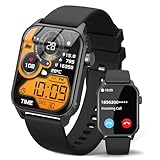
- 【1.83" HD Display & Customizable Watch Faces】Immerse yourself in a vibrant 1.83-inch IPS display, boasting a sharp resolution of 240*284 for crystal-clear visuals. Effortlessly personalize your smart watch with a wide array of customizable watch faces to suit your personal style for every occasion—whether trendy, artistic, or minimalist—ideal for casual, sporty, or professional. Its sleek, modern design complements any outfit, blending technology and fashion seamlessly for everyday wear
- 【120 Sports Modes & Advanced Health Tracking】Our TK29 smart watches for women men come equipped with 120 sports modes, allowing you to effortlessly track a variety of activities such as walking, running, cycling, and swimming. With integrated heart rate and sleep monitors, you can maintain a comprehensive overview of your health, achieve your fitness goals, and maintain a balanced, active lifestyle with ease. Your ideal wellness companion (Note: Step recording starts after exceeding 20 steps)
- 【IP67 Waterproof & Long-Lasting Battery】Designed to keep up with your active lifestyle, this smartwatch features an IP67 waterproof rating, ensuring it can withstand splashes, sweat, and even brief submersion, making it perfect for workouts, outdoor adventures, or rainy days. Its reliable 350mAh battery offering 5-7 days of active use and up to 30 days in standby mode, significantly reducing frequent charging. Ideal for all-day wear, whether you’re at the gym, outdoors, or simply on the go
- 【Stay Connected Anytime, Anywhere】Stay informed and in control with Bluetooth call and music control features. Receive real-time notifications for calls, messages, and social media apps like Facebook, WhatsApp, Twitter, and Instagram directly on your smartwatch. Easily manage calls, control your music playlist, and stay updated without needing to reach for your phone. Perfect for work, workouts, or on-the-go, this watch keeps you connected and never miss important updates wherever you are
- 【Multifunction & Wide Compatibility】Seamlessly handle heart rate monitoring, sleep tracking, and enjoy conveniences like camera/music control, Seamlessly handle heart rate monitoring, sleep tracking, and more-all directly from your wrist. This 1.83 inches HD smartwatch is compatible with iPhone (iOS 9.0+) & Android (5.0+), ensuring smooth daily connectivity and convenience throughout your day. More than just a timepiece, it’s a stylish, all-in-one wearable for smarter, healthier living
1940–1950s: Tool-watches expand beyond time
World War II accelerated the idea of the wristwatch as an instrument rather than jewelry. Pilot watches, navigation bezels, and multi-scale chronographs normalized the idea that a wrist device could assist decision-making. While not “smart” by any modern definition, these watches trained users to read data, operate controls, and trust their wrist under pressure.
Mechanical slide-rule bezels, most famously refined in aviation watches, deserve special mention. They turned the wrist into a computational surface, translating speed, distance, and fuel consumption through physical interaction. The user experience was slow but intuitive, and the idea of context-aware information began to form.
1950s–1960s: Radio, alerts, and the first always-on connection
As consumer electronics miniaturized, the wrist became a playground for novelty radios and experimental receivers. Wrist-worn radios appeared as early as the mid-1950s, often split across the watch head and a strap-mounted speaker or body pack. Battery life was measured in hours, audio quality was poor, and ergonomics were awkward, but they introduced a radical concept: live data delivered directly to the wrist.
These devices reframed the watch from a passive object into an active one. Even without screens, they delivered information in real time and demanded attention through sound, not sight. The idea of alerts, interruptions, and connectivity was born here, decades before notifications became a daily annoyance.
1960–1969: The bridge toward electronic intelligence
By the 1960s, the line between mechanical and electronic watches was beginning to blur. Tuning-fork movements like Bulova’s Accutron replaced traditional escapements with electronic regulation, improving accuracy and signaling a philosophical shift. The wrist was no longer purely mechanical, even if it still looked traditional.
This period closed with a crucial realization: accuracy, utility, and immediacy mattered more than craftsmanship alone for many users. The wrist had proven itself as a viable interface for tools, data, and even communication. What it lacked was digital logic small enough to disappear, a problem the next generation would finally solve.
1970–1982: The Digital Quartz Revolution — LED/LCD Displays, Casio, Seiko, and the Birth of Wrist‑Worn Computing
If the 1960s proved the wrist could host electronics, the 1970s proved it could host logic. Quartz regulation, integrated circuits, and solid-state displays converged to transform watches from timekeepers into interactive devices. This was the moment when the wrist stopped mimicking clocks and began behaving like a computer terminal.
1970–1973: Quartz Goes Digital and the Display Becomes the Interface
The breakthrough was not quartz itself, but what happened when quartz accuracy met digital readouts. Early digital watches replaced hands with numbers, forcing users to read time abstractly rather than intuitively. This cognitive shift mattered more than it seemed, because it trained wearers to treat the watch as a data display rather than a miniature machine.
LED watches, pioneered by Hamilton’s Pulsar in 1972, were dramatic but impractical. The bright red numerals only appeared when a button was pressed, conserving battery life but making time-checking a deliberate action. Battery life was measured in days or weeks, cases were often thick and angular, and comfort suffered, but the idea of “on-demand information” was born.
LED displays also introduced the concept of interface hierarchy. One button for time, another for date, sometimes a long press for seconds. This was primitive UI design, but it established a language of interaction that every smartwatch still follows.
1973–1976: LCD Changes Everything — Always-On, Always-Readable Data
Liquid crystal displays solved LED’s biggest flaw: power consumption. With LCD, the time could remain visible continuously, and battery life jumped from weeks to months, then years. The watch became passive again at a glance, but interactive when needed.
Seiko played a crucial role here, releasing some of the earliest practical LCD quartz watches that balanced size, legibility, and wearability. Cases slimmed down, materials diversified from steel to resin, and bracelets became lighter and more flexible. Digital watches were no longer novelties; they were daily tools.
This era also normalized multi-function displays. Date, day, seconds, and dual time zones appeared on a single screen, introducing the idea that one device could manage multiple contexts. The wrist was now a dashboard, not just a dial.
Mid-to-Late 1970s: Buttons, Modes, and the Grammar of Interaction
As digital watches spread, manufacturers experimented with how users navigated features. Side-mounted pushers became standard, often recessed to prevent accidental presses. Mode cycling emerged as a solution to limited screen real estate, a concept that still defines smartwatch UX today.
These watches demanded learning. Owners memorized button combinations, press durations, and mode sequences. While occasionally frustrating, this trained users to accept complexity on the wrist, laying psychological groundwork for far more advanced devices decades later.
Durability also improved rapidly. Resin cases absorbed shocks better than metal, water resistance increased, and crystal materials evolved to withstand daily wear. Digital watches earned a reputation for reliability that mechanical watches often couldn’t match at similar prices.
1974–1980: Casio and the Idea of the Watch as a Computer
Casio’s entry into the watch market reframed the entire category. Founded as a calculator company, Casio approached the wrist as a computing problem, not a horological one. Its early calculator watches were bulky and unapologetically technical, but they redefined expectations.
The Casio Casiotron, introduced in 1974, automatically accounted for varying month lengths, including leap years. This was not just convenience; it was autonomous logic running continuously on the wrist. The watch was now making decisions on the user’s behalf.
Calculator watches that followed turned the wrist into an input device. Tiny rubber buttons, cramped spacing, and flat mineral crystals made them awkward, but they proved that data entry, processing, and output could coexist in a wearable form. In spirit, these were among the first true smartwatches.
Late 1970s–Early 1980s: Data Storage, Alarms, and Personal Utility
As integrated circuits improved, watches gained memory. Alarms multiplied, hourly chimes appeared, and some models stored phone numbers or short notes. These features shifted watches from passive reference tools to active organizers.
Daily usability became a selling point. Long battery life, often measured in years using coin cells, meant users could rely on these watches without maintenance anxiety. Lightweight resin straps improved comfort, making all-day wear effortless even for larger cases.
The idea of personalization also emerged. Users could set multiple alarms, choose 12- or 24-hour formats, and configure displays. This sense of ownership over software behavior is a direct ancestor of modern smartwatch customization.
1980–1982: Cultural Acceptance and the Normalization of Digital Wrists
By the early 1980s, digital watches were no longer futuristic curiosities. They were worn by students, engineers, athletes, and professionals, often replacing mechanical watches entirely. The wrist had become a socially accepted site for electronics.
Importantly, these watches changed how people valued timepieces. Accuracy, features, and utility often mattered more than finishing or heritage. This value shift would later allow smartwatches to succeed where earlier “computer watches” failed.
The digital quartz revolution didn’t just modernize timekeeping. It taught users to trust software on their wrist, interact with menus through buttons, and rely on electronic intelligence throughout the day. Long before apps, notifications, or health tracking, the wrist had already become a place where computing felt natural.
1983–1994: Databank Watches and Early Wrist Computers — Memory, Keyboards, and the First Attempts at Personal Information Management
If the late 1970s taught people to trust electronics on the wrist, the early 1980s pushed that trust into something more ambitious. Watches were no longer just storing alarms and timers; they were beginning to store pieces of the owner’s life. Phone numbers, names, schedules, and even short messages became wrist-resident data.
This period marks the transition from feature-rich digital watches to devices that consciously attempted personal information management. The goal was clear, even if the execution was crude: reduce reliance on paper notebooks and external devices by turning the watch into a tiny, always-available memory aid.
1983–Late 1980s: The Rise of the Databank Watch
Casio’s Databank line, introduced in 1983, defined the category. Models like the Casio DBC series offered onboard memory for dozens of phone numbers and names, accessed through multi-button navigation and displayed on segmented LCDs. Storage was tiny by modern standards, but revolutionary for the wrist.
What made Databank watches distinct was input. Tiny rubberized keypads, often arranged in calculator-style layouts, allowed direct text and number entry without external tools. This transformed the watch from a passive display into an interactive device, albeit one that demanded patience and good eyesight.
Physically, these watches were unapologetically bulky. Resin cases often exceeded 40 mm in width and wore thick to accommodate batteries, circuitry, and keypad membranes. Mineral crystals sat flat and wide, making the watches legible but prone to scratches, reinforcing their utilitarian character.
Battery life remained a strength. Despite their expanded functionality, most Databank watches still ran for years on coin cells, preserving the low-maintenance appeal that users expected from digital watches. This expectation of long endurance would later clash with early smartwatches that required daily charging.
Wrist-Based Data Entry: Ambition Versus Ergonomics
Using a Databank watch was a lesson in compromise. Entering names through multi-tap buttons or miniature keyboards was slow, and mistakes were common. Yet the act of entering data directly on the wrist established a critical concept: watches could be programmed, not just set.
Menus became deeper and more abstract. Users navigated modes, sub-modes, and memory slots, learning to think in software logic rather than mechanical functions. This cognitive shift toward menu-driven interaction foreshadowed app-based navigation decades later.
Comfort was secondary to capability. Small buttons were difficult to press, especially during motion, and larger cases could feel top-heavy on resin straps. Still, wearers tolerated these flaws because the utility was tangible and personal.
Mid-to-Late 1980s: From Databank to Wrist Computer
As memory capacity grew and processors improved, some manufacturers moved beyond simple contact storage. Seiko, Epson, and Citizen experimented with watches that blurred the line between timepiece and computer. These devices offered expanded calendars, task lists, and in some cases programmability.
The Seiko RC series is particularly important historically. Models like the RC-20 and RC-4000 could connect to external computers via cables, allowing data synchronization. This was one of the earliest examples of a watch acting as a peripheral rather than a standalone gadget.
Design reflected their experimental nature. Stainless steel cases appeared alongside resin, lending a more professional aesthetic, but thickness increased further. Bracelets were often lightweight and rattly, prioritizing comfort over finishing, while displays remained monochrome and highly segmented.
Connectivity Emerges: Early Syncing and External Input
Direct wrist input had limits, and manufacturers knew it. Late 1980s wrist computers began experimenting with offloading data entry to larger devices. By syncing schedules or contacts from a PC, watches could act as portable mirrors of digital life rather than isolated databases.
This approach anticipated modern smartwatch pairing. The watch was not meant to replace the computer but to extend it into daily life. Even though synchronization was slow and fragile, the conceptual leap was enormous.
Battery life suffered slightly, but still vastly outperformed modern smartwatches. Weeks or months of use were typical, reinforcing the idea that wearable computing did not yet require constant charging or power anxiety.
1994: Timex Datalink and the Breakthrough of Practical PIM
Timex’s Datalink, launched in 1994, represented a turning point. Instead of cables or keyboards, it used optical data transfer, syncing with a PC via light pulses emitted from a CRT monitor. This eliminated physical connectors and simplified setup dramatically.
The Datalink stored appointments, phone numbers, to-do lists, and reminders, positioning itself squarely as a personal information manager rather than a novelty. Its software ecosystem, developed in collaboration with Microsoft, marked one of the earliest partnerships between traditional watchmaking and mainstream computing platforms.
In terms of wearability, the Datalink balanced function and comfort better than many predecessors. Resin cases were still large but ergonomically shaped, straps were flexible, and button layouts were simplified for navigation rather than typing. The experience felt closer to using a tool than operating a science experiment.
Critically, the Datalink showed that smart functionality could integrate into everyday life without demanding constant attention. Data updated automatically, alerts were subtle, and timekeeping remained central. This balance between utility and restraint would later become a core principle of successful smartwatches.
Why This Era Matters to the Apple Watch Story
Databank watches and early wrist computers established foundational ideas that modern smartwatches still rely on. They normalized personal data on the wrist, introduced menu-driven software interaction, and explored the relationship between wearability and computation.
They also revealed what did not work. Tiny keyboards were impractical, standalone computing had limits, and excessive complexity reduced daily usability. These failures informed later design philosophies that emphasized touch, voice, pairing, and automation.
By the mid-1990s, the industry had learned a crucial lesson: the wrist was ideal for access, reminders, and glanceable information, but not for heavy input. That realization would quietly guide the design of every successful smartwatch that followed.
Rank #2
![Apple Watch Series 11 [GPS 46mm] Smartwatch with Jet Black Aluminum Case with Black Sport Band - M/L. Sleep Score, Fitness Tracker, Health Monitoring, Always-On Display, Water Resistant](https://m.media-amazon.com/images/I/312K597M2uL._SL160_.jpg)
- HYPERTENSION NOTIFICATIONS — Apple Watch Series 11 can spot signs of chronic high blood pressure and notify you of possible hypertension.*
- KNOW YOUR SLEEP SCORE — Sleep score provides an easy way to help track and understand the quality of your sleep, so you can make it more restorative.
- EVEN MORE HEALTH INSIGHTS — Take an ECG anytime.* Get notifications for a high and low heart rate, an irregular rhythm,* and possible sleep apnea.* View overnight health metrics with the Vitals app* and take readings of your blood oxygen.*
- STUNNING DESIGN — Thin and lightweight, Series 11 is comfortable to wear around the clock — while exercising and even when you’re sleeping, so it can help track your key metrics.
- A POWERFUL FITNESS PARTNER — With advanced metrics for all your workouts, plus features like Pacer, Heart Rate Zones, training load, Workout Buddy powered by Apple Intelligence from your nearby iPhone,* and more. Series 11 also comes with three months of Apple Fitness+ free.*
1995–2004: Connectivity Experiments — Pagers, Phone Watches, GPS, and the Pre‑Smartphone Wearable Era
With personal data now proven viable on the wrist, the next question was obvious: could a watch connect outward, not just inward. The late 1990s marked a restless, exploratory phase where engineers chased wireless communication, real-time alerts, and location awareness long before smartphones unified those ideas.
This era did not produce a single breakout success, but it introduced nearly every pillar of the modern smartwatch in fragmented, imperfect form.
Pagers on the Wrist: Alerts Become the Killer Feature
Before mobile phones were ubiquitous, pagers were the most reliable form of personal connectivity. Several manufacturers experimented with pager watches that could receive numeric or short text messages directly on the wrist, often using national paging networks.
These watches prioritized immediacy over interaction. Small monochrome LCDs displayed incoming messages, vibration motors provided silent alerts, and battery life often stretched into weeks thanks to low-power radio modules.
Wearability was utilitarian rather than elegant. Resin cases were thick to accommodate antennas and receivers, bracelets were lightweight but cheap-feeling, and finishing was purely functional.
The key lesson was behavioral, not technical. Users valued wrist-based alerts precisely because they were glanceable and interruptive without being immersive, a principle that would later define notification design on the Apple Watch.
Phone Watches: Ambition Ahead of Infrastructure
If pagers hinted at connectivity, phone watches aimed for full independence. Throughout the late 1990s and early 2000s, several companies released watches with built-in cellular calling, long before miniaturization was ready.
These devices integrated microphones, speakers, SIM cards, and physical dialing interfaces into oversized cases. Battery life was measured in hours of talk time, standby was short, and call quality suffered from tiny audio components and awkward wrist positioning.
Comfort was a persistent issue. Stainless steel or plastic cases were thick and heavy, straps had to support uneven weight distribution, and everyday wear quickly became fatiguing.
Yet the idea mattered. These watches challenged the assumption that wrist devices must always be accessories to something else, a tension that would later resurface in debates over cellular-enabled smartwatches versus phone-dependent models.
Early Bluetooth and Companion Concepts Emerge
As Bluetooth standards stabilized around the early 2000s, a more realistic approach gained traction: the watch as a companion rather than a replacement. Instead of making calls, these watches mirrored alerts from nearby phones.
Displays remained simple, often segmented LCDs or early dot-matrix panels. Software experiences were menu-driven and slow, but incoming call alerts, message previews, and basic controls hinted at a future where the wrist could extend the phone’s awareness.
Battery life improved compared to phone watches, typically lasting several days. Comfort benefited as well, with slimmer cases and more conventional watch proportions.
This companion model quietly solved several earlier failures. Input remained minimal, connectivity was offloaded to the phone, and the watch focused on what it did best: notifying, timing, and reminding.
GPS Watches: Location as a New Wrist Function
Perhaps the most transformative experiment of this era came from GPS integration. Brands like Garmin introduced wrist-mounted GPS receivers designed primarily for runners, hikers, and outdoor athletes.
These watches were large by necessity. Early GPS chipsets required clear antenna placement, substantial batteries, and significant processing power, resulting in bulky polymer cases and utilitarian straps.
Battery life was limited, often measured in single-digit hours with GPS active. However, for the first time, a watch could record routes, distances, and speeds without external devices.
This redefined what data on the wrist could mean. Instead of static information, watches began capturing personal metrics over time, laying the groundwork for fitness tracking, activity rings, and health analytics decades later.
Microsoft SPOT and the Dream of Live Data
One of the most ambitious attempts at connected watches was Microsoft’s SPOT platform, launched in the early 2000s. Using FM radio subcarriers, SPOT-enabled watches could receive news headlines, weather updates, stock prices, and messages.
The software experience was ahead of its time. Information updated automatically, alerts were configurable, and content felt genuinely live rather than synced manually.
Hardware execution struggled. Watches were large, battery life suffered due to constant radio reception, and subscription fees limited adoption.
Still, SPOT introduced a critical concept: the wrist as a passive receiver of live, curated information. This idea would later resurface with push notifications, glanceable complications, and always-on background updates.
Design Tensions: Function Versus Wearability
Across all these experiments, one problem refused to disappear. The more functionality engineers added, the worse the watches wore.
Cases thickened, displays grew cramped, and controls became awkward. Many devices succeeded technically but failed emotionally, feeling like gadgets rather than watches people wanted to wear daily.
This tension forced a slow realization. Wrist devices had to respect ergonomics, comfort, and identity as much as specifications, a lesson that traditional watchmaking had understood for centuries.
Why This Era Quietly Shaped the Modern Smartwatch
Between 1995 and 2004, the industry explored nearly every path available with the technology of the time. Pagers taught the value of notifications, phone watches tested independence, GPS proved data collection, and SPOT demonstrated live information.
None of these devices dominated the market, but each solved a piece of the puzzle. Just as importantly, they exposed the limits of batteries, radios, interfaces, and user patience.
By the time smartphones arrived, the blueprint was already sketched. The next generation would not invent smartwatch ideas from scratch, it would finally assemble them into something people could live with on their wrists every day.
2005–2010: Fitness, Sensors, and the Shift from Information to the Body — Polar, Garmin, Nike+, and Health as a Use Case
As live information struggled with batteries, radios, and subscriptions, another path proved far more compatible with the wrist. Instead of pulling data from the world, these devices began measuring the wearer.
This shift reframed the problem entirely. The wrist was no longer a tiny terminal for news and messages, but a stable platform for sensing the body in motion.
Polar and the Wrist as a Physiological Instrument
Polar had been refining heart-rate monitoring since the 1980s, but the mid-2000s marked its transition from niche athletic tool to proto-wearable computer. Watches like the Polar S625X and later the RS and FT series combined ECG-based chest straps with wrist-based data processing and long-term training memory.
These were not smartwatches in the modern sense, but they introduced persistent metrics, trend analysis, and personalized feedback loops. Battery life stretched into months, displays were simple monochrome LCDs, and plastic resin cases prioritized lightness and sweat resistance over aesthetics.
Comfort mattered because these watches were worn for hours, sometimes all day. Polar’s soft polyurethane straps, curved lugs, and lightweight construction quietly taught the industry that a wearable’s success depended on disappearing on the wrist.
Garmin and GPS Moves Onto the Wrist
Garmin brought satellite navigation into this physiological framework. Early Forerunner models, especially the Forerunner 201 and 301, integrated GPS receivers into wrist-worn housings that were unapologetically large but transformational in capability.
Distance, pace, elevation, and route tracking turned running and cycling into quantifiable activities. Battery life ranged from 10 to 15 hours with GPS active, reinforcing the idea that task-specific endurance mattered more than all-day operation.
The watches were thick, plasticky, and function-first, yet athletes tolerated the bulk because the data was irreplaceable. This acceptance of visual inelegance in exchange for insight would echo later in the early Apple Watch Sport models.
Nike+ and the Power of an Ecosystem
Nike+ did not look like a watch revolution at first. The original system relied on a shoe-mounted accelerometer, a small receiver, and integration with the iPod, shifting intelligence off the wrist entirely.
What Nike+ introduced was arguably more important than hardware. Cloud-based activity history, goal setting, audio feedback, and social motivation reframed fitness tracking as an ongoing relationship rather than a single workout.
This software-first mindset, paired with simple sensors, foreshadowed how future smartwatches would rely on platforms and services rather than raw device specifications.
From Notifications to Motivation
Unlike SPOT or phone watches, these devices rarely interrupted the wearer. Alerts were minimal, interfaces were utilitarian, and interaction happened before or after activity rather than constantly throughout the day.
Yet engagement was deeper. Users checked recovery times, weekly mileage, heart-rate zones, and personal records, forming habits that tied identity and self-improvement to wrist-worn data.
This psychological shift was critical. The watch stopped asking for attention and started offering insight.
Design Lessons the Industry Could Not Ignore
Fitness watches proved that comfort, stability, and durability mattered more than miniaturization. Broad cases distributed weight better, tactile buttons worked with gloves and sweat, and mineral or acrylic crystals survived impacts better than early touchscreens.
Materials leaned heavily toward resin and rubber, not luxury metals. Finishing was irrelevant; legibility and reliability were everything.
These choices looked crude next to traditional watches, but they established a parallel design language rooted in use rather than status.
The Quiet Foundation for Health-First Smartwatches
By 2010, the wrist had proven itself as a sensor hub. Heart rate, movement, distance, and training load could be captured reliably, interpreted meaningfully, and integrated into daily routines without overwhelming users.
This era solved a problem earlier smartwatches could not. It gave the wrist a purpose that justified constant wear.
Rank #3

- Bluetooth Call and Message Alerts: Smart watch is equipped with HD speaker, after connecting to your smartphone via bluetooth, you can answer or make calls, view call history and store contacts through directly use the smartwatch. The smartwatches also provides notifications of social media messages (WhatsApp, Twitter, Facebook, Instagram usw.) So that you will never miss any important information.
- Smart watch for men women is equipped with a 320*380 extra-large hd full touch color screen, delivering exceptional picture quality and highly responsive touch sensitivity, which can bring you a unique visual and better interactive experience, lock screen and wake up easily by raising your wrist. Though “Gloryfit” app, you can download more than 102 free personalised watch faces and set it as your desktop for fitness tracker.
- 24/7 Heart Rate Monitor and Sleep Tracker Monitor: The fitness tracker watch for men has a built-in high-performance sensor that can record our heart rate changes in real time. Monitor your heart rate 26 hours a day and keep an eye on your health. Synchronize to the mobile phone app"Gloryfit", you can understand your sleep status(deep /light /wakeful sleep) by fitness tracker watch develop a better sleep habit and a healthier lifestyle.
- IP68 waterproof and 110+ Sports Modes: The fitness tracker provides up to 112+ sports modes, covering running, cycling, walking, basketball, yoga, football and so on. Activity trackers bracelets meet the waterproof requirements for most sports enthusiasts' daily activities, such as washing hands or exercising in the rain, meeting daily needs (note: Do not recommended for use in hot water or seawater.)
- Multifunction and Compatibility: This step counter watch also has many useful functions, such as weather forecast, music control, sedentary reminder, stopwatch, alarm clock, timer, track female cycle, screen light time, find phone etc. The smart watch with 2 hrs of charging, 5-7 days of normal use and about 30 days of standby time. This smart watches for women/man compatible with ios 9.0 and android 6.2 and above devices.
When Apple later positioned the Apple Watch as a health device first and a notification device second, it was building on lessons learned here, from Polar’s physiological rigor to Nike+’s ecosystem thinking and Garmin’s acceptance of function-driven form.
2011–2014: The Modern Smartwatch Takes Shape — Pebble, Samsung Galaxy Gear, Sony, and the App‑Centric Wrist
By the early 2010s, the wrist had already earned its place as a legitimate home for sensors and habit-forming software. What it lacked was a unifying idea for everyday, always-on use beyond training sessions and niche utilities.
The next wave of devices tackled that gap directly. Instead of asking what the watch could measure, they asked what it could connect, display, and extend from the smartphone already in everyone’s pocket.
Pebble and the Return of the Useful Screen
Pebble’s 2012 Kickstarter campaign did more than raise money; it reframed expectations. Here was a watch that made no attempt to replace the phone, yet dramatically reduced how often users needed to pull it out.
The original Pebble paired a 1.26-inch monochrome e‑paper display with physical buttons, a polycarbonate case, and a simple silicone strap that prioritized comfort over flair. At roughly 38 x 52 mm, it wore large but light, distributing its weight well and disappearing on the wrist during daily wear.
Battery life was the real breakthrough. Lasting five to seven days on a charge, Pebble solved a problem that had plagued earlier smartwatches and would continue to haunt competitors for years.
Notifications as a Core Feature, Not a Gimmick
Pebble’s most important contribution was philosophical. Notifications were no longer an afterthought; they were the product.
Calls, texts, calendar alerts, and third‑party app pings arrived silently, glanceable, and actionable enough to matter without demanding constant interaction. The watch respected attention in a way smartphones did not.
This aligned perfectly with lessons learned from fitness watches. The device stayed present without becoming intrusive, reinforcing the idea that a smartwatch should reduce friction rather than add another screen to manage.
An App Platform, Even Before Apple or Google
Pebble’s software ecosystem, modest as it was, proved that developers were willing to design for the wrist. Watch faces, fitness tools, music controls, and utilities flourished within tight technical constraints.
The Pebble SDK forced simplicity. Limited memory, a low-refresh display, and physical buttons meant apps had to be fast, legible, and purposeful.
This constraint-driven design would later echo loudly in watchOS, where glanceability and micro-interactions became core principles rather than compromises.
Sony and the First Experiments in Android on the Wrist
While Pebble refined focus, Sony explored possibility. The Sony Ericsson LiveView and later Sony SmartWatch models attempted to bring Android-style extensibility to the wrist years before Wear OS had a name.
These devices leaned heavily on touchscreen interaction, compact rectangular cases, and proprietary connectors. Build quality was serviceable but unremarkable, with plastic housings and basic straps that emphasized cost and modularity.
Battery life was poor, often measured in a single day. Software felt fragmented, with inconsistent app support and laggy performance that reminded users they were wearing a peripheral, not a platform.
Lessons Learned the Hard Way
Sony’s efforts were not failures so much as necessary experiments. They demonstrated that simply shrinking a smartphone interface did not work on the wrist.
Touchscreens struggled with sweat, motion, and small targets. Frequent charging eroded trust. Most critically, apps designed without wrist-specific intent felt awkward and unnecessary.
These missteps clarified what Pebble had intuited: the wrist demands its own interaction model, not a reduced version of something else.
Samsung Galaxy Gear and the Push Toward the Mainstream
Samsung’s 2013 Galaxy Gear marked the first serious attempt by a major consumer electronics brand to force smartwatches into the mainstream conversation.
Built from stainless steel with a 1.63-inch color touchscreen, integrated camera, speaker, and microphone, the Galaxy Gear was ambitious to the point of excess. At over 70 grams, it felt heavy, top‑loaded, and conspicuous on the wrist.
Comfort suffered, especially during extended wear. Battery life rarely exceeded a day, and compatibility was limited to a narrow slice of Samsung phones, undermining its mass-market appeal.
Function Overload Versus Daily Wearability
The Galaxy Gear could make calls, record video, display apps, and mirror notifications, yet it lacked a clear identity. It tried to be independent while remaining tethered, powerful while being inconvenient.
This tension exposed a fundamental truth. A watch that does everything poorly is less valuable than one that does a few things exceptionally well.
Apple would later internalize this lesson, carefully staging features across hardware generations rather than attempting to ship a maximalist device on day one.
The App‑Centric Wrist Comes Into Focus
Across Pebble, Sony, and Samsung, one idea emerged clearly: the smartwatch was no longer a novelty or a fitness-only tool. It was becoming a software platform anchored to the wrist.
Compatibility with smartphones mattered more than standalone capability. Battery life and comfort became non-negotiable. Notifications evolved from noise into value.
By 2014, the industry had not yet perfected the smartwatch, but it had defined its boundaries. The wrist was a place for glances, habits, and context-aware software, not prolonged interaction or feature bloat.
The stage was set for a company that could unify hardware, software, and services into a single, coherent experience, and present it not as an experiment, but as an inevitable next step.
2015: The Apple Watch Arrives — Design, Digital Crown, watchOS, and Apple’s Reframing of the Smartwatch
When Apple entered the smartwatch market in April 2015, it did not present the Apple Watch as a gadget competing on specs or features. Instead, it framed the device as a watch first, a personal object meant to live on the body all day, every day.
This distinction mattered. Where earlier smartwatches emphasized novelty or technical capability, Apple emphasized integration, restraint, and long-term wearability, absorbing the hard lessons learned by Pebble, Samsung, and others before it.
A Watch, Not a Mini Smartphone
The Apple Watch’s physical design deliberately avoided the overtly “techy” aesthetic that defined early Android and Pebble-era devices. Its rounded rectangular case softened the screen’s presence, while the edges were chamfered and polished in a way that referenced traditional watch finishing rather than consumer electronics.
Apple launched the watch in three case materials: aluminum, stainless steel, and 18k gold for the Apple Watch Edition. Sizes were 38mm and 42mm, small by gadget standards but intentionally close to conventional wristwatch proportions.
At roughly 25–50 grams depending on size and material, the watch prioritized comfort over presence. Weight distribution was even, and the curved back sat flush against the wrist, a clear response to the top-heavy discomfort that plagued devices like the Galaxy Gear.
The Digital Crown: Solving the Touchscreen-on-the-Wrist Problem
Apple’s most consequential hardware decision was not the screen, but the Digital Crown. Rather than relying solely on touch input, Apple reintroduced a familiar mechanical interface and repurposed it for digital navigation.
The Crown allowed scrolling, zooming, and context-based input without obscuring the display or forcing exaggerated finger movements. This was a direct acknowledgment of the wrist’s ergonomic limits, something earlier smartwatches had largely ignored.
It also reinforced the idea that the Apple Watch was not trying to replicate the iPhone experience. Interaction was meant to be brief, precise, and interruptible, aligning with how people actually check the time.
watchOS 1.0 and the App-Centric Vision
watchOS launched as an extension of iOS rather than a standalone operating system. The original Apple Watch required an iPhone for setup, connectivity, and most processing tasks, a controversial but pragmatic decision.
This tight coupling ensured reliable notifications, consistent app behavior, and acceptable battery life, which hovered around 18 hours in real-world mixed use. Apple chose predictability over independence, a tradeoff earlier platforms struggled to balance.
The initial app model emphasized glanceable information. Early watchOS leaned heavily on complications, notifications, and short interactions, even if the first generation’s app loading times were often slow and uneven.
Health, Activity, and the Reframing of Fitness Tracking
Rather than positioning the Apple Watch as a hardcore fitness device, Apple framed activity as a daily habit. The Activity Rings system reduced fitness into three simple metrics: Move, Exercise, and Stand.
This approach was less intimidating than traditional step counts or workout dashboards. It encouraged consistency over intensity, subtly shifting fitness tracking from a niche pursuit into a mainstream behavioral tool.
Heart rate monitoring was included, but it was presented as context rather than obsession. Apple avoided medicalized language, setting the stage for deeper health features in later generations without overpromising in 2015.
Straps, Personalization, and the Fashion Gamble
Apple treated straps as interchangeable components of personal expression rather than fixed accessories. The proprietary lug system allowed bands to slide in seamlessly, creating a modular ecosystem that encouraged customization.
From fluoroelastomer Sport Bands to Milanese Loops and leather options, Apple invested heavily in materials, comfort, and finishing. Even critics who questioned the watch’s price acknowledged the quality of its straps and clasp mechanisms.
The decision to sell the watch in fashion boutiques and emphasize style photography was risky, but it reinforced Apple’s claim that the smartwatch could be a legitimate successor to the traditional wristwatch, not merely an electronic add-on.
Redefining Value in the Smartwatch Category
The Apple Watch was not the most powerful smartwatch of its era, nor the most open. It was also not inexpensive, especially in stainless steel configurations that rivaled entry-level Swiss mechanical watches.
What Apple offered instead was cohesion. Hardware, software, services, and ecosystem worked together in a way no previous smartwatch platform had achieved at scale.
Rank #4
![Apple Watch Series 11 [GPS 42mm] Smartwatch with Rose Gold Aluminum Case with Light Blush Sport Band - S/M. Sleep Score, Fitness Tracker, Health Monitoring, Always-On Display, Water Resistant](https://m.media-amazon.com/images/I/31J+F-pXaWL._SL160_.jpg)
- HYPERTENSION NOTIFICATIONS — Apple Watch Series 11 can spot signs of chronic high blood pressure and notify you of possible hypertension.*
- KNOW YOUR SLEEP SCORE — Sleep score provides an easy way to help track and understand the quality of your sleep, so you can make it more restorative.
- EVEN MORE HEALTH INSIGHTS — Take an ECG anytime.* Get notifications for a high and low heart rate, an irregular rhythm,* and possible sleep apnea.* View overnight health metrics with the Vitals app* and take readings of your blood oxygen.*
- STUNNING DESIGN — Thin and lightweight, Series 11 is comfortable to wear around the clock — while exercising and even when you’re sleeping, so it can help track your key metrics.
- A POWERFUL FITNESS PARTNER — With advanced metrics for all your workouts, plus features like Pacer, Heart Rate Zones, training load, Workout Buddy powered by Apple Intelligence from your nearby iPhone,* and more. Series 11 also comes with three months of Apple Fitness+ free.*
By resisting feature overload and accepting limitations in its first generation, Apple reframed the smartwatch as a long-term platform rather than a technological stunt. In doing so, it reset expectations for what a smartwatch should be, and quietly rendered many earlier approaches obsolete.
2016–2019: Iteration, Health Dominance, and Ecosystem Lock‑In — LTE, Activity Rings, ECG, and Refinement Over Reinvention
By 2016, Apple had already won the most difficult battle in wearables: convincing people to wear a computer on their wrist every day. The challenge that followed was less about spectacle and more about discipline, turning the Apple Watch from a promising first act into a dependable, habit‑forming object.
Rather than chasing dramatic reinvention, Apple doubled down on iteration. Each release quietly improved comfort, speed, sensors, and autonomy, reinforcing the watch’s role as a personal health companion rather than a general-purpose gadget.
Series 2 and the Case for Reliability
Apple Watch Series 2, launched in late 2016, focused on fixing what daily users actually complained about. Built‑in GPS eliminated the need to carry an iPhone for outdoor workouts, and water resistance was improved to 50 meters, making swim tracking a practical reality rather than a marketing claim.
The brighter OLED display dramatically improved outdoor legibility, while the ceramic back replaced composite materials to improve signal transmission and skin comfort. Internally, the S2 chip made the interface feel less hesitant, an important psychological shift for a device meant to be glanced at dozens of times per day.
Battery life remained officially rated at 18 hours, but real‑world consistency improved. For runners, swimmers, and casual exercisers, Series 2 was the moment the Apple Watch felt trustworthy enough to replace dedicated fitness devices.
Activity Rings Become Behavioral Infrastructure
During this period, Apple refined Activity Rings into a form of behavioral infrastructure. The Move, Exercise, and Stand metrics stayed intentionally simple, but watchOS updates made them more adaptive, social, and persistent across years of ownership.
Streaks, monthly challenges, and subtle notifications encouraged long‑term engagement without overwhelming users with data. This approach contrasted sharply with fitness platforms that emphasized raw metrics and performance analytics over adherence.
The genius was restraint. By resisting constant redesign, Apple allowed the rings to become familiar, almost ritualistic, embedding themselves into daily routines in a way few digital health tools had achieved before.
Series 3 and the Arrival of LTE Independence
Apple Watch Series 3 in 2017 introduced LTE connectivity, a conceptual leap even if its practical impact was initially uneven. For the first time, the watch could make calls, stream music, and receive messages without an iPhone nearby.
The trade‑offs were visible. Cellular models were thicker, battery life under LTE use was limited, and carrier activation added friction. Yet symbolically, LTE redefined the smartwatch as something closer to an independent device than a phone accessory.
Even users who never activated cellular benefited indirectly. The platform’s center of gravity shifted toward autonomy, influencing app design, emergency features, and Apple’s long‑term health ambitions.
watchOS Matures While Rivals Stall
Between 2016 and 2019, watchOS evolved into one of the most coherent wearable operating systems ever shipped. Performance improved steadily, third‑party complications became more useful, and system apps grew faster and more reliable.
Meanwhile, competing platforms struggled with identity. Android Wear, later rebranded as Wear OS, suffered from inconsistent hardware partnerships and unclear priorities. Fitbit excelled at fitness but lacked a broader software ecosystem, while Garmin focused on performance athletes rather than mass adoption.
Apple’s advantage was not raw innovation but alignment. Hardware, software, silicon, and services advanced together, reinforcing a sense that the Apple Watch was a stable investment rather than an annual gamble.
Series 4 and the Medical Turn
Apple Watch Series 4 in 2018 marked the most significant design update since the original. The case grew slightly to 40mm and 44mm, with thinner bezels and a larger, more immersive display that improved readability without sacrificing comfort.
More importantly, Series 4 introduced ECG capability, with FDA clearance positioning the Apple Watch as a consumer medical device. Irregular rhythm notifications and on‑demand electrocardiograms shifted the watch’s role from fitness tracker to early warning system.
Apple was careful with framing. The ECG feature was presented as informational, not diagnostic, reinforcing trust while avoiding regulatory overreach. This cautious credibility would become a defining trait of Apple’s health strategy.
Materials, Comfort, and Everyday Wearability
Throughout this era, Apple continued refining materials and finishes. Aluminum remained lightweight and approachable, stainless steel offered a more traditional heft, and ceramic editions emphasized scratch resistance and radio performance.
Straps expanded further into sport‑specific, fashion, and collaborative lines, including Nike and Hermès partnerships that targeted distinct lifestyles without fragmenting the core product. Comfort remained a priority, with curved backs, breathable bands, and consistent case ergonomics encouraging all‑day wear.
The watch increasingly felt like a watch first and a device second, an important distinction for long‑term acceptance.
Ecosystem Lock‑In as a Feature, Not a Flaw
By 2019, ecosystem lock‑in had become one of the Apple Watch’s strongest selling points. Deep integration with iPhone, Apple Music, Health, and later Apple Pay made switching platforms feel inconvenient rather than tempting.
This was not achieved through exclusivity alone, but through accumulated trust. Health data histories, fitness streaks, and personalized settings created emotional as well as technical inertia.
The Apple Watch no longer needed to prove what it was. Through steady iteration and a relentless focus on health, it had become an indispensable extension of the Apple ecosystem, quietly reshaping expectations for what a smartwatch should deliver day after day.
2020–2024: Maturity and Specialisation — Always‑On Displays, Ultra‑Class Watches, Advanced Health Metrics, and Platform Wars
By 2020, the smartwatch category had crossed an important threshold. The question was no longer whether a smartwatch belonged on the wrist, but which kind of smartwatch belonged there.
What followed was not a single evolutionary path, but a branching one. Displays became permanently visible, health tracking crossed deeper into clinical territory, and manufacturers began designing watches for clearly defined use cases rather than universal appeal.
Always‑On Displays and the Return of “Watch‑First” Design
The introduction of always‑on displays marked a philosophical shift. With Apple Watch Series 5 in late 2019 and Series 6 refining the concept in 2020, the screen no longer behaved like a phone accessory that demanded attention to wake.
Low‑temperature polysilicon and oxide (LTPO) OLED panels allowed refresh rates to drop as low as 1 Hz. In practical terms, this meant the time, complications, and even seconds hands could remain visible without crushing battery life.
This mattered culturally as much as technically. A watch that always showed the time behaved like a watch, restoring the instinctive wrist glance that early smartwatches had broken. The Apple Watch’s rectangular case, softened corners, and tight screen-to-case tolerances suddenly felt intentional rather than utilitarian.
Competitors followed quickly. Samsung’s Galaxy Watch line leaned on circular AMOLED panels to preserve traditional watch proportions. Garmin refined memory‑in‑pixel (MIP) displays for superior outdoor readability, sacrificing color vibrancy for multi‑week endurance.
Always‑on displays did not make smartwatches more powerful. They made them more acceptable.
Health Metrics Move from Fitness to Physiology
If the late 2010s were about activity rings and heart rate zones, the early 2020s shifted toward internal signals. Apple expanded blood oxygen monitoring with SpO2 sensors in Series 6, framing the data cautiously but persistently within broader health trends.
Sleep tracking, long neglected by Apple, became native and deeply integrated. Rather than chasing extreme granularity, Apple emphasized consistency, bedtime routines, and long‑term trends, reinforcing the idea of the watch as a passive health companion.
Other platforms moved faster and sometimes further. Fitbit, before and after its acquisition by Google, leaned heavily into sleep staging, readiness scores, and stress metrics. Garmin doubled down on body battery, HRV status, and training load, positioning its watches as instruments rather than lifestyle devices.
Temperature sensing quietly emerged as one of the most important additions. Apple Watch Series 8 and Ultra used wrist temperature deviations to infer ovulation estimates and illness trends, never presenting raw numbers but surfacing insights when patterns shifted.
This era cemented a key design philosophy inherited directly from Apple’s earlier ECG rollout. The most impactful health features were not those that dazzled daily, but those that intervened rarely and meaningfully.
The Rise of the Ultra‑Class Smartwatch
Specialisation reached its most visible expression with the emergence of ultra‑class smartwatches. These were not bigger versions of existing models, but fundamentally different propositions.
Apple Watch Ultra arrived in 2022 with a 49 mm titanium case, flat sapphire crystal, and a pronounced crown guard. At 100 meters of water resistance, dual‑frequency GPS, and a dedicated action button, it targeted endurance athletes, divers, and explorers without abandoning Apple’s software identity.
Battery life stretched to 36 hours in standard use and far longer in low power modes. The case thickness and weight were noticeable, but the curved lugs and wide strap interface distributed mass effectively, making all‑day wear realistic for its size.
Garmin had pioneered this space years earlier with Fenix and Epix lines, offering multi‑band GPS, solar charging, and weeks of battery life. The difference was not capability, but integration. Garmin watches felt like instruments first, smartwatches second.
Apple’s Ultra attempted to bridge that divide. It did not outlast Garmin on expeditions, but it offered LTE connectivity, app ecosystems, and seamless iPhone pairing that no pure sports watch could match.
This category legitimised the idea that one wrist did not need one watch. Users began choosing devices based on activity, environment, and identity.
Software Maturity and Interface Refinement
As hardware gains slowed, software refinement became the battleground. watchOS evolved less through dramatic redesigns and more through accumulated polish.
Focus modes, redesigned complications, and gesture‑based navigation reduced friction. The interface assumed familiarity, trusting users to understand layers rather than explaining everything visually.
Third‑party apps matured as well. Navigation, strength training, and niche sports apps began to feel purpose‑built rather than adapted from phone counterparts. Battery life remained the constraint, but intelligent background management improved reliability.
Wear OS, revitalised through Google and Samsung’s partnership, regained relevance. Unified hardware standards and improved performance closed much of the gap that had plagued earlier Android watches.
Yet platform identity remained distinct. Apple emphasized coherence and restraint. Google leaned into services and AI. Garmin and Polar prioritized data density and endurance.
💰 Best Value
![Apple Watch Series 11 [GPS 42mm] Smartwatch with Jet Black Aluminum Case with Black Sport Band - S/M. Sleep Score, Fitness Tracker, Health Monitoring, Always-On Display, Water Resistant](https://m.media-amazon.com/images/I/31ybzrJZckL._SL160_.jpg)
- HYPERTENSION NOTIFICATIONS — Apple Watch Series 11 can spot signs of chronic high blood pressure and notify you of possible hypertension.*
- KNOW YOUR SLEEP SCORE — Sleep score provides an easy way to help track and understand the quality of your sleep, so you can make it more restorative.
- EVEN MORE HEALTH INSIGHTS — Take an ECG anytime.* Get notifications for a high and low heart rate, an irregular rhythm,* and possible sleep apnea.* View overnight health metrics with the Vitals app* and take readings of your blood oxygen.*
- STUNNING DESIGN — Thin and lightweight, Series 11 is comfortable to wear around the clock — while exercising and even when you’re sleeping, so it can help track your key metrics.
- A POWERFUL FITNESS PARTNER — With advanced metrics for all your workouts, plus features like Pacer, Heart Rate Zones, training load, Workout Buddy powered by Apple Intelligence from your nearby iPhone,* and more. Series 11 also comes with three months of Apple Fitness+ free.*
The smartwatch had stopped trying to be everything at once.
Materials, Durability, and Perceived Value
Material choices during this period reflected a new confidence. Titanium moved from niche to mainstream, prized for its strength‑to‑weight ratio and muted finish. Sapphire crystals became expected rather than exceptional at higher price tiers.
Finishing mattered more as smartwatches began occupying the same emotional space as mechanical watches. Brushed surfaces hid wear, ceramic backs improved comfort and signal performance, and strap ecosystems expanded into textiles, elastomers, and metal links designed for specific case weights.
Value was no longer judged purely on features. Longevity, software support, and resale perception entered the conversation, particularly as prices climbed into four‑figure territory.
The Apple Watch, once criticized for planned obsolescence, benefited from long software support cycles and consistent accessory compatibility. Bands purchased years earlier still fit, reinforcing trust in the platform.
Platform Wars and the Cost of Switching
By the early 2020s, platform wars were no longer about market share alone. They were about exit costs.
Health data histories, subscription services, cloud‑synced training plans, and family device management created friction for anyone considering a switch. Apple’s walled garden remained the most restrictive, but also the most frictionless within its boundaries.
Google’s acquisition of Fitbit signaled a recognition that hardware alone could not win loyalty. Data interpretation, coaching, and long‑term insight mattered more than raw sensor counts.
Samsung straddled both worlds, offering hardware excellence paired with software that depended heavily on Android ecosystems.
Consumers felt these trade‑offs acutely. Choosing a smartwatch became a declaration of ecosystem allegiance, not just aesthetic preference.
Cultural Normalisation and the End of Novelty
Perhaps the most telling sign of maturity was cultural. Smartwatches stopped being conversation starters.
They appeared in boardrooms, hospitals, construction sites, and endurance races without explanation. Their presence was assumed, their utility understood.
Design language softened accordingly. Bright colors gave way to neutrals. Watch faces became calmer, less animated. Notifications were filtered rather than celebrated.
This normalization echoed earlier transitions in watch history, when quartz moved from novelty to default. The smartwatch had completed its shift from curiosity to infrastructure.
By 2024, the Apple Watch no longer stood alone as the definition of a smartwatch. But it remained the reference point against which all others were measured, not because it did everything best, but because it balanced competing priorities with unusual discipline.
The era of proving what a smartwatch could be had ended. What followed would be about redefining why it mattered.
2025–2026: The Smartwatch as a Lifestyle Computer — What Apple Watch Inherited, What It Standardised, and What Comes Next
By the mid‑2020s, the smartwatch had quietly crossed a threshold. It was no longer defined by features, sensors, or even performance, but by how deeply it blended into daily life.
The Apple Watch did not invent this idea, but it refined it with unusual consistency. What emerged by 2025–2026 was not a wrist computer in the traditional sense, but a lifestyle computer: always present, rarely demanding attention, and increasingly trusted with the most personal aspects of modern life.
What Apple Watch Inherited From a Century of Wrist Computing
Many of the Apple Watch’s defining traits were inherited rather than invented. Early calculator watches taught the industry that utility mattered more than elegance when technology was novel, while digital databank watches introduced personal data on the wrist decades before cloud sync existed.
Fitness trackers of the 2000s and early 2010s established the wrist as the most practical location for passive data collection. Step counts, heart rate trends, and sleep patterns normalized the idea that a watch could observe rather than simply display.
Connected watches from Pebble, Sony, and early Android Wear models proved that glanceable information was more valuable than full interaction. The Apple Watch adopted this lesson early, prioritizing haptics, short interactions, and quick dismissal over endless on‑wrist scrolling.
Even design language carried forward historical lessons. Rounded rectangles maximized screen area while preserving visual softness, echoing both early digital watches and modern smartphone ergonomics.
What Apple Watch Standardised Across the Industry
Where Apple’s influence became unmistakable was in standardization. By 2026, many smartwatch expectations were effectively Apple Watch conventions.
Consistent strap interchangeability, refined over nearly a decade, turned accessories into long‑term investments. This echoed traditional watchmaking logic, where bracelets and straps often outlasted the watch head itself.
Health tracking became longitudinal rather than reactive. Apple normalized multi‑year health records, baseline trends, and passive alerts instead of constant warnings, reshaping how competitors framed wellness data.
The balance between materials and comfort also set a benchmark. Aluminum for lightness, stainless steel and titanium for durability and perceived value, ceramic for signal performance, and precise case sizing ensured all‑day wearability across body types.
Battery life expectations subtly shifted as well. Rather than chasing multi‑week endurance, Apple standardized reliable 18–36 hour performance with fast charging, aligning the watch’s rhythm with daily human routines.
The Software Philosophy That Quietly Won
watchOS matured into one of the most disciplined operating systems in consumer tech. Its success came not from openness, but from restraint.
Apps were encouraged to do less, not more. Complications replaced full interfaces, background refresh was tightly controlled, and notifications were filtered aggressively to reduce cognitive load.
This philosophy influenced competitors, even those with more flexible platforms. By 2026, most smartwatch software prioritized relevance over volume, acknowledging that attention was the most limited resource on the wrist.
Siri’s evolution into a context‑aware assistant, combined with on‑device processing, reinforced the idea that voice was supplementary rather than primary. The watch worked best when it anticipated needs without requiring commands.
The Smartwatch as a Health Instrument, Not a Gadget
By this period, the Apple Watch had crossed into medical adjacency. ECG, blood oxygen tracking, fall detection, and temperature sensing were no longer headline features but expected safeguards.
What mattered more was interpretation. Trends, confidence intervals, and alert thresholds reduced false alarms while preserving early warning value.
Regulatory alignment, particularly in health certifications, quietly strengthened trust. The watch became something users relied on, not something they experimented with.
Comfort played a critical role here. Case thickness, curved crystal edges, breathable sport bands, and skin‑safe materials ensured sensors remained in consistent contact without irritation.
Where the Apple Watch Still Drew Clear Lines
Despite its influence, the Apple Watch remained deliberately constrained. Customization was guided, not unlimited, and compatibility remained exclusive to the iPhone.
This rigidity frustrated power users but benefited the broader audience. Stability, predictability, and long‑term support outweighed flexibility for most buyers.
Repairability and sustainability became incremental rather than revolutionary. Material recycling improved, but sealed designs persisted, prioritizing durability and water resistance over modularity.
In this sense, Apple treated the watch more like an appliance than a computer. It was meant to be depended on, not tinkered with.
What Comes Next After 2026
The next evolution of smartwatches is unlikely to look dramatic. Instead, it will feel quieter.
Expect deeper health integration with clinical partnerships, improved passive sensing, and more personalized insights driven by on‑device machine learning. The watch will know less about everyone, but more about you.
Form factors may thin slightly, materials will continue to diversify, and battery efficiency will improve incrementally rather than radically. Displays will get brighter and more efficient, not larger.
Most importantly, the smartwatch will continue its shift away from being noticed at all. Success will be measured by absence: fewer interruptions, fewer alerts, fewer reasons to look down.
The End Point of the Journey
From mechanical calculators to digital databanks, from fitness bands to lifestyle computers, the smartwatch’s evolution has always been about solving human problems within extreme constraints.
By 2026, the Apple Watch stands as the most refined expression of that journey. Not because it is the most powerful, but because it understands its limits.
It inherited a century of ideas, standardized what worked, and quietly discarded what did not. In doing so, it transformed the smartwatch from a technological statement into something rarer: an invisible companion that earns its place on the wrist every day.