Released in late 2014, the Sony SmartWatch 3 arrived at a moment when Android Wear was still defining what a smartwatch was supposed to be. Google’s fledgling wearable platform had promise, but hardware partners were experimenting wildly, and no one quite knew which features would actually matter day to day. For readers revisiting older smartwatches today, the SmartWatch 3 represents one of the clearest snapshots of that early trial-and-error phase.
Unlike many Android Wear peers that leaned heavily on phone-tethered convenience, Sony quietly pushed the category forward in a more practical direction. The SmartWatch 3 was among the first Android Wear watches to include built-in GPS, allowing runs and walks to be tracked without carrying a phone. That single decision positioned it less as a notification mirror and more as a genuinely standalone fitness companion, years before that became the norm.
Looking back now, this watch sits at an interesting crossroads between ambition and limitation. Its design, performance, and software constraints reflect both Sony’s engineering strengths and the immaturity of the Android Wear ecosystem at the time. Understanding where the SmartWatch 3 fits historically helps clarify whether it still has any practical value today, or whether its appeal is largely nostalgic or collector-driven.
Android Wear’s experimental era
When the SmartWatch 3 launched, Android Wear was still heavily dependent on Google Now cards, voice commands, and strict UI rules that limited customization. Most watches shared similar internals, modest displays, and battery life that rarely exceeded a full day. Sony’s approach stood out not because it was flashy, but because it focused on functionality that worked even when software felt half-formed.
🏆 #1 Best Overall
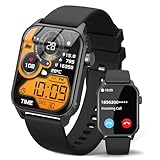
- 【1.83" HD Display & Customizable Watch Faces】Immerse yourself in a vibrant 1.83-inch IPS display, boasting a sharp resolution of 240*284 for crystal-clear visuals. Effortlessly personalize your smart watch with a wide array of customizable watch faces to suit your personal style for every occasion—whether trendy, artistic, or minimalist—ideal for casual, sporty, or professional. Its sleek, modern design complements any outfit, blending technology and fashion seamlessly for everyday wear
- 【120 Sports Modes & Advanced Health Tracking】Our TK29 smart watches for women men come equipped with 120 sports modes, allowing you to effortlessly track a variety of activities such as walking, running, cycling, and swimming. With integrated heart rate and sleep monitors, you can maintain a comprehensive overview of your health, achieve your fitness goals, and maintain a balanced, active lifestyle with ease. Your ideal wellness companion (Note: Step recording starts after exceeding 20 steps)
- 【IP67 Waterproof & Long-Lasting Battery】Designed to keep up with your active lifestyle, this smartwatch features an IP67 waterproof rating, ensuring it can withstand splashes, sweat, and even brief submersion, making it perfect for workouts, outdoor adventures, or rainy days. Its reliable 350mAh battery offering 5-7 days of active use and up to 30 days in standby mode, significantly reducing frequent charging. Ideal for all-day wear, whether you’re at the gym, outdoors, or simply on the go
- 【Stay Connected Anytime, Anywhere】Stay informed and in control with Bluetooth call and music control features. Receive real-time notifications for calls, messages, and social media apps like Facebook, WhatsApp, Twitter, and Instagram directly on your smartwatch. Easily manage calls, control your music playlist, and stay updated without needing to reach for your phone. Perfect for work, workouts, or on-the-go, this watch keeps you connected and never miss important updates wherever you are
- 【Multifunction & Wide Compatibility】Seamlessly handle heart rate monitoring, sleep tracking, and enjoy conveniences like camera/music control, Seamlessly handle heart rate monitoring, sleep tracking, and more-all directly from your wrist. This 1.83 inches HD smartwatch is compatible with iPhone (iOS 9.0+) & Android (5.0+), ensuring smooth daily connectivity and convenience throughout your day. More than just a timepiece, it’s a stylish, all-in-one wearable for smarter, healthier living
This was also an era before heart-rate sensors became mandatory, before LTE was realistic, and before Wear OS refinements smoothed over daily frustrations. The SmartWatch 3’s reliance on GPS rather than biometric tracking makes it feel oddly specialized by modern standards. That specialization is exactly why it remains interesting to revisit.
Why the SmartWatch 3 still gets discussed
For today’s reader, the SmartWatch 3 raises practical questions that newer devices often don’t. Can an older Android Wear watch still be paired and used reliably? Does built-in GPS compensate for outdated software and missing health sensors? And does its rugged, almost utilitarian design hold up better over time than sleeker contemporaries?
This review answers those questions by examining the SmartWatch 3 as both a usable device and a historical artifact. By understanding its place in Android Wear’s evolution, it becomes easier to judge whether this Sony experiment still earns wrist time today, or whether its legacy is more important than its practicality.
Design, Case, and Wearability: Industrial Minimalism and Everyday Comfort
If the SmartWatch 3 still sparks curiosity a decade later, much of that comes down to how it looks and feels on the wrist. Sony’s design team approached this watch less like a fashion accessory and more like a compact piece of consumer electronics. That mindset shaped every physical decision, from the case geometry to the choice of materials.
A square case with purpose, not polish
The SmartWatch 3 uses a square, softly rounded case measuring roughly 45 x 45 mm, with a thickness just over 10 mm. By modern standards it wears medium-large, but in the context of early Android Wear devices it was neither oversized nor especially dainty. The proportions favor legibility and internal volume over visual elegance.
Sony opted for a matte-finished plastic case rather than metal, which immediately set it apart from rivals like the LG G Watch R or Moto 360. This choice reduced weight and improved impact resistance, but it also made the watch feel utilitarian rather than premium. In hand, it feels more like a rugged fitness device than a traditional watch.
The single physical button on the right side is flush and unobtrusive. It lacks the satisfying mechanical feedback of later rotating crowns or larger pushers, but it is functional and hard to press accidentally. That minimal control scheme reinforces how dependent early Android Wear was on touch and voice.
Industrial minimalism that has aged unevenly
Visually, the SmartWatch 3 is restrained to the point of anonymity. There are no decorative flourishes, no polished edges, and no attempt to mimic analog watchmaking cues. The design language is closer to Sony’s handheld electronics of the era than to anything inspired by horology.
This works in its favor if you appreciate clean, honest design. The watch doesn’t pretend to be jewelry, and it doesn’t clash with casual clothing or workout gear. On the other hand, it lacks the visual charm that makes some older smartwatches feel collectible or stylish today.
Time has not been equally kind to all variants. The standard silicone strap models still look coherent, while the later stainless steel band version feels mismatched, pairing a utilitarian head with a bracelet that suggests formality the case cannot deliver. As a result, the SmartWatch 3 is best understood as a functional tool rather than a design statement.
Materials, durability, and everyday abuse
The plastic case is paired with Gorilla Glass on the display, and in daily use this combination holds up better than you might expect. The lighter weight makes the watch less prone to sharp impacts, and scuffs on the case are less visually jarring than scratches on polished metal. It is a watch you can knock around without constant anxiety.
Sony rated the SmartWatch 3 as water-resistant for everyday use, including rain and hand washing. It was also commonly used for running and cycling, thanks in part to its built-in GPS. While it lacks modern military-grade durability claims, it feels robust enough for regular activity even by today’s standards.
From a long-term ownership perspective, this durability is one reason surviving units are often in decent physical condition. The materials may not feel luxurious, but they age more gracefully than many early metal-bodied smartwatches that show every nick and dent.
Strap design and long-term comfort
The integrated silicone strap is thick, flexible, and clearly designed for active use. It secures the watch firmly and distributes weight evenly across the wrist, which matters during longer workouts or all-day wear. Ventilation is minimal by modern sports watch standards, but comfort remains acceptable for most users.
Because the strap is integrated into the case, replacing it is more complicated than swapping a standard 22 mm band. Third-party options exist, but availability has become limited over time. This limits personalization and may be a drawback for collectors who enjoy changing straps to refresh the look.
On the wrist, the SmartWatch 3 sits flat and stable. It does not wobble or top-heavily shift, even during movement. For smaller wrists, the square case can feel wide, but the low weight helps offset the footprint.
Daily wearability in a modern context
Wearing the SmartWatch 3 today highlights both its strengths and its age. Comfort remains one of its better attributes, especially compared to heavier metal-bodied contemporaries. It disappears on the wrist in a way that many early smartwatches did not.
At the same time, the lack of aesthetic refinement becomes more apparent when compared to modern Wear OS devices. The thick bezels, muted screen integration, and purely functional styling feel dated rather than retro. This is not a watch that invites admiration, but it also avoids drawing unwanted attention.
Ultimately, the SmartWatch 3’s design succeeds because it aligns with its original mission. It was built to be worn daily, used actively, and not worried over. That philosophy explains why its physical design remains one of the most defensible aspects of Sony’s experiment, even as its software and features show their age.
Display and Visibility: LCD Choices, Resolution, and Outdoor Readability
If the SmartWatch 3’s physical design emphasizes utility over ornament, its display makes the same argument in technical terms. Sony’s decision to use an LCD panel rather than AMOLED set this watch apart from many Android Wear peers and quietly defined how it behaved in daily use. This choice looks conservative on paper, but it shaped visibility, battery trade-offs, and long-term usability in ways that still matter today.
LCD over AMOLED: a pragmatic divergence
The SmartWatch 3 uses a 1.6-inch transflective LCD with a resolution of 320 × 320 pixels. At the time, most competitors were chasing AMOLED for deeper blacks and visual drama, while Sony leaned into consistency and legibility. The result is a screen that lacks the visual punch of OLED but behaves more predictably across different lighting conditions.
Colors appear muted compared to AMOLED-based Android Wear watches from LG and Motorola. Blacks are more charcoal than inky, and contrast is clearly lower in dim environments. However, text remains clean and readable, which matters more than color saturation on a device built around notifications, maps, and fitness data.
Pixel density sits at roughly 283 ppi, which was solid for its era and still holds up reasonably well. You will notice some aliasing on curved watch faces or thin fonts, but notification text and UI elements remain sharp enough for practical use. For a square display with thick bezels, Sony at least ensured the active area was functionally dense rather than coarse.
Always-on behavior and power implications
One of the underappreciated advantages of the SmartWatch 3’s LCD is how it handles ambient display modes. Unlike early AMOLED implementations that aggressively dimmed or simplified the always-on screen to preserve battery life, Sony’s LCD could remain legible without severe compromises. The ambient mode keeps time and basic data visible with minimal visual degradation.
This pairs well with the watch’s broader battery performance, especially for users who rely on glanceability throughout the day. While the backlight still draws power, the overall balance feels more predictable than some AMOLED rivals that either looked great briefly or faded into near invisibility in ambient mode. For a device aimed at active and outdoor use, this trade-off made sense.
In modern terms, the always-on experience feels basic rather than refined. There are no smooth transitions or adaptive brightness tricks by today’s standards. Still, the fundamentals work, and that reliability is part of why the SmartWatch 3 remains usable rather than frustrating when revisited years later.
Outdoor readability: where the display earns its keep
Direct sunlight is where the SmartWatch 3’s display quietly outperforms many contemporaries. The transflective nature of the LCD allows ambient light to assist visibility rather than overwhelm it. Outdoors, especially during runs or walks, the screen remains readable without maxing out brightness.
This characteristic aligns neatly with the built-in GPS and fitness-first positioning. Checking pace, distance, or navigation prompts in bright conditions is easier here than on some early AMOLED Android Wear watches that wash out under harsh light. It feels more like a purpose-built sports watch display than a fashion-driven smartwatch screen.
Viewing angles are stable, and glare is reasonably controlled given the era and the flat glass. The thick bezel actually helps here, creating a visual frame that reduces perceived reflections. It is not elegant, but it is effective.
Brightness, touch response, and aging considerations
Maximum brightness is adequate rather than impressive by modern standards. Indoors and in shaded environments, the display is comfortably visible, but it does not have the headroom of current Wear OS or Apple Watch panels. In very dark settings, the backlight can feel slightly harsh, a common trait of older LCDs.
Touch responsiveness remains reliable, though less fluid than modern displays with higher refresh rates and improved digitizers. Swipes register consistently, but animations feel rigid, which is as much a software limitation as a hardware one. For basic navigation and fitness interactions, it remains functional.
Long-term aging is another area where LCD quietly benefits the SmartWatch 3. Unlike early AMOLED panels, there is no risk of burn-in from static watch faces or persistent UI elements. For collectors or secondary users picking one up today, this significantly improves the odds of finding a screen that still looks healthy after years of use.
Rank #2
![Apple Watch Series 11 [GPS 46mm] Smartwatch with Jet Black Aluminum Case with Black Sport Band - M/L. Sleep Score, Fitness Tracker, Health Monitoring, Always-On Display, Water Resistant](https://m.media-amazon.com/images/I/312K597M2uL._SL160_.jpg)
- HYPERTENSION NOTIFICATIONS — Apple Watch Series 11 can spot signs of chronic high blood pressure and notify you of possible hypertension.*
- KNOW YOUR SLEEP SCORE — Sleep score provides an easy way to help track and understand the quality of your sleep, so you can make it more restorative.
- EVEN MORE HEALTH INSIGHTS — Take an ECG anytime.* Get notifications for a high and low heart rate, an irregular rhythm,* and possible sleep apnea.* View overnight health metrics with the Vitals app* and take readings of your blood oxygen.*
- STUNNING DESIGN — Thin and lightweight, Series 11 is comfortable to wear around the clock — while exercising and even when you’re sleeping, so it can help track your key metrics.
- A POWERFUL FITNESS PARTNER — With advanced metrics for all your workouts, plus features like Pacer, Heart Rate Zones, training load, Workout Buddy powered by Apple Intelligence from your nearby iPhone,* and more. Series 11 also comes with three months of Apple Fitness+ free.*
Context within Android Wear’s early evolution
Viewed historically, Sony’s display choice reflects a transitional moment in Android Wear design. The platform was still defining its identity, and hardware makers were experimenting with form factors and display technologies. The SmartWatch 3 stands as one of the clearest examples of function-driven decision-making in that period.
It does not deliver the visual satisfaction that modern smartwatch users expect. Instead, it prioritizes clarity, durability, and outdoor usability, aligning closely with the watch’s GPS capability and lightweight construction. That coherence helps explain why the display, while dated, remains one of the less problematic aspects of using the SmartWatch 3 today.
For buyers considering it now, the screen will not impress, but it will rarely frustrate. As part of Android Wear’s early history, it serves as a reminder that practicality once took precedence over spectacle, and in this specific case, that choice has aged better than many of its flashier alternatives.
Performance and Hardware Internals: Snapdragon 400 in Real-World Use
If the display defines how you see the SmartWatch 3, the processor defines how you live with it. Sony equipped the watch with Qualcomm’s Snapdragon 400, a chipset that, at launch, sat at the upper end of Android Wear’s first hardware wave and now serves as a clear marker of the platform’s early ambitions and constraints.
This was not a custom low-power wearable SoC in the modern sense. Instead, it was a lightly adapted smartphone-class chip, and that decision shapes everything from day-to-day responsiveness to battery behavior.
Snapdragon 400 architecture and why it mattered
The Snapdragon 400 in the SmartWatch 3 uses a quad-core ARM Cortex-A7 CPU paired with an Adreno 305 GPU, clocked conservatively to manage heat and power. In 2014 terms, this was a reassuringly familiar configuration, shared with phones like the Moto G and several midrange Xperia models.
For Android Wear 1.x, that familiarity mattered. App compatibility was strong, system stability was high, and Sony avoided the early teething problems that plagued watches using more experimental silicon.
Day-to-day performance and UI fluidity
In real-world use, the SmartWatch 3 feels competent rather than quick. Menu navigation, notifications, and voice interactions work reliably, but transitions lack the elasticity and momentum seen in later Wear OS hardware.
The rigidity noted in the display section becomes more apparent here. Animations often feel locked to the processor’s limits, not stuttering, but unmistakably deliberate, especially when swiping through Google Now cards or scrolling longer notification threads.
App loading, multitasking, and system limits
App launch times are acceptable for core functions like fitness tracking, timers, alarms, and music controls. More complex third-party apps reveal the platform’s age, with noticeable pauses when loading interfaces or syncing data.
Multitasking exists in theory but feels constrained in practice. Background processes are aggressively managed, which helps stability but reinforces the watch’s role as a single-task device rather than a miniature computer on the wrist.
RAM, storage, and long-term usability
Sony paired the Snapdragon 400 with 512MB of RAM and 4GB of internal storage, of which roughly half is available to the user. At the time, this was standard for Android Wear and sufficient for a modest app library and offline music.
Today, those limits are more tangible. You must be selective about what you install, and large updates or sync-heavy apps can push the system close to its comfort zone, though outright crashes remain rare.
Thermal behavior and sustained performance
One of the SmartWatch 3’s quieter strengths is thermal stability. The Snapdragon 400 runs cool enough that heat buildup during GPS workouts or extended Bluetooth use is minimal, even when worn tightly against the wrist.
This contributes to consistent performance over longer sessions. Unlike some early Android Wear rivals, the watch does not throttle aggressively, nor does it become uncomfortable during activity tracking.
GPS processing and chipset synergy
The integrated GPS is where the Snapdragon 400 earns its keep. Location locks are reasonably quick for a first-generation standalone GPS watch, typically achieved within a minute outdoors, and tracking accuracy remains solid for running and cycling.
Processing GPS data does tax the system, but the chipset handles it predictably. You may notice slight UI sluggishness during active tracking, yet recordings remain reliable, which reinforces the watch’s fitness-oriented design.
Battery impact of the hardware choices
Performance and efficiency are closely linked here. The Snapdragon 400 is not particularly frugal by modern standards, but Sony’s conservative tuning keeps power draw manageable.
With GPS disabled, the watch comfortably reaches a full day of mixed use. Enable GPS for workouts, and battery life drops sharply, a reminder that this is early wearable silicon balancing ambition against physical limits.
Retrospective perspective on performance today
Viewed through a modern lens, the SmartWatch 3’s performance is unmistakably dated, yet not unusable. Core interactions remain dependable, and the system rarely feels unstable, even if it feels slow.
For collectors, enthusiasts, or users seeking a simple notification and fitness companion, the Snapdragon 400 delivers a coherent, if limited, experience. It encapsulates a moment when Android Wear was still borrowing heavily from smartphones, and in doing so, it created a watch that, while no longer competitive, remains surprisingly functional within its original intent.
Built-In GPS: The SmartWatch 3’s Defining Feature Then and Now
If the Snapdragon 400 set the foundation, the built-in GPS is what justified the SmartWatch 3’s existence in the Android Wear lineup. At launch, it stood apart as one of the very few Android Wear watches that could track location independently of a phone, a capability that reshaped how the device was positioned and used.
This was not a secondary checkbox feature. Sony built the SmartWatch 3 around the idea that a smartwatch could function as a self-contained fitness tool, even when Android Wear itself was still heavily phone-dependent.
Why standalone GPS mattered in 2014–2015
When the SmartWatch 3 arrived, most Android Wear watches relied entirely on tethered GPS via a connected smartphone. Runners and cyclists had to carry their phones if they wanted route tracking, undermining the promise of lightweight wearables.
Sony’s decision to integrate GPS directly into the watch immediately appealed to fitness-focused users. It allowed untethered runs, mapped cycling sessions, and basic pace and distance tracking with nothing more than the watch and a pair of Bluetooth headphones.
Real-world GPS performance and accuracy
In practice, the SmartWatch 3’s GPS performance was impressively competent for its era. Outdoor lock times typically ranged from 30 to 60 seconds, and once locked, the signal remained stable in open environments.
Route accuracy for running and cycling generally held up well, with clean tracking lines and minimal drift. Urban canyons and heavy tree cover could still confuse it, but that limitation was shared across nearly all consumer GPS wearables of the time.
Integration with Android Wear fitness apps
Sony leaned heavily on Google Fit and third-party apps like Runkeeper and Runtastic to showcase the GPS hardware. The experience was functional rather than elegant, with data syncing reliably but visualizations remaining basic by modern standards.
On-watch controls were limited, and mid-workout interactions could feel sluggish. Still, the core promise held: start a workout, leave the phone behind, and review your route afterward without missing data.
Battery trade-offs during GPS use
The freedom of standalone GPS came at a clear cost. Continuous GPS tracking could drain the 420mAh battery in roughly three to four hours, depending on screen usage and sensor activity.
This constrained the watch’s usefulness for long-distance events or all-day outdoor activities. For shorter runs and gym sessions, however, the battery trade-off was acceptable and aligned with the watch’s original fitness-oriented intent.
Comfort and wearability during GPS workouts
Physically, the SmartWatch 3 was well-suited to active use. The 45mm case and thick, rubberized strap prioritized stability over elegance, keeping the watch secure during motion.
Rank #3

- Bluetooth Call and Message Alerts: Smart watch is equipped with HD speaker, after connecting to your smartphone via bluetooth, you can answer or make calls, view call history and store contacts through directly use the smartwatch. The smartwatches also provides notifications of social media messages (WhatsApp, Twitter, Facebook, Instagram usw.) So that you will never miss any important information.
- Smart watch for men women is equipped with a 320*380 extra-large hd full touch color screen, delivering exceptional picture quality and highly responsive touch sensitivity, which can bring you a unique visual and better interactive experience, lock screen and wake up easily by raising your wrist. Though “Gloryfit” app, you can download more than 102 free personalised watch faces and set it as your desktop for fitness tracker.
- 24/7 Heart Rate Monitor and Sleep Tracker Monitor: The fitness tracker watch for men has a built-in high-performance sensor that can record our heart rate changes in real time. Monitor your heart rate 26 hours a day and keep an eye on your health. Synchronize to the mobile phone app"Gloryfit", you can understand your sleep status(deep /light /wakeful sleep) by fitness tracker watch develop a better sleep habit and a healthier lifestyle.
- IP68 waterproof and 110+ Sports Modes: The fitness tracker provides up to 112+ sports modes, covering running, cycling, walking, basketball, yoga, football and so on. Activity trackers bracelets meet the waterproof requirements for most sports enthusiasts' daily activities, such as washing hands or exercising in the rain, meeting daily needs (note: Do not recommended for use in hot water or seawater.)
- Multifunction and Compatibility: This step counter watch also has many useful functions, such as weather forecast, music control, sedentary reminder, stopwatch, alarm clock, timer, track female cycle, screen light time, find phone etc. The smart watch with 2 hrs of charging, 5-7 days of normal use and about 30 days of standby time. This smart watches for women/man compatible with ios 9.0 and android 6.2 and above devices.
At around 45 grams without the strap, it felt dense but not uncomfortable. Sweat resistance and durable materials made it more resilient than many fashion-first Android Wear competitors, reinforcing its role as a workout companion rather than a dress watch.
How the SmartWatch 3’s GPS holds up today
Viewed today, the GPS hardware itself remains functional, but software support is the limiting factor. Android Wear updates have long ceased, app compatibility is inconsistent, and syncing data to modern fitness ecosystems can be unreliable.
That said, the core GPS still works for basic tracking if you are willing to accept outdated interfaces and limited integrations. In this sense, the SmartWatch 3’s GPS is less about practicality now and more about appreciating a moment when Sony briefly pushed Android Wear toward true independence.
Battery Life and Charging: Endurance Expectations Nearly a Decade Later
After exploring how the SmartWatch 3 handled GPS autonomy, the conversation naturally turns to endurance. Battery life was one of Sony’s quiet strengths at launch, and it remains one of the more interesting aspects to re-evaluate now that modern smartwatches routinely promise multiple days away from the charger.
The SmartWatch 3 is powered by a 420mAh lithium-ion battery, a relatively generous capacity for a 2014-era Android Wear device. Sony paired that capacity with a low-resolution transflective LCD, creating a watch that was never chasing visual drama but was engineered to last longer than many of its AMOLED-equipped peers.
Real-world battery life then and now
In its prime, the SmartWatch 3 could reliably deliver around one and a half to two days of mixed use. Notifications, occasional app interactions, and some fitness tracking could usually get you through a full day with headroom to spare.
Nearly a decade later, real-world endurance depends heavily on battery health. Units with well-preserved cells can still approach a full day of light use, while more heavily aged examples may struggle to last from morning to evening without conservative settings.
Standby drain remains surprisingly reasonable, largely because the display lacks an always-on backlight and the software does very little in the background by modern standards. Compared to newer Wear OS watches that juggle voice assistants, background health metrics, and constant connectivity, the SmartWatch 3 feels almost frugal.
Display technology and its impact on longevity
The transflective LCD plays a central role in how this watch manages power. Outdoors, ambient light effectively “powers” readability, allowing the backlight to stay off more often than not.
Indoors, brightness needs to be pushed higher, which does increase drain, but even then the screen remains less demanding than early AMOLED panels. This design choice gives the SmartWatch 3 a practical, tool-watch-like character that favors function over flourish.
Resolution is low by today’s standards, but fewer pixels also mean fewer resources consumed. The result is a display that looks dated yet contributes meaningfully to the watch’s ability to remain usable without constant charging anxiety.
Charging method and daily practicality
Sony opted for a Micro-USB charging port hidden behind a small flap on the back of the case. At the time, this was refreshingly simple compared to proprietary docks, and it remains convenient today because cables are easy to find.
Charging from empty to full typically takes around two hours. The rubber port cover adds a layer of water resistance but can become a wear point over time, especially on heavily used or poorly stored units.
There is no fast charging, no wireless charging, and no clever power-sharing features. What you get is a straightforward, reliable charging experience that feels utilitarian rather than elegant, aligning with the watch’s broader design philosophy.
Battery degradation and long-term ownership realities
Battery aging is the largest unknown when considering a SmartWatch 3 today. Replacement batteries exist but are not officially supported, and opening the case is not trivial for casual users.
For collectors or secondary-use buyers, this means battery life should be evaluated as carefully as screen condition or strap wear. A unit that still holds a charge well can remain genuinely usable, while one with a degraded cell quickly becomes a desk-bound curiosity.
Thermal management has aged well, however. The watch rarely overheats during charging or use, even with GPS enabled, which suggests Sony’s conservative power tuning helped preserve long-term stability.
How it compares to modern expectations
By current standards, a single day of battery life sounds unremarkable. Entry-level fitness watches and even budget smartwatches now routinely offer three to seven days on a charge.
Yet context matters. The SmartWatch 3 was doing more than many of its contemporaries, offering GPS, Wi-Fi, and a full smartwatch OS at a time when battery optimization was far less mature.
Viewed through a historical lens, its endurance was quietly impressive. Viewed as a daily wearable in 2026, it is serviceable but demanding, best suited to enthusiasts who understand its limitations and appreciate how much autonomy Sony squeezed out of early Android Wear hardware.
Software Experience: Android Wear Limitations, Compatibility, and App Support
That battery reality feeds directly into how the SmartWatch 3 feels to use today, because its software stack is firmly frozen in an earlier era of Android Wear. This is not a watch that has aged gracefully through updates or long-term platform support, but rather one preserved in time, with all the strengths and frustrations that implies.
The SmartWatch 3 launched with Android Wear 1.x and topped out at Android Wear 1.5. It never made the jump to Android Wear 2.0, which fundamentally reshaped how apps, notifications, and on-watch interaction worked across the platform.
Android Wear 1.x: strengths that aged unevenly
At its best, Android Wear 1.x remains clean, readable, and focused on glanceable information. Notifications are still the core experience, delivered as vertically stacked cards that are easy to swipe through on the SmartWatch 3’s 1.6-inch display.
Voice input via “OK Google” technically works, but its reliability depends entirely on the paired phone and Google’s evolving backend services. In practice, voice actions are inconsistent in 2026, with some commands timing out or returning partial results.
Navigation is entirely gesture-based, relying on swipes and long presses rather than physical buttons. The lack of a crown or rotating bezel makes precision interactions slower, especially when scrolling through dense notification stacks.
Compatibility with modern Android phones
Pairing the SmartWatch 3 with a current Android phone is possible, but not guaranteed to be painless. It requires sideloading an older version of the Android Wear companion app, as the modern Wear OS app no longer supports Android Wear 1.x devices.
This process is manageable for enthusiasts but immediately raises the barrier for casual users. Google does not officially support this setup, and future Android updates could break compatibility without warning.
Once paired, core functions like notifications, basic call alerts, and Google Fit syncing generally work. However, advanced integrations, newer notification actions, and deeper system-level features introduced in later versions of Android are absent.
App support: effectively frozen in time
App availability is where the SmartWatch 3 feels most limited today. Android Wear 1.x relies almost entirely on phone-side apps pushing simplified interfaces to the watch, rather than standalone on-watch applications.
Many once-popular Android Wear apps have either been discontinued or updated beyond compatibility. Fitness companions, productivity tools, and media controllers that worked in 2015 may no longer install or function correctly.
Google Fit remains usable, and step tracking, basic activity logging, and GPS-based workout recording still function. That said, the experience is barebones compared to modern fitness platforms, with limited metrics, minimal visualizations, and no recovery or wellness insights.
GPS and offline functionality in software context
One area where the SmartWatch 3’s software still feels distinctive is GPS handling. Android Wear 1.x allowed the watch to record GPS activities without a phone, syncing data later when reconnected.
Rank #4
![Apple Watch Series 11 [GPS 42mm] Smartwatch with Rose Gold Aluminum Case with Light Blush Sport Band - S/M. Sleep Score, Fitness Tracker, Health Monitoring, Always-On Display, Water Resistant](https://m.media-amazon.com/images/I/31J+F-pXaWL._SL160_.jpg)
- HYPERTENSION NOTIFICATIONS — Apple Watch Series 11 can spot signs of chronic high blood pressure and notify you of possible hypertension.*
- KNOW YOUR SLEEP SCORE — Sleep score provides an easy way to help track and understand the quality of your sleep, so you can make it more restorative.
- EVEN MORE HEALTH INSIGHTS — Take an ECG anytime.* Get notifications for a high and low heart rate, an irregular rhythm,* and possible sleep apnea.* View overnight health metrics with the Vitals app* and take readings of your blood oxygen.*
- STUNNING DESIGN — Thin and lightweight, Series 11 is comfortable to wear around the clock — while exercising and even when you’re sleeping, so it can help track your key metrics.
- A POWERFUL FITNESS PARTNER — With advanced metrics for all your workouts, plus features like Pacer, Heart Rate Zones, training load, Workout Buddy powered by Apple Intelligence from your nearby iPhone,* and more. Series 11 also comes with three months of Apple Fitness+ free.*
This works best with Google Fit and a small number of legacy fitness apps. The interface is simple, sometimes clunky, but functional enough for basic runs or walks.
There is no offline music playback, no onboard media storage interface, and no modern workout guidance. The GPS feature is utilitarian rather than polished, mirroring the watch’s overall philosophy.
Stability, performance, and everyday usability
Performance is modest but stable. The UI rarely crashes, animations are basic, and transitions feel dated but predictable.
App switching is slow, and loading screens are common, especially when waking the watch after extended sleep. That said, the system’s simplicity helps prevent the stutters and overheating seen on some early Android Wear rivals.
From a daily usability standpoint, the SmartWatch 3 works best as a notification mirror and simple activity tracker. Asking it to behave like a modern smartwatch with rich apps and deep customization will quickly expose its limitations.
What this software means for buyers today
The SmartWatch 3’s software experience defines its relevance more than any hardware limitation. It is not future-proof, not officially supported, and increasingly dependent on workarounds to remain functional.
For collectors and Android Wear historians, this frozen software snapshot is part of the appeal. It represents a formative stage in Google’s wearable strategy, before Wear OS redefined app independence and interaction models.
For practical buyers seeking a secondary watch, its usefulness hinges on expectations. If notifications, timekeeping, basic fitness tracking, and standalone GPS logging are enough, the SmartWatch 3 can still earn wrist time. If modern app ecosystems, health insights, and seamless phone integration matter, its software will feel irreversibly dated.
Fitness, Sensors, and Daily Tracking: What Still Works and What Doesn’t
Seen through the lens of its frozen software and aging hardware, the SmartWatch 3’s fitness story is a mix of surprising resilience and very clear gaps. Some of its tracking fundamentals still function reliably today, while others reflect just how early Android Wear’s health ambitions really were.
The sensor lineup: notable strengths and obvious omissions
Sony equipped the SmartWatch 3 with a basic but purposeful sensor set: GPS, accelerometer, gyroscope, and compass. What’s missing is just as important as what’s included, namely a heart rate sensor.
This omission feels glaring by modern standards, but it was a deliberate choice at the time. Sony prioritized GPS accuracy and battery stability over optical heart rate tech, which in 2014 was still inconsistent and power-hungry.
The result is a watch that can track movement and location very well, but offers no insight into exertion, recovery, or cardiovascular health. For fitness-minded users today, that limitation defines the ceiling of what the SmartWatch 3 can realistically deliver.
GPS tracking: still the watch’s strongest fitness feature
Standalone GPS remains the SmartWatch 3’s most compelling capability, even a decade later. It locks on reasonably quickly outdoors and records distance and routes with accuracy that still holds up against entry-level GPS wearables.
Runs and walks recorded through Google Fit or compatible legacy apps sync correctly once the watch reconnects to a phone. Route maps are clean, and distance data is dependable, assuming the battery holds through the session.
Where it falls short is refinement. There’s no pace coaching, no interval guidance, and no adaptive metrics, just raw location data presented in a functional but unsophisticated way.
Step counting and daily movement tracking
Basic step counting still works as expected. The accelerometer reliably logs daily movement, and Google Fit continues to display steps, distance estimates, and active minutes.
Accuracy is acceptable for casual tracking, though it lacks the contextual awareness of newer devices. Activities like cycling or pushing a stroller can confuse the algorithm, and there’s no auto-detection of workouts beyond simple movement thresholds.
For users treating the SmartWatch 3 as a pedometer with notifications, this aspect of daily tracking remains perfectly usable.
Sleep tracking: technically possible, practically limited
Sleep tracking was never a native strength of the SmartWatch 3. It relies entirely on third-party or legacy Google Fit integrations, many of which no longer receive updates or function consistently.
Even when working, sleep data is rudimentary. You’ll see basic duration and movement-based estimates, without sleep stages, trends, or health correlations.
Comfort also plays a role here. The chunky, square case and thick silicone strap make overnight wear less appealing than slimmer modern trackers, especially for light sleepers.
Water resistance and durability in fitness use
The SmartWatch 3 carries an IP68 rating, which means it can handle sweat, rain, and brief submersion without issue. This makes it suitable for outdoor workouts and casual water exposure, even today.
It is not designed for swim tracking, and there’s no stroke detection or lap counting. Water resistance here is about protection, not performance metrics.
From a durability standpoint, the watch holds up well for everyday fitness use, provided the aging strap and seals are still in good condition.
What modern fitness users will immediately miss
The absence of heart rate data defines what the SmartWatch 3 cannot do. There’s no calorie accuracy, no intensity zones, no VO2 max estimates, and no meaningful health insights beyond movement totals.
There’s also no support for modern wellness features like stress tracking, SpO2, body battery scores, or recovery metrics. These aren’t software omissions that can be patched later; they’re fundamental hardware gaps.
Compared to even the cheapest modern fitness bands, the SmartWatch 3 feels purely mechanical in its approach to activity tracking.
Who the fitness features still make sense for
For users who want simple GPS routes, step counts, and time-on-wrist during workouts, the SmartWatch 3 can still serve a purpose. It works best as a minimalist activity logger rather than a fitness coach.
Collectors and Android Wear enthusiasts may also appreciate how clearly it shows Google’s early priorities, focusing on location awareness and notification-driven activity summaries.
For anyone seeking health insights, training guidance, or comprehensive fitness analytics, the SmartWatch 3’s fitness capabilities are less a limitation than a reminder of how far wearables have evolved.
Durability, Water Resistance, and Long-Term Reliability
If the SmartWatch 3 feels dated in its fitness intelligence, it still earns respect for how physically resilient it has proven to be over time. This was a smartwatch built during an era when manufacturers were still over-engineering to earn trust, and that philosophy shows up clearly in day-to-day durability.
Case construction and materials over time
The SmartWatch 3 uses a glass-filled nylon case rather than metal, which helped keep weight down while also making the watch more impact-tolerant than it looks. It doesn’t have the premium cold-to-the-touch feel of steel or aluminum, but it shrugs off scuffs and corner knocks better than many early Android Wear peers.
💰 Best Value
![Apple Watch Series 11 [GPS 42mm] Smartwatch with Jet Black Aluminum Case with Black Sport Band - S/M. Sleep Score, Fitness Tracker, Health Monitoring, Always-On Display, Water Resistant](https://m.media-amazon.com/images/I/31ybzrJZckL._SL160_.jpg)
- HYPERTENSION NOTIFICATIONS — Apple Watch Series 11 can spot signs of chronic high blood pressure and notify you of possible hypertension.*
- KNOW YOUR SLEEP SCORE — Sleep score provides an easy way to help track and understand the quality of your sleep, so you can make it more restorative.
- EVEN MORE HEALTH INSIGHTS — Take an ECG anytime.* Get notifications for a high and low heart rate, an irregular rhythm,* and possible sleep apnea.* View overnight health metrics with the Vitals app* and take readings of your blood oxygen.*
- STUNNING DESIGN — Thin and lightweight, Series 11 is comfortable to wear around the clock — while exercising and even when you’re sleeping, so it can help track your key metrics.
- A POWERFUL FITNESS PARTNER — With advanced metrics for all your workouts, plus features like Pacer, Heart Rate Zones, training load, Workout Buddy powered by Apple Intelligence from your nearby iPhone,* and more. Series 11 also comes with three months of Apple Fitness+ free.*
After years of use, most surviving units show cosmetic wear rather than structural damage. Minor scratches on the display and smoothing on the case edges are common, but cracks or warping are relatively rare unless the watch has suffered a hard drop.
Display durability and real-world wear
The transreflective LCD panel is protected by standard hardened glass rather than sapphire. This means it will pick up micro-scratches over time, especially if worn alongside keys or during manual work.
The upside is that the recessed bezel design offers a small buffer against direct impacts. In daily wear, the display tends to age gracefully, maintaining readability even if the surface isn’t pristine anymore.
IP68 water resistance in practice
Sony’s IP68 rating was more than marketing at launch, and it remains one of the SmartWatch 3’s strongest practical advantages today. It handles rain, sweat, handwashing, and accidental splashes without complaint, assuming seals haven’t degraded.
That said, long-term water resistance always depends on age. Adhesives and gaskets inevitably weaken, so while the watch can still survive water exposure, intentional submersion is a gamble on a decade-old device.
Strap longevity and comfort trade-offs
The stock silicone strap is one of the weakest long-term components. Over time, it tends to stiffen, collect dust, and develop surface cracking, especially if exposed to sweat and sunlight regularly.
Fortunately, the SmartWatch 3 uses a standard strap attachment system, making replacements easy. Swapping to a modern silicone or nylon strap can significantly improve comfort and extend the wearable lifespan.
Buttons, ports, and physical failure points
The single side button remains surprisingly reliable, with most units retaining a firm, tactile click even years later. There are no rotating crowns or complex mechanical interfaces to fail.
Charging reliability is more variable. The proprietary charging port can loosen or corrode if not kept clean, and replacement chargers are increasingly scarce, making this one of the most common failure-related dealbreakers.
Battery aging and long-term usability
Battery degradation is the SmartWatch 3’s most unavoidable reliability issue. Original units typically deliver noticeably reduced runtime compared to launch expectations, often falling short of a full day with GPS use.
Because the battery is not user-replaceable without disassembly, long-term ownership involves accepting diminishing endurance. This is less a Sony flaw than a reminder of how early smartwatch design prioritized sealing over serviceability.
Software longevity versus hardware survival
From a hardware standpoint, many SmartWatch 3 units are still physically functional. The bigger reliability question today is software compatibility, as Android Wear support has long since moved on.
Notifications, basic apps, and offline GPS still work under specific conditions, but the watch’s usefulness increasingly depends on workarounds rather than official support. Physically, it may survive another few years; practically, its relevance continues to narrow.
What durability means for buyers today
For collectors and enthusiasts, the SmartWatch 3’s robust build makes it a safe candidate for light, occasional wear without fear of immediate failure. It feels more like a rugged prototype of modern smartwatches than a fragile first attempt.
For practical daily use, durability alone isn’t enough to offset aging batteries and declining software support. The SmartWatch 3 endures physically better than many early smartwatches, but long-term reliability today is defined as much by ecosystem survival as by materials and construction.
Verdict in 2026: Is the Sony SmartWatch 3 Still Worth Buying or Purely a Collector’s Piece?
Viewed through the lens of durability and survival, the Sony SmartWatch 3 has aged better than many of its Android Wear contemporaries. The question in 2026 is no longer whether it works, but whether it still fits into anyone’s daily life beyond curiosity, nostalgia, or niche use.
The answer depends heavily on what you expect a smartwatch to be today, and how much friction you are willing to tolerate for a piece of wearable history.
As a daily smartwatch: largely obsolete
For mainstream daily use, the SmartWatch 3 is no longer a sensible recommendation. Software support has effectively ended, app compatibility is inconsistent, and pairing it with modern Android phones often requires patience, older APKs, or deliberate downgrades in expectations.
Battery life, even on well-preserved units, rarely matches modern standards. A single day is achievable only with conservative usage, and GPS-heavy activities can drain it far faster than contemporary fitness watches with multi-day endurance.
Health and fitness tracking is also rudimentary by 2026 standards. There is no heart rate sensor, no sleep tracking worth mentioning, and no modern wellness metrics, placing it well behind even entry-level smart bands in functionality.
As a niche tool: limited but still interesting
There are still narrow scenarios where the SmartWatch 3 can make sense. Its built-in GPS, which was forward-thinking at launch, allows it to function as a standalone route tracker for runs or walks without a phone, assuming battery health is acceptable.
Offline music control, basic notifications, and timekeeping remain functional in controlled setups. For someone deliberately seeking a distraction-free, stripped-down smartwatch experience, the SmartWatch 3 can feel refreshingly simple rather than frustrating.
That said, these use cases are increasingly outperformed by inexpensive modern alternatives that offer better battery life, lighter weight, and active software support at very low prices.
As a collector’s piece: genuinely compelling
Where the SmartWatch 3 truly shines in 2026 is as a collector’s item and historical artifact. It represents a pivotal moment in Android Wear’s evolution, when manufacturers were still experimenting with form, materials, and independence from the smartphone.
The industrial design, with its square face, matte steel core, and integrated strap system, feels distinct from today’s increasingly homogenous smartwatch designs. It wears more like a rugged digital watch than a fashion accessory, which gives it lasting character.
For Android enthusiasts, Sony fans, or wearable collectors, the SmartWatch 3 is one of the most complete and well-built examples of first-generation Android Wear hardware. Its physical resilience makes it suitable for occasional wrist time without constant fear of failure.
Value on the secondary market
Pricing ultimately determines how reasonable a purchase is. At very low prices, the SmartWatch 3 can be a fun, low-risk acquisition for experimentation, display, or light use.
At higher prices, it becomes harder to justify when modern budget smartwatches offer exponentially more capability, longer battery life, and ongoing updates. Condition, battery health, and the presence of a working charger matter more here than original box or cosmetic perfection.
Buyers should approach listings cautiously, assuming that some compromises are inevitable and factoring in the difficulty of sourcing replacement accessories.
Final assessment
In 2026, the Sony SmartWatch 3 is no longer a practical smartwatch for most people, and it should not be purchased with expectations of modern performance or longevity. Its aging battery, discontinued software, and limited health features make it ill-suited for everyday reliance.
What it offers instead is perspective. It is a reminder of how ambitious early Android Wear hardware was, how quickly the category evolved, and how some designs prioritized durability and independence long before the market caught up.
For collectors, historians, and curious enthusiasts, the SmartWatch 3 remains worth owning. For everyone else, it is best appreciated as a well-built milestone rather than a viable daily companion.